Tipps for Travel

  • Episode 3 Buzzing Around “Bumminam”

    September 20th, 2023

    2023 September 18, 19, 20

    The last morning in Cambridge began with Sainsbury’s croissants and coffee. Ibis Hotel Cambridge is located about 100 meters from the station, a quick walk. With reserved seats in car C close to the luggage racks, the 2.5 hour trip to Birmingham began. Birmingham’s new New Street station is a transport nexus with the Birmingham Bull in the center to welcome visitors.
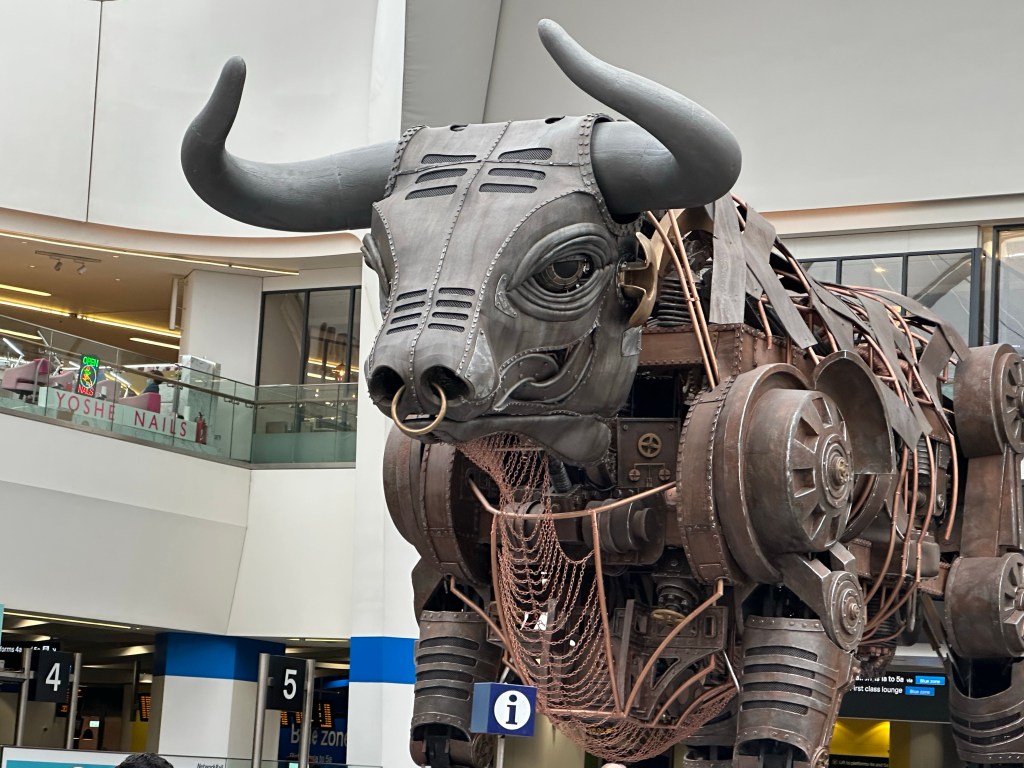
    Birmingham greets you in New Street Station
    NOTE: Tap pictures and thumbnails to increase their size. Tap to reduce size.

    A flash shower started just as we arrived and ushered us back into the station for lunch. The Wetherspoon chair restaurant was busy. They have instructions to use their app for ordering, but it did not work so Becky went to the kiosk to order. My salad came quickly, hers not until she called attention to her lack of food. When the rain subsided, we began the 10 minute walk up and down hills to the Holiday Inn Express.

    Judith and Andy invited to visit their home and have dinner at their favorite Lebanese cafe, and we gladly accepted. We met them on the Norway Fjord cruise in December. Serendipity seated them with us for dinner early in the tour. We saw them almost everyday to wave or have a short chat or sit together for a meal as well as attend science and art activities and ship’s daily briefings. Andy was one of the brave who did the extreme hike in the snow. We had common ground from our work involving children. Judith was a social worker, Andy a lecturer in social policy and social work, and we were school teachers.
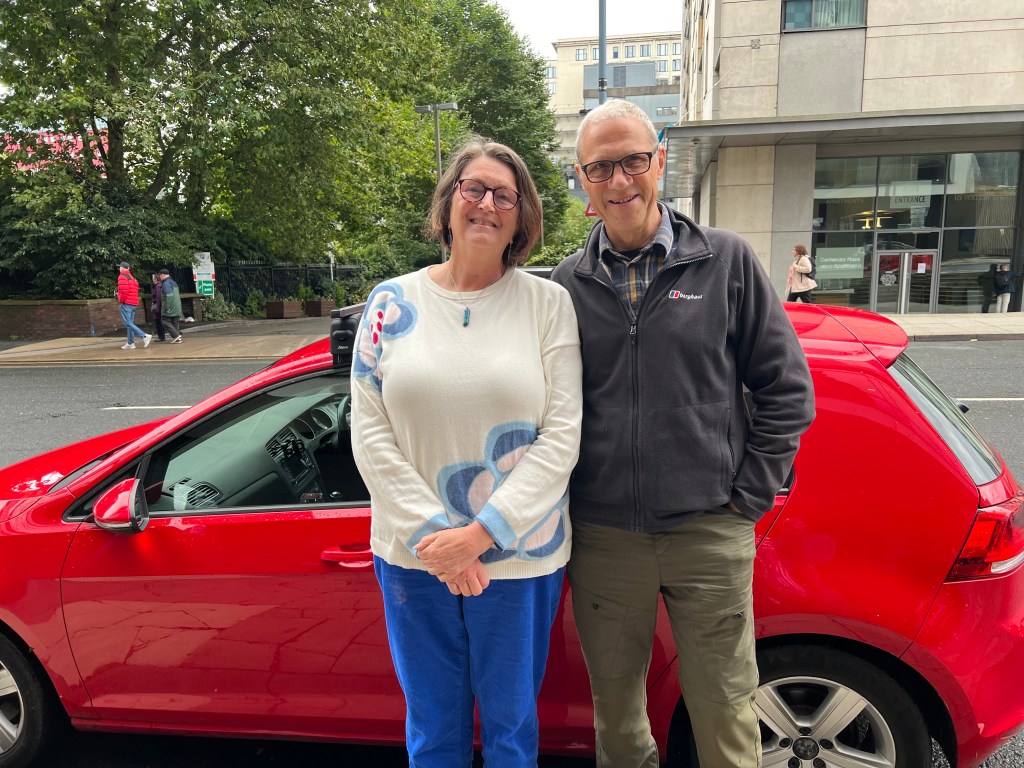
    Judith and Andy, our friends were hosts and drivers

    At 5:00, they arrived in their shiny red VW and whisked us on a tour of the Moseley area of Birmingham filled with gorgeous Victorian homes. Judith told us about the history of the area and the changing demographics—what has been lost and what has been gained. After almost 30 years in the neighborhood, they are moving to a less urban area in a tech-savvy and environmentally tuned house.

    Their present house is a late Victorian with a beautiful back garden. An extension on the house opens onto the garden with many windows and skylights creating light and openness. Preparing for the move, they have been discarding things or wrapping and boxing things to keep. We always enjoying seeing other people’s interesting objects which included some great pieces of furniture and beautiful art work with some by Andy’s mom who had a wonderful impressionistic style.

    Their two sons, Reuben and Dominic, live not too far away. Reuben and his partner are near Bristol, while Dominic lives in a narrow boat which he kitted out and navigates along the canals. They also have a cat who invites cat friends into the garden. Some friends! They help themselves to his food and disturb his tranquility.

    After wine and nibbles, we headed to Tabule, their neighborhood coffee and mezze spot for a Lebanese extravaganza: babaganoosh, lentils, spanakopita, moussaka, batata hara, and halloumi small plates with puffy puri bread followed by exceptional coffees and two sweets, a Biscoff cake and amazing pudding.
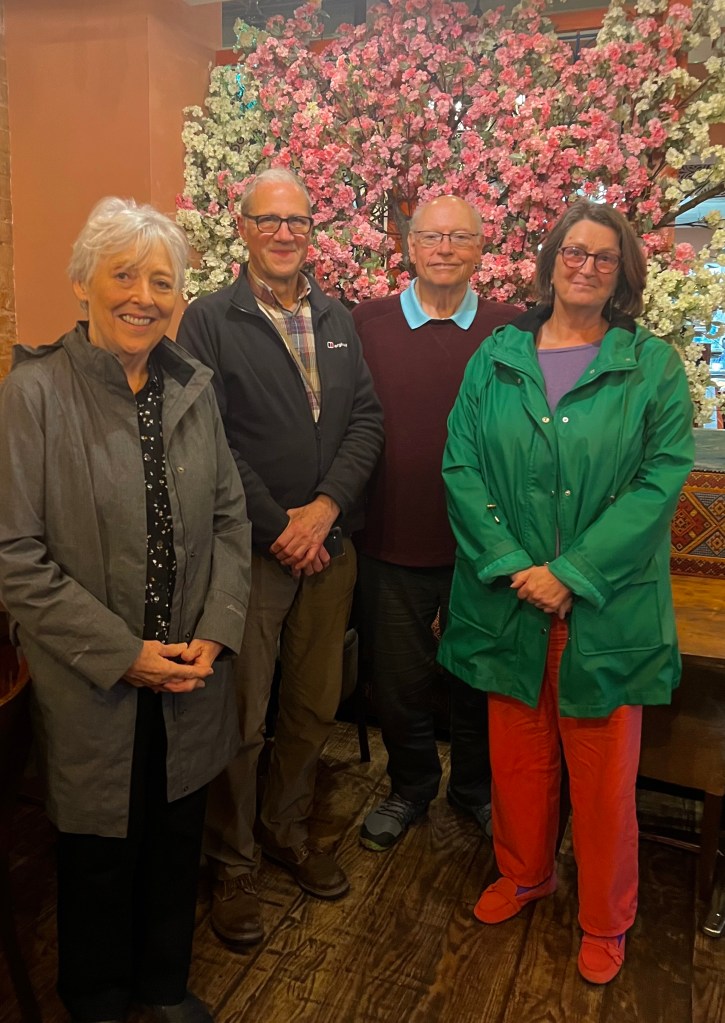
    After our wonderful Lebanese meal and conversation at Tabule

    We talked and talked, until the place closed. We had a photo taken and we were whisked back to the Holiday Inn Express located on Holliday Street.

    Andy and Judith organized two days of adventures for us around Birmingham. The first day took us south into the countryside and canals.
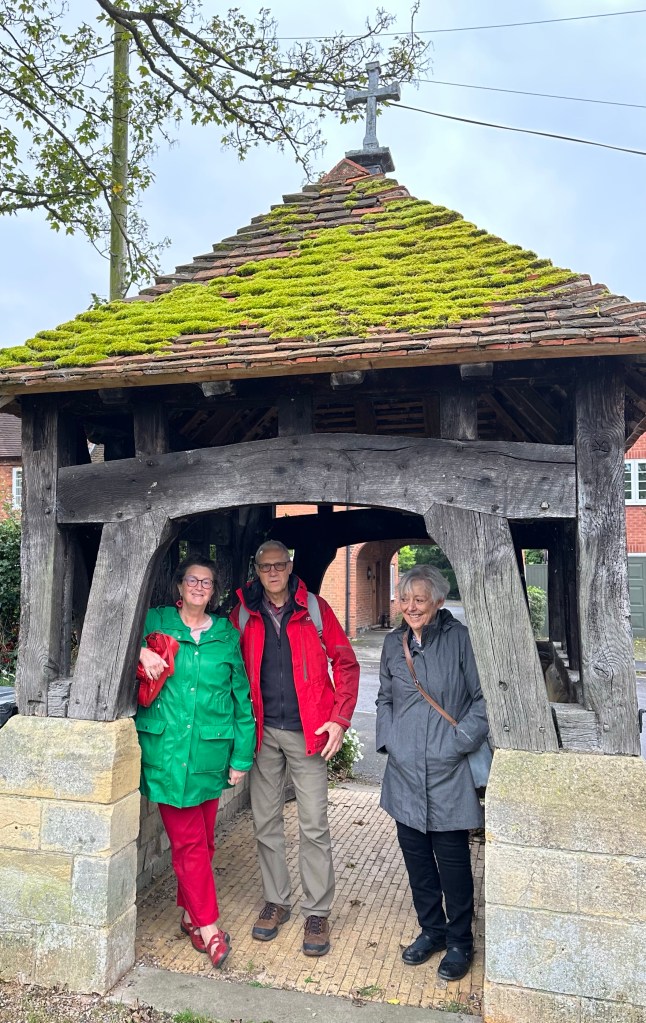
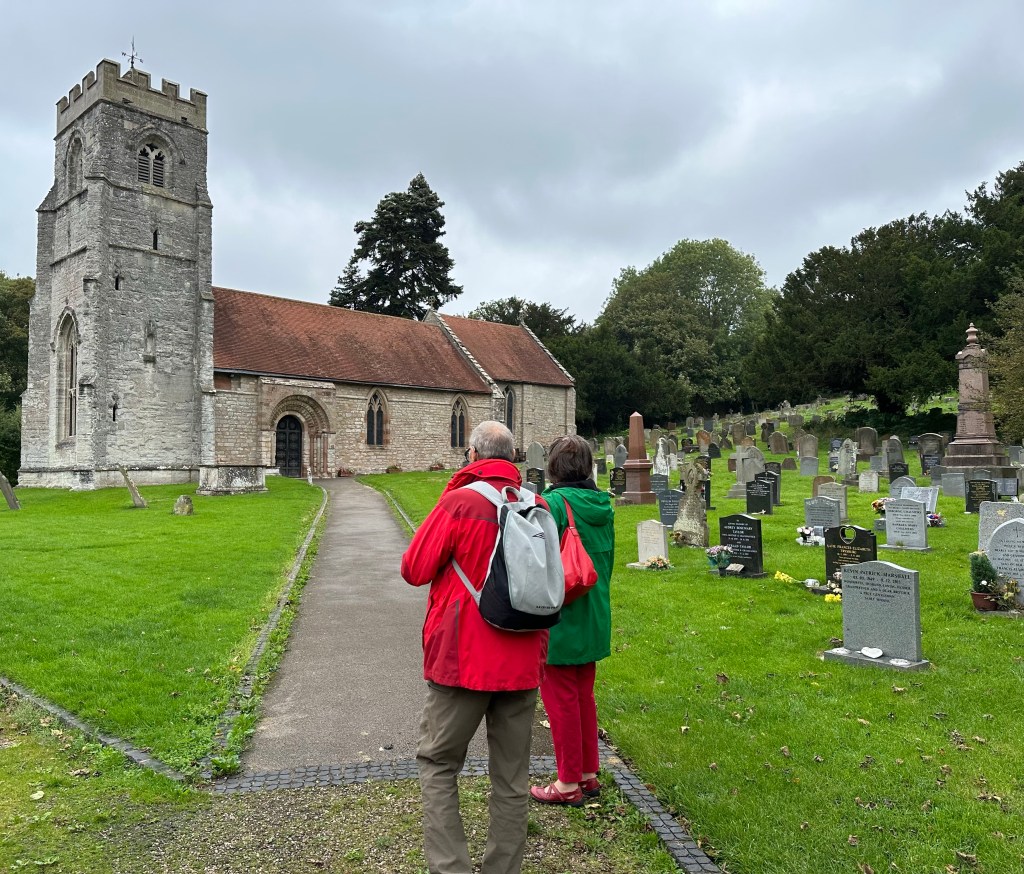
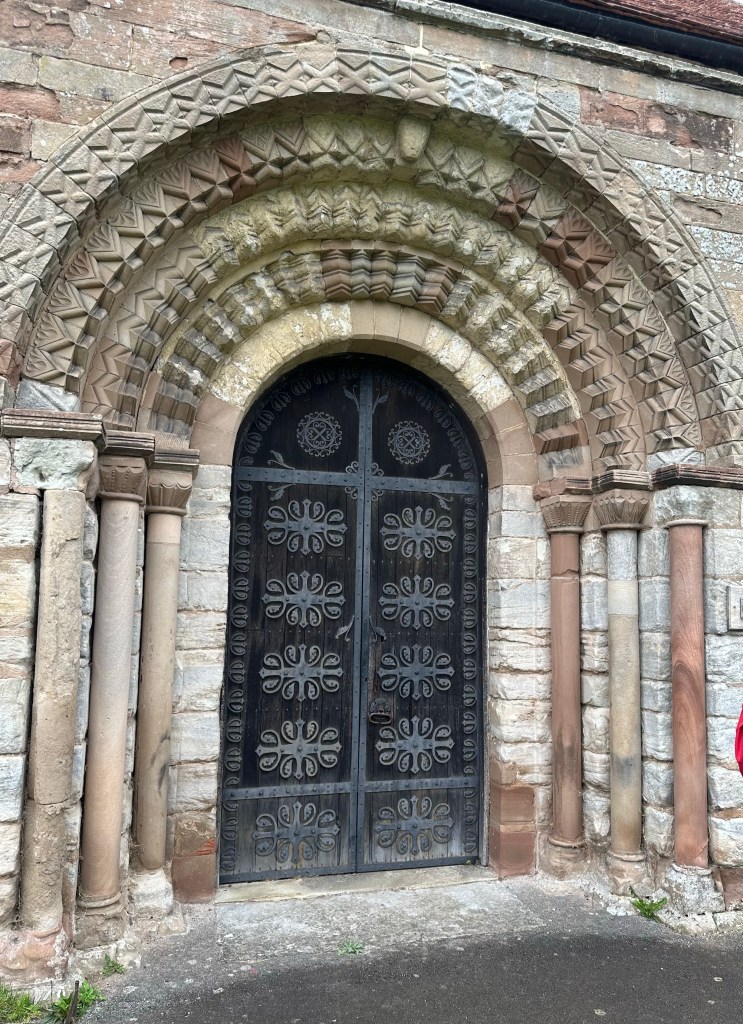
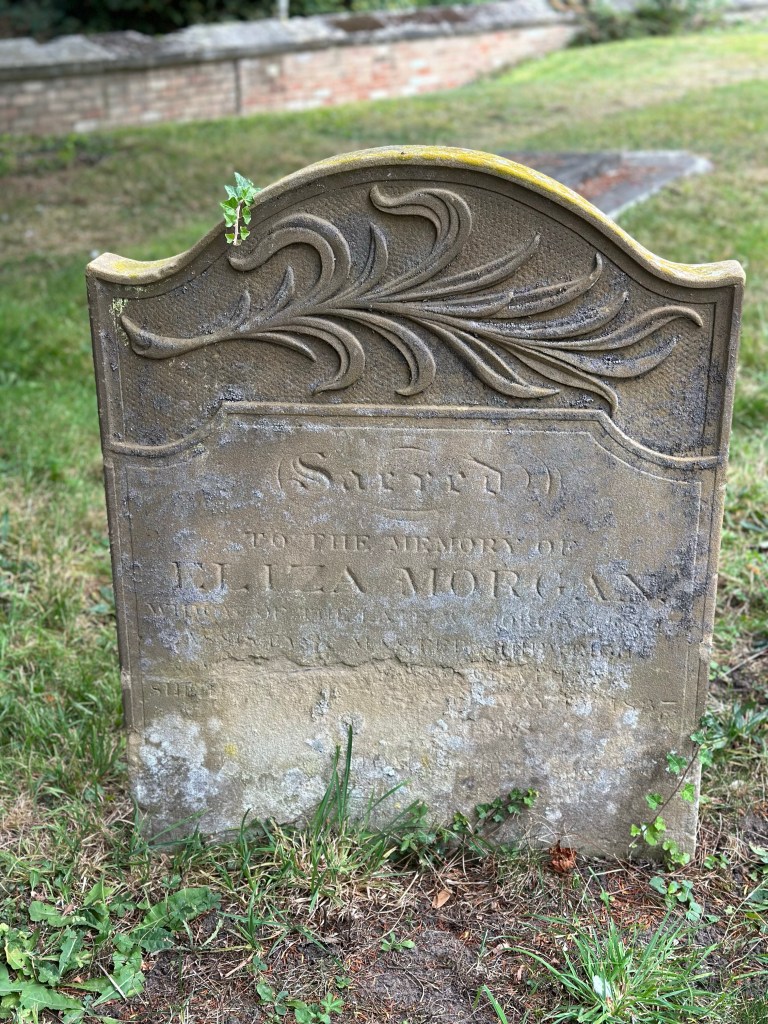
    Entrance to St. Nicholas Church

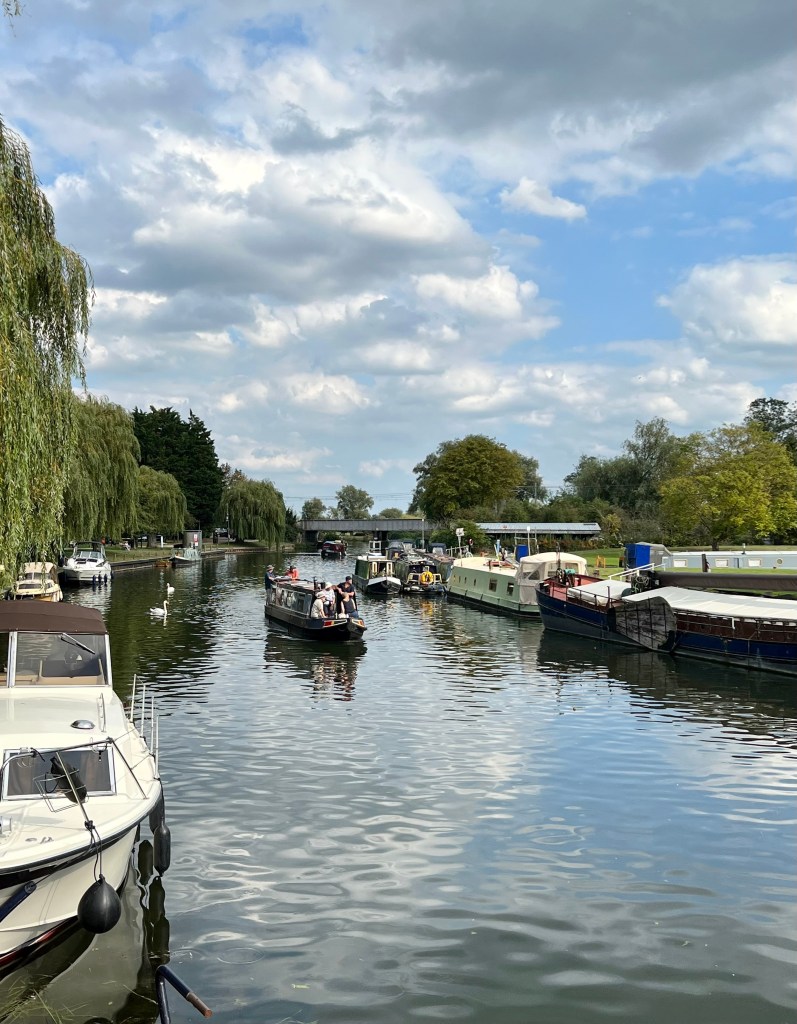
    After a short stop at ancient St. Nicholas church and its graveyard in Henley-in-Arden, we spent time along the Stratford canal and were introduced to the history and operation of the canal locks.
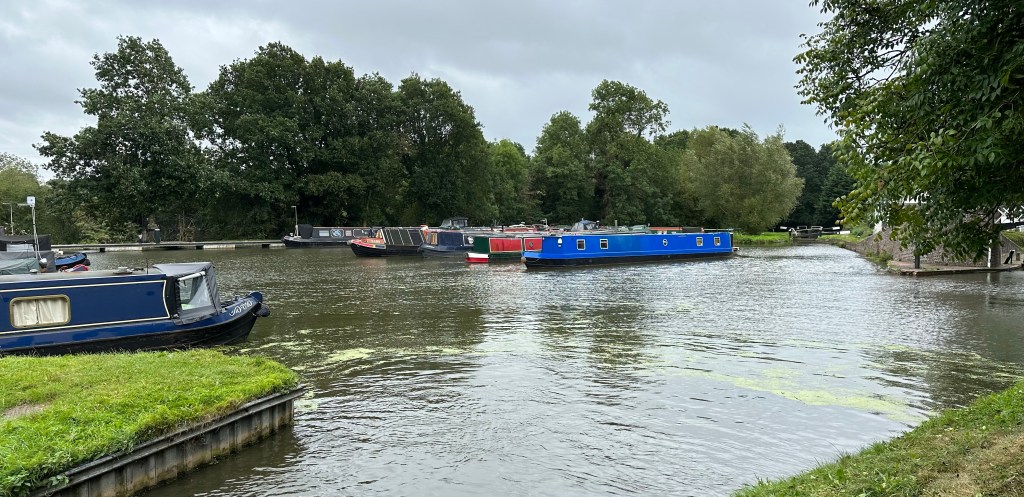
    Two canal diverge here

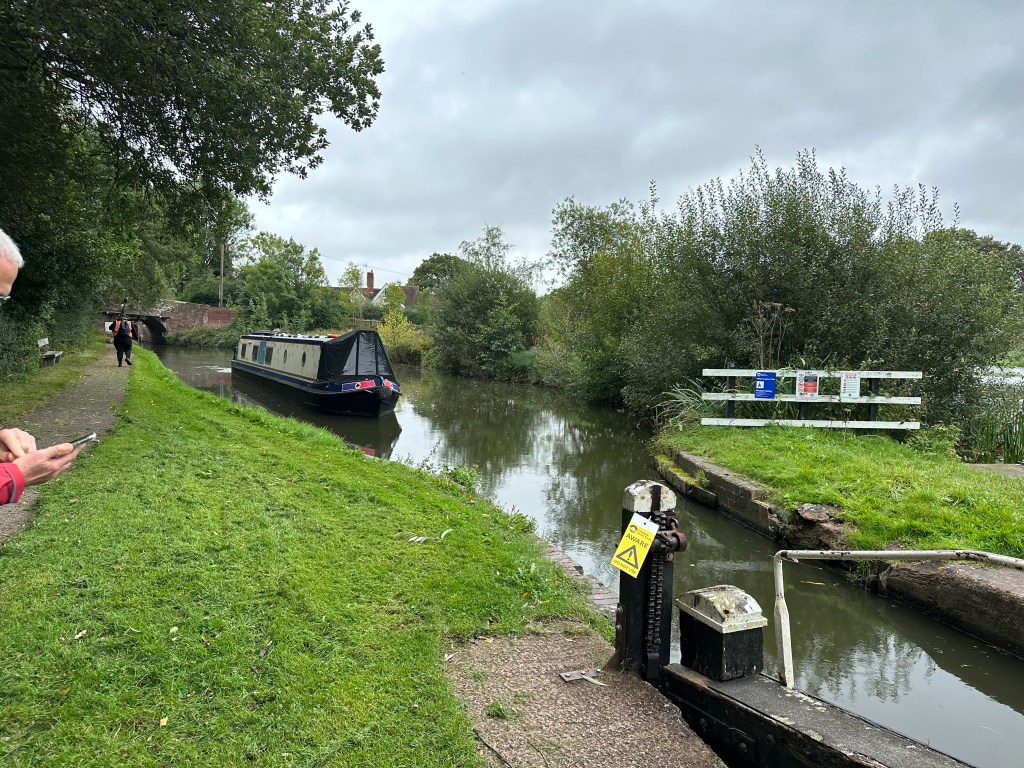
    We watched a boatman and his wife coordinate the opening and closing the locks so that the boat could proceed. The operation is labor intensive. You close the lock so it fills with water, move the boat into the lock, let the water out, move the boat out of the lock, and close the lock for the next traveler. The engineering of the locks and their age makes maintenance a big issue.
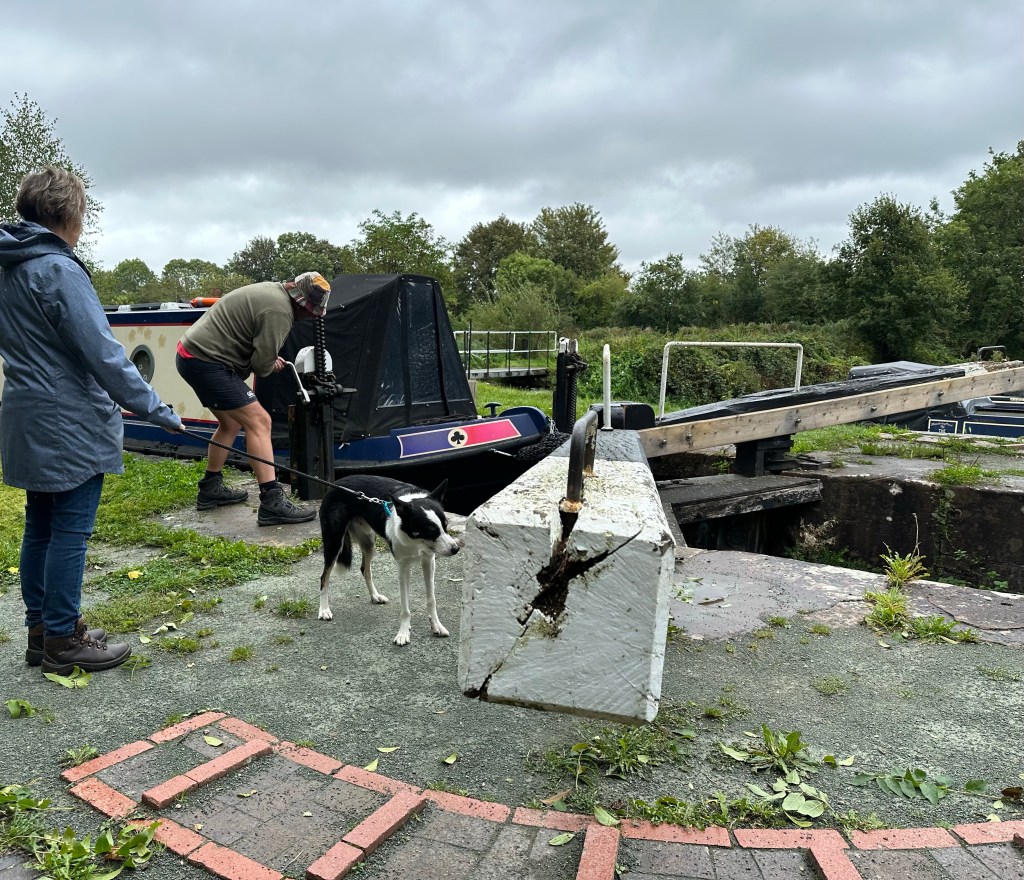
    Boatman opening or closing the lock by hand

    The people who live in boats along the canals have a community that reminds us of the RV community—friends who support each other in the gypsy life.
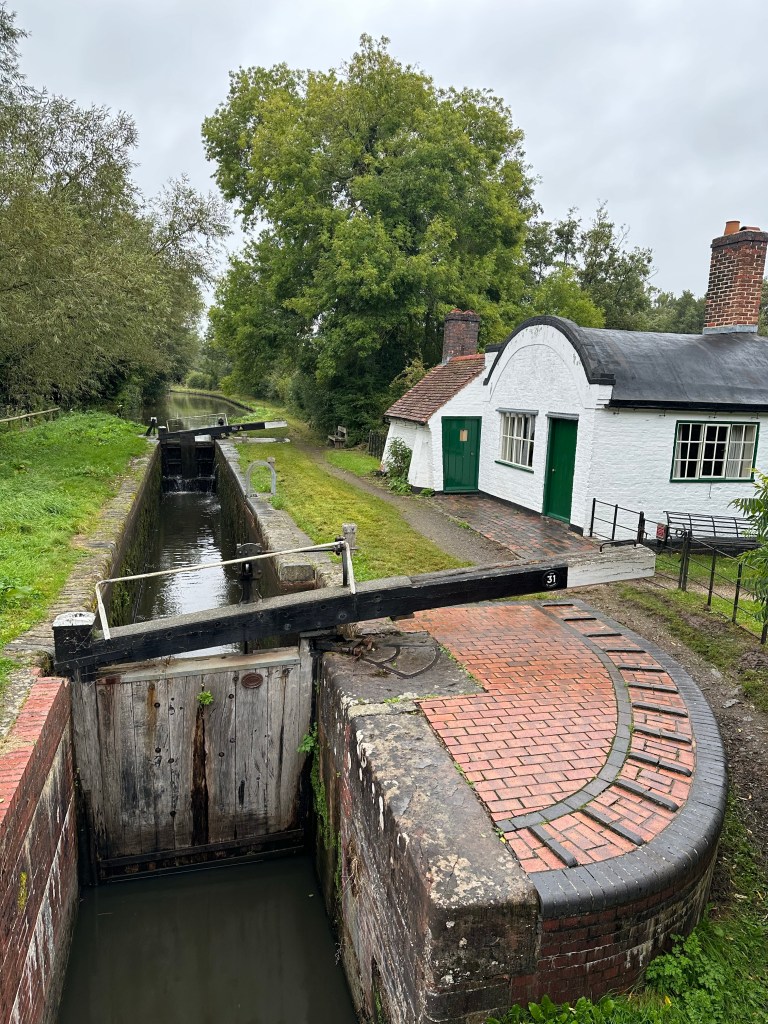
    A lock beside what was probably a canal caretaker workshop
    Canal Scene

    Being a good citizen means doing all this accurately because you leave other boats high and dry if you don’t. Apparently amateur boaters are the scourge of the canal community.

    We walked the footpath along the canal from Lock 17 to Lock 21. In less than a mile, there were 5 locks requiring the lock opening/closing operation 5 times to get up or down the river. But there must be many rewards also for the canal life to balance the rigors.
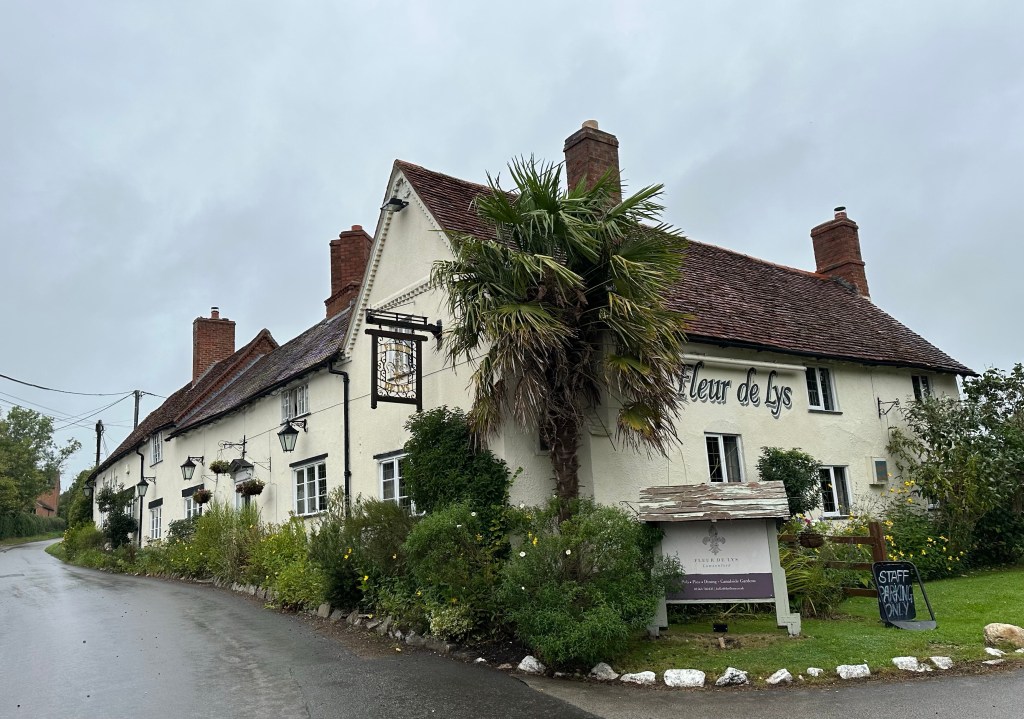
    The next stop was Fleur de Lys pub at Lowsonford where the restaurant is famous for pot pies. Judith and I enjoyed savory pies served with a thick brown gravy. Becky and Andy had warm and wonderful leek and potato soup with crusty bread.
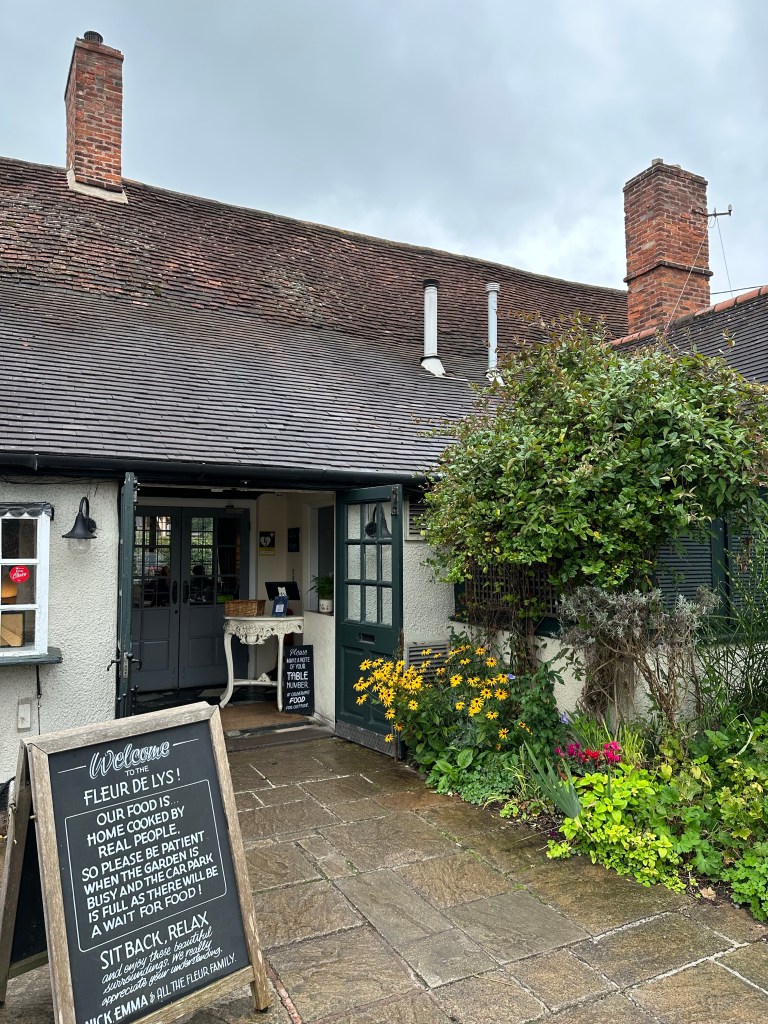
    Entrance to Fleur de Lys Pub
    Interior of the Pub with important sign

    The repast prepared us for the next stop at Baddesley Clinton, a 16th century manor house with a proper moat.
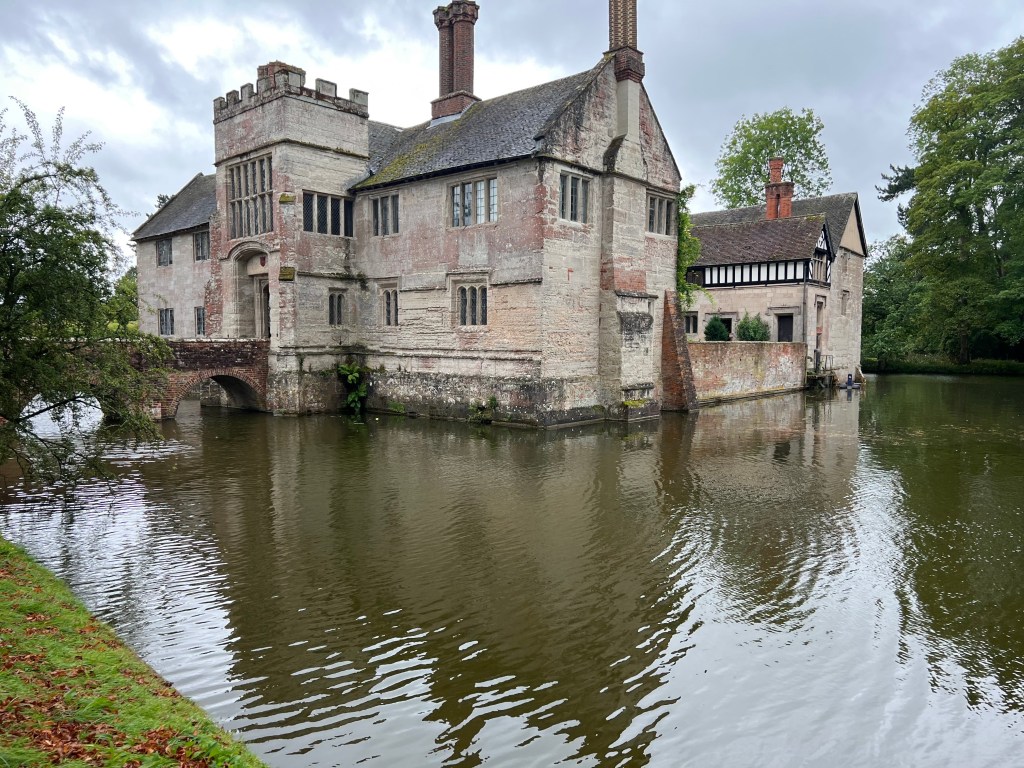
    Baddesley Clinton was the home of the Ferrers family for 500 years. Much of the house you see today was built by Henry Ferrers, a lawyer, diarist and antiquarian, in the late 1500s.

    FROM WARWICKSHIRE TOURIST GUIDE
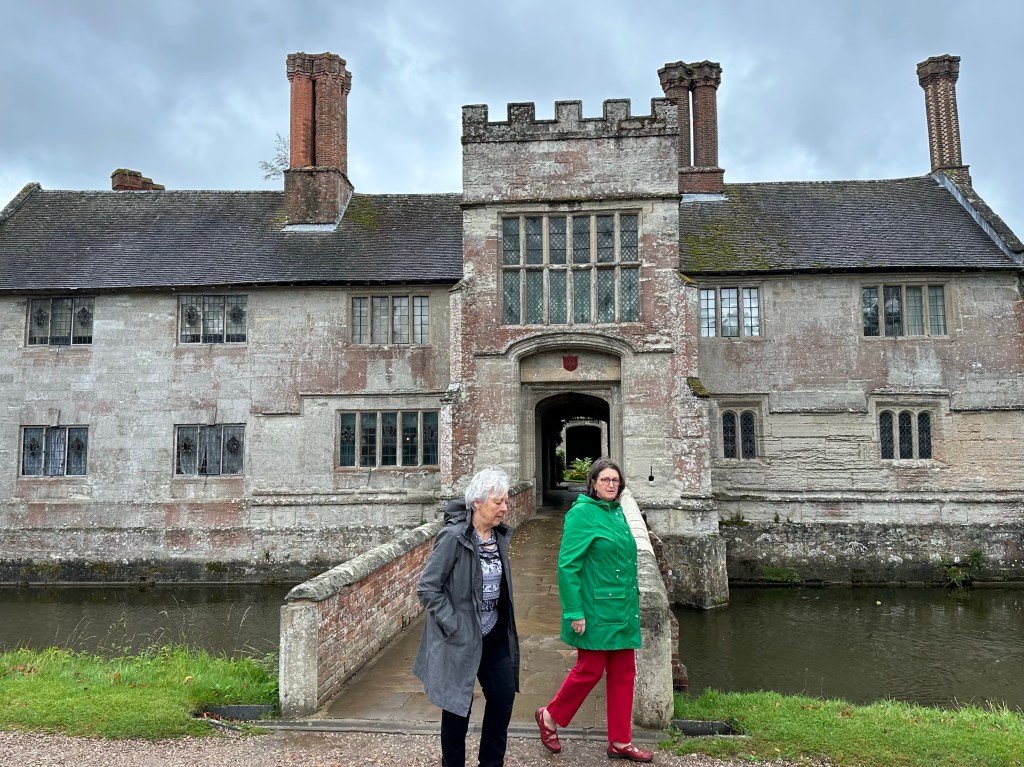
    Judith and Becky walking by the moat

    Over the centuries and many generations of owners, the square building was modified in different styles and materials; one wing was torn down opening the interior square for a beautiful garden and vista. Over time, the manor has been visited by royalty, threatened by armies of both the King and the Reformation, and served as a place to hide priests during the revolution. Eventually, the cost of upkeep led the owners to turn the manor house over to the National Trust.
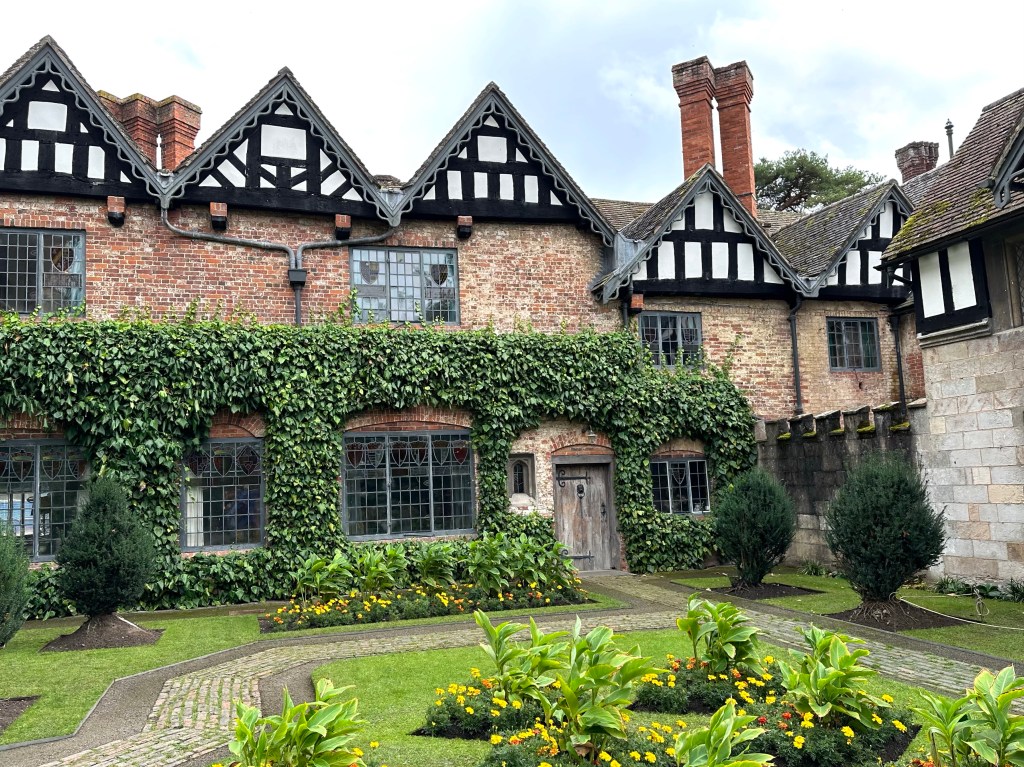
    Interior garden of Baddesley Clinton manor house


    A nap in the afternoon was required after such a wonderful day of favorite places. Around 7:00, we roused and walked two blocks to the cultural center and entertainment complex which included the new Birmingham Library (called the wedding cake), the Symphony Hall, convention center, aquarium and the Birmingham Repertory Theatre.

    New Birmingham Library in Cultural Center—called the wedding cake

    Many restaurants and bars are located along the picturesque urban canals nearby. The Iguana was chosen for a quick burrito and a quesadilla, then back to the hotel for a little time for Spelling Bee and Wordle and sleep.

    The second day tour focused on the University of Birmingham where Andy retired as lecturer in the Department of Social Policy and Social Work. A stroll took us into the beautiful campus center which features the tall, tall campanile which Becky heard ringing 12 times for noon.
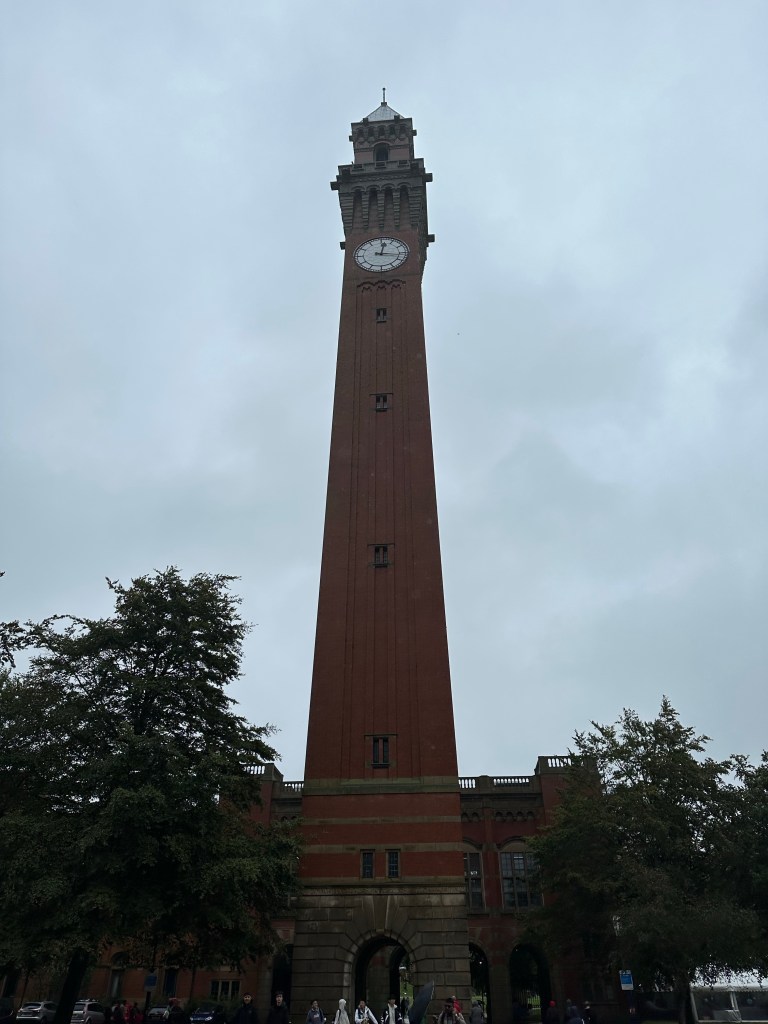
    Campanile

    The campus was hopping with returning students. We looked in the impressive Great Hall where an orientation for new students was being held.

    The Barber Institute of Fine Art was our first engagement. The core of its collection is Italian and Flemish Medieval and Renaissance art. A special exhibit of similar art on loan from the Woburn Museum enhanced the collection. The skill of these artists is impressive. The support by church, royalty, and wealthy patrons during this time led to advances in composition, perspective, techniques, and material.
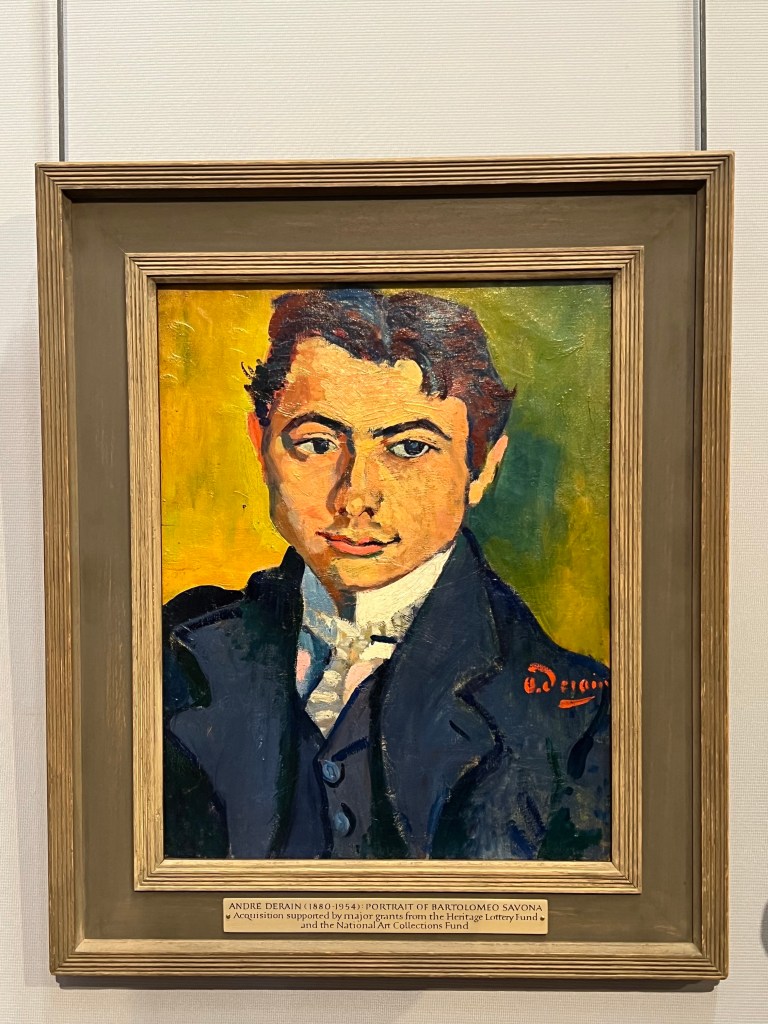
    Andre Derain , leading fauve artist

    A smaller gallery held art from the impressionist, post impressionist, and modern periods. Single high-quality works by many artists of the late 19th and 20th century were on display: Leger, Vuillard, Bonnard, Degas, Renoir, Gaugin, and an early VanGogh in very dark browns and grays.

    Across the street from main campus is the Winterbourne House, a beautiful example of early twentieth-century building which is open to the public. The Nettlefold families were at the pinnacle of Birmingham society and grew wealthy from their metal fabrication factories making screws and other machined goods.
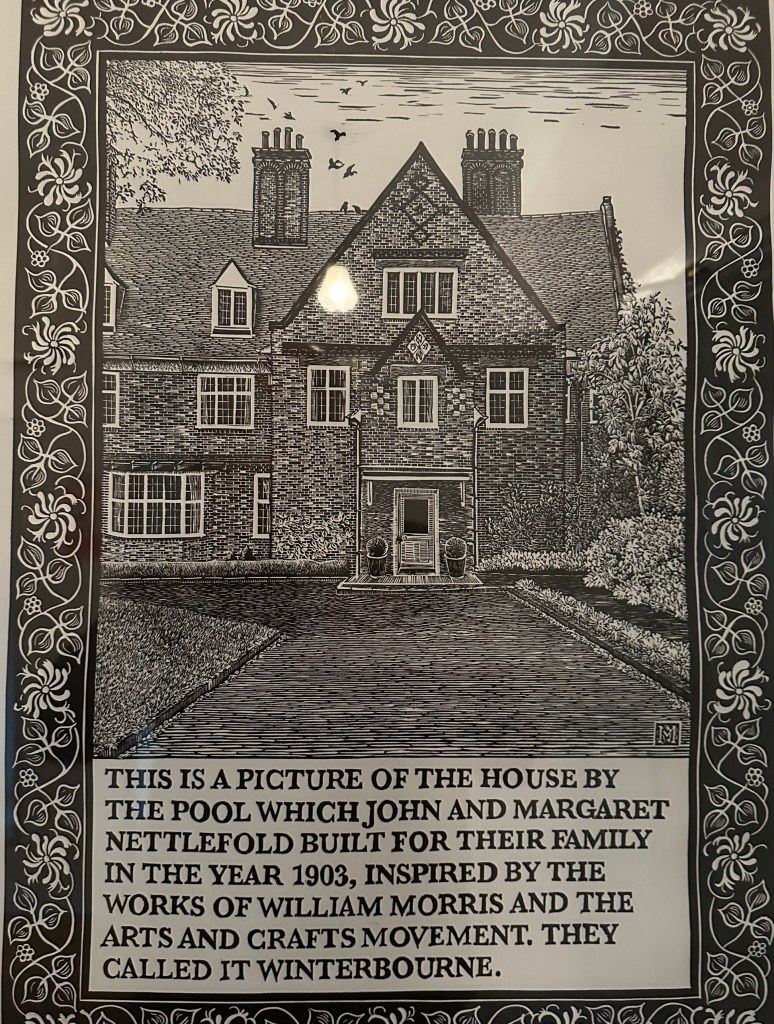
    A series of linotype prints in the arts and crafts style were made by Susan Moss in 2018 based on quotes from Nettleford family diaries and letter.

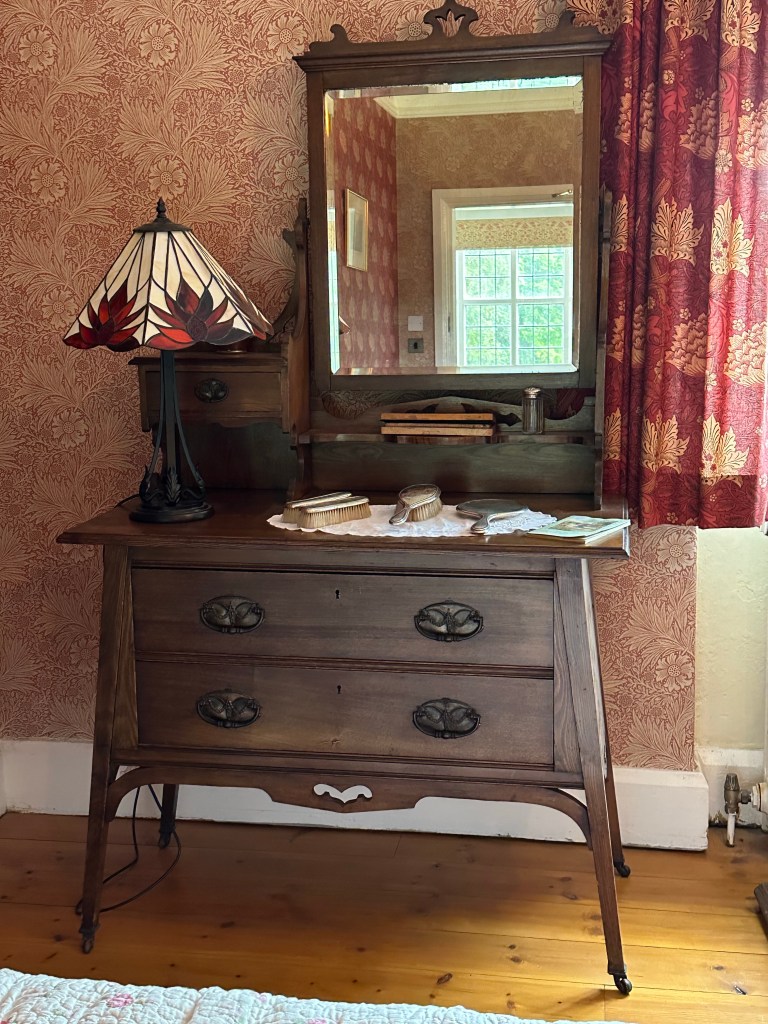
    The red brick exterior is consistent with the Victorian sensibilities, while the interior has a less formal approach to living consistent with arts and crafts design.
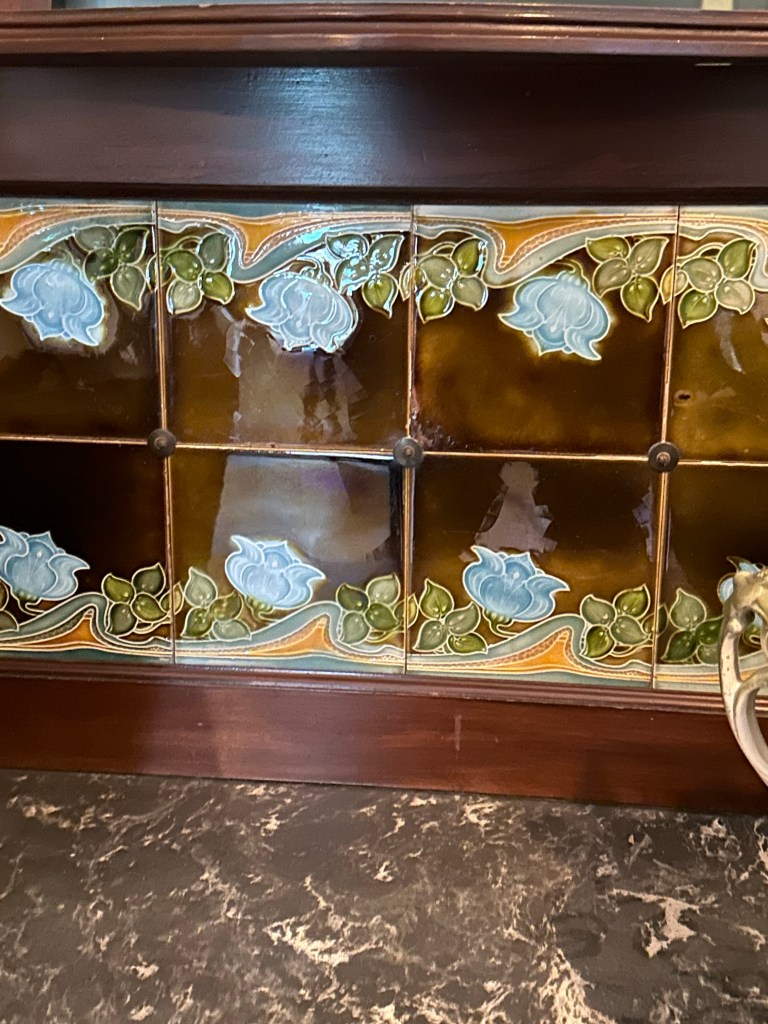
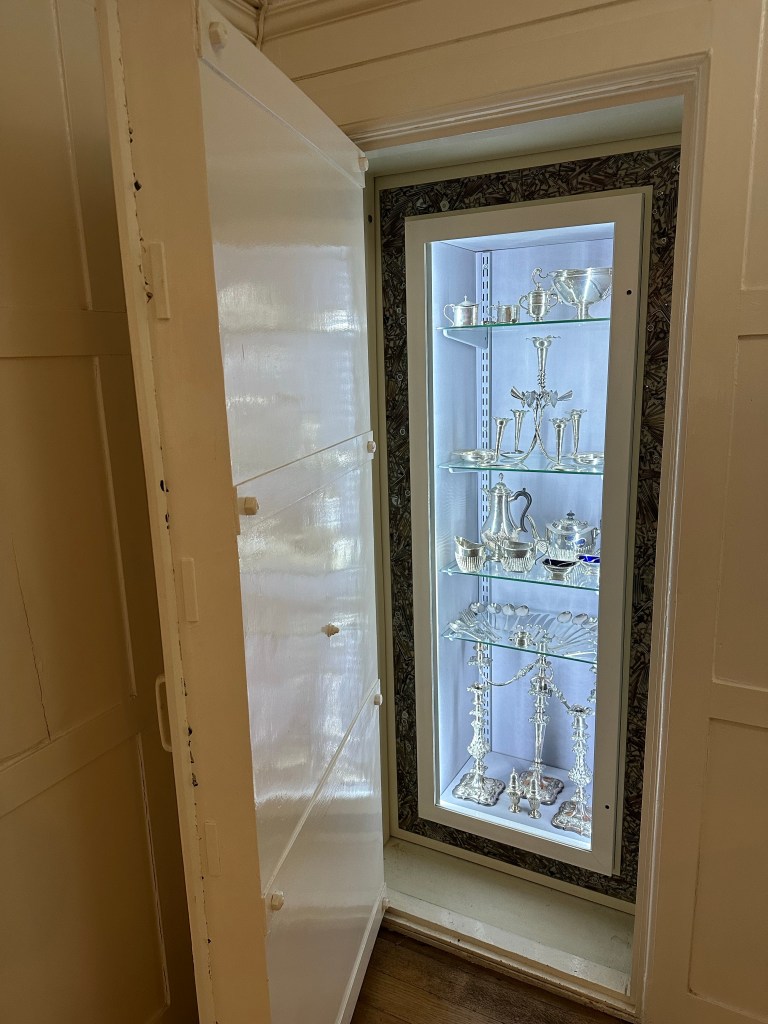
    Safe for silver
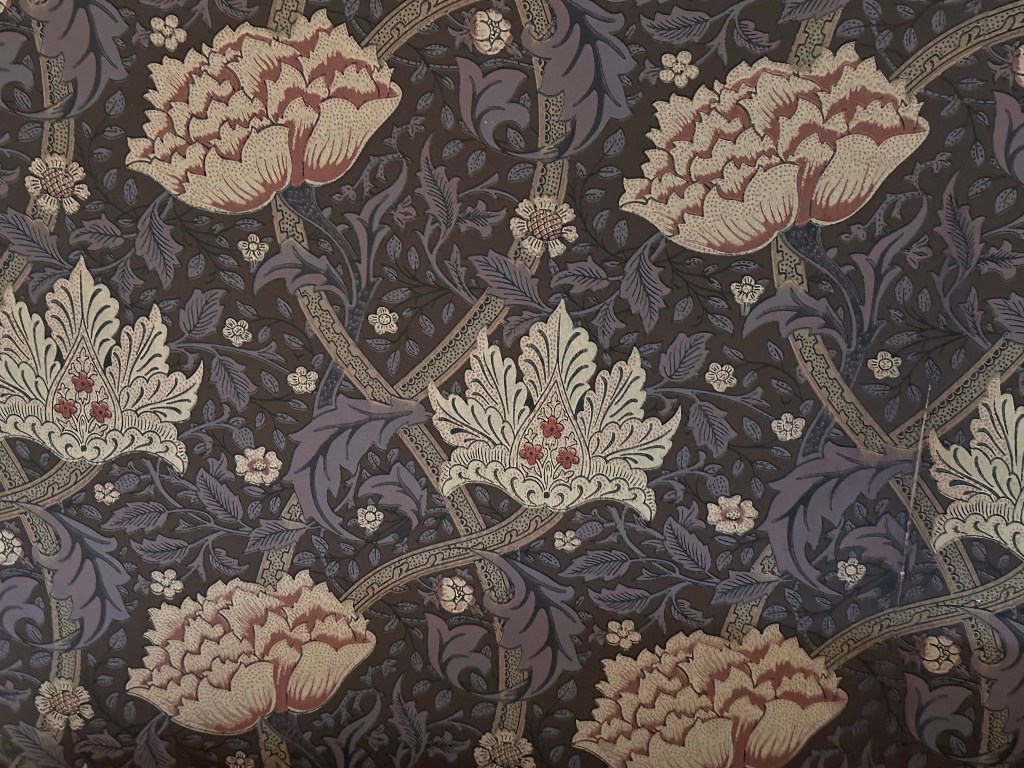
    Winterbourne house was decorated
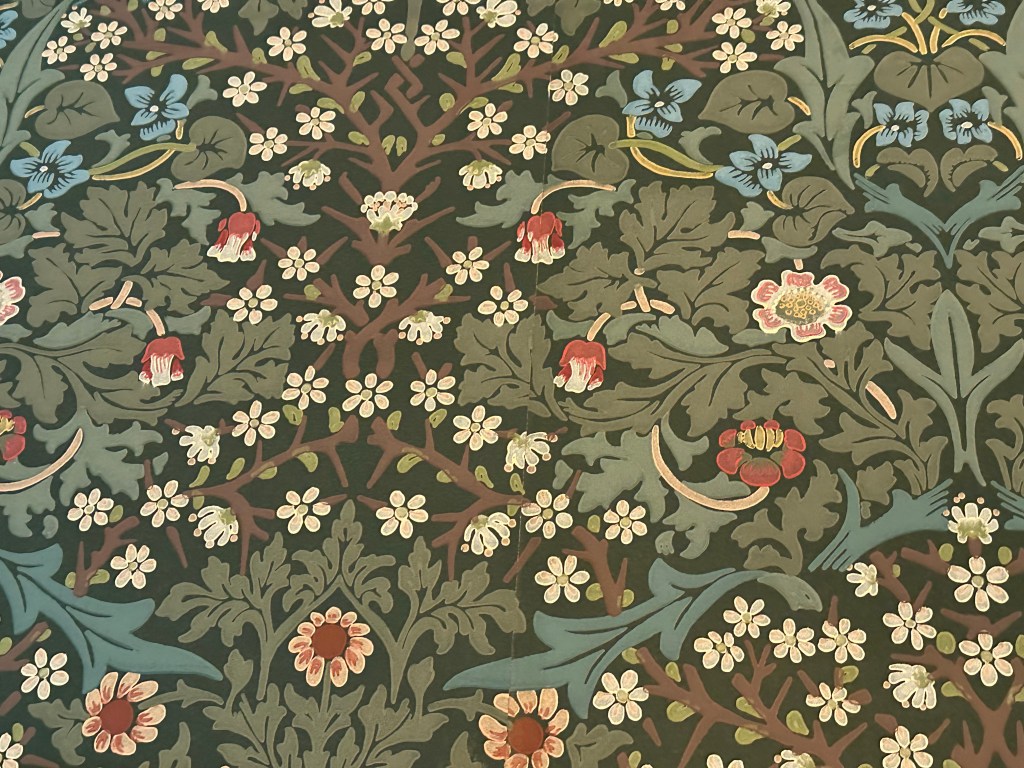
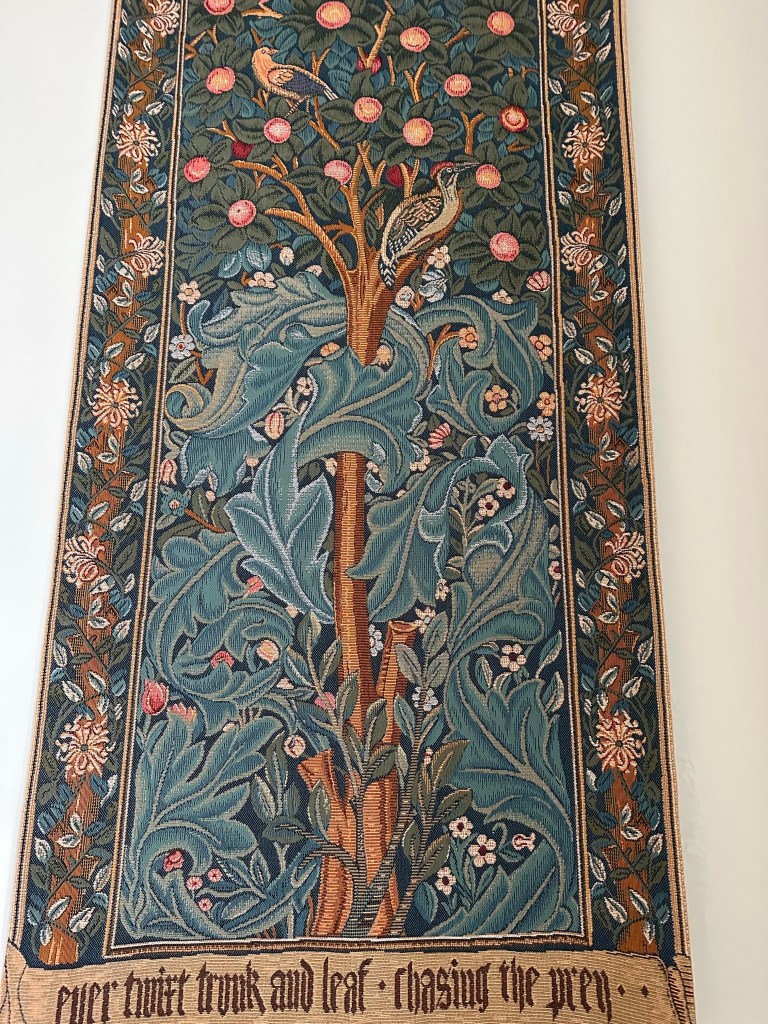
    in Arts and Crafts style patterns and furniture

    The house has been preserved with original furnishings as if the family were out for the day. Portraits made of Mr and Mrs Nettlefold and all the six children were painted in the style of John Singer Sargeant. The children’s playroom was especially interesting as the family had six children spread across 15 years.
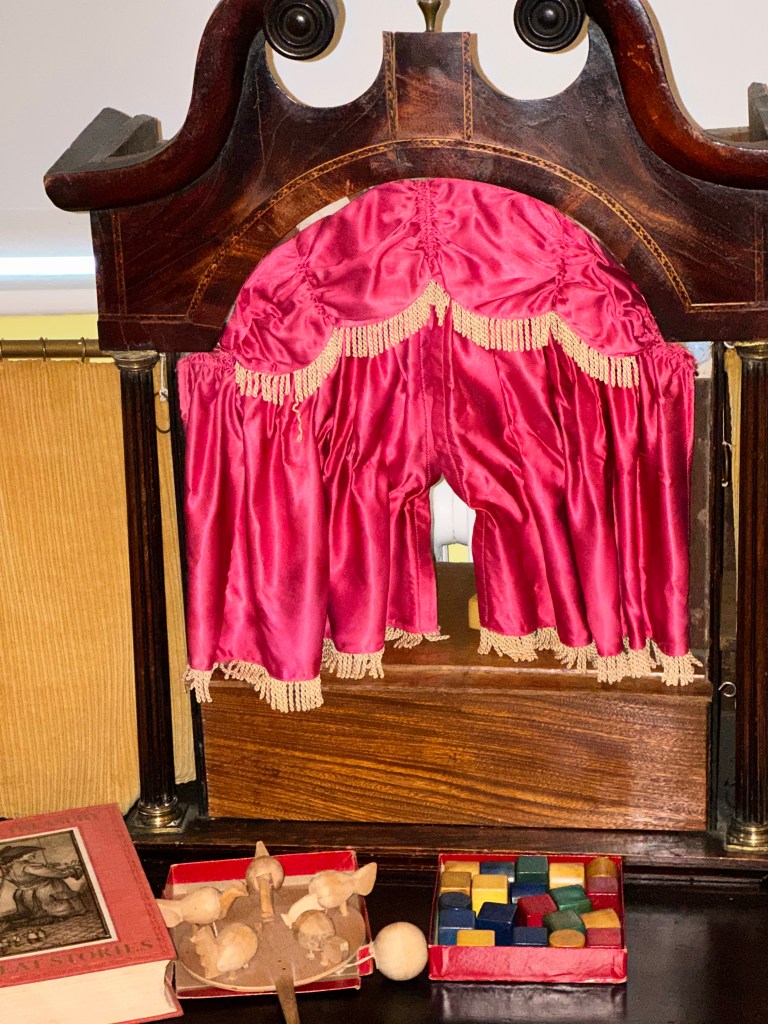
    Puppet stage for children in the playroom

    We spent at least an hour on the house tour and another hour admiring the garden which was in late summer bloom.

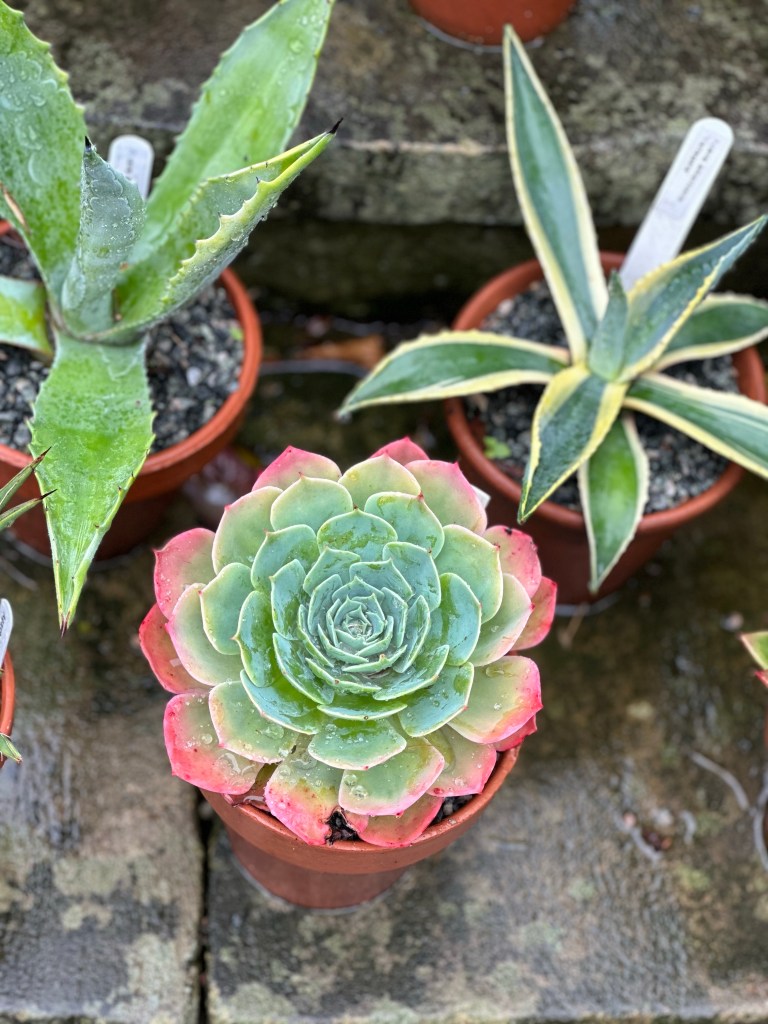
    At one end of the house there was a gallery showing the work of Berthold and Margaret Wolpe, artists who worked with Faber publishers. They designed many book covers with a distinctive modern style using color blocking, strong simple graphics, interesting fonts including ones that they designed. Their designs approach influenced design in many areas.
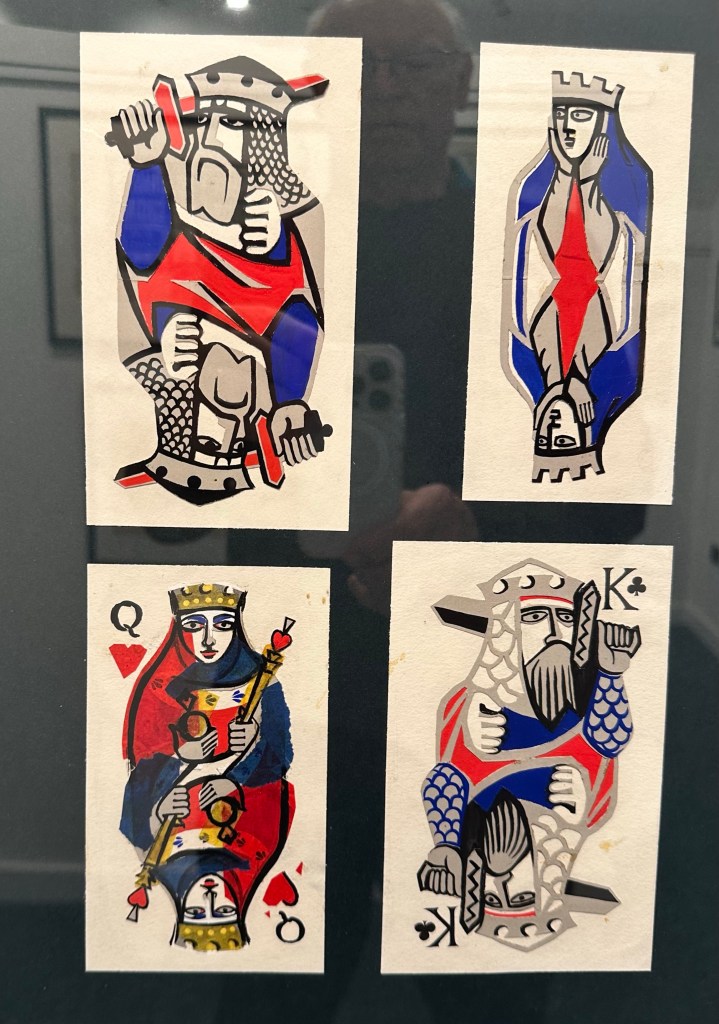
    Wolpe designs for playing cards

    Our visit was bookended by visits to the cafe at Winterbourne. When we arrived, we ordered carrot and coriander soup with a large roll to power us for the afternoon. After the house and garden tour, we lingered over tea/coffee time with scones, Victoria sponge cake, and Bakewell tart—a great time for reflection and conversation about all we had seen in the two days as well as a variety of other topics. Again we closed the cafe down; our red VW flyer took us back to the hotel buzzing around 5:00 traffic and road construction. Hugs all around celebrated our wonderful Birmingham adventures with Andy and Judith.

    After an afternoon rest, we walked to the cultural complex again for supper. This time we chose Neapolitan pizza at Rudy’s for deconstructed antipasto salad with burrata and delicious white pizza with mushrooms. They served an Italian dry cider Anglioletti that was superb.
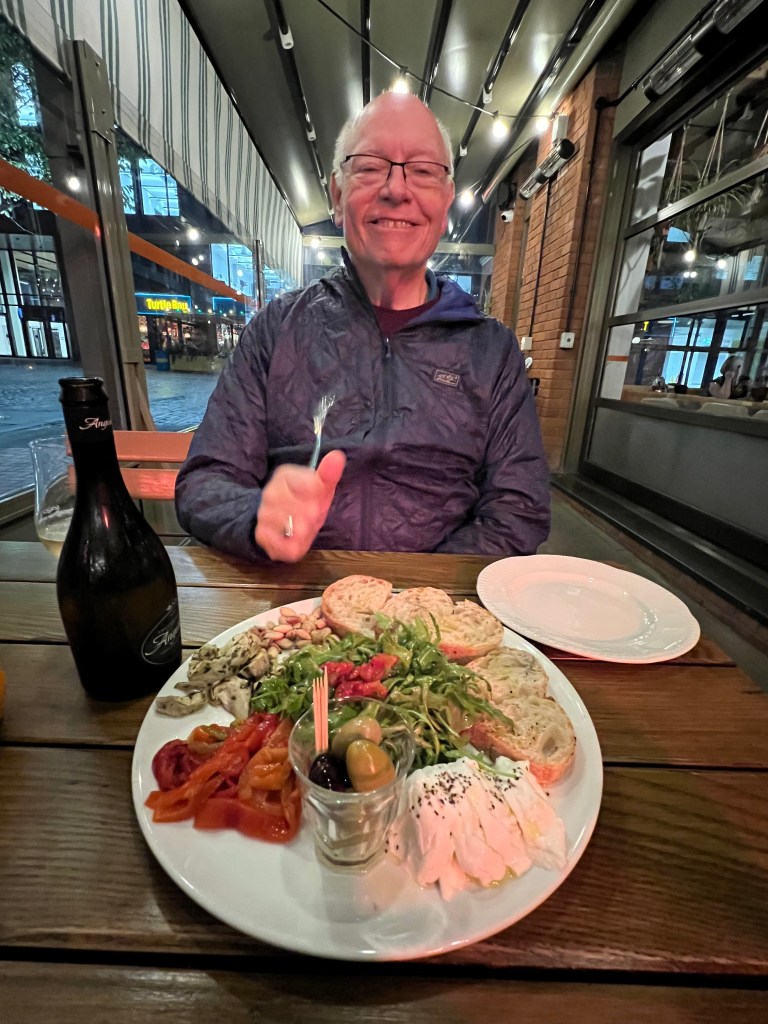
    Ready to chow down on beautiful antipasto at Rudy’s pizza

    Back to the hotel and packing clean clothes thanks to Judith who volunteered to wash. We are so grateful to Judith and Andy for their hospitality and tour guiding. Their favorite places are now our favorite places.

  • Episode 2 Grantchester or Bust

    September 18th, 2023

    While the Robsons headed northward, we had two days in Cambridge with many possibilities. Top of the list was visiting the village, the setting of the PBS drama “Grantchester.” The storyline has a country vicar solving crimes in conjunction with the local police detective (Robson Green). The crimes are not as wicked/weird as those on “Midsomer Mysteries” or as silly as “Father Brown,” just complicated tales of finding justice for the citizens of Grantchester.

    Committed viewers were attached to the first vicar, Sydney (James Norton) of the beautiful locks. But he abandoned his flock, both in Grantchester and those watching on TV, with some fabricated excuse such as moving to America to be with his new love.

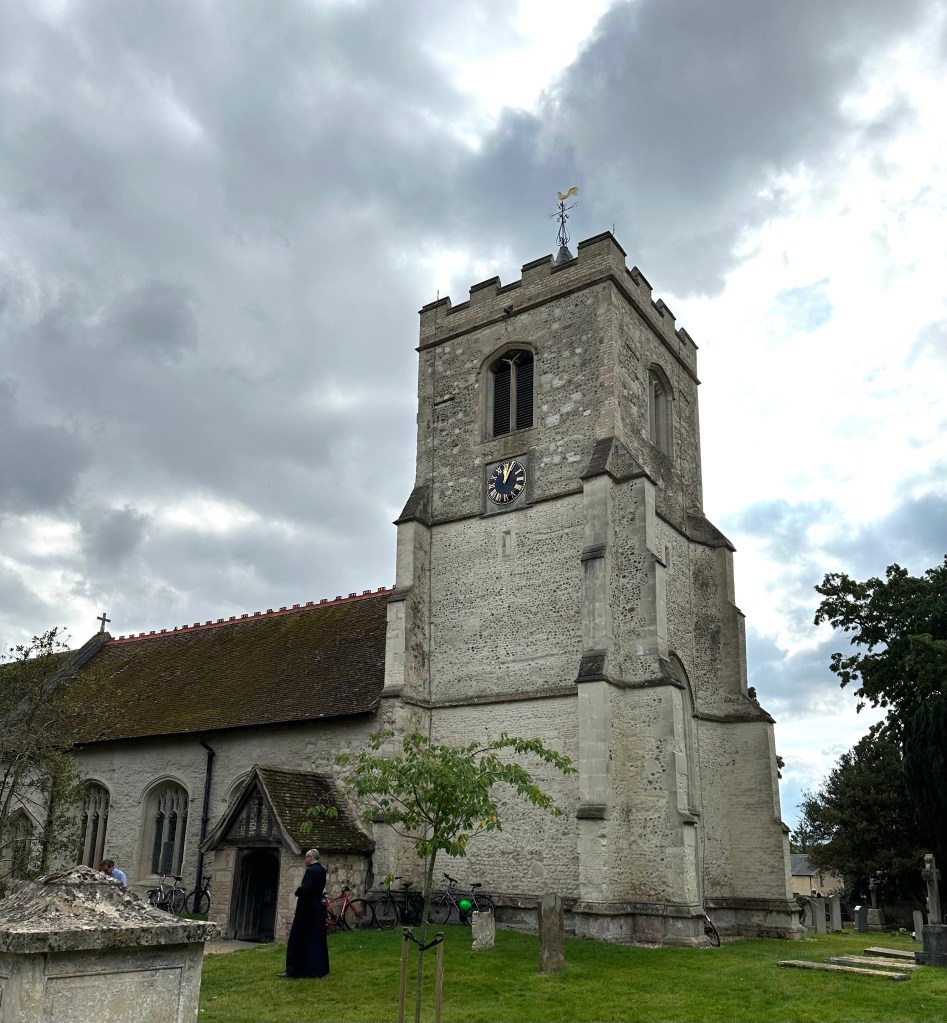
    Grantchester Church

    You know how hard it is to break in a new minister when you were really attached to the old one, even after they abandon you.

    Yes, Grantchester fans have been slow to warm up to new vicar Will (Tom Britney) who seems a little (a lot) immature. After three seasons, for those of us who continue to go to Masterpiece church on Sunday night at 9:00 pm, Will has begun to grow into our affections after a string of bad behavior and recovering from a crisis of faith. Perhaps redemption is possible even for TV vicars.

    Cambridgeshire transportation is mainly by bus. I read about bus routes for the Stagecoach bus line and bought Day Plus pass for 2 days. Surely that would get us to Grantchester. When we asked the “Ask Me” person about how to get to Grantchester, she pointed to a bus that would take us to city center where we could catch another bus.

    At the bus station, the bus company which took us downtown was not the bus company that went to Grantchester. We needed a different day pass to get there, we had just missed that bus, and the next bus would come in an hour.

    A little frustration led us to sightseeing in suburban Cambridge from whatever bus was going anywhere and coming back. This was a very interesting ride through neighborhoods and commercial areas with grocery, restaurant, antique, and kitchen shops. With just enough time to eat tasty, hot samosas at the ChaniWalli Indian street food truck, we caught the right bus, we thought, to Grantchester. The samosas were very good but only whetted our tastebuds for Indian fare.

    Bus 18 left on time and we looked forward to wandering the TV familiar streets and sights of Grantchester. People got off and on along the route. We thought we would soon arrive in the middle of the village—probably beside the church and vicarage. We just rode and rode through beautiful countryside. We saw two new residential developments along the bus route. Suddenly we were at the end of line at St Neots, a charming old town with a history fair on the town square sponsored by the local museum—but not Grantchester.

    I had neglected the first test of travel by not asking, “Where do we get off the bus?” The answer was the “Burnt Close” first stop outside Cambridge. At 3:00 an express bus arrived to take us back to Cambridge with the bus company where we first bought tickets. Back at the hotel, we took a short rest to soothe our soul’s disappointment in the day.

    For dinner, we went downstairs to the Station Tavern. The people sitting at the table next to us left their shopping bag. After 30 minutes, they came rushing back in a flurry to retrieve. New people at the table, Tim and Allison, struck up a conversation. We joined them and heard about their interesting life stories which entertained us for an hour while waiting for their train.

    After a good night’s sleep, Sunday morning brought new hope for visiting Grantchester. The new problem was that many bus routes, including Bus 18, do not operate on Sundays. We walked out of the hotel and took a taxi to Grantchester thinking it was a failsafe plan.

    And it was. The taxi took us to the front door of the Grantchester Church, actually the St. Mary and Margaret Church. The church had a special song service sponsored by the Friends of Grantchester Church. We arrived at 11:10 and the service began at 11:15. Now we understood why we had been frustrated the day before. We were meant to come on Sunday.

    The choir was in full voice, and the sermon was given by a visiting retired Archdeacon.

    Graveyard at church

    His message was that service to others is the central purpose of religion. The church sends part of the money earned from filming the series to support a community in Rwanda.

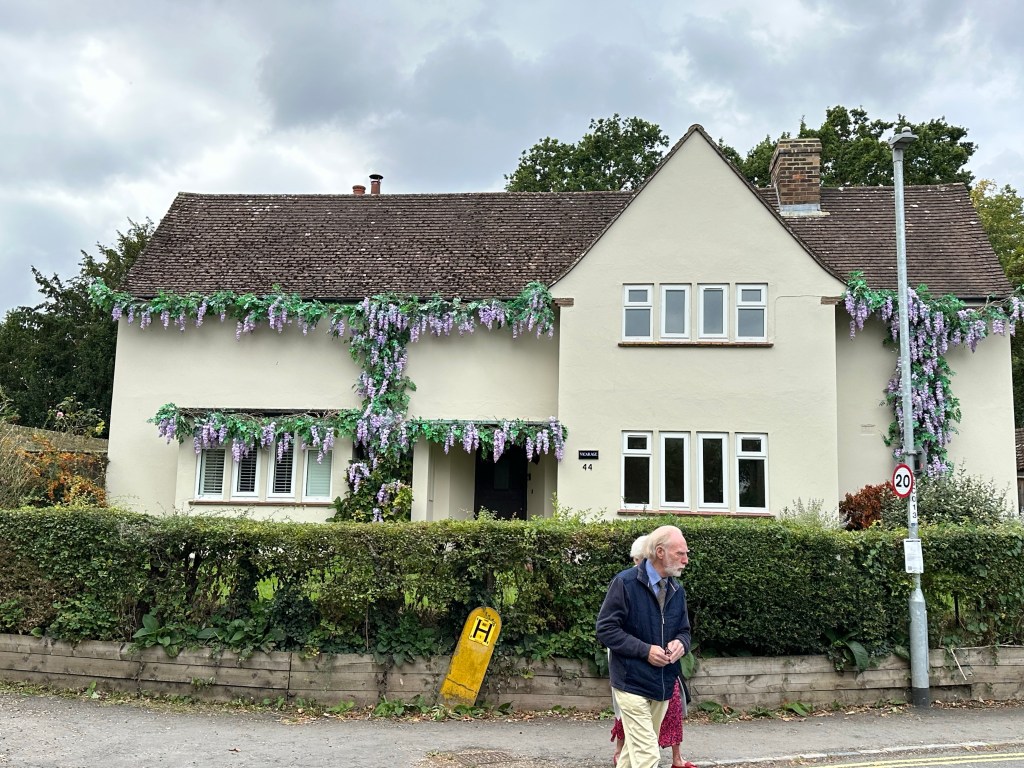
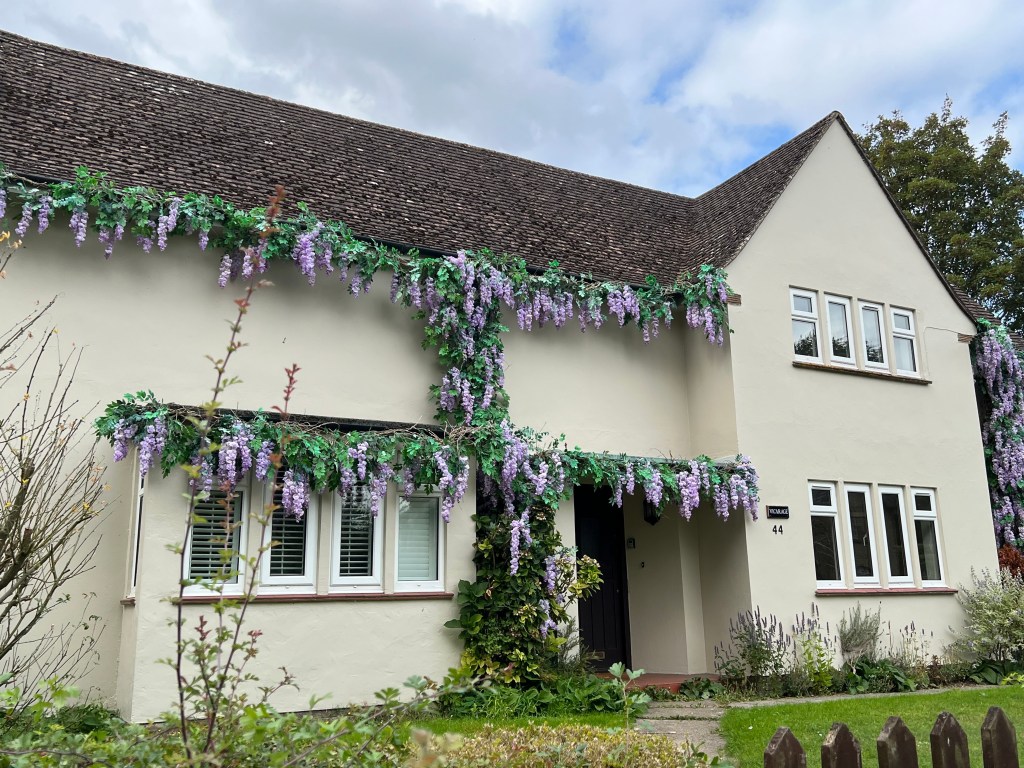
    Wisteria festoons in September

    The vicarage next door sported a new coat of paint and was covered with purple wisteria, an idyllic vision. As we were snapping pictures, a couple stopped to say the idyllic vision had been created for the TV show that finished filming last month – and that the wisteria festoons were plastic. All the world’s a stage! We also had a nice conversation with two women from Birmingham who tried to teach us to say “Bumminam.”

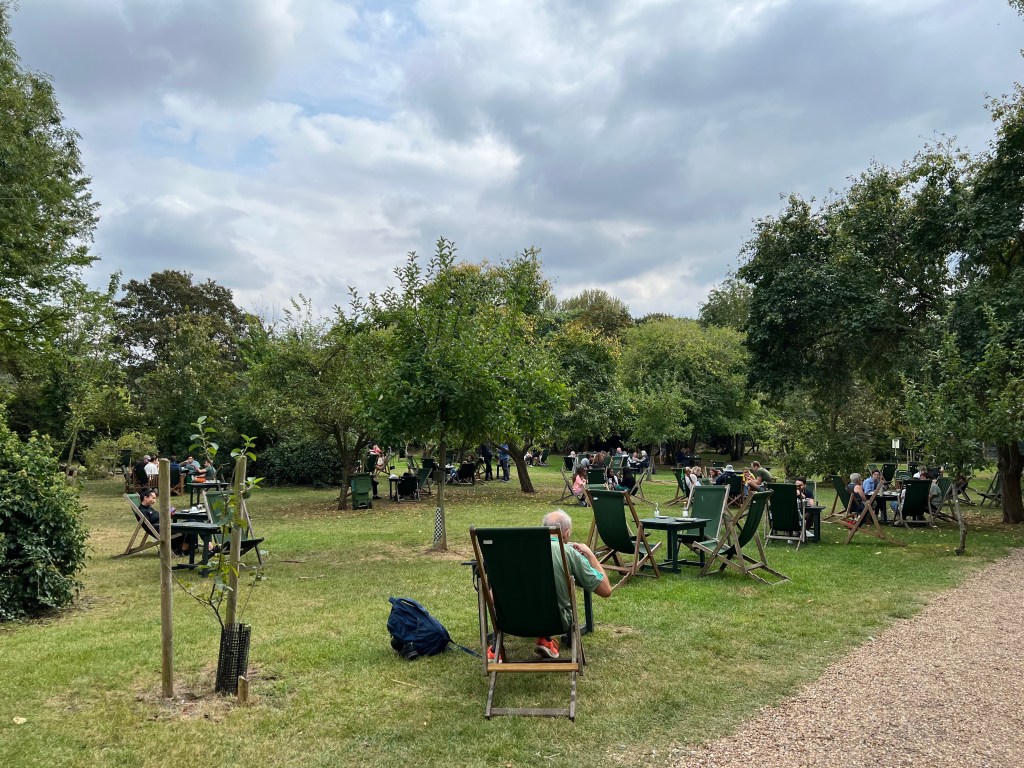
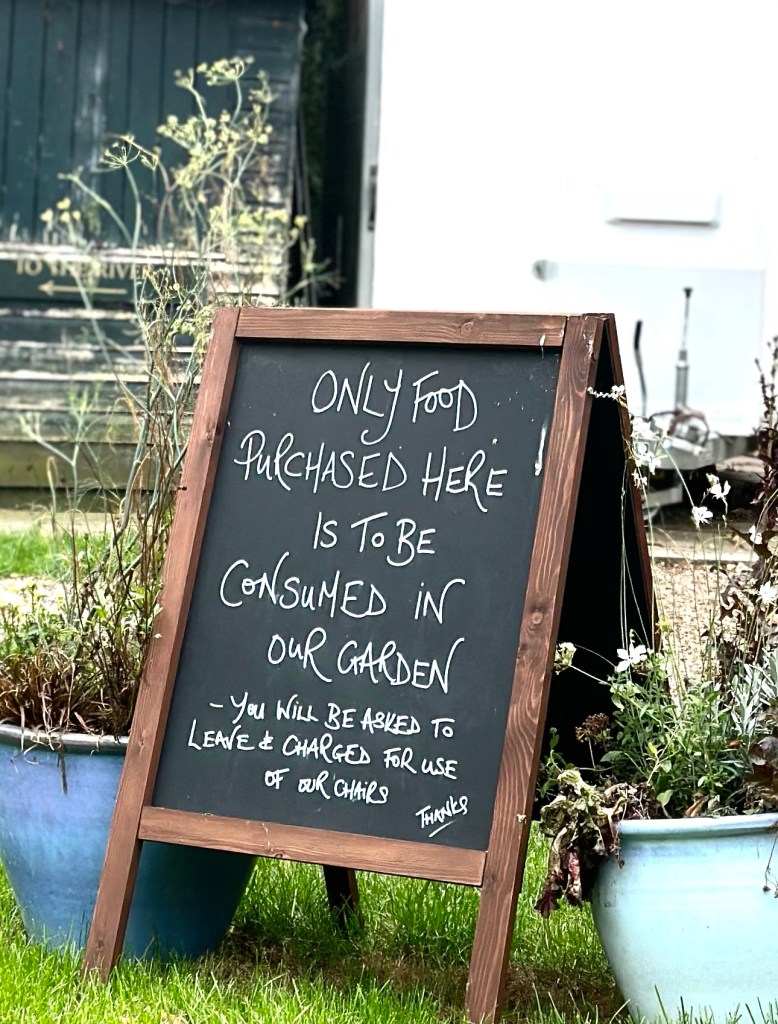
    The taxi driver recommended the Orchard Cafe for lunch so we walked down the High Street into a wooded park where tables and chairs were set around in an apple orchard with a busy sandwich shop,

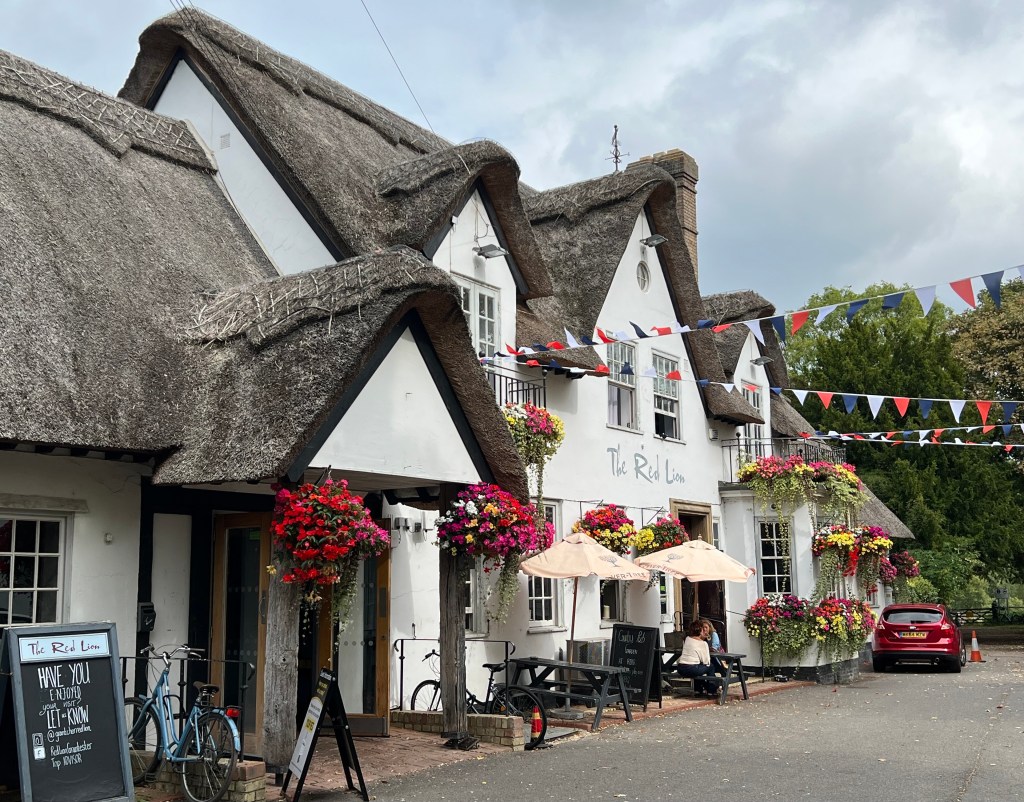
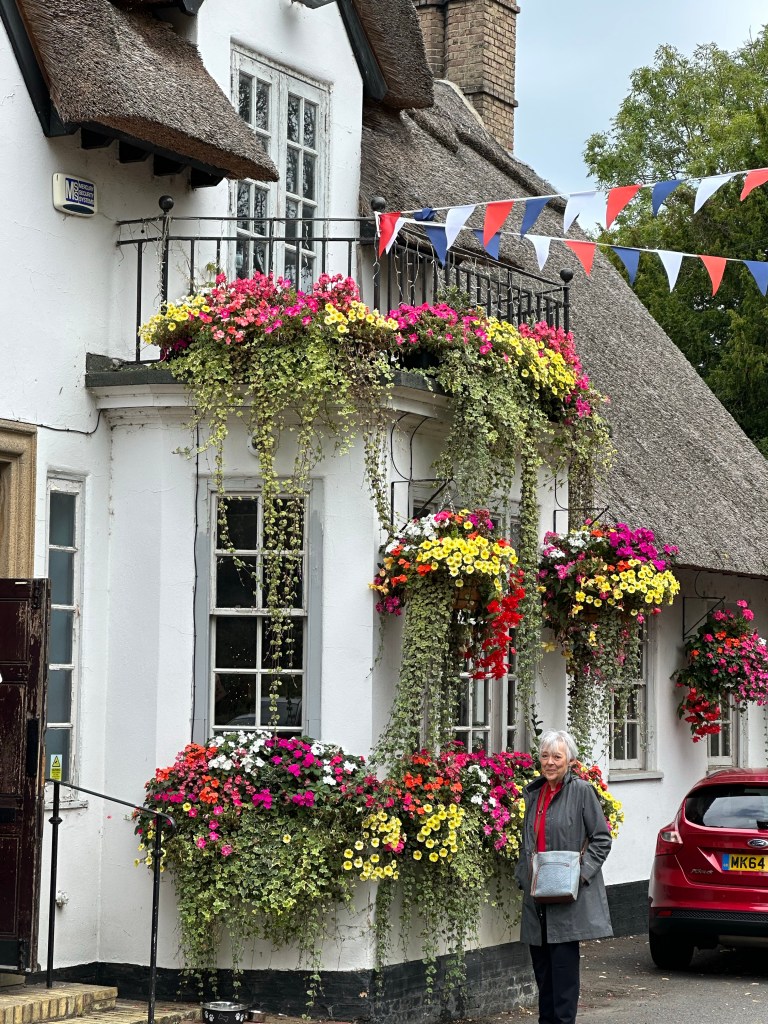
    We had lunch and rested in the park for a spell before walking back up High Street. We saw a couple of the local places—settings used for outside camera shots. The flowers at the Red Lion were actually flowers.

    Scenes from Grantchester

    A young man, who was selling coffee and pastries from his van set up at the Cambridge Distillery, called the cab for us. Several customers drove up and drove away with his wares giving us an idea. Coffee and Bakewell pastry were tasty treats while we waited.

    After a short rest at the hotel, we headed to the Cambridge University Botanical Garden a few blocks away.

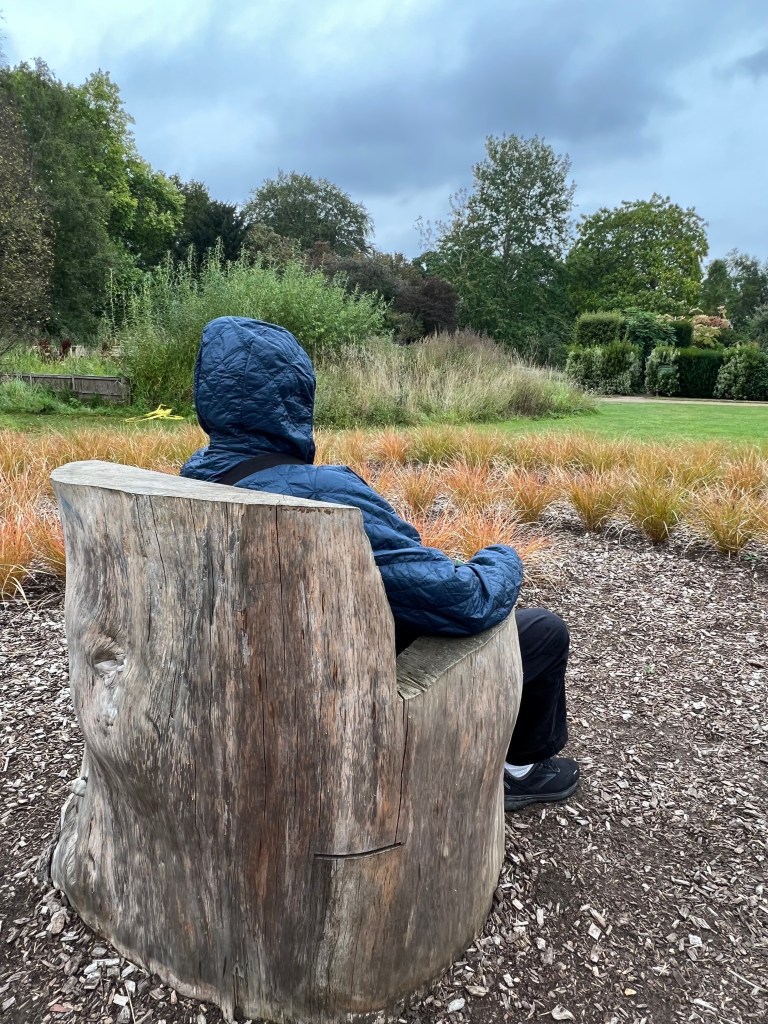
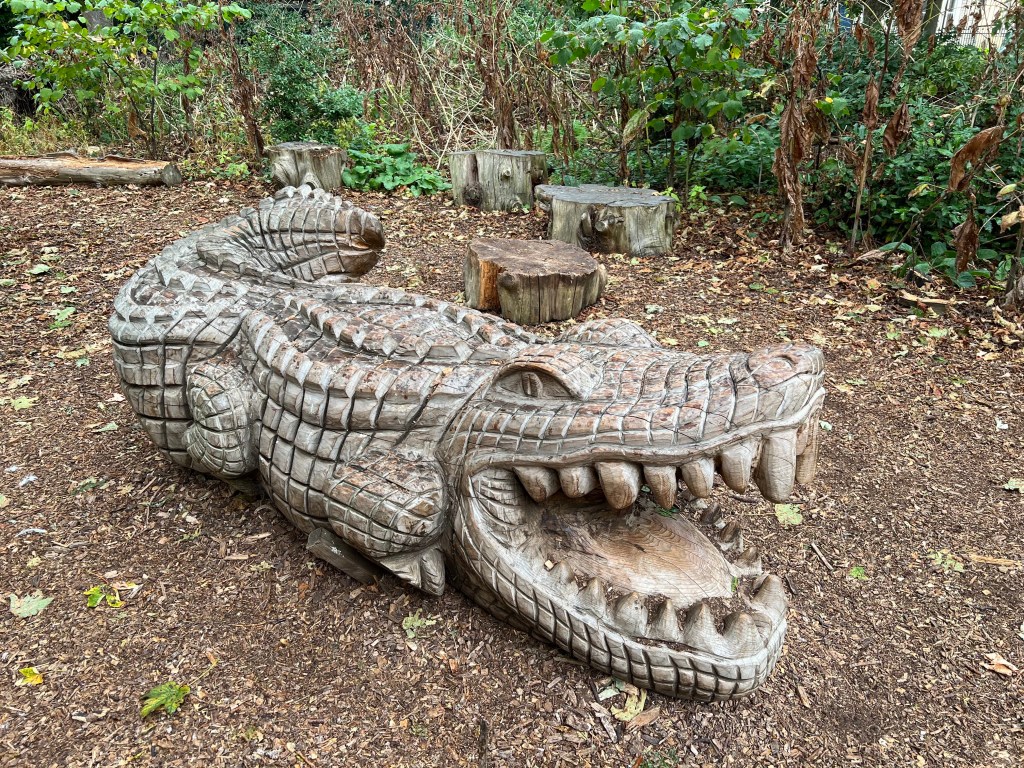
    We wandered through the various settings of plants: rock garden, Fens garden, scent garden, fountain, grass maze, stump throne, etc. The croc-trunk-odile was an interesting feature. The time was really relaxing.

    Water garden
    Magpie posing
    Sitting in a stump
    Croc-trunk-odile.
    Playing in the Foundatin
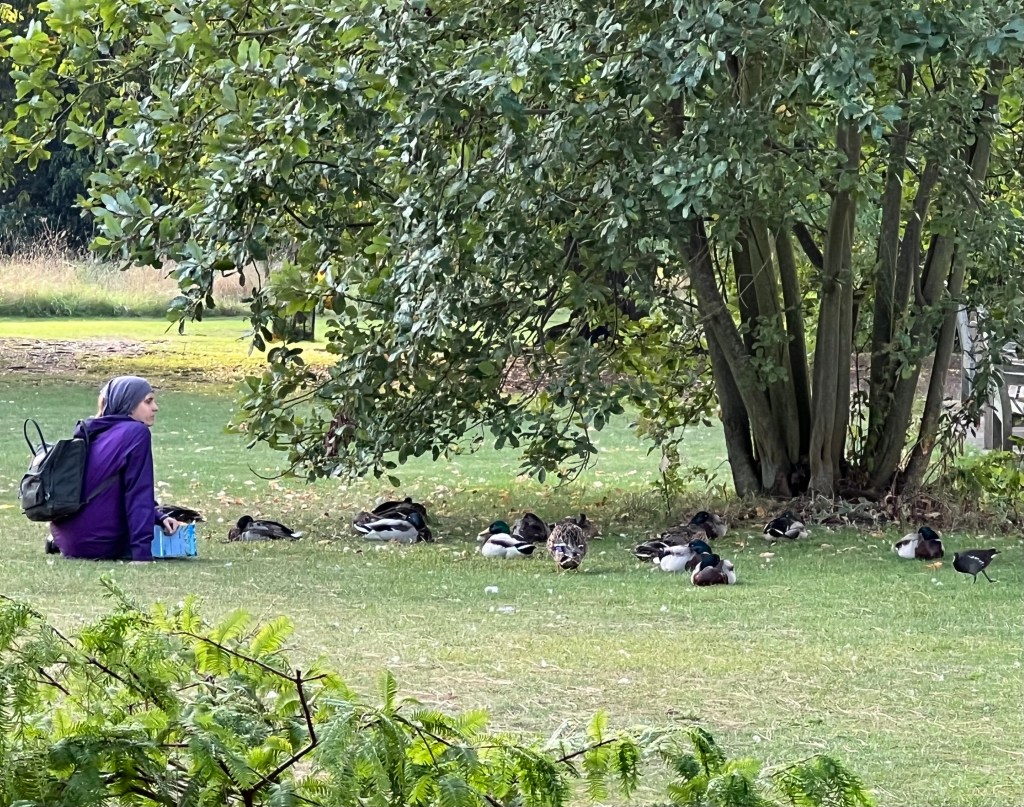
    Meditation with Ducks
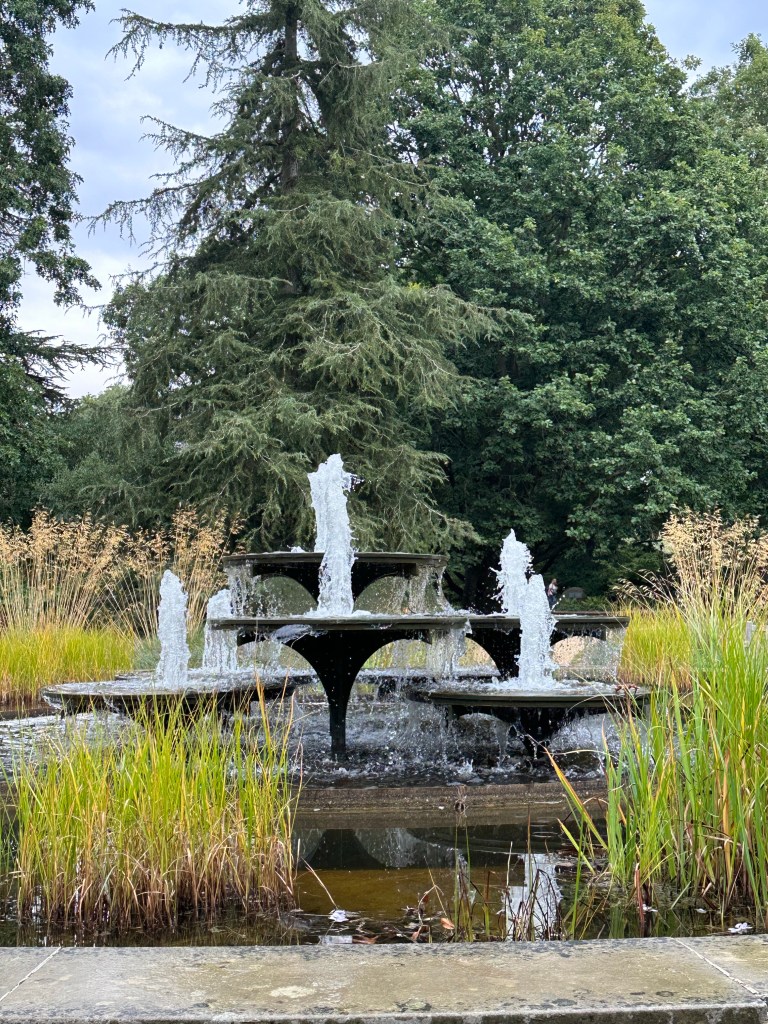
    Central Fountain

    Leaving the gardens from the opposite end gate, we headed back toward the hotel hoping to find dinner on our route, but we managed to take the long road home. This wrong turn led us to a wonderful dinner at Tiffin Truck, a sit-down Indian street food restaurant which was exactly what we wanted. We ordered dosa, a delicious Indian crepe filled with potato/vegetable mash for a starter. We have found dosa only at one Indian restaurant in the US. Saag aloo and butter chicken rounded out dinner.

    A walk back to the hotel finished our 15,000 steps for Grantchester day. The rest of the evening involved packing and preparing to visit Judith and Andy in Birmingham tomorrow.

  • Episode 1 Great British Traveling Show

    September 13th, 2023

    September 12-15, 2023

    31 Hours to Cambridge

    Becky, Betsy, Jim, and Steve began a Great British Traveling Show on September 12 at the Asheville Airport. David dropped us off two hours ahead of 6:16 pm departure to Charlotte for an 11:00 flight to London Heathrow. Starting late in the day and air travel being what it is, we suspected delays. The plane actually left Asheville closer to 7:16 putting people with close connections in quite a lather. Our long layover in Charlotte was looking better already.

    We actually had a sit-down meal at Summer House restaurant followed by a long casual stroll from terminal B to the far, far end of terminal D. Another delayed departure gave us time to charge devices and watch the airport button up for the night.

    The Heathrow flight arrived in London about 11 am—nearly 7 hours in the air. The Boeing 777 was new and nice but, no surprise, a little tight on knee/leg room. We stood up and walked a bit to escape the constraint.

    Jim and Betsy were traveling with Global Eurail passes from Interrailing, while Becky and I had Two Together Rail Passes from BritRail— each with their own set of rules and procedures. Jim masterminded our joint transport from Heathrow to Cambridge using the Elizabeth Line to Farringdon Station and to Cambridge via Thameslink train. Along the long walk (51 minutes) from plane to train, we followed signs and asked for directions a couple of times.

    At the Thameslink station, we first landed on the South-going side, but needed to cross sides because Cambridge trains were North-going. A young man who commutes from St. Albans helped us with some of the intricacies of train schedules and connections.

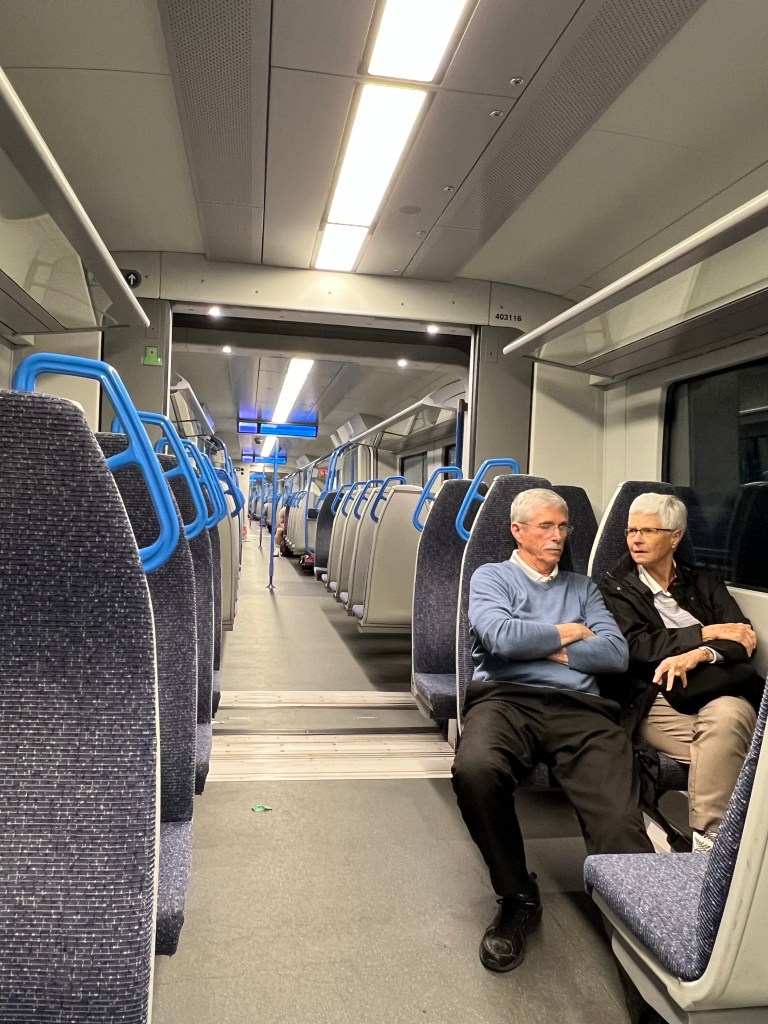
    Riding the rails

    We had just missed the 1:45 train and had an hour to wait for the 2:45 train but it was delayed for another 20-30 minutes. Our patience was rewarded. Due to a “fault” on the track, our train by-passed most of its stops and went directly to Cambridge. An hour later we stepped off the train and walked to the spiffy Ibis hotel located just outside the station.

    At 4 pm, jet-lag required coffee or tea, showers, and a restorative nap until 5:30. Having no agenda for the evening, we walked around and looked for an interesting ethnic restaurant. Station Road is a main road into Cambridge City Center so we walked about a mile looking for the just right place for supper, and we found a Bengali restaurant called Golpo.

    The restaurant was practically empty at 6:30; we got the undivided attention of the maitre’d Hamesh who enticed us with his descriptions of various dishes. We had the recommended starter of Jhal Muri, a spicy puffed rice, accompanied by lentil balls in a cream sauce. For Bengali mains, Becky had butter chicken, Jim—marinated short ribs, Betsy—curry of mutton, and Steve—prawns in a mustard sauce with naan and rice. The flavors reminded us of similar Indian dishes, but with more subtly blended spices. Hamesh explained that the sauces were authentic Bengal recipes with different spice foundations: tomato or mustard or onion.

    The owner offered us dessert which we refused, but, at his insistence, we enjoyed small complimentary glasses of sweet Bengal chai. What a lovely ending to a wonderful meal! We rated it in the top five meals we have ever eaten.

    After walking a bit further toward town, we decided a good night’s rest was the best thing we could do to recover from our exhausting, but exciting 31-hour trip.

    Street scene on our night walk back to hotel

    Wandering and Wondering in Cambridge

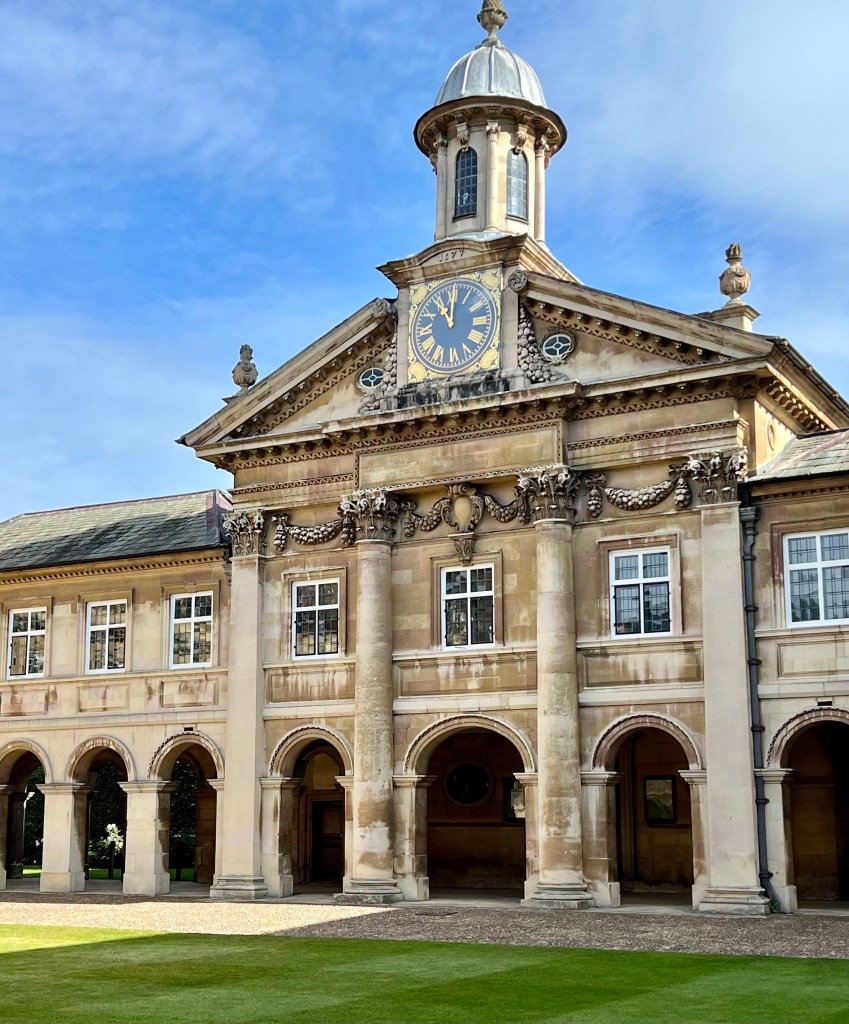
    The next morning Becky and Steve were sound asleep at 9:15 when Betsy knocked softly on the door. Our “excuse?” We were totally exhausted and had jet lag. Of course, Robsons were just as exhausted and just as jet lagged. Wandering around Cambridge was the order of the day to see all that we could see on a beautiful, sunny day. Walking into town, we passed Emmanuel College which was open to the public. We we able to enter the ancient buildings and walk around, but not on, the beautiful lawn.

    Emmanuel College Gate
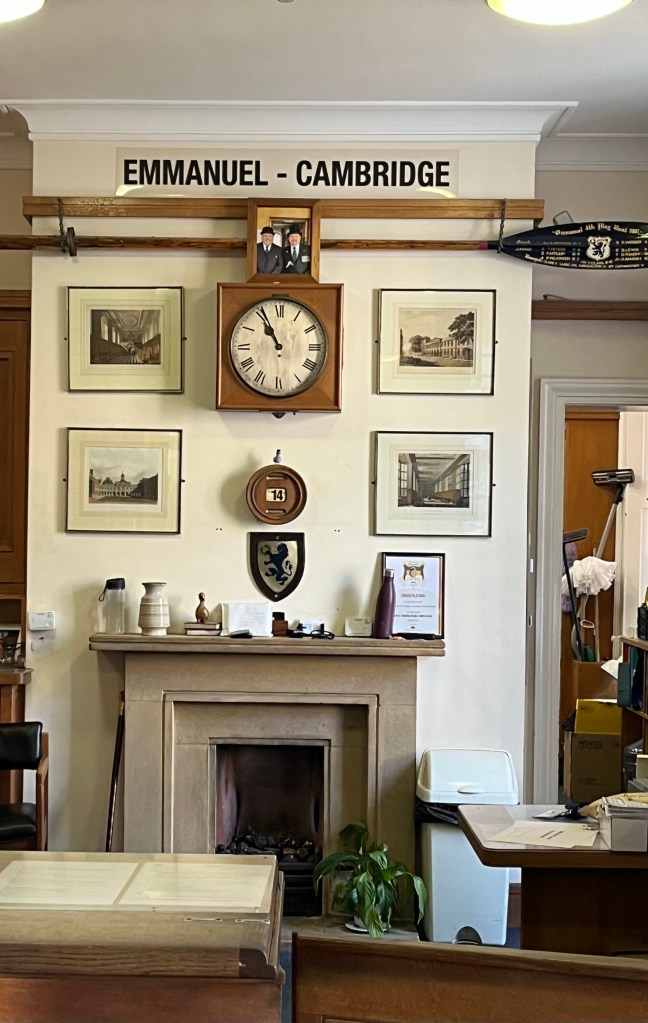
    Trophy room
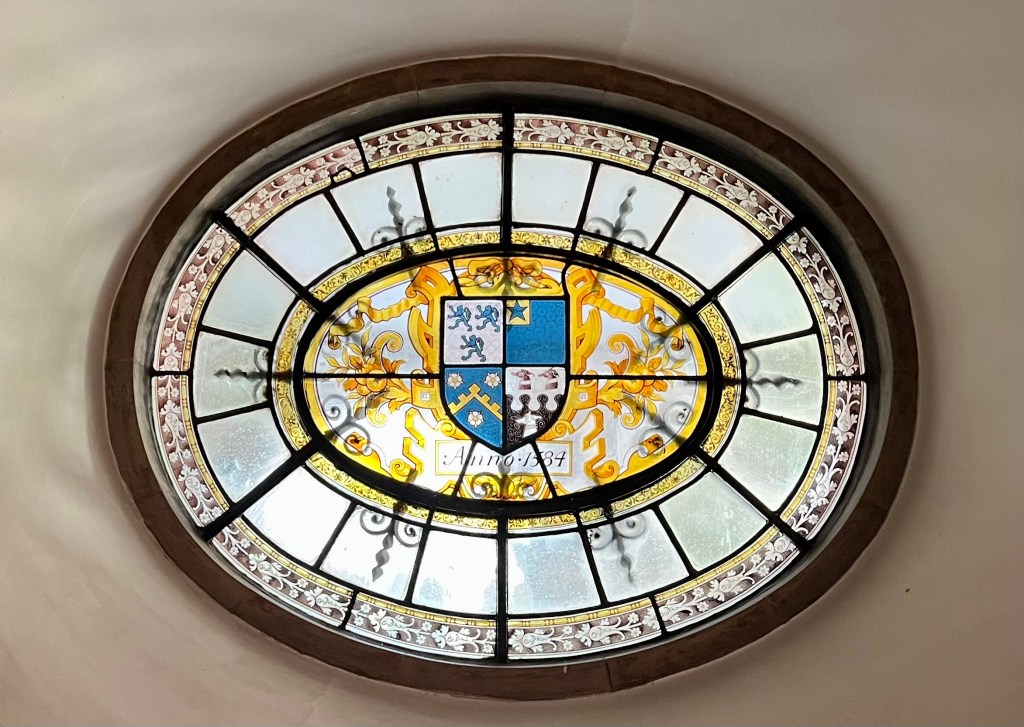
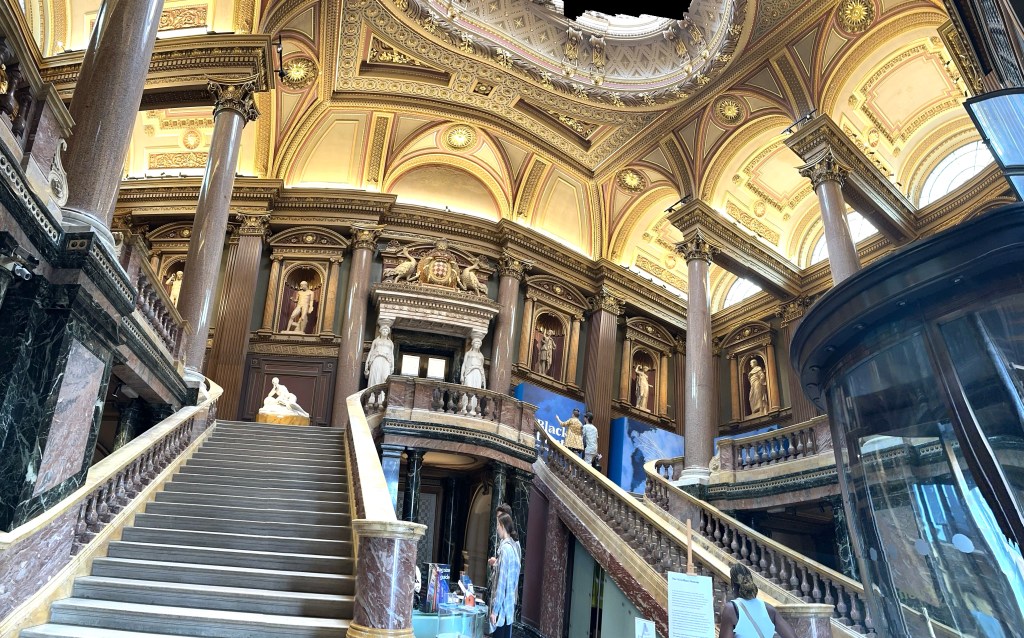
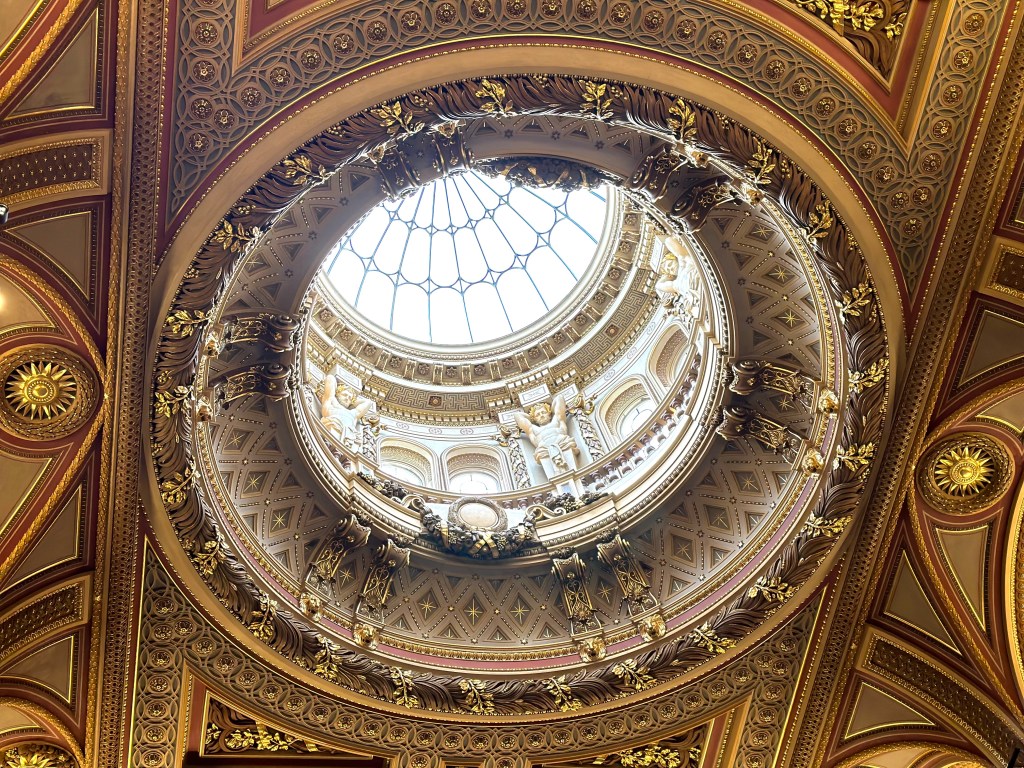
    Skylight at Emmanuel College

    The small and beautiful chapel is framed by 16 stained-glass portraits of important people in the history of the college including John Harvard and Thomas Cranmer. We stopped in the Dining Hall where lunch was being set for a meeting in college. It is small, serene, and not as grand as the Great Hall in Harry Potter.

    Emmanuel College is a model of the proper Cambridge college which brought up many questions. Who are the students who enroll in Cambridge? How many students are in each college? Do all the students in a college study the same subject? Do the students work only with the other students in that college. Do students attend lectures as part of their study or do they only meet with their professors in small groups as we see on television programs? Lots of wondering.

    Passing St. Michael’s Coffee shop, the need for more caffeine was recognized, and St. Michael made mighty fine joe. The coffee shop is attached to Greater St. Mary’s church also called GSM. The church was rechristened “Greater” making another nearby St. Mary’s Church the “Lesser.”

    Sign on Rose Crescent
    Toward M&S Foodhall
    Passageway to Wren
    Inside St. Michael’s

    Fortified, we continued along the college trail passing and taking surreptitious looks inside since most of them were closed to visitors. King’s College and its famous Chapel were undergoing extensive restoration of the front gate and roof of the chapel where solar panels are being installed.

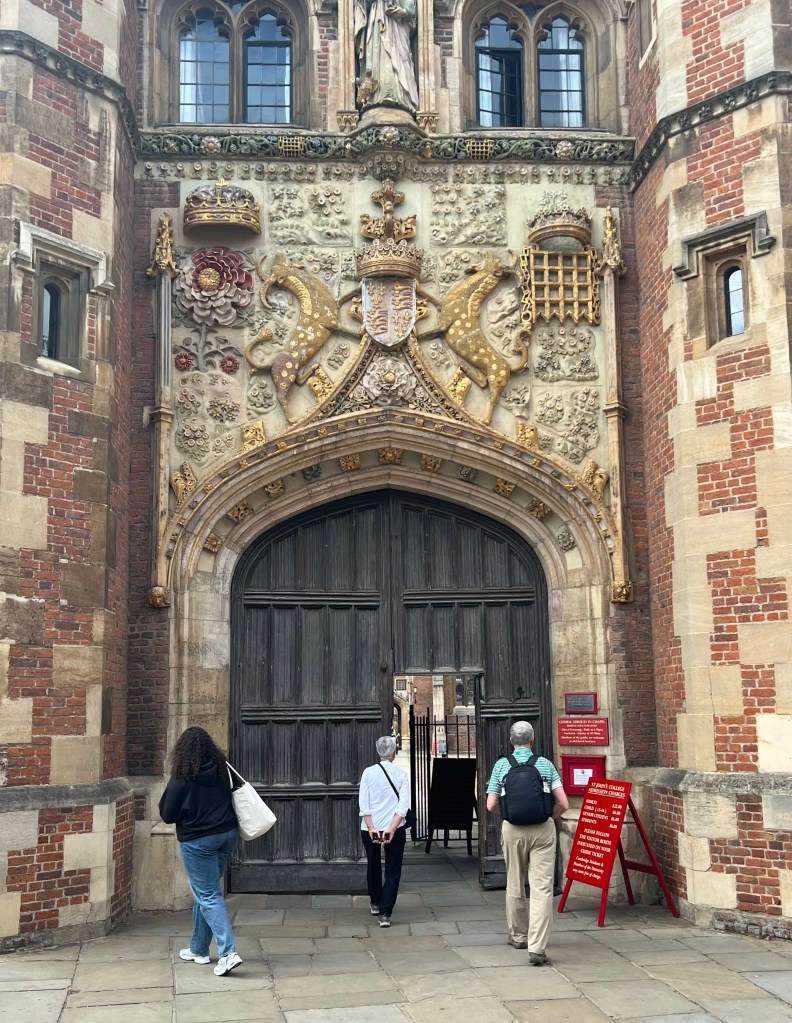
    St John’s College was closed to visitors

    Trinity and St. John’s were also closed to visitors.

    Betsy’s hope for the day was to visit the Wren Library, which is located at Trinity College, and see its treasure trove of books and literary ephemera. She was told the library was also closed, but signs said differently and directed us along narrow passages to the back entrance.

    Walking down back passage to Wren Library

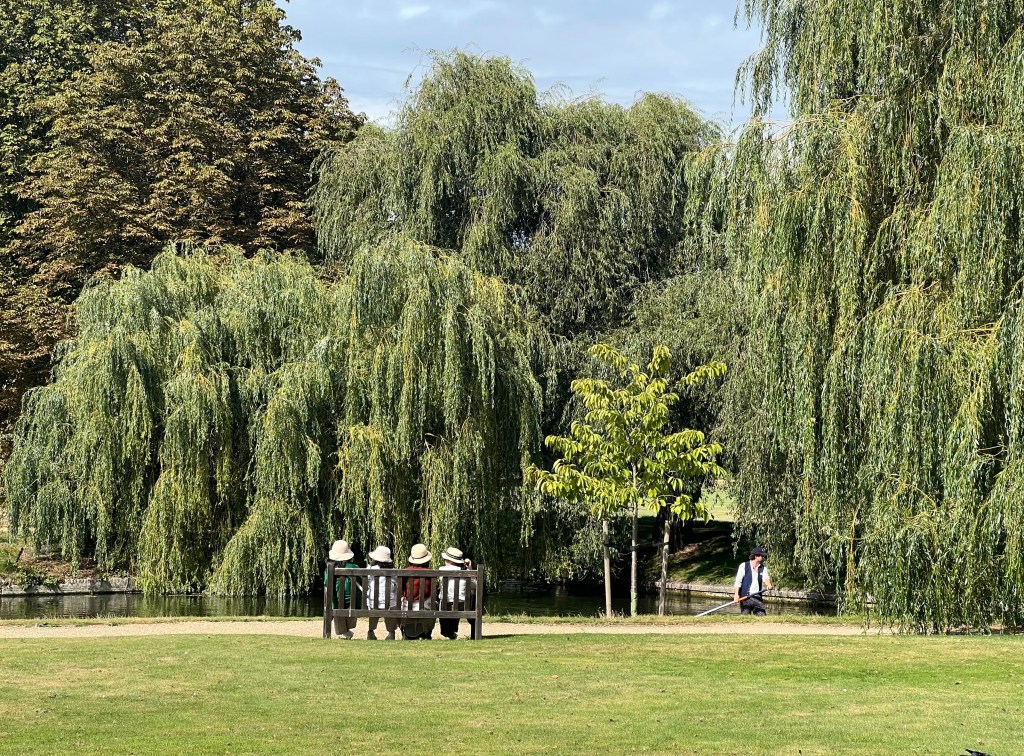
    Because Wren Library is only open from 12 until 2, about 60+ people were already queued. Becky and Betsy got in line, while Jim and I went foraging at the Mark and Spencer Food Hall. Jim’s wish for the day was to picnic on the Backs referring to the beautiful green spaces behind the colleges along the River Cam. Our return was perfectly timed. Jim joined the line at 1:30, while I occupied a bench with a view of the river and the makings of a fine picnic.

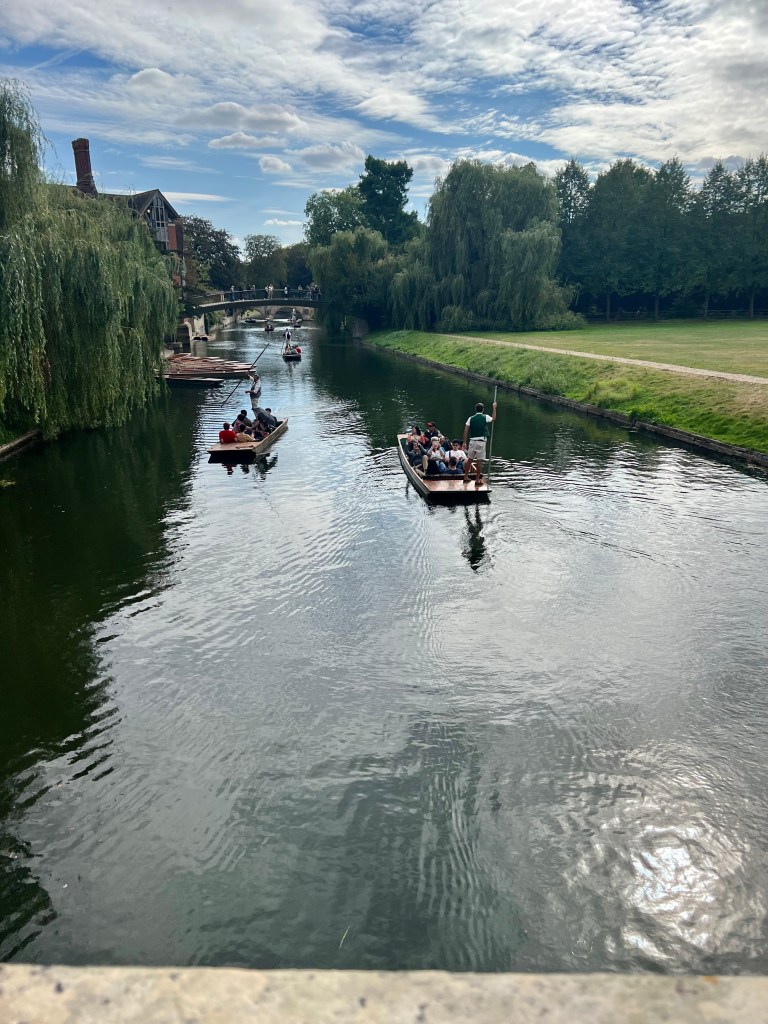
    Walking toward Wren Library took us to Backs and Punting on the Cam
    The River Cam on the Trinity College Backs
    This is not us but it is our bench

    Two young women asked if they could co-occupy the bench. I agreed with the understanding that my co-picnickers would be returning by 2:00. They were students on a course from Germany and had a special appointment at 2:00 with someone in the library.

    I was unsure of the focus of their field trip, but studying the history of religion may have brought them to cathedrals and churches in Canterbury, London, St. Albans, Cambridge and lastly Ely. Since we were in St. Albans last Christmas, we had visited that Cathedral for tours and services which led a lively conversation about it.

    Inside the Wren Library

    At 1:55 they saw classmates assembling just as Betsy, Becky and Jim came out of the library heads full of the amazing things they saw. They were particularly taken by the first edition of “Winnie the Pooh” and a handwritten note from Milne in tiny script. In fine Pooh fashion, their rumbly bellies were hungry for tasty sandwiches, but no “hunny.”

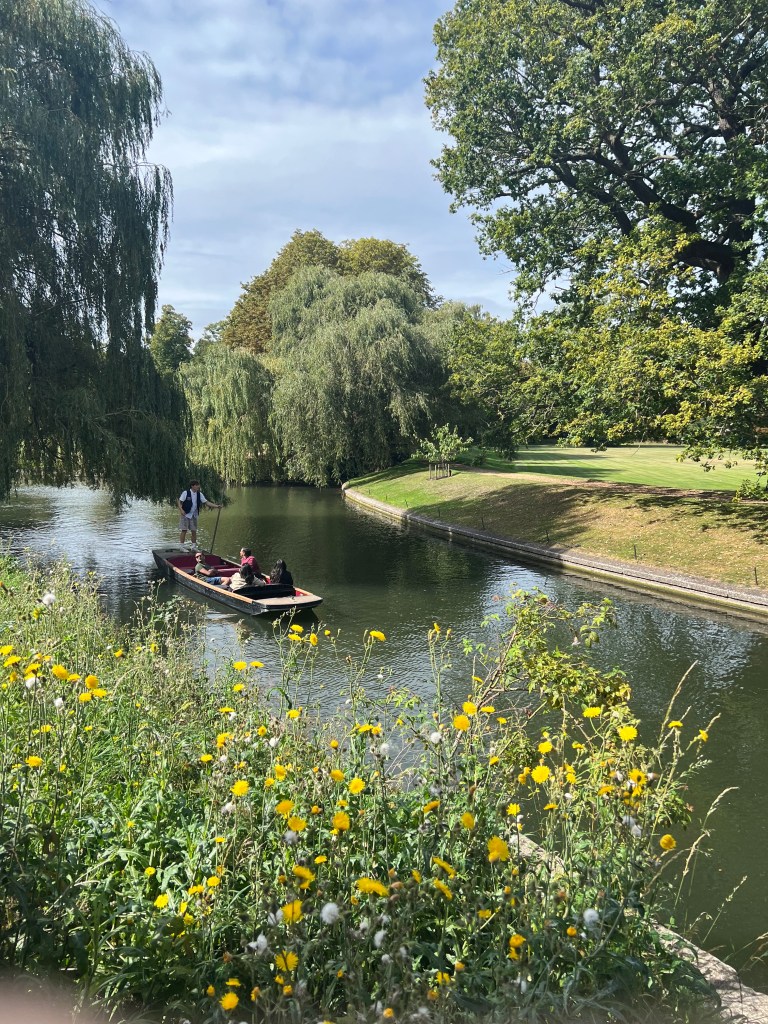
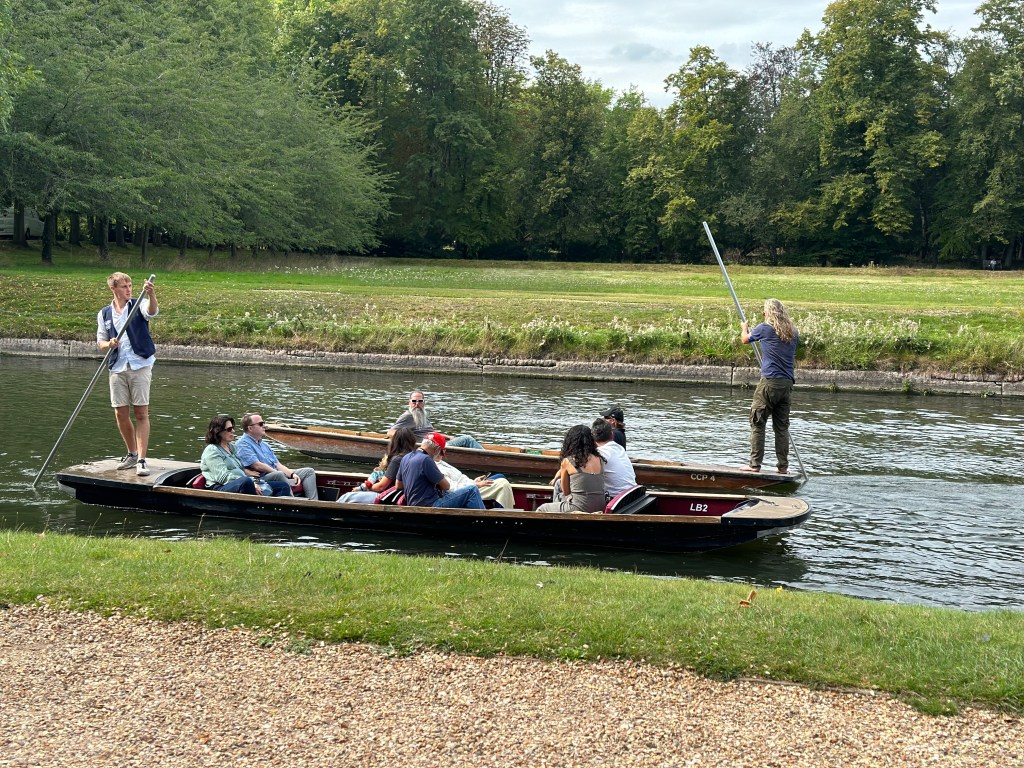
    Punting on the River Cam at Trinity College Backs

    We sat on our bench, ate our lunches, and on a sunny afternoon lazily we gazed out at the Backs and watched the River Cam flow past us. Very Pooh. The river was a never ending show of boats full of tourists, families, and some rowdy teenagers trying to tump the flat-bottomed boat. The regular punters have great strength and stability in all conditions. The amateur attempts at punting just point out how good the real punters are.

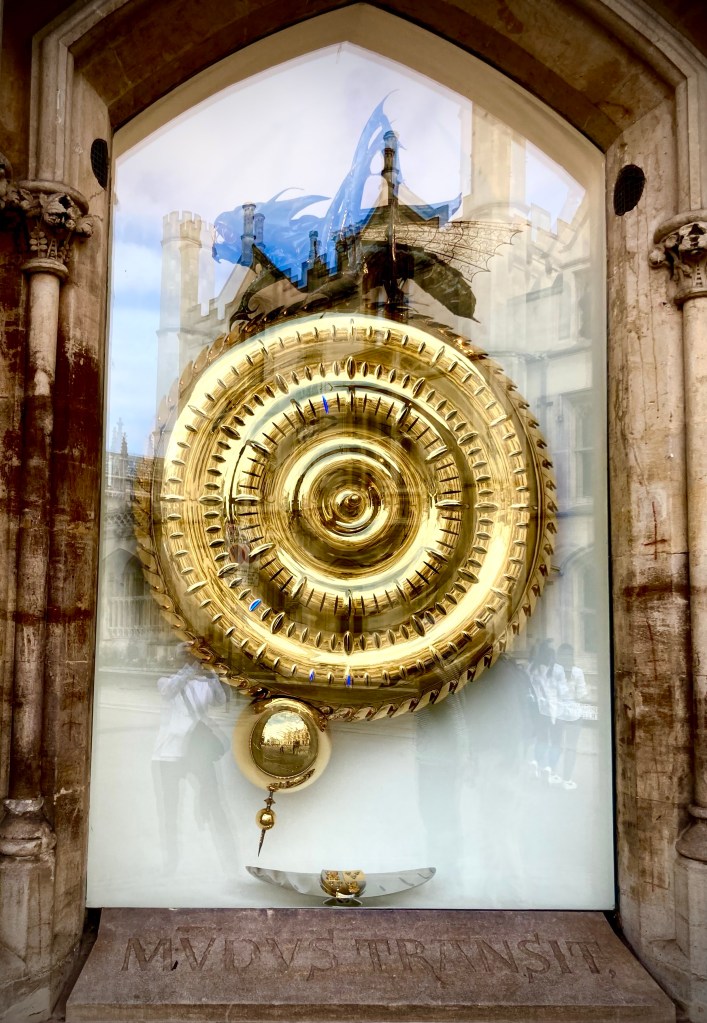
    After wandering past ancient colleges all morning, we walked through the Cambridge commercial center stopping at the bank for pounds. We also saw the astronomical clock with a mechanical cricket pacing time which was dedicated by Stephen Hawking.

    Clock with reflections

    One last destination, the Fitzwilliam Museum, was left for the day. The Fitzwilliam was founded with an endowment of £100,000 given by the Fitzwilliam family to create a museum that represented the best knowledge in science and the finest works of art—a noble cause. Unfortunately the fortune was earned in a number of ways but largely slave trade. Another sad legacy is the Museum’s role in sustaining a culture in which slavery was justified by avarice, commerce, and privilege. The Museum is attempting to address this history in their programming.

    A very large exhibit entitled “Black Atlantic” detailed the origins of slave trade, England’s role, and how the bogus science of eugenics and pictorial representation of Africans as savage animals rather then human beings were used as rationale for slavery. Most of our time was spent with this special exhibit. We in the US are also grappling with the consequences of the slave trade, and unfortunately old racist idea still exist.

    When we reached the hotel, we had walked between 15000 and 20000 steps and were ready for an afternoon rest. At 6:30, we walked in a different direction through a huge, very modern apartment complex called Railyard Flats and Apartments built adjacent to the Rail Station for an easy hour commute to London.

    Jim and Becky went into Mina’s Steakhouse to assesss the menu and found out that it was named best Cambridge restaurant for 2023. The menu included reasonably priced burgers and ala carte choices and a high price menu such as an Everything Burger with beef, chicken, egg, etc. (£69.95) and a selection of very expensive steaks and chops.

    With the Everything Burger came a challenge. If you could eat the whole thing in 15 minutes according to rules, they would reward you £200. Despite this being a disgusting idea, the two young men seated beside us each consumed one but without engaging in the challenge.

    Back at the hotel, we played rummy, talked about the day just past and planned the trip to Ely Cathedral. We finished the night with a celebratory oatmeal raisin cookie and trundled off to bed.

    Saints, Fens and Eels of Ely

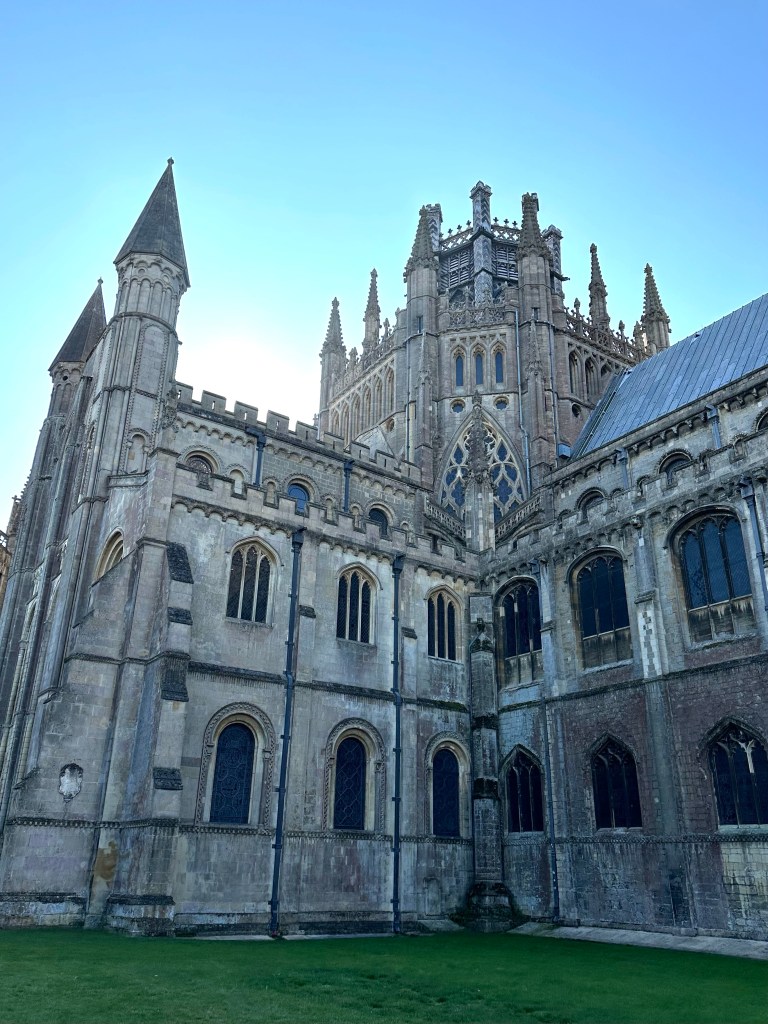
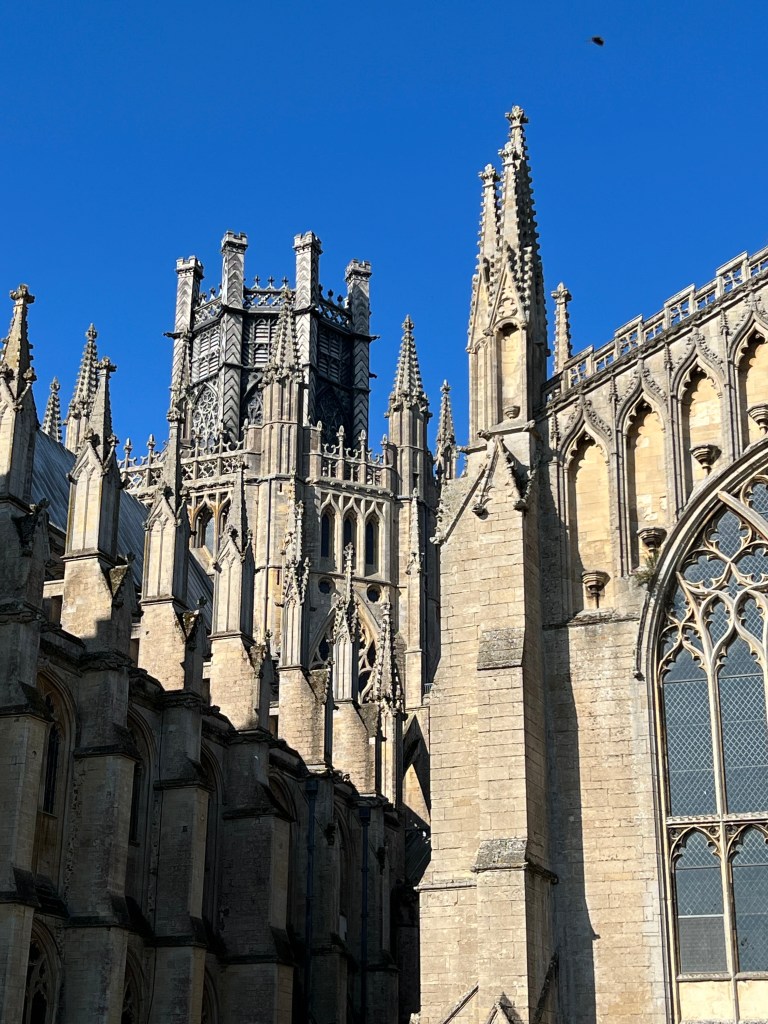
    Exterior of Ely Cathedral with the central Octagon Tower

    Describing the grandness and beauty of Ely Cathedral in words is impossible. Even the best photos are dim compared to the experience of standing in this immense structure.

    For almost 1500 years from Anglo Saxon and Norman times, the site has been a sacred place of worship. The magnificent stained glass and carving illustrating bible stories, saints, and symbols of hope and illumination. A link to Ely Cathedral

    https://www.elycathedral.org/about

    Exterior of Ely Cathedral

    Our wonderful docent had been headmaster of the cathedral school for many years and a scholar of cathedral architecture. His description of the history of the cathedral and its architecture was amazing: a story of construction, collapse, reengineering, vandalism, and profound beauty showing aspects of Anglo-Saxon, Norman, Gothic, Painted Gothic, English Perpendicular architecture.

    Equally compelling were the stories of the people such as Queen Etheldreda who established the first monastery on the site, political intrigue, and heroic and cowardly acts. Our guide brought to life the architects, builders, and craftsmen who created and preserved it through the ages.

    The docent called attention to many of the symbols and meanings embedded in the construction and design of the building. Since the Cathedral was constructed on a island surrounded by marsh, called the Fens, it stands high and can be seen for miles and miles. Many “water” symbols are included in the decorations such as carvings of boats which were the primary mode of transport in the watery territory. The “nave” of the Cathdral is also a water reverence (as in “navy”) The Cathedral is referred to as the “Ship of the Fens” offering a voyage to a safe place for parishioners who had a hard life on earth.

    After the tour, we had a quick Thai lunch then walked across the street to the local Ely Museum. Much of the museum was devoted to the history of the Fens which provided the economic base for the region. The Fen dwellers cut peat bricks from the marsh for heat, they caught and sold the eels that lived in the marsh, they used boats for transportation between the islands. In fact the building of the Cathedral was partially paid by selling eels.

    Eventually, the Fens were drained (by an engineer from the Netherlands), sold to the wealthy financiers who paid for the drainage. They then claimed the land as valuable and fertile farm land displacing the native Fen people and their way of life despite their protests and efforts of sabotage.

    River at Ely

    Our stroll continued down to river which was constructed during Fens drainage. It was the home to dozens of long boats and smaller boats. About 3:00 we headed to the train station for 13 minute ride back to Cambridge, an afternoon nap, supper, and a game of Quiddler. The supper was at a proper pub with fish and chips and local beers and ciders, a wonderful English repast.

    After the card game, we celebrated our time in Cambridge with Eccles buns, sweet pastries filled with currants, which we had bought at the open market in Ely. A fitting end to three days in Cambridge for the Robsons who are off to York, Edinburgh, and Glasgow for 10 days of adventure. Becky and I are staying around Cambridge for two more days of wandering.

  • Episode 11 Scandinavia Home Again in Wageningen and Hoopddorf June 2-7

    June 6th, 2023

    After a night at the Iron Horse Inn where we spent our first days in Amsterdam, we walked around the now familiar Leidesplein neighborhood. The canals, houses, and grand public buildings were glowing in the morning sun. We had planned a final week without much agenda, just to go someplace more peaceful and less frenetic than the large cities we have been visiting in Scandinavia.

    Our destination was Wageningen, a small city in Gelderland, Netherlands. Why Wageningen? Becky wanted to see where her ancestors had lived before emigrating to New Amsterdam in 1650. The family first moved up the Hudson River to Kingston NY, then eventually to North Carolina. Not expecting to find any lost cousins after almost 400 years, Becky thought it would be nice to breathe the air, wander the streets, look at the Neder Rhine River, and enjoy just being there.

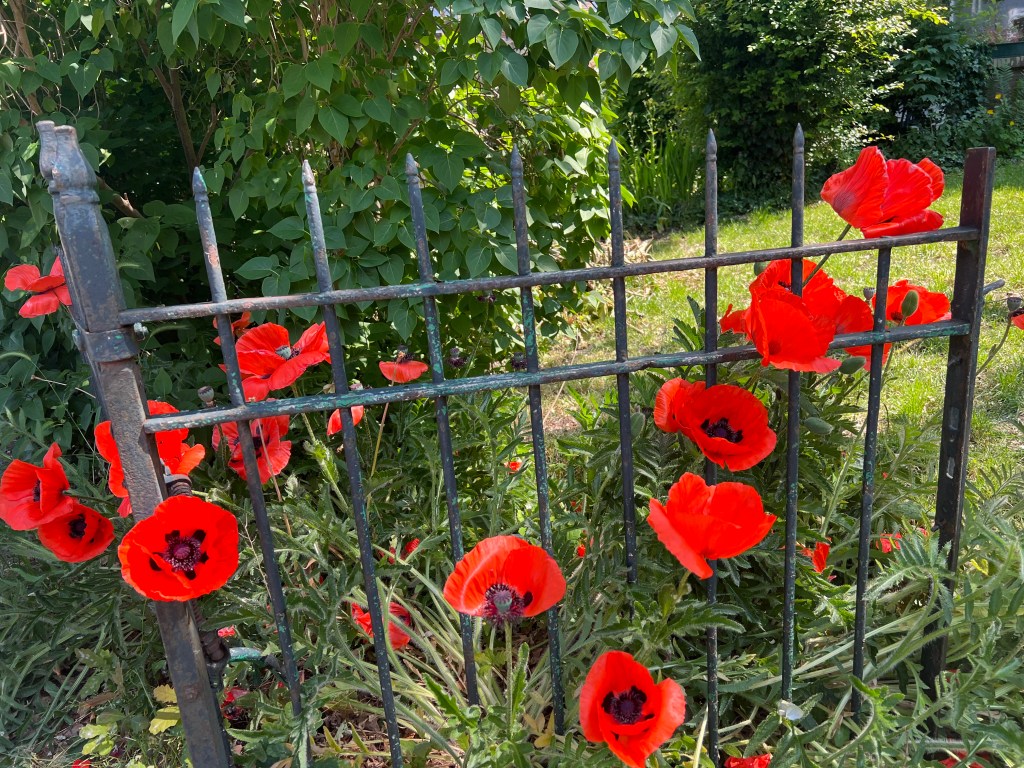
    Poppies growing through a fence on our walk to town

    Following a short train ride from Amsterdam to Ede, we caught a bus to Wageningen where we had lunch at the bus station. The friendly lunch man called a taxi and let us store our bags while we walked to the library to make some initial contact about the history of the town.

    The taxi took us two miles east to Wageningesche Berg—berg meaning hill. The Netherlands is generally very flat at or below sea level. But here was a “mountain,” a 500 foot bluff overlooking the Neder Rhine River. And the mountain was covered with old growth forest.

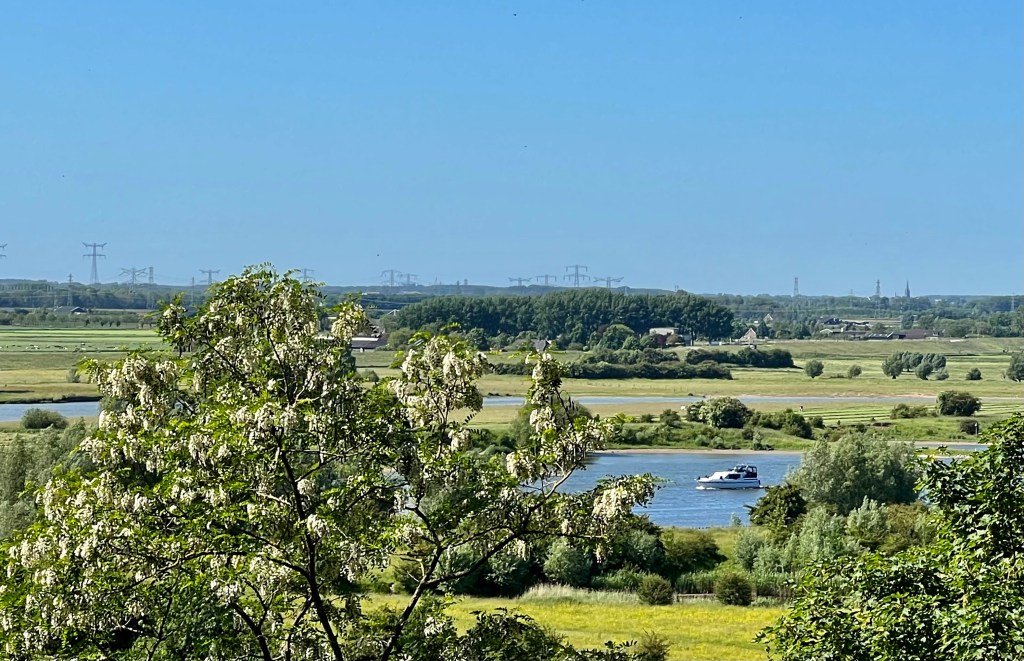
    A view from the veranda of the Fletcher Hotel of the Neder Rhine River

    This unique landscape escaped development, originally as part of a huge estate and now as an arboretum and public park. We were stunned at the beauty and felt immediately at home in the trees, almost like Carolina. No wonder the ancestors wound up in Henderson County, which must have felt like home to them. Over the next three days, we fell in love with Wageningen.

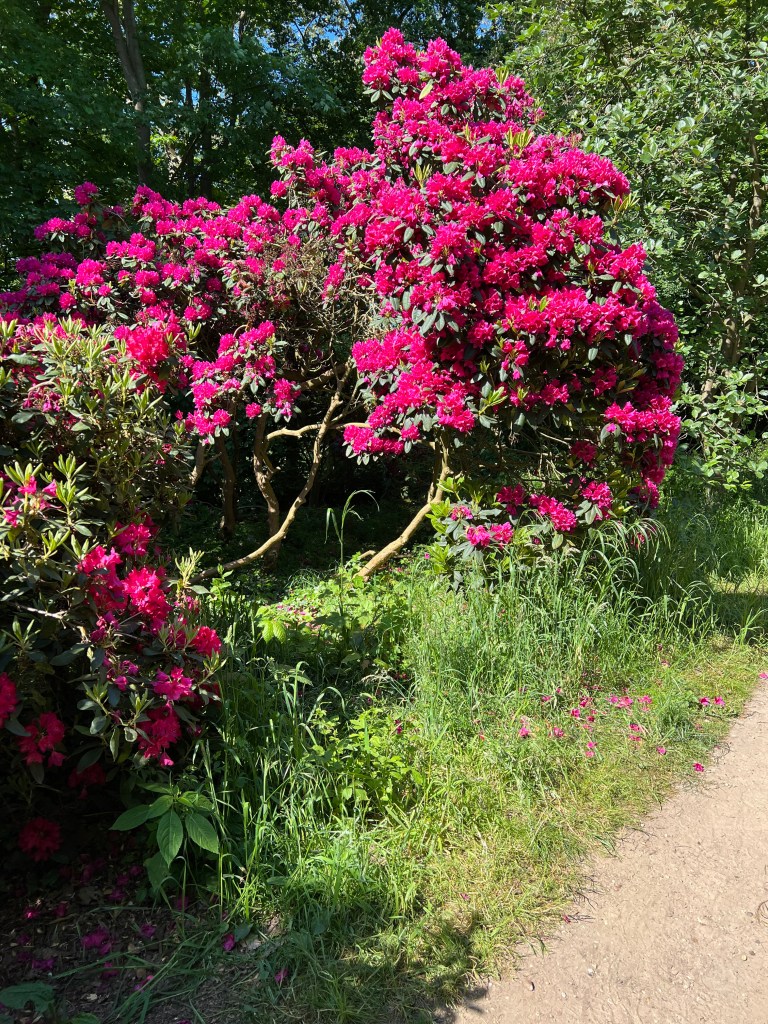
    Azalea thicket in arboretum

    Many Nederlanders speak excellent English and are helpful when asked for information or directions. Several times, people overheard us talking and wanted to know where we live which opened conversations about wanting to come to the United States, or their visiting the United States, or having relatives in the United States.

    This young man stopped to answer several questions and give us a little historical information. He had been to the market.

    Learning to say the name of the city was a challenge, a feat we never mastered although Becky is much better than I am. We began phonetically by saying “wag-en-ing-en.” This was greeted with puzzled looks until people realized what we were trying to say. “Oh, you mean vachg-ning” or something approaching that. We learned that Dutch has many sounds that English does not.

    The fact that the town does not have a rail station goes back to late 1800’s. The city council had to decide whether they wanted a train station or a university. Wageningen already had an agricultural station with a variety of fertile soils left by the glacial moraine that dug out the Rhine valley. The natural choice was the university. Now Wageningen University with five Research Centers has grown into economic engine for the region and a major intellectual center for life sciences. But you still have to take a bus to get there.

    The only building in the forest is the beautiful, modern hilltop Fletcher Hotel, The first evening, we took advantage of the view and ate on the hotel veranda: wine, lemonade, and “smeersels.” Smeersel is whatever you smear on bread—in our case brown bread with whipped butter or olive tapenade. We sat and sat, soaking in every moment until the sun descended behind the trees and cold descended upon us.

    The next two days were exploratory. We began each day with a walk through the forest park to the town center. People told us this was a 20 minute walk, but we had photos to take, trails to explore, and time enough not to worry about time. We passed by families having picnics, great stands of rhododendron and azaleas, tumultuous wild flowers, and signs marking the trail.

    Walking and riding in the park

    Our walk took us into the city center and its historic church, both of which were heavily bombed during WWII, either by the attacking Allies or the retreating Germans. Wageningen was where the “capitulation” agreement was signed to recognize the surrender of German forces in the Netherlands. Allied forces had cut supply lines and trapped German troops.

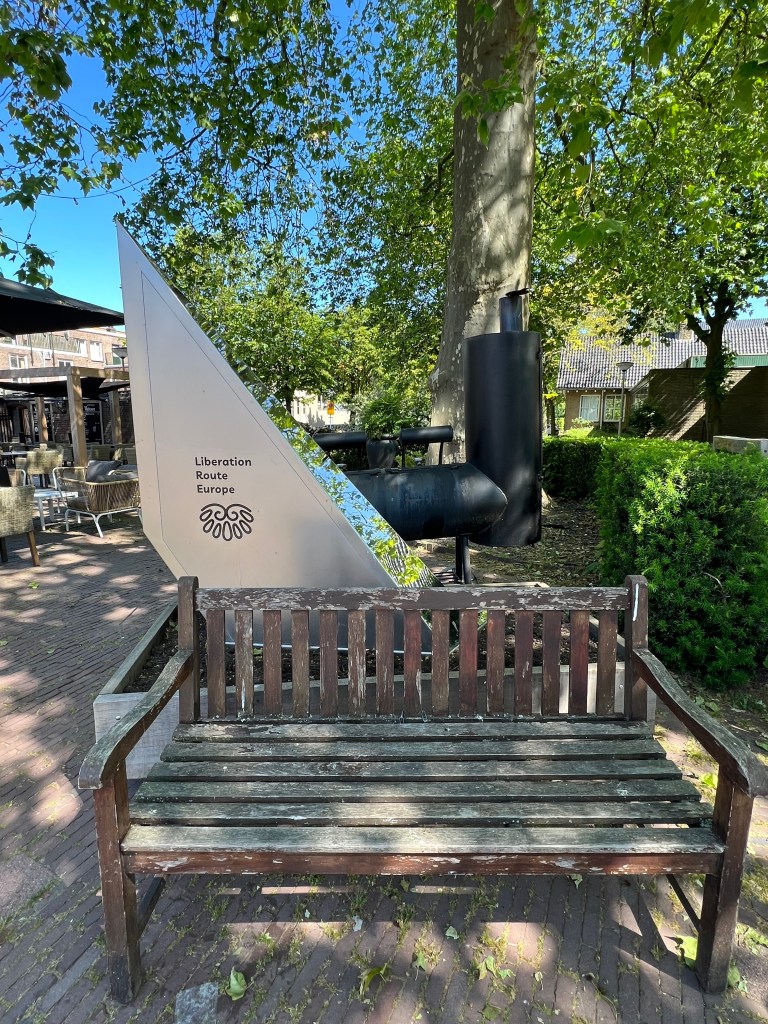
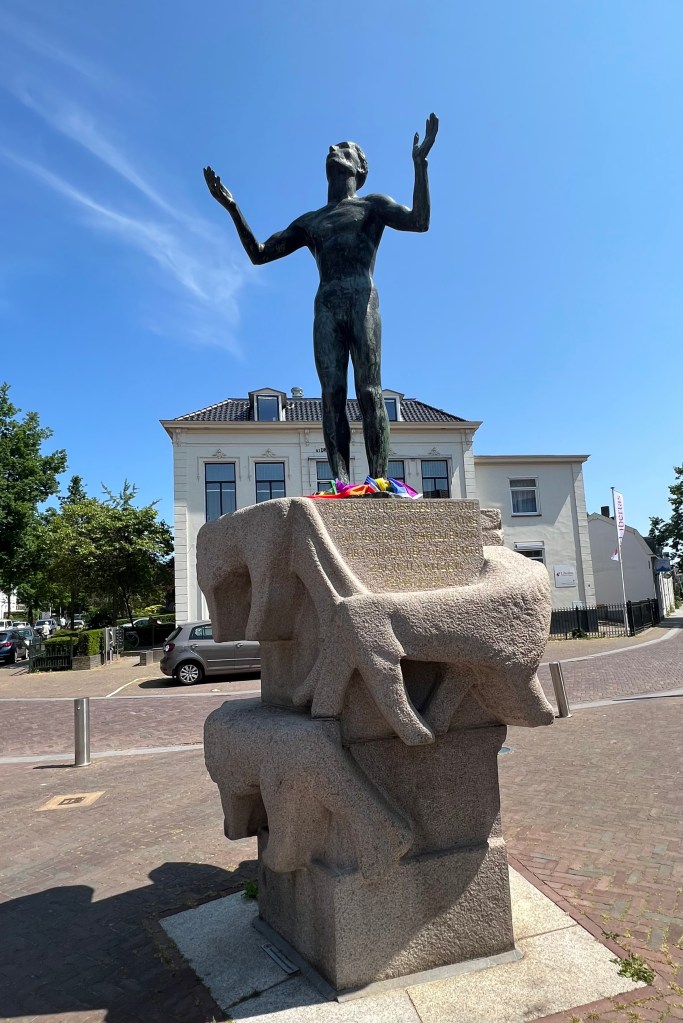
    Liberation statue

    The Hotel De Wereld is the site of the signing and the Liberation statue beside it commemorates the event. For many years, Liberation Day was marked with a parade of Canadian, British and American soldiers involved in the liberation plus local resistance fighters. Now the Liberation Day parade on May 30 is composed mostly of school children and civic groups.

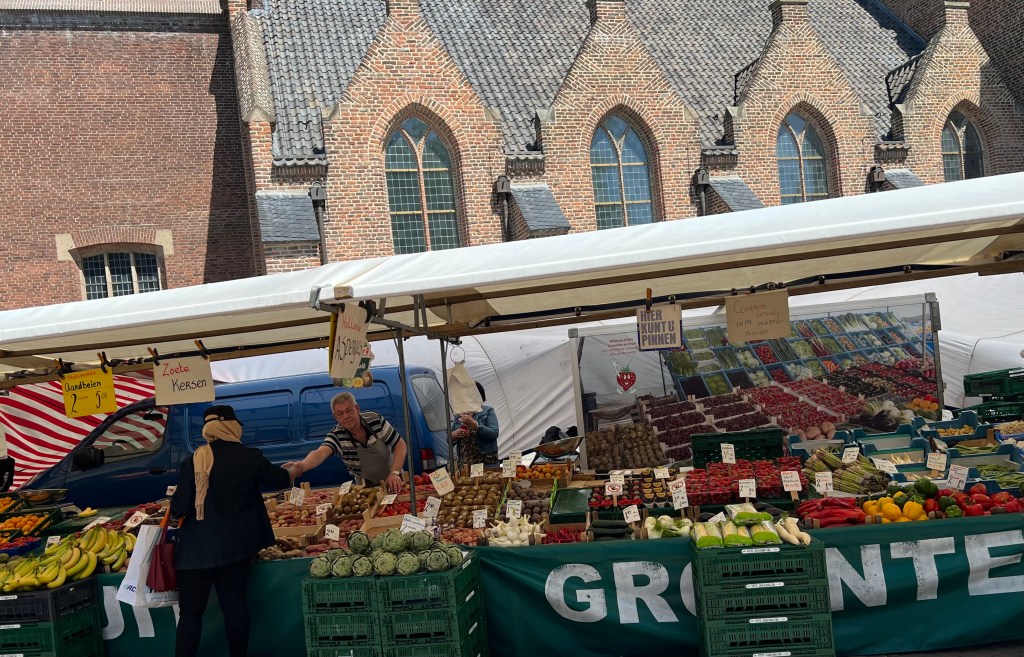
    Saturday market around the rebuilt church
    in middle of Old Town Wageningen

    For more information about Wageningen, google History of Wageningen.

    Saturday is Market Day with booths set up all around the rebuilt church. We sampled and bought cheese and bread with bananas and grapes for breakfast.

    Cheese monger shows off her wheels

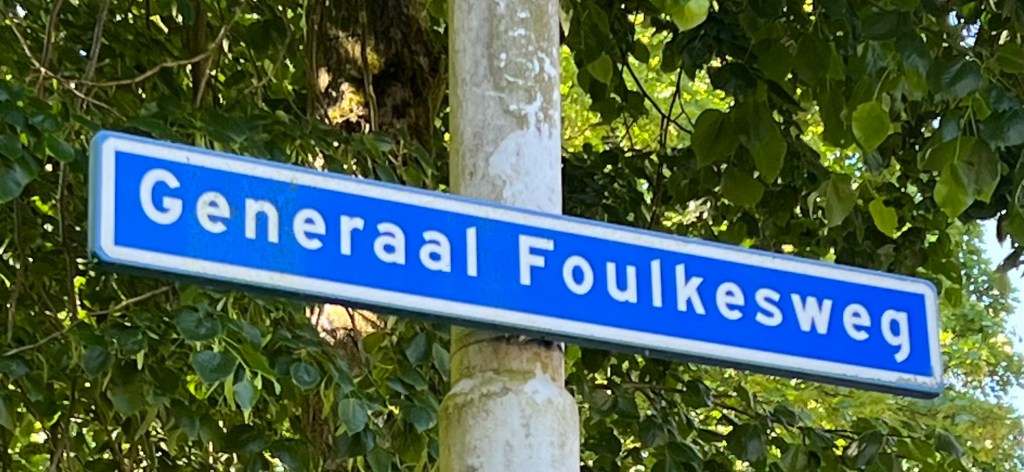
    The old town center is a warren of little streets and hard to follow on the map, but we soon learned that General Foulkes Road (named for the British-Canadian Commander who signed the capitulation) is the primary route to our hotel.

    Our way to the hotel

    About 3:00, we were tired and headed back to the hotel. This walk was a bit of a slog due to the heat of the day, having walked 10,000 steps already, and our surprisingly heavy breakfast purchases.

    Our afternoon nap refreshed us for a leisurely meal on the veranda. We shared an amazing goat-cheese laden salad. The hotel is extremely busy and hosts a variety of events. We saw a reunion and wedding party while there. The fact that the service was a slow suited us perfectly. We did not abandon our reverie until the evening got too chilly.

    On Sunday, we planned three events. The Dutch Reformed Church was close to town and we dropped in there there as services ended. We had conversations with several people about Becky’s ancestors who belonged to the Dutch Reformed Church in Kingston, NY. People were interested in the documentation Becky had about the ancestors, but they had no knowledge of anyone with the family name.

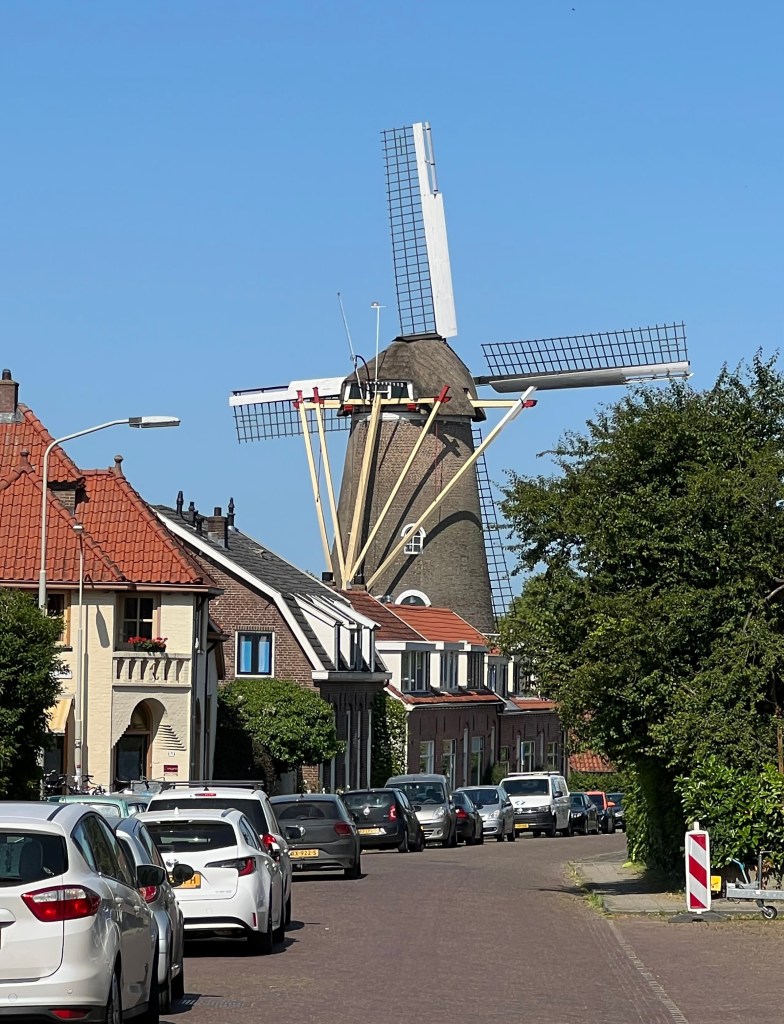
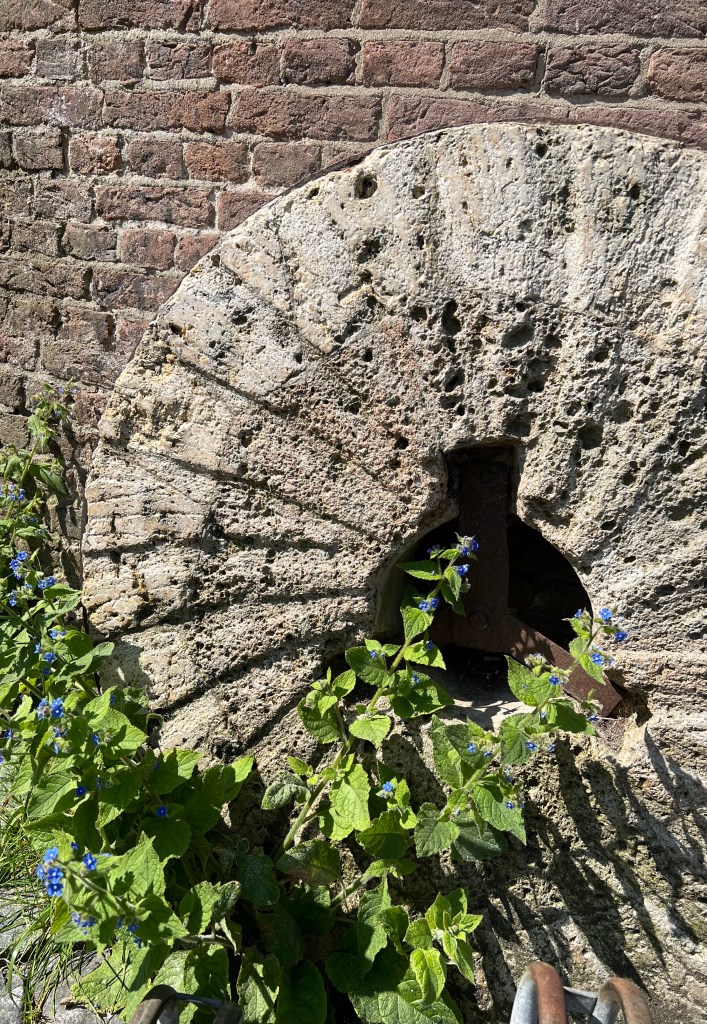
    After church, we walked toward city center and came upon a windmill from 1879. Its history as a grain mill is reinforced by huge grinding stones that served that purpose.

    1879 grist Mill.
    Grinding stone for mill

    Lunch at the Hotel De Wereld was the next stop. I had a sample plate of “traditional” Dutch foods: asparagus soup, mushroom fritter, mackerel broodje, and egg and cheese broodje. Becky had chef’s special sandwich which turned out to be a not-so-special ham and cheese broodje. You may have guessed, broodje (“bro-ja”), means bread or roll, the only Dutch word we learned!

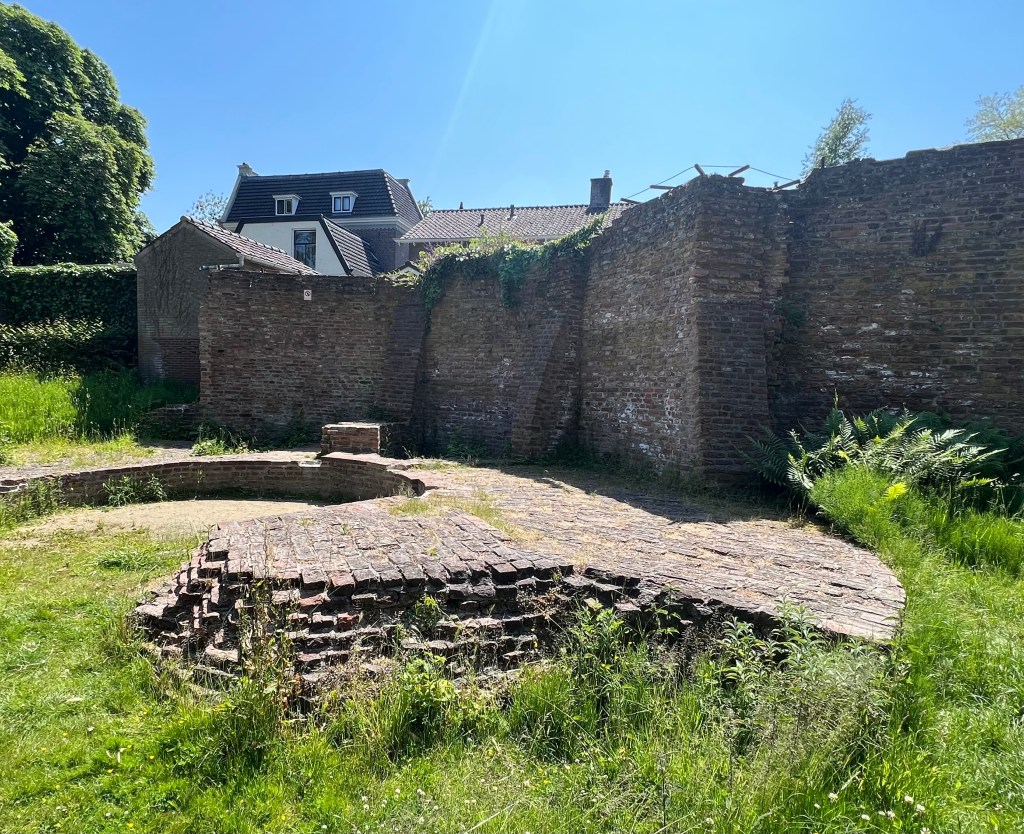
    In the afternoon, we located the Museum de Casteelse Poort, the city museum. We previously had followed signs, but the museum eluded us being tucked away on a side street. This time we stopped and asked for directions from a bartender in a sidewalk cafe. He told us the longer route that goes beside the original city wall was more interesting. He was correct. The path is historic and beautiful.

    A section of the old city wall

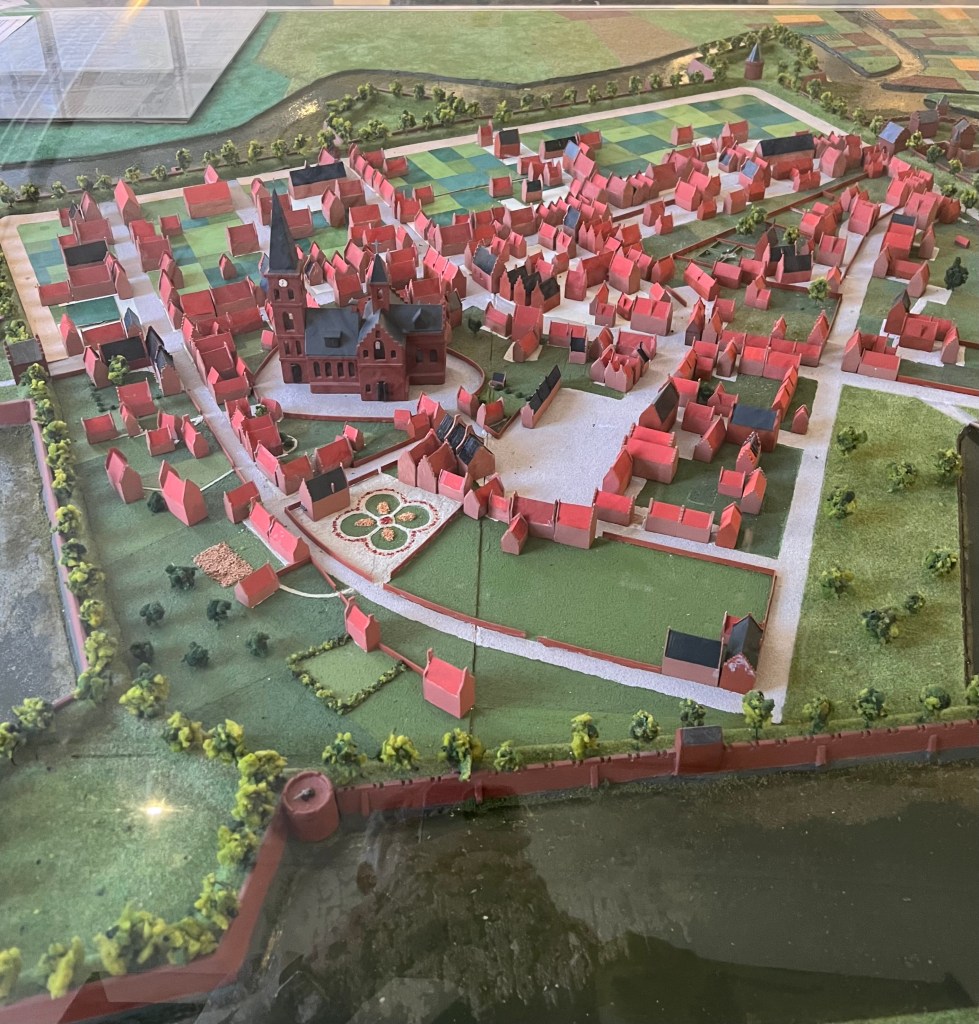
    The City museum has two primary exhibits. On the first floor, the history of the town is presented with many artifacts and a scale model of the town and wall we had just walked past.

    Scale model of original city center and wall

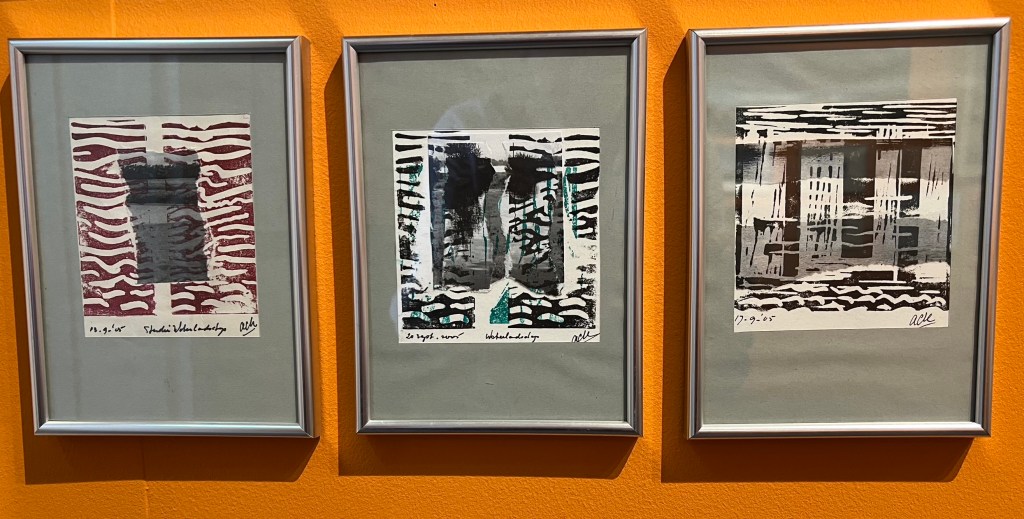
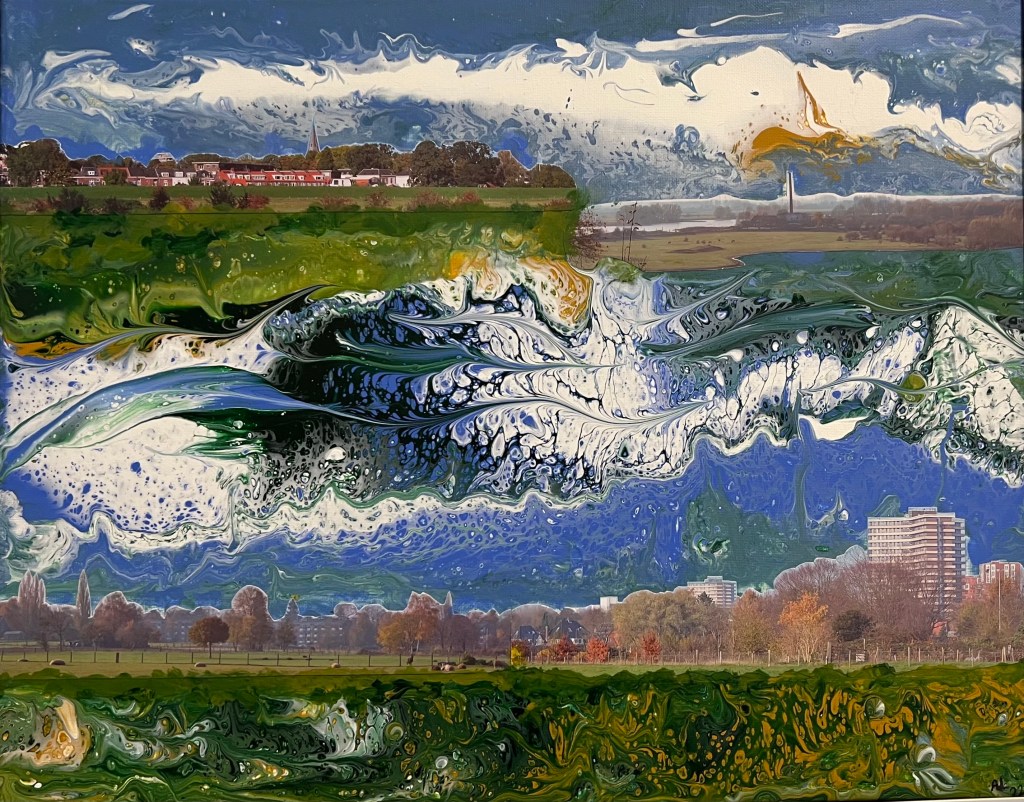
    The second floor focused on the many ways landscape had an impact on the area. This was done though comprehensive video about primary landforms, diagrams about fauna and soil types, and finally a collection of local art on the theme of landscapes.

    Three examples of art on the Landscape Theme

    The exhibits were interesting but had only Dutch descriptive labels so we learned less than we would like to know.

    As we walked away from the museum, a man asked whether we enjoyed our visit there. We replied affirmatively. Then he asked if we had found anything about our ancestors. We were puzzled until he explained that he had talked with the bartender who gave us directions. Wageningen is a small town.

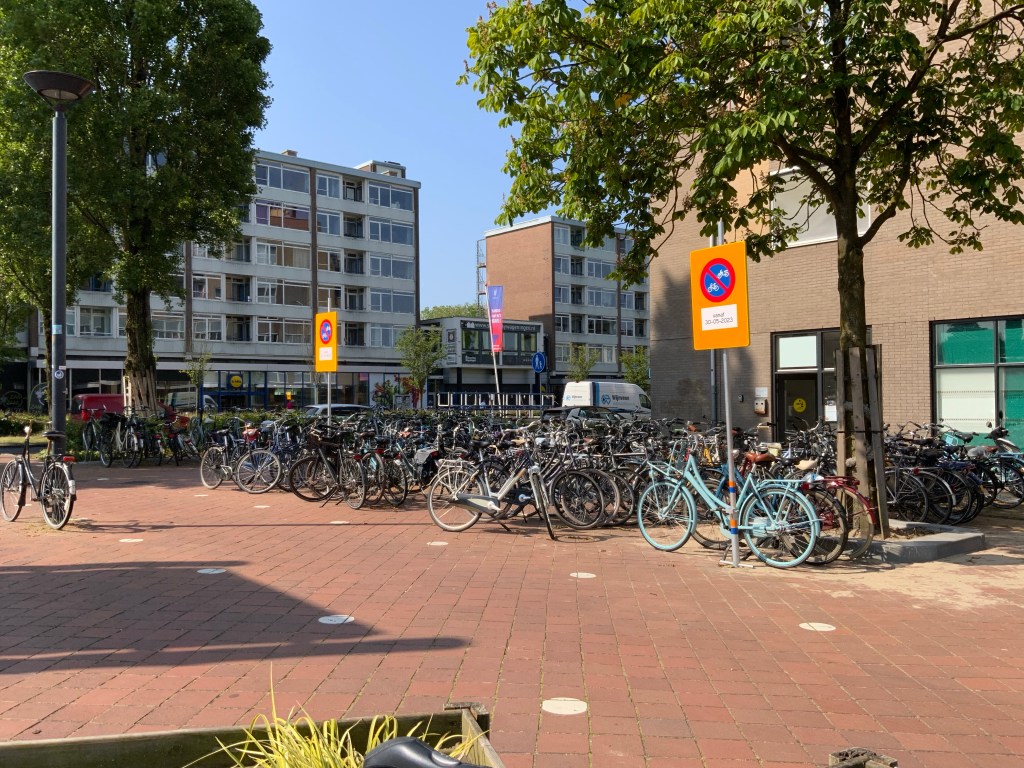
    Bicycles at the bus station

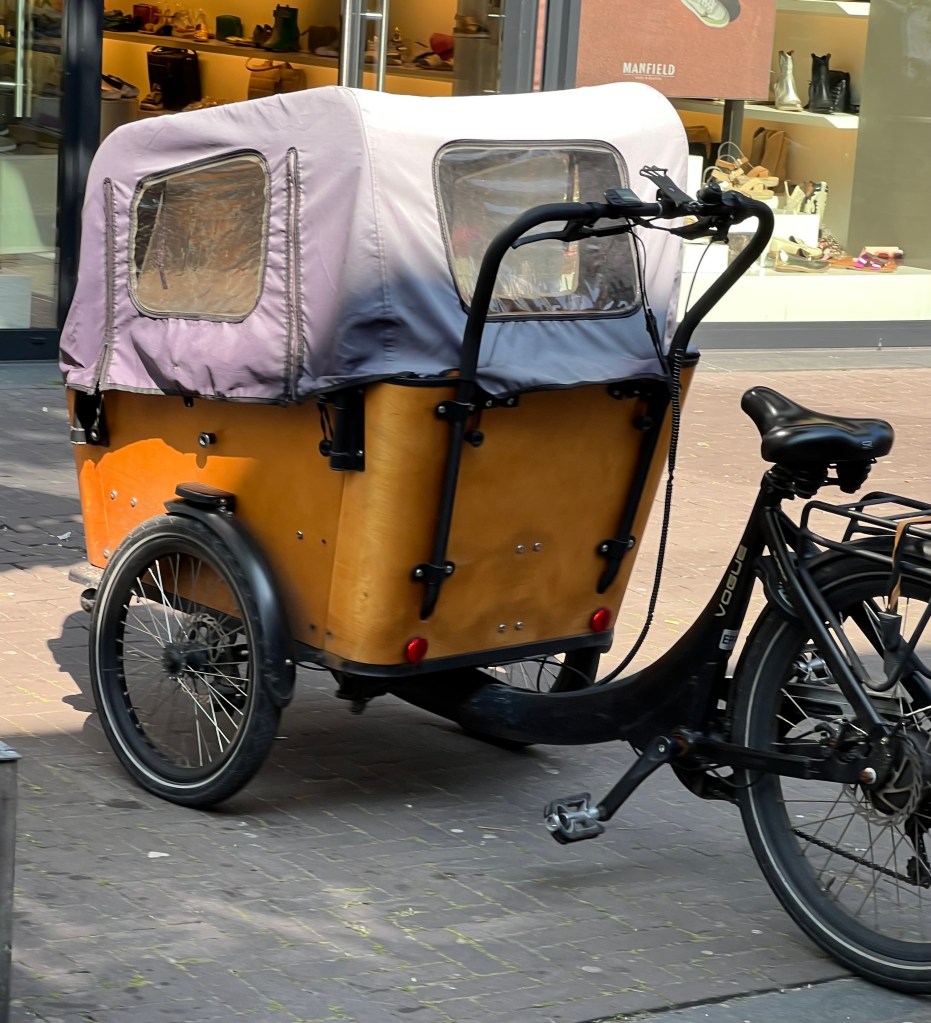
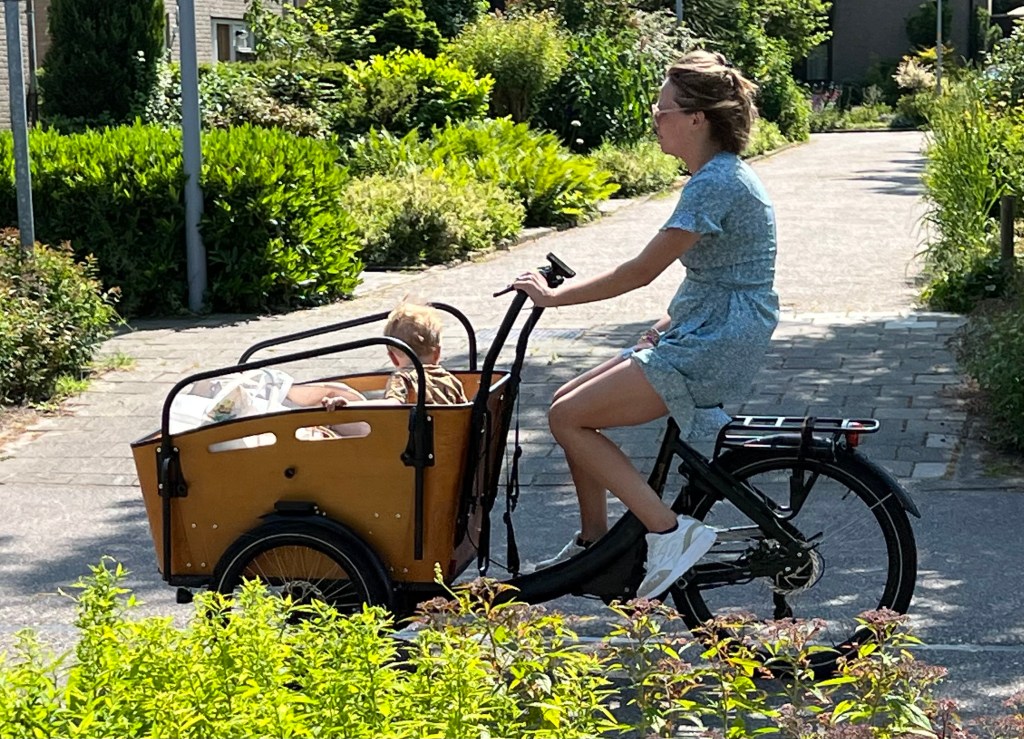
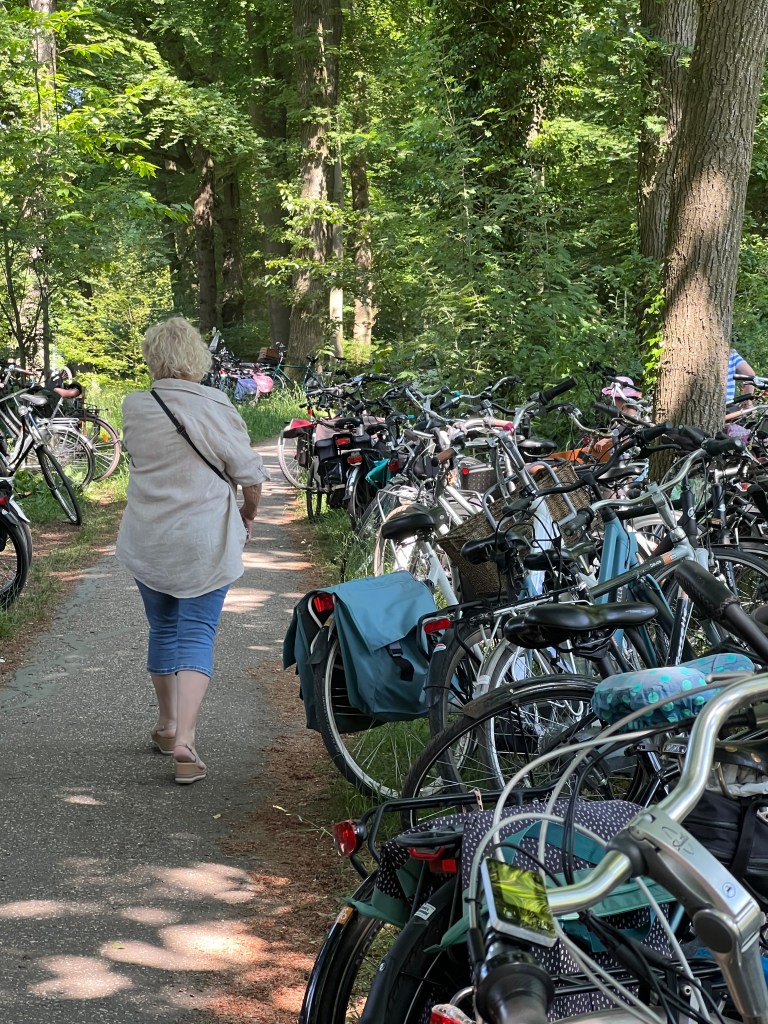
    Bicycles, bicycles, bicycles are a way of life and transportation all over the Netherlands. In Wageningen, they are especially practical since the town and university are compact. We observed every possible size, shape, and use of bicycles: standard, fold ups, electric bikes, racing bikes, bikes with front carts built for groceries or children, three wheelers, and more.

    Tot transport

    In Amsterdam, bicyclists defy death with their speed and number. Bicycling in Wageningen was more casual and purposeful and not as scary.

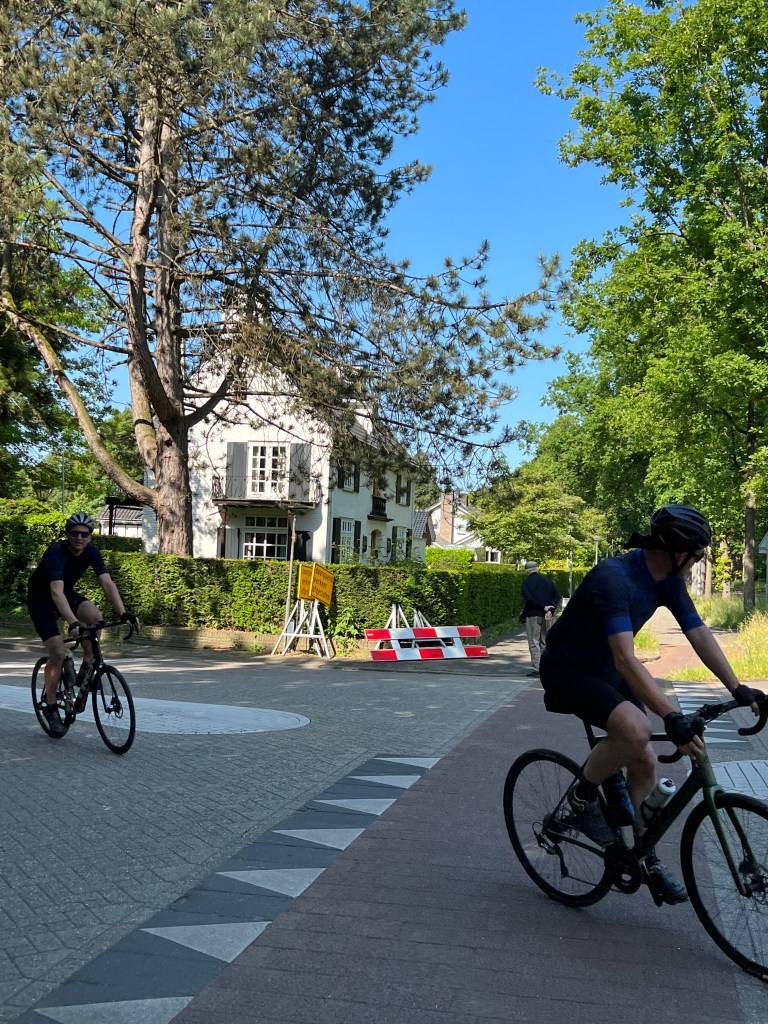
    Several hundred cyclists were on a road race

    We observed two special biking experiences. On Saturday, streets had been blocked for a road race. We got to watch the racers at several places where their route intersected ours.

    Cycles at the Market

    Pedestrians could only cross streets with permission from the guards for the protection of both the cyclists and the walkers. On Sunday, at least two events in the park resulted in a huge crowd: a concert on an inflatable stage and a large church picnic. These were in addition to many family picnics. Thousands of bicycles were in the park all afternoon.

    More bicycles in the park that’s we would ever count

    Our routine kicked in when we got back to the hotel. Nap first, then veranda to enjoy as long as possible. The place is so beautiful we loved sitting there. We again shared the delicious salad with goat cheese, and we took a walk along the bluff afterwards. We are now wishing we had planned more time in Wageningen.

    Instead we took a taxi to the bus and the bus to the train to Hoopddorf near Schiphol Airport. We stayed at the same Hilton five years ago and could see a rapid transformation of the town.

    Hoopddorf buildings

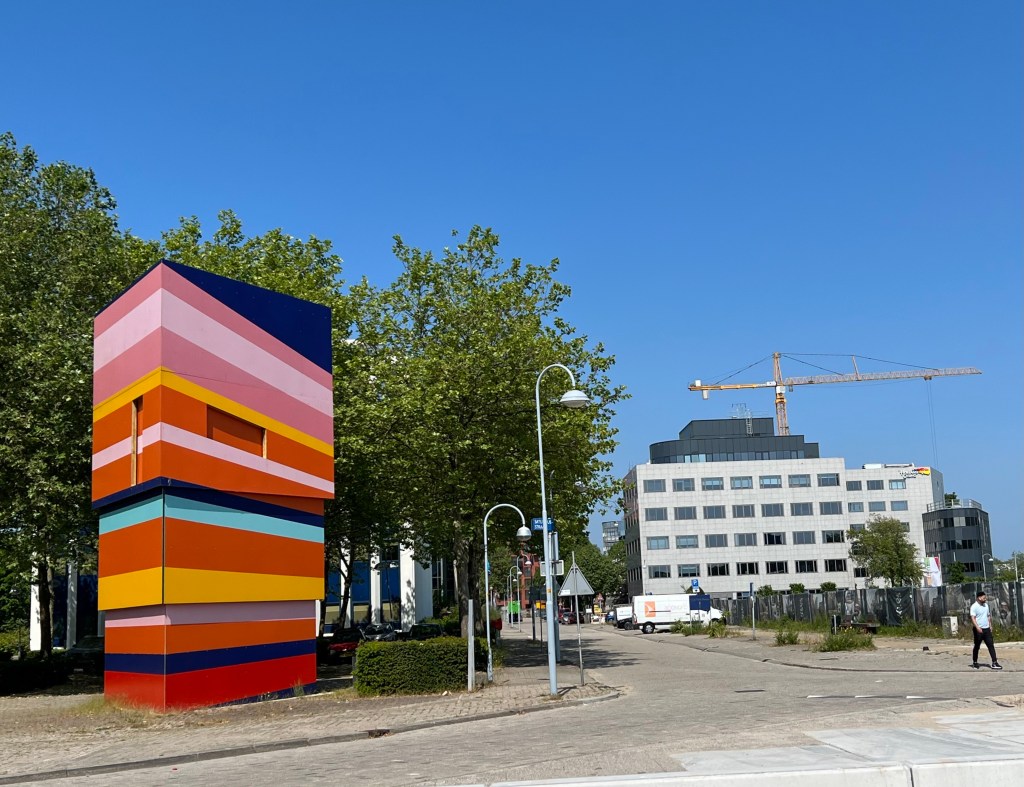
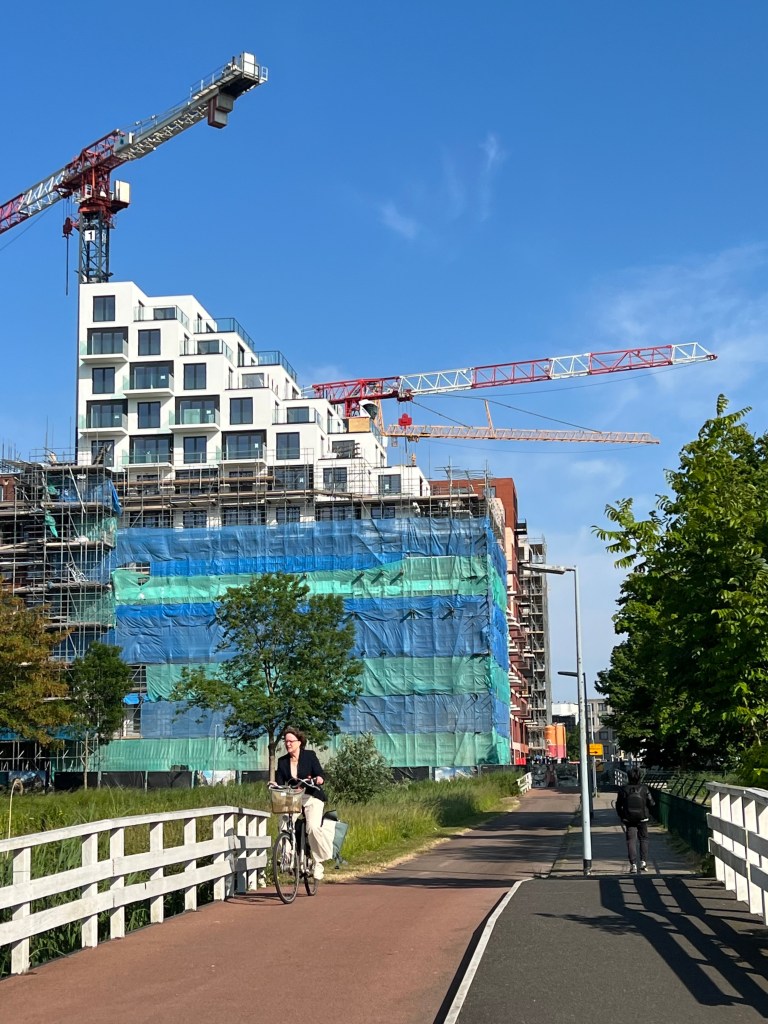
    Hoopddorf had been primarily residential, but its prime location has generated huge new office towers and stacks of new apartments. Rhythmic pounding construction noise provided background sounds during the day.

    Since we had been in transit most of the day, we decided to walk into the Centrum in search of a really good dinner. We found Darbaar Royal Indian Cuisine and were not disappointed—vegetarian dinner with mushrooms, potatoes, and eggplant playing spicy roles. On the return walk, we followed a bike path that was a short cut directly to the hotel.

    Seen on our walk through Hoopddorf

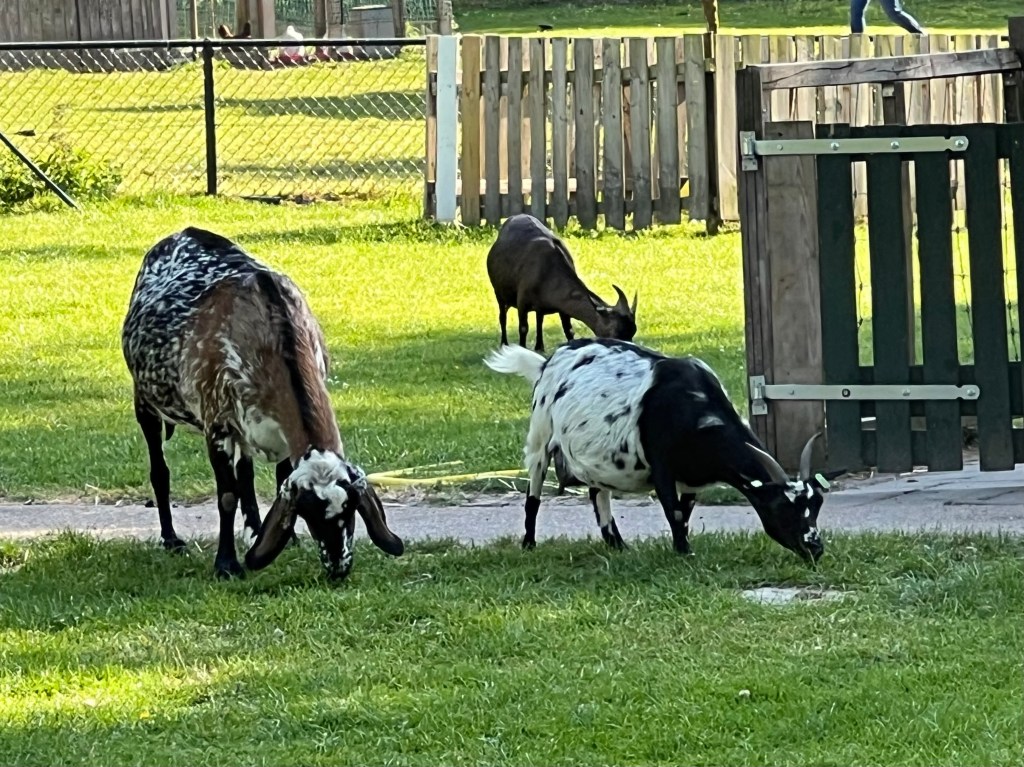
    On the short cut, we recalled there was a city park with sheep and goats. We were glad that the animals were still doing their jobs of running, resting, eating, and generally being cute. There are several new lambs and the lop eared goat is very pregnant. Reminds us of Lillian Sandburg’s goat herd.

    The plane is scheduled for 10:55 Wednesday, June 7. American Airlines recommends three hours for international flight check in. We are five minutes away by train and train run about every 15 minutes. We think and hope 8:30 is enough time to get there and get home to North Carolina.

  • Episode 10 Scandinavia The Track Back: Malmo, Hamburg, and Amsterdam May 29-31 and June 1

    June 3rd, 2023

    Our trip could be called “A Quick Look at Scandinavia.” We have been on trains, buses, and ferries for four weeks, and our heads are full of exciting places and wonderful sights.. This week we move back to the Netherlands after 2 days in Malmo, an overnight in Hamburg, and a final 5-hour leg to Amsterdam to the Iron Horse Inn where we started.

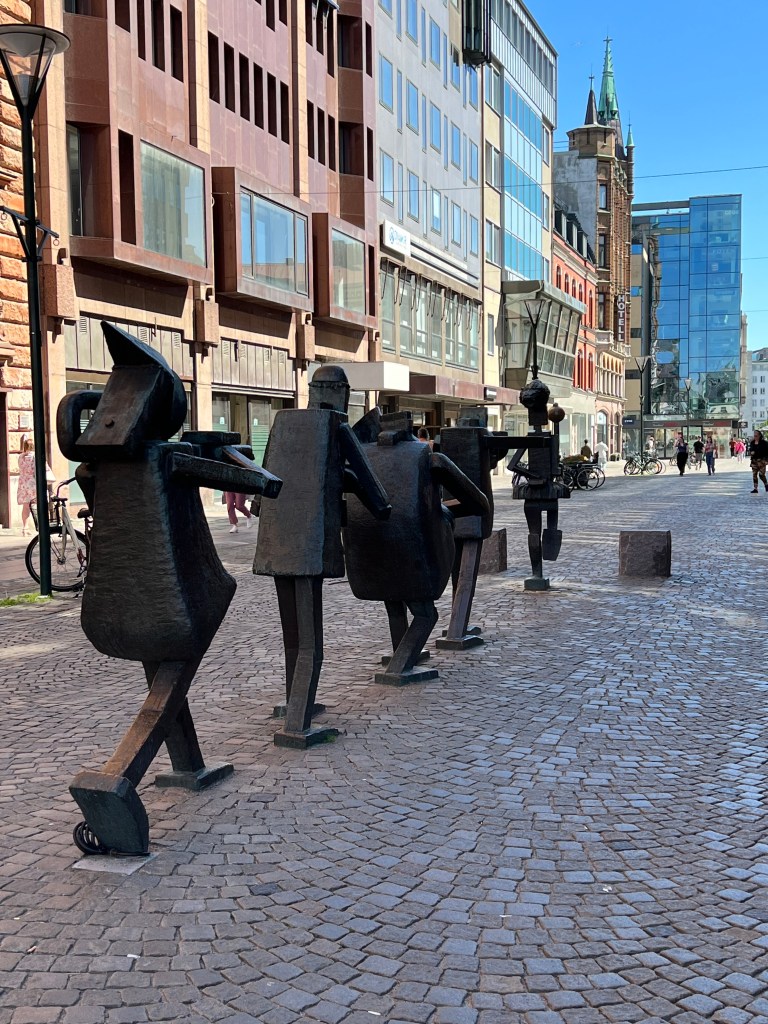
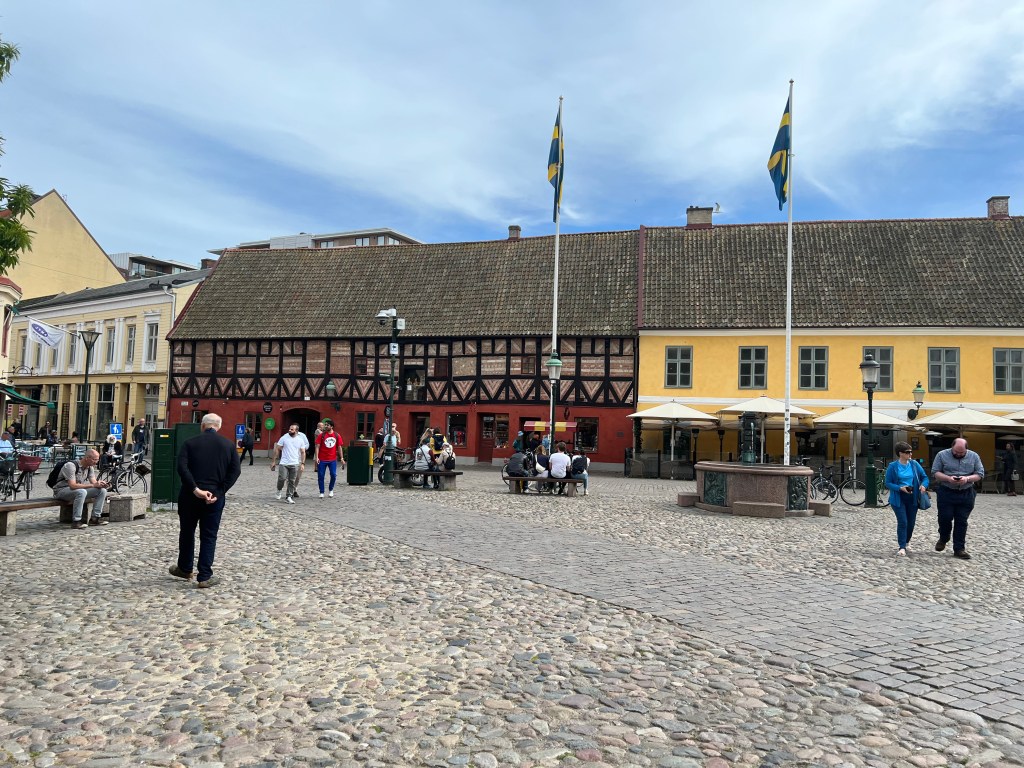
    MOMENTS IN MALMO. Arriving in Malmo and getting to the Scandic St. Jorgen hotel was easy—10-minute walk across the Old Town square. What a beautiful open square for pedestrians surrounded by a mix of very old and more recent buildings!

    MARCHING BAND SCULPTURE IN OLD TOWNSQUARE MALMO
    OLD TOWN SQUARE MALMO. OLD AND MODERN

    The hotel itself is very modern and top notch—great double bed (not two singles pushed together), windows into a courtyard, excellent shower, breakfast, gym, and sauna.

    Malmo, the third largest city in Sweden, is much smaller than Stockholm or Gothenburg and easier to navigate. Three pedestrian squares are great for wandering around and appreciating the old and new architecture.

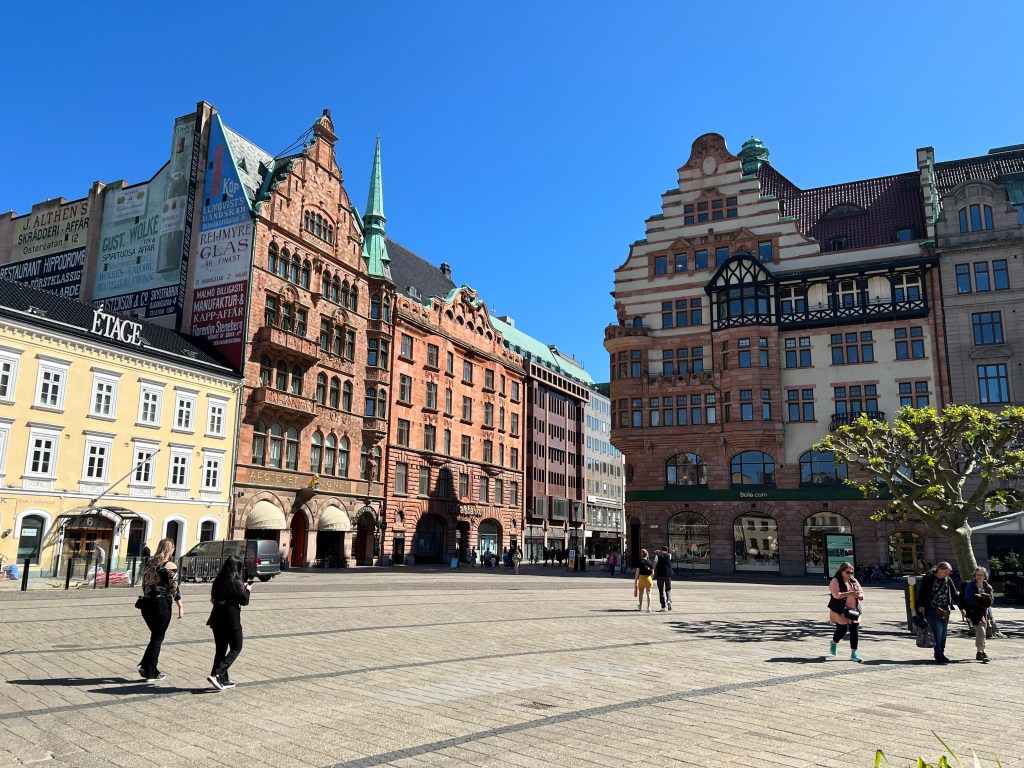
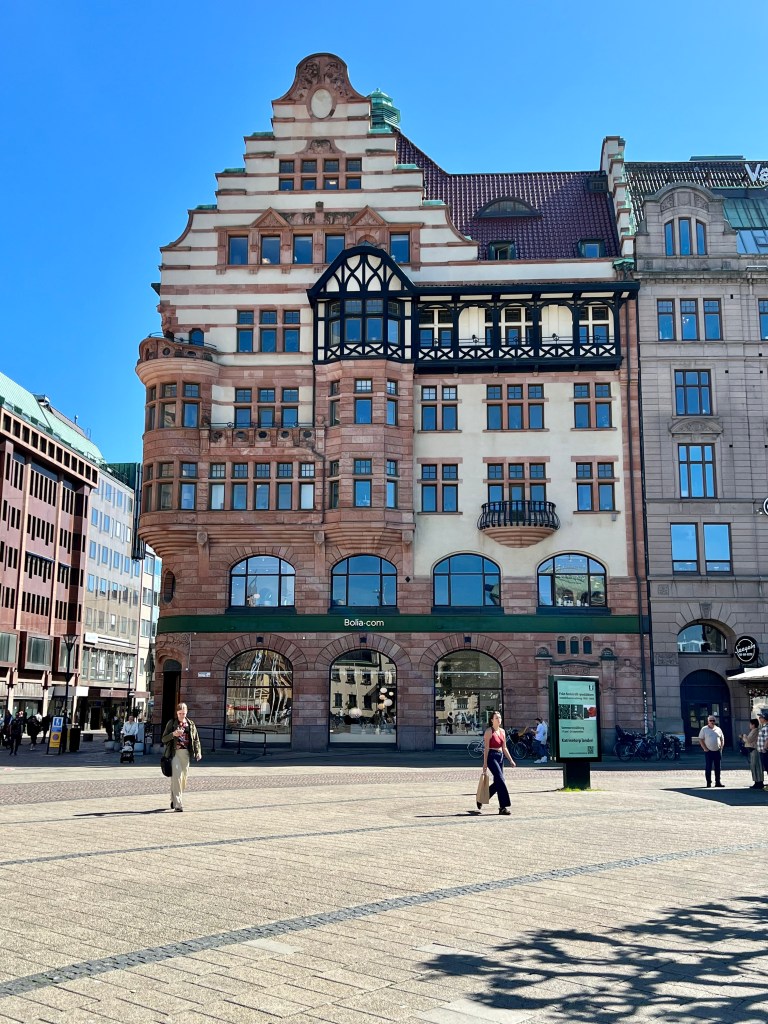
    Everywhere we looked, we were surrounded by beautiful 300-500 year old buildings with fantastic carved gargoyles and caryatids, gables, cross timbers, or patterned brick designs, all with the patina of architectural ages past.

    Tucked among the historic buildings are modern department stores, restaurants, and hotels. The old and the new make an interesting and pleasing juxtaposition.

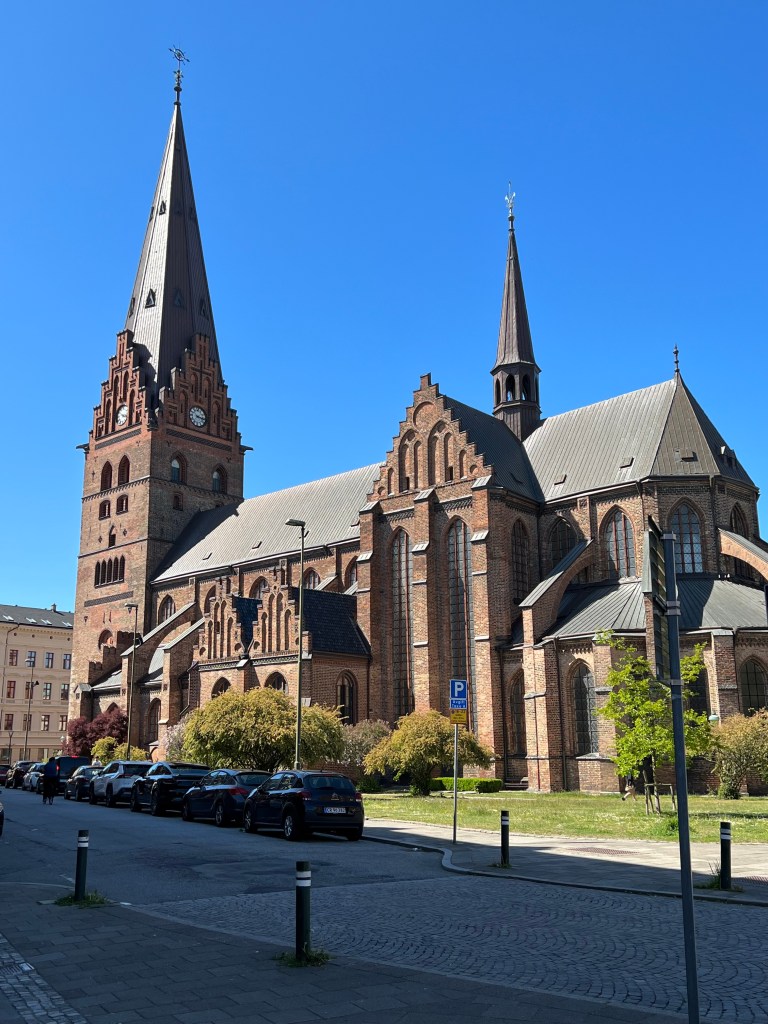
    ST Petri Church
    Parking Garage in Malmo is next to St. Petri Church

    The trip from Stockholm was five hours and we had not eaten since a light breakfast at an Espresso House, a ubiquitous chain in Scandinavia. They really do have great coffee and pastries! We googled “cheap eats near me.” Our first option was closed and actually looked dead. A second “healthy” choice also looked more dead than alive. We finally settled for Zocalo, selling a Swedish version of Mexican food. Papas and Beer in Hendersonville has no competition from Sweden!

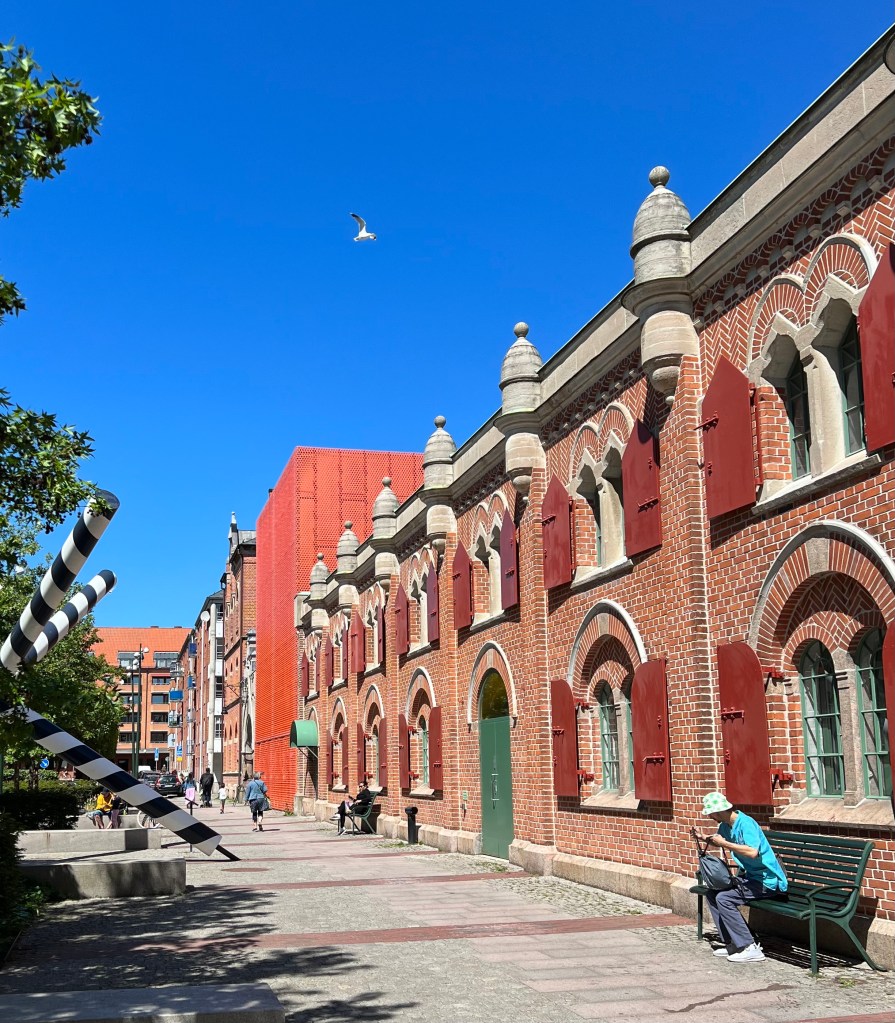
    Old power plant is now the Modern Museet

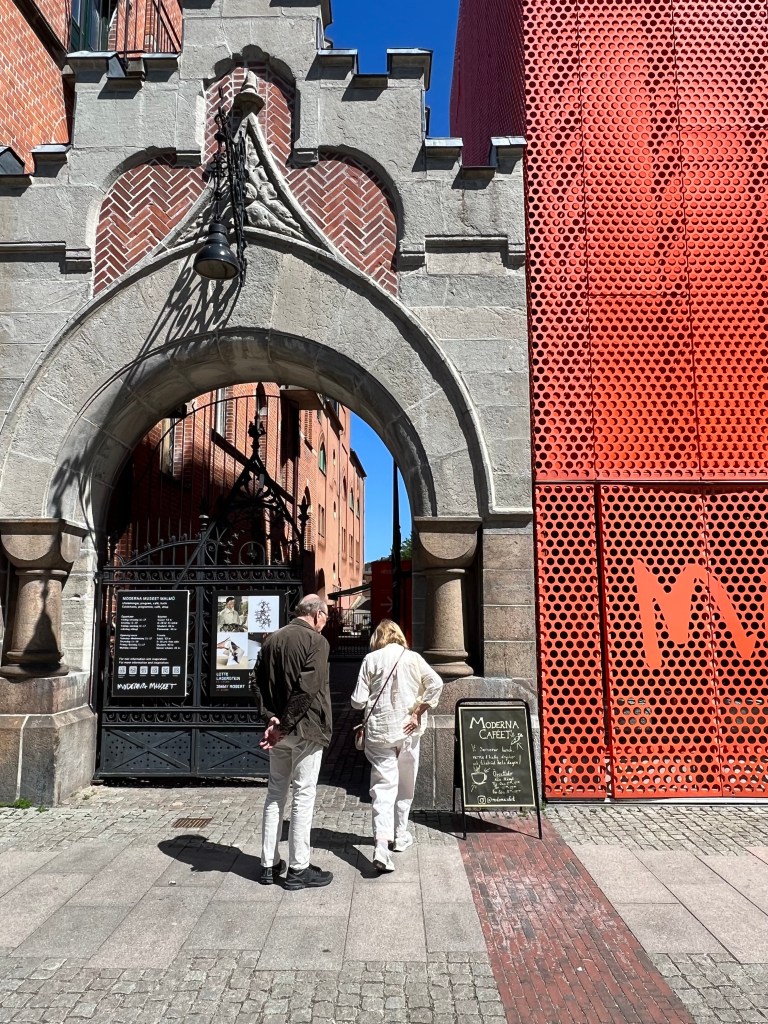
    We spent the afternoon of the second day at the Modern Museet which is housed in a converted power plant. Old and new are joined with a three-story orange metal mesh cube at the entrance.

    ENTRANCE TO MODERN MUSEET. ANCIENT AND MODERN JOINED

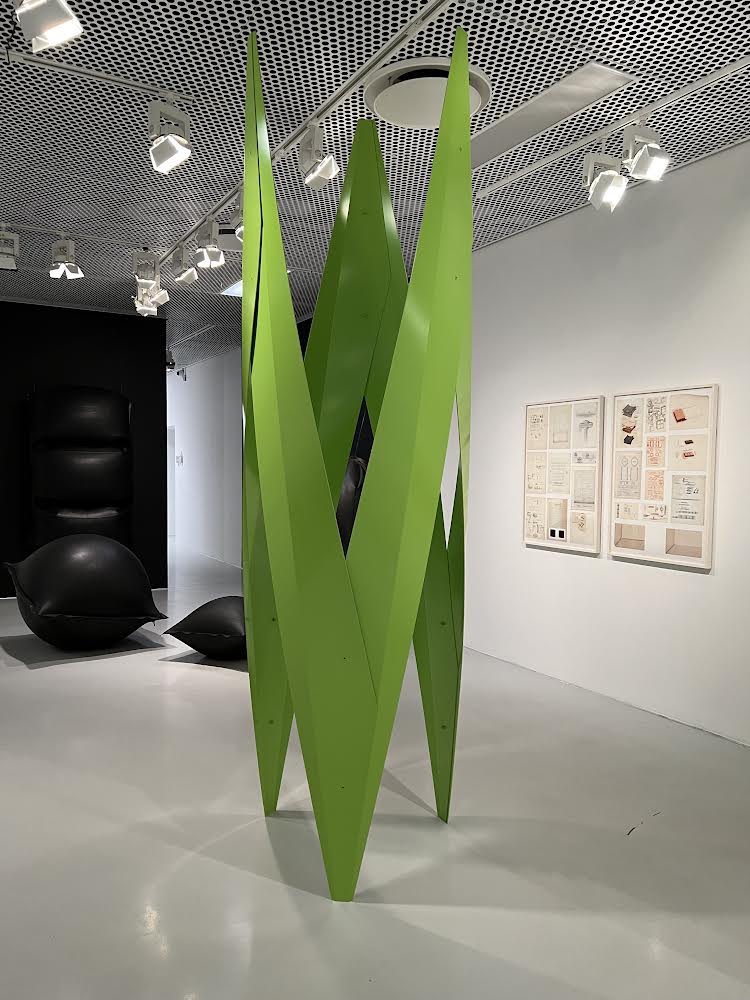
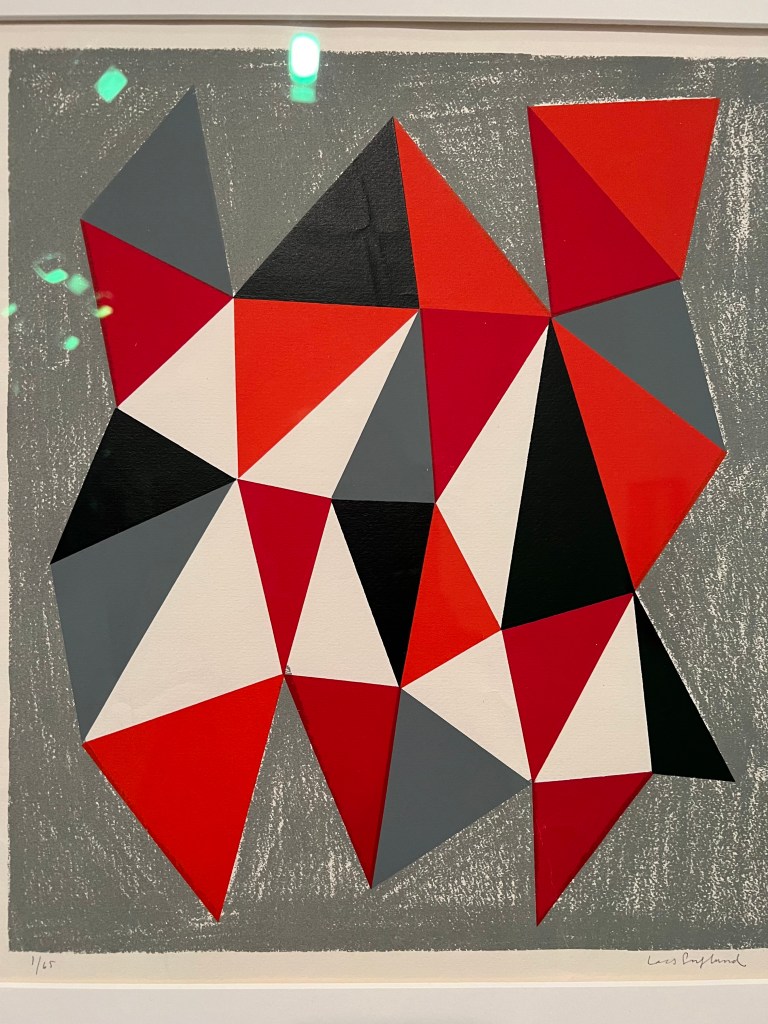
    An exhibit of works by Lars Englund demonstrated his skills as an abstract painter, sculptor, and printmaker. I liked his prints the most and they gave me ideas of things I would like to try.

    Lars Englund sculpture
    LARS ENGLUND PRINT

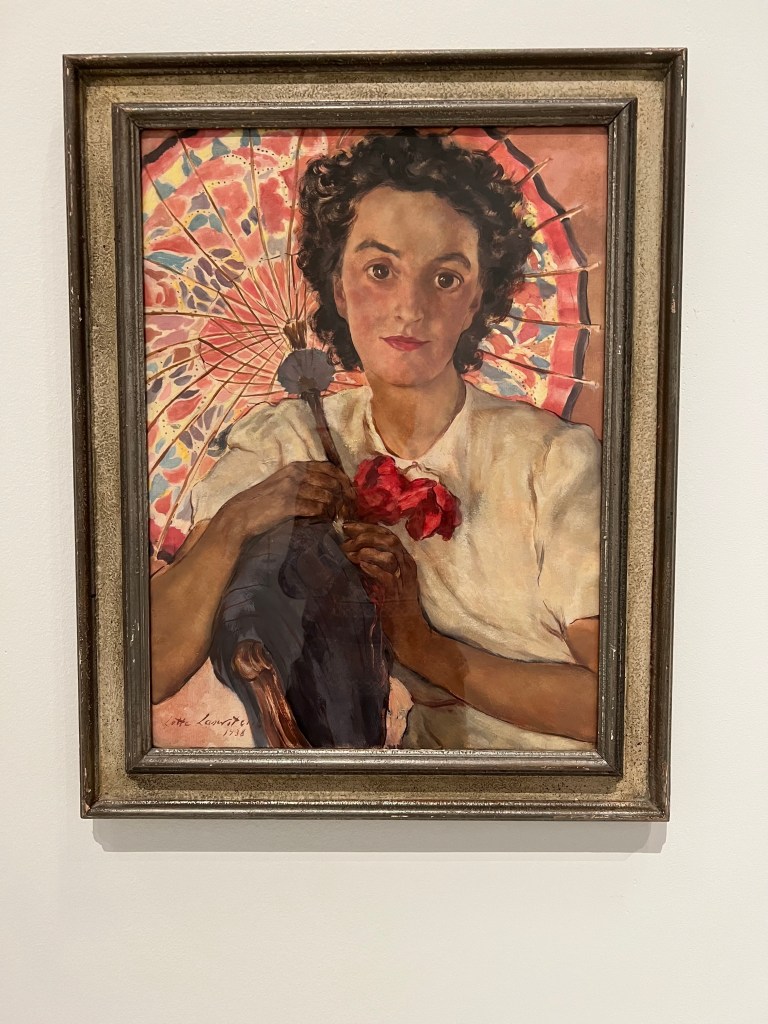
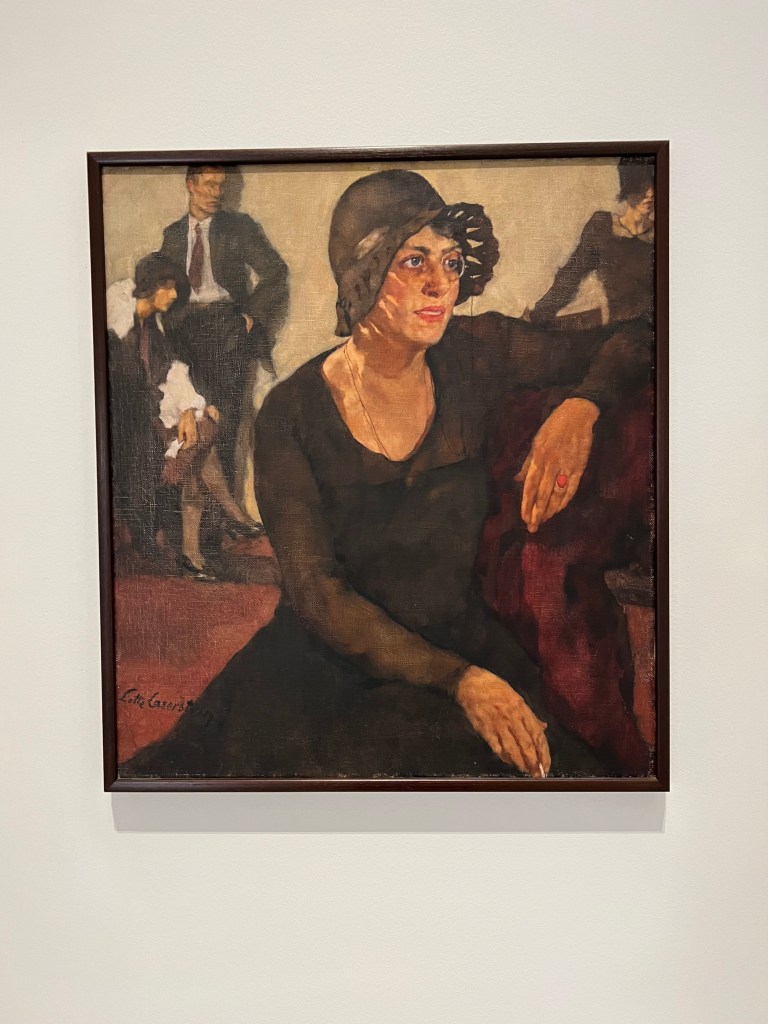
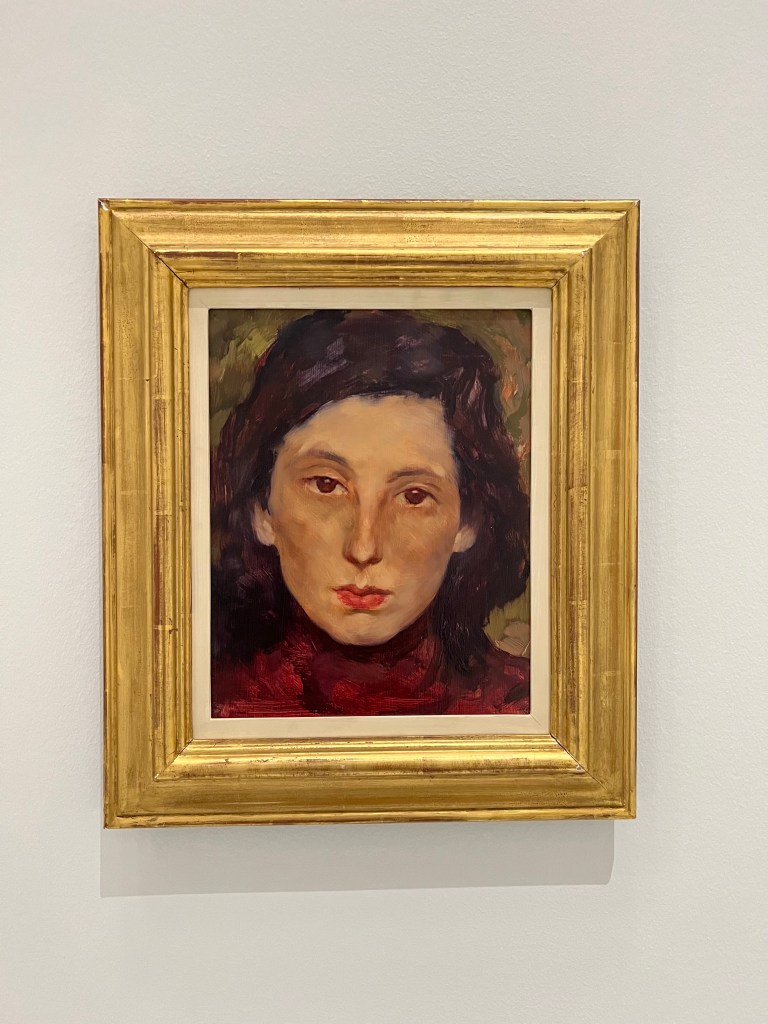
    A large retrospective of Lotte Lasserstein filled a triple gallery. She was a German artist who developed her impressionist technique during 1920s and 30s. A few of these prewar paintings survived and were displayed. When she was declared “3/4 Jewish” and her art “degenerate” by the Third Reich, Lasserstein was unable to buy materials, show, or sell her work. In 1838, she escaped to Sweden but could never rescue her mother and sister.

    Lasserstein made her living in Sweden with commissioned pieces which incorporate impressionist lighting and give the portraits a “glow.” Many of these are still owned and prized in Swedish families and were loaned to the museum for the show. We are always excited to find an artist of such great skill. It is sad that she was not more appreciated in her time.

    Photograph by David Castor of the Turning Torso in Malmo
    based on sculpture by Calatrava
    Stock photo of Oresund Bridge and tunnel from Malmo to Copenhagen

    While the Old Town is a showplace of ancient architecture, Malmo is also noted for its modern architecture, specifically The Turning Torso skyscraper. It anchors the rebuilt harbor area full of lively modern apartment buildings and Malmo University. From the Harbor, you can see the Oresund bridge and tunnel, an engineering marvel that joins Sweden and Denmark. We really enjoyed seeing the variety of modern buildings along the bus ride to the harbor.

    This is Becky’s photograph of the Turning Torso showing modern apartment buildings and the bus that took us to the revitalized harbor area.

    The last morning we ate breakfast at the hotel, then loaded luggage on the five-minute bus ride to the Malmo station. Contactless week/month cards or QR codes on the phone are the standard way of paying for transit everywhere in Scandinavia. For occasional riders like us, swiping a credit card gives you an hour of transportation. So easy.

    A 9:38 train from Malmo to Copenhagen was scheduled for 50 minutes with a short time to connect to the 11:00 train to Hamburg. Both 9:18 and 9:38 trains were running late; we decided to take the earlier train rather than risk missing the connection.

    In Copenhagen, Becky again led the charge to secure our reserved seats while I flung luggage up the stairs. We got settled and were across the aisle neighbors with the same young man who sat across from us from Malmo.

    He had completed two years of Bible college in Sweden and was headed home to Stuttgart to his work in his family’s vegetable farm but not sure of what he was going to do next. Might be hard to keep him down on the farm! He had four large suitcases with all of his worldly possessions .

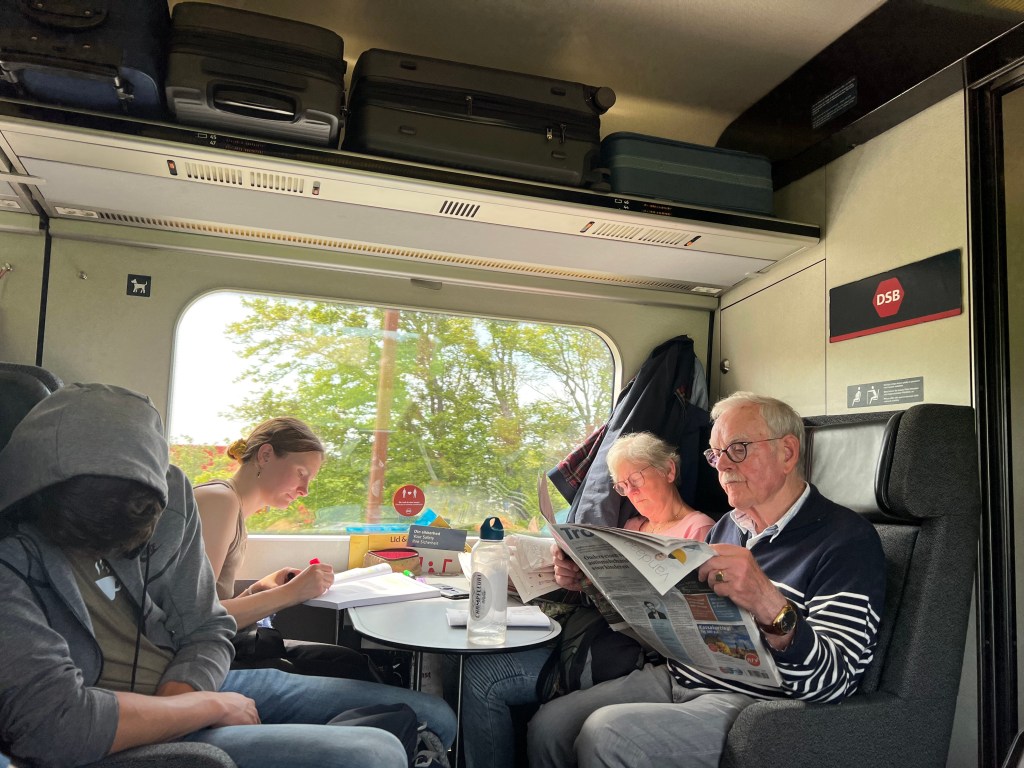
    Our across the aisle neighbors on the train for five hours to Hamburg. Young man sleeping in his hoodie was headed home to Stuttgart.

    OVERNIGHT IN HAMBURG. Our first stop in Hamburg heading toward Copenhagen was a quick overnight: find and check in the hotel, take a nap, get take-away kebab, go to bed, wake up, get on the next train.

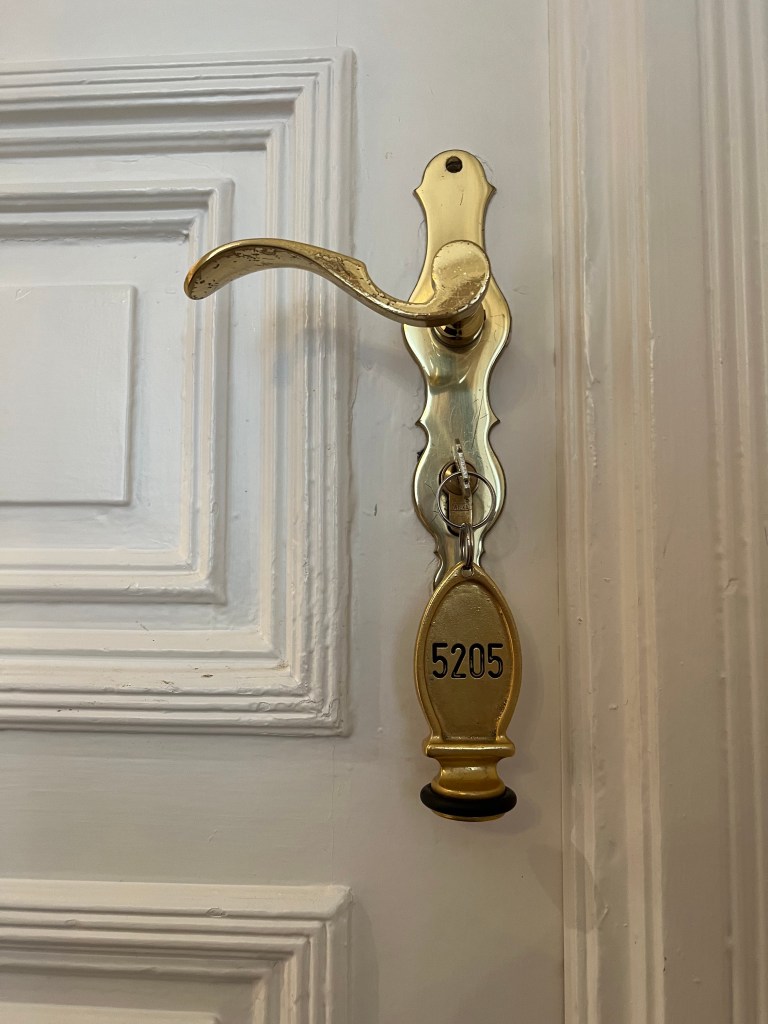
    On our return trip followed the same pattern with a couple of differences. We were in a different hotel—the Furst Bismarck Hotel directly across from the Hamburg HBF station. It is rather old fashioned, probably grand in its day, with only 5 or 6 rooms on each floor. The rooms are well appointed, and the hotel is in good condition. Instead of a contactless room key, we had a beautiful heavy metal key that had to be turned in the heavy metal door lock and a chandelier in the bedroom.

    Here is your key. It weights 1.5 lbs.
    Return it to the front desk when you leave.

    The reception desk keeps the key when you leave the hotel and issues you a reclaim ticket. The weight of the key reminds you not to carry it.

    Another change was dinner. We walked to a sidewalk restaurant on St. Georg Square. Caesar salad, Gorgonzola chicken and delicious spinach made an exceptional meal! The statue that dominated the square did not look like any saint or any dragon. Instead, it looked more like Queen Victoria. After a little search, I believe that the statue is of Bismarck which makes sense with the name of our hotel.

    At 8:30 the next morning in Hamburg, we walked across the street to the station for a quick breakfast and to purchase wraps for lunch on the trains to Osnabruck and Amsterdam. We saw a 50 car transport of new BMWs rattle through the station, probably coming from Stuttgart.

    Arriving at Osnabruck, we found that our train to Amsterdam was delayed by 75 minutes, and the lift to our track 12b was out of service. We sought help from a train system employee who kindly changed the direction of the escalator so we could ride down with our luggage rather than bump down a long, steep staircase. Becky grabbed our reserved seats, and we were on our way again. We rode the entire day without anyone checking our tickets.

    TRAIN SPOTTING. One of the delights of train travel is seeing the countryside. Large cities have become more and more similar with the same stores and brands dominating shopping and food courts. But the towns, cities, farms and industry, train yards and buildings along the tracks are an ever-changing panorama.

    We have seen endless forests, rolling hills, planted fields, great lakes and rivers, and flat land reclaimed from the sea. We spotted many cattle, swine, goats, sheep, geese, and dogs along our track. Ancient spires and gleaming new buildings called out for a closer view but we had no time on rapid rolling rails.

    A spire we could see from the train in Amersfoort, Netherlands

    Our two full days of train have been visual treats. Winnie the Pooh encourages us to “say what you see,” and we did many times.

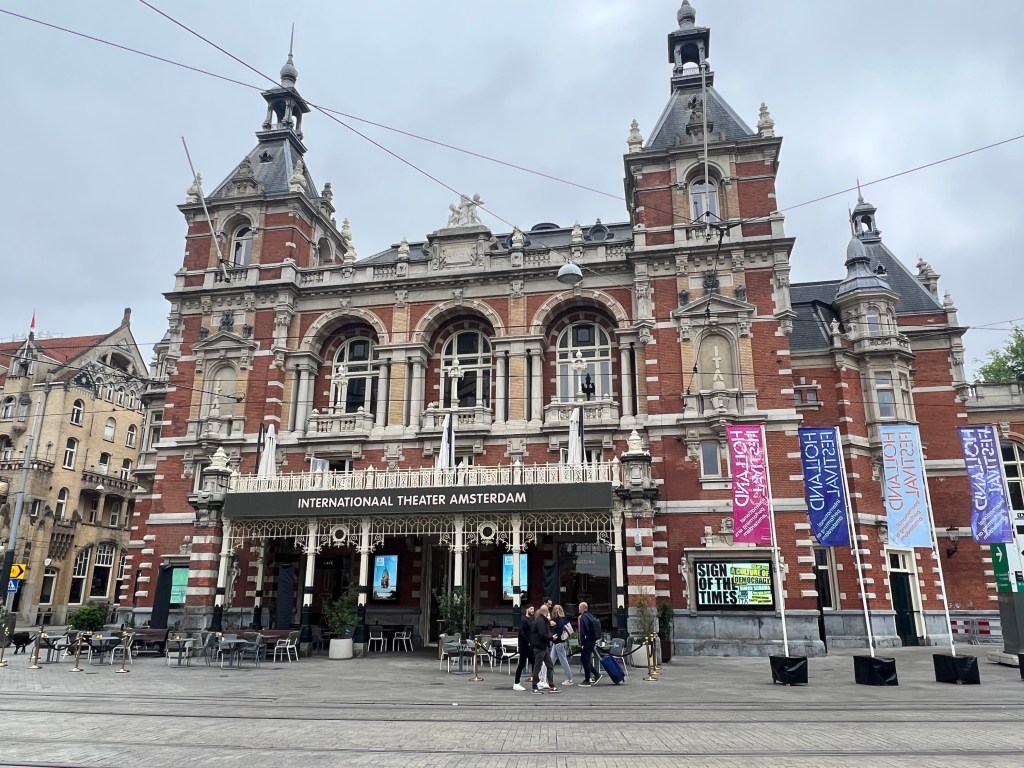
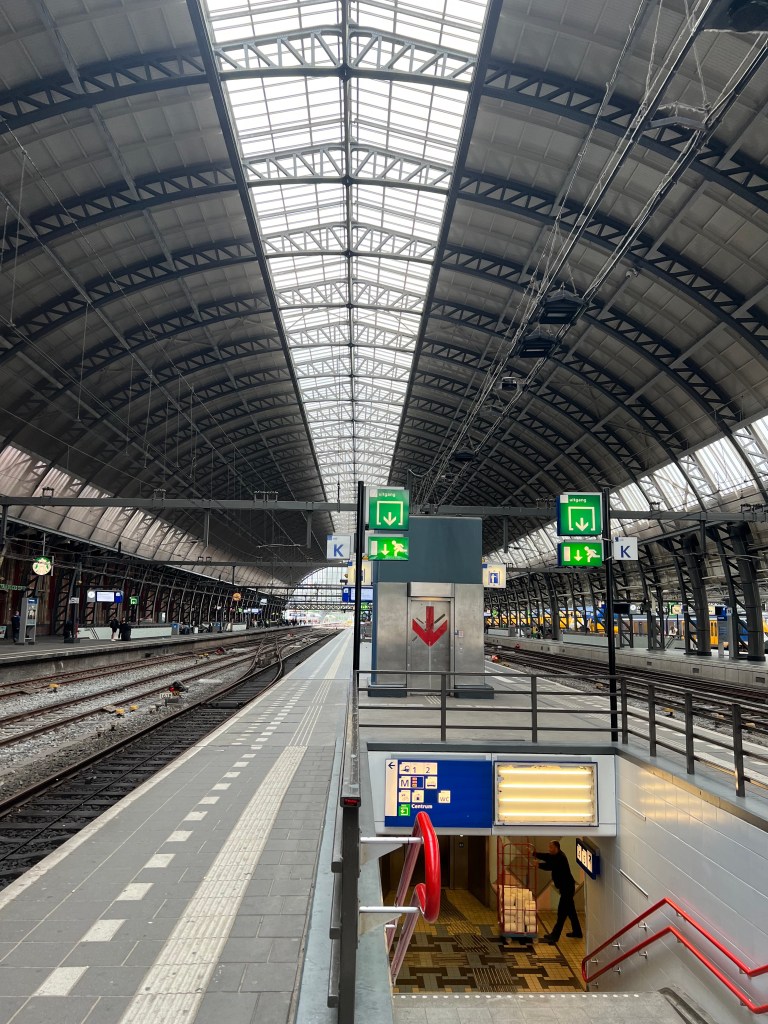
    ONE NIGHT IN AMSTERDAM. Our delayed arrival in Amsterdam put us into afternoon rush hour. I found a tram to Leidensplein and we jumped on for a 10-minute ride to the hotel. At first we were booked into room 401 without an elevator, but the reception person kindly switched us to 107. Umami, the Indian street food cafe next door, was open. We enjoyed it before and decided it was worth another visit for poke and bao bun. We never tire of walking around Amsterdam and collecting memories.

    Some favorite scenes from Amsterdam

    Our travel plan with Interrailing ended in Amsterdam. We are planning more relaxed time for the last week. We will follow our noses and spend time away from Amsterdam in a small town in southern Holland for three days before heading to the airport and home.

  • Episode 9 Stockholm Stories May 16-18, 25-29

    May 30th, 2023

    Time in Stockholm was divided between two days before Helsinki and four days after Estonia. We spent those first two days recovering from the long, exhausting bus and train trips from Oslo. Due to rail repair, we had to be up by 6:00, at the alternate bus by 7 am, transfer to the train in Karlstadt, and finish the 8 hour trip by rail. We both had coughs and head colds by the time we got to Stockholm.

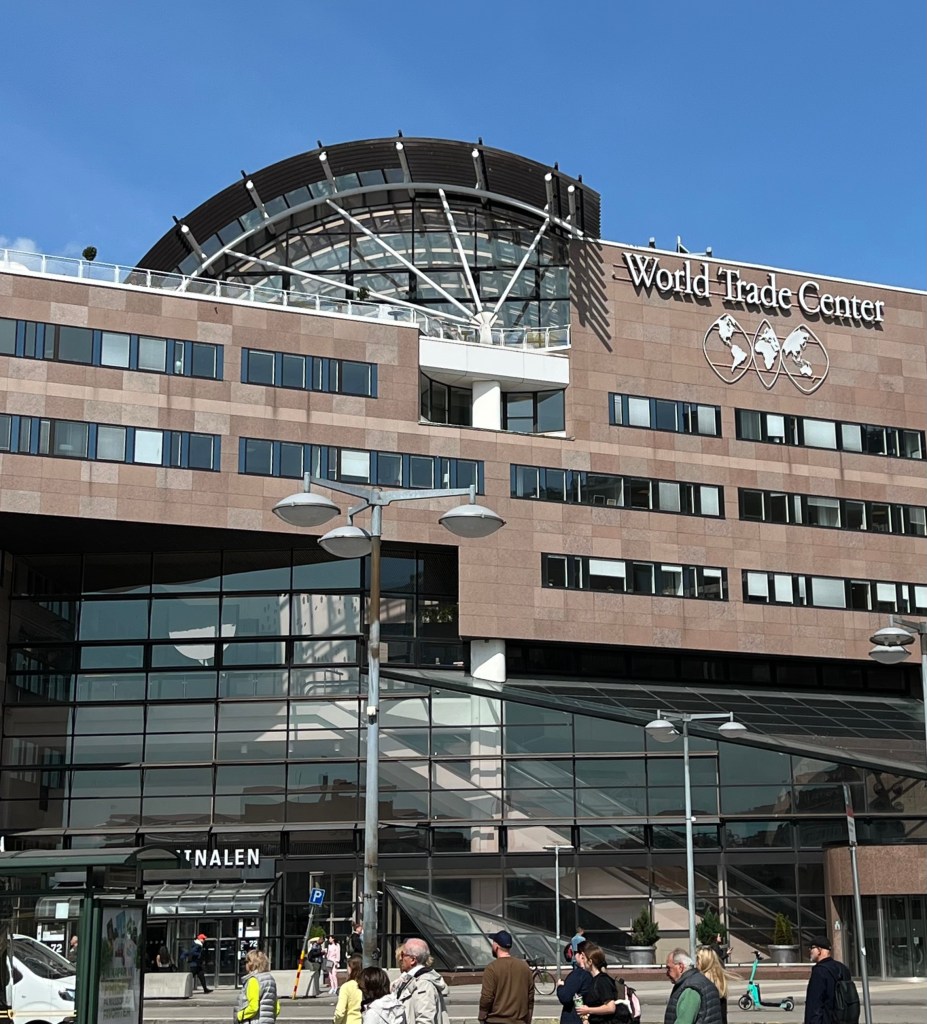
    GETTING TO KNOW STOCKHOlM. We arrived at the Centralen Station and walked three blocks to our hotel, later realizing a one-block route went through the bus station. The Comfort Hotel Express is only steps away from bus, train, subway, and tram connections.

    Comfort Express Hotel was inside the World Trade Center

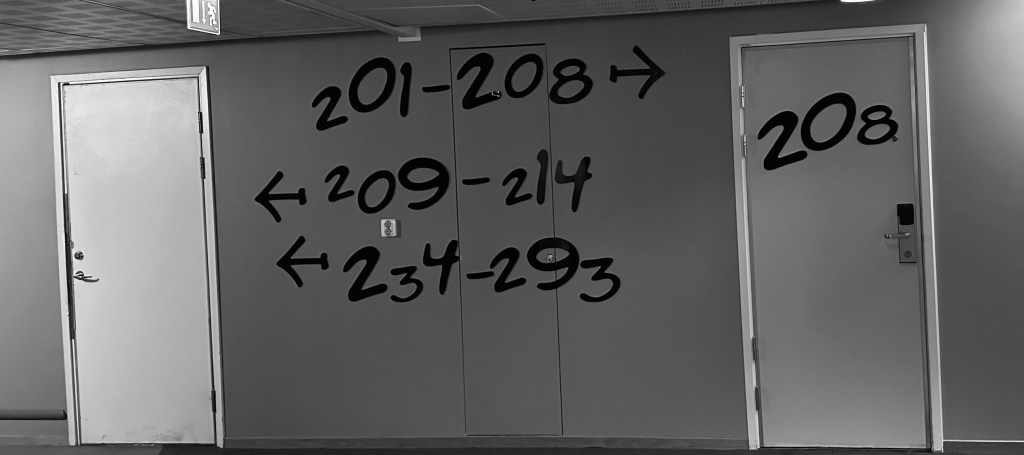
    The hotel is a reconfigured space within the World Trade Center designed for conference attendees and tourists. The halls are a maze with a numbering system designed to confuse. We requested Comfort Express “upgrade” our room to “handicapped” which gave us considerable more floor space. We seldom trade on our aging bodies, but this made the room way more “comfort”able.

    Where is our room 224?

    Hop On Hop Off Buses (HOHO) are sometimes a good way to get a city orientation. We saw HOHOs on the street in Stockholm but we could not find where they stopped so we could Hop. When finally we caught a HOHO, the driver trainee and supervisor delivered us to an official stop where we began the hour tour.

    Stockholm has two Red Bus HOHO Companies which causes some confusion. We bought tickets on Stromma HOHO but had a map from City HOHO with different locations and directions. Tourist literature claimed the two companies cooperate with each other, but that is not what we saw.

    We walked around the neighborhood looking for healthy, reasonably priced places to eat, finding a grocery market, identifying an Apoteek, etc. Tribowl, a small cafe close to the hotel, serves healthy, mostly vegetarian bowls perfect for lunch. We chatted up the staff and promised to return!

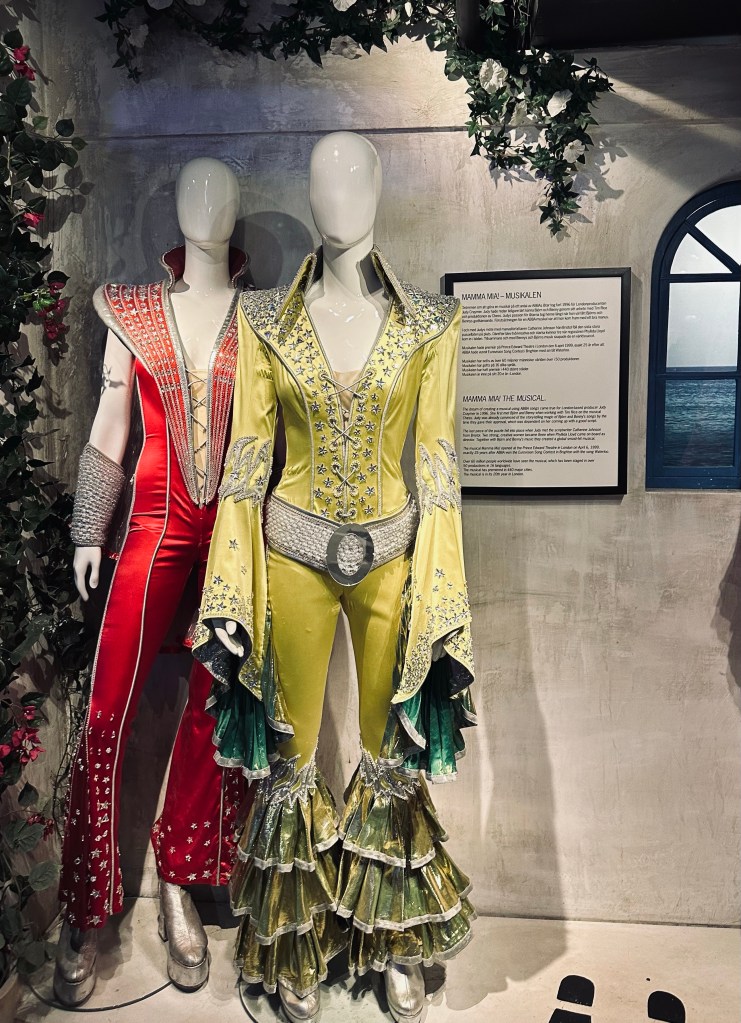
    ABBA. Rest was the afternoon prescription for Becky. I headed for the ABBA museum with interactive displays of music, video, interviews, diaries, photos, gold records, many other awards, plus costumes, costumes, costumes.

    Silver, gold, platinum records
    Take your picture with ABBA costumes
    Everything ABBA for $30

    Everything ABBA Museum allows fans to relive the quartet’s rise from Eurovision winners to worldwide superstars. If you are brave enough, you can step into a sound booth for a singalong tryout or onto a stage to dance-along with ABBA projections. Great, silly ABBA fun for 2 hours and $30.

    After ABBA, I waited 30 minutes for a Stromma bus with my Stromma pass, but the Stromma driver refused to let me on and shooed me away. When the City bus came by, it took me to end of line at Central Station without question.

    FERRY TO HELSINKI. Our main task for Day Two was getting to the the ferry on time. Stockholm, a major port, has three huge passenger docks quite a distance from city Center. We needed to get to the right terminal in plenty of time because ferries wait for no one. The folks at the TI seemed confused about which terminal: not the Viking dock, not the Riga Dock, yes the Helsinki and Tallinn dock. The Metro subway people understood exactly what we wanted and how to get there by subway and bus without walking miles and miles.

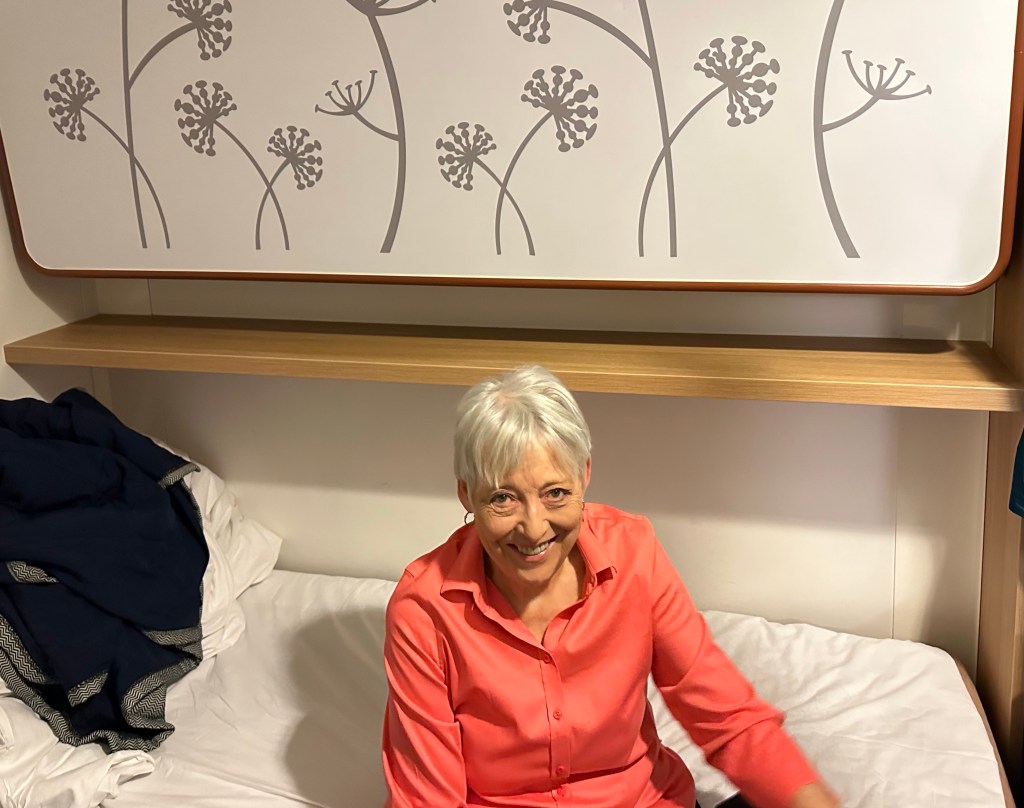
    The only major complaint we have had with accommodations was the first overnight ferry which was a tiny interior room with bunk beds on a deck below the cars and above the engines. Neither of us was willing to climb up on an unsteady ladder to sleep four/five feet off the floor, so we pulled the upper mattress down and took turns not-sleeping-well on the hard pallet.

    Becky contemplating the upper bunk.

    We survived, but we also complained. Interrail assured us that our return trip to Stockholm would be better.

    We learned a lot about Stockholm in two days which will make our return so much easier. We will be back in the same hotel and room, and we have a better sense of the transit system so we can focus on what to see.

    RETURN TO STOCKHOLM SEVEN DAYS LATER. After an easy morning in Tallinn, we took a Bolt ride costing only 5 Euros to the ferry terminal. Bolt or Wolt is the Scandinavian equivalent of Uber, Lyft, Uber Eats, and every other food delivery company. Bolt deliverers are everywhere on bicycles, standing scooters, and electric tricycles with warming boxes strapped on their backs. In Helsinki and Tallinn, we saw fewer bicycles and more electric scooters being used for general transportation and work commutes. The children start riding push scooters at age 3 and graduate to electric ones about age 10-12. The daredevil teens and adults who deliver food are whizzards on electric scooters.

    Every thing was up to date in the new terminal with spacious waiting areas and amenities. Moving sidewalks were slightly raked making luggage hauling very easy.

    Baltic Queen ferry offered the Grand Buffet and five other cafes included a gourmet dining experience for only 85 Euro ($100) per person. We instead had mixed salad and corn soup at the Grille which were very tasty and filling.

    Our Premier class berth had a window and a full bed on the 8th floor—a major upgrade from the bunk bed cabin we had crossing to Helsinki. Hurrah! The ship was packed with tourists our age, family and school groups, and clusters of young men and young women (ages 17-23) on holiday.

    Arriving at Stockholm, our prior explorations paid off. Bus 1 took us on a pleasant ride through Stockholm suburbs directly to the front door of the Hotel. After check in, we gathered our left luggage and settled into our room in time for lunch! We walked a block to Tribowl and were greeted by our new friends there.

    That afternoon, Becky organized a small laundry catchup. We studied tourist literature and a map to focus our time in Stockholm. Many options, but our number one choice was the Vasa Museum. It was amazing.

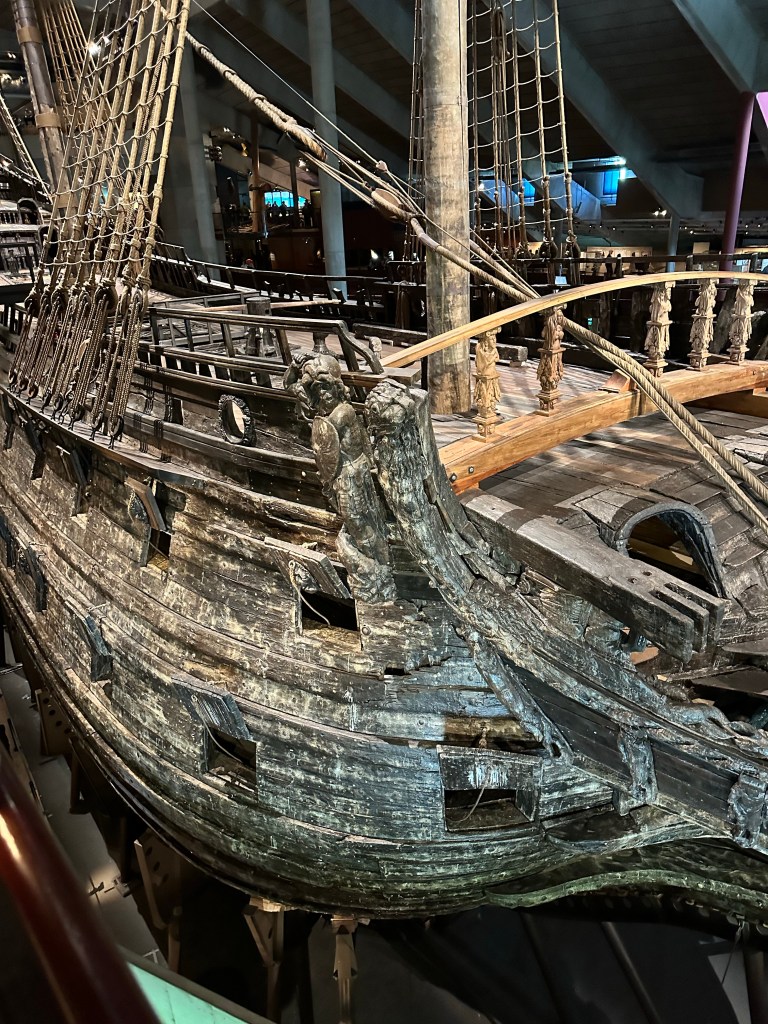
    RAISING VASA. In mid 1600s, Sweden and Poland were contesting for supremacy on Baltic trade routes. King Gustav decided to build a wooden warship to end all warships—with the tallest mast and two rows of cannons on each side. Unfortunately to meet all the king’s demands, the ship was designed too tall and too narrow of beam limiting the amount of ballast it needed for stability. Delusional rulers who believe that nature conforms to their wishes are not a new phenomenon.

    On its maiden voyage in 1628, a gust of wind caught the sails causing the boat to lay over and take on water through the cannon ports. The VASA promptly sank in Stockholm harbor 30 meters deep and remained there for the next 333 years. A Royal inquiry was made at the time into the reasons for the failure, but no fault was found with the design or construction. No problem, so no one’s fault.

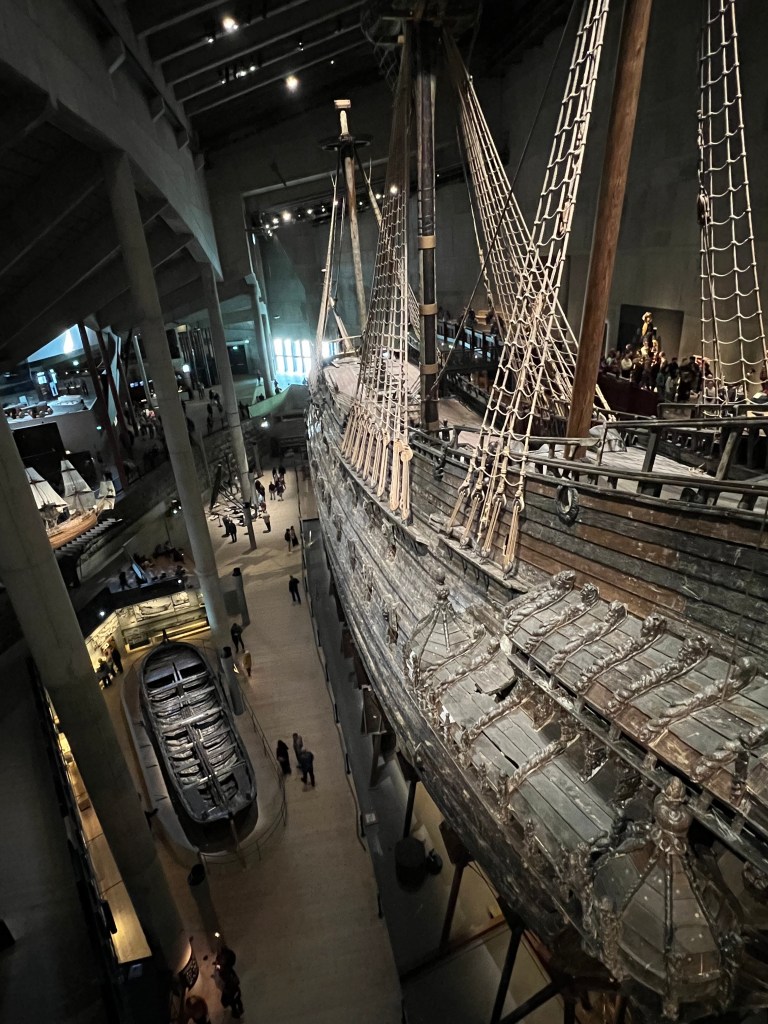
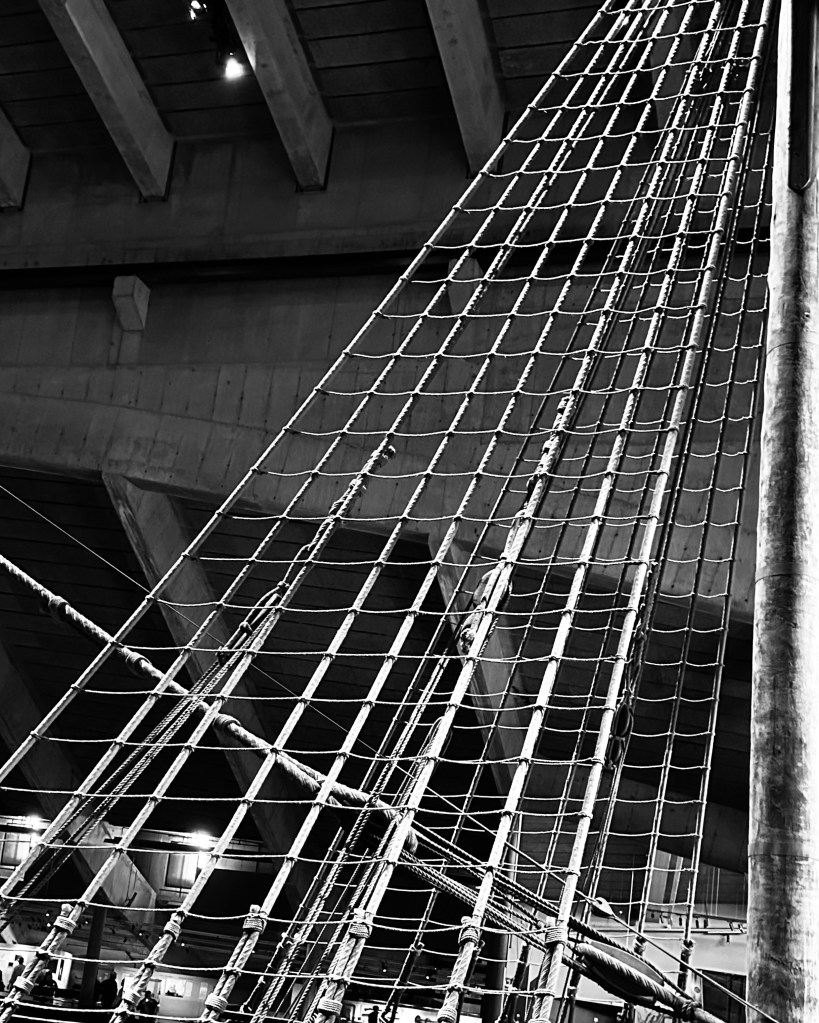
    In the 1970s, the Vasa was raised almost intact and carefully preserved, repaired, and stored in climate controlled settings— a process that took 5 years. The Vasa now is the centerpiece in middle of the museum and is viewed 360 degrees on levels -1 to 7.

    The restored VASA fills the center of the museum
    with 8 floors of displays surrounding it.

    Displays about the preservation and rebuilding process, documentary films about its history and preservation, and archeological stories complete the museum. This was undoubtedly the best single subject museum we have ever visited. Google VasaMuseum for more details.

    Photographs of VASA reconstructed and a model of it.
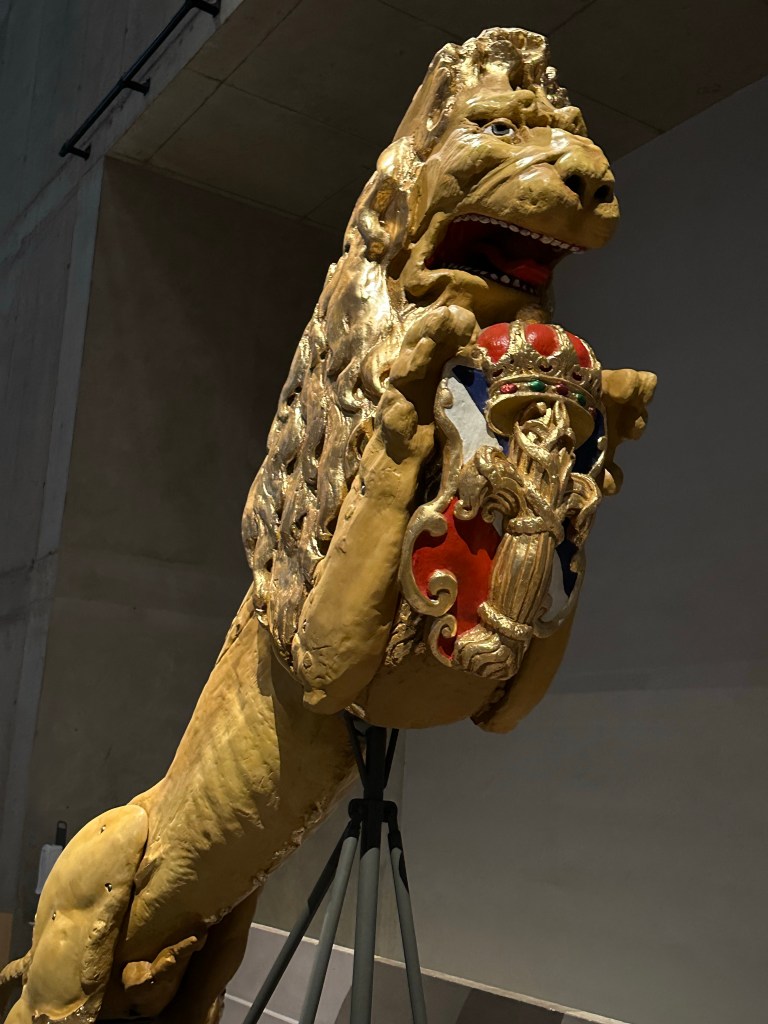
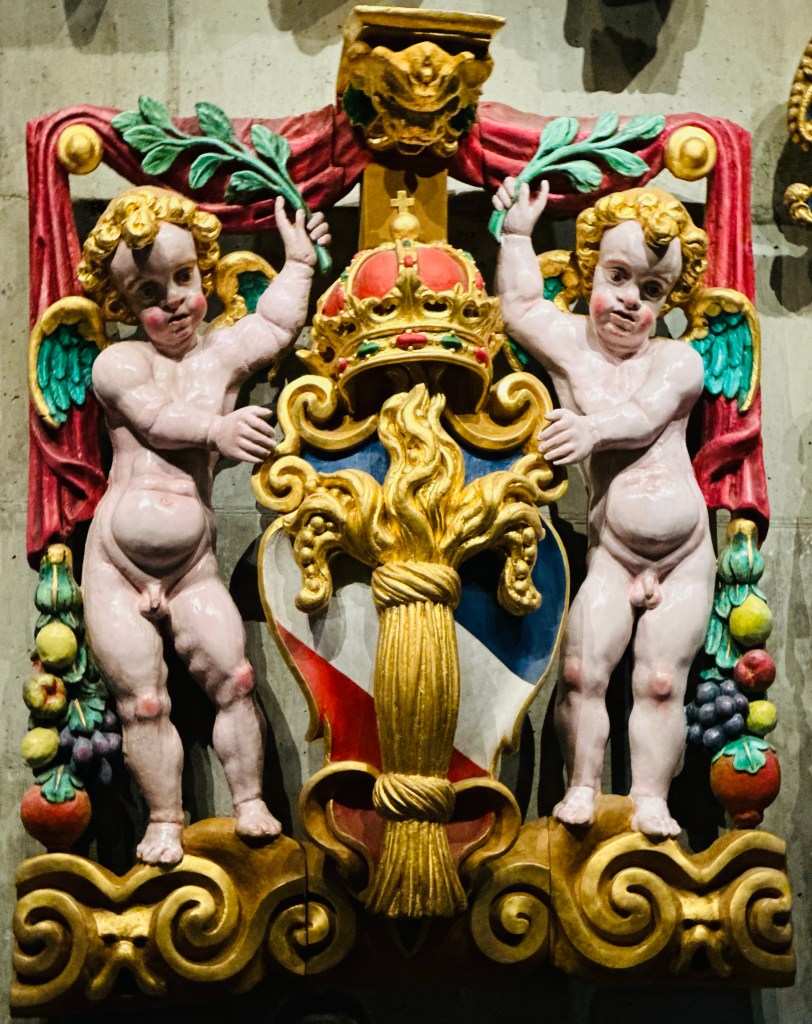
    The carvings are modeled after the original ornamentation.

    The 72-hour transit pass bought unlimited travel in Stockholm. On the bus, you swipe your pass each time you enter. On the tram, you just hop on but you had better have a ticket of some kind. A transit inspector actually checked our passes one time: 99% honor system works here.

    At the King’s Park, we got off the tram for lunch at a outdoor cafe where we shared a truffle burger and fries for lunch—a break from our usual healthy choices.

    Sidewalk Cafe on King’s Park

    Becky bought a T-shirt on our walk back to the hotel. By that time, we had almost 10,000 steps calling for an afternoon nap.

    FOTOGRAFISKA FOR THE EVENING. Fotografiska gallery in Stockholm is connected to the Fotografiska we enjoyed in Tallinn. A speedy trip on the Metro took us to the nearest station, but we still had quite a hike around road and tram construction to reach the building. The photography was certainly worth the walk. “In the garden” was a curated show of 15 different photographers’ interpretations of the theme.

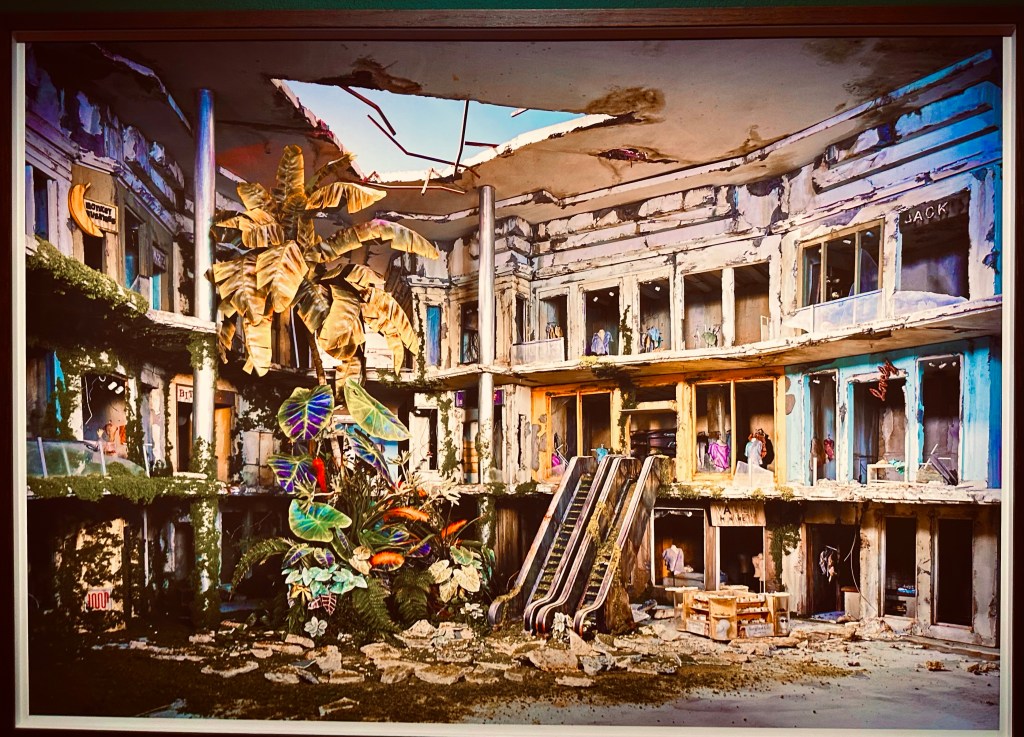
    Wild plants growing in a derelict shopping mall—
    photographic montage by Nix and Gerber
    “Nothing in life is constant but change”
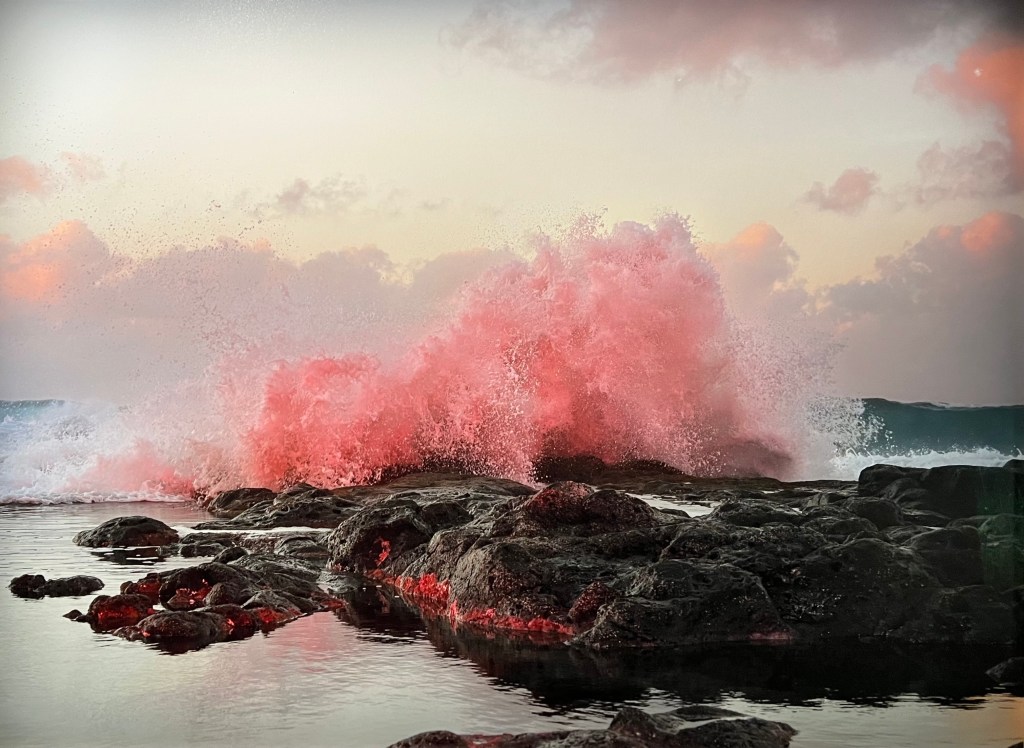
    Inkas and Niclas called their photography
    “landscape fluorescence” with extreme manipulation done
    at moment of capture. How do they do that?

    An exhibit titled “Santa Barbara” told the story of a mail-order bride who brought her son and daughter to California from Russia in the 1970s. When the family arrived in US, they met a new papa and watched the soap opera Santa Barbara to learn English and American life. Now an adult, the daughter wrote a script of their life and cast actors to portray the family and Eli, the man who brought them to the US and disappeared after 8 years. With still photos and videography, she reconstructed scenes as if they were from the soap opera. The amazing production mixed reality and fantasy, joy and sadness, hope and fear.

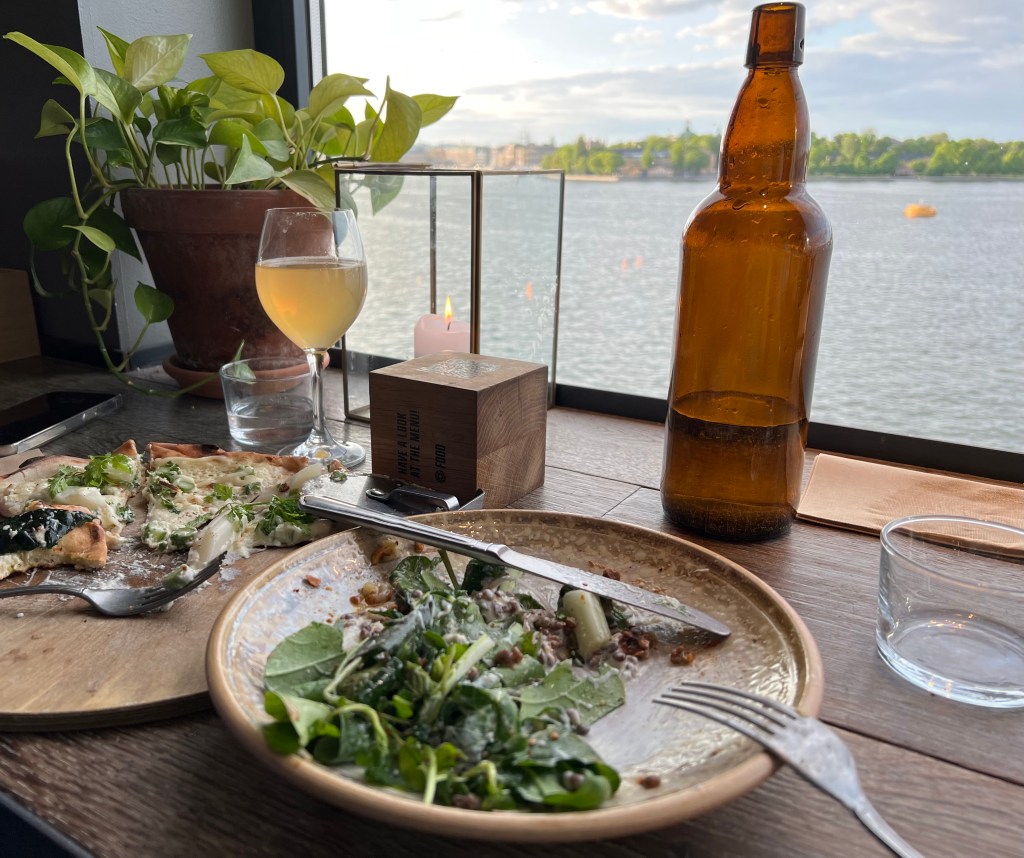
    Fotografiska offers a five-course dinner menu with wine pairings that cost over $100 per person. But we ordered from the ala carte menu in the bistro: green and white asparagus on the thinnest, crispiest pizza crust and a wonderful salad “from our basement.”

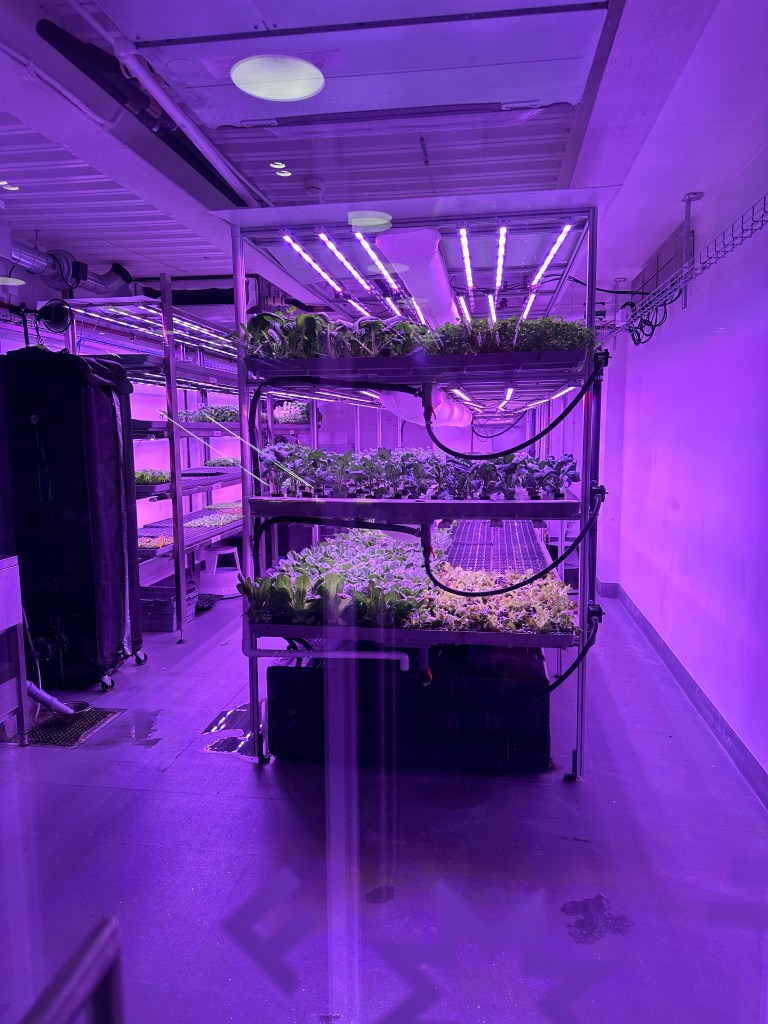
    The restaurant grows their own salad greens in a hydroponic garden in the basement.

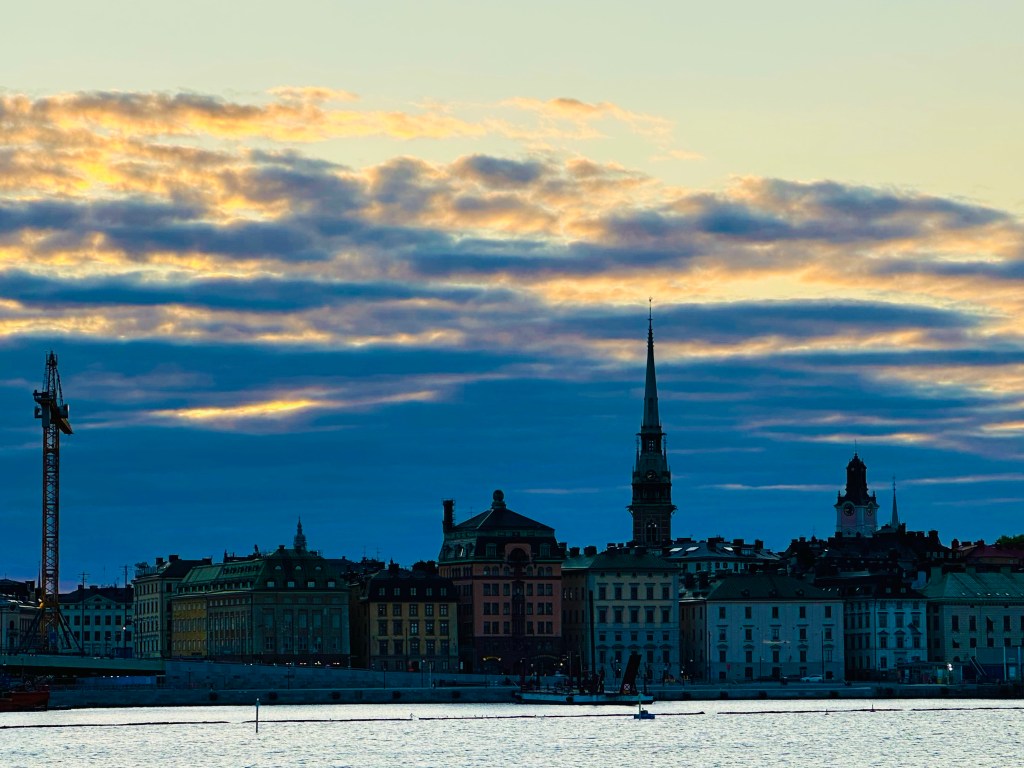
    We ate looking over Stockholm Harbor where the VASA sank in 1628. On our walk back to the Metro station we caught the Stockholm cityscape against the sunset. What a great end to a great day!

    Stockholm at sunset

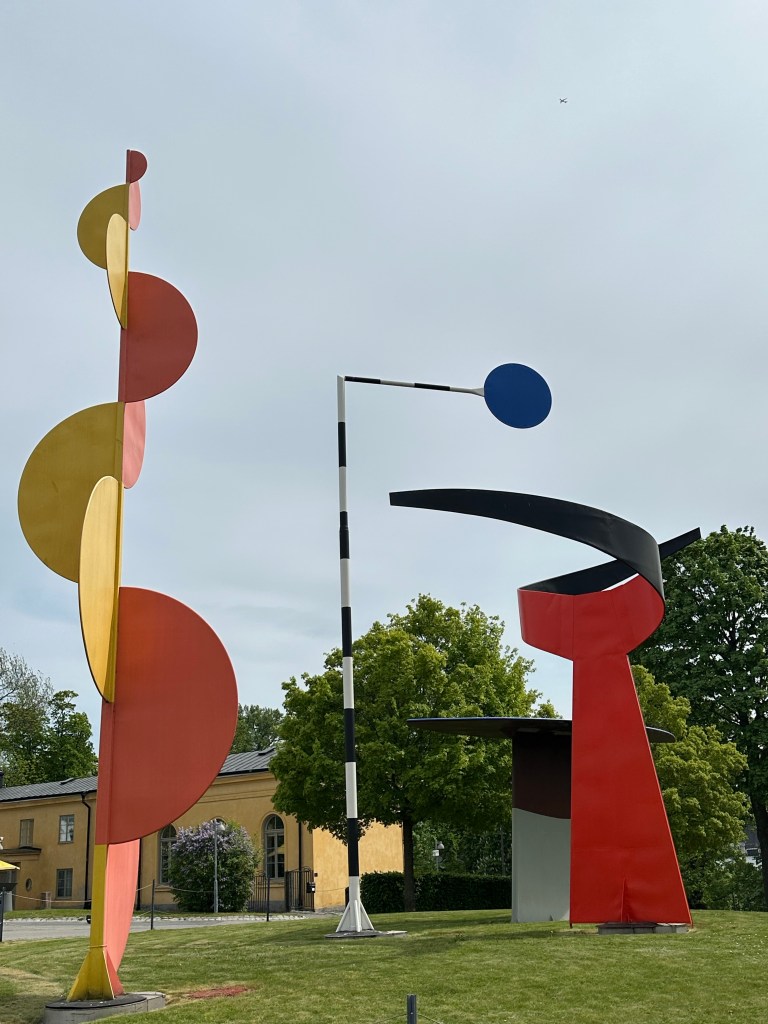
    The fourth day in Stockholm was planned for National Museum of Fine Art and the Modern Museet. At the Modern, the performance artist, writer, musician, and photographer Laurie Anderson was featured in a retrospective which was impressive. Swedish architecture was highlighted in a separate ARK/DES gallery. Outside was a modern sculpture garden including four by Alexander Calder.

    Alexander Calder’s Four Elements sculptures

    We had a coffee and roll before proceeding. This Scandinavian afternoon ritual called “fika” is one that we have readily adopted.

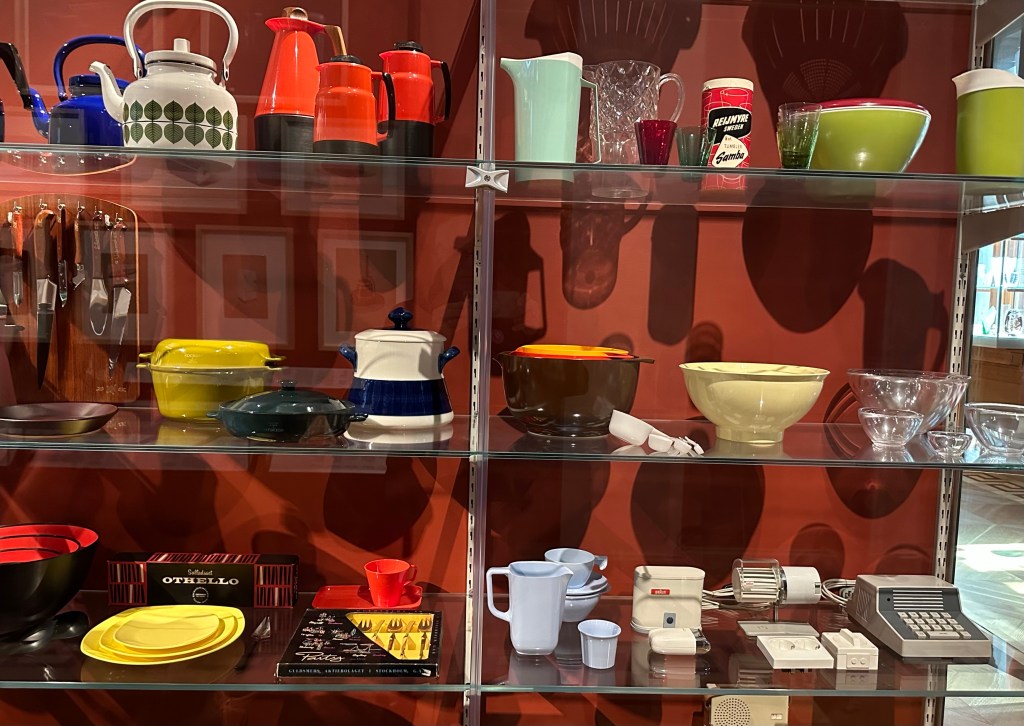
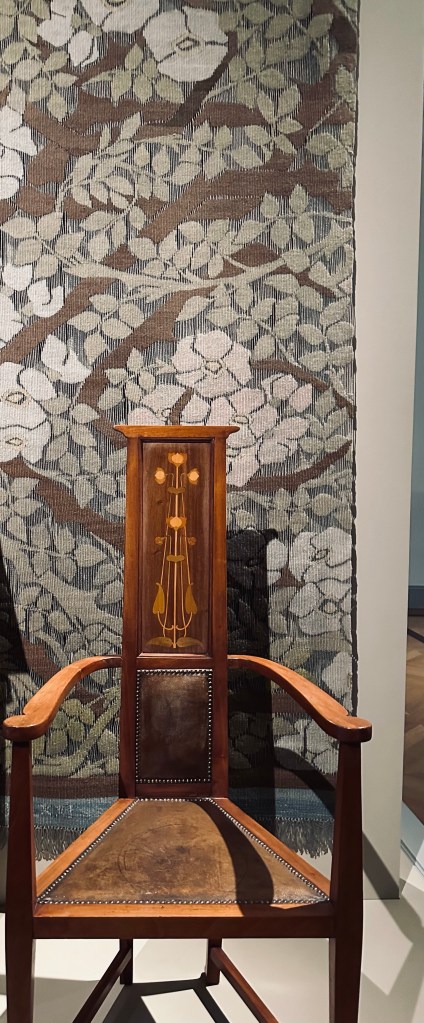
    At the National Museum, one floor of galleries is organized around 20-year periods from 1900 to 2000. Each gallery includes an extensive grouping of representative furniture, fabric, glass, household goods, photographs, and paintings from the period. Swedish Art Glass across the years is stunning.

    Swedish Art Glass display
    Household objects
    Arts and Crafts chair and tapestry

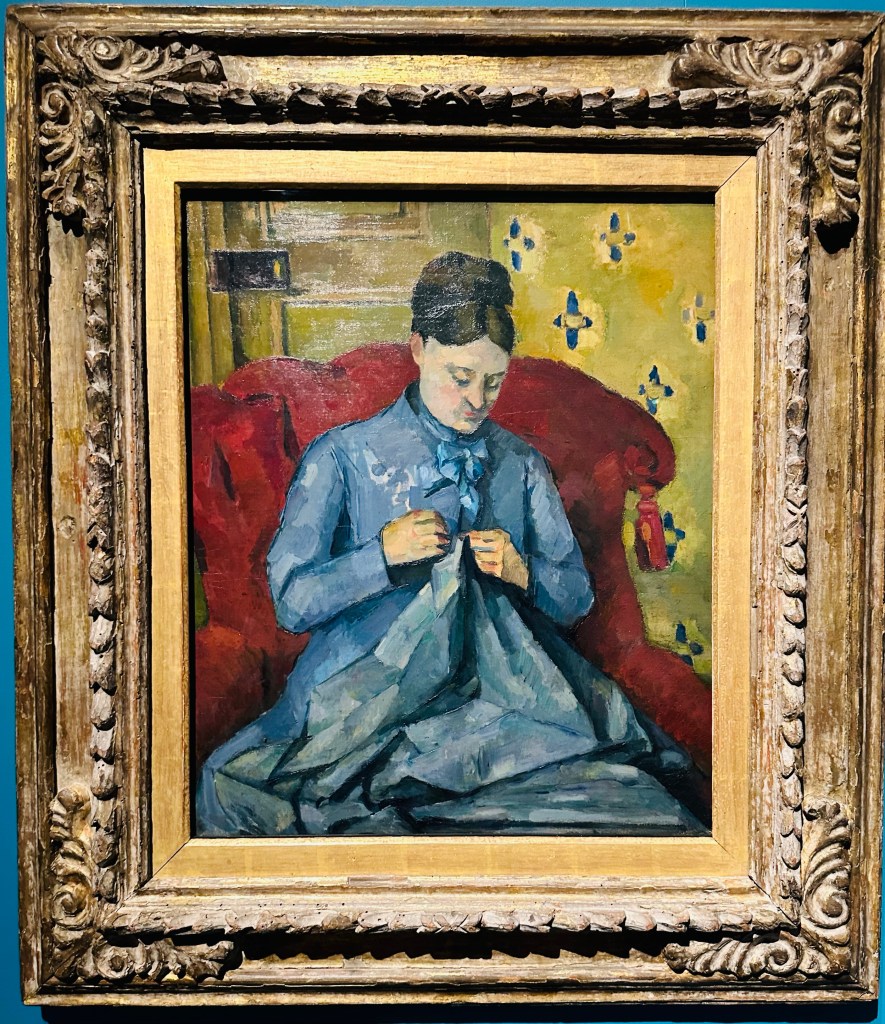
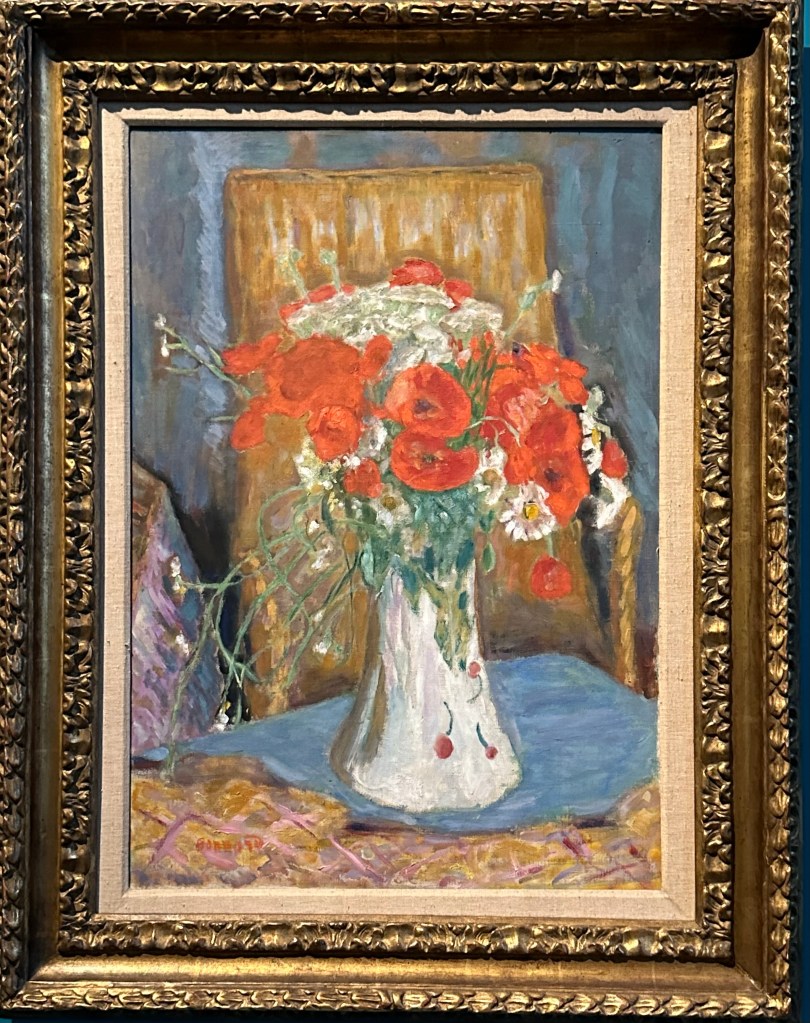
    We found three surprises in the galleries: an early portrait from Cezanne, an unusual still life by Bonnard, and a contemplative portrait by Cassatt.

    Cezanne
    Bonnard
    Cassatt
    Wonderful surprises by some of our favorite artists

    A full day of 15,000 art-viewing steps required an afternoon nap! Rousing ourselves around 7:00, many downtown restaurants on Saturday night were either closed or packed. A Thai restaurant, not busy and not yet closed, served a warm and spicy panang curry..

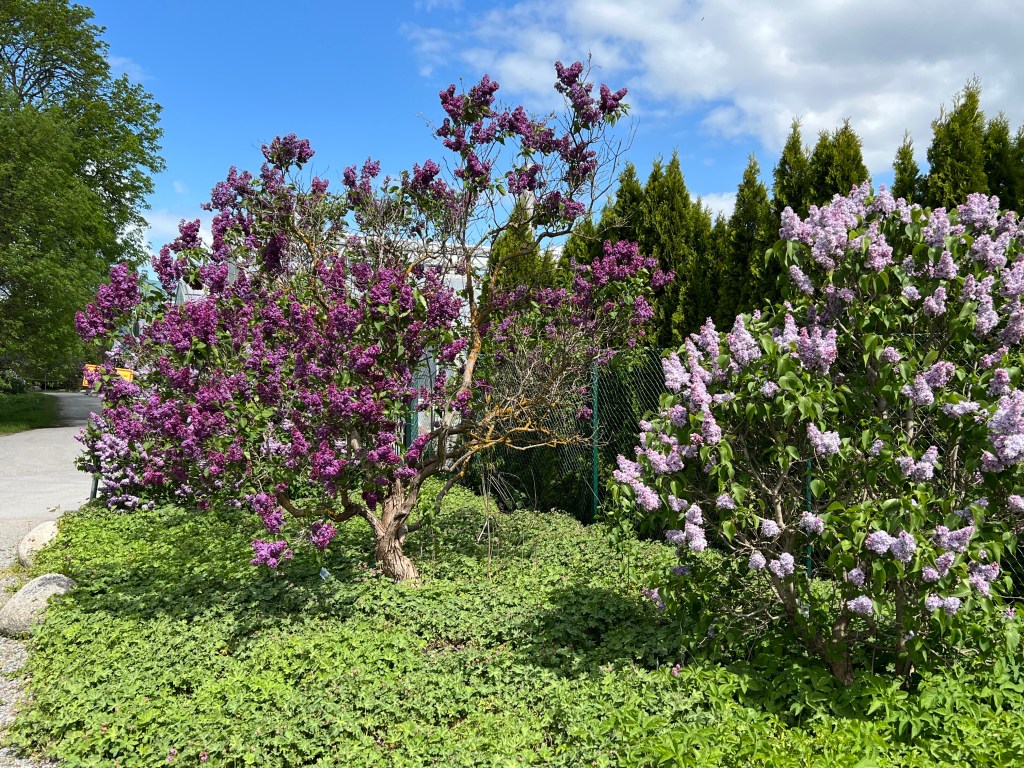
    Warm days and cool nights have been standard weather in Stockholm, so we planned a day at the botanical garden located several miles north of city center. We took the Metro and still had about a half mile walk to the conservatory and outdoor display gardens. Purple was the color of the week with lilac and lavender in bloom

    Purple days at the Botanical Garden

    The conservatory is organized into 8 or 10 different climate zones with amazing specimens. It was good to be outside and we got plenty of steps including a steep climb up to the bus stop.

    On climate, we have been the “good weather” travelers. Over the last 29 days, we have had rain only one time and that was overnight in Oslo. We need our coats for chilly mornings and evenings but during the day, many folk wear shorts. Very hardy folks these Swedes.

    The bus back to city center took us through neighborhoods of older apartment blocks with centrums for shopping and restaurants. We noted an Indian restaurant, Ashoka, on the route and decided to take the bus back for a great dinner. I had a sampler plate (Thali) and Becky had a vegetable Korai that were both delicious.

    Our last morning in Stockholm was reserved for packing and getting to the 9:28 train for our five hour trip across southern Sweden to Malmo. Finding the correct track is sometimes difficult. This time we asked our elevator-mate for direction to Track 12b. She replied that she was going there also and walked us part of the way and pointed the rest. We got there 30 minutes early.

    As the throng grew, we feared we were in a mad rush for seats, but Becky pushed ahead, located, and claimed our reserved seats while I managed baggage. We settled in for the next five hours entertained by the many brave parents on the move with babies and toddlers overhearing their conversations, squabbles and squalls, and enjoying the quiet times. We believe that Scandinavia has the lowest average population age and highest birth rate.

    Southern Sweden is a rolling landscape miles large farms, red barns with red houses, and golden rapeseed in full bloom. It’s no wonder the immigrants from Scandinavia were attracted to the high plains states—open spaces with cold winters and warm springs are a good starting place for farmers.

    RANDOM PHOTOGRAPHS IN STOCKHOLM

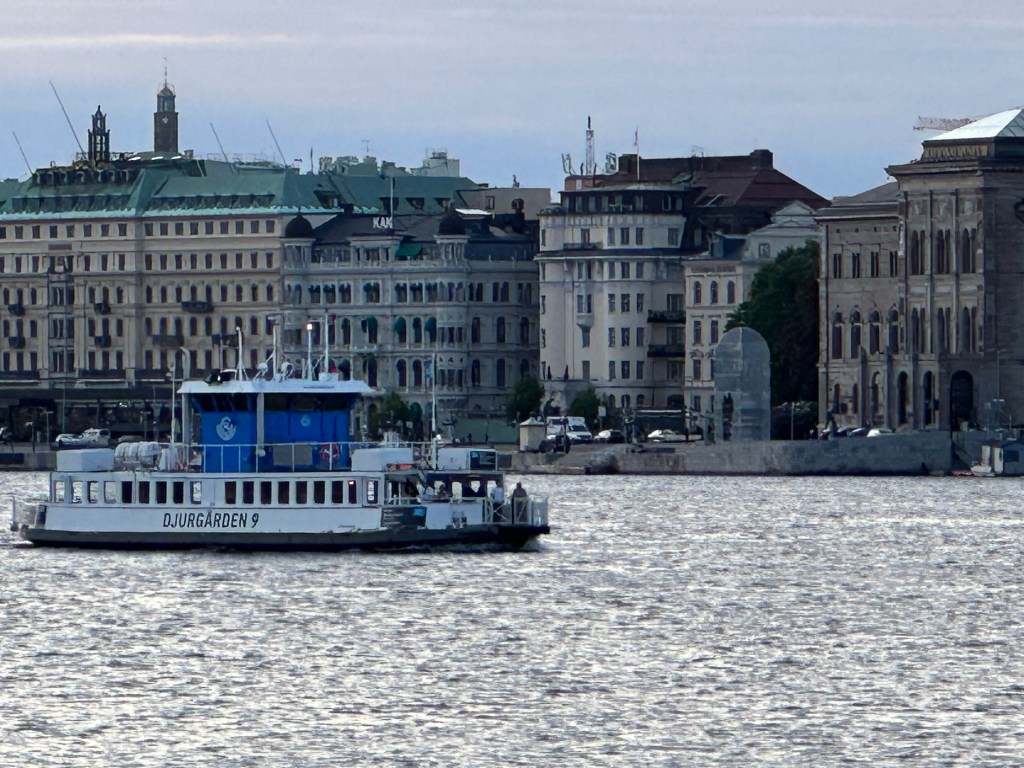
    Stockholm Harbor
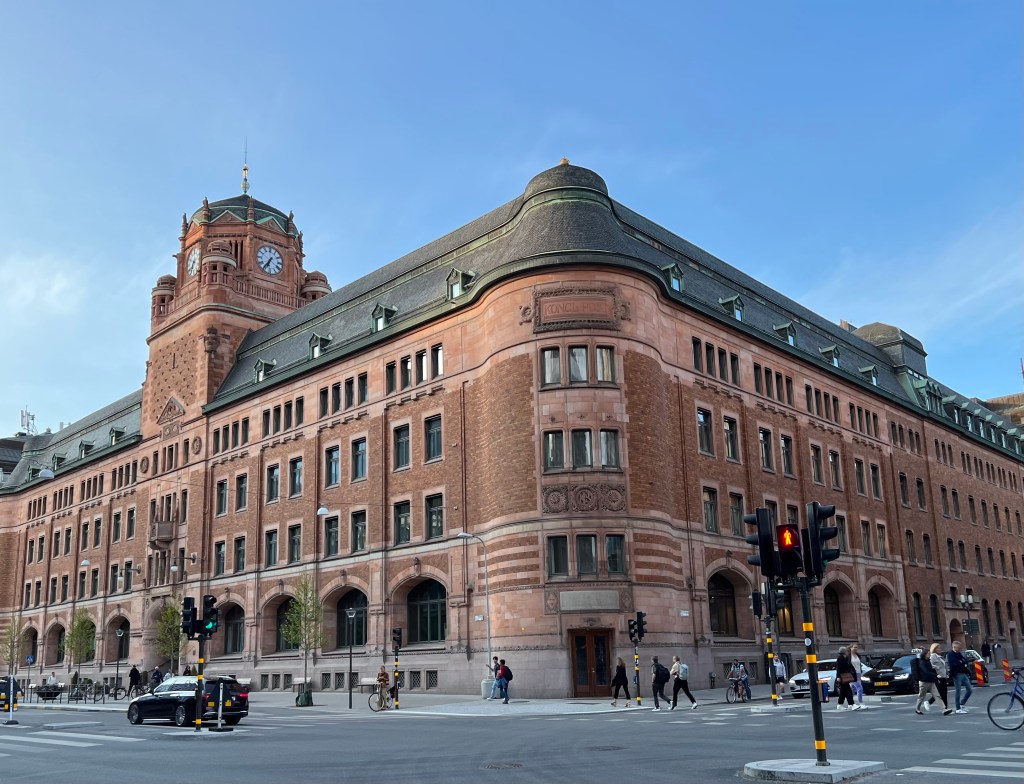
    Post Office building where we waited for the bus
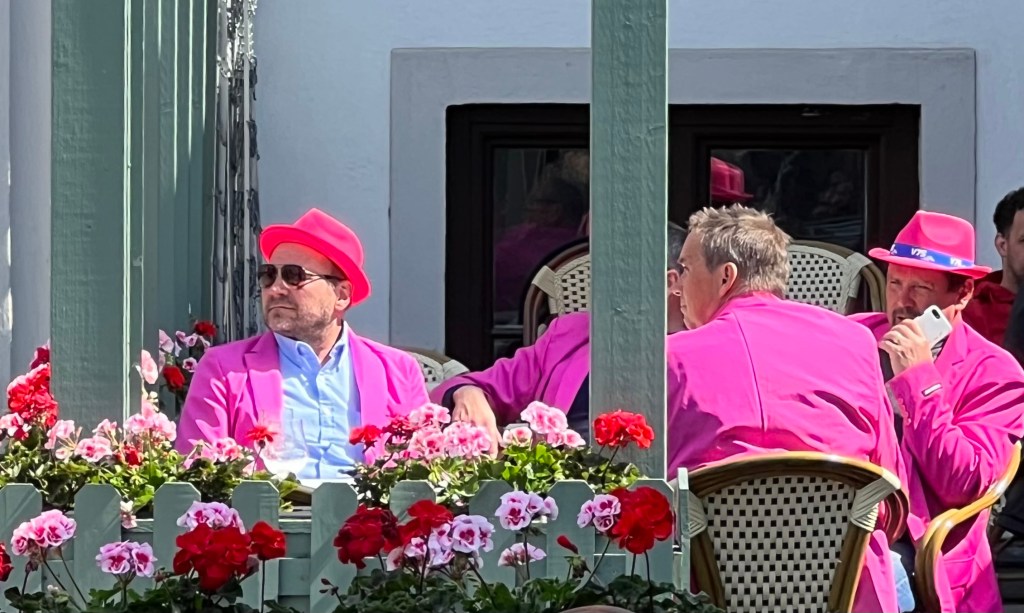
    Men in Fuchia
    Plaza in front of Kulturehaus full of families
  • Episode 8 Scandinavia All In Tallinn May 22-25

    May 22nd, 2023

    Friends, We hope that you are enjoying our adventures through Scandinavia. We would love to hear from you about what you have liked, disliked, quibbles or questions you may have. Let us know what you think.

    The two-hour Eckero ferry from Helsinki to Tallinn was a model of punctuality. Loaded with people and cars, it pushed off 15 minutes early. We sat in the lounge looking across the Baltic Sea, also called the Sea of Finland. A concert of oldies and goodies entertained us along the way with a very good vocalist and a mighty fine piano player.

    KINDNESS OF STRANGERS. When we arrived in Tallinn, we started walking toward a promised but elusive bus/tram stop. Whichever way it was, we weren’t. I stopped a gentleman and asked for directions. He knew exactly where to direct us, but walked with us the whole way, offering to help with our bags.

    Our new friend wearing an alumni sweater from Notre Dame had just been to the bakery to buy breakfast for houseguests. Along the way we learned that he is from Pittsburgh and has lived in Tallinn for 30 years. The “walk” was a 25 minute hike through Old Town with the roughest cobblestones ever laid. They just don’t do cobbled streets the way they did in 1100 CE.

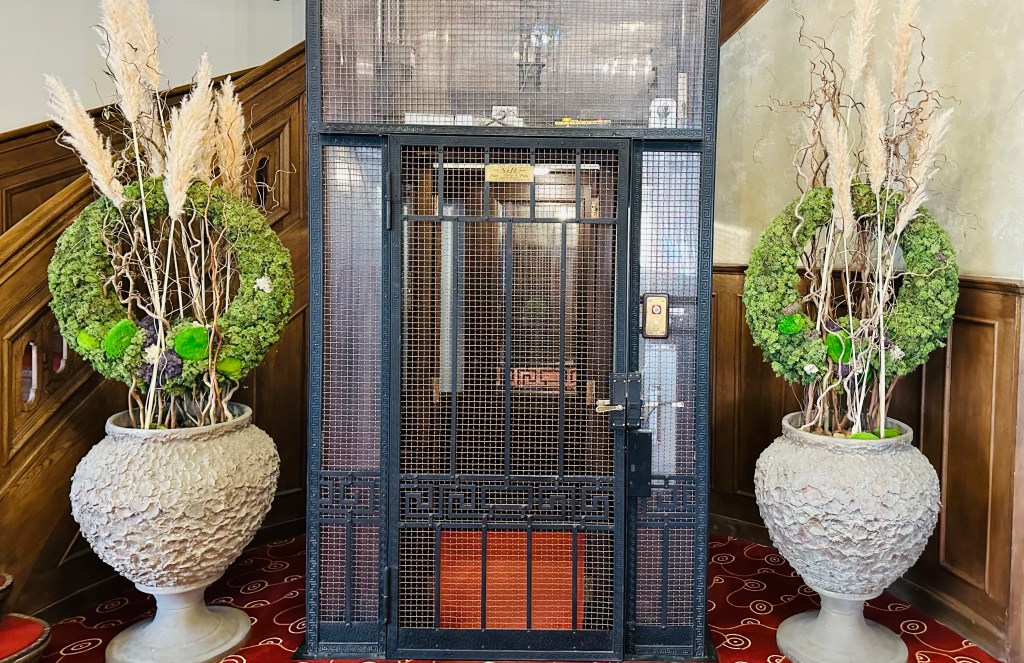
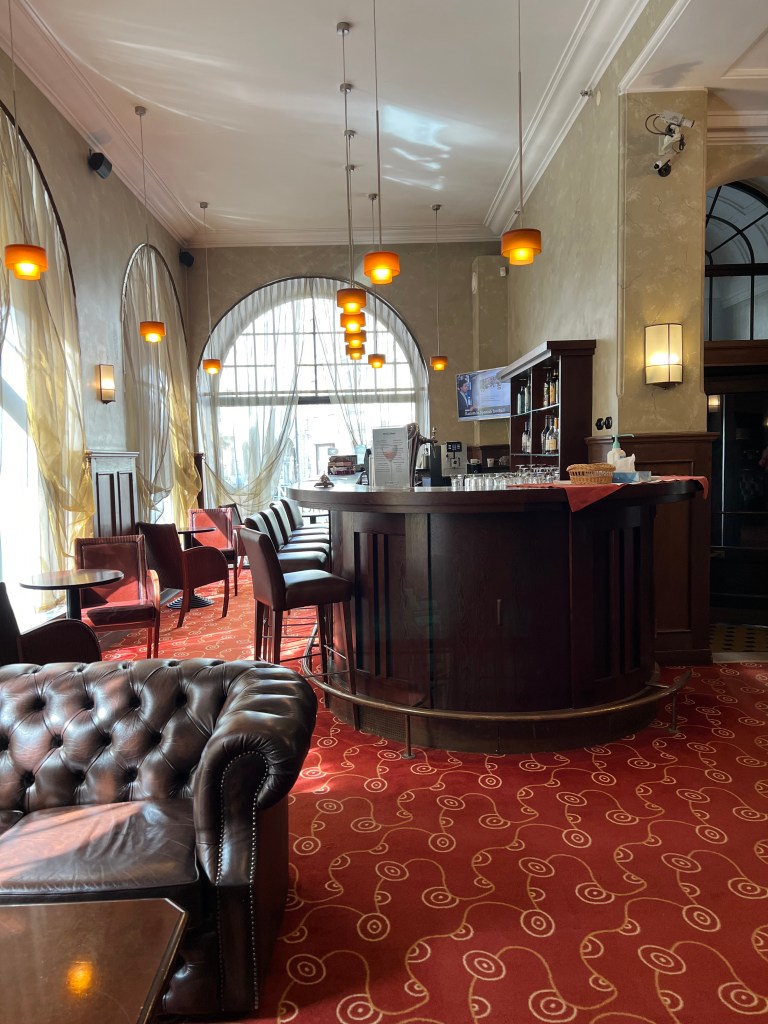
    BARON’S HOTEL. Having once again benefitted from the kindness of strangers, we arrived at the Hestia Baron’s Hotel in the center of Old Town. The hotel lobby and restaurant where we have breakfast are in a prime location with the kind of filigreed elevator you would see in old movies of grand hotels—a nostalgic and beautiful antique setting.

    Elevator in Lobby of Baron’s Hotel
    Interior of Baron’s Hotel, Breakfast room
    Front window and bar at Baron’s

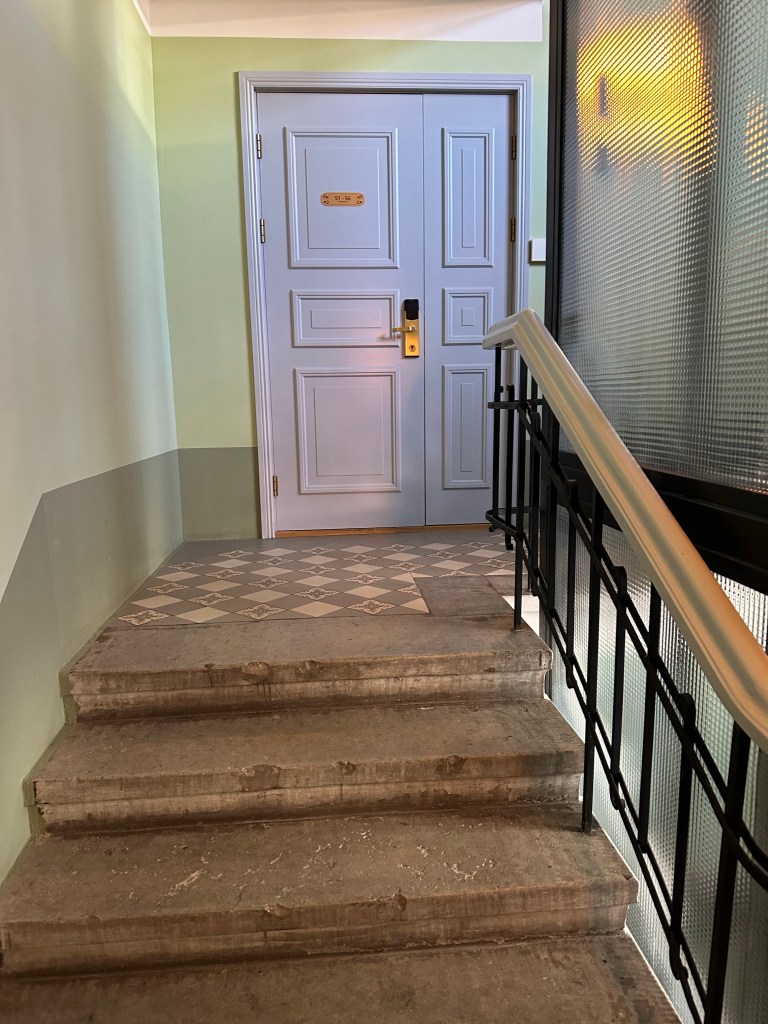
    The bedrooms are across the street, with the utilitarian elevator which carries three persons or two persons and two suitcases.

    Landing on the fifth floor and to our room in the Hotel, elevator to the right.

    The room itself is huge if spartan. We settled in before heading out for Tourist Info and lunch at a restaurant on the ancient square.

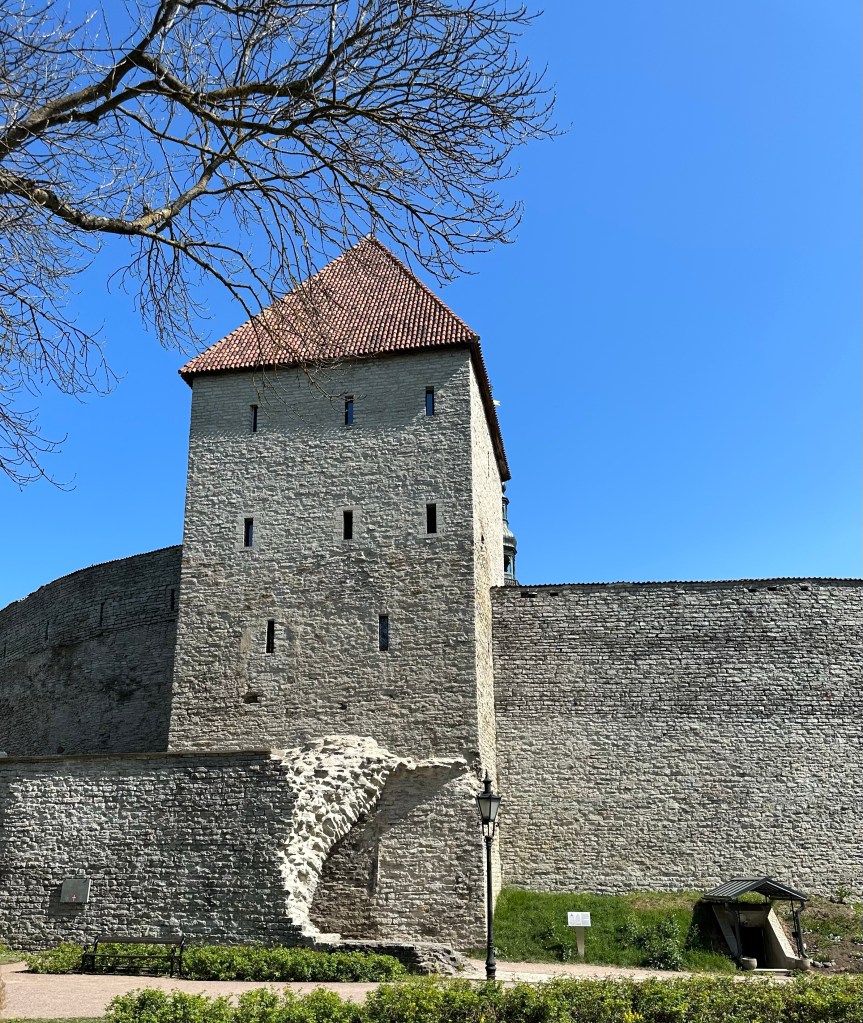
    OLD TOWN. Old Town Tallinn is an architectural preserve with ancient buildings of many styles depending on which foreigners were ruling at the time. The ancient and picturesque wall still stands around it. Restaurants and dwellings inside the wall are still in use.

    Instead of tearing down the Old Town, as Helsinki did, Tallinn kept the Old Town mostly intact from a sense of pride, history and practicality. They realized that reconstruction would cost more than they could pay and destroy the things they loved. Thanks to the town leaders for being frugal and insightful. The new suburbs and tram system spread out in concentric circles around the old walled town.

    Tallinn is a very old city whose citizens were ruled, dominated, and massacred by larger countries and trading partners: Denmark, Germany, Sweden, Germany again, then Czarist Russia for almost 200 years, and finally Soviet Russia from 1945 to 1991. Estonia had only two periods of independence, the most recent after the fall of the USSR in 1991 when masses of Estonians stood around the telecommunication tower (their revolutionary lifeline), facing tanks, and refusing to disperse. We learned all this and much, much more on a two-hour walking tour of the old town.

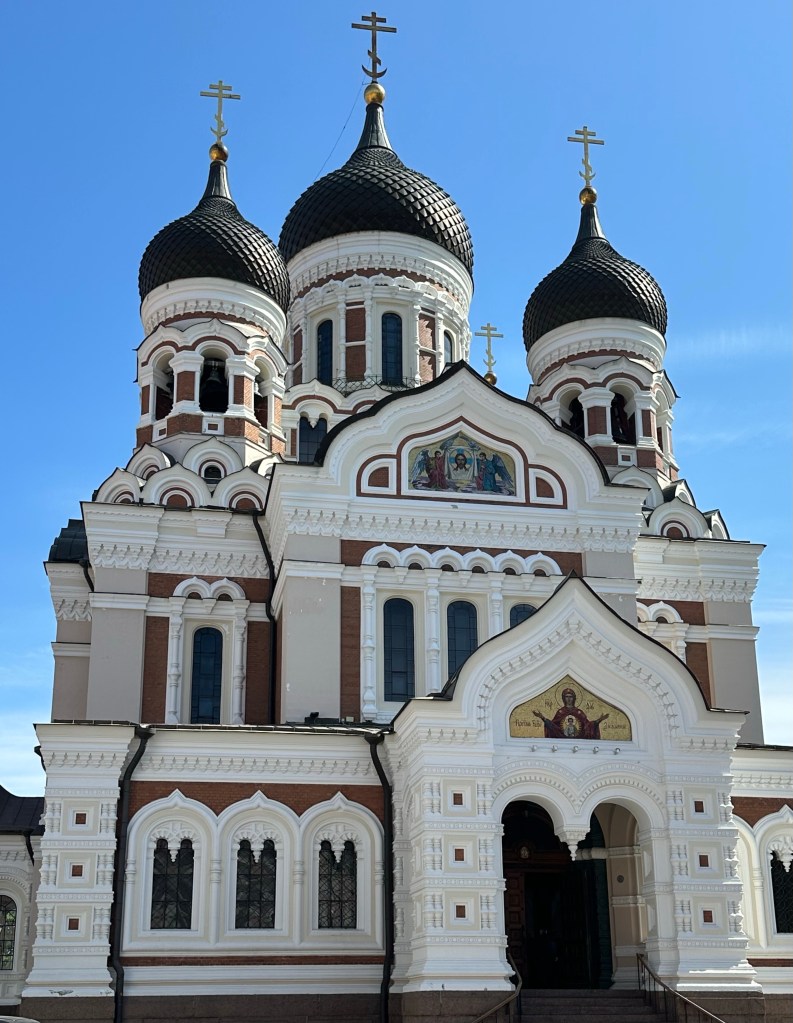
    GUIDED TOUR OF OLD TOWN. Kristofer, our fantastic tour guide, is a young Estonian, college graduate, and descendent of two historic lineages. He was a storyteller of the history of each place as we walked past: the Nevsky Church, the German Kirk, John’s Niguliste Church, the Dominican Abbey, Catherine’s Russian Palace, Parliament, and a dozen other places. Each has an important place in the history and hearts of the Estonia people who throughout tortured time held fast to their hope for independence.
    https://en.wikipedia.org/wiki/History_of_Estonia

    This is a link to the Wikipedia History of Estonia which can fill in many gaps in the fascinating and tumultuous history. We put in photographs from our walk but would not attempt to get all the dates and people correct from the last 1000 years.
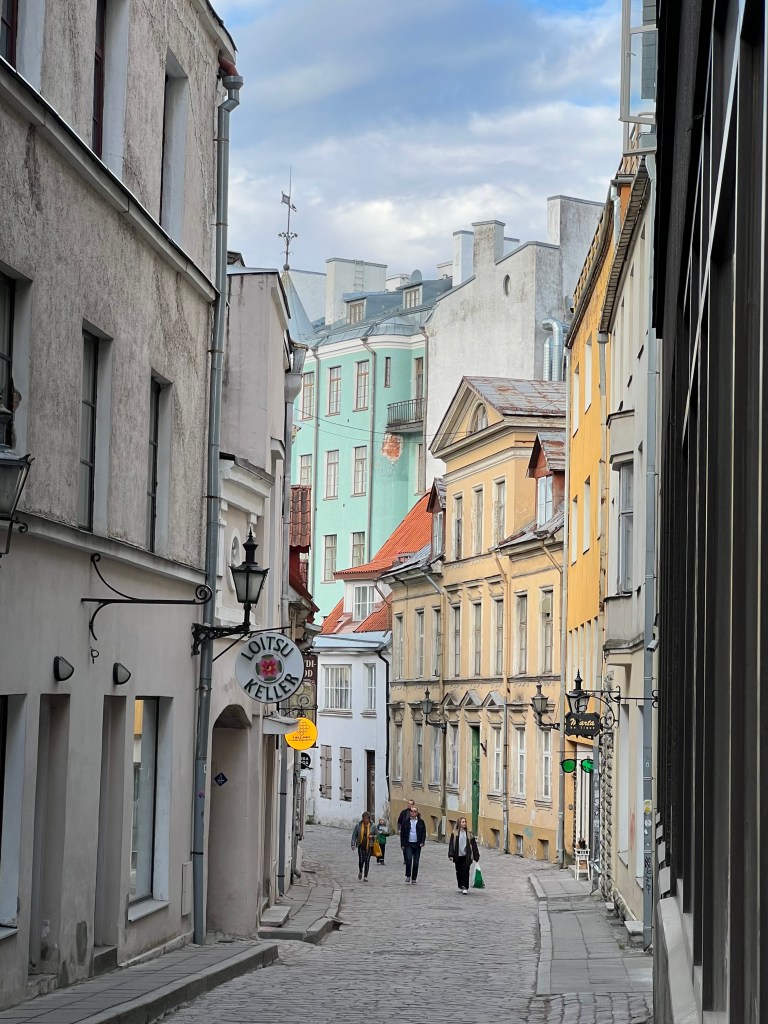
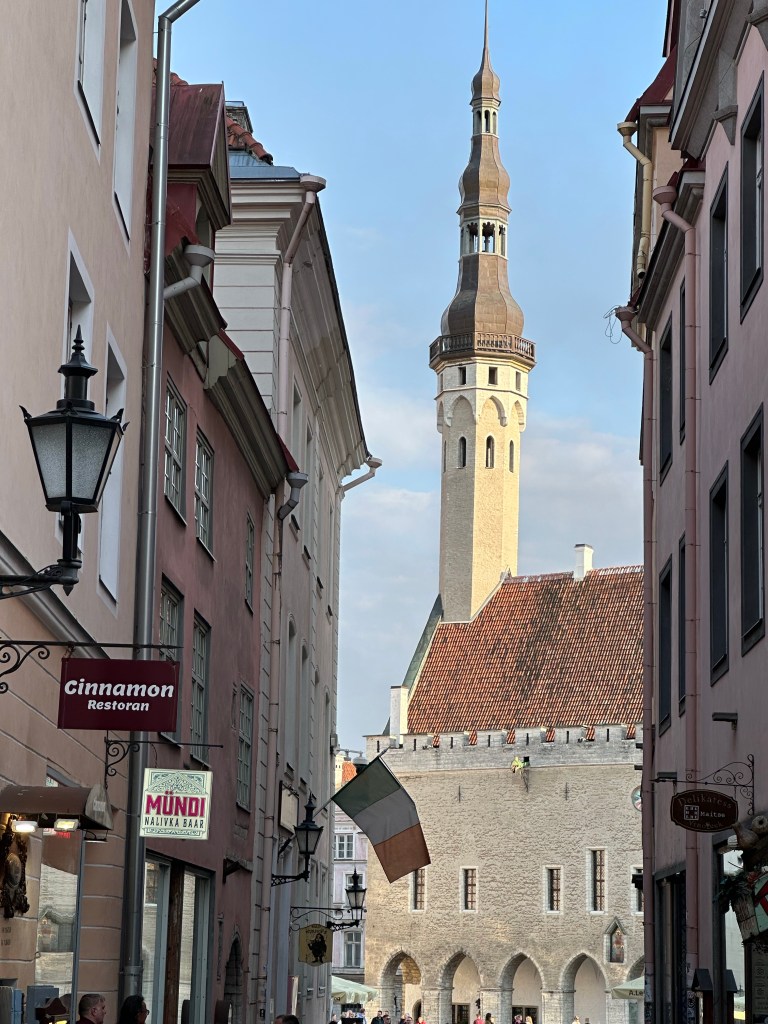
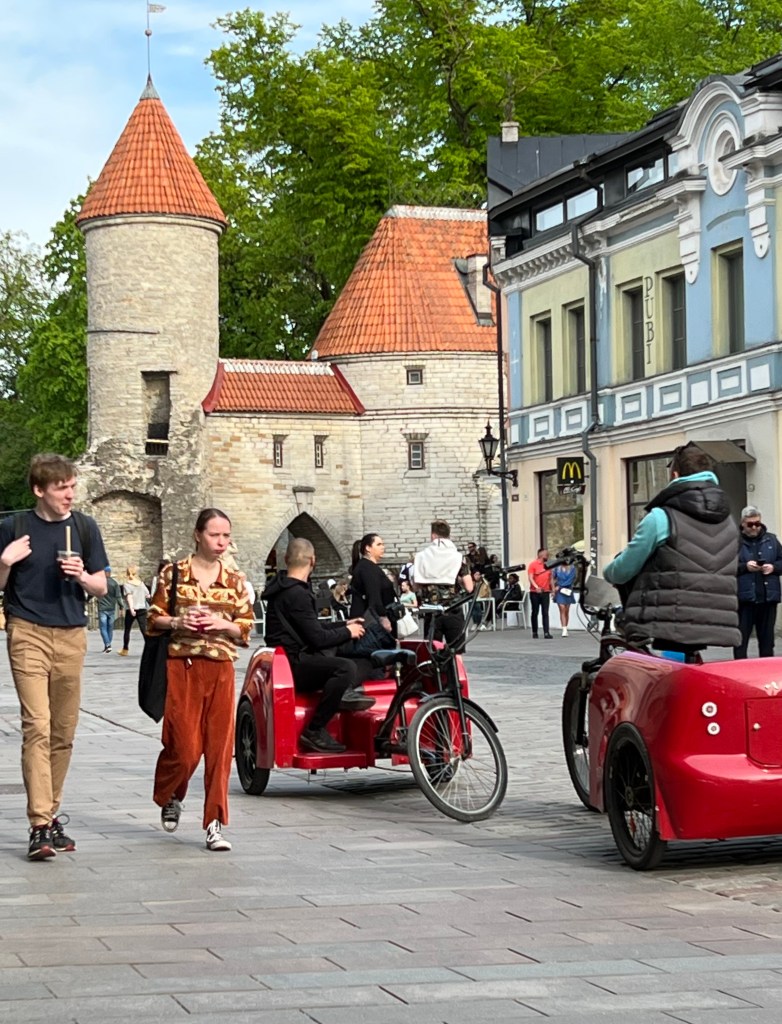
    Street scene of Town Hall on central Square in Tallinn
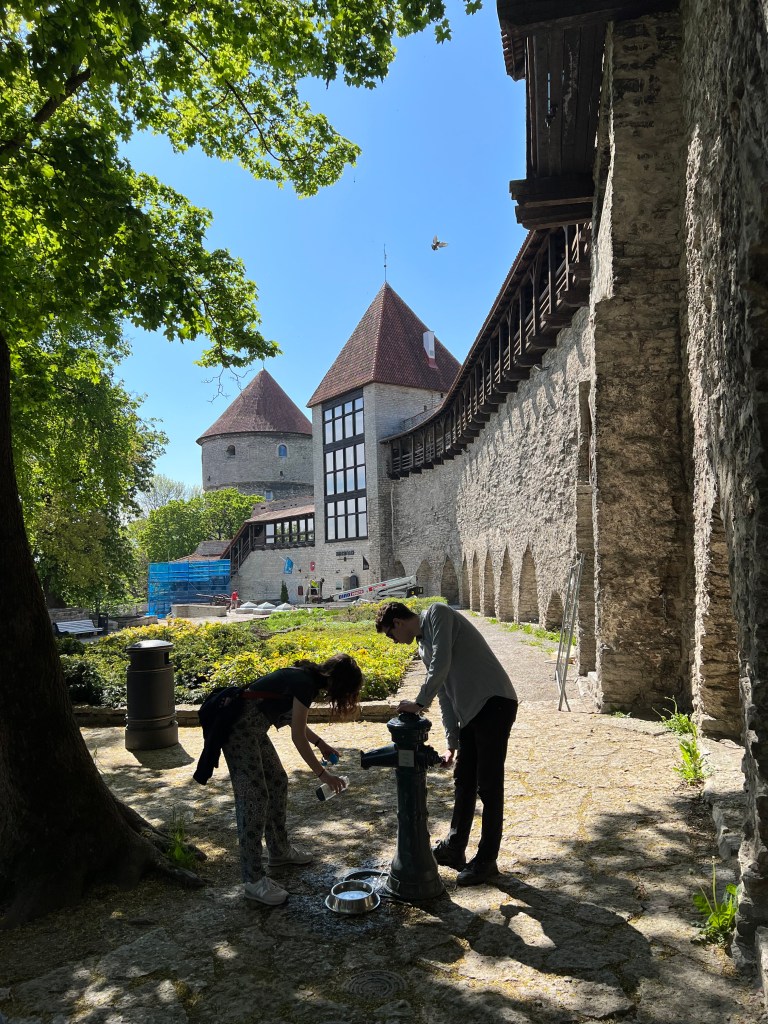
    Ancient fortification wall in Tallinn

    Kristofer joked that his father and uncle worked in the Russian offices before 1991, but were spies for freedom. He pointed out the ugly Soviet-age buildings that replaced those destroyed in World War II and by the Soviets during the Russification of Estonia. Additional street scenes of Tallinn are at the end of the blog.

    Alexander Nevsky Church

    Kristofer was excited that Estonia is joining NATO bolstering the defenses against Russian aggression. The Estonian Air Force consisting of two helicopters and one prop plane is now supported by two USA B52s from NATO. Many Ukrainian refugees have fled to Estonia which increases the concern about Russian intents. In fact, the population of Estonia is 49% Estonian and 44% Russian, with language being a major divide and a societal problem.

    The guide was beyond excellent in style, delivery, clarity, and humor. He talked about the Estonian language which is among the most difficult to learn. Estonian has no gendered words or future tense, but 16 possible suffixes to change the meaning of root words. He works for tips and earns them.

    Several restaurants advertise Estonian cuisine, Kristofer said there is no traditional Estonian cuisine except vegetables. Meat was too expensive, and fish was only for the fishermen. Also he warned about the “Baltic Amber” offered in many shops. He said “beware” there is no Baltic Amber.

    FOTOGRAFISKA. The two-hour walk up and down the cobbles demanded an hour nap before our next adventure to a funky post-industrial compound where the Fotografiska museum was showing three exhibits.

    Large scale, brightly hued photos of glamorous women in household and everyday situations were the centerpiece on one floor. A video of the photographer Miles Aldridge emphasized his depiction of the emotional isolation of women in a world of commercial extremes. Another photo essay, “Sophie,” followed a young Russian woman and her world.

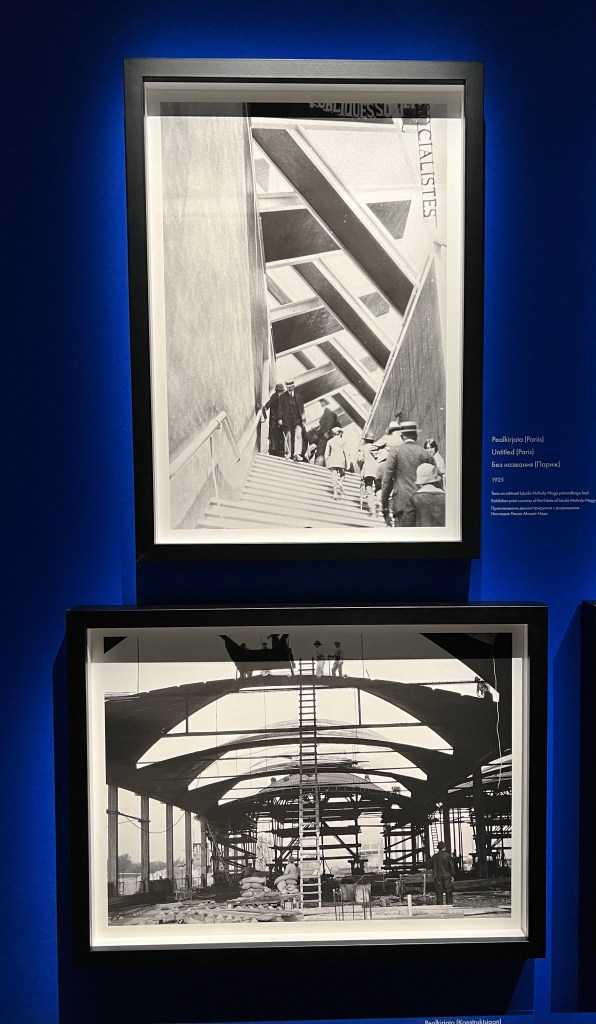
    The most stunning exhibit was a reconstruction of the experimental photography of Laszlo Moholy-Nagy, a leader of the Bauhaus movement. The museum organized photos, still and moving, not seen in almost 100 years. His work moved photography from simple depiction into abstraction and mystery.

    Photos from Laszlo Moholy-Nagy, pioneer in art photograph, 1930s

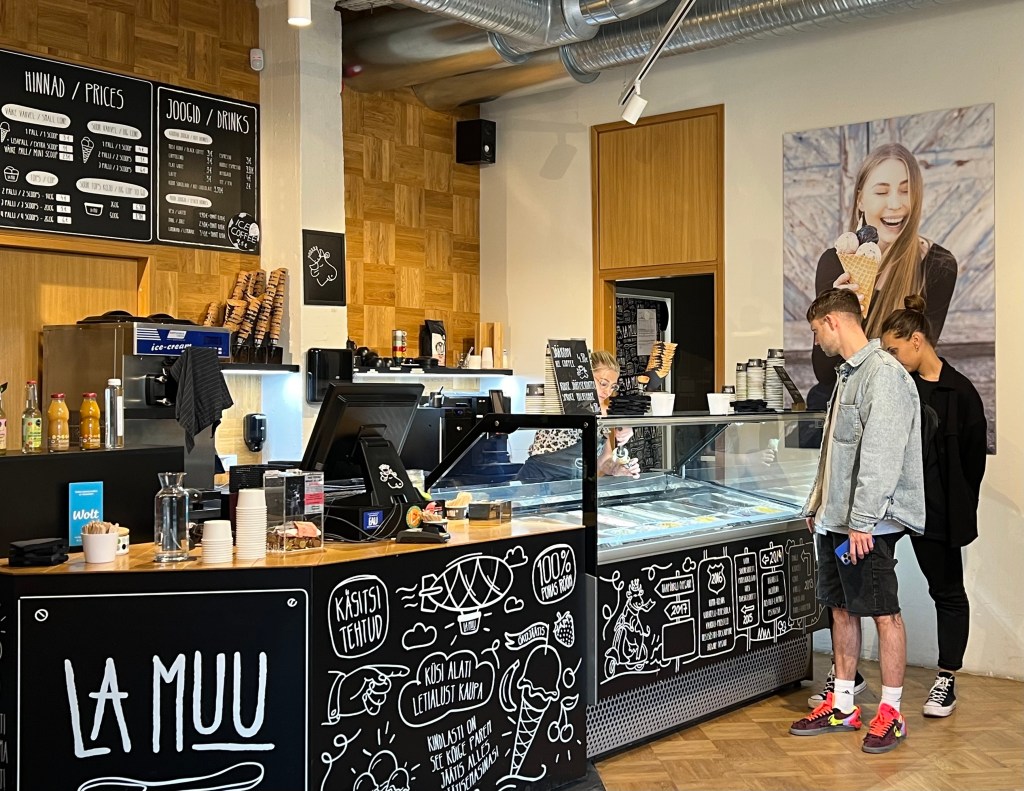
    The local ice cream shop La Muu, recommended by Kristofer, was across the courtyard from Fotografiska. He said La Muu was delicious and half of their flavors are vegan.

    Becky got strawberry and I had cherry vanilla—both mighty fine on a hot afternoon 68 F* in Tallinn. Also in this compound was the Juniperium distillery which Kristofer mentioned. We hope we can locate their gin, especially a spicy rhubarb blend, in the USA. We had a light dinner and early night.

    KADRIORG. Next morning, we jumped on the tram to Kadriorg, a huge park east of Old Town that Czar Peter built as a summer palace for his wife. He also built himself a summer house separate from the palace.

    Photos from the Kadriorg Park

    Now the palace houses a extensive collection of 17th, 18th, and 19th century landscapes and portraits mostly from the Netherlands. Dutch paintings were most prized at the time and evidence of the ruler’s wealth.

    From the collection of 17, 18, 19th century paintings in Kadriorg Palace
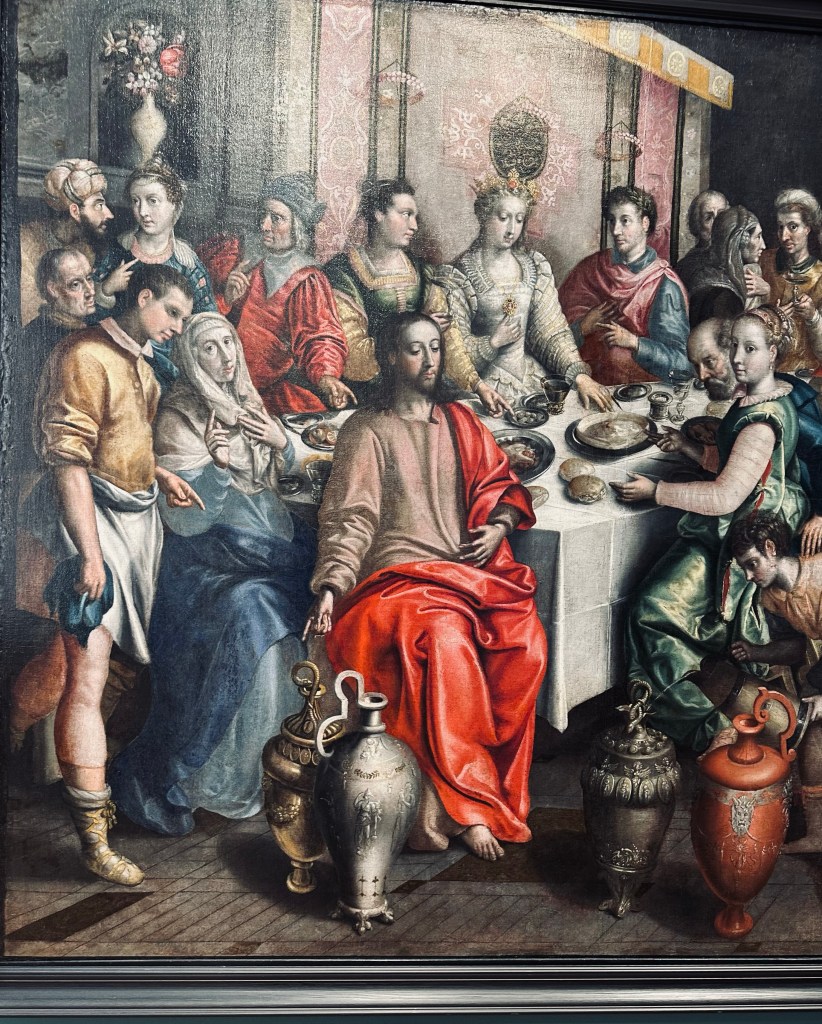
    Wedding at Cana – Jesus as Wedding Guest based on Bible story
    showing first Communion and commissioned by Wine Merchant Guild
    Unknown Artist in the style of Maarten de Vos.
    I could not decide whether the guests or Jesus looked more uncomfortable.

    A small gallery held the work of Estonian impressionist and expressionist painters 1880-1930. More modern paintings are in thumbnails at the end of the blog.

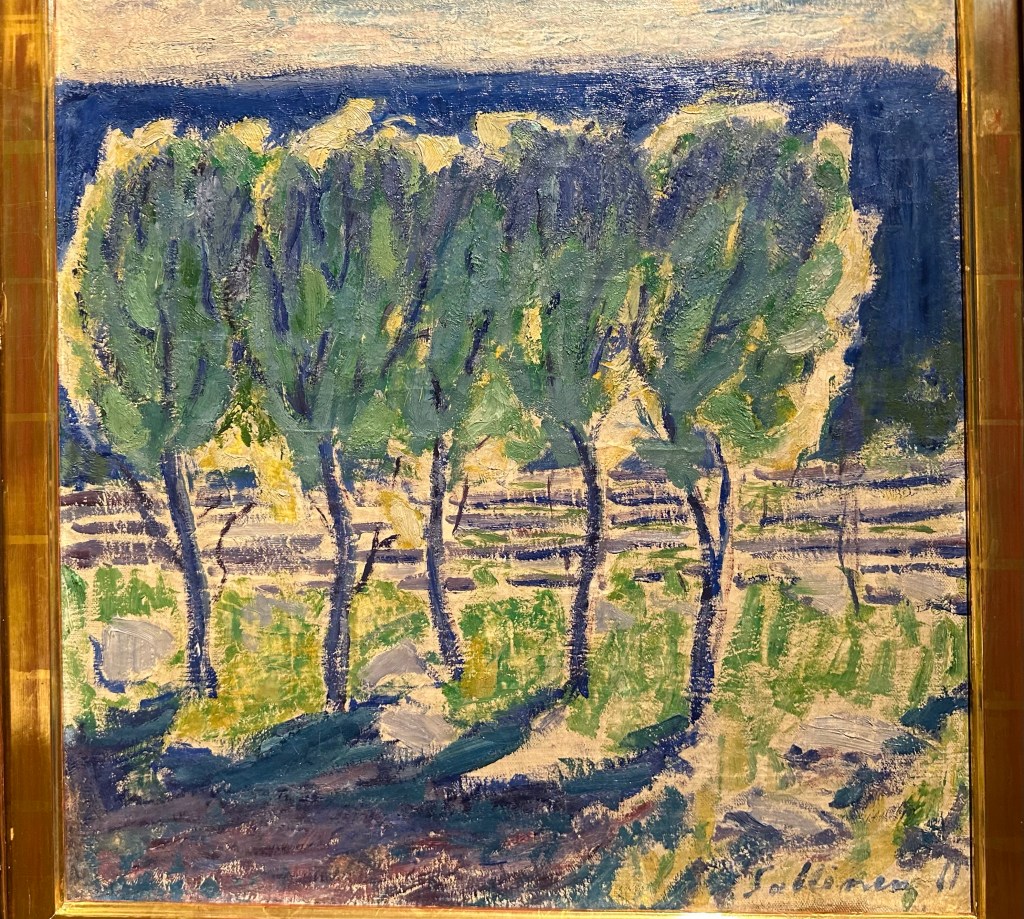
    Aspen in the Summer, by Tyko Sallinen,
    a leader of the Septem group of impressionists

    We stopped for coffee and juice before moving on. We are getting better at pacing ourselves. Also on the grounds are the Mikkell Muuseum and the KUMU Contemporary Art Museum. Mikkell collected a little bit of many things that he liked: paintings, porcelain and china, prints and photographs, silver and embossed work—very idiosyncratic and some quite beautiful.

    The KUMU is a contemporary building for contemporary art, especially Estonian and related Soviet art of the 20th century. One exhibit focused on the ecological and cultural devastations of fossil fuels, agriculture, and contaminants. A very graphic film showed a round up of reindeer for their horns and meat. Tough to watch, hard to think about, and that was the point. Artists in Estonia during the Soviet period had to be very careful because everyone was under suspicion and an “error” could have consequences. Our guide said that 20,000 Estonians disappeared during Soviet rule.
    We rode the tram to the end of the line before returning to the Old Town. This took us through the suburbs where most people live in giant apartment blocks. But it was interesting to see where real people in Estonia sleep, shop, and play.

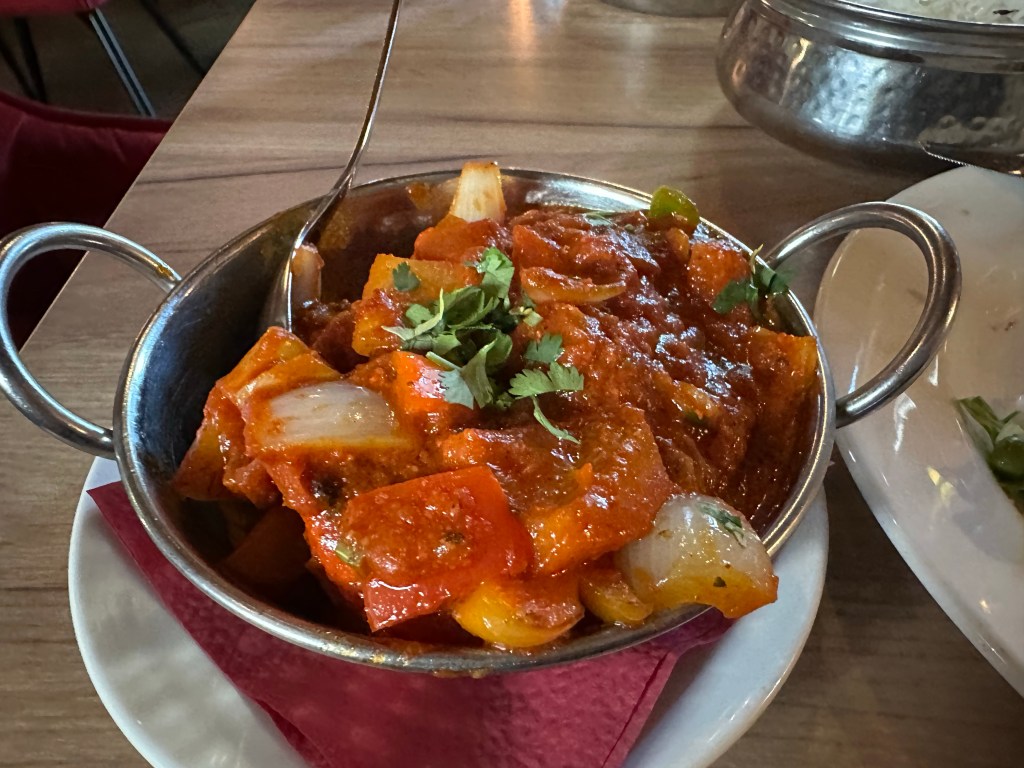
    WRAPPING UP TALLINN. Our habit is to have one really good meal in each city. In our walking, we discovered an Indian restaurant down a small alley. It looked charming and the menu was great. After requisite nap, we walked to Chakra for one of the best Indian meals ever—samosas, garlic naan, palak paneer, and murg jalfrezie. Five star with 2 or 3 peppers.

    Murg Jalfrezie at Chakra restaurant

    The amazing food was served in a beautiful setting actually carved into the old city walls and decorated with beautiful Indian fabrics and great service.

    For the walk back to the hotel, we wandered through more of Old Town cobbled streets looking in windows.

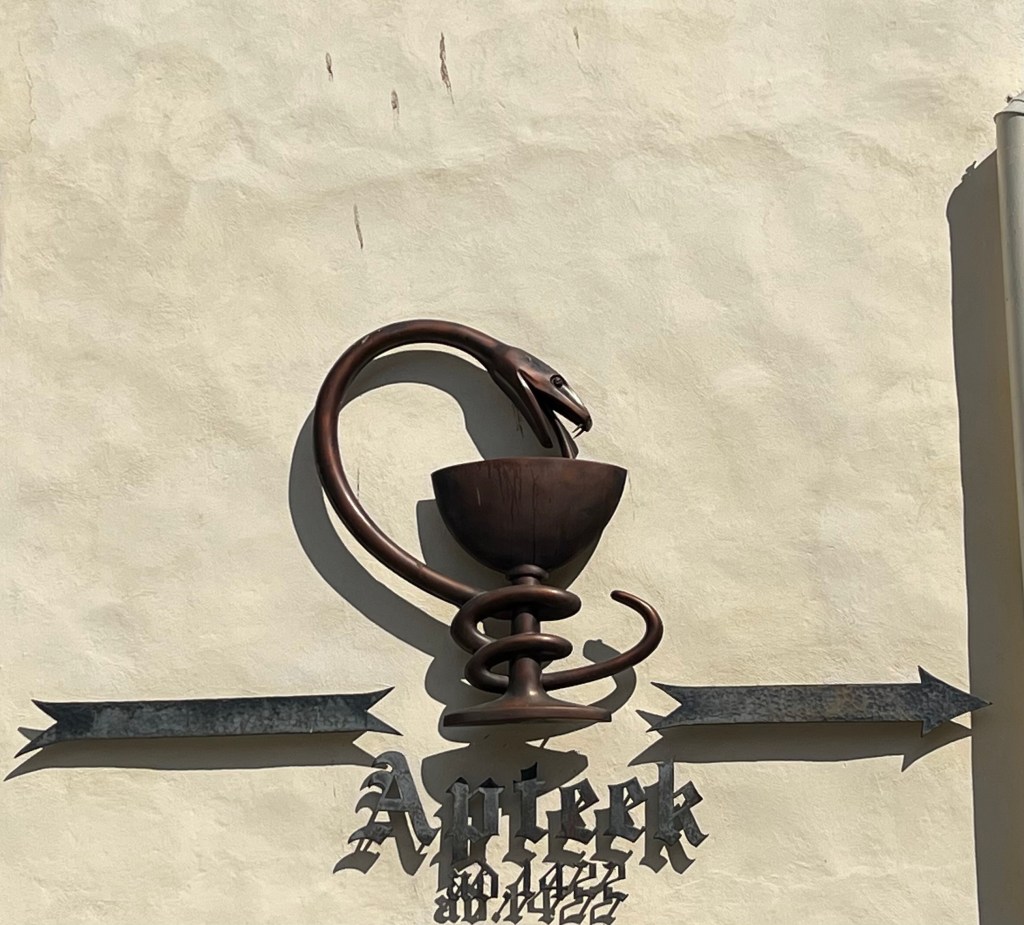
    The agenda for our last day was “nothing” except getting ready for the overnight ferry to Stockholm: sleep later in the morning, breakfast at leisure, repack for overnight on the ferry. We wandered down to the Old Town Square where Becky went into the Antik Apoteek, the oldest apothecary shop still operating. It began during the plague. I found an Estonian T-shirt in a souvenir shop.

    1000 year old apothecary shop still in business

    We had a light lunch at Reval, another cafe which has been built into the ancient wall. It felt like eating in a cave with rock walls.

    Next came gathering luggage, getting a Bolt (Lyft) ride to the terminal, and checking in the ferry.

    FAREWELL TO TALLINN. We were thoroughly charmed by Tallinn. Being much smaller than the other cities, it is more navigable. We would go back if that is ever a possibility.

    MORE SCENES from TALLINN

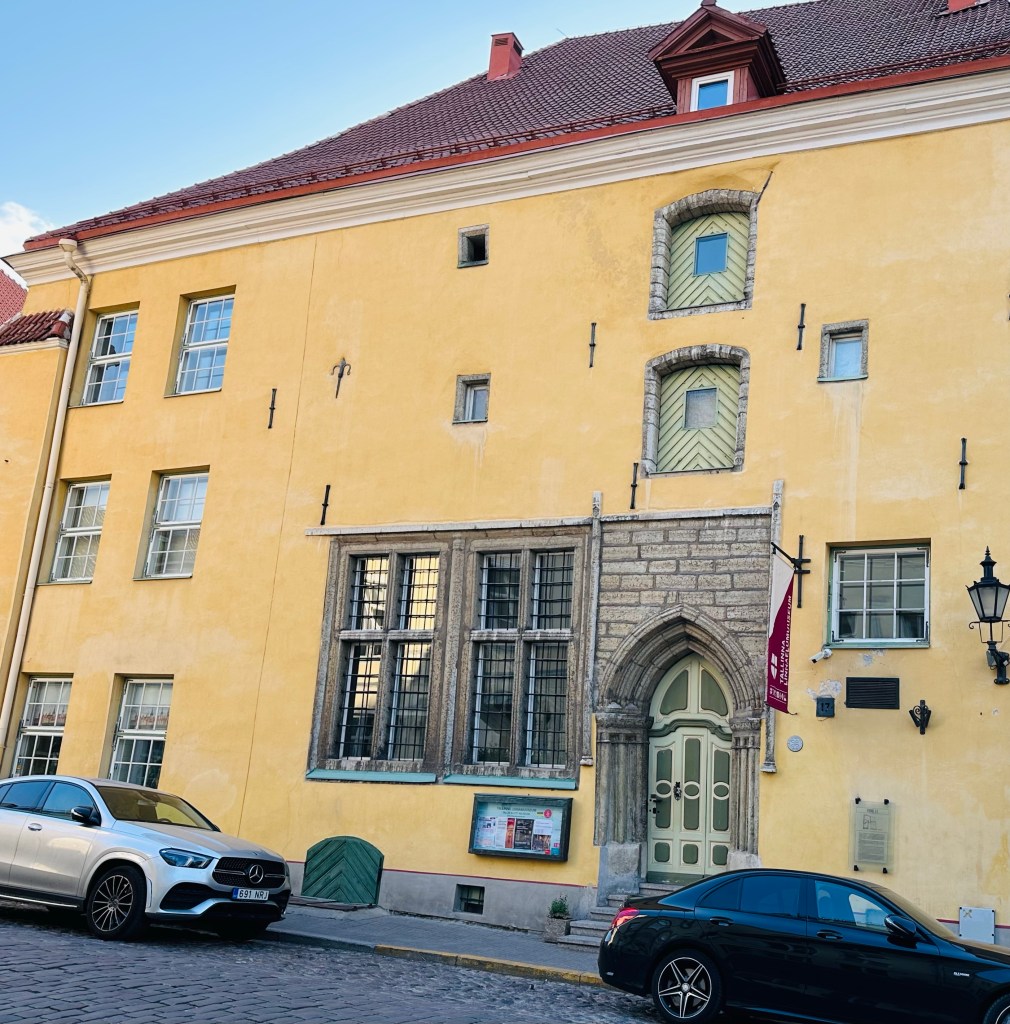
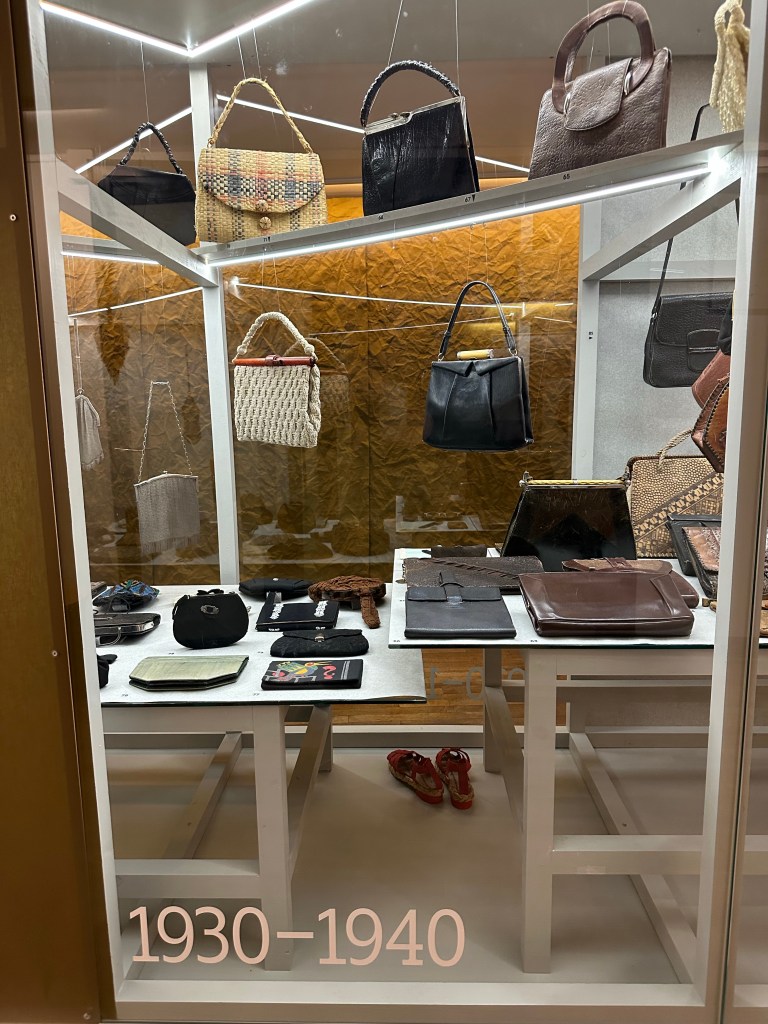
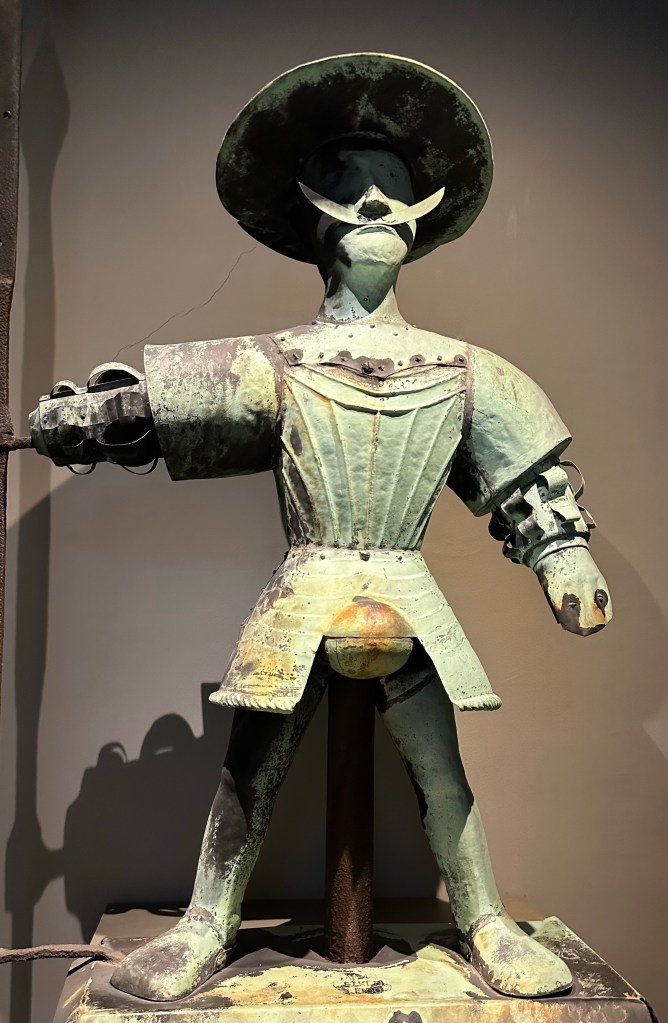
    Tallinn City LIfe Museum. It had a great display about the history of Tallinn especially about the Guilds. Also an exhibit called “Naughty Tallinn” which chronicled the history of prostitution and pornography in this seaport town.
    Handbag collection
    Metal figure that had been on the roof of a building
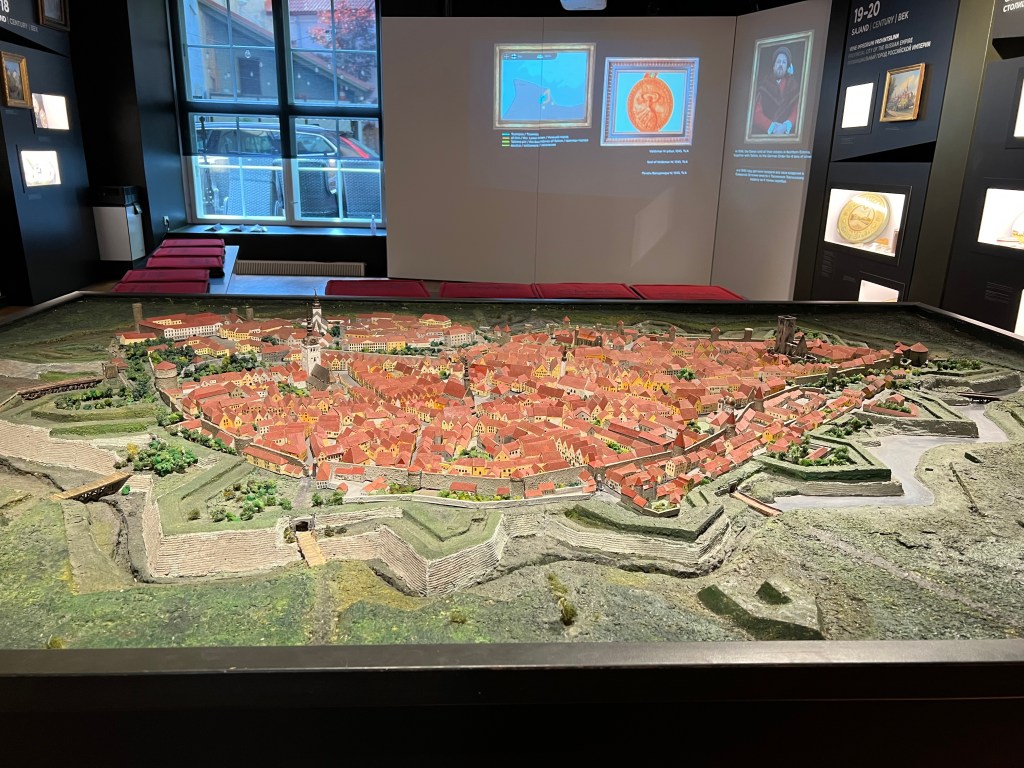
    Relief map of Old Town
    Exhibits in Tallinn City Life Museum
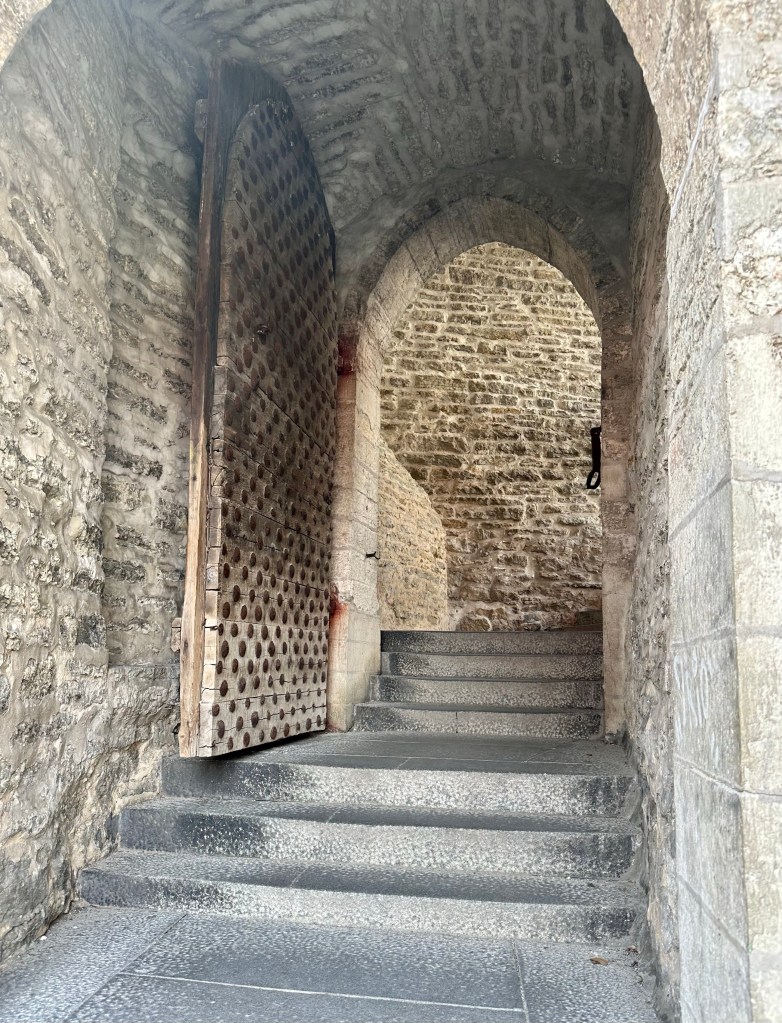
    Passage way to top of Toompea, highest point in Tallinn
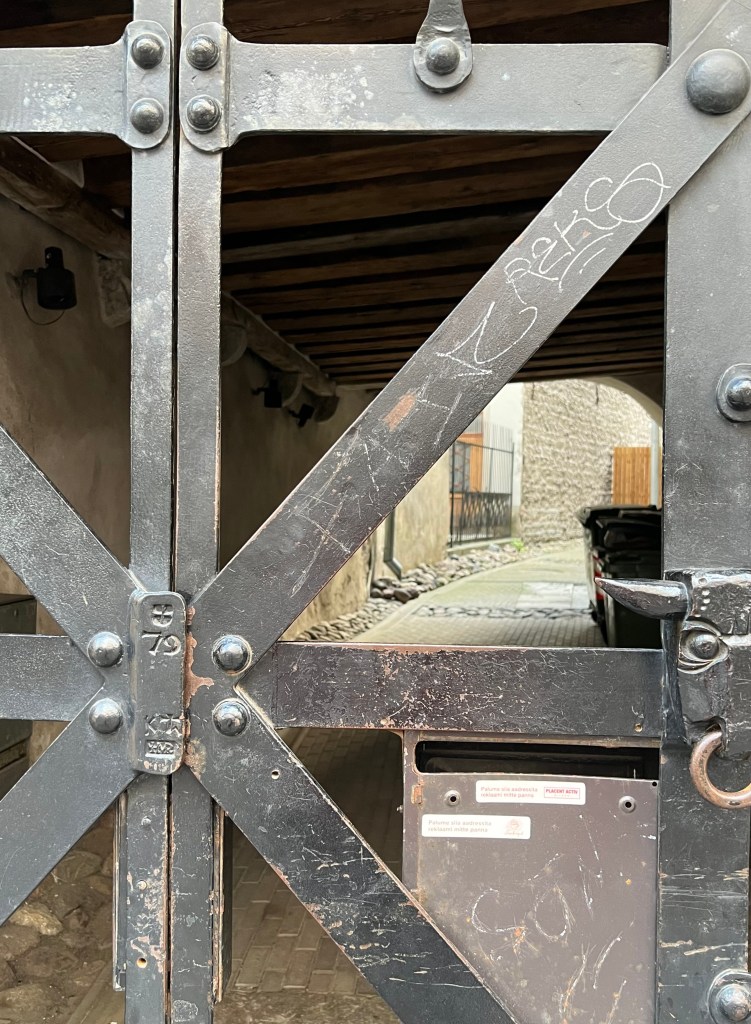
    Locked gate to interior space between buildings
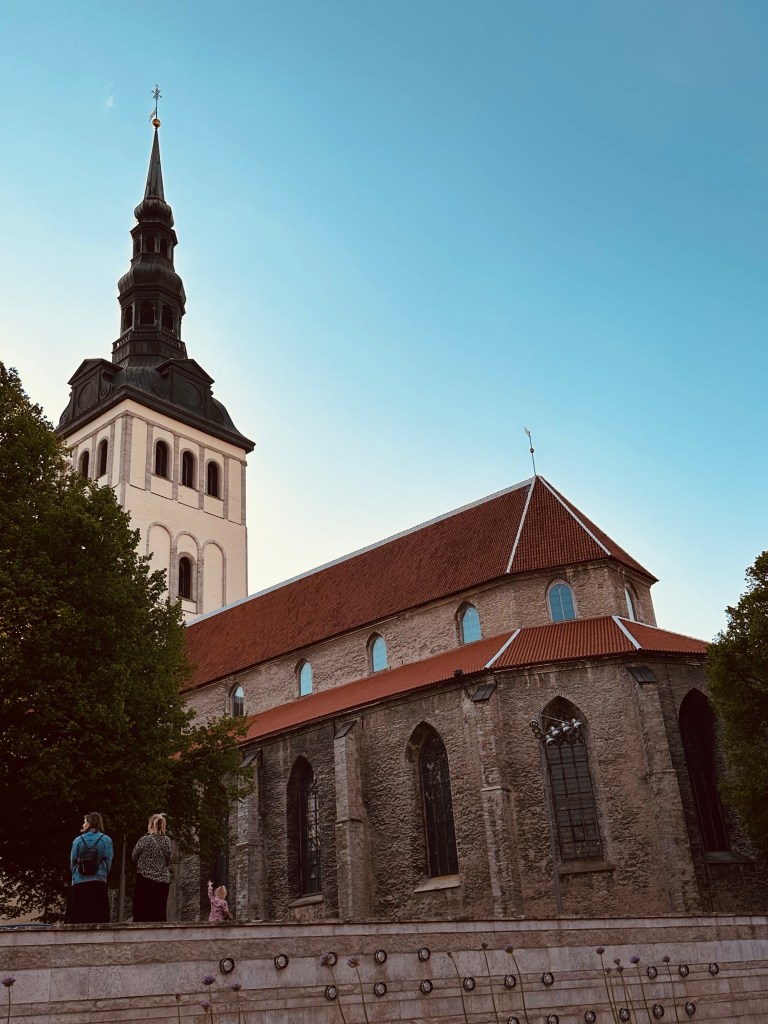
    Nigulista Church
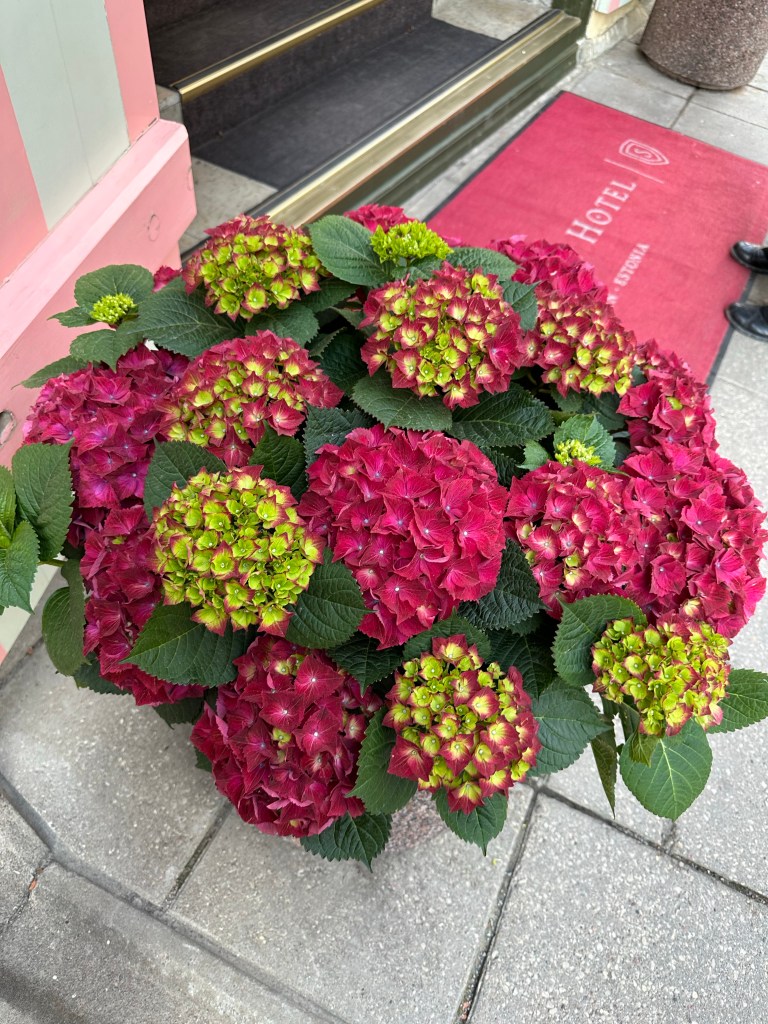
    Hydrangea on the Sidewalk
    Bolt food delivery scooters
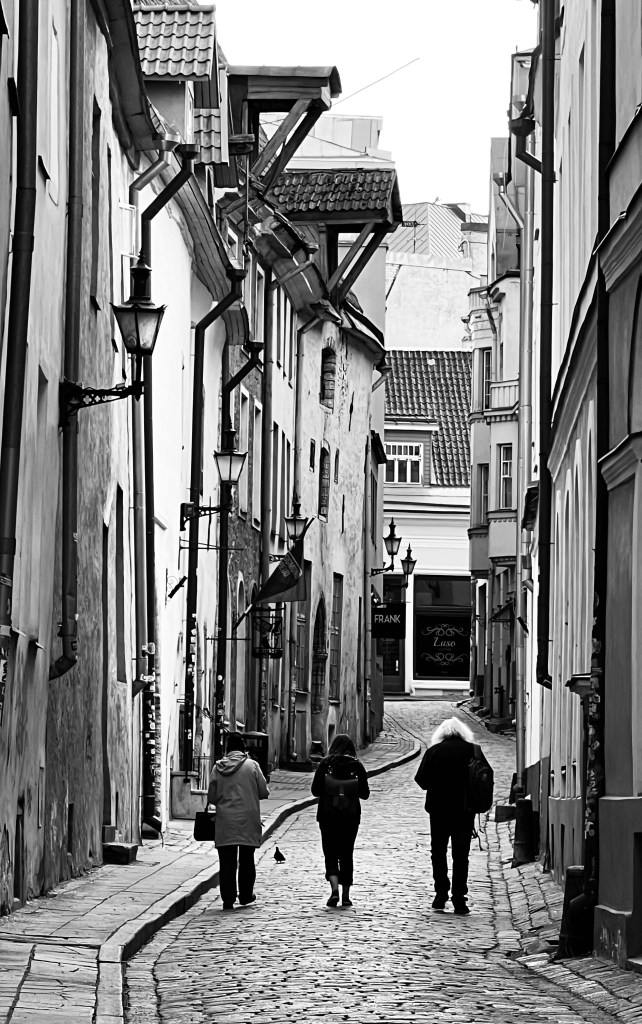
    Street scene. Becky thought it looked sharp in B&W
    Steve walking
    in the Cobbles

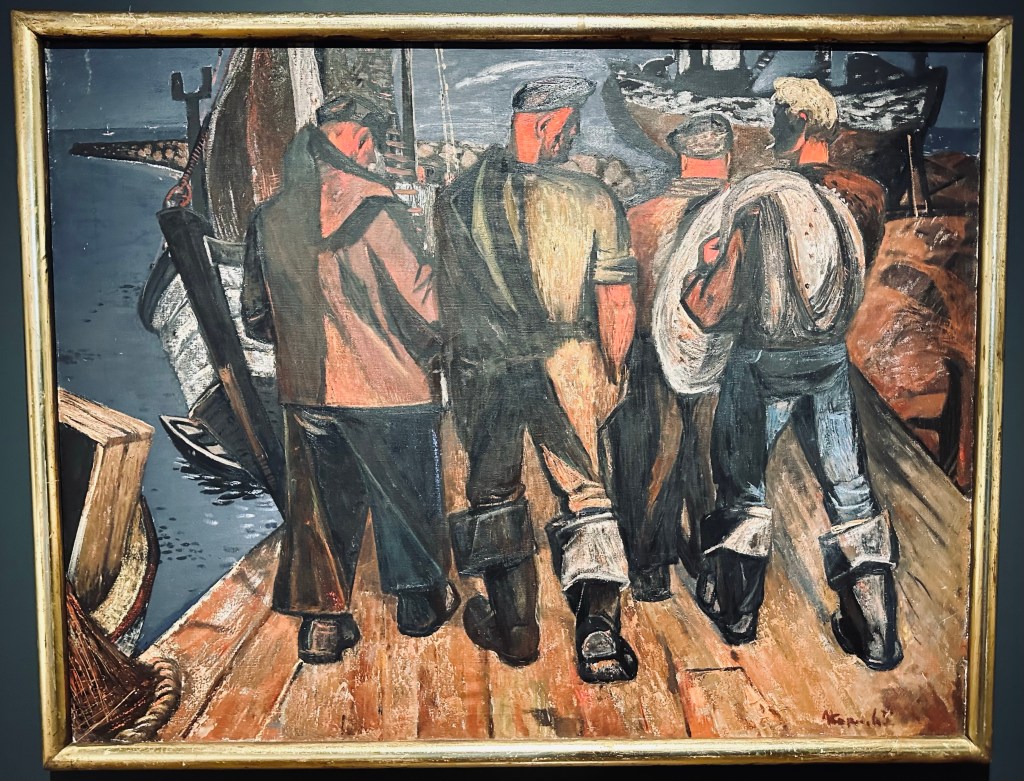
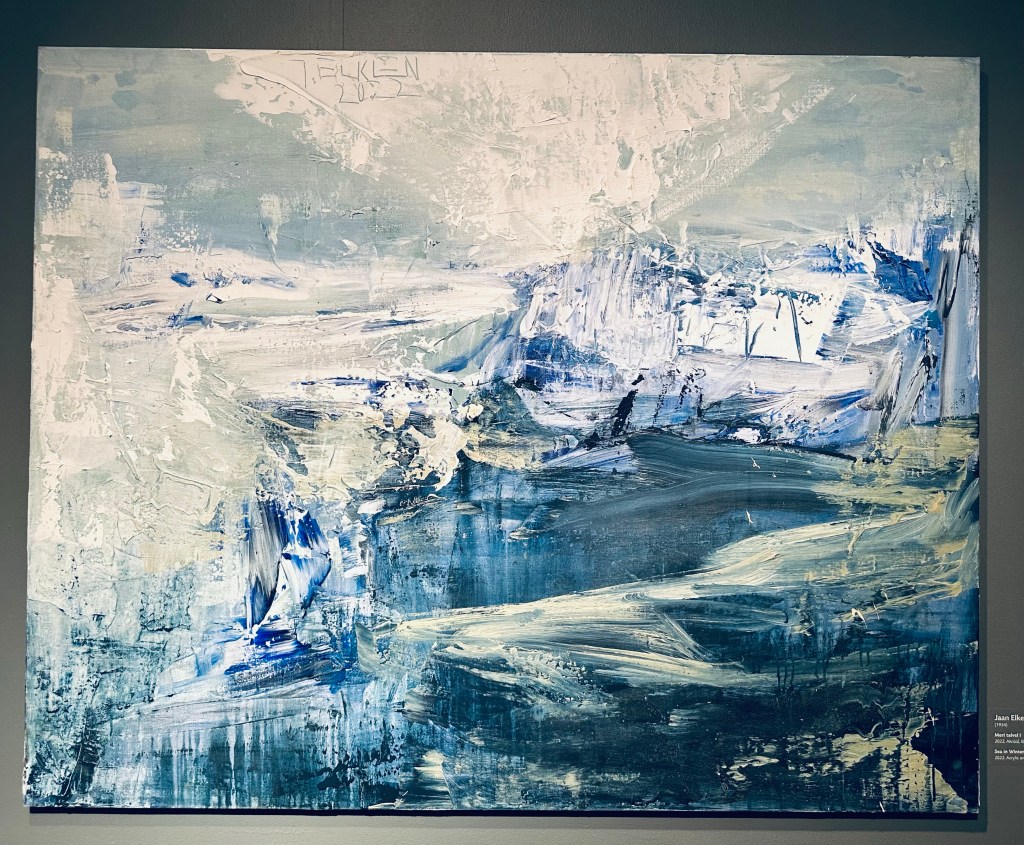
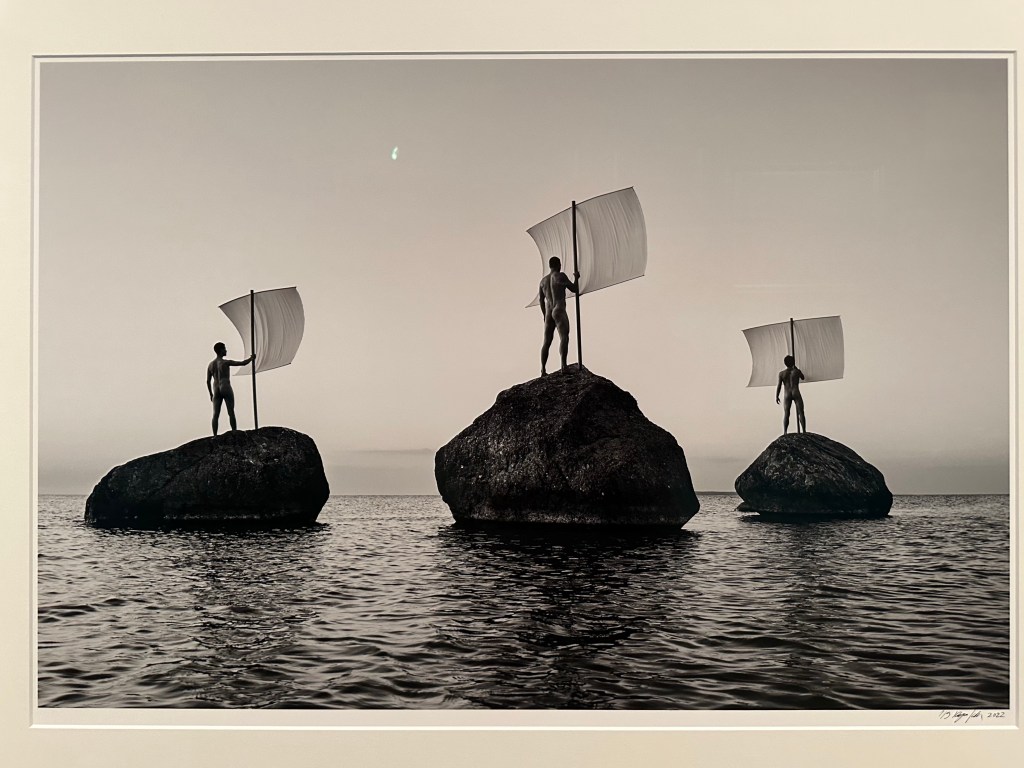
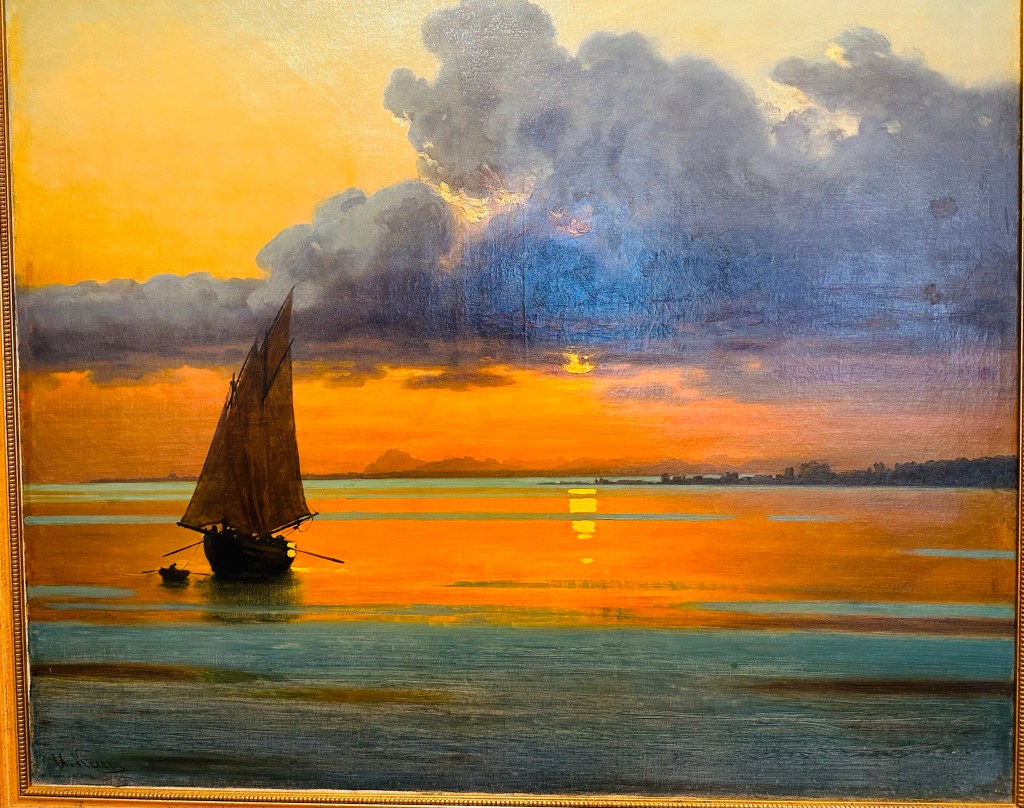
    Modern Artwork Steve liked in Tallinn Museums. Enlarge thumbnails by tapping once or twice.

    Sun Maestoso
    Oskar Kalisz 1917
    Fishermen
    Nikolai Kormasov 1963
    Marsden Hartley style
    Sea in Winter 1
    Jann Eiken 2022
    Odysseus
    Photograph
    Kaupo Kikkas 2023
    Girl in Red
    Abram Arhipov 1916
    Sunset in Nice
    Johann Koler 1887
  • Episode 7 Scandinavia Heavenly Helsinki, May 18-21

    May 19th, 2023

    Transport schedules in Europe leave little margin for error. Be there and be early are the rules. At the Stockholm TI, I was given directions to the Viking Terminal, then to the Riga Terminal, but I knew we wanted to go directly to the Helsinki ferry at the Silja terminal. Our next rules are “Know where you must go and know whom to trust!”

    The Metro subway folk understood exactly; Metro to Rospen, bus 76 directly to the terminal. Hurrah! Leave the hotel at 2:30, get to the Metro at 3:00, find the 76 bus, and arrive at the terminal by 3:30. We got there on time, but the terminal was full with about 6,000 people waiting to board two different ferries. It was chaotic.
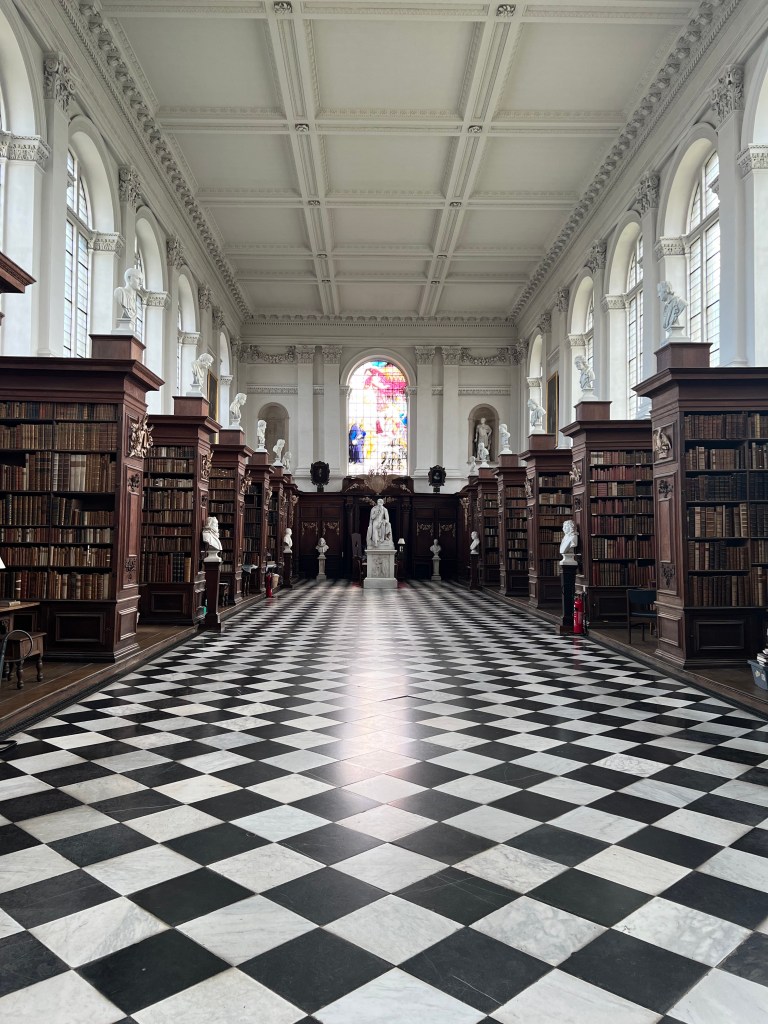
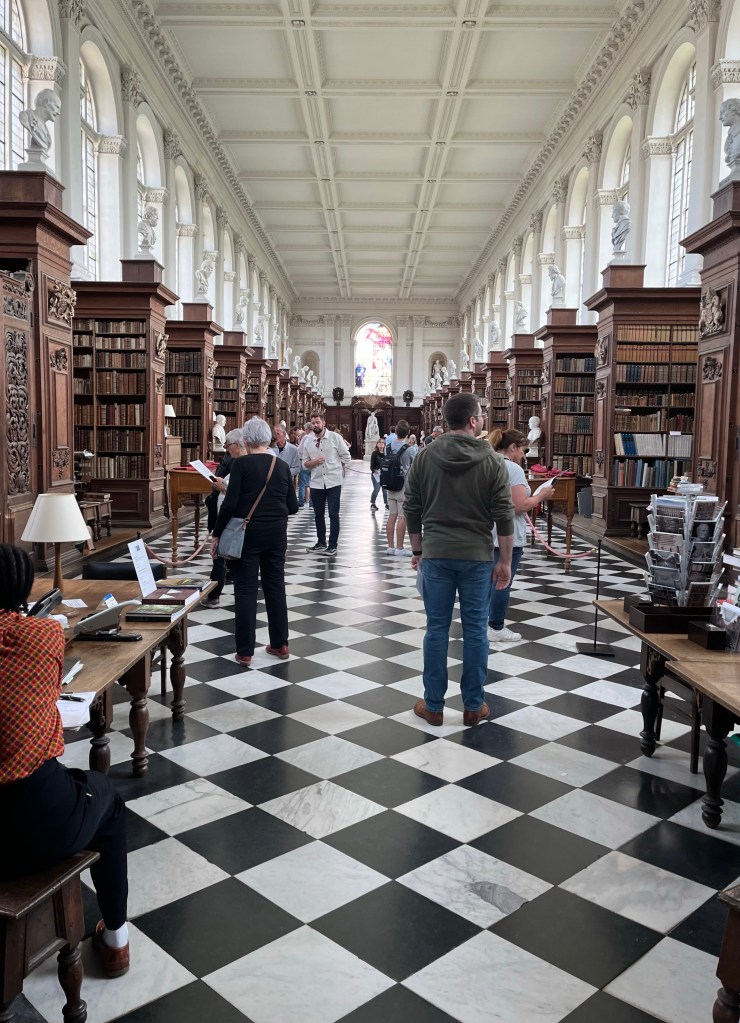
    We exchanged our reservations for tickets— an extra step and time we had not anticipated. We still faced getting through the throng of people, but the Silja crew sped us through in the open left lanes. We got onto the ship at 4:00 with 15 whole minutes to spare. Phew!
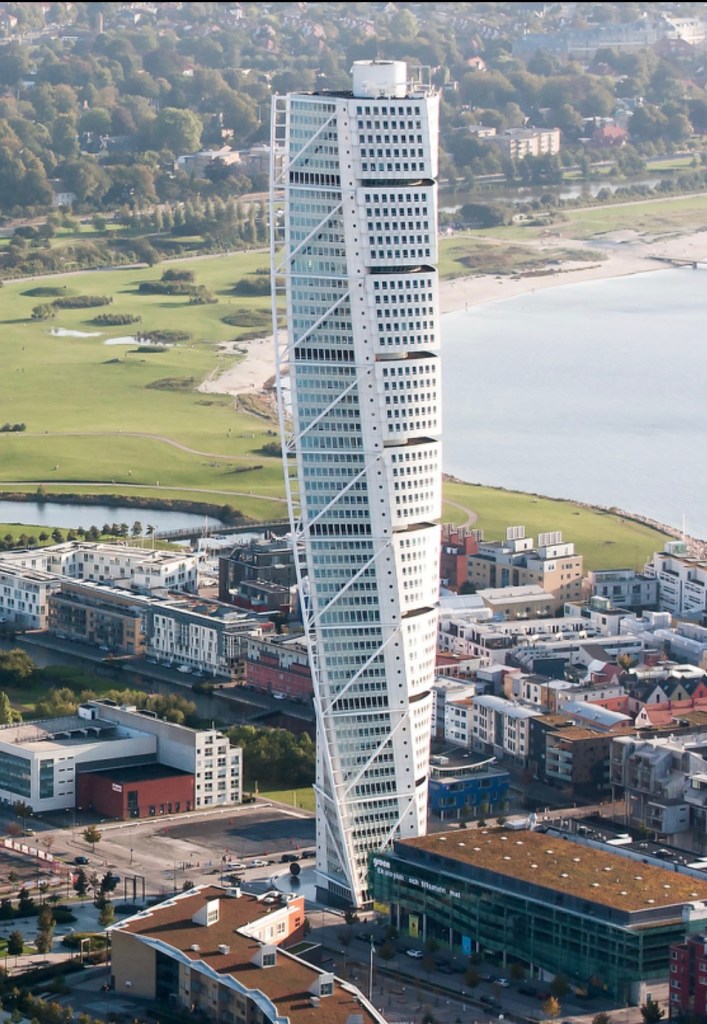
    This ferry is actually a huge cruise ship with tax-free shopping, grand buffet, and casino—all you would ever want, but none of that was for us! We just wanted to eat something before sleep. Sushi was a 45 minute wait, so we shared a pre-prepared plate of fresh tiny shrimps.
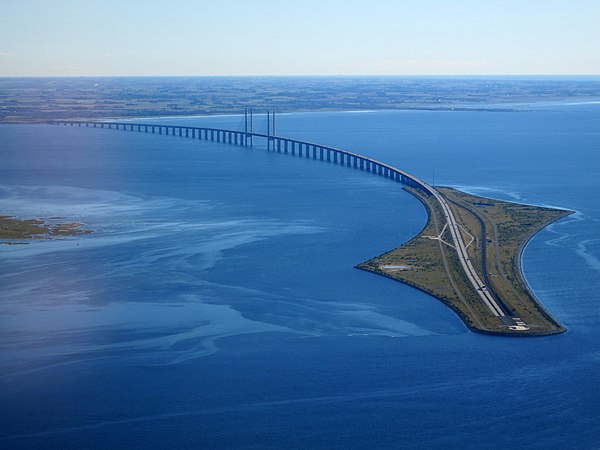
    The rear deck bar had an excellent view of sea, shore, and swooping seagulls in our wake. Becky did her duty chatting up the bartender, resulting in very well-balanced Irish coffees. We also started chatting with a couple at the table next to us. It was our first “small world story” of the trip. They live in Fountain Inn, SC, where Becky lived in the seventies. Their catalogue of travel stories seemed to focus on catastrophies, losses, and wrecks.
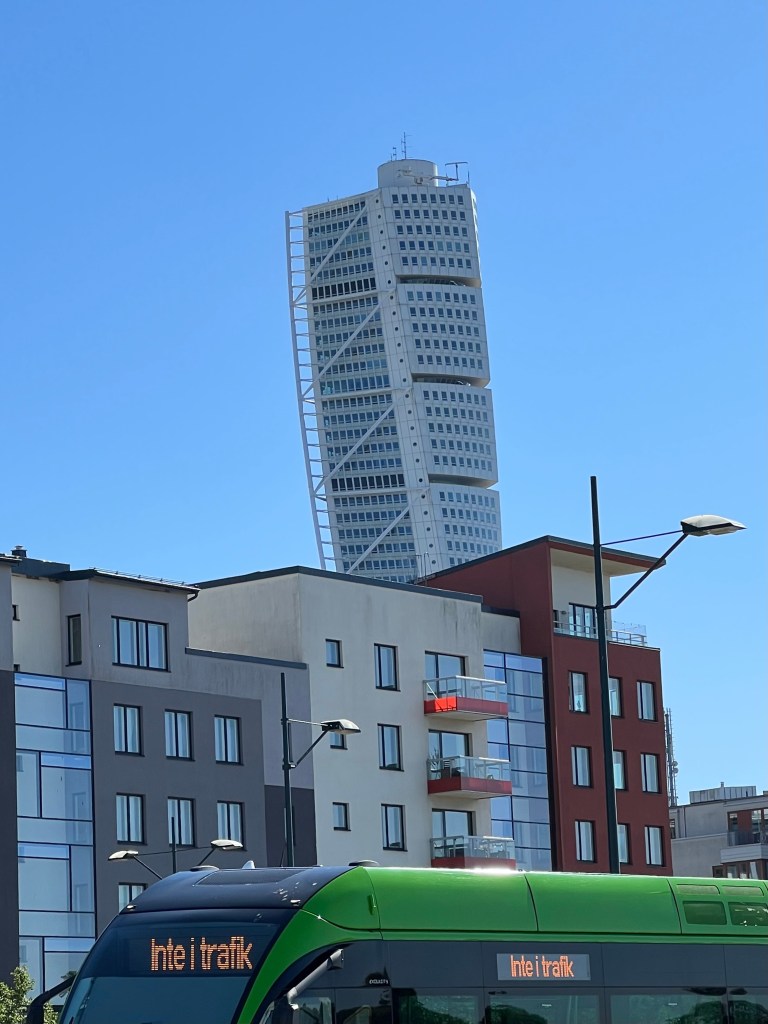
    For example, they caught COVID during one of their trips. However, when another passenger went into seizure, the man (an EMT) held him until a doctor came and took the man to the hospital. Since the Fountain Inn couple were infectious at the time, they may have infected the man and the doctor. After all their disaster stories, we were glad not to be traveling with them. We prefer small inconveniences while traveling such as losing my toothbrush which reappeared three days later.

    In Helsinki, we escaped the madhouse rush of people by hailing a taxi which scooted us to the hotel; a few Euros was worth it. The Marski is a beautiful 4-star hotel in the center of Helsinki and close to all the transport options. We had a nice room which was painted sedate gray, with black granite, and gold accents and fixtures. Very nice, very moody, very small, and very quiet without a window.

    We asked about laundry and were told there was a laundry service directly across the street, but today was a national holiday so it was not open.

    We asked what the national holiday was; the hotel clerk was not sure, but thought it was something religious, but everybody liked having a day off. For lunch, we had a fantastic salmon/potato soup at Cafe Java for less than $20–a bargain lunch.

    Cafe Java and the scene of wonderful salmon/potato soup

    We tried the HOHO bus that afternoon, but it was so crowded and so boring, we abandoned it at the Senate Square where there was a pro-Ukraine protest.

    Steps of Senate building with Ukraine Protest

    We walked back to the hotel for an afternoon nap. We woke later for a walk around the magnificent art Deco train station. It is too large to photograph in one piece, so here are some details.

    Main Hall Entry
    Giant figures on either side of entry
    The Tower
    Views of the Art Deco Helsinki Central Train station

    Eric Saarinen, famed Finish architect, designed the lights for the station. That night we watched the last installment of Harry Potter in Finnish. The special effects were great and didn’t really need dialogue.

    The next morning, we had coffee and patisserie treats at Fazar. After delivering 10 kilos of dirty laundry, we struck out to the Design Museum which had two impressive shows. The permanent exhibit highlights Finnish design and designers of the 20th century.

    Examples of artisan /craft work in Finnish Design Museum

    The second exhibit was amazing group of 20 modern tapestries. Both backs and fronts are so intricate.

    Kustaa Saksi: In the Borderlands

    We also looked in a couple of design/vintage shops, but we are in the “don’t buy anything” mode. We passed a salad deli on our way to the hotel and went back after nap for late lunch.

    We bought transport tickets for 48-hours but nobody had a map so that we see which trams and buses went where. People suggested going to the transport office in the train station for maps. When we finally found the office, the guy was busy shutting it up and directing evacuation of the entire train station due to a fire alarm. No map for us! We just got on a tram and rode it to the end, then rode it back in time to pickup our laundry.

    The afternoon had evaporated; we dropped into the hotel bar for libations before bed. I tried the Finnish sauna that night rotating between cool showers and fiery hot sauna with rests in between. It was interesting and felt good on tired back, legs, and feet. We are averaging nearly 10,000 steps per day getting around.

    Day Three began again with Fazar coffee and patisserie before a trial run to the Ferry Terminal to Tallinn on the Number 9 tram for 9:00 check-in and 10:00 departure. Perfect!

    Get me to the ferry on time

    We had two museums planned for the day: the traditional, gigantic Ateneum and the sleek contemporary Kiasma. We had a wonderful surprise in the retrospective of Finnish artist Albert Edelfelt celebrating his career of almost 50 years (1880-1930). Two hundred paintings covered his entire career with portraits, landscapes, domestic groupings.

    Albert Edefelt Retrospective, just a few examples

    Not a “one note” Albert, he painted in all genres. His portraits of women are full of personality and light. Later in his career he experimented with more abstract work.

    In other galleries, we found other paintings that we liked.

    Burger Carlstedt “Strange Passage”
    Gunnar Berndtson “Music in the Studio”

    After pizza for late lunch, we went to the Kiasma, a new contemporary museum with two different shows: Environmental sounds and assemblage by Daniel Steegman Mangrane and a retrospective of Tom of Finland’s graphic depictions of gay life 40s-80s.

    Exterior of Kiasma contemporary venue
    Courtyard from the Kiasma
    Interior at the Kiasma

    That night we packed and hit the bed early for the morning trip to Tallinn. Helsinki has been a wonderful place to visit. We picked a few things we could manage for our three days and enjoyed it all.

    Helsinki Street Scenes

    Monument to workers in City center
    Close up of stature honoring workers
    Street Scene with Train Tower in distance
    Interesting architecture
    The Rautiesma in from of the Train Station where all the trams cross

    Fire Station and two firemen
  • Episode 6 Scandinavia Oslo Again May 12-15, 2023

    May 14th, 2023

    Five years ago, Becky and I were traveling around Britain. We had wanted to see James Blunt in concert for years, but always missed him in the US. We checked to see if he was performing in England. He was not, but he was performing in Oslo—only an hour and $100 away from Stansted Airport.

    We leapt (or flew) at the opportunity and booked airline and Airbnb. The concert was all we could want—a two plus hour performance by James and his band singing our favorites. We sat in the balcony rather than stand down on the floor jumping up and down like maniacs. It was a highlight of our entire trip.

    We also managed to see a lot while in Oslo: Vigeland sculpture garden, Ekeberg sculpture park, the old Munch Museum, the Royal Castle grounds, history museum, and a fair share of walking around enjoying the warm spring air and flowers in a beautiful city with a mix of historic and modern buildings. When we started planning the Scandinavian trip, Oslo was high on the list for a repeat visit.

    We were booked into Comfort Hotel Express; we call it Compact Hotel Express because the rooms are so small. The bed was surrounded by three walls, one held the outside window. The floor space was about as big as the bed with a chair and desk. The bathroom had all the necessities in a compact arrangement.

    The location was excellent, directly across the street from the Central Station—a sprawling hub for buses, trains, trams, and transport to the Lufthavn airport. In fact, the transport system in Oslo is the easiest of all cities to navigate with electronic signs and graphics at stops so you are sure where you are and where you are going.

    The first afternoon, we took a tram out to the Frogner area where we had stayed in the charming Airbnb. Queen Sophia was sponsoring a fine art/craft exhibit from the royal collection of furniture, clothing, auto, silver and gold items, china and the Coronation Chair. Each item featured the name of the craftsperson who had created or restored it. Yes, it was royal finery but more about the crafts and craftspeople than the royal family.

    Craft work on Royal Crown
    Silver work in Crafts show

    We tried to find our charming Airbnb but think the entire block has been knocked down and is under construction. Our walk back toward the hotel took us past the National Theatre and royal gardens. A large group of protesters were supporting Ukraine and berating Russian terrorism. This was the first of several protest demonstrations we observed.

    We stopped outside at a busy Thai restaurant to read the menu. The two women sitting at a street table raved about the food. We went in and had a wonderful meal of prawn fried rice and green curry chicken. It was delicious and too much to finish.

    That was the good part. For most of next two days we suffered from intestinal distress—me first, then Becky to a lesser extent. Being sick on the road is not fun. We bought some OTC medicines and slept a lot.

    An article from NY Times suggested “what to do in Oslo for 36 hours,” but that would require non-stop motion for 36 hours. Rushing is not our travel style. We had two priorities for Oslo. First we wanted to spend more time in Vigeland sculpture park. The tram took us to the park early and we wandered through the huge statues.

    Vigeland sculpture park

    The sculptures are monumental bronze, granite, and wrought iron figures of men, women, and children at play. All of the figures are nude to keep them universal in time and costume.

    Joy
    Caring
    Help
    The captions are our interpretation, not the artists.

    Did you read about the principal in Texas who was fired because the third graders in an art lesson were shown the statue of David, Michelangelo’s masterpiece? NAKED! PORNOGRAPHY! (Third graders in Texas somehow have managed to get to age 10 without ever seeing a penis?) The morality police would need a lot of cloth to cover all the naked parts of over 200 gigantic statues.

    As we were walking out, a father was holding a three year old at just the right height for the child to be holding the penis of one of the sculptures. The father looked at us, we all smiled and shrugged. Find more info at Vigeland.no

    In addition to dozens of families with strollers and toddlers and hundreds of tourists, the park was full of runners for a 10K run. Twenty to thirty teams each with 50-100 runners were socializing, stretching, kicking, and eating carb snacks. Each team had matching T-shirts with their business name on it.

    Runners at the Gate of Vigeland Park

    By the time we were leaving, the racers had taken over the park and streets. The tram system was closed down, and we had a moderate hike out of the race area to a train station.

    The train landed us back to central station and to the hotel for a long nap. Later, I went to the station again because part of our train trip to Stockholm had been cancelled due to track work. We needed to know when/where to show up for the substitute bus.

    Our second focus was the beautiful new Munch Museet. Five years ago the Munch was located in a building that one guide called “remote.” Remote meant “impossible to find.” The old Munch museum had only a couple of galleries, and one was a show we had seen at MOMA.

    You cannot miss the new museum, 11 stories tall, modern, and leaning out over Oslo Fjord next toward the Opera House. The new Munch Museet is stunning inside and out.

    These two public buidings were the stimulus for renewal of the old dock areas into fancy apartments and eateries.

    Oslo Opera House from the roof of the Munch Museet
    View from roof of Munch Museum
    looking at revitalized dock area full of apartments

    The new museum has six floors for exhibits. The first exhibit featured American Abstract Impressionism with many of my favorite painters: Still, Frankenthaler, Rothko, Krasner, Pollock, Gottlieb, Louis, and others from the New York school of the 30s, 40s, 50s and 60s. That set the tone for Munch’s work with the connection being “trying new things” as Munch always did.

    Helen Frankenthaler
    Morris Louis
    Abstract Impressionism in MunchMuseet

    The first Munch gallery covers the entire floor space of the third level. The huge exhibit is organized around themes central to his work such as Love, Death, Self, Loneliness. The themes give the viewer a lens for seeing the paintings and understand more about the artist.

    A favorite Munch Painting—Between the Clock and Bed
    Do you see any of the themes in this painting?

    Another huge gallery was labeled Munch Monumental—the paintings monumental size as in 20 feet by 40 feet. Some of them represent commissions for public buildings. In another gallery, Munch’s house and personal possessions are on interactive display. His woodcut printing workshop was of special interest to me. He did such wonderful wood cuts.

    Link to museum – http://www.munchmuseet.no

    There were two other exhibits: a retrospective for Marianne Bratellli, a contemporary abstract artist, and a room for children’s imagination and play with soft stuffed objects, costumes, and weird, wonderful places to sit. It was called the Museum of Chaos.

    Marianne Bratteli painting “Snow Flower”
    Children playing in the Museum of Chaos
    Becky playing in the Museum of Chaos

    We were there for 4 intense hours with a break for lunch in the museum cafeteria. I had tomato, basil, and burrata on focaccia. Becky had a white fish smorrebrod.

    Munchies at the Munch

    Exhausted and exhilarated, we walked to the tram for our now regular afternoon naps. We noticed a small cafe along the route named Munchies. We woke around 5, were hungry, and walked back to for a hamburger and loaded fries way outside our standard fare.

    We left the hotel at 6:30 am on Monday to find the bus that was replacing the train. The bus was scheduled to leave at 7:04 but we like to get ourselves in the right place with plenty of time. The bus carried us across the Swedish border to Karlstad for about two hours where the train met us for the last three hours. Both legs were a beautiful ride through vast forests and lakes.

    Goodbye Oslo, hello Stockholm.

    Random Photographs. If photos are thumbnail size, you can enlarge them by tapping twice on them.

    Steve studying tourist brochure. We were eating lunch on the terrace of the Munch Museet
    A little Norwegian or Swedish humor
    Another view of the Opera House. Tosca was playing but sold out.
    Another Vigeland statue.
  • Episode 5 Scandinavia Göteborg—the Paris of Scandinavia? May 9-12

    May 13th, 2023

    Our midafternoon arrival in Gothenburg came after a long train journey from Copenhagen. The map showed straight-shot walk along the Gota Canal to the Comfort Hotel. A 12-15 minute walk was what we needed after train-sitting for 5 hours. We thought it should be an easy stroll and roll event.

    We did not anticipate the numerous tram tracks embedded in the cobbled streets— running both parallel and perpendicular to the route. Add the continually moving trains, buses, taxis, bicycles, and pedestrians. Our easy stroll became an obstacle course with luggage. We trod carefully without mishap. PT, Yoga, and balancing exercises have helped us tremendously.

    Traffic around the Comfort Hotel

    Why visit Gothenberg (English spelling) or Göteborg (Swedish)? It is the second largest city in Sweden and home to Volvo and IKEA. Second, it has its own proud history and personality. Third, it is halfway between Copenhagen and Oslo, and a convenient stop on our tour.

    Comfort Hotel and Tram tracks

    The Comfort Hotel in Gothenburg is a modern, 7-story business hotel with 4-star amenities: breakfast, gym, sauna, rooftop bar, and restaurant. Such luxuries are welcome after tourist hotels with twin beds and few amenities.

    We sometimes take the Hop On-Hop Off bus to get our bearings in a new place. Although we had tickets for the arrival day, the HOHO was not running until the third day. The HOHO in Gothenburg was the most lackluster recorded travel guide we ever heard. Another issue with HOHO is that they sell a tour package with admissions to 20-40 local tourist spots. This appears to be a bargain, but it can be a waste of money, since going to that many places in 2 or 3 days is not feasible. We prefer to pay for the places we want to visit unless the city card really is a bargain like the MuseumKort in Gothenberg which covered all four city museums for the price on one.

    By that time we rode the HOHO, we had already boarded the tram, bus, and ferry to explore the territory. Our first stop was the Design Museum, one of four city museums. Exhibits are more about influences on design rather than design per se, such as an entire room about Asian art with many Buddhas.

    Buddha in meditation. Asian design influenced design work.

    A wall hung with 100 chairs paid homage to the history of Danish chair design. We got a recommendation for an Indian restaurant from the friendly reception folk there.

    A ferry ride to Lillieholm was the first stop on a harbor tour that took us to Klippan, an early settlement.

    Modern architecture is everywhere. This was in Lilieholm.

    A bus back to city center went through Haga, another early settlement. We were let off near the Masala restaurant that had been recommended; it was great. Becky had tofu cashew curry, I had a chicken and spinach dish, and the naan was a star.

    Since, the Gothenburg City Art Museum was open late that night and only a few blocks away from Masala, we took advantage of our location. We went straight to the third floor devoted to Swedish impressionist, expressionist, and colorist works. We were not familiar with many of these artists but we found some works that we enjoyed.

    Impressionist painting by Danish artist Carl Osterbye.
    Woof and Meadow, 1938.
    Swedish painting in City Art Museum

    The museum has one Van Gogh, a couple of Bernards and Bonnards, and several Picassos. Van Gogh was constantly experimenting with paint and colors. As part of a cleaning/restoration process, the Van Gogh painting had undergone a spectral analysis of paint which had degraded over time.

    Van Gogh painting of Olive Trees

    The vivid purples had morphed into mellow blues, but many of the other colors appear little changed.

    Why is Gothenburg called the Paris of Scandinavia? The answer was in the City Museum which I visited while Becky took an R&R afternoon. The City Museum features artifacts, dioramas and descriptions from the first evidence of human habitation in the 400s, through the establishment of Gothenburg as the capital site into the modern era. King Gustavus Adolph II chose the location because of its high ground and built an eight-meter tall wall around this location for protection from invaders.

    King Gustavus Adolph II with pigeon.
    He is pointing and saying “build my city here” according to legend.

    The town continued to grow as people came for jobs. Many structures that were built to accommodate the influx were outside the city walls, wooden, poorly constructed, and lacking appropriate sanitation. These slums led to disease, plagues, and frequent fires.

    Gothenburg city leaders looked to Paris and its major urban renewal project under the direction of George-Eugene Haussmann between 1853 and 1870. As in Paris, the Gothenburg “slums” were cleared in sections and replaced by homes and apartment buildings separated by wide streets and boulevards. The new buildings were 3-6 stories high. As the need for better transportation grew, the streets and boulevards were adapted for tram tracks and space to run trains and buses.

    The wide space also allowed restaurants to have outdoor seating. Other businesses opened on the ground floors of the new buildings. This makes Gothenburg look somewhat Parisienne, including patisseries, beergartens, and restaurants of every type along the city streets. Imagine how the best dressed looked in 1890 with a frock from Augusta Lundin studio.

    A display of clothes in the City Museum for the atelier of Augusta Lundin,
    the most famous Swedish high fashion designer.

    We had a favorite street side cafe! Brogyllen was just three blocks from our hotel. We passed it three or four times a day and found occasion to stop off for coffee, lunch, coffee, and kardamummabulle, a twisted cardamom flavored Swedish pastry. Sitting at tables in the window among huge pots of pink hydrangeas or on the street felt decidedly French.

    Our favorite coffee spot near the hotel
    Under the pink hydrangea
    Coffee Latte at Brylgullen

    We had planned doing laundry in Gothenberg. We packed enough clothes for 8 or 9 days with expectation of finding either a self-wash or a wash-and-fold service. We could find neither and the Google search was full of tourist complaints that there were no such washing options in all of Sweden.

    The hotel offered us a pick up and deliver service at $4 for each pair of underwear and socks, and other items at $5-$10 per totaling way more than $100. Another company would wash 6 kilos of laundry for SEK 200 or about $20. We had no idea what our clothes weighed and how much that would cost. Too many unknowns!

    We invented a third plan. Becky washed clothes in the sink, I “strangled” each item in the shower, and we hung them artfully all over the bathroom creating our own conceptual art installation for two days. If we had been actual conceptual artists, we would have filmed the clothes over several weeks keeping them wet and recording them molding into putrification. Then we could have a show at MOMA entitled “time passage.” Instead of making art, our revised plan is to wash a few things every second or third day.

    As a treat, we decided to spend some time on our last evening at the rooftop bar and watch the sun set. We arrived at 8:50 to find that the bar was closing at 9:00. A bar closing at 9:00? We had our G&T and whiskey and chatted with unhappy folk who had arrived after the last round was called.

    Sunset from 7th Floor

    The next morning we had a late breakfast. We left cleaner and more relaxed than we arrived. We carried one orange, one banana, two bottles of water, and one kardamummabulle for a train snack. The train to Oslo left around 10 and we had time to secure a spot in the “Silent” car: no talking and no internet. Our peaceful ride through beautiful forests and small towns included an exhiliarating ride through an underwater tunnel. The train was full throttle going down into the tunnel to build momentum for the upturn. Who needs Space Mountain?

←Previous Page
1 2 3 4 5
Next Page→

Blog at WordPress.com.


Loading Comments...
 

    • Subscribe Subscribed
      • Tipps for Travel
      • Join 69 other subscribers
      • Already have a WordPress.com account? Log in now.
      • Tipps for Travel
      • Subscribe Subscribed
      • Sign up
      • Log in
      • Report this content
      • View site in Reader
      • Manage subscriptions
      • Collapse this bar