Welcome to our travelogue. Steve, Becky, Jim, and Betsy are on six weeks journey beginning in Amsterdam, continuing through Paris, Avignon and Bruges, and ending back at Amsterdam. This great adventure started with a great deal of planning last year when we booked Airbnb housing in each city. decided to stay each place for at least a week so that we could enjoy the lovely illusion that we were living there. We travel by train and learn the subway, tram, and bus routes for local transportation.
This year we created a subscribers list which makes posting so much easier. And I have gotten technical advice from Amy Landers in Hendersonville that has been great help, but I am still learning to ride the Word Press beast.
We add episodes once or twice a week depending on time and energy. You can read about our travels at your convenience and find out what we have been doing, seeing, eating, etc.
View of six bridges on canals in Amsterdam
Posts are in chronological order with the new posts recent trip seen first or on the top; older trips are scrolled under the current trip. If you dig deeper in the blog you will find posts from all over England last year and maybe Scandinavia in May and June 2023. Finally there are two episodes from St. Albans in December 2022. We enjoy reading the old posts and remembering all the fun we had.
The blog is a first of all a record of travels for our own memory and pleasure. Second, we enjoyed sharing those adventures with friends. We invite questions, comments, or suggestions.
Background
Steve is the lead writer with ideas and suggestions about content from everybody on the trip. Betsy and Jim add Robson Reports when they take a side trip or excurion by themselves. Becky is the editor who catches lapses of thought, poor word choice, and punctuation, grammar, and agreement errors. Becky is the chief photographer and photo editor although Betsy, Jim, and I add photography to round out the visuals.
In the Air and On the Road in June. After our European trip ended in May, Becky and I had a couple of weeks to rest and recuperate. Then we were off again to visit long time friends and attend a concert by James Blunt.
As I was an only child, I filled that void with friendships which over time became my brothers and sisters. Childhood friends in Electra, Texas—Mark, Robin, and Cheryl—developed into brothers and sisters in adulthood. More “brothers and sisters” came as serendipitous gifts as Becky and I met wonderful folk and made fast friends along life’s journey.
In June we had the opportunity for reunions with Mary Alyce, Glen and Gina, and Gerald and Kathleen—all of them holding important places in our hearts and lives. These reunions also conjured memory of our shared history. In this post, current trips, events, and reunions are left justified, while memories and reminiscenes are right justified.
On the Razzle in Milwaukee
A note from Sister Mary Alyce suggested we visit to celebrate her 92nd birthday in June. Her invitation, in her words, was to celebrate her wake while she was able to enjoy it. It was an invitation we readily accepted and scheduled a flight anticipating a fine “razzle.”
Mary Alyce
Our early morning plane to Charlotte did not arrive in Greenville-Spartanburg until after the connecting plane to Milwaukee from Charlotte had already departed. To get to Milwaukee, we rerouted through O’Hare which is always problematic. We arrived in Charlotte in the nick of time to catch a plane to Chicago, then sat on the tarmac for two hours due to a thunderstorm and ground hold in Chicago. We arrived in Chicago in the nick of time for the last flight to Milwaukee where we got to car rental in the nick of time to claim a car before midnight. After 18 hours in transit, we were exhausted, but not too exhausted for a razzle the next day.
Reminiscing
I met Mary Alyce, both our “sister” and a School Sister of Notre Dame, at PHD orientation at Ohio State. Perhaps “adopted by” is more appropriate. Mary Alyce, Cindie Cook, and I were the only students from far away: Wisconsin, Arizona, and South Carolina.
For the next two years, we three planned regular Friday night events: dinner or movie or other fun. Mary Alyce called them “razzles” as in “on the razzle.”
After graduate school, Becky and I visited Mary Alyce several times in De Pere, WI where she was a professor at St. Norbert College. She also visited us in Texas and North Carolina.
De Pere and Green Bay are at the base of the thumb of Wisconsin, so trips up the thumb into beautiful Door County were summer highlights. We met and played cards with the Sister Janet, Sister Elise, and other nuns who shared a house on Fox River Road. The nuns look sweet but they are aggressive card players.
We attended Mary Alyce’s triple celebration party: 70th birthday, 50 years as a nun, and 25 years at St. Norbert. Several times I led workshops and spoke at the Early Childhood Conference she organized.
Mary Alyce once received a grant from the US Navy to develop an oceanography curriculum for elementary schools. Part of the grant involved a weeklong cruise from Lisbon to Barcelona on a Naval research vessel. She recruited Becky as principal with two of her teachers, Shawna and Katie, to participate. I joined them in Lisbon for a couple of days, took a train across Spain to Madrid and Bilbao and met them when the boat docked in Barcelona. Other summer workshops were held on the Great Lakes, North Carolina Outer Banks, and Mississippi Gulf Coast. Certainly the entire project was huge learning experience for the teachers who participated and offered
many fine razzles with Mary Alyce.
Mary Alyce is a storyteller supreme and she has shared wonderful tales about her life. She told us how the nuns gradually discarded their traditional habits adopting instead a uniform of blazers and skirts. We heard about the merry mixup one New Year’s Eve at a shoe store when Mary Alyce and another sister returned to the convent with a shoebox containing silver lame stilettos rather than the sober shoes they were sent to buy. Imagine the reaction of the person who got their shoes!
She introduced us to cherry bounce, a nearly lethal concoction of fresh cherries steeped in rum and vodka for six months to be decanted as a wonderful cherry liqueur at Christmas time.
Mary Alyce’s first encounter with cherry bounce was as a novice before Christmas mass. One cherry led to another and another….
She reported visions at midnight mass. Our warning of excess of any variety is, “Mary Alyce, 21 cherries is too many.”
Reunion. The morning after the long day of four airports and three airplanes, we began two days of razzle with Mary Alyce. Day One held a drive from Milwaukee to wander around the St. Norbert College campus, to see Mary Alyce’s shared house on Fox River, and to lunch with a colleague.
Steve and Mary Alyce on St. Norbert campus
She pointed out many places and recounted many events from her 47 years living in this area. It was a wonderful drive full of memories for all of us.
Fox River on St Norbert Campus facing the Mulva Performing Arts CenterGrohmann Museum in Milwaukee
The second day we visited the Grohmann Museum in Milwaukee. Mr. Grohmann, an industrial magnate, established the museum at the Wisconsin School of Engineering to celebrate “The World of Work” and the industrial history of Milwaukee and the Midwest. It is dedicated to those who worked in foundries, built buildings and ships, laid track, as well as those who toiled as weavers and seamstresses and artists.
The Edmund Fitzgerald
The museum is full of beautiful bronze statues as well as oil paintings portraying working men and women.
Mr. Grohmann has an office on the top floor of the museum. The door was open and there he sat. Mary Alyce and walked in and we had a short conversation with him about some of his displays.
Mary Alyce and Becky waiting for the boat
In the afternoon, we took a scenic boat ride on the Milwaukee River and into Lake Michigan. The tour guide told about the history of Milwaukee, the various groups of immigrants who brought their skills to the area, and the buildings as evidence of the industry and growth of the city. Though interesting, the sun and gentle rocking boat movement turned the tour into a boat ride plus naps.
Tour boat on Milwaukee RiverSkyscraper and Performing Arts Center in Downtown Milwaukee
We finished our afternoon at Trinity House with Mary Alyce and her suitemate Sister Claire in a long conversation featuring ice cream topped with Cherry Bounce.
North to Philadelphia
On June 18th, Becky and I embarked on a road trip to Philadelphia to attend a concert by James Blunt. You may ask “Who is James Blunt? What is he doing in Philadelphia? Why are you driving roundtrip 1600 miles to see him?” All will be answered in due time.
Reunion in Charlottesville. Glen and Gina are our extended family from 40 years ago at UVA. They still live in Charlottesville, a convenient stop on the way to Philadelphia. Glen is a Texan, born in Corpus Christi, and both he and Gina are graduates of The Ohio State University. We already had common ground when we first met in 1979.
Glen was a major influence on my career. He was a mentor and visionary for technology and its potential impact in education and our world. Over the years we have talked often and shared highs and lows of living in interesting times. Their son Stephen is a skilled machinist who creates precision metal parts in Richmond.
We met Glen and Gina in the lobby of Bavaro Hall at UVA where we talked for a couple of hours over ice cream sundaes and root beer floats. Gina was a computer specialist at UVA for 20 years and now uses technology skills for art projects such as building 3-D models of Historic Williamsburg. She and Becky shared their creative endeavors while Glen took me on a tour of his labs.
Forty years ago, we had to fight for space for a computer lab. Now Glen has 4 rooms in Ridley Hall devoted to a variety of his current technology grants and projects. Recently, he sponsored a 3-D printing project in Uganda which allows the creation of precision microscopes for $200 rather than $2000. These can be linked to computer data bases for medical and research purposes in developing countries. Also in Uganda, computer controlled embroidery apparatus gives native women tools to create new economic opportunity in remote villages. In Viet Nam, he and a colleague are setting up sensors to track water levels for warnings of frequent floods along rivers.
Reminiscing
Glen has been a pioneer in technology for 40 years. He founded SITE, Society Technology in Education, a coalition of professional education groups focused on integration of technology in teaching. His sponsored projects— local, statewide, national, and international—demonstrate uses of technology in schools and daily life. One example was a grant with the Smithsonian to set up technology discovery/invention stations for students.
During the exciting early days of educational computing, Glen was already envisioning how computers might be used for discovery of important content in mathematics and science as well as productivity tools for teachers and students. I had the great good fortune of going along for the ride.
Our first educational computing class began with only a photograph of a computer to show how it would look— if we had one. Glen soon talked/cajoled Texas Instruments into donating a half dozen 99/4A computers for our first computing lab. We spent hours keeping these weird machines up and running.
Texas Instrument 99/4A. Note the cassette tape recorder used for memory
Next Glen leveraged us up to a dozen Apple IIs which arrived with a visit from Steve Wozniak to christen our computing laboratory. Only in retrospect can I fathom what an amazing event this was, but it was one of many amazing events working with Glen.
Tom Lough, then a graduate student at UVA and Physics Instructor at the community college, suggested starting a newsletter to give teachers ideas for using Logo in the classroom. For 5 years, Tom edited the “Logo Exchange” newsletter while Glen and I wrote monthly columns. This effort put all three of us deeply into the Logo community and led to many friendships and opportunities such as attending conferences sponsored by MIT with Seymour Papert.
Tom was contacted by Holt Rinehart Winston publisher to coordinate a three-book introduction for a new IBM classroom computer called “the Peanut” which IBM hoped would knock Apple out of classrooms. Unfortunately, the Peanut was DOA. Seven authors worked for 18 months on this ill-fated mission for a glitchy little computer. The “Nudges” book that Glen, Tim Riordan, and I co-authored was full of classroom activities. Talk about left hand not knowing what the right hand was doing, IBM had commissioned two entirely different writing teams to create supporting books.
All our effort was for naught except for a nice paycheck and opportunities to work some great folks.
On I-95 to Philadelphia
Getting to Philadelphia from Charlottesville required a hot, 8-hour drive with bumper-to-bumper traffic on Interstate 95 toll roads through DC and Maryland into Pennsylvania. It was a mid 90s day at the beginning of a summer of blistering hot weather, wildfires, and floods across the United States.
Arriving in 5:00 traffic simultaneously with a summer monsoon, we pulled into a parking lot to rest, get our bearings, and wait out the storm and the traffic.
Hotel Icon marks the location of the Maj in the neighborhood
We found our hotel only 4 blocks away—The Maj, a small European-style hotel in West Central Philadelphia. European implies funky minimalism with small rooms, no closets, no parking, duvets, raised beds so that suitcases fit under the bed, all very spartan but comfortable. The neighborhood is mostly high rise apartments and condominiums with a huge Whole Foods for food, a small Target for sundries, and a great Vegetarian restraurant. We shopped with a vast population of GenZers and Millenials.
Location! Location! Location! was crucial in our choice for accommodations. But first, an introduction to our prime objective of the trip—seeing James Blunt in concert.
Reminiscing about James Blunt
James Blunt, a British singer/songwriter, composes glorious and aching love songs, philosophical observations on life and love, and rocking out anthems. His first big hit was the wistful “Beautiful” 20 years ago. Before beginning his singing career, he served in the British military and was best buds with the Duke of Sussex, formerly known as Prince Harry.
Most importantly, he is Becky’s favorite singer!
We are both fans.
Our first James Blunt experience was 12 years ago when we saw him perform “Bonfire Heart” on the Graham Norton, a BBC celebrity chat show. This rousing anthem was, for the want of better words, “electric” and led us to buying our first CD. Then we bought another and another, accumulating his catalog which Becky plays frequently—often humming and singing along. I have him on iPhone to listen in the car being too frugal to pay for Spotify or Sirius.
A vast and rabid fandom buy millions of his records and turn out in droves to concerts with his band. While in England several years ago, we flew to Oslo for a long weekend to see him perform. His two-hour performance was again “electric” and deepened our appreciation for his music and performance.
And we fell in love with Oslo.
Checking regularly on tour dates, I found his Back to Bedlam “greatest hits” tour had dates in USA in 2025. I gave Becky tickets to his Philadelphia concert in June which implied “road trip” to Philly
james blunt live at the nobel peace prize concert 2014
For a powerful and emotional video of James singing “Monsters” to his father, search on YouTube:
james blunt monsters
One Fantastic Concert
We took a short Uber ride to the MET, a grand old Opera house which survived the usual decline/decay/restoration saga of old performance halls such as the Fox in Atlanta and the Ohio in Columbus. The beautiful venue hosts a variety of events from church services to rock concerts. We had good seats in the Orchestra, but since Becky was using a walker as a result of a fall, we were reseated in a raised “box” that had perfect sight lines.
The stage was lit with glowing blue lights. James Blunt arrived through blue billowing smoke to stand alone while the audience stood to welcome him. He started singing while the the band members— keyboard, bass, and drummer— followed him on stage for two non-stop hours of, dare I repeat, “electric” music and performance.
Years ago in Oslo, he had seemed flustered by the audience’s insistence of singing along. He even pleaded with the audience to let him sing. Now, James Blunt was the maestro of the audience. He accepted and harnassed their enthusiasm.
Most of the times, the entire audience was standing and singing. He jumped off the stage and ran (with a body guard) up and around the center orchestra section. He molded us to great heights of excitement with sing alongs and calmed us with quiet moments of him spotlighted alone on the stage at his piano.
He and the band wrapped up two hours with two of our favorites —the quiet reflection of “Monsters” and the rousing exuberance of “Bonfire Hearts.” We were entertained, we were seduced, we were exhilarated, and we were exhausted.
Seeing live performance changes the way you hear music. Performance magnified the power and nuance of his poetic lyrics, the exciting and surprising melodies, and the powerful rhythms. Each piece of the performance was vibrant and unique, and all the pieces created a brilliant whole.
He promised a new album soon. Will we buy it? Absolutely! Would we make a 20 hour round trip to see him again? Probably not! Our aching bodies suggest a plane ride instead!
Art in Philly
Location! Location! Location! The Maj hotel was located four blocks from the Barnes Foundation in one direction and four blocks from the Philadelphia Museum of Art about four blocks in the other.
I have wanted to see the Barnes Foundation collection of art for twenty years, especially since they moved from Lower Marion PA to a new building in Philadelphia. It is known as the finest private collection of Impressionist art in the USA. And who could deny Rocky a visit to the Philadelphia Art Museum.
The Barnes Backstory
Dr. Barnes was a genius who graduated from Central HIgh School in Philadelphia with both a HS diploma and a College degree. He then earned an MD, but was temperamentally unsuited for patient practice. After earning a doctorate in Germany focusing on a new field—pharmacology, he and a partner created a silver nitrate drop that prevented blindness in infants. This made them both millionaires in the 1910s-1920s.
While he was running the factory which produced the drops, he became concerned that the workforce was undereducated and offered a program by which workers could work for 6 hours
and go to school for 2 hours.
Barnes was strongly influenced in this endeavor by his friendship with John Dewey, the American educator. Dewey believed education was key to creating a democratic society and learning was best done through experience rather than rote and repetition. Dewey with early 20th century ties to Ohio State has been a strong influence in my career as an educator.
Education at the factory was more than basic literacy and included aesthetics and philosophy. As a part of his educational endeavors, he placed paintings in the cafeteria and other areas of his factory to expand the workers’ knowledge and appreciation of art.
Another Barnes’ friend, the artist William Glackens, was evolving his style from realism to Impressionism. Barnes’ wanted to understand this new type of painting and Glackens became his tutor. Intrigued, he gave Glackens $20,000 to visit Paris and buy the best impressionist paintings he could find. Glackens returned with 30 works by Picasso, Cezanne, Seurat, Degas, Matisse, among others.
Early Matisse
Barnes was so taken with the new art he decided to make art his life’s work. He sold his business in 1929 for millions of dollars—three months before the Great Depression. With this fortune, he built a school for artists in Lower Merion and continued his search for the best art available. His school also housed his growing collection of Impressionist paintings as well as ornamental iron, African, and Native American objects. He endowed a trust to preserve and maintain the building and collections in perpetuity.
By 1990, it became obvious that the status quo in the original building in Lower Merion was too restrictive. The site would not accommodate the number of people who wished to see the collection. Lower Merion was poorly prepared for hordes of visitors. The once beautiful building was falling apart and needing vast repairs to bring it up to modern standards for protecting the collection.
The trustees successfully sued to break the trust and built a new modern building at a site that was more suited to the original purpose. In 2012, the Barnes Foundation moved to Philadelphia into an ultramodern building with all the protection needed for the art in a more accessible location. However, the interior is a near exact replica of the original location and the paintings are displayed in the exact manner that Barnes had arranged when he died in 1949 and dictated in the trust.
At The Barnes. I took a highlights tour and attended an Art Talk while I was at the Barnes. Both were very good at orientation but I would need two weeks to see all the art. Also, two large exhibition areas were closed for floor renovations meaning much of the collection was not available.
Seurat painting with “Sunday in the Park” as background. This was painted in response to a critic that said pointillism was not a valid techniques since you could never paint a nude with dots. The three nudes represent the three graces often portrayed in realistic paintings over many centuries.
Modern art galleries focus single paintings or small groups of paintings on a gallery wall. The Barnes harks back to the old European gallery style in which an entire wall is covered (to my eyes littered) with many paintings of many sizes from floor to ceiling. By dictating this style of hanging, Barnes froze the collection in place in the academic style that was more typical in 1850.
Barnes commissioned Matisse to design paintings for three alcoves in his museum. This lead to the gigantic mural “The Dancers>’. Which was transfered to Philadelphia in the new building.
The docent asked what we notice about the paintings in the first gallery. I replied “hodgepodge” as I surveyed a large room with many as 200 paintings hung on 4 walls without discernable theme or consistency. Barnes’ intention was for the viewer to discover the meaning through experiencing many things and finding comparisons and contrasts.
Collection of Native blankets in the Barnes
Very John Dewey and very demanding for viewers who have learned to contemplate art one piece at a time with descriptive labels.
In the Barnes there were no labels at all on anything. Is it a Cezanne or a Renoir? Why is the Seurat hung 5 feet above eye level and beside a piece of ironwork? On the highlights tour, the docent asked us to look for connections. Would Barnes have been happy about this guidance?
Soutine
I focused on a few specific Impressionist painting on each wall not taking time to look for the relationships that Barnes left for us to find in his arrangements. Constructing meaning was too exhausting. After 4 hours, I left satisfied with seeing some stellar and unique pieces of Impressionist art.
Rocky at the PMA. We headed over to the Philadelphia Museum of Art to spend a cool day roaming galleries on a double hot day. A recently restored ground level entrance at the rear of the museum bypasses Rocky and avoids the lure of running up the grand front stairs to make a Rocky victory stance.
The current feature was multiroom, multimedia survey of the 40s and 50s entitled BOOM! It included painting, prints, sculpture, furniture, photographs, and artifacts representing the post-depression and post-war boom in the USA. It was a time of unbridled expectations of a good life.
Russel Wright China in BOOM!
After lunch in the cafe, we visited several other galleries. Although we did a quick walk through the colonial period exhibits., the modern and contemporary art is always our favorite, and where we spent most of our time.
Jasper JohnsLee Krasner
South on Interstate 95
We got up early on Sunday morning at 8:00 to head south hoping that an early start would get us through DC before traffic. Our plan worked well. In five hours, we stopped for breakfast/lunch at an IHOP near Springfield, Virginia. A large sign on the door warned CASH ONLY because the computer system had failed causing havoc for ordering and paying. We did not mind the extra time to relax and enjoy being off the road.
Back on I-95, we experienced afternoon traffic congestion and slow downs. At least we were heading south, because the northbound lanes were a parking lot. We planned to stop in Richmond but had made such good time we continued to Pittsboro, NC where we would visit with Gerald and Kathleen.
Arriving early, we added a night to the two nights already reserved at the Hampton Inn. It is a brand new and beautiful hotel with a modern facade that looked more like an upscale Hilton than your typical Hampton Inn. I talked to one of the owners who was watering the front garden and picking up random trash.
The next morning, we began our visit with Gerald and Kathleen in their new home in Fearington Village. We were so glad to have them back within driving distance of Flat Rock after their 8 years sojourn into Florida.
Reminiscing
I knew who Gerald Ponder was before I ever met him. Phyllis Hotchkiss, former student at UVA and colleague at Midwestern, worked with him on a Danforth Foundation school improvement project. She had been very impressed with his leadership
as school board president of Denton ISD.
Gerald and I first met at teacher education meetings while I was serving two terms on the Texas Education Agency Commission on Standards for Teaching Profession. The entire state was moving to more field based teacher education, and Gerald was a leader in that effort. When a job opened up at the University of North Texas, it was an opportunity to move to a larger university; working with Gerald was also part of the attraction.
Our first family event with Gerald and Kathleen was in October 1992 at a picnic on Lake Grapevine, the start of was the start of a 30 years friendship. After a couple of years, Gerald “abandoned” me taking a job at UNC-Greensboro as Department Chair. Kathleen worked for the Center for Creative Leaderhip, then for Duke Leadership. Her job took her all over the world working with corporate officers.
We had regular visits to North Carolina because Becky is a native and has family here. This allowed us to visit G&K several times over the years including their wedding. When Becky and I retired from Texas in 2002, we moved to Flat Rock and more opportunities for visits back and forth. One important trip we took was to Victoria, BC with an Alaskan cruise to celebrate our 60-year birthdays together.
Gerald has often said we are brothers of different mothers because our lives are so parallel. We were born only 5 months apart, grew up in small rural towns and went state universities (Arkansas and Texas), began teaching in poverty areas (New Orleans and Appalachia), got doctorates ( Texas and Ohio State), believe fervently in the power and importance of education, and saw ourselves as change agents for improving public education and teacher education.
When I was retiring from the University of South Carolina, Gerald, now Associate Dean at North Carolina State, offered me a unique opportunity. NCSU was starting a new elementary education major which incorporated everything Gerald and I believed from our work with field based programs in Texas.
And they needed a Mathematics Educator.
As a result, I commuted to Raleigh once a week— Sunday through Wednesday—for a wonderful final year. I told people that I was living in the Ponder’s attic which was true. However this attic was a 900 square foot apartment with a living room, bedroom, bathroom, and exercise studio.
These accommodations came with a hot dinner each night which Mary McCarthy, Kathleen’s mother, prepared. The price of dinner each night was a hot game of Rummy 500. I affectionately called her a “demented leprechaun” because she cackled when she gathered up the cards after invariably “whooping” up on Gerald and me. I wondered if she had learned how to play cards from Mary Alyce’s Sisters.
I knew Mary for many years. She was a delightful person with a commanding personality. We mourned her passing with laughter and tears and shared many Mary stories and quips, After attending an exhibit of Rembrandt at North Carolina Museum of Art, she observed that “when you’ve seen one,
you’ve pretty much seen them all.”
Reunion in Fearington Village. Our time with Gerald and Kathleen was filled with non-stop talk. After eight years in Florida, they were back in North Carolina and are still getting unpacked and settled. We helped a little with arranging and admiring the wonderful art that they have collected over the years. We met Cory, the CNA who works with Gerald and is also part of their family.
We discussed our various aging dilemmas which Becky’s mother aptly called “the organ recitals.” We talked about family and who was where and what they were doing. Our strenuous chat led to afternoon nap time. We returned around 7 with Greek food from the taverna near our hotel.
The next day was more talk about families and the sad state of the world we are seeing. Instead of BOOM!, we are feeling DOOM! And GLOOM! That night we had dinner delivered from Door Dash from a Middle Eastern restaurant in Raleigh. We had hoped to return for Gerald’s 80th birthday, but had many obligations that weekend. We promised to return later in 2025 for other celebrations.
Roads Leading Home. We drove home through Siler City where Becky and her mother lived for a year while Polly was choir director at the First Baptist church. Siler City is often mentioned as the “big city” near Mayberry in the Andy Griffith show. We hunted for their house but did not find it. Strange how towns change in 70 years.
We skirted Charlotte on I-485 and arrived home about 5:00. We were tired and slept for several hours. Around 9:00, we ate cheesy grits after a desperate look through the larder. Then we went back to bed to recover and remember a great month with friends who are our “brothers and sisters” and sharing so many memories.
By the Sea. A short train trip took us to Blankenberge, a seaside town on the North Sea. The seafront could have been Atlantic City with multistory condos and hotels lining the beach.
At a small bistro on the beach, we were the only customers except for a man smoking continuously outside with the bear-sized St. Bernard (possibly a St. Bearnard?) which patiently waited for frites treats.
The menu featured 7 Croque versions. Croques have been on menus everywhere. I googled what made a Croque a Croque: crunchy bread for grilled ham and cheese sandwiches with bechamel sauce. Not sure whether restaurants do the bechamel sauce or that I can even tell. We ordered four different Croques, the most unusual being Jim’s Croque Bolognaise. He expected a Croque with bologna but got Croque covered with meat sauce you expect on pasta.
A stiff wind discouraged more than a short stroll on the wide beach, but Jim put his feet in the North Sea which was a major objective for the day. To escape the wind, we ducked behind the phalanx of condos and walked into the old town to the train station.
Our path took us past many interesting and beautiful buildings that spoke to Blankenberge of yesteryear in stark contrast with the modern condos. A sign posted outside a bar attracted our attention and laughter.
Another Brussels Disappointment. When Becky and I planned our European train trip 10 years ago, Brussels as a major stop. Brussels suffered a huge bombing two days before we were to arrive and turned into a traumatized city overnight. We moved forward on the train rout to Maastricht, a place we knew nothing about but was a lagniappe and a favorite memory of the trip.
Still harboring a wish for Brussels, I promoted a day trip to this center of politics and culture and the capital of the European Union. Our plan was to hop on a HOHO bus for a quick look around, then return to one or two of the main attractions. What could go wrong?
The starting spot for the Tootbus tour was shown as just outside the train station. Instead of the bus, we found a young man selling tickets who walked us three blocks to the parked bus. Perhaps this was an omen. With maps in hand, we boarded with high hopes.
Beginning of the Pride Parade
The tour today was rerouted due to a huge Pride Parade gathering in central Brussels. The prerecorded narration proceeded on its regular route, while our bus moved through an alternative universe. We heard about things we were could not see and drove past things that we wanted to know about.
On the odd occasion that sight and sound coincided, the narration was heavily accented English with an intervening medley of music at the volume of a 747. Turning the volume down during music and up during talk was necessary and irritating in so many ways.
Trapped like sardines in a tin can with ear spitting music and English gibberish, a doom fell upon us. After an hour of this mix and mismatch tour, we abandoned all hope, disconnected from the sound, and rode along in silence.
Since we did not know where we were, we were reluctant to get off the bus and explore—fearing we would never see another bus. Finally ending of our “two-hour tour,” we were desperate for lunch and restrooms and found a coffee shop under a green awning with both.
The Pride Parade Begins
The Pride Parade was just starting and scheduled for two hours. Colorful exuberance of dancing, singing, and flag waving filled the two blocks between us and the train station. An EMS worker, on duty for accidents and possible mayhem, directed us to a Metro station on our side of the parade that would take us underground to the train station.
We left sadder but no wiser about Brussels. From the train we could see a ginormous bicycle parking lot, possibly the most interesting sight for the day.
Slow Mo Video of Bicycle Parking in Brussels
The plan was good, but the mission was a failure. I still believe there are wonderful and interesting things to see and do in Brussels. Alas!
Glorious Ghent.
The Robson Report. As our trip was coming to an end, Jim and I wanted to visit one more city in Belgium; Ghent is only a half-hour train ride from Bruges. Jim considered taking the slow bus to Ghent, but the brusque man at the bus stations, said “No bus, take train.” This was good advice because we needed the full day to see Ghent. The Ghent train station was 2 miles from the old city, but a tram took us within five minutes of our Rick Steves’ walking tour.
The heart of Ghent looks much like it did in 1500 with cobblestone streets, centuries-old architecture and picturesque canals. Made fabulously wealthy by the textile trade, medieval Ghent was a powerhouse, once one of the biggest cities in Europe.
St Nicholas Church
Our first stop was the Church of St. Nicholas. The church’s exterior, built over a 300 year period, mirrors Ghent’s economic rise and fall. The blueish-gray limestone of its imposing tower was built in the 1300s, when Ghent was at its wealthiest. The midsection with less expensive yellow limestone, dates its construction to the 1400s as Ghent was declining. The final section of the exterior is made of red brick from the 1500s, after Ghent’s economy had collapsed. Competition from Brussels and England was coupled with Ghent’s unwillingness to adapt to the quick-changing economic times.
Heading to the next stop, we passed a large outdoor flower market with a band playing in an old-fashioned bandshell. We browsed the flower stalls while enjoying the music then on to St. Bavo’s Cathedral.
St. Bavo’s Cathedral
The main church of Ghent houses the greatest art treasure of the city—Van Eyck’s Adoration of the Mystic Lamb Altarpiece. Unfortunately, that part of the cathedral was roped off and inaccessible. Disappointed, we left the cathedral.
Adoration of the Mystic Lamb Altarpiece that Robsons did not see
Almost immediately we were surprised and surrounded by hundreds of motorcyclists heading to Vrijdagmkt.
They were participating in the Distinguished Men’s Charity Ride, an annual event raising funds for prostate cancer. Instead of leathers, they were sharply dressed in suits and very fancy shoes—quite the entertaining sight.
Belgian Waffle with Chocolate makes Betsy smile.
We ate lunch at one of the many cafes ringing this market square where Jim and I fufilled our pledge to consume a Belgian waffle covered with chocolate. We finished our walk at the Castle of the Counts (Gravensteen).
Built in 1180, the rough stone structure was designed not to protect the people of Ghent, but to intimidate anyone seeking independence from the rule of Philip of Alsace. It certainly must have done that!
Ghent is a marvelous city rich in history and charm, and we were delighted to have visited. The tram took us back to the train station for our train ride home.
Return to Amsterdam
We had a leisurely morning with French press coffee and croissants from Carrefours. Jim was ready for the Clippity Clop and rushed out for a better photo of the 9:00 carriage parade.
Fillip agreed we could stay an extra hour and asked for the recycling which we placed outside the back door for him. The categories of recycling changed at each place we stayed. We were never quite sure what was recyclable, but we tried.
We were packed and ready for the Uber at 11:00. The Intercity train to Brussels was quick and uneventful. With enough time for lunch, Becky and I had sushi, and the Robsons ate wraps from Pret-a-Manger.
Keystone Cops Departure. When trains arrive at a station, they stand for a very limited time and are quickly whistled to resume their journey. Getting on and off trains requires quick action and cooperation toting baggage up train steps.
Under tutelage of Jim, Master of Mobile Transit, we learned to read the electronic board showing where cars on the train stop beside the platform. Having a clue about where to stand is an advantage.
On this day, a squadron of very young train reps in Eurostar vests (Can they hire 12-year olds?) insisted that we move from the spot designated by the electronic board for cars 11 and 12 to a place much further down the track. They repeatedly shouted and waved “all the way to the end of the track.” Today we were lemmings and did as told.
When the Eurostar pulled in, we were standing next beside Car 18 requiring a 6 furlong race back to cars 11 and 12 with luggage in tow. Now winded, flinging bags up the stairs, watching bags bounce back down, pitching back up—we engaged in turmoil reminiscent of the Keystone Cops. We barely made it before the whistle was blown, and we were underway to Amsterdam.
On to Amsterdam. Both Becky and I were in Car 11, and the Robsons were in Car 12 because we had traded seats. My Seat 11 was the first seat in Car 11 facing forward. Becky was in Seat 74 the last seat in the car facing back toward me. We could see each other and wave over the heads of 21 passengers between us. The conductor asked for Eurail pass and seat assignment which read “Betsy Robson.” She looked at me and said, “You don’t look like a Betsy.” I explained switching around. She smiled as I pointed to Becky in seat 74 who waved back.
I promptly fell asleep losing track of time and space. Waking with a start, I panicked thinking that we had arrived at Schiphol but it was Rotterdam.
Waiting for Ubermann. The taxi/arranged ride area at Schiphol was crowded with at least two hundred people waiting. Apparently the taxi gambit was jamming up the pick up lane and soliciting tired people at exorbitant prices such as 60 Euros for a 15 Euro ride. We turned down a couple of those. We observed a tour bus crash into a taxi parked incorrectly providing a little entertainment while the taxi driver, the bus driver, and the security people yelled at each other.
Both Jim and I tried calling Ubers but the requests were just spinning until Jim’s patience finally paid off. Our Uber finally arrived and delivered us to the nearby Hampton Inn where Becky and I had stayed on two previous trips to Amsterdam. Jim struck up a conversation with the driver and found out a lot about the cost of the taxi license. The driver shares the Mercedes van with another driver keeping the expensive vehicle in service about 20 hours; the other 4 hours are spent e-charging .
Early Morning Departure. Rather than venturing out for supper, we ate in the hotel cafe which was actually very good for heated prepared dinners. We turned in early. Next morning, we met at 6:30 for breakfast, got an Uber at 7:30, checked in by 8:00, went through security at 8:30, and were at our gate by 9:00–two hours early as requested.
Leaving on an Airplane
Our flight was long and uneventful. Becky and I had an empty seat between us giving us some extra room. We could see Betsy and Jim one row back.
Arriving at Philadelphia in the new International Terminal A, we picked up bags and passed through the immigration line quickly with nothing to declare at customs. We rechecked our bags through TSA and opted for the shuttle service. The flight to AVL was in Terminal F, a 30 minute-plus walk as far away as you could get in the Airport.
David picked us up curbside at the AVL, and we were at the Robsons in 15 minutes and back to Flat Rock to end a long day of transit and 46 days of wonderful travel with great friends.
Great European Trainscapade 2025
Sorry for the delay finishing the travel blog. Writing two posts about Bruges competed with mail, bills, laundry, groceries, chores and repairs, meetings, many deferred doctor’s appointments, and recuperative sleep.
Planning the trip started at Thanksgiving 2024 when we set the itinerary with the Robsons and coordinated buying airline tickets. In January, Master of Movement Jim organized Eurail passes, tickets, and travel schedules. We split making the housing arrangements in five places after conferring and agreeing. Although each place had quirks, our choices were on the whole very good.
The Great European Trainscapade 2025 has been all we hoped for and even more than we envisioned.
Becky and I thank Jim and Betsy Robson for sharing this adventure. Since our first trip with them ten years ago to Australia and New Zealand, we have shared many travels in the US and five weeks in Great Britain.
Traveling buddies In Paris
Betsy and Jim are the best travel buddies ever and greet each day with an adventurous spirit even when we are all exhausted. They are constantly fun and funny, organized yet open to change and surprise, independent and cooperative, helpful, generous, and amazingly patient. Every day on the road is better because they are with us.
We also appreciate friends who travel with us electronically, and we hope you enjoy tales of wonderment and calamity. Reading your comments and reactions while on the road was great, and we would love to hear from you now at the end of the trip. Becky is preparing a photo essay of some of her best photos from the trip that we will add to the blog.
Getting from Avignon to Bruges was a long and exhausting day with 3 trains and 3 taxi/Uber connections. Without luggage, transport would have been long but easy. But 12 transitions with luggage getting in/out and on/off made it hard on all of us.
Vincent, our Airbnb co-host, arranged two taxis at 6 am pick-up for a 15-minute ride to a 7:30 departure to Paris. Believing casual early is better than frantic late, we enjoyed coffee and fresh croissants at the cafe in the ultra modern station.
After the 3-hour train to Paris Gare de Lyon, a van carried us across Paris to Gare de Nord. The route took us past the Bastille Opera House and the Place de la Republique through the neighborhood where Becky and I stayed on two previous trips to Paris. Normally a 30 minute drive, the driver completed the trip in 16 minutes with some daredevil driving in the bus lanes.
Facing a 3 to 4 hour layover, we assessed the options for lunch. Five Guys burgers reeked of stale fried food; the Taco place had no place to sit like most other places which were slammed busy. Then suddenly, we spied CoteSushi, the same fresh and healthy food chain we liked in Avignon.
We spent half our laover occupying a table at CoteSushi. Maybe “sushi” draws a more selective clientele as it was never crowded? After 2 hours we yielded squatters rights and wandered through the station looking for empty seats. Gradually, we aggregated 4 seats creating a compound around our luggage.
At the appointed hour, we joined the throng going north on the Eurostar for a short trip to Brussels and shorter one to Bruges. Getting luggage stowed was a problem because someone had filled the entire luggage rack with a bicycle in a huge padded, protective carton taking up all the space except the very top. Summoning the strength of Hercules, I hurled our heavy bags on top of the bicycle carton.
Getting luggage off the train In Brussels was another problem. The bicyclist, apparently enraged about suitcases on top of his monster bike box, had distributed ours bags into various new spots. We found 3 bags quickly but Becky’s carry-on was missing and the train was ready to go go go. The bicyclist retrieved our bag at the last second, and we flung it off to Jim in the nick of train time or we would have been visiting Rotterdam.
At Brussels Midi/Zuid station, the Intercity Train to Bruges was on a different level from our arriving Eurostar. We dragged bags up a long flight of steps to Platform 10 for a short wait and short ride to Bruges.
The train station at Bruges is probably the best organized station of the whole trip. Elevators and escalators connect upper level platforms to a long, wide central corridor. The corridor features a variety of options: Burger King, a Dunkin Donuts, a Relay convenience store, and a chocolate candy emporium tempting travelers coming and going. Bruges is known for chocolate.
At the open end of the corridor, a wide plaza led to a taxi rank and bus stands. In ten minutes, a van delivered us to Langerie 91 facing an impressive canal on the north side of old town Bruges.
Living by the Canal
Instead of being surrounded by walls as in Avignon, old town Bruges is encircled and bisected with canals. Our lodging faced an array of ancient houses and churches of various architectural styles and ages across the canal.
Three swans aswimming provided continuous entertainment: floating by, preening, and flapping wings for mock take offs and landings. We pretended they were performing just for us. Near the bridge at the end of the street, they were tending a nest.
Clippety clop occurred at 9:00 each morning. Five horse-drawn carriages passed our window on their way to Old Town Square to carry tourists around cobblestone streets.
Getting around old town Bruges from the apartment was easy.. Bus #2 had three stops within a few blocks and went straight through the old town center to the train station. We purchased discounted bus tickets on our phones and activated them before each ride. A sour note was when Jim asked for information about bus routes at the bus information center. The attendant was dismissive two times when Jim asked for a map or directions. Similarly some of the bus drivers were uncooperative when we lost Americans asked questions. We called this attitude “brusque in Bruges.”
The other major mode of transport was bicycling. We relearned the lesson of looking both ways twice before stepping into the street.
Most important to getting each day started, Jim’s morning croissant run was about a quarter mile each way to the Carrefour grocery
Stylish Design with Cautions
Our front door
Our host Fillip greeted us with an extensive tour of the apartment—a duplex adjoining his home through a connecting door. His career as a architect and arts administrator was obvious in the sleek, spartan apartment with a mixture of Danish modern chairs, bright blue reupholstered Victorian settee, a mid-century dining table with stylish metal chairs, and a variety of impressionist artwork.
Although great looking, the apartment was not that easy to live in. Everything was museum-like “just so” with quirks and cautions.
Don’t slide the dining chairs (which weighed 25 lbs) on the floor because it wears out the rubber tips on their legs.
If you open the windows or doors for ventilation, don’t close the electronic curtains because they will rip.
Stainless steel kitchen countertops were impossible to keep clean as every crumb and drop of water showed.
Six identical black drawers in the kitchen had sliding compartments inside each drawer. Plates, cups with saucers, bowls, glassware, pans, silverware, and utensils lived in separate compartments. We repeatedly opened and closed drawers looking for what we wanted.
The convenient toilet on the first floor was inconvenient. The door was hard to shut because latch was too tight. The door resisted opening because the handle was so hard to turn. Pounding on the door for rescue was required several times.
The espresso machine was on the fritz. Morning coffee frenzy relied on a French press coffee maker. The Robsons were unfamiliar with this device, but we reassured them it was doable since we use one at home. I googled 10 steps to brewing perfect coffee with French press which seemed like 5 too many steps.
A comment in the guest book noted that the apartment came with 10 rules but suggested we forget them and enjoy being there. We tried not to feel too inhibited but had the continuing sense we were about to break something or put something amiss.
Fillip’s Door Handle
The apartment is in an historic residential area with the first floor dating to the 1500s; the second and third floor were only two centuries old. The remodel was quite impressive, but treacherous due to multiple floor levels, potential trip hazards, and lack of railings on the stairs. We realized that we depend on railings for balance and support. Building codes in USA would never have approved this.
We adapted to the challenges with due caution. The kitchen was half a flight away from the dining room requiring juggling food, plates, and drinks up and down stairs. We began handing things up and down rather than juggling. We left a light on in the hall at night (despite a request to conserve electricity) because we had a tricky step at the door in the dark in the bedroom. Bear crawling up stairs was my solution to no railings. Getting back down was a two-footed sidewise walk and one hand pushing against the opposite wall. Not graceful but I did not fall.
Despite the quirks and cautions, Langerie 91 was a lovely and convenient place to stay for 6 days.
Exploring Bruges
Central Bruges is organized around a huge square with the Belfort Tower dominating one side, a large historical museum on another, and restaurants occupying the other two sides including a Frite Museum popular with school groups.
Belfort Tower We ate pizza at restaurant immediately to the right of Belfort on the square.
The Historium offers three explorations of town history. Becky and I got tickets for the virtual reality visualization of early Bruges. The immersive visuals and narration showed a town built to unload and store goods from faraway and exotic places. Our first experience with Virtual Reality goggles was quite amazing.
Historium
All four bought tickets to a multi-room video tour about a young apprentice who worked for the famous local artist Jan van Eck. The story involved the young apprentice, the arrival by boat of a beautiful young woman who was to be a model, a broken rosary, a mystical quest, and two parrots. All these elements are connected in some way to the famous Madonna and Child painted by Jan van Eyck.
Chancellor Rolin and Madonna (with parrots?)
Whether the story was based on actual events or a charming fiction to explain why two parrots are in the middle of the commissioned work was not clear. The fourth floor museum held an extensive display of text, pictures and artifacts about Bruges and opened onto a balcony with a spectacular view of the square.
Restaurants on Bruges Square. Frite Museum on the right.
After a quick pizza lunch on the square, a city bus tour took us past points of interest in the old town—museums and churches we could visit, but we did not, as we were pretty well done with museums and churches after six weeks of travel. Several boat docks were located along the canals offering tours. The Robsons enjoyed their boat ride on the canal.
Betsy and Jim were lured into the Dali museum which turned out to be a sales office for expensive reproductions of Dali works. The prints were termed “authentic” because Dali had commissioned the reproductions before he died 50 years ago.
The pitch reminded me of the recent huckstering and shenanigans by Thomas Kinkade authorized art galleries and reproductions.
Jim and Betsy found a harp museum on their stroll and enjoyed an hour-long harp concert. The musician had constructed many harps which represent different cultures and time periods. He played them all, explained their origin, and demonstrated their unique aspects. It was a highlight of their walk and they purchased a CD of the music.
Our Airbnb hosts forwarded a notice about a Beethoven concert scheduled during our visit. The orchestra Anima Eterna Brugge with a guest soprano entertained us for two and a half hours.
Bruges Concertgebouw
The glorious music, exuberant conductor, and amazing Concertgebouw with a bright red exterior made for an amazing musical evening event. We treated ourselves to an Uber ride back to the Airbnb instead of waiting 20 minutes for the bus in the chill night air.
Near the end of our journey, Becky and I had accumulated books and other stuff that could be mailed home and lighten our load. A DHL shipping office was a short walk and bus ride away in a mini convenience store. We had several difficulties getting the shipping instructions to work, but finally the box was labeled and ready to go. But they did not accept credit cards. This was a shock because we had used credit cards for everything and had very limited cash. I found an ATM and brought the money back the next day. Lighter suitcases were the reward for the effort.
Foodies in Bruges
On the Walk to the cafe at the Bridge
We had excellent food experiences in Bruges. On our first night, Fillip suggested the restaurant two blocks away at the canal bridge. Our young waiter was funny. When we asked about a fish dish on the menu, he scrunched his face and proclaimed “I do not like fish. I do not eat fish. I know nothing about fish or seafood, but I like salmon.”
Cafe du Farn near us
The food was good enough for hungry travelers that night, but outside at dusk we were cold and hurried through dinner. Becky and I returned for lunch while the Robsons were exploring Ghent.
We ate inside this time. She had the fish stew which was excellent, and Thai Chicken Curry was also fantastic.
The cafe on the square where we enjoyed pizza on our first day, apparently had a reputation for the most famous of Belgian dishes. Many patrons were ordering Belgian Waffles piled high with chocolate, whipped crème, ice cream, and perhaps other caloric delights.
Waiting for pizza
Waffles seem to be a main course not compatible with pizza, but we wanted Belgian waffle sometime before leaving Bruges.
On two nights, we commisioned Jim to get Take-Out on the corner where his choices were pizza or pizza. He brought back very good vegetable pizzas which we ate with made-at-home salad.
While waiting for pizza, Jim struck up a conversation with the Iranian pizza man about global politics. Part of Jim’s charm/mojo is that he engages in conversation with complete strangers. By the second night, Jim and the pizza guy were buddies.
The Concertgebouw concert hall has a long row of restaurants nearby. We perused the menus at several and found a one that met all of our criteria: it looked smart, had empty tables, a good variety of food, and reasonable prices. We are not sure about its name, but it was a quad winner. Three of us had phenomenal salads, goat cheese, Nicoise, or Greek, and all were excellent. Becky had fish and chips that she rated A+ .
On our last night we returned to this cafe still not knowing its name to eat salads we had raved about. As my last chance to have a Belgian waffle, I ordered the chocolate, ice cream, and whipped cream confection—no need for food
Coming soon. The next blog is Beyond Bruges about exploring other places in Belgium.
On a completely different note, the title of this episode is a reference to a fine movie that you may find streaming somewhere
As sad as we were to leave Paris, we were excited about going to Avignon in the southern French countryside. We had tickets and seat reservations for the TGV high-speed train, got a Mercedes van from Uber, and arrived at Gare de Lyon station with time to spare. Our tickets would not scan at the gate, but we were eventually passed through and rushed to secure our seats.
Jim’s seat was in Car 1 and he got settled easily. Three of us were assigned to Car 11, upper floor seats 72, 82, 92. After lugging suitcases up the stairs and not finding places for them, we found people were already sitting in our assigned seats. We stood stalemated for a few minutes before the conductor rescued us. A kerfluffle ensued moving baggage downstairs and us to new seats together. The ride was about two and half hours through green countryside.
The TGV station is 15 minutes from the walled inner city of Avignon. Jim ordered a large UberX for four people with luggage, but instead a very small Uber car arrived. Cancelling the Uber cost 20 euros, more than the fare. Since only two of us with luggage would fit in the minicar, Becky and I “volunteered” to go first.
The taxi could not enter the pedestrian zone of the old city, so we trudged the final three blocks to the apartment. The old city is full of photo ops too good to pass up such as this one, nuns on holiday.
Our great friend Sister Mary Alyce enjoyed this sight and remembering all of her travel adventures.
Where We Stayed
Vincent, our cohost, was waiting, saw us dragging luggage, and helped us into the elevator (Hurrah!) to our apartment. The apartment is beautiful and modern having been rehabbed six years ago into a building that is a couple of centuries old. It has a large open living and kitchen space with two smallish bedrooms and two quirky bathrooms. A traffic jam sometimes occurred with 3 doors opening into the same space.
Cafe Baretta on Place Didier
The apartment is directly above the Cafe Baretta with shady outdoor seating on Place Didier. Becky and I waited for Jim and Betsy there while enjoying a really great cup of coffee. About an hour later the Robsons appeared, rather frazzled. The second taxi dumped them where they had a much longer walk than we had.
Becky, Jim, and Betsy strolling in Place Didier close to apartment
Inside the City Walls
Skyline of Arles, Palais of Popes on left
The first couple of days we concentrated on exploring Avignon within the city walls. Betsy and Jim walked to the Palace of the Popes and learned about Avignon being the center of the Catholic world during the 14th century when 7 popes lived here while Rome was disrupted and under siege.
Becky and I took the City Bus tour around the wall with a recorded narrative about the history of Avignon. Having been the “Vatican” is only one aspect making Avignon special—to natives as important as Paris, as important as Rome, and really only grudgingly part of France.
Due to ongoing turmoil between the Vatican, marauding bands, kings of France, and local rulers, the Wall was built and rebuilt and expanded around Avignon for hundreds of years. Finally local rulers yielded and the Vatican ceded Avignon to the King of France in 1705.
The wall is magnificent with ramparts and turrets and gates that still stand. As train travel became important, one plan was to tear down the southern gate and wall for the new station. Thank goodness that plan was foiled.
The station was built 500 feet to the south, but in a place unsuitable for the high-speed TGV and Eurostar traffic. Hence, the sleek, new TGV station is 15 minutes away on the mainline track from Paris to Marseilles.
The wide Rhône River is also important in Avignon history. The longest river in France made Avignon a commercial center for the fertile agricultural fields of Southern France. But it also was a fast and treacherous river which tore down bridges.
The Benezet Bridge is one of the most famous relic bridges and spans only 1/3 of the river. Although the myth and miracle of St. Benezet is discounted now (he was a businessman who built a bridge for taking tolls), the legend lives on through song “Sur le pond d’Avignon, l’on y danse, l’lon y danse.”
Becky and I visited the Bridge and danced on it 10 years ago.
The day the Robsons visited Agde, we explored more in the city finding beautiful churches and a city park for people watching.
When Pope Leo was announced, the church nearest us rang its bell for 30 minutes which felt like 3 hours. Or maybe it was 3 hours.
The Robson Report: Sunday morning was a lazy morning. Jim and I went for a walk around town. Everything was closed and very few people were up. We meandered for a couple of hours stumbling into an amazing indoor market, Les Halles. Hundreds of locals were shopping for fish, meats, cheeses, breads, olives, vegetables and more than one could ever imagine.
Numerous small cafes were within the market where people were enjoying oysters, beer, and other treats. Gathering clouds threatened rain; we purchased salami, bread and cheese for lunch at home and headed back to the apartment. Shortly thereafter, rain began so we spent a quiet afternoon playing cards.
Out of the City
Avignon was home base for side trips to Arles, Agde, and Pont du Gard.
Arles. When Becky and I visited Arles 10 years ago, we were charmed by it being known as Van Gogh’s abode in his sad, but very creative, last years. His painting of the “yellow house” is so present in my mind that I believed I had actually seen the yellow house. This was a false memory as the actual yellow house was destroyed by an errant bomb in WWII.
Our day in Arles was very, very long! It began with a half hour train ride.
Betsy and Becky were amused by a pigeon fight while waiting for train to Arles
Rick Steve’s book claims that a large poster of the yellow house would guide us into city gates from the train station. We never found the poster. Perhaps it met the same fate as the house without the bomb.
Instead we were greeted with this modern sculpture as we entered the gates.
Rather than hunting for a no-longer existing house or the non-existent poster, we walked through the city gates where we passed by a mosaic fountain built a year before Van Gogh came to town. Folklore holds that he was often seen admiring it.
Beyond the Van Gogh mystique and many picturesque side streets, Roman ruins are the focus in Arles. Roman architects, engineers, and craftsmen built huge edifices of stone and brick around the city. We purchased a Combo ticket to see 6 Roman sites.
The Roman Forum, resembling the Colosseum in Rome, is huge and largely intact after 2000 years. It now hosts bull fighting events of a more friendly and less gory nature; the toreador has fifteen minutes to remove a ribbon tied between the bull’s horns. No injury is allowed to the bull which often outsmarts his human foe.
Tourists sitting in the Forum
On this day, 5th and 6th graders were in the arena working with proto gladiators dressed in gray sacking togas. One group of students practiced sword skills with wooden swords, thrusting into the air and lunging at imaginary foes.
The other group was running and leaping Roman-style? We have groused about student field trips several times in previous blogs, but this one was perfect—active students engaged with experienced Gladi-actors in authentic Roman settings. What more could you want for inspiring interest in history!
The Roman theatre had been plundered over hundreds of years for building stone before preservation was started in the 20th century. Partial walls, pieces of columns, and miscellaneous chiseled stones litter the grounds and make great photographs.
Beautiful rubble in the Arles Roman Theatre
Most of the seating was preserved. Now the theatre is installed with modern stage lighting and sound systems in a noble and appropriate adaptation for concerts and plays.
Betsy in the Roman theatre with the modern stage
The Roman baths, Therme de Constantin, were mostly ruins, also plundered for building materials.
Brickworks in Therme de Constantin
The existing brick work was beautiful hinting at the former glory of the baths.
The cryptorium was an underground tunnel with rocky, steep stairways leading to an eerie experience in the subterranean water works. Beside the basement crypt, we observed a modern utility truck doing necessary sewage work with powerful suction in a city built 2000 years ago.
We persuaded Becky to go into a fabric store that had really exquisite print materials. She bought two lilac napkins which she declared were the most expensive per yard fabric she had ever bought.
Fabric called out to Becky who resisted but we insisted
We stopped in a crepe shop on a large Plaza de la Republique where we ate whole wheat galettes filled with Emmental cheese and jambon.
Adjacent to the square was the beautiful Romanesque Church of St. Trophime. It was built from the 12th to 15th century with Romanesque and later Gothic cloisters.
Many side chapels are richly adorned with tapestry and sculpture and treasures such reliquary boxes.
About 3:00, we were done with Roman ruins and walked along the tall brick wall that protects the city from Rhone River flooding.
Betsy checking our route to the train while sitting on the river wall
We found a cafe for coffee and rested until a train back to Avignon arrived. Ride along with us through the countryside with this video.
We had time for a nap before dinner in Place Piot, Plaza of the Popes. The next day, Jim and Betsy set off to see the Mediterranean while Becky and Steve hung out in the neighborhood.
AGDE, pronounced a ga da.
The Robson Report. Despite having been to France several times in the past, Jim had never been to the Mediterranean and wanted to dip his toes in the sea. Jim’s research lead us to the city of Agde, the second oldest city in France, after Marseille, and an easy train ride. We set off early. We hoped to find a bus into town and the bus sat therewaiting for us!
We hopped aboard for an interesting trip passing through the ancient city out into a very modern and industrialized suburb—a city of two worlds.
We got off the bus and began walking in the direction of the sea; the smell of salty sea air guided us into the charming town center with a pedestrian walkway to the beach! The crashing waves lured us to dip our toes in the sea just as we had hoped.
Jim had imagined us eating lunch on the beach and there it was—a charming bistro on the sand. Perfect! Lunch was langostinos, olive tapenade and fish soup accompanied by rose wine.
It was a lovely but very windy day. The restaurant had plastic sheets down to protect the diners, and the views were better than we imagined. Offshore in the near distant were the remains of an old fort that Richelieu built to protect the city.
After lunch and a short beach walk, we returned to the bus stop and rode back to the center of Agde to walk a bit among the old buildings made out of basalt
Our last stop in the city was the ancient Cathedrale Saint-etienne d’Agde. A 20 minute walk back to the station gave us enough time for a coffee at the restaurant across from the station. We were back in Avignon before 7:00 after one of the most memorable days of our trip.
Pont du Gard. When Becky and I saw the “bridge over the Guardon River” ten years ago, we looked up from its base in total awe. Pont du Gard should be the 8th wonder of the ancient world. It stands 49 meters tall and 275 meters long .
It was part of an aqueduct system 50 kilometers (31 miles) long and built to carry water from the springs at Uze to the provincial capital Nimes.
We insisted the Pont was a must-see again place. We had an easy morning and wandered to the bus station about 11:00. A regional bus dropped us off, not at the front gate as we expected, but half a mile away for an easy walk to the interpretive center.
Arriving a little after noon was a blessing. By the time we finished salad and quiche lunches, most of the student groups were fed and on their way back to school.
Another half mile walk took us to the Pont where we walked across the stone bridge built adjacent to the aqueduct in 1839. The Pont is so large and imposing that capturing the immensity with photography is difficult.
Intrepid Jim climbed down to the bottom of the gorge and walked downstream so that he could capture the whole bridge in situ. His photo is better than any of the professional photos or post cards we saw. The clouds and reflections make it even better on a beautiful day at the Pont.
The interpretive center includes many artifacts that illustrate the Roman life in Nimes with sculptures and mosaics and illustrations. Water was so important in making Nimes into a mini Rome with all the public amenities requiring access to water.
The interpretive center also includes an animated movie about the bridge. To put the dimensions in understandable scale it shows landing 3 Airbus 380 airplanes on the bridge for length and stacking 15 elephants for height.
How the Romans engineered the bridge was a major topic in the center, as part of the whole system. Clips of an old movie showed Roman slaves building a structure with primitive tools: axes and wedges, pulleys and tackle, levers and wheels. Betsy was sure that she saw Tony Curtis in one of the shots, His filmography lists Tony Curtis in Spartacus in his youthful stardom.
We walked half mile back and waited 30 minutes for the bus which delivered us to the station in 20 minutes.
Just as we were walking back to the apartment, a line of eight police cars with blue lights passed us. We weren’t what they were doing, maybe a funeral cortège.
Eating in Avigon
In Paris, the kitchen was easy to cook in and we were there three weeks. We developed the habit of eating breakfast croissants , fruit, and salads regularly with take out main dishes from the food vendors on our street or pasta we cooked for ourselves. With only six days in Avignon and several day trips plans, we decided to eat breakfast in the apartment and keep fruit, cheese, bread, and salads makings available for light fare.
Jim continued as master of croissants and rushed out each morning for a fresh supply. He found a boulangerie only two blocks away where he got a bargain, 4 croissants for the price of 3. The Carrefours grocery was across the street where he would get whatever supplies we needed for the day.
Paris is known for its cafe culture with outdoor seating everywhere. Avignon runs Paris a race on that count. Avignon is laid out around a series of wide plazas joined by a warren of winding streets with all offering cafes and bistros and restaurants..
On our first night, an Italian place close by beckoned and turned out to be excellent. After pasta and salads, Betsy and Jim ordered Tiramisu which was presented live at the table by our waitress. Lady fingers in the bottom of a dish were covered with thick espresso then deluged with flavored, warm whipped cream.
Becky and I were jealous; we all vowed to return for pizza and tiramisu on our last night in Avignon.
Another favorite was the modern CoteSushi which offers poke bowls with or without shrimp and salmon, a variety of sushi and rolls, dumplings, and fresh fare. Becky and I ate there 3 times. Close to the apartment, it was an inexpensive and healthy option.
One evening when the Robsons had returned late from Agde, we all wanted something light, simple and tasty. We convinced them CoteSushi had options they would like and it did.
When we passed through Paris on our way to Bruges, we found CoteSushi in the train station where we ate again and occupied a table for an hour. It was the only healthy option among a myriad of fried food offerings.
Another favorite restaurant was Raj Mahal which served us some of best Indian fare we have eaten anywhere. The sauces for four different dishes were exceptional; the chicken and lamb were tender and flavorful. We would have gone back if we had another night.
On our last night, we had dreams of pizza and tiramisu in the Italian place from the first night. We were sorely disappointed that it was closed on Tuesdays. The tiramisu lived on in memory but not in our mouths. Instead we ate pizza and pasta at very large and very busy Pinocchios just around the corner from the apartment.
Au Revoir Avignon
We enjoyed the sights, sites, sounds, and flavors of Avignon and southern France. We have many fine memories and photographs of Roman history and ruins that are reminders of an empire that rose— and fell. The apartment was so centrally located and offered us time for good conversation and great rest. Au revoir!
serendipity noun. the occurrence and development of events by chance in a happy or beneficial way.
After scheduling the museum marathon, we were left with two open days. Time to do nothing or something as whims or opportunities presented themselves. Coincidentally, both days were influenced by travel friends Kay and Jerry.
Travel Buddies
On our first Robson/Robson/Tipps/Poplin trip which was to Australia and New Zealand, we met Kay and Jerry. The tour leader Nessa wanted everybody to rotate for an equal opportunity of sitting in the “front” of the bus. The front of the bus folks were eager beavers who really loved being in the front and first off with cameras adangling. They did not want to switch around.
Partly by happenstance and partly due to attitude, we six were more relaxed and found each other in the back of the bus. We were content being there and equally resistant to switching places. We had more room to spread out. We had our own exit. We shared more conversation.
Sydney Opera House and bridge
You get to know a lot about people in ten days in the back of a bus. Kay and Jerry were so much fun, we have kept in touch. They are avid travelers and inspired us to see the world.
We visited them at their home in Fairhope, Alabama, on one of our square dance excursions. After they moved to Tampa to be closer to family, (especially granddaughter), Becky and I had an opportunity to visit them. We were in Florida seeing Stephen and Liz in Sarasota and Gerald and Kathleen in Venice Beach. It was a trifecta of Florida friends.
They have been reading the travel blog for years; we appreciate their comments and suggestions. When they read that we were going to Paris, they recommended three favorite places to eat. We got to two of them.
Sunday, Sweet Sunday
“Sunday, sweet Sunday with nothing to do” are words from Flower Drum Song, a lovely but dated Rogers and Hammerstein musical. Today they were the perfect description for a serendipity day. One of Kay’s recommendations was her favorite patisserie. Maison Mulot was a half hour bus ride away in St. Germain—a rather long ride for a sweet treat.
We were searching for a Sunday afternoon concert and found a Chopin piano recital in ancient church. Eglise St. Julien lePovre was also in St. Germain. The concert and pastries were only a few blocks from each other with an opportunity to see more of Paris.
Serendipity!
After a lazy morning, Maistro of Movement Jim guided us to St. Germain where we had lunch at Zorba, a fantastic Greek restaurant discovered on a side street.
Everybody working there is Greek including our waitress who is studying International Relations and speaks 3 or 4 languages. Greek salads and pastitsio were the dishes of the day.
Wandering through winding side streets brought us to a really old and beautiful church in the Romanesque style.
The church built in the 12th is now Orthodox and filled with beautiful icons. It was is located in a park next to the oldest tree in Paris dating back to the year 1601.
The concert was a great afternoon interlude. The pianist was a tiny young woman with tremendous power in her hands. The Robsons and I were able to watch her hands; she seemed to caress the keys effortlessly creating a wonderful hour in a beautiful setting.
A quick walk took us to Maison Mulot. Becky and I drank coffee and shared a St. Honore pastry drizzled in caramel and surrounded by whipped cream. It was as delicious as it looked.
The Robsons ordered a chocolate pie/cake, and the chef recommended heating it so that the chocolate was good and gooey. We caught the bus back in a sugar stupor, tired but elated with our day without a plan but full of serendipity.
Last Day in Paris
Our second serendipity day was our last day in Paris. We had already wasbed clothes and finished most of the packing with no agenda except reservations at Kay’s recommended Bon Restaurant.
A Long Walk
The Robson Report. We took the open morning as an invitation for a long walk, long as in 6.5 miles, beginning in the Bois de Bologne. Unbeknownst to me, Jim had always wanted to walk through this park on his previous visits to Paris. I was delighted to hear this as we made our short walk from our apartment to the vast park which covers 2088 acres.
It has quite a storied history.
Francis I built a chateau in the middle of the forest. During the Hundred Years War, the English hid here to attack Paris. The Spanish & English also used the forest to attack Napoleon. In 1852 Emperor Napoleon III turned this forested area into a public park marking the start of developing green spaces in Paris.
Bois de Boulogne is called the “lungs of Paris” because the greenery helps to cleanse the city’s air.
For many years it was the playground of the Paris elite. Now it is a marvelous network of trails and roads used by bikers, horses and pedestrians.
We decided to find the spring and waterfall shown on the map of the park. Our route took us above the falls so Jim took a perilous stone path down under the waterfall to snap a picture.
Waterfall
Falling water in Bois de Boulange
After he had made the dangerous descent, I found an easier set of nearby steps. I sat down looking over a beautiful little lake and waited for him to return.
We sat on the steps in complete solitude
and ate our lunch.
After three busy weeks in the city, we enjoyed a couple of hours of calm. A lengthy walk took us to the Arch de Triumph for one last look. Then we caught the metro home. Near the station we relaxed over a coffee at a bistro—a happy ending to a fine day.
Discovery and Recovery
Becky was feeling a great lassitude after three long museum days and the three-story climb from the Seine to Passy. I was frustrated by the museum crowds we encountered at d’Orsay and Louvre and longed for a quiet museum.
The Museum of Modern Art on the Bus 32 route seemed like a possibility. When David Hockney was a student in Paris, he often visited there which I took as a good recommendation. I believed a quick trip might be just the trick to relieve museum doldrums. I planned to spend two hours, but wound up staying three because it was so wonderful.
Matisse. The Musee is the repository of a major collection of Matisse including famous room-sized mural, “The Dancers.”
Apparently, Matisse and his daughter Marguerite have a long history with the museum. The current exhibit of “Matisse and Marguerite” includes 50 paintings of her from childhood to middle age. Marguerite was his model and muse for 60 years.
Marguerite and Matisse changed over the years
These paintings also reflect how Matisse changed his painting approach toward more abstraction. Eventually she became his agent and conservator.
Gunter. The other special exhibit featured Gabrielle Gunter, German photographer, printer, painter, and pioneer in abstract expressionism. Early in her career, she traveled to the United States. I was stunned with a series of photos taken in Plainview, Texas, not far from my hometown of Electra.
These stark black and white prints from 1900 show desolate settings and silent people living on the barren plains of Texas and hint of the dust bowl to come.
They look like photos from that era of my grandfather, grandmother, and Electra. My grandmother, Mary Shaeffer, fresh out of college with a teaching degree was schoolmarm in one- and two- room schools near Electra. She met Lester Crawford who, according to family story, was a mandolin player, thespian, and jolly fellow. They married and begat my mother Elaine, Uncle Josh, and my much loved Aunt Charlene.
Grandfather Lester worked in the oil fields around Electra that were discovered around 1910. His job was tending pumper jacks and operating a pump station next door to our house in Electra.
A tornado blew the pump station away when I was ten years old. We looked out the back window of our house and saw it coming like a scene from “The Wizard of Oz.” Hard times came for those pioneers through the drought, dust bowl, depression, and Texas twisters. Gabrielle Gunter’s photos evoked thoughts of my roots. Sobering serendipity.
Early in her career, Gunter painted in an abstract expressionism style and exhibited with Kandinsky, her lover for many years, and Klee.
Early painting of Marguerite Later paintingLinogravure print of KandinskyGabrielle Gunter paintings and prints
Works from this era showed experimentation with color and form. Over time, her work was becoming more representational to my eye but retaining wild coloration. I enjoyed learning about an important artist who I never knew and was encouraged to rethink my unschooled painting efforts.
The museum also holds an extensive collection of post impressionist and contemporary paintings and sculpture presented in large galleries with few people. Many by famous artists who are in Musee d’Orsay are also here, but many more are artists of great talent but not as well known such as Robert and Sophia Delaney.
The Paris Musee of Modern Art was a jewel of a museum: great art with the space and time to fully enjoy and experience.
Bon Evening and Bon Farewell
Bon Restaurant is a Philippe Starck-designed restaurant recommended by Kay and only a ten minute walk from Passy 28. The setting is very elegant with glass and gilt fixtures everywhere including the loo— a bit Gatsbyesque retro with a sumptuous smoking lounge in the rear.
We were first to arrive at 7:00, but several groups soon arrived including a party of 10 who were pretty loud and happy.
Before we made the reservation, we checked out the menu which was very reasonably priced. Jim and I ordered the special of the evening, mussels in green curry sauce, which was deliciously messy.
Moule in green curry sauce
Jim earned another title, Master of Moule, extracting mussels with only a small amount of green sauce on himself. However I was fairly well covered with green sauce on my hands, face, and dribbled down my pants leg requiring a flotilla of napkins.
Betsy ordered Pave de Sauron in pesto with vegetables which she declared a winner. Becky enjoyed Burger Curry Coco, an amazing chickpea burger served with frite. We were all feeling BON when we left.
We ambled back to the apartment stopping for a night view of the Eiffel Tower perfectly framed between buildings. Jim had discovered this great photo op from a street in our neighborhood. When its lights are turned on at dusk, the Tower is an awesome sight.
Eiffel Tower from Passy neighborhood
Jim ventured out in the chill later to capture the hourly light show which makes the Eiffel Tower sparkle.
Eiffel Tower Sparkling
The Eiffel Tower was an exclamation point for our last day and night of Serendipity in Paris.
We had been so busy in Paris that we almost missed the big three museums on our must-see list. Suddenly one evening, we realized that if we did not get advance tickets quickly, we would miss out completely. Jim pored over the availability and found only one option to see all three on our last weekend in Paris. This was to be a museum marathon: Friday for Picasso, Saturday for D’Orsay, and Monday for the Louvre with a breather on Sunday.
The Robsons planned a morning walking tour of the Marais guided by Rick Steves, while Becky and I took the less adventurous approach of visiting the Carnavalet Museum to see the history of Paris. We planned to meet at 12:30 for lunch at a highly recommended restaurant and proceed to the nearby Picasso Museum at 1:30. Best laid plans!
Friday Morning in the Marais
The Robson Report. Jim and I took the metro to The Marais district which is one of the city’s oldest neighborhoods.
It is now filled with trendy shops, restaurants and galleries, but it is not as “polished” as so many other parts of the city.
Old Bastille Prison New Bastile Opera
We began the Rick Steve’s walking tour at the Place de la Bastille. The infamous Bastille prison once stood here. The storming of the Bastille in July 1789 marked the beginning of the French Revolutions .
The July Column with a gilded Statue of Liberty marks this spot as sacred for freedom lovers ever since.
Place des Voges built by Henry IV in 1605, our next stop, established this exclusive neighborhood as the place for the rich and famous for centuries. Many mansions were built in this area.
Victor Hugo lived there for 16 years before his exile to Guernsey. We were impressed with its vast size and lavish decor. Next we walked through the heart of the Jewish Quarter and past synagogues flanked by delis and bakeries. The Marais is a fascinating area with interesting buildings and history—the perfect place for a morning stroll in Paris.
Friday Morning at Carnavalet
Becky and I dawdled. We got to the Musee Carnavalet at 10:00 and discovered an exhibit about Agnes Varda who spent 60 years photographing Paris life. Over her career, she was primarily known as a street chronicler, but also a maker of surrealistic film, publicist, and fashion photographer.
Street Photography by Agnes Varda
Agnes took many personal photographs at her apartment/studio in a decrepit building her father bought at the end of WWII. The ramshackle building was converted to house her, her friends and lovers, and an Algerian refugee family. The central courtyard became a gathering place for artists. Agnes captured their lives, both the spartan and outrageous, in dire post-war Paris. Her reputation grew as the economic conditions of Paris improved through the 50s and 60s and became quite well known.
Agnes Varda photography
Working with the National Theatre, she photographed and became friends with important people in the arts including composer Maurice Jarre, filmmakers Federico Fellini and Jean Luc Goddard, actors Guilietta Masina and George Depardieu, play writer Eugene Ionesco, and artist Alexander Calder. One set of photographs of a very young Depardieu show him playing the fool and hiding behind trash cans.
Becky loves street photography and was enthralled with what we saw. I suggested she create a photo essay of street photography from the trip for the blog. She accepted the challenge.
The exhibit examined her career through an extensive display of still photos and film as well as taped interviews with her reflecting on her work. This exhibit took our entire morning. We don’t know any more about the history of Paris than before, but we loved getting to know Agnes Varda, her life, and her photography.
We all arrived at the appointed time and place for lunch at a highly recommended restaurant. Jim and Betsy were already there standing in line with at least 50 people. The restaurant appeared to have little to no seating. Immediate change of plan, we walked across the street to Chez Jeanphi where we ate wonderful lunches while sitting down.
Friday at the Picasso
The Picasso Museum is located in the very old Hotel de Sale now renovated with large gallery spaces and odd half-floor smaller rooms. The original owner made his fortune in salt, thus the name.
Picasso was a prolific artist working in and mastering ceramics, printmaking, sculpture, as well as painting and drawing in various media. Picasso lived in France from 1902 until his death in 1973. He requested that his private repository be donated to France upon his death. This museum holds over 5,000 pieces of art and archived pieces from that bequest.
Since this collection is from his personal holdings, much of it is less familiar than his blue period and pink period which were sought and bought by museums and collectors early in his career. The artist also had a vast collection from other artists including Renoir, Cezanne, Seurat, Matisse and others
Room after room surprised us with the variety of his life time of work. Picasso experimented with different techniques and approaches throughout his life. His work with multiple viewpoints startled audiences and revolutionized.
Here is one eye and below is the other eye. Here the head is in profile and also facing forward. The range of his styles and creativity was astonishing. We saw it unfold before us.
Gabrielle with Doll
Saturday at the D’Orsay
Jim, Betsy, Becky and I had been in the Musee D’Orsay on earlier trips to Paris but were eager to go again. A documentary series about Iconic Buildings detailed the history of the D’Orsay— an amazing story.
Originally built as a train station for the 1900 Expostion in Paris, the building went through a period of decay and abandonment before its rebirth as the amazing museum building we enjoy today.
The engineering marvel of putting a modern museum inside an old facade was fascinating. The architects and engineers had so many problems to address: water seeping from the Seine and regular flooding, vibrations from the train tracks that still run under the building, and creating interior galleries in a huge open area which had been neglected for almost 100 years.
The result is a masterpiece housing masterpieces of art from approximately 1870s through 1950s. We all love the art and artists of the Impressionist and Post Impressionist and Neo Impressionist movements. These are a focal mission of the Musee.
Other exhibits from this period in the museum include amazing sculpture, art, and artifacts representing Art Deco and Art Nouveau, romanticism, naturalism, surrealism, and symbolism. All of these also find space in the D’Orsay.
Romantic art movement
We could spend a week in the Museum, but we had only 12:30 to 6:00 to see all we could see. We arrived early with Lebanese wraps for lunch which we ate sitting on the concrete benches in the plaza.
Timed tickets allowed us to skip the line and enter immediately after 12:00. Then we separated with plans to check in around 3:00 “behind the clock” in the restaurant.
Post Impressionism and Nabi galleries. Becky and I concentrated our time with artists from our favorite period of Post Impressionism found on the second floor. Since we visited ten years ago, the Museum has received two major donations of paintings from private collections.
As a result, the Nabi and post impressionist galleries have been reorganized with dozens of new paintings from old favorites—Bonnard, Vuillard, and Vallotton.
BonnardVallottonVuillard
Donations also included unexpected works by known artists and examples from artists who are less known but equally brilliant.
FosbergGiacometti
We spent two hours in these galleries reveling in the bright colors and unique view points.
Roderic O’ConnorGeorges LemmonToulouse-Lautrec
At 3:00, Becky and I needed a rest. We had light refreshment of coffees, soup, and salad and enjoying the beautiful space behind the clock with golden chandeliers.
About that time, a hard rainstorm beat on the roof sounding like horses stampeding. We were all glad to be inside since we had brought inadequate rain protection. The Robsons skipped lunch and continued their efforts to see everything
Since we were on the fifth floor for our break, we decided to go to the nearby Impressionist galleries to visit with the Van Goghs, the Degas, the Monets, and other luminaries of the period.
We got about 10 steps into the first gallery and were overwhelmed with the number of people crammed into the space. No place to stand, no place to see, no place to breathe or think.
We are fortunate that we have seen Impressionist masters many times in many museums and in more comfort with time for contemplation. I feel sad for anyone in that crowd who has never seen these works in a calm setting.
We abandoned the mob and found other less crowded galleries with Gauguin, Seurat, and other impressionists who were less popular with the masses.
Seurat
We also enjoyed many pieces of sculpture which seem timeless.
We reversed our route of the morning and were soon back at Passy 28 where we foraged in the refrigerator for supper.
Robson Report. Our memory of the D’Orsay is vivid even after 30 years, yet entering the museum caught our breaths with excitement. Jim and I started at the 5th floor where Monet, Renoir, Degas, Van Gogh, Cezanne and Manet are featured. Unfortunately, the crowds in these galleries were crushing.
We quickly fled and found smaller, less crowded rooms with other Impressionist artists. Beside the wondrous displays of art and sculpture the museum holds an extensive collection of art deco furniture which we had never seen before and thoroughly enjoyed.
Vermeer
We spent the entire afternoon only leaving when it closed at 6:00. Storms with hail occurred while we were inside, but now the sun was shining for a perfect Parisienne spring evening. After riding back on the metro we stopped at a bistro in our neighborhood for a sidewalk supper of pizza, wine, and tiramisu. It couldn’t have been a better ending to a wonderful day.
Monday at The Louvre
The once controversial, now revered, I.M. Pei glass pyramid sits like a diamond jewel atop the Louvre Carousel, a three-level underground shopping mall located in the center of the Louvre complex of buildings.
The Iconic Buildings documentary also had a long description of the Louvre’s history, phases, and transformation into the largest museum in the world.
Betsy and Jim took the Metro, while Becky and I rode Bus 32 to Auber switching to the 21 for the Rue de Rivoli entrance to the Louvre Carousel. The huge space was filled with throngs of people but when Betsy and Jim looked up, they saw Becky and Steve coming down the escalator—such an amazing coincidence in such a vast space with us having taken different routes.
We walked and talked together passing many shopping opportunities during the thirty minutes we spent in line, to get in the next line, to get in the next line, to get through security, to get in line to enter the Museum with our timed tickets for 1:00. Two security lines separated us then zippered us back together for our entry into the cavern which opens into different wings of the museum. We set 3:00 as a check-in time at Winged Victory.
Winged Victory
Robson Report. Because we were going to take on the Louvre, Jim and I started the day slowly reserving our strength for the museum. Years before when we went to the Louvre we walked leisurely through it and went right up to the Mona Lisa without anyone around us. How times have changed.
The line to enter the Mona Lisa gallery was probably an hour long, but Jim joined a school tour group and so we just snuck right inside. Sneaky! There was literally no where to move in that room so Jim just held the camera up as high as he could and snapped a photo. Then out we ran!
Jim took head shot over the crowdMona’s Head Shot
We spent the rest of the afternoon in the smaller exhibition rooms that were far less crowded. Onefavorite area was the art deco furniture wing. We enjoyed seeing the moat and walls of the original 13th century fort under the Louvre with an explanation of how it had been constructed. We had the air conditioned area all to ourselves!
The museum has many fascinating things to explore and we stayed until it closed. We were glad we went to the Louvre but don’t feel a need to return. The crowds are just too much to handle. Jim’s summary was “Too much art, too many people.”.
Tired and crowded. Becky and I took an elevator to the second floor thinking we were going to see the French painting in the 20th century, but the entrance to that was closed. So we wondered down a long, long corridor of 15th to 18th century French painting which is really not our favorite. The entrance to the Mona Lisa was jammed up with many people waiting so we passed on.
Napoleon crowning himself
The 19th Century gallery holds massive historical paintings celebrating battles and grand events such as Napoleon crowning himself.
Shutterbugs and selfies were everywhere
You have to admire the scale and detail of these paintings. No wonder the French Academy members were dismayed at the outrageous colors and dabbing brush work on Impressionist paintings. At the same time, you can understand why the impressionists felt so confined by the stricture of the academy.
We met Jim and Betsy in the mob at Winged Victory and announced we were done. After spending a little time and money in the Louvre gift shop and bookstore, we headed back home.
Three Flights Up to PassyLooking back down
I misread the bus route. Instead of getting to our apartment, Bus 73 followed the Seine at the foot of the Passy hill. We had a steep walk up three sets stairs to the apartment. We climbed slowly but in time to greet the Robsons on their return. Nobody felt like cooking so we went back to the Aero restaurant on our corner for dinner.
While the Robsons were visiting St. Malo, Becky and I stayed at Passy 28 exploring Paris.
Things Change
During trips on Bus 32, we saw banners advertising a photographic exhibit in the Guimet Museum. Even without knowing the subject, but Becky is always interested up for seeing photography. Tuesday morning, we were on the steps of the Guimet reading “Closed on Tuesdays”—head slap for not checking ahead.
Plan B was to take a bus took the Musee du Quai Branly located near the Eiffel Tower where we found hundreds, maybe thousands, of people mulling around. Twenty years ago, we walked around the base of the Tower; now it is surrounded with a plexiglass wall for crowd control, security, and ticket kiosk. Time changes everything.
The location was still a prime opportunity for photography. Too close for straight-shots of the tower, we settled for straight-up shots at weird and wonderful angles from our skewed dis-vantage.
Golden Thread
Quai du Branly is a huge museum covering most of a city block two blocks east of the Tower and facing the Seine. From the street, all you see is a jungle behind a giant plexiglass wall. We had lunch at the museum restaurant set in the jungle.
A special exhibit “Au fil de l’or” or “Golden Thread”focused on historical use of gold in weaving and ornamentation of clothing. Gold through eons has symbolized wealth and power. Displays chronicled how gold has been collected, mined, and manipulated for use in dress—from gold nuggets sewn on cloth to Lurex plastic gold thread. That much focus on gold, gold, gold was a bit disorienting.
The exhibit was sponsored by a Chinese designer, Guo Pei, famous for creating elaborate fashions with gold thread. Her gowns are scattered through the exhibit. We wondered what Mao Tse Tung would think about a Chinese designer making golden clothes for the uber rich.
Indigenous Art
The Musee du Quai Branly focuses on the art and artifacts of diverse indigenous populations across five continental regions. My vague memory of the museum from 20 years ago was a sense of disappointment. Becky did not remember it at all. I suggested we could try it again.
Indigenous art provides a remarkable insight of cultural heritages. On visits to Australia, New Mexico, and Western Canada/Alaska, we have seen and appreciated amazing native arts.
We enjoyed the exhibits in the museum. Many items were very beautiful: sculpture and carvings, totems, fabrics with wonderful designs, and utilitarian items that were made with care and beauty. Reflections from glass and general dark cast made photography difficult.
After climbing the long, long entry ramp, we immediately felt disoriented. We asked for help locating the Australia and Oceanic displays. A person at the help stand pointed out directions from his point of view rather than from ours. We walked left when we really wanted to go right. Others adults in the exhibits also seemed confused, and two actually asked us for directions. Talk about the lost leading the lost!
About half of the people in the exhibits were teenagers on field trips or spring break. Several school groups had guides, but the close layout of exhibits made it hard to focus for a group. Others youths were wandering except when gathered to snicker at ancient carvings of naked people. Don’t they have internet?
As we tired of being confused, my vague memories of disappointment returned. My distress was not about the art but about the organization of the of museum. After an hour and half, we called Uber which picked us up in 5 minutes and had us back to Passy 28 in 10.
Time to Rest and Recoup
The next day was devoted to resting and regrouping. The washer-dryer combo in the apartment was small and slow. Becky is a meticulous sorter, so we had three loads of laundry which took most of the day. I worked on blogs, and we both napped. Then we walked around the neighborhood breathing the spring air and taking photos in Paris.
Reflecting Vietnam
The Guimet Museum was showing the photographic exhibit, Faces of Vietnam. Photographer Marc Riboud spent much of his career in Southeast Asia. He traveled extensively in North and South Viet Nam before, during, and after the war. He gained the trust of the North Viet Nam government who were leaders in the liberation movement which was part of the French Indochina colonial empire .
His unusual access allow him meet and photograph Ho Chi Minh. He also was imbedded with US and South Vietnam troops and documented their efforts. Riboud was on the ground in the midst of the war and his collection of photographs was compelling.
His most famous photograph is of a young woman facing a line of armed soldiers and offering them a flower in peace.
Eventually, still photographs, including many that he took, and film of the action in Vietnamese shown on nightly television turned the US public against the war and has had repercussions ever since.
Photographs from Viet Nam and the Photographer
Powerful Photography
During COVID, Becky and I took an online course with Ricky Tims learning many photographic skills and techniques. Becky has always had a good eye, but I he really helped me think about photography in a new way.
His mantra was a question, “What is this photograph about?” If a photograph has too much going on, it is hard to focus. If nothing interesting or beautiful is captured, you are bored and indifferent. If the composition of the photograph is too goofy or unintentionally just off, you are distracted. The question is also short hand for “does it tell a story, ask a question, demand attention, surprise you?”
When looking at Marc Riboud photographs, we were never distracted and never bored. We always knew what his focus was. We saw power in the faces and places he captured with his lens. And we saw proof sheets where he carefully selected 1 out of 50 shots. We often ask ourselves “What is this about?”which leads us to see many things in a different way.
Looking Back at Viet Nam
The week we saw the Marc Riboud exhibit was the 50th anniversary of the end of the war, the collapse of the South Vietnamese government, and the chaotic withdrawal of US troops and civilians. In retrospect, US intentions of fighting Communism under the premise of the domino effect seems stupid, misguided, and destructive at home and abroad.
When I was in college, I worked as an engineering intern at Ling-Temco-Vought. LTV made F8 and A7 aircraft and later had contracts for parts of the Boeing 747. I had secret clearance as part of my job which in retrospect seems so odd .
At briefings, we were shown US aircraft, including the ones we made, in aerial combat and dropping napalm and bombs in Cambodia. At the time, the US government was officially denying that such things happened. Not one briefing on one day, but weekly briefings for months showed the government was lying about the conduct of the war.
History is not kind to invasions of powerful nations against native populations, resistance, and guerilla warfare.. (Disasterous interventions in Afghanistan for both Russia and US are recent examples.) In the long run, they are seldom successful. Did we learn nothing from our own guerilla revolution as a war of liberation? How did the ”Best and Brightest” in the Kennedy and Johnson administration lead us into such folly?
Asiatic Art and Focus
After the photographic exhibit, we spent time in the Musee national des Arts Asiatiques exhibits also housed in the Guimet Museum. The galleries were stunning and focused.
When we walked into a new gallery, we knew immediately “What this is about.” The curators had selected items which told a focused coherent story.
One room was about the beautiful Chinese porcelain. This gallery held ancient scroll paintings, This one showed the variety of images of Buddhist luminaries.
Another paid homage to Islamic design in sculpture and design.
Just as in photography, we were able to enjoy and understand each gallery without confusion or distraction. This small jewel of a museum had what Musee du Quai Branly did not; it had focus.
Sunday in the Park
On Sunday before the Robsons arrived back from St. Malo, we walked a few blocks to Ranlagh Park for the afternoon and watched people picnicking, lying on blankets in the sun, and strolling through flower gardens.
A wide closed-off street through the middle of the park provides a wide boulevard. Young and old enjoyed the afternoon. We especially enjoyed seeing children from three to ten learning to ride on push scooters matched to their size. Some struggled with balance and had parental help.
Others mastered their vehicle and scooted with glee and daredevil speed. Motorized scooters were also in abundance, some were single and others had multiple occupants. Bicycles from miniature to motorized posed danger to walkers. But the afternoon was glorious and fun for all—a fine spring day in the neighborhood in Paris. We were all happy to be there.
Robson Report. As we were planning three weeks in Paris, we thought about day trips and perhaps one longer overnight trip to someplace special. Giverny and Fountainebleau were the day trips. Jim wanted to find a place on the Brittany coast with a beach. After we read Rick Steves, St. Malo seemed like the perfect overnight destination, so we were off to Brittany for three days.
The train trip to Rennes began easily from Gare Montparnasse. For reasons we did not understand, as the announcement was in rapid French, our train stopped in the middle of nowhere for 30 minutes. We missed our connection to St. Malo but caught the next train.
Settled in Old Town
Jacques, our VRBO host, picked us up at the station and delivered us to an amazing apartment in charming old town St. Malo which occupies a strategic and beautiful location on the English Channel.
Our apartment is beautiful and is equipped with an elevator which our tired legs really appreciate. We are enjoying an ocean view on the third floor without having to haul ourselves and luggage up stairs. A boulangerie and grocery store which are very close meeting our food and beverage needs.
The wall surrounding this city was originally built in the 12th century. Louis XIV expanded the wall and incorporated 4 forts to protect the city from those dastardly Brits. A couple of these forts are still standing and are very imposing. St. Malo is straight out of a story book!
We enjoyed a late lunch in the plaza and strolled along the waterfront. We returned from walking in the sand along the English Channel just as the tide was coming in. We stopped at a cafe perched on the edge of the seawall to enjoy a beer in the late afternoon. The bartender told us of the best fromagier in St. Malo.
He says the finest restaurants in Paris use their butter and cheese. Of course we had to venture there to buy cheese from the region and returned with two delicious choices: one from goat’s milk and the other from cow’s milk.
At the grocery, we bought wine and crusty French bread to go with our cheeses and coffee for the morning. We considered going out for supper, but it was late and we were happy to stay “home” with our purchases.
Out and About St. Malo
The next morning, we decided to take a leisurely day exploring St. Malo and that was perfect. The old city is as quaint and charming as one would imagine It dates back to the ninth century, with most of its growth and power happening in the 16th and 17th centuries. Rick Steves suggested climbing the ramparts and walking the protective wall which we did—stopping along the walk to read the plaques describing St. Malo’s illustrious past.
St. Malo was a major seaport for centuries. In the 1500s the great Brittany navigator, Jacques Cartier, departed St. Malo on his voyage to North America when he visited the future sight of Quebec City, now St. Malo’s sister city. It also served as home base of the Corsairs who served France as sanctioned pirates famous for attacking and looting British and Dutch vessels during the 18th century.
At the end of our walk on the ramparts, we were totally shocked to learn that almost 80% of the old city, including the ramparts we had walked on, were destroyed by Allied bombing in WWII during preparations for the D-Day invasion. The intended target was a large German artillery installation just north of the city. (Related to this event, if you have not read All the Light You Cannot See by Anthony Doerr or watched the excellent Netflix three-part film, put them on your must read and/or must see list.)
After the war, the city decided to rebuild the old city as closely as possible to its historic state including rescuing as much as was possible stone from the rubble. This was a controversial choice because some people preferred a modern rebuild.
The restoration project lasted 16 years and has been praised as one of the greasiest reconstruction projects of the 20th century. We had no idea the buildings we saw which looked like 1650 were actually constructed in the 1950s! The main difference in the rebuild was expanding the roadways for modern traffic needs.
Ferry Trip to Dinan
A ferry to cross the Rance River took us to Dinan which was the go-to beach destination for Brittany and much of Northern Europe during the 19th century. When Nice was “discovered,” Dinan fell out of favor. St. Malo became the preferred destination in this part or Brittany.
We took a lovely walk along the coast, from the dock to the center of town, giving us great views of the 19th century mansions surrounding the town’s beach.
The town had little more to offer, so we returned to St. Malo via the ferry.
High and Low
On our walk along the beach on the first day, the tide was beginning to come in. We noticed a line of tree trunks stood in front of the 45 ft seawall that protects the city.
Boats marooned at low tideWide Beach at Low TideNo beach at high tide
We read that the tides in Saint Malo are some of the largest in the continent—rising and falling as much as 45 feet each day. The massive tree trunks along the seawall buffer the waves and inhibit erosion of the sea wall.
Low tide versus high tide
It was hard to comprehend that the beach the we had walked on would be covered by over 40 feet of water. We had never seen such tides and could only imagine how scary it would be here in a massive storm!! But here are the pictures that prove the point.
Fare the Wall, St. Malo
After returning to Old Town, we had a very late lunch at LaDuchesse Anne. We wanted to enjoy specialties of Bretagne so I ordered moules marineres (mussels) and Betsy had a galette, which is a thin buckwheat pancake with chicken and mushrooms. Both were very tasty and authentic.
We continued our walk along the ramparts ending with a trip back to our favorite cheese shop this time for a delicious sheep’s milk cheese. Dinner again was cheese, bread, and wine—a perfect ending to a marvelous stay in St. Malo.
Our return to Paris on the train was uneventful. But getting back to our Passy apartment 28 turned into a big event with both our regular RER trains and Metro lines closed. We finally managed to patch together a route that delivered us close to 28 and ending with a medium long walk.

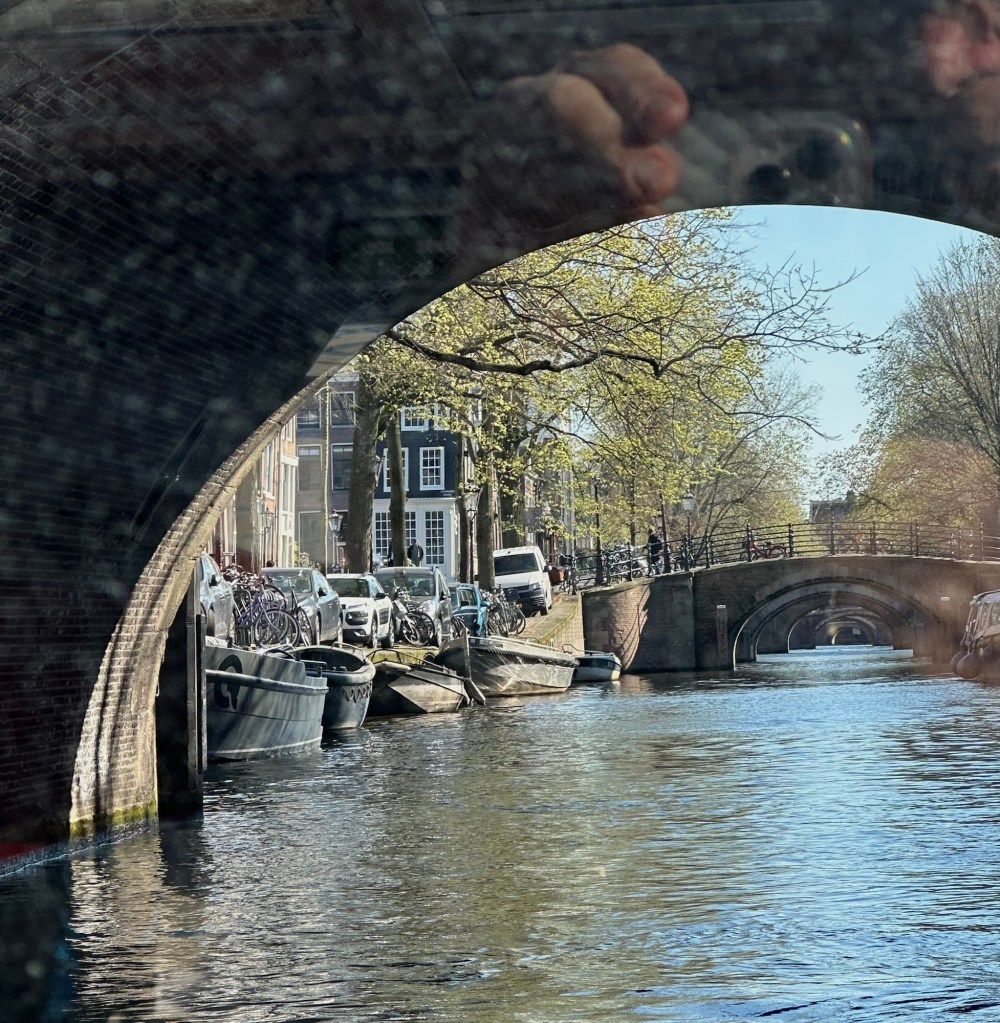
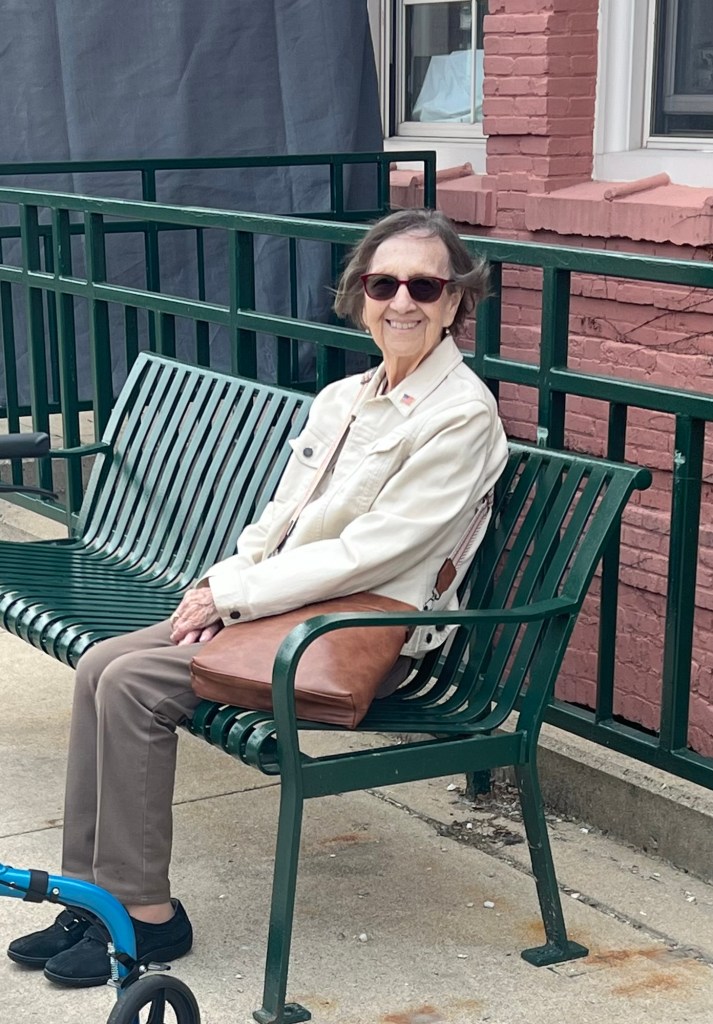
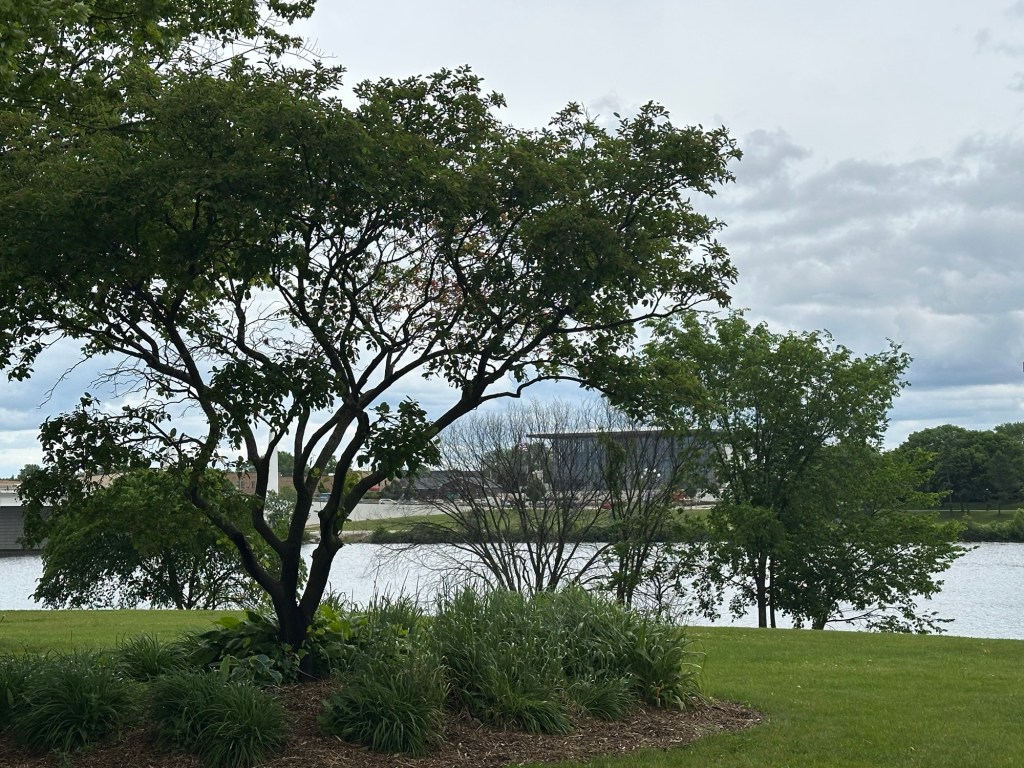
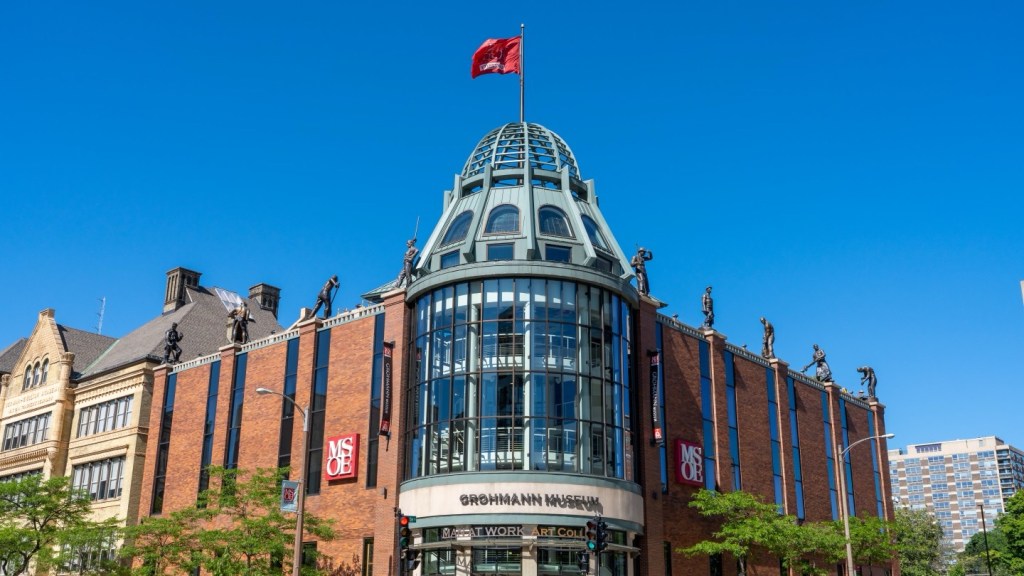
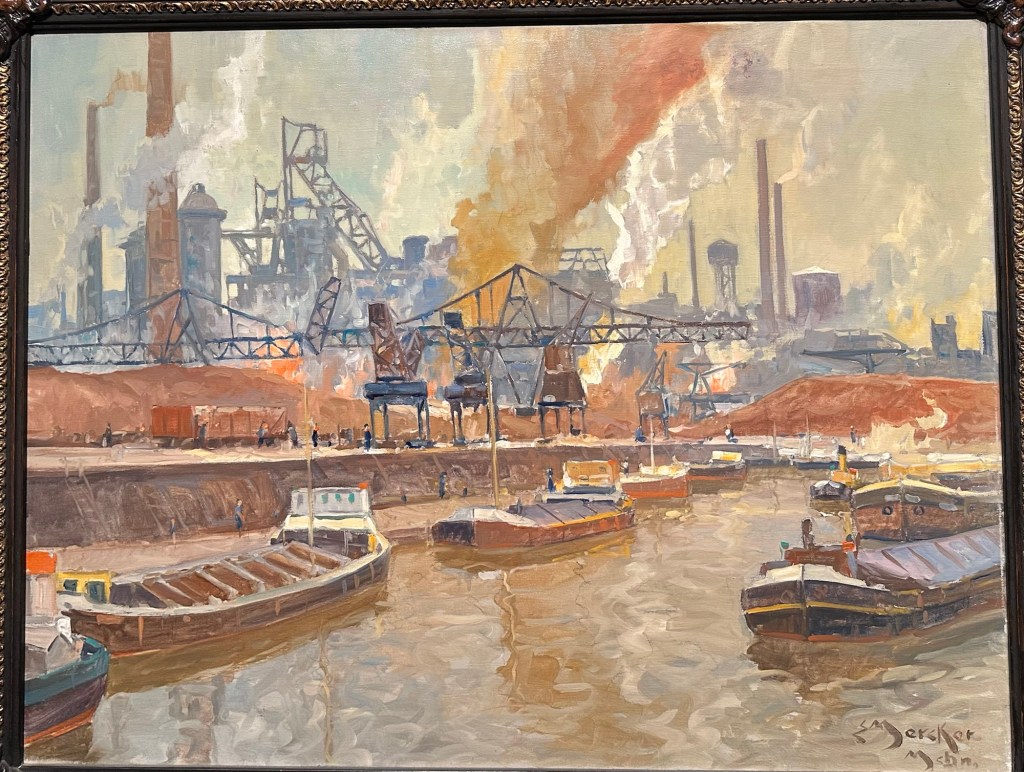
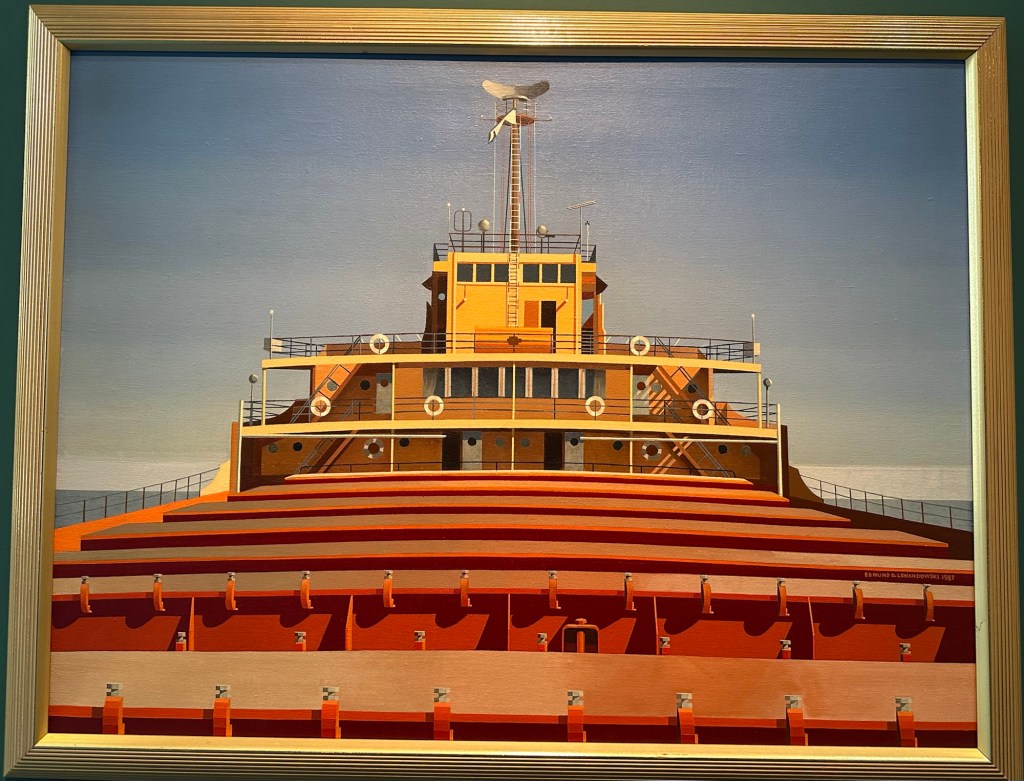

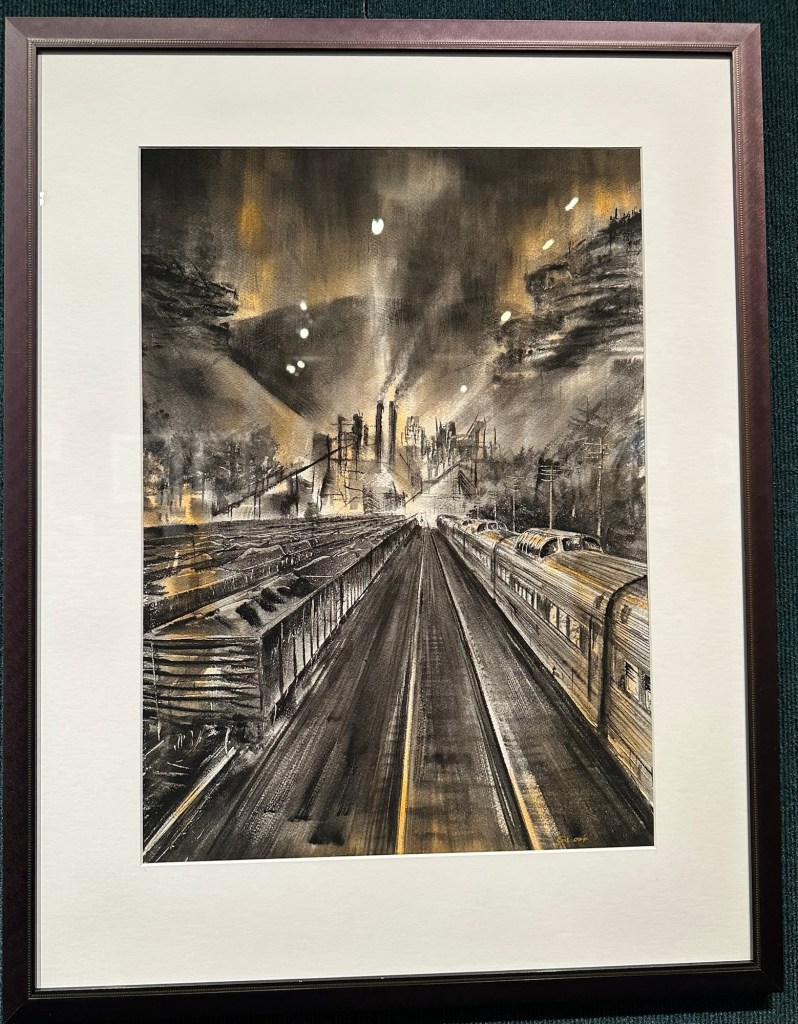


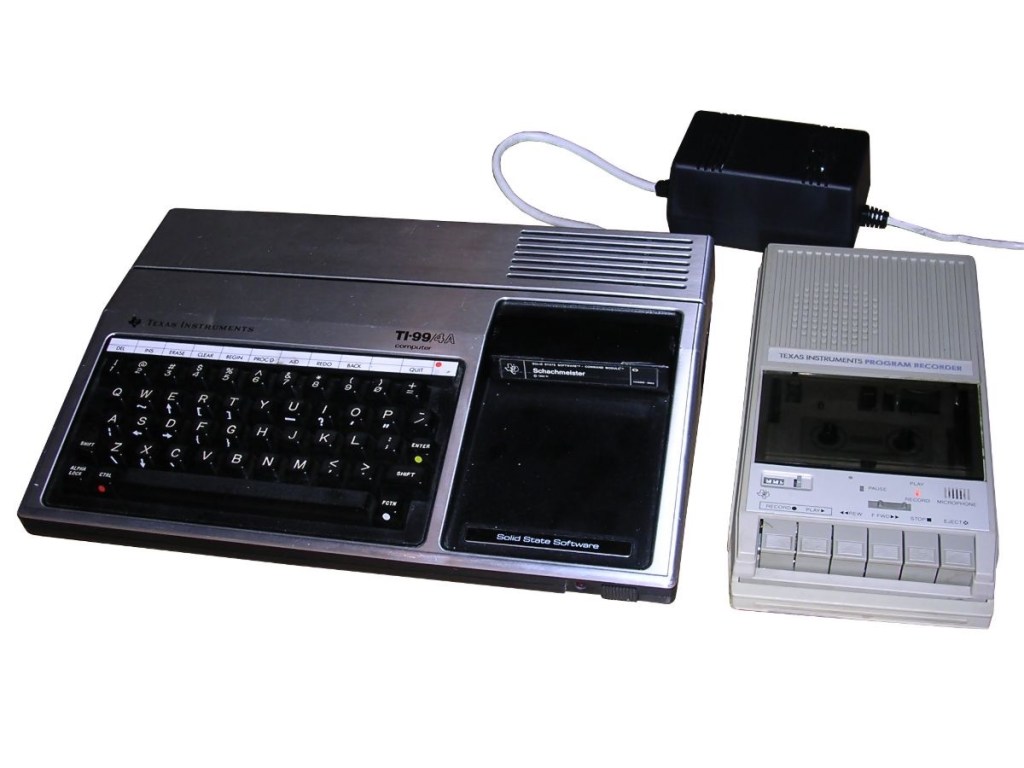
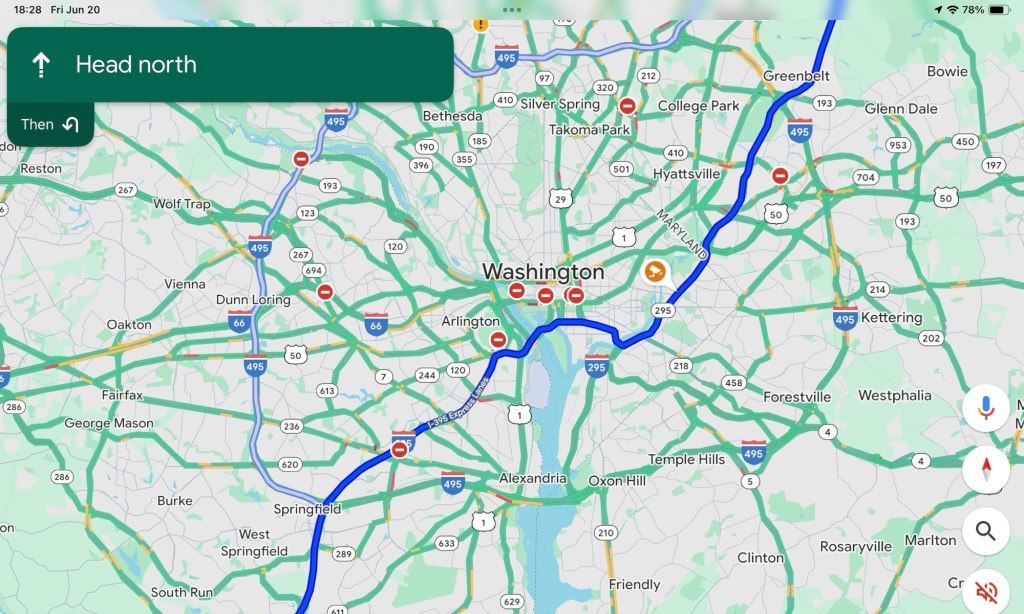
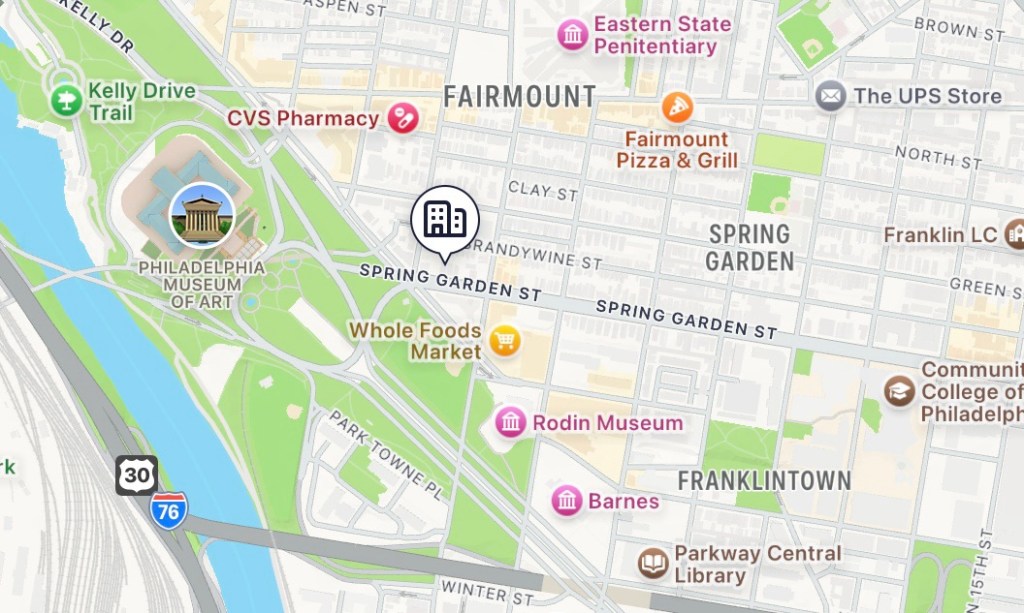



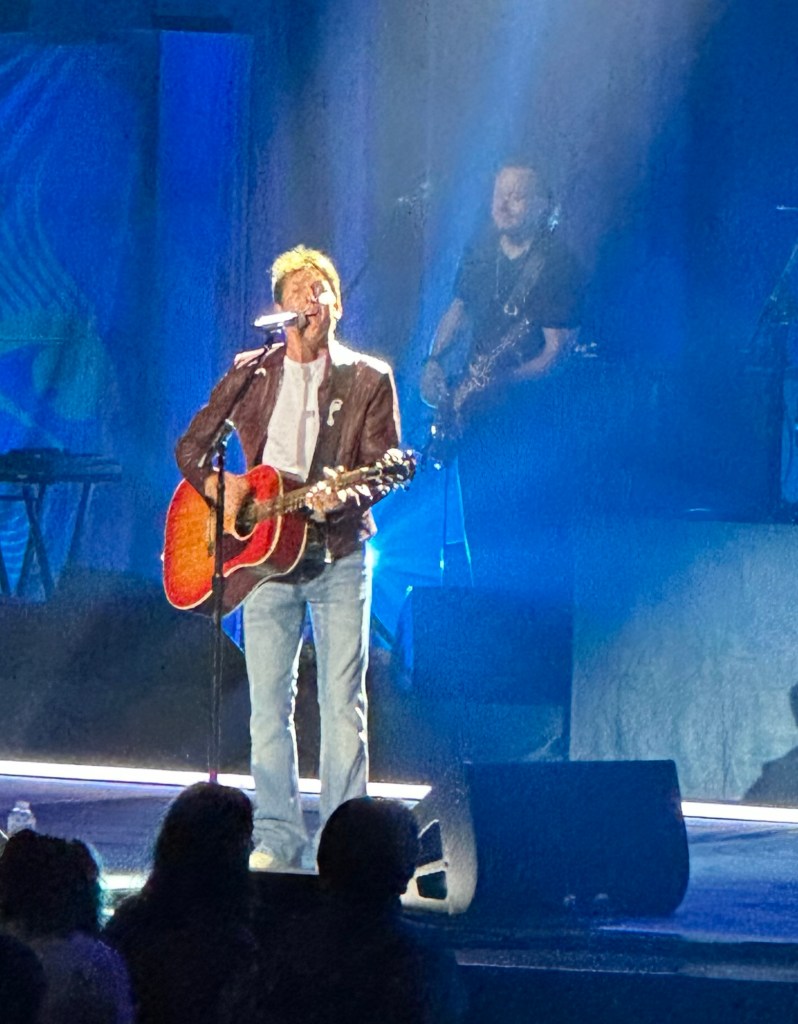
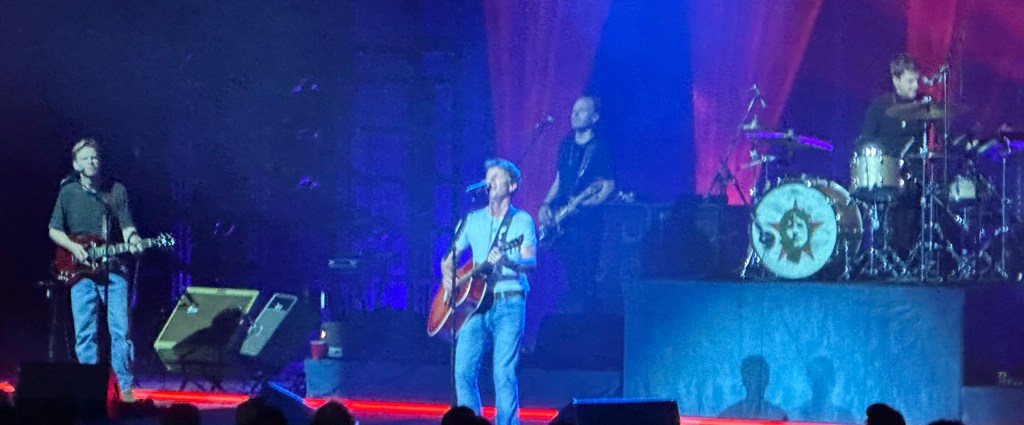
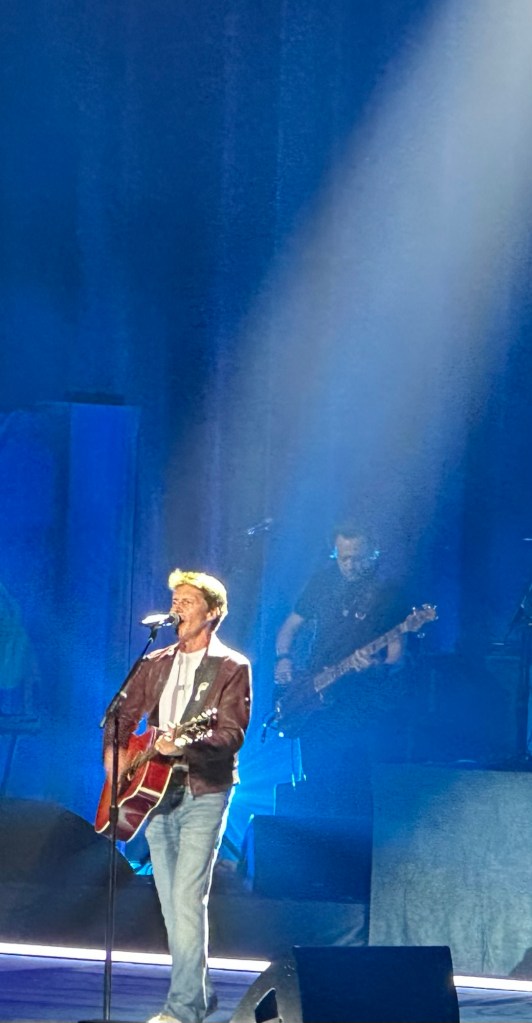

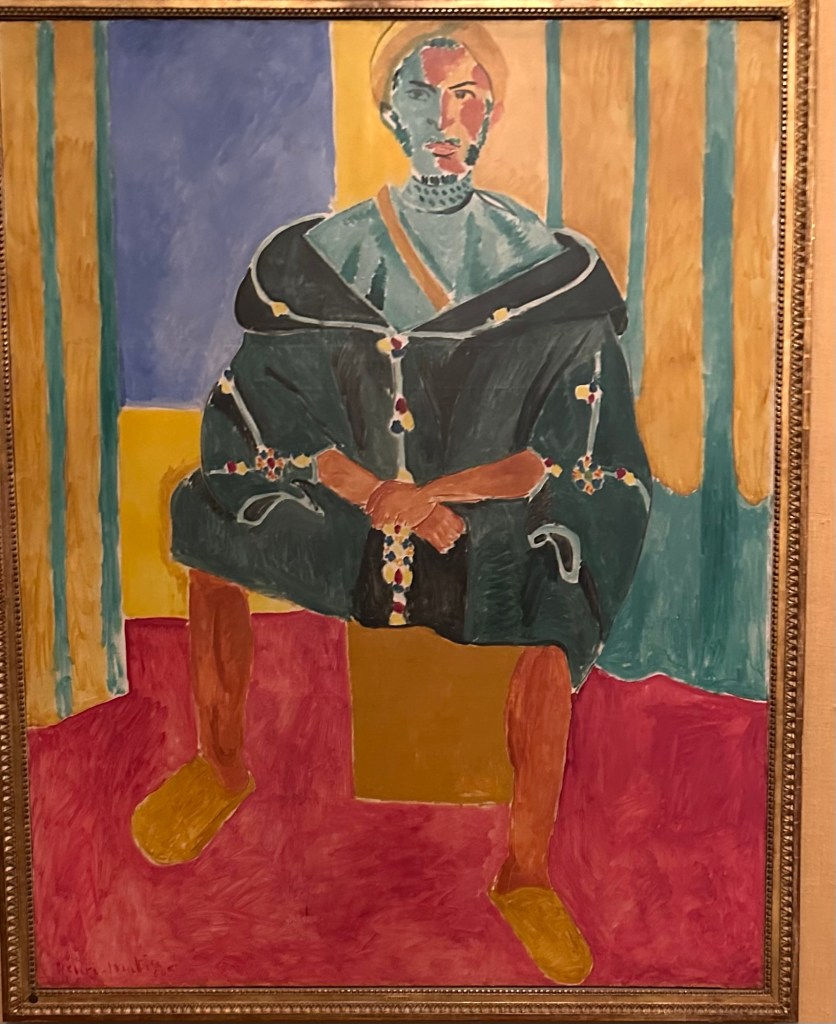

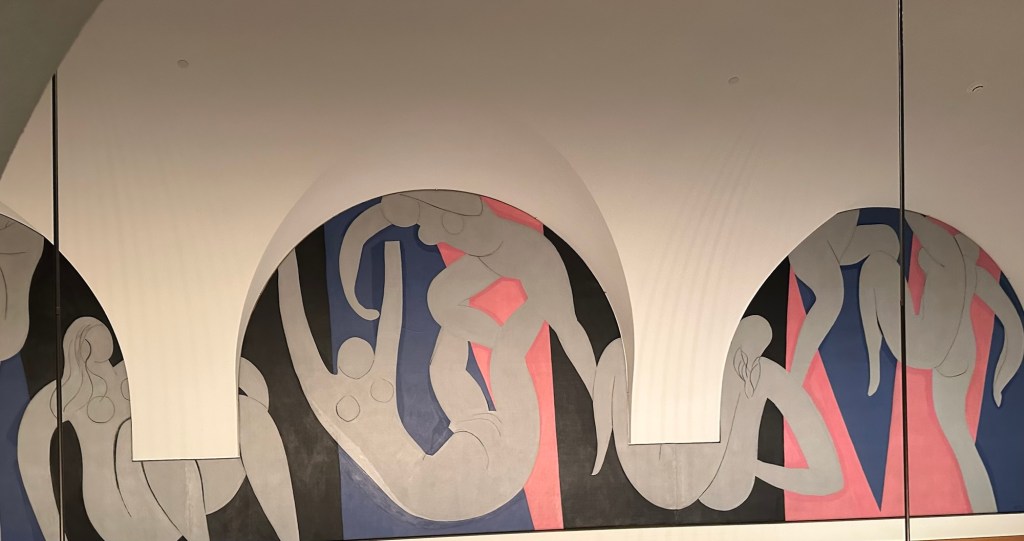


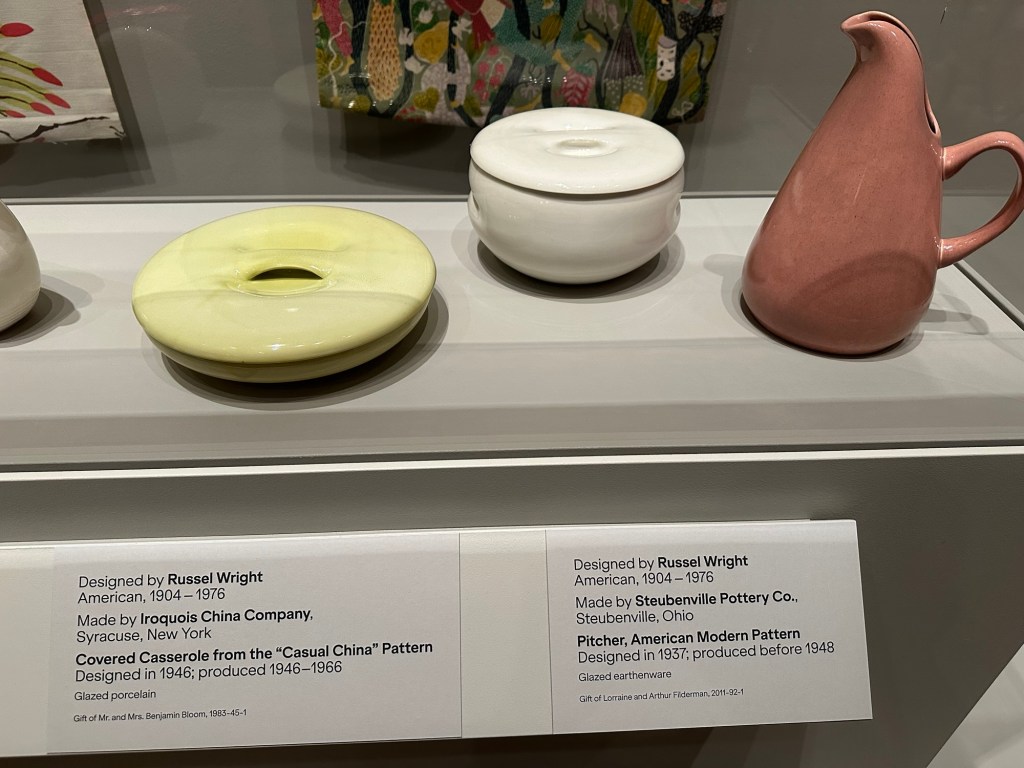


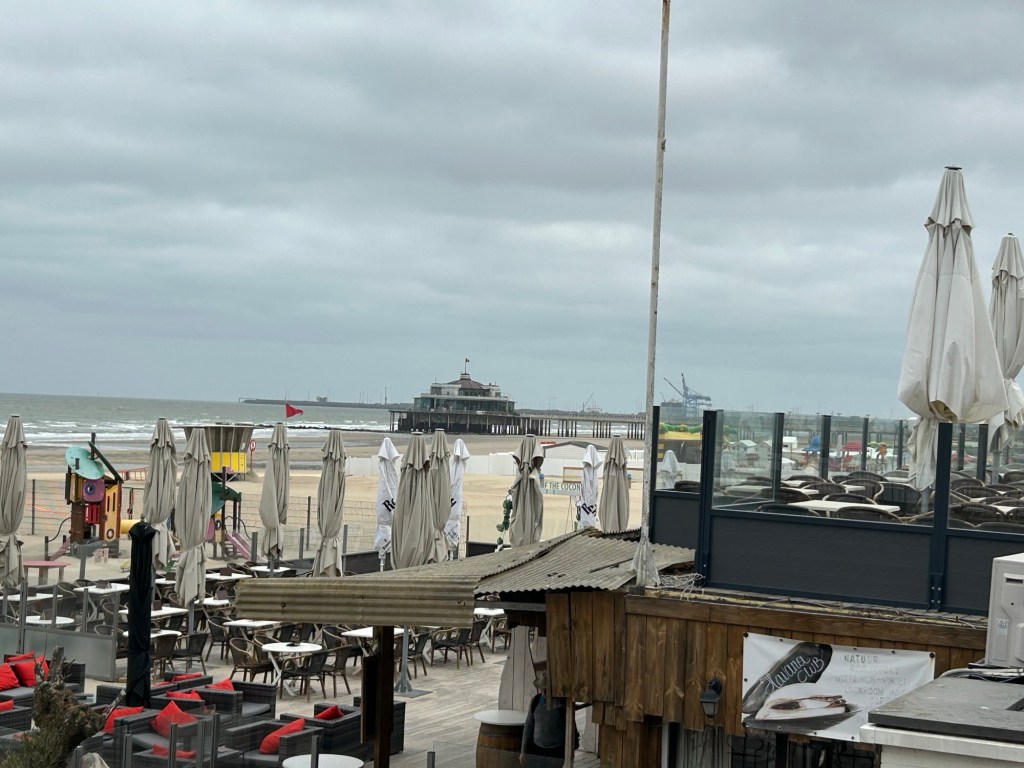
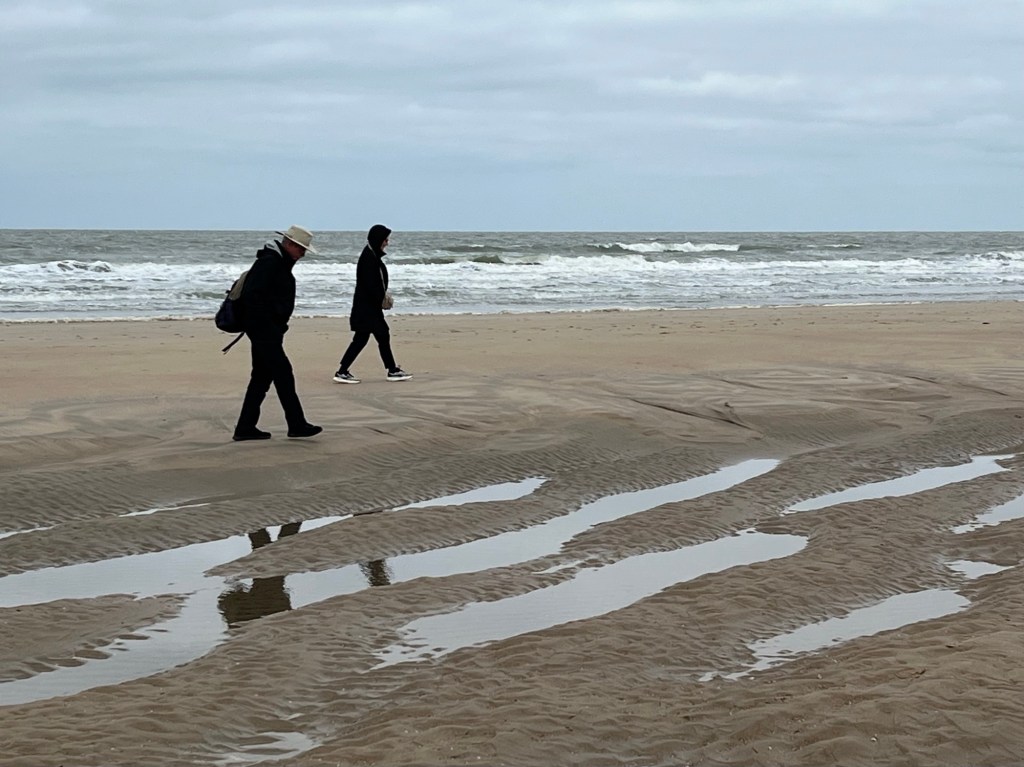


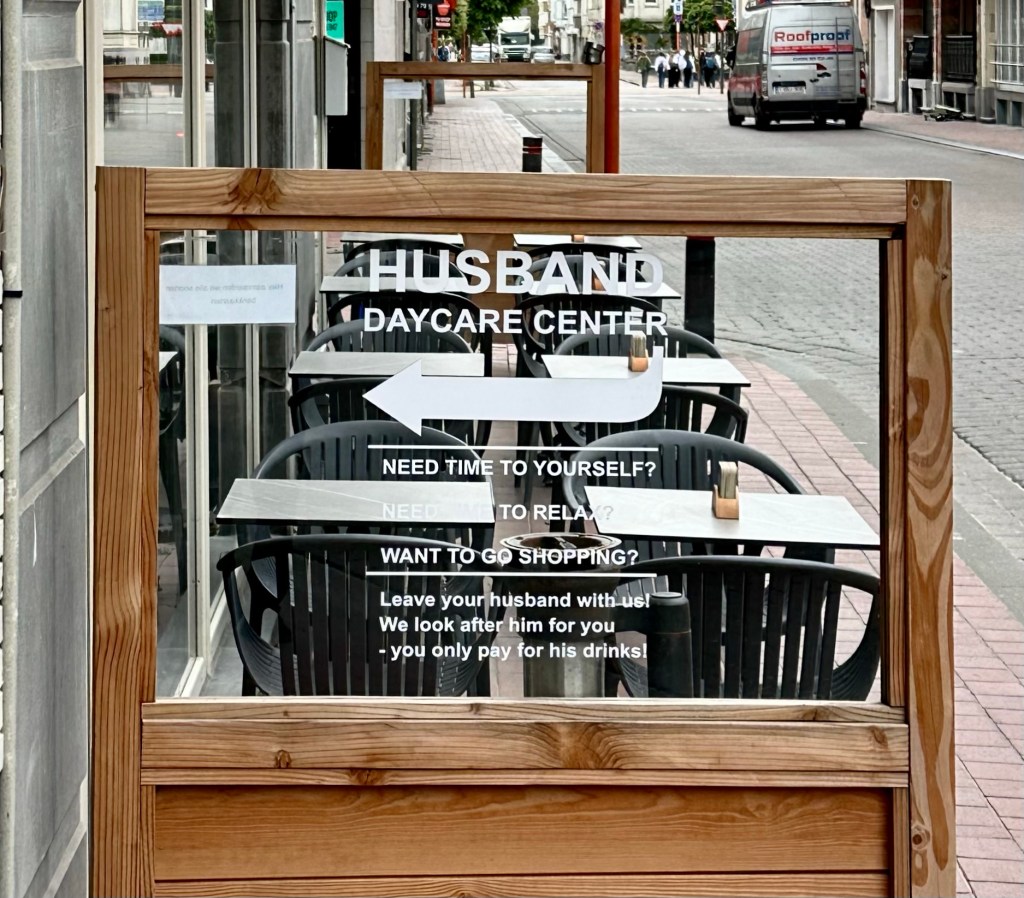
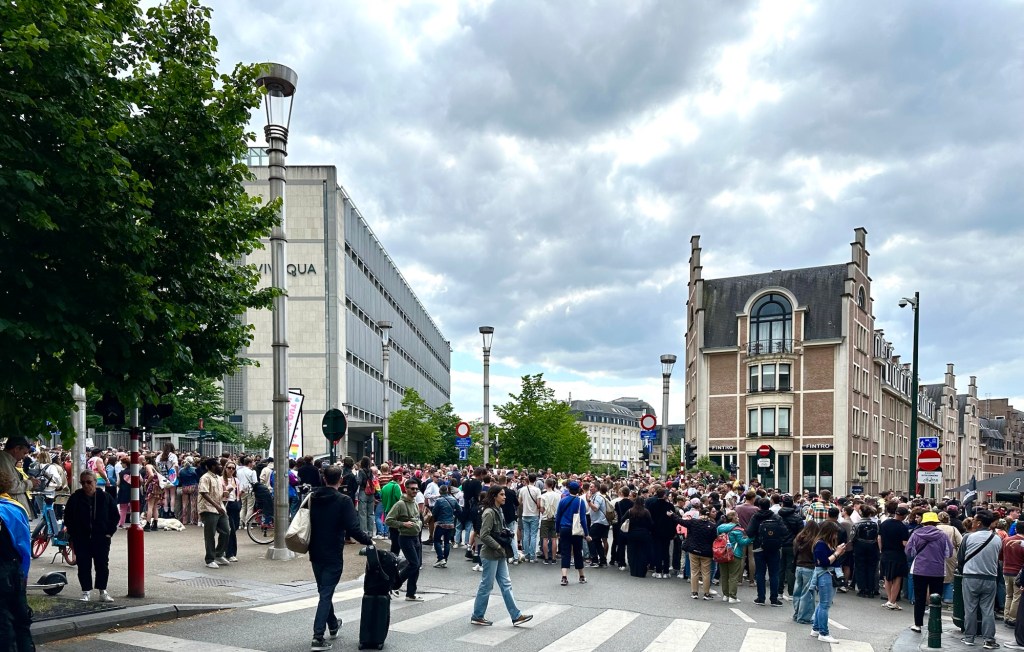
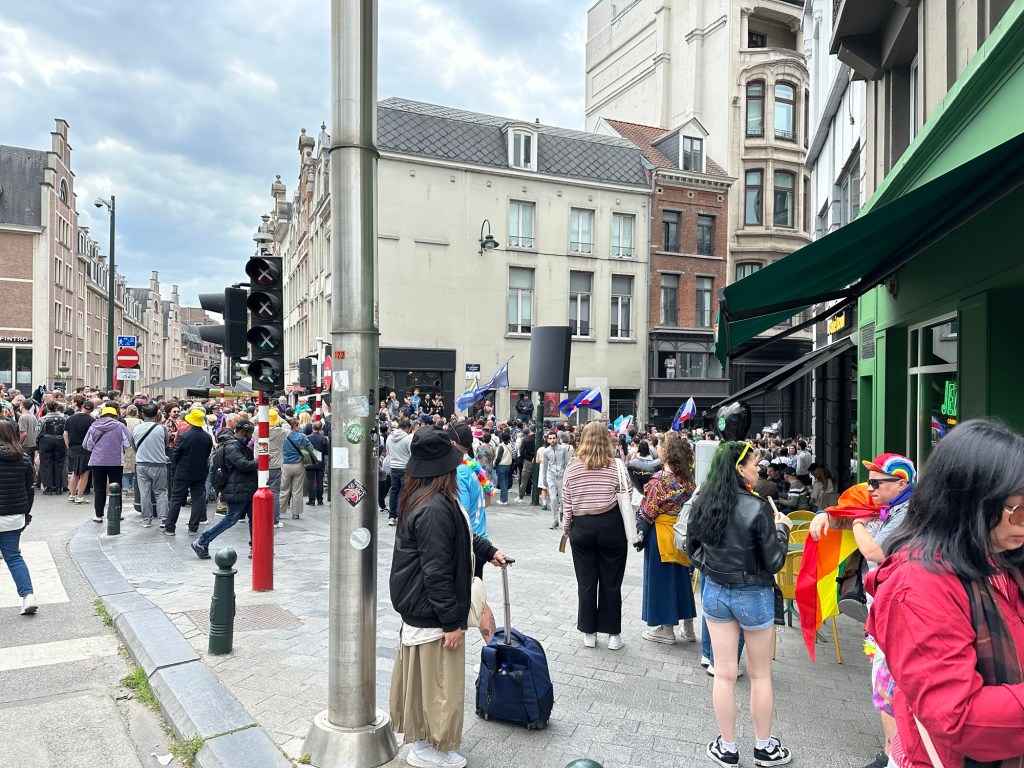
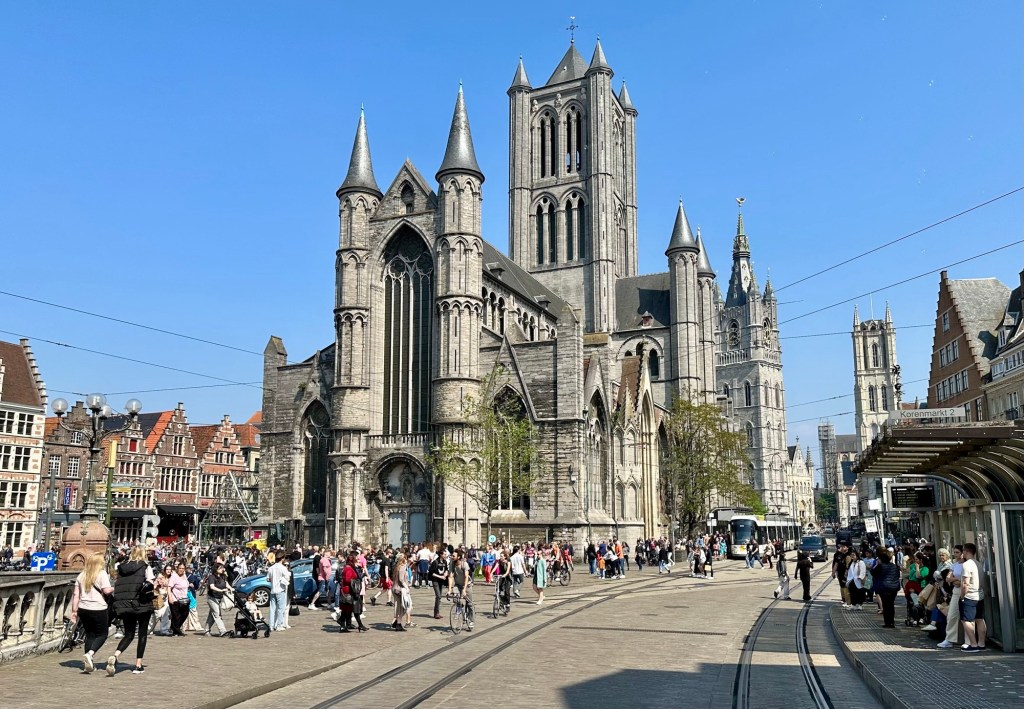

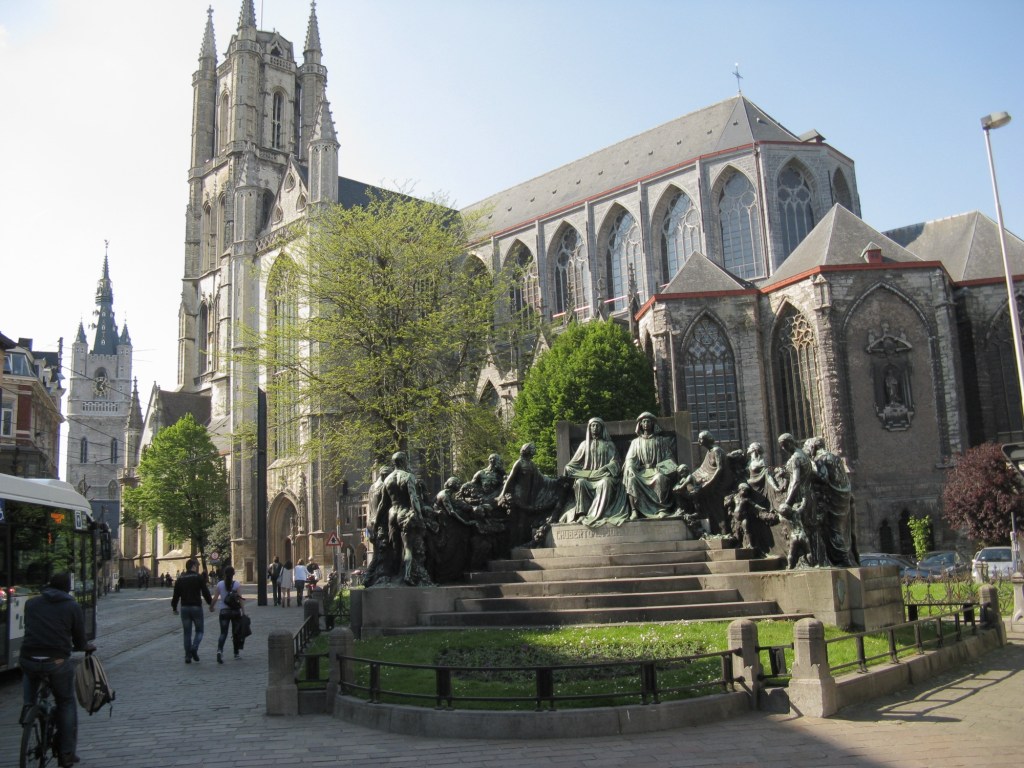
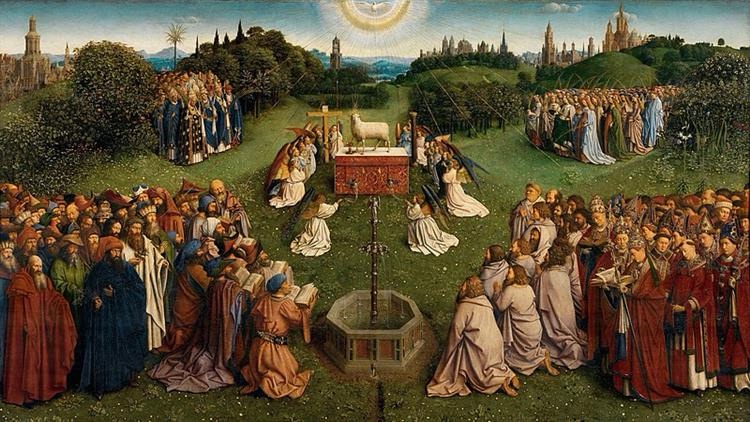
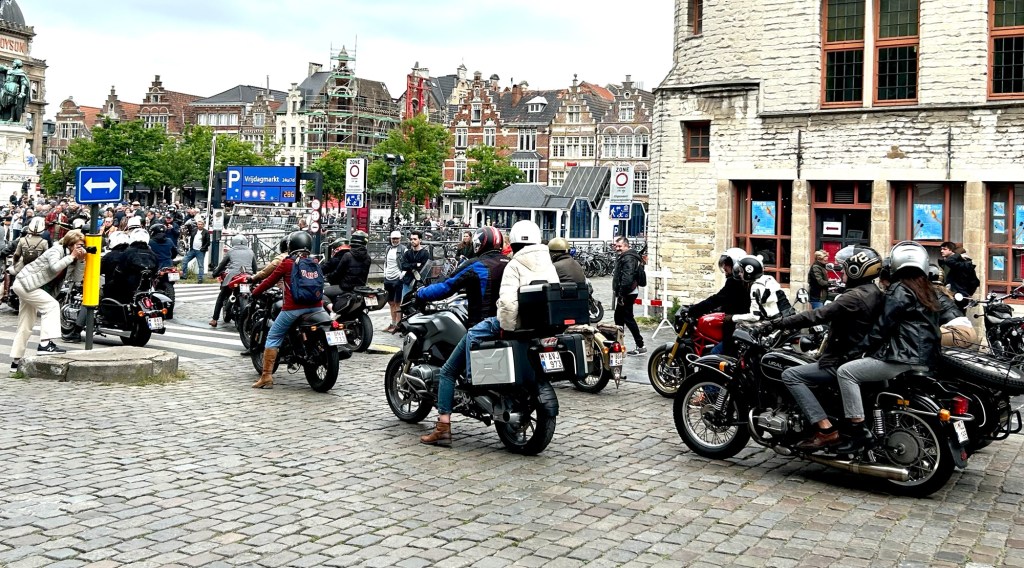
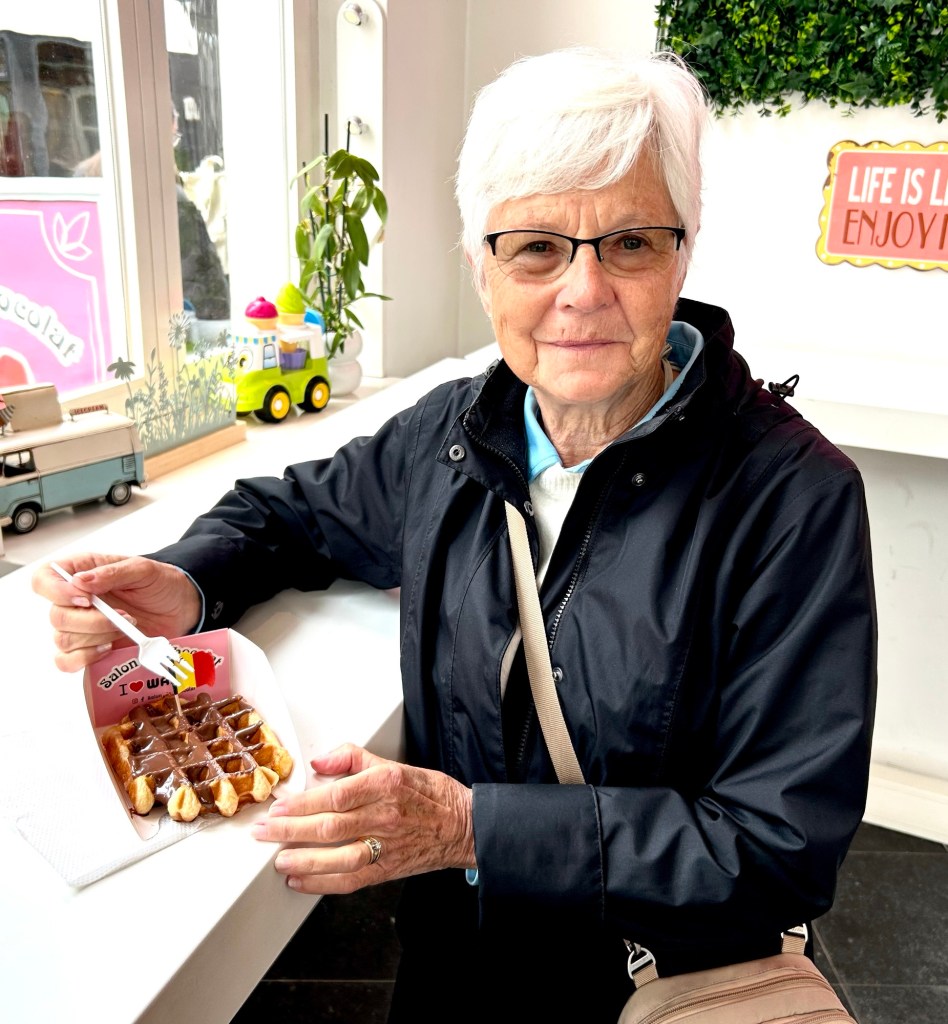
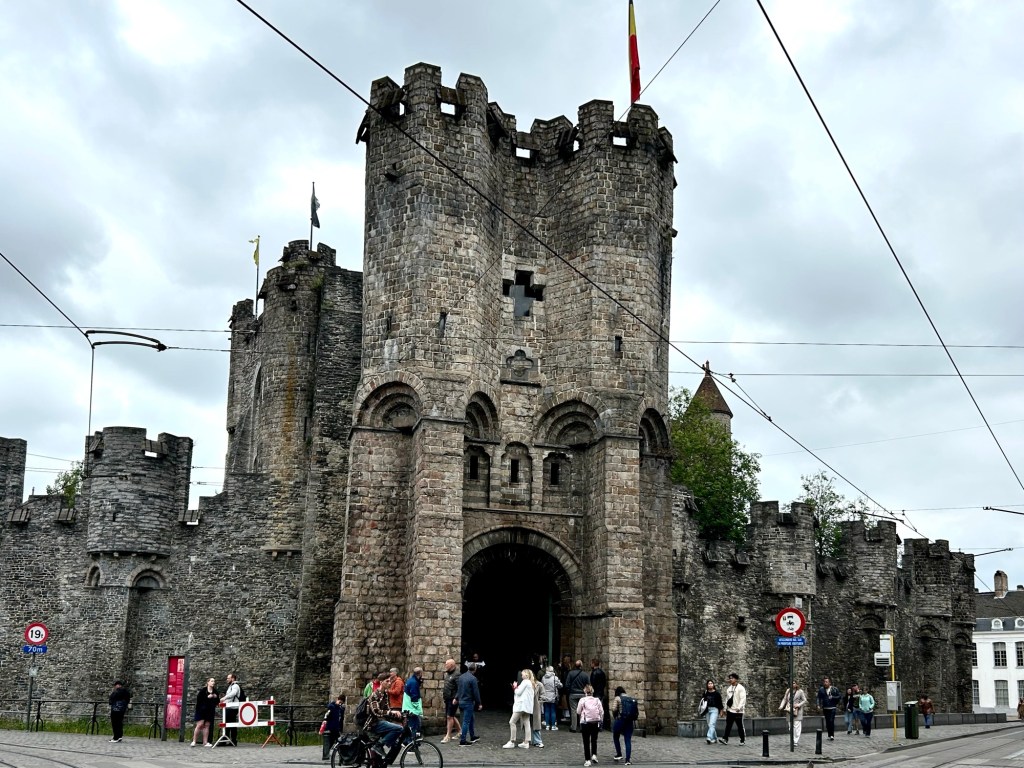

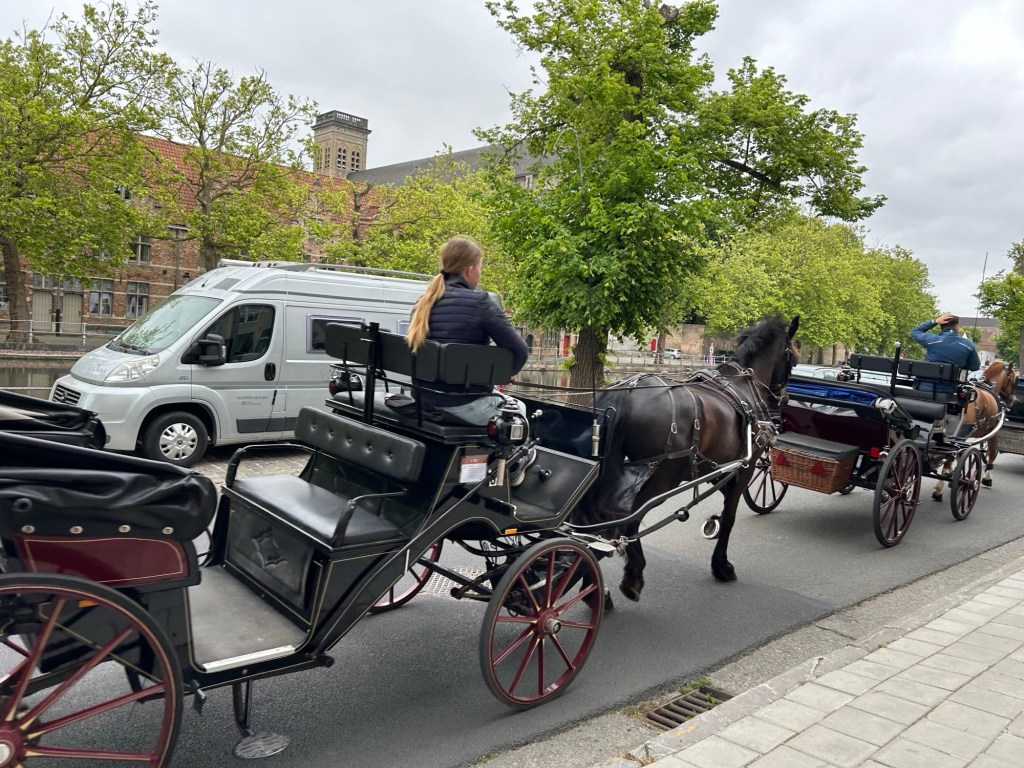

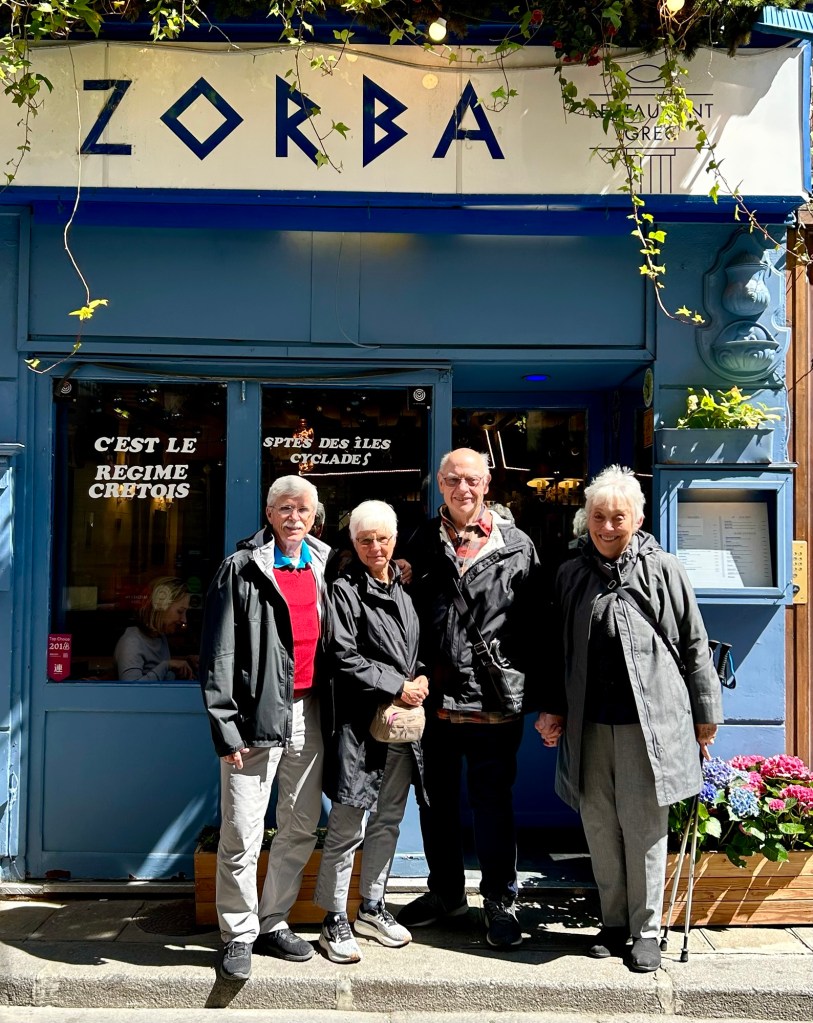


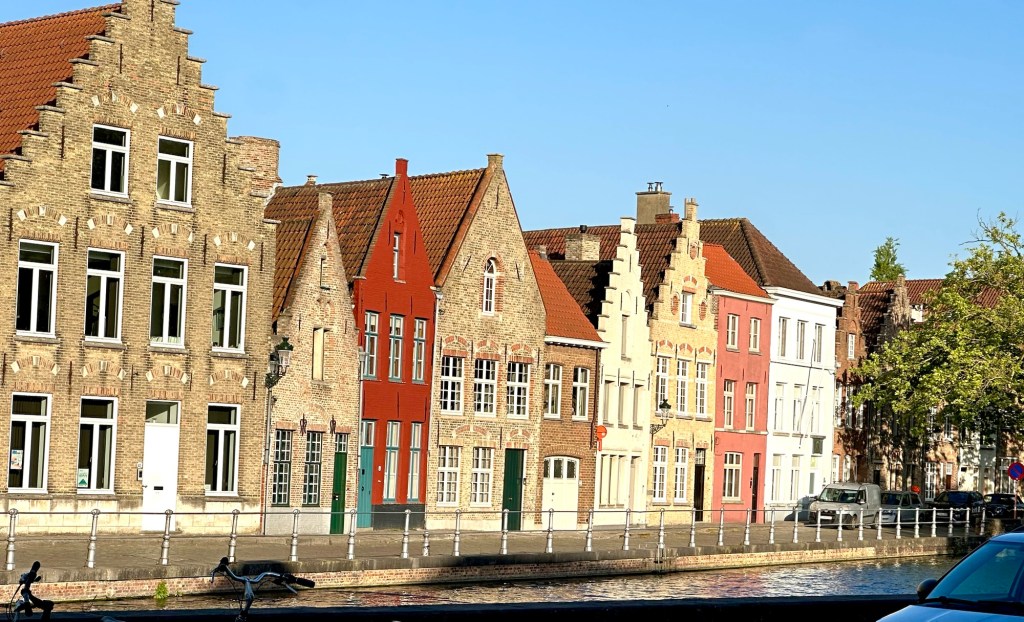

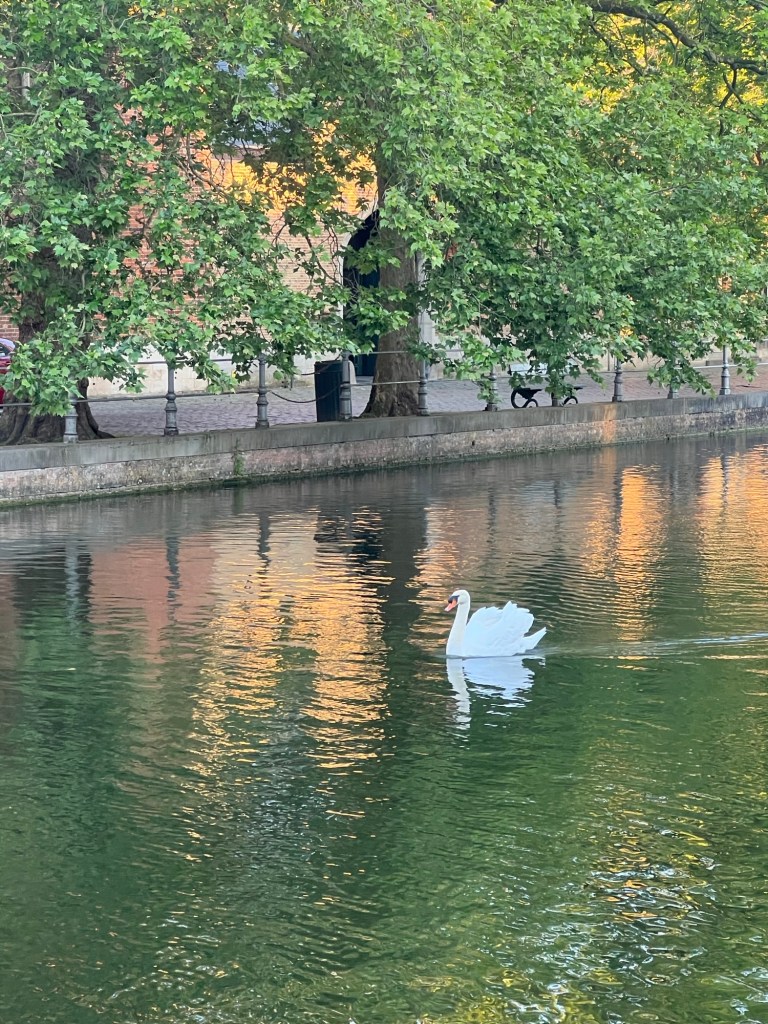

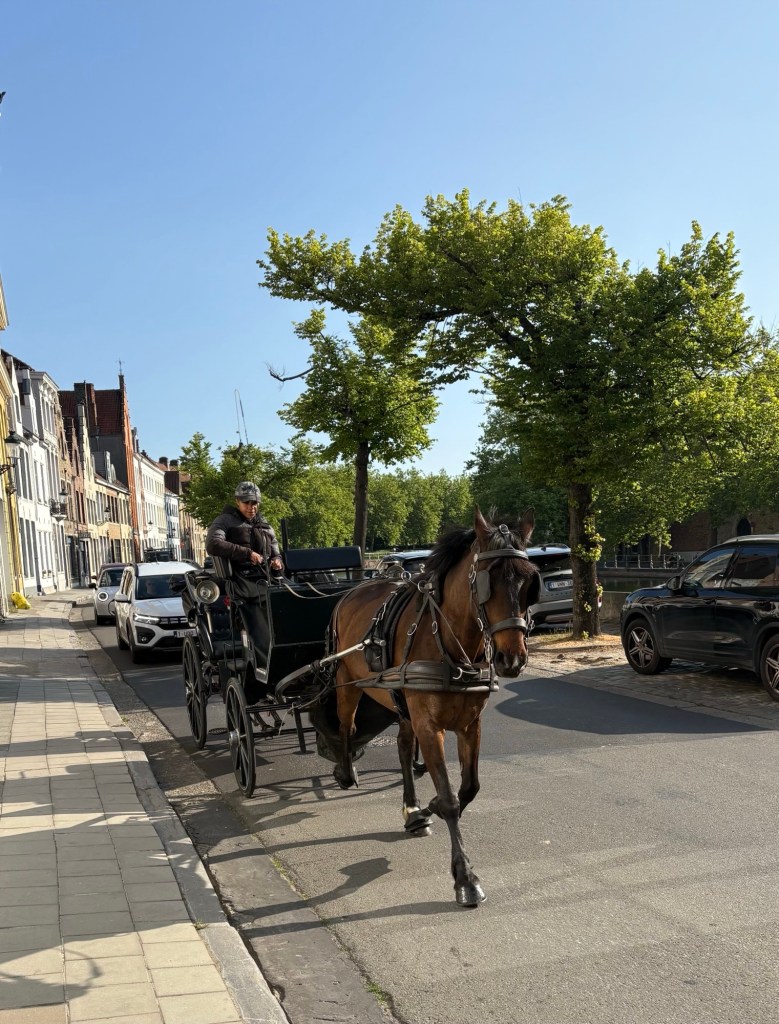

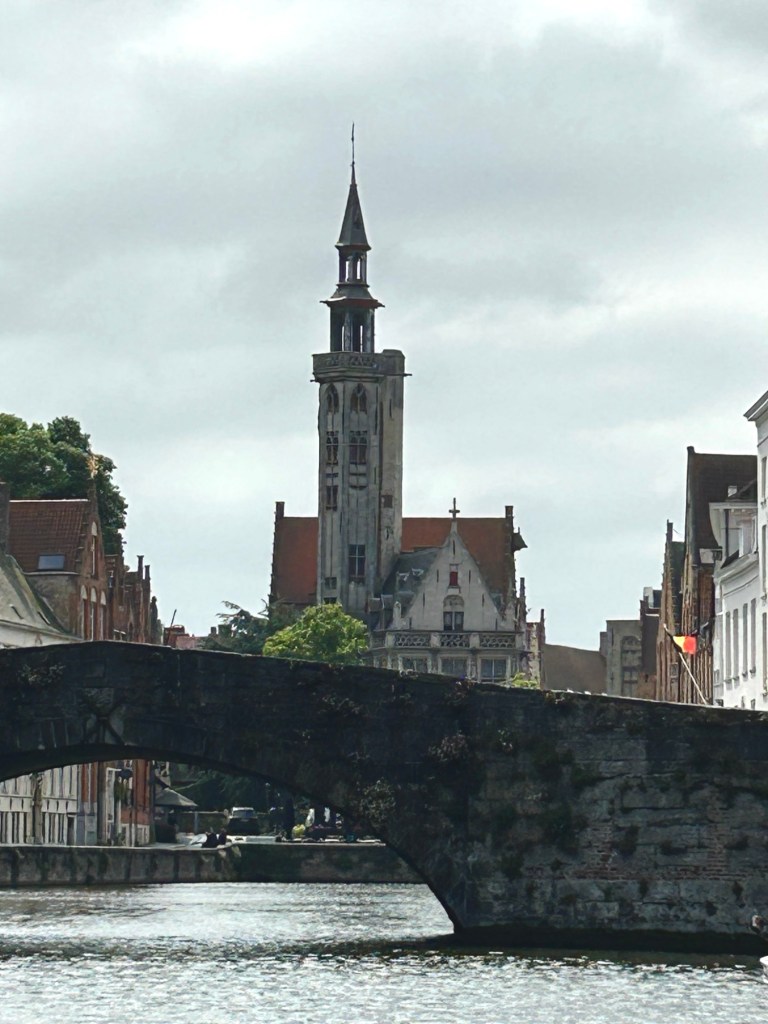

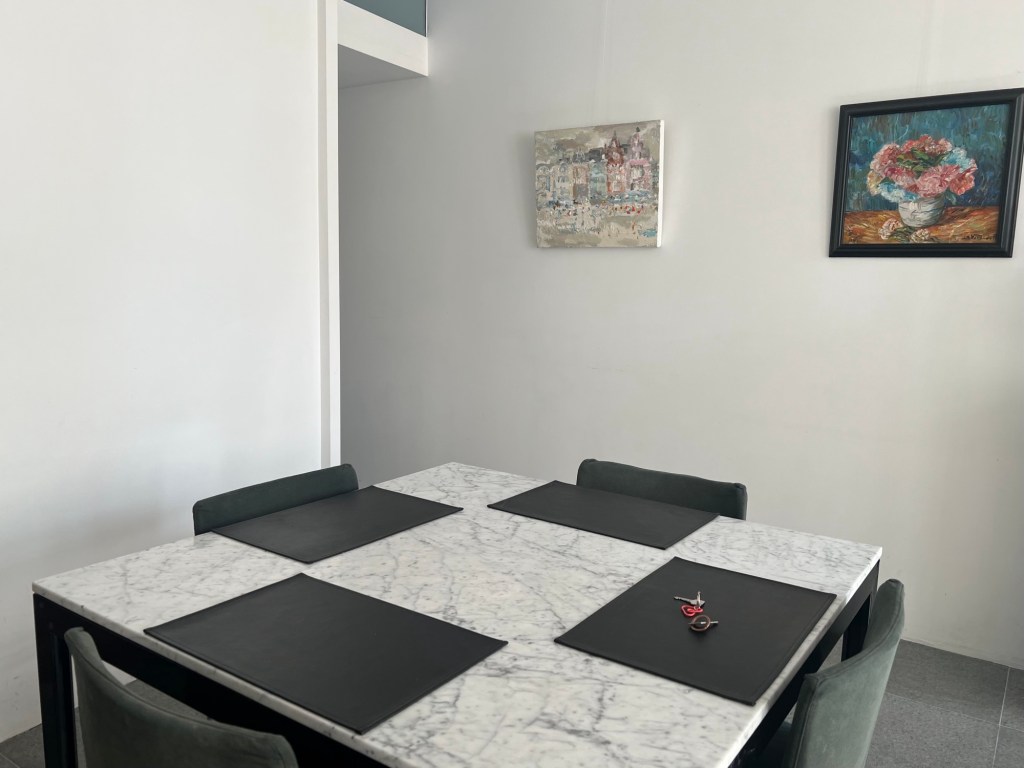
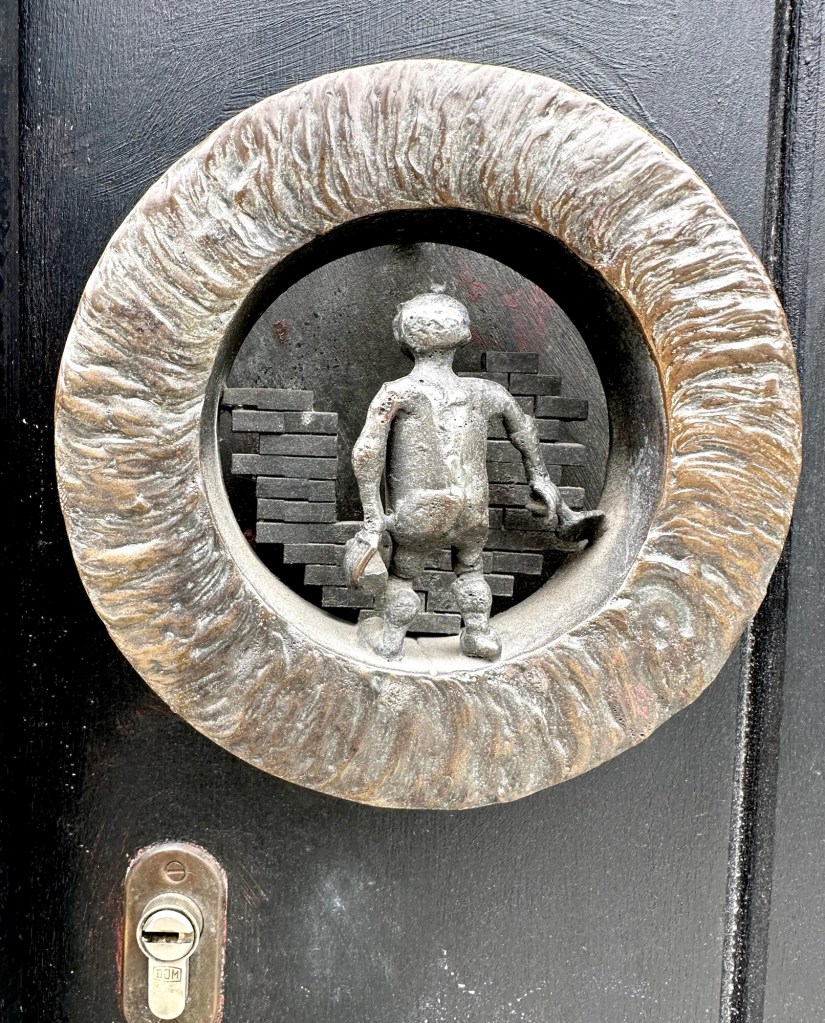
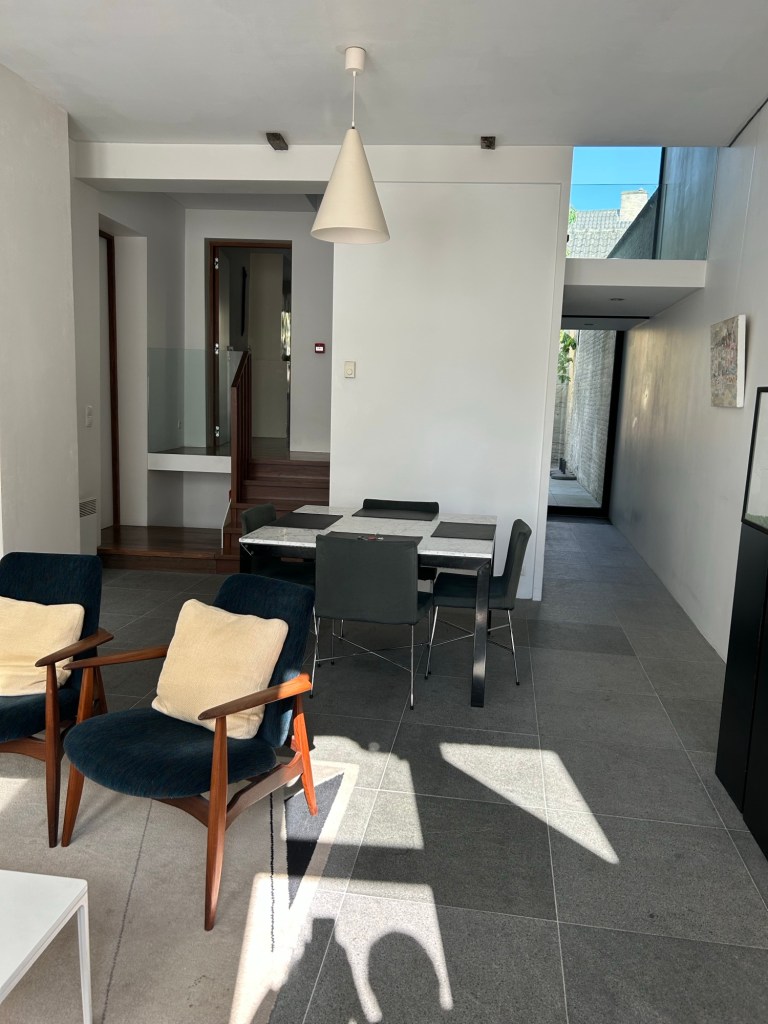


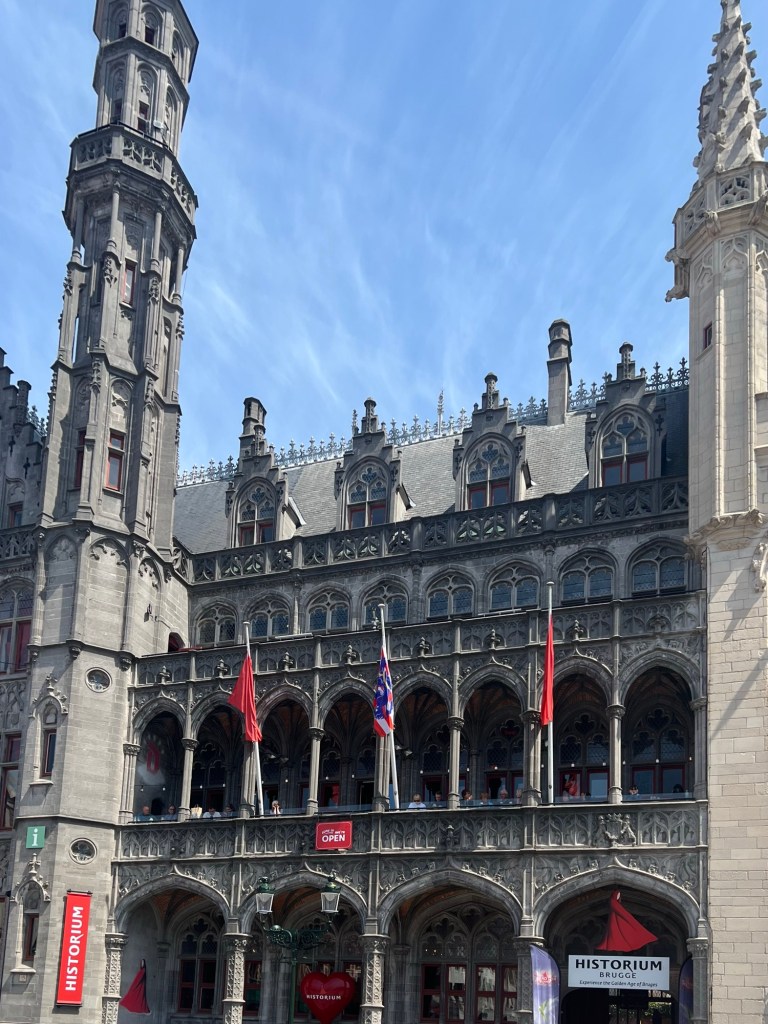
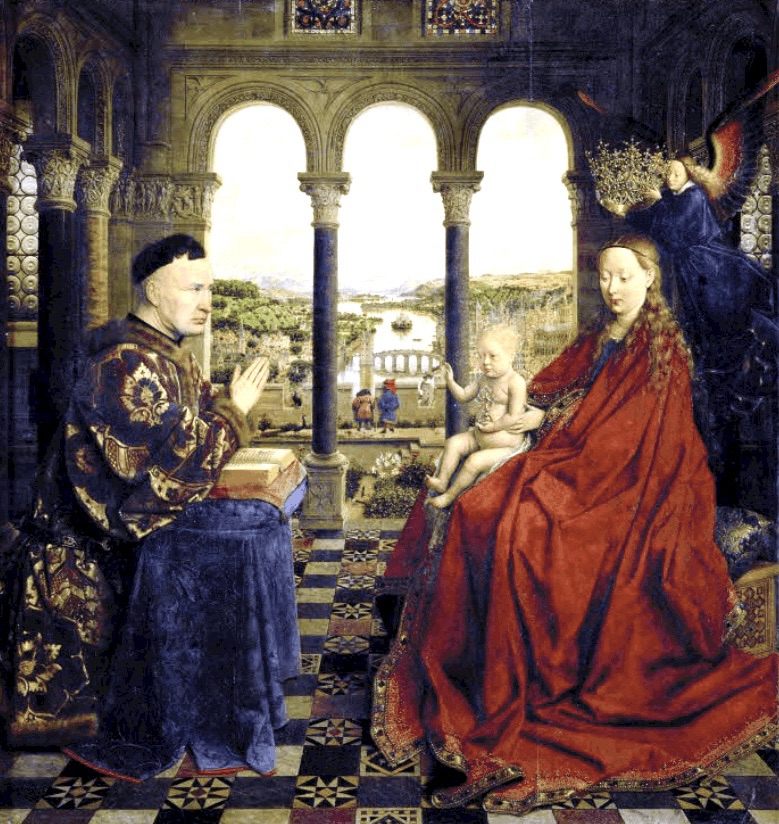

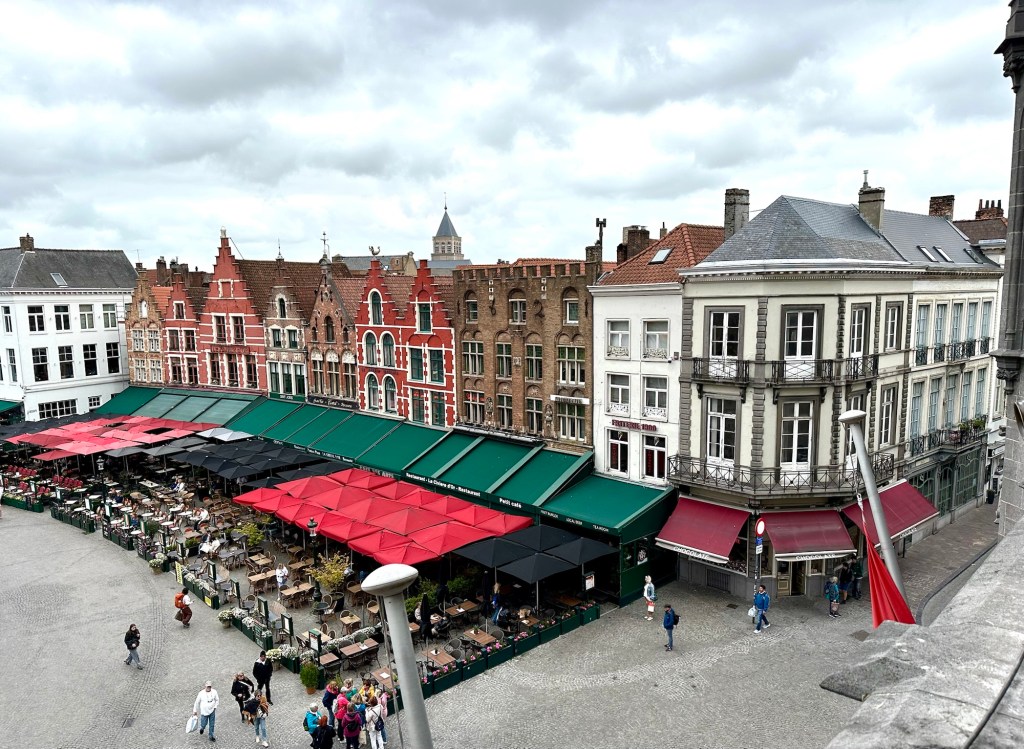
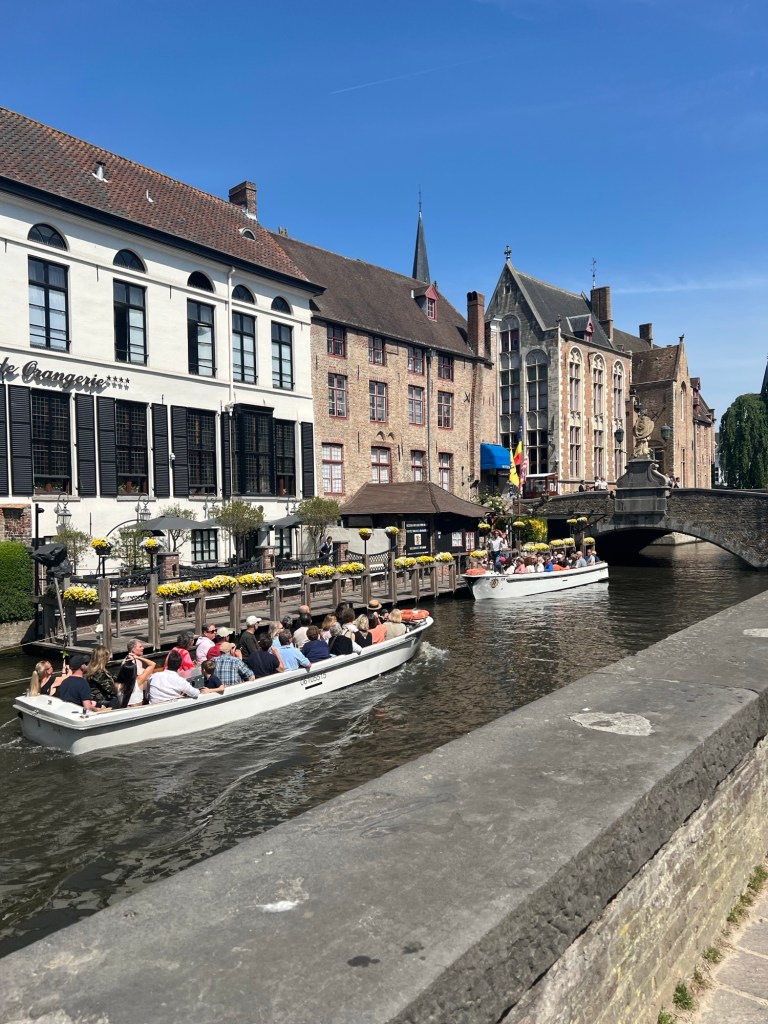


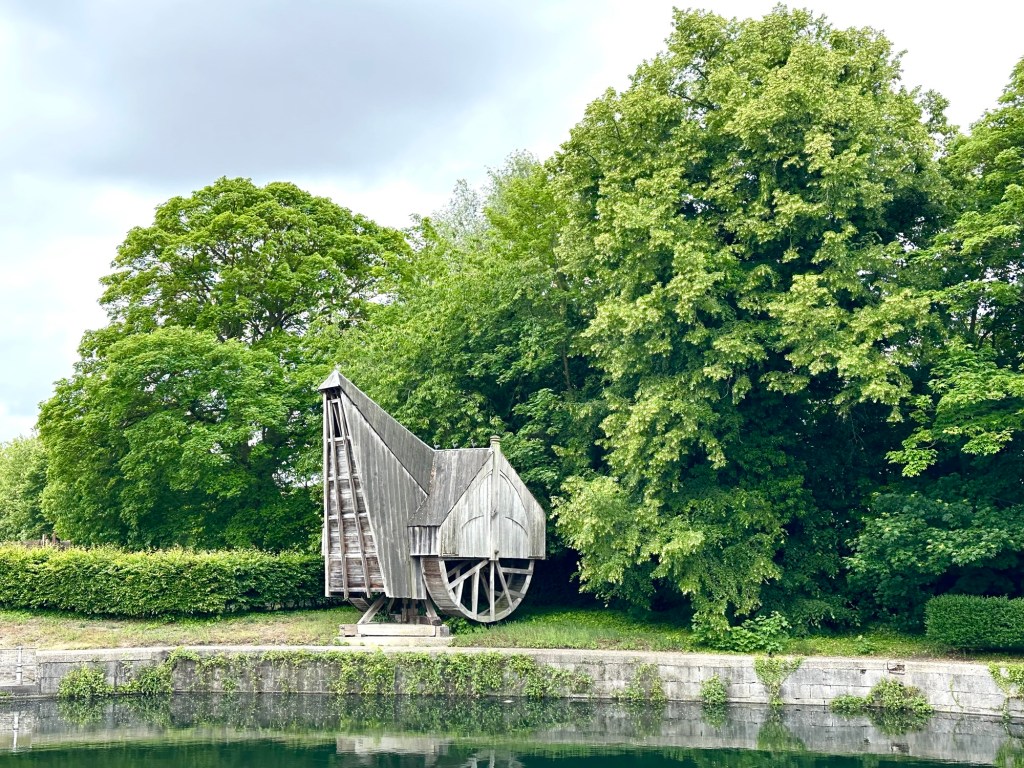
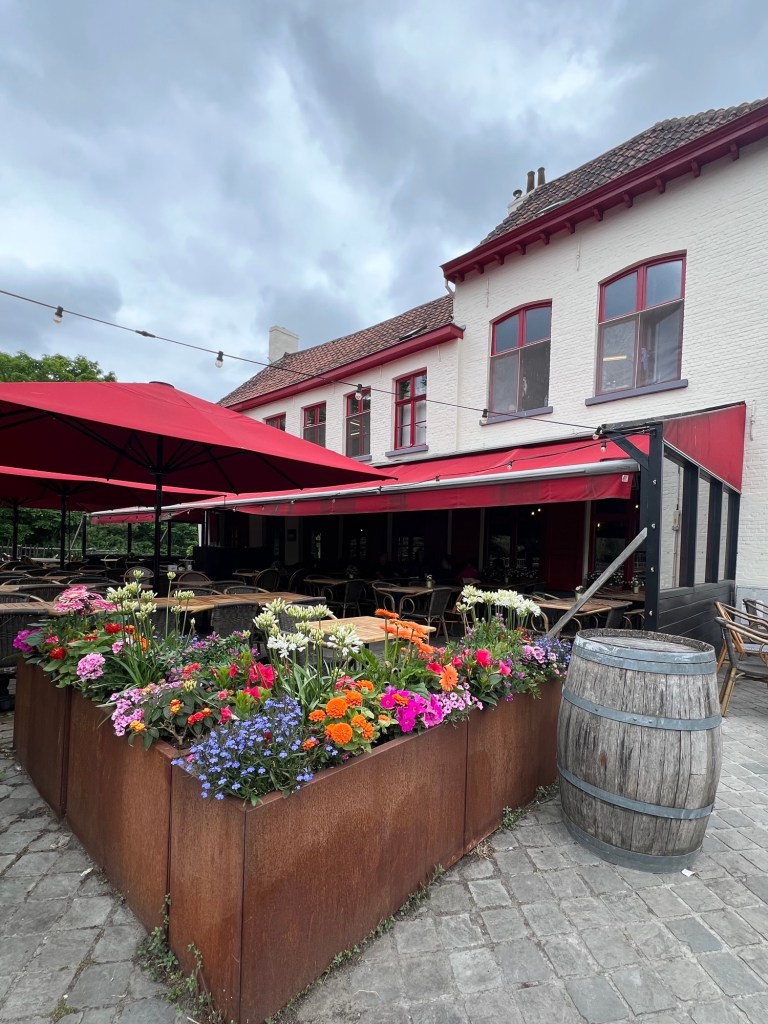
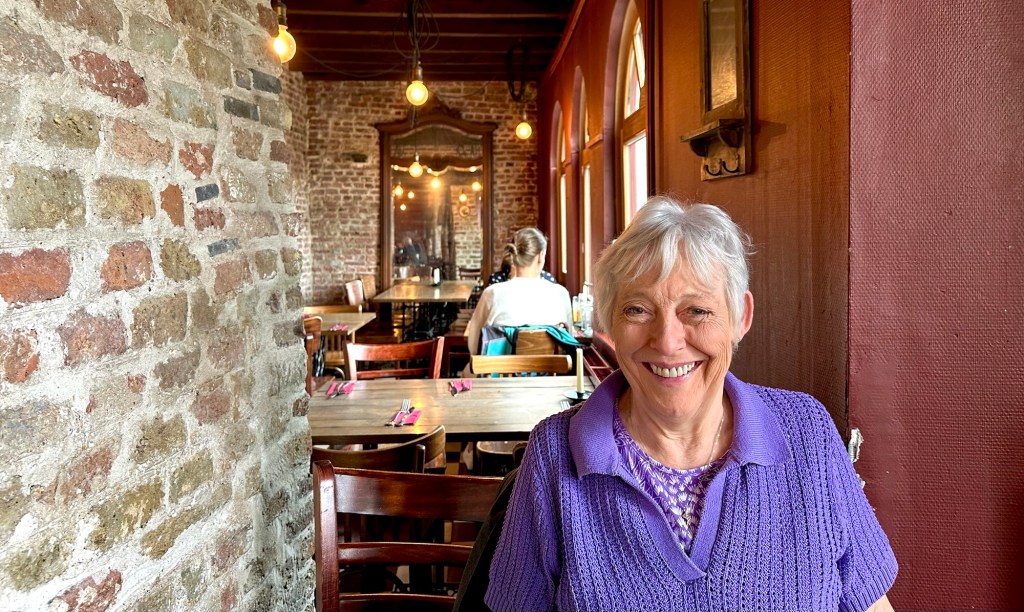
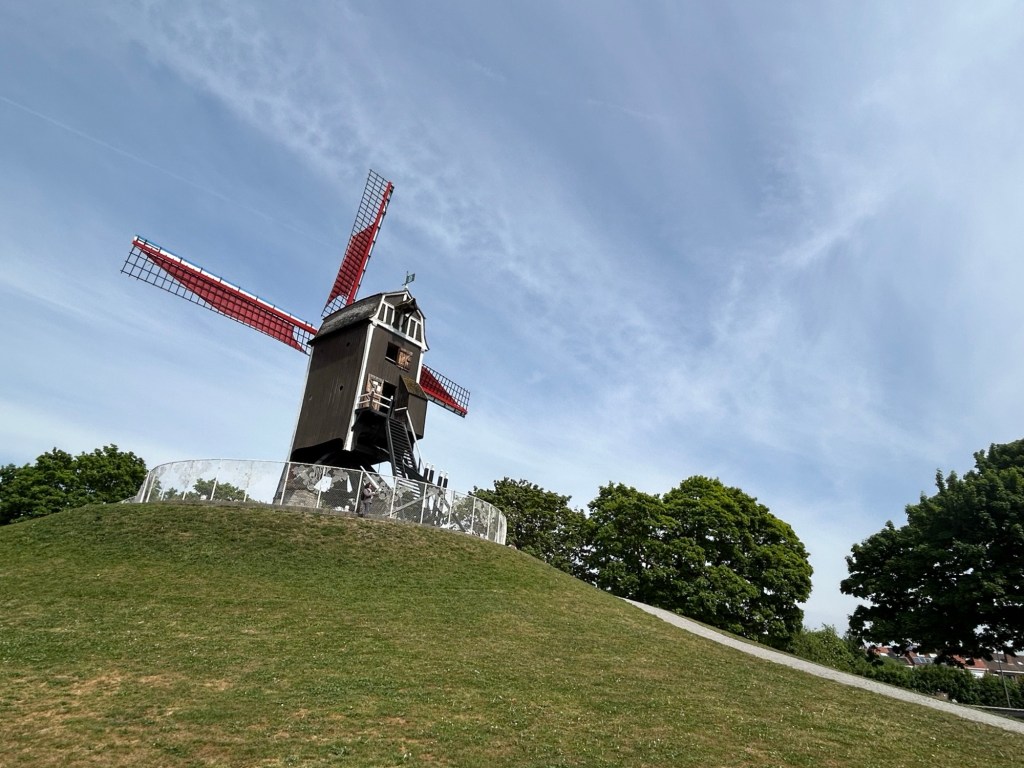


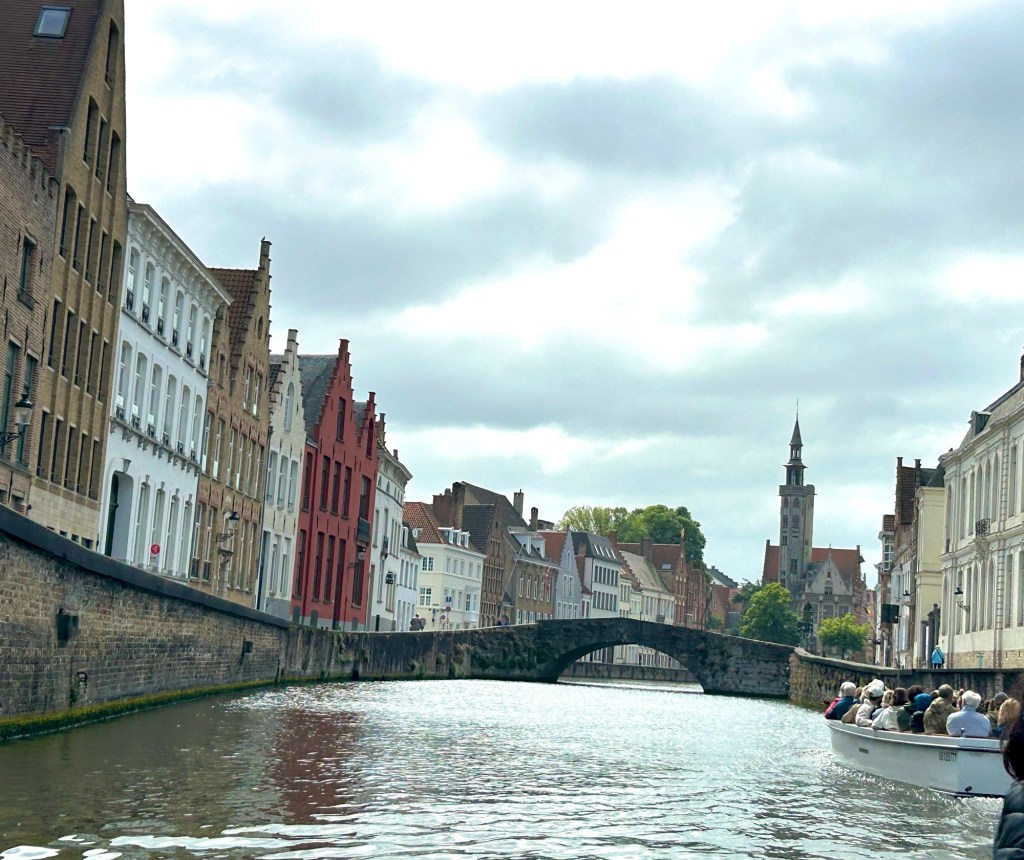
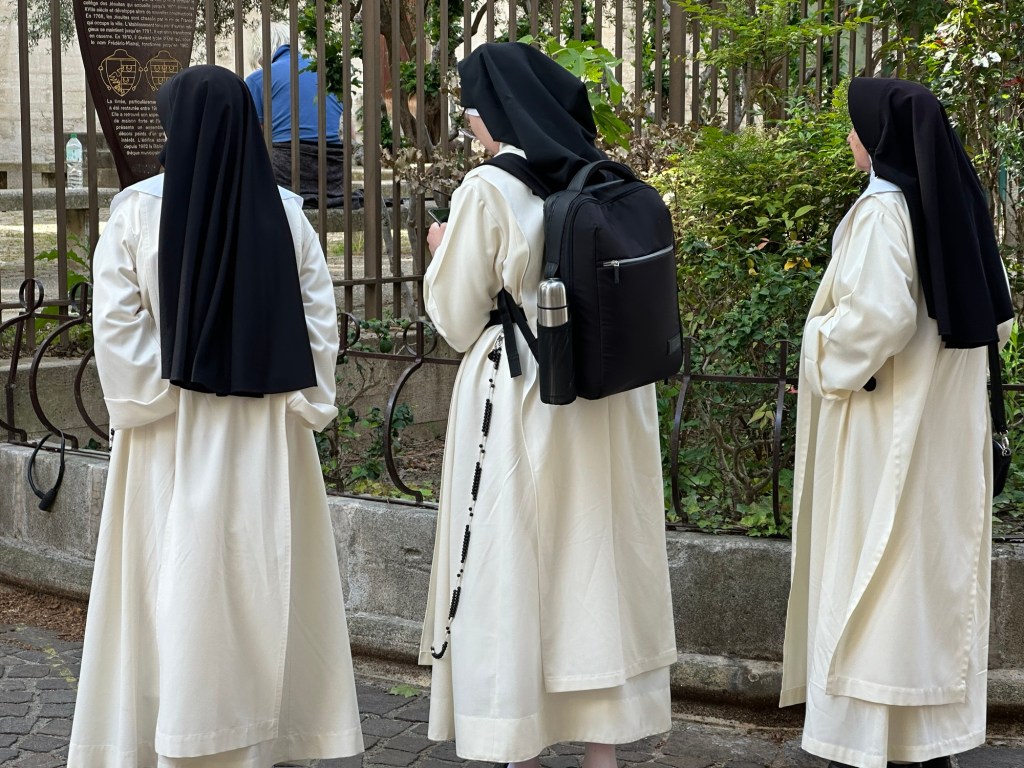
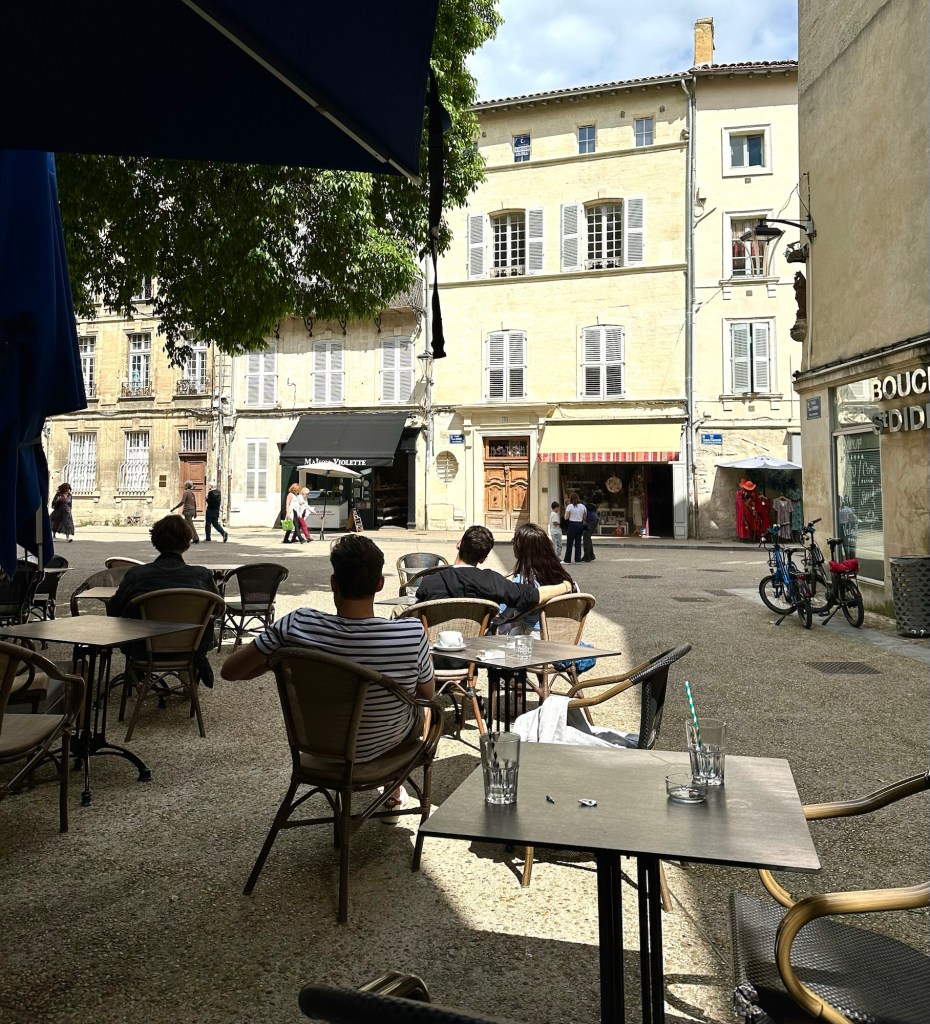
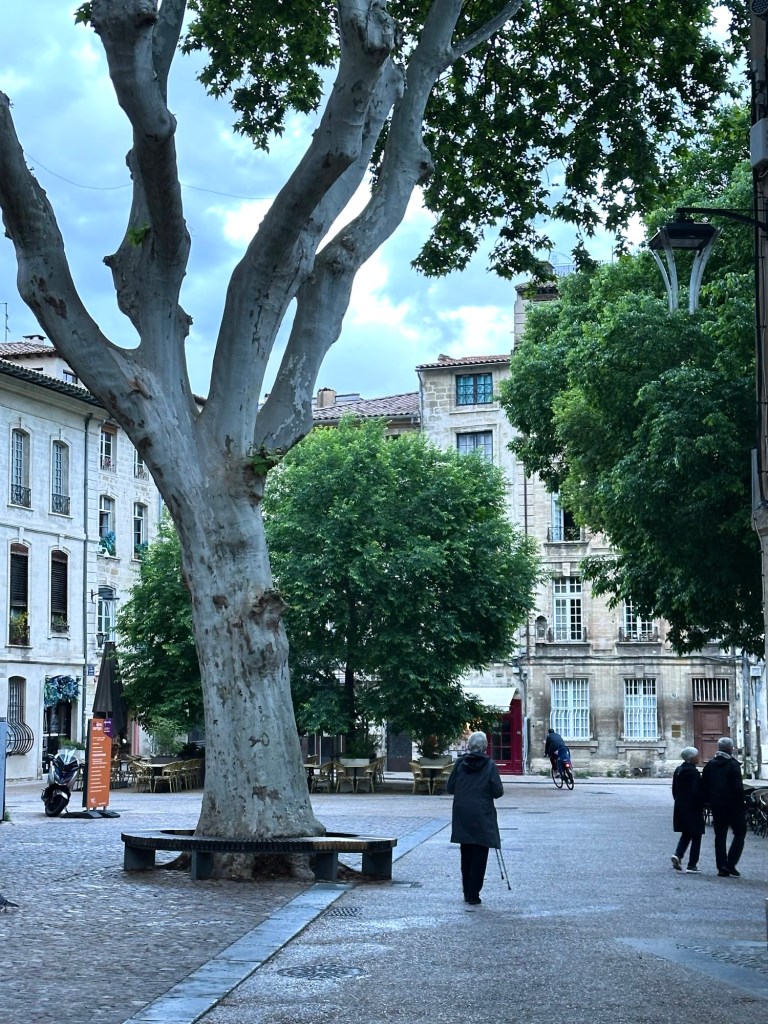
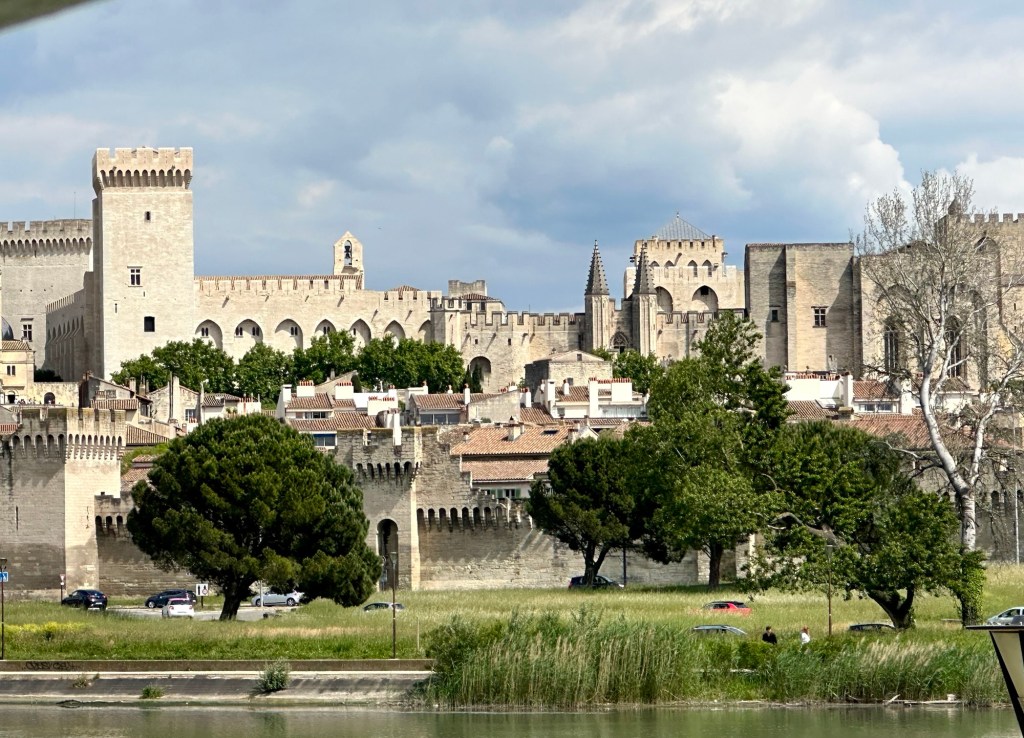
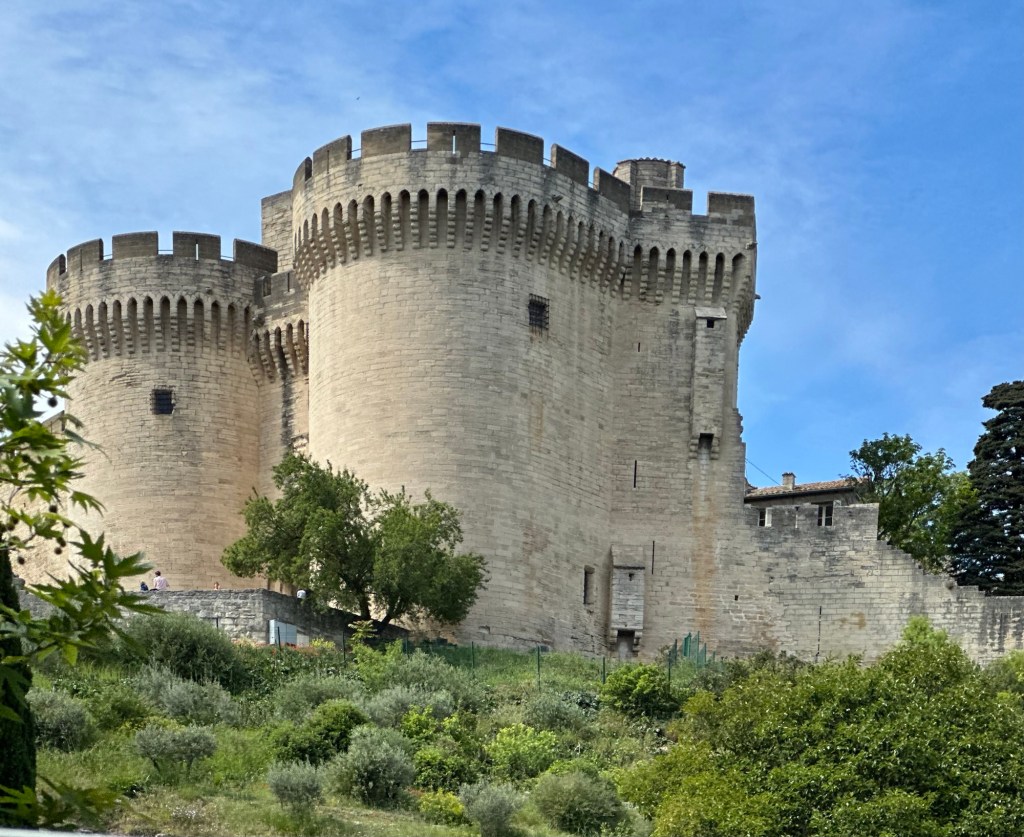
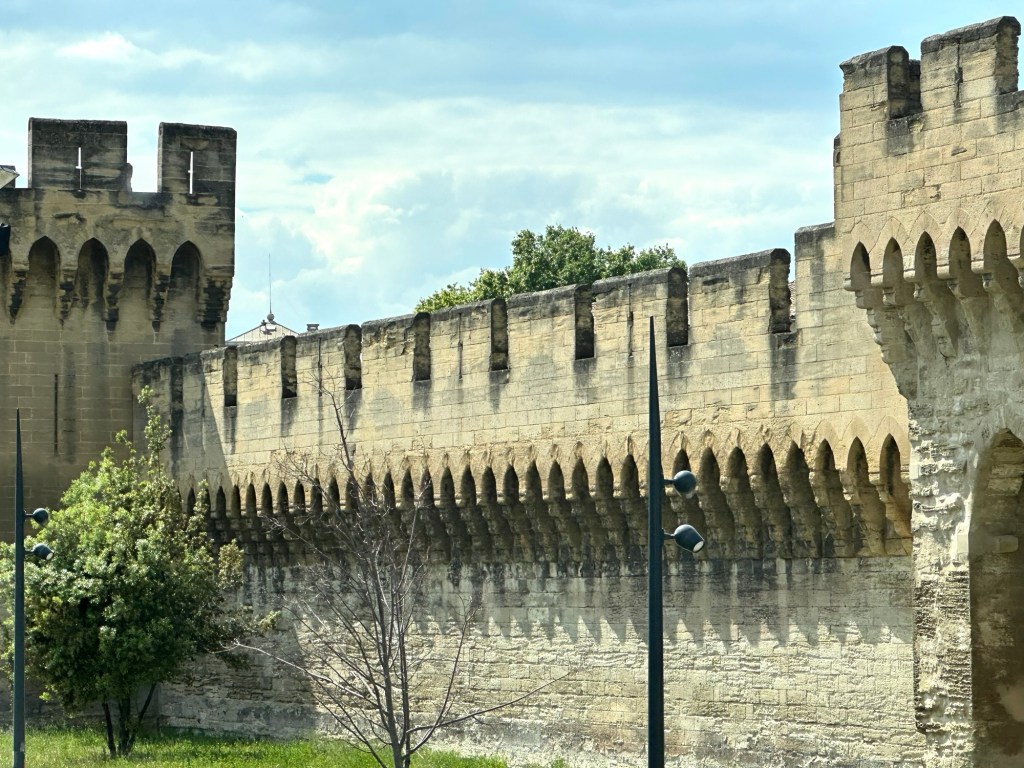


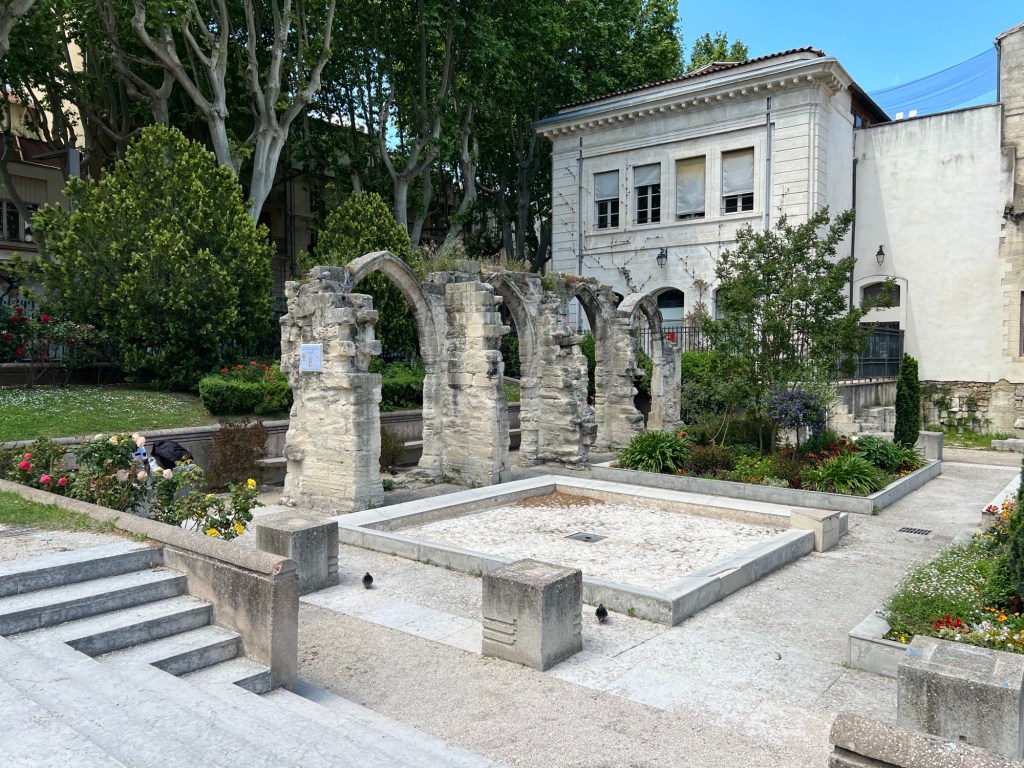
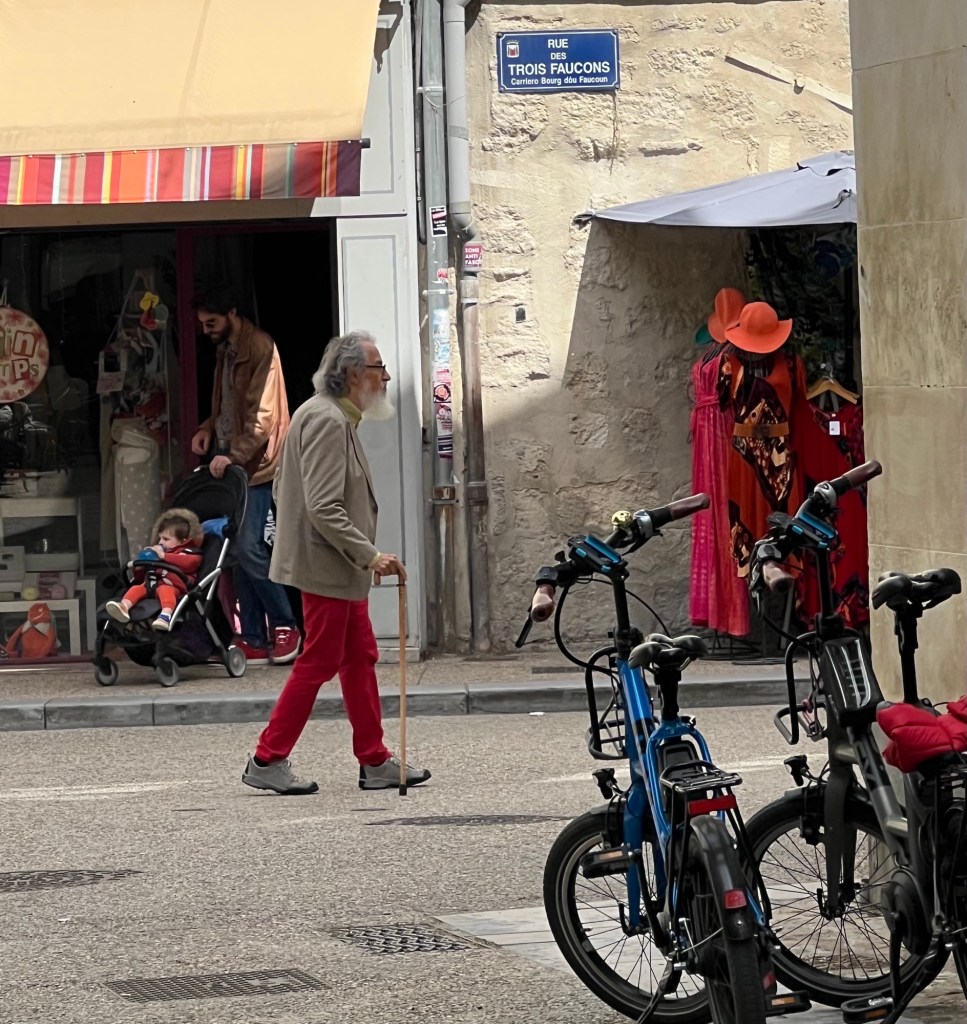
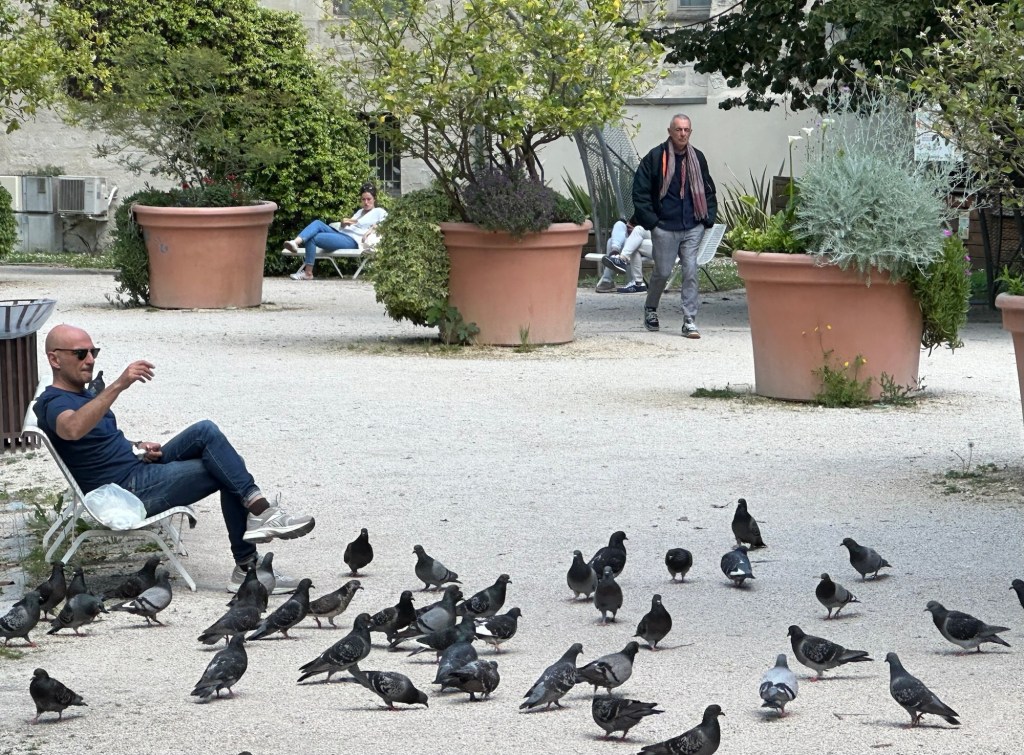

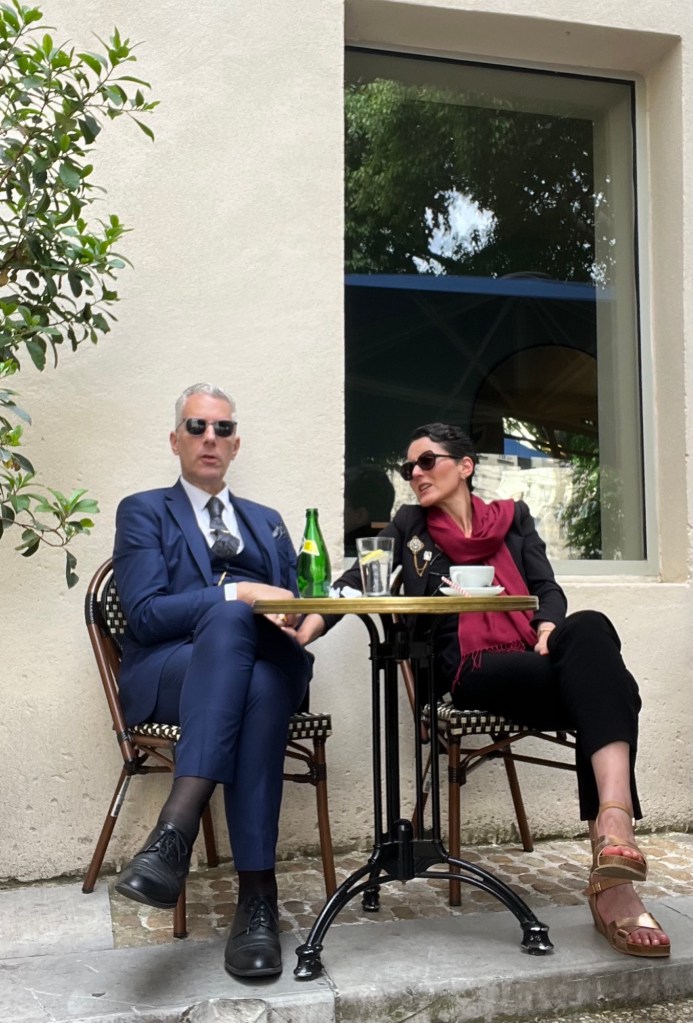
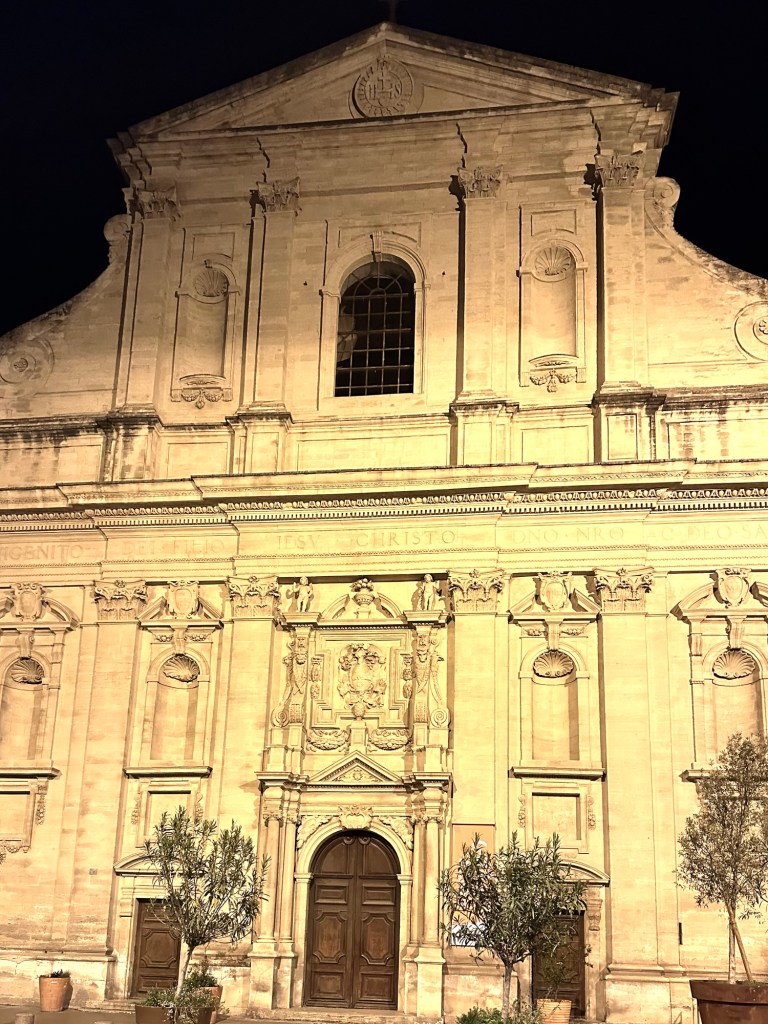

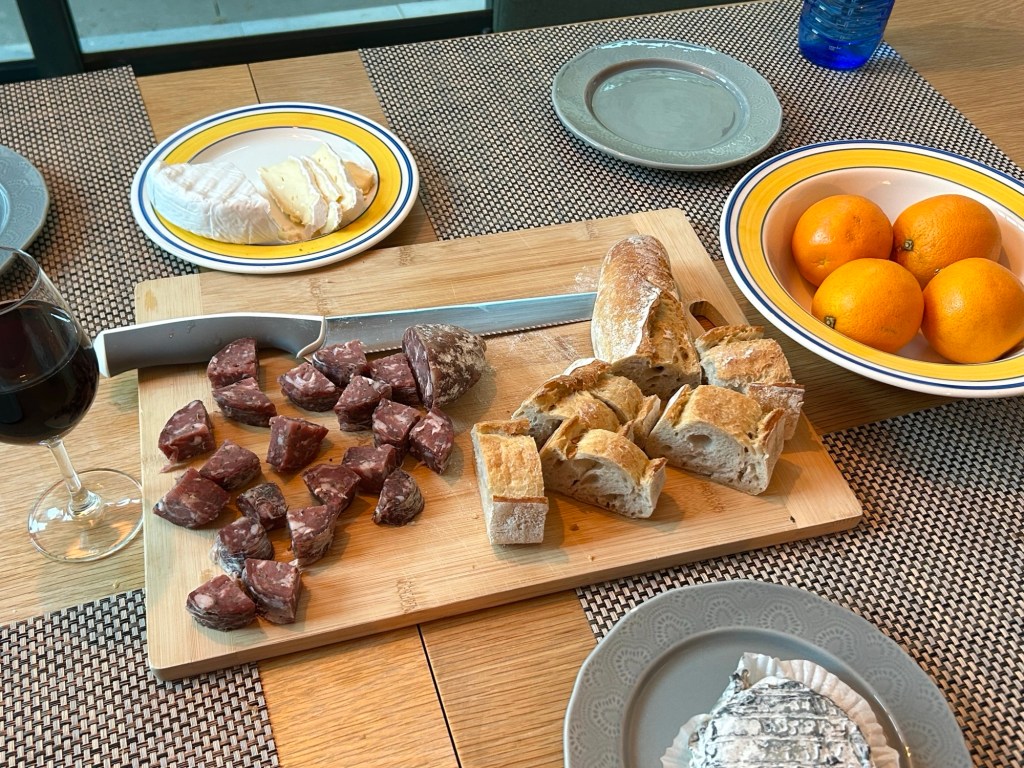
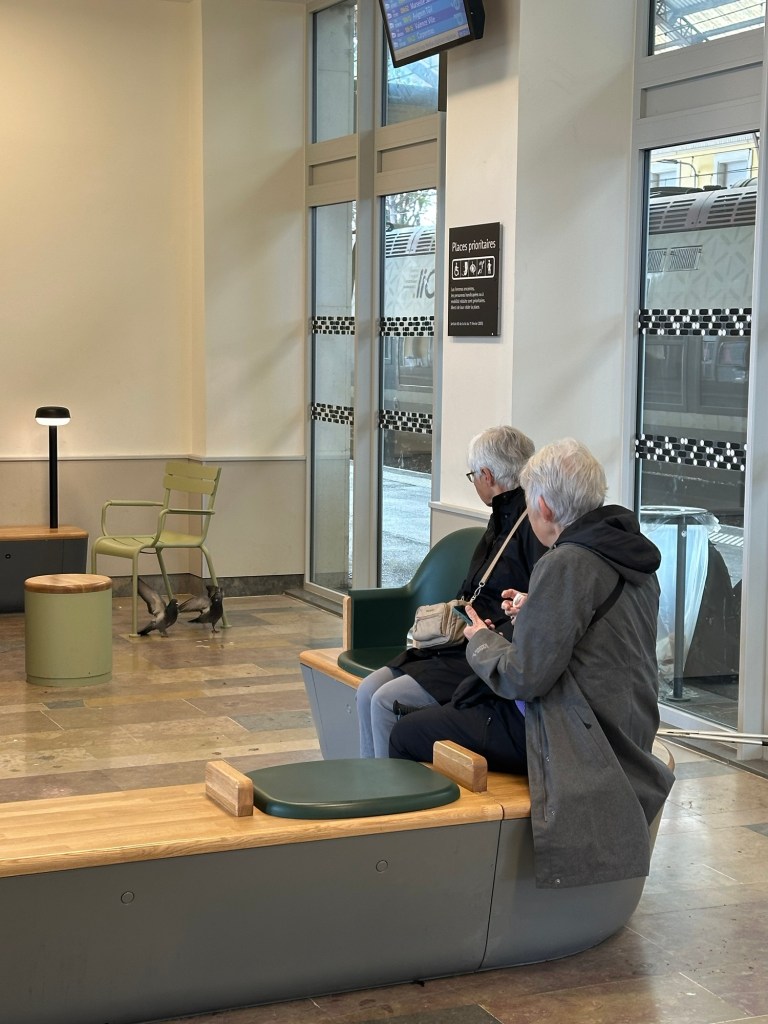
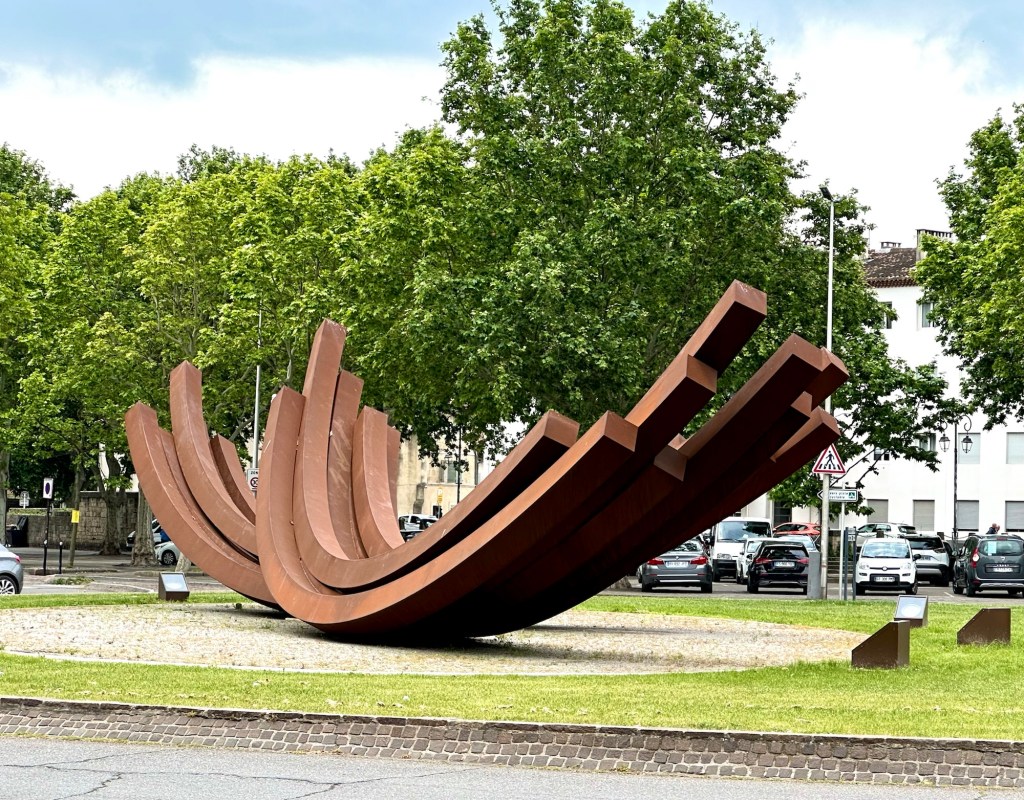
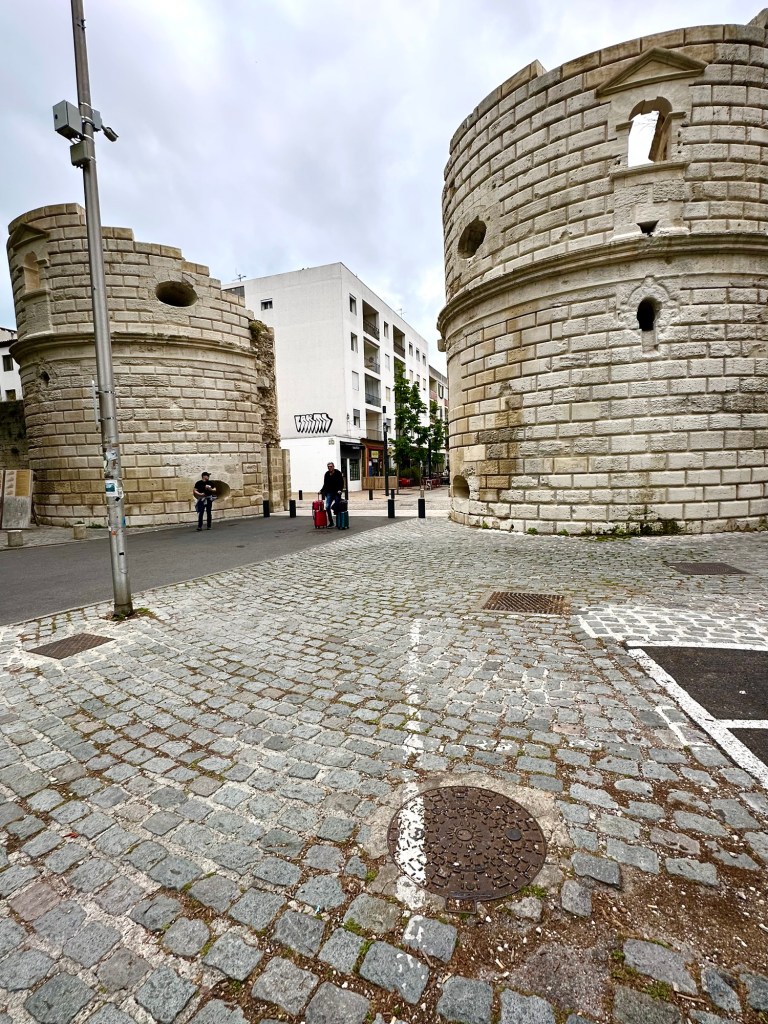
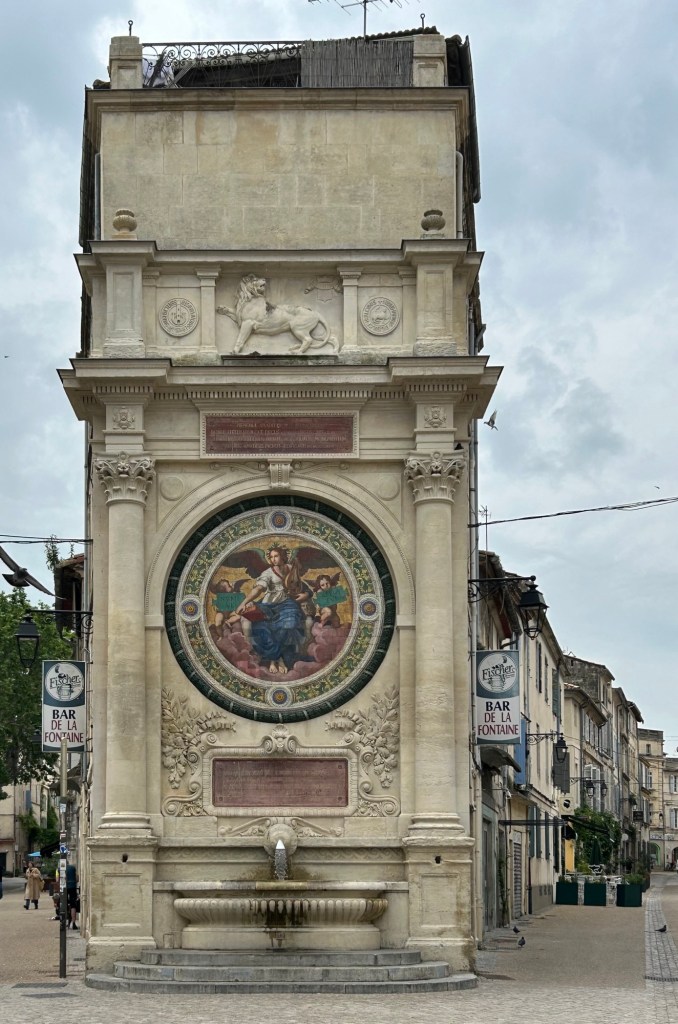

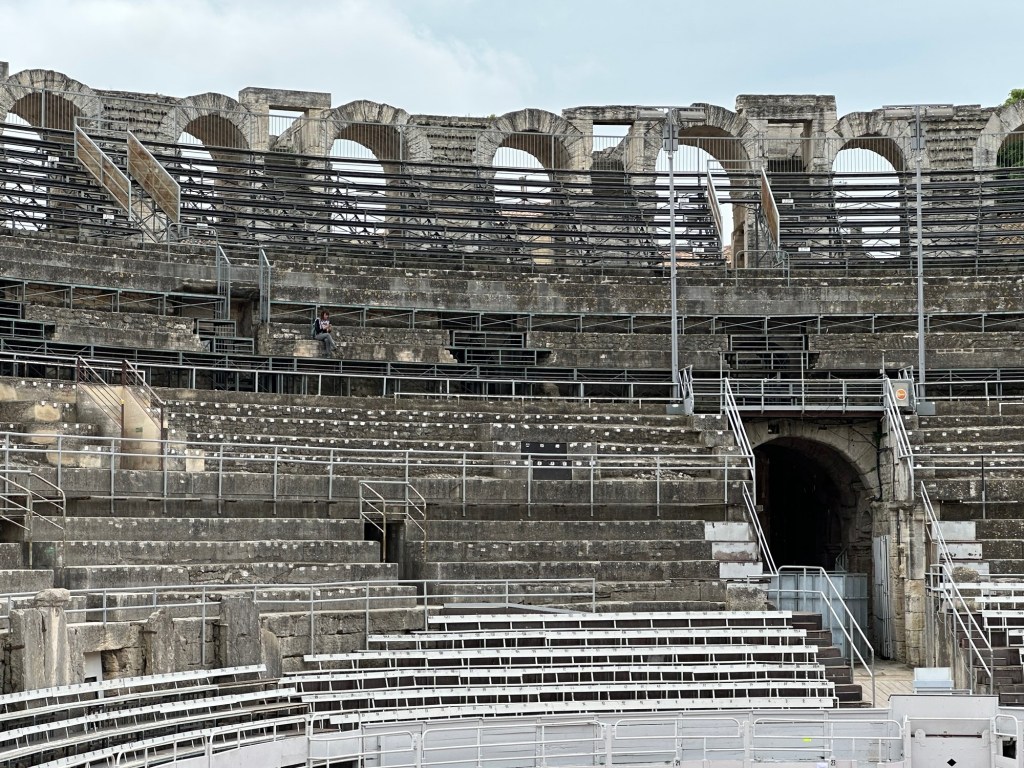

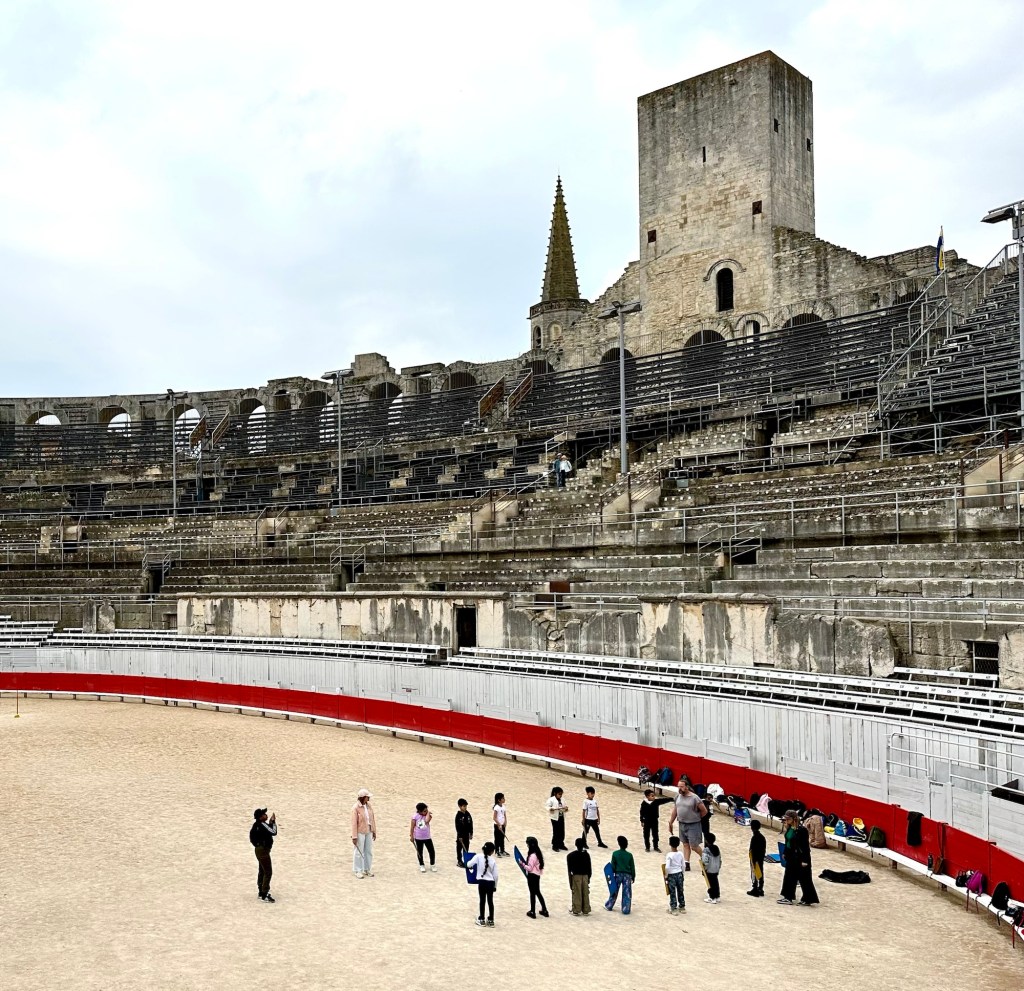


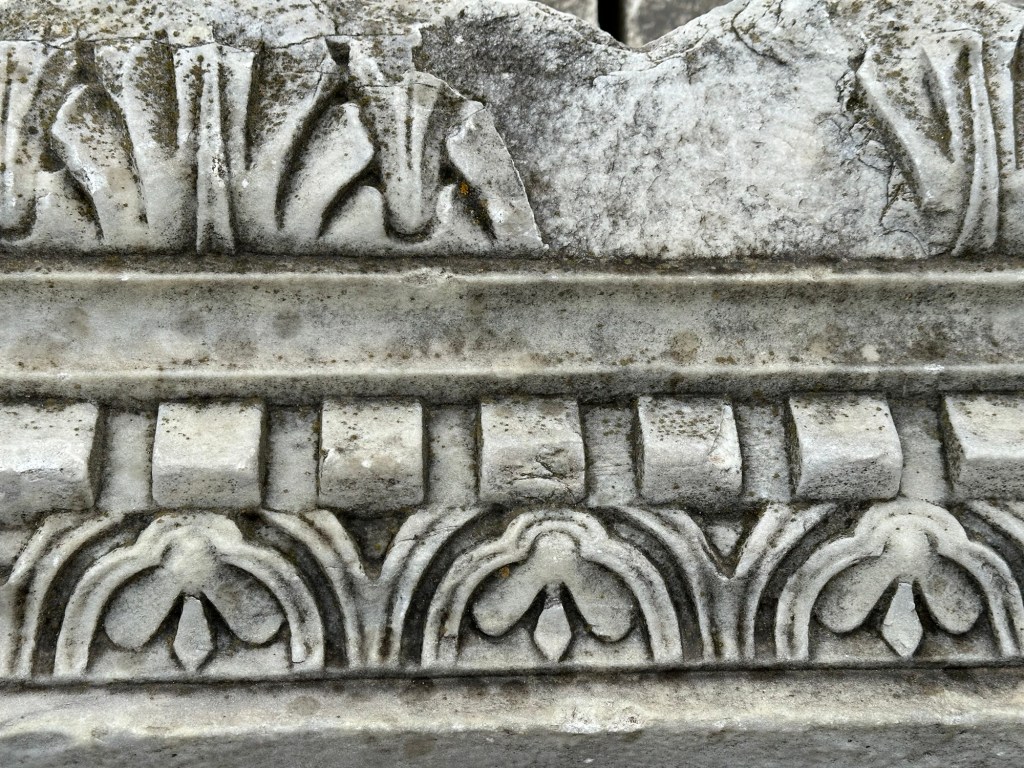
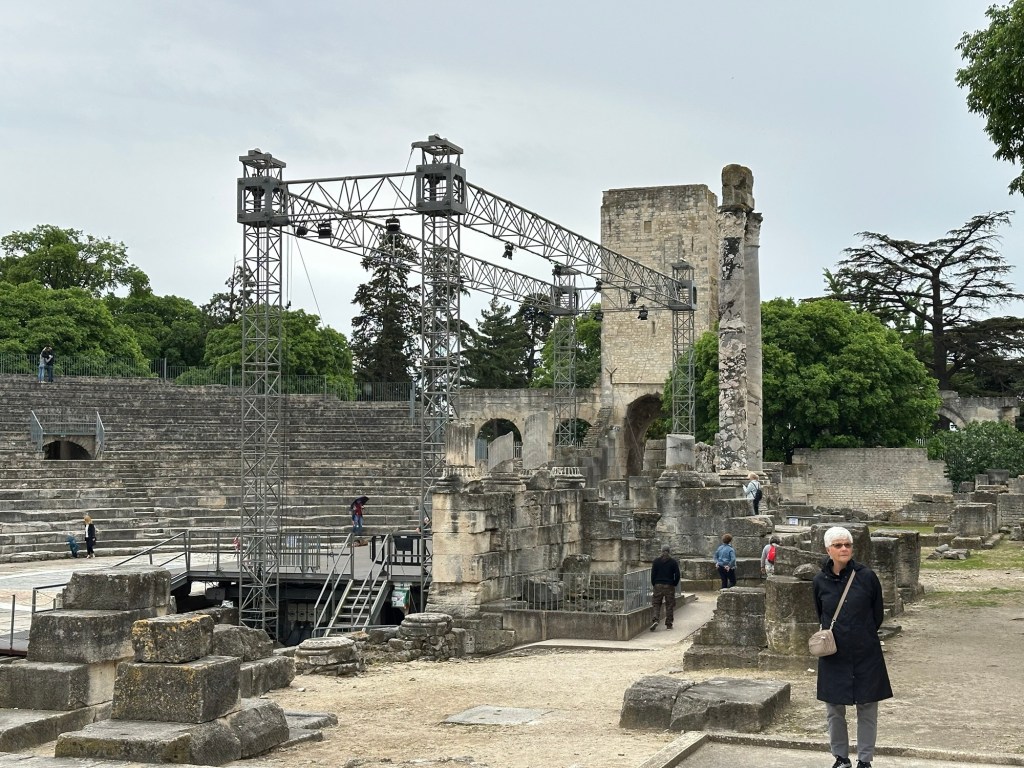
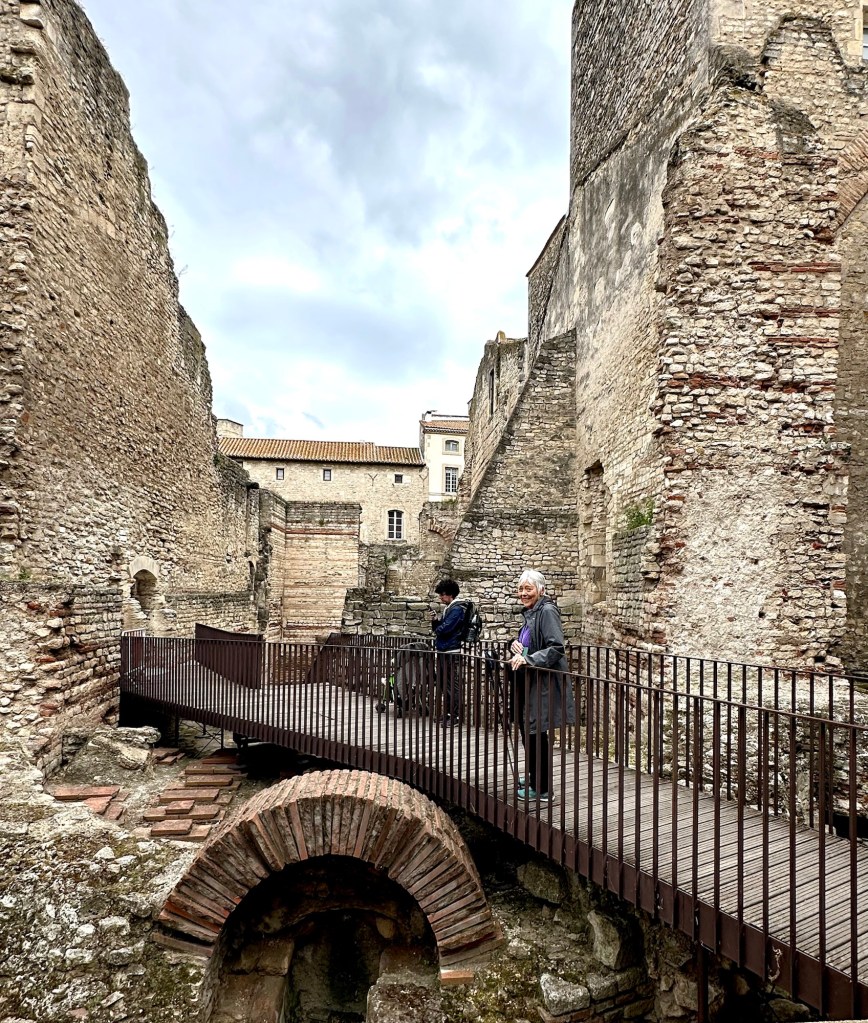
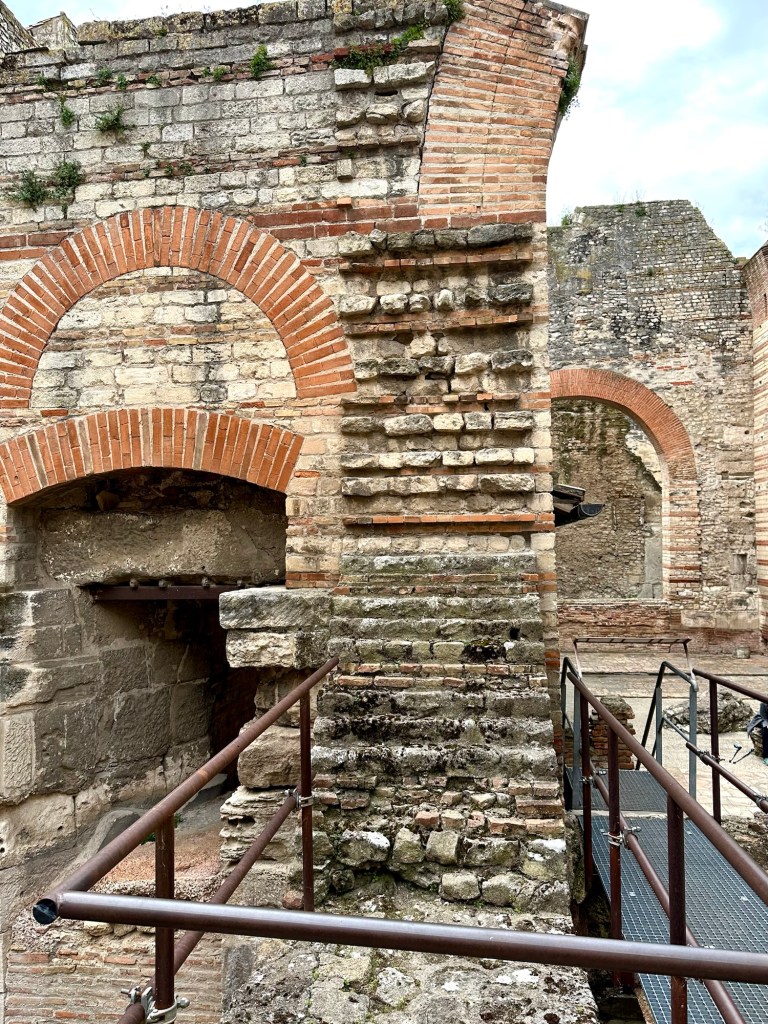
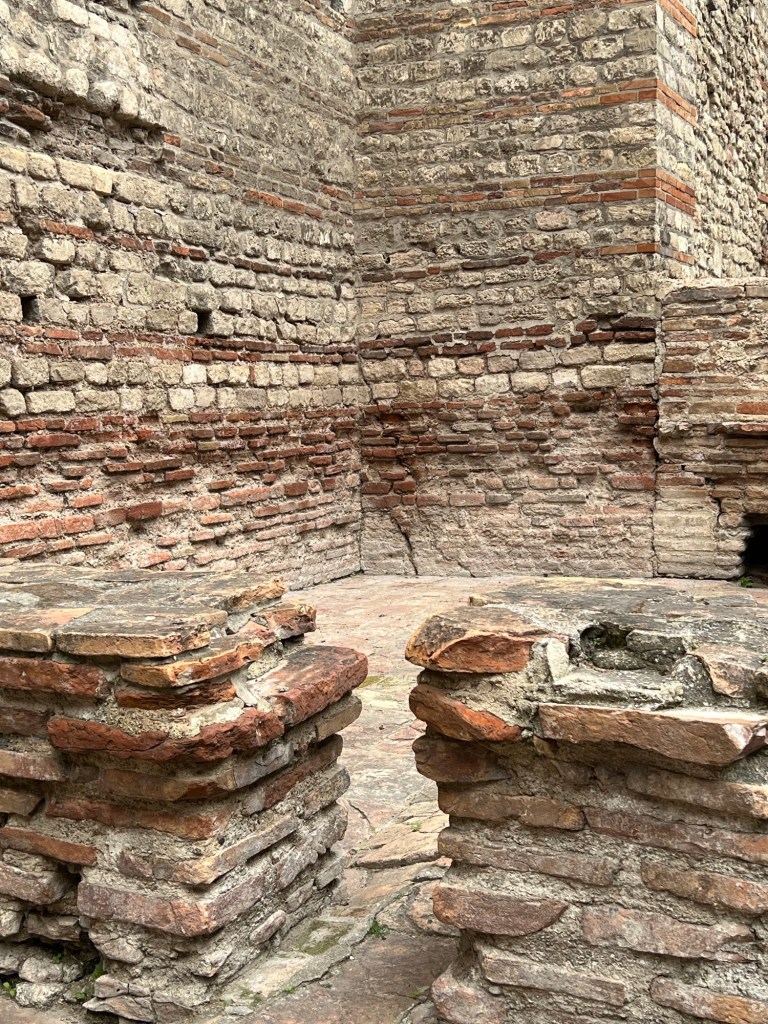
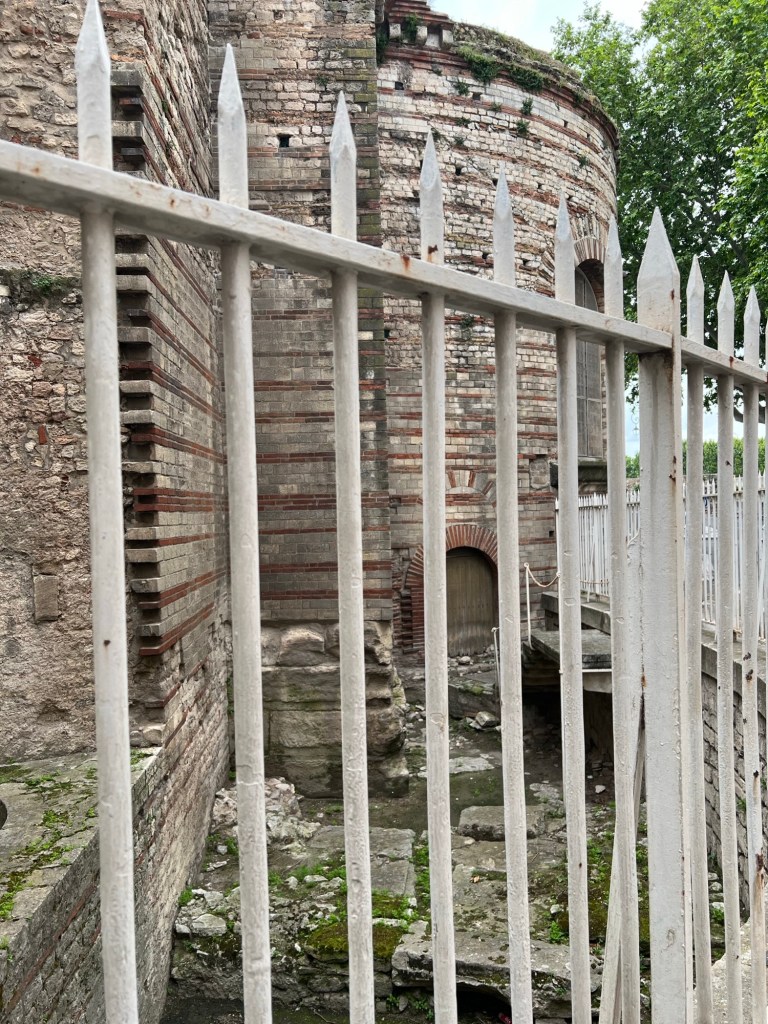
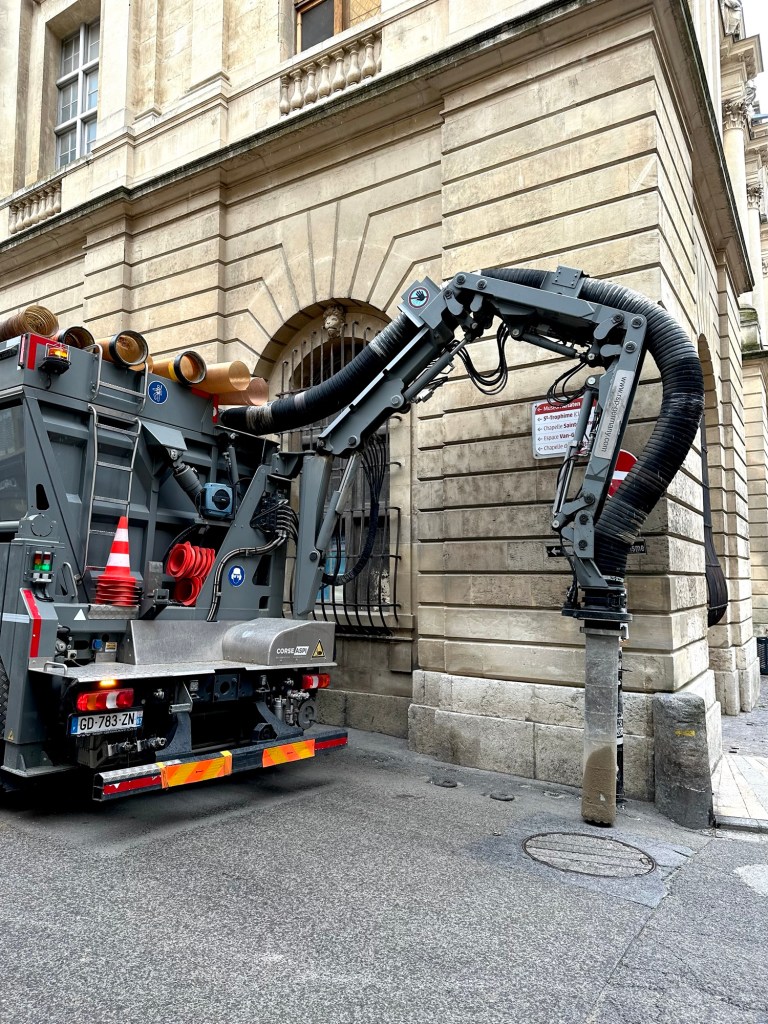
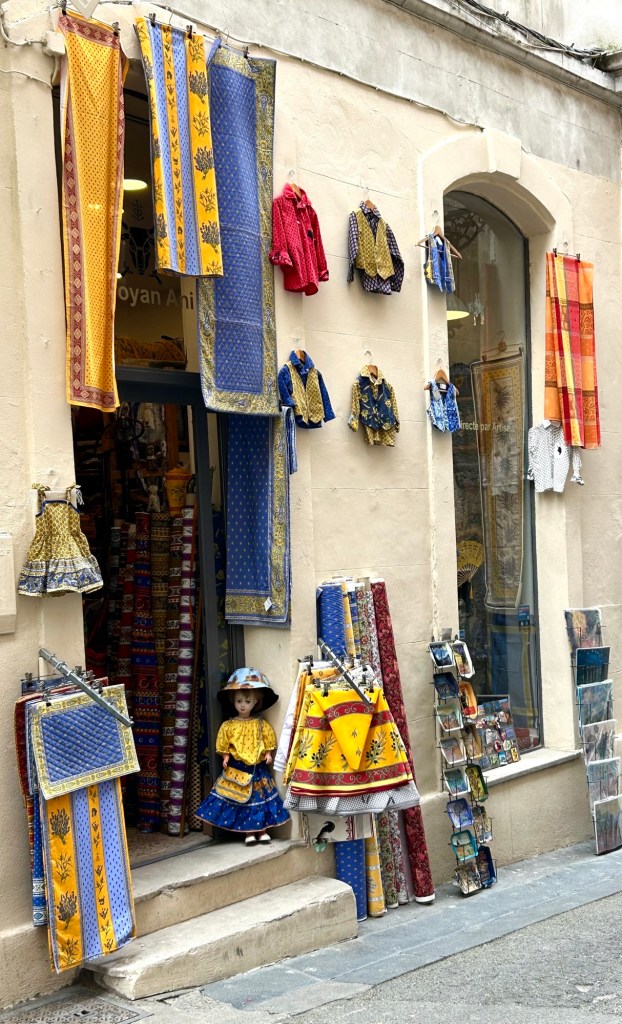
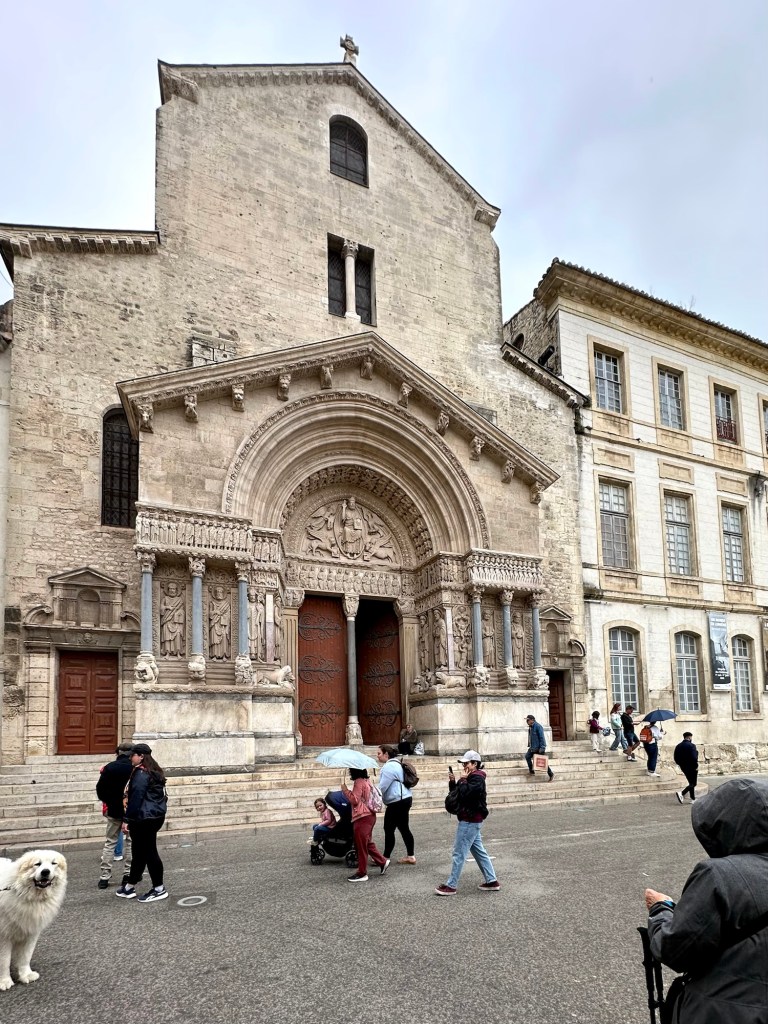

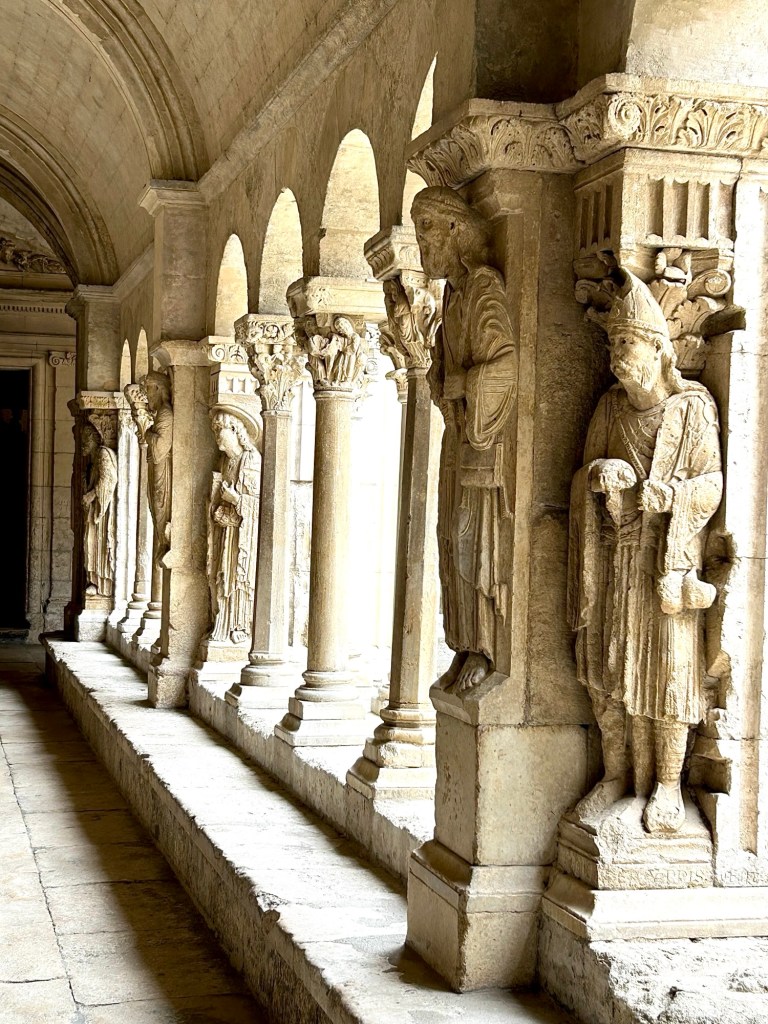
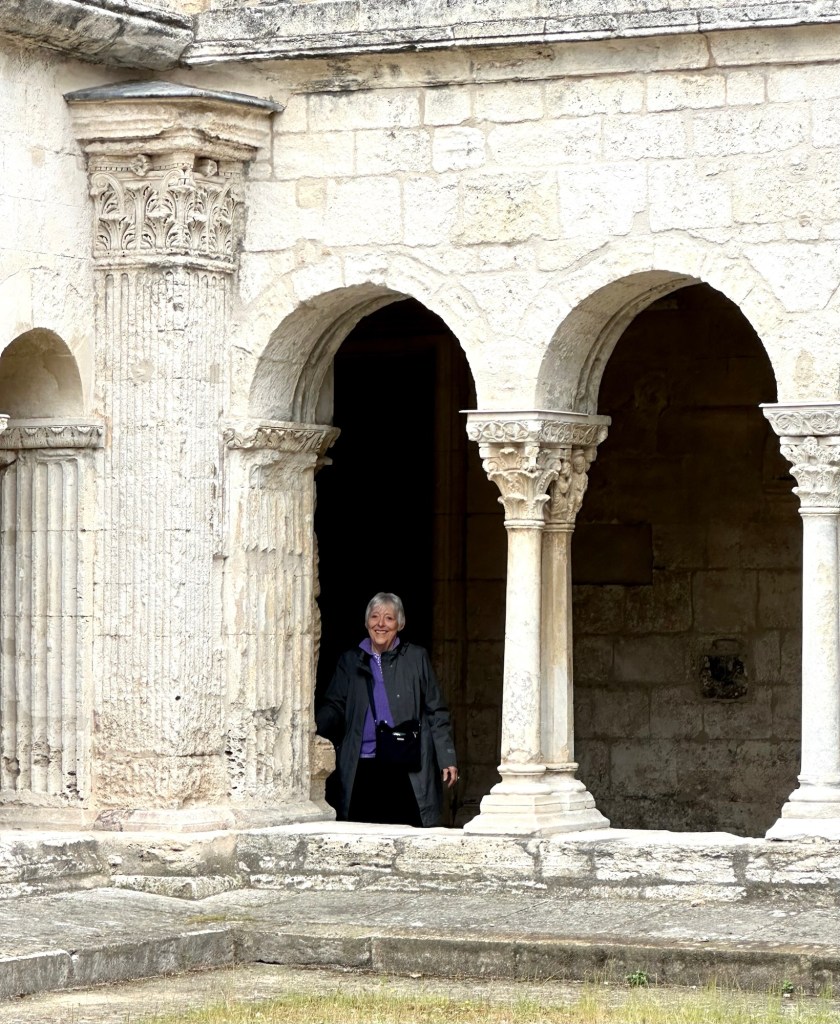
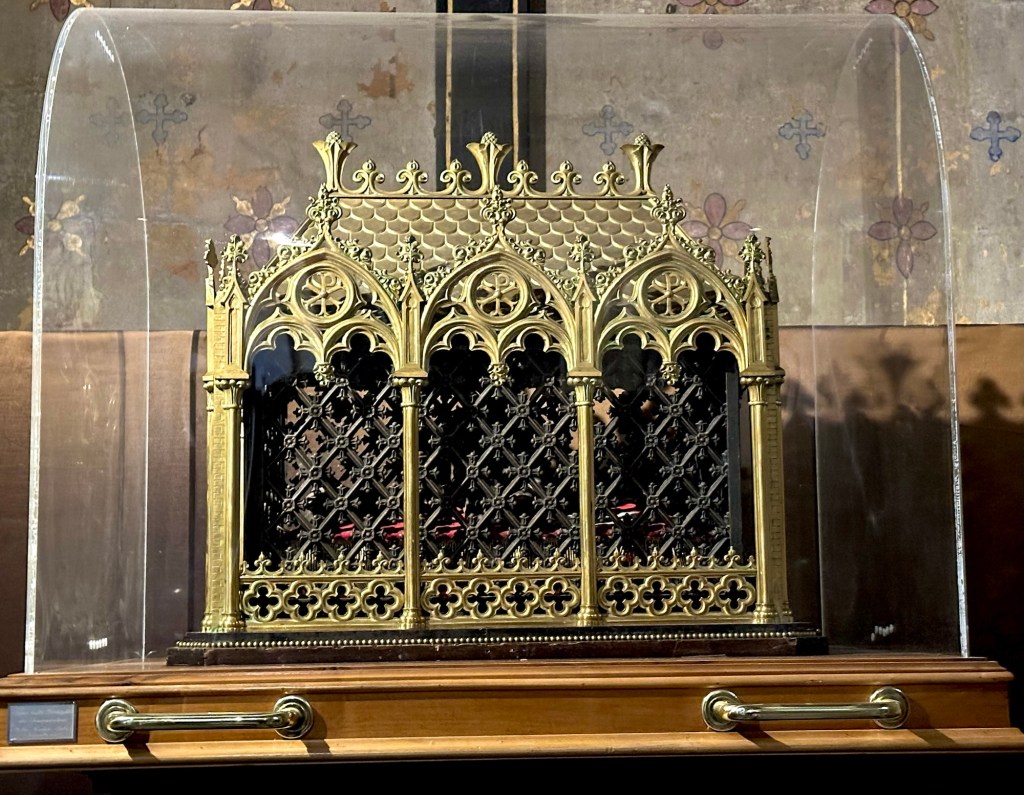
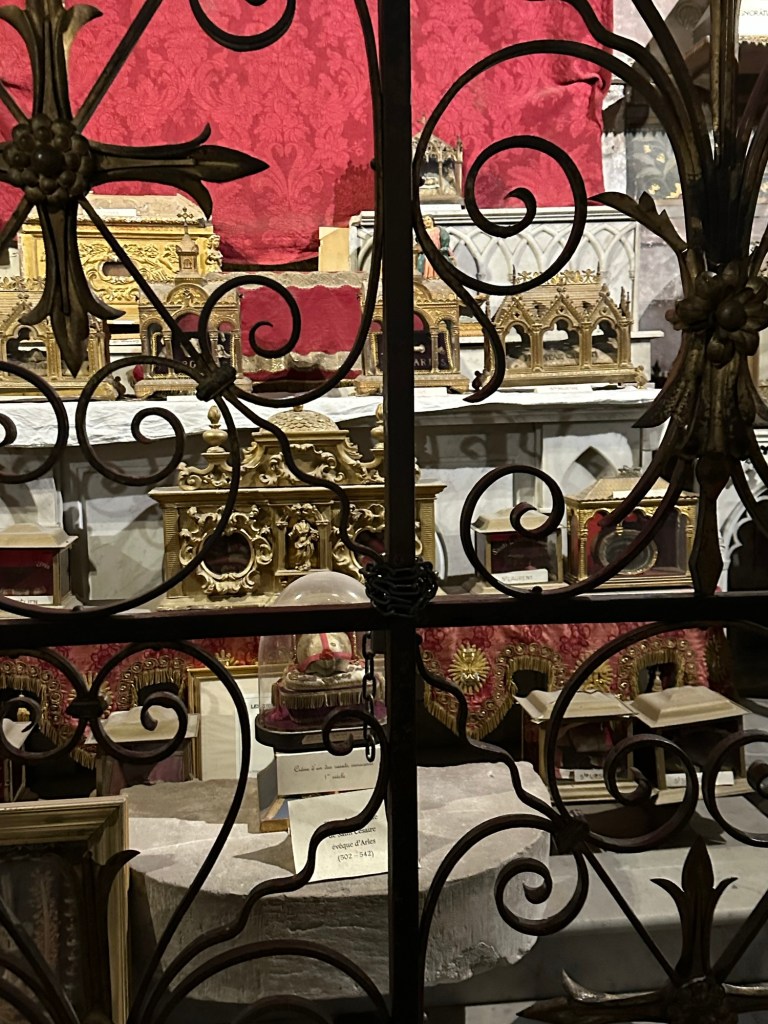
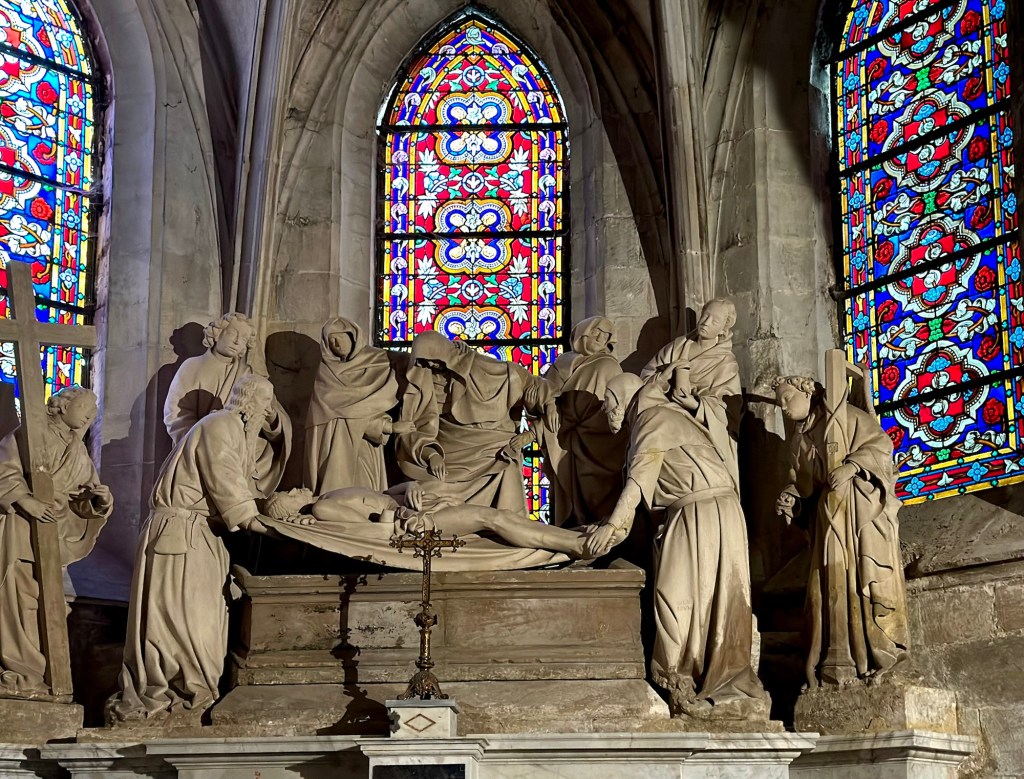
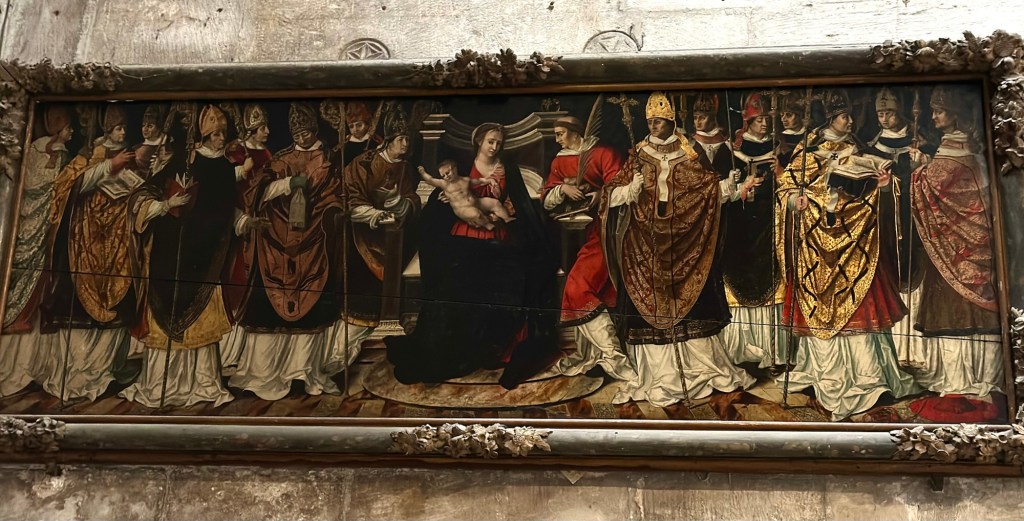

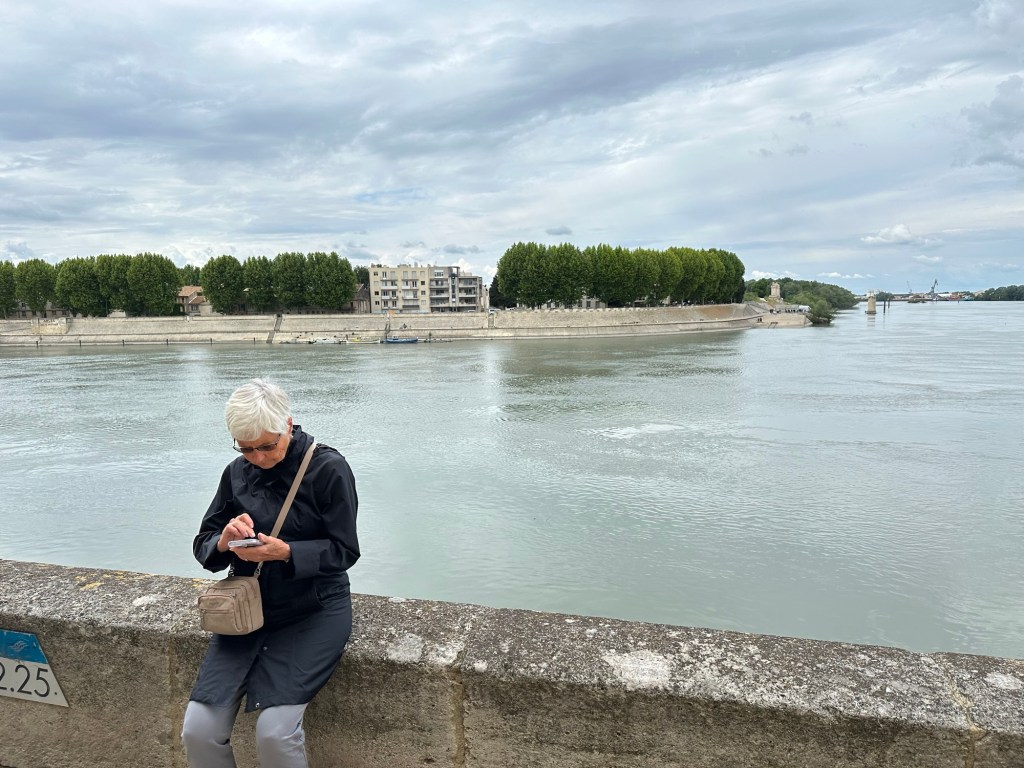
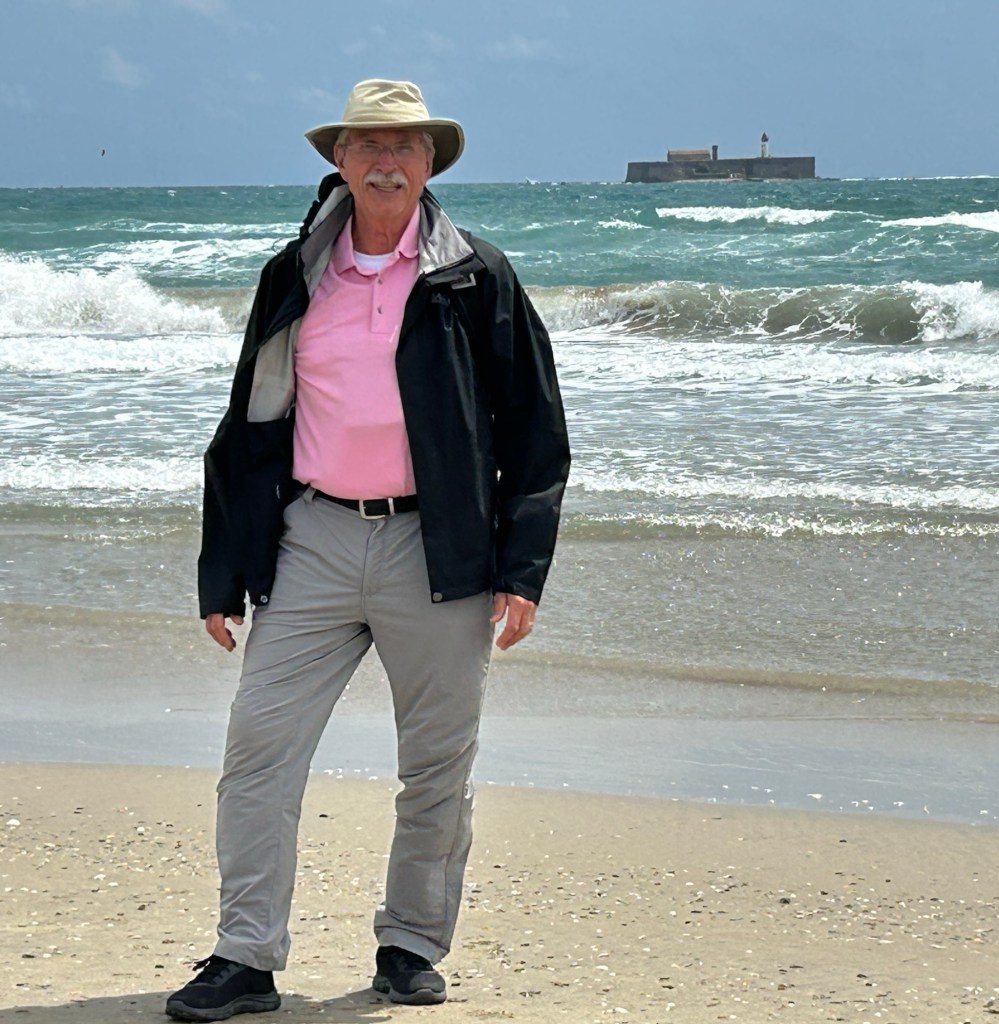
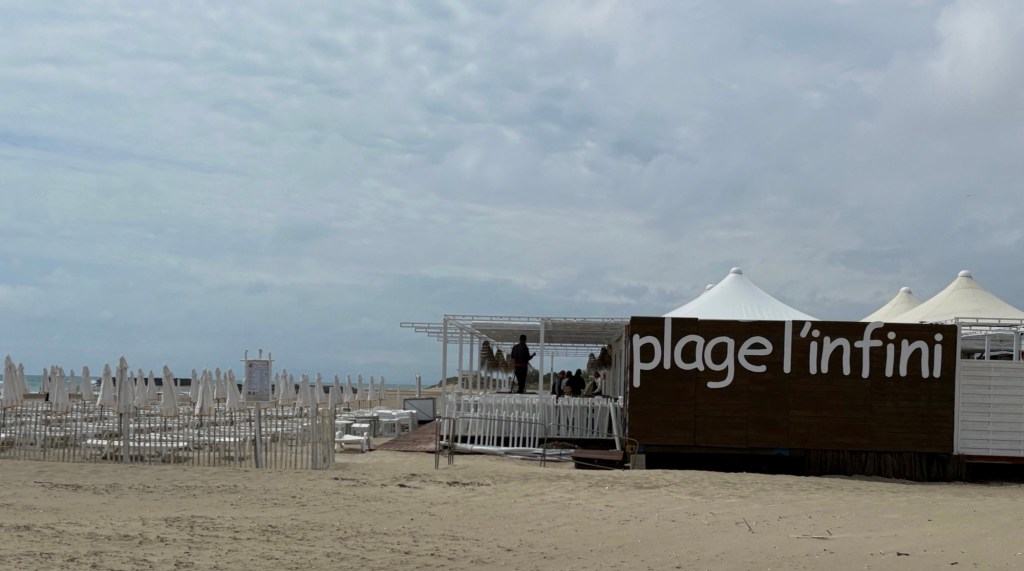
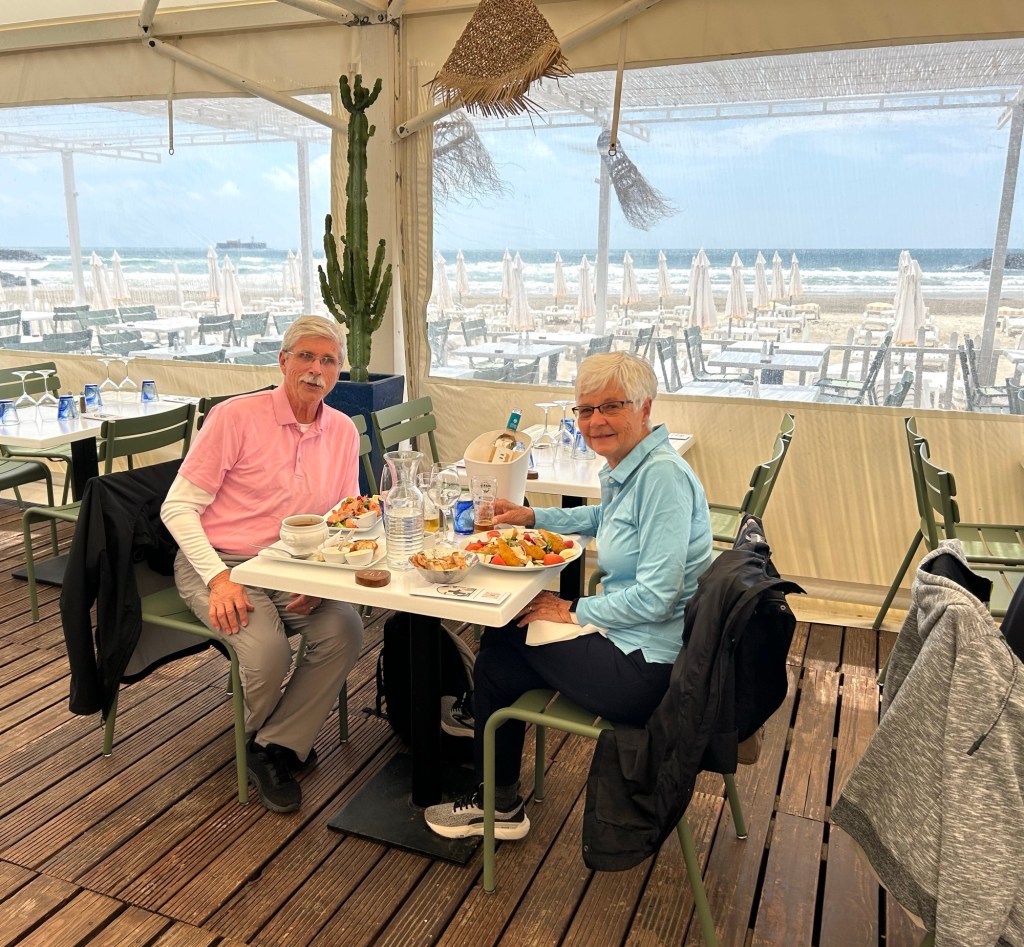

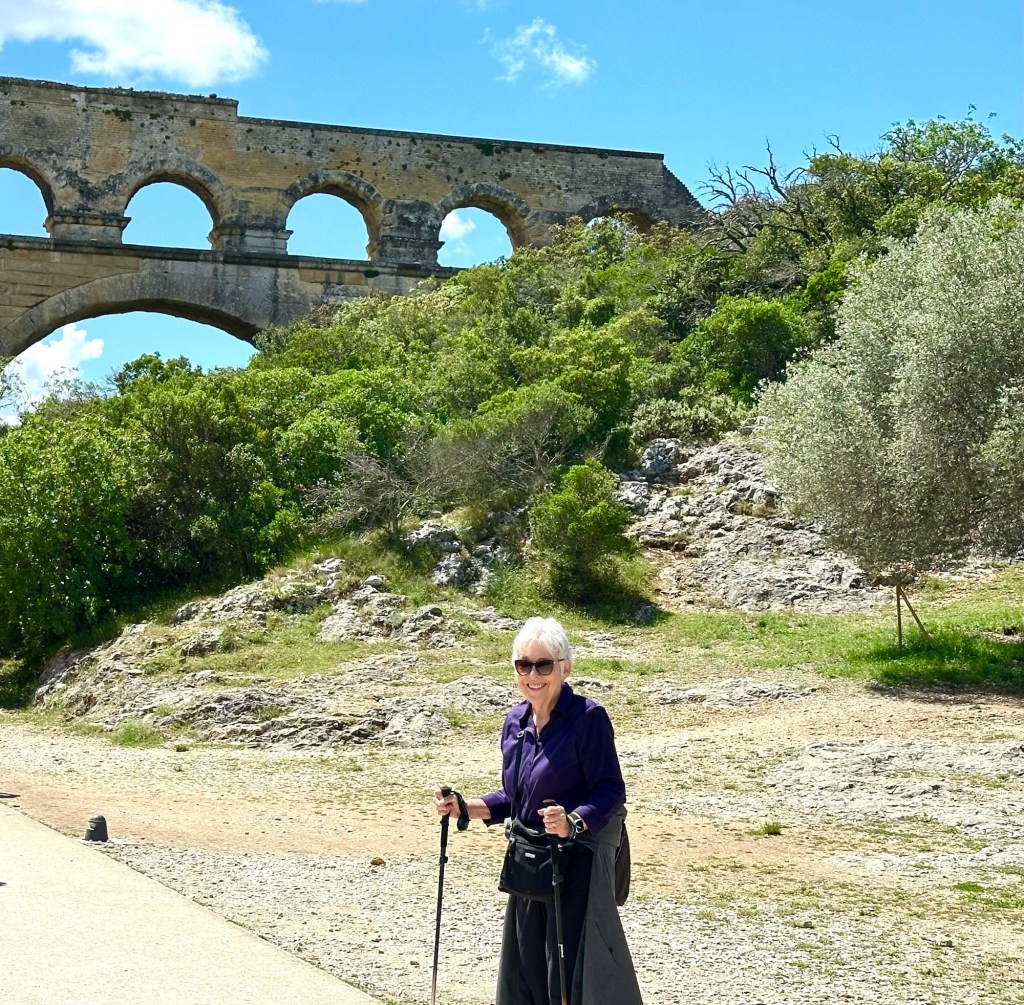
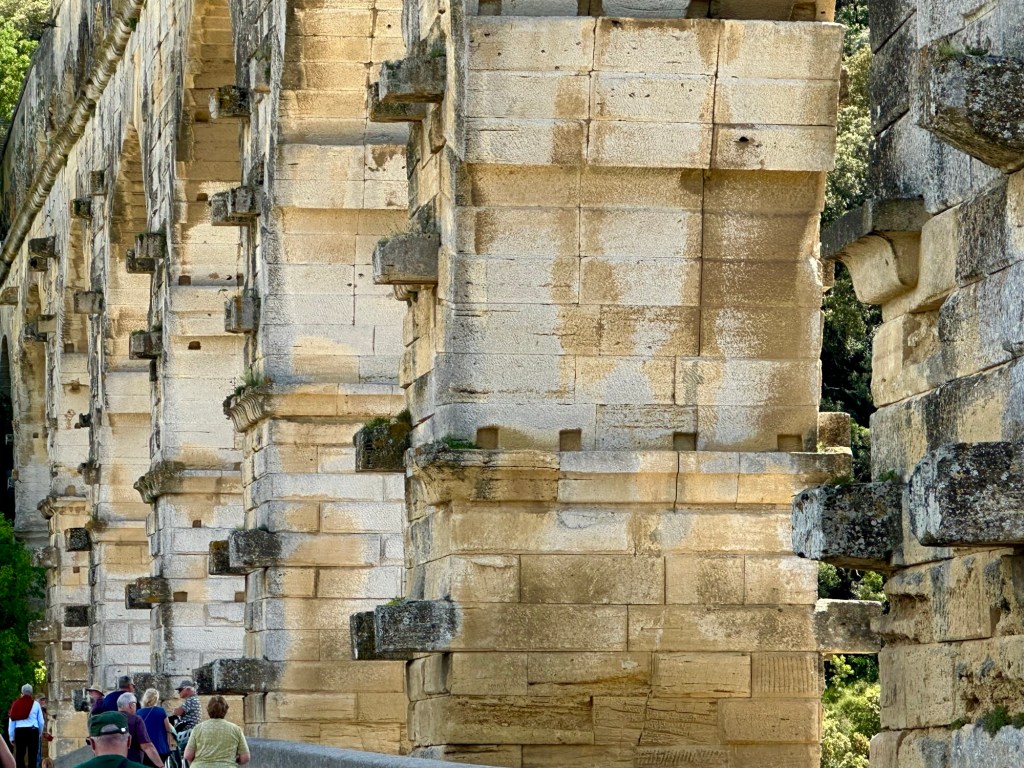
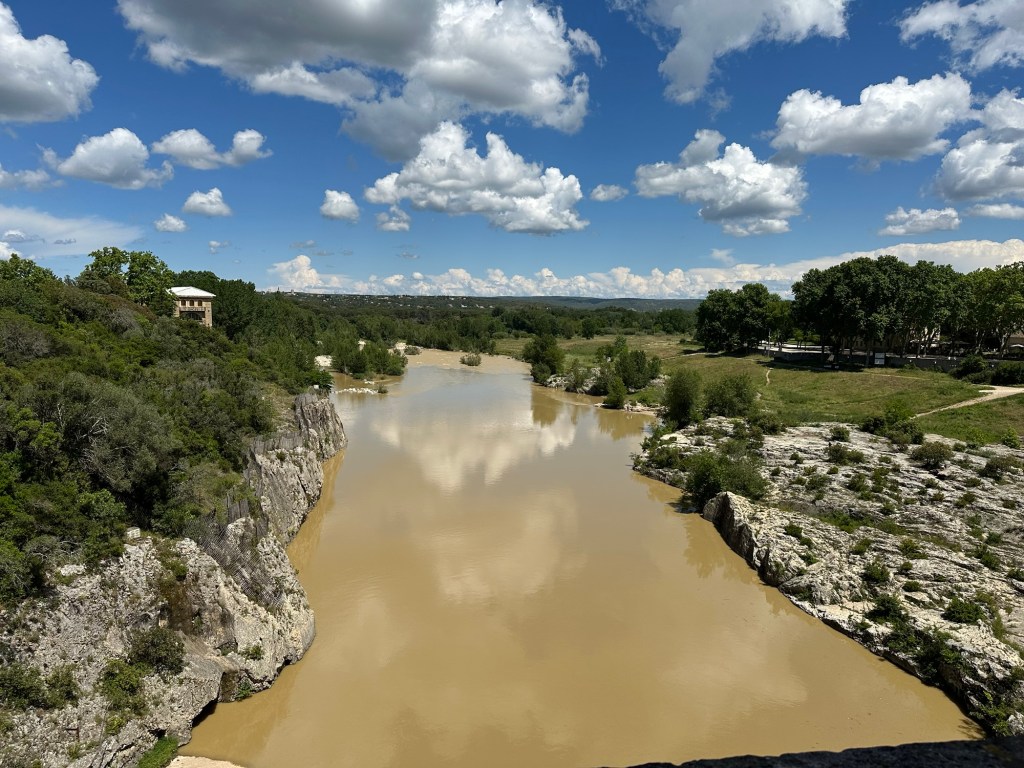

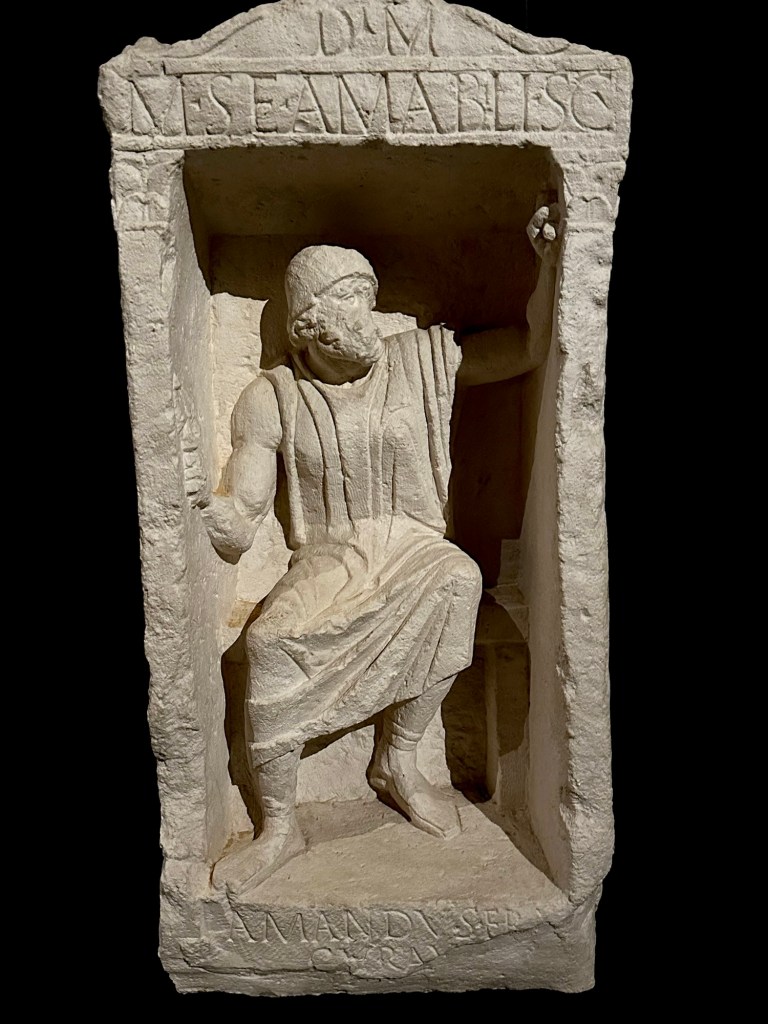
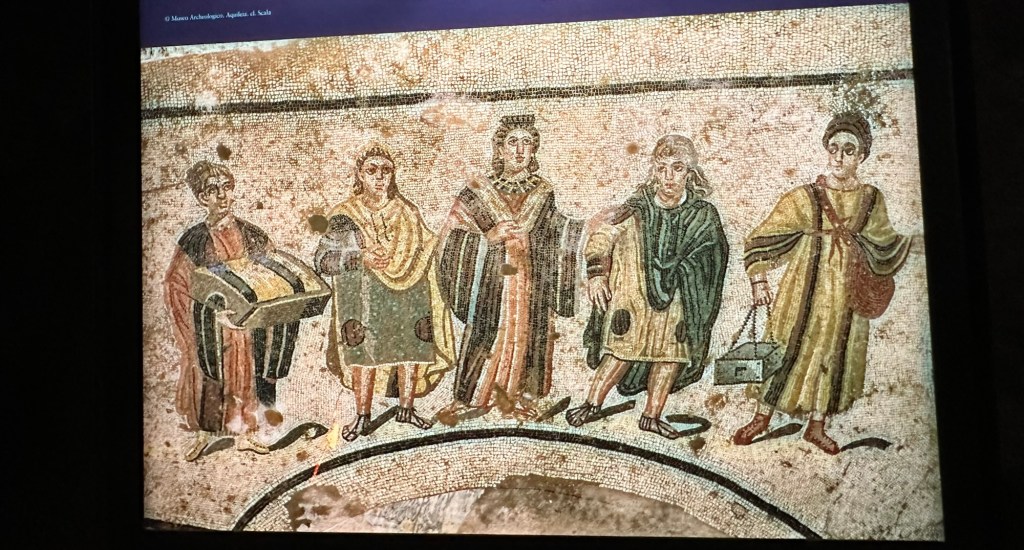

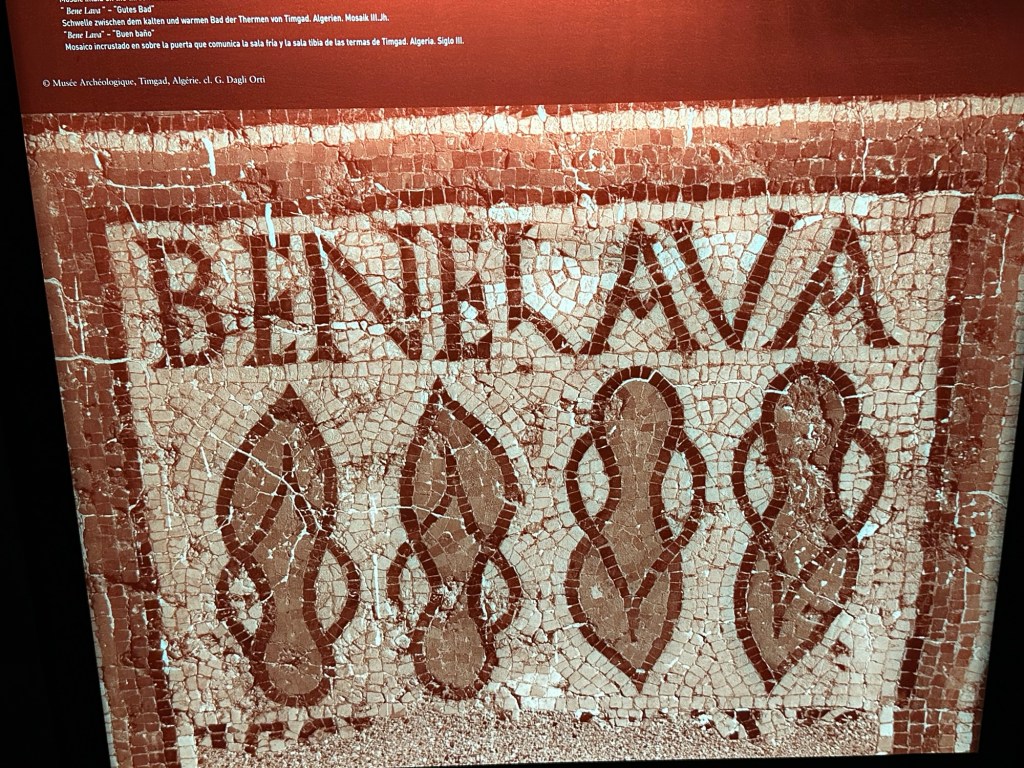
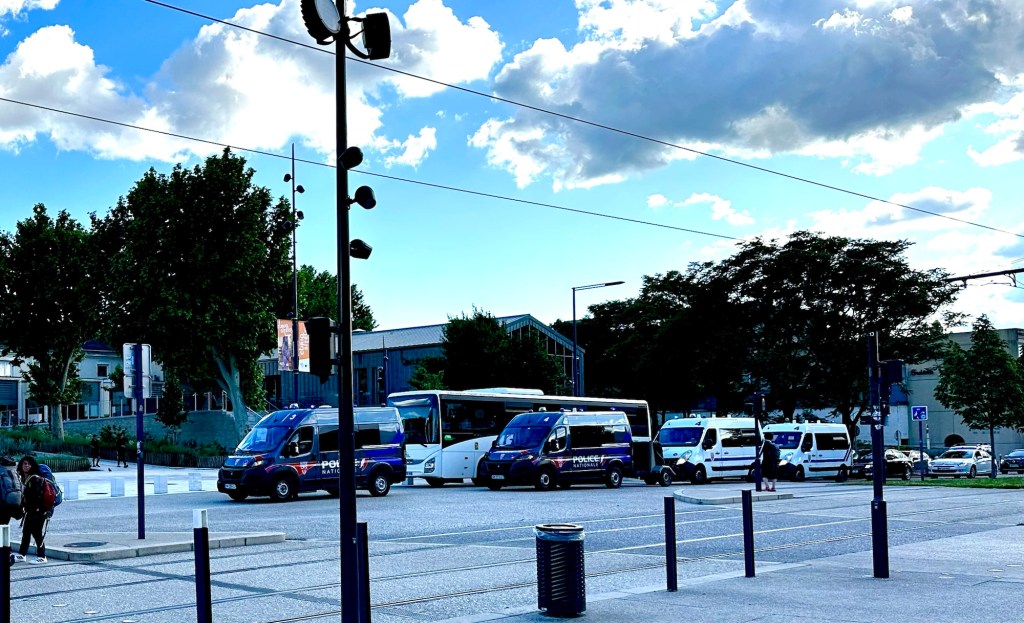


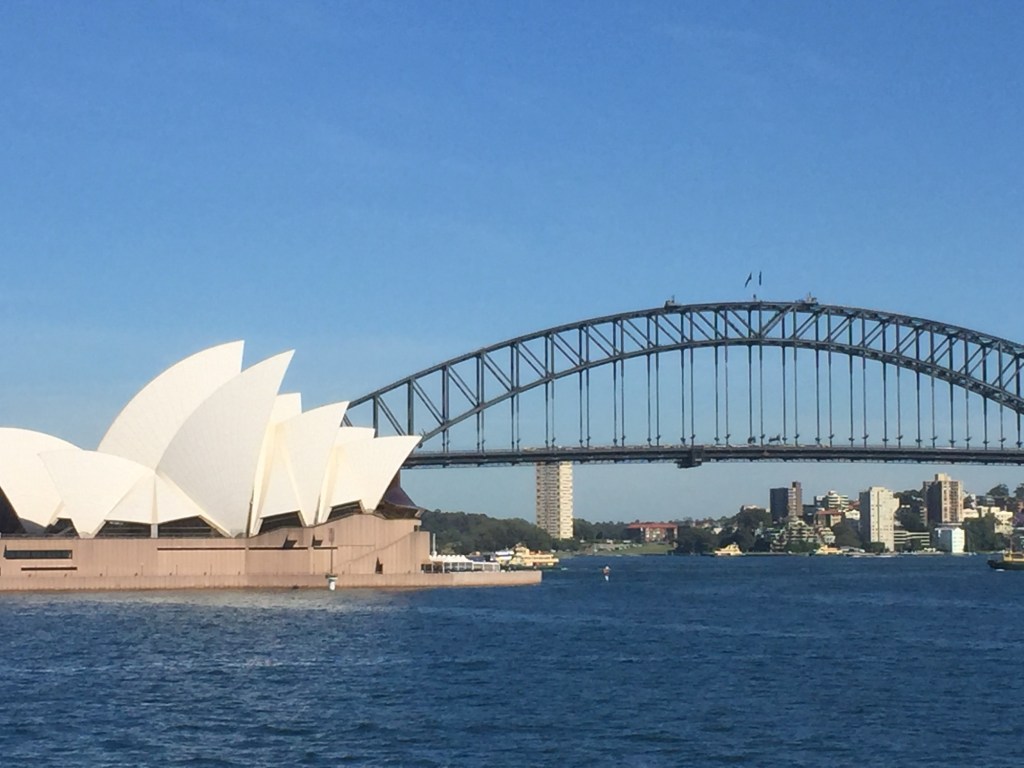
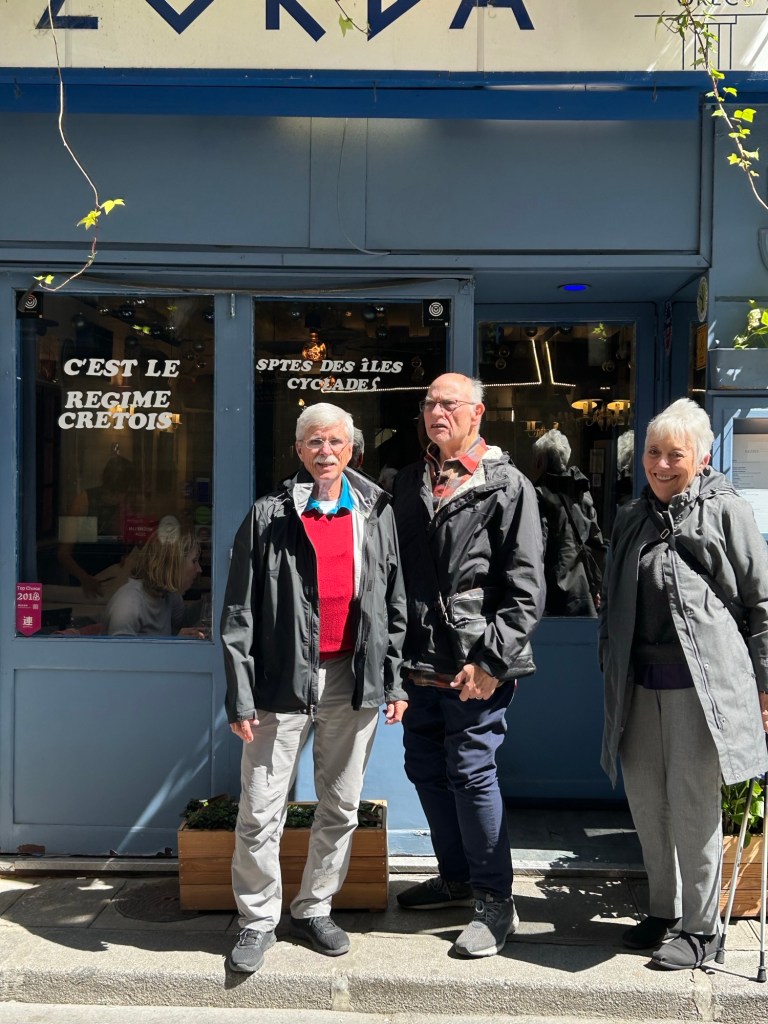
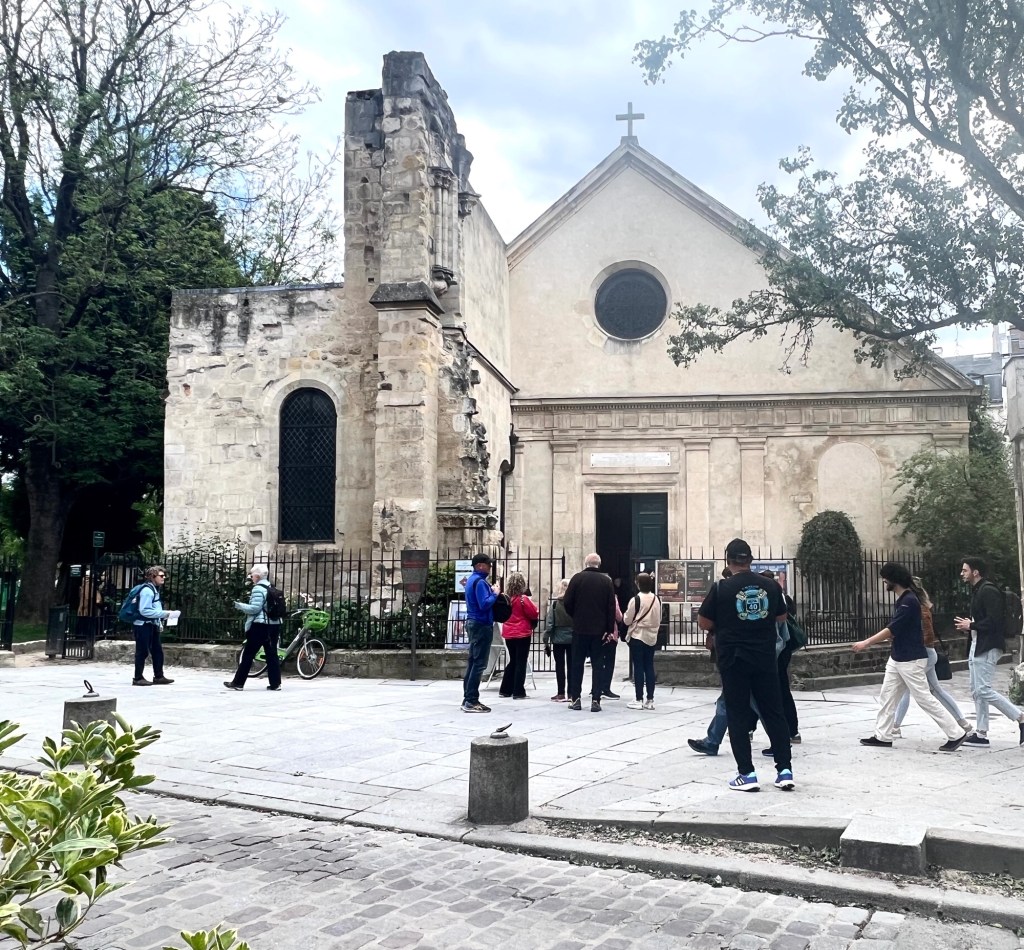
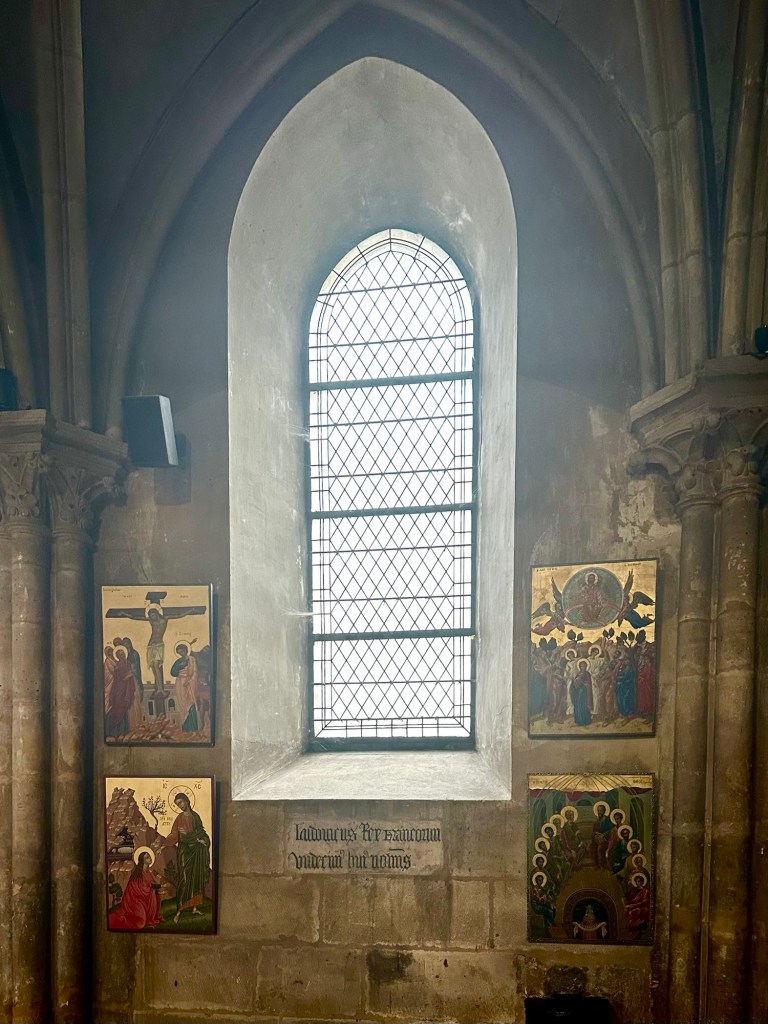
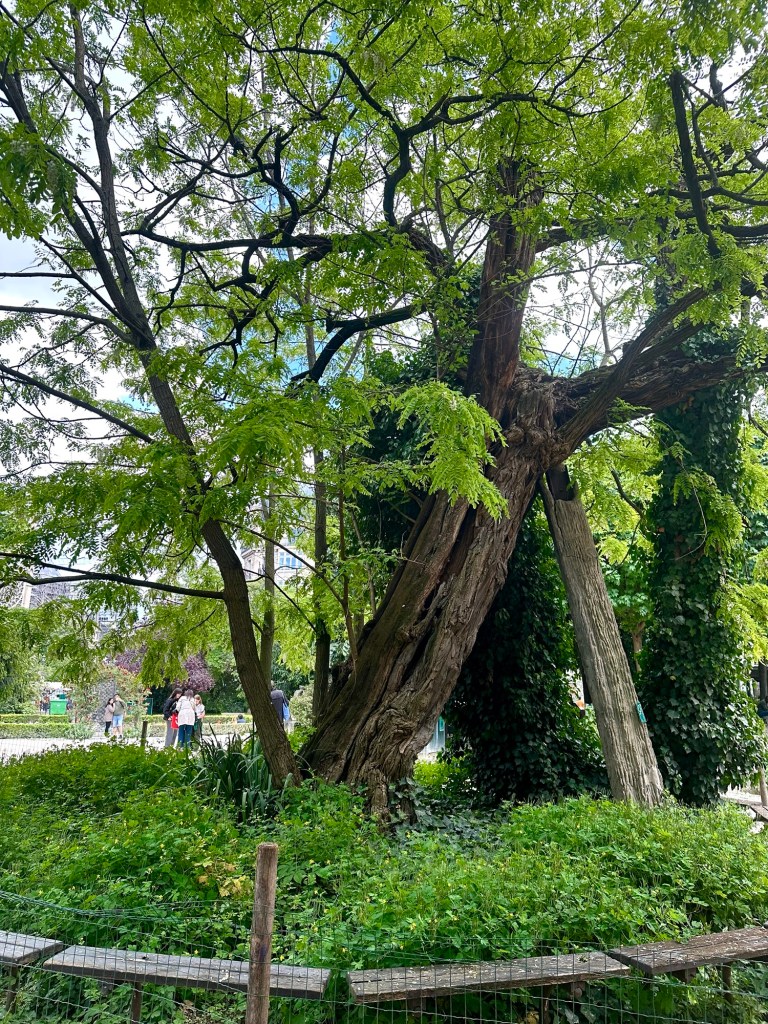

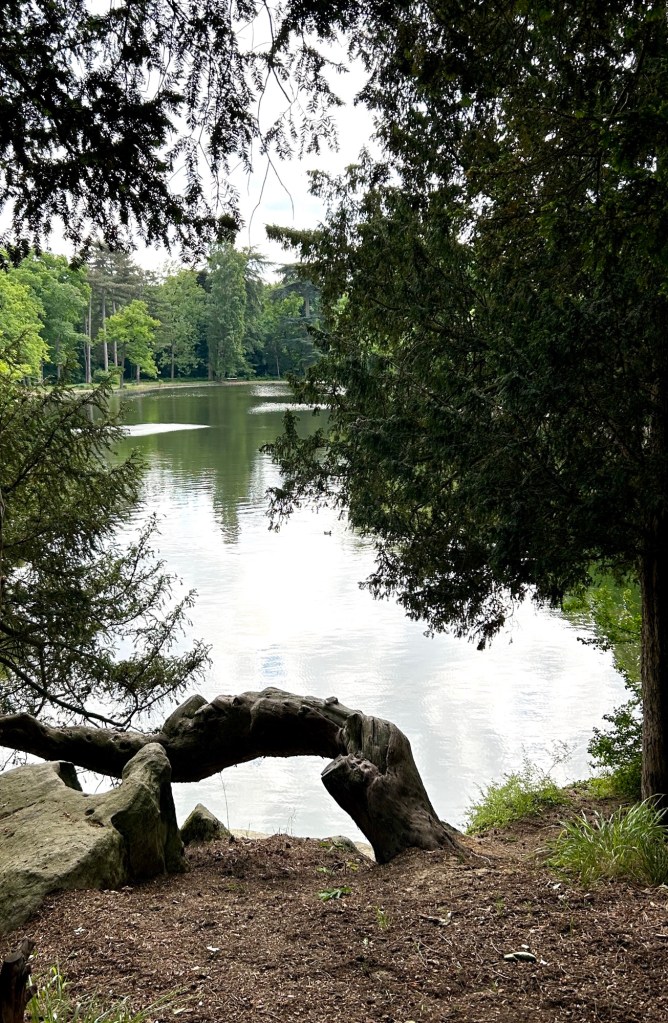


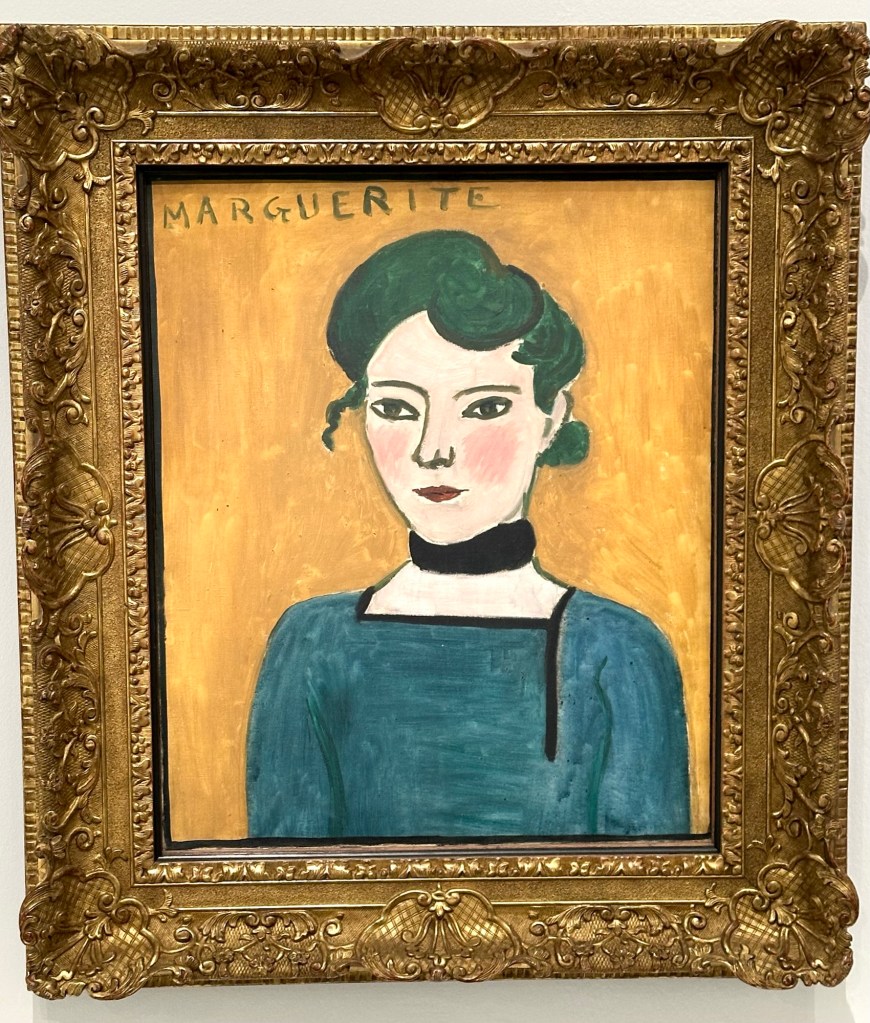
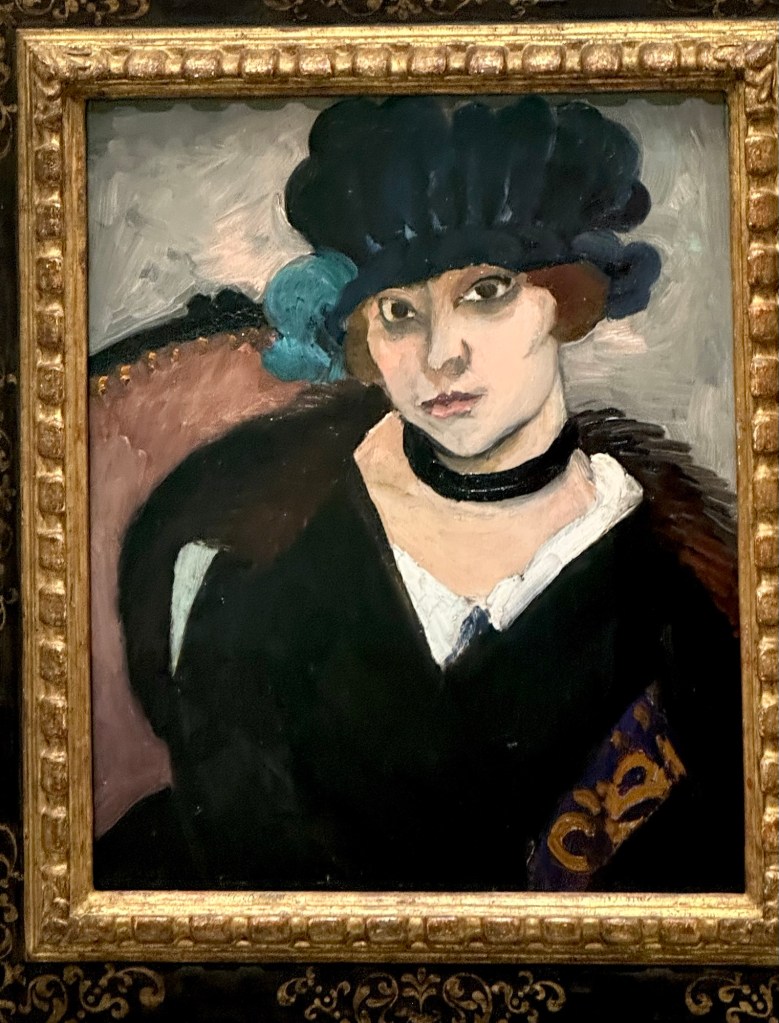


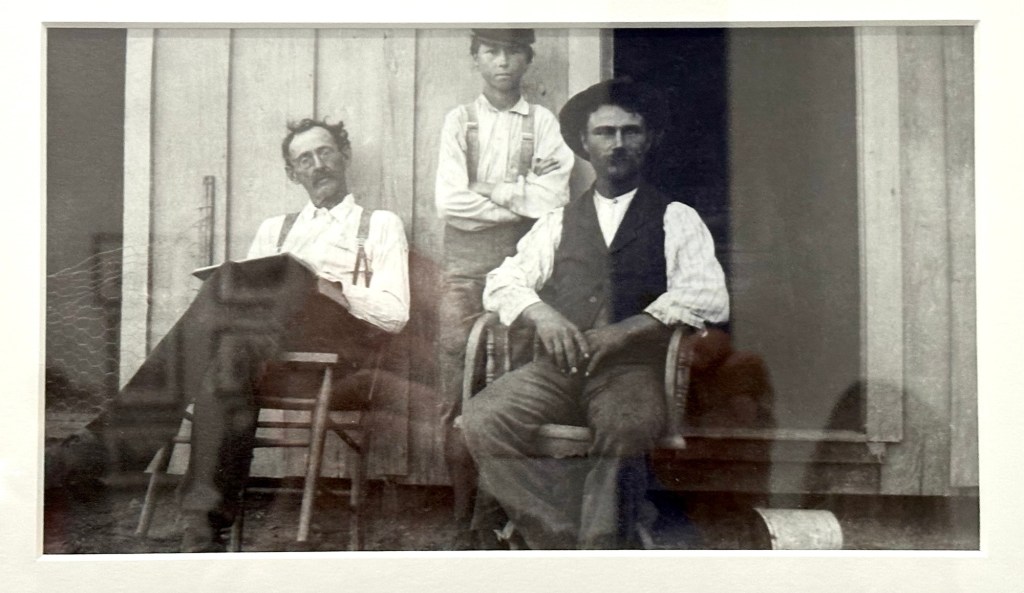

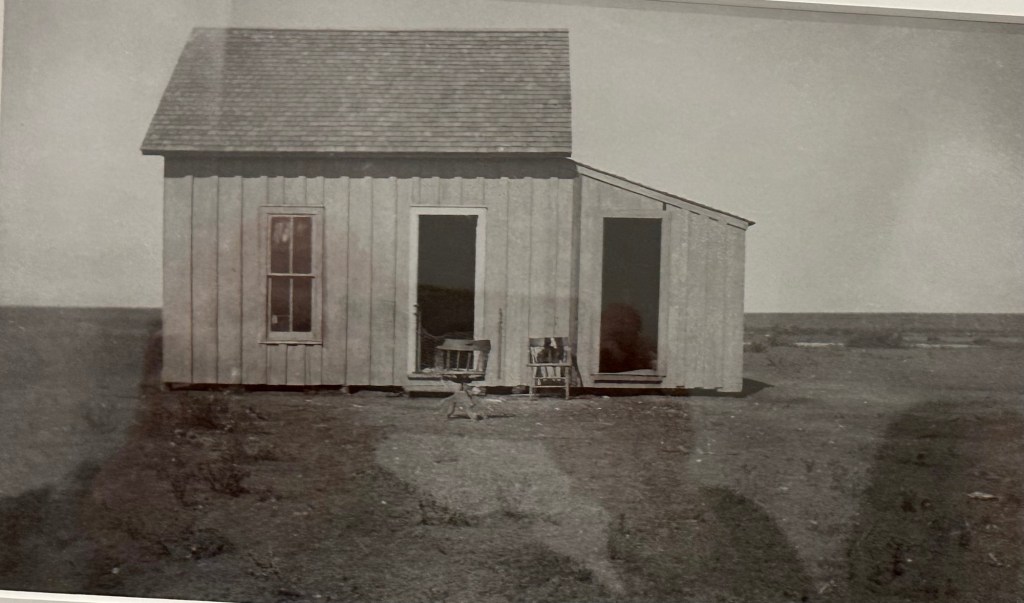
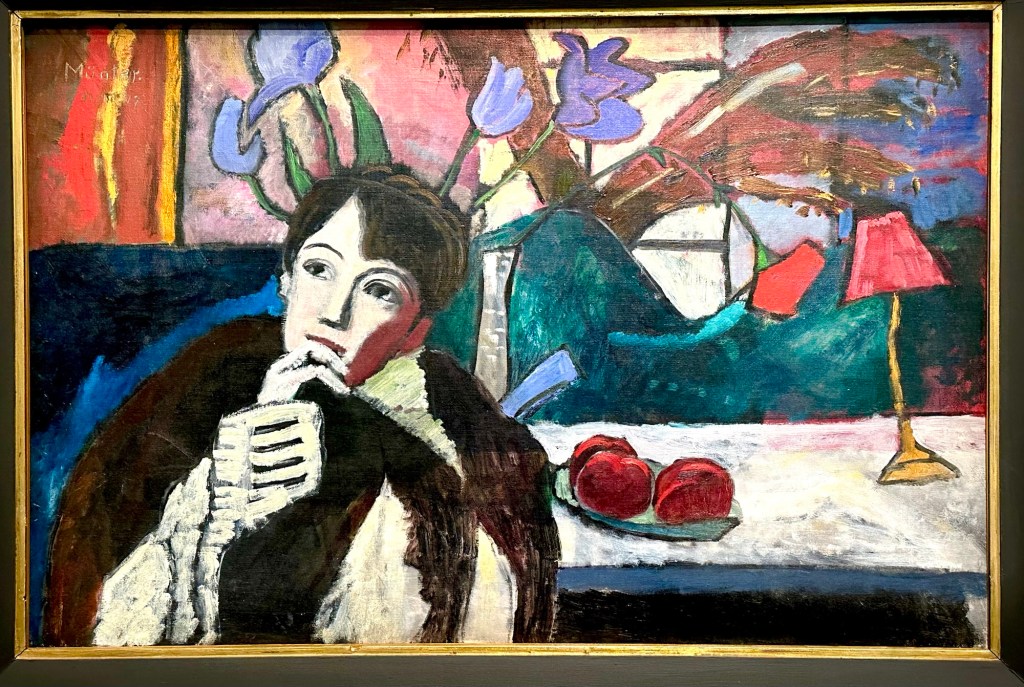

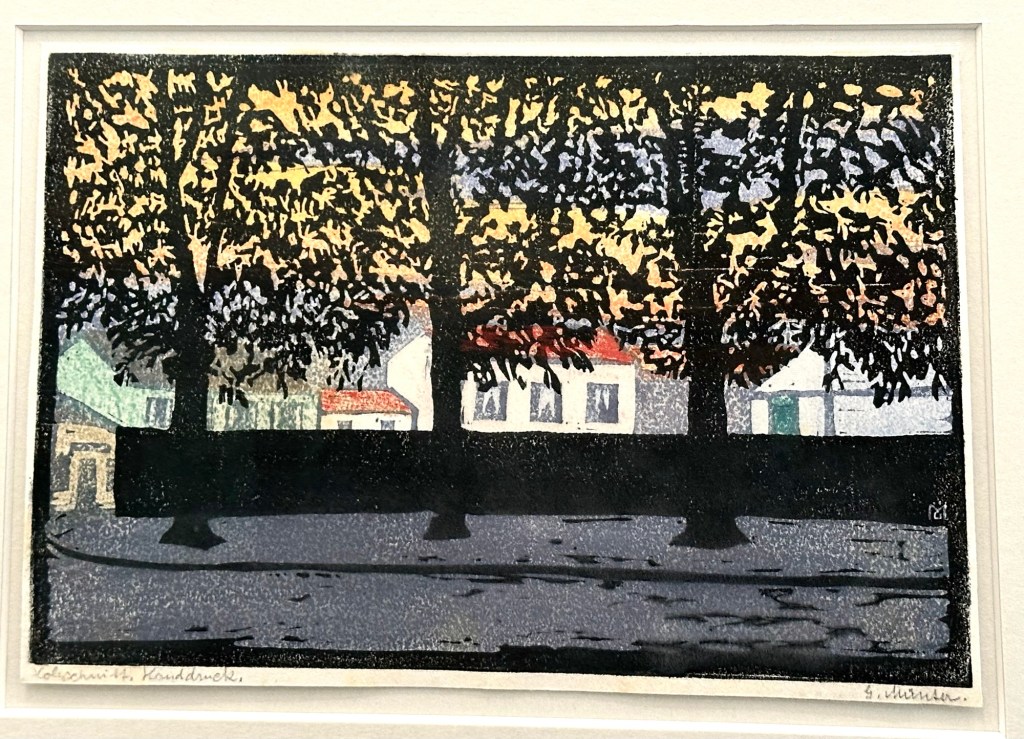
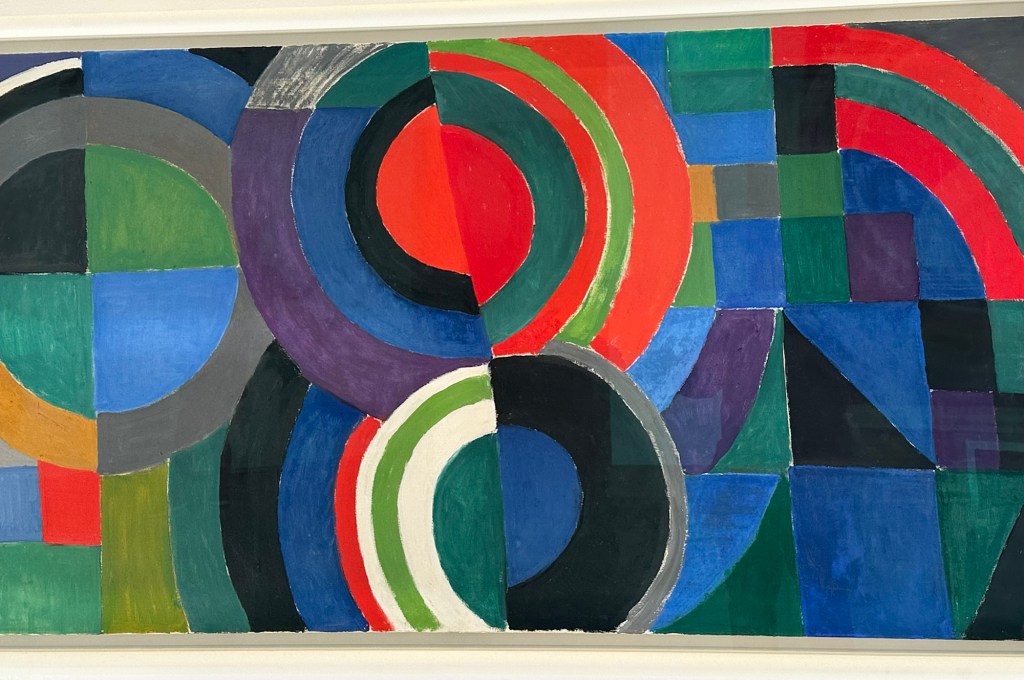

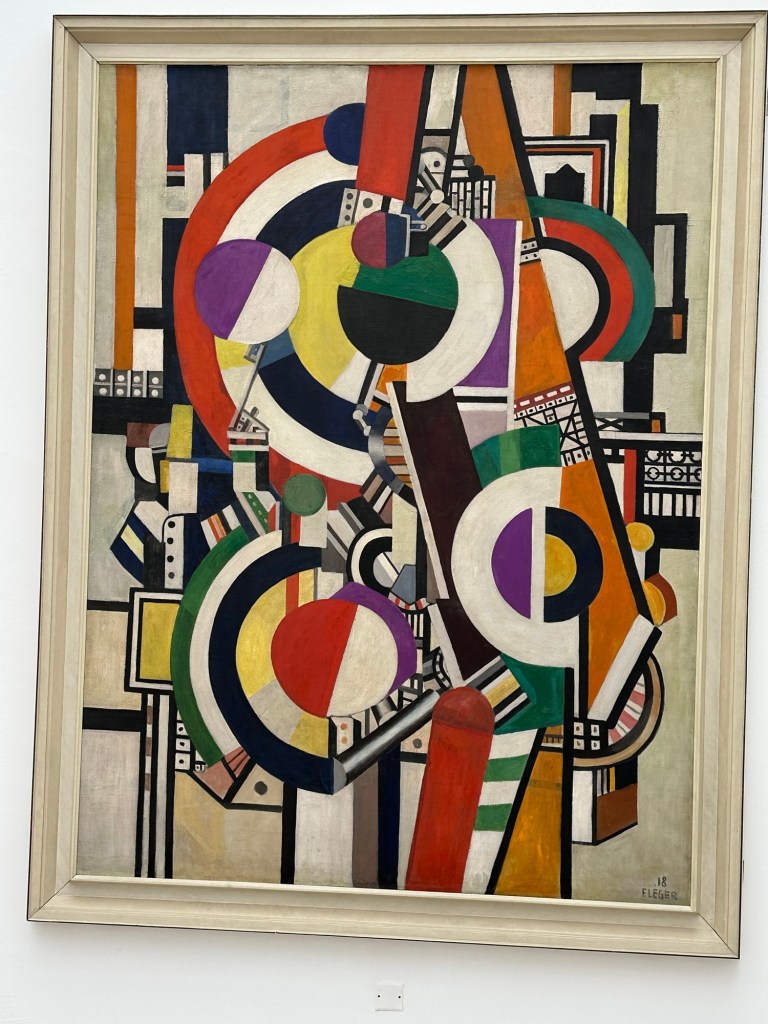
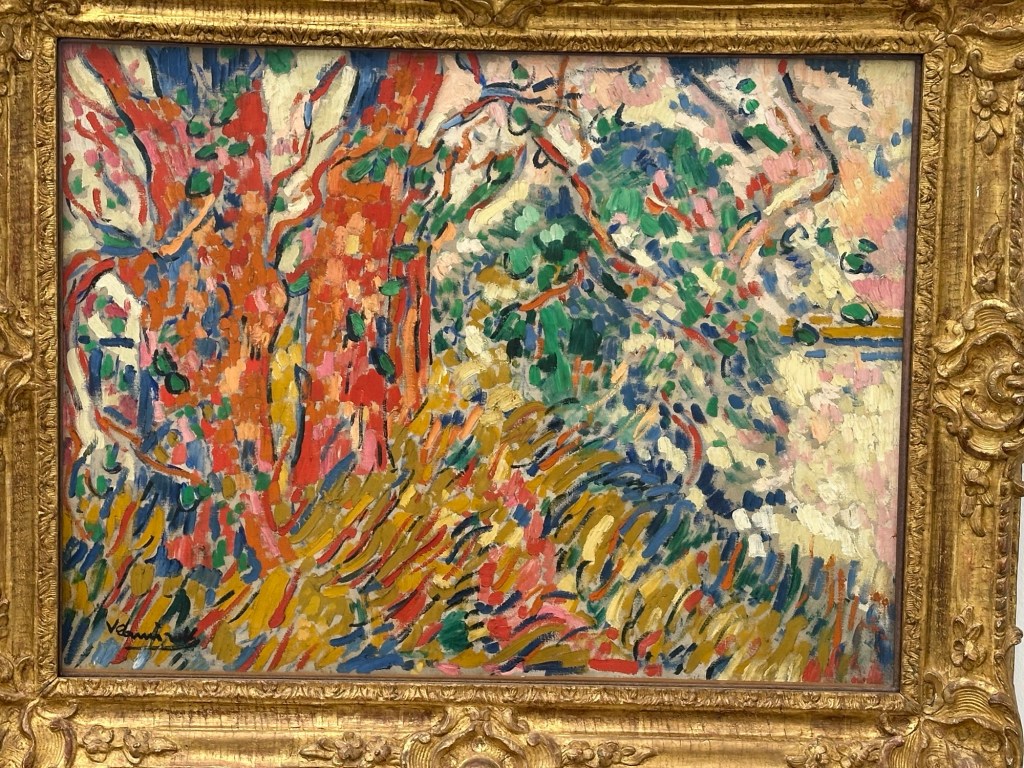
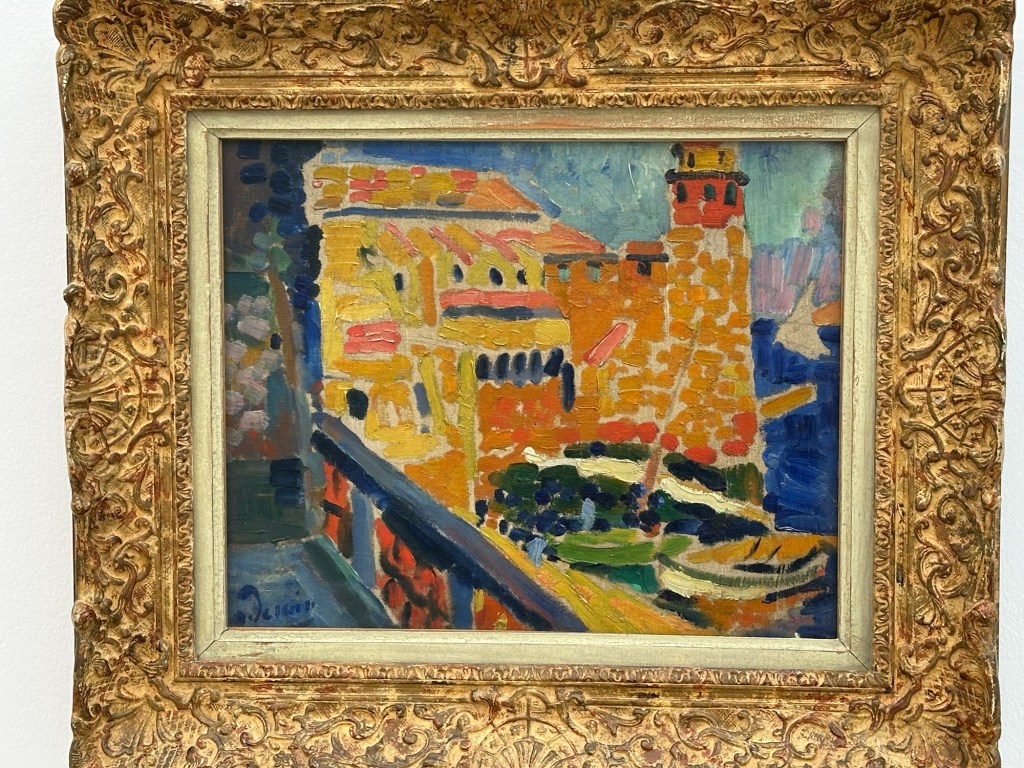
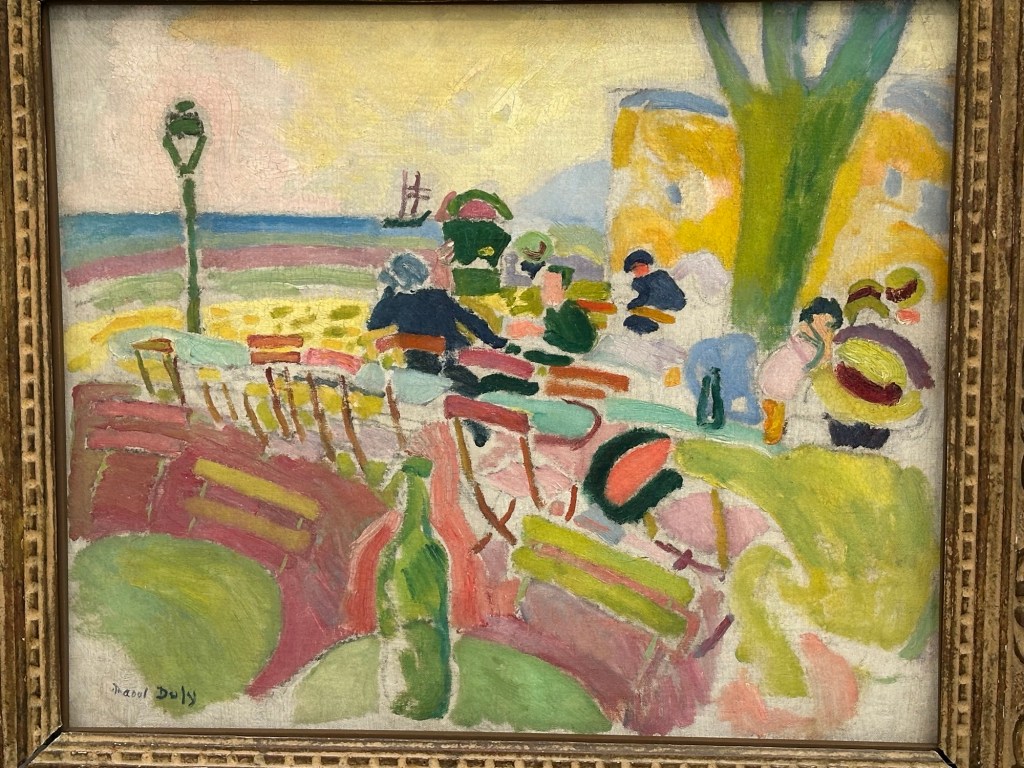
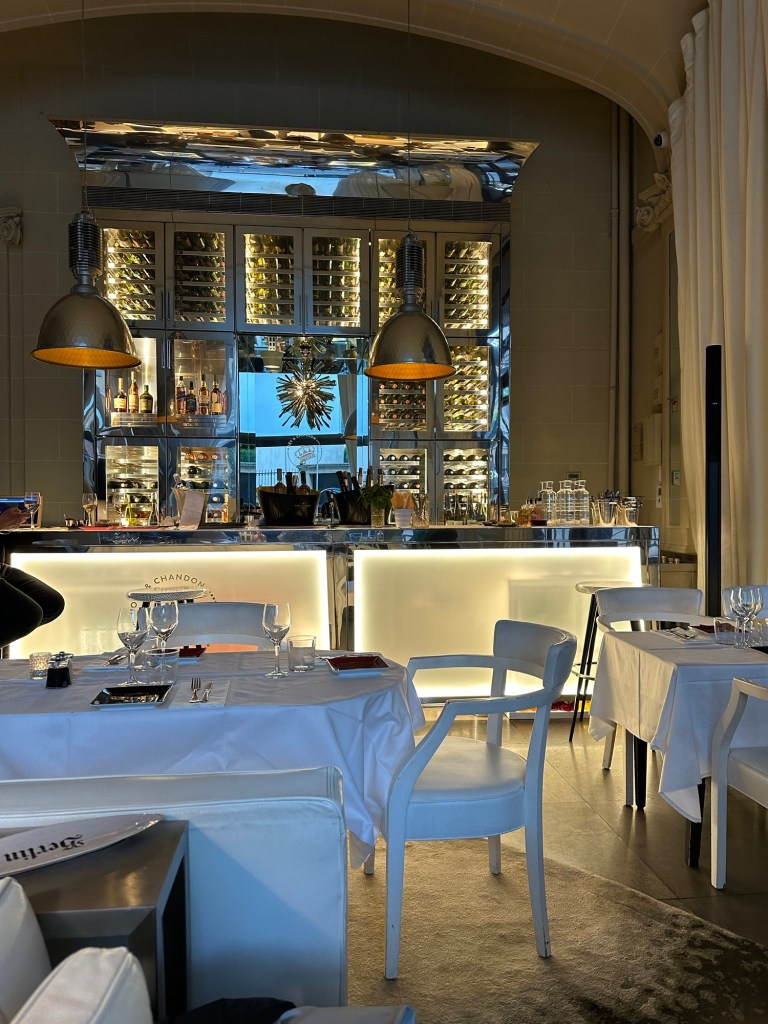
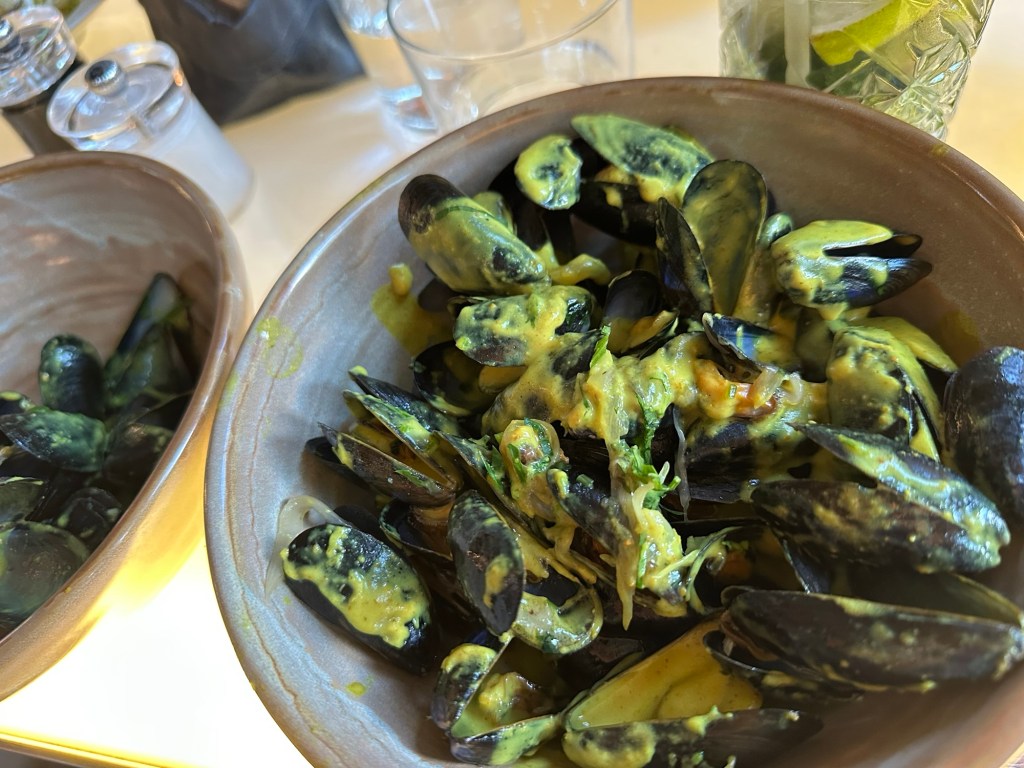
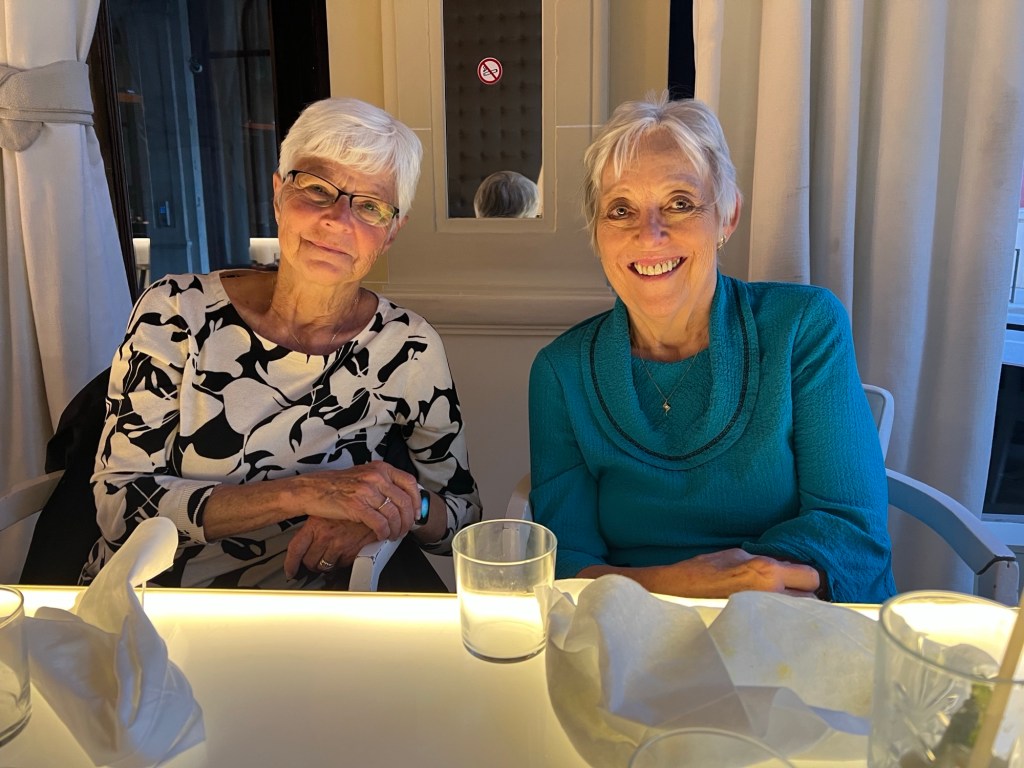
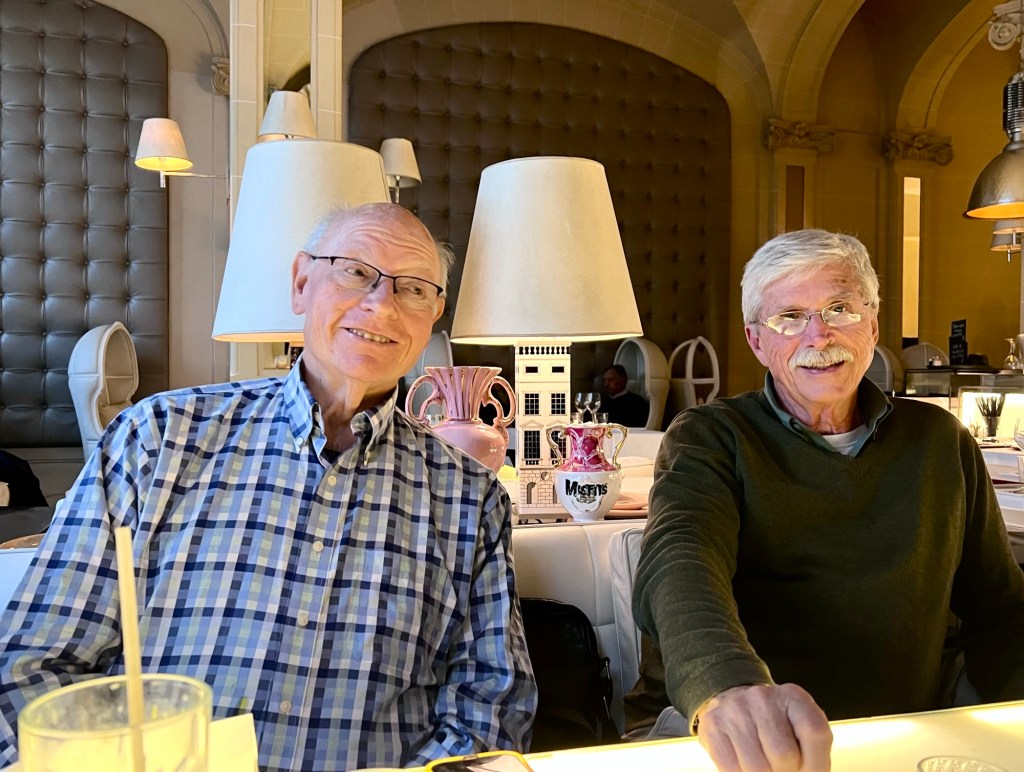


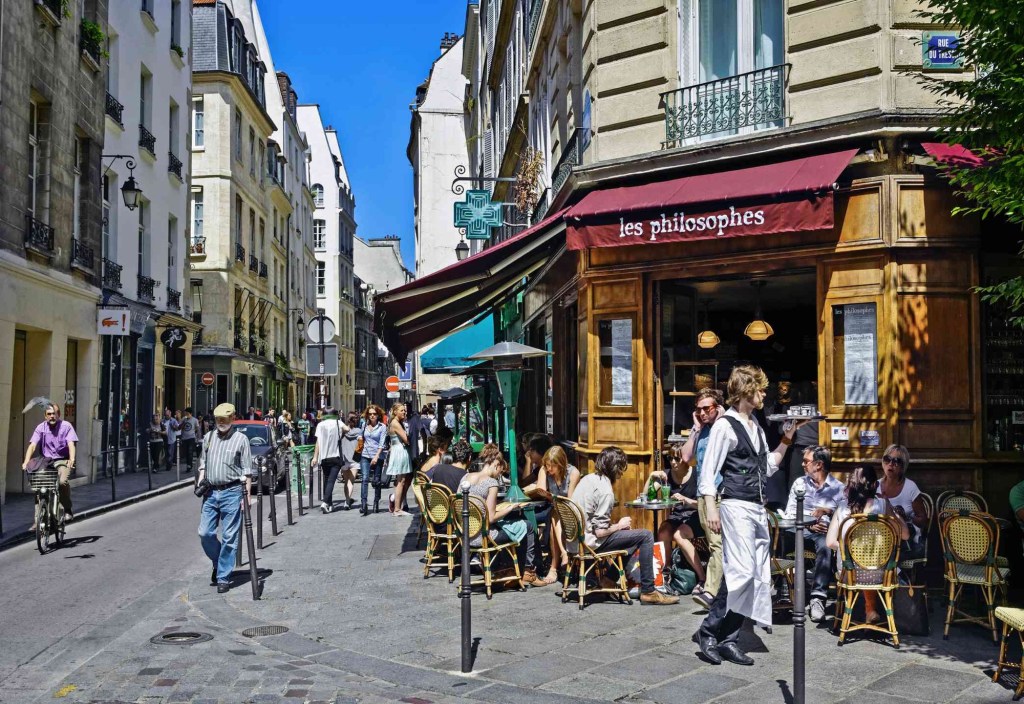
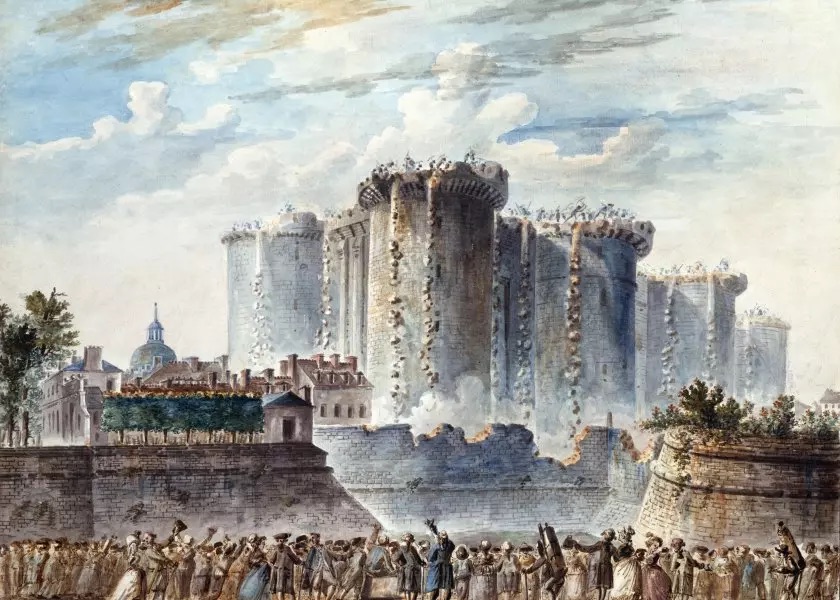
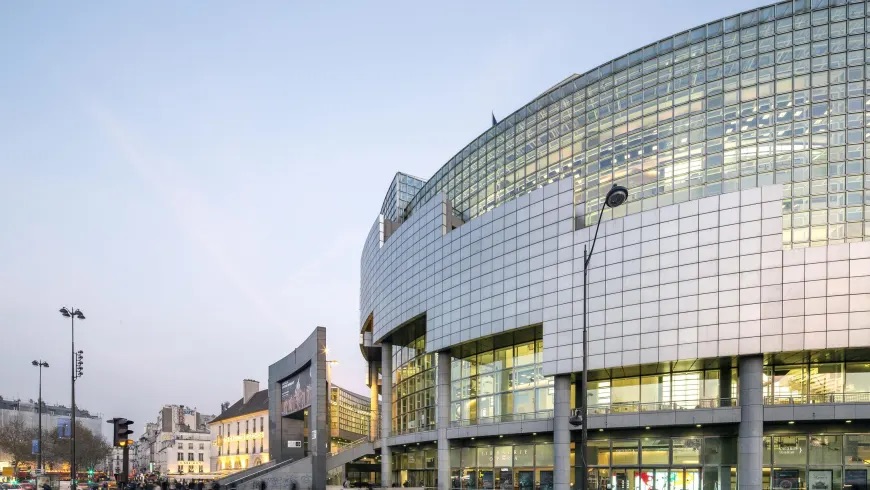
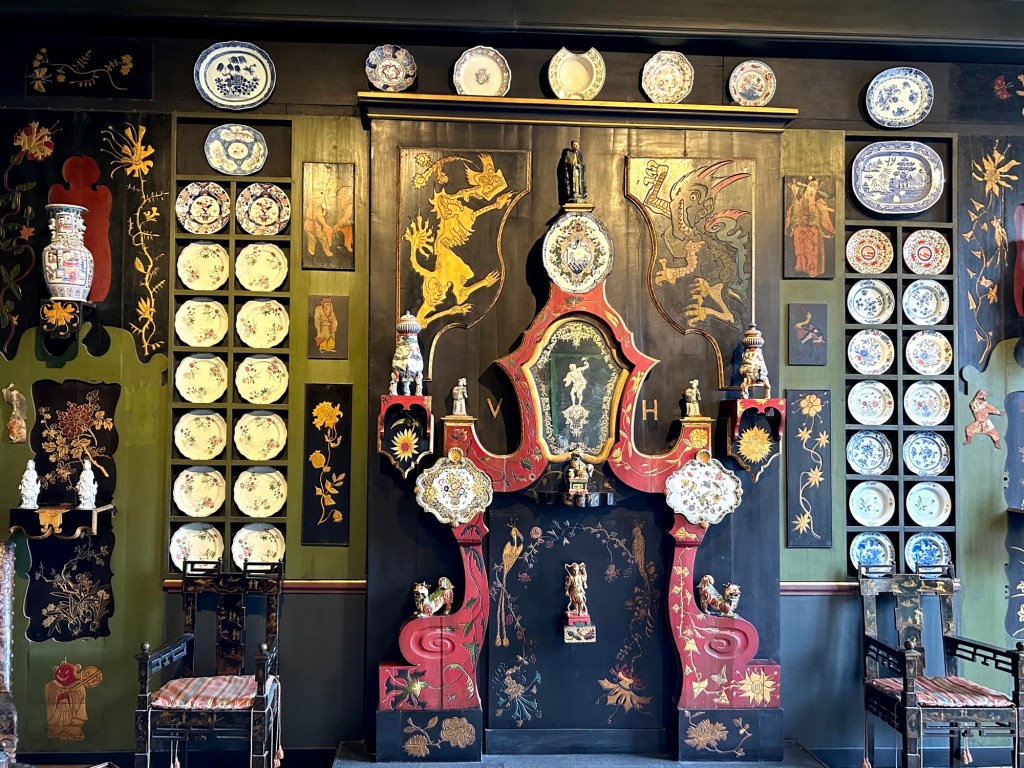
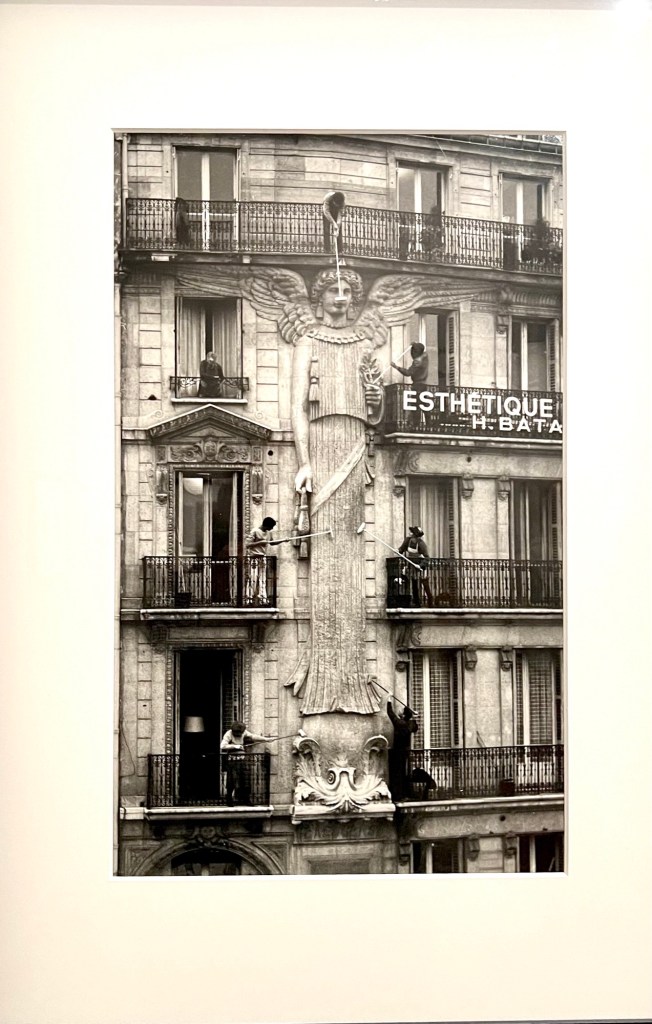
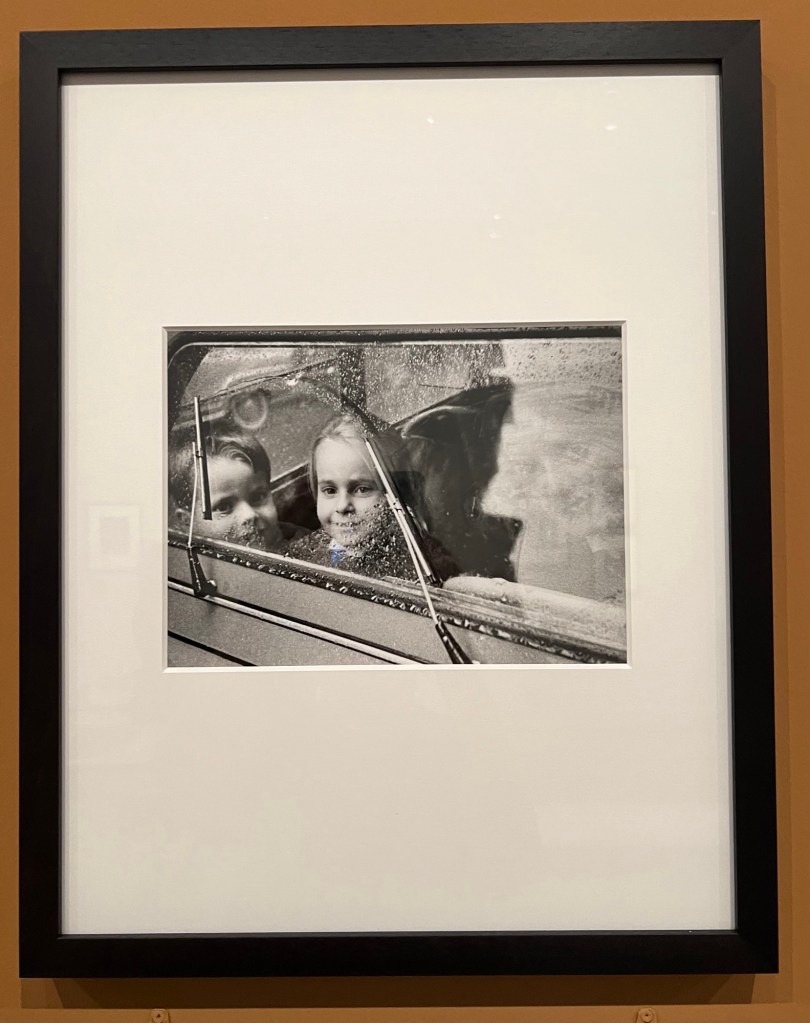
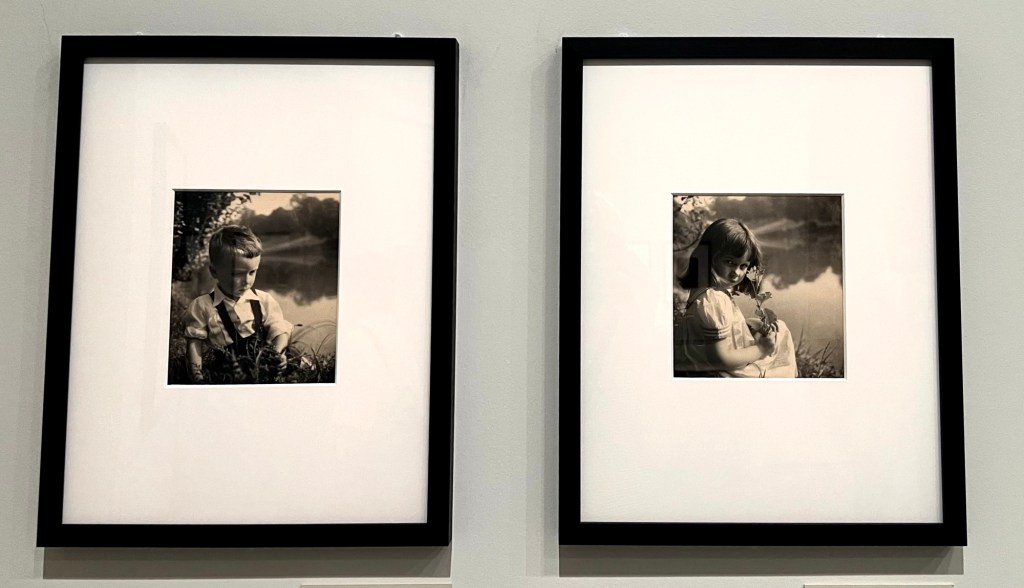
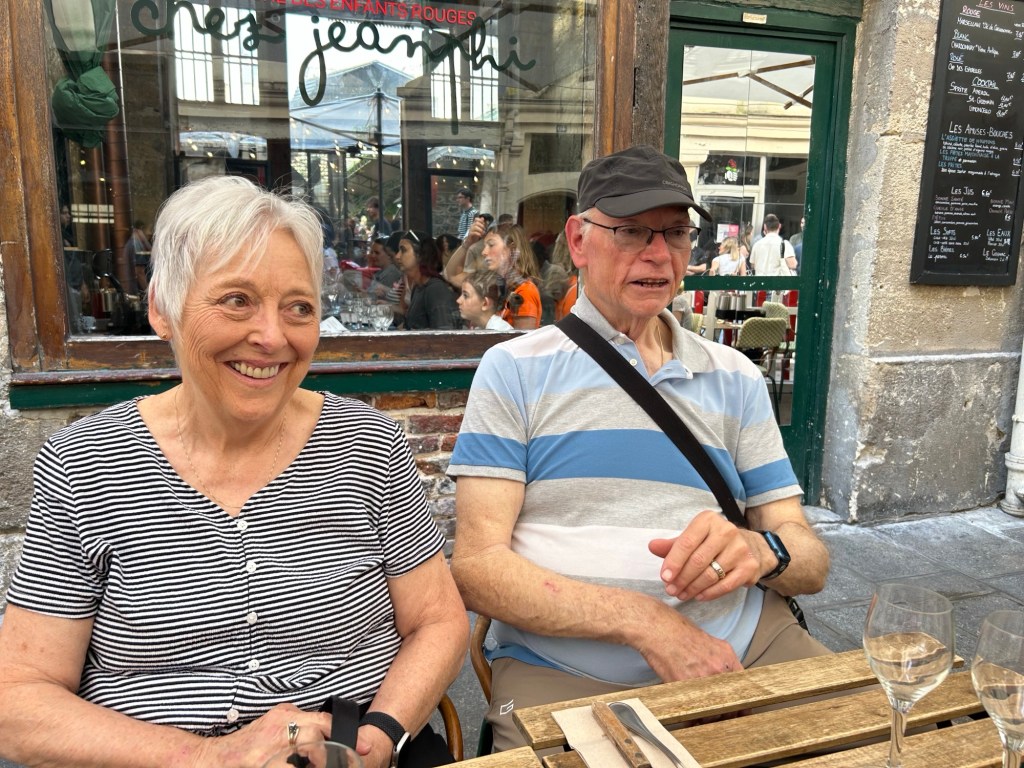

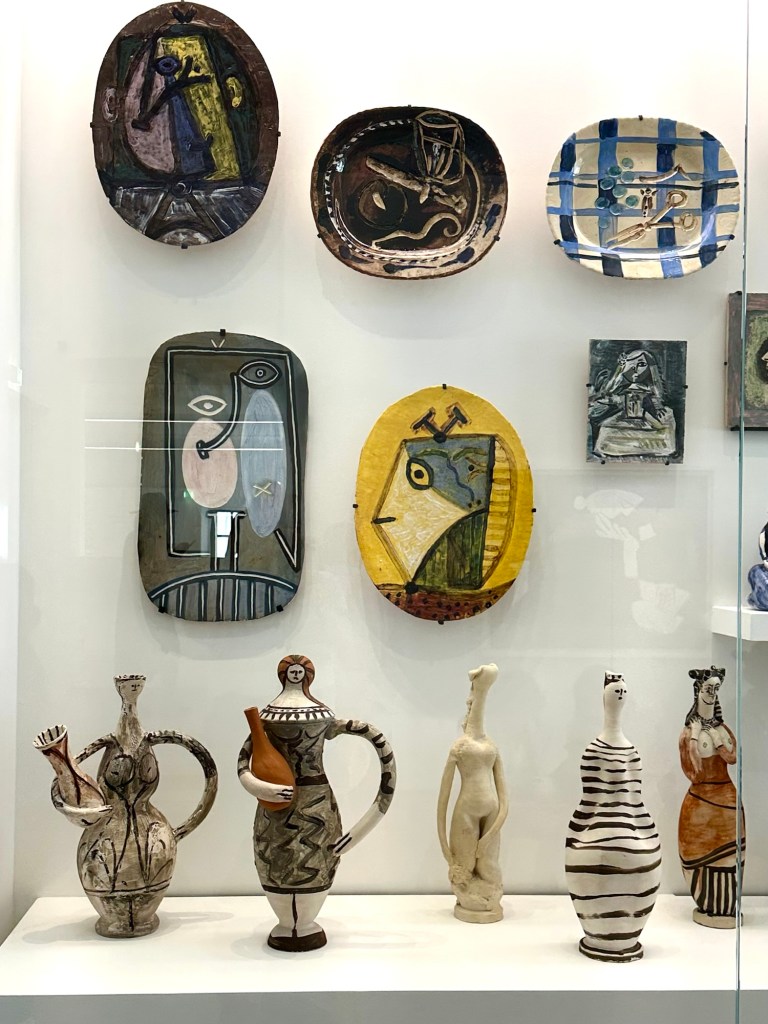


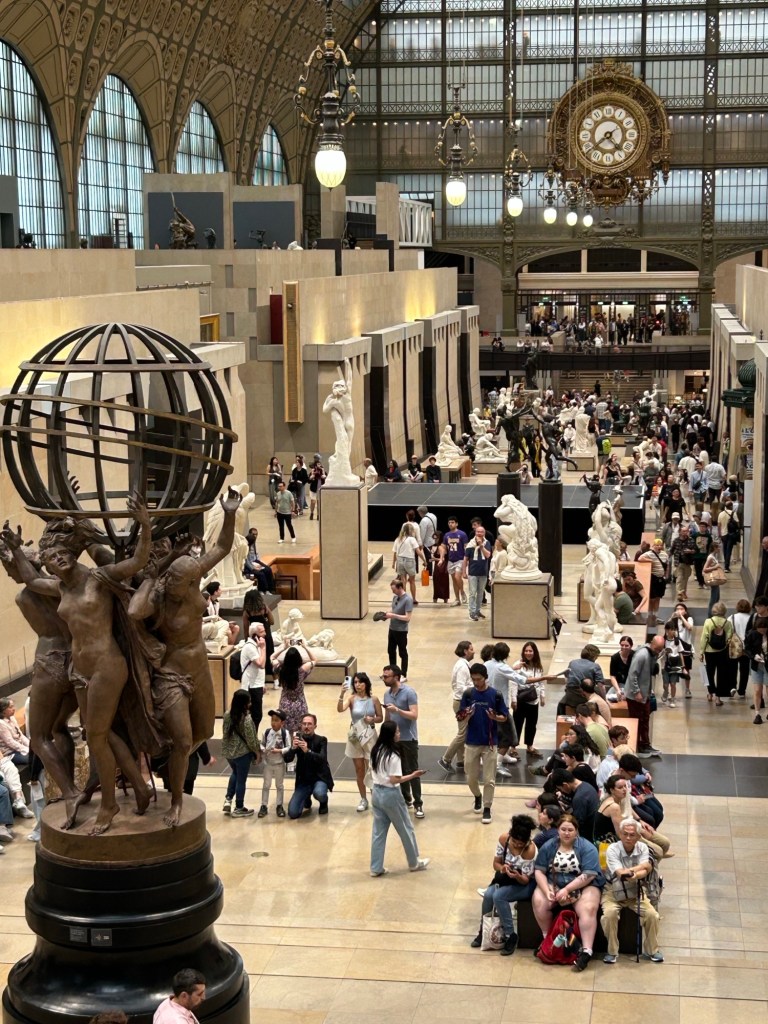
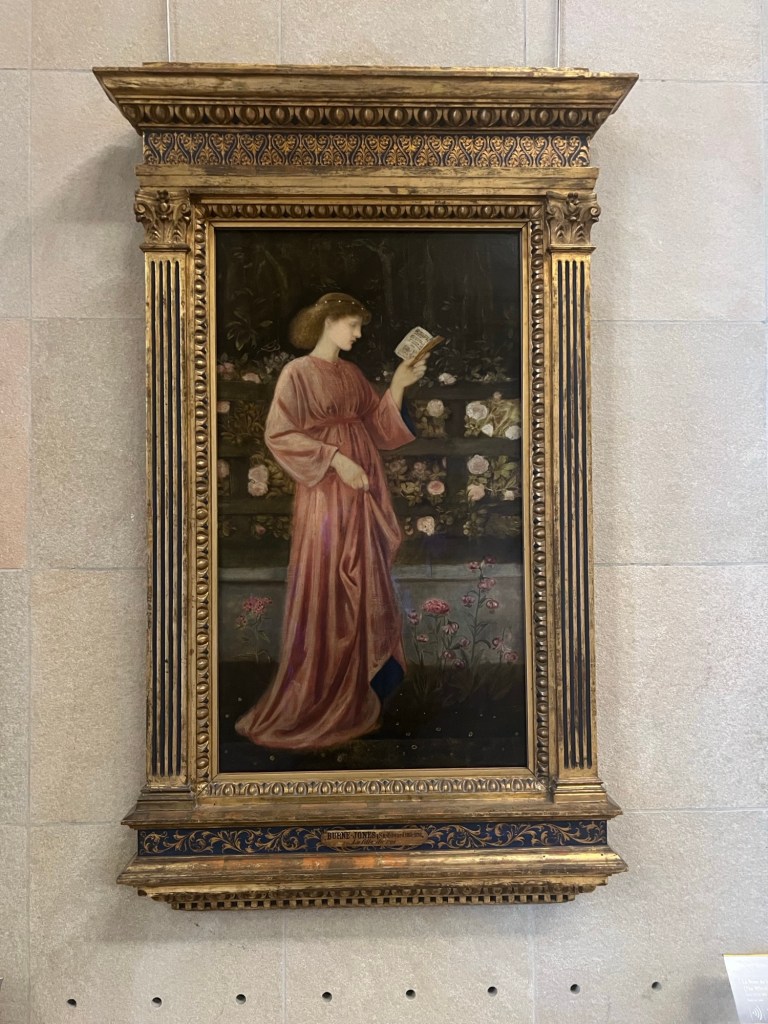

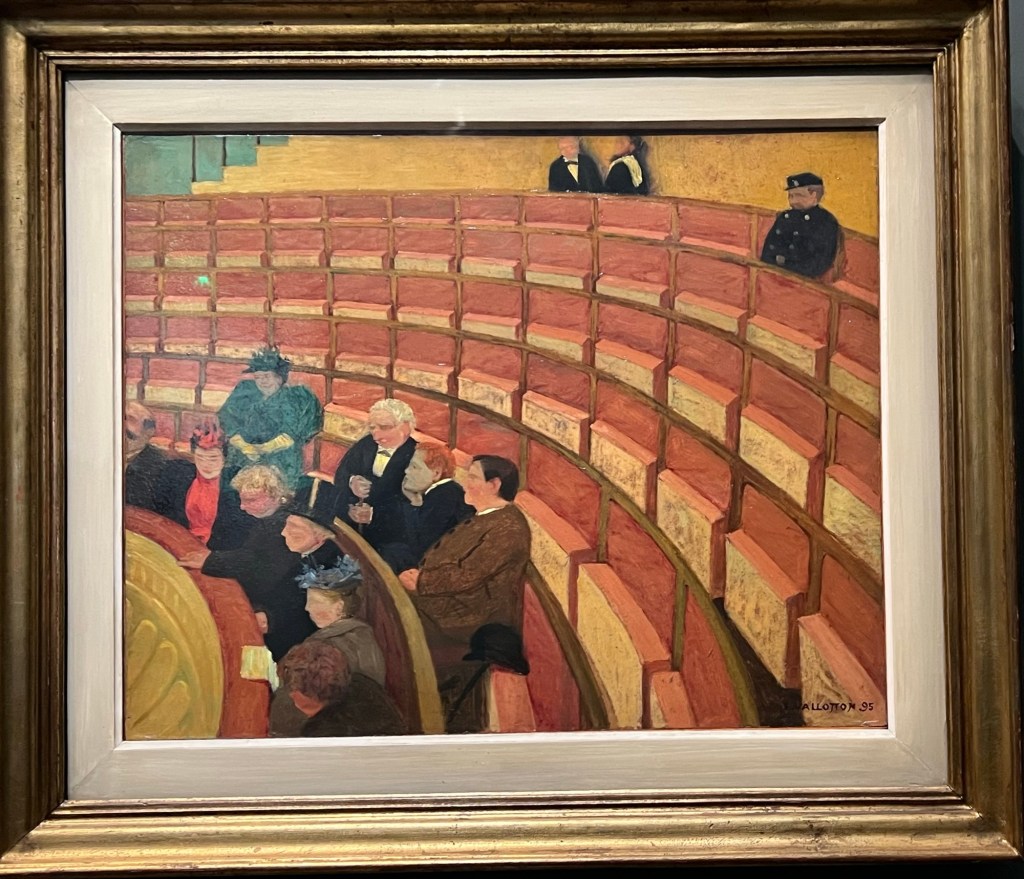
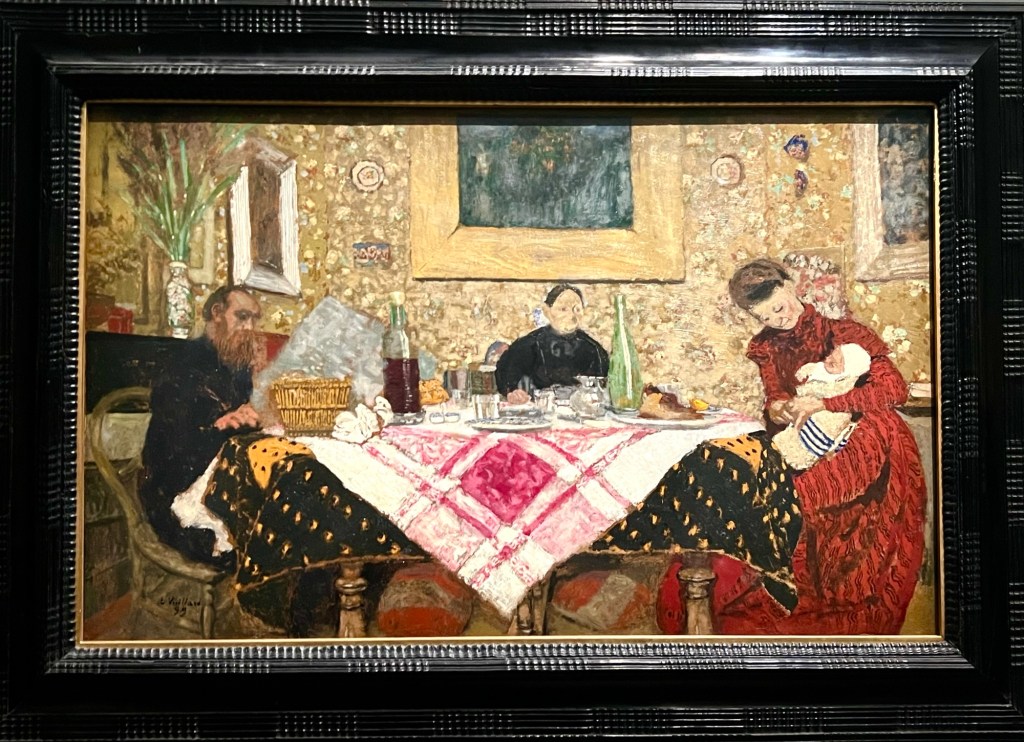
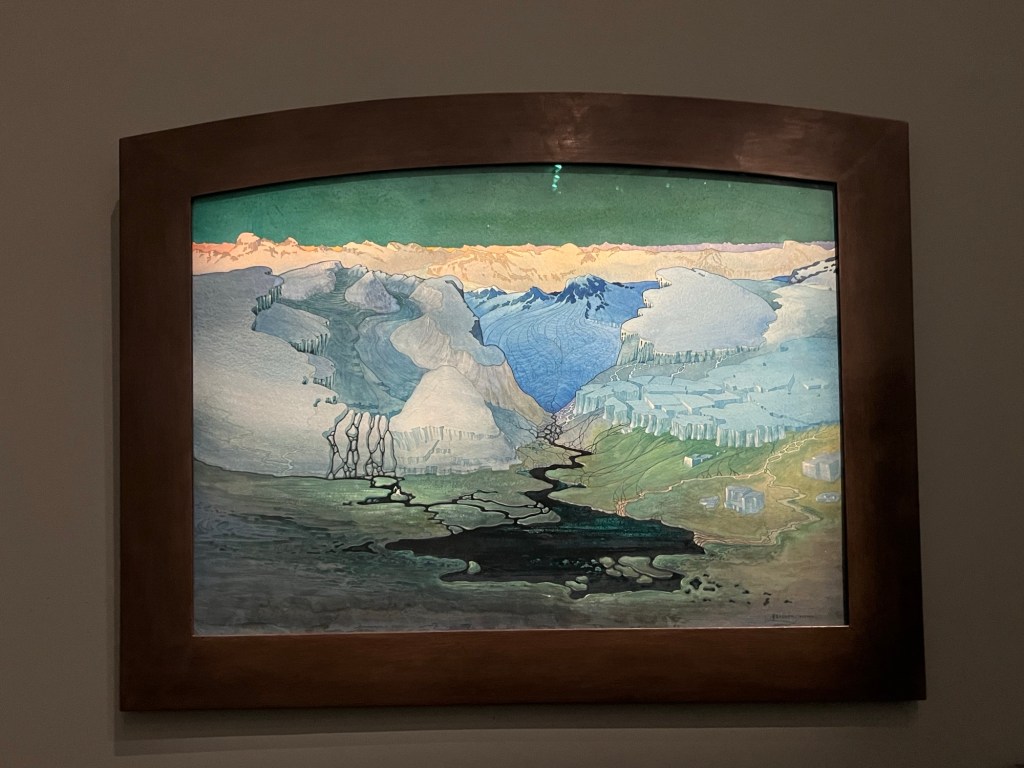
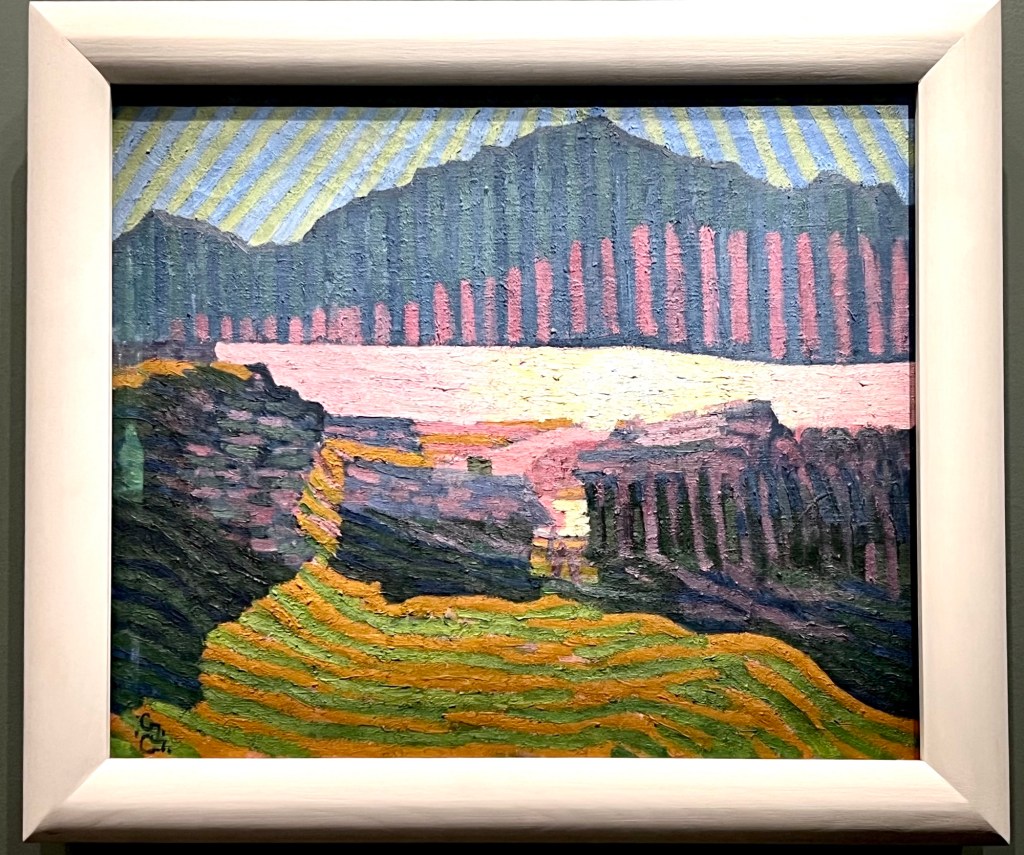
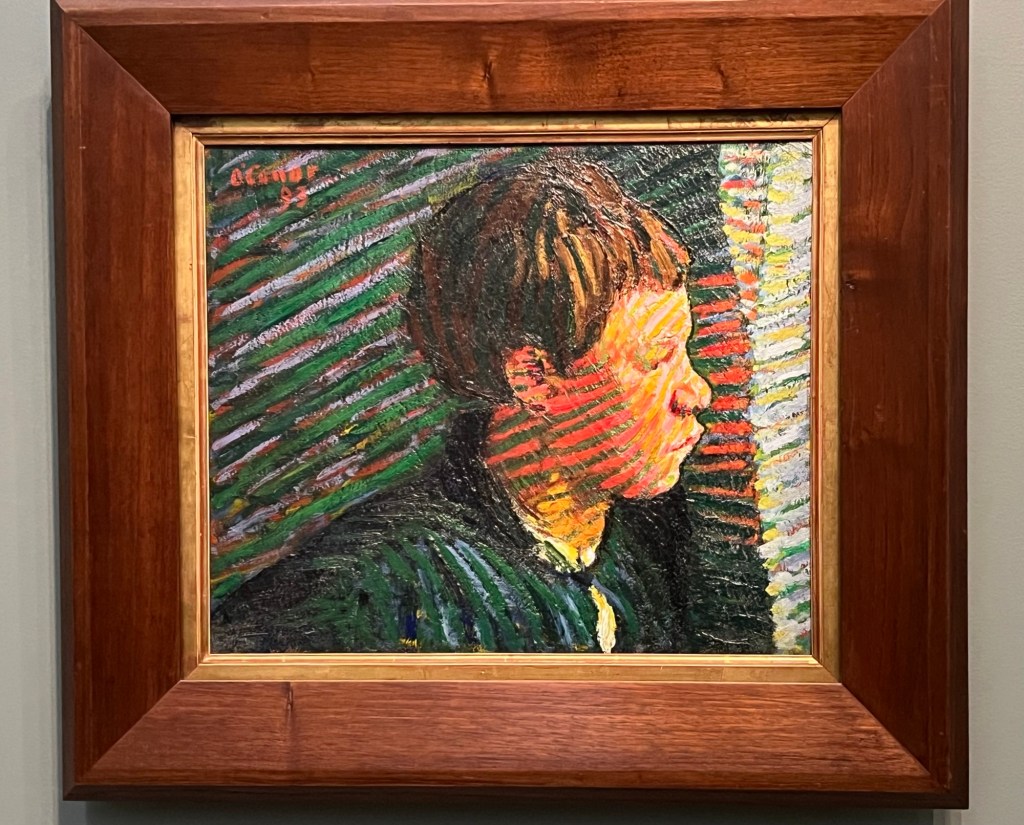

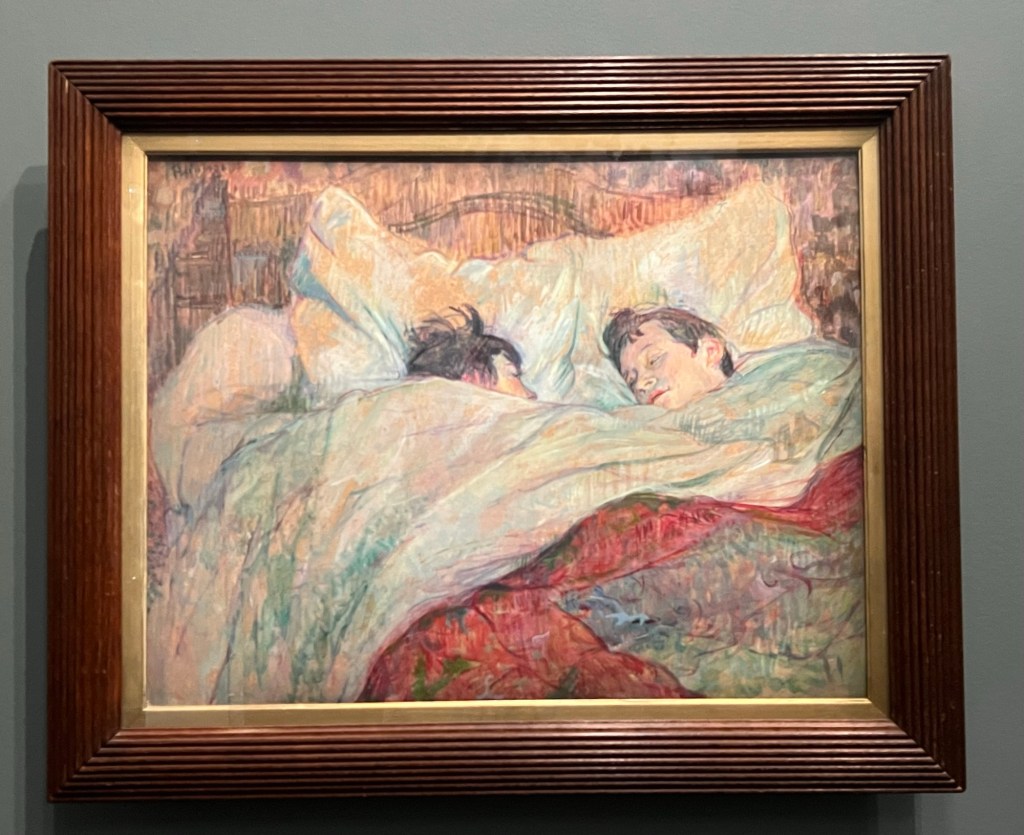
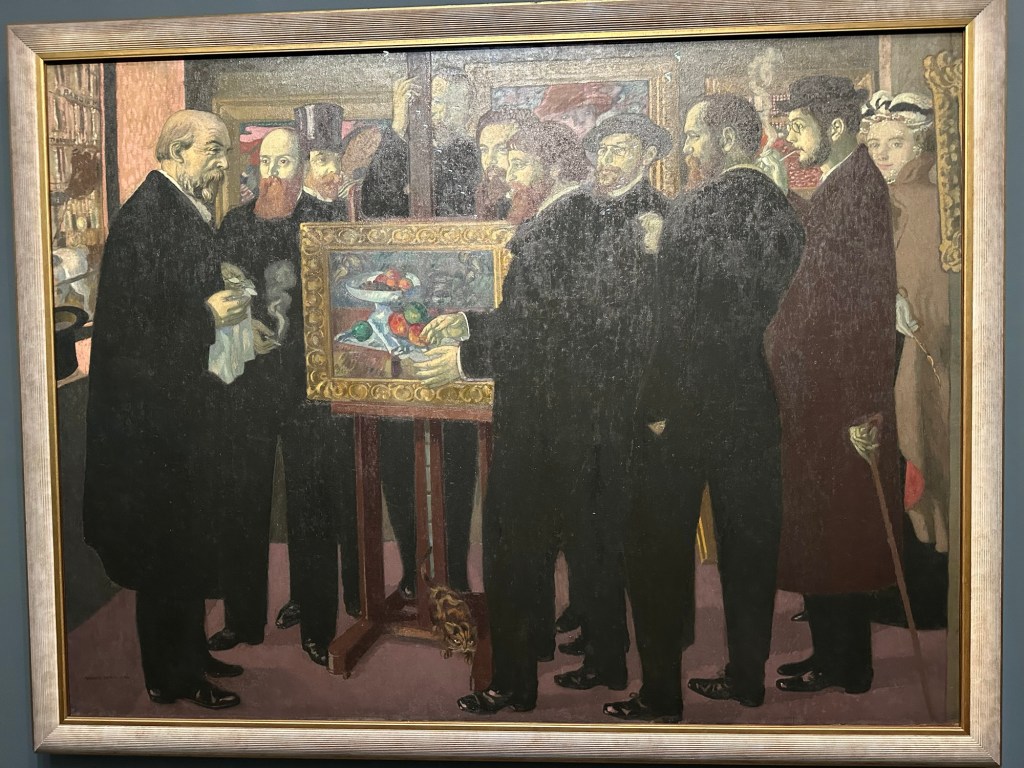
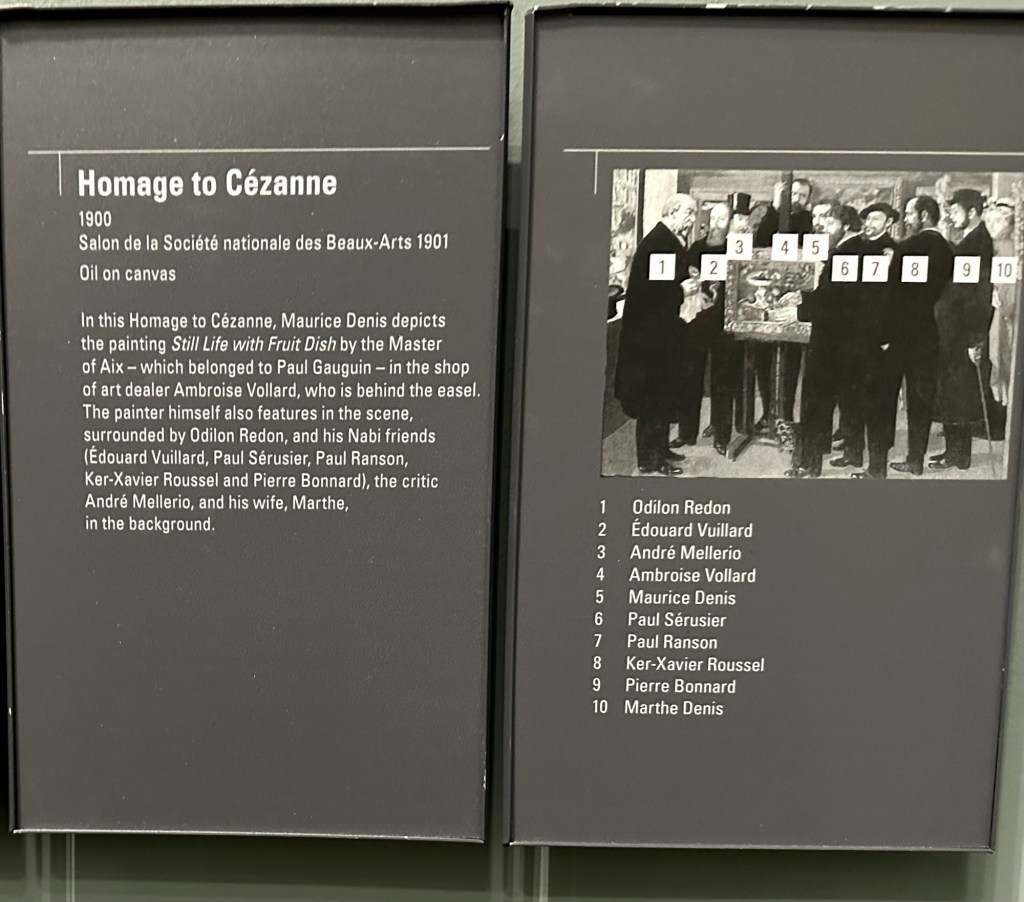
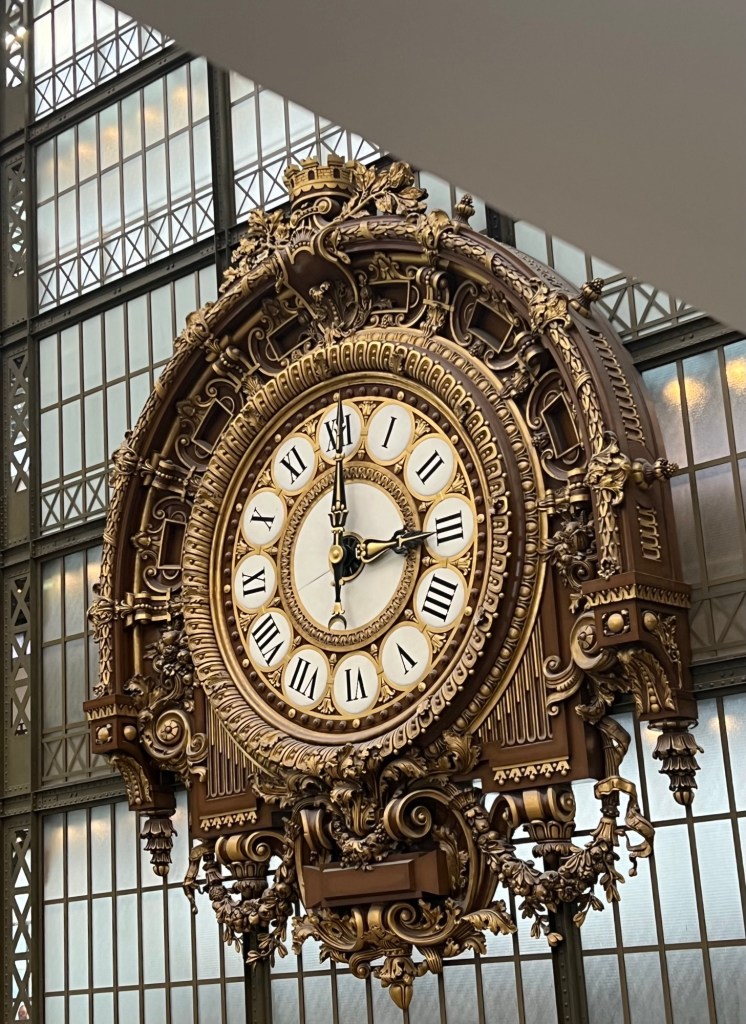
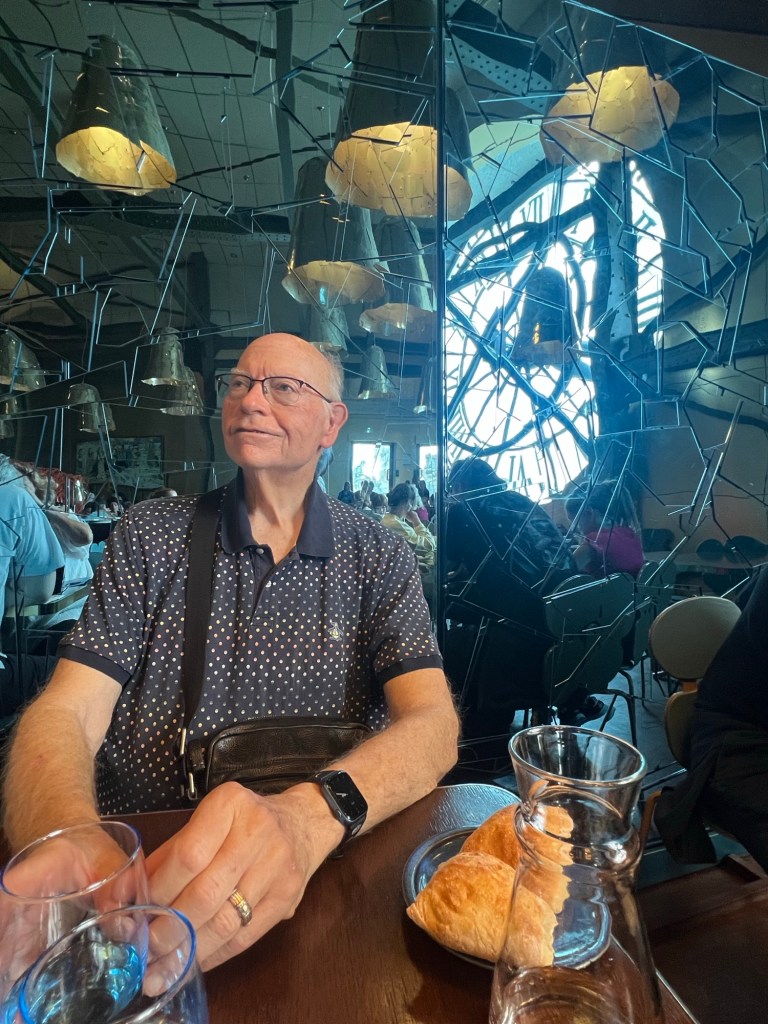
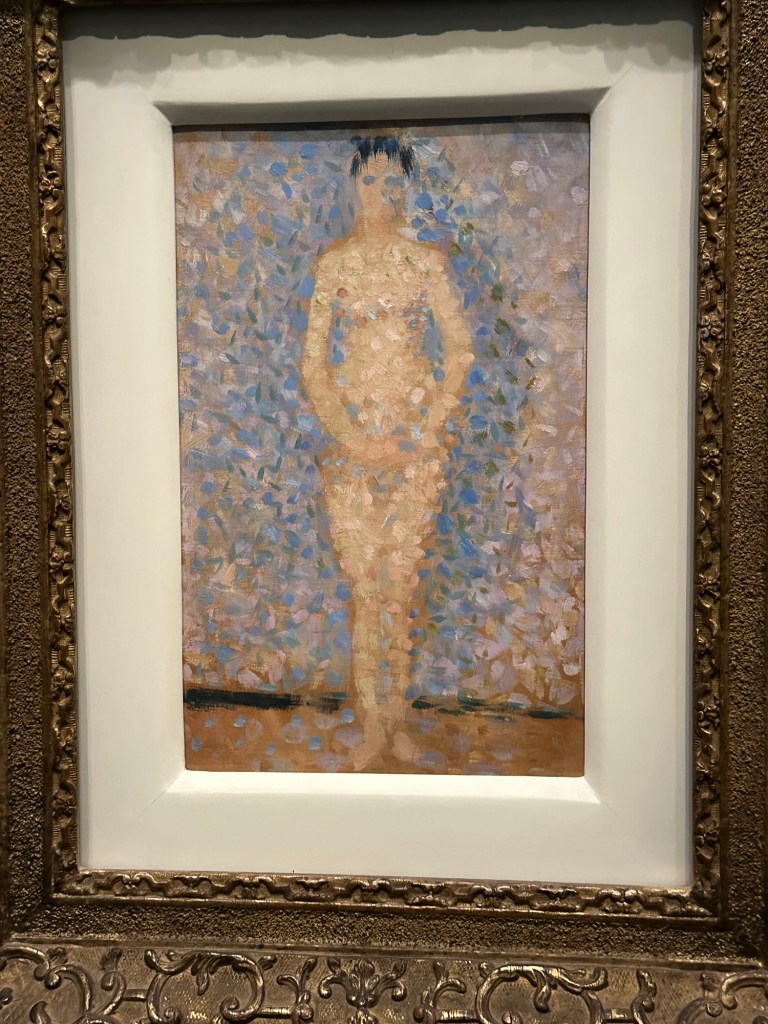


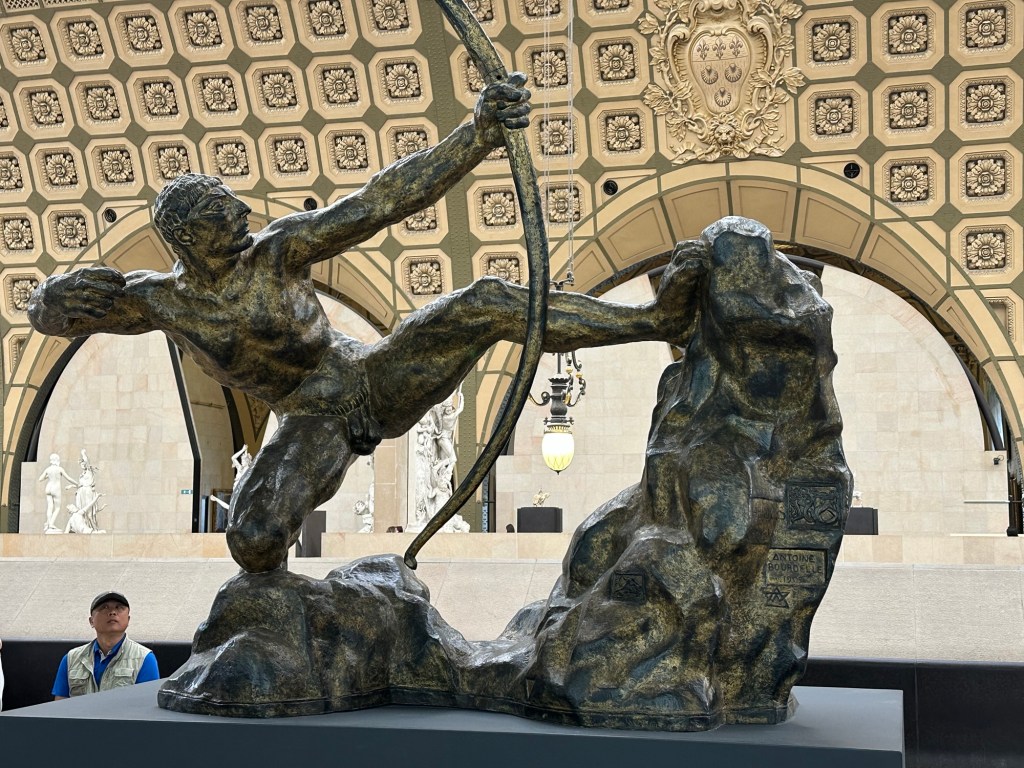
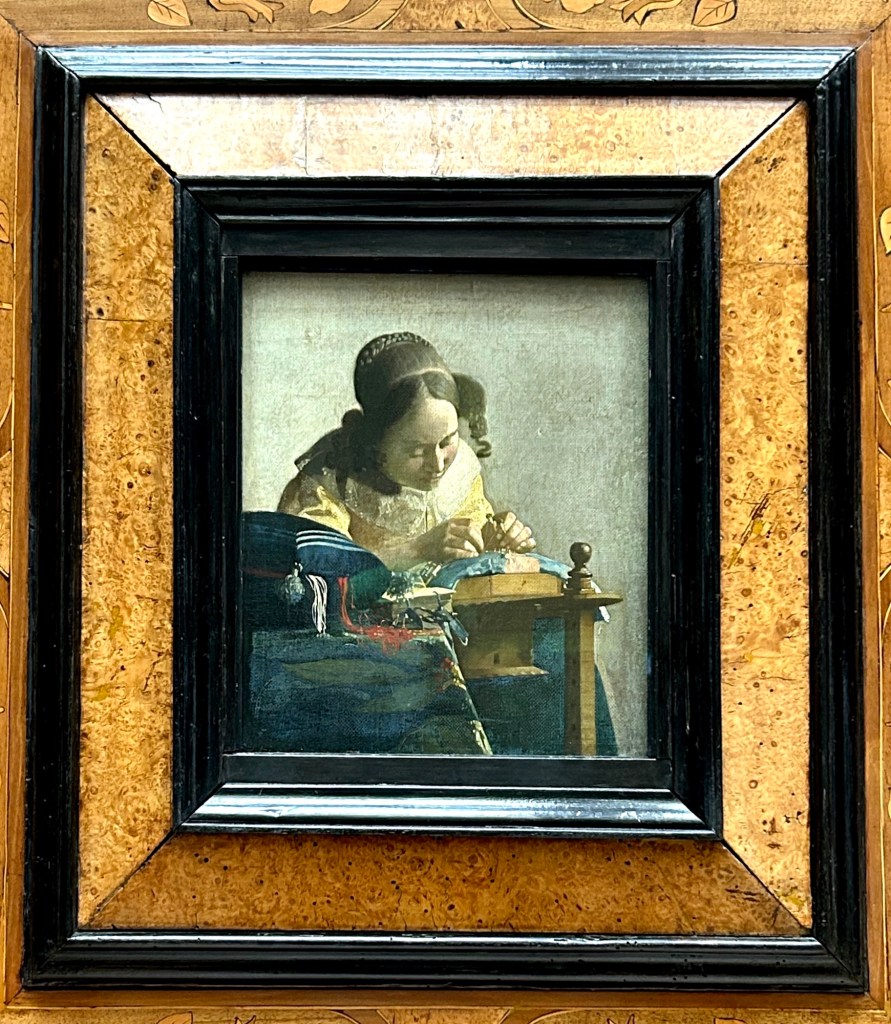
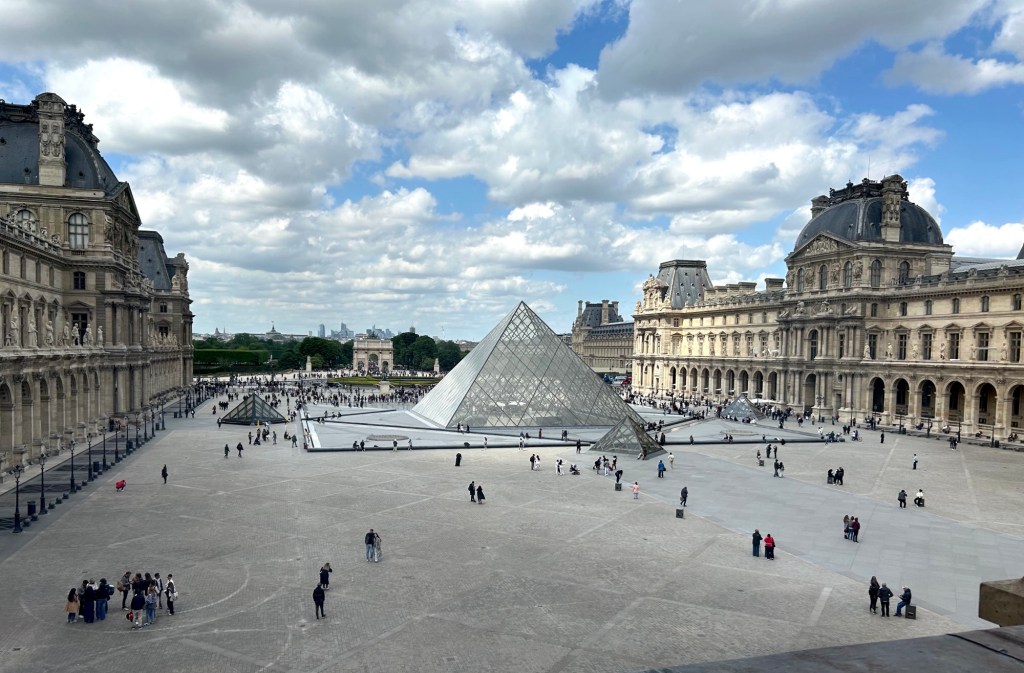
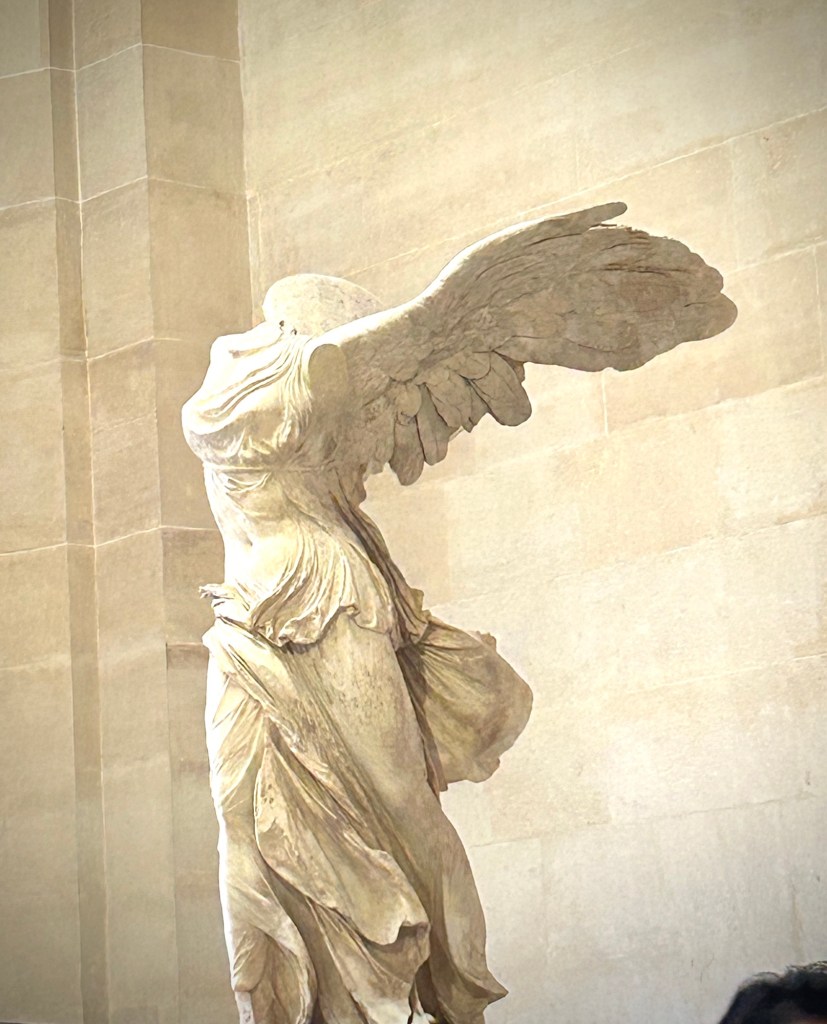
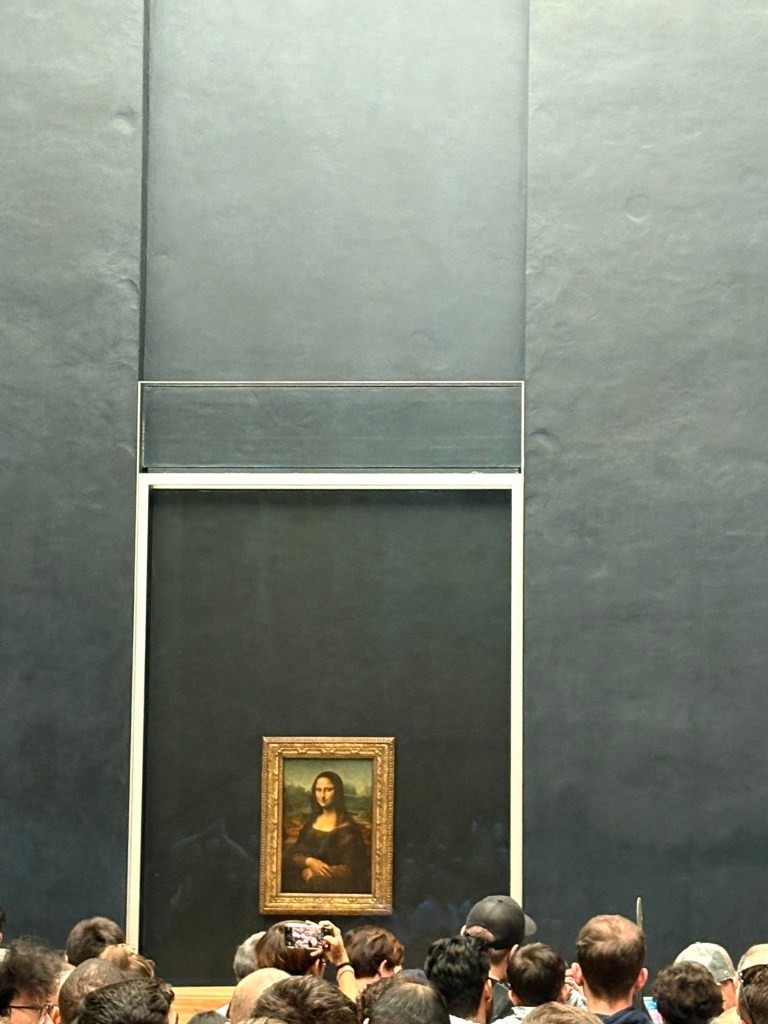

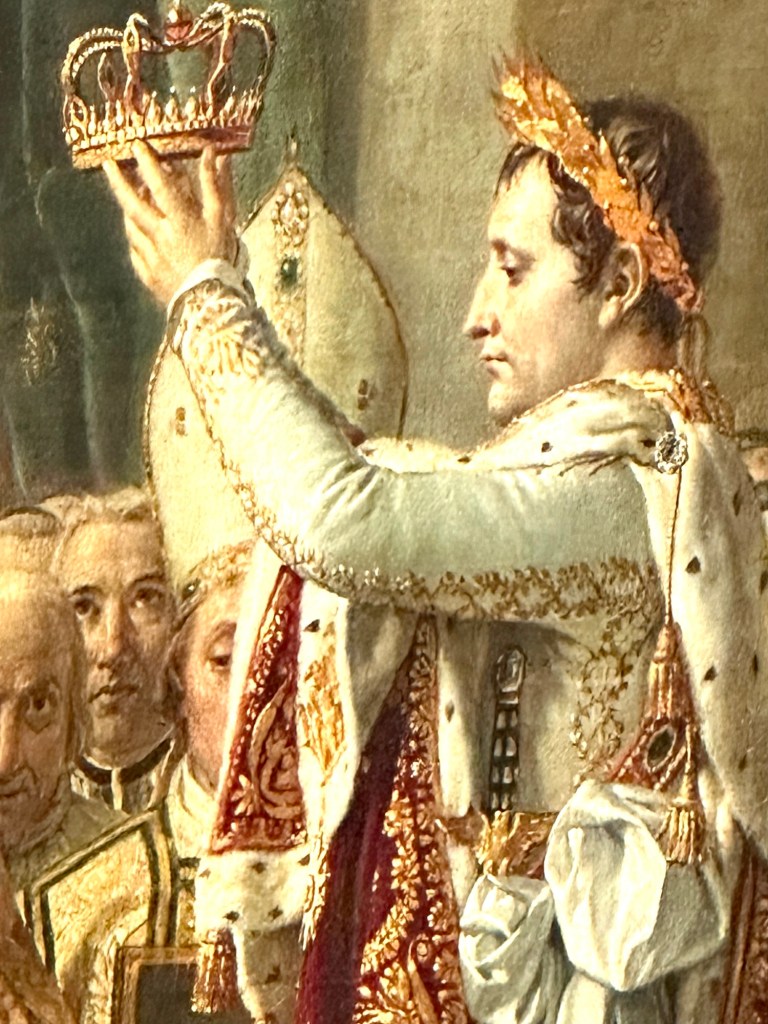

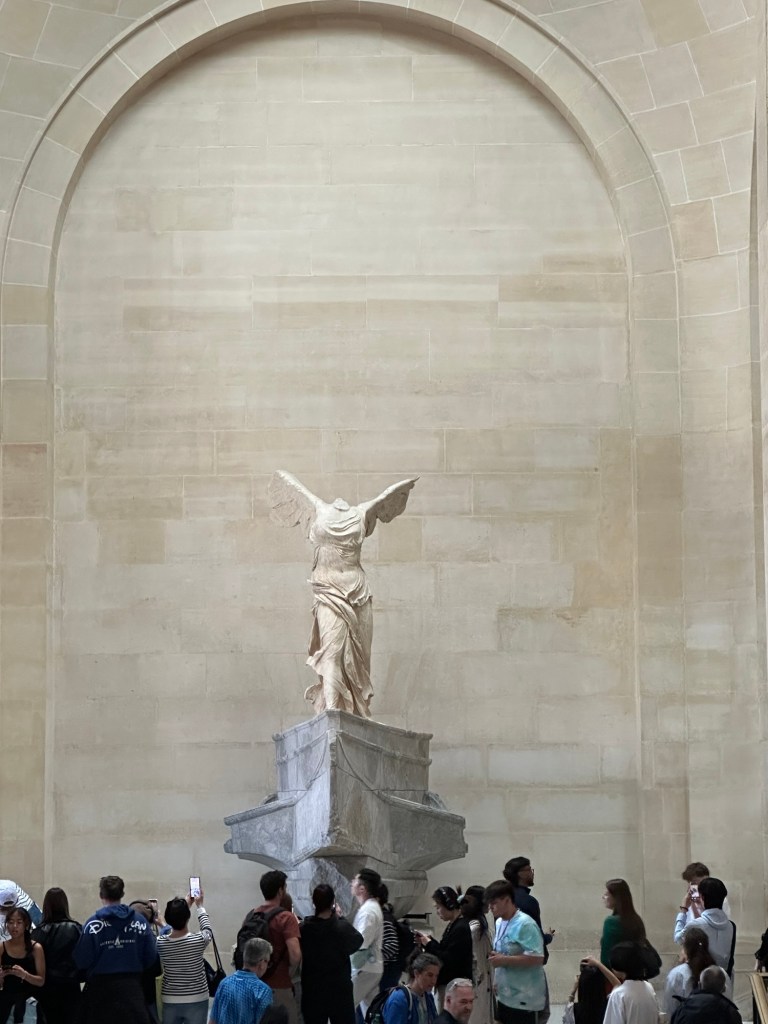
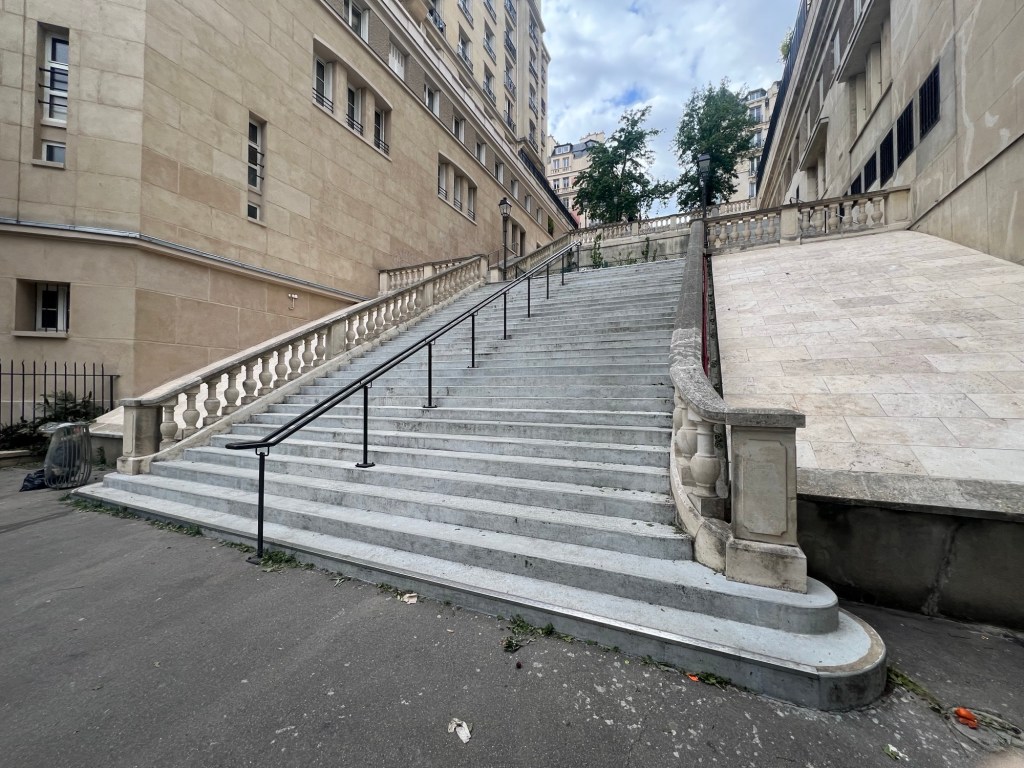
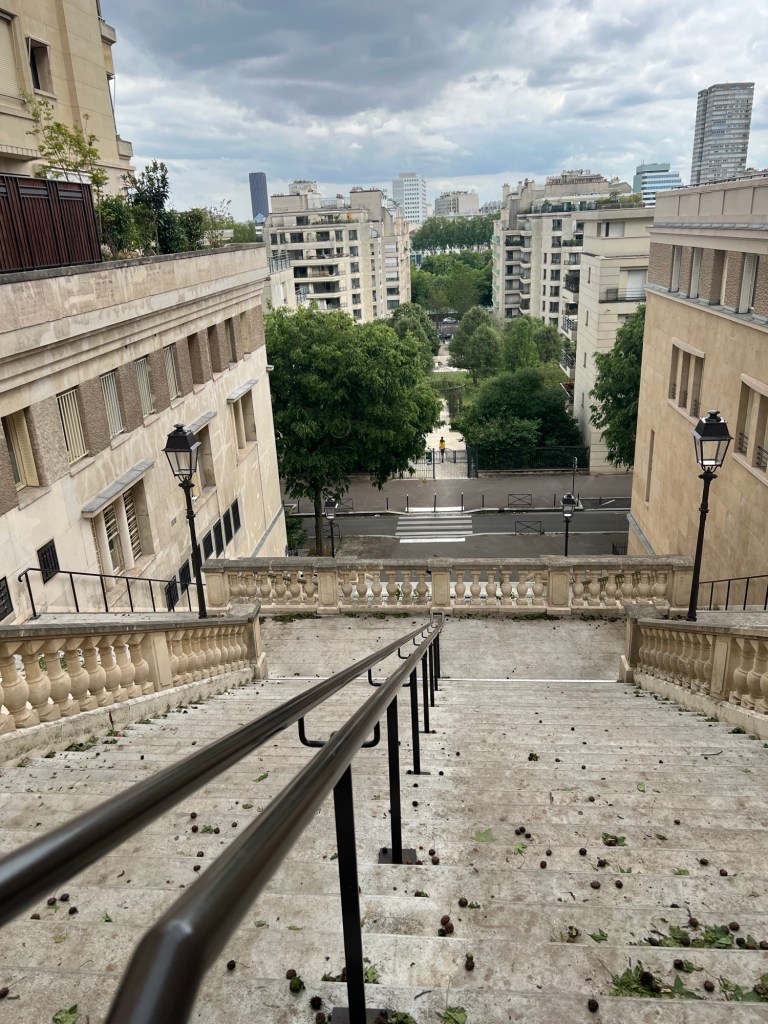
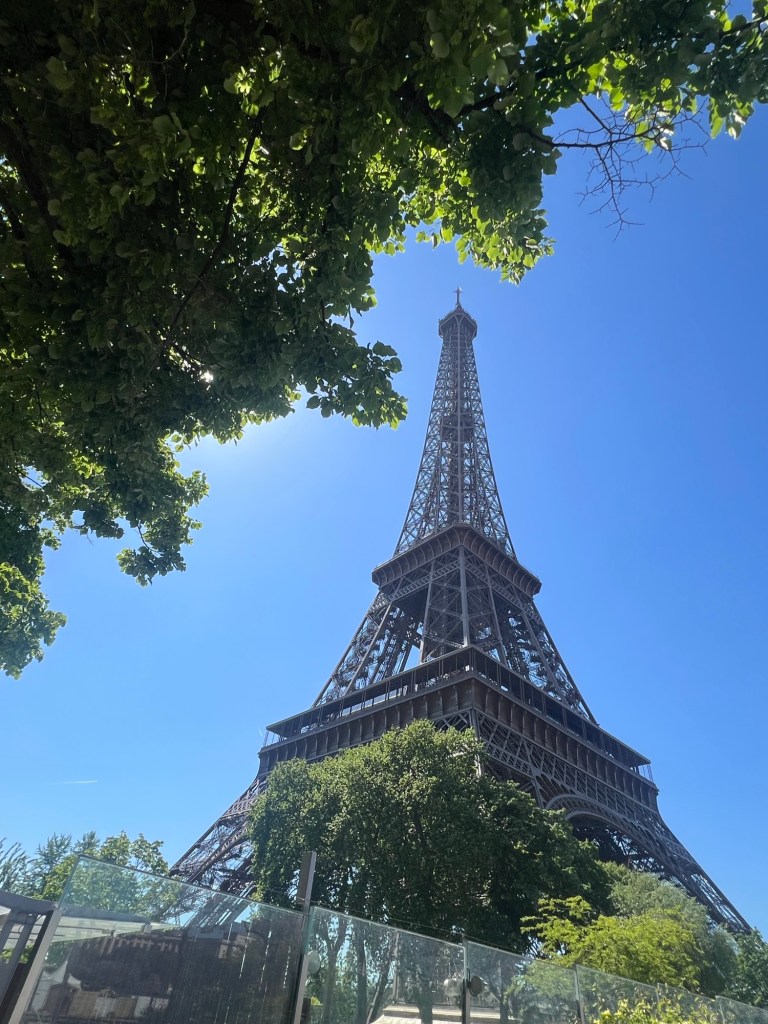

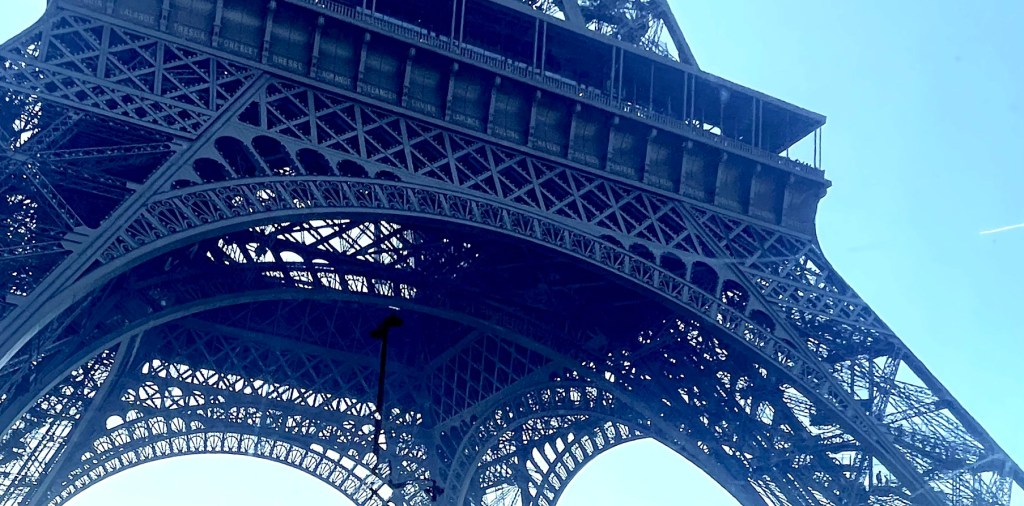


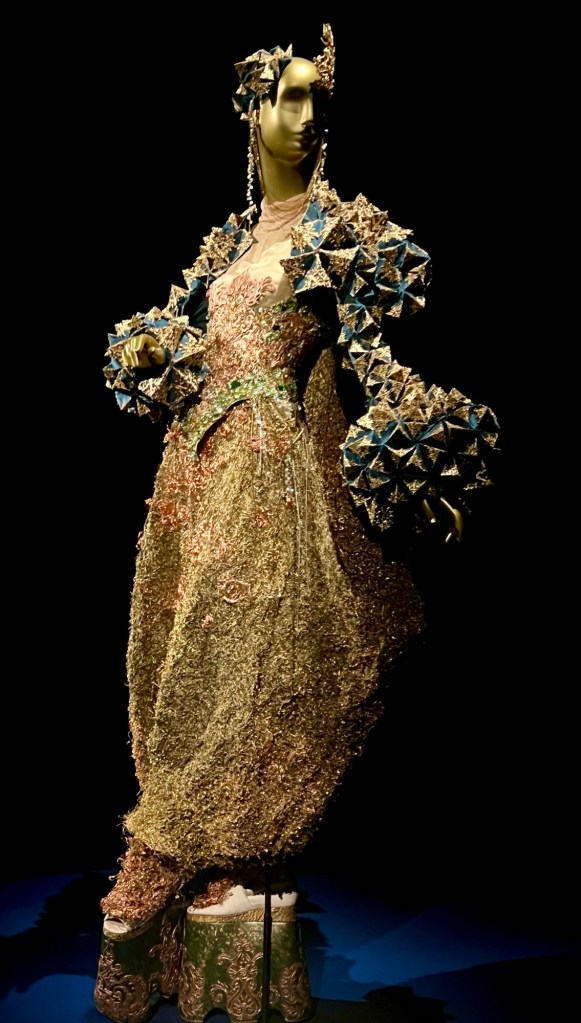
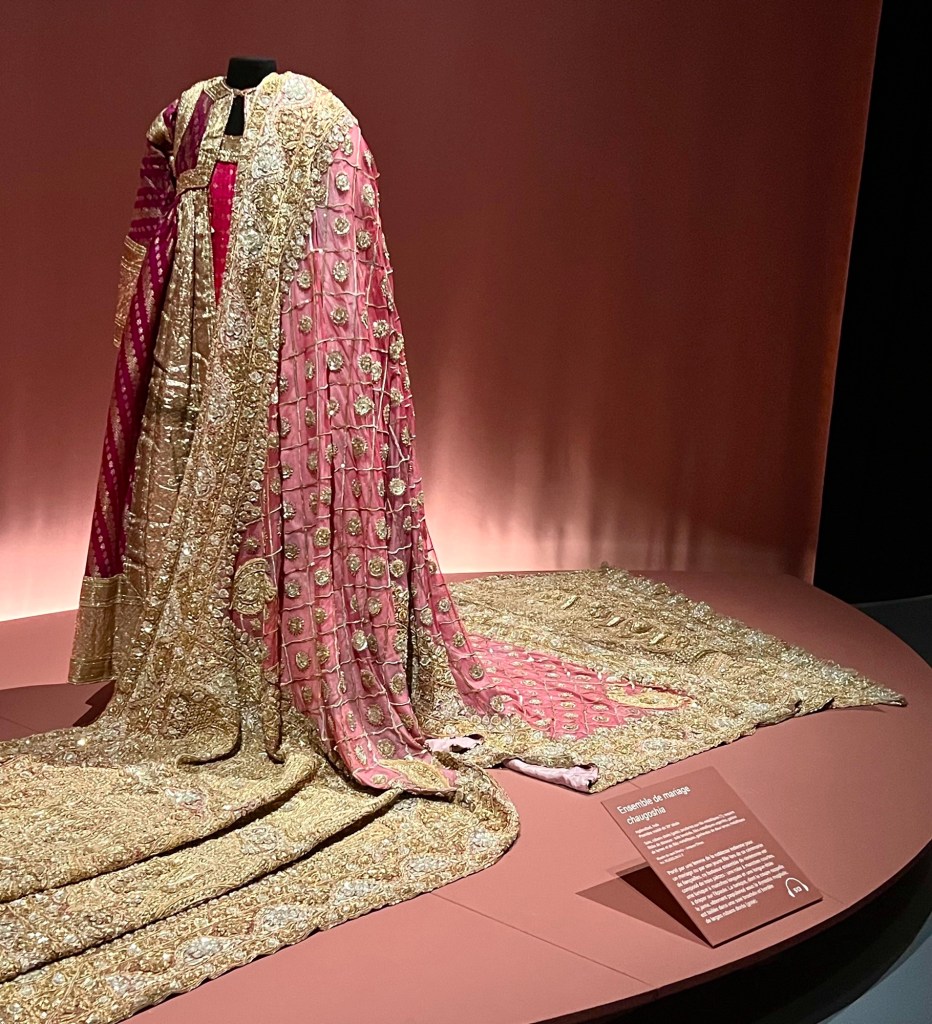





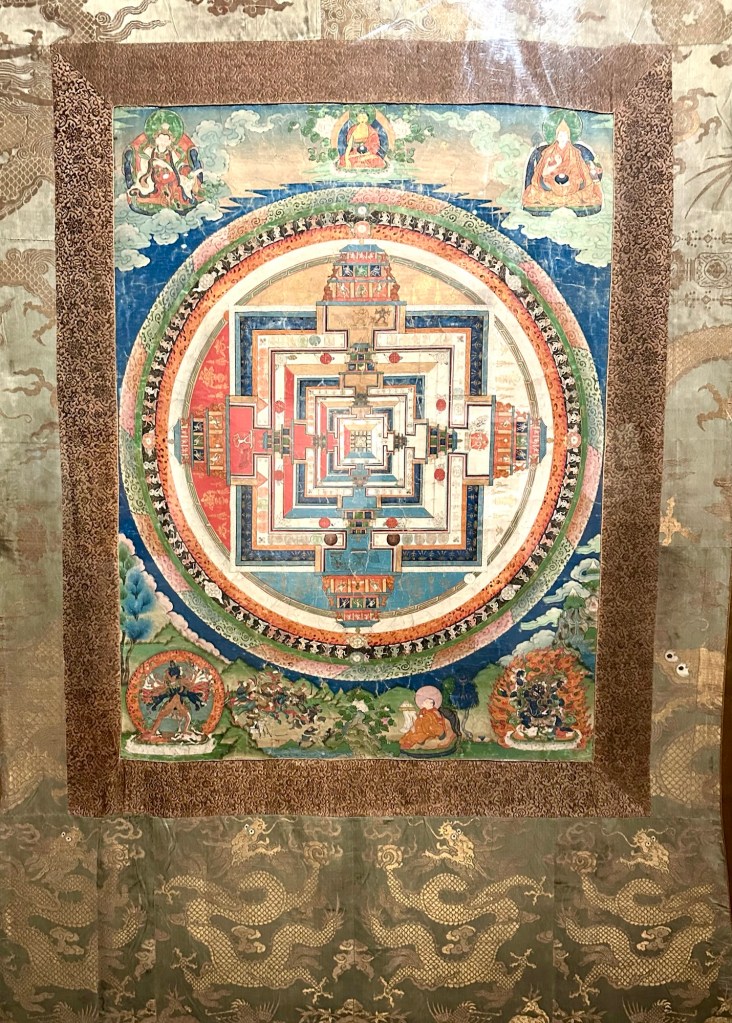
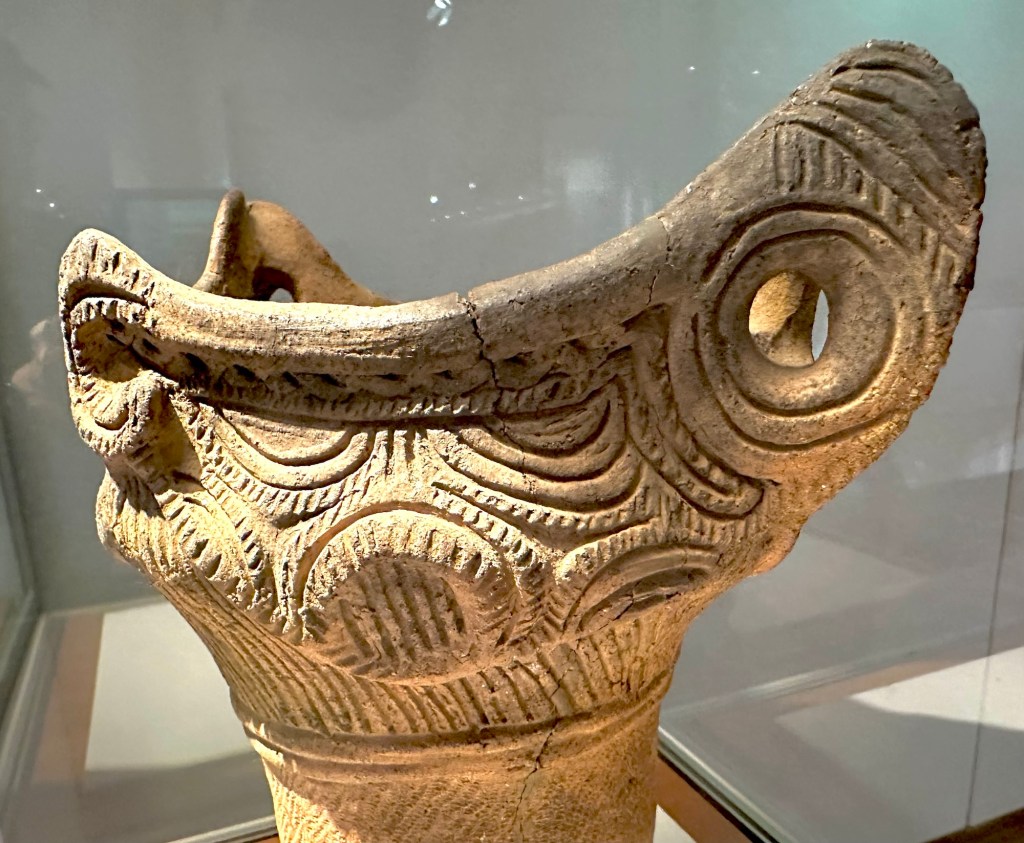
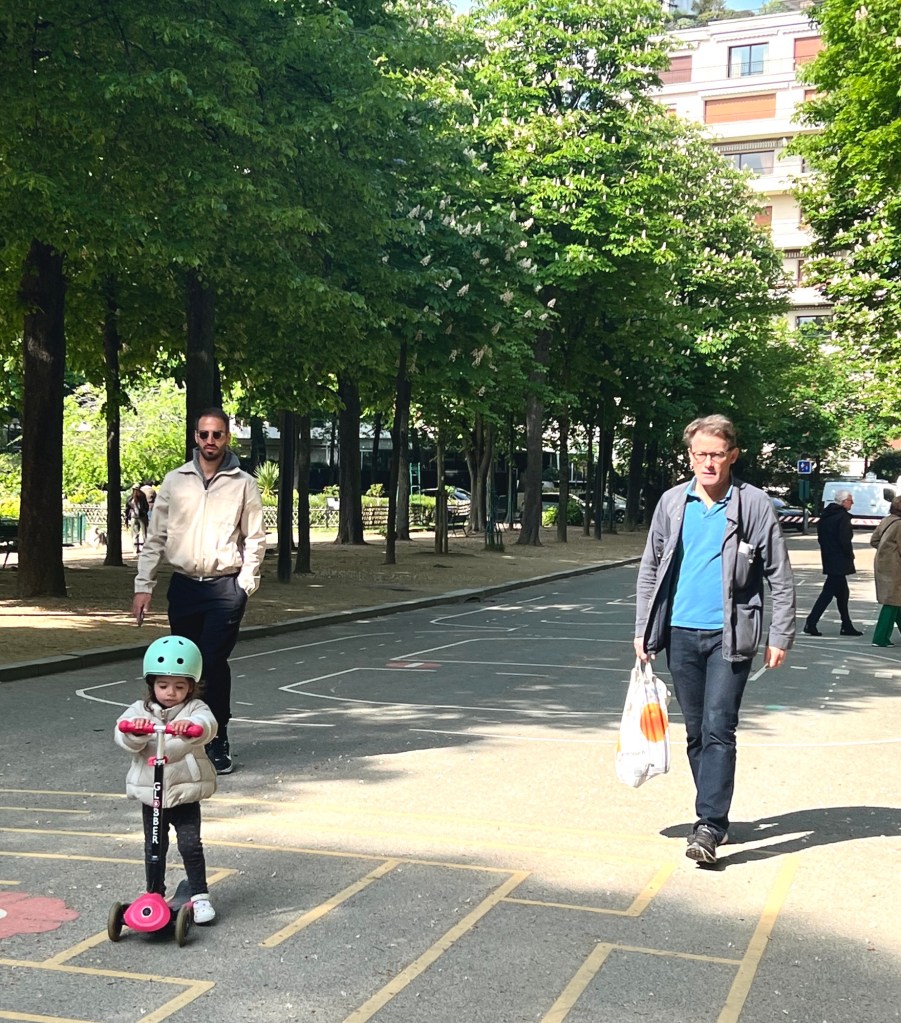
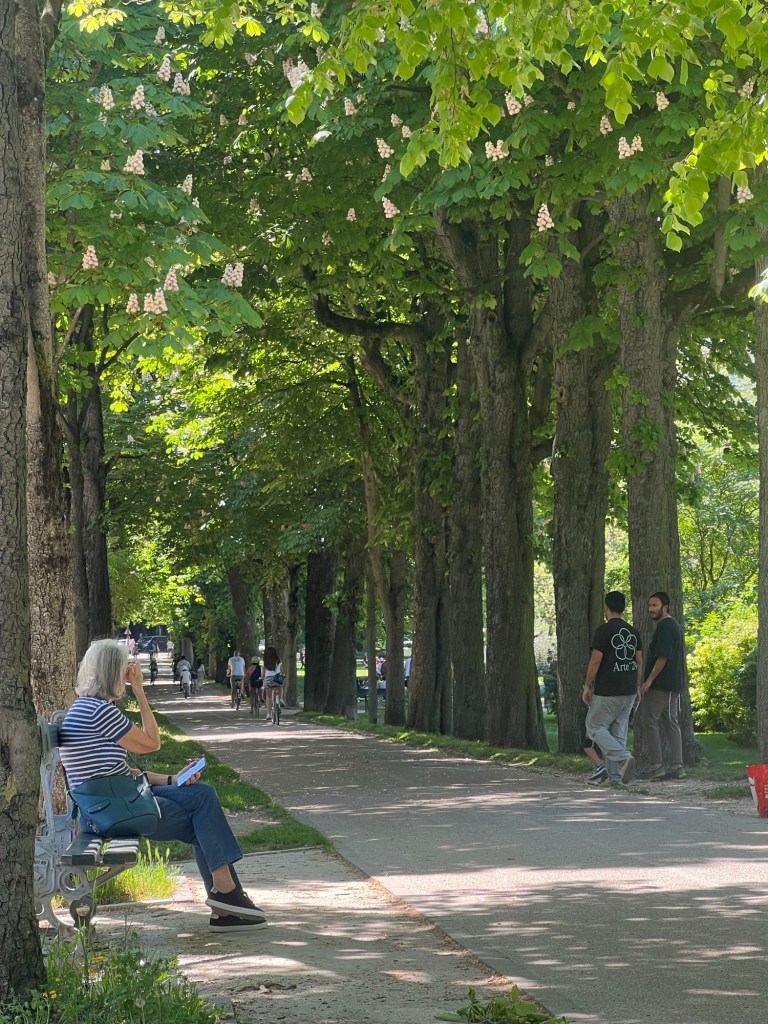

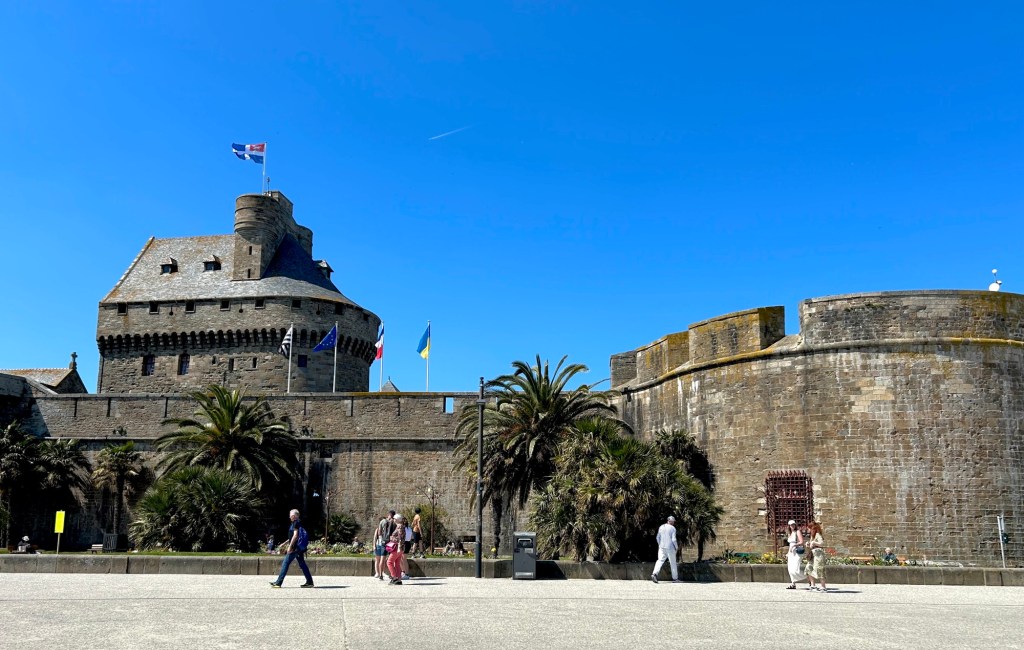

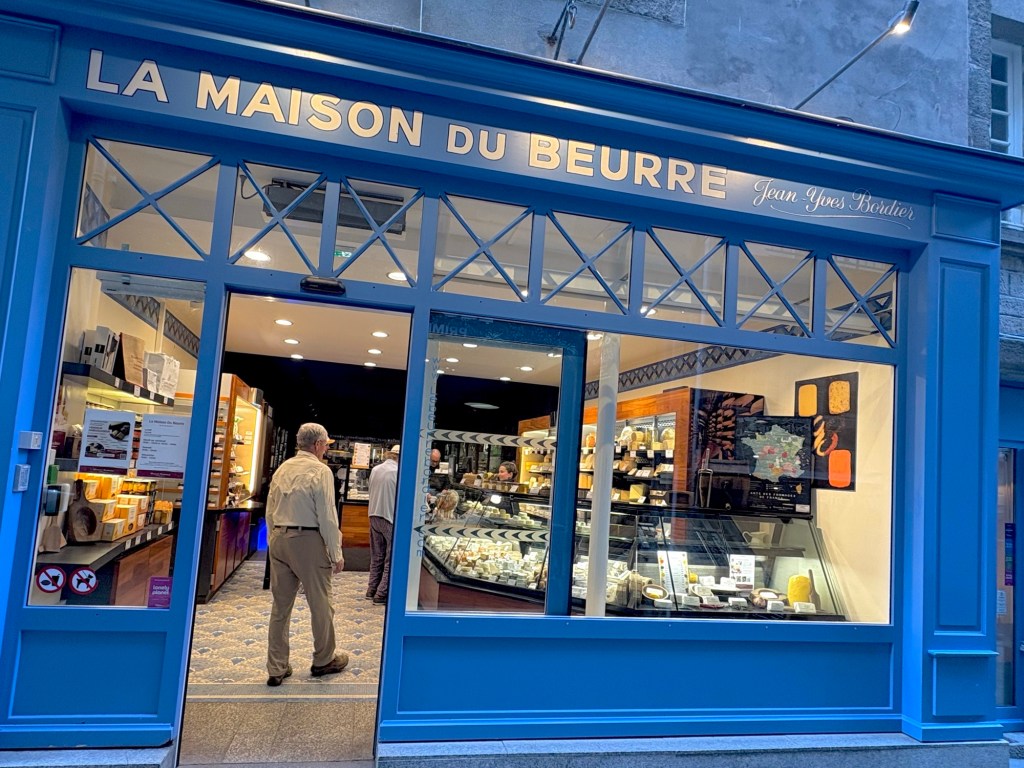
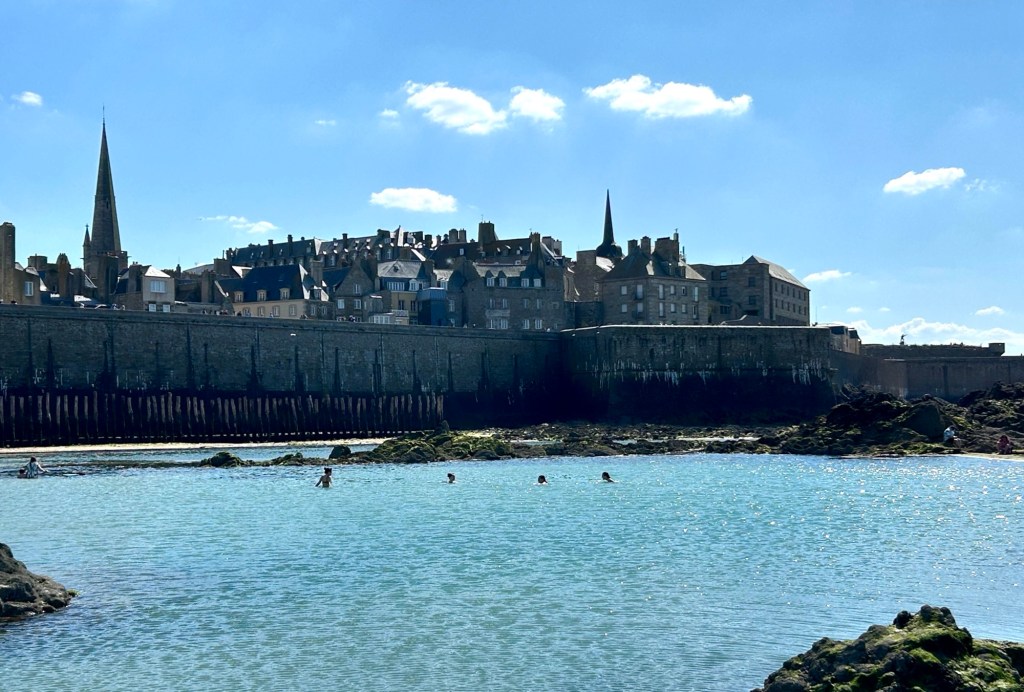
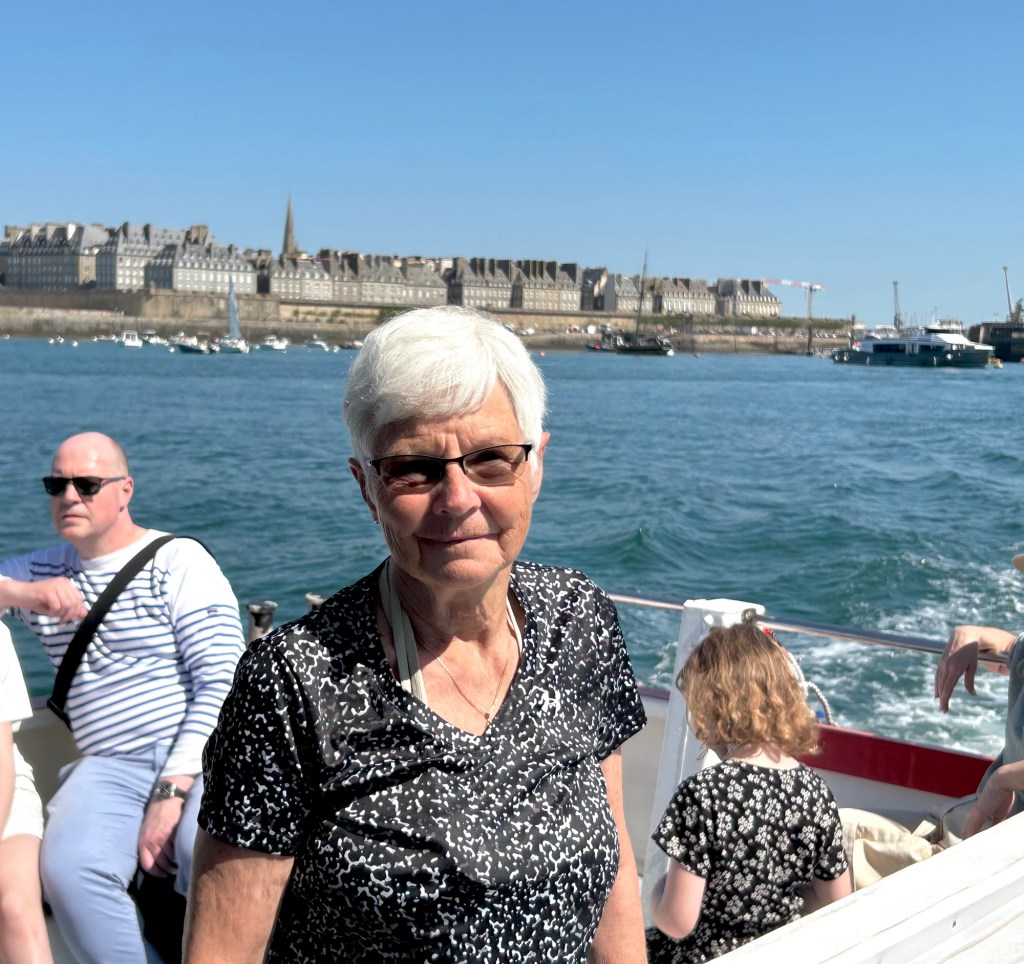

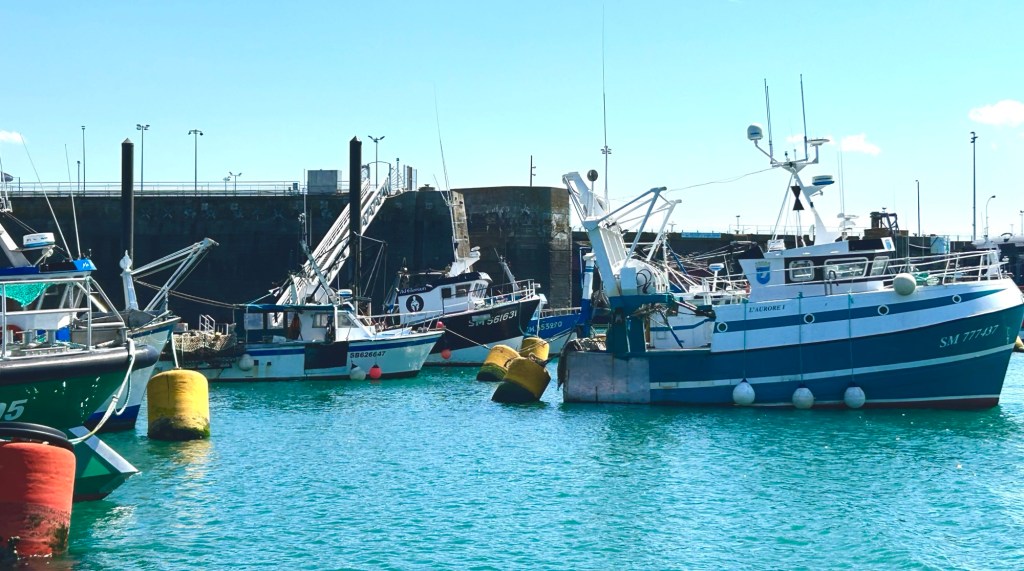


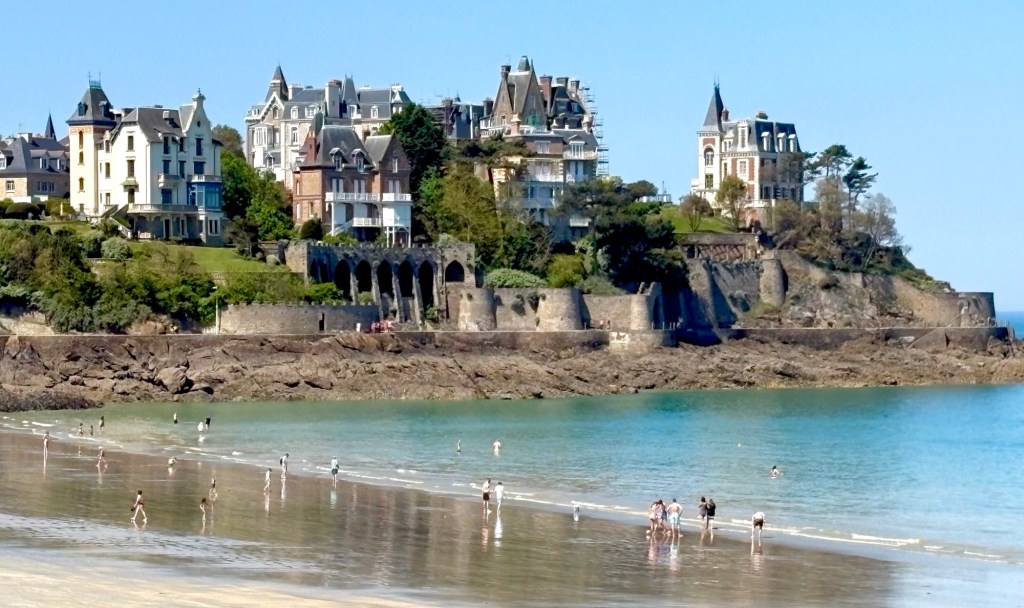
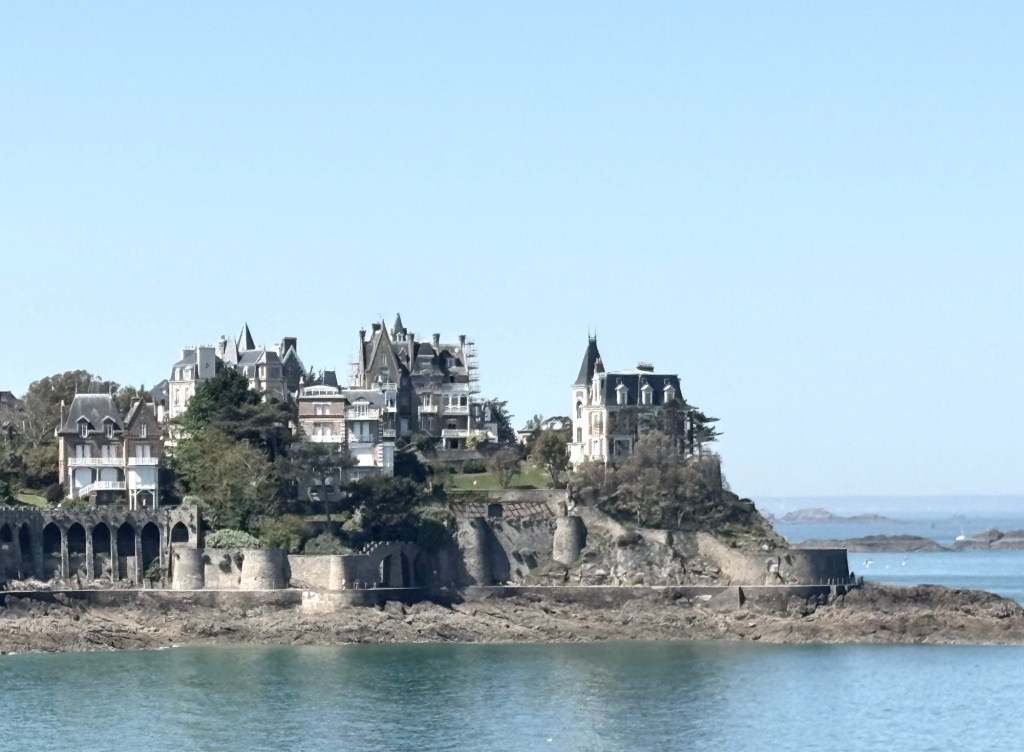

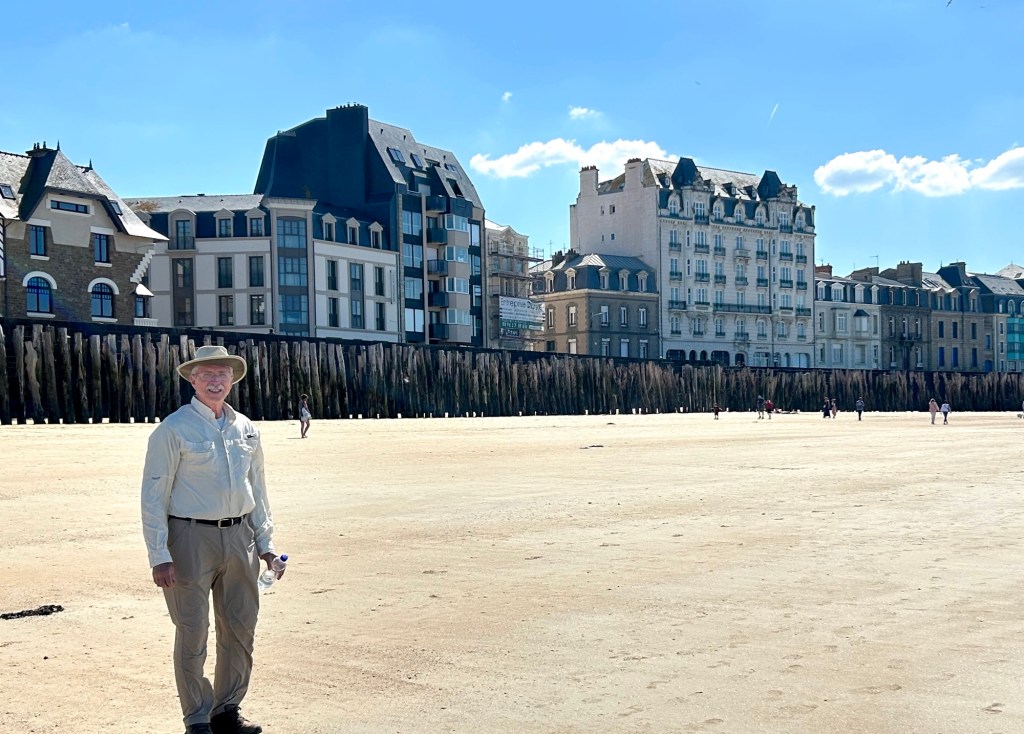
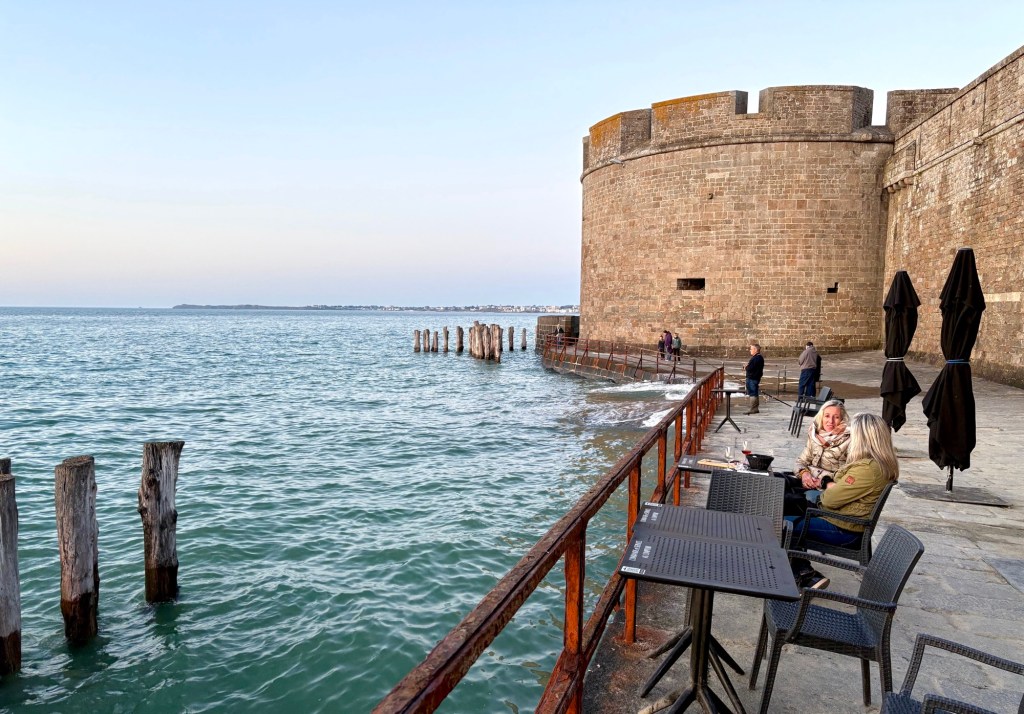
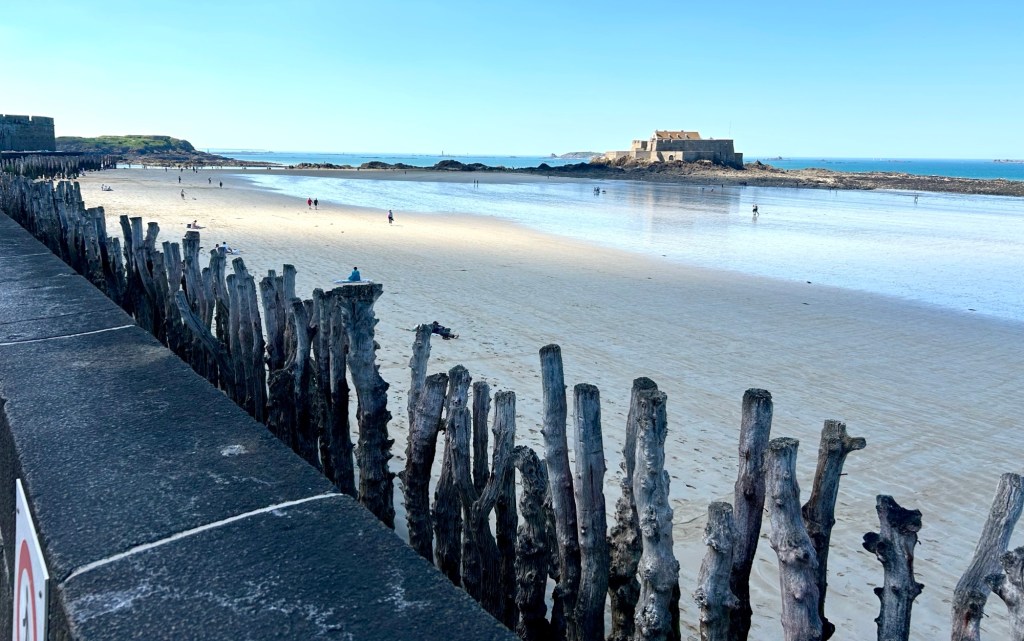

 Tipps for Travel