In the Air and On the Road in June. After our European trip ended in May, Becky and I had a couple of weeks to rest and recuperate. Then we were off again to visit long time friends and attend a concert by James Blunt.
As I was an only child, I filled that void with friendships which over time became my brothers and sisters. Childhood friends in Electra, Texas—Mark, Robin, and Cheryl—developed into brothers and sisters in adulthood. More “brothers and sisters” came as serendipitous gifts as Becky and I met wonderful folk and made fast friends along life’s journey.
In June we had the opportunity for reunions with Mary Alyce, Glen and Gina, and Gerald and Kathleen—all of them holding important places in our hearts and lives. These reunions also conjured memory of our shared history. In this post, current trips, events, and reunions are left justified, while memories and reminiscenes are right justified.
On the Razzle in Milwaukee
A note from Sister Mary Alyce suggested we visit to celebrate her 92nd birthday in June. Her invitation, in her words, was to celebrate her wake while she was able to enjoy it. It was an invitation we readily accepted and scheduled a flight anticipating a fine “razzle.”
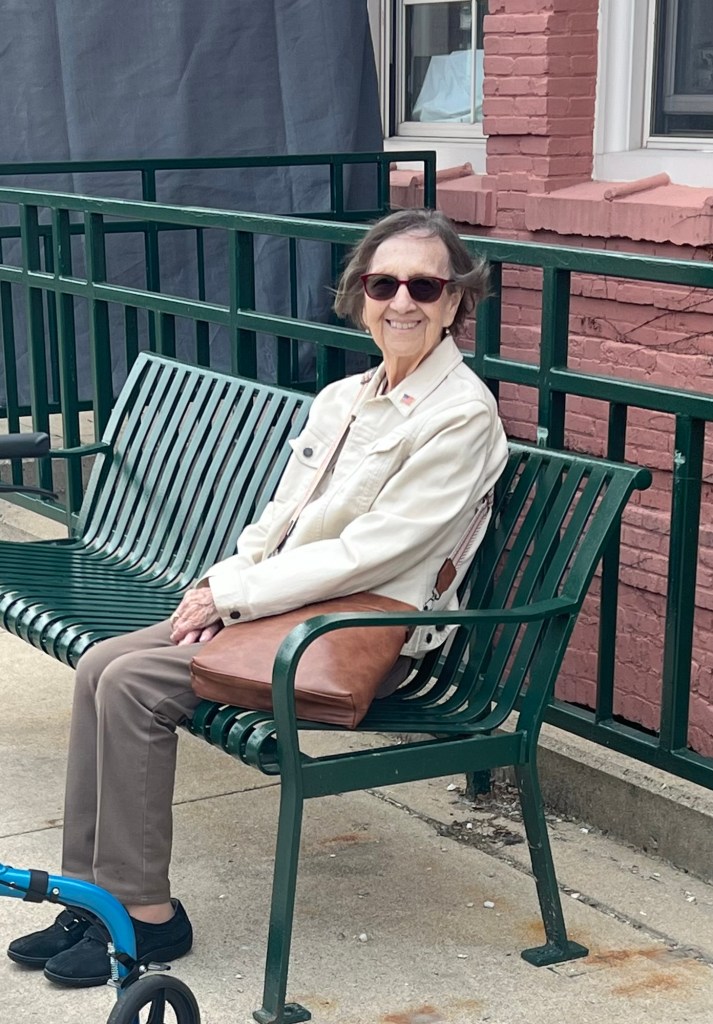
Our early morning plane to Charlotte did not arrive in Greenville-Spartanburg until after the connecting plane to Milwaukee from Charlotte had already departed. To get to Milwaukee, we rerouted through O’Hare which is always problematic. We arrived in Charlotte in the nick of time to catch a plane to Chicago, then sat on the tarmac for two hours due to a thunderstorm and ground hold in Chicago. We arrived in Chicago in the nick of time for the last flight to Milwaukee where we got to car rental in the nick of time to claim a car before midnight. After 18 hours in transit, we were exhausted, but not too exhausted for a razzle the next day.
Reminiscing
I met Mary Alyce, both our “sister” and a School Sister of Notre Dame, at PHD orientation at Ohio State. Perhaps “adopted by” is more appropriate. Mary Alyce, Cindie Cook, and I were the only students from far away: Wisconsin, Arizona, and South Carolina.
For the next two years, we three planned regular Friday night events: dinner or movie or other fun. Mary Alyce called them “razzles” as in “on the razzle.”
After graduate school, Becky and I visited Mary Alyce several times in De Pere, WI where she was a professor at St. Norbert College. She also visited us in Texas and North Carolina.
De Pere and Green Bay are at the base of the thumb of Wisconsin, so trips up the thumb into beautiful Door County were summer highlights. We met and played cards with the Sister Janet, Sister Elise, and other nuns who shared a house on Fox River Road. The nuns look sweet but they are aggressive card players.
We attended Mary Alyce’s triple celebration party: 70th birthday, 50 years as a nun, and 25 years at St. Norbert. Several times I led workshops and spoke at the Early Childhood Conference she organized.
Mary Alyce once received a grant from the US Navy to develop an oceanography curriculum for elementary schools. Part of the grant involved a weeklong cruise from Lisbon to Barcelona on a Naval research vessel. She recruited Becky as principal with two of her teachers, Shawna and Katie, to participate. I joined them in Lisbon for a couple of days, took a train across Spain to Madrid and Bilbao and met them when the boat docked in Barcelona. Other summer workshops were held on the Great Lakes, North Carolina Outer Banks, and Mississippi Gulf Coast. Certainly the entire project was huge learning experience for the teachers who participated and offered
many fine razzles with Mary Alyce.
Mary Alyce is a storyteller supreme and she has shared wonderful tales about her life. She told us how the nuns gradually discarded their traditional habits adopting instead a uniform of blazers and skirts. We heard about the merry mixup one New Year’s Eve at a shoe store when Mary Alyce and another sister returned to the convent with a shoebox containing silver lame stilettos rather than the sober shoes they were sent to buy. Imagine the reaction of the person who got their shoes!
She introduced us to cherry bounce, a nearly lethal concoction of fresh cherries steeped in rum and vodka for six months to be decanted as a wonderful cherry liqueur at Christmas time.
Mary Alyce’s first encounter with cherry bounce was as a novice before Christmas mass. One cherry led to another and another….
She reported visions at midnight mass. Our warning of excess of any variety is, “Mary Alyce, 21 cherries is too many.”
Reunion. The morning after the long day of four airports and three airplanes, we began two days of razzle with Mary Alyce. Day One held a drive from Milwaukee to wander around the St. Norbert College campus, to see Mary Alyce’s shared house on Fox River, and to lunch with a colleague.
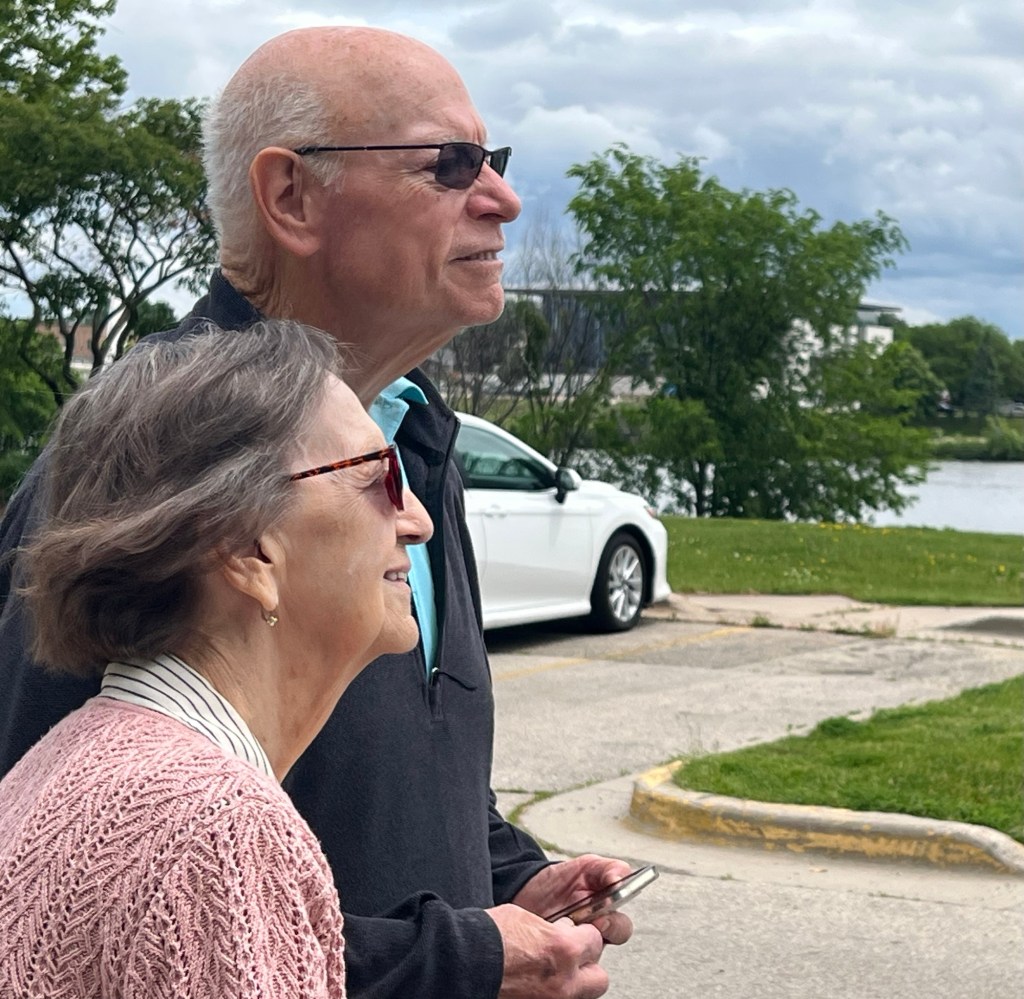
She pointed out many places and recounted many events from her 47 years living in this area. It was a wonderful drive full of memories for all of us.
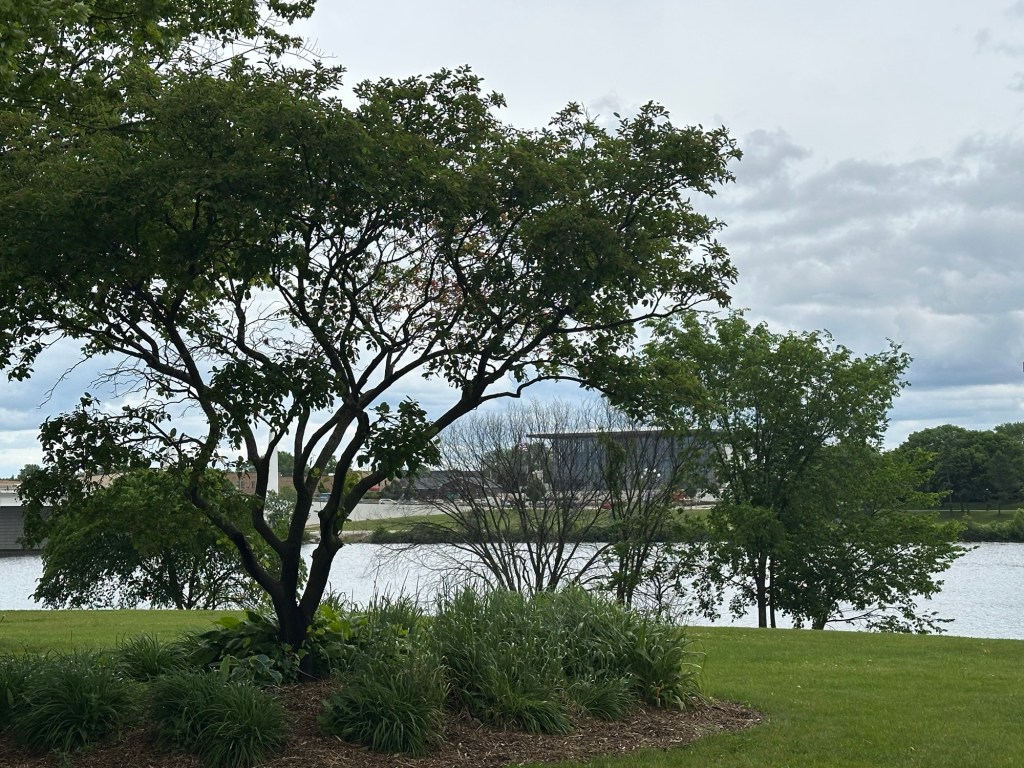
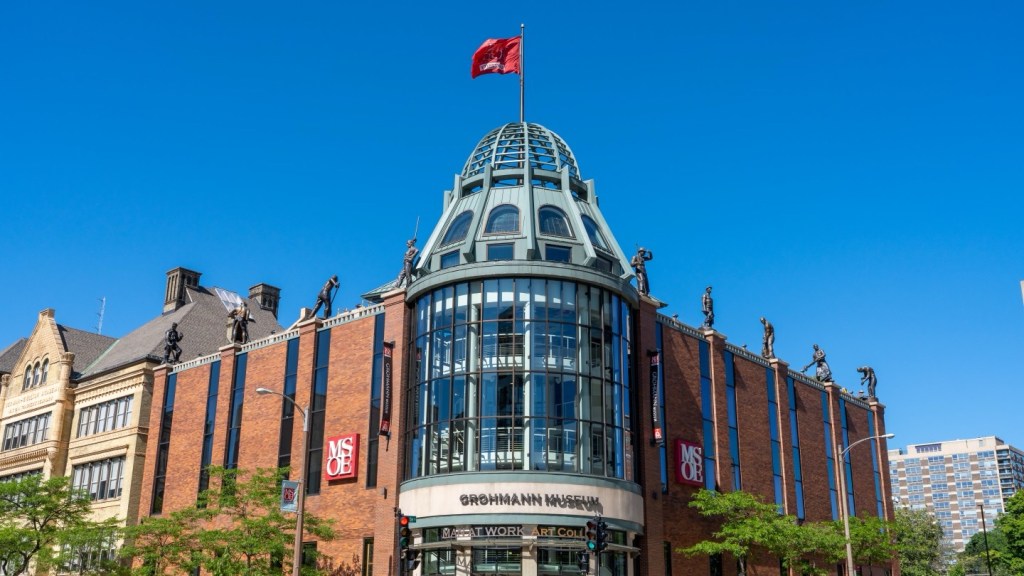
The second day we visited the Grohmann Museum in Milwaukee. Mr. Grohmann, an industrial magnate, established the museum at the Wisconsin School of Engineering to celebrate “The World of Work” and the industrial history of Milwaukee and the Midwest. It is dedicated to those who worked in foundries, built buildings and ships, laid track, as well as those who toiled as weavers and seamstresses and artists.
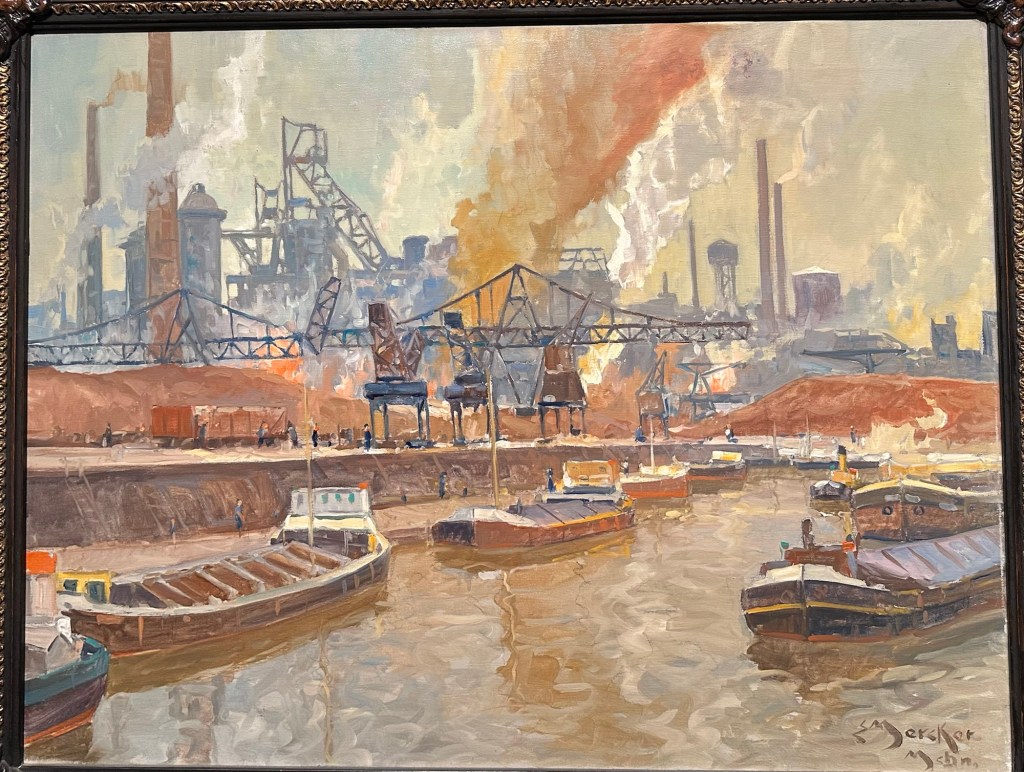
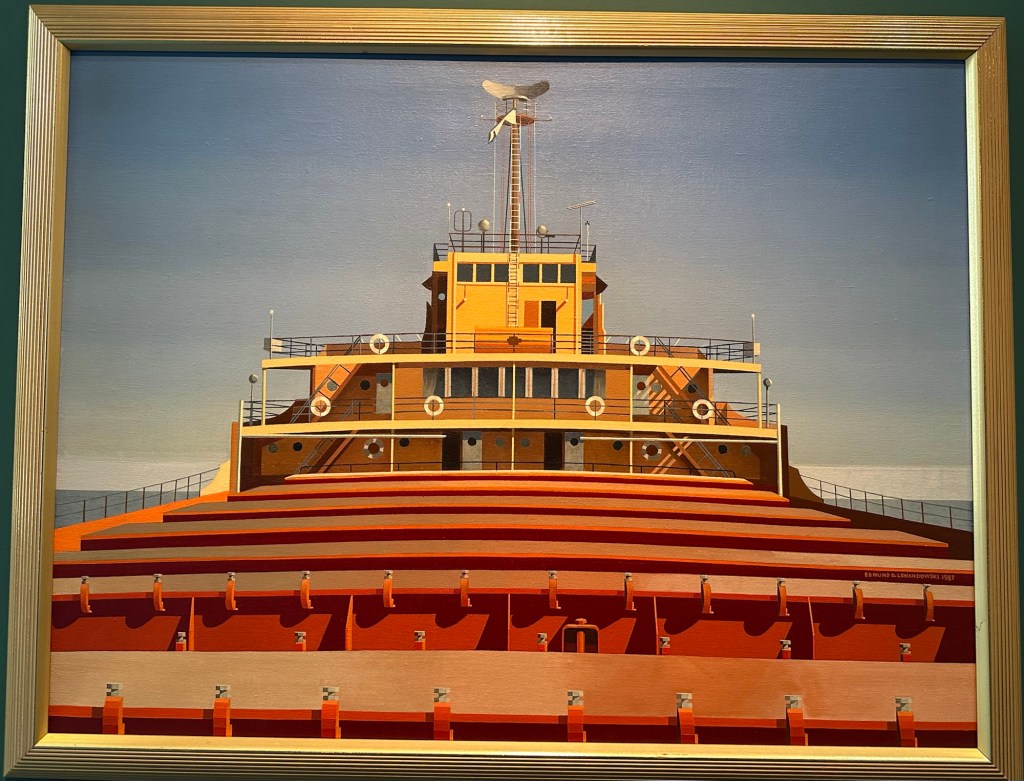

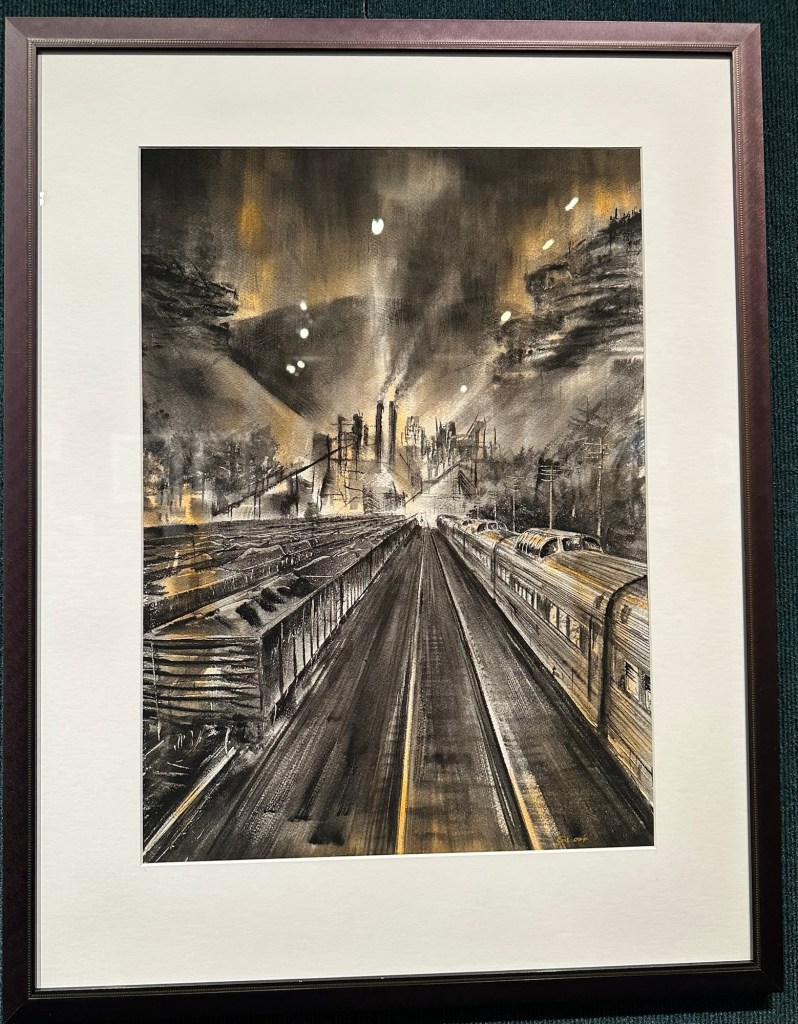
The museum is full of beautiful bronze statues as well as oil paintings portraying working men and women.
Mr. Grohmann has an office on the top floor of the museum. The door was open and there he sat. Mary Alyce and walked in and we had a short conversation with him about some of his displays.

In the afternoon, we took a scenic boat ride on the Milwaukee River and into Lake Michigan. The tour guide told about the history of Milwaukee, the various groups of immigrants who brought their skills to the area, and the buildings as evidence of the industry and growth of the city. Though interesting, the sun and gentle rocking boat movement turned the tour into a boat ride plus naps.


We finished our afternoon at Trinity House with Mary Alyce and her suitemate Sister Claire in a long conversation featuring ice cream topped with Cherry Bounce.
North to Philadelphia
On June 18th, Becky and I embarked on a road trip to Philadelphia to attend a concert by James Blunt. You may ask “Who is James Blunt? What is he doing in Philadelphia? Why are you driving roundtrip 1600 miles to see him?” All will be answered in due time.
Reunion in Charlottesville. Glen and Gina are our extended family from 40 years ago at UVA. They still live in Charlottesville, a convenient stop on the way to Philadelphia. Glen is a Texan, born in Corpus Christi, and both he and Gina are graduates of The Ohio State University. We already had common ground when we first met in 1979.
Glen was a major influence on my career. He was a mentor and visionary for technology and its potential impact in education and our world. Over the years we have talked often and shared highs and lows of living in interesting times. Their son Stephen is a skilled machinist who creates precision metal parts in Richmond.
We met Glen and Gina in the lobby of Bavaro Hall at UVA where we talked for a couple of hours over ice cream sundaes and root beer floats. Gina was a computer specialist at UVA for 20 years and now uses technology skills for art projects such as building 3-D models of Historic Williamsburg. She and Becky shared their creative endeavors while Glen took me on a tour of his labs.
Forty years ago, we had to fight for space for a computer lab. Now Glen has 4 rooms in Ridley Hall devoted to a variety of his current technology grants and projects. Recently, he sponsored a 3-D printing project in Uganda which allows the creation of precision microscopes for $200 rather than $2000. These can be linked to computer data bases for medical and research purposes in developing countries. Also in Uganda, computer controlled embroidery apparatus gives native women tools to create new economic opportunity in remote villages. In Viet Nam, he and a colleague are setting up sensors to track water levels for warnings of frequent floods along rivers.
Reminiscing
Glen has been a pioneer in technology for 40 years. He founded SITE, Society Technology in Education, a coalition of professional education groups focused on integration of technology in teaching. His sponsored projects— local, statewide, national, and international—demonstrate uses of technology in schools and daily life. One example was a grant with the Smithsonian to set up technology discovery/invention stations for students.
During the exciting early days of educational computing, Glen was already envisioning how computers might be used for discovery of important content in mathematics and science as well as productivity tools for teachers and students. I had the great good fortune of going along for the ride.
Our first educational computing class began with only a photograph of a computer to show how it would look— if we had one. Glen soon talked/cajoled Texas Instruments into donating a half dozen 99/4A computers for our first computing lab. We spent hours keeping these weird machines up and running.
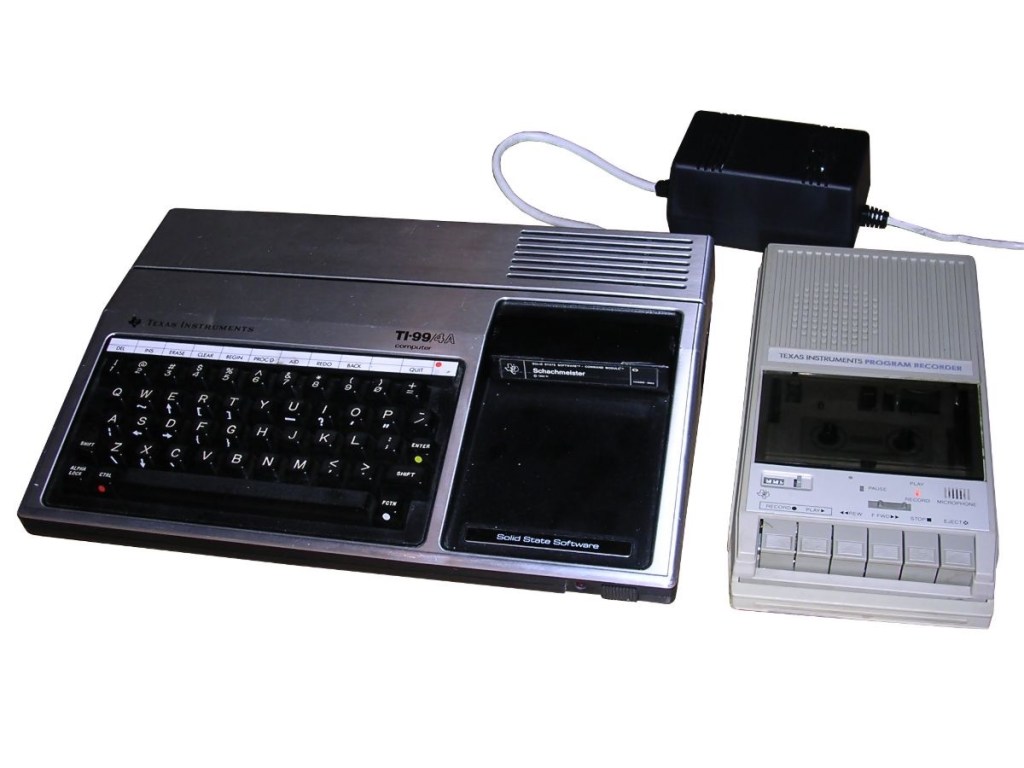
Next Glen leveraged us up to a dozen Apple IIs which arrived with a visit from Steve Wozniak to christen our computing laboratory. Only in retrospect can I fathom what an amazing event this was, but it was one of many amazing events working with Glen.
Tom Lough, then a graduate student at UVA and Physics Instructor at the community college, suggested starting a newsletter to give teachers ideas for using Logo in the classroom. For 5 years, Tom edited the “Logo Exchange” newsletter while Glen and I wrote monthly columns. This effort put all three of us deeply into the Logo community and led to many friendships and opportunities such as attending conferences sponsored by MIT with Seymour Papert.
Tom was contacted by Holt Rinehart Winston publisher to coordinate a three-book introduction for a new IBM classroom computer called “the Peanut” which IBM hoped would knock Apple out of classrooms. Unfortunately, the Peanut was DOA. Seven authors worked for 18 months on this ill-fated mission for a glitchy little computer. The “Nudges” book that Glen, Tim Riordan, and I co-authored was full of classroom activities. Talk about left hand not knowing what the right hand was doing, IBM had commissioned two entirely different writing teams to create supporting books.
All our effort was for naught except for a nice paycheck and opportunities to work some great folks.
On I-95 to Philadelphia
Getting to Philadelphia from Charlottesville required a hot, 8-hour drive with bumper-to-bumper traffic on Interstate 95 toll roads through DC and Maryland into Pennsylvania. It was a mid 90s day at the beginning of a summer of blistering hot weather, wildfires, and floods across the United States.
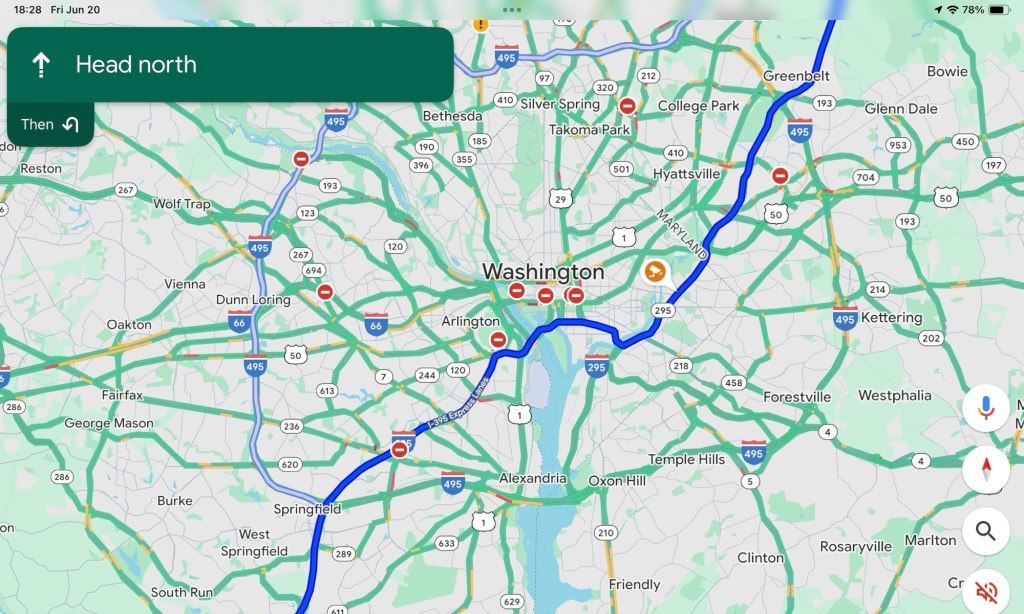
Arriving in 5:00 traffic simultaneously with a summer monsoon, we pulled into a parking lot to rest, get our bearings, and wait out the storm and the traffic.
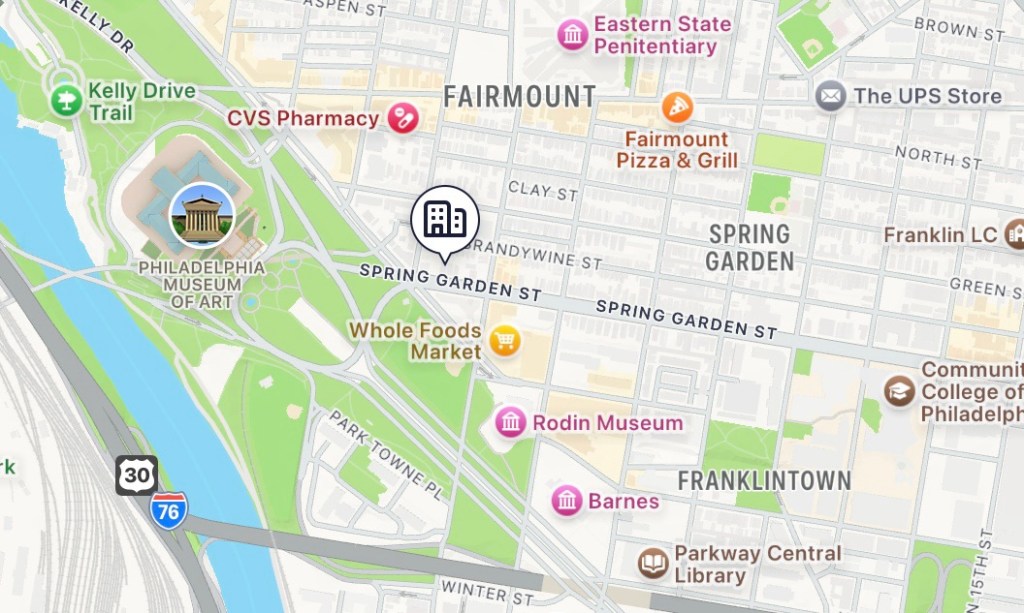
We found our hotel only 4 blocks away—The Maj, a small European-style hotel in West Central Philadelphia. European implies funky minimalism with small rooms, no closets, no parking, duvets, raised beds so that suitcases fit under the bed, all very spartan but comfortable. The neighborhood is mostly high rise apartments and condominiums with a huge Whole Foods for food, a small Target for sundries, and a great Vegetarian restraurant. We shopped with a vast population of GenZers and Millenials.
Location! Location! Location! was crucial in our choice for accommodations. But first, an introduction to our prime objective of the trip—seeing James Blunt in concert.
Reminiscing about James Blunt
James Blunt, a British singer/songwriter, composes glorious and aching love songs, philosophical observations on life and love, and rocking out anthems. His first big hit was the wistful “Beautiful” 20 years ago. Before beginning his singing career, he served in the British military and was best buds with the Duke of Sussex, formerly known as Prince Harry.

Most importantly, he is Becky’s favorite singer!
We are both fans.
Our first James Blunt experience was 12 years ago when we saw him perform “Bonfire Heart” on the Graham Norton, a BBC celebrity chat show. This rousing anthem was, for the want of better words, “electric” and led us to buying our first CD. Then we bought another and another, accumulating his catalog which Becky plays frequently—often humming and singing along. I have him on iPhone to listen in the car being too frugal to pay for Spotify or Sirius.
A vast and rabid fandom buy millions of his records and turn out in droves to concerts with his band. While in England several years ago, we flew to Oslo for a long weekend to see him perform. His two-hour performance was again “electric” and deepened our appreciation for his music and performance.
And we fell in love with Oslo.
Checking regularly on tour dates, I found his Back to Bedlam “greatest hits” tour had dates in USA in 2025. I gave Becky tickets to his Philadelphia concert in June which implied “road trip” to Philly
with razzles along the way.
FYI
You can sample a variety of videos
featuring James Blunt on YouTube.
Here is a link to him singing “Bonfire Heart”
on a morning show in England.
https://www.youtube.com/watch?v=tItExAGNqTU
For a particularly good live performance,
search on YouTube:
james blunt live at the nobel peace prize concert 2014
For a powerful and emotional video of James singing “Monsters” to his father, search on YouTube:
james blunt monsters
One Fantastic Concert
We took a short Uber ride to the MET, a grand old Opera house which survived the usual decline/decay/restoration saga of old performance halls such as the Fox in Atlanta and the Ohio in Columbus. The beautiful venue hosts a variety of events from church services to rock concerts. We had good seats in the Orchestra, but since Becky was using a walker as a result of a fall, we were reseated in a raised “box” that had perfect sight lines.

The stage was lit with glowing blue lights. James Blunt arrived through blue billowing smoke to stand alone while the audience stood to welcome him. He started singing while the the band members— keyboard, bass, and drummer— followed him on stage for two non-stop hours of, dare I repeat, “electric” music and performance.

Years ago in Oslo, he had seemed flustered by the audience’s insistence of singing along. He even pleaded with the audience to let him sing. Now, James Blunt was the maestro of the audience. He accepted and harnassed their enthusiasm.
Most of the times, the entire audience was standing and singing. He jumped off the stage and ran (with a body guard) up and around the center orchestra section. He molded us to great heights of excitement with sing alongs and calmed us with quiet moments of him spotlighted alone on the stage at his piano.
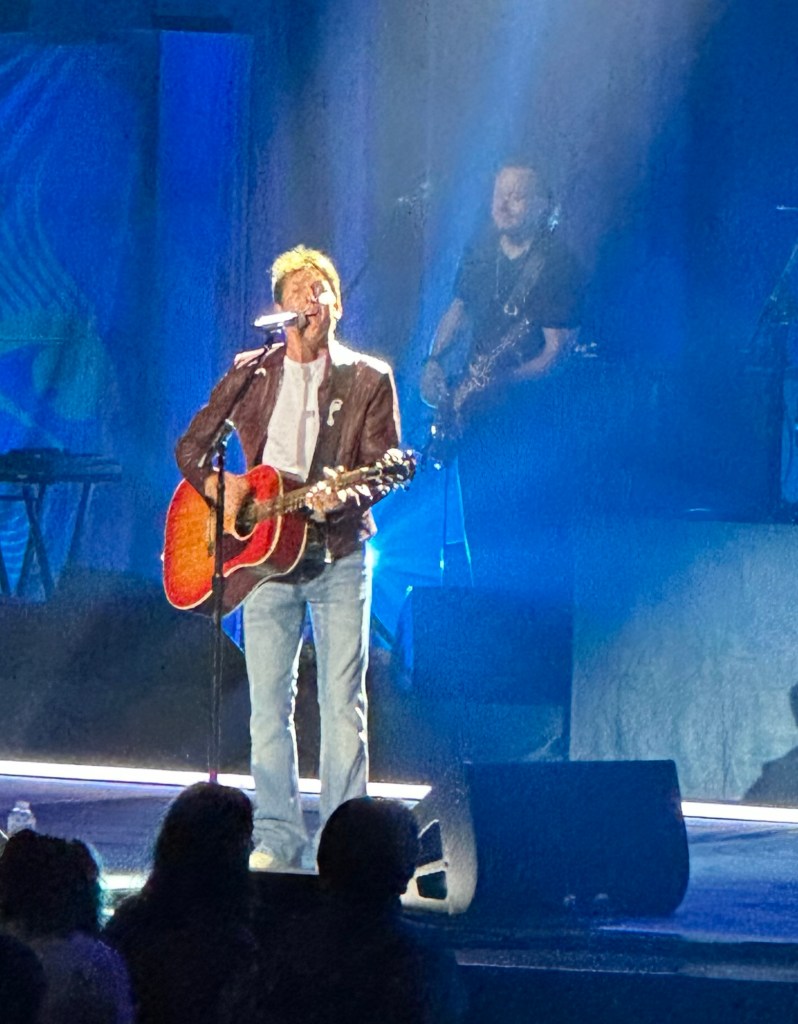
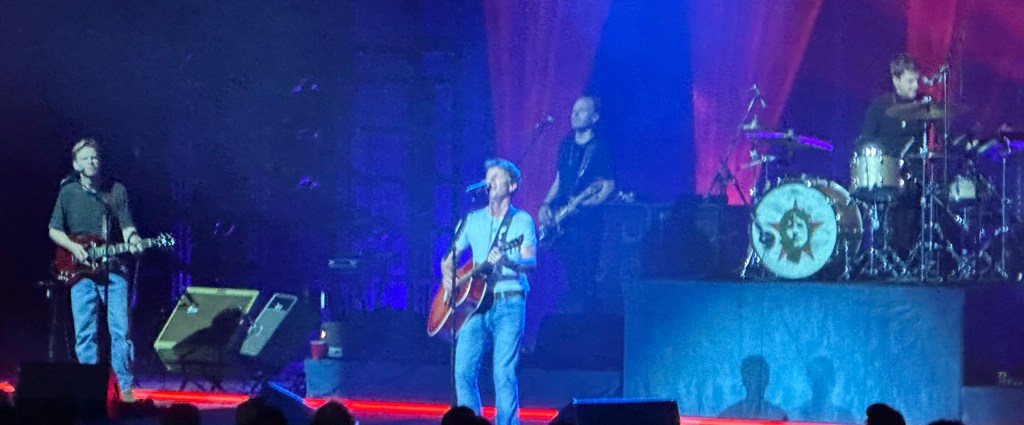
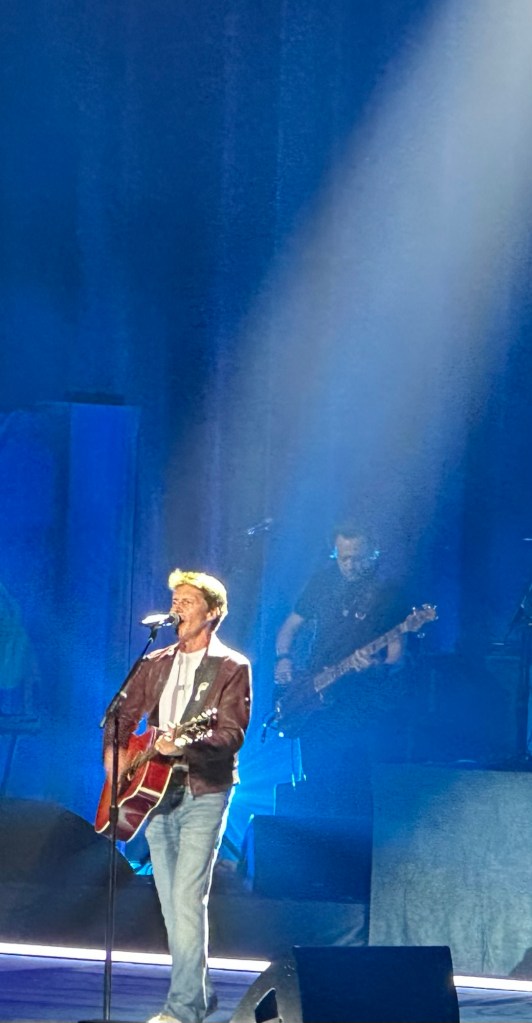
He and the band wrapped up two hours with two of our favorites —the quiet reflection of “Monsters” and the rousing exuberance of “Bonfire Hearts.” We were entertained, we were seduced, we were exhilarated, and we were exhausted.
Seeing live performance changes the way you hear music. Performance magnified the power and nuance of his poetic lyrics, the exciting and surprising melodies, and the powerful rhythms. Each piece of the performance was vibrant and unique, and all the pieces created a brilliant whole.
He promised a new album soon. Will we buy it? Absolutely! Would we make a 20 hour round trip to see him again? Probably not! Our aching bodies suggest a plane ride instead!
Art in Philly
Location! Location! Location! The Maj hotel was located four blocks from the Barnes Foundation in one direction and four blocks from the Philadelphia Museum of Art about four blocks in the other.

I have wanted to see the Barnes Foundation collection of art for twenty years, especially since they moved from Lower Marion PA to a new building in Philadelphia. It is known as the finest private collection of Impressionist art in the USA. And who could deny Rocky a visit to the Philadelphia Art Museum.
The Barnes Backstory
Dr. Barnes was a genius who graduated from Central HIgh School in Philadelphia with both a HS diploma and a College degree. He then earned an MD, but was temperamentally unsuited for patient practice. After earning a doctorate in Germany focusing on a new field—pharmacology, he and a partner created a silver nitrate drop that prevented blindness in infants. This made them both millionaires in the 1910s-1920s.
While he was running the factory which produced the drops, he became concerned that the workforce was undereducated and offered a program by which workers could work for 6 hours
and go to school for 2 hours.
Barnes was strongly influenced in this endeavor by his friendship with John Dewey, the American educator. Dewey believed education was key to creating a democratic society and learning was best done through experience rather than rote and repetition. Dewey with early 20th century ties to Ohio State has been a strong influence in my career as an educator.
Education at the factory was more than basic literacy and included aesthetics and philosophy. As a part of his educational endeavors, he placed paintings in the cafeteria and other areas of his factory to expand the workers’ knowledge and appreciation of art.
Another Barnes’ friend, the artist William Glackens, was evolving his style from realism to Impressionism. Barnes’ wanted to understand this new type of painting and Glackens became his tutor. Intrigued, he gave Glackens $20,000 to visit Paris and buy the best impressionist paintings he could find. Glackens returned with 30 works by Picasso, Cezanne, Seurat, Degas, Matisse, among others.
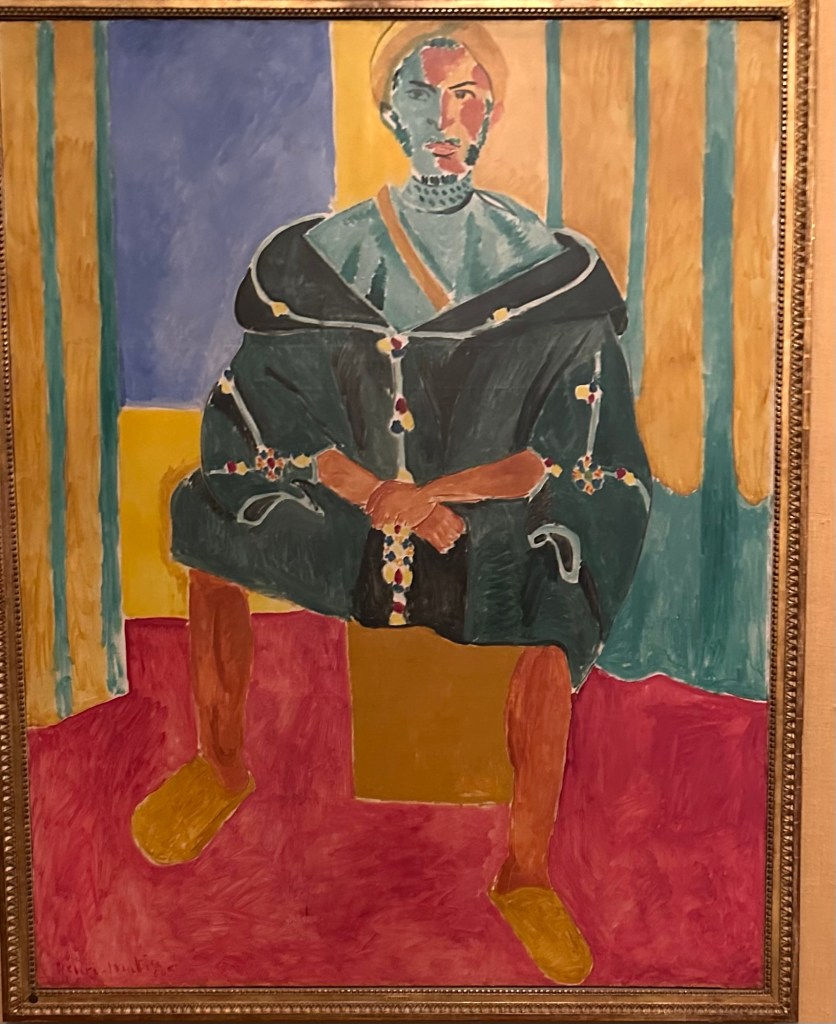
Barnes was so taken with the new art he decided to make art his life’s work. He sold his business in 1929 for millions of dollars—three months before the Great Depression. With this fortune, he built a school for artists in Lower Merion and continued his search for the best art available. His school also housed his growing collection of Impressionist paintings as well as ornamental iron, African, and Native American objects. He endowed a trust to preserve and maintain the building and collections in perpetuity.
By 1990, it became obvious that the status quo in the original building in Lower Merion was too restrictive. The site would not accommodate the number of people who wished to see the collection. Lower Merion was poorly prepared for hordes of visitors. The once beautiful building was falling apart and needing vast repairs to bring it up to modern standards for protecting the collection.
The trustees successfully sued to break the trust and built a new modern building at a site that was more suited to the original purpose. In 2012, the Barnes Foundation moved to Philadelphia into an ultramodern building with all the protection needed for the art in a more accessible location. However, the interior is a near exact replica of the original location and the paintings are displayed in the exact manner that Barnes had arranged when he died in 1949 and dictated in the trust.
At The Barnes. I took a highlights tour and attended an Art Talk while I was at the Barnes. Both were very good at orientation but I would need two weeks to see all the art. Also, two large exhibition areas were closed for floor renovations meaning much of the collection was not available.

Modern art galleries focus single paintings or small groups of paintings on a gallery wall. The Barnes harks back to the old European gallery style in which an entire wall is covered (to my eyes littered) with many paintings of many sizes from floor to ceiling. By dictating this style of hanging, Barnes froze the collection in place in the academic style that was more typical in 1850.
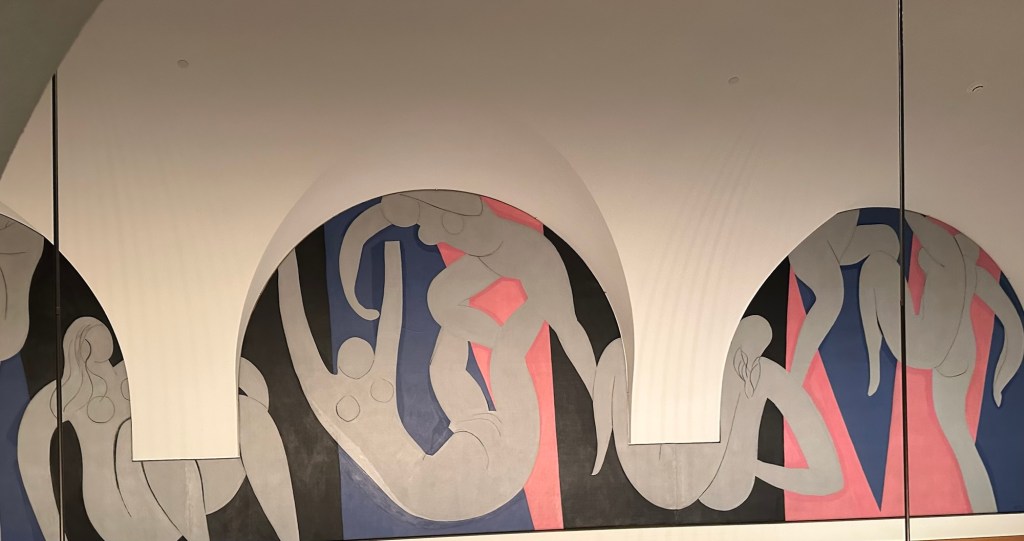
Which was transfered to Philadelphia in the new building.
The docent asked what we notice about the paintings in the first gallery. I replied “hodgepodge” as I surveyed a large room with many as 200 paintings hung on 4 walls without discernable theme or consistency. Barnes’ intention was for the viewer to discover the meaning through experiencing many things and finding comparisons and contrasts.

Very John Dewey and very demanding for viewers who have learned to contemplate art one piece at a time with descriptive labels.
In the Barnes there were no labels at all on anything. Is it a Cezanne or a Renoir? Why is the Seurat hung 5 feet above eye level and beside a piece of ironwork? On the highlights tour, the docent asked us to look for connections. Would Barnes have been happy about this guidance?

I focused on a few specific Impressionist painting on each wall not taking time to look for the relationships that Barnes left for us to find in his arrangements. Constructing meaning was too exhausting. After 4 hours, I left satisfied with seeing some stellar and unique pieces of Impressionist art.
Link to Barnes Foundation:
Rocky at the PMA. We headed over to the Philadelphia Museum of Art to spend a cool day roaming galleries on a double hot day. A recently restored ground level entrance at the rear of the museum bypasses Rocky and avoids the lure of running up the grand front stairs to make a Rocky victory stance.
The current feature was multiroom, multimedia survey of the 40s and 50s entitled BOOM! It included painting, prints, sculpture, furniture, photographs, and artifacts representing the post-depression and post-war boom in the USA. It was a time of unbridled expectations of a good life.
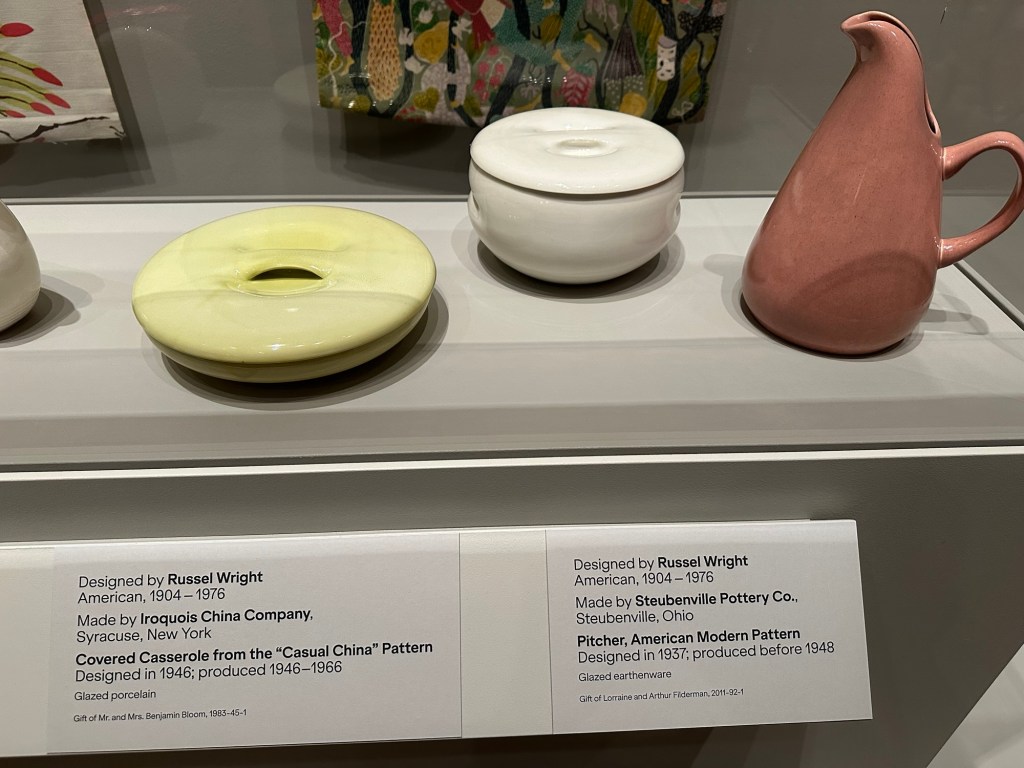
After lunch in the cafe, we visited several other galleries. Although we did a quick walk through the colonial period exhibits., the modern and contemporary art is always our favorite, and where we spent most of our time.


South on Interstate 95
We got up early on Sunday morning at 8:00 to head south hoping that an early start would get us through DC before traffic. Our plan worked well. In five hours, we stopped for breakfast/lunch at an IHOP near Springfield, Virginia. A large sign on the door warned CASH ONLY because the computer system had failed causing havoc for ordering and paying. We did not mind the extra time to relax and enjoy being off the road.
Back on I-95, we experienced afternoon traffic congestion and slow downs. At least we were heading south, because the northbound lanes were a parking lot. We planned to stop in Richmond but had made such good time we continued to Pittsboro, NC where we would visit with Gerald and Kathleen.
Arriving early, we added a night to the two nights already reserved at the Hampton Inn. It is a brand new and beautiful hotel with a modern facade that looked more like an upscale Hilton than your typical Hampton Inn. I talked to one of the owners who was watering the front garden and picking up random trash.
The next morning, we began our visit with Gerald and Kathleen in their new home in Fearington Village. We were so glad to have them back within driving distance of Flat Rock after their 8 years sojourn into Florida.
Reminiscing
I knew who Gerald Ponder was before I ever met him. Phyllis Hotchkiss, former student at UVA and colleague at Midwestern, worked with him on a Danforth Foundation school improvement project. She had been very impressed with his leadership
as school board president of Denton ISD.
Gerald and I first met at teacher education meetings while I was serving two terms on the Texas Education Agency Commission on Standards for Teaching Profession. The entire state was moving to more field based teacher education, and Gerald was a leader in that effort. When a job opened up at the University of North Texas, it was an opportunity to move to a larger university; working with Gerald was also part of the attraction.
Our first family event with Gerald and Kathleen was in October 1992 at a picnic on Lake Grapevine, the start of was the start of a 30 years friendship. After a couple of years, Gerald “abandoned” me taking a job at UNC-Greensboro as Department Chair. Kathleen worked for the Center for Creative Leaderhip, then for Duke Leadership. Her job took her all over the world working with corporate officers.
We had regular visits to North Carolina because Becky is a native and has family here. This allowed us to visit G&K several times over the years including their wedding. When Becky and I retired from Texas in 2002, we moved to Flat Rock and more opportunities for visits back and forth. One important trip we took was to Victoria, BC with an Alaskan cruise to celebrate our 60-year birthdays together.
Gerald has often said we are brothers of different mothers because our lives are so parallel. We were born only 5 months apart, grew up in small rural towns and went state universities (Arkansas and Texas), began teaching in poverty areas (New Orleans and Appalachia), got doctorates ( Texas and Ohio State), believe fervently in the power and importance of education, and saw ourselves as change agents for improving public education and teacher education.
When I was retiring from the University of South Carolina, Gerald, now Associate Dean at North Carolina State, offered me a unique opportunity. NCSU was starting a new elementary education major which incorporated everything Gerald and I believed from our work with field based programs in Texas.
And they needed a Mathematics Educator.
As a result, I commuted to Raleigh once a week— Sunday through Wednesday—for a wonderful final year. I told people that I was living in the Ponder’s attic which was true. However this attic was a 900 square foot apartment with a living room, bedroom, bathroom, and exercise studio.
These accommodations came with a hot dinner each night which Mary McCarthy, Kathleen’s mother, prepared. The price of dinner each night was a hot game of Rummy 500. I affectionately called her a “demented leprechaun” because she cackled when she gathered up the cards after invariably “whooping” up on Gerald and me. I wondered if she had learned how to play cards from Mary Alyce’s Sisters.
I knew Mary for many years. She was a delightful person with a commanding personality. We mourned her passing with laughter and tears and shared many Mary stories and quips, After attending an exhibit of Rembrandt at North Carolina Museum of Art, she observed that “when you’ve seen one,
you’ve pretty much seen them all.”
Reunion in Fearington Village. Our time with Gerald and Kathleen was filled with non-stop talk. After eight years in Florida, they were back in North Carolina and are still getting unpacked and settled. We helped a little with arranging and admiring the wonderful art that they have collected over the years. We met Cory, the CNA who works with Gerald and is also part of their family.
We discussed our various aging dilemmas which Becky’s mother aptly called “the organ recitals.” We talked about family and who was where and what they were doing. Our strenuous chat led to afternoon nap time. We returned around 7 with Greek food from the taverna near our hotel.
The next day was more talk about families and the sad state of the world we are seeing. Instead of BOOM!, we are feeling DOOM! And GLOOM! That night we had dinner delivered from Door Dash from a Middle Eastern restaurant in Raleigh. We had hoped to return for Gerald’s 80th birthday, but had many obligations that weekend. We promised to return later in 2025 for other celebrations.
Roads Leading Home. We drove home through Siler City where Becky and her mother lived for a year while Polly was choir director at the First Baptist church. Siler City is often mentioned as the “big city” near Mayberry in the Andy Griffith show. We hunted for their house but did not find it. Strange how towns change in 70 years.
We skirted Charlotte on I-485 and arrived home about 5:00. We were tired and slept for several hours. Around 9:00, we ate cheesy grits after a desperate look through the larder. Then we went back to bed to recover and remember a great month with friends who are our “brothers and sisters” and sharing so many memories.


5 responses to “Reunions, Reminiscing, and James Blunt”
Really enjoyed reading the travel notes and reminiscences. Wh
LikeLike
Glad you enjoyed the trip report. We and Robsons have thought about getting together with you sometime maybe at one of the breweries? Casual reunion? Catch up? Have you had any grandchildren trips? That is such a wonderful tradition.
Steve
LikeLike
Richard and I would love to get together anywhere, anytime! I
LikeLike
Beautifully written, Steve. Thanks for sharing.Jeanne
LikeLike
Glad that you enjoyed our June trip with us. Such a full and fun month, but tiring for old folks. I have tried to avoid any ageist labeling, but my body has other ideas. Both Becky and I have had medical issues for the last year or two. Becky is having a spine operation on the 28th of August to relieve the compression in her lower back. The surgeon seems to be a pioneer in this technique of lamenectomy. That is good. She has had several falls and we are hoping this will allow her to regain mobility.
How are you? I loved your articles about your barge watch and barge naming. Are you writing some more?
I am recycling as Treasurer at Unitarian Fellowship after 12 years. Desperate move on their part.
So many good memories of time shared in Charlottesville and on the River with you.
Steve
LikeLike