We had been so busy in Paris that we almost missed the big three museums on our must-see list. Suddenly one evening, we realized that if we did not get advance tickets quickly, we would miss out completely. Jim pored over the availability and found only one option to see all three on our last weekend in Paris. This was to be a museum marathon: Friday for Picasso, Saturday for D’Orsay, and Monday for the Louvre with a breather on Sunday.
The Robsons planned a morning walking tour of the Marais guided by Rick Steves, while Becky and I took the less adventurous approach of visiting the Carnavalet Museum to see the history of Paris. We planned to meet at 12:30 for lunch at a highly recommended restaurant and proceed to the nearby Picasso Museum at 1:30. Best laid plans!
Friday Morning in the Marais
The Robson Report. Jim and I took the metro to The Marais district which is one of the city’s oldest neighborhoods.
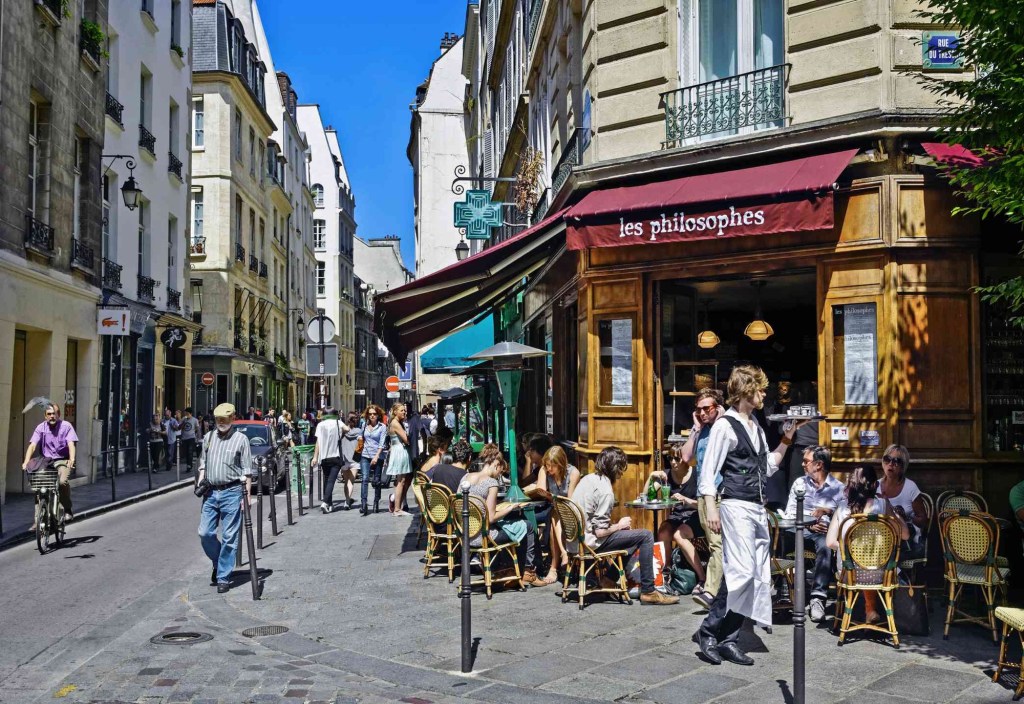
It is now filled with trendy shops, restaurants and galleries, but it is not as “polished” as so many other parts of the city.
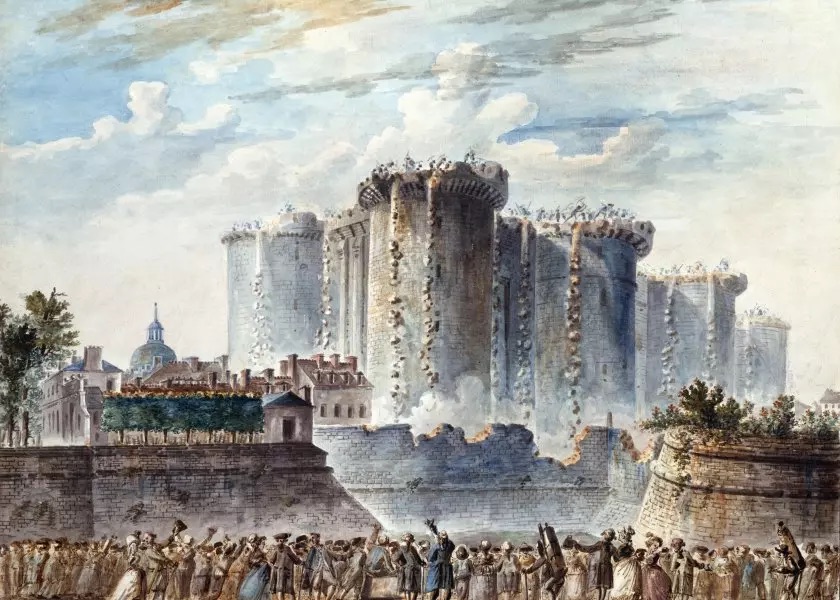
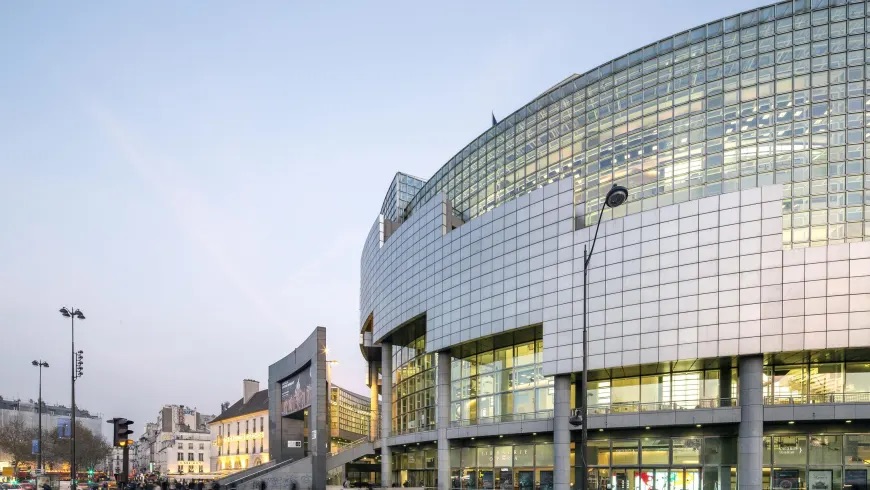
We began the Rick Steve’s walking tour at the Place de la Bastille. The infamous Bastille prison once stood here. The storming of the Bastille in July 1789 marked the beginning of the French Revolutions .
The July Column with a gilded Statue of Liberty marks this spot as sacred for freedom lovers ever since.
Place des Voges built by Henry IV in 1605, our next stop, established this exclusive neighborhood as the place for the rich and famous for centuries. Many mansions were built in this area.
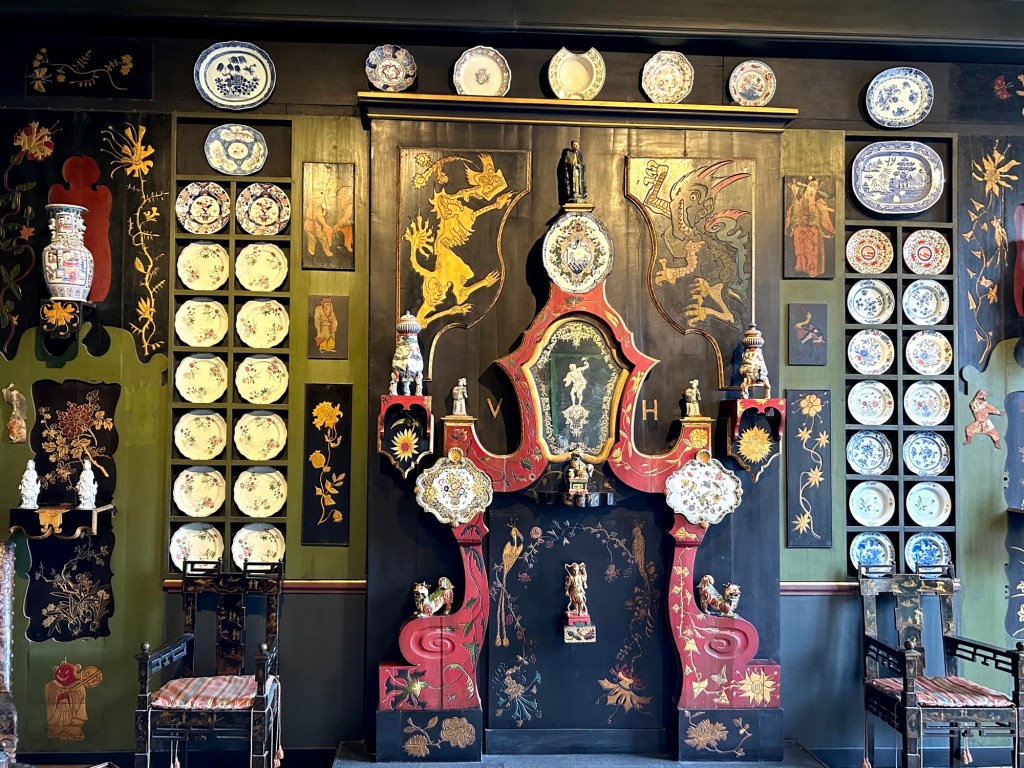
Victor Hugo lived there for 16 years before his exile to Guernsey. We were impressed with its vast size and lavish decor. Next we walked through the heart of the Jewish Quarter and past synagogues flanked by delis and bakeries. The Marais is a fascinating area with interesting buildings and history—the perfect place for a morning stroll in Paris.
Friday Morning at Carnavalet
Becky and I dawdled. We got to the Musee Carnavalet at 10:00 and discovered an exhibit about Agnes Varda who spent 60 years photographing Paris life. Over her career, she was primarily known as a street chronicler, but also a maker of surrealistic film, publicist, and fashion photographer.
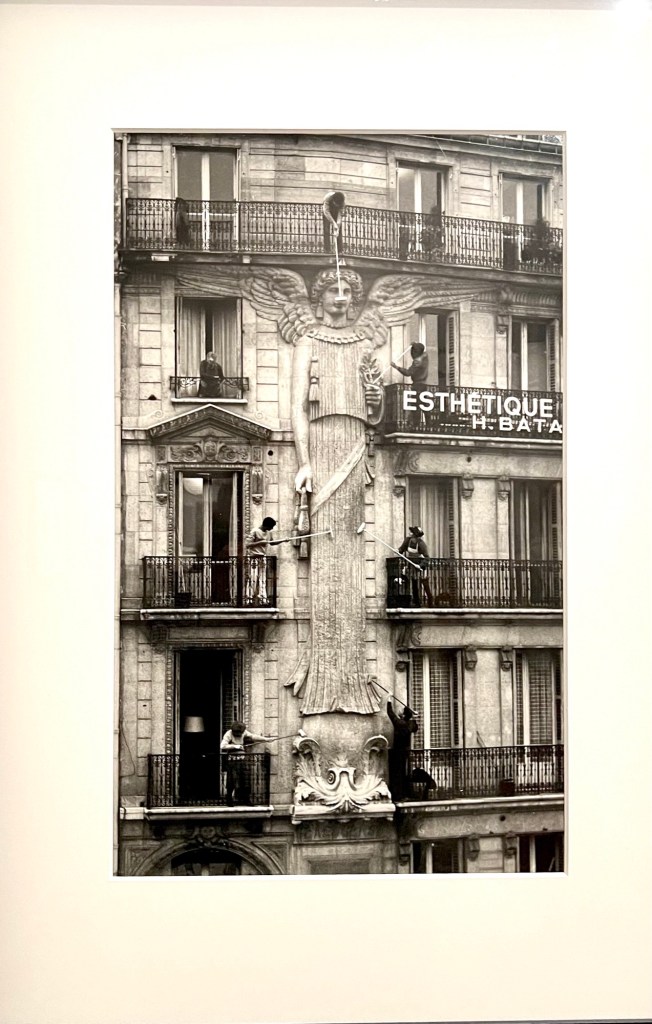
Agnes took many personal photographs at her apartment/studio in a decrepit building her father bought at the end of WWII. The ramshackle building was converted to house her, her friends and lovers, and an Algerian refugee family. The central courtyard became a gathering place for artists. Agnes captured their lives, both the spartan and outrageous, in dire post-war Paris. Her reputation grew as the economic conditions of Paris improved through the 50s and 60s and became quite well known.
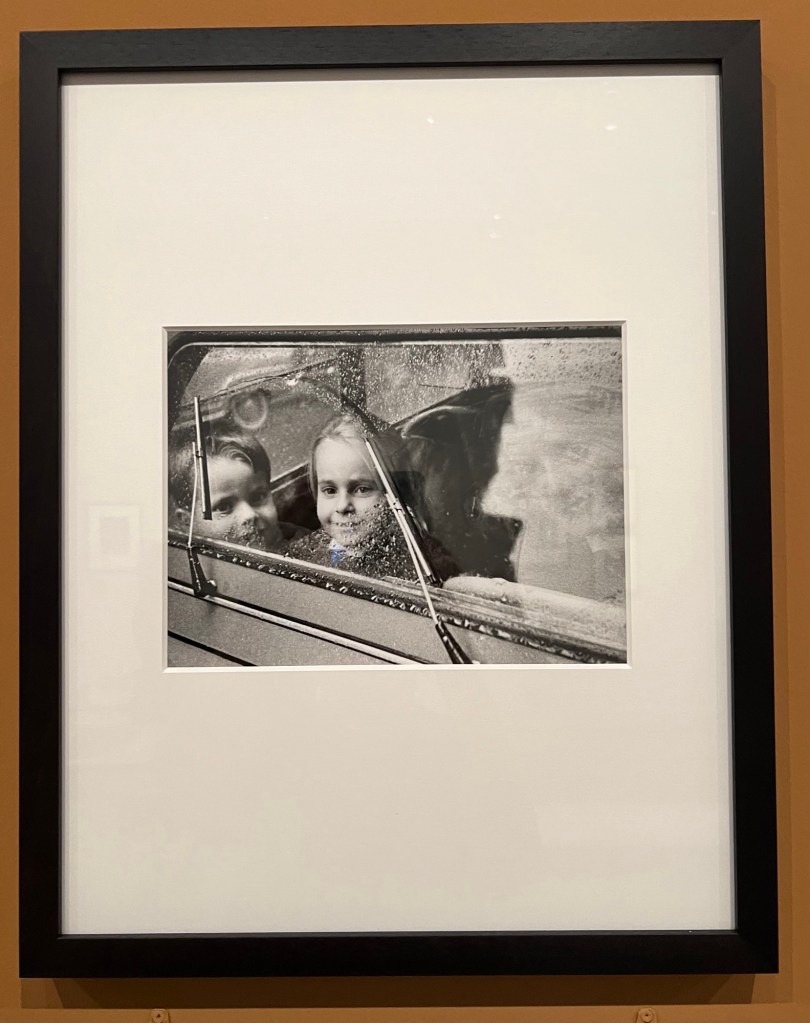
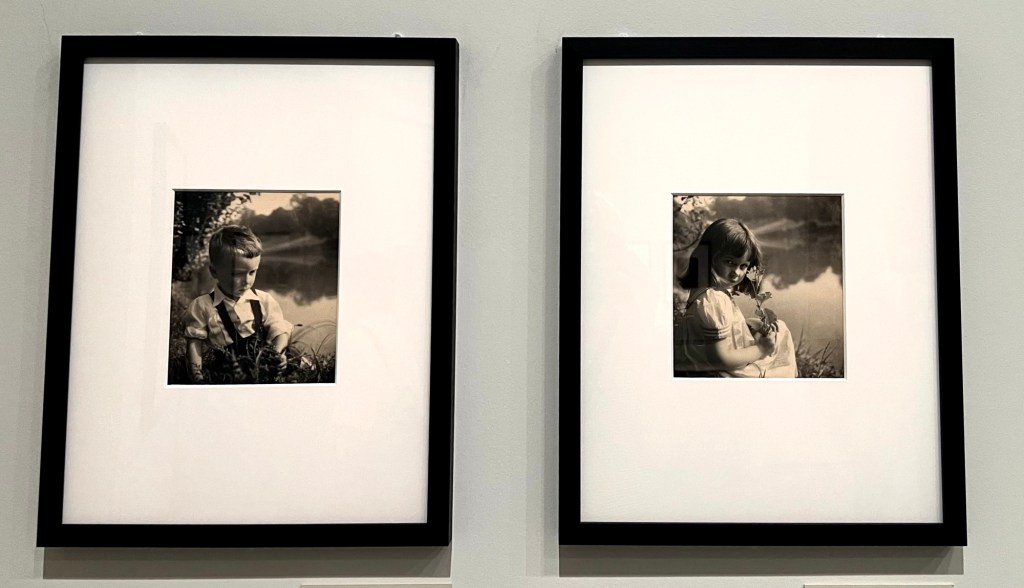
Working with the National Theatre, she photographed and became friends with important people in the arts including composer Maurice Jarre, filmmakers Federico Fellini and Jean Luc Goddard, actors Guilietta Masina and George Depardieu, play writer Eugene Ionesco, and artist Alexander Calder. One set of photographs of a very young Depardieu show him playing the fool and hiding behind trash cans.
Becky loves street photography and was enthralled with what we saw. I suggested she create a photo essay of street photography from the trip for the blog. She accepted the challenge.
The exhibit examined her career through an extensive display of still photos and film as well as taped interviews with her reflecting on her work. This exhibit took our entire morning. We don’t know any more about the history of Paris than before, but we loved getting to know Agnes Varda, her life, and her photography.
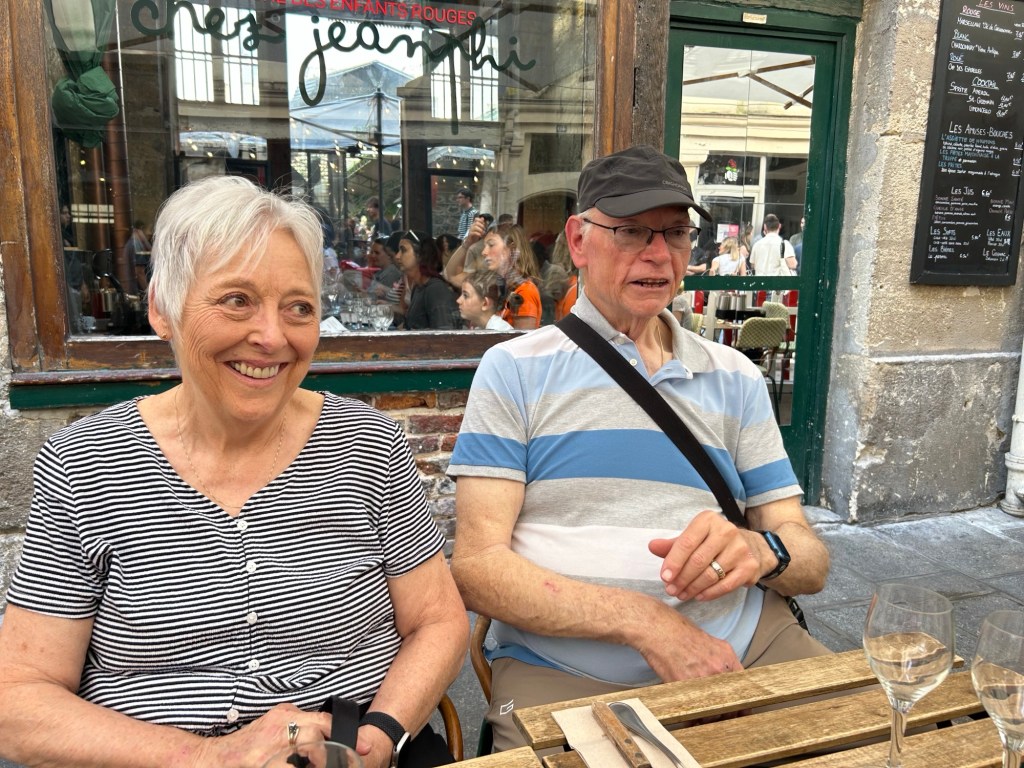
We all arrived at the appointed time and place for lunch at a highly recommended restaurant. Jim and Betsy were already there standing in line with at least 50 people. The restaurant appeared to have little to no seating. Immediate change of plan, we walked across the street to Chez Jeanphi where we ate wonderful lunches while sitting down.
Friday at the Picasso
The Picasso Museum is located in the very old Hotel de Sale now renovated with large gallery spaces and odd half-floor smaller rooms. The original owner made his fortune in salt, thus the name.
Picasso was a prolific artist working in and mastering ceramics, printmaking, sculpture, as well as painting and drawing in various media. Picasso lived in France from 1902 until his death in 1973. He requested that his private repository be donated to France upon his death. This museum holds over 5,000 pieces of art and archived pieces from that bequest.

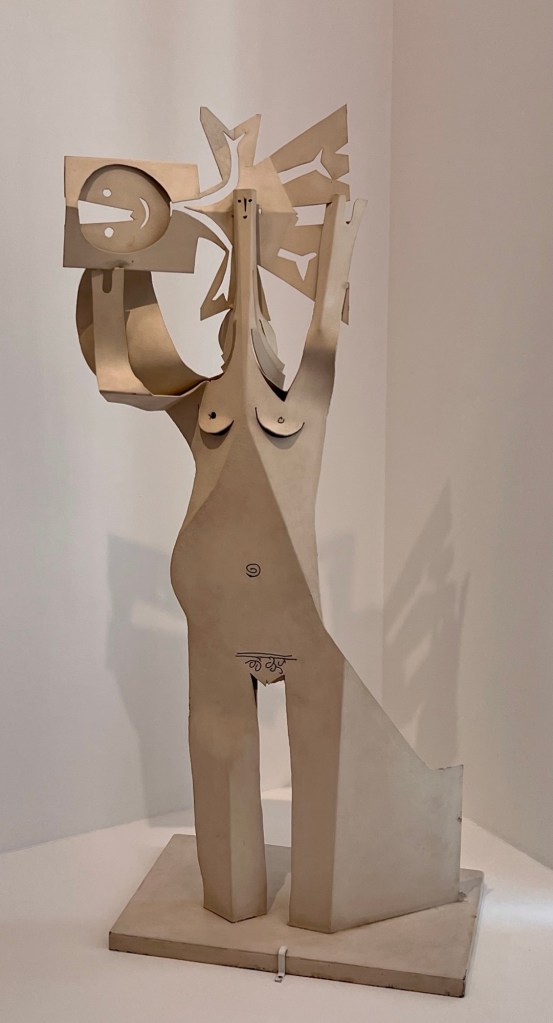
Since this collection is from his personal holdings, much of it is less familiar than his blue period and pink period which were sought and bought by museums and collectors early in his career. The artist also had a vast collection from other artists including Renoir, Cezanne, Seurat, Matisse and others
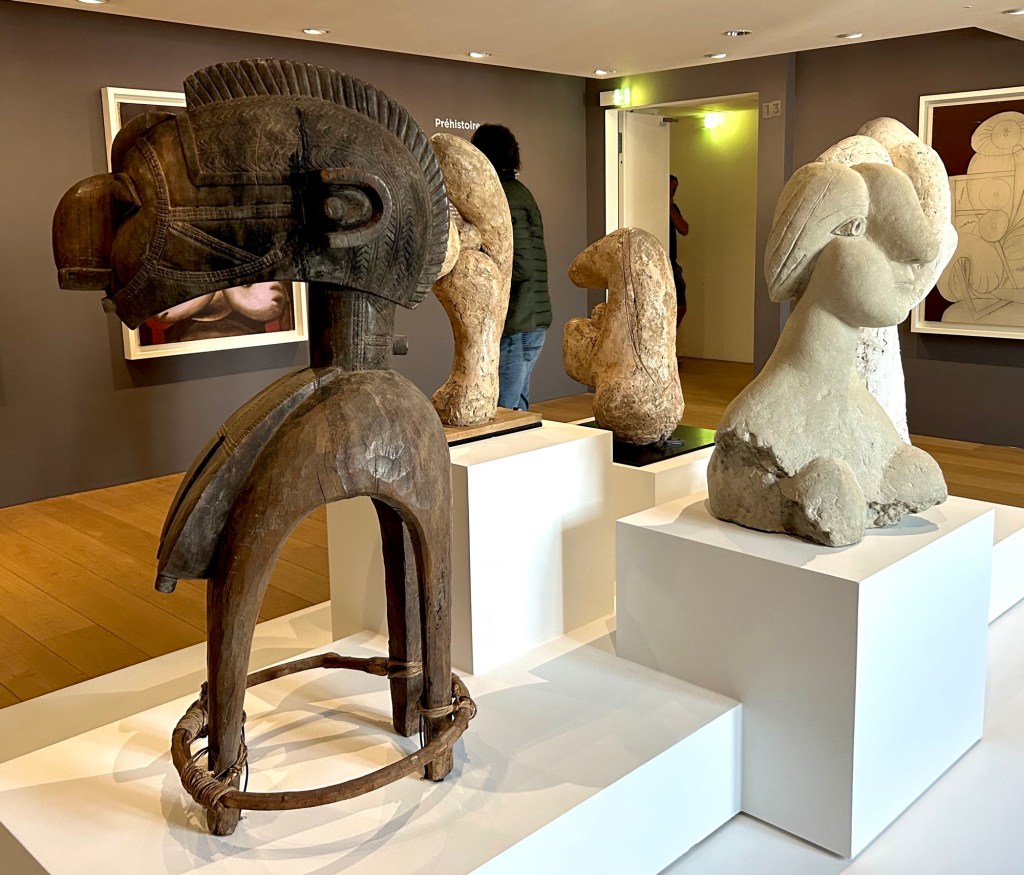
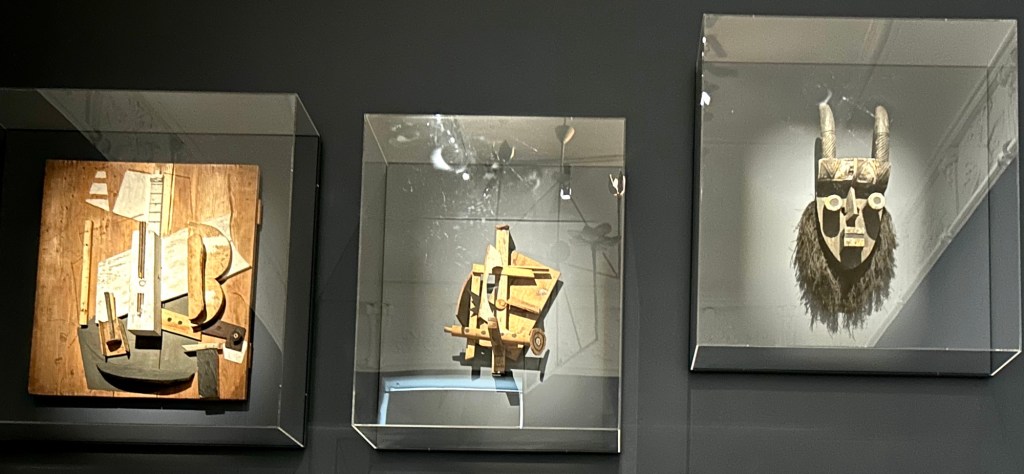
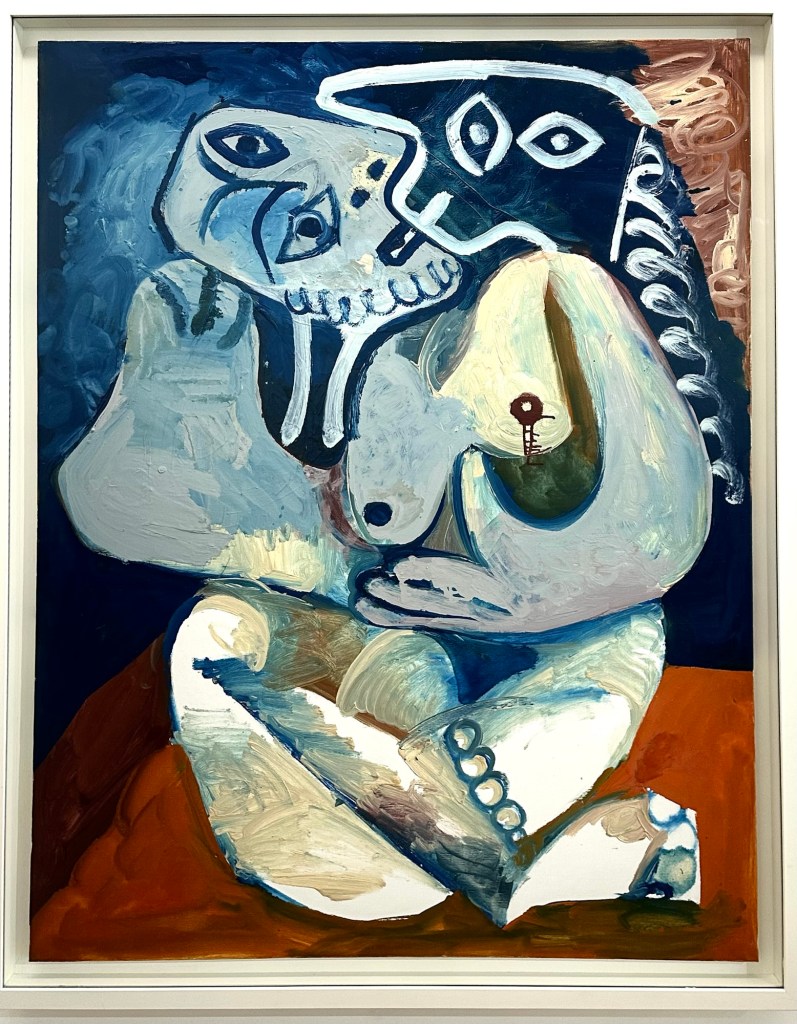
Room after room surprised us with the variety of his life time of work. Picasso experimented with different techniques and approaches throughout his life. His work with multiple viewpoints startled audiences and revolutionized.
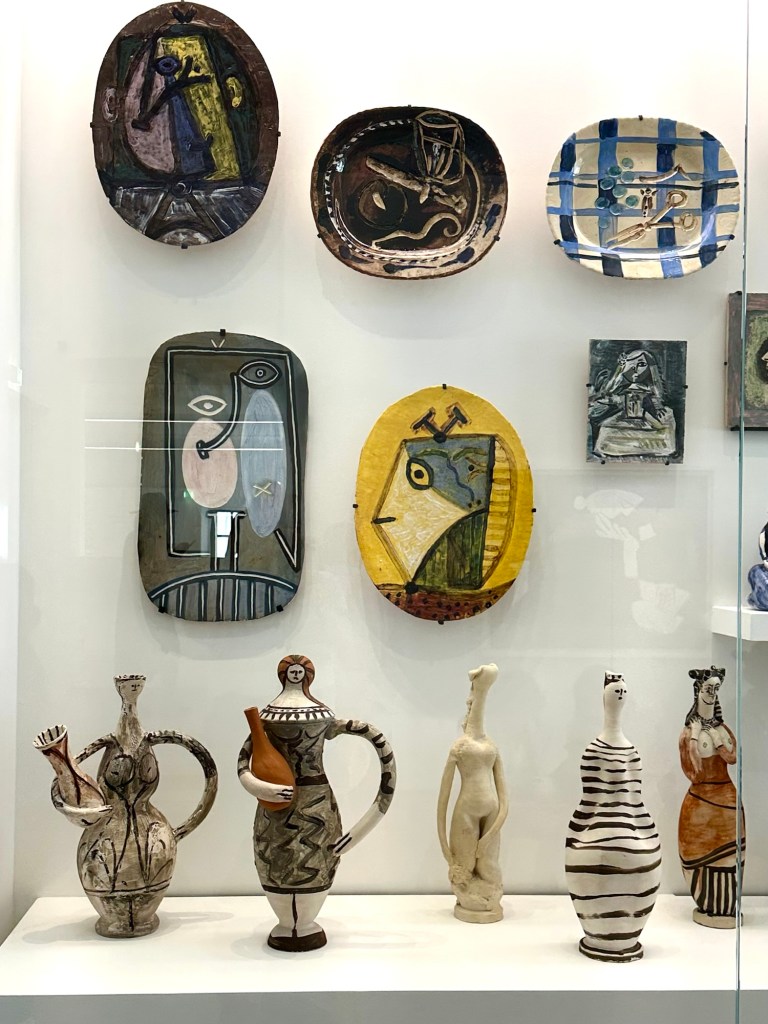


Here is one eye and below is the other eye. Here the head is in profile and also facing forward. The range of his styles and creativity was astonishing. We saw it unfold before us.

Saturday at the D’Orsay
Jim, Betsy, Becky and I had been in the Musee D’Orsay on earlier trips to Paris but were eager to go again. A documentary series about Iconic Buildings detailed the history of the D’Orsay— an amazing story.
Originally built as a train station for the 1900 Expostion in Paris, the building went through a period of decay and abandonment before its rebirth as the amazing museum building we enjoy today.
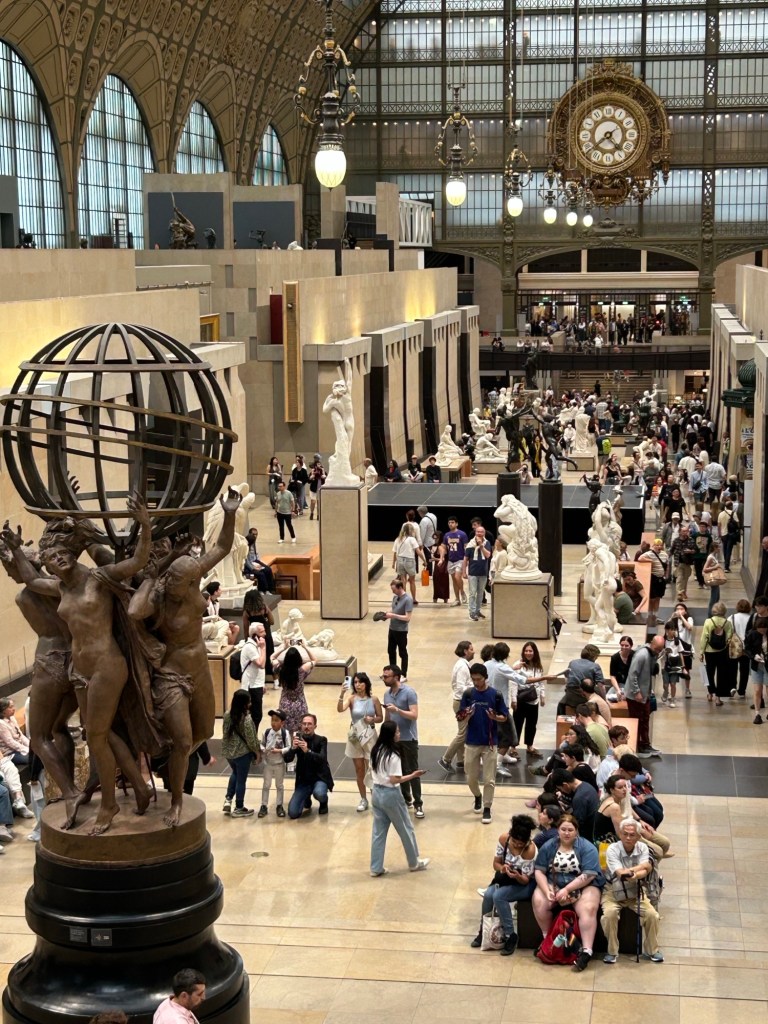
The engineering marvel of putting a modern museum inside an old facade was fascinating. The architects and engineers had so many problems to address: water seeping from the Seine and regular flooding, vibrations from the train tracks that still run under the building, and creating interior galleries in a huge open area which had been neglected for almost 100 years.
The result is a masterpiece housing masterpieces of art from approximately 1870s through 1950s. We all love the art and artists of the Impressionist and Post Impressionist and Neo Impressionist movements. These are a focal mission of the Musee.
Other exhibits from this period in the museum include amazing sculpture, art, and artifacts representing Art Deco and Art Nouveau, romanticism, naturalism, surrealism, and symbolism. All of these also find space in the D’Orsay.
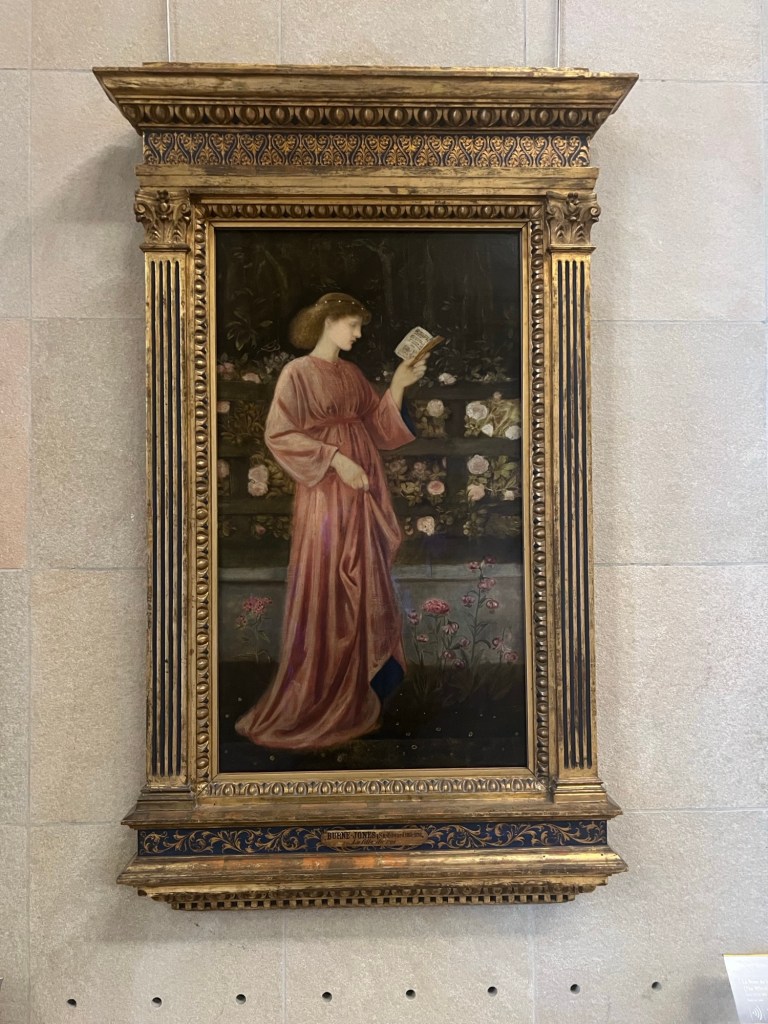
We could spend a week in the Museum, but we had only 12:30 to 6:00 to see all we could see. We arrived early with Lebanese wraps for lunch which we ate sitting on the concrete benches in the plaza.
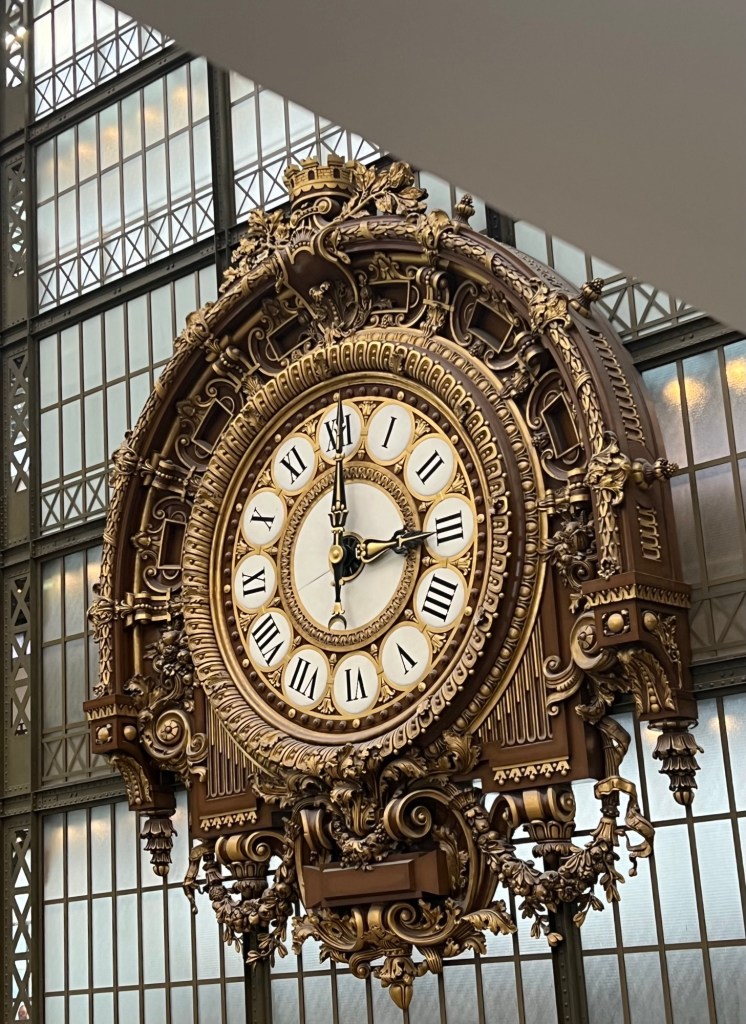
Timed tickets allowed us to skip the line and enter immediately after 12:00. Then we separated with plans to check in around 3:00 “behind the clock” in the restaurant.
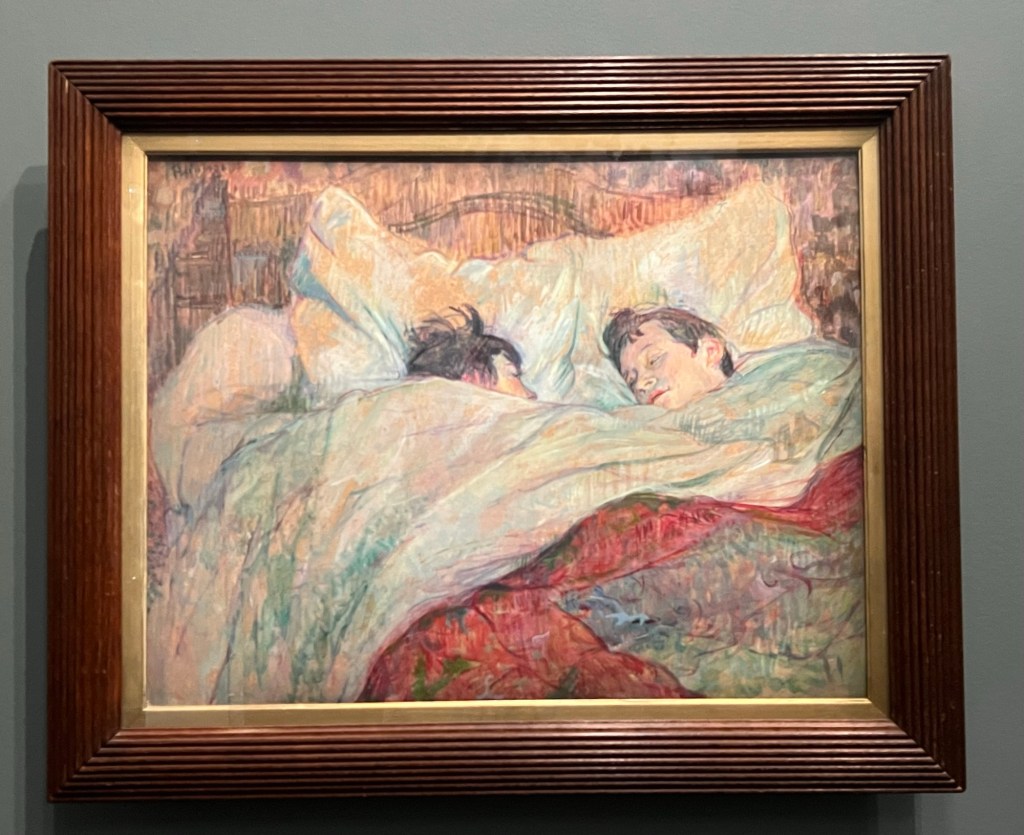
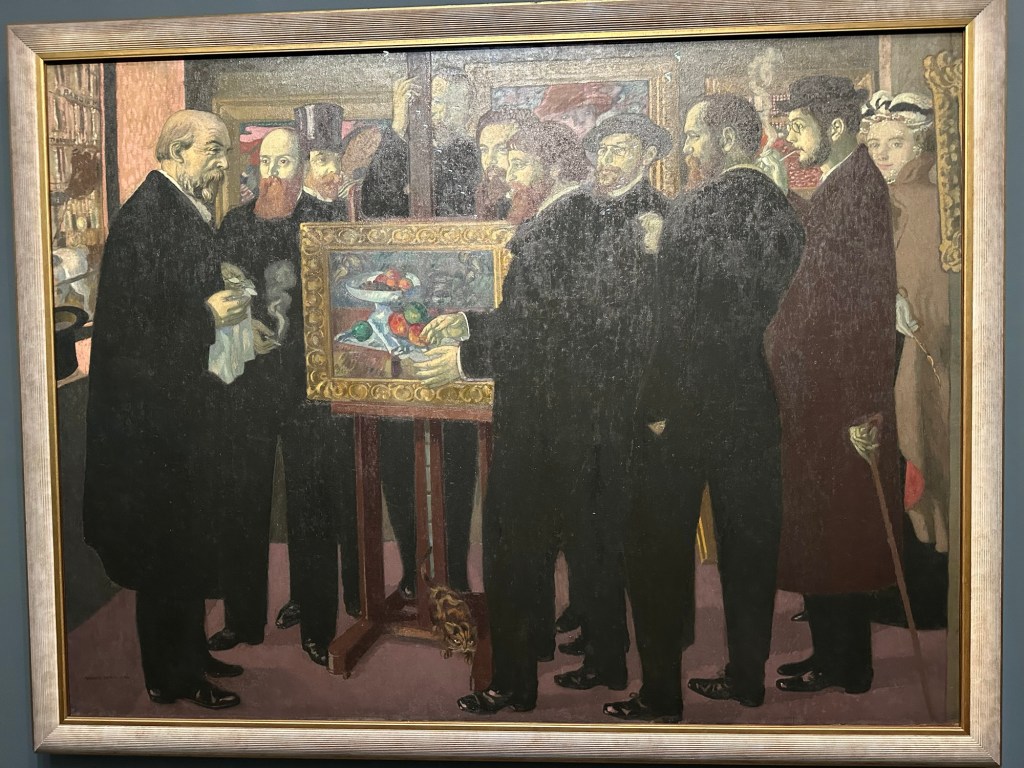
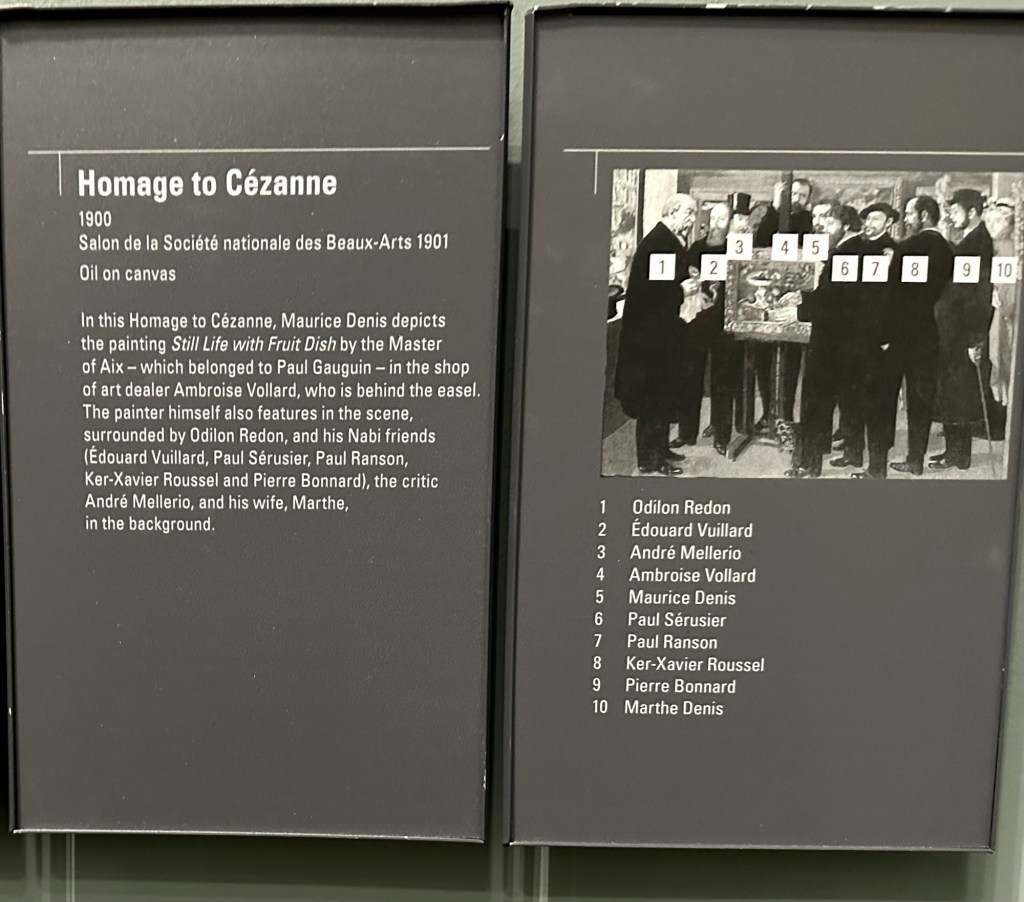
Post Impressionism and Nabi galleries. Becky and I concentrated our time with artists from our favorite period of Post Impressionism found on the second floor. Since we visited ten years ago, the Museum has received two major donations of paintings from private collections.
As a result, the Nabi and post impressionist galleries have been reorganized with dozens of new paintings from old favorites—Bonnard, Vuillard, and Vallotton.

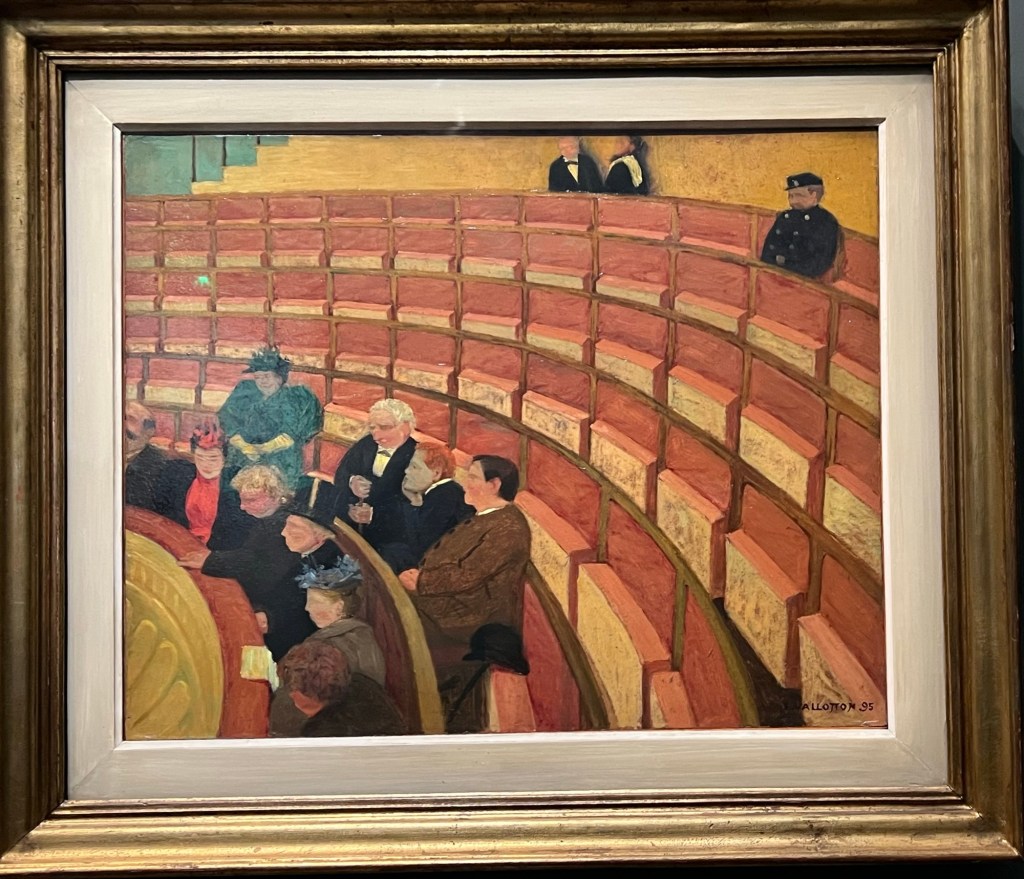
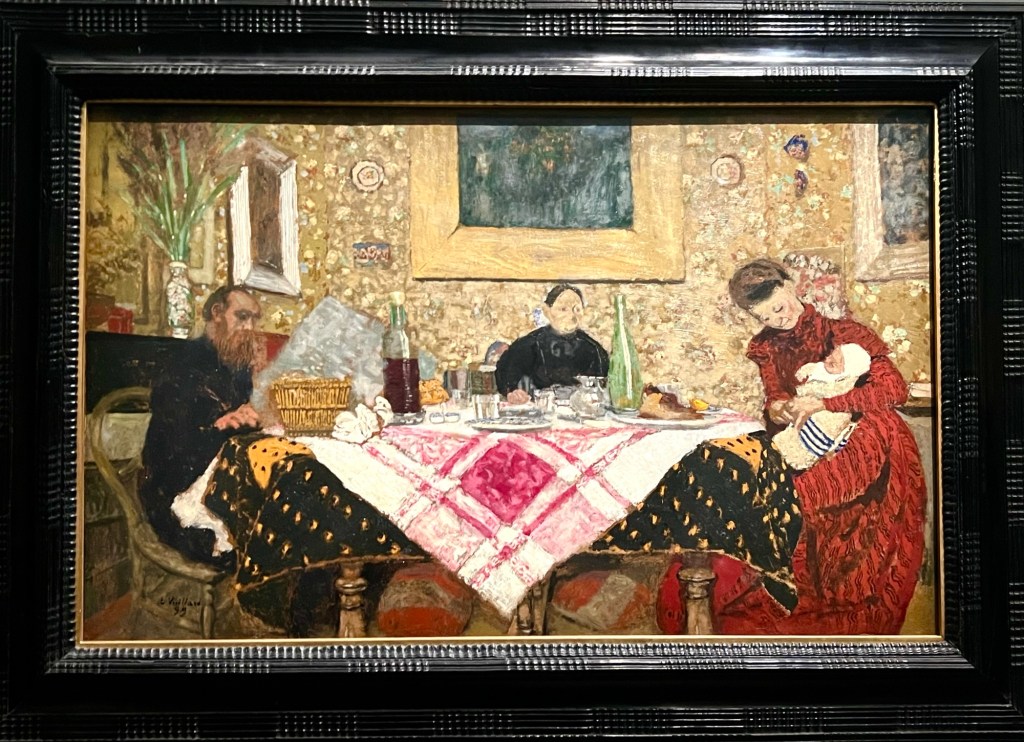
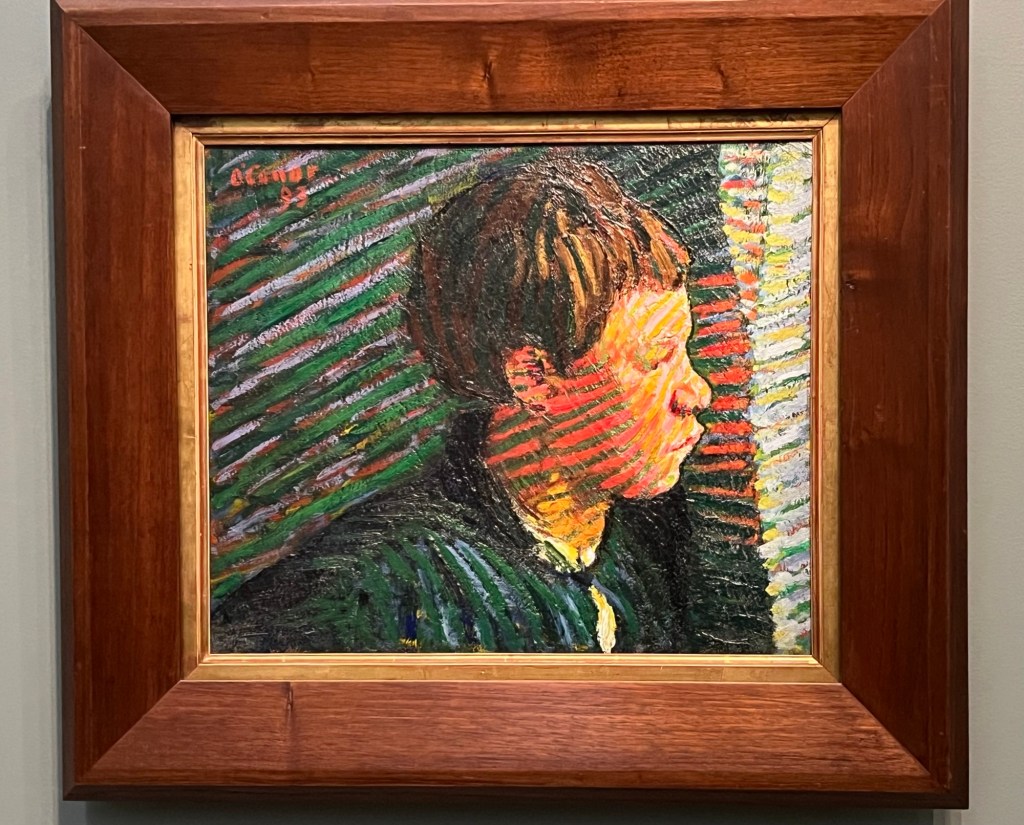
Donations also included unexpected works by known artists and examples from artists who are less known but equally brilliant.
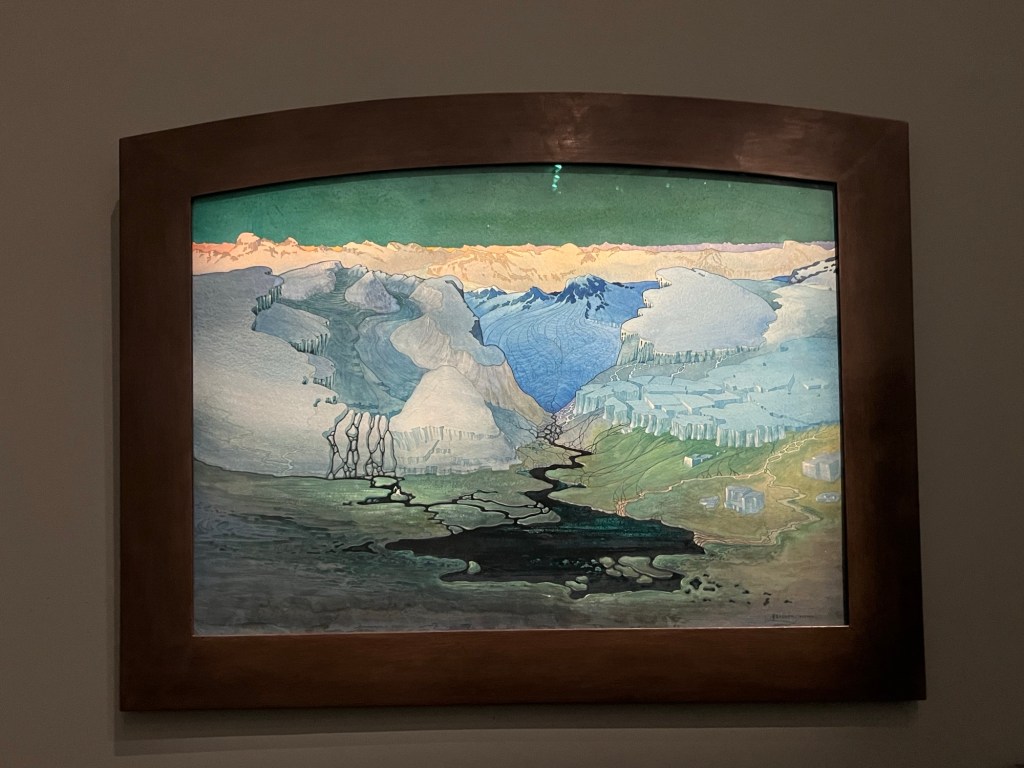
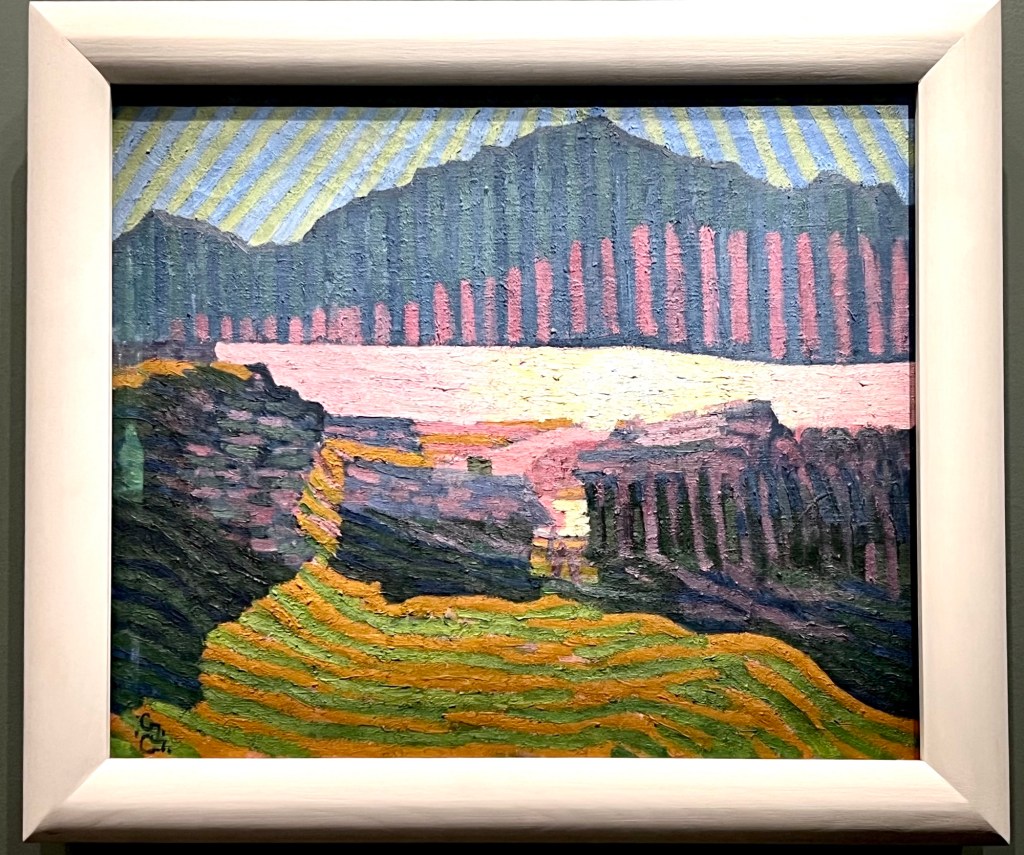
We spent two hours in these galleries reveling in the bright colors and unique view points.

At 3:00, Becky and I needed a rest. We had light refreshment of coffees, soup, and salad and enjoying the beautiful space behind the clock with golden chandeliers.
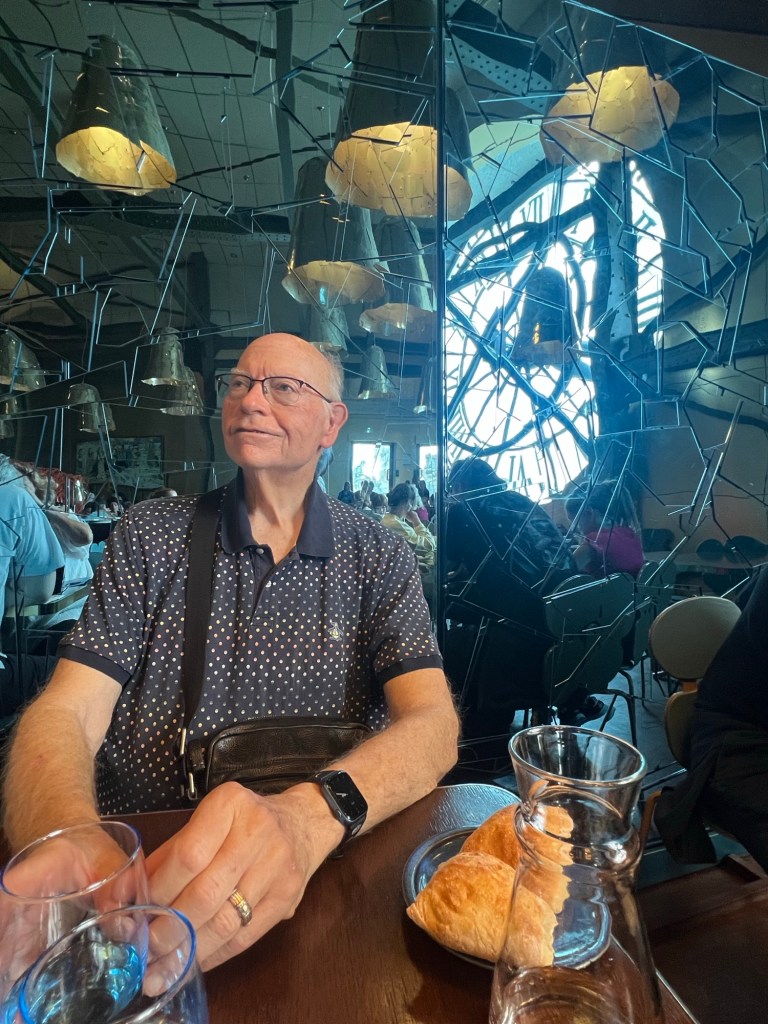
About that time, a hard rainstorm beat on the roof sounding like horses stampeding. We were all glad to be inside since we had brought inadequate rain protection. The Robsons skipped lunch and continued their efforts to see everything
Since we were on the fifth floor for our break, we decided to go to the nearby Impressionist galleries to visit with the Van Goghs, the Degas, the Monets, and other luminaries of the period.
We got about 10 steps into the first gallery and were overwhelmed with the number of people crammed into the space. No place to stand, no place to see, no place to breathe or think.
We are fortunate that we have seen Impressionist masters many times in many museums and in more comfort with time for contemplation. I feel sad for anyone in that crowd who has never seen these works in a calm setting.
We abandoned the mob and found other less crowded galleries with Gauguin, Seurat, and other impressionists who were less popular with the masses.
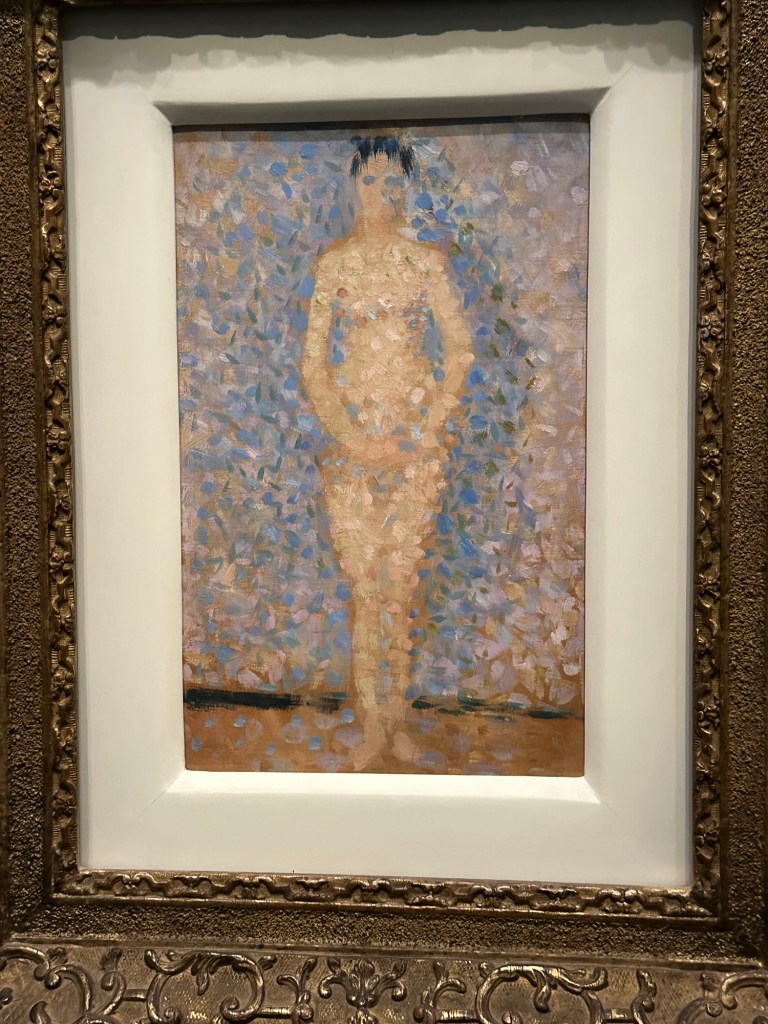


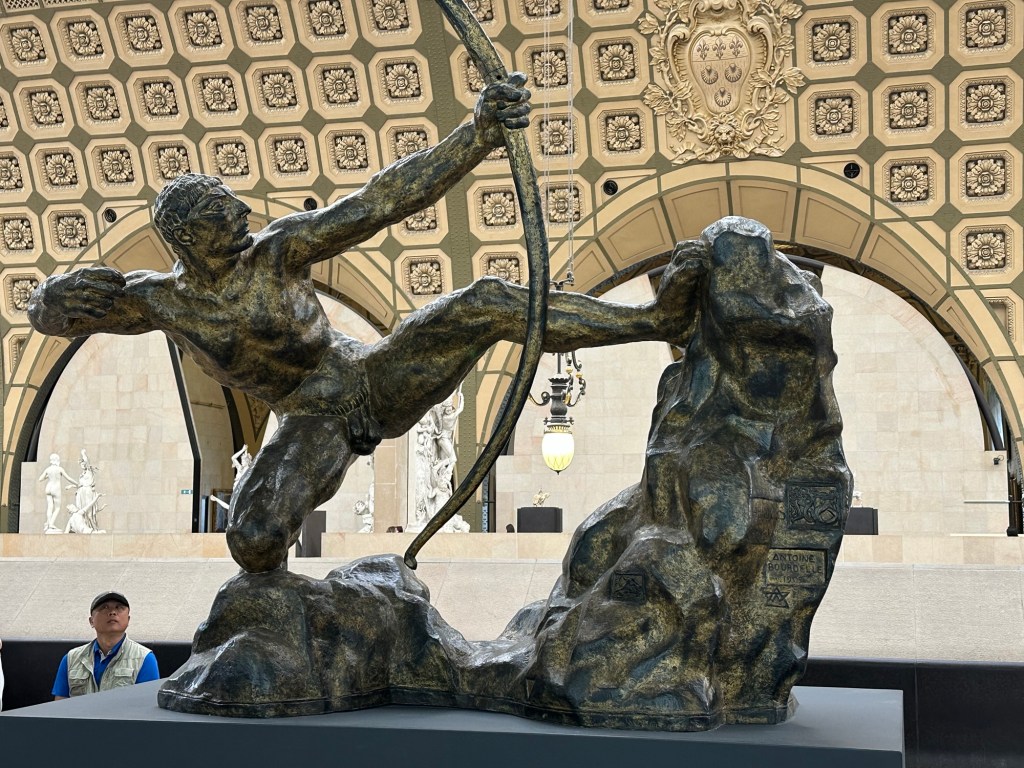
We also enjoyed many pieces of sculpture which seem timeless.
We reversed our route of the morning and were soon back at Passy 28 where we foraged in the refrigerator for supper.
Robson Report. Our memory of the D’Orsay is vivid even after 30 years, yet entering the museum caught our breaths with excitement. Jim and I started at the 5th floor where Monet, Renoir, Degas, Van Gogh, Cezanne and Manet are featured. Unfortunately, the crowds in these galleries were crushing.
We quickly fled and found smaller, less crowded rooms with other Impressionist artists. Beside the wondrous displays of art and sculpture the museum holds an extensive collection of art deco furniture which we had never seen before and thoroughly enjoyed.
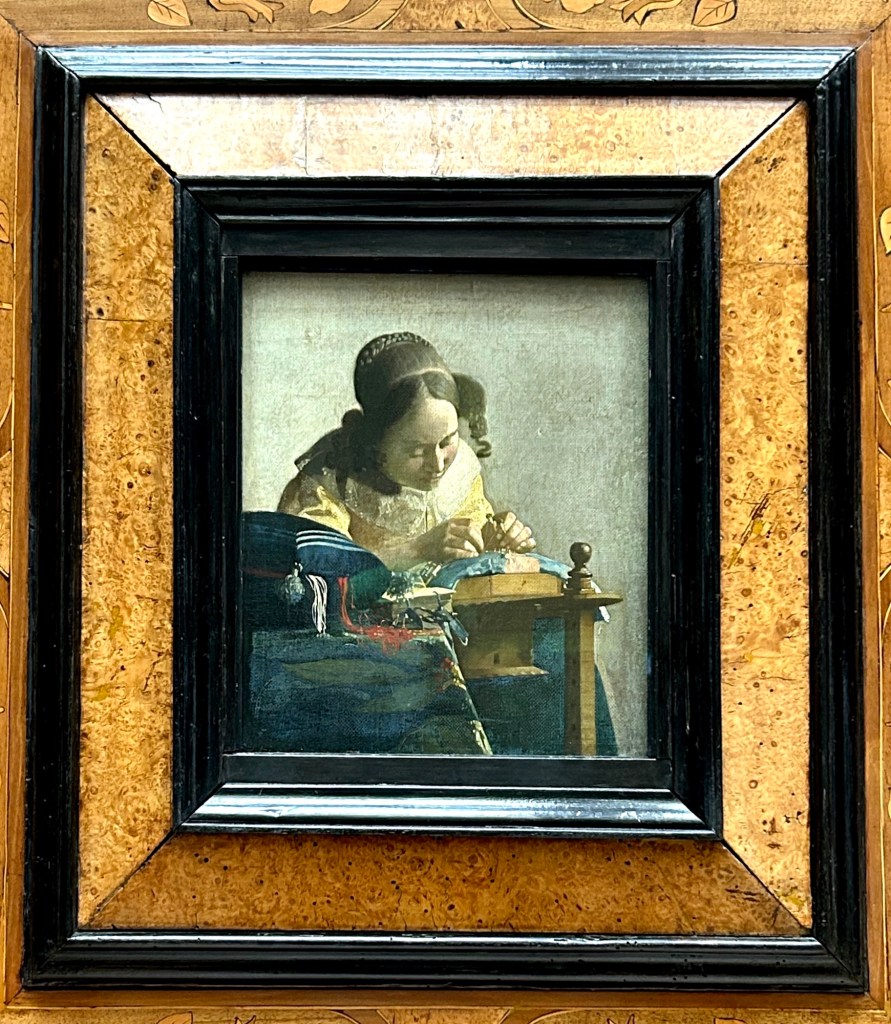
We spent the entire afternoon only leaving when it closed at 6:00. Storms with hail occurred while we were inside, but now the sun was shining for a perfect Parisienne spring evening. After riding back on the metro we stopped at a bistro in our neighborhood for a sidewalk supper of pizza, wine, and tiramisu. It couldn’t have been a better ending to a wonderful day.
Monday at The Louvre
The once controversial, now revered, I.M. Pei glass pyramid sits like a diamond jewel atop the Louvre Carousel, a three-level underground shopping mall located in the center of the Louvre complex of buildings.
The Iconic Buildings documentary also had a long description of the Louvre’s history, phases, and transformation into the largest museum in the world.
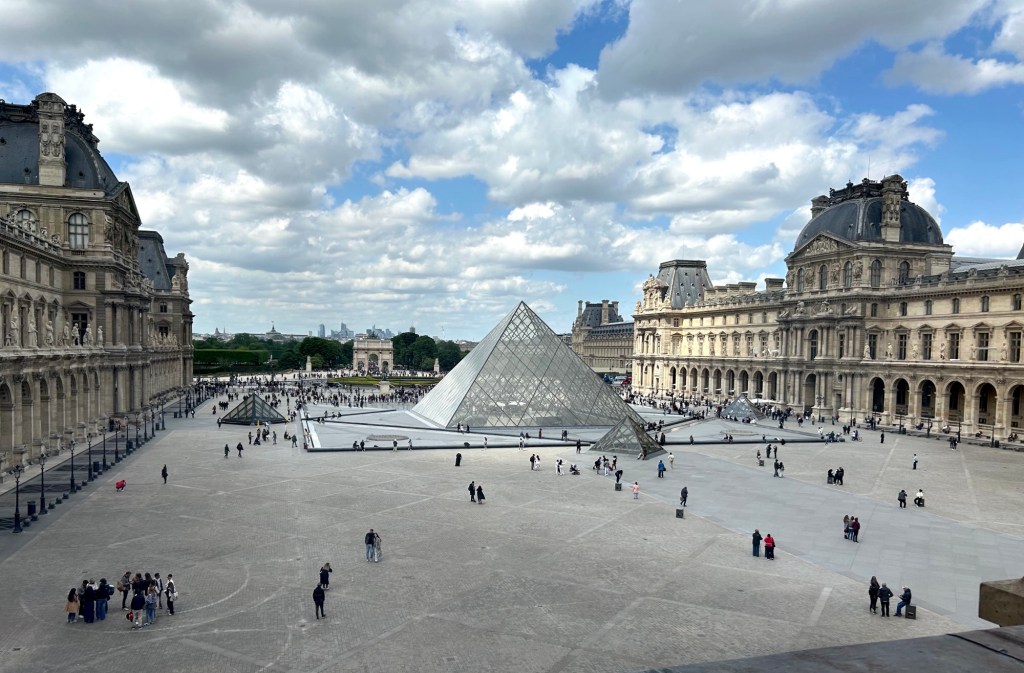
Betsy and Jim took the Metro, while Becky and I rode Bus 32 to Auber switching to the 21 for the Rue de Rivoli entrance to the Louvre Carousel. The huge space was filled with throngs of people but when Betsy and Jim looked up, they saw Becky and Steve coming down the escalator—such an amazing coincidence in such a vast space with us having taken different routes.
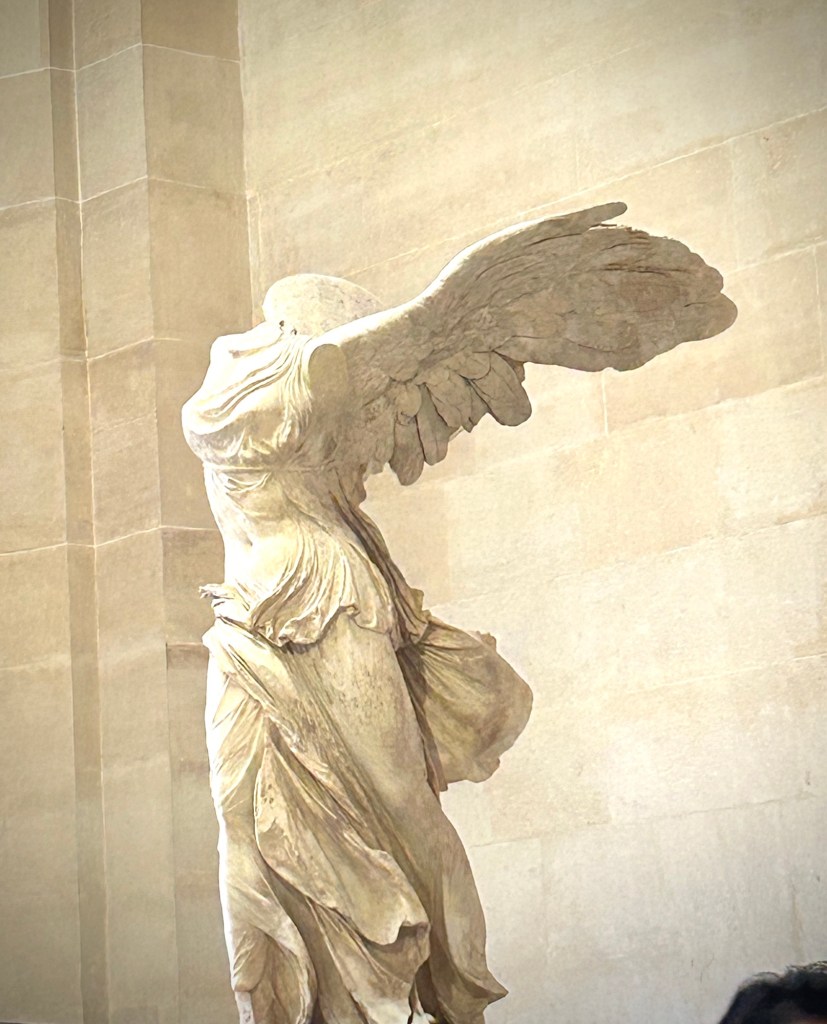
We walked and talked together passing many shopping opportunities during the thirty minutes we spent in line, to get in the next line, to get in the next line, to get through security, to get in line to enter the Museum with our timed tickets for 1:00. Two security lines separated us then zippered us back together for our entry into the cavern which opens into different wings of the museum. We set 3:00 as a check-in time at Winged Victory.
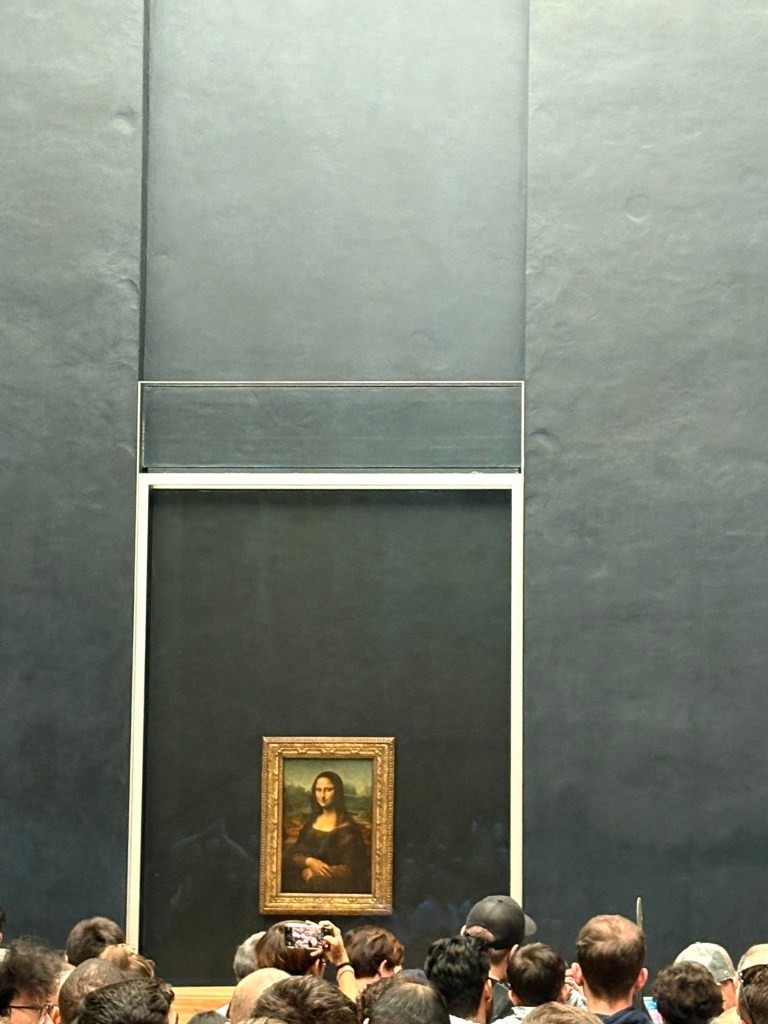
Robson Report. Because we were going to take on the Louvre, Jim and I started the day slowly reserving our strength for the museum. Years before when we went to the Louvre we walked leisurely through it and went right up to the Mona Lisa without anyone around us. How times have changed.
The line to enter the Mona Lisa gallery was probably an hour long, but Jim joined a school tour group and so we just snuck right inside. Sneaky! There was literally no where to move in that room so Jim just held the camera up as high as he could and snapped a photo. Then out we ran!
We spent the rest of the afternoon in the smaller exhibition rooms that were far less crowded. Onefavorite area was the art deco furniture wing. We enjoyed seeing the moat and walls of the original 13th century fort under the Louvre with an explanation of how it had been constructed. We had the air conditioned area all to ourselves!
The museum has many fascinating things to explore and we stayed until it closed. We were glad we went to the Louvre but don’t feel a need to return. The crowds are just too much to handle. Jim’s summary was “Too much art, too many people.”.
Tired and crowded. Becky and I took an elevator to the second floor thinking we were going to see the French painting in the 20th century, but the entrance to that was closed. So we wondered down a long, long corridor of 15th to 18th century French painting which is really not our favorite. The entrance to the Mona Lisa was jammed up with many people waiting so we passed on.

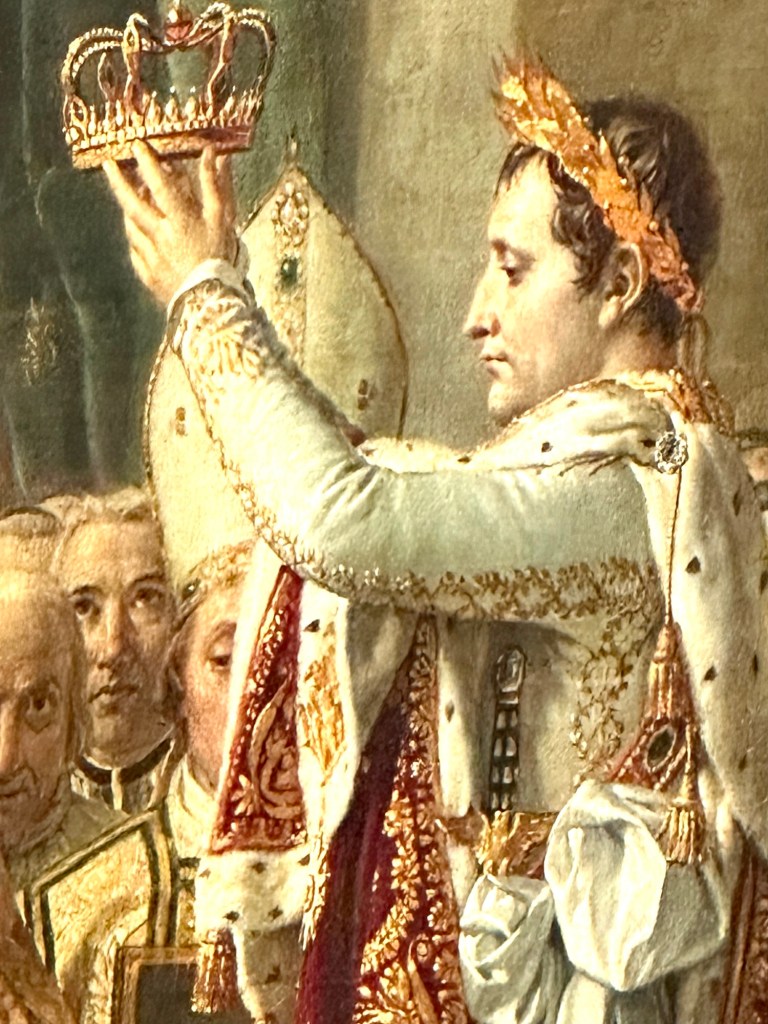
The 19th Century gallery holds massive historical paintings celebrating battles and grand events such as Napoleon crowning himself.

You have to admire the scale and detail of these paintings. No wonder the French Academy members were dismayed at the outrageous colors and dabbing brush work on Impressionist paintings. At the same time, you can understand why the impressionists felt so confined by the stricture of the academy.
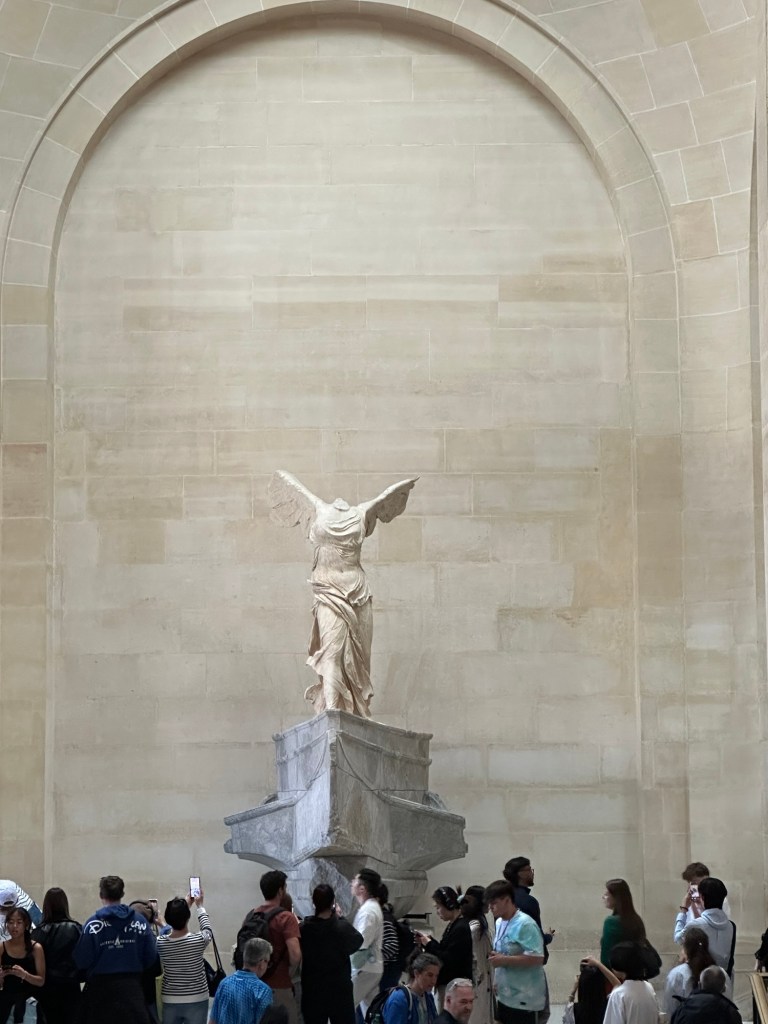
We met Jim and Betsy in the mob at Winged Victory and announced we were done. After spending a little time and money in the Louvre gift shop and bookstore, we headed back home.
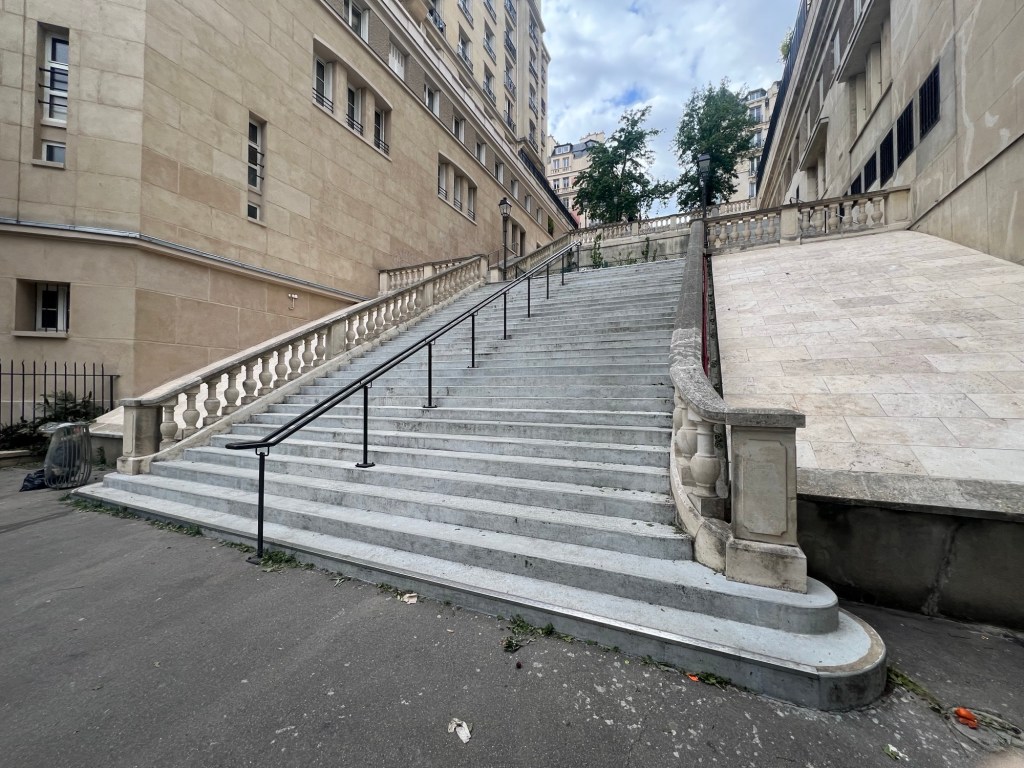
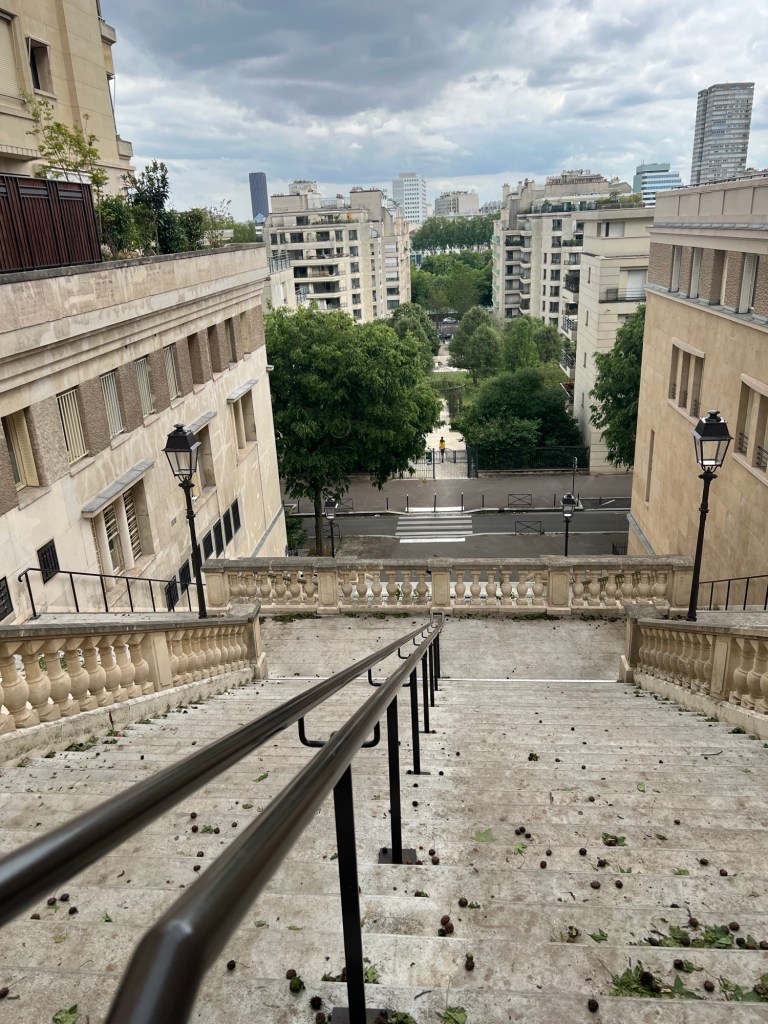
I misread the bus route. Instead of getting to our apartment, Bus 73 followed the Seine at the foot of the Passy hill. We had a steep walk up three sets stairs to the apartment. We climbed slowly but in time to greet the Robsons on their return. Nobody felt like cooking so we went back to the Aero restaurant on our corner for dinner.
 Tipps for Travel
2 responses to “A Tale of Three Museums”
I assume the iconic building show is on PBS..May watch to see the D’Orsay.
The crowds would be untenable for me. Imagine it in summer, with humid heat on top.
I saw the Mona Lisa in 1980 and could see her up close. I remember being underwhelmed, and don’t remember much else about the museum. I would love to see the Picasso museum but will be happy to look online.
LikeLike
We are having great time in Bruges. Went to a Beethoven concert last night in the giant red Bruges Concertgeobouw Hall. Head home on Tuesday. I have mail a box of heavy stuff to lighten our luggage. It may come on Monday but I doubt it will come that fast.
Steve
LikeLiked by 1 person