Museum of the Middle Ages
Saturday. Our desire to visit the Luxembourg Gardens was a memory trip. All of us have romantic memories of walking in the gardens, having a picnic on a bench, and enjoying the amazing spring flowers and open expanse in the middle of Paris. The Robsons’ memories are 30 years old but still strong; we were surprised we were there 20 years ago. Time flies.
I saw a television special about The Cluny Museum which is conveniently located on our route. We took Bus 32 to Trocadero and transferred to Bus 63, a Rick Steves recommended regular bus that runs along the south side of the Seine River. The Cluny is just a block away.

The focus of the newly reopened and reconfigured Cluny museum is the Middle Ages. The Middle Ages includes 1000 years also known as the Dark Ages. It was a bloody time of fighting for territory and power, of the falls of Rome and decline of Greco-Roman culture, of multiple invasions and destruction across Europe. It was a death-marked time of plague and famine for common folk. And it was a time of power and privilege of the very few, with hunger and deprivation of the many.
If you read the Brother Cadfael mysteries or saw them on PBS series, you will recall a nicely sanitized version of these times. Derek Jacobi plays a kindly brother trying to do good and solve mysteries in a world of hurt.
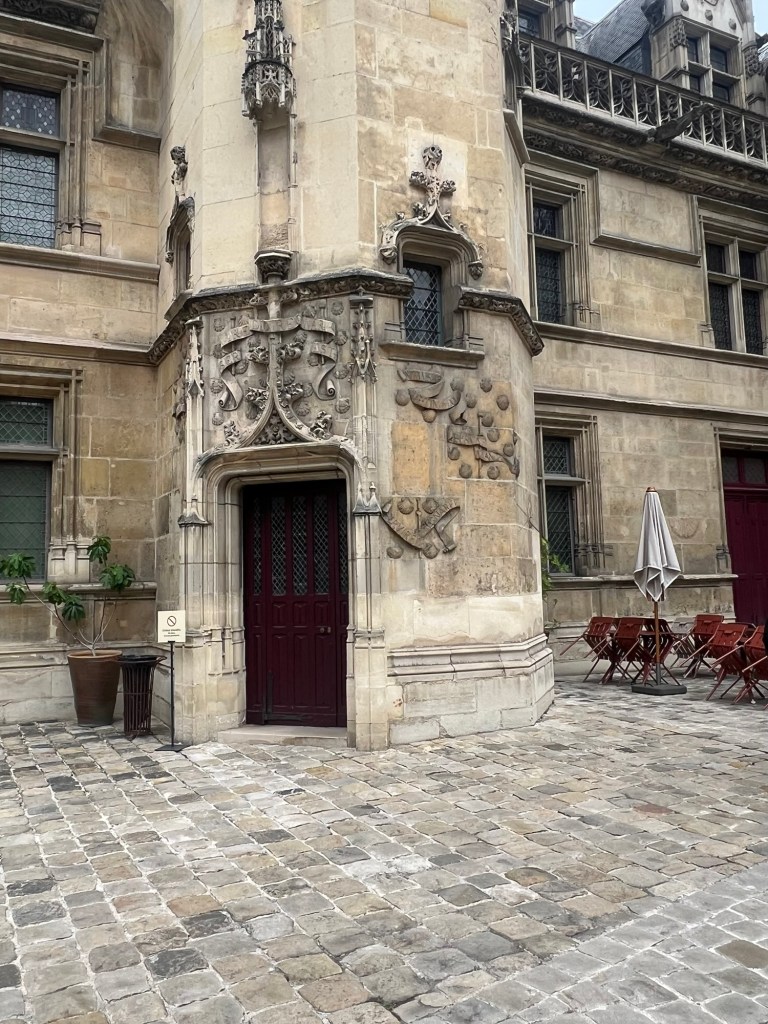
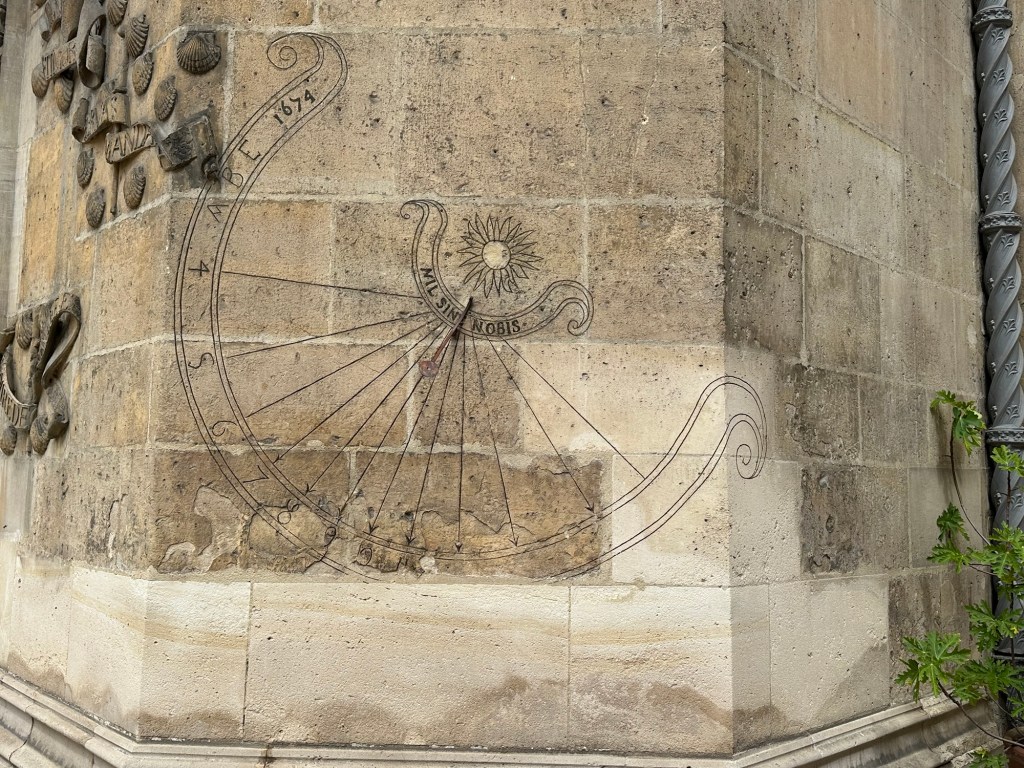
We were not prepared for all we saw at the Cluny.
All that Glitters is Not Gold
Many ancient artifacts displayed in the Cluny illustrate the life, the art, the politics, and how the wealthy and royal folks lived. Many religious artifacts were dedicated to Jesus, the Virgin Mary, disciples and various saints.

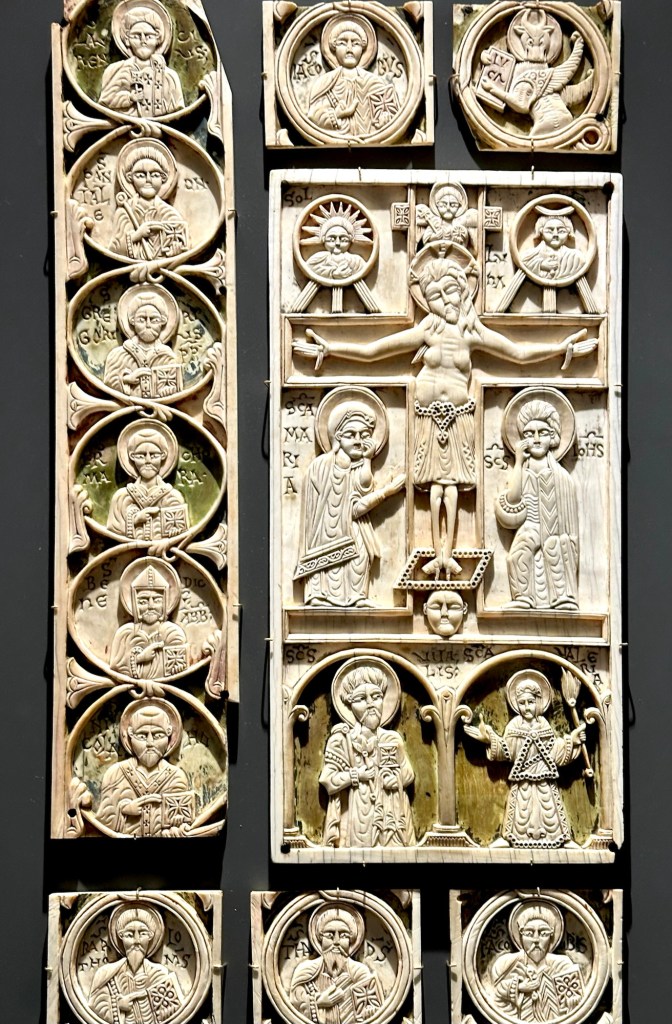
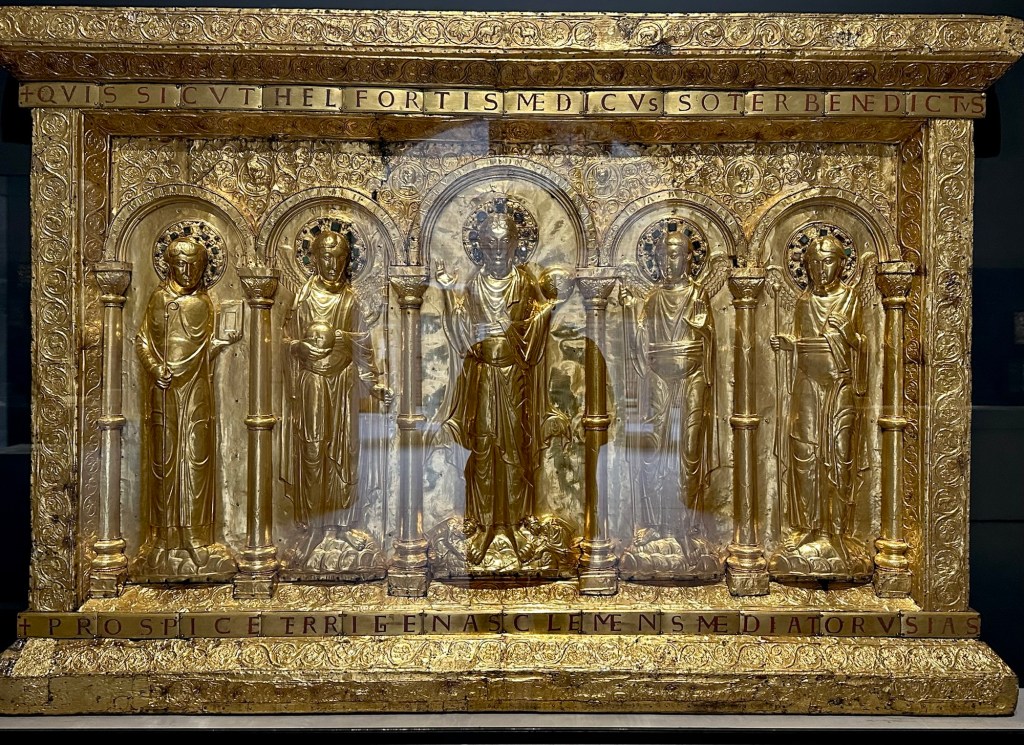
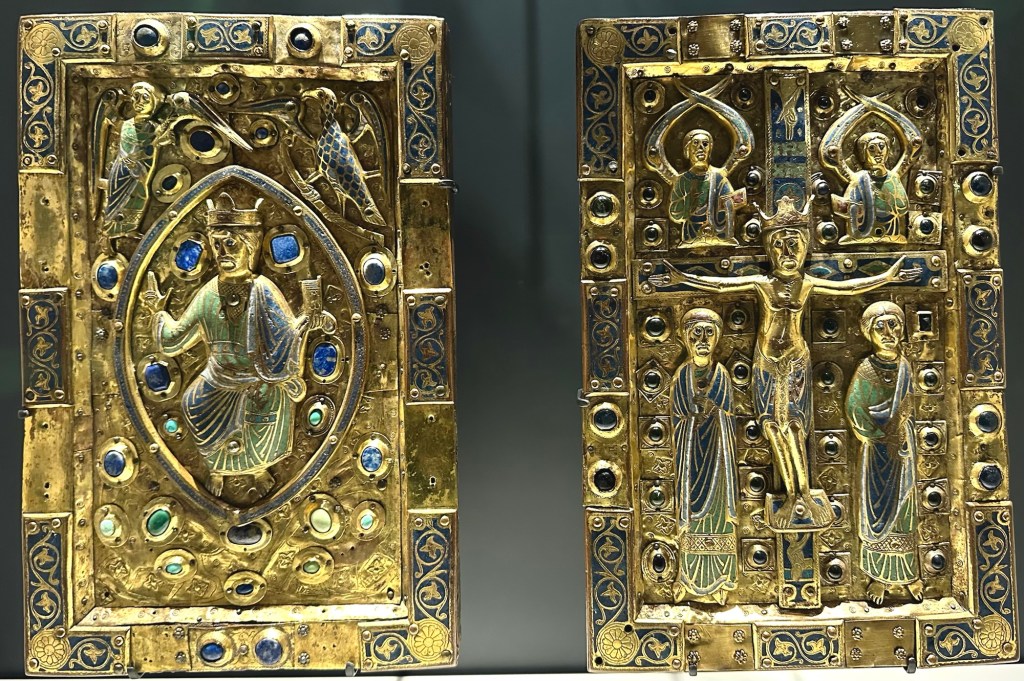
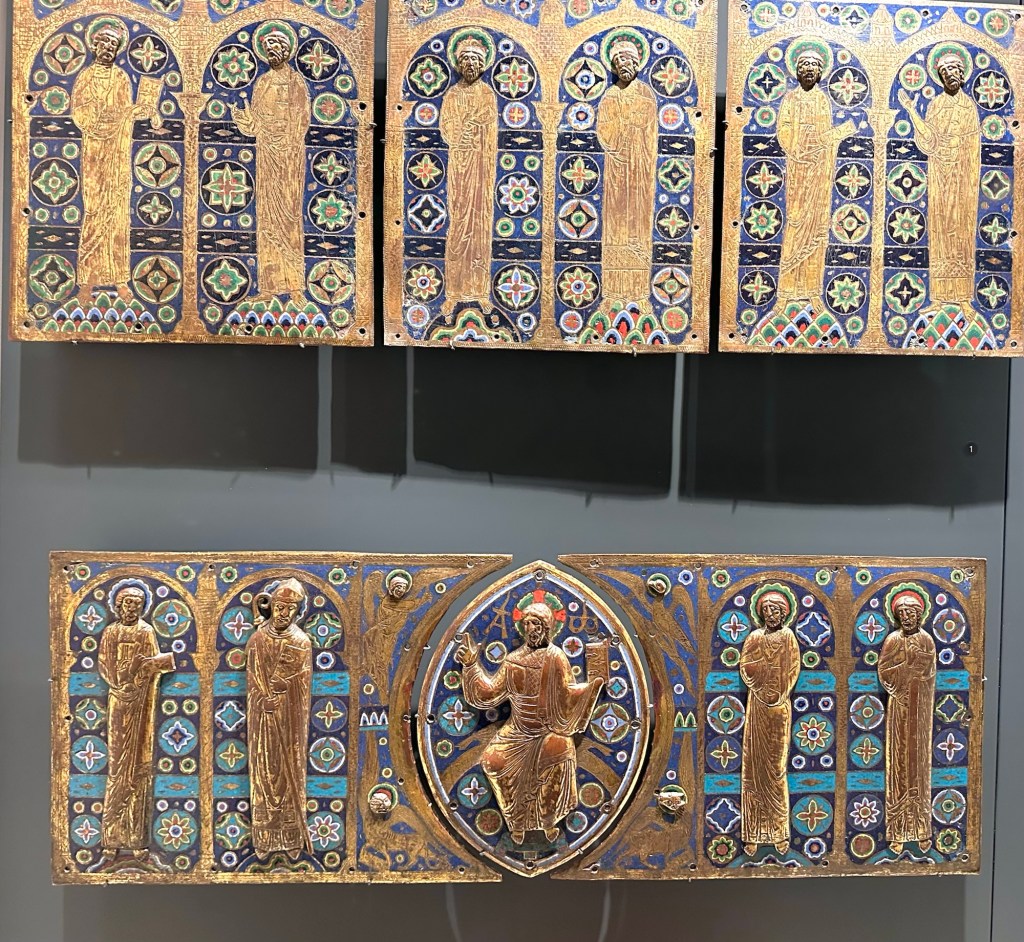
Reliquary boxes were constructed to hold bits of bones or other objects related to important such religious personages. These chests were often elaborately decorated with gold, silver, and jewels.
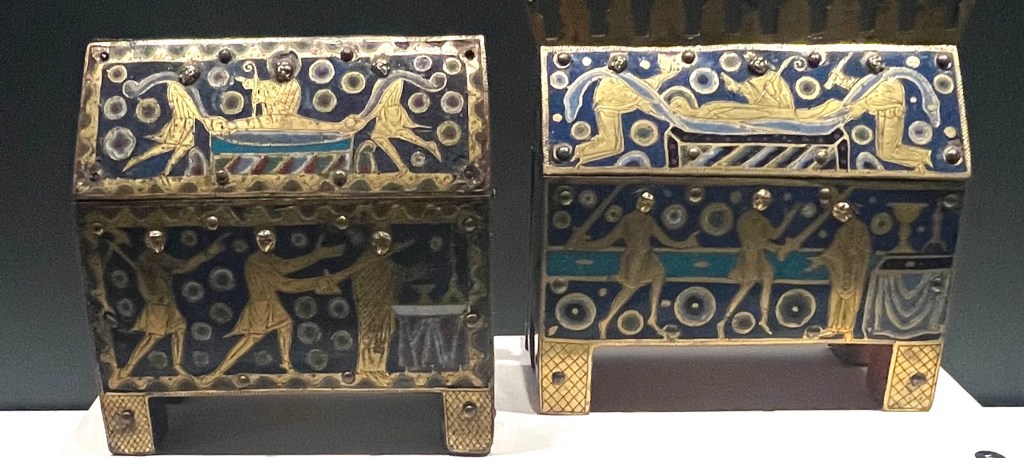
These odd bits were placed in churches for education and veneration. They drew crowds of pilgrims to pray for blessings, divine guidance, and intervention in their lives. Pilgrimages were medieval “tourist” events for the faithful and were also very profitable for the churches which had the best relics and the best stories. Seeing room after room filled with beautiful objects inspires awe and wonder that such things exist.
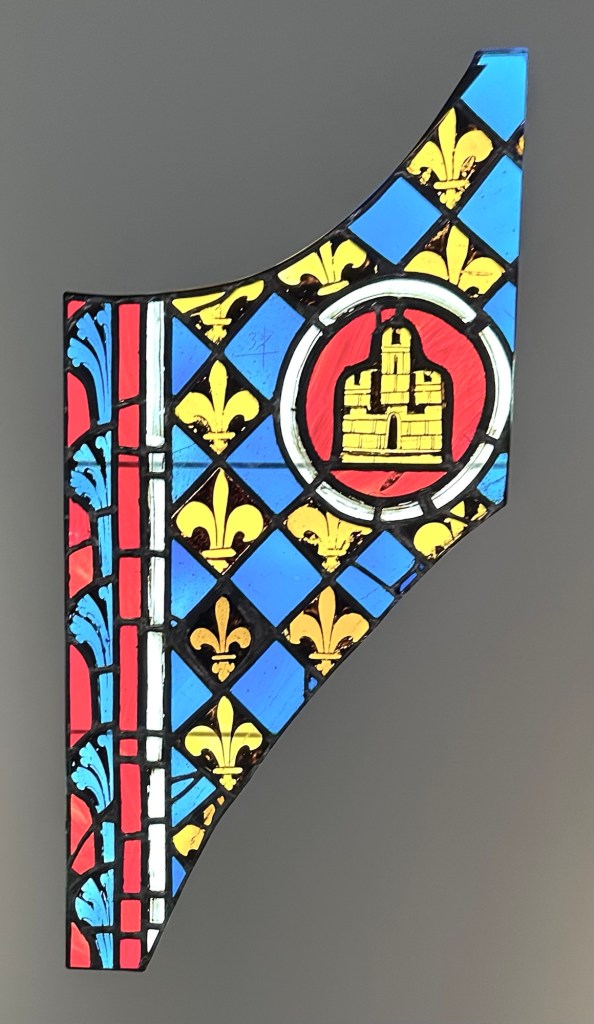

Stained glass was incorporated into church windows such as this sample from St. Chapelle. At the time, stained glass was not mosaic as we think of it, but was pieces of colored glass which had details painted on called “historian” glass. Technology eventually allowed the making of glass which could be cut for mosaic.
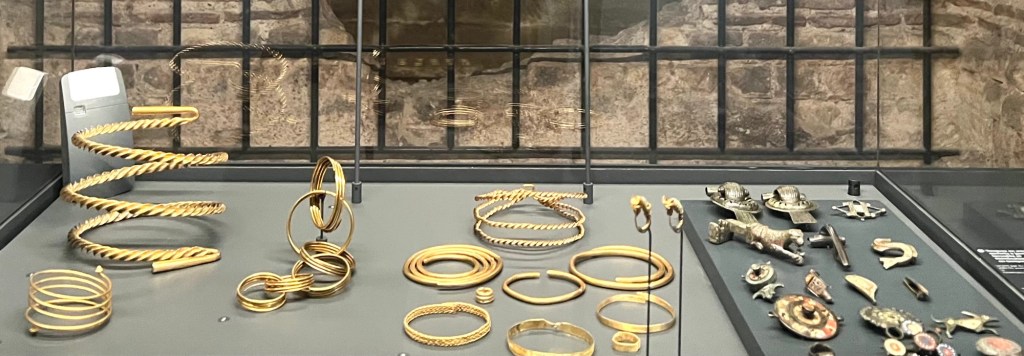
Gold jewelry shows the opulence of the wealthy.
Screens and household objects were decorated elaborately.

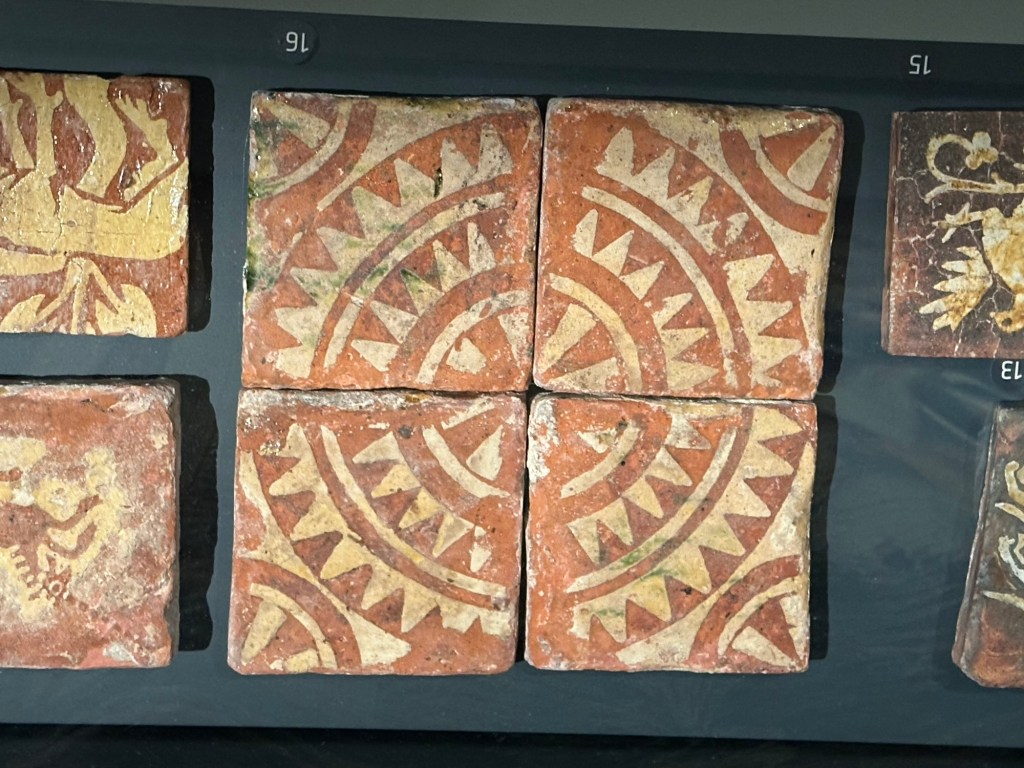
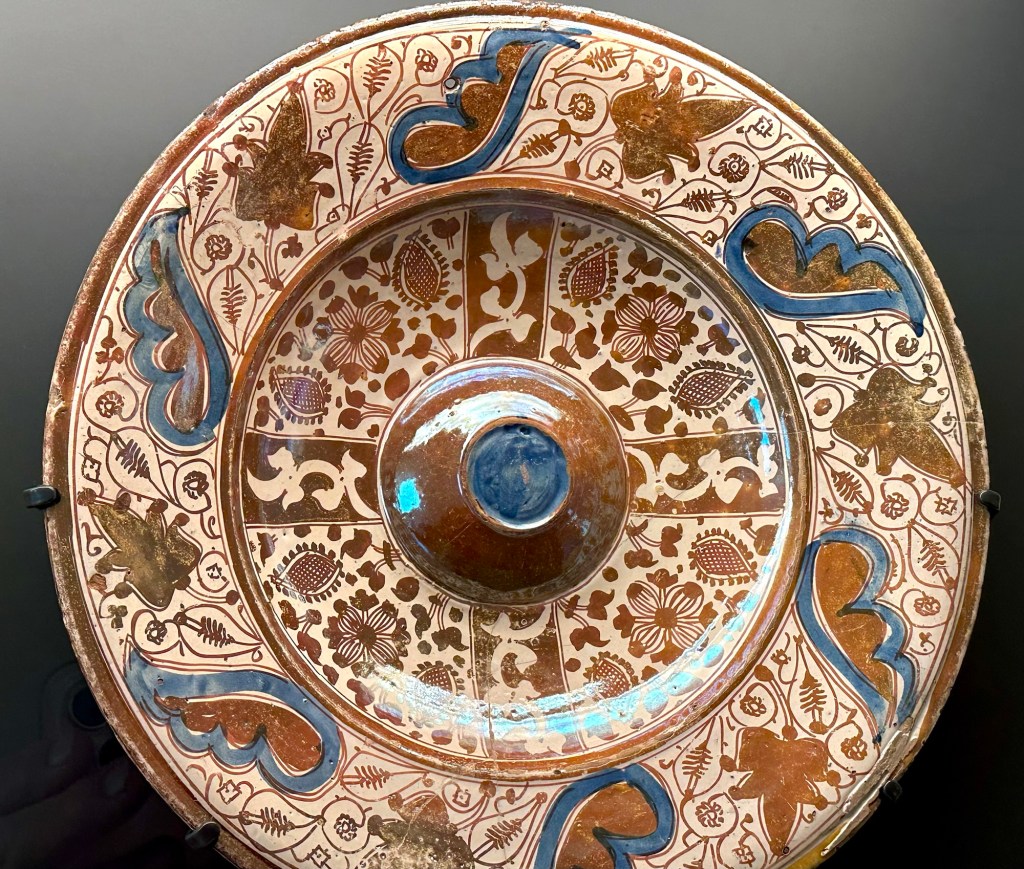
Examples of tiles and bowls show artistry on common objects.


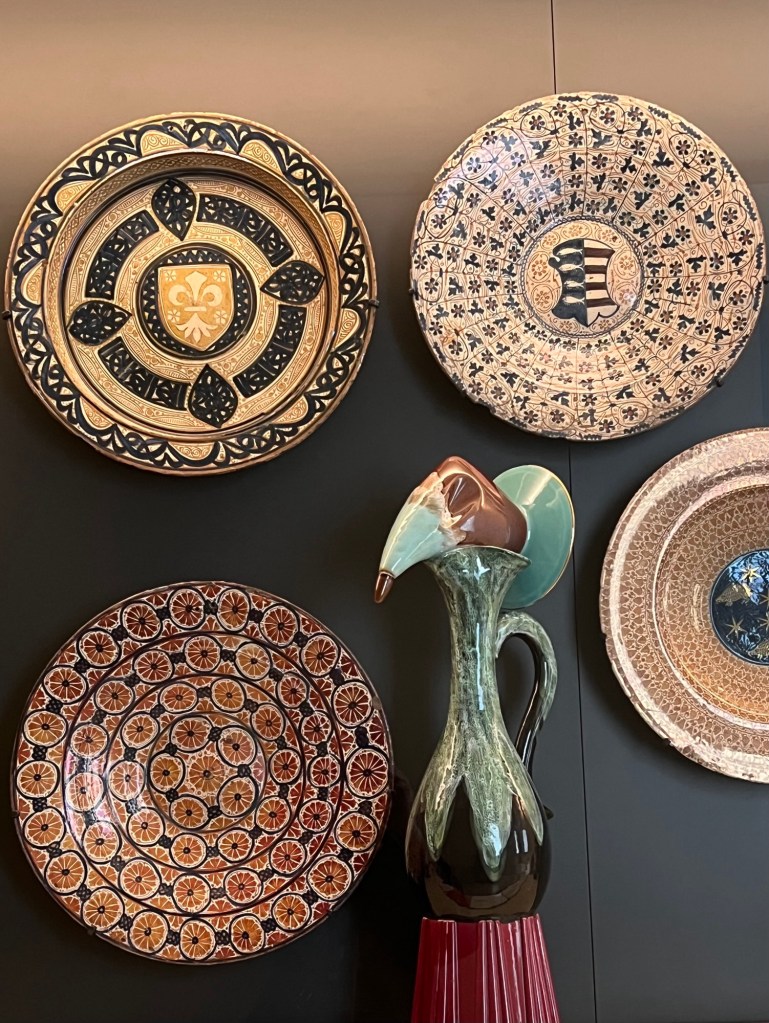
Even weapons such as shields received decoration.

The museum incorporates the only remaining Roman ruins in Paris—parts of an amphitheater and bath. The frigiderium is the first exhibit. Descending into the huge empty underground stone rooms gives you multiple chills.
Highlights of the museum are tapestries and more tapestries. Chilly rooms in stone castles were adorned with lavish weavings depicting the lives and status of the royal and wealthy.
Tapestries for Beauty and Warmth
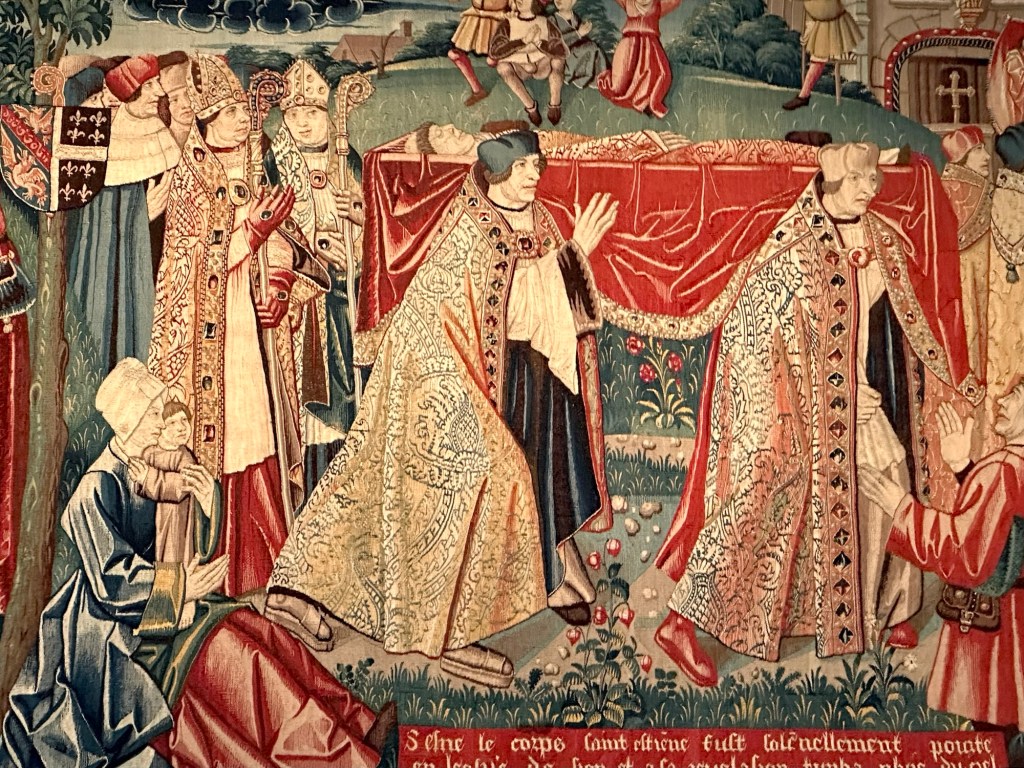
They also served to warm the cold of the stone walls in castles. The poor, having no stone walls, had little need for tapestries.
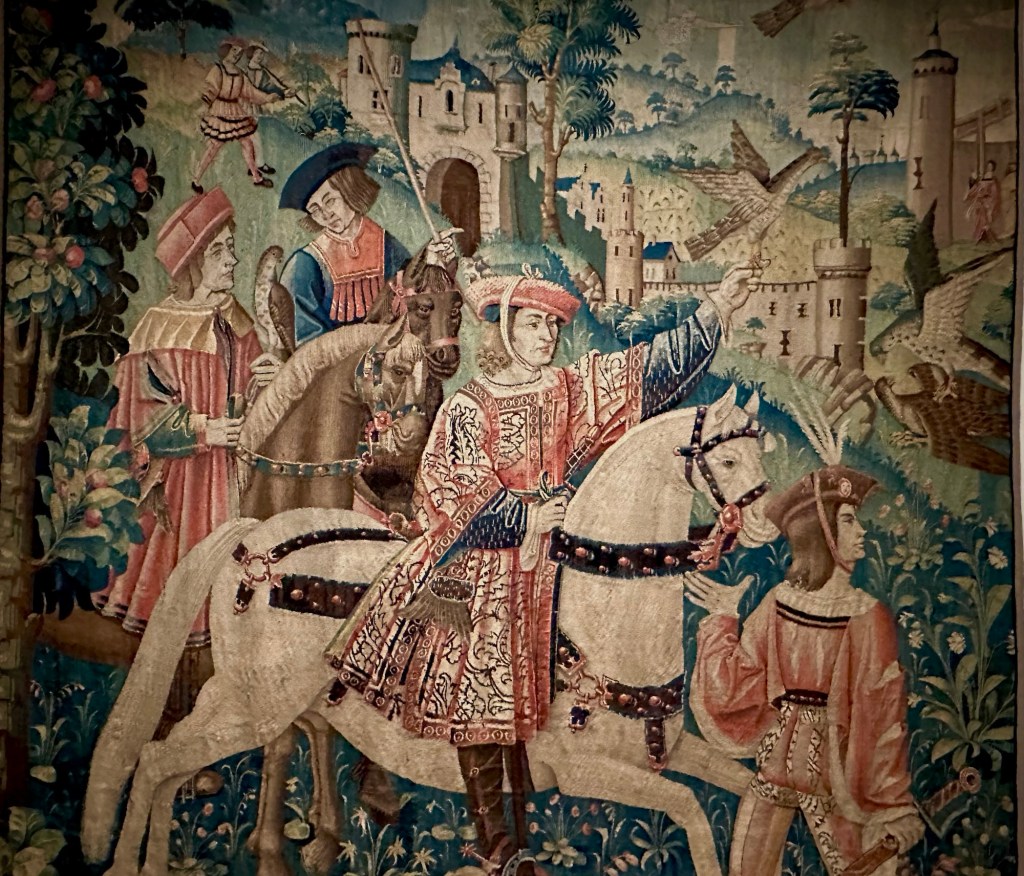

Ten galleries on the second floor are hung with tapestries surrounding the display of cabinets full of more beautiful things.

The tapestries were probably woven in the late 1500s and were “discovered” around 1800 at the Chateau de Boussac, home of the Carbonnieres family.
The most famous tapestries are entitled “The Lady and the Unicorn,” a sequence of six related tapestries. Each weaving shows a lady with her maidservant surrounded by a glorious red background covered with heraldic banners, flowers, and animals including a unicorn and a lion.
The meaning of these tapestries was a mystery for two centuries, but the current consensus is that they represent the senses: touch, smell, taste, hearing, sight, and a mysterious sixth sense.
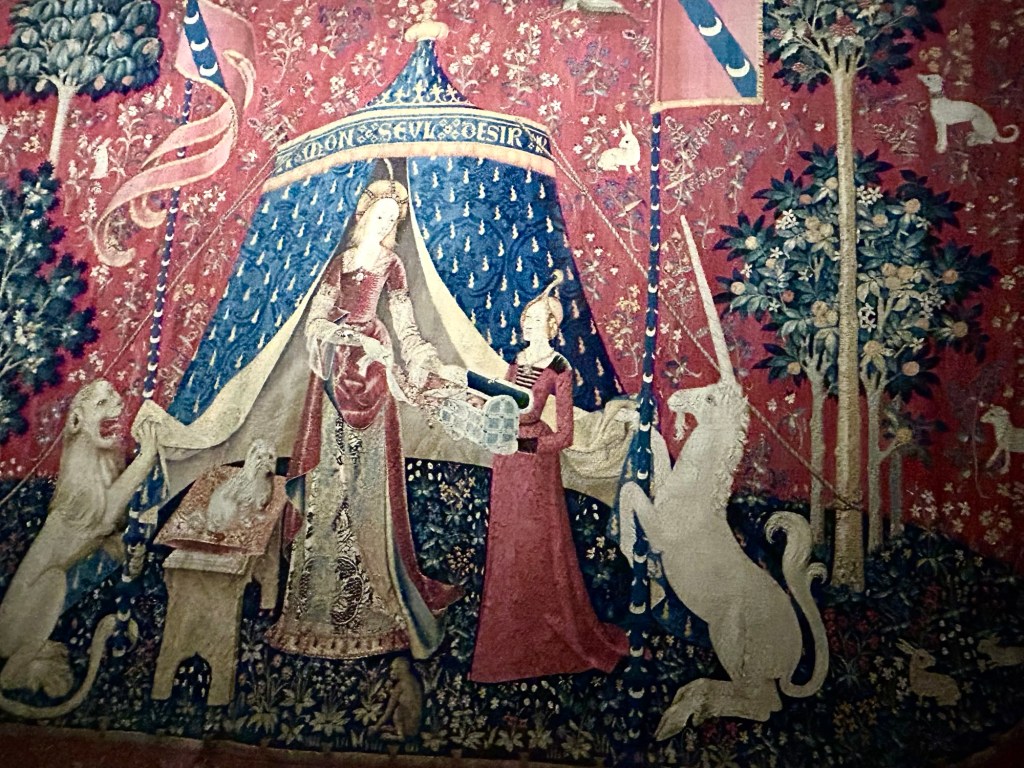
This sixth tapestry is titled Mon Seul, or My Sole Desire. While scholars may be mystified by the sixth sense, I think it is obvious and I am not telling. Controversy surrounds this sixth tapestry on whether it actually belongs to the sequence or to some other tapestry group.
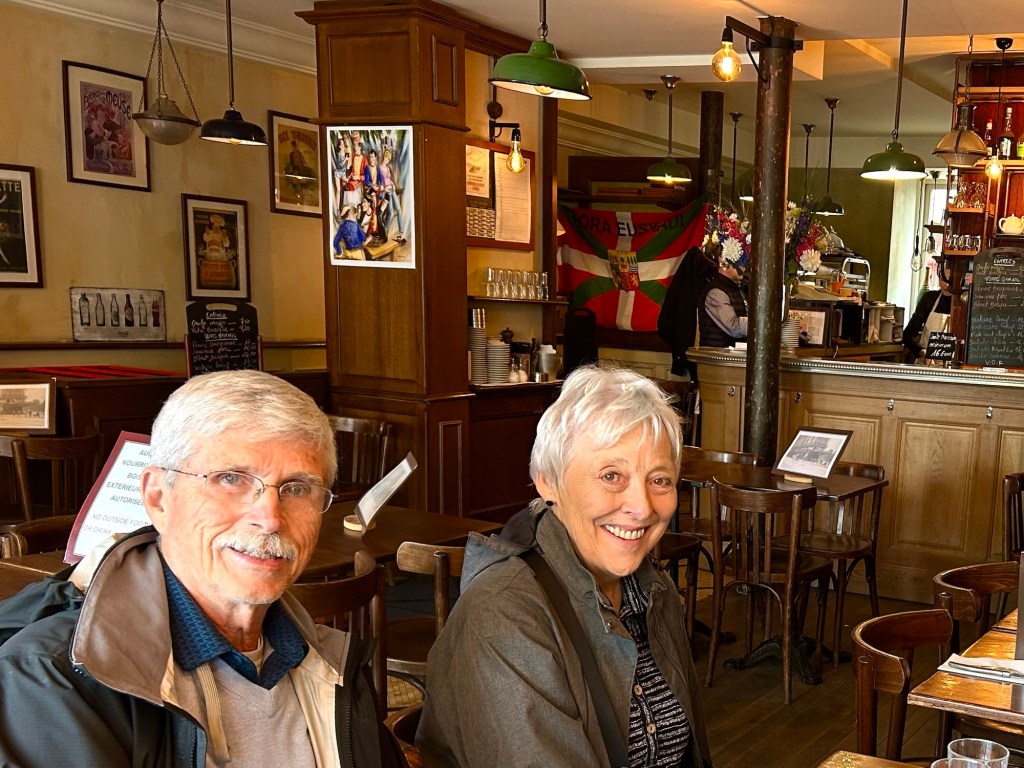
After leaving the Cluny, we took a short ride on Bus 21 to the Luxembourg Gardens. Before entering, we ate lunch at a small bistro on the corner.

The sidewalk menu had a warning to malingerers: no Wi-Fi, no charging stations, come in and talk together.

Jim had escargot and I chose Quiche Lorraine; both were very tasty. Unfortunately, the Croque Monsieurs which Betsy and Becky ordered were dry and tasteless and could only be partially salvaged with heavy application of mustard.
Our romantic memories of the Luxembourg were fulfilled. The flowers and the vista across the wide open space were just as glorious as our memories.
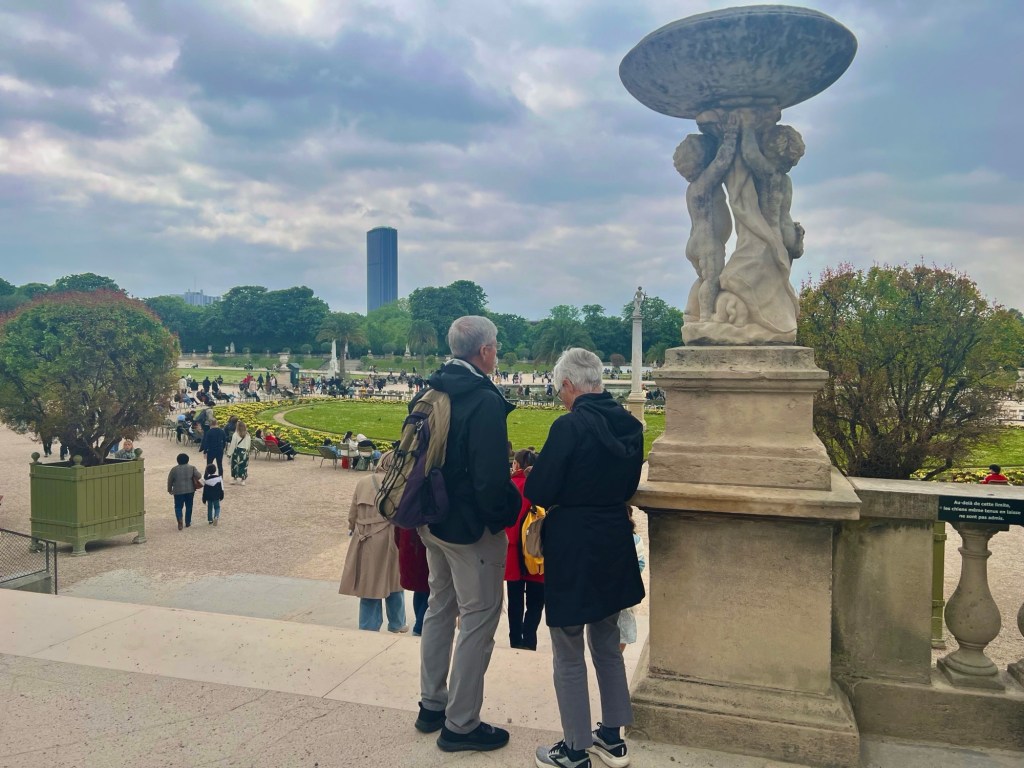
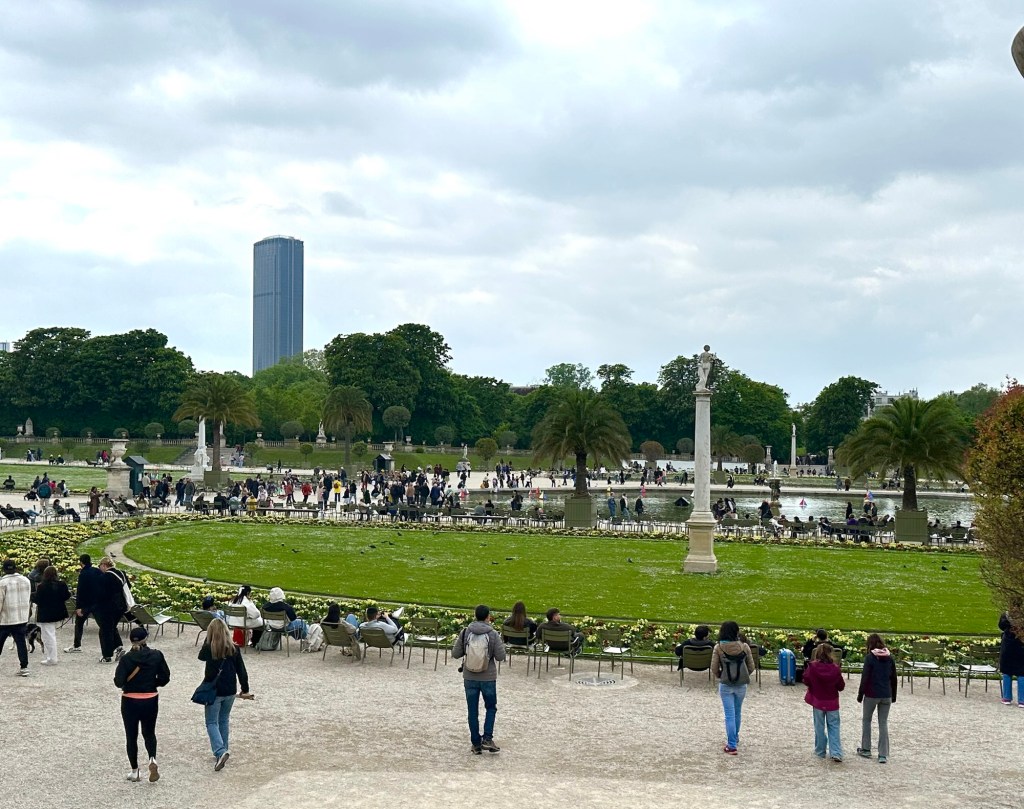
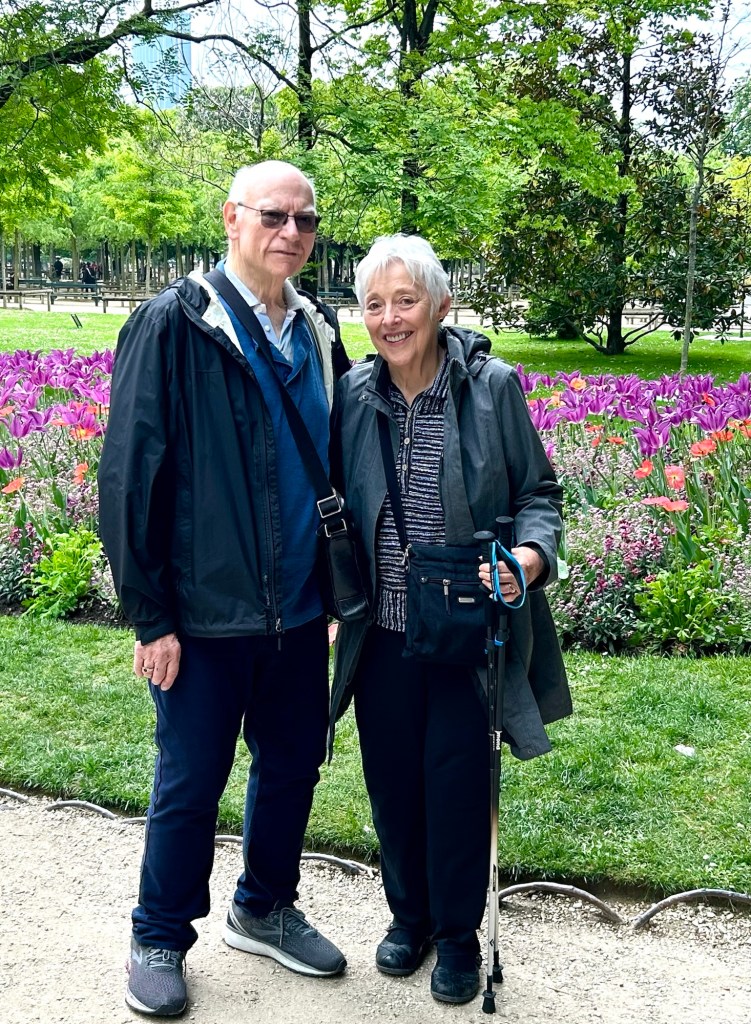

The Gardens were filled with people just as we remembered—families with children romping around, school groups on an outing, young couples, and older people like us who were enjoying the sunshine and their own memories.
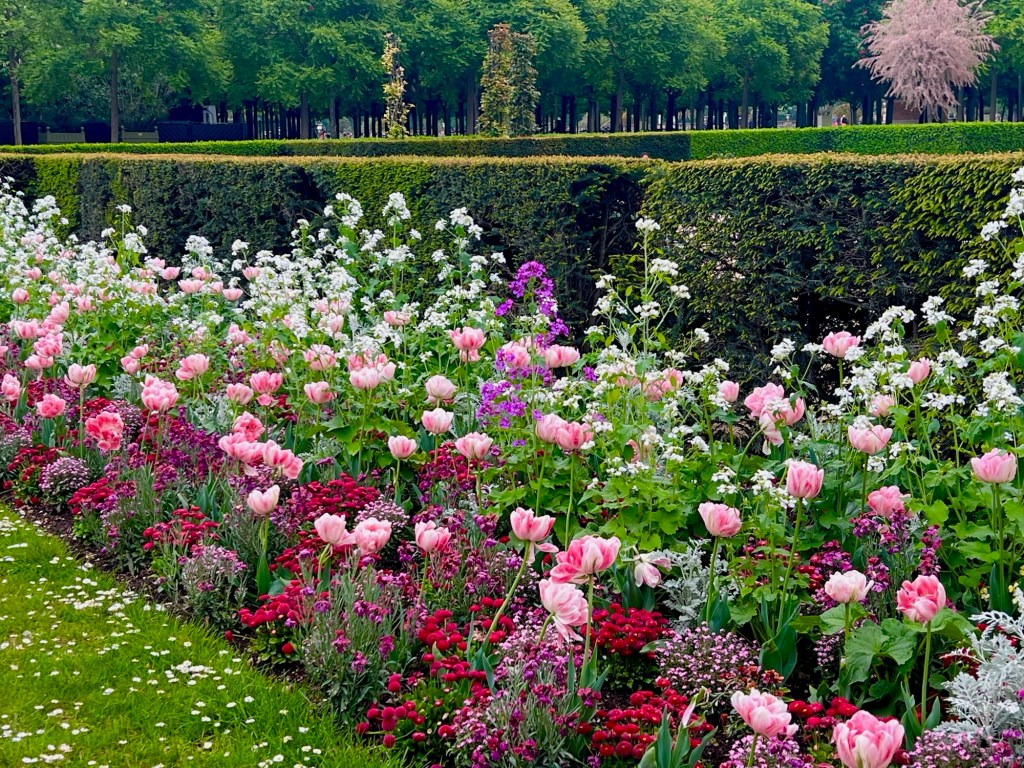
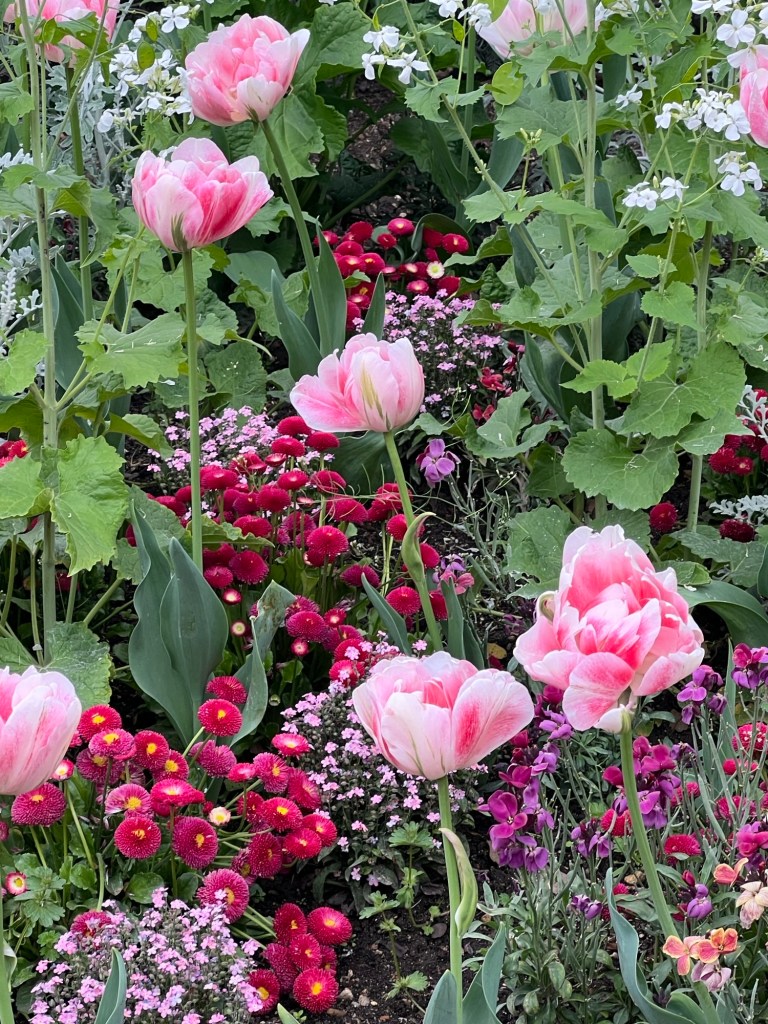
We took photos and wandered about before going different directions for the afternoon.
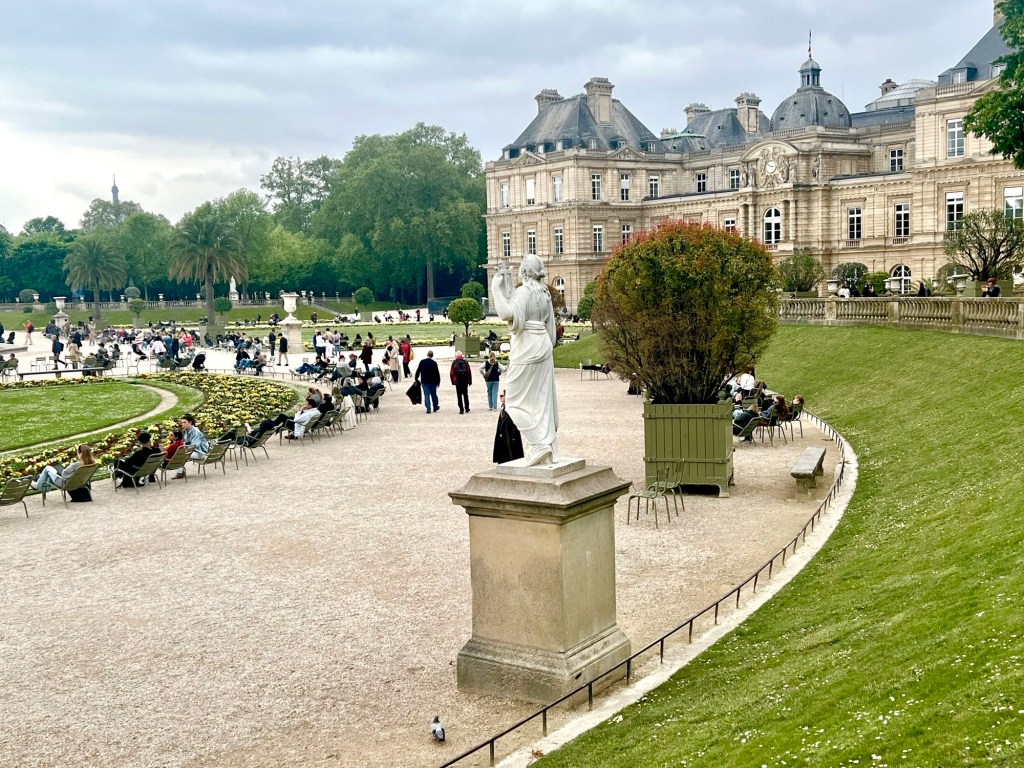
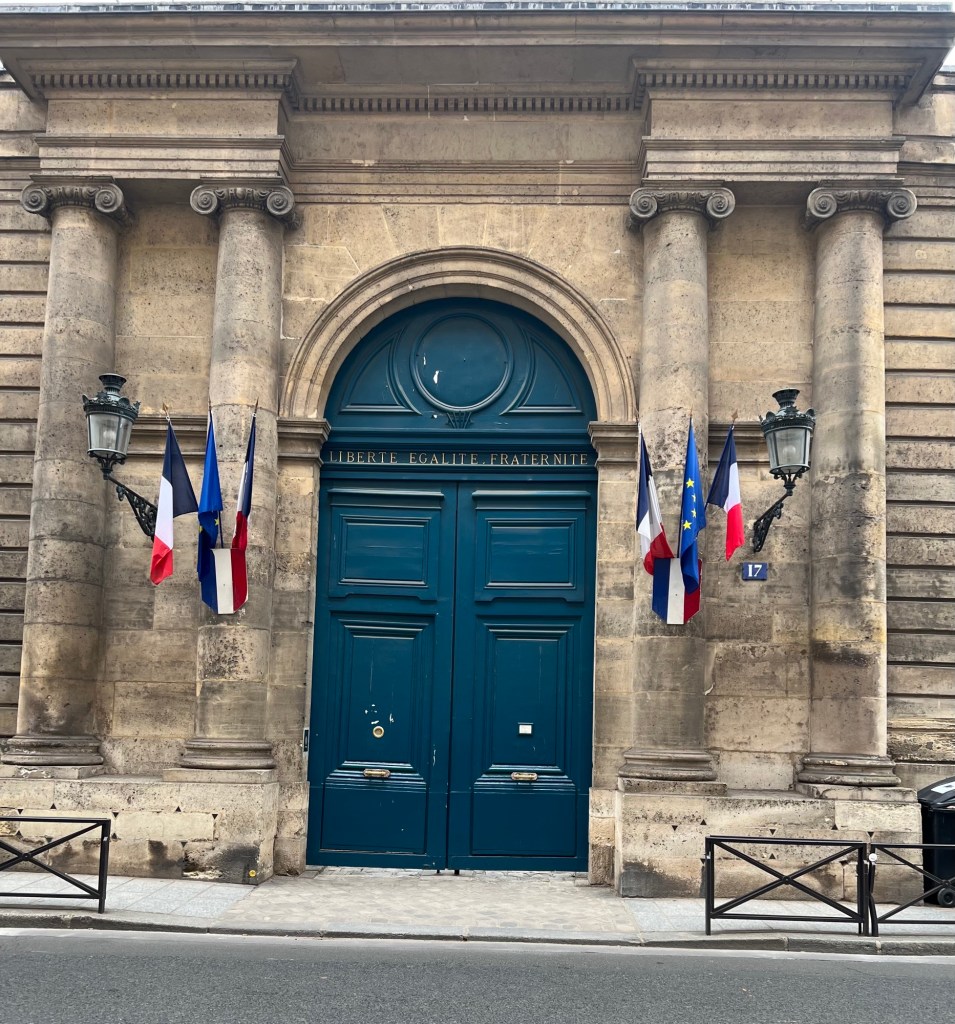
Becky and I walked to the right side past Luxembourg Palace now housing the French Senate; 2025 is the 150th anniversary of the building becoming the French Senate.

Our walk led us past the Luxembourg Palace which is grand, guarded, and locked up on the Garden side. The business entrance is in back on a busy street with heavily armed guards away from the Garden.
Past the Senate, we entered the Luxembourg Art Museum featuring an exhibit of art by Fernand Leger. Leger was a contemporary of Picasso and known for bold colors and interesting compositions.
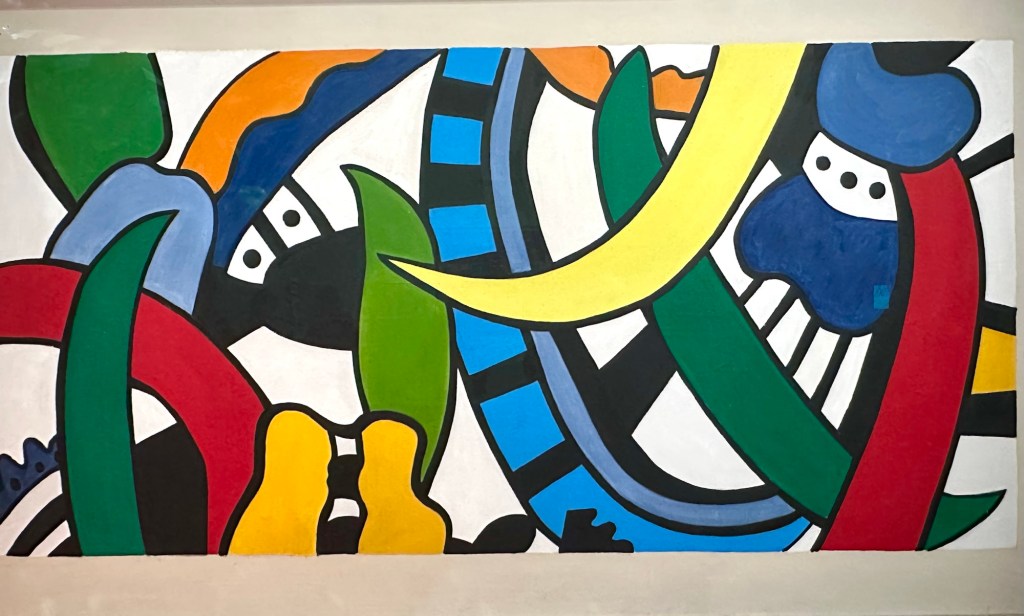
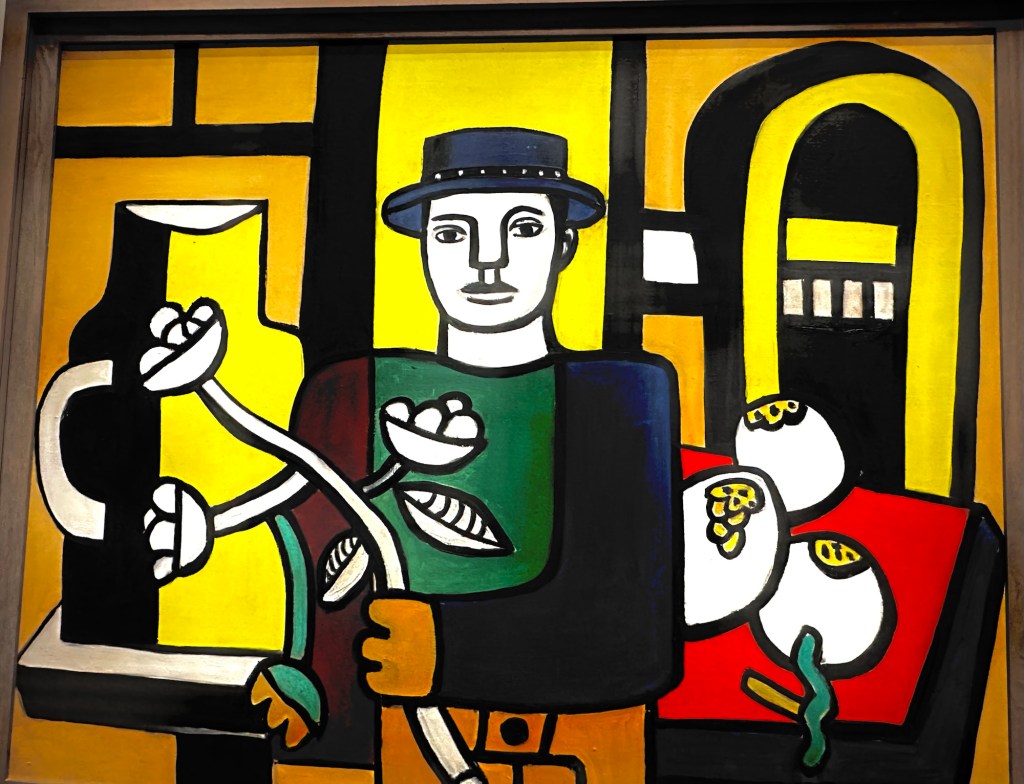
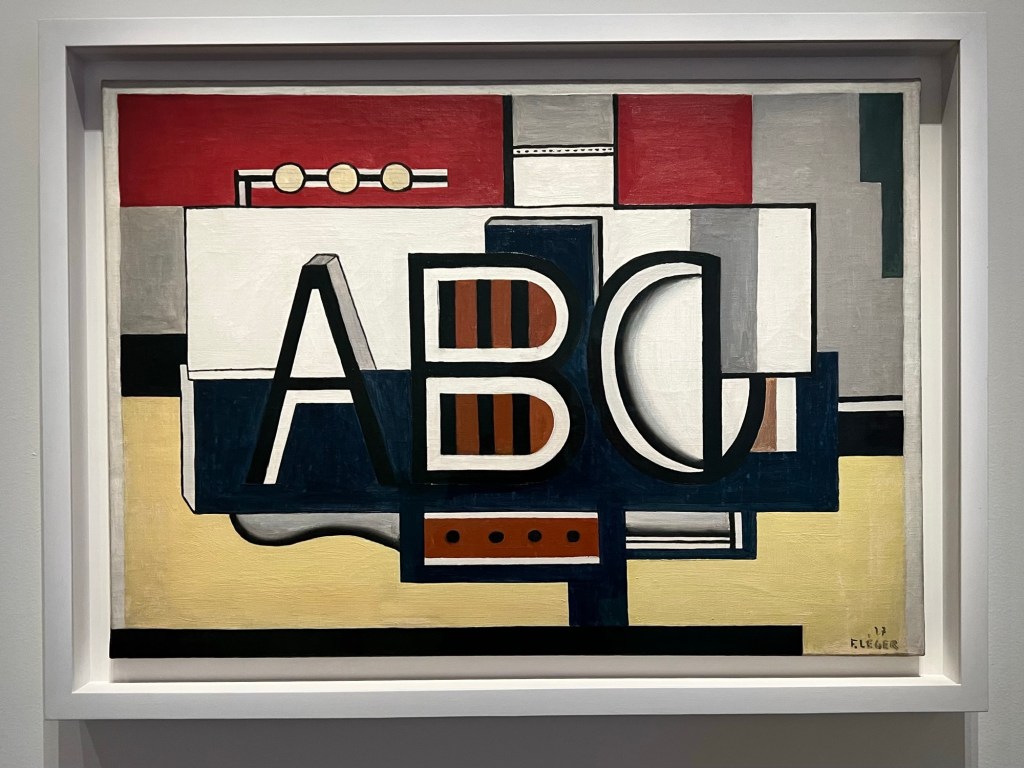
Works from other artists who were influenced by Leger completed the show. For the most part, we preferred Leger’s work over those by the newer artists. However, Roy Lichtenstein and Robert Indiana were classic examples employing Leger’s techniques in their art.
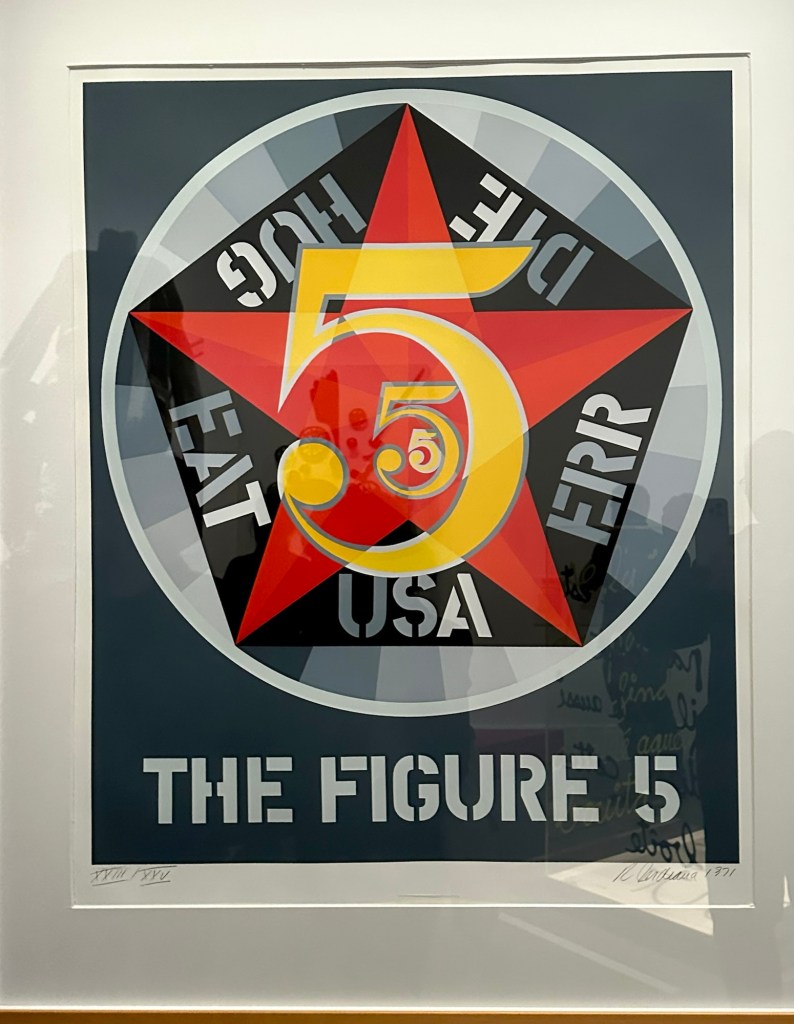
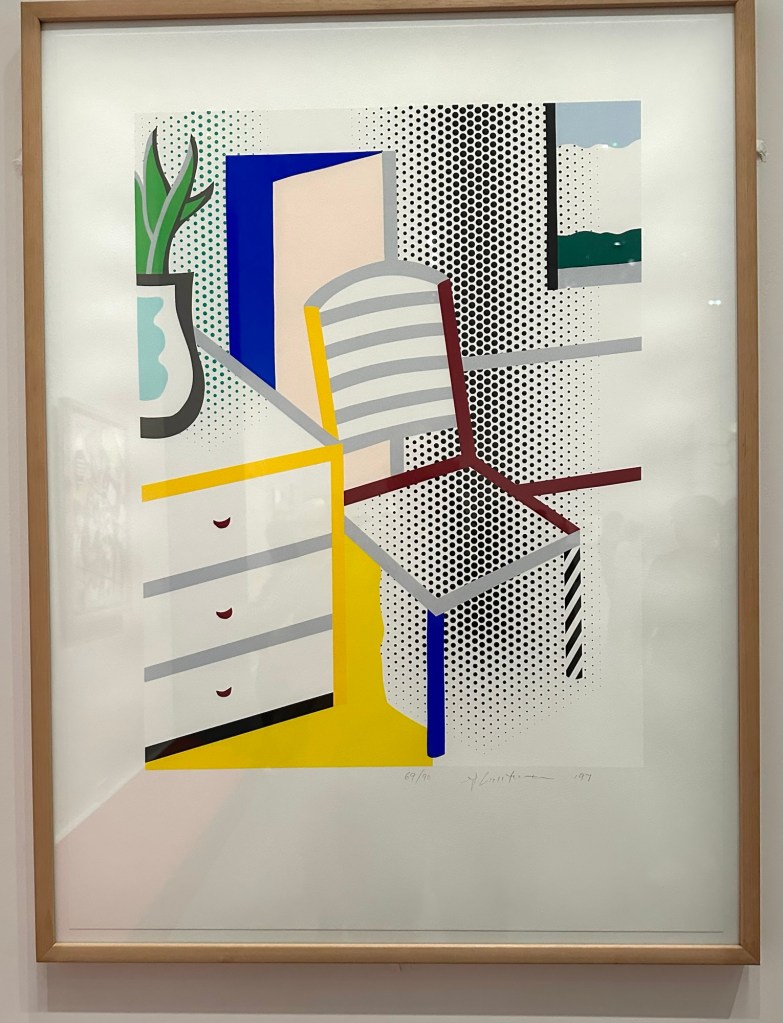
The plaza in front of the Saint Sulpice Church was our next stop. The church played a central role in Dan Brown’s mystery The Da Vinci Code.

Restaurants and bars surround the plaza with outdoor seating. The casual Pret a Manger provided a short rest for us with coffee and mocha.
Walking past the Cluny, we expected to find Bus 63 for our return. No such luck. Alas, we were adrift in Paris needing an alternate route—Bus 27 to Gare St. Lazare then on home on Bus 32.
Betsy and Jim went to the far side of the Garden continuing their search for the place they stayed 30 years ago. Jim is 90% sure they found it.
The stroll took them through the fancy shopping area of St. Germain and finally home to 28 Rue d’Annonciation. The Parthenon was also on their route.
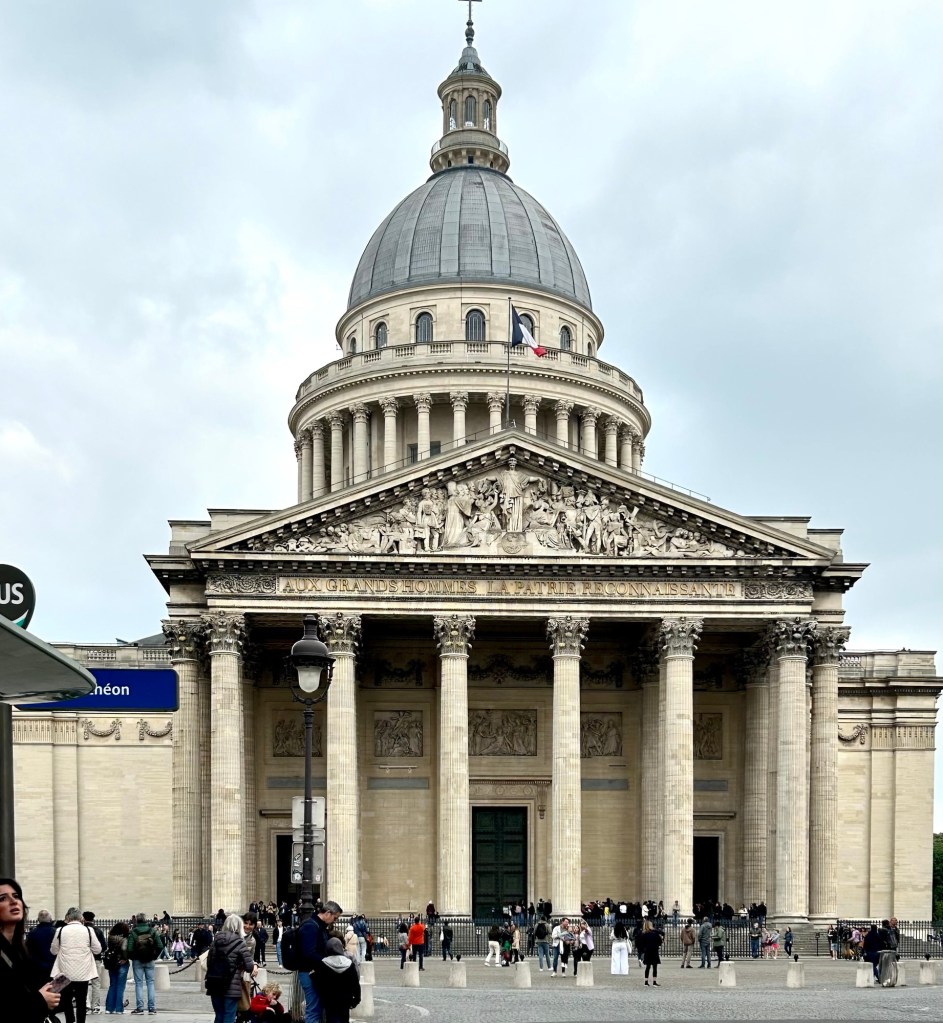
We had already planned to eat supper at La Matta Italian Cafe and Pizzeria. We walked across the street about 7:30 and got a table at the end of a narrow room seating about 40 people.
We were barely seated before the room was packed! Sitting close to the kitchen, we observed and heard the lively conversation between waiters and cook. The mood was festive and the pizza was fantastic. All in all a wonderful day!.
 Tipps for Travel
3 responses to “Part 3 Everything Old is New to Us”
I love traveling vicariously through your travels. I feel like I am walking parallel with you and Becky through your fantastic descriptions of people, places and history. Keep me in the loop. Happy Travels! Wendy
LikeLike
Glad you are traveling with us. Having the blog keeps us alert to what we are seeing and doing. Memory is every transient so writing it down makes it something we can read when we get old some day !!!
LikeLike
Wh
LikeLike