Tipps for Travel

  • Episode 13 Crowns and Crowds of London

    November 7th, 2023

    The Great British Traveling Show

    Day 1 Finding our Way and Westminster Palace

    The last stop on our Great British Traveling Show was five days in London. Jim studied the train, bus, and underground and became the Maestro of Urban Movement throughout our stay—carefully orchestrating the easiest, fastest, and cheapest routes to various locations. Payment for all bus and underground travel is easy—contactless with a credit card.

    When we arrived by train to Paddington Station around 11:00, Jim knew that Bus 62 would take us from Paddington to within a few blocks of Mel’s apartment in West Hampstead. The 30-minute ride gave us great views of neighborhoods, shops, and crowds of people going about their daily lives.

    Paddington Station, where is the bear?

    Finding and following street names and numbers in London is a puzzle.  Efforts to grow suburbs and rebuild older areas in a very old city requires new streets with new names and rerouting old streets.  The result is that street names change from one side of an intersection to the other and that street numbers jump around from block to block or abruptly start a new sequence.
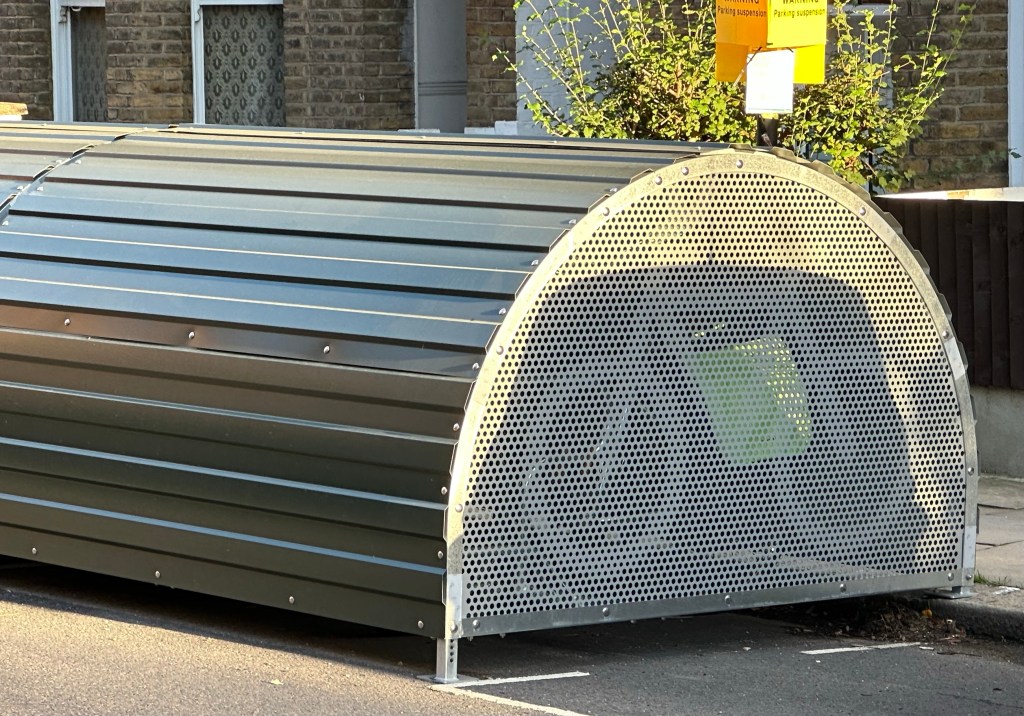
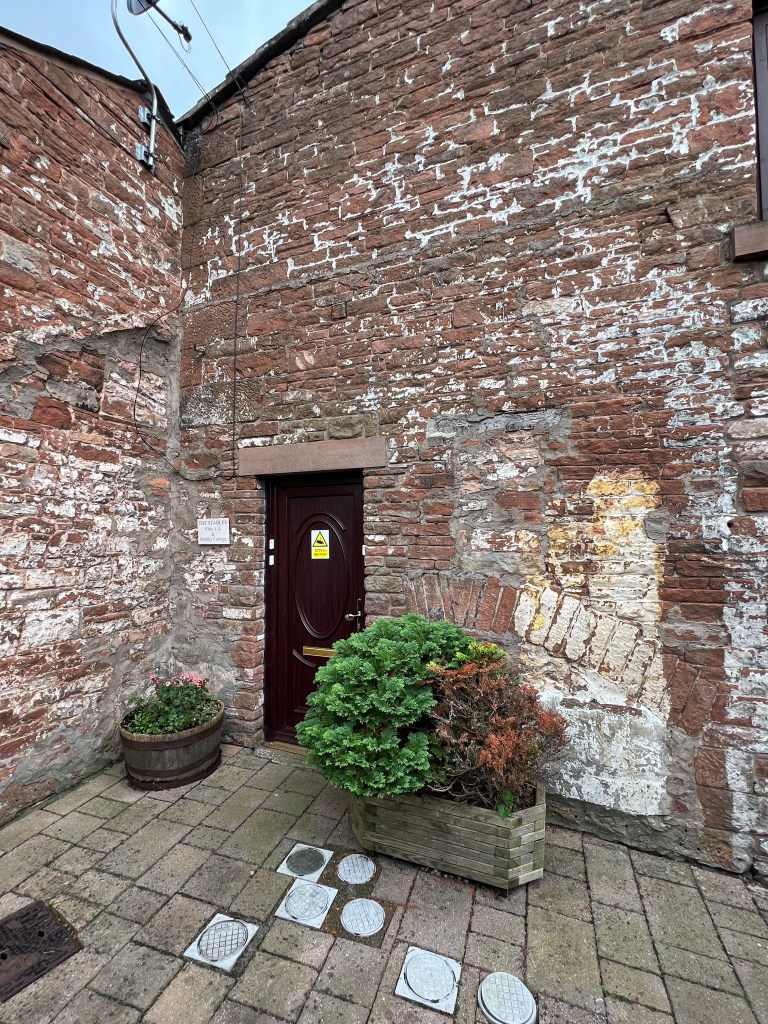
    Bicycle Storage Barn on our street

    Finding our Airbnb was confusing because the apartment had both an exterior street number and an interior apartment number. Becky found the out-of-order street number, and Jim asked a stranger coming out of that door. A dozen or more apartments shared the same street address. Since we arrived early, Mel, our Superhost, graciously let us drop off our luggage while the apartment was being cleaned.
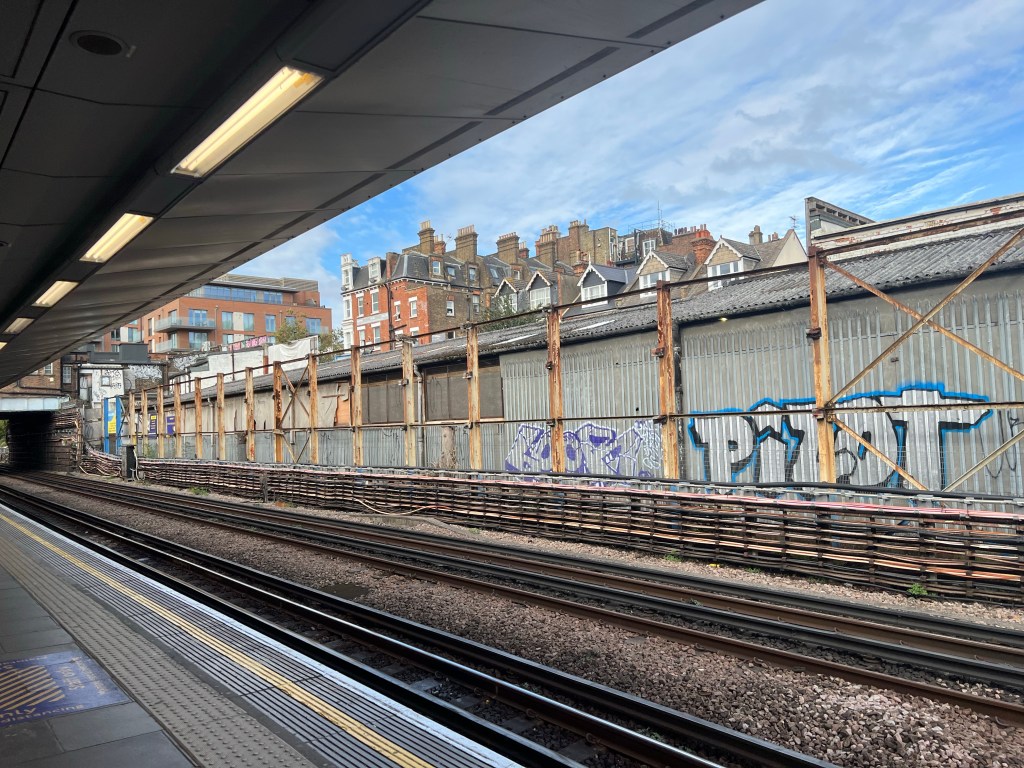
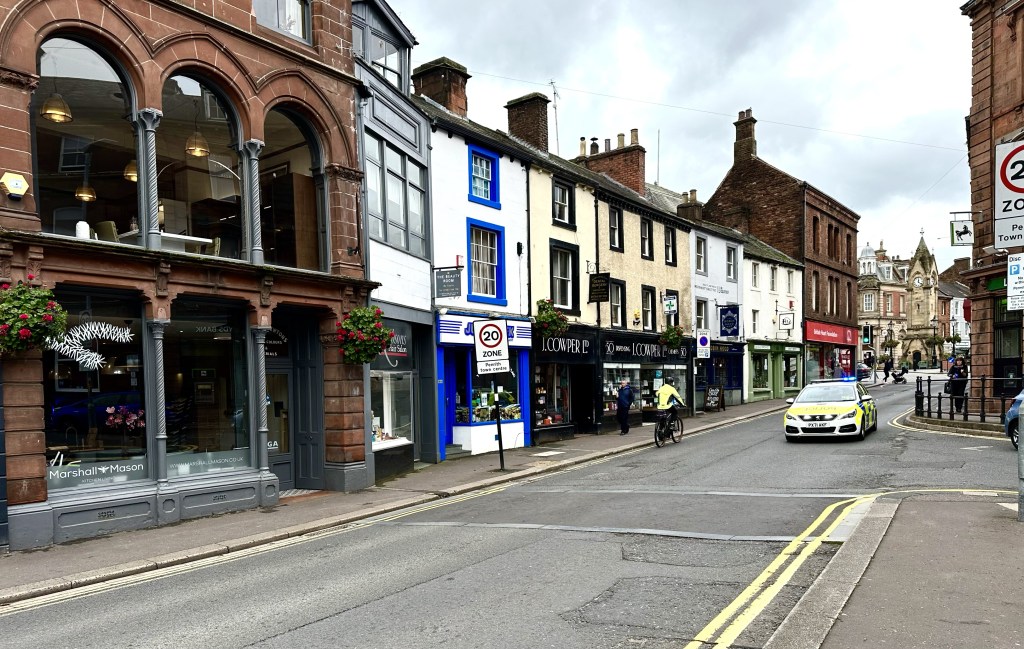
    At Kilburn Station 6 blocks from apartment

    After unburdening ourselves, we walked 6 blocks to the underground at Kilburn Station for lunch at a Greek sidewalk cafe. The Jubilee Underground Line then whisked us to Westminster Station where we bought tickets for the Houses of Parliament tour.

    The first thing we saw was famous “Big Ben,” recently refurbished, painted a brilliant blue, gilded and restored on top of Elizabeth Tower at the corner of Westminster Palace. Big Ben is actually the name of the bell in the tower not the clock, but nobody quibbles about that distinction.
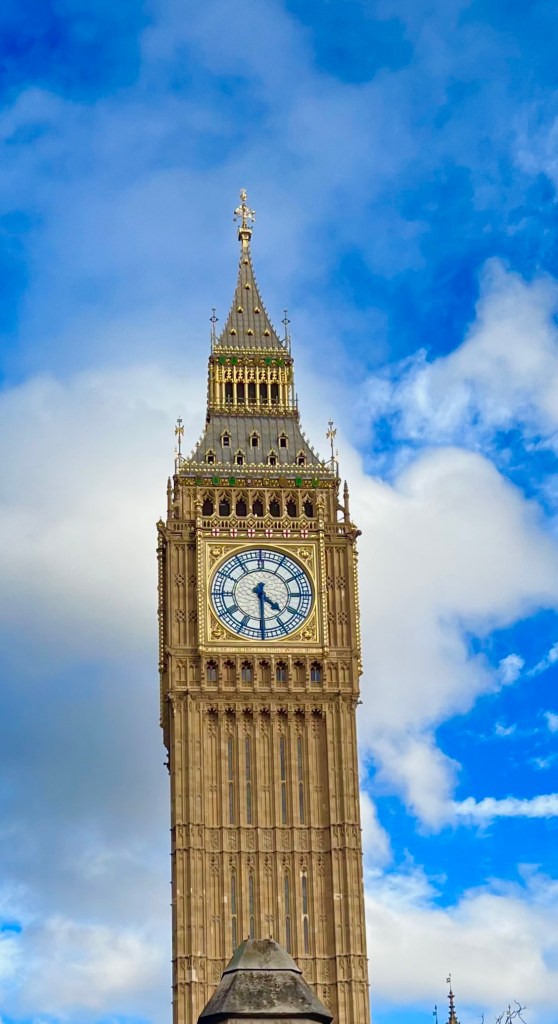
    Westminster Station was also our first encounter with never-ending London crowds. Coming out of the Underground, we faced a teeming mass of humanity that filled the sidewalks on both sides of Westminster Road and Bridge.
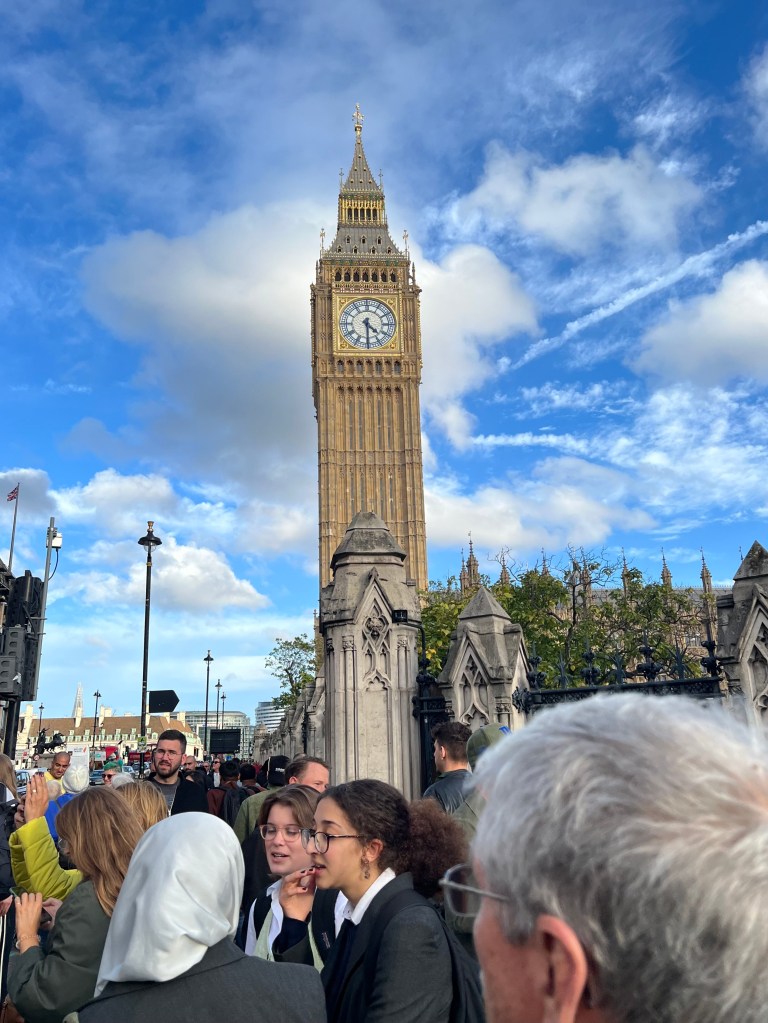
    Crowds of London at Westminster

    We stayed close to avoid getting separated or pushed apart in the crowd while crossing the road toward the Westminster Palace, commonly called Houses of Parliament where the House of Lords and House of Commons meet.
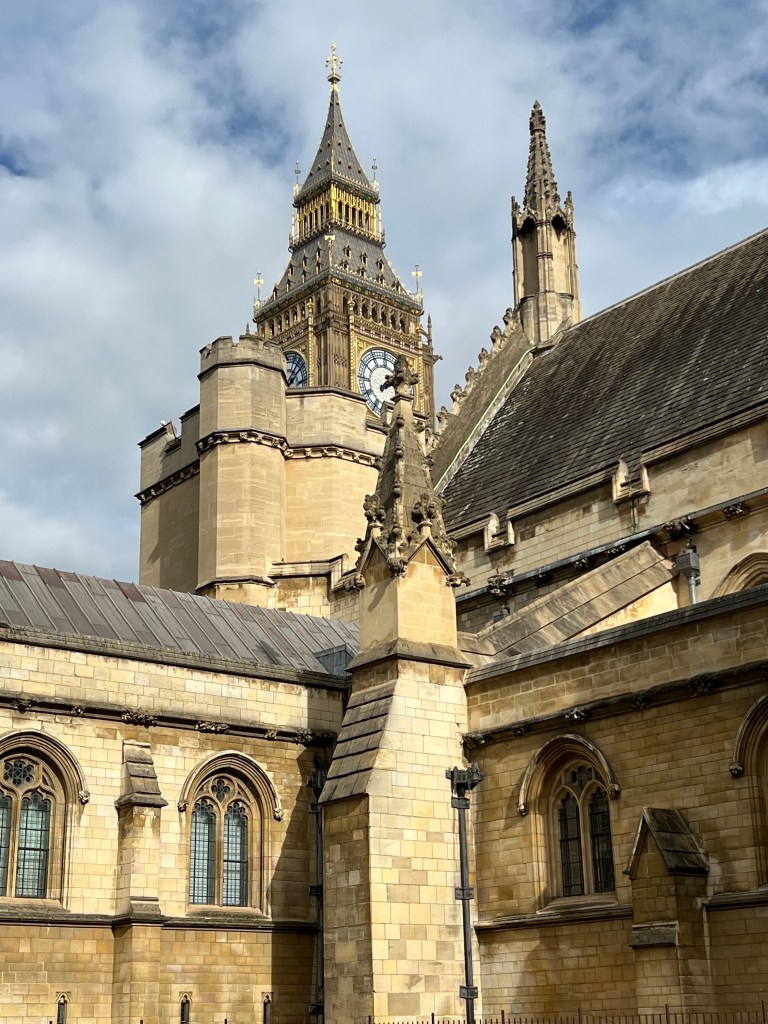
    The audio tour began in Westminster Hall, originally a royal palace built in the 11th century.Due to fires and damage over the centuries, much of the building was rebuilt in the 1800’s. The Chapel of St. Mary Undercroft, the Jewel Tower and the Cloisters of St. Stephen’s date back to medieval times. The rest of the building reflects a High Gothic style.
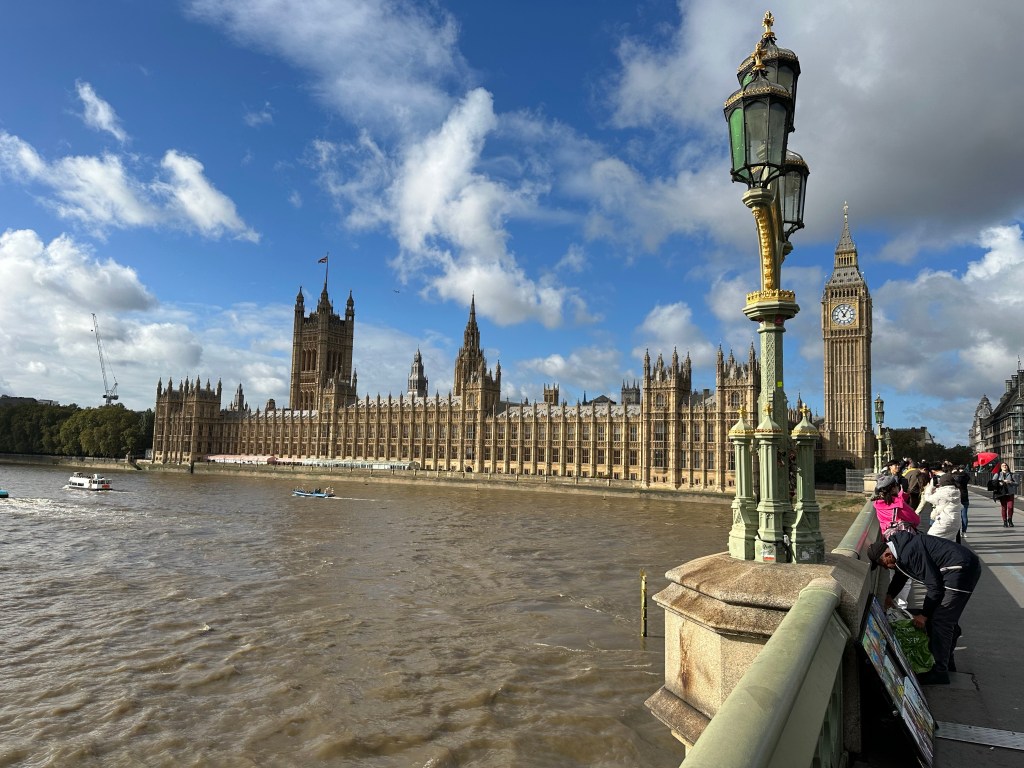
    Westminister Palace, aka Houses of Parliament

    On the audio tour, each of the major rooms in Westminster Palace was described with its purpose in the government, significant statues and paintings, and important historical events that happened there. The route was confusing as we circled through the same rooms several times.

    Westminster Abbey was only a block away, but we were done for the day and pushed our way back through the crowd across the street to the underground station at rush hour. When we got back to Kilburn Station, the nearby Tesco offered packaged dinners to reheat in the microwave and basic groceries for breakfast.

    We relaxed over hot trays and cool salads with time to recap the day and appreciate Mel’s great apartment for its size, amenities, and proximity to transport.
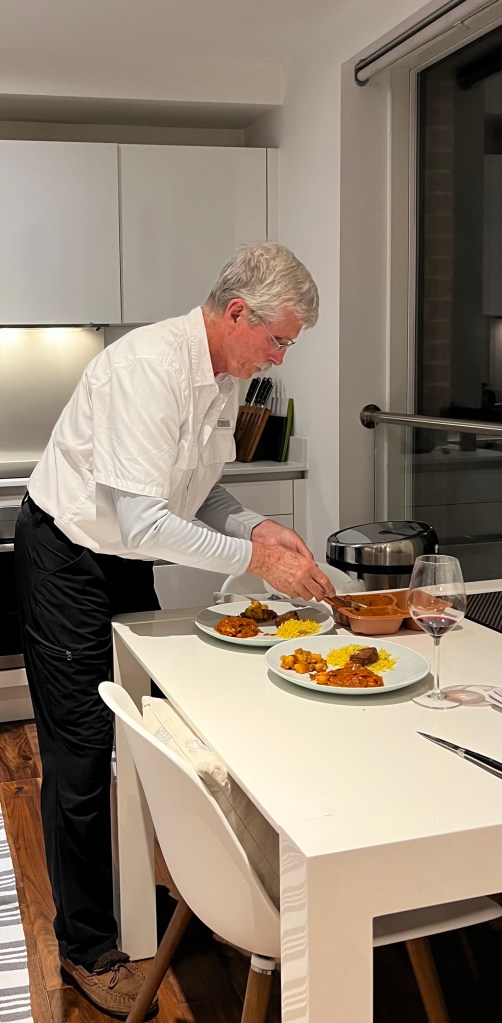
    Jim serving dinner

    Day 2 Crowds, Crowns and Confusion

    The Tower of London and Crown Jewels were on the Robson agenda for the day. Becky and I wanted to find the Courtauld Gallery, a small museum featuring exquisite Impressionist paintings. The travel plans were straightforward—Jubilee to Westminster then jump on the Circle Line. The trip was not that simple because the Circle Line was closed for track repairs.
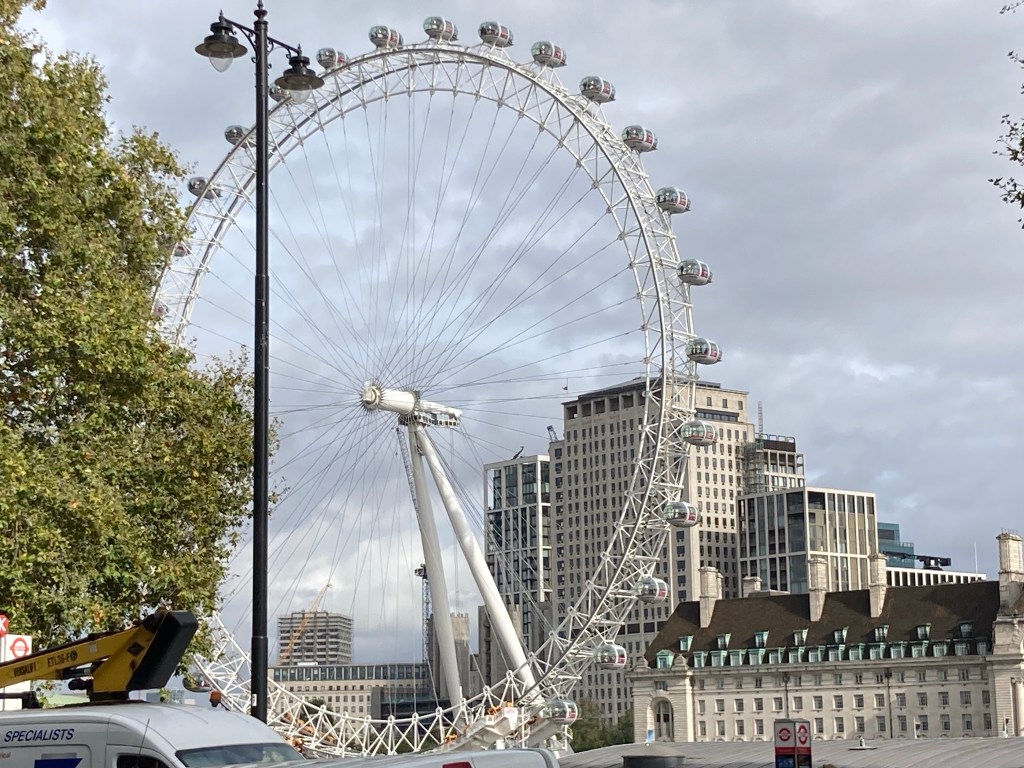
    London Eye along the South Bank of Thames

    The Robsons were successful in getting to the Tower, while Becky and I strolled along the Thames to Waterloo Station, where we were only a few steps across Waterloo Bridge to the Courtauld Gallery now relocated in Somerset House, but we didn’t know that. We got on another subway and wound up close to the British museum where we dropped in for morning coffee. After watching the crowds, we continued walking and asking for directions which always seemed to take us in the wrong direction. We did see some interesting sights including the colorful new buildings on St. Giles Street.
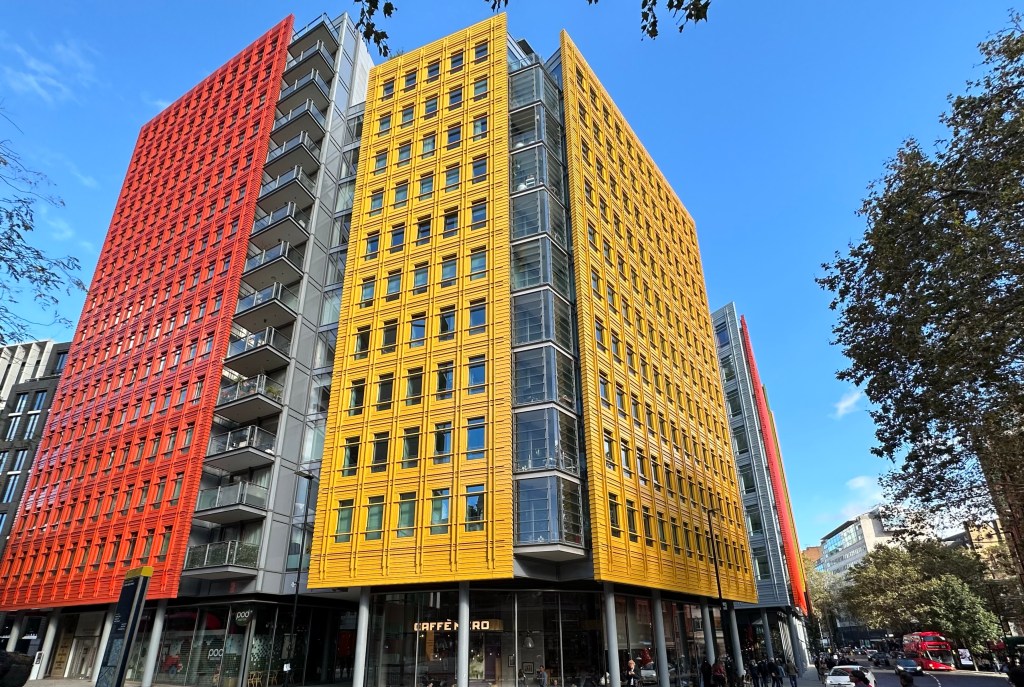
    While we were wandering the streets of London, the Robsons were much more successful on their plan for visiting the Tower of London.

    Tower Bridge on the Thames

    Here is the Robson Report. The Tower of London is a vast walled complex of buildings begun by William the Conqueror toward the end of 1066. Jim wisely suggested that we immediately line up for the Crown Jewels exhibit. We waited for 30 minutes, but soon the wait was an hour or more.

    The jewels are an unbelievable display of exorbitant excess collected over the centuries. They consist not only of crowns dating back to 1661, but also ceremonial swords, shields, staffs, etc. some of which date back to the 12th century.
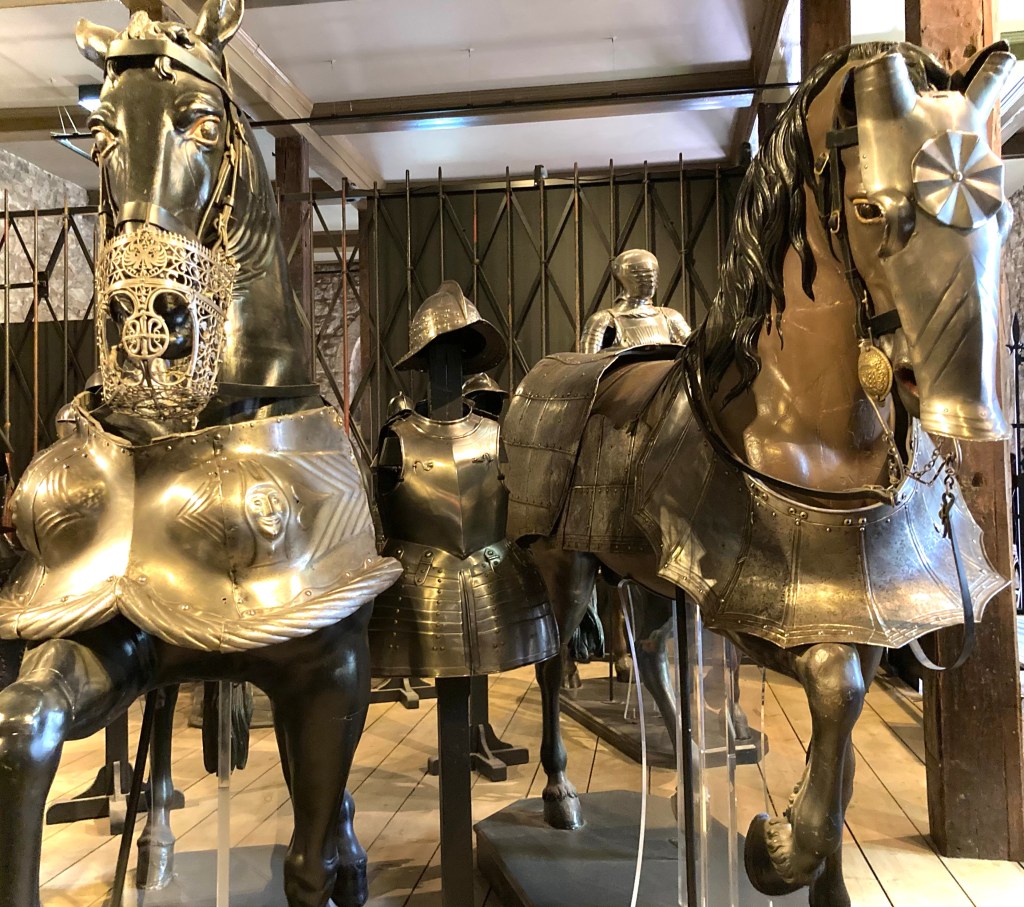
    A massive steel vault holds the current Crown jewels. While viewing the jewels, you stand on a conveyor belt which keeps the line moving quickly with no time to peruse anything. Many of the jewels from previous crowns (some dating back centuries) are reworked into crowns of the current monarchy which explains why so many old gold crowns are devoid of jewels. Still, the huge collection of gold and gems is impressive, leaving us with the sobering feeling of just how removed royalty has been and still is from the common citizens. The term “Crown” refers not only to gold crowns we saw but alludes to the authority of the Royal family.

    We took another audio tour through the White Tower, one of the oldest parts of the Tower complex built in the early 1080’s. It was the strongest part of the fortress and housed the king, his representatives and a chapel. Henry III ordered it whitewashed in 1240 to make a more commanding presence on the Thames to inspire awe in the townspeople then and visitors today.

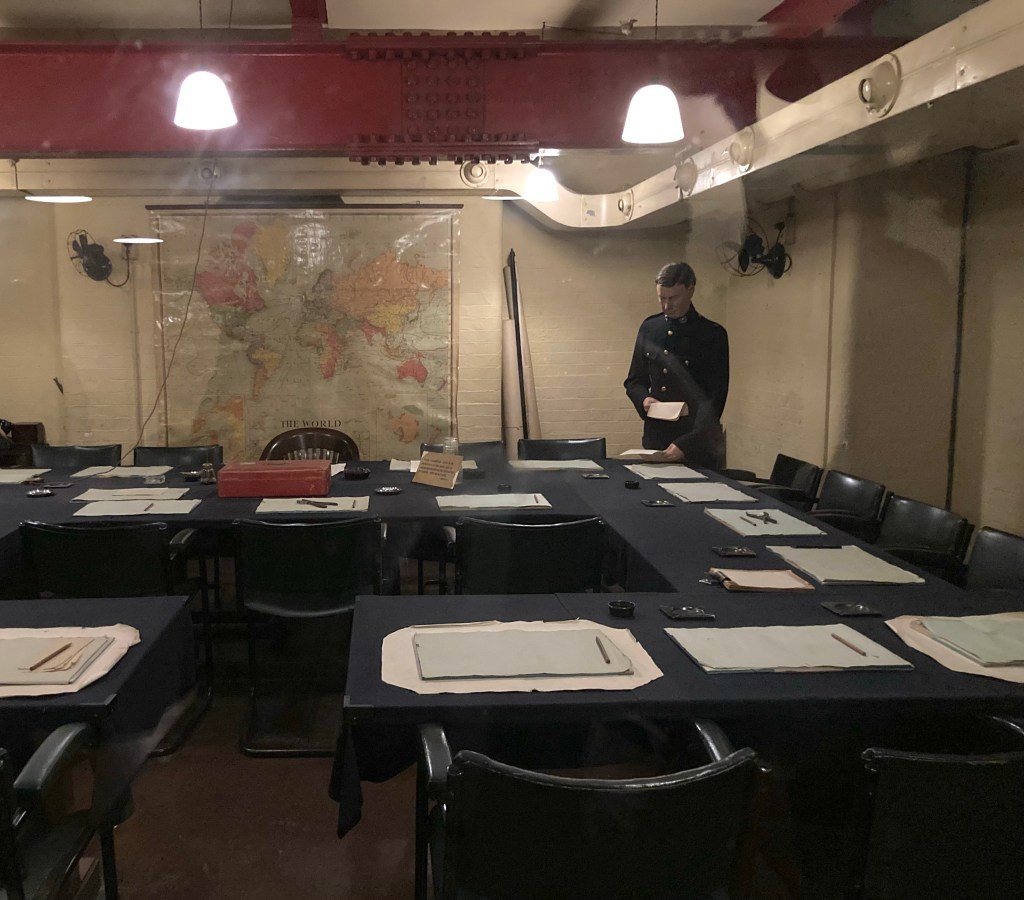
    As exciting as the Tower was, we found the Churchill War Rooms and Museum even more fascinating. This underground nerve center was where the British government directed the Second World War. An audio tour walked us through the top-secret corridors for a glimpse of what life would have been like during those tense days and nights. One could spend an entire day wandering in this amazing secret bunker. Everyone who worked, and sometimes slept there, understood that one direct bomb hit would destroy them and the coordination that was necessary to win the war.
    Evensong at Westminster Abbey was at 3:00, so we headed past a tall monument to the Great London Fire of 1666 and London Bridge with only enough time for a quick sandwich outside the cathedral. We could hear chanting from a pro-Palestinian demonstration but were really unaware of how large this demonstration actually was. Oblivious to all this going on just down the street, we headed inside.

    This cathedral is where Charles and Diana, as well as William and Kate, were married. State funerals are also held here. It is massive and amazing. We have seen so many beautiful cathedrals on this trip. Each one is unique and really awe inspiring. The choral Evensong was nice, but not our favorite. We were spoiled by the simpler one at Exeter College in Oxford.

    The plan was to meet the Robsons at Westminster Abbey for Evensong at 2:30. About 1:30 we faced a long walk and hailed a cab to take us from the East End to the West Side, but these plans went awry because roads in central London were closed for a Palestinian protest march.  Huge groups of protesters gathered at five or six places around the city and were converging on Trafalgar Square exactly where to cab dropped us.

    Several streets leading to Trafalgar Square were full of protesters

    The Square was already full of people with signs and bullhorns. The marchers were two blocks away blocking streets in several directions; London Police were everywhere. When we checked for directions to the Abbey with a police officer, he quickly escorted us across the paths of two approaching groups.
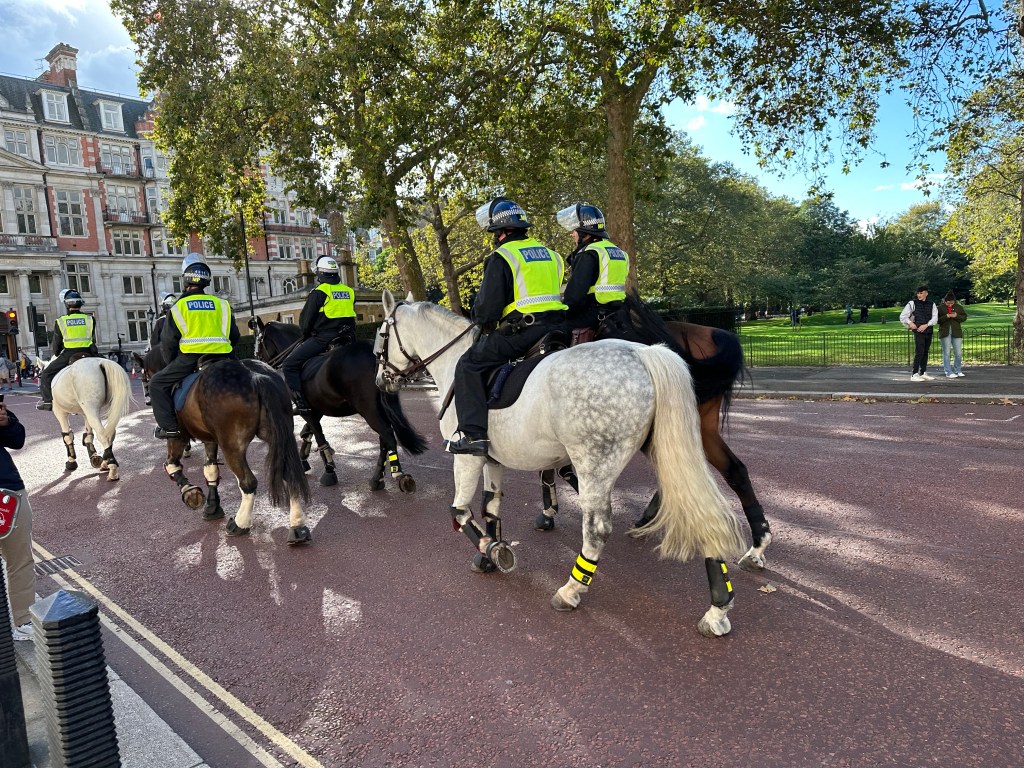
    We passed a long row of paddy wagons and police on horses along Whitehall Street and Horse Guard Road—backups in case of trouble. As far as we could tell from the news, there was no trouble beyond random skirmishes.

    We missed meeting the Robsons at 2:30 but got there in time for the organ concert and prelude. Becky saw the Robsons as we entered but we were seated on the opposite side. In contrast to the simple Evensong at Exeter College, this Evensong was very, very, very elaborate with a phalanx of elaborately robed bishops, abbots, and attendants leading a procession down the central aisle. The music was magnificent, and every inch of the Abbey is richly decorated with elaborate columns and sculpture.

    When the service was finished, Robsons were gone before we left the Abbey. We both encountered hundreds of protestors in the street returning from the rally. They joined commuters and tourists in the tube station around 5:00. Chaos ensued. All the escalators were jammed. The elevators that were working had long lines with strollers and wheelchairs. The trains were jam packed for hours. It was actually scary being in the middle of so many people pushing and pushing.

    We survived the underground crush and regrouped at the apartment where we were tired and needed comfort food. I suggested going back one stop to West Hampstead because most of Mel’s food suggestions were there.

    Scarrino’s is a neighborhood Italian restaurant where we enjoyed the food despite the volume of voices and background music. A family group of 15 seated at a long table nearby ordered a 5-foot long pizza which they devoured. Whole lotta pizza and whole lotta shouting back and forth.

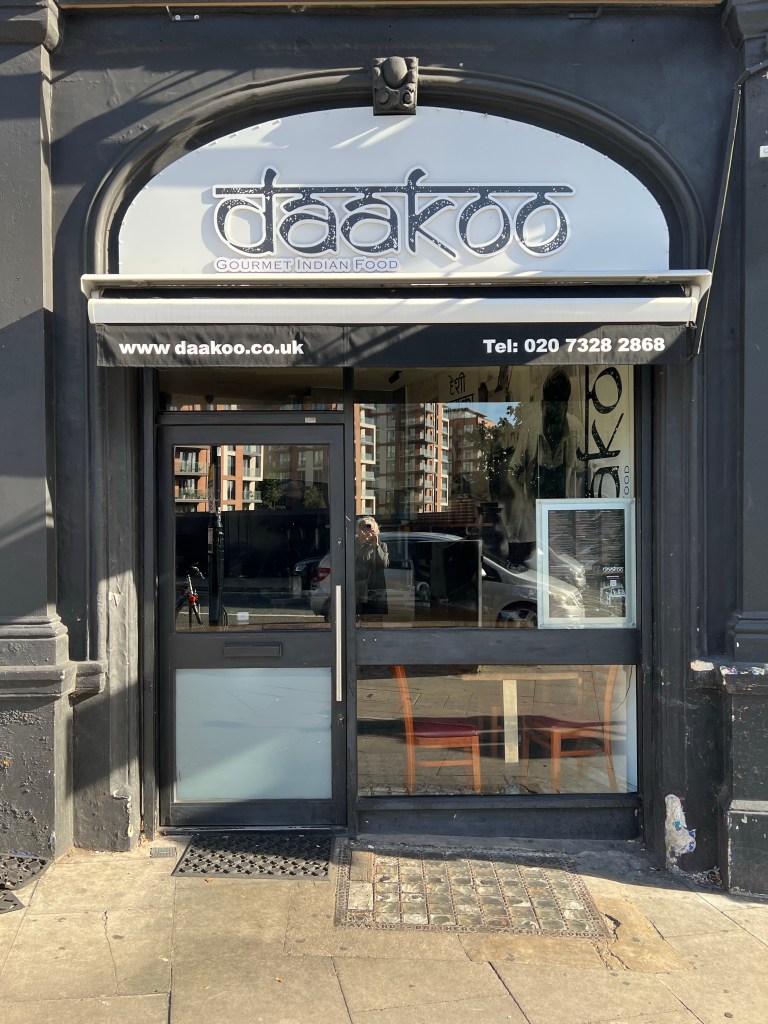
    On the way back to the tube station, we noticed Daakoo, a take-out-only Indian restaurant, with its counter holding a dozen take-out bags ready for delivery. That seemed like a good recommendation for another night.
    Day 3 Buckingham Palace, the Courtauld Gallery, and Exploring London

    The Robsons left early for Buckingham Palace to see the Changing of the Guard. They were not the only people with that idea on this beautiful Sunday morning—approximately 20,000 people joined them around Victoria Circle.

    Here is the Robson Report. The event, an extravagant display of British pomp and circumstance lasting an hour, was nothing like we had expected. Jim figured out a perfect vantage point to see things unfold despite the masses of people. Marching bands and soldiers came toward the palace from far away and paraded in precision once inside the gates; this seemed to go on forever.

    At some point in the morning, the guards changed, but from our place on the Victoria and Albert Statue we were not sure when this happened. We were not alone in our confusion as others around us kept wondering when we were going to see the guards change! Despite this, watching British pageantry at its finest was quite an experience.

    Bands, horses, and marchers. Oh My!

    As we started back to the subway station, a violent fight erupted between some young men at the entrance to the station. Instead of fighting our way through, we walked up the street to Trafalgar Square where I noticed another church, St. Martin-in-the-Fields. This church is famed for its acoustics; many concerts have been recorded there making it world renowned. Jim first learned about the church while typesetting concert programs for our business, First Impression Graphics. He was really curious to see it, so we entered and discovered an a cappella choral performance had just begun. We sat in a back pew and enjoyed a really special performance by six amazing singers in a magnificent small church. Jim was delighted with this unexpected event, a true “lagniappe”—one of his London highlights.

    Not being eager beavers and early leavers, Becky and I set out after 10:00 determined to find the elusive Courtauld Gallery. We might never have looked for it except our friend Paula had alerted us to its relocation and reopening. We plotted a course on Bus 189 which delivered us to the front door of Somerset House. Hurrah! The entire city block sitting above the Thames at Waterloo Bridge has been refurbished as an art and education complex housing the Gallery as well as the Courtauld Institute (an art study center), several other galleries, and a law school located in different wings.
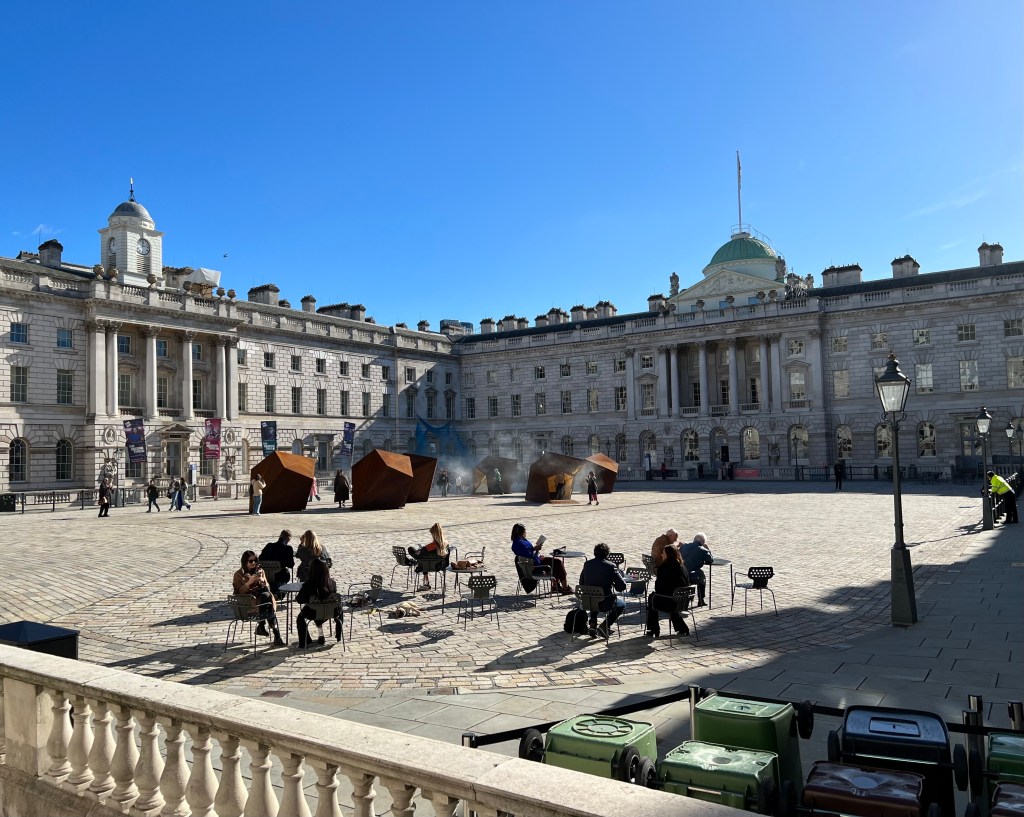
    Somerset House Courtyard

    As signage was “discreet,” or non-existent, we had to ask three times to find the entrance, but it was worth the effort.

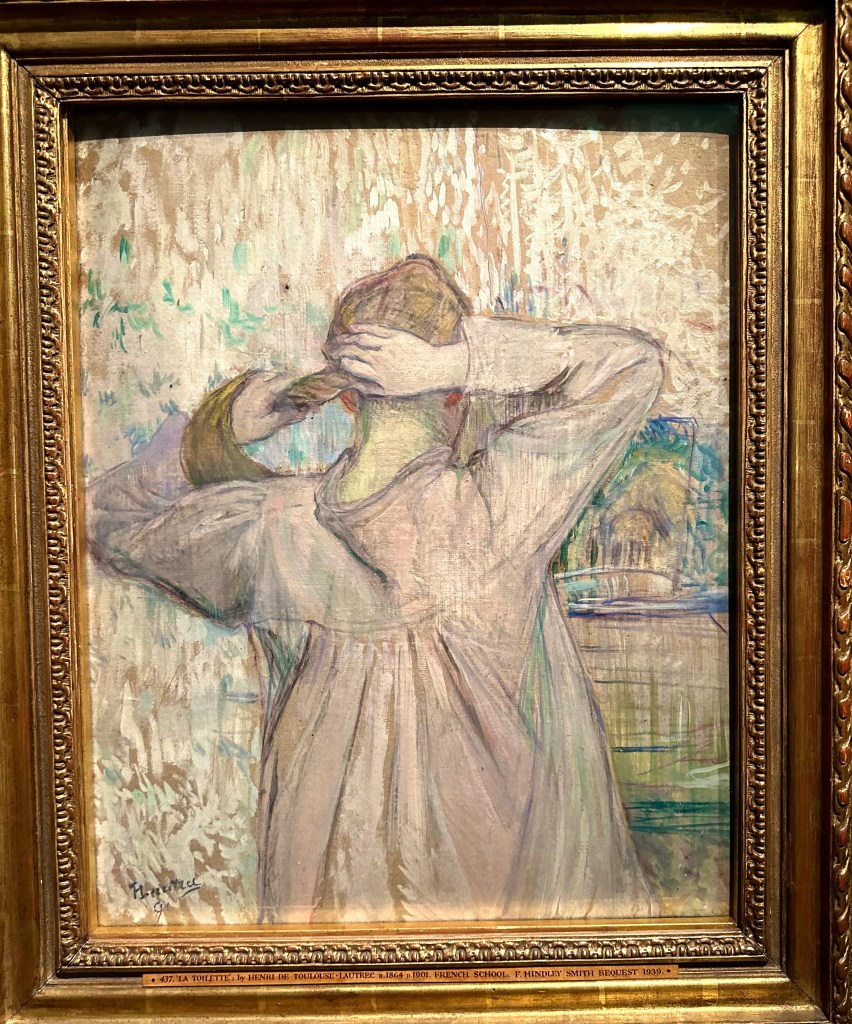
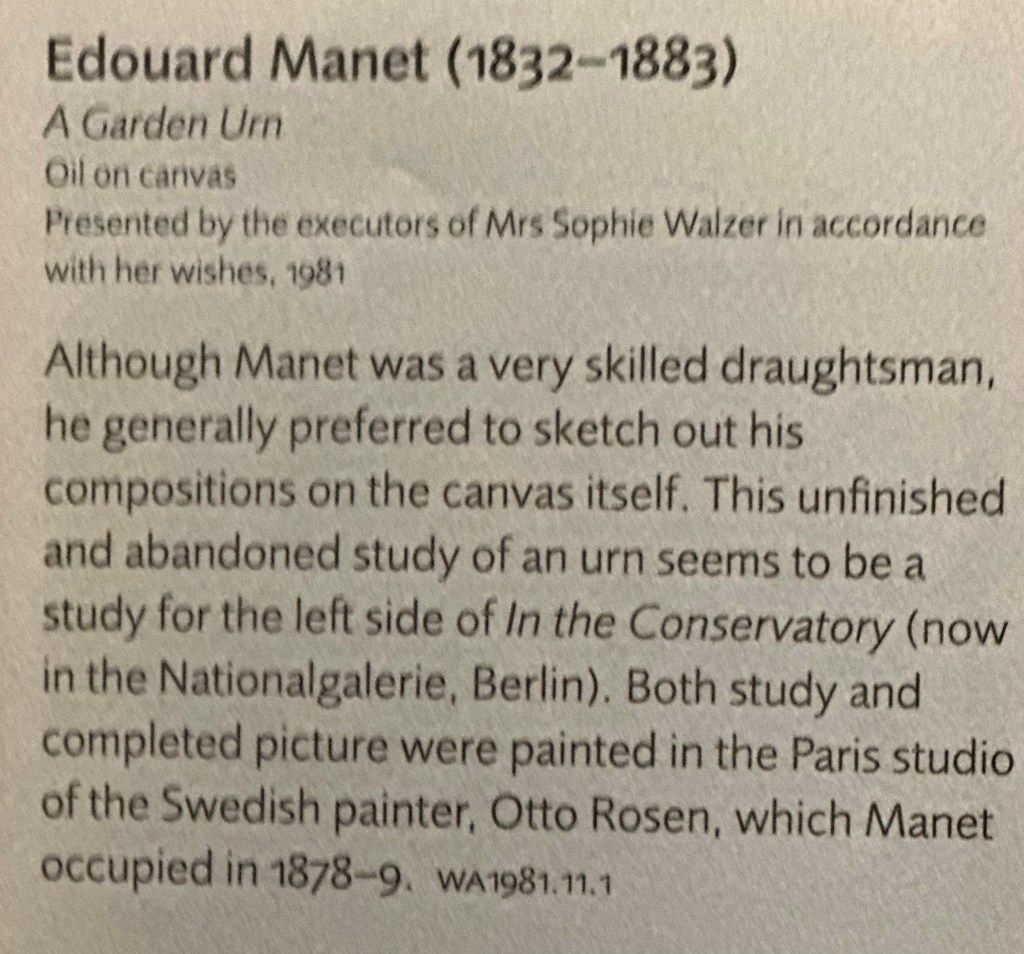
    The Courtauld Gallery had 3 large rooms hung with impressionist and post-impressionist artists: Manet, Renoir, Cezanne, Seurat, Toulouse-Lautrec, Gauguin, and Van Gogh. What the collection lacked in number was more than compensated by the quality.
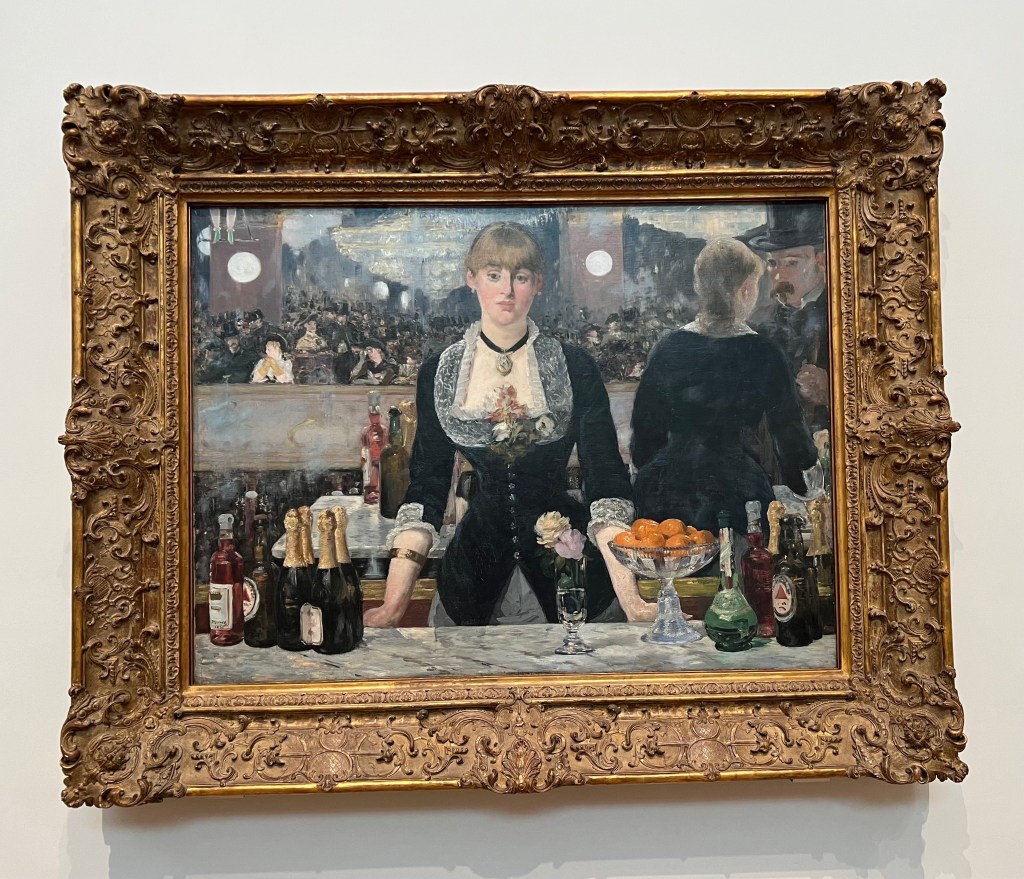
    A Bar at The Folies-Bergere. Eduardo Manet

    Each painting was an exemplar of the artists’ finest work. We had only seen photographs of these works in art books. We spent most of two hours looking at 25 paintings and stood gape-mouthed at the beauty. We were amazingly close to these stunning paintings and viewed our favorites several times.
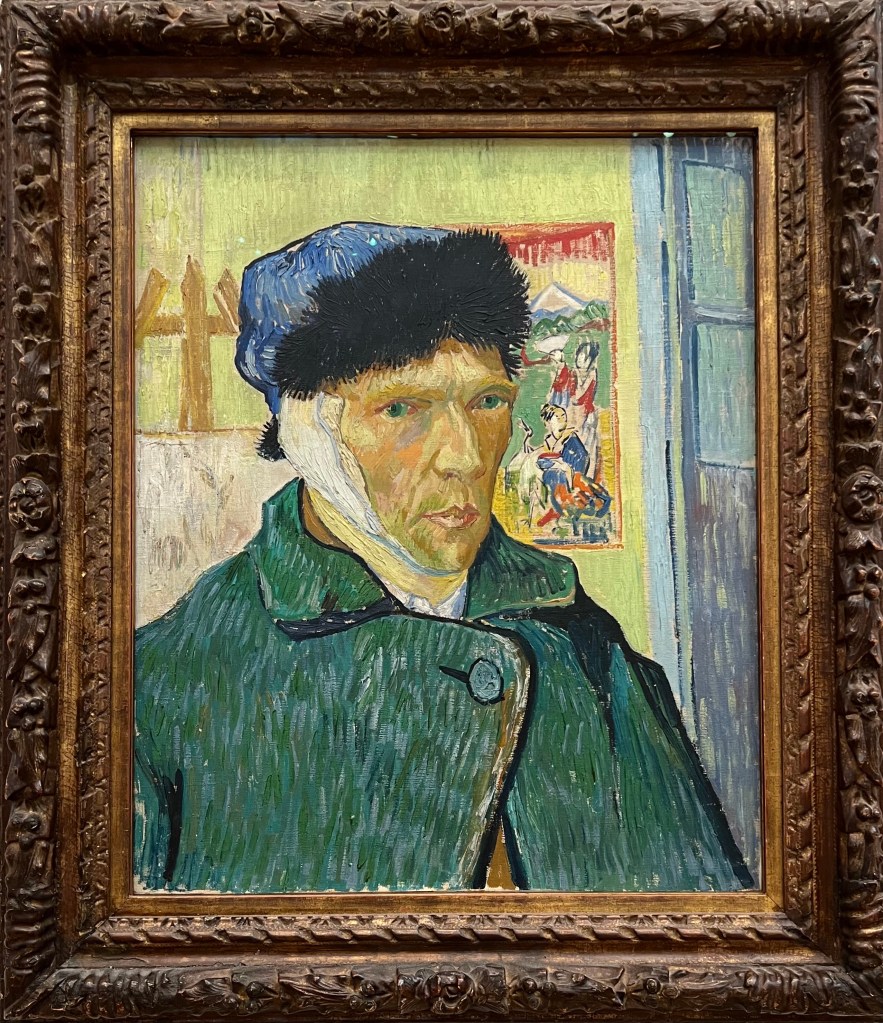
    Self Portrait with Bandaged Ear. Van Gogh

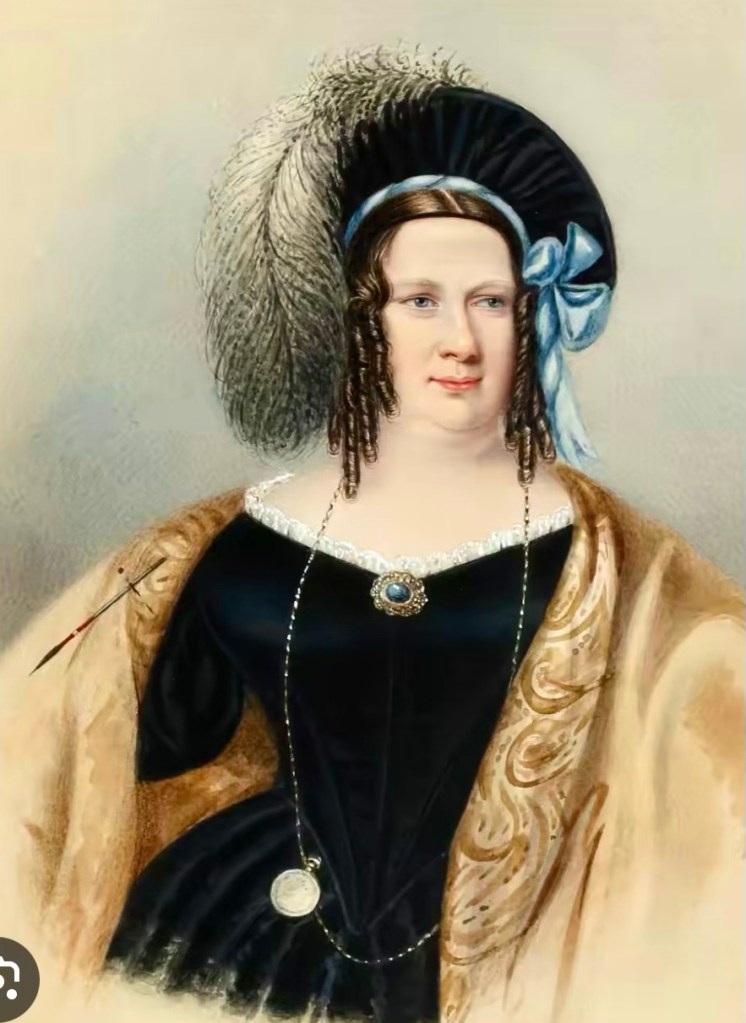
    The Gallery displayed the crème de la crème collected by Stephen Courtauld and his wife Katharine. Many were bought directly from the artists whose work at that time was shunned by critics and the public in France, England, and the United States. The Courtauld family had earned their fortune in textiles—manufacturing silk fabric. They also developed a special black draping crepe popular for funerals, most notably that of Prince Albert.
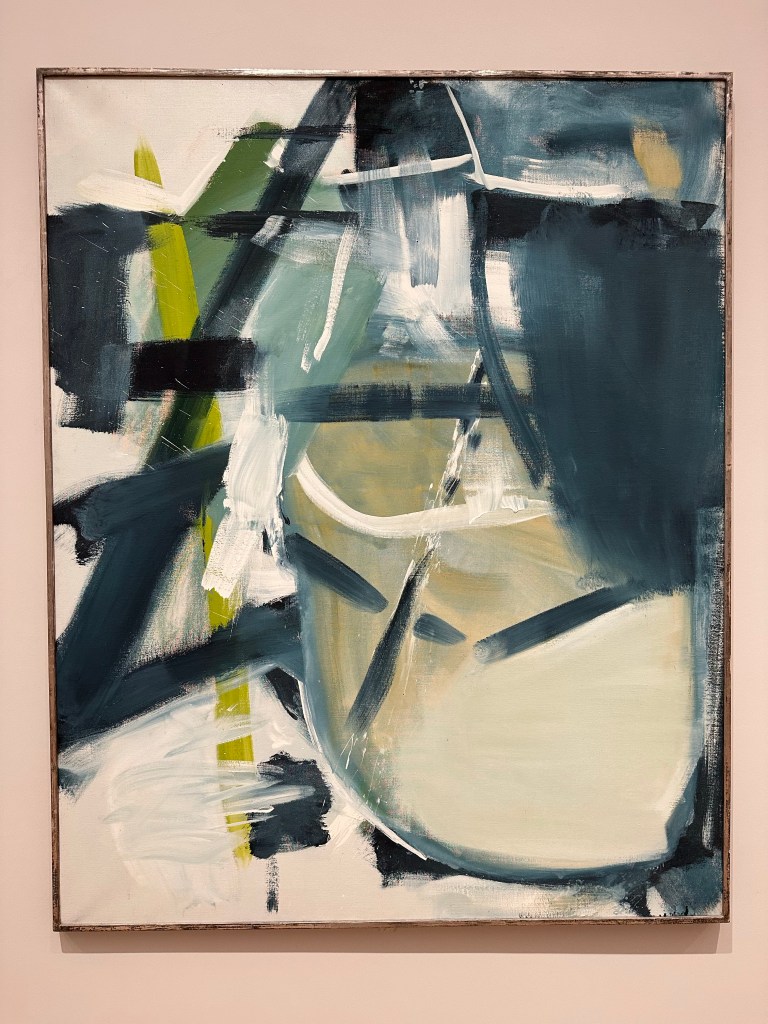
    Halsetown Peter Landon
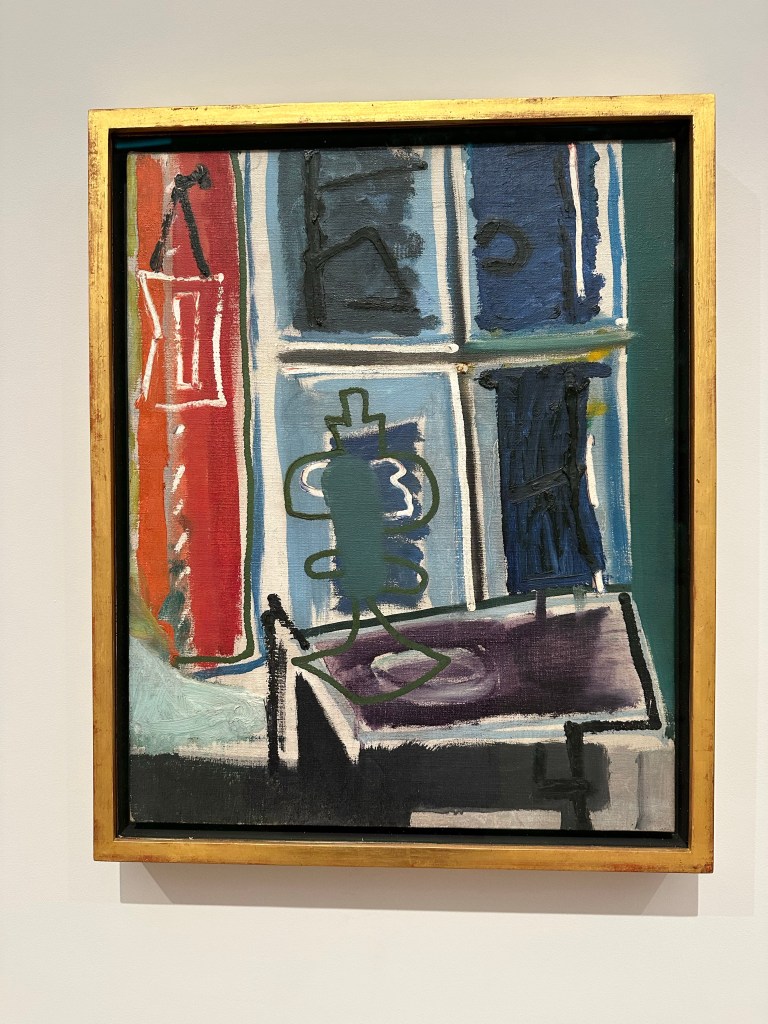
    Still Life Patrick Heron
    Modern British Impressionist Exhibit

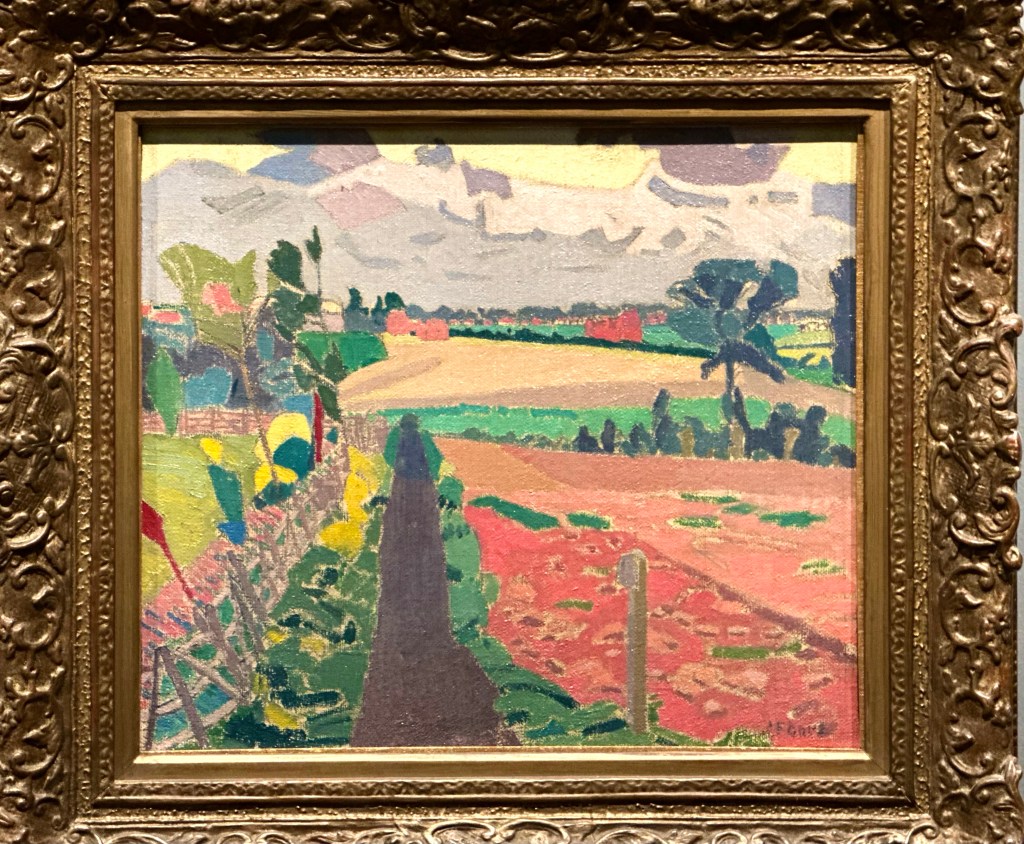
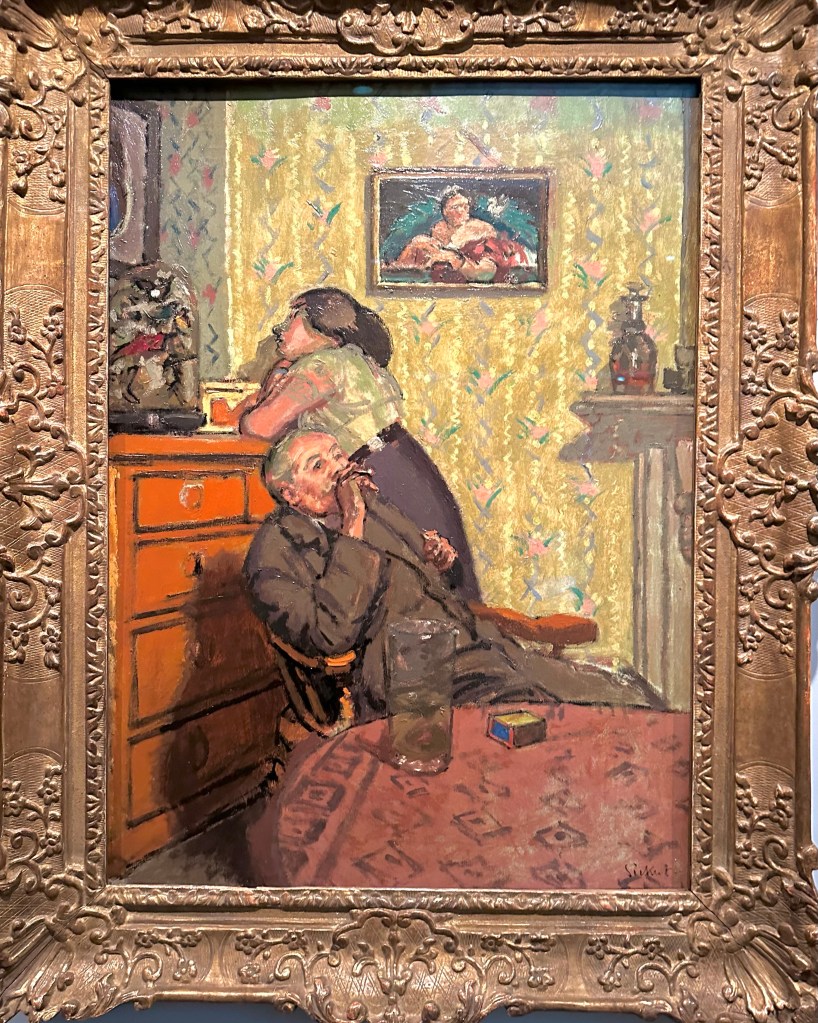
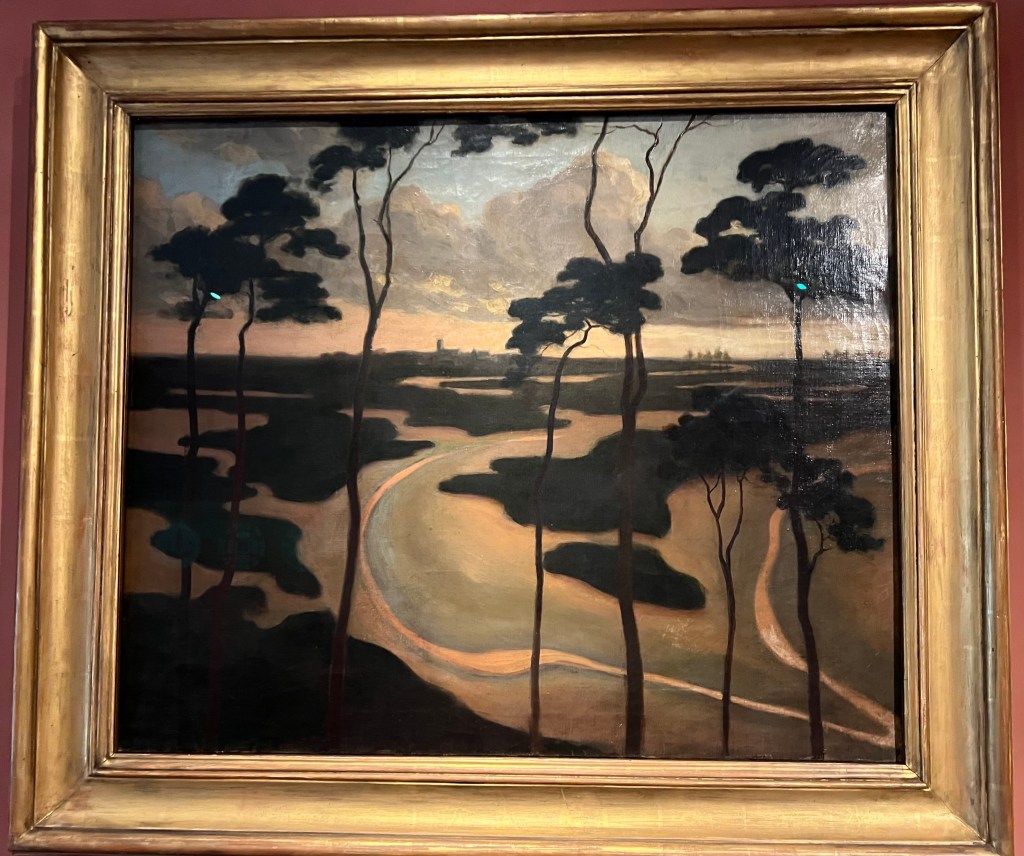
    Two smaller galleries were adjacent to the main collection. One featured contemporary British Impressionists and the other held a variety of works from the infamous Bloomsbury group.

    In the early 20th century, Virginia Woolf and her sister Vanessa Bell were leaders of this movement which advocated an arts and crafts aesthetic. Infamous because members of the group led complicated personal lives.
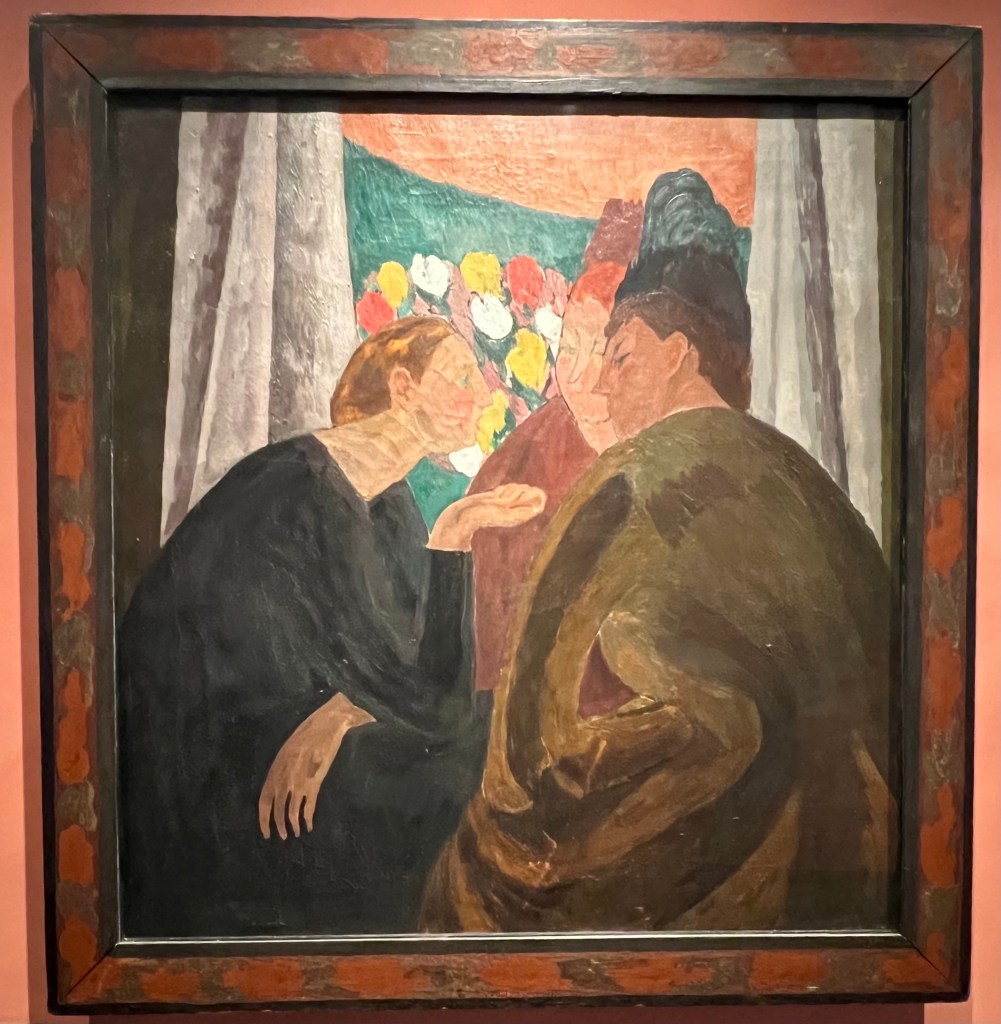
    A Conversation Vanessa Bell
    Blyburgh, an Estuary Roger Fry
    Bloomsbury Artists

    Across the street, the Lyceum Pub looked as if it had been there since 1900 or maybe 1800.  Traditional pub fare—fish ‘n chips and bangers with mash—were on the menu; we could not pass them up.  We returned to Kilburn on Bus 189 because its route took us on such a wonderful tour.  Riding up top this time, we saw the heart of London—Piccadilly Circus, Trafalgar, Selfridge’s Department Store, Regent Street, Bond Street plus Abbey Road and Studios in Hampstead.  We could imagine the Beatles walking across the striped intersection there.  It was a grand tour of London for the price of £2 bus ticket.

    Returning to Mel’s apartment, we enjoyed some downtime followed by wine, cheese and stories of the day.  Jim and Becky went foraging for frozen pizza at Tesco while Betsy preheated the oven.  We were just too tired to get back on the subway and search for a fancier meal.

    Day 4 In and Around Windsor Castle

    Exhaustion and/or some kind of bug hit Steve and Betsy. Steve decided to stay at the apartment for the day, while Betsy (despite feeling lousy) persevered with Jim and Becky and set off for Windsor Castle. Two subway changes and a short train ride got them to the steps of the castle in about an hour.

    Here is the Robson Report. Windsor Castle is the oldest and largest inhabitable castle in the world. It was built by William the Conqueror around 1070. It took 16 years to complete and was intended to guard the western approach to London. It was always a special home to Queen Elizabeth II and the childhood home of the present King, Charles III.
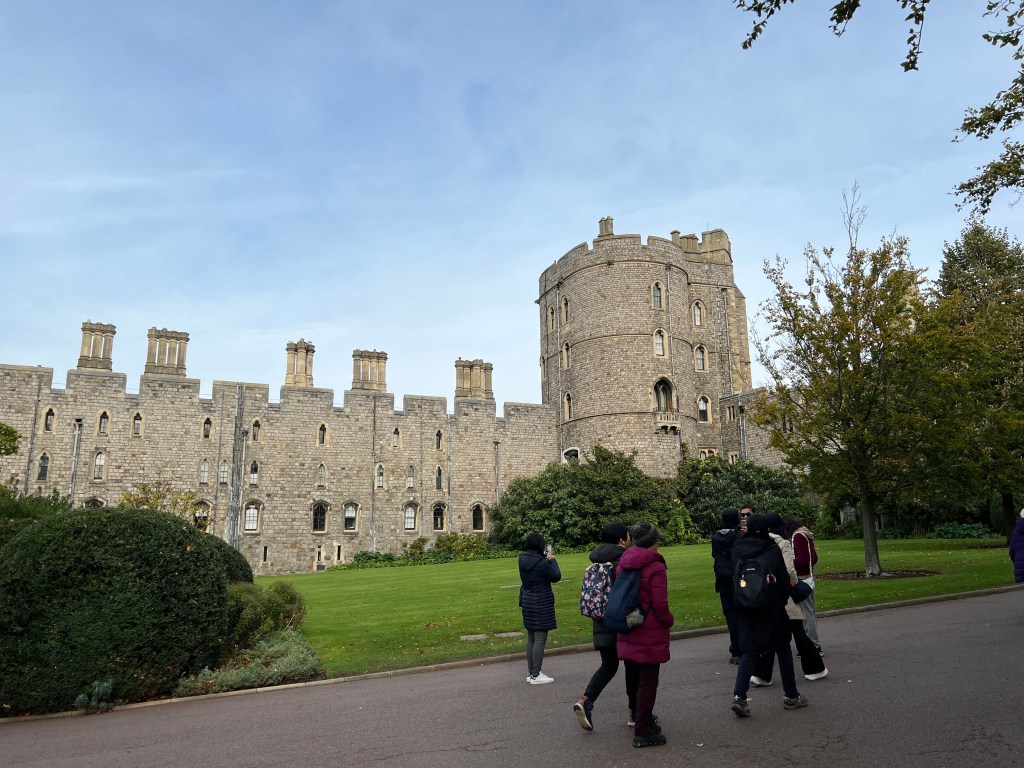
    Despite being a huge walled complex with hundreds of rooms, this royal residence felt homier somehow, if a castle can be called homey. An audio tour took us through a large part of the castle and into St. George’s Chapel, adjacent to Windsor Castle, where the Royal Family worships while in residence and where Harry and Megan were married in 2018. The areas where the royal family actually work and live are not open, but it really was a fascinating place to visit.

    The Castle is also a museum of fine art filled with British treasures from the earliest times. In addition, the building is used for state functions and entertaining.
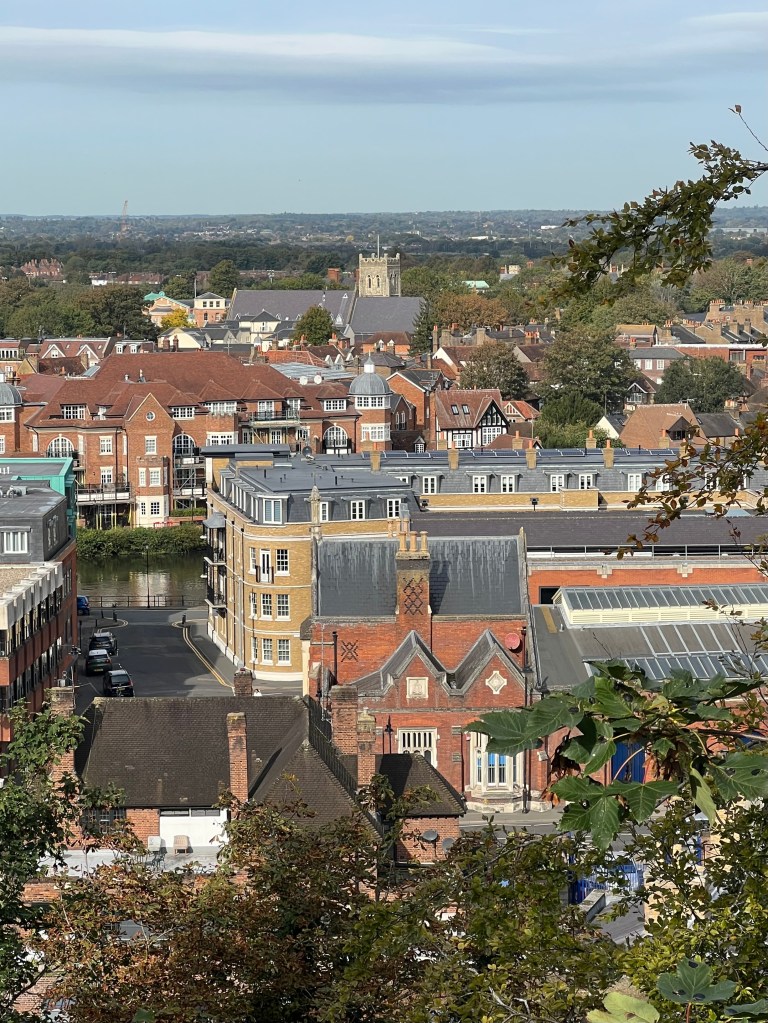
    View from Windsor Castle

    After three hours of intense looking, we were ready for lunch. A small pub nearby,The Horse and Groom established in 1709, served us cups of warm soup which we needed as the day had turned very chilly with first sign of autumn. Time came to head back via trains and buses.

    As we were walked from the underground to Mel’s apartment, we passed Steve on his way to pick up Indian dinner for us from Daakoo. We collapsed and waited for him to return with a fantastic meal of curries and stir fries with papadum and naan. We understood why the restaurant is so busy.

    We have really enjoyed eating in Great Britain!Traditional English food tends toward bland and heavy. We ate fish and chips several times at the start of our trip, but tired of the high fat quotient. Thai, Indian, and Italian meals are far more appealing. Ethnic food really shines here, and each meal we had was marvelous. Despite eating like kings, all the walking we did ensured we did not come home with extra pounds!!

    Old Joke: Poor Canada. They could have had British manners, French food, and American technology, but wound up with British food, American manners, and French technology.

    Days 5 and 6 Leaving London

    Our last day in London was all about getting to Heathrow Airport that afternoon.  We packed bags, stripped off the bedding, and took out the trash and recycling.  Dragging suitcases around is tough and naturally restricts you from entering almost everything.  Mel, our Superhost, again allowed us to leave bags so we had a few hours before heading to our airport hotel. 

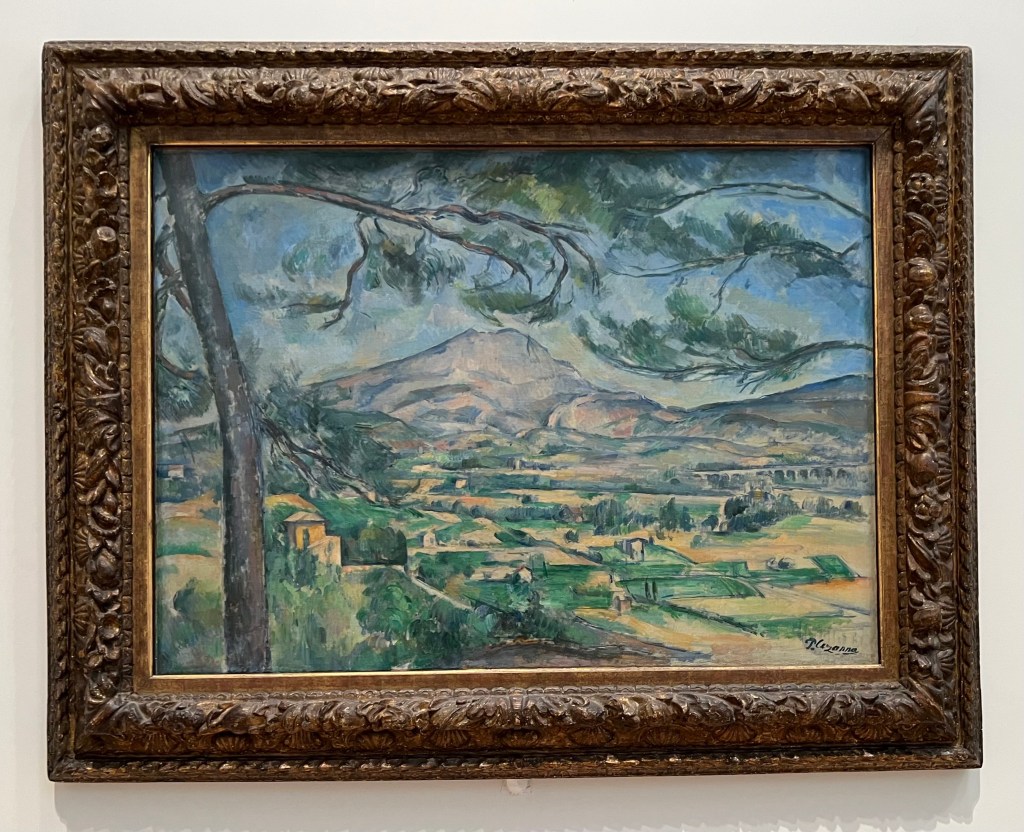
    The Robsons took an hour-long ride on Bus 189 ride through London passing Abbey Road & Studios, Piccadilly Circus, and more high-end stores that we dreamed possible! We headed to the Courtauld Gallery which Becky and Steve enjoyed so much. It houses an unbelievable collection of Monets, Manets, Pissarros, Renoirs, Degas and one Toulouse-Lautrec. What a feast for the eyes!
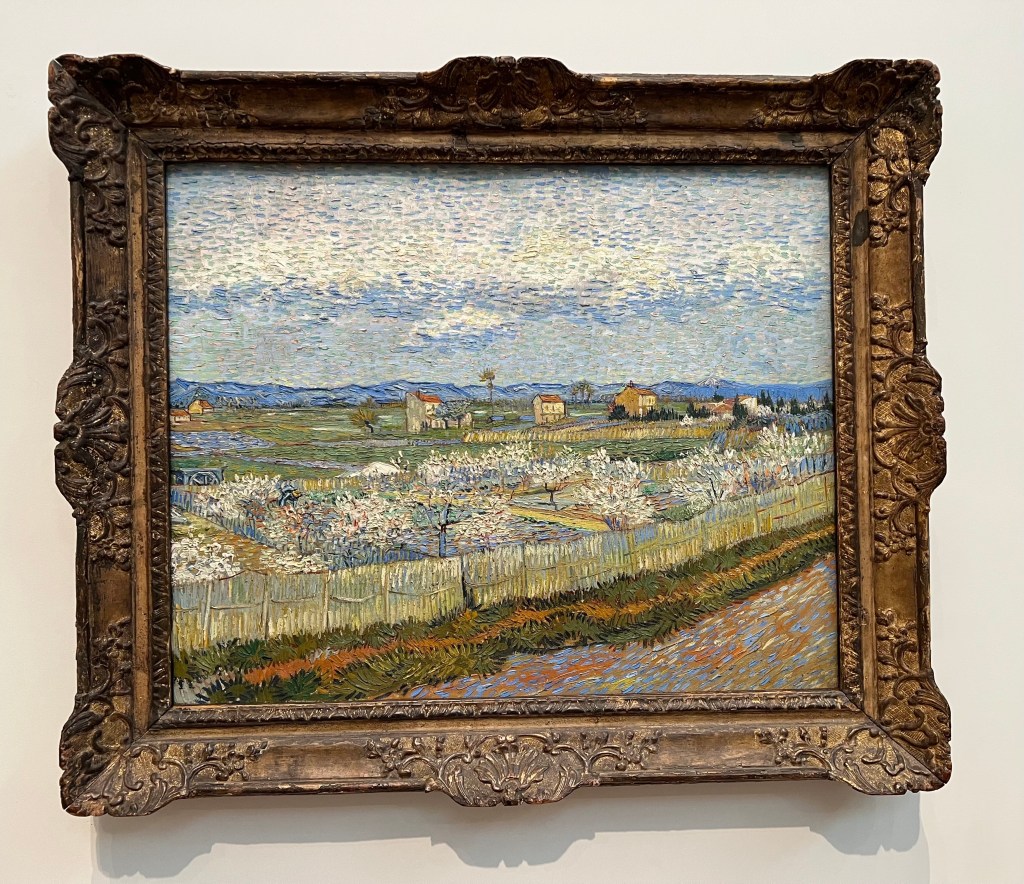
    Peach Trees in Blossom Van Gogh
    Montaigne Sainte-Victoire with Large Pine CE Anne

    After considering options and needing to be back at Mel’s at 2:00, Steve and Becky also rode Bus 189, got off at Somerset House, had a light lunch of smorgasbord at Olle and Steen, a Swedish bakery, got back on Bus 189 for a farewell ride arriving at Mel’s at 2:02.

    The street to Kilburn Station and the Jubilee Line

    Jim had plotted our exit strategy taking the underground to Paddington with transfer to the swift Elizabeth line to Heathrow Terminal 2 where our hotel was located. The five terminals at Heathrow are connected by trains in an underground central station with long walking passages to each terminal. Despite many signs, you feel as though you have taken a wrong turn and are completely lost. I remembered getting to the hotel (where we stayed in December) with a walk across a huge underground parking lot. Finally, among the signs we saw a small Hilton Garden Inn insignia which, like breadcrumbs, eventually led us to our destination.

    Getting from the apartment to the hotel at Heathrow took about two hours.  We were glad we were not making the transfer the next morning.  The plane was scheduled for departure at 10:00, meaning we would have to be at the terminal at 8:00, meaning we would be leaving the apartment at 6:00.  We would have been frantic!  Any little missed connection could have caused a big problem. 

    Instead, we were relaxing in the rooftop bar watching airplanes taxi, take off, and land on runways around us.  Jim somehow is able to recognize the shape of many of the airplanes, so he did plane-spotting for us.  The couch were Becky and I sat was deep, low, and not that comfortable.  Jim asked the woman at the next table if we could have her extra chair.  He asked if she was alone and she answered, “Unfortunately, yes.”   He rolled the giant chair over for me to sit in so that my knees were not touching my nose.  

    We were enjoying our libations as the woman, Marguerite, finished her meal.  I asked if she would like to join us which she did for a lively and interesting conversation.  She told us about her life (born in Goteborg, Sweden, where we visited in May), her marriage (a long-distance relationship with a man in Pittsburgh until she said enough is enough), her jobs, and her hobbies (returning from a walking holiday in Switzerland).  This sounds like she talked the whole time, but it was really an interesting interaction with a fascinating person who had lived a life so adventurous and so different from ours.  Another bonus of travel is meeting and talking to strangers.

    We left the hotel about 7:15 and walked, walked, walked to Terminal 2 through security to a gigantic seating area surrounded by duty-free shops where many people were busy loading up.  We had not eaten breakfast, so Jim and I went in search of coffee with hundreds of other caffeine-seeking people at 8:00.  Our strategy was divide-and-hunt; I stood in line at Costa Coffee while Jim searched for other options.  I was in the lucky line which moved rapidly so I texted him to return.  The ambient noise was so loud and amplified in my hearing aids that I was functionally deaf.  I needed him to negotiate our order with the counter person. 

    We secured coffee and croissant just before our gate number posted.  After finishing coffee, we joined the crowd of 350 people on a long walk to the gate.  As we approached, nobody was moving into the seating area.  We could see an airplane outside and a lot of check-in personnel wandering about aimlessly, not checking anybody in.  Something was up.  After we stood in the crowd for 20 or 30 minutes, they announced a gate change. 

    I am sure it was a mile walk to the furthest gate in the terminal where we stood for another 20-30 minutes. For reasons unclear to us, some passengers had to undergo an additional security check of their carryons!   Eventually we were able to sit down and wait for something to happen; there was no airplane at this gate.  That something was loading us all on buses which ferried us back to the original gate and to the 787 we had seen. 

    Apparently, the moving bridge to the airplane quit moving and could not be fixed.  We needed a gate at ground level so that buses could take us to the stranded airplane.  We walked up a ramp into the airplane.  This whole operation took about 2 hours and 5000 steps to get us aboard.  The 350 people demonstrated admirable patience and forbearance in the situation. 

    And we were off—only 2 hours late.  The pilot said we would make up some time and we did, arriving only about 30 minutes behind schedule.  In Philadelphia, we checked out through security and customs, collected our bags, and checked ourselves and bags through security again (thank goodness for TSA pre-check).  At this point, Jim, Betsy, and Becky headed to the gate for Asheville while I went to the gate to Columbus for a meeting at Ohio State.  The gate agent briefly held the flight because Steve was “no show.”  When questioned about her companion, Becky responded that he had missed the connection.  They probably thought I was too drunk to board, and she left me at a bar in the airport.  David picked up three weary folks around 6:00, and I got to Columbus and my hotel about 7:00.

    Thus ends the Great British Traveling Show with four travelers in their beds, exhausted from all the fun we had over 37 days, and three of us with some kind of crud that hung on for 10 days and required medicine.  Jim was immune to whatever the rest of us got.  As Maestro of Urban Movement, his escape from the malady was a just reward.


  • Episode 12 All Around Oxford Town

    October 26th, 2023

    The Great British Traveling Show

    Trouble in Oxford

    Our one-night reunion with the Robsons in Bath was short but fun.  The next morning, we set off in different directions:  Robsons to Cornwall while we went directly to Oxford.  Train schedules for weekends differ from weekly routes and times.  Our ticket from Bath was for any route to Oxford as long as we did NOT go through Reading.  Fine!  

    However, this Sunday this train bypassed our Didcot Parkway stop and dropped us in the forbidden Reading. On the platform, a woman and a man dressed in train uniforms were chatting. We explained our dilemma leaving out that we should not be in Reading. They were on the crew for the next train going directly to Oxford and invited us to ride in First Class. The ride was only about 30 minutes, but it felt so luxurious.

    We arrived right at 2:00, when we were scheduled to enter the apartment at 5 Rowland Court. Booking.com made many satisfactory reservations, but this time we arrived without information from the owner about the apartment’s location, access, or house rules. I emailed the owner several times the prior week but got no response. With an address and a google map, we headed there hoping all would work out.

    Two hours later we were still waiting outside the apartment building. I called the owner’s number repeatedly and emailed Booking about the problem but got no response from either.

    We saw a hotel near the rail station, so we walked back to see if they had a room for one night while we figured out what to do.

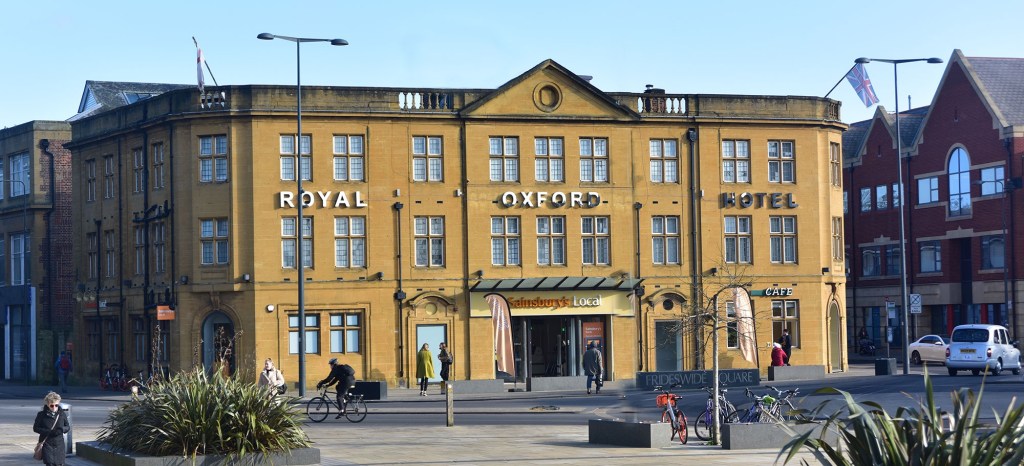
    The Royal Oxford Hotel had a room for one night according to our new friend Michal from Italy. We were worn out and needed a nap. About 7:00, we walked across the street to an Indian restaurant, Dosa Park, which we remembered from five years ago. “Dosa” is a crispy Indian crepe wrap made with buckwheat flour and filled with curried potato—a delicious treat which we seldom find in the US.

    The next morning, having heard nothing from the Booking.naah or the owner, we asked to stay four more nights at the Royal Oxford.  Another new friend Sondra arranged for 4 more nights in the room next door to the first night. Hurrah!  Banana/croissant/coffee breakfast came from the Sainsbury grocery on the ground floor of the hotel. 

    Day 2 Stepping into Oxford

    Despite previous visits to Oxford, we were in new territory west of City Center.

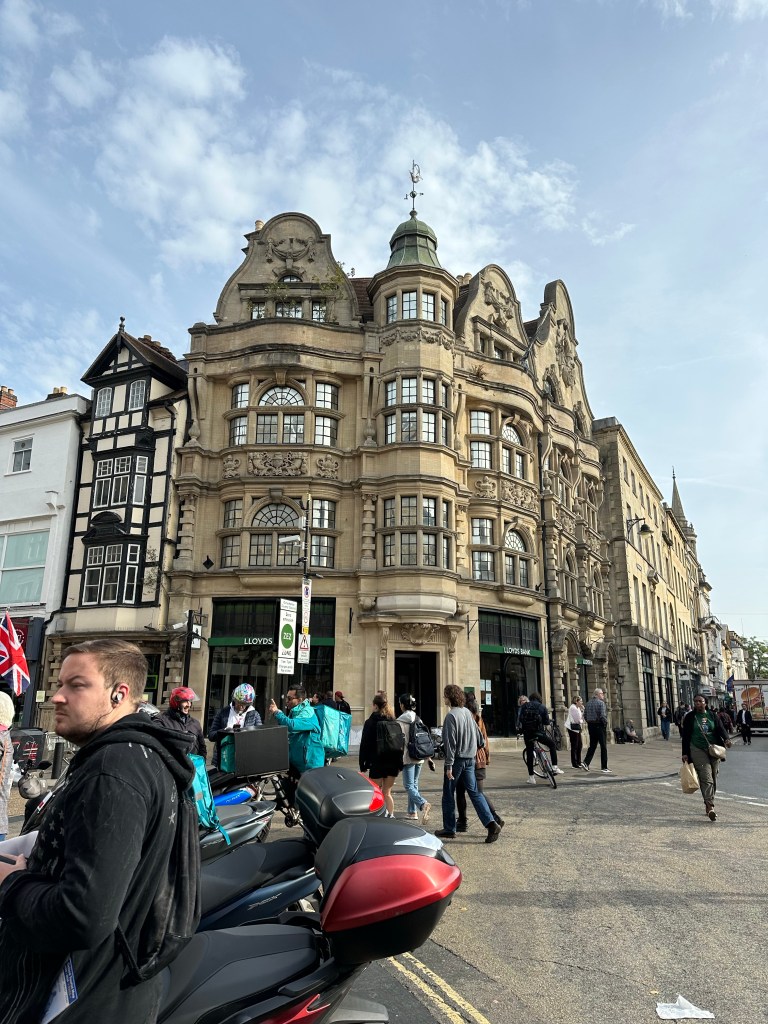
    City Centre Oxford

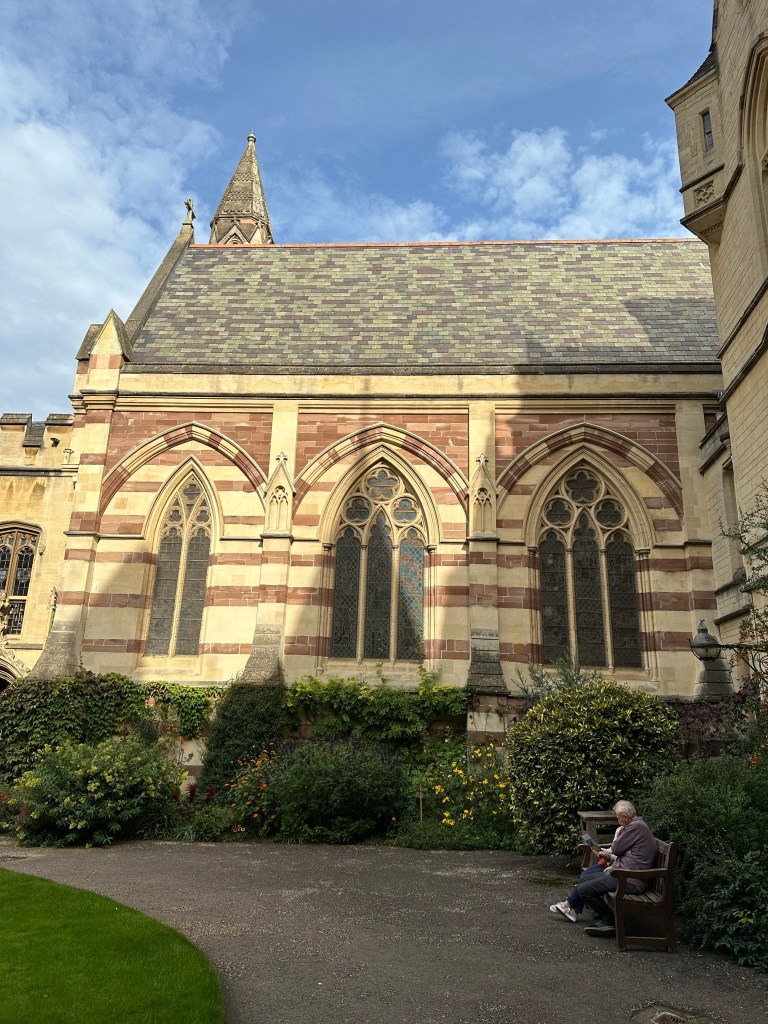
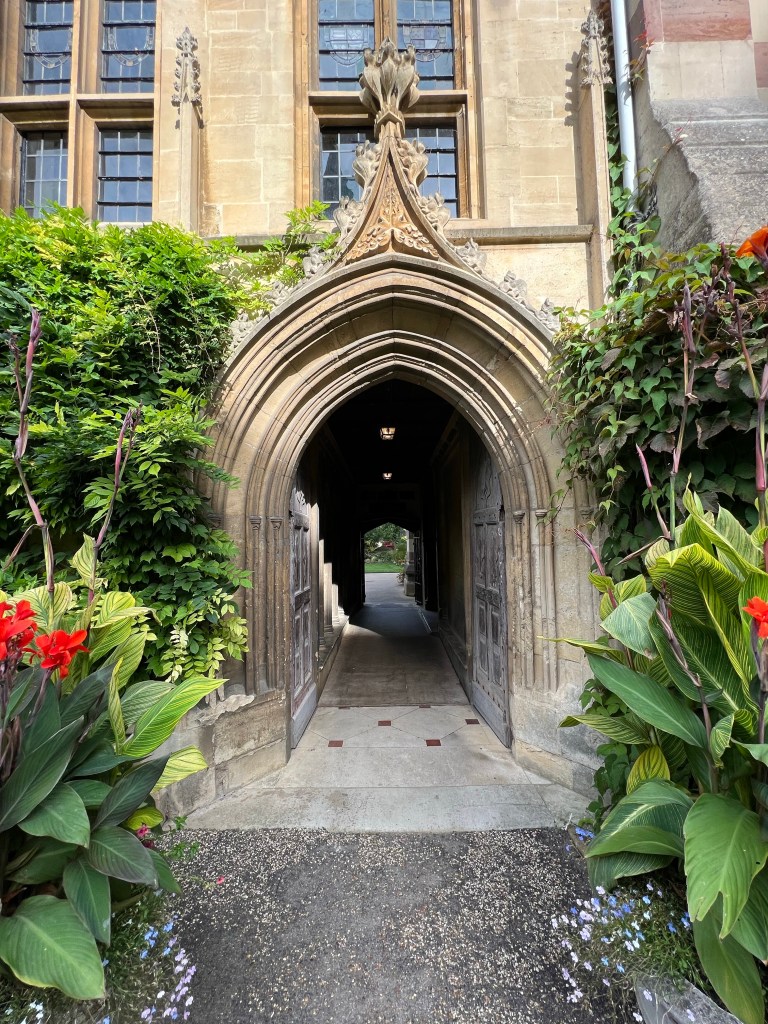
    We walked ten minutes down George Street from the hotel to City Center where we were surprised that Balliol College was open for visitors. We walked all around the quad—careful not to step on the grass.

    The college is old, elegant, rather small, and very beautiful. We looked into the dining hall, the chapel, and garden.

    Most of the colleges were closed to visitors because this was the first week of a new term and students had just arrived.

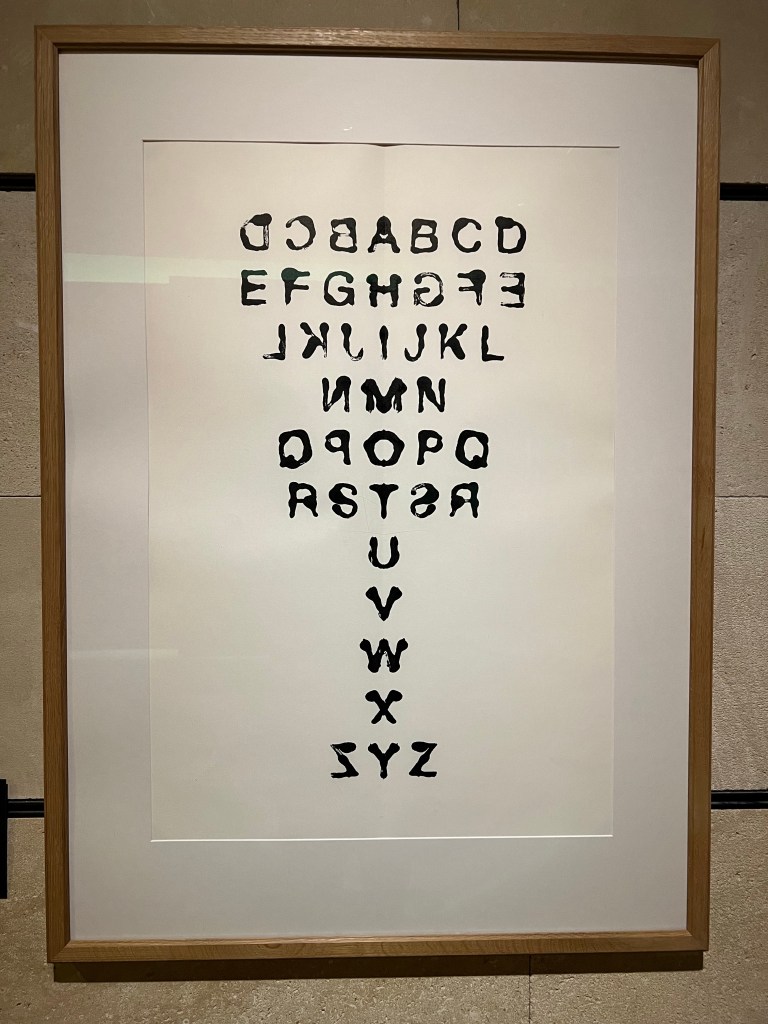
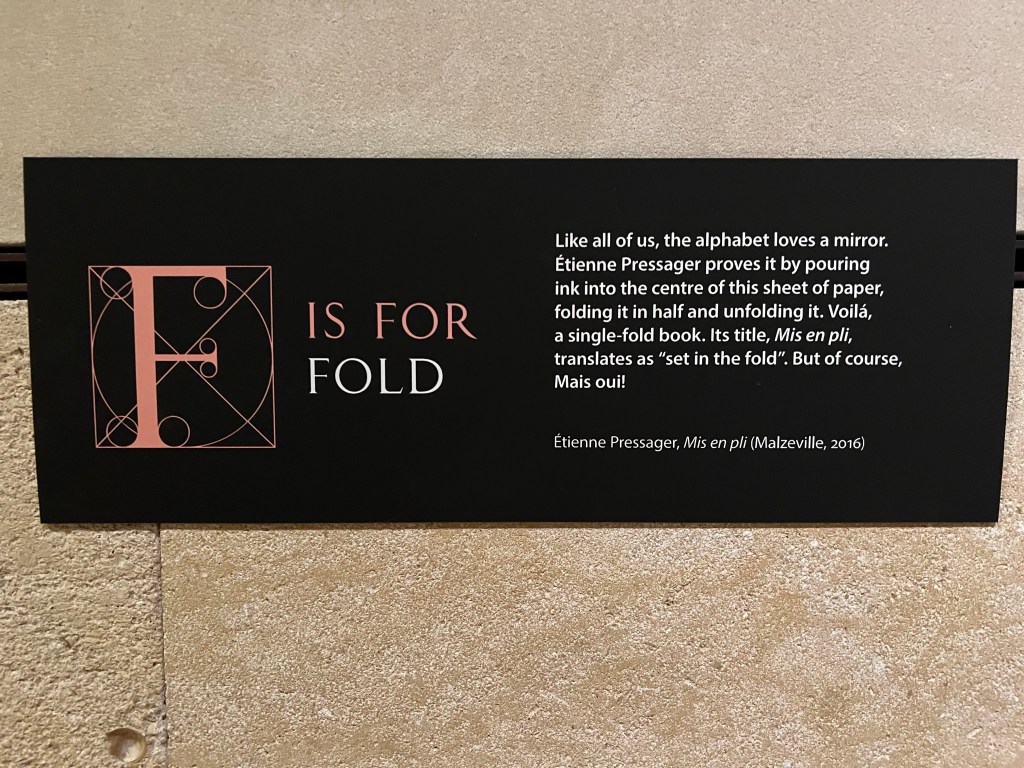
    On down Broad Street, the Weston Library had two exhibits. The Alphabets Alive! exhibit featured a great variety of alphabet books and books about alphabets and fonts.

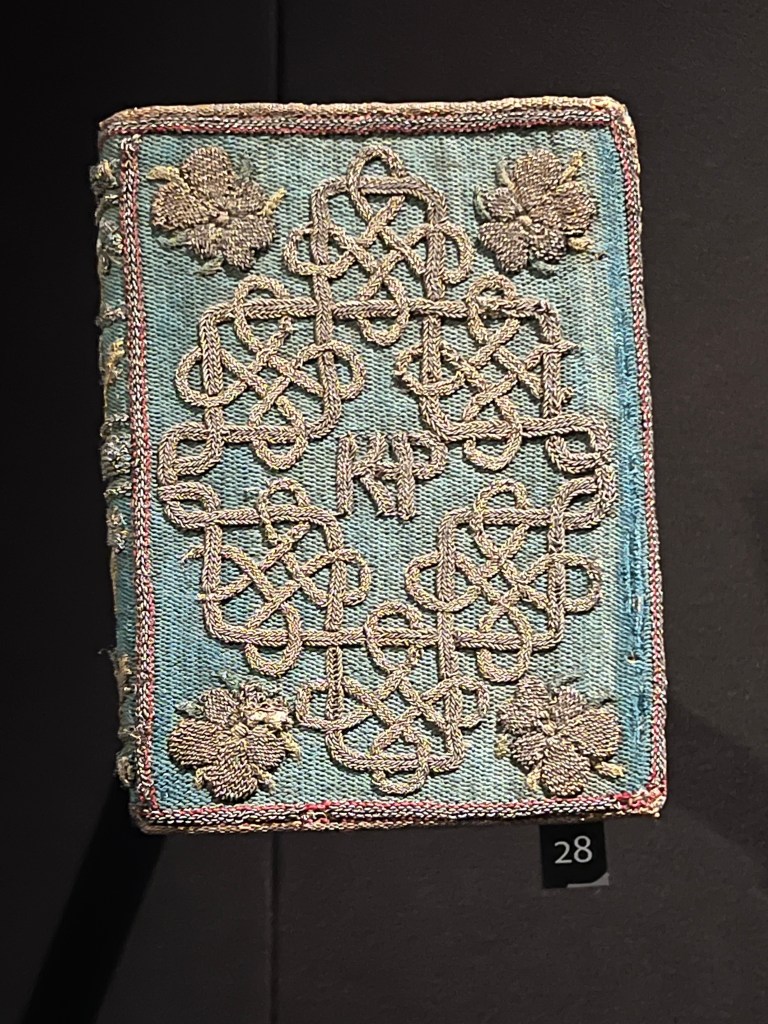
    The second and larger exhibit, Gifts and Books, was a history of how books served as gifts for romantic, political, or other purposes from the days of pharaohs through medieval manuscripts into modern printing. For example, at age 11, the future Queen Elizabeth I gave a book to her stepmother Katherine Parr with an inscription and embroidered the cover.

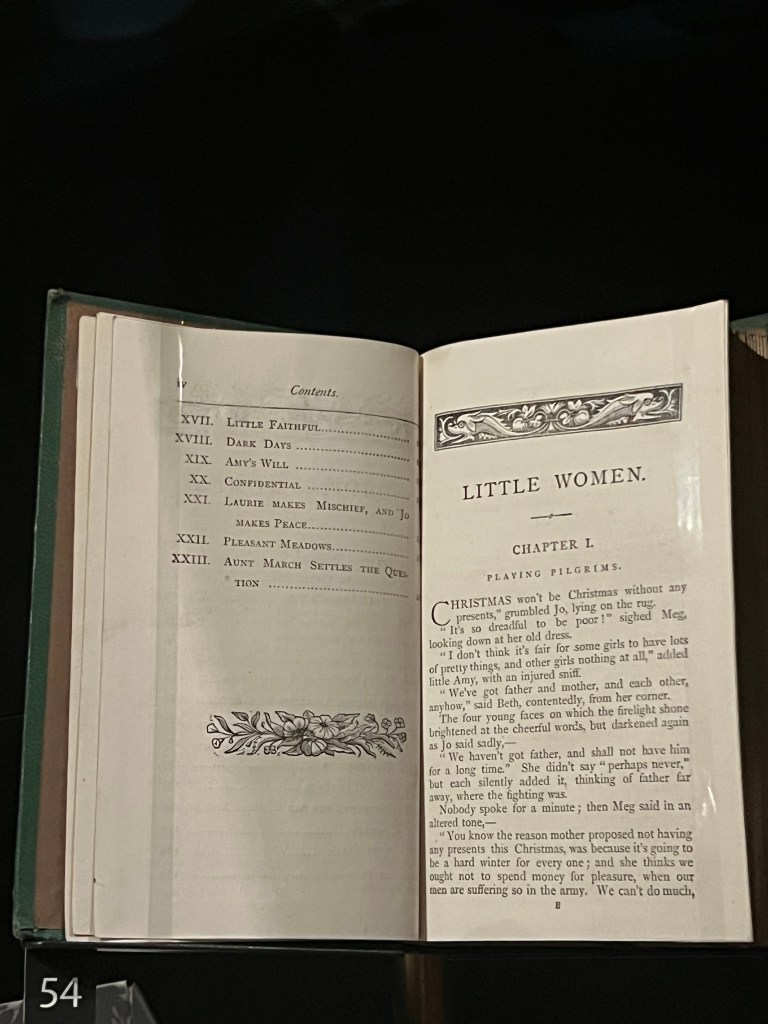
    Other manuscripts and first editions included were from Alice in Wonderland and Little Women.

    First edition of Little Women. First line: “Christmas won’t be Christmas without any presents!” grumbled Jo, lying on the rug.

    The Weston library, once called the “New B”, is very modern with a glass, stone, and steel façade—very different from the Gothic buildings surrounding it.

    Front of Weston Library, the new Bodleian library

    After 75 years, people still grumble about this modern “monstrosity” in the “City of Spires” noted for gothic buildings. The Weston may be incongruous and perhaps industrial but not ugly, just sleek and plain surrounded by the elaborate.

    What luck! We found that Exeter College had an organ concert at 1:15 so we could walk into the beautiful, small chapel for an hour of glorious music and sneak-a-peak around the quad.

    Exeter was also having Evensong later that day which we thought the Robsons would enjoy as well.

    The highlight of our afternoon was an audio tour of Christ Church College and Cathedral.

    The hour-long narration told the history of the College and how it was built in stages, taken down and remodeled by many Deans and Bishops over 15 centuries. It was even temporarily the capital of England because it served as King Charles headquarters while he was fighting the Civil War.

    The Great Hall, familiar to Harry Potter Hogwarts movie fans, is even more impressive in person.

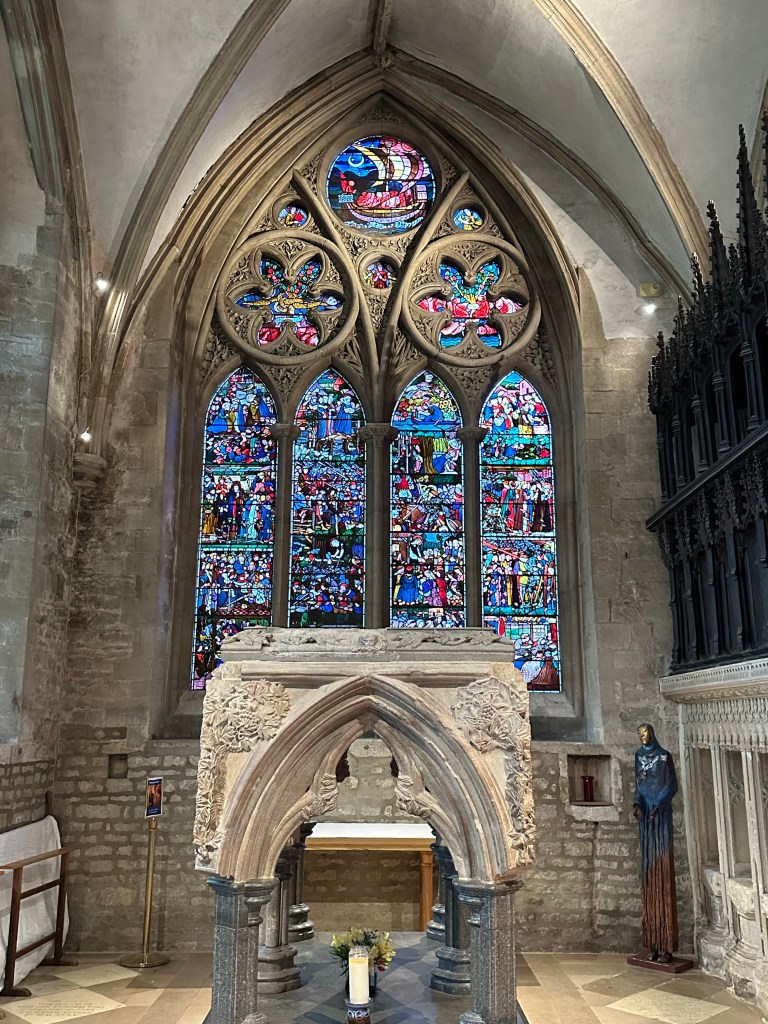
    Pre Rafaelite Window in Christ College Cathedral

    The tomb of the founding saint of Oxford, Saint Frideswide is prominent in a side chapel.

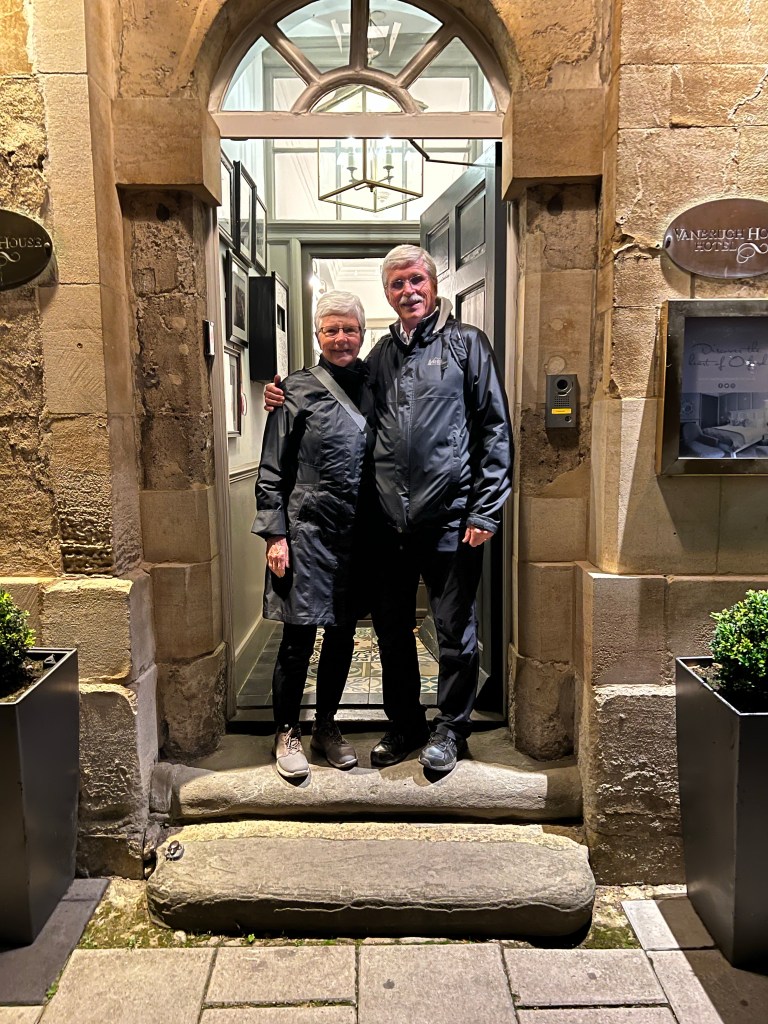
    Near 3:00, we met the Robsons at the train station and walked with them to Van Brugh Hotel. What a quaint and lovely place just minutes from City Centre. They were interested in the Evensong at Exeter college; after a rest, we met them in the Exeter Chapel for a wonderful service sung by a student choir whose dulcet voices filled the space.

    The Chapel is smaller and certainly more intimate, but no less beautiful than Christ College Cathedral.

    Following the service, we spoke with a woman wearing a robe who spoke at the organ recital and has some leadership position at Exeter. She was pleased that we enjoyed the recital and Evensong. Becky detected a non-British accent and inquired about it. The woman came to Oxford 49 years ago from San Francisco to work on her doctorate and never left.

    At 7:30, we were considering the menu at GUSTO, an upscale Italian spot. We were approached by Peter, a free-lance tour guide, who suggested several places to eat—not as expensive and better food than the fancy High Street restaurants. He had many, many, many suggestions, but the longer he babbled the less likely we were to book a tour with him. We followed his suggestion to Gino’s Spaghetti House, located a block from the Robson’s hotel and on the way to the Royal Oxford. Peter was right—simple, tasty pasta for all.

    Day 3 Robsons Visit Blenheim

    Jim and I were keeping a close eye on the weather forecast. The rest of the week was predicted to be colder and rainier as fall was approaching; we took today’s good weather as a sign to visit Blenheim Palace. Getting there required a half-hour bus ride to the entrance of the estate and a long walk up to the Palace.

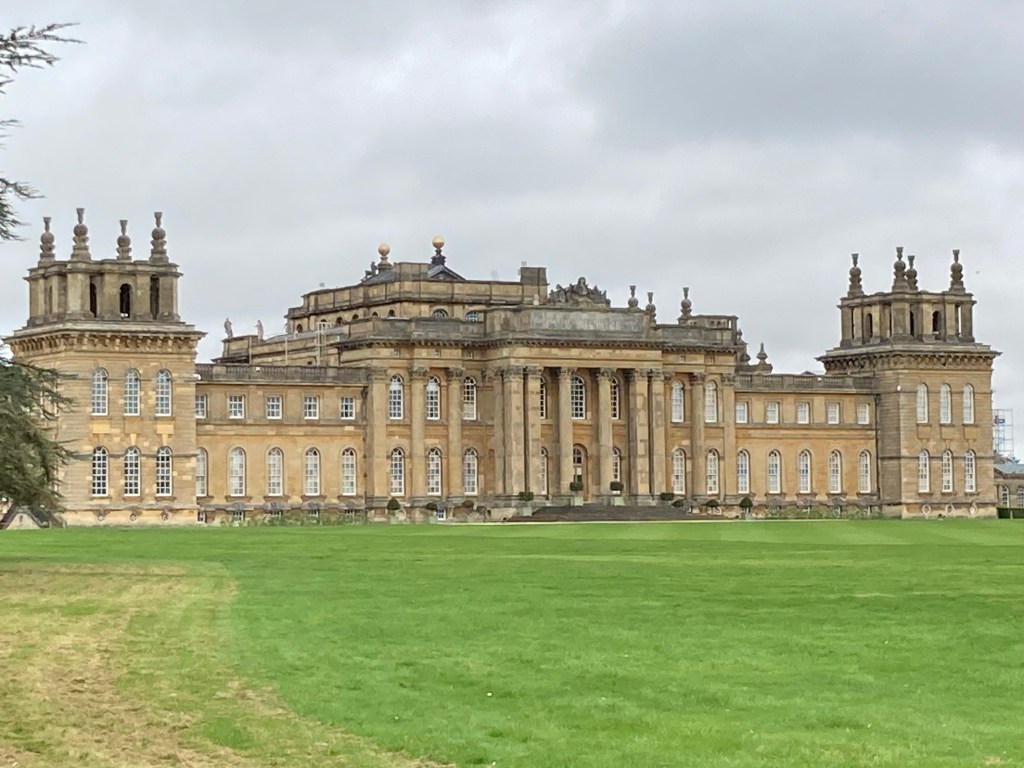
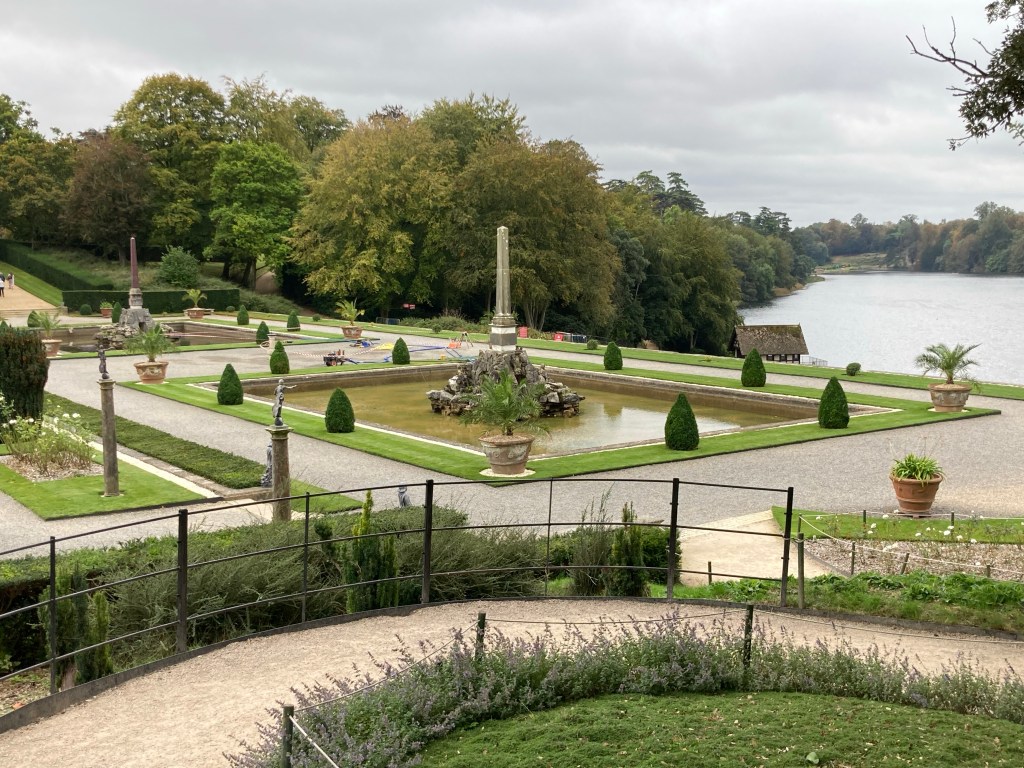
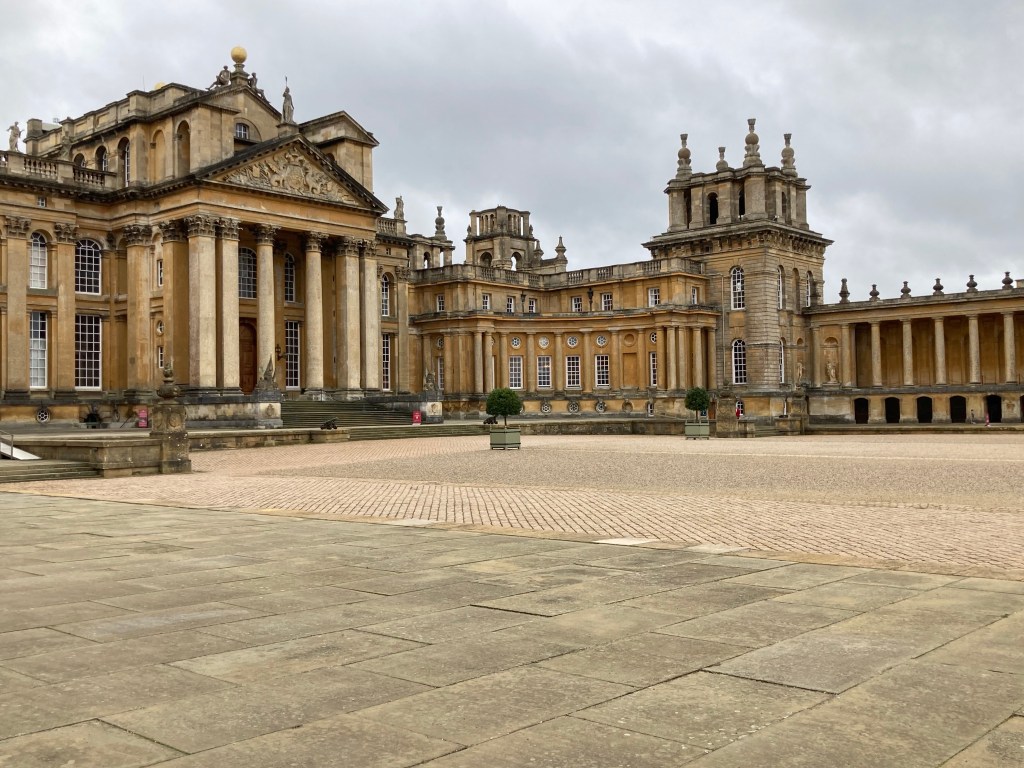
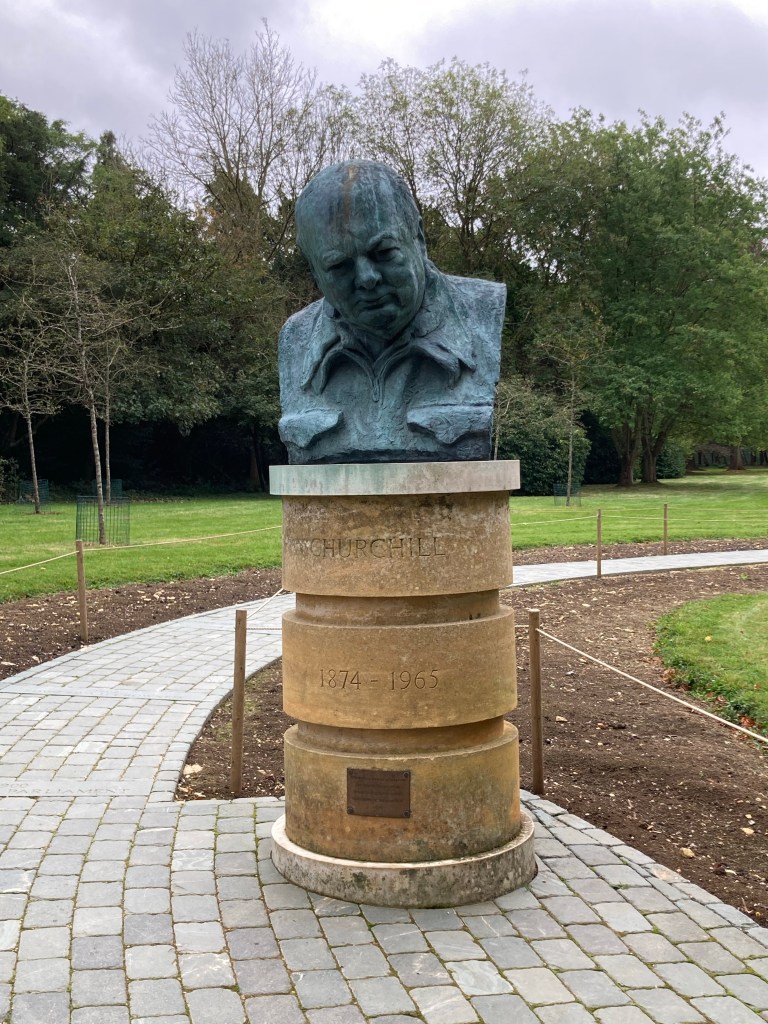
    Blenheim Palace is the seat for generations of Dukes of Marlborough and is the only non-royal palace in the country. It was a gift from Queen Anne to John Churchill, first Duke of Marlborough, for his military triumphs against the French and Bavarians in the Battle of Blenheim. The estate is 2,224 acres of lush formal gardens,, gorgeous lake views, vast lawns with amazing vistas, and commemorative walks honoring Winston Churchill who was born here.

    The palace opened later on its fall schedule, so we spent the first 1 1/2 hours touring lovely gardens. When the palace opened, the audio tour was very informative about history and décor of the gorgeous palace.

    Each room competed with the previous one in tapestry and gilding. Its extravagance reminded us of Biltmore House which makes perfect sense since Consuelo Vanderbilt married the 9th Duke of Marlborough and redecorated much of the palace with Vanderbilt money. Shades of Downton Abbey, rich American heiress marries into British society and brings her fortune.

    We had packed a picnic lunch from our bountiful breakfast basket at Van Brugh and ate it while overlooking the terraced back lawn leading to the lake. Next, we spent time in the Winston Churchill exhibit which was filled with personal items, his writings, and photos about his life.

    We learned many interesting things about him that we never knew. He was a poor student. He worked as a journalist. And Winston was held as a prisoner of war during the Boer War then gained fame with a daring escape. He slept in the woods and hid in caves while a massive search pursued him. Somehow, he covered 300 miles to reach safety and returned home a national hero—the start of his rise in politics.

    We also found it interesting that he proposed to three women unsuccessfully before Clementine accepted his proposal at Blenheim Palace. What a way to impress a gal!  Although it was never Churchill’s home, he often visited there finding peace and refuge. Both Winston and Clemmie are buried nearby at St. Martin’s Church in Bladon where they worshipped when visiting the palace.

    We had walked about for hours and caught the bus back to the Van Brugh. I “hit a wall” and really, really needed rest. I napped while Jim explored Oxford on his own for a couple of hours. First stop was a small coffee shop for a cappuccino with intense people watching. He hoped he might visit the very posh Oxford Union Club, home to famous debates and lectures, to see the library. Unfortunately, he was only allowed in the Member’s Bar. He found several colleges during his stroll, but they were also closed to visitors. An enormous round building, the Radcliffe Camera, attracted his attention, but it too was closed. On his way back to Van Brugh Hotel, he passed the original Oxford Bodleian Library, closed. Despite not being allowed in anywhere, his personal stroll served as an excellent preview for the tour we booked for tomorrow morning. He was primed with questions.

    Feeling much better, we met Steve and Becky over Thai dinner with time for catching up and discussing tumultuous world politics, both past and current, as we often do. One more wonderful day in this fantastic trip.

    Day 3 Steve Runs Errands

    While Becky stayed at the hotel for a day of rest and recovery, Steve did errands. Two heavy bags of laundry were dropped off on Day 2 to be picked up today after 11:00.  We needed supplies from the drugstore, a haircut, and some ££££.   With several stops around town, I decided to get a day-pass for £4.50 rather than £2 per trip.  

    The first bus ride was to city Centre for drugstore, banking, and haircut. I tried to take the bus to the hotel, but after 20 minutes waiting, I just walked. The tardy bus passed me just as I arrived at the hotel.

    I had the Pitt Rivers Museum on the schedule for the afternoon, so took a bus a mile North of City Centre for a two-hour exploration. Johnson Cleaners was just a few blocks away, so I walked over to get the laundry. The return bus let me off close to the Oxford Tours where I paid $25 per person with the assurance that the group size was limited to 19 and that we would be entering Trinity College. I explained that I did not want to be in a tour of 50 people walking at 10 miles an hour around the streets which had been our experience on a previous Oxford tour. The final bus ride carried me and the laundry back to the hotel where Becky had spent the day reading and resting.

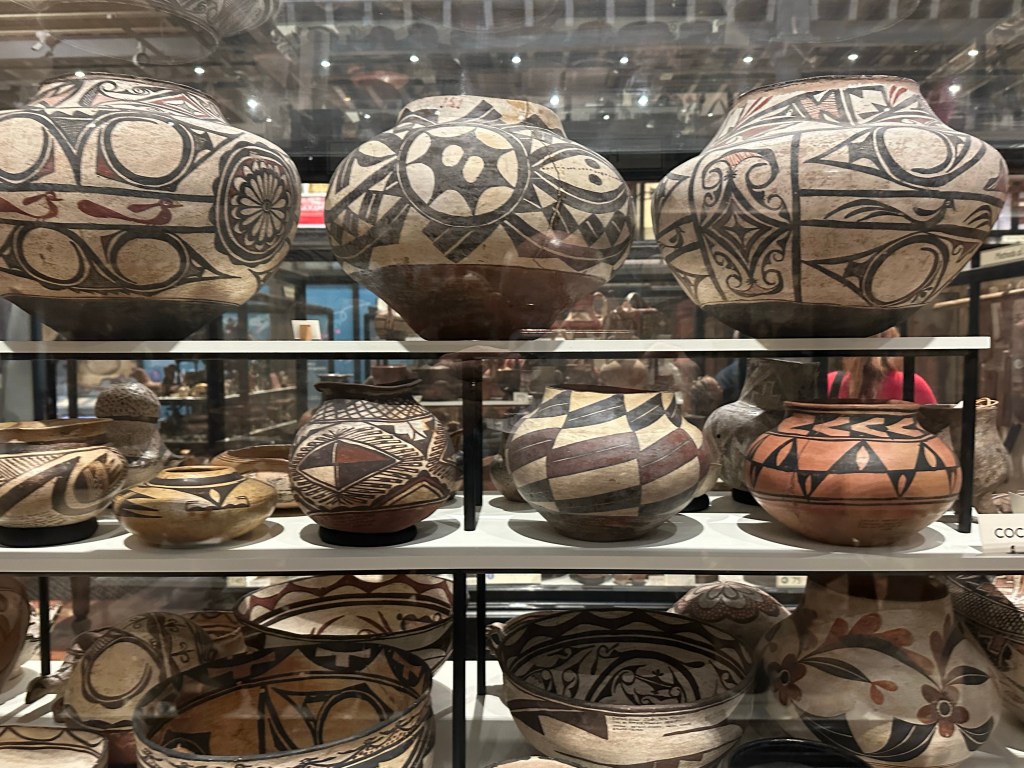
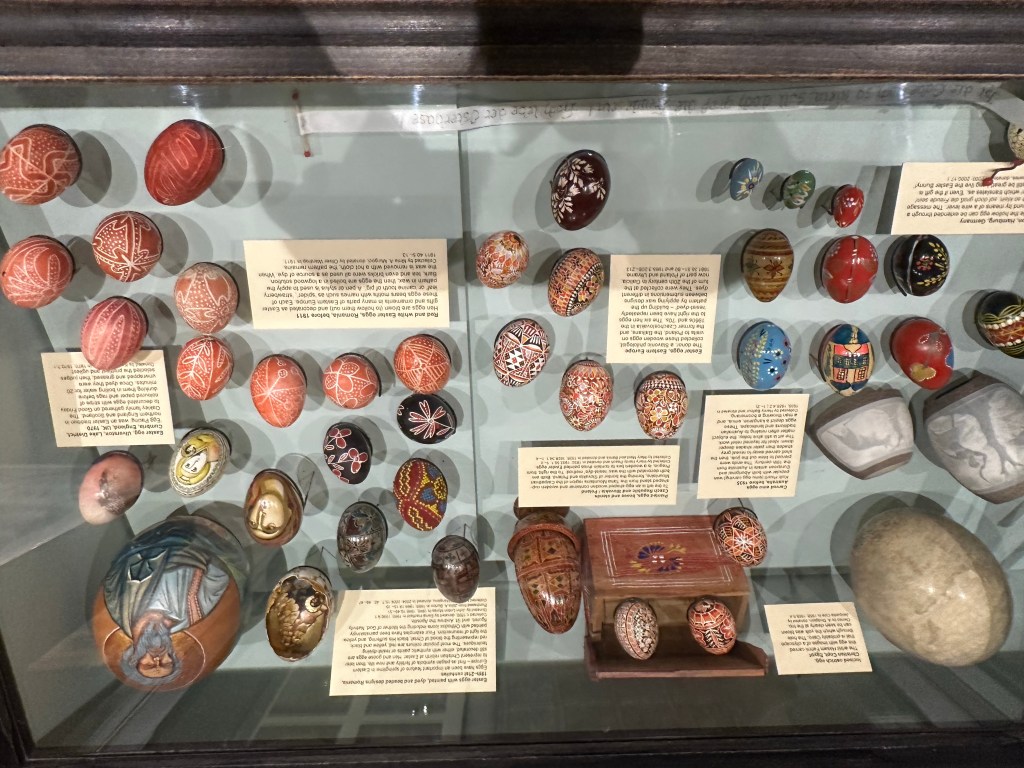
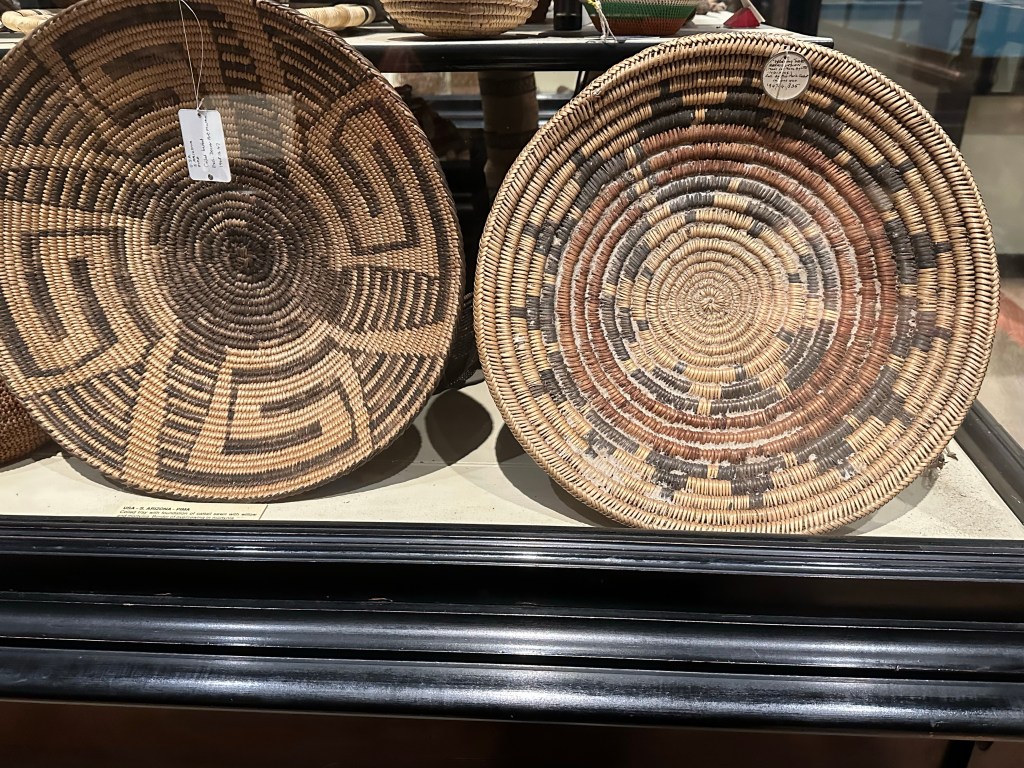
    The two hours I spent in the Pitt Rivers Museum were overwhelming. Organized by themes such as Masks, Textiles, Pottery, Jewelry, etc., the extensive collection of each theme was displayed in immense climate-controlled cases which made photography difficult. The guide told me that every object in the museum was a piece of art which illuminated the cultures represented.

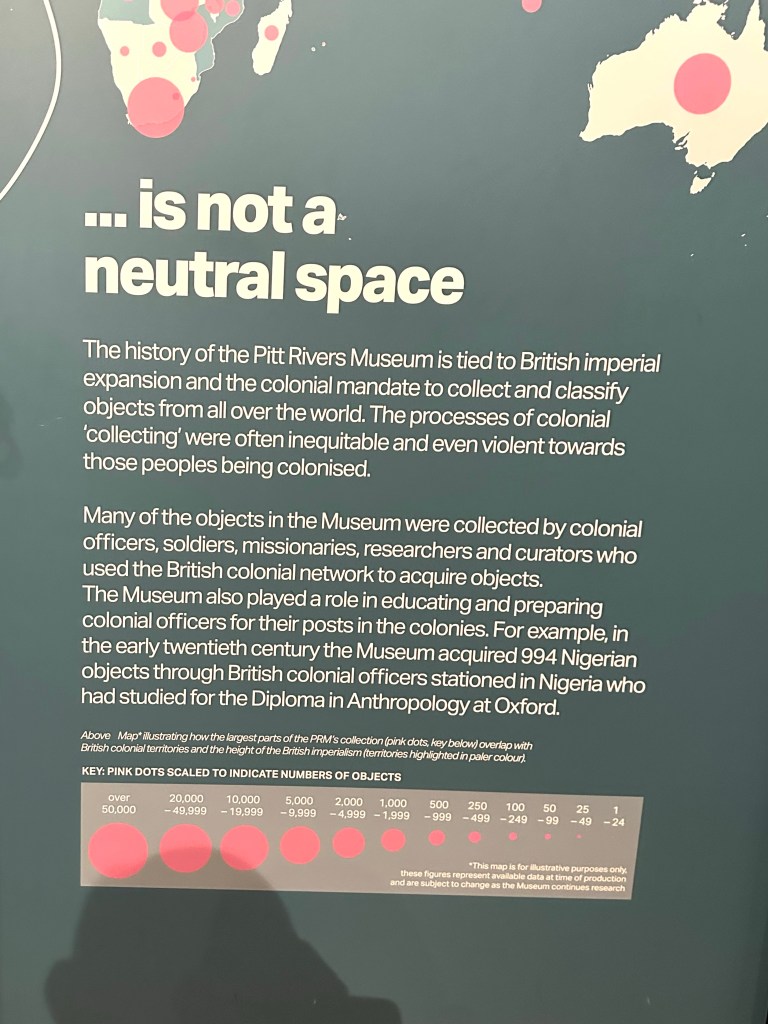
    Among the many displays was one that spoked the rapacious nature of collecting during colonization and the Museum’s efforts to repatriate artifacts to their rightful homes. This was the third museum we visited that reflected on the sad history of colonization, cultural appropriation, and the slave trade.

    I also passed by two colleges on my walk to and from Pitt Rivers Museum. St. Andrews College is across the street from the bus stop.

    St. Andrew College

    Keble College is one of the larger colleges housed in a huge red and black patterned brick building. It is located near the anthropology and archeology museums and other science buildings so attracts many students in those fields.

    Keble College

    Day 4 Oxford University Tour and Ashmolean Museum

    Lizzie, our University Tour guide, was totally engaging with facts and anecdotes about Oxford University history and colleges. She explained the organization of the University with 39 residential colleges. Students in each college may enroll in any of the “majors” at the university although some colleges may attract certain majors. The curriculum is classic in subject matter and deep in content with three 8-week terms of intensive study, lectures, and small group tutoring.

    Trinity College, only available to the public via paid tour, is spectacular with a several gardens and many historic buildings. The gardens are huge, the chapel is magnificent, the buildings are ancient, and the graduates are outstanding.

    Smaller Balliol College which we visited earlier is next door to Trinity College; the two are great rivals in rowing and especially in annual turtle racing. Turtles are placed in a circle and allowed to roam until one turtle cross the circumference line. Balliol won the turtle bragging rights for many years with their turtle, which somehow disappeared after winning many races.

    Balliol students were sure that Trinity students had been the miscreants and dug up the Trinity lawn looking for evidence not found. The colleges also share a wall over which students pitch loud, raunchy, but literate insults at each other. Such is the life of Oxford students at play.

    The rest of the tour concentrated on buildings in the Central Campus where Jim had wandered: the Sheldonian Theatre, the original University Hall classroom building; the old Bodleian library having 4 subterranean levels with connecting tunnels; and the distinctively round Radcliffe Camera. (Latin meaning for camera is round space or round room.)

    Lizzie said one of her most frequent questions was whether the Radcliffe Camera (built in 1750) was named for Daniel Radcliffe AKA Harry Potter.

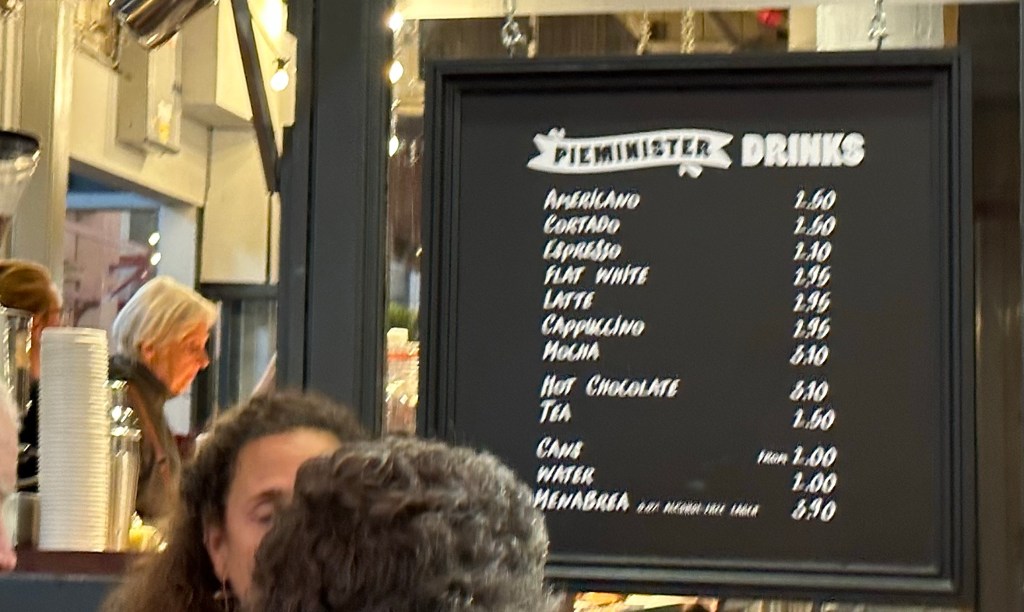
    We ended the tour near the Covered Market which covers most of a block with stalls selling food, clothes, gifts, nick-nacks, and probably some paddy-whacks. We ate lunch at tables. Becky and I sampled the wares at Pieminister.

    I’m late, I’m late said the March Hare

    The March Hare hangs high above the Market reminding us that it was time to head to the Ashmolean Museum.

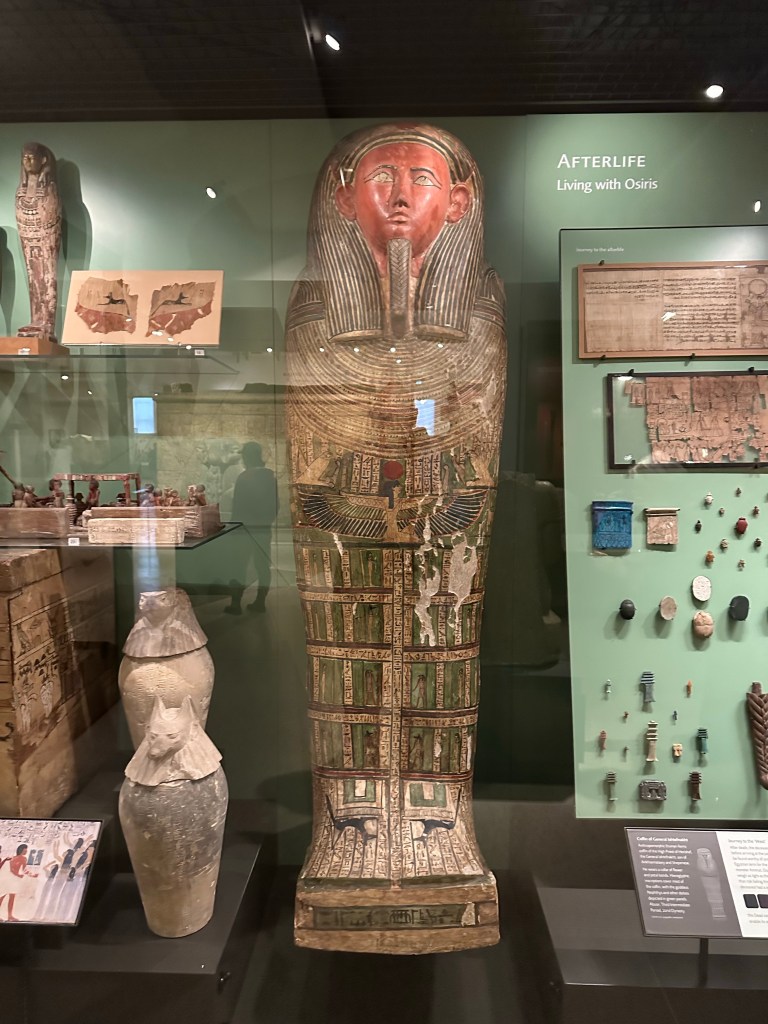
    The museum contains many archaeological artifacts from Egypt, Rome, Greece, and the Middle East which were plundered during the great acquisition phase of colonization of the world by Britain.

    It also contains a wide-ranging art museum and a special exhibit on Victorian Fashion.

    Impressionistic and post-impressionist painting in Ashmolean Museum

    The common view of Victorian Fashion is influenced by pictures of Queen Victoria who wore black mourning clothes for 40 years after Albert died.

    Actually, the Victorian upper class wore very colorful clothes made possible by importation of natural dies from around the globe and technological advances that enabled synthetic dyes. The Museum holds too much to seen in two or three hours. The Robsons spent time with the extensive exhibit about money and its history—an interesting exhibit in light of our contactless payment world.

    Across the street stands the Randolph Hotel, famous as the drinking spot of Colin Dexter who wrote Inspector Morse. Apparently, the hoteliers are used to Morse looky-loos wandering about. They have a doorman to greet you and move you along because the bar is small and busy. Finding neither Colin nor Morse nor actor John Thaw (all of whom were legendary drinkers now deceased), we left in search of libations in another suitably tony pub, the Red Lion Inn.

    It was perfect for an afternoon drink and leisurely reflections about what we saw at the Museum and on University Tour.

    Peter had also suggested a particular Indian restaurant. Each of us remembered one clue about finding it: near where we talked to Peter, red sign, name starting with S. By piecing clues together from what each of us remembered, we located the small Indian restaurant up a narrow staircase across High Street from GUSTO. The food was delicious, perhaps we should have given Peter more credit. We walked back to the Van Brugh and took photos of our last night in Oxford.

    Day 5 Fare Thee Well, Oxford Town

    We saw and heard many things while in Oxford, knowing there was much more. Oxford is a treasure trove, and we were always looking for a new or unusual sight. Our time was over, but not our memories. We met this morning at the rail station ready for out last stop—London!


  • Episode 11 Land’s End: The Robson Report

    October 14th, 2023

    The Great British Traveling Show

    Day 1 Discovering Penzance

    We set out early this morning for the first of two trains to Penzance in Cornwall. A bus was pulling away just as we arrived at the train station. The train was cancelled and a “replacement bus” took passengers to Bristol for their next train. Replacement buses are needed when problems with the tracks, equipment, or crew occur. Missing the bus by just 1 minute (again!) meant waiting another 50 min for the next “replacement bus” (again!).

    While waiting we had a lengthy conversation with three train station gentlemen about the state of the world. One of the highlights of our trip has been talking to lots of British people about a whole range of topics. Everyone is eager to talk and share ideas. Once again it reminds us how similar we all are in this world.

    Although we allowed ample time before our next train, our travel company had been unable to make seat reservations for us.  When the train arrived a huge crowd of people piled on; I quickly grabbed seats while Jim stowed luggage.  Nobody mentioned that only one car had unreserved seats.  Things were chaotic as folks were equally confused and desperately seeking seats.

    Accidentally, I sat down in reserved seats not noticing the red light above them. We stayed put and watched as others were ousted by those holding reservations. The people who reserved our seats never appeared. Otherwise, we would have been standing. We enjoyed the lovely seats in the reserved section for the entire 4-hour ride!

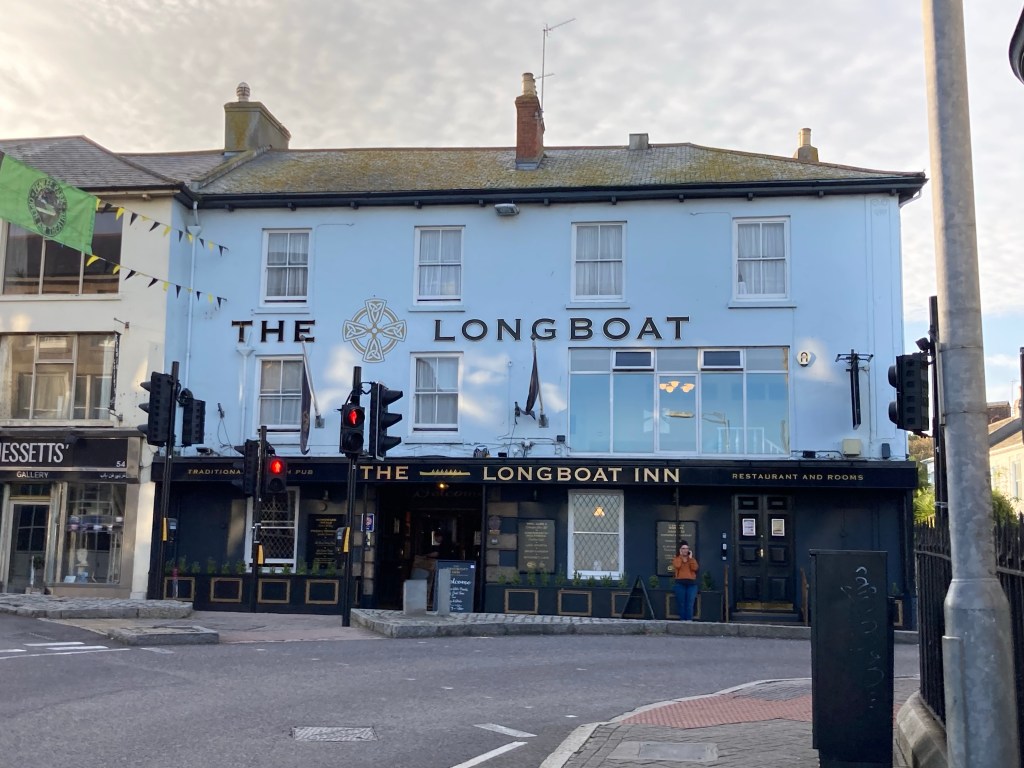
    We arrived in Penzance about 3:00 and walked from the train station across the street to our quaint pub hotel, the Longboat.

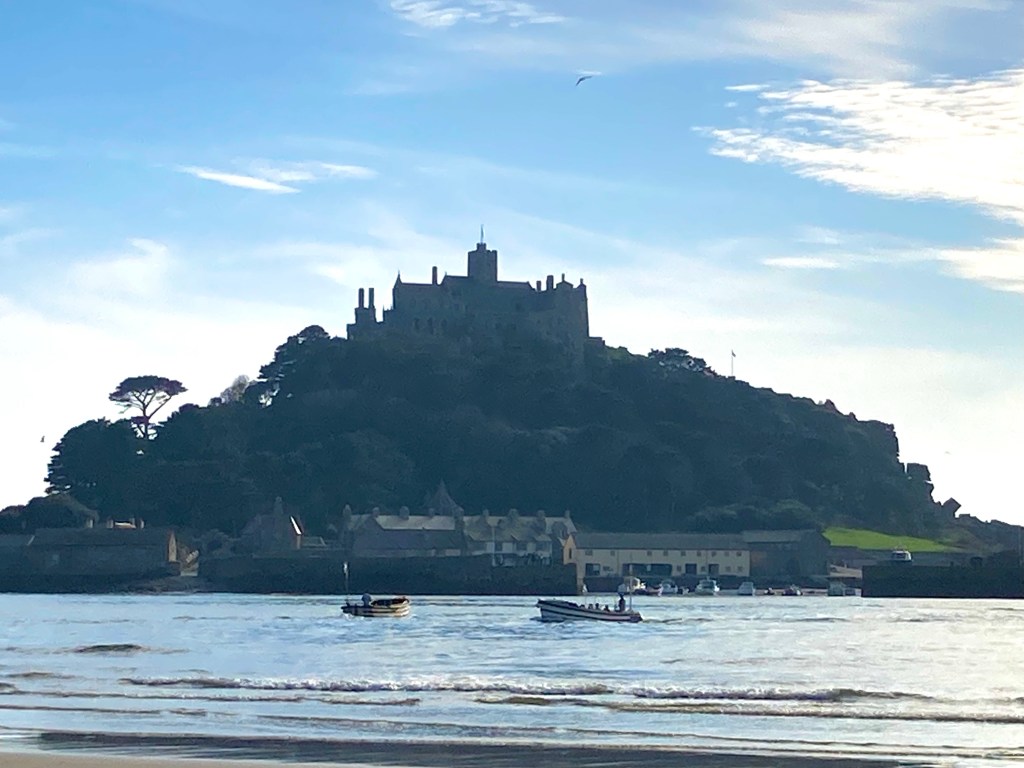
    A bus took us on our first outing to St. Michael’s Mount, a castle on a tidal island dating from 1135, accessible only across a cobblestone path and only if the tide is low.

    Since the tide was coming in, we strolled along the very busy beach, took photos of the castle, and walked through the seaside town of Marazion. Most stores were closed on Sunday, but stretching our legs was pleasant after a long travel day.

    Penzance doesn’t have many restaurants with even fewer open for Sunday dinner. Our pub was fully booked so Jim went searching. Things were looking dim until he discovered a charming restaurant on a side street and booked us for 7:00. The Cork and Fork was outstanding—our first really fine dining meal since coming to Great Britain.

    The menu featured wonderful Cornish wine (who knew they produced such fine wines?), amazing starters and main dishes, and affogato for dessert. Topping that, we were enticed to try Pedro Ximenez sherry (said to taste exactly like sticky toffee pudding) and it was wonderful ending to the night. A quiet, slow-paced meal was just what we needed in this lovely Cornish village.

    Day 2 Fog or Sun on the Coastal Trail

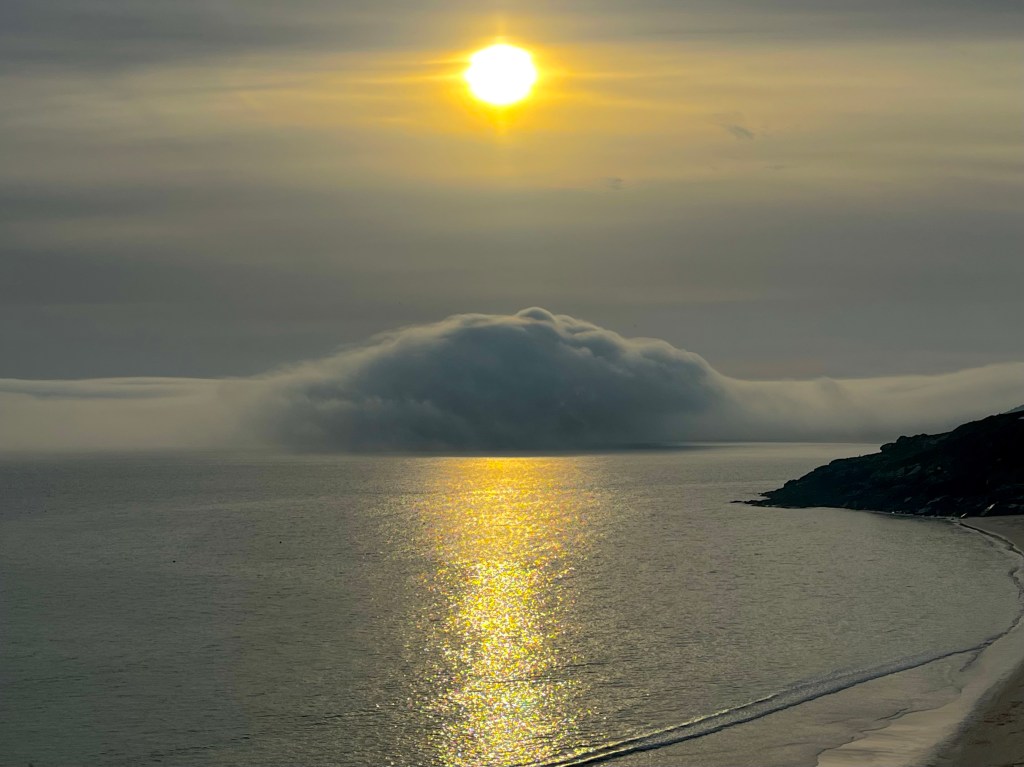
    Hiking along the Coastal Trail to see amazing Cornwall scenery was a major goal for the long trip to Land’s End. We hoped for an early start, but the entire town was enveloped in the heaviest fog locals had seen in recent memory. Thinking this might not be the best time for hiking, we opted for bus ride to St. Ives. St. Ives is an historic town first established in the 5th century by the Irish Saint Ives. The fog had not followed us up this far along the coast, so it was a perfect morning to stroll through town.

    Famed for its beaches and its artist colony, it has a charming harbor and lovely old cottages and shops.

    For centuries, St. Ives was a very busy center of commercial fishing and suffered when that ended in 1924. The rail line entered the town in 1877 which began its attraction to artists and the development of a now famous artist colony.

    We purchased famous Cornish steak and Stilton pasties for lunch later in the day and caught a bus back to Penzance where the fog was still heavy!

    We stopped in our room for rest before catching a bus to Sennen Cove. This ride took us through the countryside on many one-lane roads with high hedges on either side. When the bus would meet a car or two approaching us, we waited while the cars backed-up to a lay-by so the bus could pass. It was quite the game of chicken with the bus winning every time.

    One time a gentleman in a car was very stubborn about moving and a shouting match ensued between him and the bus driver. Another time the bus crashed into an embankment in an effort to pass cars, and tree branches routinely smashed against the sides & top of our bus. The ride alone was quite the adventure!

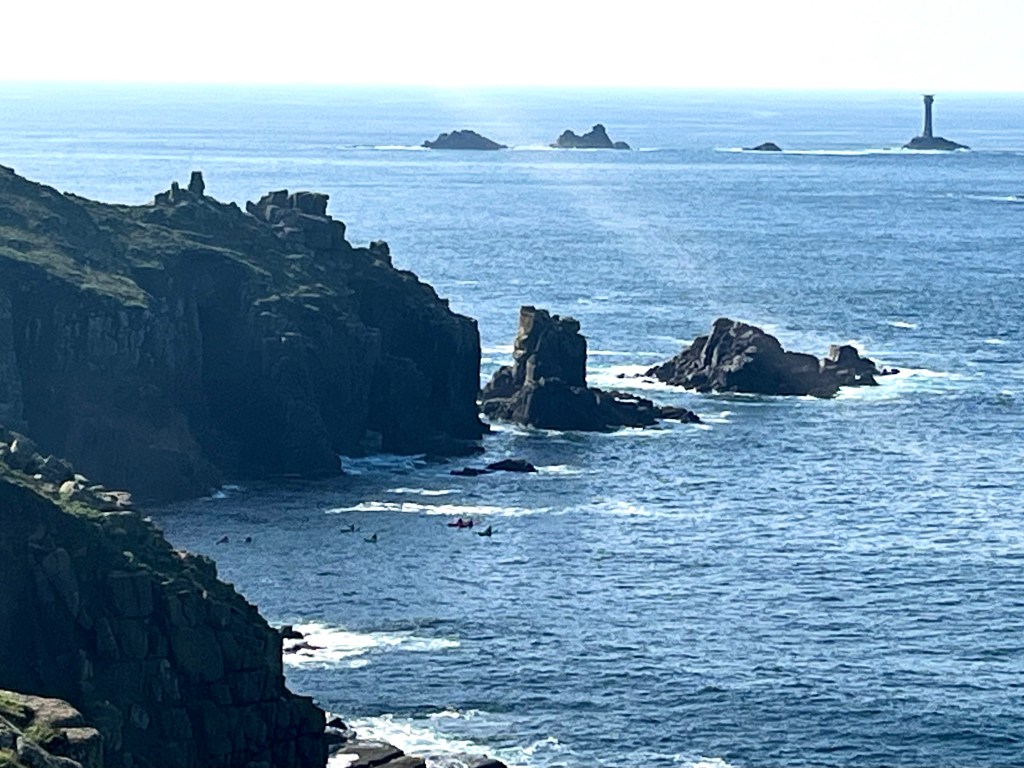
    The fog never reached Sennen Cove so we had a beautiful summer-like afternoon with lovely sandy beaches hosting a large “sea surfing” school. Several wet-suited surfers were sitting on their boards and hoping, hoping, hoping. But there wasn’t a wave in sight.

    Finding the trail markers for the Coastal Trail, we set off for a 1.5 mil walk from Sennen Cove to Land’s End.

    This entire trail extends for 630 miles all along the Cornish coast, is clearly marked, and well-maintained along a mostly flat path with fantastic views.

    This was exactly how Jim had imagined it would be. We wished we could have hiked further along the trail, but we had to stay near bus routes which are less frequent this time of year in Cornwall.

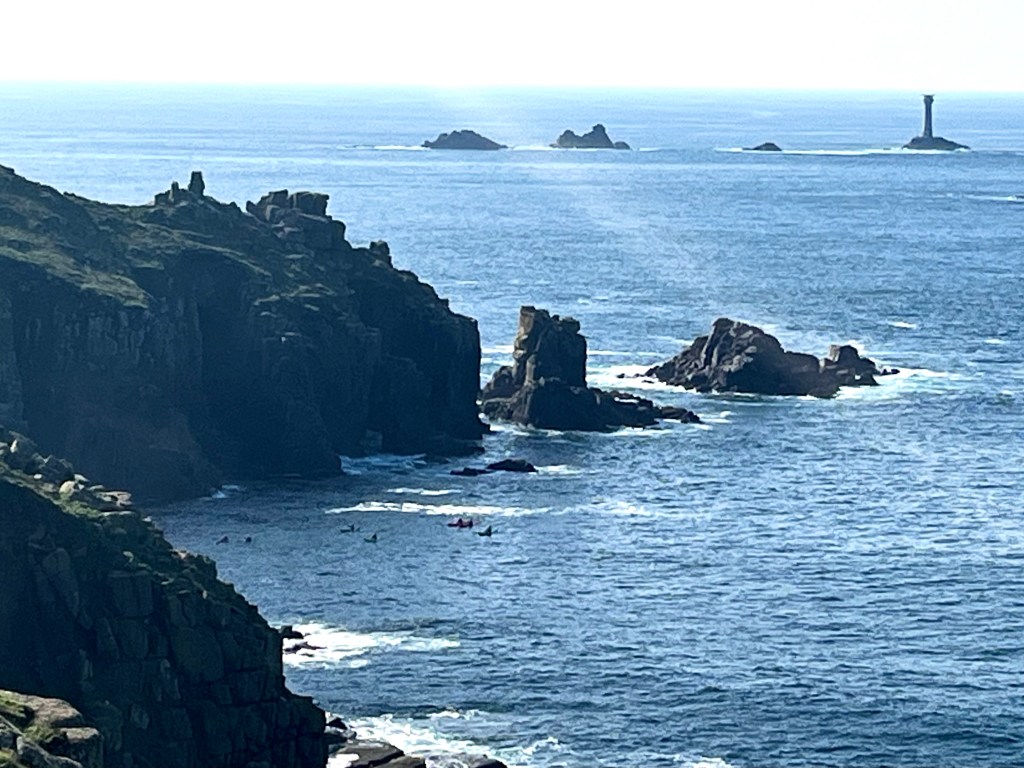
    Land’s End is the westernmost end of England and has been a tourist destination for over 300 years. The First and Last Inn was built in the 1800’s as a resting stop for visitors and their horses when Land’s End could only be reached by foot or horseback.

    The earliest part of this house was damaged by the Luftwaffe when a plane returning from a raid on Cardiff jettisoned its remaining bombs, killing or injuring 53 fishermen. In the build-up to D-Day, American troops were billeted there leaving the hotel in a bad state. After the war the hotel was restored and the area turned back into a tourist area with a handful of small shops.

    We enjoyed a refreshing lager on the hotel terrace overlooking the ocean. We felt so lucky to have seen Cornwall on such a gorgeous day. Being sure to catch the very last bus of the day back to Penzance, we sat at the stop in Land’s End for about 30 minutes. Again, we had a thrilling bus ride back through the narrow one-way country roads. If we had ever entertained the idea of driving around here, this ride quashed those thoughts.

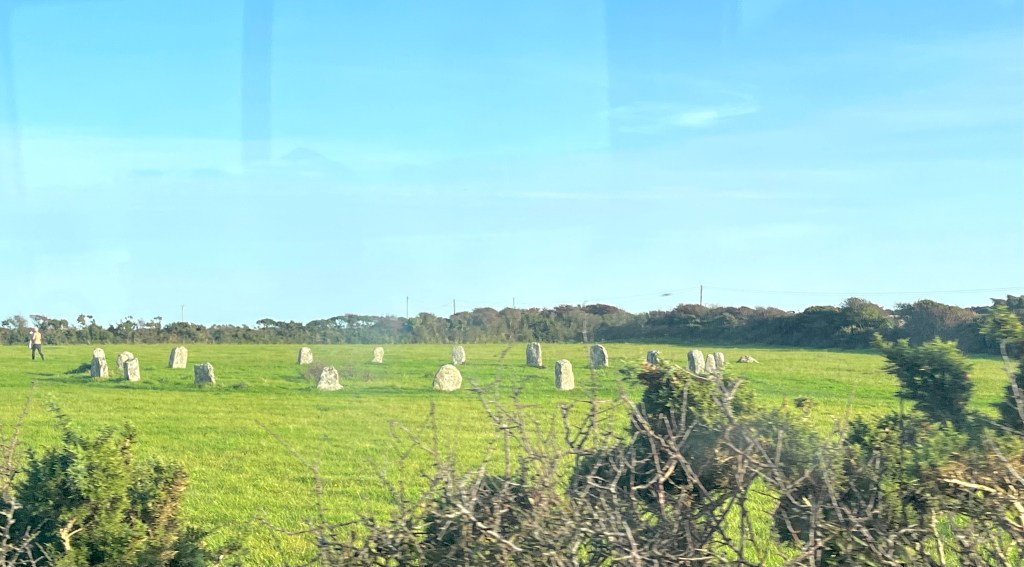
    Merry Maidens stone circle in Cornwall

    We saw a stone circle from the bus and managed to photograph it at 40 MPH. The prehistoric Merry Maidens Stone Circle is the most complete and undisturbed Neolithic site in Cornwall.

    To end our stay in Penzance we purchased kebabs from a local shop where we chatted with the owner the day before. The owner was delighted to have American customers return for take-away and expressed how grateful he and his Kurdish countrymen were to the United States for supporting them. He plied us with extras to accompany the lamb and chicken kabobs we carried back to the hotel. With a few more lagers, we had a delightful supper in an upstairs lounge looking out over the town. Cornwall was delightful and we would happily return!

  • Episode 10 Glorious Bath, Inglorious Buses

    October 13th, 2023

    The Great British Traveling Show

    Travel to Bath: The Robson Report

    Great Britain has rail strikes frequently.  The first one did not affect us because we were not traveling that day. However, the second work stoppage was on the day we had train reservations to get to Bath; no trains were running in the country. We had been forewarned that this was going to happen, so Jim arranged for us to go there by bus.

    Not wanting to miss the 8:00 bus we left our pub lodgings in Moreton-in-Marsh before the Inn doors were unlocked at 7:15. Getting out of our room started by our climbing through a service entry with suitcases. This was only the first hurdle for travel this day.

    After coffee and muffins at a local coffee shop, we hurried on to the bus stop. Buses could be really busy due to the strike; we got there 30 minutes early standing a long time in the chill. A couple of other travelers joined us as the bus arrived. The driver opened the door to say “hi” and that he would be returning in about 10 minutes with a busload of school kids. Such fun! These were the same kids we rode with yesterday after school. He waved goodbye, but soon returned with a very crammed bus-though no peeing dogs this time.

    We arrived in the city of Cheltenham an hour later and waited in a warm coffee shop for 2 hours for the next bus. Reservations were required for this one; we were grateful we had seats because it was full of travelers inconvenienced by the train strike.

    Instead of the sunshine forecast for Bath, gray clouds and spitting rain seemed to have followed us from the north. We checked into our modern hotel in the center of Bath and then spent rest of the afternoon walking and planning tomorrow.

    Day 2 Two Tours of Bath

    Jim found bananas and pastries at Sainsbury’s for a lovely breakfast instead of paying £40 in the hotel. A corps of volunteers offers free walking tours of Bath twice a day. We joined the morning group and spent the next 2 1/2 hours learning all about the city and its history.

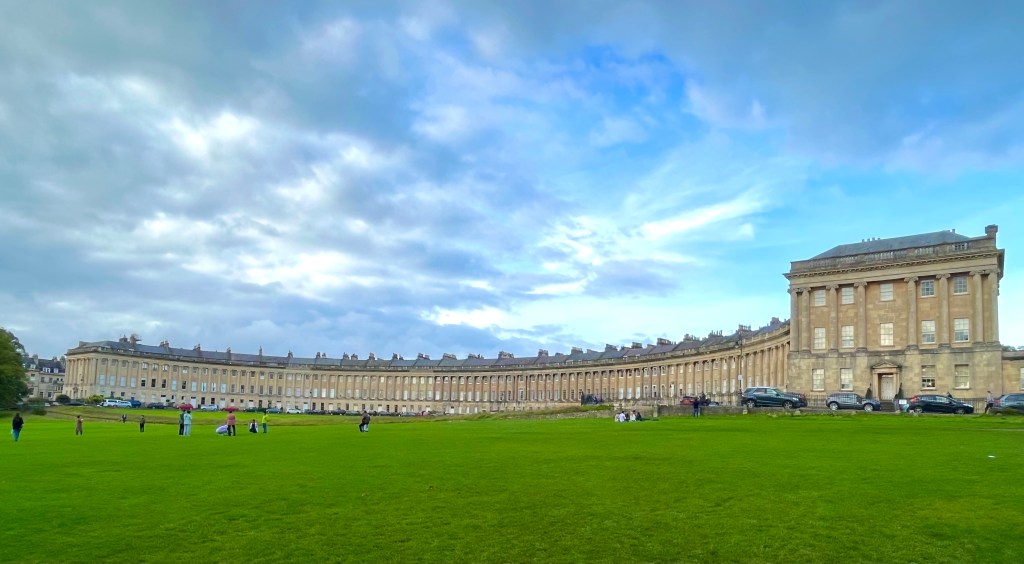
    Royal Crescent

    The guide was marvelous and gave one of the best tours we have ever taken. Our one disappointment was the closure of the elegant Assembly Hall where beautiful women and gallant men danced and courted in so many Jane Austen books and movies.

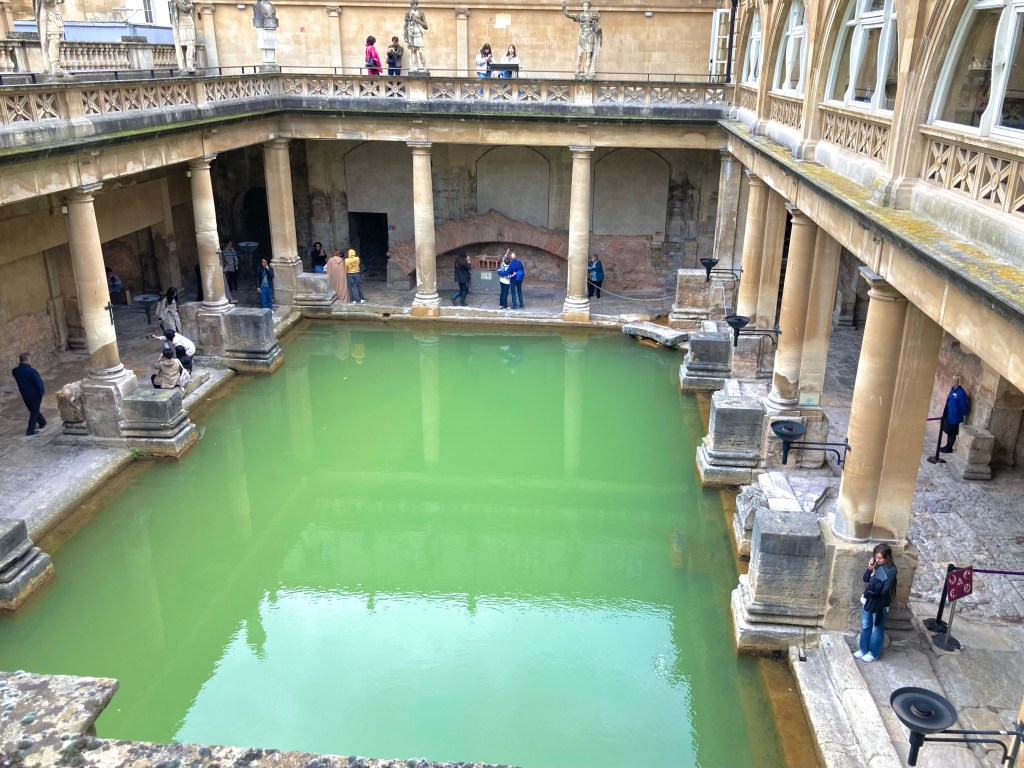
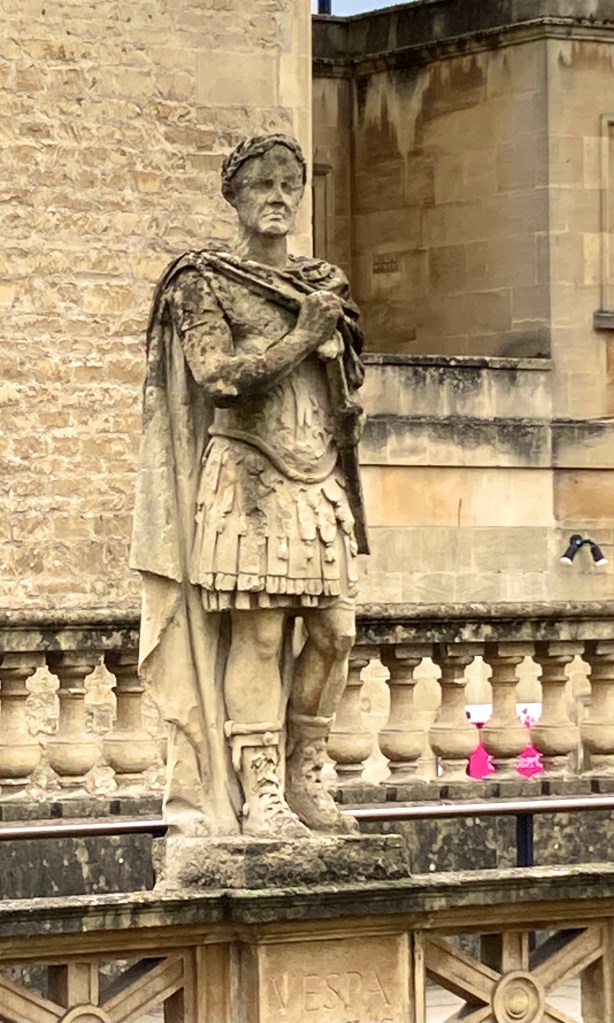
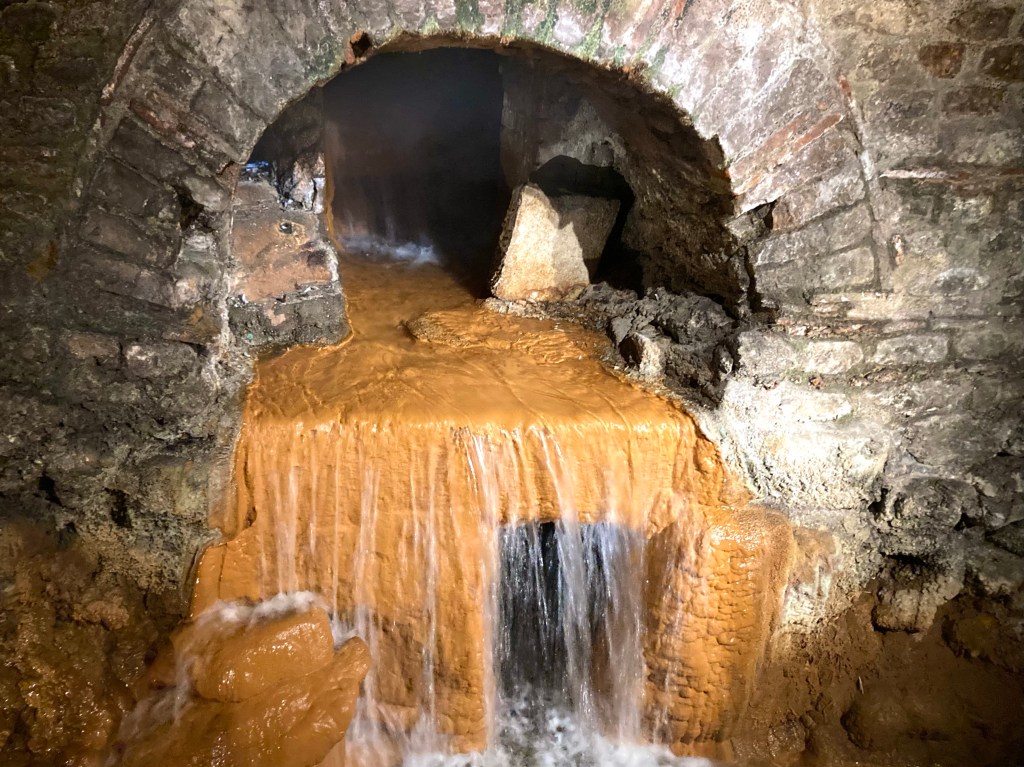
    As the first tour finished, we scurried for our 1:00 timed entry into the Roman Baths. A temple was built on this site between 60 and 70 CE so Romans in Britain could worship the goddess Sulis Minerva and bathe in the thermal springs—still flowing today.

    The baths were built for public bathing and the hot springs were believed to have healing powers so many sick people came for “the cure” in hopes of regaining their health.

    The original baths fell into ruin after the Romans left Britain in the 5th century CE. The area around the springs became the city Bath over many centuries. Much of the original bath has been excavated and the pools look now exactly how they were organized in Roman times.

    The museum has an excellent audio tour and we spent three hours there walking on the same stone walkways and stairs to see the very same pools. That was amazing! Finishing our tour, we tasted the same mineral waters that people for over 2,000 years have been drinking. Hot and full of minerals and far from thirst quenching, it is supposed to be healthy!

    With five hours and two tours under our belts, we felt the lack of food under them. We stopped for a “pasty,” a baked traditional Cornish shortcrust pastry typically filled with meat and vegetables. Our first one was surprisingly good.

    My theft-proof, unbreakable purse strap fell apart while we were in the Roman baths; we visited a charity resale shop to find a replacement. The first one we entered had the perfect bag—I am sure it was never used and I was delighted. Charity stores are everywhere in Great Britain and far nicer than the ones we have at home which tend to being much bigger and messier.

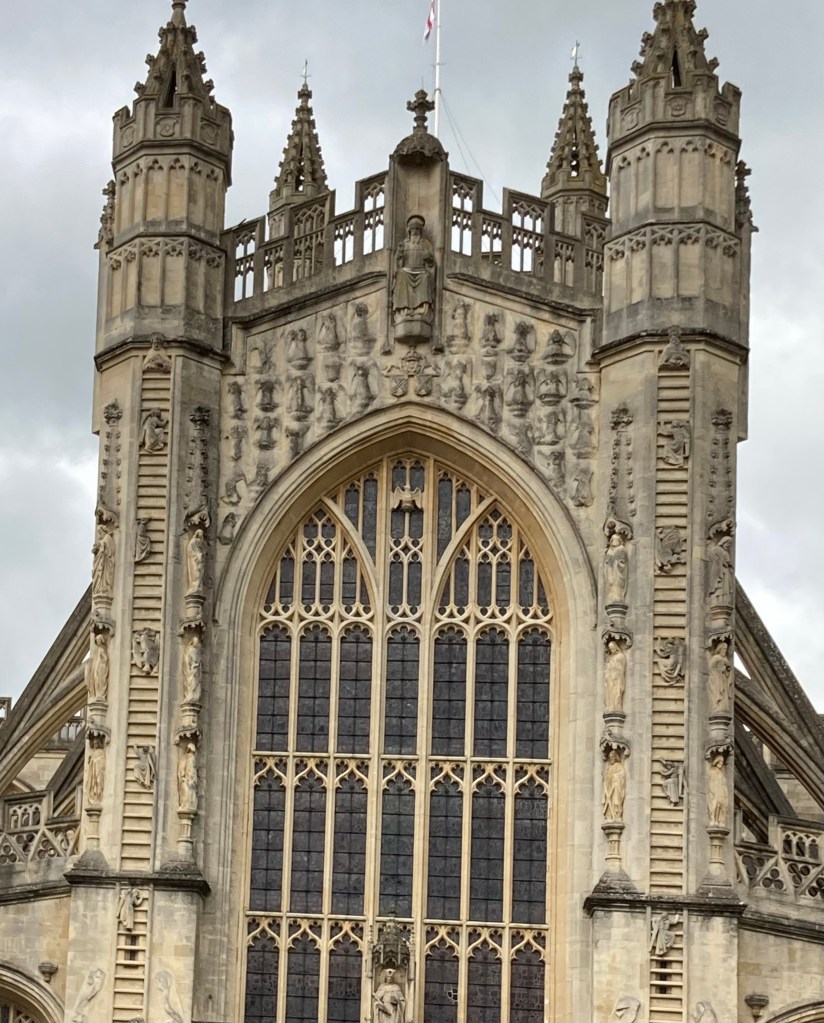
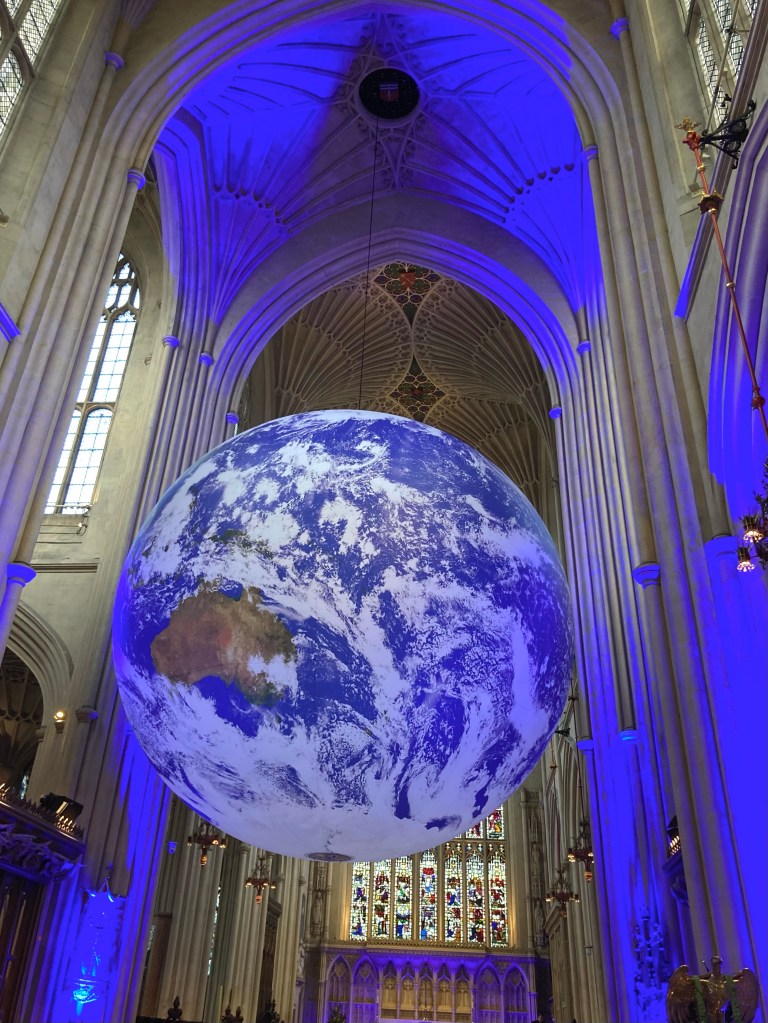
    Bath Abbey, completed in 1611, was open for Evensong. A huge blue balloon of the earth was suspended in front of the altar as part of a traveling display to other Anglican churches. The idea was to inspire congregations to do more to help protect God’s earth. Beautiful but a bit odd in the ancient setting.

    The boomy acoustics made it impossible to understand the minister. But choir and organ used the acoustics to create rich, fantastic music; evensongs are wonderful ways to end the day. A very full day ended with a brief rest and dinner at Yum Yum Thai restaurant before turning in for the night.

    Day 3 Stonehenge and Salisbury Cathedral

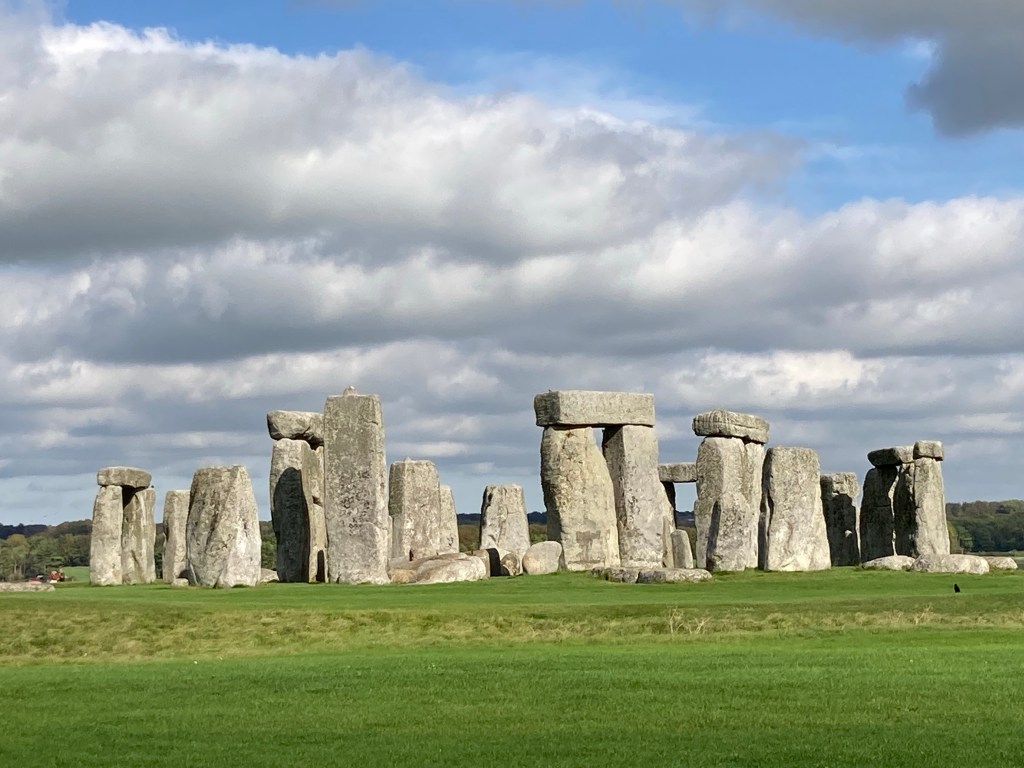
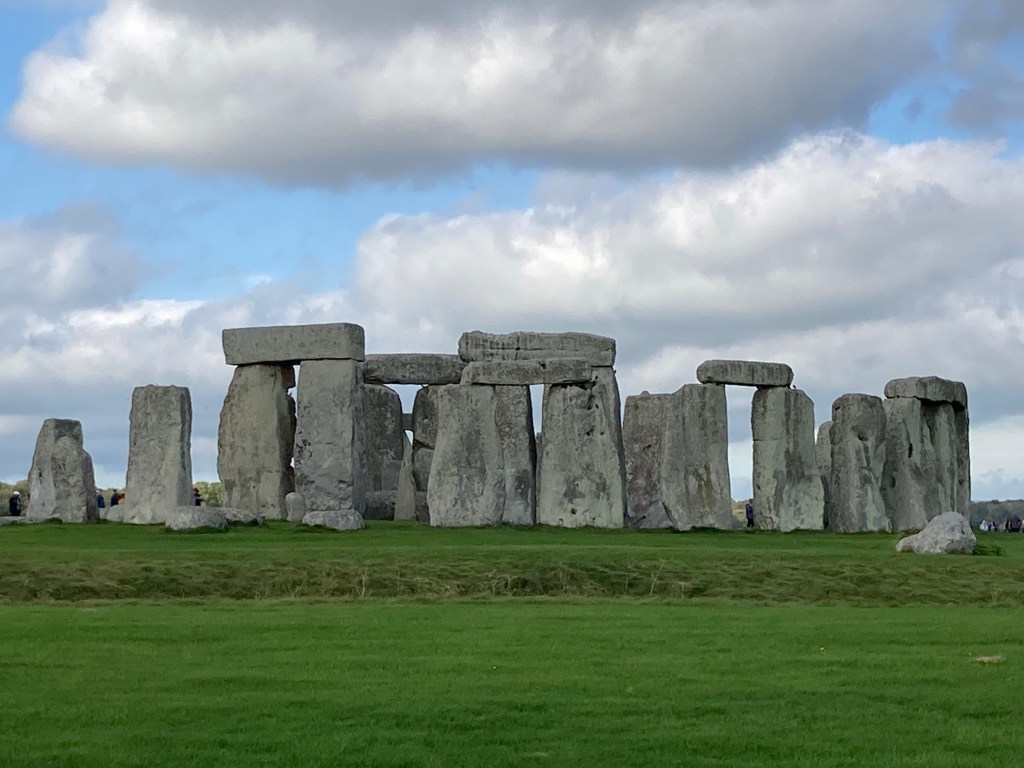
    Heading for Stonehenge, we walked to the station and caught an early train to Salisbury about an hour away from Bath. From there we jumped on a bus that took us to Stonehenge. Then another bus took us from the visitor center to the actual site, a mile down another road. It was a perfect day and not too terribly crowded.

    Stonehenge is a marvel of ancient engineering of course, but to us it seemed smaller than pictures of it. A guide suggested we visit the site first then return to the visitor center before more crowds arrived. We did that which was good and bad.

    We really should have gotten the audio guide at the visitor center first which provided background and insight as we walked around the circle. When we returned, we picked up our audio guide, toured the museum, and spent an hour listening to the guide. We had free time because we just missed the bus back to Salisbury.

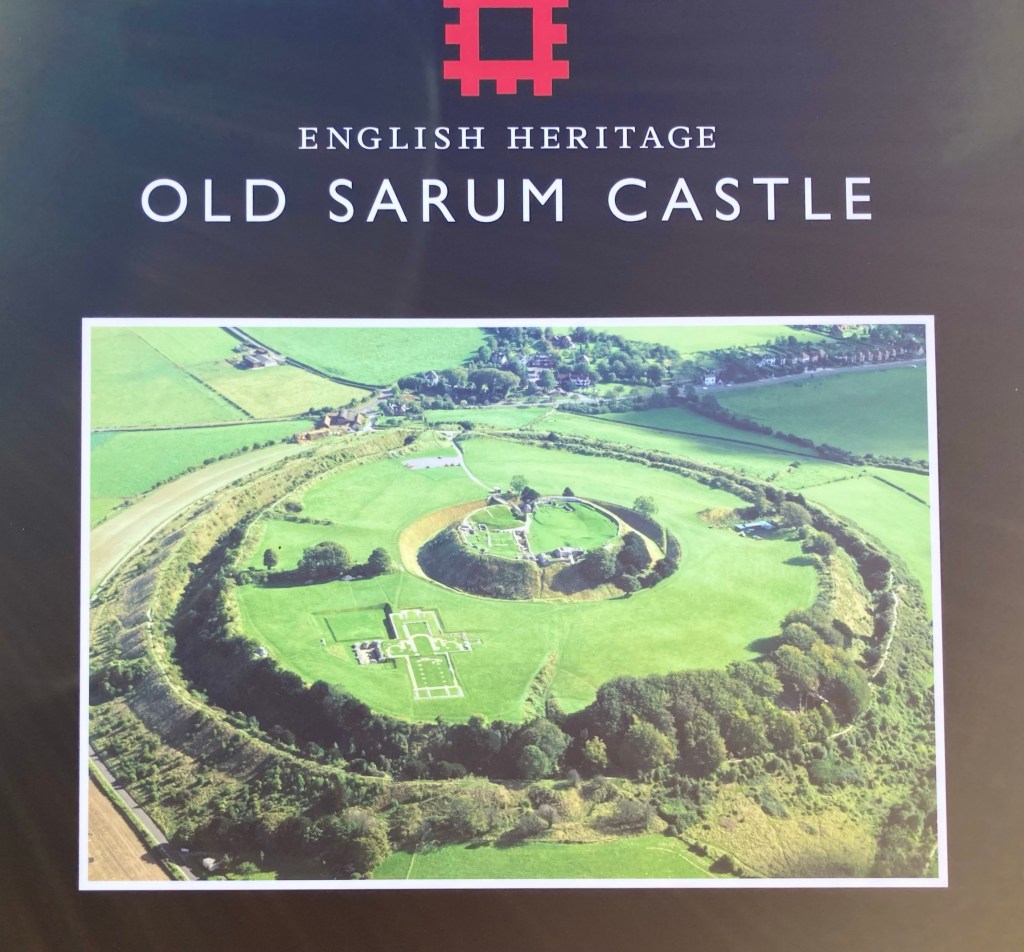
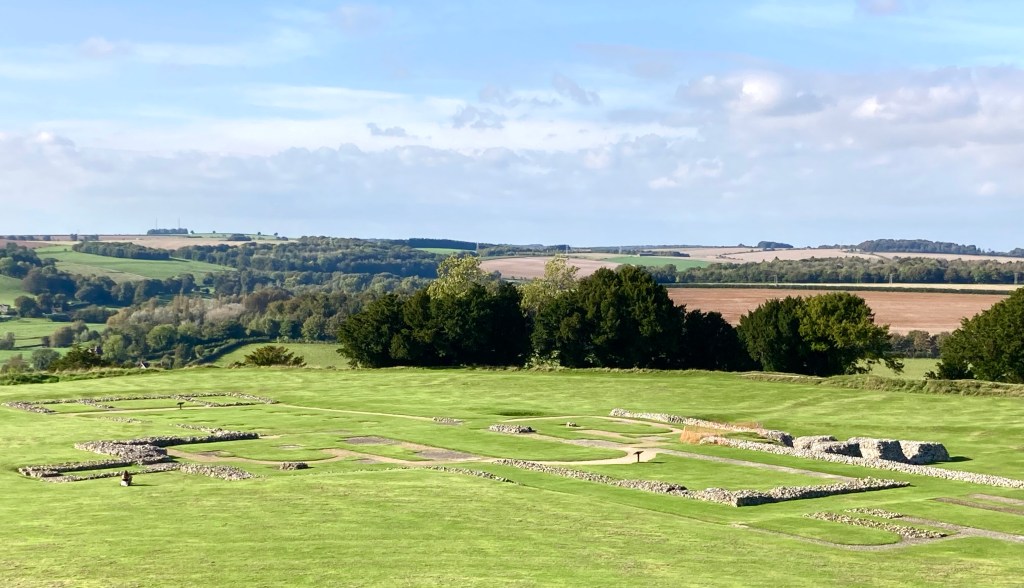
    Boarding the bus to Salisbury, we learned we could get off at Old Sarum, a ruined castle site and poke about there. It was the earliest settlement of what is now the city of Salisbury.

    Evidence of human life in this area dates back to 3,000 BCE. An Iron Age hill fort was built in 400 BCE at the intersection of two major trade roads and was continually occupied throughout all the succeeding centuries. King Henry the First built a royal palace there in the early 1100’s. and the ruins of it are clearly evident today. It sounded very worthy of a visit.

    Our driver told us that buses would come every 10 minutes so that when we were done hiking, we could easily hop on a bus back to Salisbury. A very long walk up a steep hill was lovely, but nothing too exciting. We were almost back to the road when two buses flew by. We waited for 30 minutes for the next one—not 10 minutes.

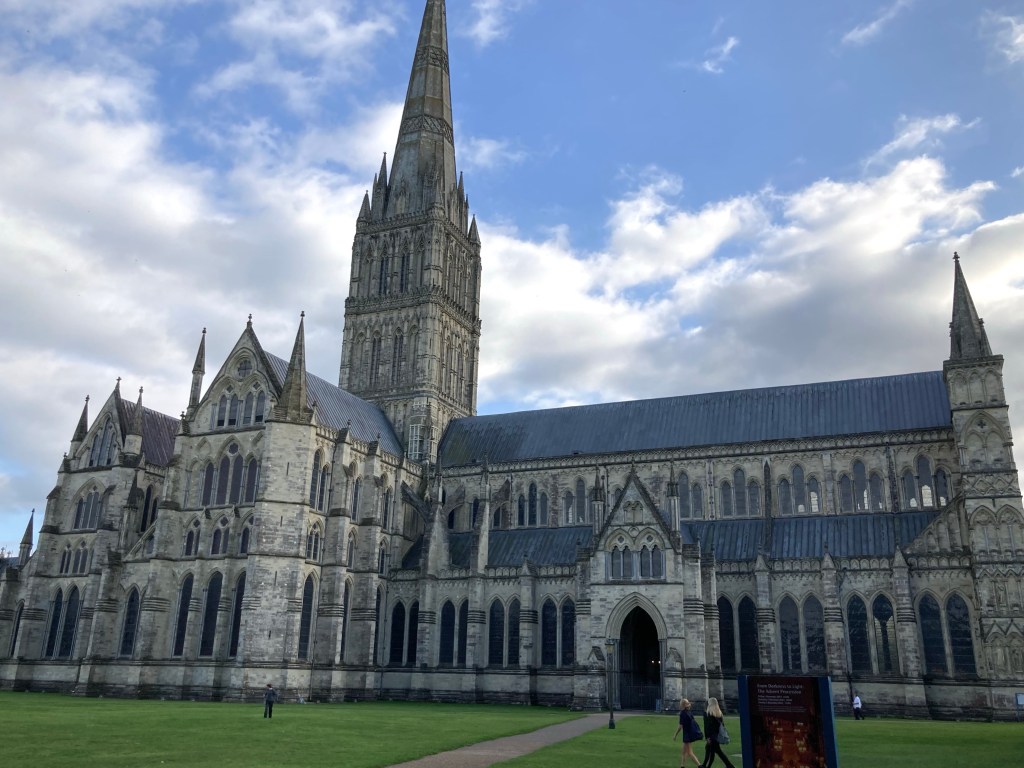
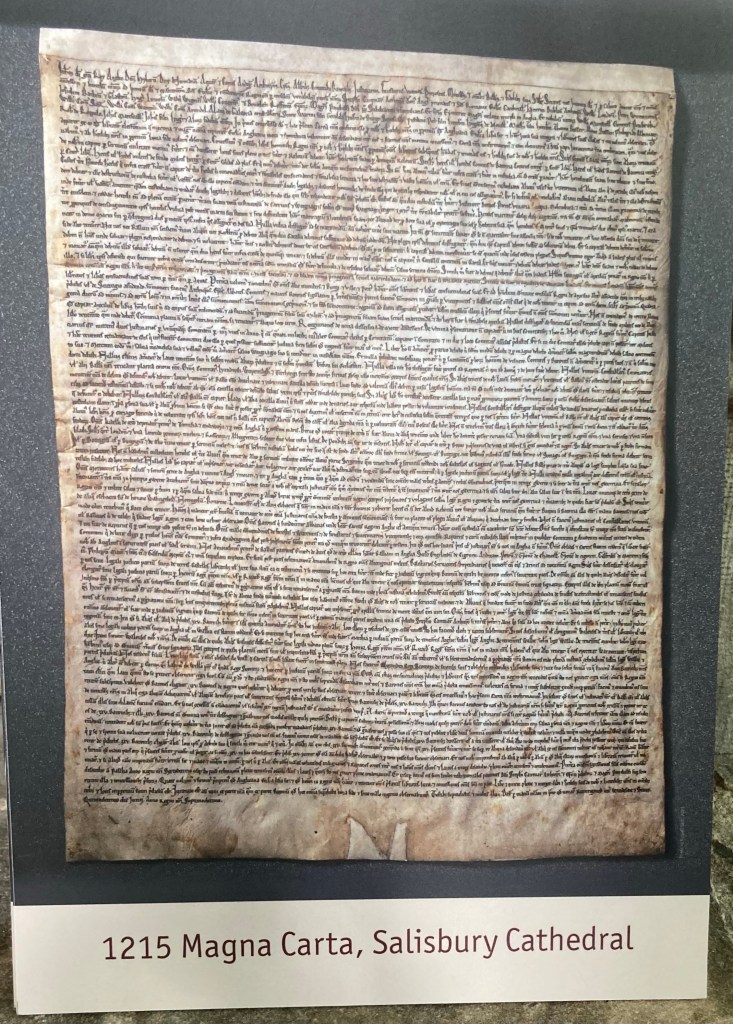
    Finally, we entered the city of Salisbury. Our second major goal of this day was to see Salisbury Cathedral. This cathedral has the highest spire in all of Great Britain and houses one of 4 original copies of the Magna Carta.

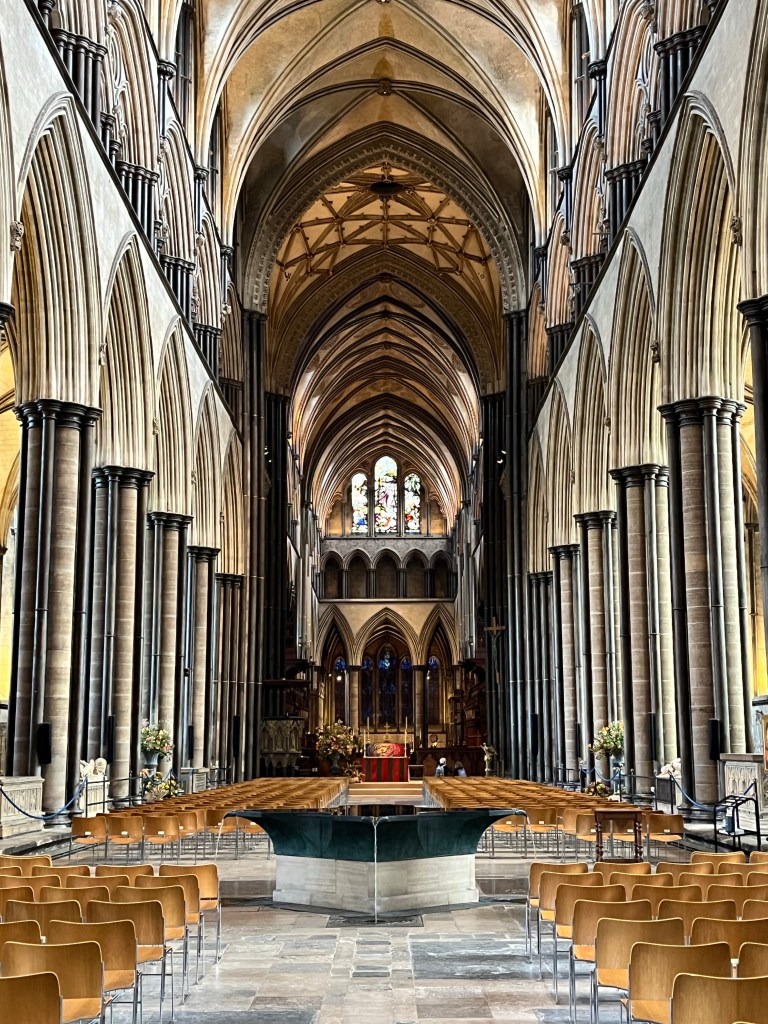
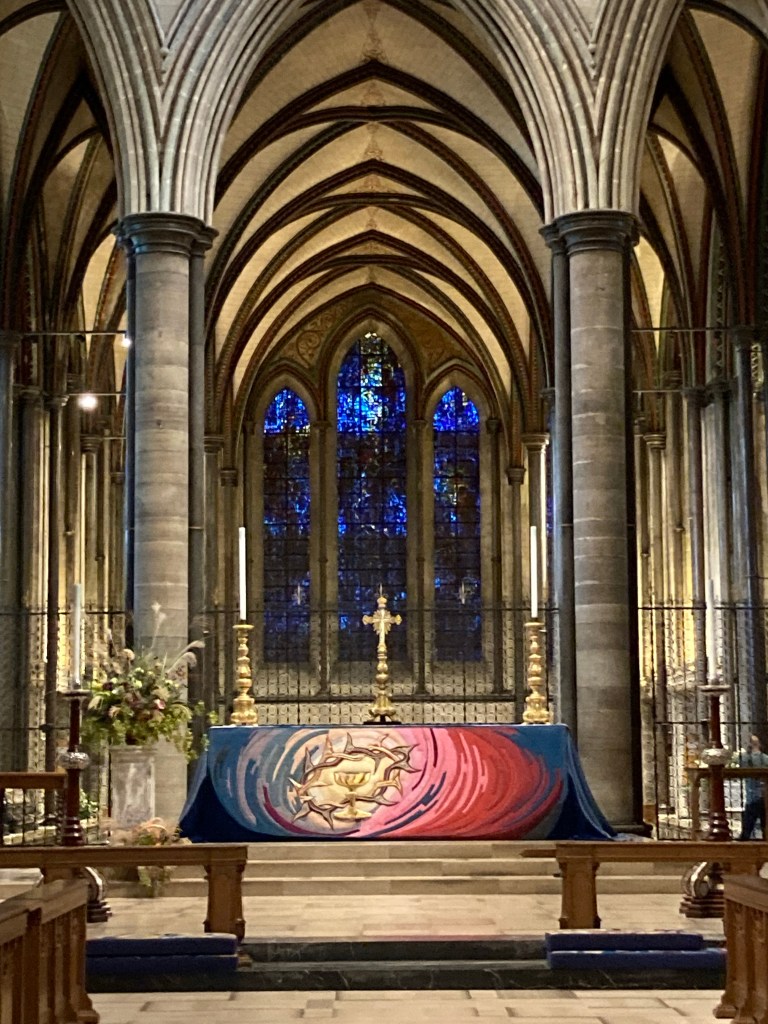
    Traffic was horrible and we did not get to the cathedral until 4:30. As we entered, we were told it had just closed for the day. Imagine how we felt! However, Jim went to the ticket desk looking very woeful and the lady took pity upon us because we held prepaid tickets. She let us enter and view the Magna Carta and walk leisurely through the gorgeous cathedral for the next half hour.

    There are so many interesting facts about this cathedral but two stand out to us. The cathedral’s foundation only goes down 4 feet and sits on wet sand. Because the surrounding town is riddled with irrigation canals built centuries ago, the building is prone to flooding and has caused one of the spires to shift a bit but remains standing after all these years. The other fascinating fact is that the city of Salisbury was spared being bombed by the Luftwaffe during WWII. The German High Command’s airplanes used the Cathedral’s spire as a navigation device. They would line up to the spire and then branch off to their intended targets elsewhere in England. We had the Salisbury Cathedral almost entirely to ourselves and it was a really lovely experience.  We caught a late train back to Bath, grabbed supper and crashed.

    Day 4 Holburne Museum, Morris Dancers, and Rugby Mania

    Since the past two days had been super busy, we had a leisurely morning. Becky and Steve were arriving today, but meeting times were uncertain and communication is tough without consistent Wi-Fi. We headed to the nearby Pulteney Bridge which crosses the River Avon and ends at the Holburne Museum and Sydney Park.

    The park and surrounding buildings were built in the 1790’s and were an important part of the social scene of Bath during that time. Jane Austen often walked in the gardens during the time she spent in Bath.

    The museum houses the personal collection of Sir William Holburne amassed over 40 years from 1830 to 1874.  Sir William’s personal art collection was quite a jumble of oddities which was a bit overwhelming.  In addition, several large galleries held portrait paintings and special exhibitions.

    The two special exhibits were terrific. Sarah Biffin was a painter who was born without arms and legs in 1784. She began her career in a circus side show and through hard work and determination became one of the country’s leading miniaturist painters.

    She was commissioned by many of the royal houses of Europe and received awards from the Royal Academy of Arts.

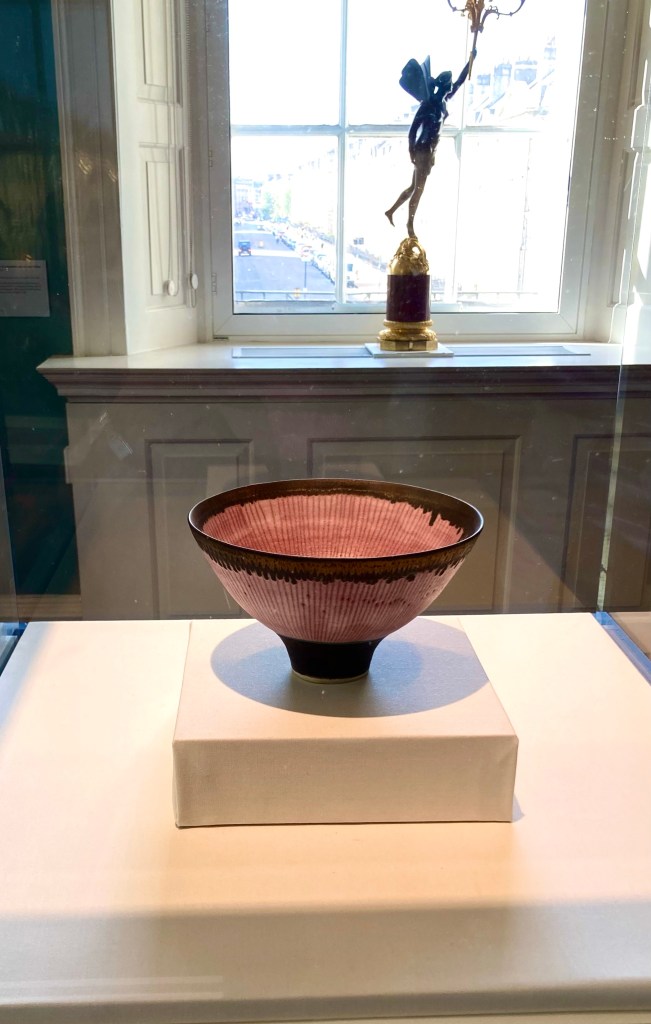
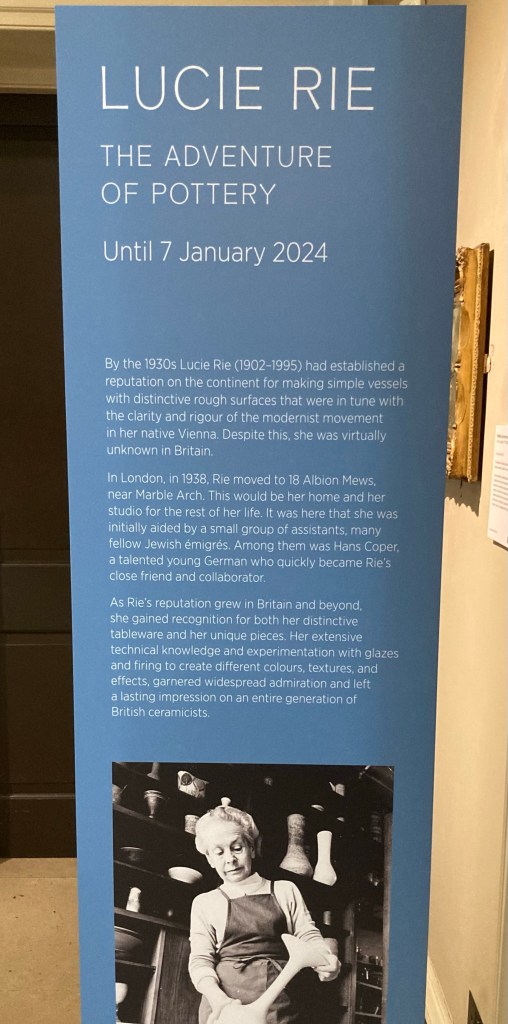
    The second exhibit was of the pottery works of Lucie Rie. She was a 20th century artist accredited with moving the norms of pottery into many innovative and modern styles.

    A great film of her working in her pottery studio with Sir David Attenborough was really interesting when coupled with the large display of her works.

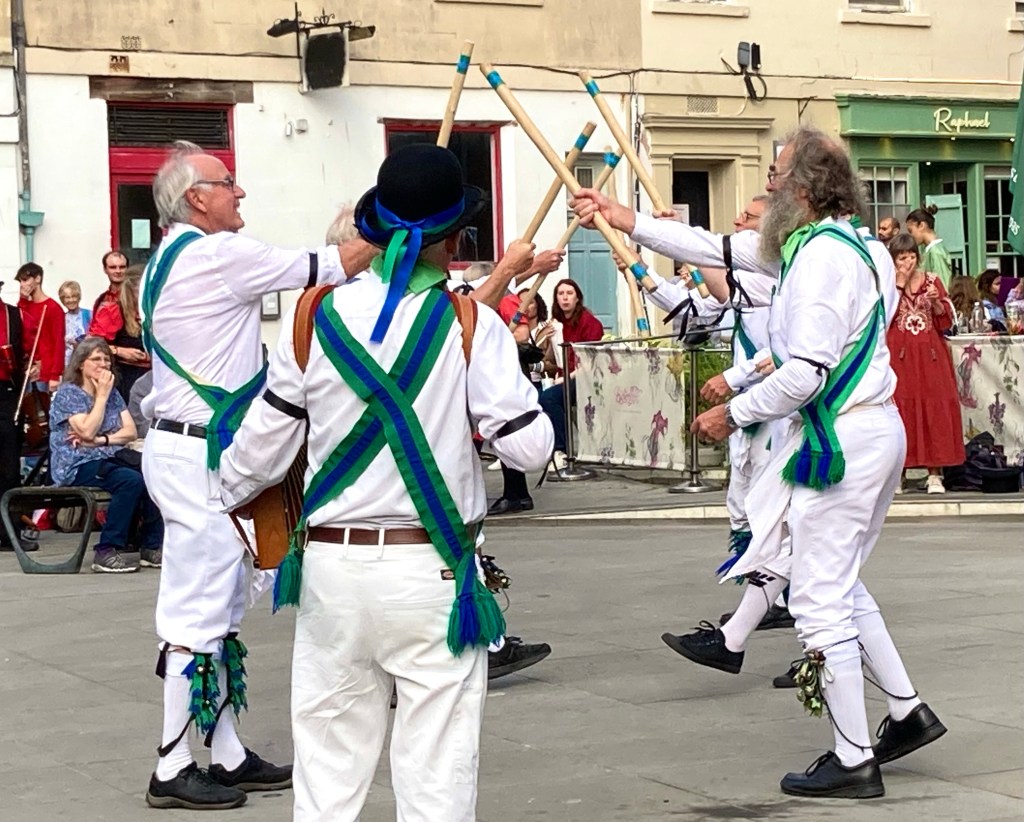
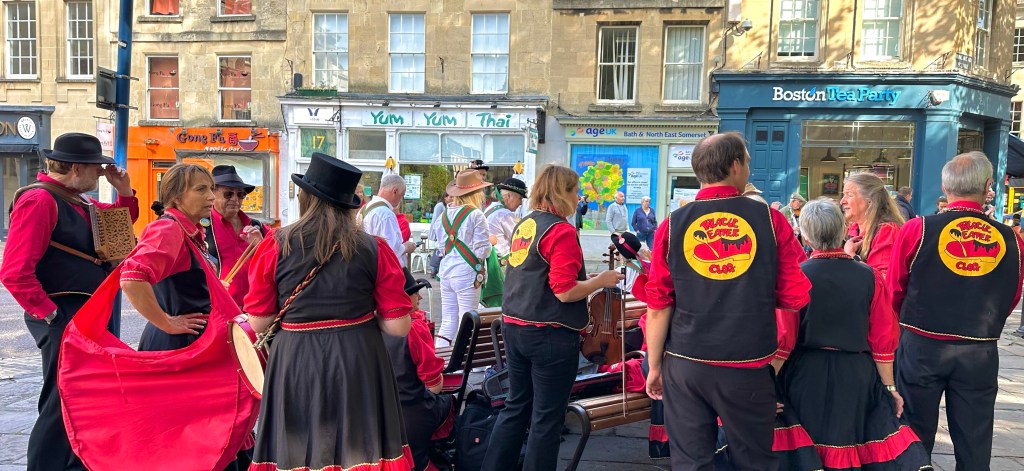
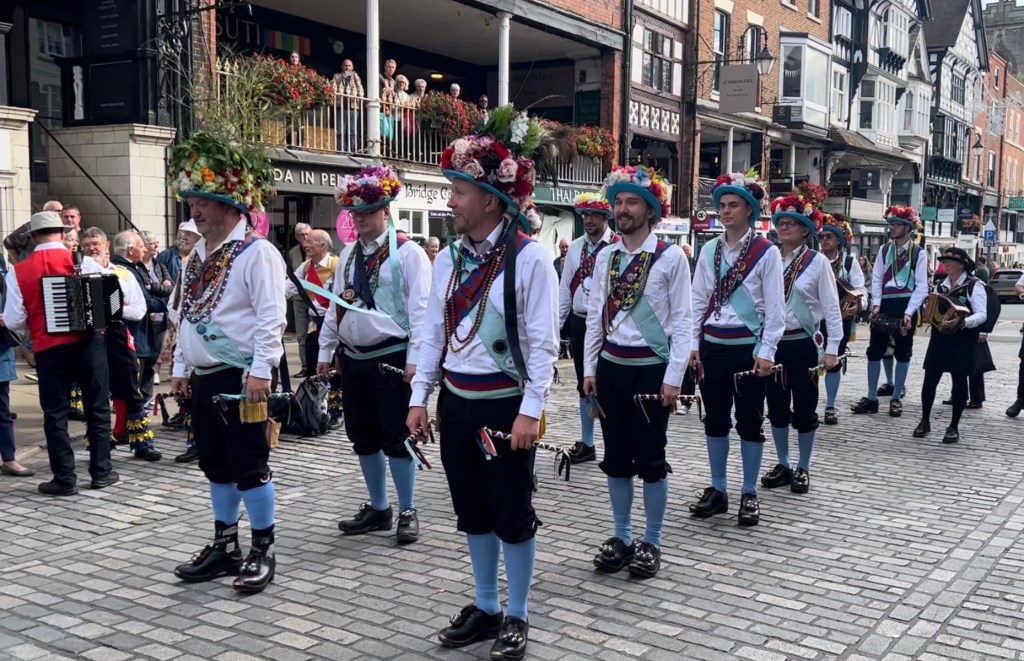
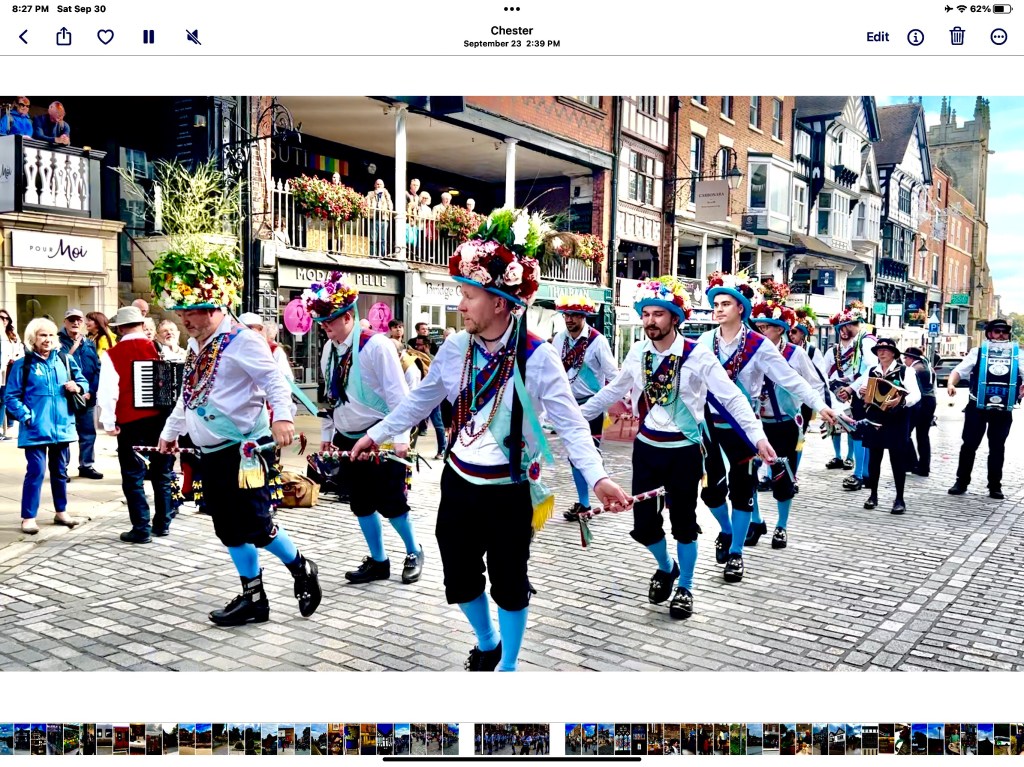
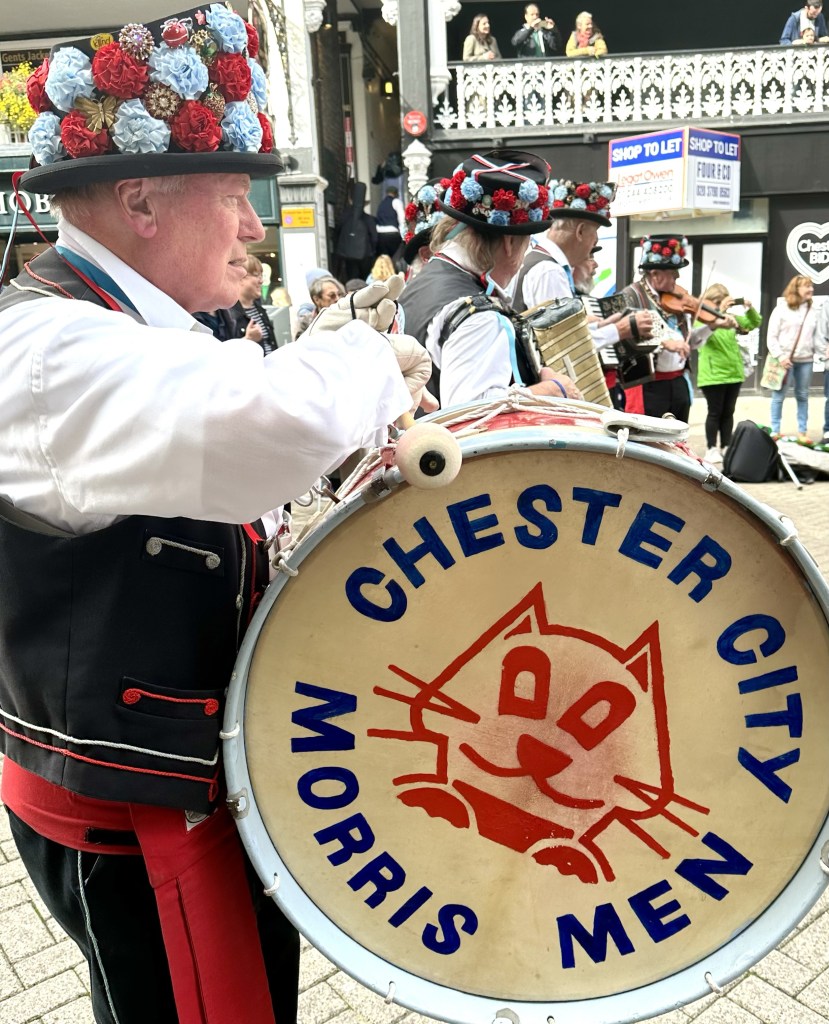
    While making our way back to the hotel, we watched numerous performances by Morris Dancers. At least 10 different troupes of dancers and musicians in wonderful costumes were entertaining everyone in many public squares—part of their fall visit to Bath. The afternoon filled with music and dancing.

    Plus many rabid rugby fans were in town to watch Bath play Exeter in the giant rugby stadium in town. The perfect weather and festive nature of the town was really fun, but we enjoyed the calm earlier in the week.

    We made it back to the hotel just as Becky and Steve were checking into their room. They had arrived earlier, but we had been passing ships until then. After chatting and catching up we each headed to our rooms for a rest before supper. Reservations were necessary and hard to get on busy weekend nights in Bath. We made them earlier in the day at the Yum Yum Thai restaurant where we had eaten earlier. The food was excellent and very importantly it was around the corner from our hotel. We returned there to play cards and get solidly beaten by Becky!! Such fun times to be together in Bath.

    Day 4 Who Are All These People?-The Tipps/Poplin Report

    Steve and Becky survived the Replacement Bus to Bath and took a taxi to the Apex Hotel where Jim and Betsy were staying and where we had room for one night. We had taken an earlier train than planned from Cardiff, but had no WI-FI on the train to communicate with Robsons. By the time we got to the hotel at 11:00 (two hours earlier than originally planned), we were hot, tired, hungry and dazed.

    Even recognizing that Bath is a popular vacation and tourist spot, there were people everywhere. All the buses were full, all the sidewalks were busy, all the restaurants were crowded. What had happened to calm, glorious, golden-hewed Bath?

    We walked across the street to the Bath Brew House but it did not open until noon, then tried to find another eatery but they were all full.

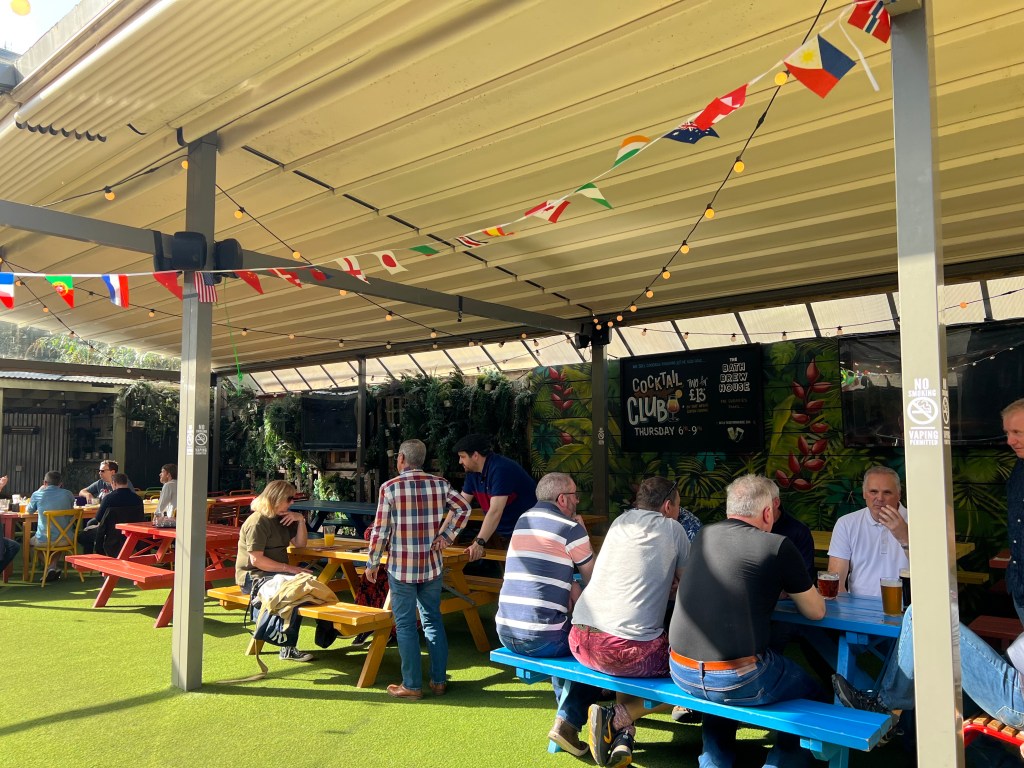
    Morris Dancers were in the square performing so we watched them for a bit before retreating to the Brew House where we were first in queue for a growing crowd. Narrow on the front, the Brew House has a brewery and huge bar on the first floor, another upstairs, and a beer garden that holds 200.

    They were only serving burgers rather than a full menu, so we ordered burgers which were really tasty. By the time the burgers arrived, the beer garden was full!

    Large tables for 10 to 15 people quickly filled with men who appeared to have regular Saturday noon gatherings. Each new arrival was greeted with hugs, hurrahs, and new rounds of brew. They were loud and jovial.

    We checked at the hotel to see if Jim and Betsy had returned from morning exploits. Then we walked up to Queen’s Park, a square surrounded by 18th century edifices.

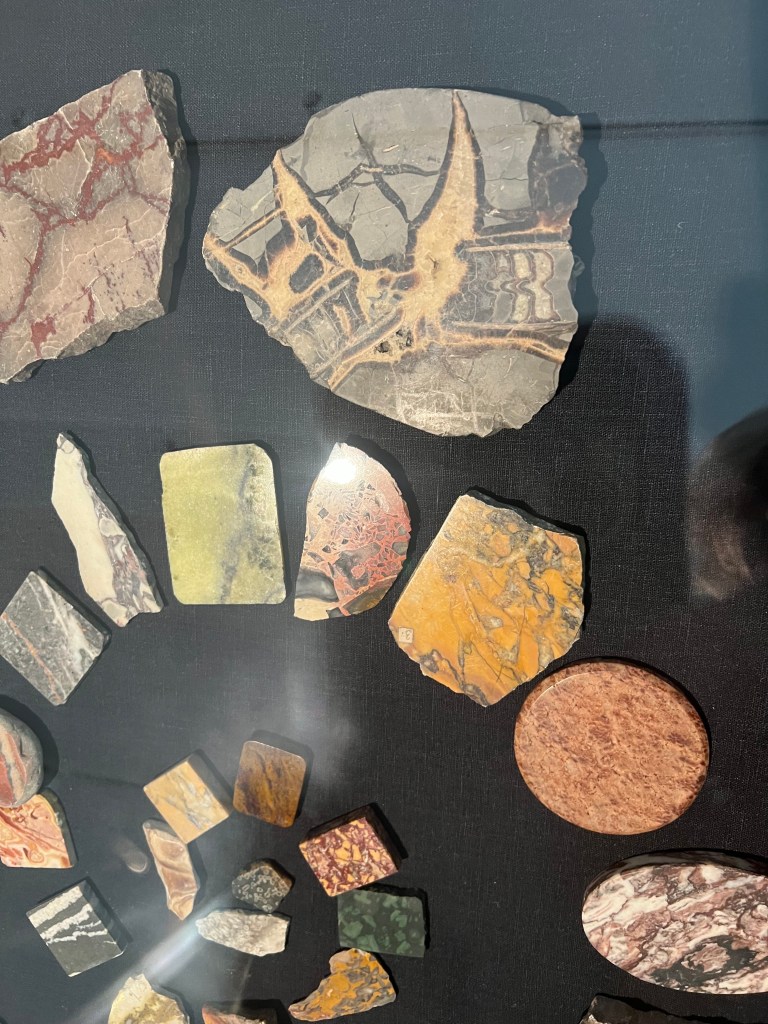
    A small museum on the square had an exhibit of polished crystallized rocks.

    We watched people, especially a two-year old toddler with a fascination with sticks, trading up to bigger sticks as he wandered under the loose supervision of a father and a watchful eye of a gran. When the boy finally breached the open gate and wandered outside the fence, dad had to run and catch him. Then gran took over and actually engaged in the stick game and related conversation. Her experience with children was obvious. The Park was a calm place in the storm of people.

    Around 2:00 we walked back to the hotel where Jim and Betsy had just arrived from their morning exploits. They explained that there were 80,000 rugby fans in town for the Big Game. Now we understood why Bath was so crowded. We joined them for dinner at Yum Yum Thai ordered their recommendation—the best Tom Yum Kai we had ever tasted. A game of Progressive Rummy ensued with the victory to Becky and with Steve climbing to the top of the Wall of Shame but was subsequently disqualified on a technicality. The next morning, we headed to Oxford while the Robsons made a mad dash to Penzance.

  • Episode 9 Old and New in South Wales

    October 11th, 2023

    Day 1 Exploring Cardiff

    To avoid the train work stoppage scheduled for October 4, we arrived on October 3 which gave us an extra day in Cardiff and South Wales.

    Our Sleeperz hotel was next to the rail station. We checked in to our mini/mini room designed for single business people traveling with one carryon.

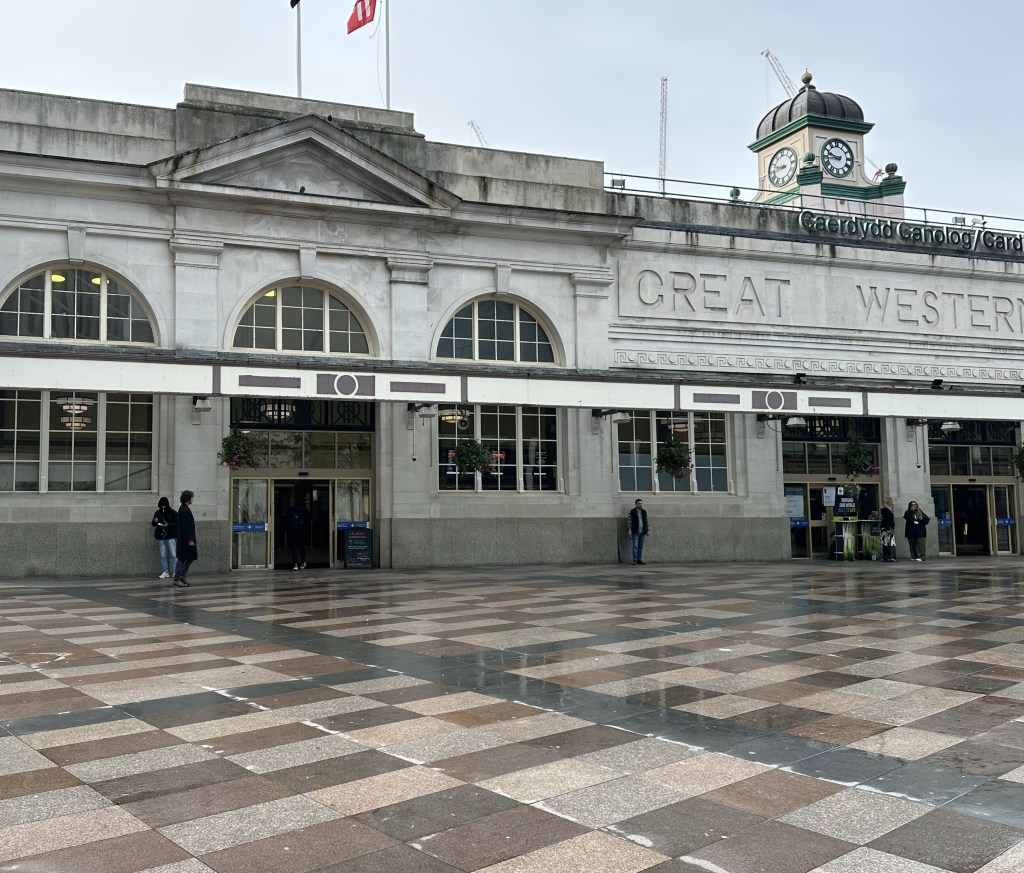
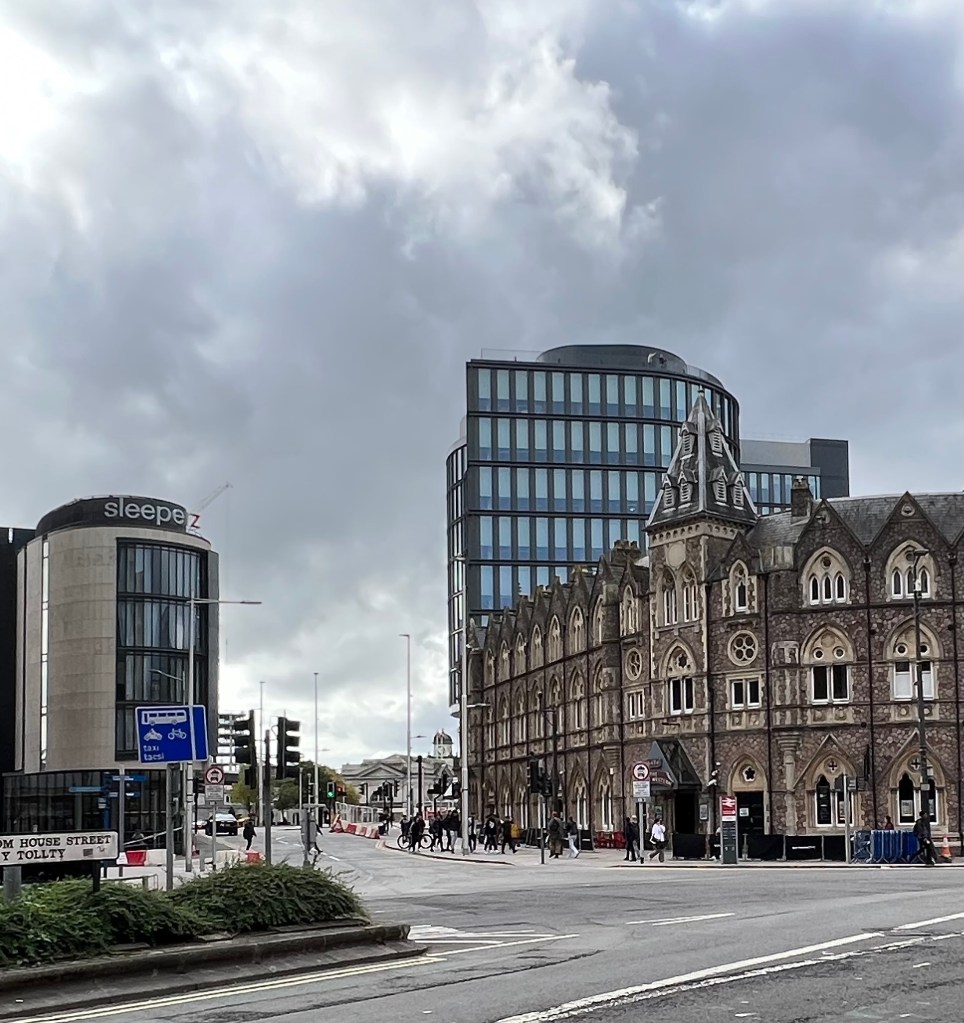
    Modern Sleeperz hotel and office building share street
    with old hotel and restaurant

    Although the room did not look that small on the website, our only smaller travel room was the bunk-bed room on the ferry to Tallinn when we slept on the floor. Well, only here for 4 nights, we can take it? The afternoon was spent exploring the city center and Cardiff Castle.

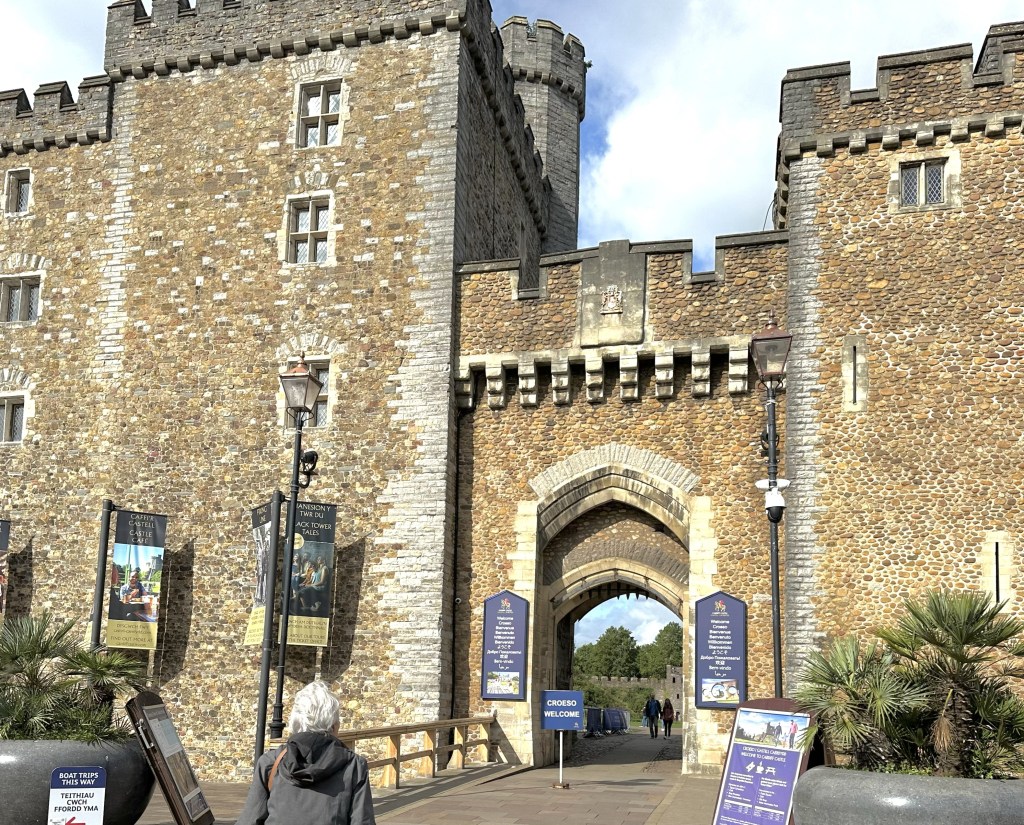
    Becky walking toward Cardiff Castle

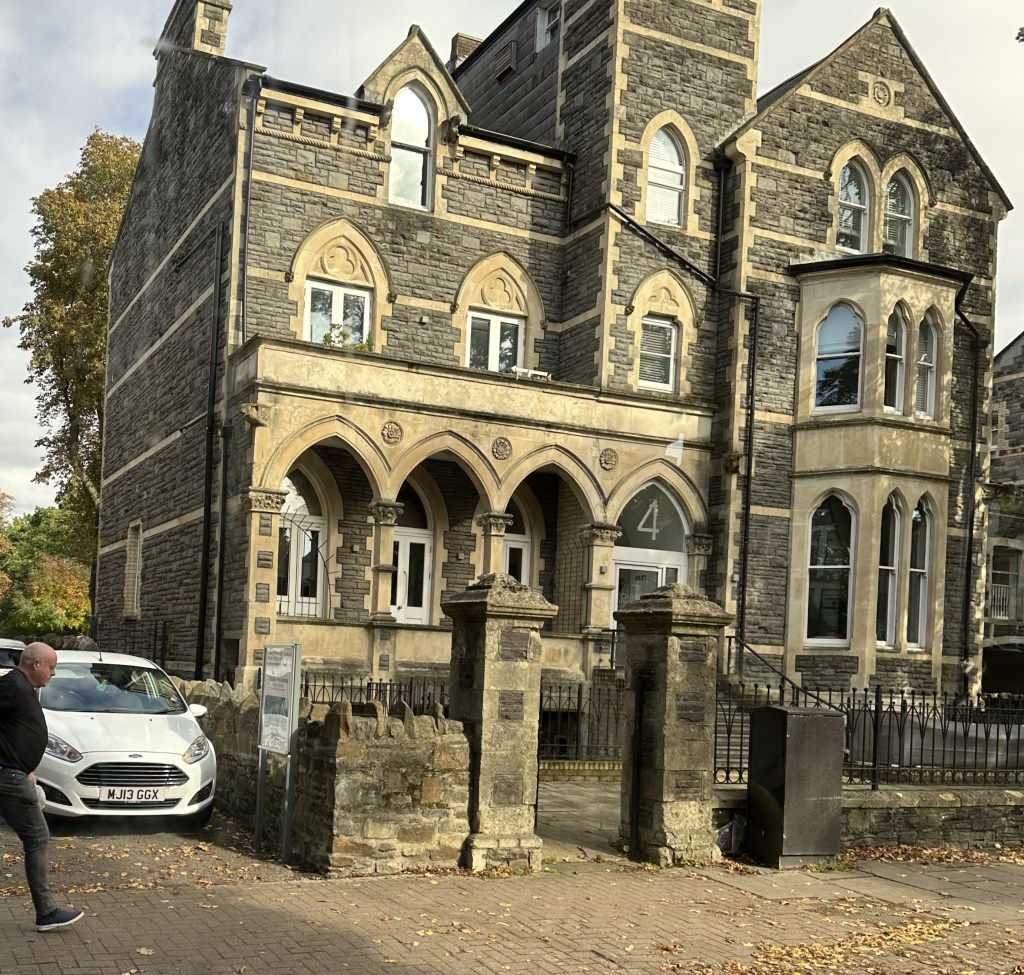
    Most evident were different eras of buildings. The old is represented by monumental buildings of various styles from Norman through Georgian, many Victorian styles into Arts and Crafts.

    Vaguely Gothic 1880s
    Art Deco from 1920s
    Brute style parking garage from 1950s

    A few Brutish buildings from the 50s and 60s are more modern, but the skyline now sparkles of glass and steel.

    The old and new look of the city mirrors its boom and bust history as the coal capital of the world. For almost 100 years, the coal of Wales fired the Industrial Revolution in England and supplied energy for World War II. Accord to local lore, at one time, Cardiff was the wealthiest city in the world and the old buildings can attest to wealth and civic exuberance.

    After WW II the demand for coal waned; petroleum products became the dominant fuel source; Cardiff was depressed. Only after a concerted effort has the economic revitalization arrived with a focus on technology. BBC has recently completed their largest studio and huge office building in Cardiff and Cardiff Bay.

    Modern
    Old building adapted into new hotel

    The HOHO bus, here called the TOOT, took us around city center with ticket good for two days of hopping. We made the full circuit, walked some more, had tea, and noticed the Cardiff City Museum was just across the street. We arrived at 3:45 and the museum closed at 4:00— not enough time, even for fast lookers.

    Back at the hotel, we faced the reality of the mini/mini room. No place to store luggage, not even place to open luggage which created real problems for us living out their suitcases. The bed was “standard” which I don’t think means “full.” After pasta at Ask Italian, we went back to hotel to watch an episode of new “British Bake-off” which will not come to the US for months. We already know who is going to be star baker.

    Day 2 Moving Around Cardiff

    After a pretty miserable night, punctuated with stubbing my toes left and right on furniture, I went down to the lobby to talk with my new best friend Salvatore. I asked what it would cost to upgrade our room for 3 nights. After a little calculation and negotiation, we paid a little and got a lot—better room. We were heading out when Salvatore announced that our new room was ready. We moved our luggage from the mini/mini room to maxi/mini room with room for luggage and feet.

    Our Welsh friend Anne recommended Museum of Wales in Cardiff which is a monument to Beaux-Arts grand design in every way. It holds a fine collection of impressionist and post impressionist paintings.

    Claude Monet painting of Venice

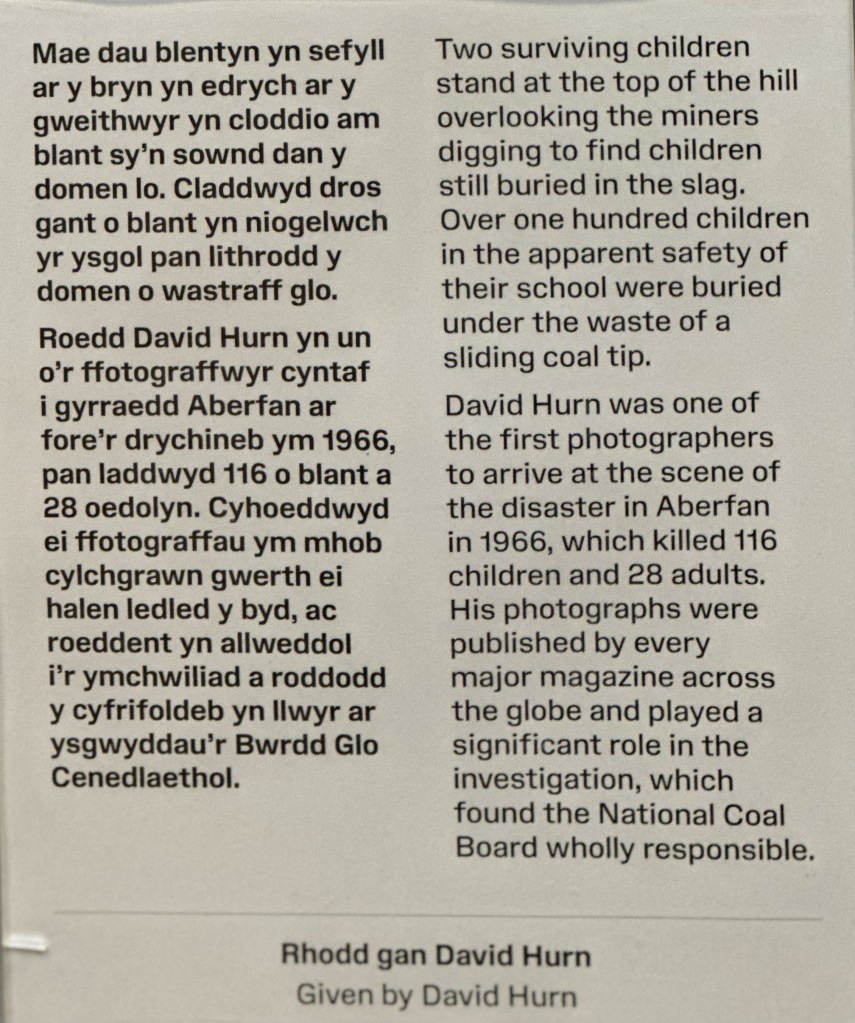
    The museum sponsored an exhibition called Art 100. During Covid, they digitized many works in of the collection of all media including contemporary works and recent acquisitions. These art works were made available for comment online and also were on tour around Wales.

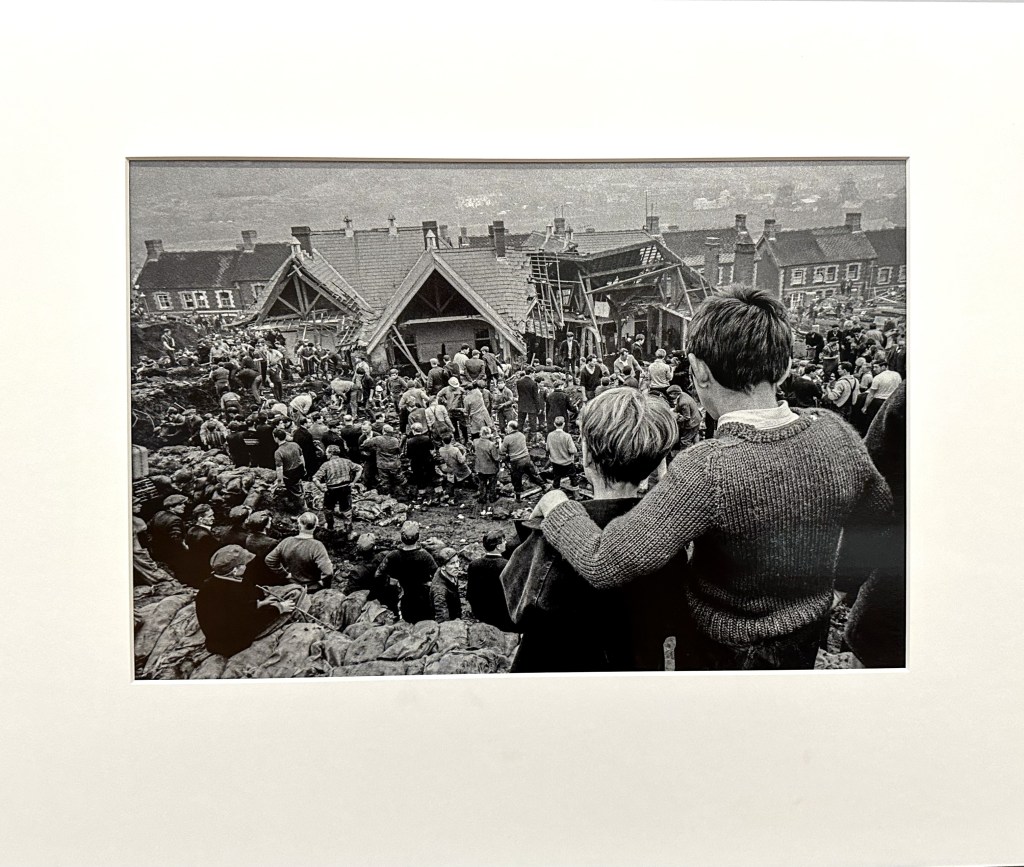
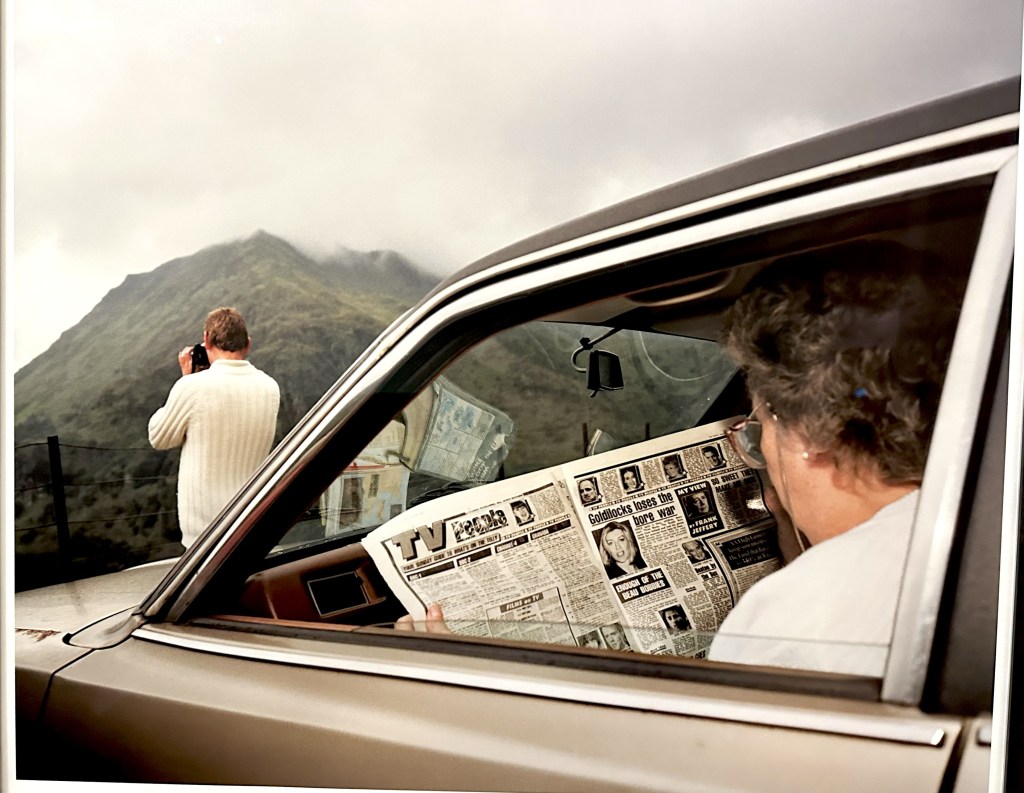
    Two photographs were selected as part of Art 100 exhibit.
    Two photographs with very different stories.

    This exhibition reflected what was learned from this impressive effort at arts outreach and community building. Note the Welsh and English signage required everywhere by law.

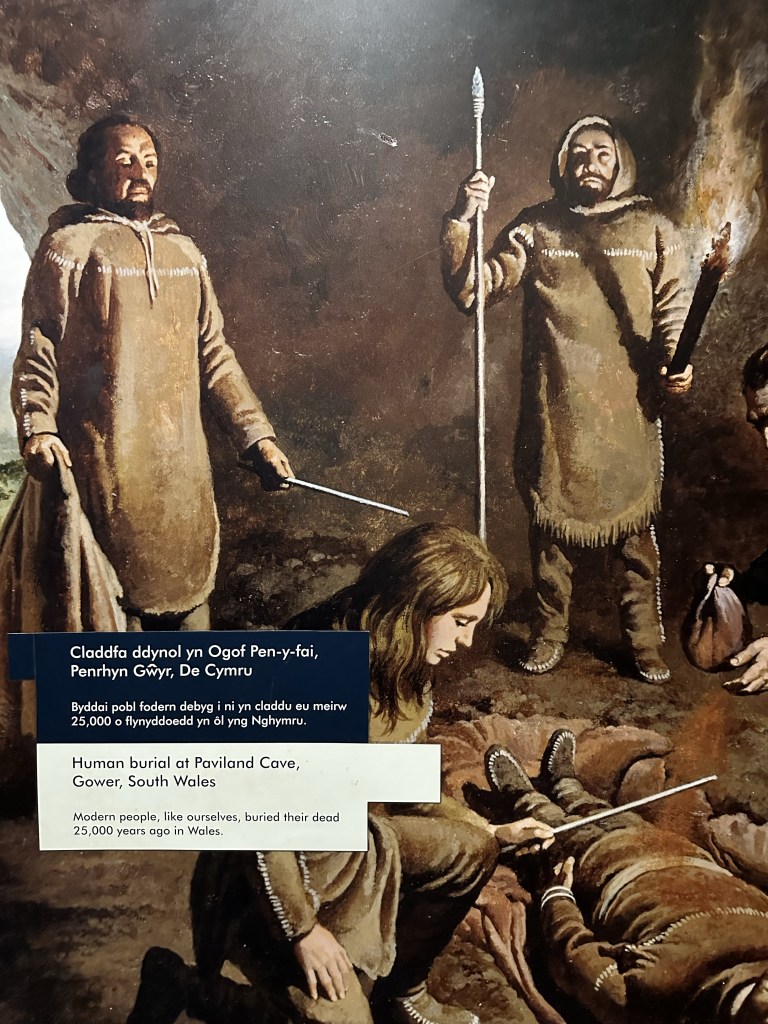
    The museum also houses natural science exhibits including the geological study of landmass showing how the land of Wales migrated from the South Hemisphere to the Northern Hemisphere as part of different continental plates.

    The exhibit occupied almost the full first floor with an excellent combination of video, displays, information, and story.

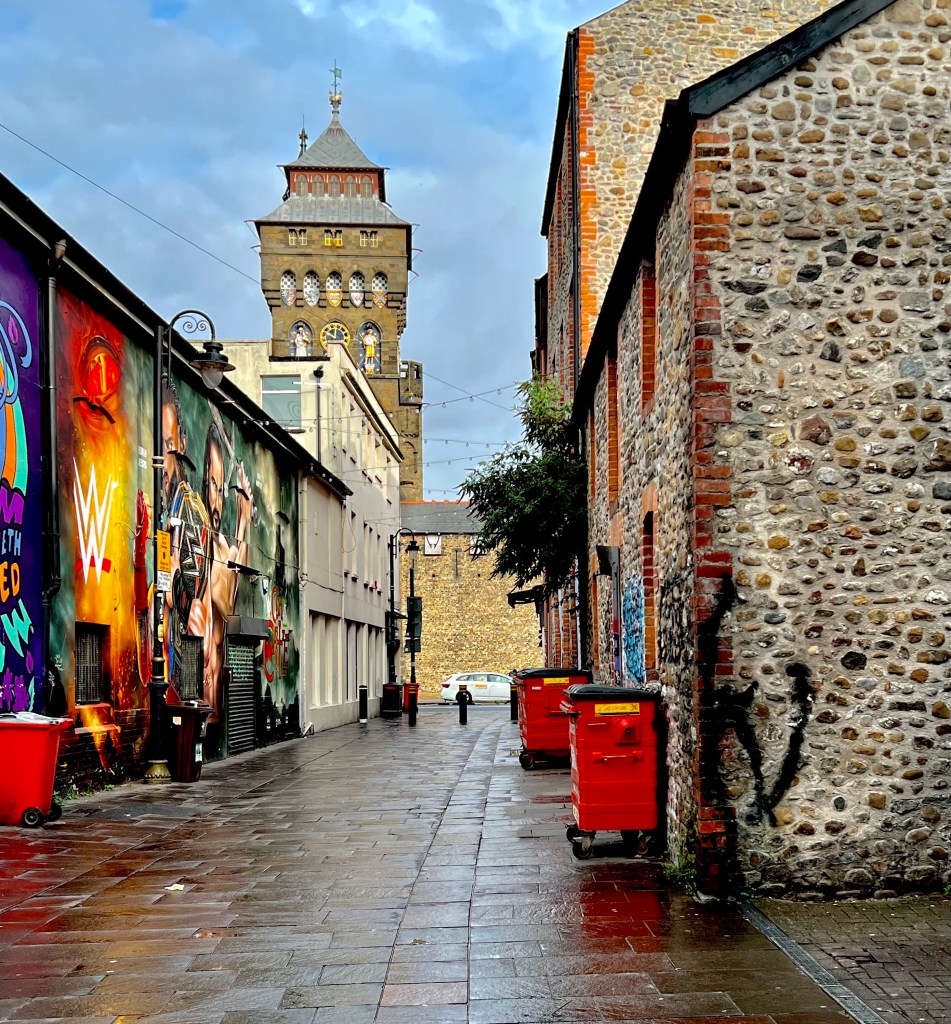
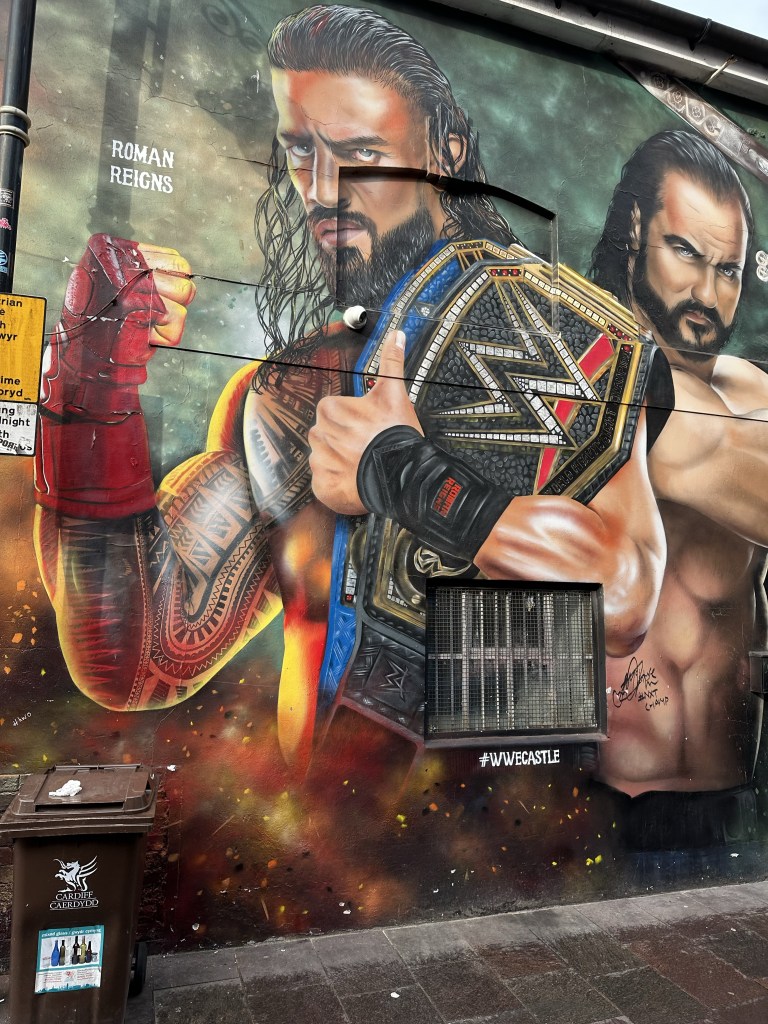
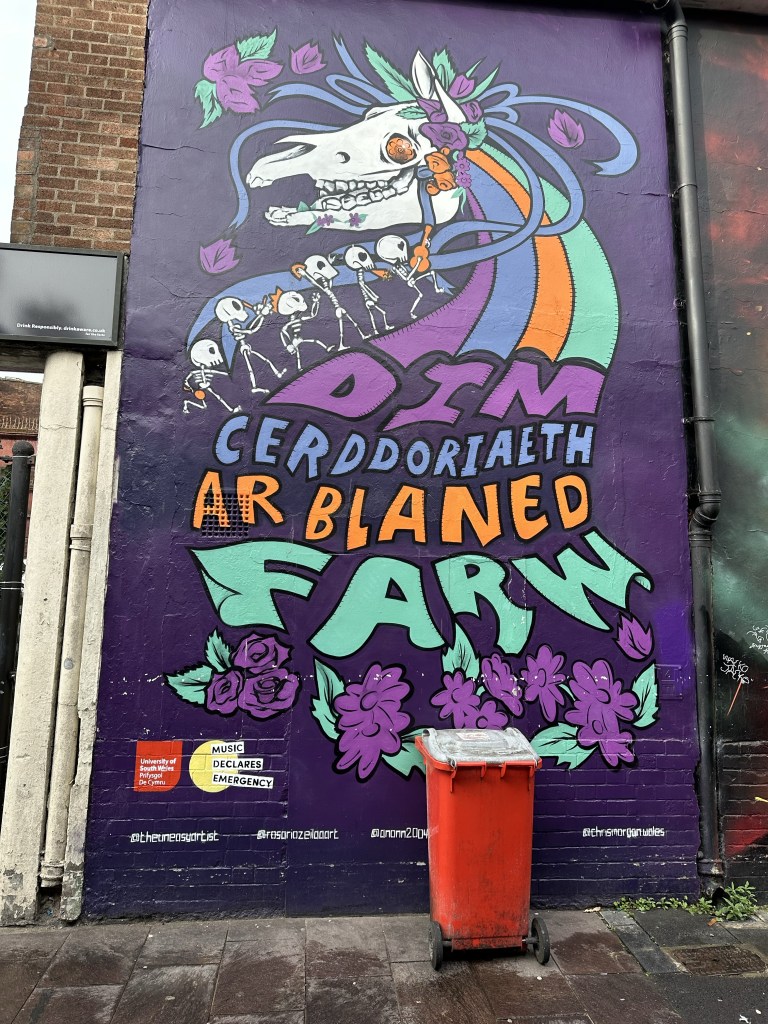
    On our wanderings, we found two different displays of street art. In an alley, many buildings had elaborate spray paint art.

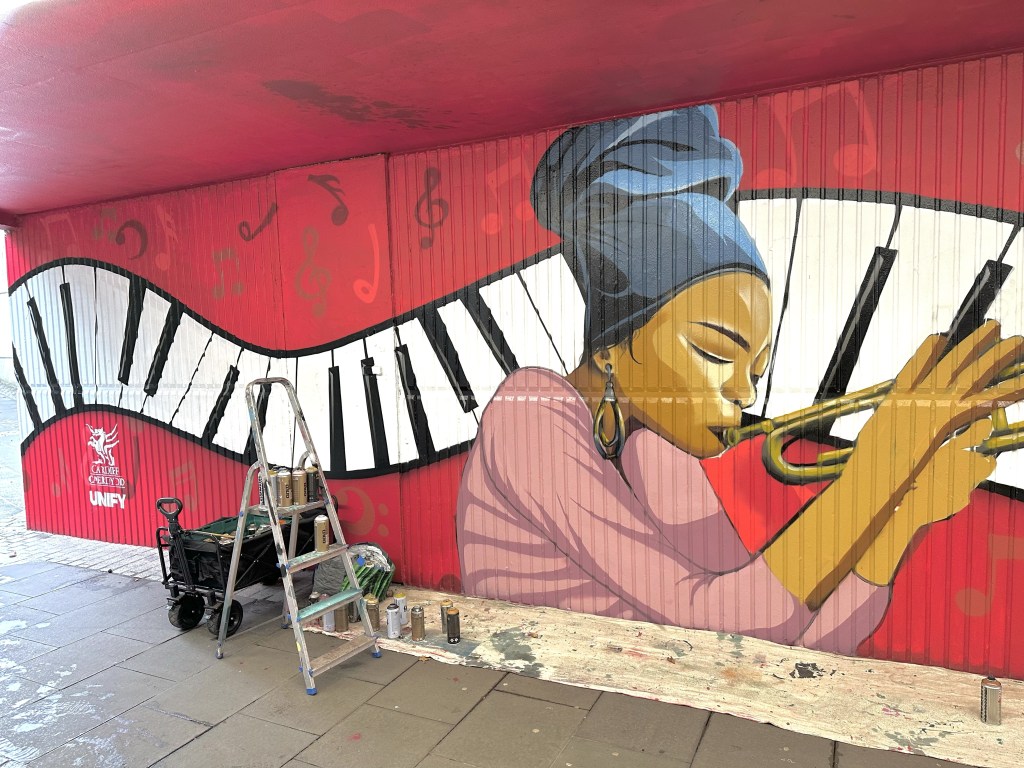
    In a tunnel leading to City Hall, a artist was finishing a music-related mural on both sides. The authorized artwork brighten the walk for pedestrians under major intersection and roundabout.

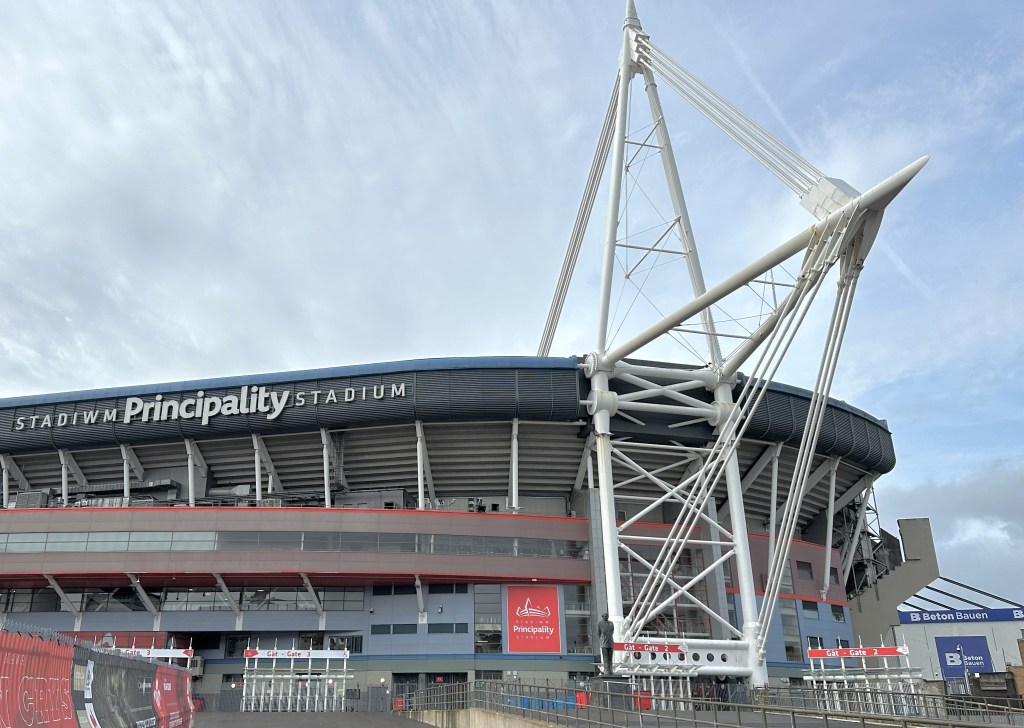
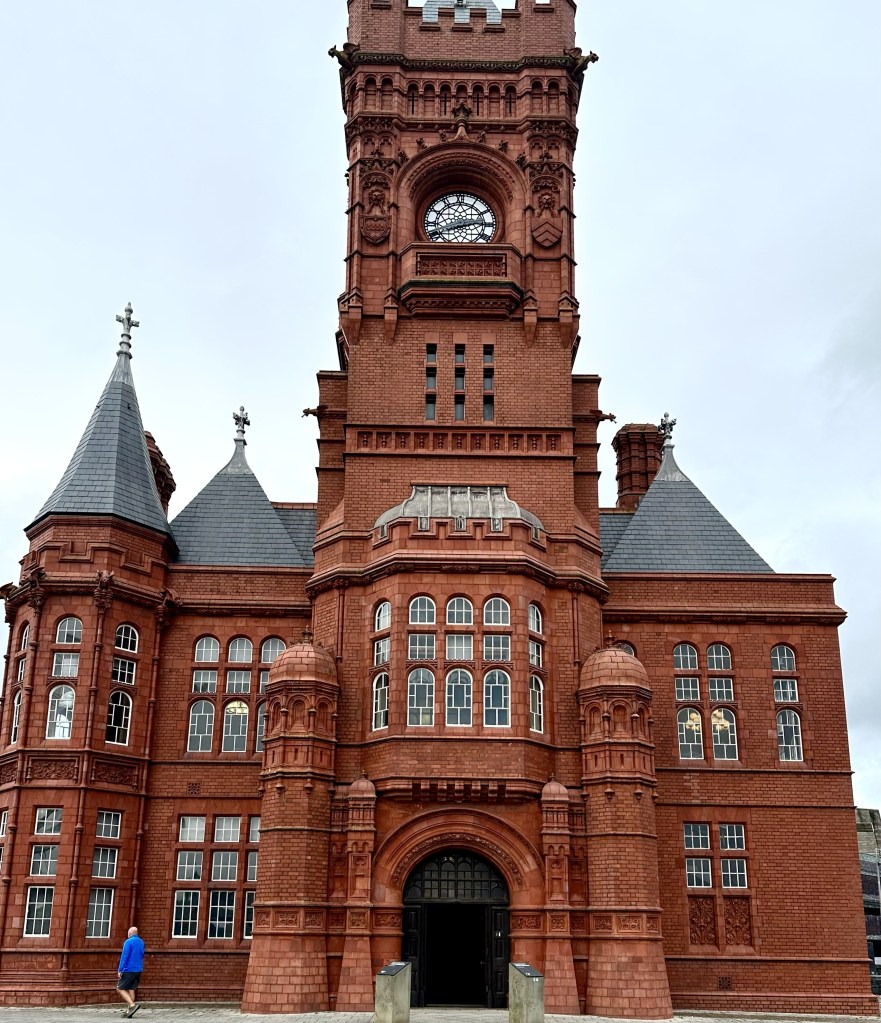
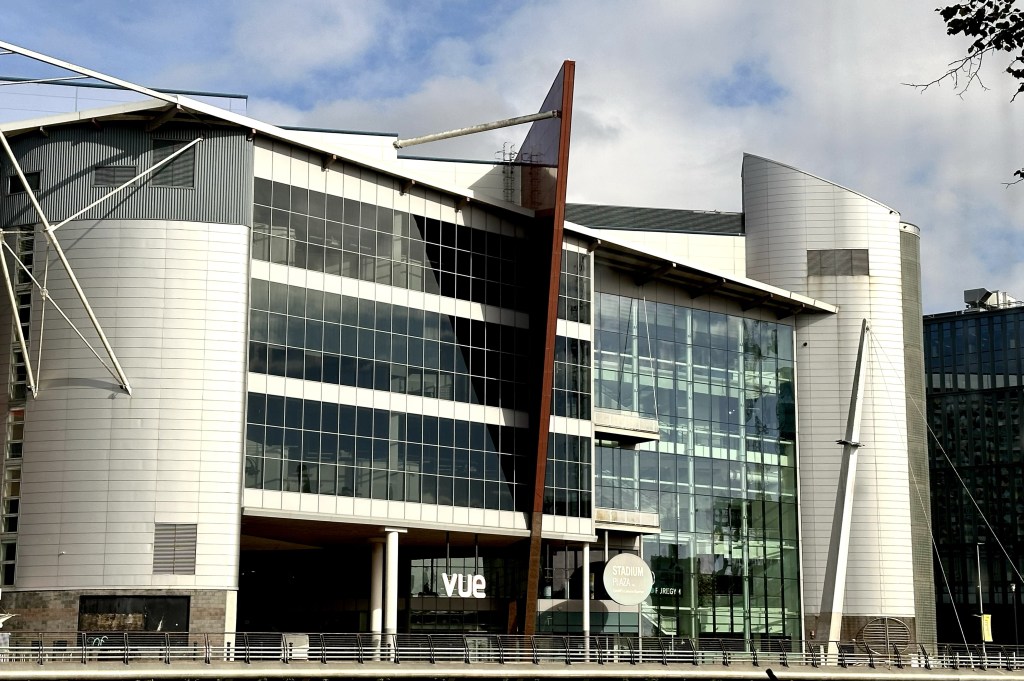
    Our legs and brains were on overload from the museum; a TOOT ride to Cardiff Bay allowed us to rest our feet and hop off. Cardiff Bay is a couple of miles from city centre. Much of the Cardiff revitalization involved changing the old coal docks into housing, entertainment, and government use. A new Welsh Senate building and a huge entertainment center are part of the revitalization as well as trendy housing away from the downtown.

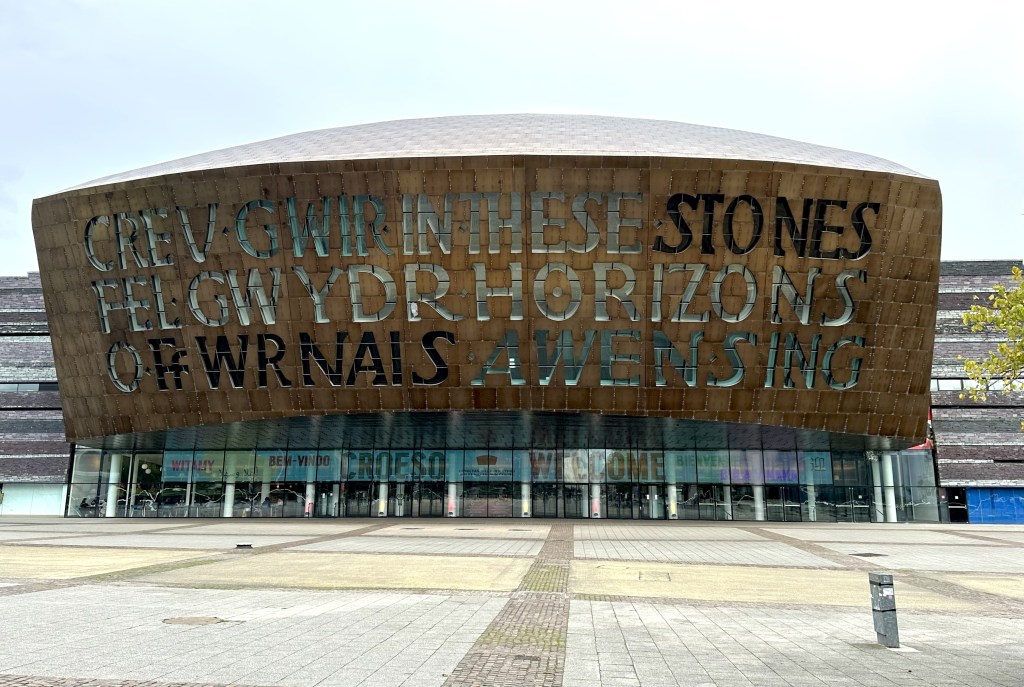
    Performing Arts Center in Cardiff Bay
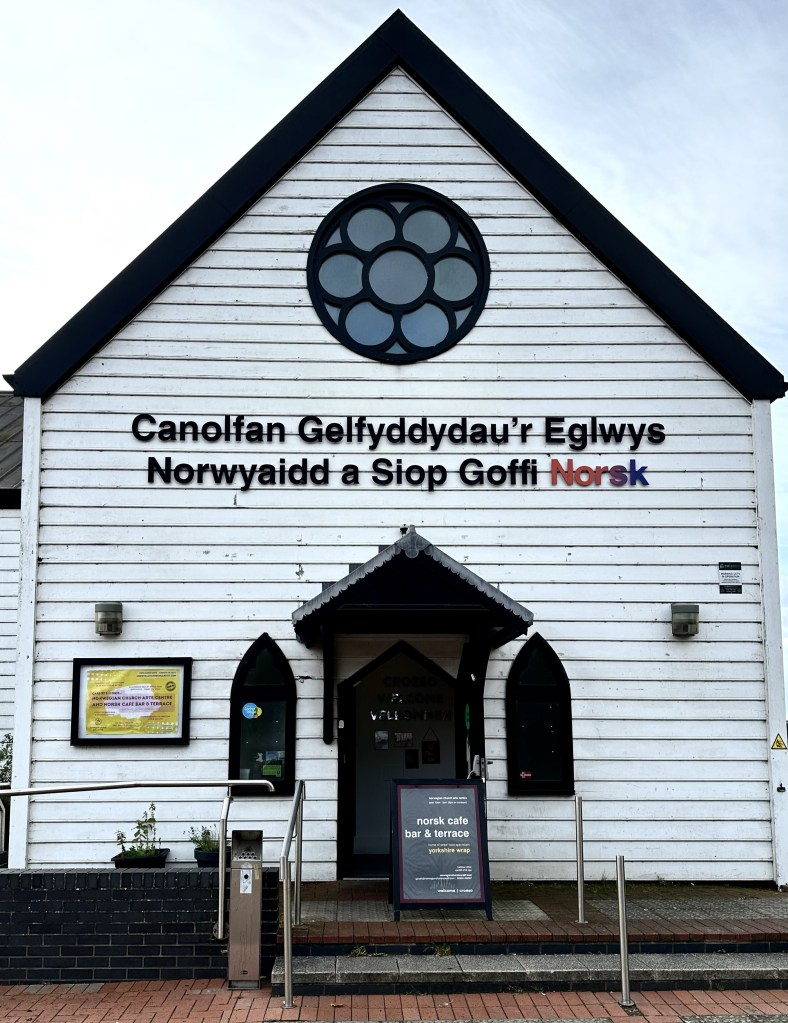
    Old Norwegian Church now an Arts Center and Cafe

    We ate lunch at the historic Norwegian church now art center and cafe. As rain began, we hopped back on for a quick ride to the hotel for late afternoon napping. We roused around 8:00 for delicious salad supper at Bill’s Cafe.

    Day 3 On the Gower With Anne and Pete

    We met Anne and Pete on our Hurtigruten cruise of the Norwegian Fjords where they were jolly companions for dinner and other activities. We arranged to meet them for a day in Swansea an hour away by train. What a visit!

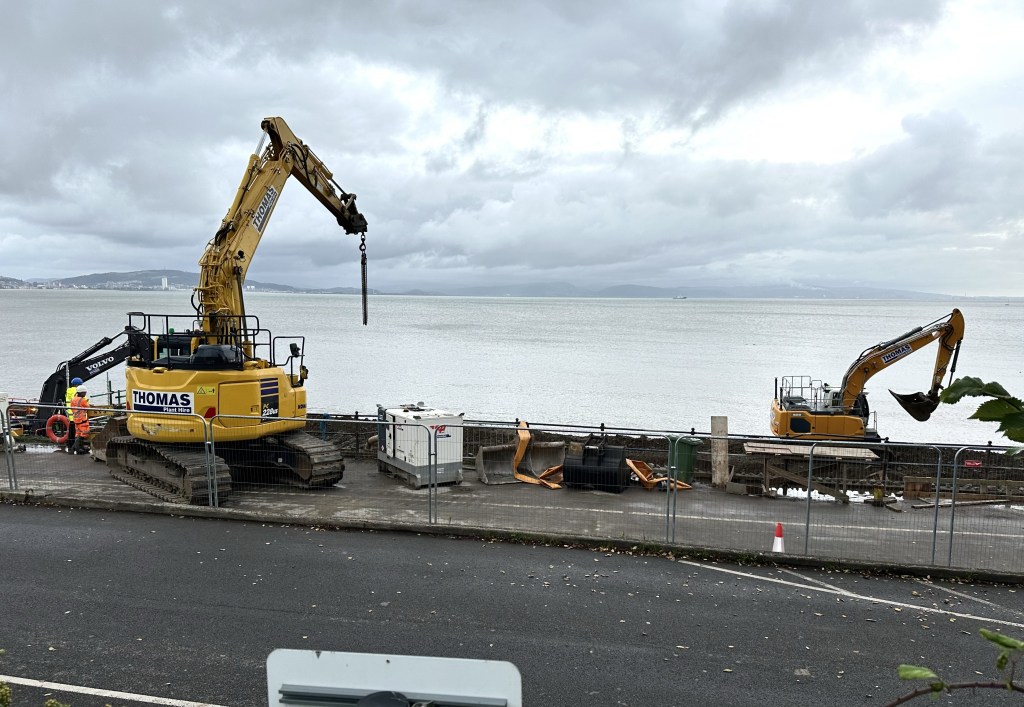
    They took us on a grand tour into the beautiful countryside on the Gower Peninsula. Along the Swansea wide bay, a new sea wall was being constructed wider and taller to protect the town from high tides and changing sea levels. Recently, the water has been high enough to cover roads along the bay.

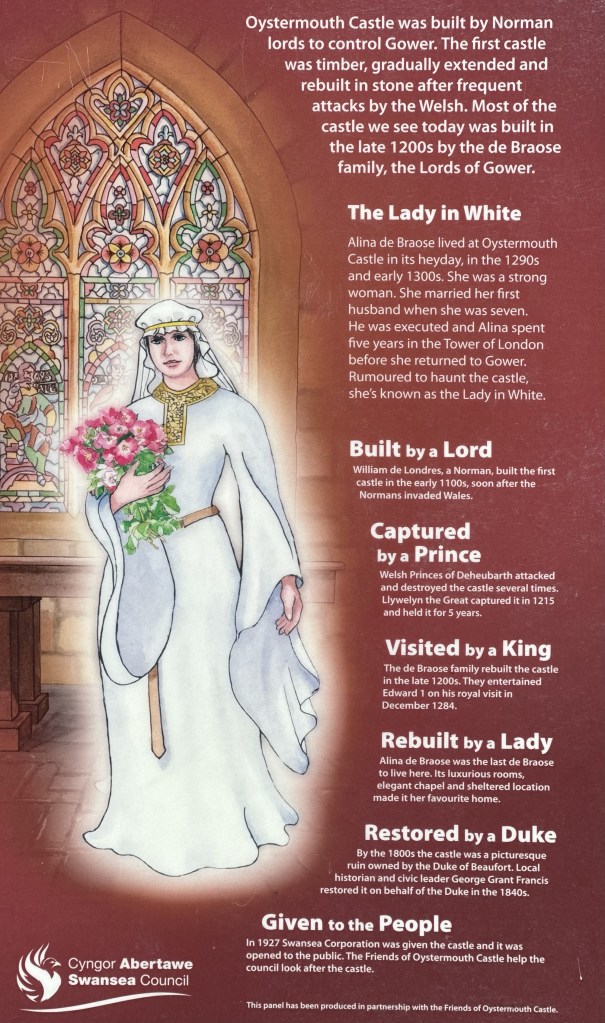
    Our first stop was near the Castle at Oystermouth, one of those beautiful ruins with 1500 years of fascinating history. Built high on a hill, the castle overlooks the sweeping Swansea Bay and a residential area known as Mumbles.

    After morning tea, we walked up the steep hill to the Castle. Officially closed on October 1, the volunteers who operate the castle welcomed us through locked gates for a short lecture and mini tour. They were excited to have visitors all the way from North Carolina and we got some small souvenirs from the gift shop.

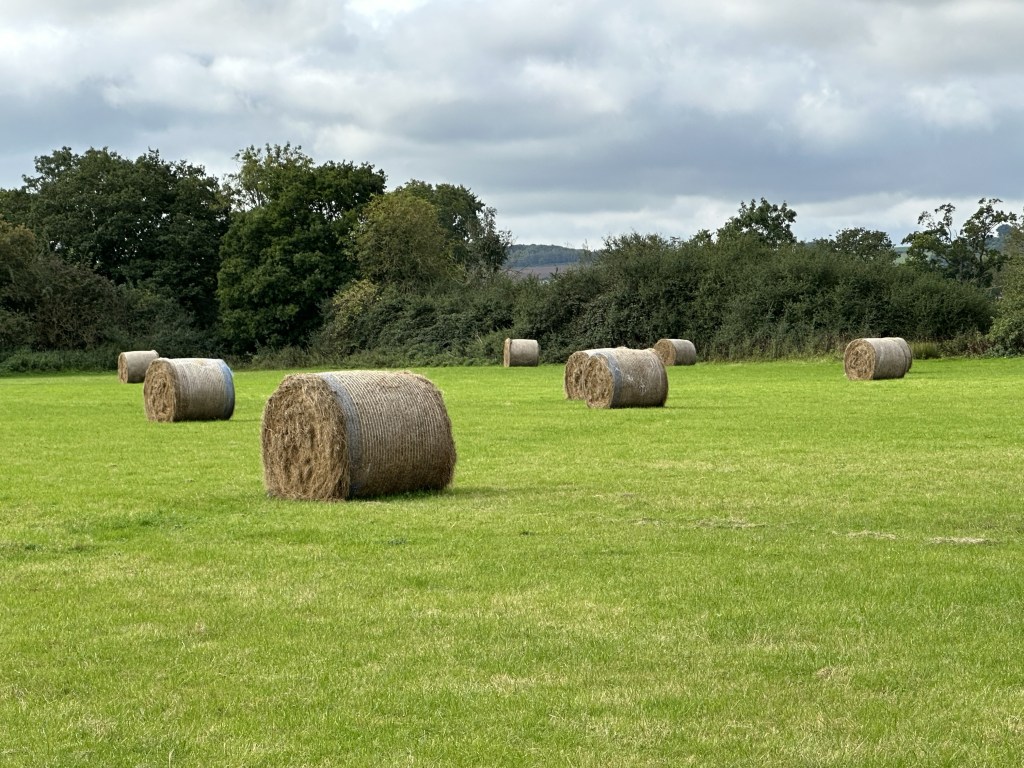
    The Gower Peninsula is a great sheep and farming interior and a rugged mountain and beach coastline. As we drove along, Anne pointed out many places where she and her family had lived, worked, and played.

    Having this narrative made the ride even richer. We stopped at Rhossili, a promontory over a wide beach. In the distance, we could see the White House where Anne spent summers with her gran.

    Our final destination for the great ride across Gower was the Britannia Inn with a reputation for fine fare.

    Pete and Anne joined in our toast to a wonderful adventure

    That reputation is well deserved offering a wide menu with many Welsh dishes; I had the classic beef and potato pie and Becky ate lamb. Although we were full, we could not pass up sharing authentic “sticky toffee pudding” a confection of dense, rich, dark cake soaked in hot toffee sauce with ice cream.

    The return to the rail station took us through more beautiful fields of harvested hay and grazing sheep. We bade farewell with hugs and smiles and sadness as we parted after a wonderful day on the Gower.

    Day 4 St Fagans Village

    St Fagans is a small village 9 miles from Cardiff that houses two intriguing historic sites. One is the manor house dating from 1750 with an extensive garden. A reconstructed Welsh village occupied 100 acres once part of the manor.

    Manor House at St. Fagans

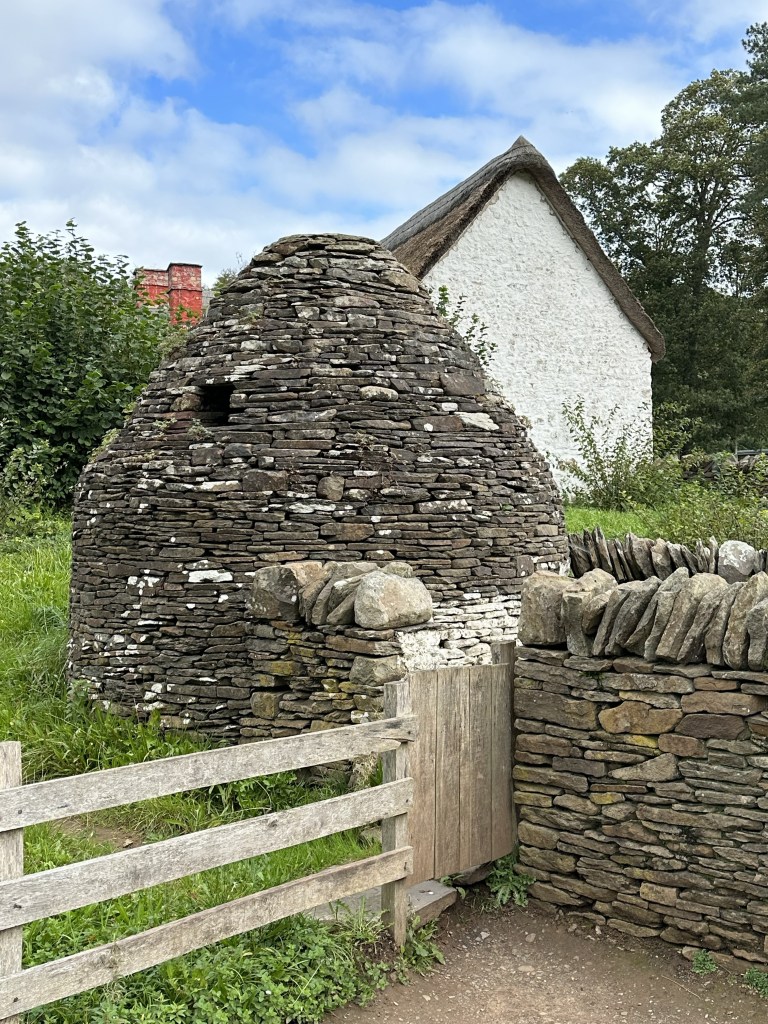
    Original buildings from across Wales were dismantled and rebuilt to preserve and portray Welsh life before 1900. Most of the 50 buildings onsite represent rural life in the 1700s and 1800s, but some Iron Age stone mound huts are included.

    Docents were located at different houses and buildings. A row of attached cottages are filled with period furniture and artifacts. Groups of school children were going in and out with us.

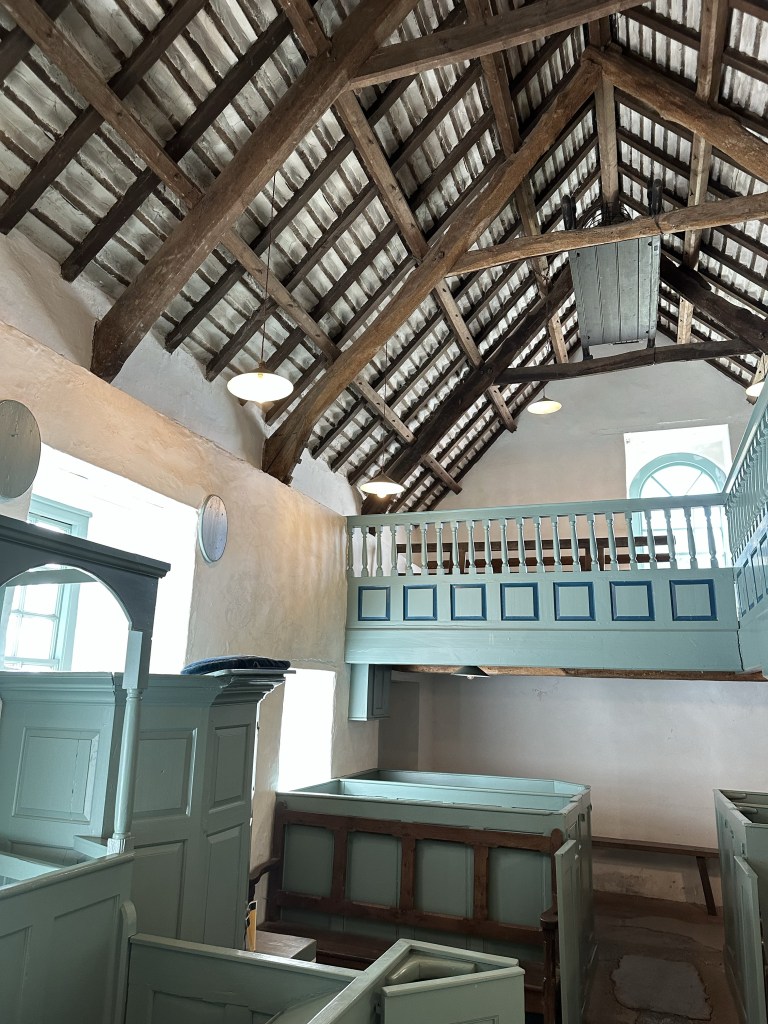
    Some of the business are still operational such as the bakery and the candy shop. One surprise was the reconstruction of Pen-rhiw Chapel, a Unitarian meeting hall from 1777.

    Unitarian meeting hall from 1777 and description

    Getting to St Fagans village and museum was more difficult than expected. We were at the KN bus stop 20 minutes early, but the only bus to St. Fagans was delayed another 20 and 40 minutes. We waited and watched the traffic jams and people. Buses tend to be reliable but not punctual. Most of the time, they finally show up. The return bus to Cardiff was also late by about 20 minutes while we chatted with man from Malaysia.

    Who was St. Fagan? Some historians trace the name back to a monk who brought Christianity to Wales. Serious questions arise since this name does not appear in writing until several hundred years after his supposed pilgrimage to Wales. Whether Fagans was an actual person or a composite of several early monks is unclear.

    We got back in town in time for a quick look in the Cardiff City Museum. The main exhibit presents the history of Cardiff, good times and bad, with videos and multi media displays for great end to our sightseeing in Cardiff.

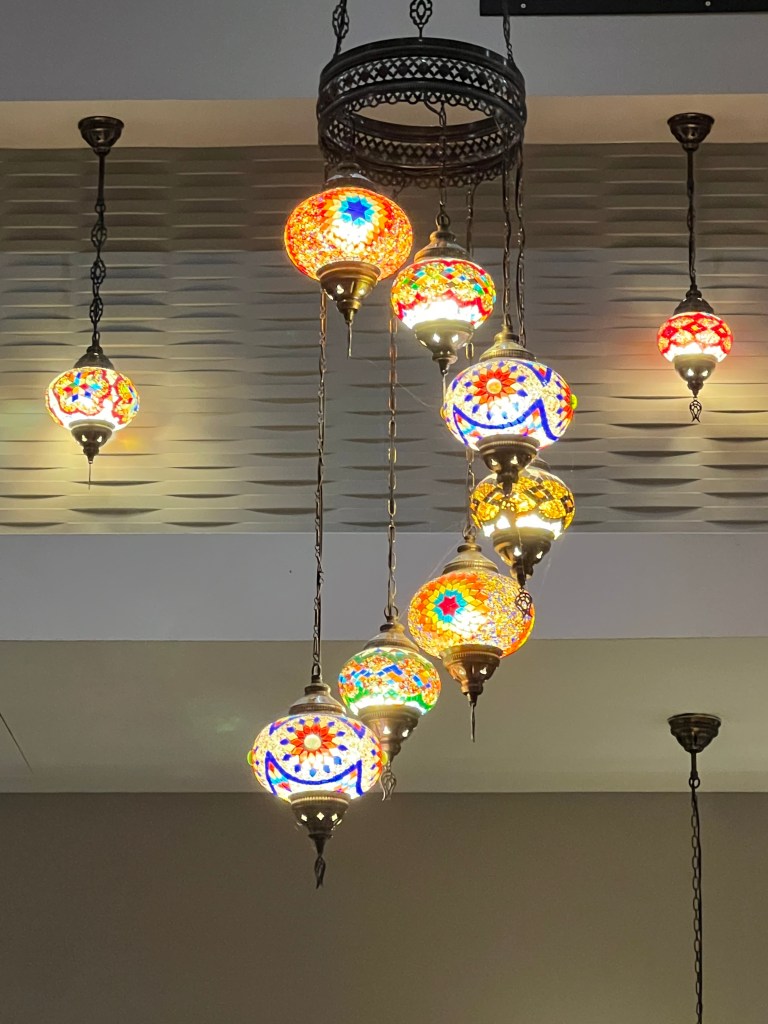
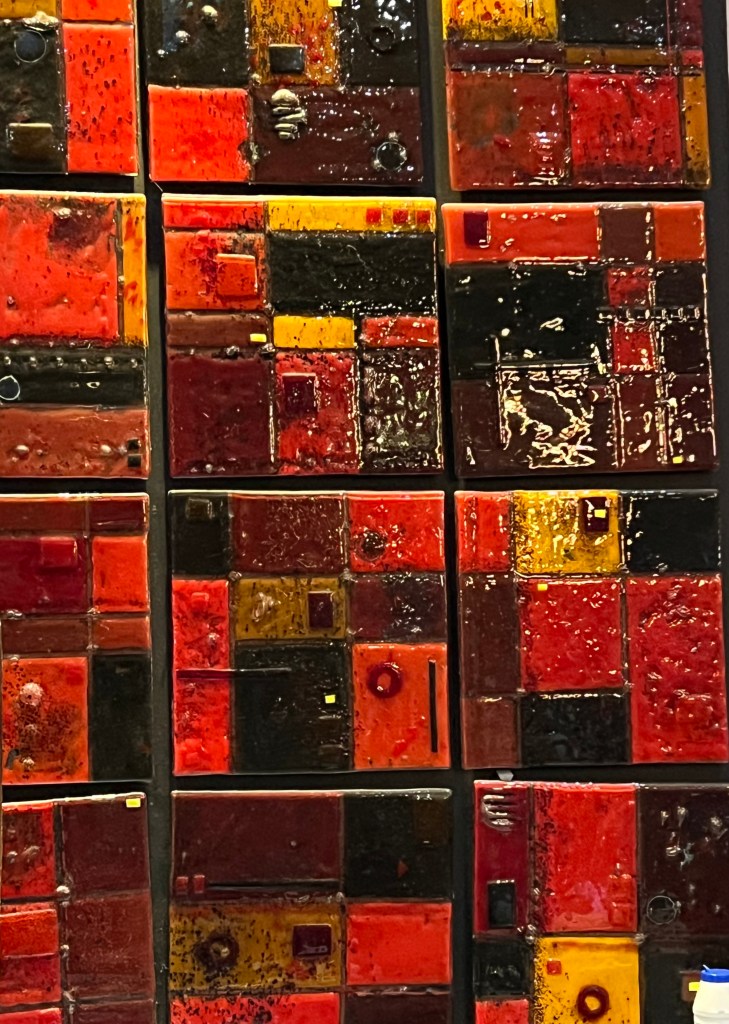
    Following a now requisite afternoon nap, we went looking for pizza and salad. We lucked into a wonderful Turkish restaurant and ordered cheese and spinach “pide” with cucumber, tomato, and red onion salad. The place had a busy, lively atmosphere but not ear-busting music and noise. It was decorated with red mosaic feature and Murano-style globe lighting.

    The chef lost our order, so the manager provided a plate of olives and flat bread to munch while we waited for dinner which was definitely worth the wait.

    Day 5 Off to Bath

    We were able to adjust train tickets avoid the rail strike and leave earlier to meet up with the Robsons in for one day in Bath before they go to Cornwall to see Land’s End and hunt for Poldark. A Replacement Rail bus was substituted for the train to Bath. A fellow wearing a Bath Rugby shirt pointed us in the right direction and rushed on to get on the bus. Smart guy because the bus was over full.

    Those with luggage had no way to get on that bus; we stood back for those without luggage and willing to stand while we waited for the next bus. Then the bad news, the next replacement bus had broken down and would not be picking anybody up today. About 20 people were stranded with no way to go.

    The bus supervisor had one possible solution if we would take a 20 passenger van. All were willing and that was good. She told us she was going off shift as soon as we were loaded and did not know when or if another Replacement Bus was coming. After a rough morning with buses and unhappy travelers, she just wanted to go home. We got to Bath about 2:00 in spite of the travails of travel.

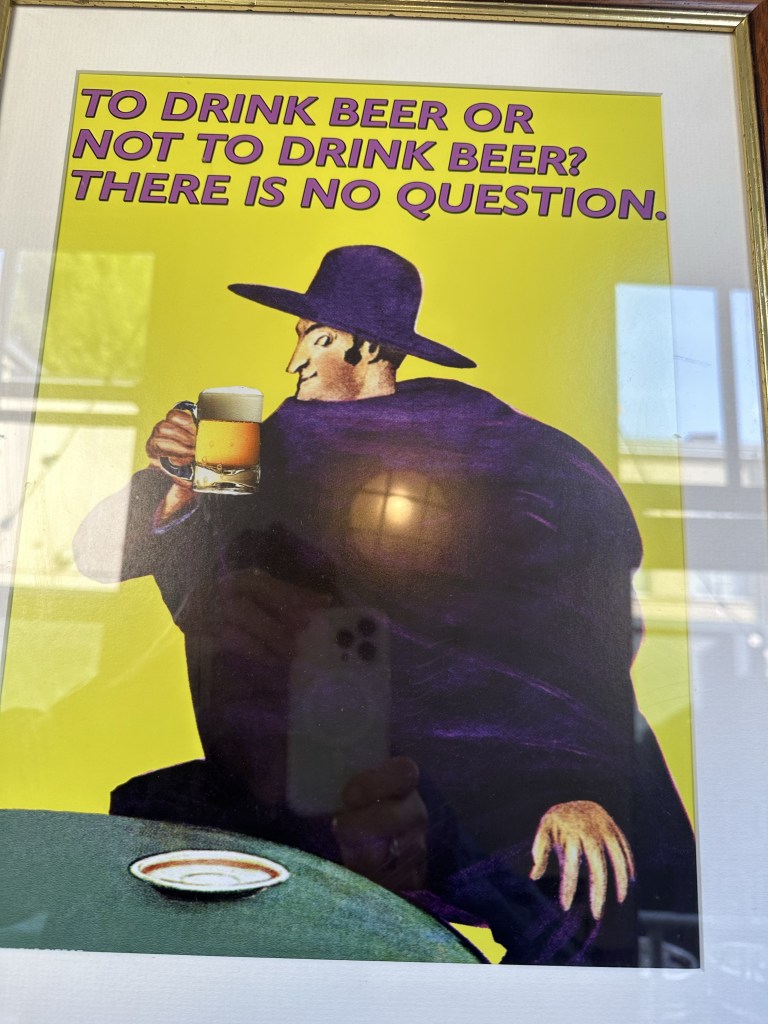
    Poster in Bath Brew House
  • Episode 8 Visiting Cotswold Villages

    October 8th, 2023

    Day 1 Travel to Moreton-in-Marsh

    Becky and I arrived in Moreton-in-Marsh about 4:00 after a full day of travel from Penrith. We had to change hotel and train reservations to avoid the September 30 train strike so we lost our seat reservations: I stood from Birmingham to Oxford.

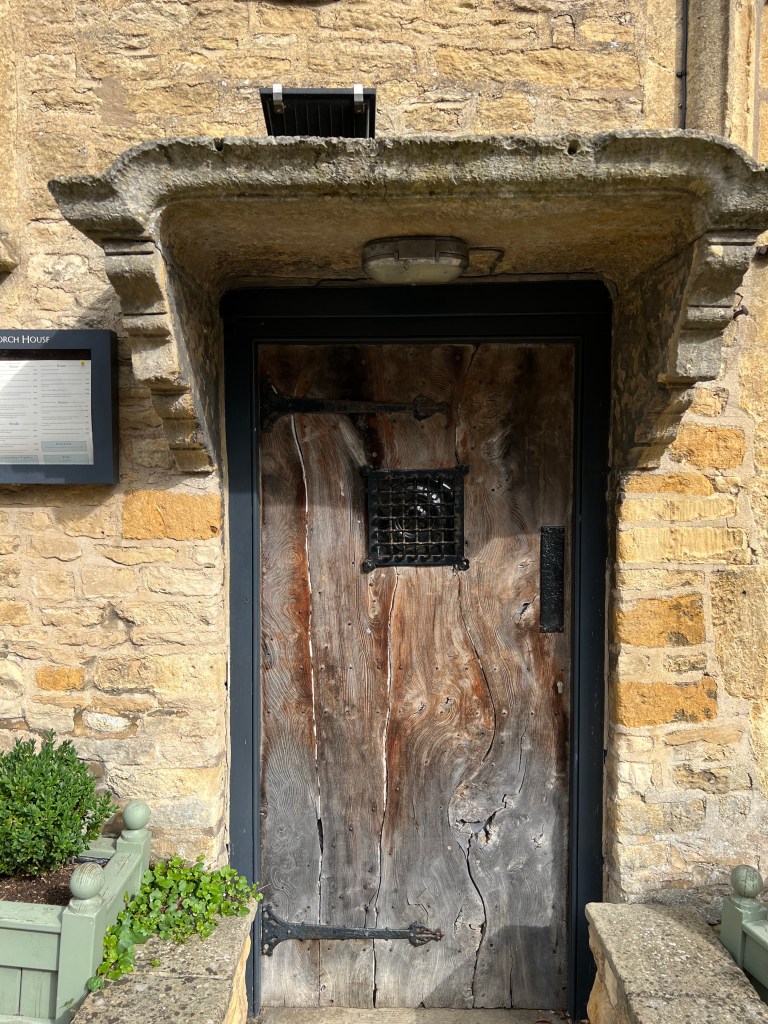
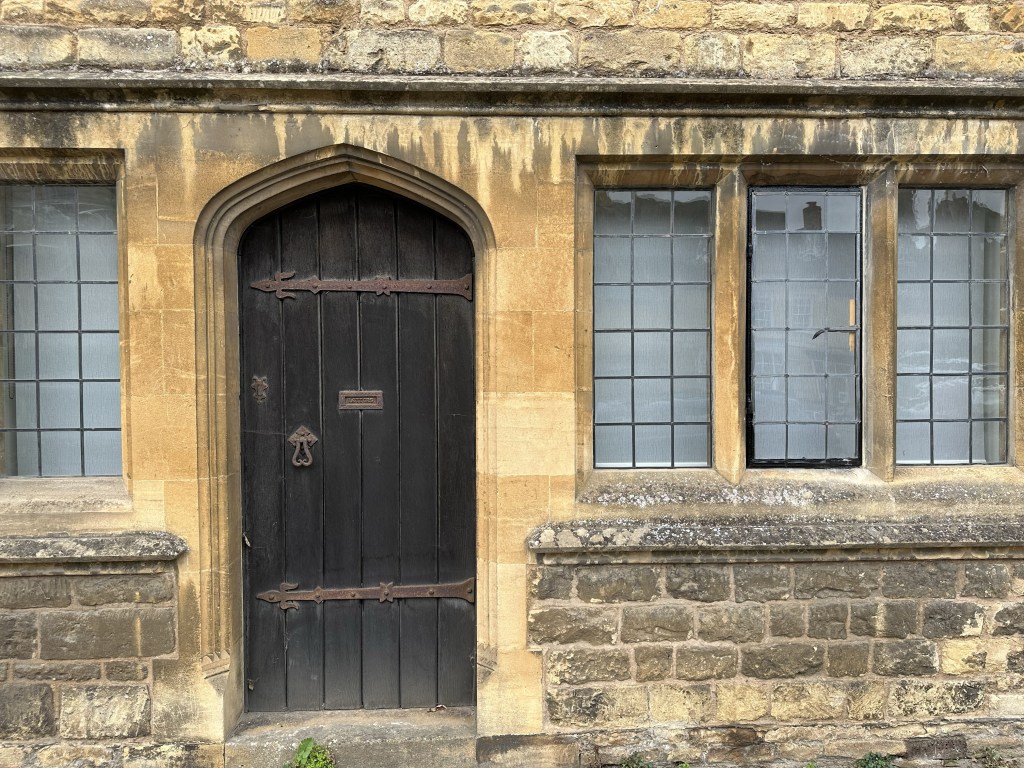
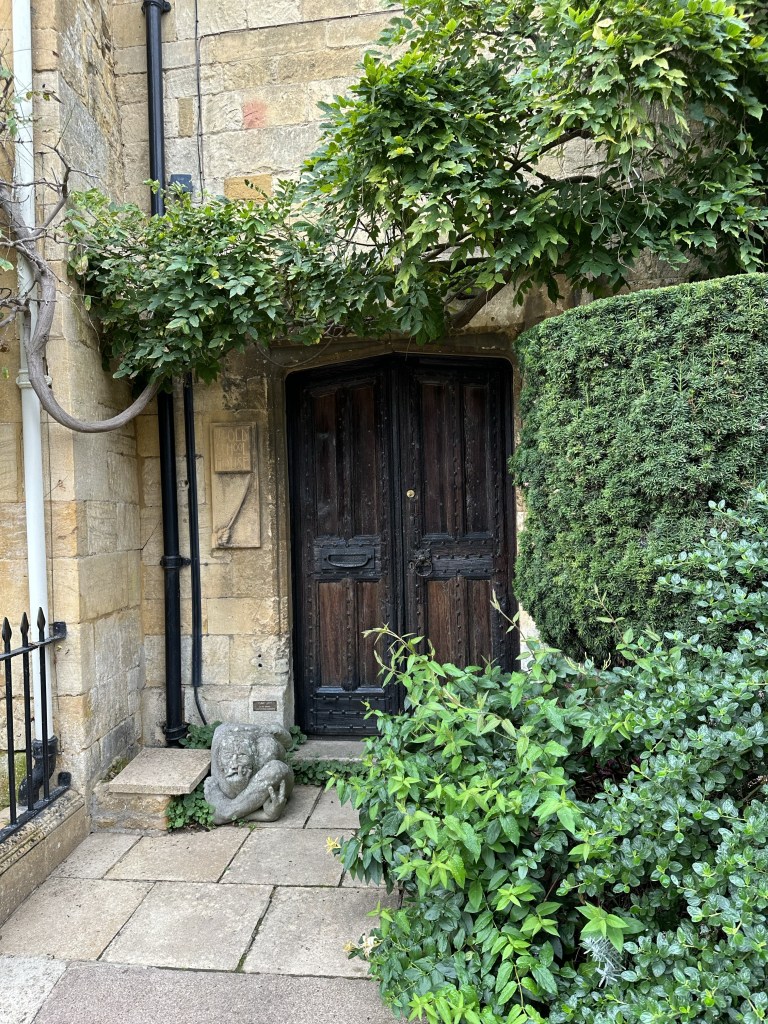
    Ancient door in Chipping Campden

    Upon arrival, we had instructions about getting into the apartment, but no directions about where it was located. We walked out of the rail station onto High Street and looked for number 16A. High Street is the main road through town and as such stretches for about two miles. None of the houses or businesses had numbers so we did not know whether right or left. Seeking information from a stranger, we stopped in an antique store to inquire; the proprietor had no idea where 16A was. He had been in that building for 45 years. Finally, I realized we had a photo of the front door and he knew immediately where it was, just a block away, and above the Victoria Coffee Shop. Hurrah!

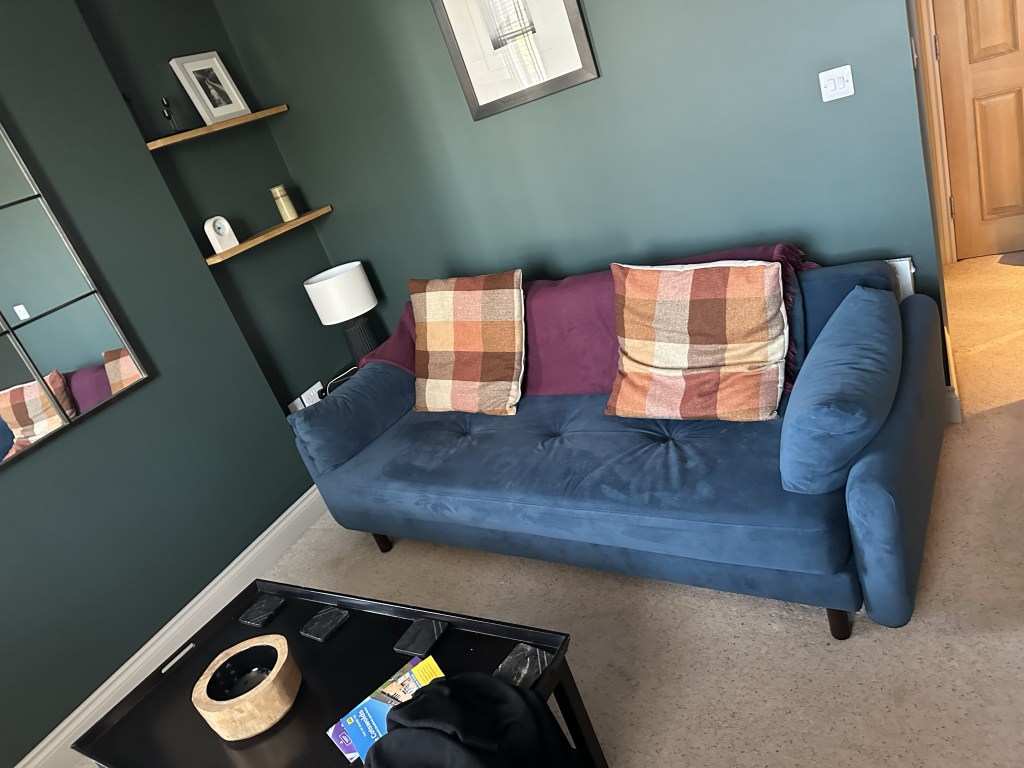
    After Becky opened the key box, we walked upstairs into the most beautifully decorated and fully equipped apartment. The color scheme was deep restful colors with rich fabrics and wonderful art. The equipment included dish washer, clothes washer/dryer, refrigerator and freezer, Nespresso, hot and cold air conditioner, and the best WI-FI we have had on the trip. This was really a luxurious place to stay for 4 days and explore the Cotswolds. Thank you James, our host.

    James’ luxury apartment in Moreton-in-Mars.
    Tap on thumbnail photos to enlarge

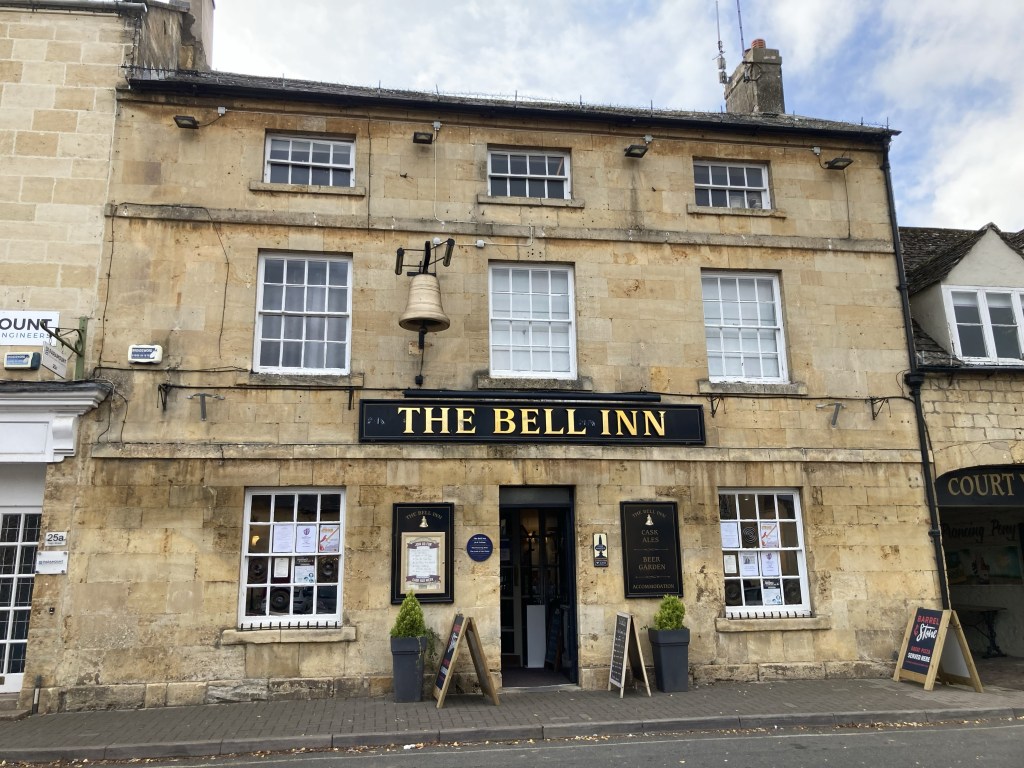
    After suitable recovery time, we ventured forth for a short walk seeking dinner. The Mermaid Fish ‘N Chips is just seven doors to the left but has only counter service in the traditional manner: fish and chips in a folded newspaper. With 40 people queued up, waiting on line was not in our plan. Next door, the Bell Inn was offering pizza which hit the spot: fast, hot, spicy served with cask ale and cider. Becky smooshed the bar manager and he gave her a customer card to encourage her return.

    Day 2 Stow-in-the-Wold and Bourton-on-the-Water

    After a trip to Tesco for provisions and to Otis and Belle for croissants, we had a great breakfast. Directly across High Street was the Tourist Info office for advice and brochures. Just as we walked up, the Tourist lady was locking up. Although the TI is not open on Saturdays, but she took time to give us directions via bus to two of the closest villages, Bus 801 to Stow and Bourton-on-Water. Bus travel is just as important in the Cotswolds as it was in the Lake District.

    If you ask us “what did you do in Stow or Moreton or Bourton?,” we looked in stores and at buildings, drank coffee and had lunch, wandered off High Street to see what was up or down this side street or that one, took many photographs, and had random interactions with friendly folk. If this sounds like nothing, it was glorious nothing.

    We enjoyed aimless strolls immensely and returned to apartment thoroughly exhausted from doing “nothing” all day. A quick stop at Tesco for salad, bananas, wine, and crackers completed dinner with our only purchase: three Cotswold Cheese samples.

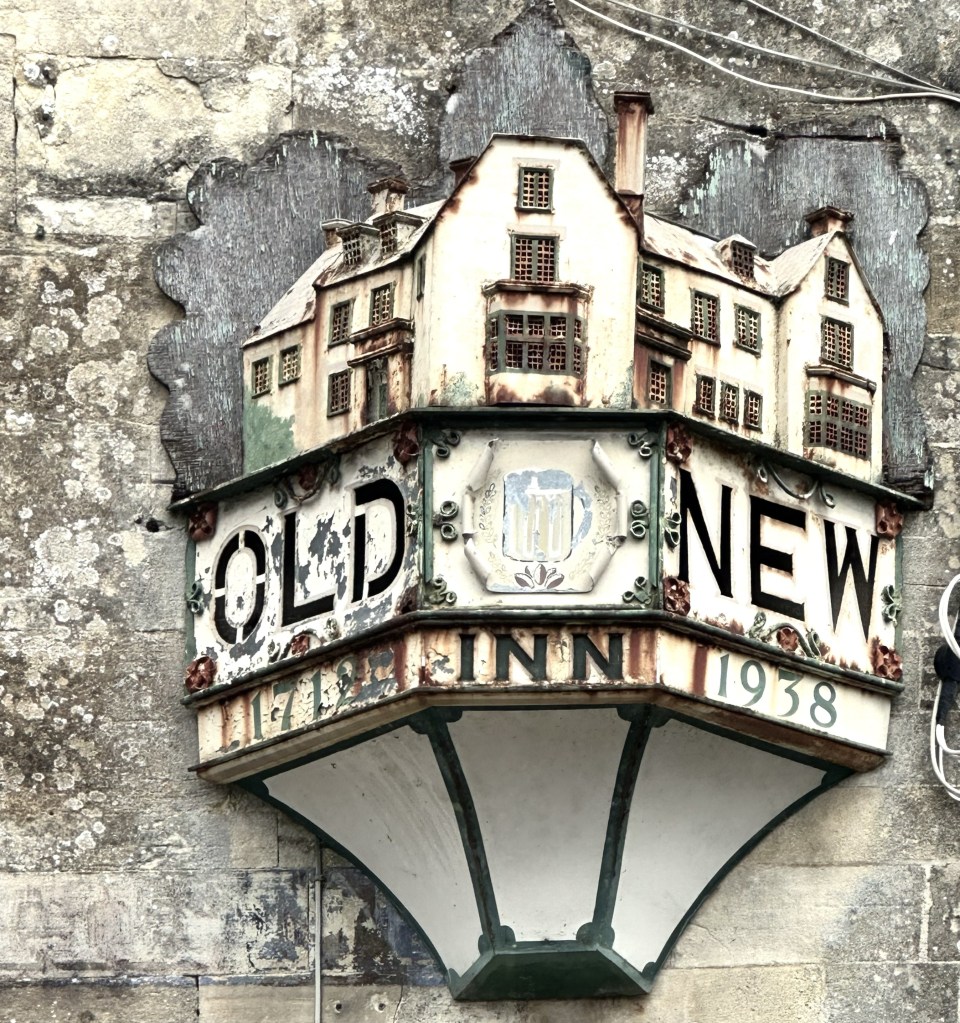
    New Old Inn 1619-1938
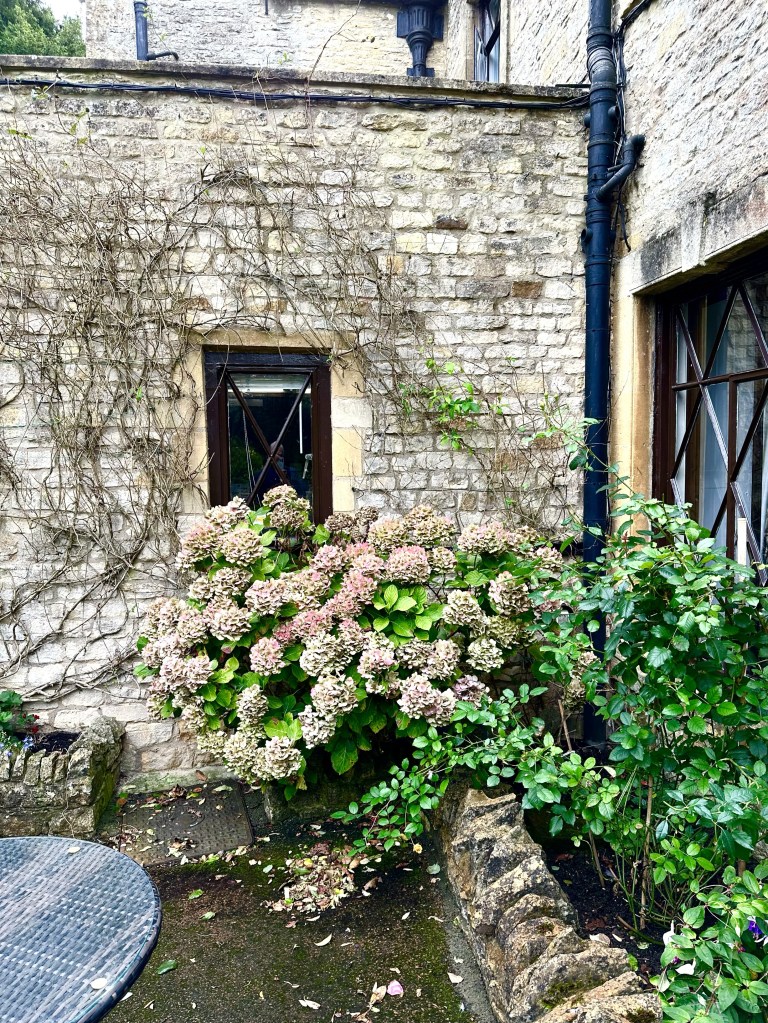
    Hydrangea at Hotel
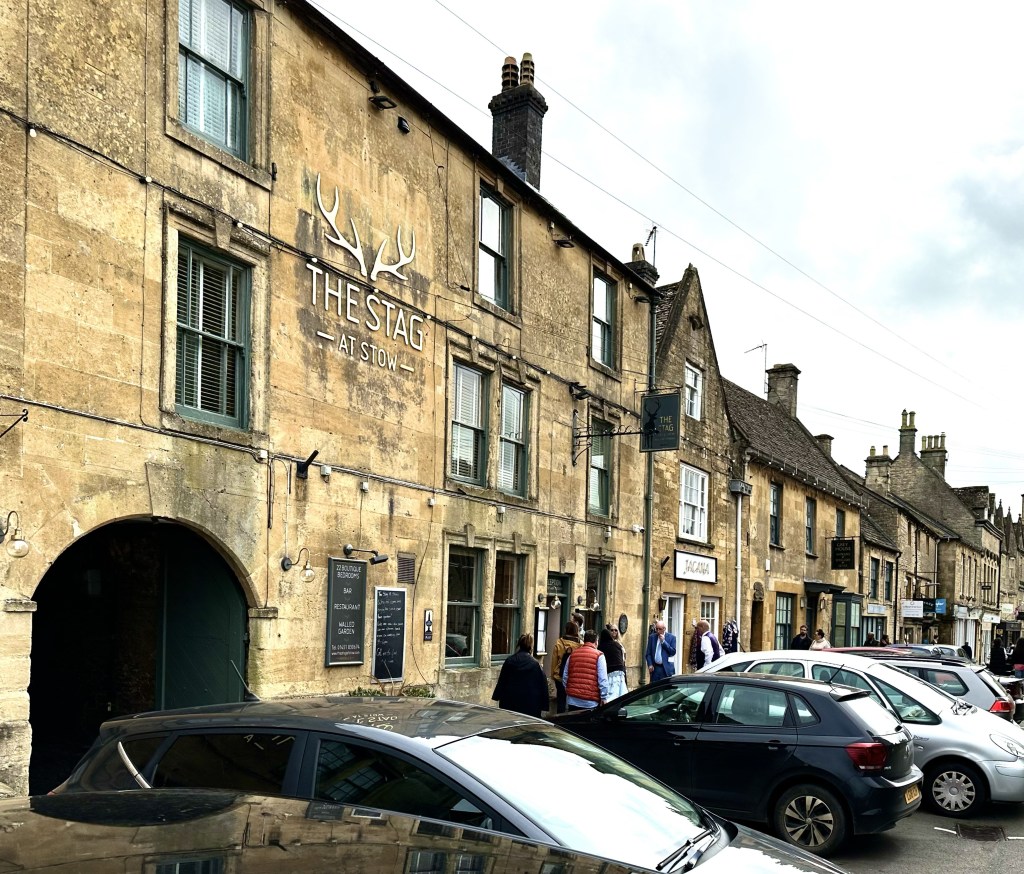
    Old Carriage Inn

    The villages are variations on a theme: High Street, market days, honey colored stone buildings, glorious plantings, and a kind of genteel atmosphere glowing like the buildings. In that way, the villages are similar. But each seems to have a special feature, historical event, or just extra charm.

    This area was visited often by J.R.R. Tolkien. Every village has something they claim was adapted into Middle Earth: the Yew Tree door, the Four Shire Stone, etc. The Bell Inn five doors down has a huge map of Middle Earth to recognize where Tolkien and his brother met for a pint or two. Revesdale Hall in the middle of High Street was used by Elton John to launch a new album.

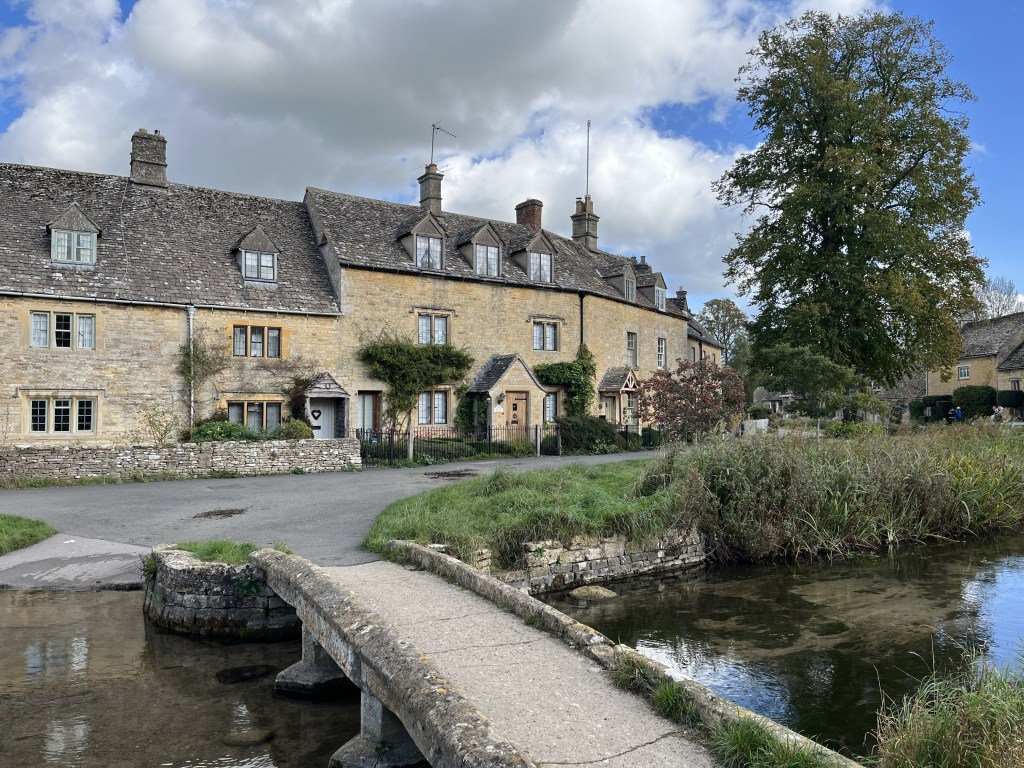
    Bourton has a beautiful stream that meanders through town with picturesque bridges of the channel. The Cotswolds have also been at the center of various battles and reports of where King Charles II was hiding during the Civil Wars are frequent, or was captured, or was executed. Whether these reports are historical accurate, we do not know but they are in the folklore that goes back 1500 to 2000 years.

    Day 3. Batsford Arboretum

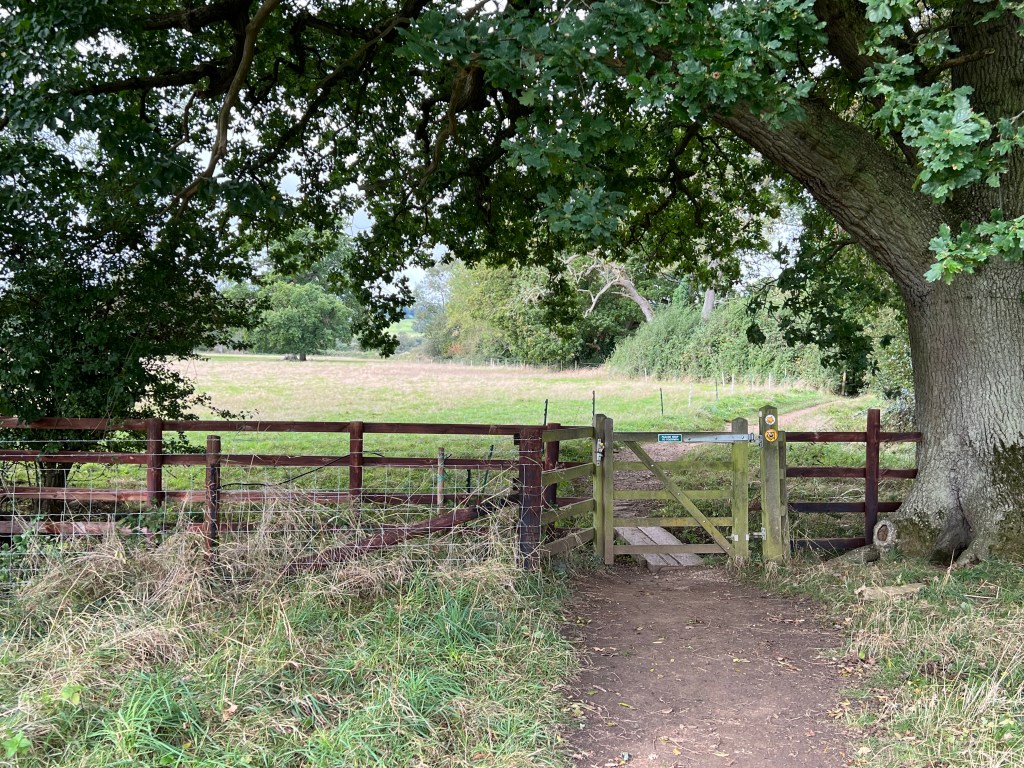
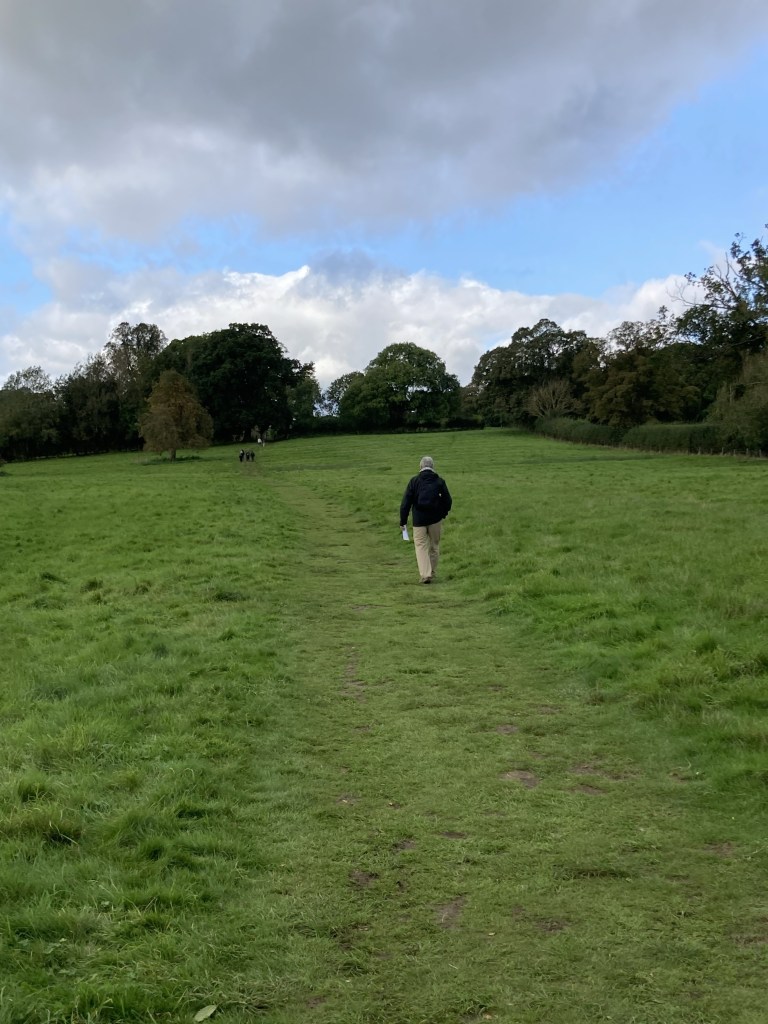
    On Sunday, buses are scarce. The TI lady suggested a walk to Batsford Arboretum by footpath that began behind our apartment. She asked if we were “walkers;” we said yes and she said “You will enjoy the walk.” We did not fully comprehend what she meant by a “walker,” a term hardy souls like the real walker from Georgia. He was on a monthlong organized course of hikes requiring him to cover certain number of miles each day.

    We are not that kind of walker! The footpath to the Arboretum went through 10 fields with gates and one field with sheep. We walked one mile looking at trees in the Arboretum. The idea that we would find a taxi waiting was an illlusion requiring a two-mile return walk. When we finally got back—sweaty, muddy, and exhausted; we could only go to bed.

    The road goes ever on

    The Arboretum was full of specimen trees from across the globe.. It has an award-winning collection of cherry trees, 122 species and cultivars.

    The family home is a manor house of golden stone built in 1800 to look older than it was. A very pleasant afternoon in a beautiful setting.

    Around 4:30, we got a message that Jim and Betsy had just arrived in Moreton and were checking in at the Bell Inn where we ate pizza. They caught an 8:15 bus to Llandudno Junction so they could jump on an earlier train than originally planned. The entire trip to Moreton-in-Marsh involved three trains and a final bus. After they rested from their long day travel from North Wales, we all gathered to catch up on travel stories with wine and cheese, followed by excellent Thai dinner across the street.

    The Bell Inn on High Street in Moreton-in-Marsh is a very old coaching house dating back to the early 1800’s with just 5 rooms above the bar. You get to them by a very narrow staircase from the outside garden area.

    The pub is believed to be the inspiration for Prancing Pony pub in The Lord of the Rings. The beer garden is filled with lots of boisterous beer drinkers every night. Fortunately the pub closes during the week nights at 10:00 pm but it is open later on the weekends. We would never get to sleep then!

    Day 3 Chipping Campden

    Visiting Circencester, site if a major Roman settlement, was the plan. However, Jim discovered that the plan required two buses and 2 hours. Since rain was forecast for 1:00, wise heads decided that nearby Chipping Campden was a better destination. Traveling by bus is just as exhilarating as bus travel in Lake District. The skill of the drivers guiding their projectile without running into fences, vehicles, and people is amazing.

    The surprise event on the ride were two fields covered with grouse or pheasants out for morning feed. The fields were newly ploughed or newly planted and the birds were having a feast. The hedgerows inhibited our vision. We barely had time to recognize what was happening since the bus did not slow for grouse photography.

    The ride to Chipping Campden took us into a completely different geological area. A big difference is that hedgerows outline the fields instead of stack stones in the Lake District. At Batsford Arborteum, we were on an oolithic ridge, the the highest point in Cotswolds. North and west of the ridge is considerably more hilly though with familiar sheep, horses, and cattle in fields.

    Chipping Campden follows the model of the proper Cotswold village. We walked up the street past store front dating back 300 years or more.

    We found some interesting objects, such as an authentic Clarice Cliff milk pitcher in her original Bizarre pattern. We have foresworn buying anything that is breakable, but we do enjoy seeing them.

    One artist coop store was showing many fine craft items including some beautiful cyanoprint/stitch work.

    Doors of Chipping Campden

    We followed a sign to the Corn House Museum honoring their sign: Closed on Mondays. But the sign led us to a medieval church. St. James Church’s origins date to 1190, but the existing building dates back to the 13th century as one of the finest “wool” churches.

    The funding for construction was made possible by Cotswold sheep. The church holds one of the oldest relics in all of Great Britain, a medieval cope (robe) worn by priests dating around the year 1400.

    Sir Baptist Hicks was instrumental in building this church and just past the ancient cemetery are ruins of his manor which was destroyed in the English civil war in the 1640’s. It never ceases to amaze us how each one of these tiny little villages have absolutely gorgeous churches filled with beautiful carvings, stained glass windows and magnificent organs.

    A large vault was placed in a side chapel for the descendants of the founding family.

    Inside St.James in Chipping Campden

    On the walk down from the church, we encountered a man on his knees with hammer and chisel. What was he doing? He was repairing the stone walkway. He was “chipping” in Chipping Campden.

    Chipping in Chipping Campden

    We found a nice outdoor tea room and ordered lunch. Our hopes to rest our tired feet and take a much needed rest were quickly dashed. Jim is really good about transportation and decided to check our return bus schedule. He realized that we had about 15 minutes to eat and run to the stop or else we would have to wait three hours until the next one. As rain was looming, we bolted our lunch and raced to the bus making it just in the nick of time.

    On the trip back, we hoped to get a better grouse photo, but the only thing we have is a very distant photo Jim took of something we know is a bird. Following an afternoon rest, we reconvened for Fish and Chip dinner from the Mermaid wrapped in newsprint. It was exemplary Fish and way too many Chips.

    Day 4 Carry On in the Cotswolds

    Splitting up is hard to do, but necessary today. We met for goodbyes at the bus/train station. The Tipps-Poplin team was going to Cardiff by train to meet some friends in Wales. Jim and I caught an early bus to continue visiting several Cotswold villages.

    Stow-on-the-Wold was very quaint, and we walked about for an hour before catching another bus and riding 10 minutes to Slaughter Pike where we got off. We began the first of several long treks through the countryside.

    Walking through the Cotswolds is a very British thing to do. The “right to roam” is guaranteed to all people of the United Kingdom and private property owners must allow people to walk on their lands. Walking paths cut through fields and pastures everywhere. Gates separate pastures and you must simply be sure to close each one after you enter a pasture so that the farm animals won’t escape.

    The road goes ever on

    Jim was an excellent navigator through all this as we walked on country roads and footpaths for several hours visiting Lower and Upper Slaughter. What we liked so much about these quaint villages was the sense of peace there.

    Little streams coursed through the neighborhoods as women tended tiny neat gardens or hung out their wash. Elderly gentlemen were strolling about with their dogs. It was a window into the actual lives of people who live in these sweet cottages.

    Even more charming without tourists everywhere in other villages.

    The weather was perfect, and we really loved it. We ate lunch outside and strolled along the river in Bourton-on-the-Water before catching the bus for home.

    Buses don’t run very frequently, so punctuality is critical. We almost missed the one we wanted; the next one was 2 hours later. We just made it before the doors closed and it was standing room only.

    Private schools are everywhere, and the students take local buses to and from school. This bus was packed with middle schoolers and then at the next stop even more kids squeezed on. It didn’t seem possible, but even more people got on at the next stop. We were all so tightly packed in that bus that no one could even move. Finally, at the next village lots of kids got off and there was room to move about a bit.

    Then an inebriated man and his large dog got on the bus. Dogs are allowed everywhere in Great Britain and often ride on buses and trains. The man was loud and obnoxious and vaping, sending clouds of smoke around everyone near him. Fortunately, we were way in the back. Then much to the horror/amusement of the kids the dog peed. Riding the bus includes full-time local color, but we were very happy to get off soon afterwards!

    Back at The Bell, Jim took a much-needed nap, while I caught up on correspondence and some reading. A late pizza here at the pub was all we had the energy for. We hoped for a good night’s sleep as we have an 8:00 bus to catch the next morning as we head to Bath.

  • Episode 7 Llanding in Llandudno and Beyond

    October 4th, 2023

    Llandudno Day 1

    We caught an 8:00 bus from Keswick to Penrith and after a short wait there caught our train to Wales.  One change of trains at Warrington Bank Quay worked out fine, and we arrived at our destination about 2:00. The Llandudno Bay Hotel is part of a long street of seaside Victorian buildings dating back to the mid 1800’s.  

    Since our room was not ready yet, we stored our luggage at reception, strolled along the mile and a half long promenade, and stuck our toes in the Irish Sea. The beach here is made up entirely of large round rocks—no sand at all. Many of the residents are concerned about this but is an effective barrier to erosion.

    Next, we walked to the end of the famous Llandudno Pier. This pier also dates back to the Victorian Era, though it has seen many changes through the years. The gorgeous pavilion at the end of the pier used to be a fancy restaurant. Now it is a giant noisy arcade, and the pier itself is lined with tacky tourist shops. You can even buy seashells from the Caribbean there if you so desire!

    This seaside town is a favorite resort town for Brits and, even at this time of year, it was very busy. Along the promenade is a great statue of the Mad Hatter. Lewis Carroll visited friends here in 1862 and was inspired by their daughter, Alice, and the area itself, to write Alice in Wonderland.  Beautiful bronze statues of the White Rabbit, Alice and the Cheshire Cat line the walking trail.

    The weather started to turn damp and chilly, so we returned to our cozy sea view room in this absolutely beautiful hotel. Tired travelers that we were, we chose take-out Indian dinners and ate in one of the many beautiful seating areas on the main floor of the hotel. As it got dark, old streetlamps lit the promenade for our evening stroll. It was utterly charming.

    Conwy Day 2

    Oh, what a beautiful morning!  After several damp days, we decided to take advantage and grab a bus to Conwy. We had a walking tour of the village on our phones which took us all around the town.  Conwy Castle, one of the four castles Edward I built to fortify his claim on Wales, was called the Iron Ring and worked quite well for him in the 1200’s!  The wall walk around the entire castle area was very narrow and tricky with tons of winding staircases, but it provided wonderful views of the surrounding countryside.

    Conwy is a small seaport and the pier boasts fresh crab buttys (crabmeat on white bread), mussels and whelks. (White bread and toast is HUGE in Britain!) We opted for beers at the Liverpool Arms. Conwy was very important during WWII, as all the supplies headed toward Britain came through this small port which was too far away from war zones to be bombed.

    Next stop, another bus, this time proceeding on to Colwyn Bay. This city is not nearly as scenic as the others. Sadly, the railroad built its line between the beach and the city center. The beach is wide and very sandy. City leaders there had loads of sand trucked in which makes the beach far nicer than the rocks of Llandudno. Poor planning makes beach access difficult with only two access paths under the railroad from the city to the beach. The long trek back and forth between the two is an obstacle has seriously hurt tourism in this town.

    Time to hop back on another bus and head home. We were tired, of course, so chose to have drinks in the bar and then eat in the hotel dining room. It is really lovely there overlooking the sea and the service is impeccable.

    Tour of North Wales Day 3

    We had pre-booked a tour of Wales that started at the train station, so we were off before 8:00. The information from the tour company was confusing, as one email said departure was at 8:00 and one said it was at 8:30. Fearing missing the bus (as we have been known to do on previous trips), we got to the station after a hefty walk at 7:45. Fortunately, it was not raining as we stood outside the closed station until 8:30.

    The tour was just us and two young women from China. Off we went to our first stop, Conwy. We were to have 90 minutes there to tour the town on our own, but we had done that yesterday which was lucky because today it was pouring rain. We opted to stay dry and get coffee in a coffee shop. We did walk about a bit and crossed the world’s first suspension bridge there which was interesting.

    The weather continued to make the tour very difficult for the guide and us. We would stop at a point of interest, jump out in the rain and listen to a small talk before jumping back under cover.

    We stopped in Caernarfon and toured the castle there for about an hour. It is another of the four Edward I built and really was very different from the other castles we had seen.

    The museum there was wonderful, and we could have spent hours there, but we had to breeze through. That is the drawback of tours, which is why we usually avoid them.

    The day had turned into a 6-drop rain day and our next stop was Portmeirion. This seaside town was designed and built by English architect Clough Williams-Ellis.  Started in 1925, it was not finished until 51 years after his death in 1976.  Funding for his project was arduous resulting in an admission charge of £12.50/person just to walk into the village.

    The architecture is meant to evoke the spirit of a Mediterranean village with whimsical designs and pastel colors adorning the many cottages and shops. The main feature of the town is a golden dome above a central square which serves no purpose other than being very showy. The small grass square beneath it holds a giant chessboard. The grand Hotel Portmeirion is a very popular spot for weddings and was reserved this day for one.
    Despite the pouring, chilly rain, we walked all about the hillside village, peering into shops and the 13 self-catering cottages that rent out to vacationers. Since we had two hours there, we took a very long warm lunch in the Town Hall Cafe. Back on the bus we now headed for what was to be the high point of our tour—Snowdonia National Park. By now the clouds & rain had obscured almost everything but the road, so we did not see much of the largest National Park in Great Britain or its crowning piece, Mt. Snowdon.

    We made a couple more stops: first at a 1400’s era house now turned lunch spot, and then an old stone tea house rumored to have been used as a pirate hideout and built in one day. It was far too rainy to linger at these spots and we all opted to pass stopping at a waterfall. Heading back to town was foremost on all of our minds. Walking back from the train station, our drop off spot, we took one final walk along the promenade as the rain had mostly let up. Warm showers and pizza in the hotel rounded out the day.

    Mt. Snowdon and waterfall in the rain and mist

    Constant rain certainly put a damper on the tour, but it still provided us with a good look at Wales and we learned a lot about the country from our guide Phil. The Welsh people have really struggled under British rule over the centuries. A perfect late example is the outlawing of the citizens of Wales to speak their native language dating back as early as 1536. People were shamed, beaten, imprisoned & sometimes executed for doing so. It was not until a huge public outcry over this egregious policy forced a vote in the EU to allow Welsh to be spoken.

     All countries, except for England, agreed with the Wales petition. The EU decision forced the hand of the British; the Welsh Language Act of 1967 was passed which required the native language be taught to all school children. Today students can either attend a school where only Welsh is spoken or one in which English is the main language and Welsh is also taught. Subsequent acts passed in the 1990’s and later now ensure that every public body providing services to the public in Wales be written in both languages. Once only about 17% of the population spoke Welsh and thanks to these measures now almost 40% do so. The Welsh are a proud people and their country is beautiful—even in the rain!!

  • Episode 6 Sloshing through the Lake District

    October 2nd, 2023

    Day 1 Penrith to Keswick

    The Penrith Rail Station was the scene of a happy reunion. Betsy and Jim came south from Glasgow to the North Lakes rail station, while Becky and I traveled north from Chester. The trains arrived about 20 minutes apart. The trips were tiring, especially for Jim and Betsy, because their train was cancelled; they waited an extra hour to board the next scheduled train which was jammed with two sets of passengers. All bets were off on getting a seat, much less the seats they had reserved.

    The X5 bus picked us up just outside the rail station. The trip from Penrith to Keswick was quite exhilarating—a wide bus hurtling along narrow winding roads; avoiding other buses and wide loads by pulling over while the others passed; stopping along the way to pick up families, hikers, and shoppers going or coming to market; and passing thousands of sheep grazing in fields marked with ancient stackstone fences. Similar bus escapades were central to Lake District fun.

    Sheep are everywhere
    Meadows

    The Lake District absolutely depends on bus transportation. A new fare scheme offers £2 a ride to any destination. The scheme encouraged people to travel after COVID and simplified the old fare system based on distance, single or return, and a complex set of daily, weekly, or monthly passes.

    Buses provide not only the main form of public transportation, but a major way of seeing the beautiful landscape. Each day we were amazed by miles of green meadows, rugged mountains (fells), placid lakes, and grazing sheep. This beauty has attracted tourists for 200 years.

    Alas, getting photographs of this panorama from the speeding bus was impossible. Becky bought a book of photographs of the Lake District. We recommend Googling to you.

    Google: Lake District photography
    Grasmere Hotel and Restaurant

    The Lake District extends over 100 miles along a series of deep water lakes with towns lined up along their eastern edge. From north to south, the larger towns of Penrith, Keswick, Grasmere, Ambleside, Windermere, and Bowness are connected by buses with regular scheduled stops once an hour, or half hour, or 20 minutes. We have learned to read bus schedules for self preservation and conservation of energy and time.

    Our bus stopped directly across from the Keswick Park Hotel/Inn, an old hotel with 19 rooms located up either the front or back switchback staircases. For the first time on this trip, taking suitcases up four sets of stairs to the second floor room was problematic.

    On our first walk into Keswick, we experienced the chilly and rainy climate of the Lake District. One person informed us that Keswick has an average of 250 rainy days a year. They seemed to be bragging that their village of Glasmere only has 200 days of rain.

    The forecast for the next three days was rain, rain, and then more rain. Our first two days were “one drop” days, mist with random small showers, which do not interfere with our activities much. On the third day we experienced monsoon rain, but I will get to that. Becky is recognized as our weathervane with a great record of avoiding rain and chill. Her record stands at five weeks in Scandinavia without rain when we wanted to be outside. It rained only at night or while we were in museums.

    A tea shop offered afternoon tea with scone, treacle cake, butter, jam, and a choice of tea—such a refreshing late afternoon custom in England. However, having cream tea at 4:00 puts Americans’ eating schedules off for many who eat supper between 5:30 and 7:30. We were not hungry until 8:00 but found a very good Indian restaurant, Sultana. Back at the hotel, we climbed up the switchback stairs to our rooms at opposite ends of the hotel.

    Day 2 Ambleside and Hilltop Farm

    Next morning we ordered breakfast from the menu of 10 choices from full English to Eggs Benedict to porridge with pots of tea and coffee. The guy from reception was the fill-in cook. Someone was sick or just didn’t show up. Businesses throughout England are struggling to find workers and are adjusting their procedures accordingly. The hotel is renting only 12 of its 19 rooms. Many restaurants only serve 4 days a week. Labor shortages exist in the US but seem more severe in Britain.

    Despite threat of rain, our plan for the day was a visit to Hilltop Farm where Beatrix Potter and all of her animal friends once lived. A bus from Keswick to Ambleside, then a bus from Ambleside took us to Hawkshead near Hilltop farm. When we got to Hawkshead, we expected to find a van or taxi to take us to the farm because the lane is too narrow for a bus. Our expectations were dashed— the van no longer operates, and the lone taxi driver was on vacation. We were stuck.

    The distance was about two miles, but the narrow lane was difficult to walk, especially as we were now feeling spits of rain. We went into several shops to inquire but got no solutions. But I used to shopportunity to buy some famous Grasmere Gingerbread to complement the toffee and fudge Betsy and Becky bought in Ambleside.

    After about an hour of befuddlement, Becky and Betsy chatted up a guy in a van to see if he had any transport ideas. He told them that the van/cab concession ceased during COVID, and the city leaders decided not to fund a new one. That decision resulted in a slump in Hawkshead’s shops which existed on selling to and feeding Beatrix Potter tourists.

    He offered to take us up to Hilltop cottage, come back for us in an hour when he completed his errand, pick us up later, and drop us at the bus stop in Ambleside.

    Beatrix Potter was a strong-willed woman who had very specific expectations for herself and her world. She was committed to illustration as her life’s work as well as her pleasure. She bought Hilltop cottage as a refuge to pursue those interests.

    Hilltop Cottage, Beatrix Potters home and studio

    The small cottage looks as if Beatrix had just stepped out for a moment. On tables and window seats, illustrations from her books are displayed beside the actual window, or cupboard, or mouse hole, or rolling pin.

    Inside Hilltop Cottage

    The house is a living museum of her illustrations. Later, she married a local barrister and bought a larger home across the road from Hilltop which remained her sanctuary and studio. Local lore has it that William was never allowed to enter her private domain.

    Her other passion was farming and raising Herdwick sheep. She realized that the life of the farmers in the area was hard. She brought financial security to the area by purchasing 16 farms and leasing them to the farmers at a fair price along with some requirements on their farming practices. To this day, the farmers are required to raise pure-bred Herdwick sheep.

    On the ride back to Ambleside on the van, the rain increased to intermittent and hard. Our new friend entertained us with local stories on the ride. He said there were 7000 miles of stone stack fences in the Lake District. I would have guessed 7 million.
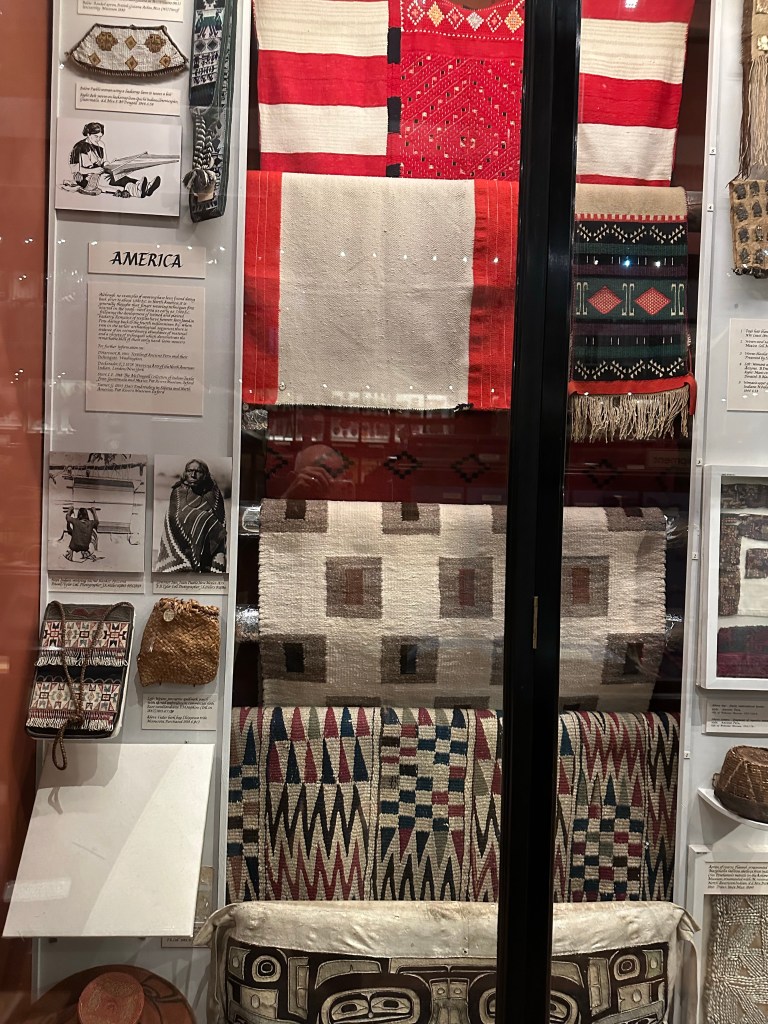
    He told us more about his theatrical experience as a child. Cameron Macintosh and Lionel Bart were casting a revival production of Oliver!. While looking for “authentic” East End kids, they found him walking along the street with his parents, auditioned him, and cast him as an Urchin. He spent two years as one of the urchins singing “Consider Yourself.” We were rescued by the kindness of a charming stranger, and we gave him £20 in gratitude.

    Our driver had suggested that we eat at a famous Apple Pie Place in Ambleside. Even mid-afternoon, it was crowded with pie-eaters. Each couple shared a sandwich and piece of apple pie. The 555 bus continued our journey to the hotel as the rain intensified. We were glad that the bus dropped us at the hotel’s door.

    The previous night while looking for late dinner, we had found an Italian place half a block from the hotel, but it was packed. At that time, Jim wisely made reservations the next night for us at 7:30. After some recovery time, we scooted across the street to Casa Bella, timing it to a lull in the downpour.

    What a delightful evening! We sat at a window table watching the continuing rain which vascillated between drip-drip and blowing gales. Now it’s raining, now it’s not. The fettucini, penne, and fusilli were as spectacular as the service. Jim noted that the owner was everywhere yet almost invisible as he orchestrated two full rooms. We celebrated the end of a fine, fine day with a dish of gelato. It was a day that teetered on disappointment, but due to a kind, delightful stranger we had a wonderful time with Beatrix, Peter Rabbit, Tom Kitten, and Jemima Puddle Duck.

    Day 3 Pencil Museum and Dove Cottage

    The day started with breakfast and a walk to the north end of Keswick to the Pencil Museum in nearby Derwent. The walk was pleasant because the rain had subsided as the chill arrived. Fall was in the air.

    The concept of a Pencil Museum seems puzzling and alluring—what could they have? Thousands of pencils? Yes! But much, much more about the history of graphite being used to mark things which goes back 2000 years. Graphite deposits were found near Keswick and were commercially mined. For a time, graphite was more expensive by the ounce than gold. This created a black market and smuggling operations in the 16th and 17th century which led to strict security to thwart unsavory characters engaged in ingenious thievery.

    The Cumberland Pencil Factory came into being around 1900 and the manufacturing process has changed as technology has improved. Three short films showed the pencil making process beginning with raw graphite which can be made into a paste and colored, cured into threads of color which are sandwiched between two pieces of wood. The raw pencils are shaped and painted. Technology has allowed the creation of pencils with many different characteristics such as water based, metal infused, soft and hard, color fast versions in dozens of colors.

    A large part of the exhibit detailed how pencils were used during World War II. If you have seen James Bond movies, you are familiar the the character “Q” based on an actual character who supported the soldiers and spies with fantastic tools and secret compartments in ordinary tools. Derwent pencils provided some of those secret compartments.

    The pencil company answered a request from legendary “Q,” the real Charles Fraser Allen, to create a map small enough to be hidden in a pencil for pilots to use if they crashed in enemy territory. Basically they created a cloth map that could be rolled up and hidden inside a pencil. There is no record of the actual process. Secrecy you know! A film in the museum showed how the process was recreated in 2000 based on one map that had survived. Every visitor gets a regular Derwent pencil as a souvenir. We were all amazed and delighted with the museum and spent time in the pencil shop looking at the many pencil products.

    Pencil sharper collection

    We had planned the rest of the day for a visit to one of William Wordsworth’s homes—a short bus ride to the village of Grasmere. Weather was overcast with spotty rain when we got off the bus and walked through the gray-stoned village. We stopped in Heidi’s kitchen for a mug of soup and sandwich as the rain became constant. By the time we finished lunch and headed to the parish church, drizzle was steady rain.

    Grasmere Parish Church where Wordsworth is buried

    Wordsworth and most of his family are buried in the cemetery next to the church. Down the road about a quarter to half a mile was his home at Dove Cottage with an attached museum.

    What would have been beautiful walk past little shops and sheep on any spring day was now a slosh through a pouring rain.

    Having no better options, we walked to the museum and arrived in time for 2:00 tour. Since we had taken the bus to Grasmere, we got a special discount on National Trust tickets almost half price.

    The tour began with a short film in the converted stable and time to explore in the small, dark, cold cottage which the family rented for several years. With the addition of children, the cottage was inadequate. They moved and later purchased a different house down the road called Rydal which is run by the Wordsworth family trust. A docent gave a short introduction to the house and answered any questions.

    The museum itself presents Wordsworth’s poetry in the context of its time and revolutionary impact. He used common language about everyday living instead of odes about gods and urns. Instead of florid verse, he spoke to the heart. His lifelong work was “Prelude,” an epic autobiographical poem. Becky bought an old, old book of Wordsworth’s poems in an antiquarian bookstore. Why get a new book when you can get one that smells like 1850?

    Another special exhibit was about the Lake District becoming a tourist destination starting in the first half of the 19th Century. Wealthy industrialists were building manor houses around the Lakes– McMansions of their day. Wordsworth was not happy with the changes and the disruption to the beauty and tranquility of the area. I doubt he would be any happier with development over the last 150 years.

    We planned to catch the bus back to Keswick around 4:00, but 4:11 bus was pulling away (early we thought) just as we were walking toward it. By this time, the rain was constant and strong. Another bus was scheduled in 30 minutes so we huddled under umbrellas and under some trees.

    Seriously wet but smiling through the rain

    Several buses passed us going the wrong direction. Finally one of the wrong-way buses stopped, and the bus driver yelled out that a bus had broken down in Windermere and that the substitute bus would be 20 minutes later than the 30 minutes we had already waited.

    By now, we were wet through and through. Our water resistant coats had relented under the constant rain. A group of seniors from Cockermouth joined our huddle. And we waited and waited. One “Out of Service” bus passed us, but with enough notice, we would have organized the seniors into a cordon to block its passage. Finally, after an hour in the pouring rain, a 555 bus arrived and 20 wet people climbed aboard. We were just happy to be out of the rain and too wet to even complain about it.
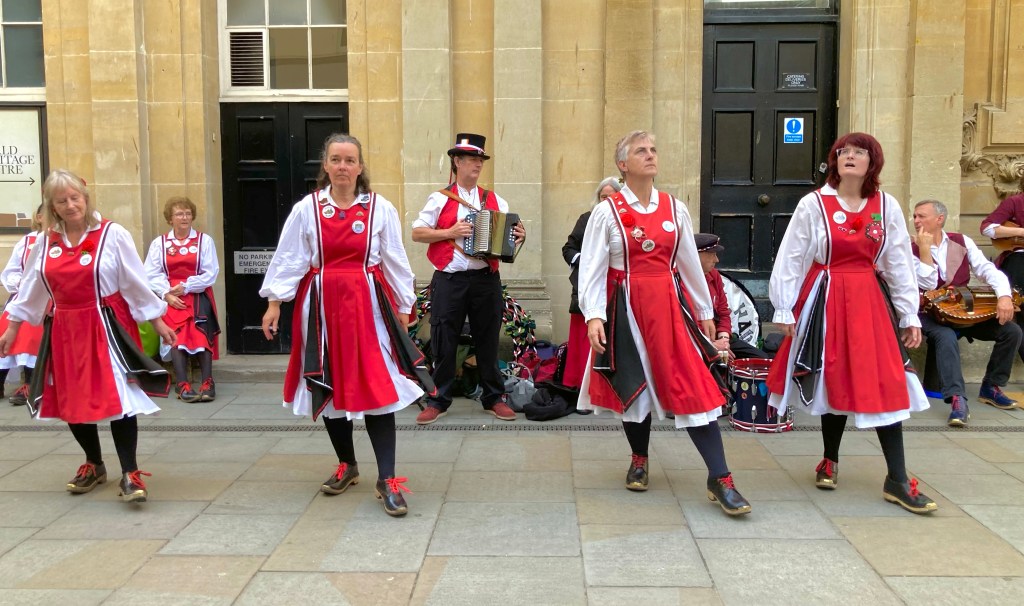
    We tumbled off the bus and into the hotel for drying, rest, nap, hot shower—whatever was needed for recovery. About 7:00 we gathered in the lounge to contemplate dinner. The gale continued outside. Becky admitted that her anti-rain superpowers had been depleted after three days of constant use.

    No one had the will to go outside again, although we briefly considered sacrificing Jim by sending him across the road for pizza from Casa Bella,

    Finally, ennui won and the best solution was eating in the hotel because the cook was in for the evening. We were pleased and surprised with the quality of fish and chips and grilled salmon dinners served. After a fun game of progressive rummy, we all retired.

    Day 4 Leaving Penrith

    Betsy and Jim boarded the 8:00AM bus to Penrith to catch the train to Llandudno, Wales. At 10:00, Becky and Steve followed for a train scheduled for the following day to Moreton-in-Marsh. Changing schedules avoided two rail strike days—September 30 and October 4.

    The rearrangement gave us a “bonus” day in Penrith to spend the beautiful, sunny day walking around. The town has wonderful history and amazing architecture. The cab driver said that the area had been part of Scotland three different times in history.

    Bonnie Prince Charlie spent his last night in Penrith before the English finally captured and executed him.

    The 1500-year old parish church is beautiful with gravestones and memorial markers in the yard.
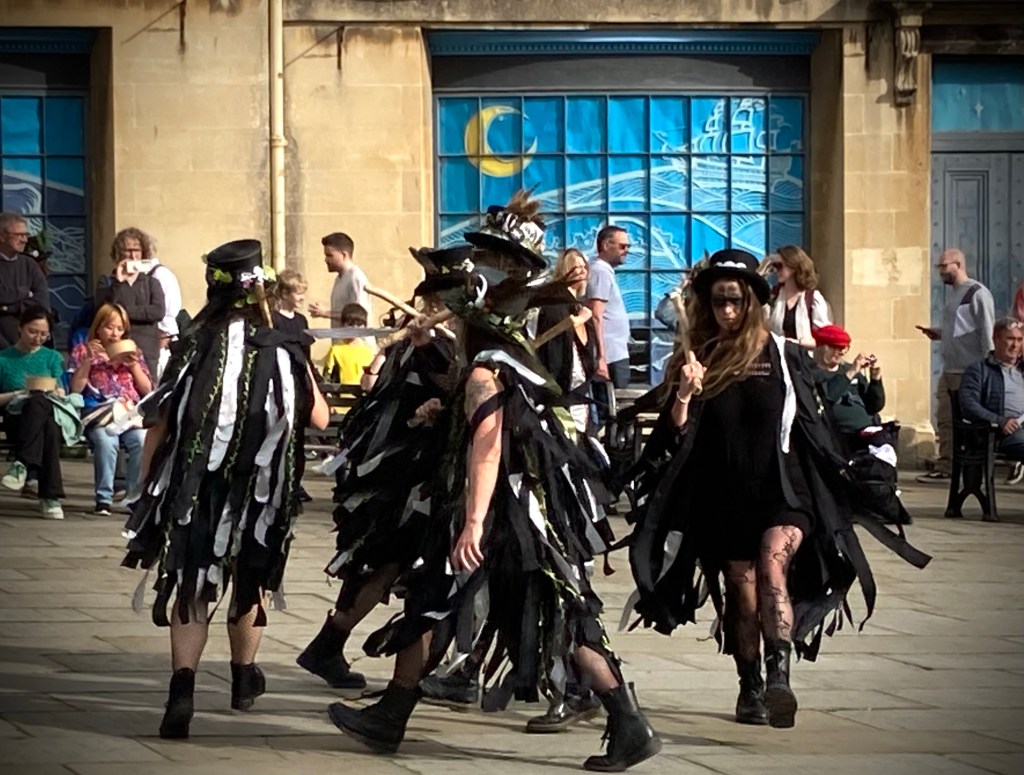
    An antiquarian bookstore had two books we could not pass up: Becky’s leather-bound Wordsworth and Steve’s art book on the Glasgow Boys, impressionistic artists from the 1910 to 1930.

    Becky has a hard time passing by a fabric store, and “Just Sew” in Penrith lured us both. We had a lively chat with owners about life and fabric. Although we had foresworn buying stuff, the recently acquired books and a few small pieces of English garden prints made their way to the Post Office.

    Located cross the parking lot from the Premium Inn Hotel was a gigantic Sainbury’s Megastore. The hotel and megastore were built on what had been the sports field for the town. The taxi driver was not happy for the change of course. But we liked being able to buy grapes, bananas, and crackers for supper and croissants for breakfast.

    Reorganizing our trains and hotel reservations around the impending work stoppage has been a major task. I thought I had it fixed until a message announced the cancellation of one train on route to Moreton-in-Marsh. So we decided just to go and see what would happen when we showed up at the rail station before 10:00 AM. The rail agent immediately changed our route to get us away from the cancelled train and go through Oxford. At Birmingham New Street, a train customer support person assisted to another person who was going to Oxford so we followed along.
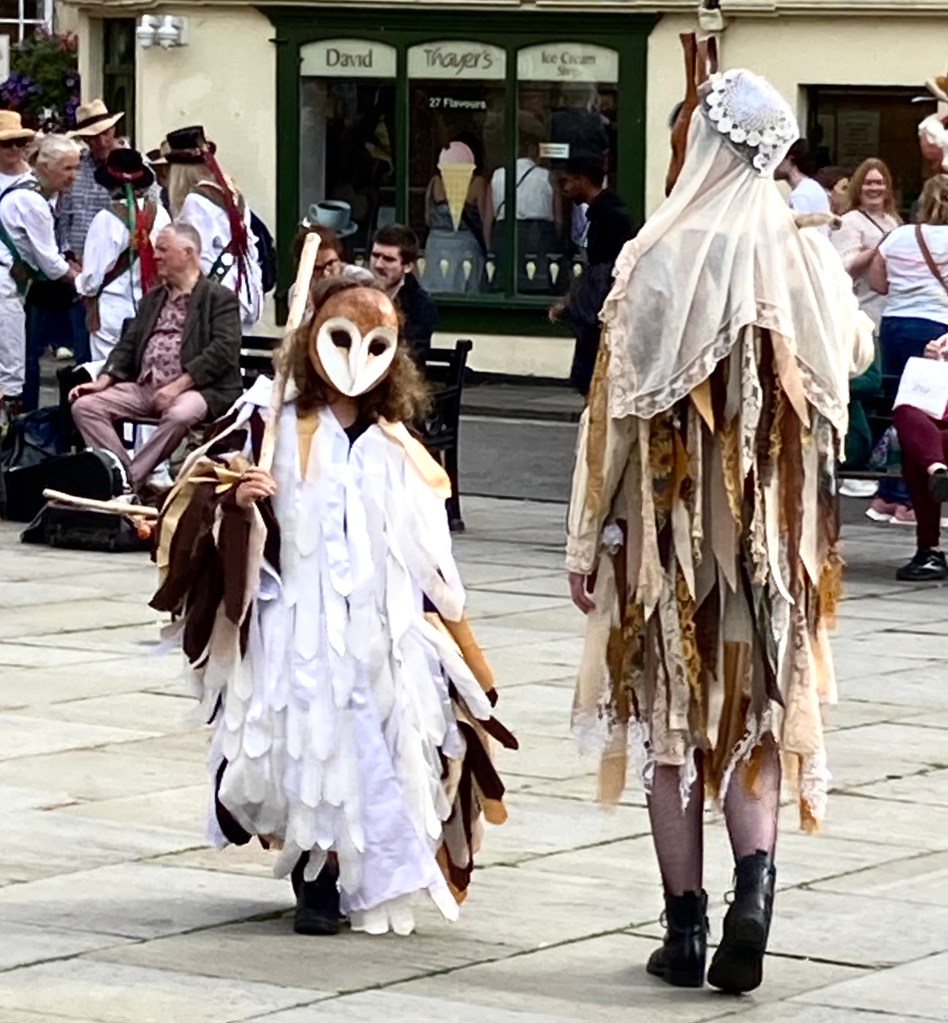
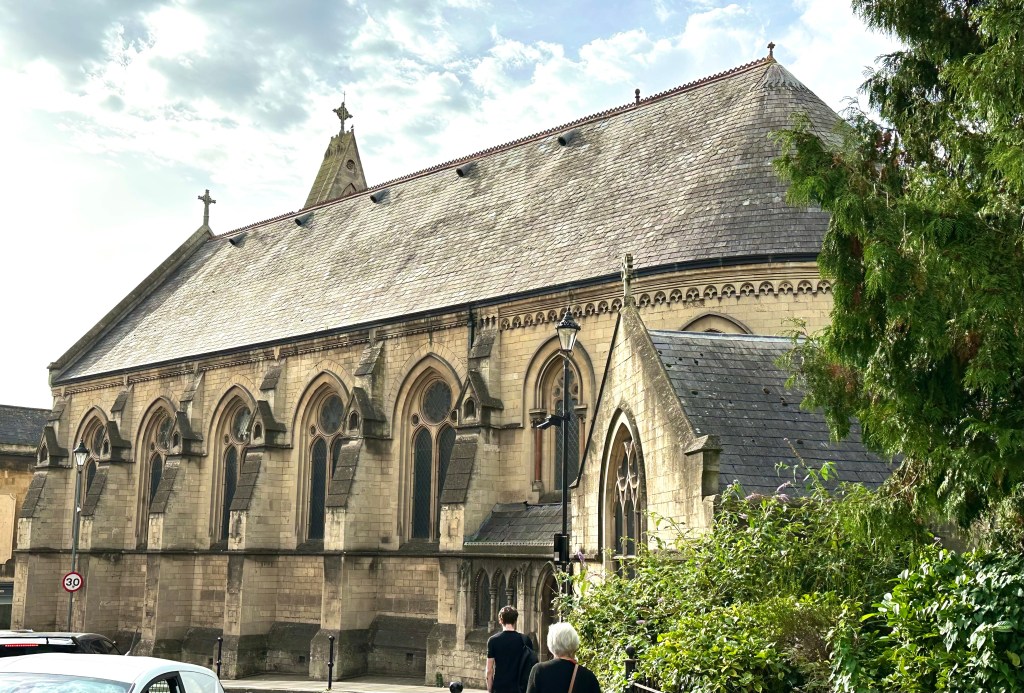
    On the new train, we did not have seat reservations. Becky found a seat while I stood with luggage because there was no room. I had two good conversations with fellow standers: a young man who was moving from Tasmania to Oxford while is wife was getting a doctorate in chemistry, and a soldier returning from two week vacation to his unit in Oxford.

  • Episode 5 Saxons, Normans, and Romans OH MY!

    September 28th, 2023

    Shrewsbury Day 1 and 2

    An hour-long train ride from Birmingham brought us to Shrewsbury. In 1972, Becky studied the British Infant Schools model in Shropshire while on a Furman University course with one of her favorite professors, Gary Harris. She has fond memories of being there and wanted to visit Shrewsbury, alternately pronounced “Shrowsbury.” As we were staying at the Loopy Shrew, we stuck with the “Shrew” pronunciation.

    The Loopy Shrew.
    NOTE: Photographs and thumbnails can be enlarged by tapping on them.

    The Loopy Shrew is restaurant with hotel. We were warmly greeted by general factotum Luanne who was a helpful resource for all things Shrew. The hotel sits above the restaurant via narrow winding stairs to a room with a great bed and questionable plumbing. The 150 years old building is showing its age, but friendly service counts for a lot.

    Many buildings in town have scaffolding around them for repairs and restoration; strange how buildings need work after only 300, 400, or 500 years.

    Across the street from the Loopy Shrew

    After storing luggage, we climbed the criss/cross maze of streets leading up hill to an ancient church, one of three prominent ones in downtown.

    Church at top of the Hill showing differing architecture

    As is often the case in England, sacred sites have been occupied sequentially by early peoples, Anglo-Saxons, Norman conquerors, Romans, Catholic missionaries, the Reformation, and Civil War; each modified the sites according to their ideas about God and religion and politics.

    We passed by the City Hall which features a statue of native son Charles Darwin.

    City hall with Statue of Charles Darwin
    and old Church now community center and cafe
    Street Scenes in Shrewsbury.
    Tap thumbnails to enlarge and reduce size

    Along with coffee shops and fast food places, we found a variety of second-hand shops run by charities for, Oxfam, cancer, refugees, cats, dogs, immigrants, children, and others. They all appeared well stocked through recycling clothes, dishes, records, books, and other detritus of disposable society. Becky looked in several fabric and clothing stores but only bought English print fat quarters (1/2 yard cut in half vertically as opposed to 1/4 yard cut from selvage to selvage).

    Building in Chester show many styles of architecture

    Avatar Indian restaurant was recommended for their lunch special at £10 for a starter and main. We both ordered the Kathmandu curry with extra spinach; Becky’s was mild while mine was the hottest I have ever tasted. I only ate the vegetables and meat from the sauce. I think communication problems arose when I asked how hot the dish was. I believe that was interpreted as my wanting HOT because that is what I got! But the naan was superb.

    Ten thousand steps later, we were back at the Shrew for nap. Later we went for supper, most cafes were closed. We found an open Wimpy diner and ate a chicken wrap and fish and chips which were pretty good and the best option after 8:00. After an excellent breakfast at the Shrew the next morning, we packed up and stored luggage.

    Breakfast at the Loopy Shrew

    Day 2 Shrewsbury

    We walked up the hill again this time to Shrewsbury castle. The grounds are very impressive with the ancient walls leading to a relatively modern museum building. The flower display honored recent Coronation of King Charles, also the Earl of Chester.

    We walked up the hill again this time to Shrewsbury castle. The grounds are very impressive with the ancient walls leading to a relatively modern museum building. The flower display honored recent Coronation of King Charles, also the Earl of Chester.

    Doorway in Ancient Wall
    King Charles Coronation insignia
    Gate to Shrewsbury Castke
    Shrewsbury Castle exhibits history of town and military unit

    A museum in the castle tells the history of the town and the many military events in its history. The castle was built for protection again invaders—the same invaders who built and destroyed churches. Much intrigue, valor, cowardice, devastation and horror is associated with the battles fought and lost over the centuries.

    Historic prints of Shrewsbury Castle

    The castle also houses the Shropshire Military Museum—full of uniforms, weapons, medals, citations, and photographs that document three or four hundred years of military engagement by the unit in conflicts European neighbors and rivals, territorial acquisition and subjugation, and finally peacekeeping in Bosnia.

    Soldier Uniform
    Description of Uniform
    Regimental drum listing campaigns

    It is testament to “God and Country” that so many Shropshire lads went off to fight and often die in climes far from home. The museum honors their memory as it should, but also reminds us of the tremendous human loss in wars fought between kings and nations for pride, avarice, land and power.

    Regimental Silver—this is only one of several displays of silver

    The Severn River makes a big loop around the town leaving land access only on the east side where the old fortress was placed to defend the town, usually unsuccessfully.

    Severn River makes loop around Shrewsbury
    Sculpture along Severn River with Shrewsbury Theatre in background

    A leisurely walk following the loop of the Severn River brought us to the Market Hall with two levels of stalls displaying fresh produce, cheese, bread, a variety of edibles, clothing, antiques, crafts, books, and much much more. A pork pie and a ploughman’s pie ordered at the Pie Stall would have been much better warmed up.

    Market Hall

    When we stepped out of the Market, the rain—forecast for the day—came suddenly. We scurried across the street to the Loopy Shrew where we waited out the storm with two cups of coffee, and Becky finished off her Ploughman’s pie. Luanne retrieved our luggage, called a taxi for us, and waved us out the door.

    Afternoon cappuccino at the Loopy Shrew

    At the rail station, our electronic tickets worked perfectly this time. But our train was on a different track on the different level of the station; we had to exit, get our electronic tickets deactivated, and take the lift up to track 4.

    We were glad for half an hour at the station to get to the right gate at the right time. Many people show up at one minute or 10 seconds before the train pulls out. A few of them are totally frantic (as I would be), other people are very calm and step inside just as the door closes. Finally there are a few who race up to the train and pound the door button after the whistle has sounded and the train in moving. Becky observed a serious “step back” from the train agent to one of these pounders. We prefer to be early and wait thirty minutes to avoid the panic.

    Chester Day 3, 4, 5

    One hour north of Shrewsbury is Chester, another city with a long history of invasions and battles. Its location was strategically important to the Saxons, Normans, Scottish raiders, Viking raiders, Royalists, Tudors, Catholics, Protestants, Parliamentarians, rebels, and border bandits of various stripes.

    Chester Rail Station

    We checked into the Queen Hotel directly across from the Rail Station. The Queen was purpose-built by the railroads in the 1880s for tourists and still serves that purpose. Two bus loads of tourists jammed up the bar and dining room in the hotel.

    The once-grand hotel is 150 years old and decorated with a disarming melange of faux Roman artifacts, photographs and paintings of royalty, and strange modern pieces such as two toilets covered with mosaics, one all black and one all white, mounted on the wall either side of the elevator.

    Fifth-floor rooms are named for French kings various Louis, Philips; our room was decorated with Napoleon III standing sentinel over the bed.

    Having eaten late lunch at he Market hall in Shrewsbury, we were not hungry when we arrived. The weather had turn damp and threatening, so we did not want to get out and search for supper. WH Smith in the station offered a Meal Deal with sandwich, snack, and drink for £5.50. Two Meal Deals were perfect fare for the evening followed by a spirited game of Progressive Rummy with scores Becky 2, Steve 1, and Tied 5.

    The next morning, we expected to take a day trip to Northern Wales and Llandudno. We had croissants and coffee from a bakeshop nearby and waited for the excursion bus. We waited 40 minutes past the scheduled pick-up time and were about to give up when the Busy Bus arrived. Although I had a booking confirmation on my phone, the bus driver had no record of us and had only one seat left for the day.

    Oh well. Instead of visiting North Wales, we got the Hop On/Hop Off overview of Chester. An excellent tour was narrated beautifully and enunciated perfectly by Dame Judi Dench, not in person but in voice. It was a pleasure just to listen to her stories.

    Legend has it that local Chester men were devastatingly accurate archers. They could shoot 12 arrows in a minute which could pierce chain mail and armor. If an archer was captured, the enemy would chop off two fingers, ending their careers as archers. This act somehow resulted in the single finger rude salute known to many. All of this according to Dame Judi Dench.

    After the HOHO tour, we walked through the partially excavated Roman amphitheater said to be the third largest amphitheater in Roman Europe holding up to 5000 for games and sports.

    Partial Excavation of Roman Amphitheater in Chester.

    The Roman Gardens contain a collection of columns and pediments that have been excavated around Chester.

    Roman artifacts collected and displayed in the Roman Garden

    The Grosvenor Museum focuses on local history and geography including an impressive trove of 150 Roman burial markers, tall and beautifully carved granite stones in great condition.

    The stones were found during excavation for road works.

    After the Roman occupation ended about 500 CE, the stones survived because they were recycled as building materials and filler for the town walls. This protected the markers from 1000 years of weathering. Many other Roman artifacts were excavated at sites around Chester and in the area and displayed in the museum.

    Burial stones from Roman cemetery were preserved by being used as building materials for the city walls. Tap to enlarge.
    A model of the Roman Fortress and Garrison at Chester for 500 years.

    We visited St. Michael’s church, a beautiful old church which had been the first Catholic cathedral in Chester but is now a parish church having survived the battles and traumas of 1000 years. It also has a display of Roman ruins but the most interesting exhibit was the faded painting on a column in the church. The church is very active in community work still but has suffered from decline in attendance and support.

    It is very active in community work still but has suffered from decline in attendance and support.

    By 1:30, we were looking for food and found to our delight a quiet restaurant on a side street named Moules A Go-GO Bar and Bistro.

    Their fixed price lunch specials at 12 pounds including their namesake choice—a giant bowl of mussels and French bread for sopping. Becky’s sea bass with vegetables in cream sauce also benefitted from the bread for sopping.

    Moules A Go-Go had great lunch specials

    Major streets downtown are a traffic-free pedestrian mall.

    Chester east gate with famous clock

    This day wandering bands of Morris Men and Morris Women performed traditional dances in traditional costumes with traditional songs and instruments.

    We stopped to watch three different clubs perform. During a chat with one man from Yorkshire, he showed us all his medals and pins from various places including Canberra, Australia. The camaraderie of the groups reminded us of our Square Dance friends and trips.

    Scenes with Morris Dancers

    Because Chester suffered so many invasions and damage over years, many of the original old buildings were destroyed. City leaders decided 100 years ago to rebuild many buildings in the city center using half timber construction.

    Modern half timbered facade

    As a result, Chester has many relatively modern buildings in the downtown looking old with different half timber designs.

    Stonework from Chester Cathedral

    We finally arrived at the huge, impressive Chester Cathedral. Wandering through the many stone walls, aisles, and doors, we gazed at beautiful stained-glass windows— both ancient surviving glass and replacements in decidedly modern design.

    Evensong began at 4:15 so we stayed for the service with beautiful singing. We took the HOHO bus back to the hotel and again had late dinner with Meal Deals from WH Smith.

    Modern stained glass in Ancient Chester Cathedra

    Several times during the day, we noticed a group of people dressed in clothing from the 1880 to 1920 walking around town. We saw them near the museum, walking in the street, and finally at the coffee shop in the Cathedral.

    Finally, Becky asked one of them what was going on. She answered that they make period costumes and like to walk around town together. That’s it.

    On Sunday, we took the day off from sight seeing and emphasized maintenance. We slept late and had breakfast from Costa Coffee. I was second in a line of 15 people at 8:30. You would think the coffee shop would be open earlier but the rail station was just waking up at 8:00.

    The big maintenance task was washing clothes. Although Judith had done a wonderful wash for uin Birmingham, Becky was at the end of her clean clothes. We googled a washateria and its location—not too far away but too far to carry a suitcase and two bags of laundry.

    We tried to get a bus, but Sunday bus schedules are few and far between so we got a taxi. The attendant was very helpful with change and detergent. We drank coffee in the cafe across the street while washing.

    Round tower hidden between houses

    We finally caught a bus on return trip and again later when we went out for supper. The bus interchange is close to several restaurants including Chester Fish ‘N Chips. Becky ordered the namesake meal while i had salad, lasagna, and two scoops of Carte d’Or ice cream, fabulous rum raisin and pistachio.

    Back to the hotel around 5:00, we continued our easy day with a nap and NYT Spelling Bee; I did some reading and writing while Becky caught up on a downloaded quilting program. Taking a maintenance day is important on long trips. Tomorrow we will board a train to Penrith in the Lake District where we meet Betsy and Jim after their time in York, Edinburgh, and Glasgow.

  • Episode 4 Tracking North

    September 27th, 2023

    While we were wrapping up time in Cambridge, Betsy and Jim struck off on their own to Yorkshire and Scotland, the North Country for nine days, September 16-25, 2023.

    York Day 1

    Saturday morning Jim and I left Cambridge and started out on our own to York. 2 1/2 hours later and only one train change, we arrived in York just as the rain stopped. We walked 45 minutes through town to our Holiday Inn Express and settled into a lovely room to catch our breaths.

    After a bit of rest we began exploring York. First stop was to purchase lunch at a nearby Sainsbury’s supermarket, The day was perfect for people watching so we took our sandwiches to King’s Square to eat and people watch. We were entertained for almost an hour by a street busker who calls himself “the man with big balls”. Next we strolled through the many wonders of The Shambles ( “the best large open market in England” as it calls itself) and the charming side streets of York. Needing coffee we stopped at Caffe Nero for a delicious Americano and needed rest.

    With recharged batteries we proceeded to York Minster for Evensong. Eight new Canons were being inaugurated so it was a very special service led by the Archbishop of York. Also in attendance were the Archbishops of Canterbury and Jerusalem. After a lengthy ceremony for the new canons the Archbishop of York gave a warm and inspiring sermon. He seems to be a very approachable and humorous man. Of course, all of this was accompanied by the amazing choir composed of 12 adults, 16 girls and 16 boys (ages 7 and up) and beautiful organ music. It was a wonderful experience!

    We strolled home on the bustling streets where every restaurant and pub was filled. Exhausted we crashed at our hotel with wine and pizza from the restaurant downstairs.

    York Day 2

    After a good night’s rest we embarked upon Rick Steve’s’ walking tour of York. Luckily it was another perfect day. First stop was the ruins of St. Mary’s Abbey first built in 1088 by William the Conqueror and destroyed by Henry VIII during his reformation of the church. The Yorkshire Museum was built on top of the Abbey’s ruins. Unbelievable care was used during this construction carefully preserving all the ruins in place in the lowest floor of the museum. The museums rooms on that level are built around the remaining columns and walls. Even an original mosaic floor from the Abbey is there. There are also extensive museum displays of the Roman period of York’s history and prehistoric times, but it was the Medieval Wing that enthralled us.

    We continued on our walking tour by climbing the stairs at the Bootham Bar to the top of York’s 13th century wall. After about an hour of walking along the wall top we returned to City Centre and the Shambles for lunch.

    After eating and resting we walked back along the wall top towards the train station in an attempt to join a tour of the wall. Sadly, they were not open. So instead we stopped at the York Tap where Jim enjoyed a pint of bitters and I a lager.

    Now it was time to return home after a wonderful day of exploration in this remarkable city.

    York Day 3

    Rain was forecast for today so since we got off to a late start this morning we decided to head directly to Micklegate Bar and try to secure a tour of the city walls. We arrived just as the morning tour was starting and spent the next 90 minutes with a wonderful guide walking along the wall and learning it’s history. Afterwards, we toured the small City Walls museum within Micklegate Bar where a docent was thrilled to have two patrons and held us captive with tales of the wall for 30 more minutes.

    As we left, it began to rain quite hard. As we stood in the outside queue to purchase tickets for York Minster, we rued the fact that we had not purchased them online. As luck would have it just as we entered the nave a tour was beginning. We spent the next 1 1/2 hours being taught many of the wonders of this beautiful cathedral.

    We left York Minster to sunshine and sought out coffee and a snack since we had missed lunch. As Jim ordered, I realized that I had lost my phone. To say panic ensued is a vast understatement! We gulped down our coffee and ran back to York Minster to where I thought I might have lost it and wondrously they had indeed found it. A charming young lady took us to the Cathedral’s in-house police department where I retrieved it. (That is a part of the cathedral that is not generally seen by the public!) I truly believe the many saints of York Minster were looking out for me.

    We had hoped to go to the York Castle Museum today, but our side trip to the police station made that impossible. Instead we opted for more coffee and cake eaten in a much calmer manner.

    We returned to our hotel briefly and then ventured out to the Church of St. Denys which was just around the corner. It had caught our attention each day and we decided to investigate it since it was so close. The doors were locked, but as we poked about the church’s cemetery a lovely gentleman asked if we had arrived early for the talk. We said no, but he said he would unlock the church and let us peek in as the talk was not to begin for 30 minutes or so. His name was Charles and he has been the church’s warden for 32 years. He told us all about the history of this small church, which dates back to the 12th century, and that we were welcome to stay for the presentation by Gillian Waters on the Siege of York. She is a professor of Continuing Learning at York University among other things.

    It was a fascinating talk and slide presentation for about 40 people. As an interesting aside, this small church is the only church in York to provide signers for the deaf for their services and programs. We did not stay for the wine and cheese post talk party, but instead ran in the rain to Tesco for a late dinner snack and garbage bags to protect our suitcases from the heavy rain that is forecasted for our trip to Edinburgh tomorrow.

    Edinburgh Day 1

    After an easy 2 1/2 train ride from York we arrived at Waverly Station in Edinburgh. It is quite a bustling place and it took us a bit to get orientated, but then we set out for our hotel in a light drizzle. Unfortunately, it is a good 30 minute hike from City Center. However, The Brooks Hotel is a charming small quaint boutique hotel with a lovely room so we are happy here.


    After dropping off our luggage we ventured back into the heart of the city. We decided to go directly to the National Museum of Scotland and spend the afternoon there as it was raining pretty hard by now. It is a huge museum with thousands of interesting objects, Our hope was to learn a lot about Scotland’s history which the museum holds but we found it a bit difficult to navigate. It is not arranged in a fashion easy to follow which is frustrating but still a nice way to spend a rainy afternoon.

    The museum closed at 5:00 so next we went to St. Giles’ Cathedral. Likely founded in the 12th century this medieval parish ministered to the area’s lepers. (St. Giles’ is the patron saint of lepers.)

    The current building was begun in the 14th century. In 1559 it became a Protestant church and is considered today to be “the Mother church of World Presbyterianism”. John Knox was the minister there from 1559-1572. Understandably, it is one of Scotland’s most revered cathedrals.

    St. Giles Cathedral

    Not wanting to trek all the way back to our hotel we strolled down the Royal Mile in the rain for an hour or so people watching and window shopping. Finally hungry, we headed back and stopped at the Doctor’s Pub for pints and burgers. This building was created to mark the opening of the Royal Infirmary in 1874. Relics of that time are all around the pub serving as a macabre reminder of its place in Edinburgh’s gothic history. It also initially housed a cabinet and coffin maker for the then nearby mortuary. The place was a mad house of soccer enthusiasts watching a big game, but we were lucky to snag a table and thoroughly enjoyed our meal and the people there. All in all it was a very enjoyable day in a very busy city!

    Edinburgh Day 2

    We opted for a late breakfast in our lovely hotel and set off to the Royal Mile heading towards the Palace of Holyroodhouse.

    This is the official residence of the King in Edinburgh and the home of Scottish royal history. The Abbey was founded in 1128 and the palace itself was begun in 1528. Our tickets came with a wonderful audio tour and we spent two hours enjoying the palace and the adjacent grounds, 10 acres of beautiful landscaping.

    We left the palace and headed back up the Royal Mile stopping part way at the Edinburgh bus station to get information for our travel plans the next day. Happily, the intermittent rain showers let up for a while for this part of our walk. We have learned never to leave our hotel without raincoats and umbrellas!

    We had purchased online tickets for a 2:00 entry to the castle and arrived just in time. We opted to get an audio tour there, as well. These tours are incredibly informative and we appreciate being able to go at our own pace.

    The Edinburgh Castle stands on Castle Rock which has been inhabited by humans since the Iron Age. There has been a royal castle on this site since at least the 12th century. The castle itself is made up of numerous buildings built over the centuries: the actual palace for royalty, many dungeons, a chapel, armory, etc. Over the years it has been a royal residence, a military barracks with a large garrison and now is host to important state events and many museums honoring the military history of Scotland.

    Sadly, we did not get to see the Scottish Crown Jewels. The line to see them was far too long for our sore feet. The view of the entire city is incredible from the castle, but the wind is fierce!! It was often hard to keep upright when walking between buildings. We spent the rest of our day there and returned to our hotel (in the rain again) really tired!

    Edinburgh Day 3

    After an early breakfast we started out on a day trip to St. Andrews. Jim had figured out which bus we had to take and when and where to get it perfectly. We were onboard by 9:30 on a route that took us along the coast. There were many, many stops at quaint villages along the way which made it really fun.

    Jim planned for us to stop part way in the tiny fishing village of Anstruther. The tide was out and the mud flats were amazing. The village was centered around the harbor which was filled with boats of every sort. There is a fairly large maritime museum there, but we only had time for a cup of tea in a small tea shop. The locals there were so nice and we had several fun conversations with them.

    After about an hour there we caught another bus to St. Andrews which was only about 45 minutes away. The streets were jam packed with students ranging from primary school all the way to college. They were everywhere! We opted for joining university students at one of their lunch spots for a quick bite.

    Next we walked to The Old Course St. Andrews. This was a must on Jim’s trip to Scotland agenda. It was a perfect day to stroll all over the course which is allowed—even though it was filled with players. You just have to keep out of their way as they hit, and of course stay off their putting greens.

    Though we did not play a full round of golf there, they have an 18-hole putting green called  “The Himalayans”. It is a crazy little course filled with all sorts of mounds and curves made for pure entertainment. We, of course, played a round and despite a roaring wind coming off the North Sea, did very well! I even got a hole in one, though Jim squeaked out a victory over me.To celebrate our “round” at St. Andrews we went to Molly Malones, a very old pub, and had beers.

    Jim being in a very celebratory mood after our terrific day in St. Andrews, also enjoyed a 12 year old scotch!  We planned the day perfectly to catch the 4:30 bus back to Edinburgh. This time we took a route that went through the countryside which was totally different than the coastal trip.

    We finished a perfect day with a splurge meal at a wonderful Italian restaurant called L’Artigiano. We tried to eat there last night, but it is by reservation only. They felt sorry for us today (we think) and squeezed us in. The food & wine were superb and they even treated us to limoncellos to end a perfect supper. What a nice way to end our stay in Edinburgh.

    Stirling Castleand Glasgow Day 1

    Grabbing a quick cup of coffee and roll for breakfast, we set out early to catch a bus to take us to our train. We cannot face 30-minute morning walks with luggage anymore! Jim has figured out the bus system well, so we grabbed a local bus and arrived quickly. We executed that part or our journey so well that we were able to catch an earlier train to Stirling. We have learned that our Eurail passes give us great flexibility on choosing what times to depart as long as seat reservations aren’t required.

    Since our plan was to tour Stirling Castle, we had to stow our luggage at a hotel about a 15-minute walk from the station. Off we went. Sadly, all the lifts were out of order at the station and poor Jim lugged our suitcases up and down approximately 50 stairs several times.  Finally arriving we were asked if we had a luggage reservation. Of course, we did not. The nice young man suggested we make a donation to a children’s hospital canister in the lobby and then he would gladly keep our luggage for us. Sounded like a wonderful plan to us. Free of baggage we began the arduous trek up to Stirling Castle. Whew! What a climb.

    Stirling Castle sits high high high on a hill

    The castle was fascinating. It was the favorite home of Scottish kings and queens since the 1100’s. It was also the most besieged castle in all of the country and the scene of some of the most important battles in Scottish history. The audio tour enhanced the experience once again. Admission gives you a free tour with a guide, but the groups were huge, and we prefer going at our own pace. Once again, we were blessed with a beautiful day and the views of the city and ancient battlefields were spectacular. We left the castle and stopped for a sandwich and coffee in the town center.

    Then we trudged back to pick up suitcases and back again to the train station. At this point Jim is REALLY tired! A train to Glasgow was just about to depart so we jumped on it for a leisurely ride to our next stop in Glasgow. We walked about 15 minutes to our hotel in where we collapsed! A restaurant, Little Vietnam was two doors down from our hotel. We figured we could just about walk that far, and we are so glad we did. We had fresh spring rolls and pho. We were chilly and tired, and it was the perfect meal to end our first day here.

    Glasgow Day 2

    We must have really been tired last night since we did not wake up until after 10:00 this morning! I must admit we felt much better today though. Our Maldron hotel only offers full English breakfasts which are way too heavy for us. We headed to the bus station for coffee and a roll. Our bus tour leaves from there tomorrow and we wanted to make sure we knew where to meet since it has an early departure time.

    Next up was finding a bus stop where we could board a hop on hop off sightseeing bus. After a relatively short walk and 15-minute wait we “hopped” on board and were lucky to get seats on the top open-air deck. The morning was cool but sunny, and it was a very pleasant 90 minutes. The bus took us all over the city and it was great to see parts of Glasgow that we never would have been able to reach on foot. The only disappointment was that our lovely tour guide had a very heavy Scottish accent and we really understood very little of what she said.

    Modern representation of St. Mungo, the patron saint of Glasgow

    The city as a whole isn’t nearly as old as Edinburgh, but it is filled with lots of interesting architecture, mural, three colleges, four cathedrals and a very bustling and eclectic air. We got off the bus midway at Glasgow University which is composed of very dour Victorian Buildings. This is home to the Hunterian Art Gallery which has a charming collection of paintings, drawings and prints by such artists as Pissarro, Corot, Rembrandt and Whistler.

    Their galleries are set up in very unique ways. For example one gallery has empty frames encouraging the viewer to consider what is missing from the presentation. Another gallery was composed of works by couples or partners and the viewer was asked to compare and contrast their styles.

    Also very interesting to us were the many displays of the work of Charles Rennie Mackintosh.

    Mural on wall of Charles Rennie Mackintosh

    He was a renowned architect, designer, water colorist and artist. Working alongside his wife, Margaret Macdonald, they influenced European design movements and were praised by great modernists of the times. The museum houses many of their design pieces, furniture, drawings and photographs of their work and homes. It really is a gem of a museum.

    Enlarge the thumbnail by tapping on them and tapping them off

    Leaving there we lunched on an amazing Bombay bagel sandwich and made our way to the Kelvingrove Art Gallery and Museum. This is a vast sandstone structure built in 1901.

    It features 22 themed galleries and over 8,000 objects. It houses everything from Roman artifacts, arms and armor, treasured art works, collections of British and Continental paintings, a gallery of Scottish works—even an Asian elephant, lion, tigers and bears, oh my! We made a tiny dent in that before getting back on our hop on bus and heading to the People’s Palace.

    Opened in 1898 the People’s Palace tells the story of Glasgow and its people from 1750 to the present. We only had an hour there before closing, but it was very eye opening.

    Glasgow saw it’s heyday in the 1700’s as a major trading center, but later centuries brought difficult times to the city. In spite of Glasgow becoming a major trading and industrial center, extreme poverty and disease plagued Glasgow. Hundreds of drawings, letters and photographs showed how piteous the situation was for most of the townsfolk. According to data presented at the museum even as late as the 1990’s over 30% of the town’s population was living below the poverty level and more than 60% of its school children lacked adequate clothing and food.

    The People’s Palace was closing so we walked back into town to visit the Glasgow Cathedral, which was unfortunately closed.

    However, we did get to walk in the Glasgow Necropolis, a Victorian Cemetery established in 1832. It is on a prominent hill behind the cathedral and over 50,000 people are buried there. It is quite something!

    Necropolis

    Our day was drawing to a close, so we stopped at a local pub, The Atholl Arms, for haggis bites, burgers and pints. Haggis is the national food of Scotland, so of course we had to try it. It’s made of animal livers, lungs, hearts, oats, suet and spices. Sounds yummy doesn’t it? It was fine—actually pretty bland and a bit like pate. We are one and done with that.

    The Glasgow town leaders have made huge efforts in the past couple of decades to improve living conditions in the city and improve its image to the world. I think their efforts are being rewarded. We certainly found it to be a lovely, fun city!

    Glasgow and Tour to Oban Day 3

    Today we had booked a tour of the Highlands. Boarding our brand-new minivan with three young women we began our 10-hour trip. Leaving the hustle and bustle of Glasgow we quickly began to see our first real views of the Scottish countryside. As we traveled north alongside the west side of Loch Lomond, our tour guide, Karen, pointed out all sorts of interesting things and told us wonderful stories. She was a fountain of information and we could understand every word she said this time!!

    We took a short break to enjoy the stunning views at “Rest and Be Thankful”. The name comes from travelers of old who would stop, rest and be thankful for reaching the top of this steep climb.

    A short hop later we arrived at the Highland town of Inveraray, established in 1745 by the 3rd Duke of Argyle. The castle there is beautiful and very homey, if a castle could ever be called that. The current 13th Duke of Argyle lives there part time with his family. He is said to be a charming man who often helps serve in the cafe or cashier in the gift shop.

    Inveraray

    The town of Inveraray is very tiny and strolling around it and the harbor there was great. This whole huge area is in the Argyle Forest and owned by the Duke. The land is used for farming, cattle, sheep grazing and timber. The weather was still fine. It was very gray and cloudy, but that seemed to add to the atmosphere of the highlands.

    Our next full stop was at Oban, Scotland’s premier seacoast town. It has a flourishing fishing industry and the harbor is filled with boats and ferries taking riders to nearby islands just off the west coast of Scotland. Haddock, mussels, oysters, scallops and shrimp abound on the docks. We lunched outdoors on freshly caught fish and chips, which we watched cooked before our eyes on an open air grill.

    We poked around a bit in Oban, a town of 8,000, but the forecast wind and rain had moved in, and we sought shelter until our van arrived to take us further on.  Back in the warm and dry bus we motored on beyond the beauty of Argyle’s many lochs and arrived in Glencoe, Scotland’s most famous glen. Know as the “Weeping Glen” this was the scene of a horrible massacre of the MacDonald clan in 1692.

    After hearing the tragic history of this area, it was a nice to pass by the locations of many of the filming locations for the Harry Potter and James Bond movies.

    This area also has lovely tiny villages with really beautiful homes along the roadsides. Shopping must be quite a challenge for these folks as there are no stores at all except in the very few towns located miles between one another.

    Castle used as set for James Bond movie Skyfall

    The rain and wind were now torrential and made for interesting driving for Karen. How she managed to continue to tell us history, folk tales and play Scottish tunes while navigating the winding two lane roads was amazing. Our last stop was The Drover’s Inn founded over 300 years ago. It looks like it has not changed one bit in all that time. Cases of stuffed birds and a giant ferocious bear greet you as you enter the dim, low ceiled bar. Jim has been on a tasting tour of scotch whisky while in Scotland. He opted for a 21-year-old scotch, his oldest one yet. Imagine his surprise when the tab for the scotch was one British Pound per year! It was good, but not THAT good. His tour of scotch whisky has ended on that note! Dashing back onto the bus we enjoyed the hour drive back to Glasgow thinking about all we had seen and learned that day. It really gave us the view and understanding of Scotland that we had longed to see.

    Ancient St Mungo who banished snakes from Scotland
←Previous Page
1 2 3 4 5
Next Page→

Blog at WordPress.com.


Loading Comments...
 

    • Subscribe Subscribed
      • Tipps for Travel
      • Join 69 other subscribers
      • Already have a WordPress.com account? Log in now.
      • Tipps for Travel
      • Subscribe Subscribed
      • Sign up
      • Log in
      • Report this content
      • View site in Reader
      • Manage subscriptions
      • Collapse this bar