We arrived in Copenhagen later than hoped, due to the train delay, then spent the first hours getting transport tickets, visiting the Tourist Info TI which was about to close at 4:00, and wandering around Radhaus (City Hall) square looking for a number 23 Bus. Bus 23, where are you? Recommended by the TI person as the best way to our hotel, it was a phantom.
Holding the map in one hand, orienting with Danish street signs, and asking several strangers for the Number 23 bus left us exhausted and frustrated. We finally flagged a taxi. The driver seemed surprised when we told him where we were going, but he delivered us to the Maritime Hotel in about 2 minutes for only DKK77 or $11. We had been close all along!

The Maritime is a very nice tourist hotel: clean, safe, inexpensive. Its major advantage is its location in the middle of Copenhagen. The hotel lies between the City Center and the Royal Quarter and three blocks from Nyhavn. These three areas hold many sightseeing spots, and we took advantage of their proximity.
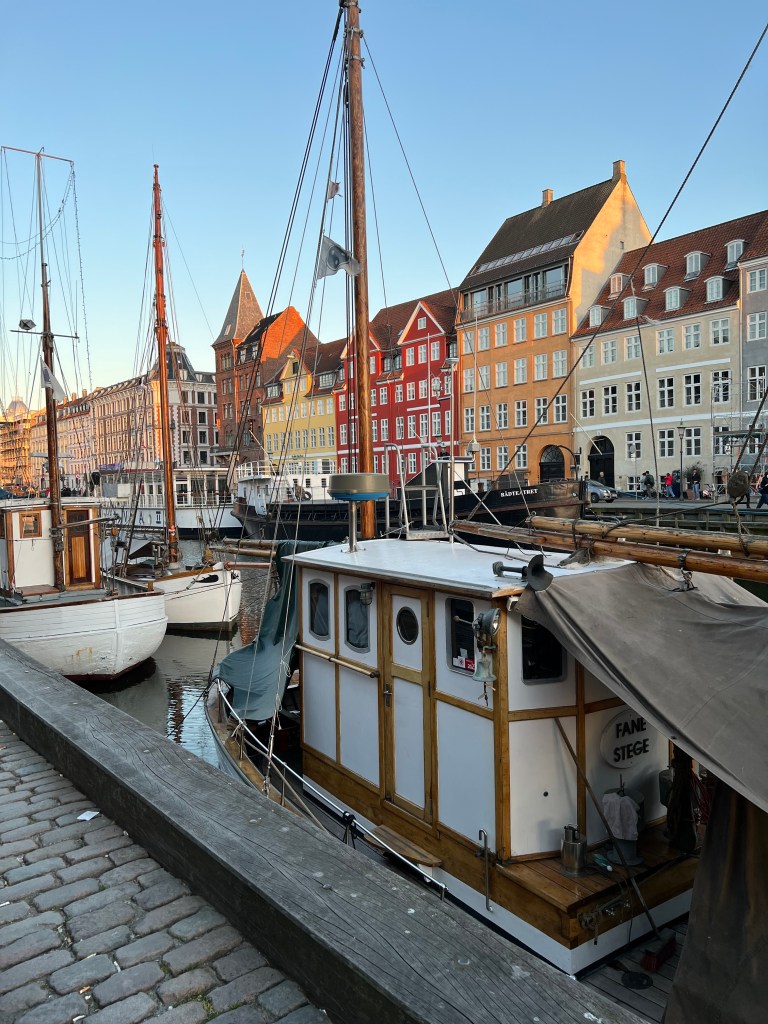
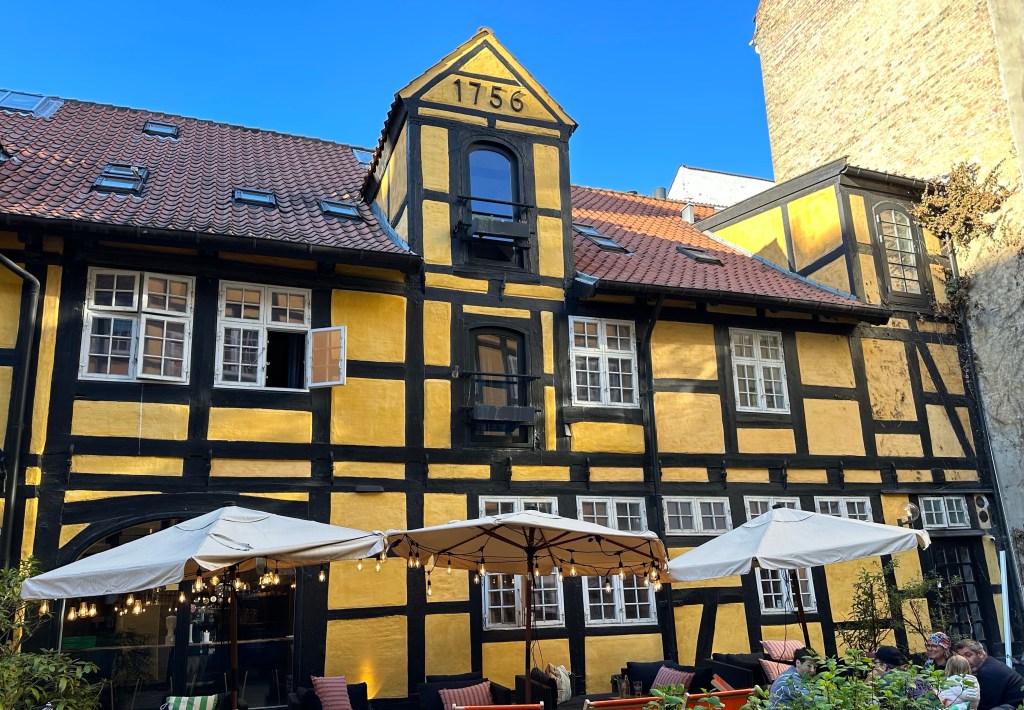
Along the canal, Nyhavn boasts an historic area of brightly painted buildings frequently shown in photographs of Copenhagen. The Nyhavn (New Harbor) is actually the old harbor.
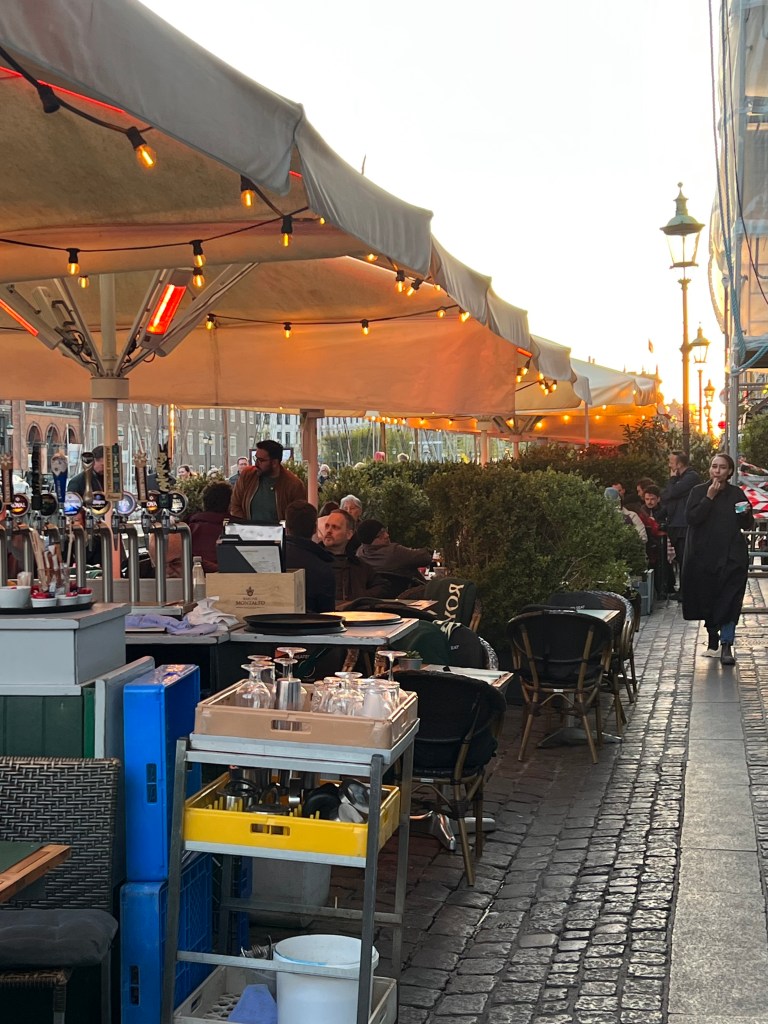
After a nap, we searched for food, having eaten only bananas and trail mix on the train. The colorful buildings in Nyhavn now house many restaurants with outdoor seating along the sidewalk. Many restaurants but they only offer four cuisines: smorrebrod and traditional Danish dinners, steak, fish, or pasta/pizza all with very similar menus. We randomly chose Hummer, and the choice turned into an amazing foodie meal.
Rikki, a woman we saw on the train, also stood with us in the transport office, so we had a nodding acquaintance. As we sat down at Hummer, Rikki walked past our table. Third time was the charm. I invited her to join us for dinner at Hummer.

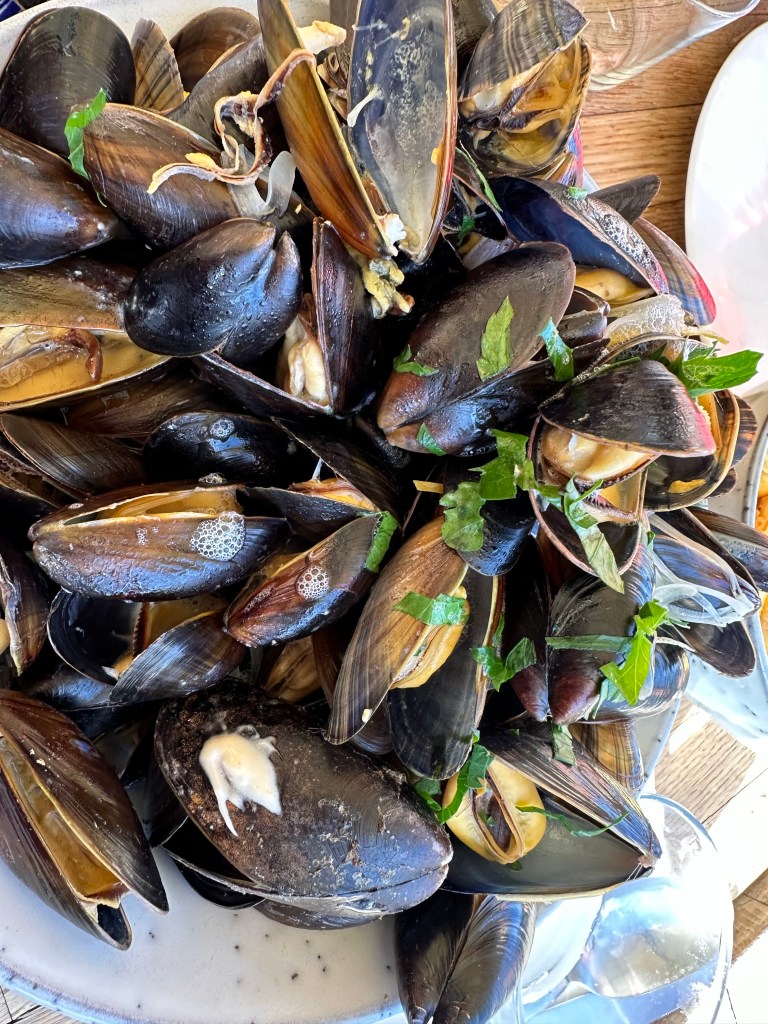
She accepted and we had company for the meal. After a starter of crab blini topped with roe, we ordered three different dishes: pan-fried cod in smoked butter, fish and chips, and moules (mussels) frites. All were simple, beautiful, and beyond delicious. I have never seen that many mussels in a serving.
Copenhagen is called the Nordic Foodie capital and proud of it. Copenhagen restaurants have more Michelin stars than all other Scandinavian cities together. Three days provide too little time to sample all the food in town, but we would certainly give Hummer 5 stars.
For breakfasts, we drank coffee with luxurious fresh croissants. We ate smorrebrod at the Magazin department store deli for lunch one day.

The next day, we visited the Trovaldsen Food Court noted for its variety of temptations. We made healthy choices at Smag: a salad bowl with 4 picks from the 20 vegetable salads, 2 exotic dressings/toppings such as white bean purée or chili hummus, 3 sides of mushroom-balls, chicken satay, and corn falafel with fantastic bread. Two salad bowls were delicious but not cheap—about 300 DKK or $40.

On our last night, we went back to Nyhavn and randomly picked Venezia pasta/pizza restaurant. Actually we had randomly picked a different Italian restaurant, but after 10 minutes looking at menus and no sign of service, we decamped to Venezia. That turned out to be a wise move.
We ordered carbonara and gnocchi and burratta/tomato salad. The service was superb, the food was excellent. The gnocchi were so light they almost floated off the plate, but the rich cream sauce held them down. Carbonara was equally rich with the same cream sauce and a salty kick from the prosciutto. The creme de la crème sauce alone earned a 5 star rating.
In between those superb dinners, we had another non-so-healthy treat in Nyhavn. Warm mini-waffle topped with your choice of ice cream seems to be a popular delight (or maybe just popular for Copenhagen tourists). We decided to go with the flow. Admittedly, this is not our typical food choice, but when in Copenhagen…..
The Royal Quarter
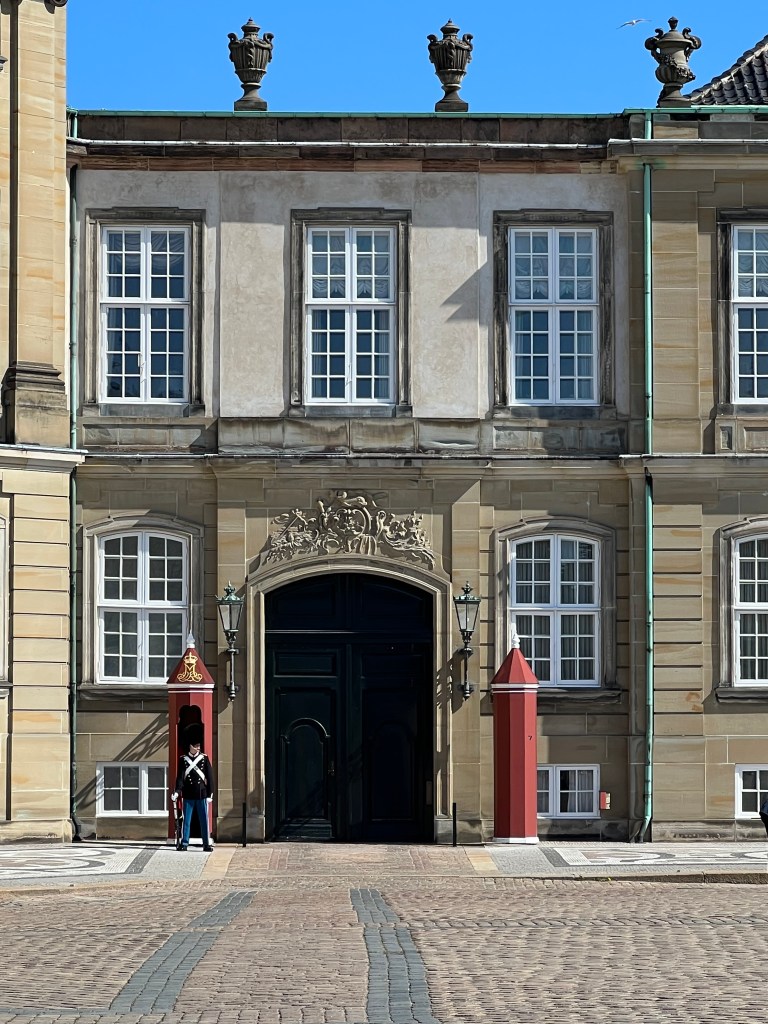
We had two full days of sightseeing in Copenhagen. On Saturday, in the Royal Quarter area, our first stop was at the Amalienborg Castle, the official residence of Queen Margrethe II. A small museum is mostly about the royal family life. The Castle is laid out around a large paved courtyard and contains the royal residence and some related government offices.

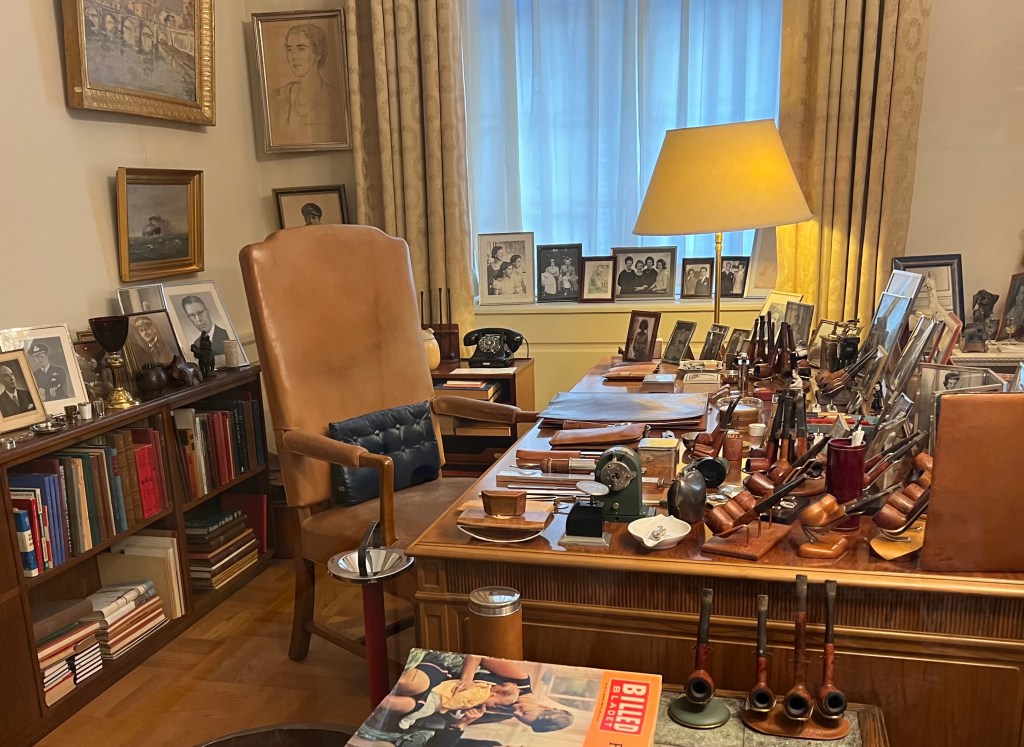
and Pipe Collection
We were slightly disappointed that the Queen was not serving afternoon tea for us, but perhaps she had royal duties attending the coronation of Cousin King Charles III in London.
In the afternoon, about half a mile away, we entered the Rosenborg castle and 10-acre garden.
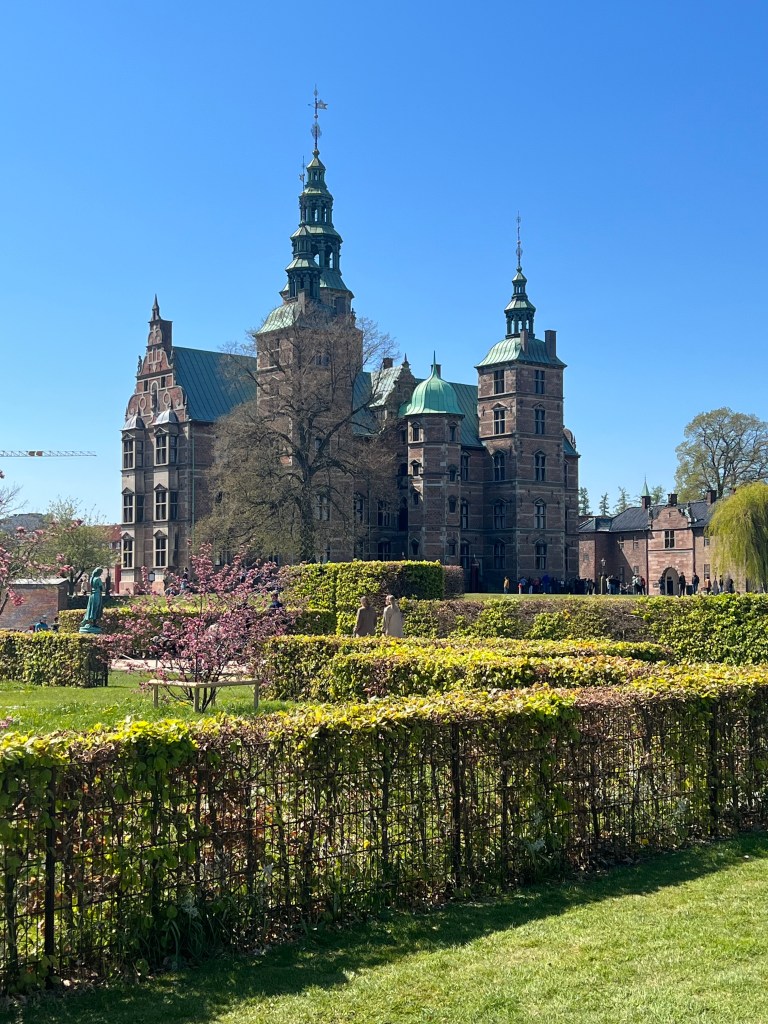
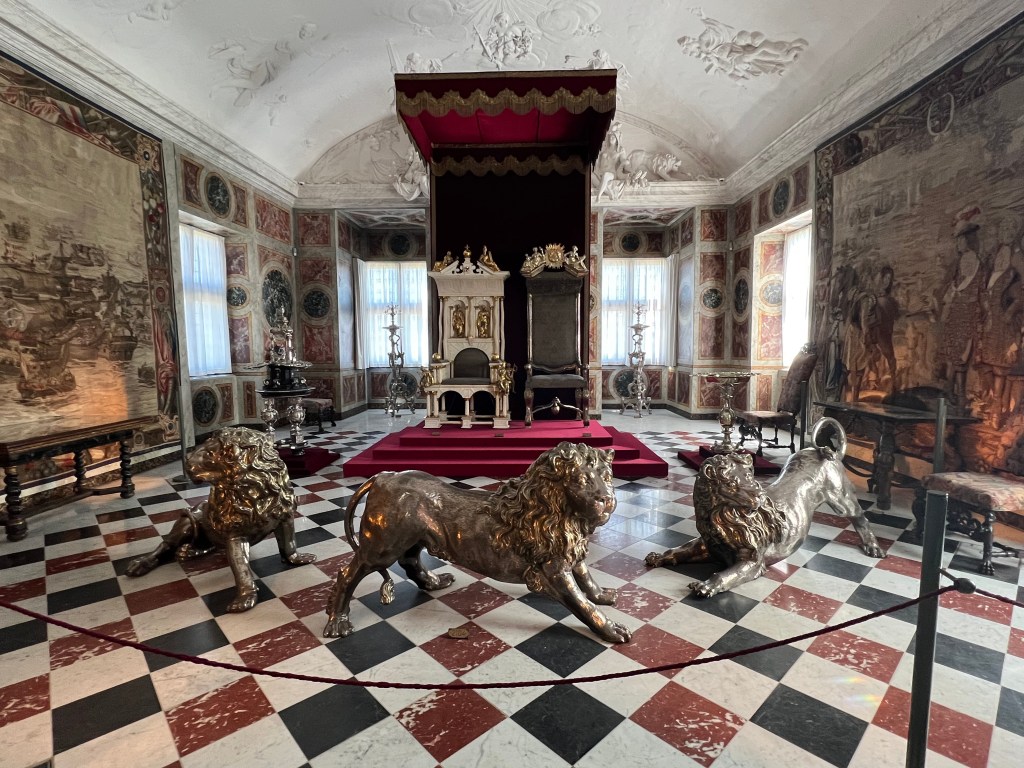
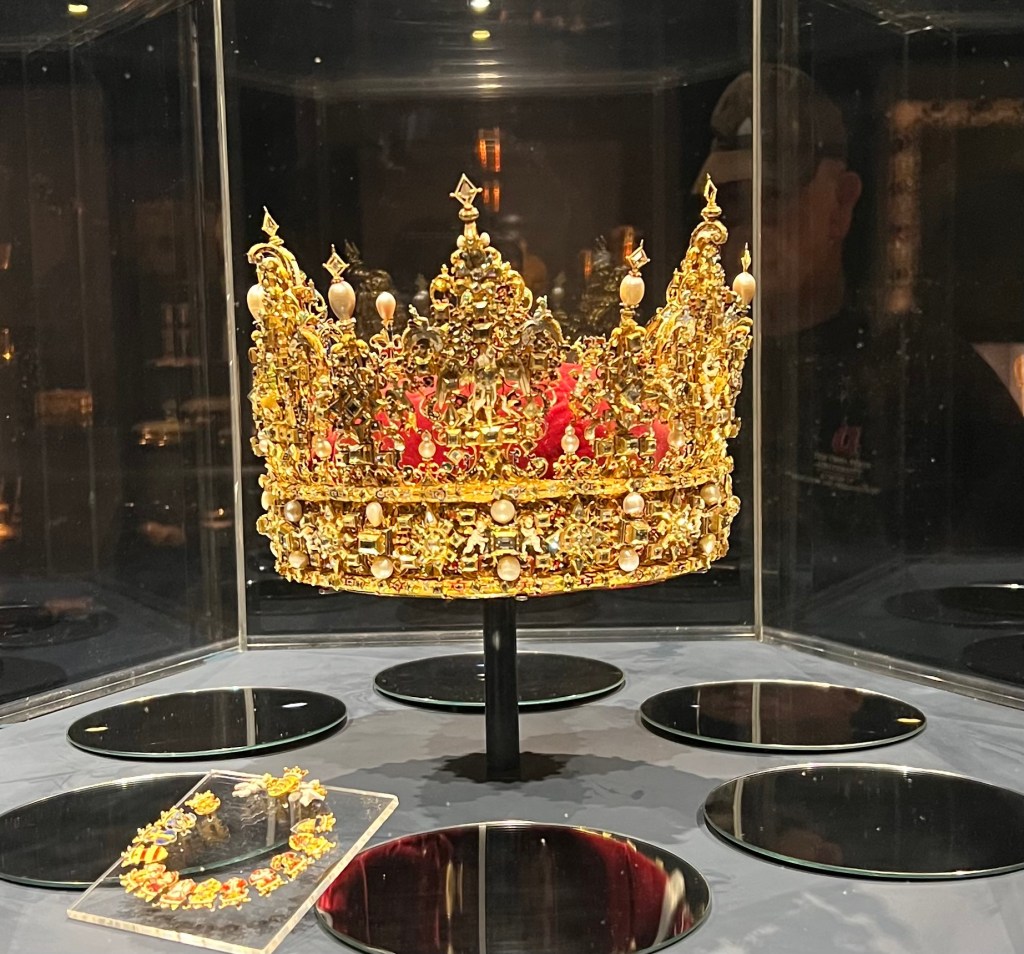
The exterior, interior, and grounds have been maintained and turned into a museum with original furnishings and amazing displays: silver and gold serving pieces and jewelry, ivory carvings, porcelain, coins, swords, and gifts to the royal family from around the world. In the basement was the treasury which holds and displays the royal crowns, jewels, and other gold royal possessions. “Ostentatious” comes to mind—17th and 18th century feudal privilege and vanity are on display. All this wealth came from Denmark being a leader in world trade.
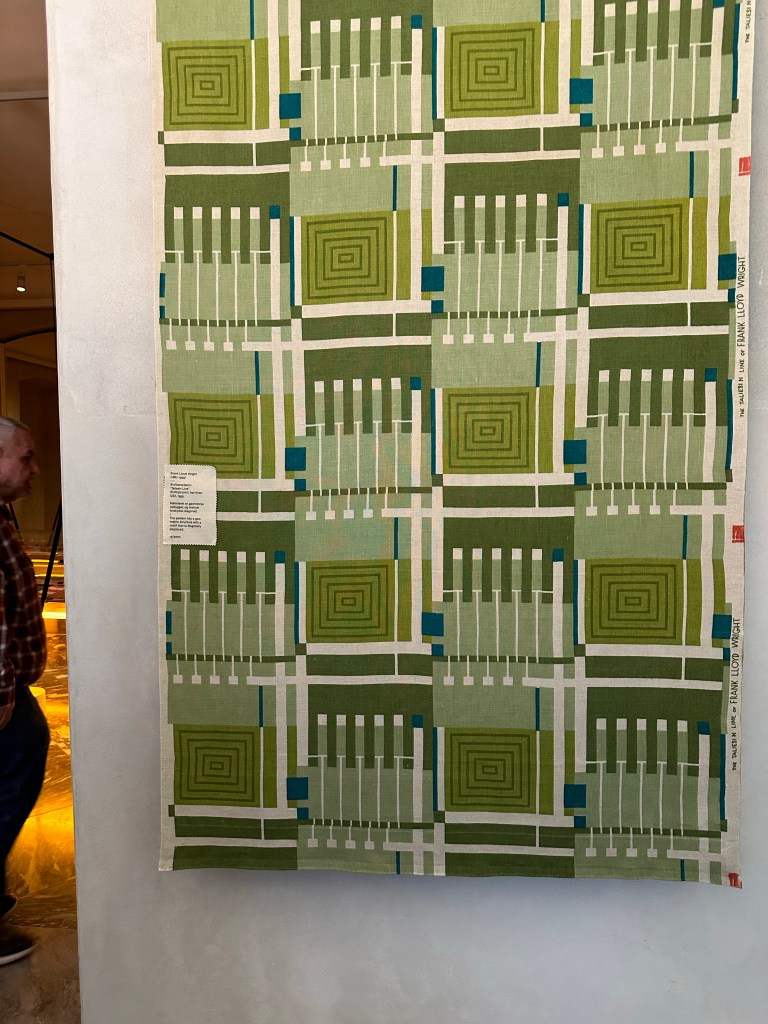
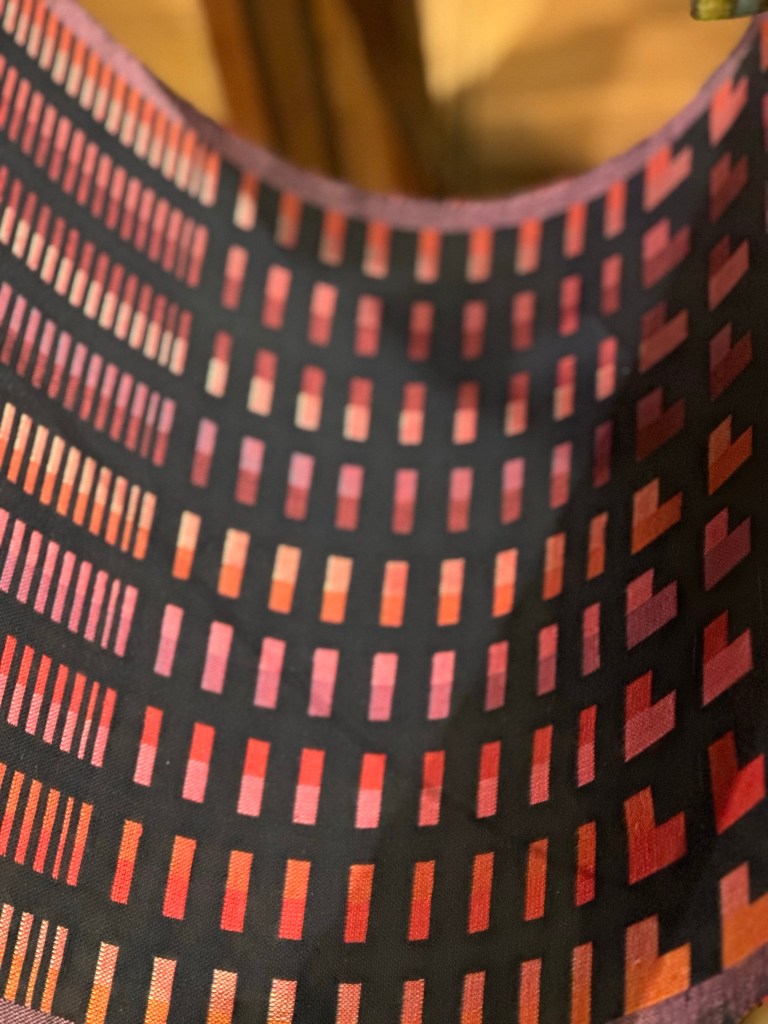
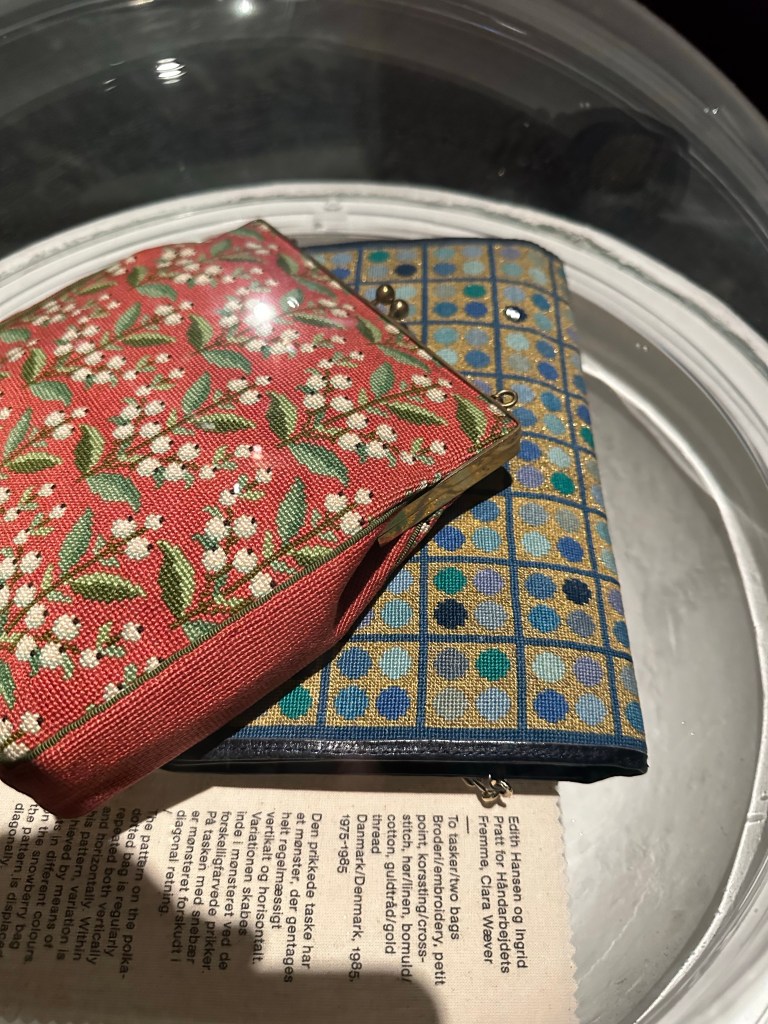
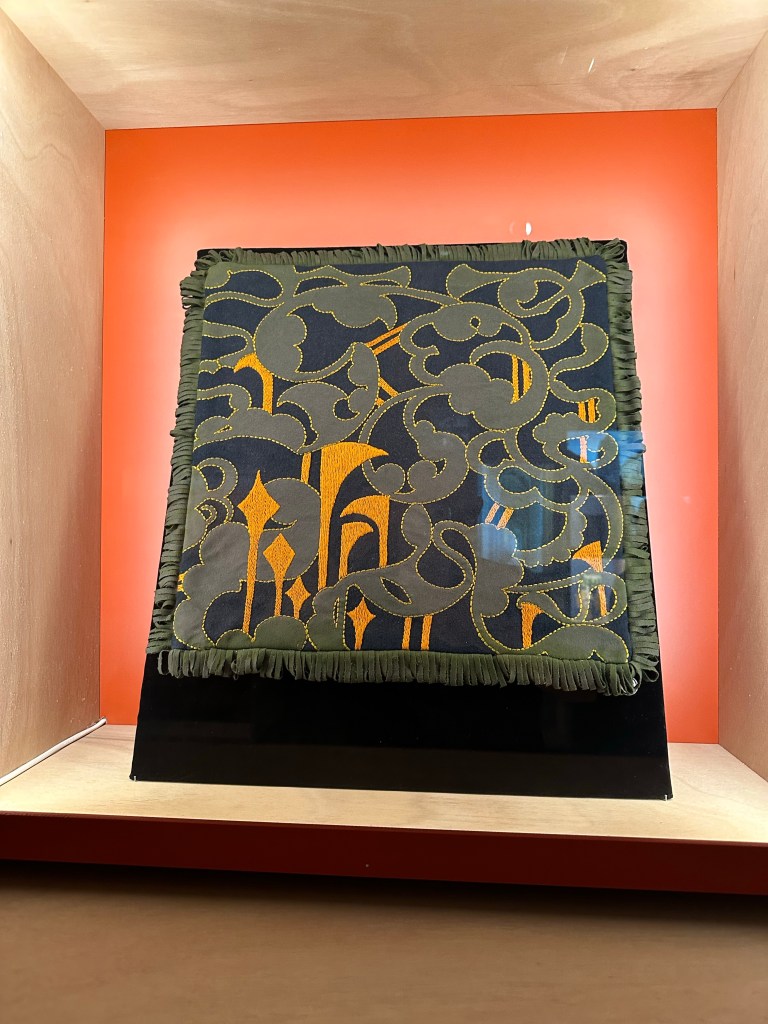
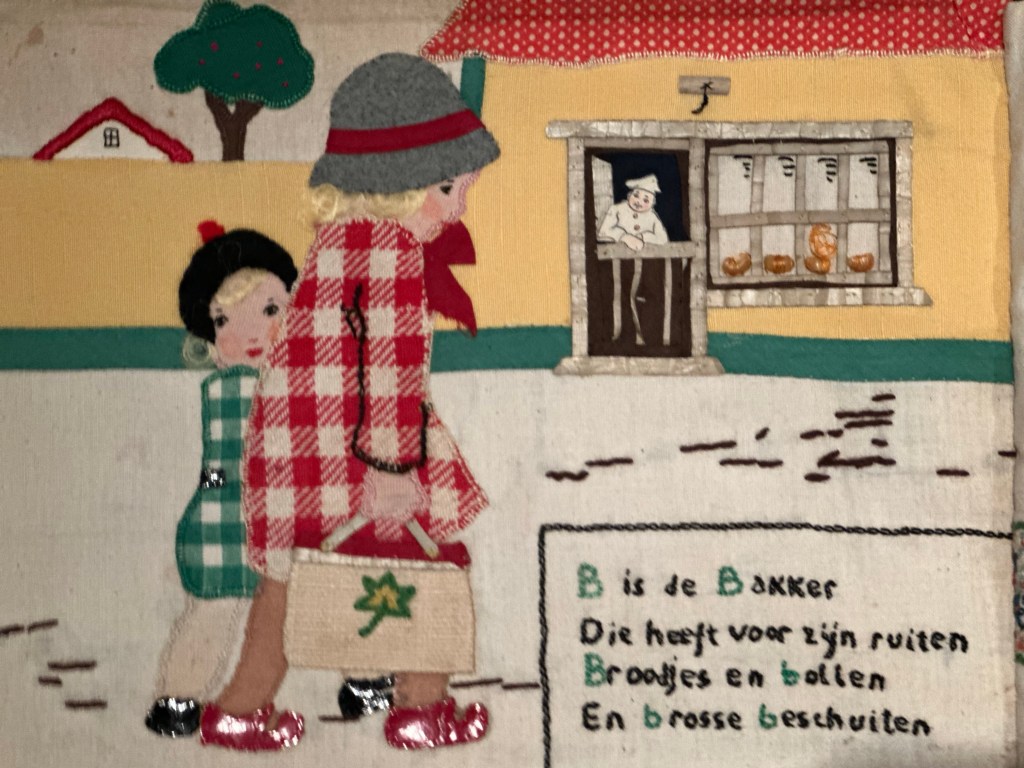
Between the Amalienborg Castle and the Rosenborg Castle, a design museum was shown on the map. This was the highlight of the day. Danish Modern design has inspired and still influences architecture, graphics, fabric, printing, and art. The museum displays the historical aspect of 20th century design and the direction of design in the 21st, emphasizing ecological adaptations.
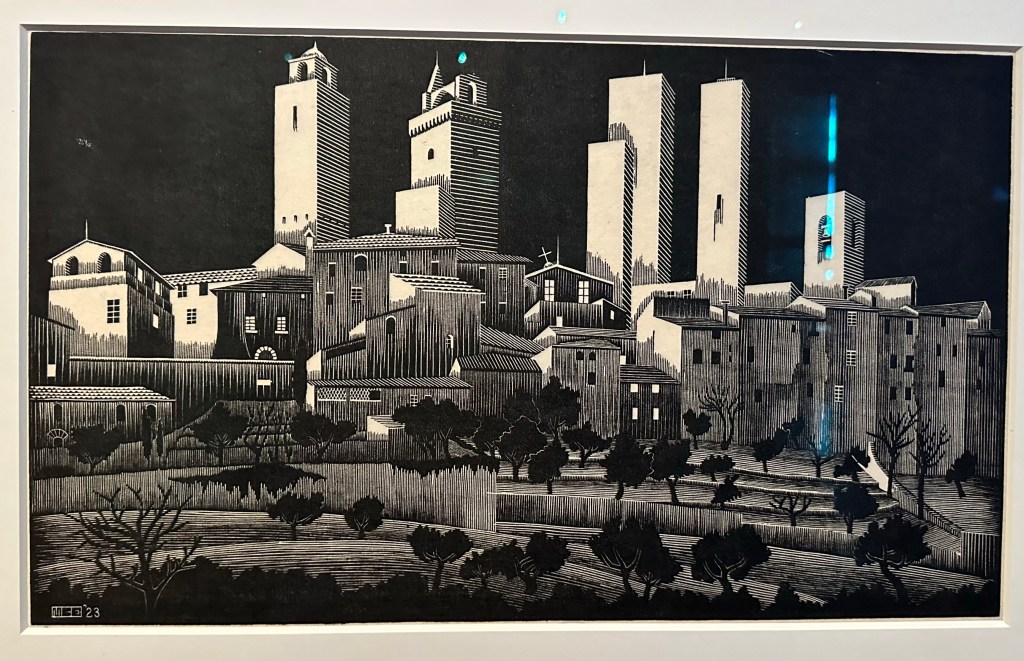
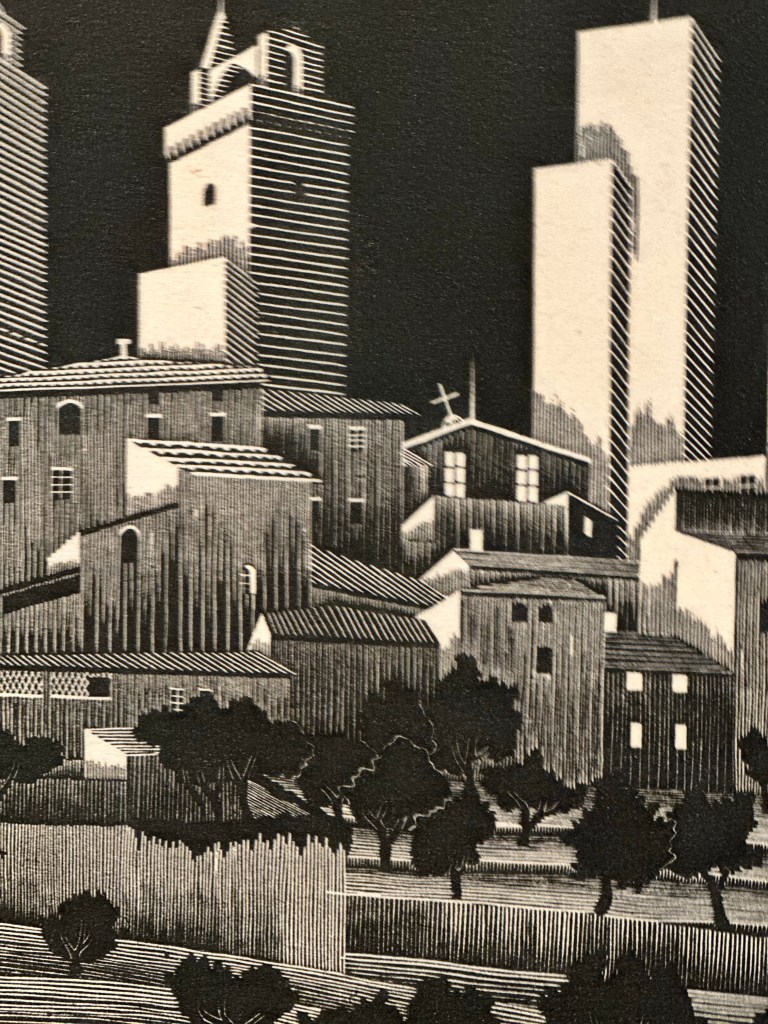
Many exhibit inspired our quilting and woodcut printing hobbies. Simplify, simplify, and repeat are the guiding principles.

Chairs have been a mainstay of Danish Modern design. At an estate sale in 1990, we bought a Finn Juhl Chieftain chair and 6 Finn Juhl dining chairs. The Chieftain chair is a classic featured in many modern design publications. But its wing span made it hard to fit into any room. Eight years ago, I donated the chair to the Dallas Museum of Art for their 20th Century design collection. Someday, I would love to see it on display.

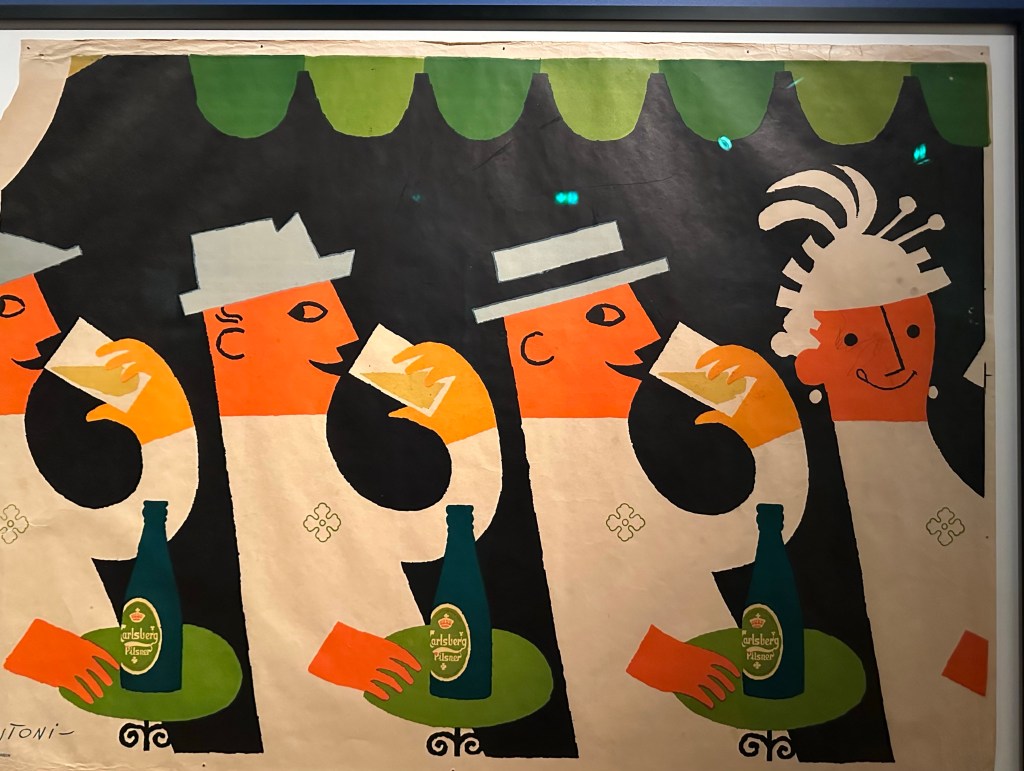
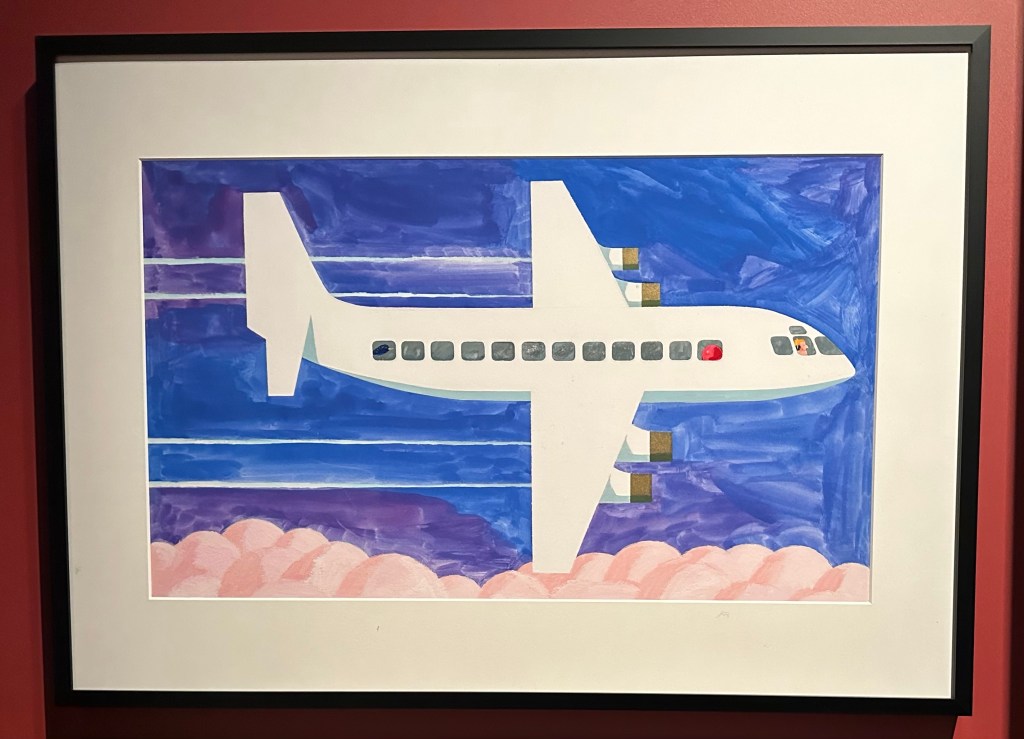
We had a short visit to the Museum of Copenhagen which tells the history of the city, important people, and important facts about the city. One exhibit featured the Danish graphic artist Antoni whose simple, sharp, colorful cartoons influenced graphic arts for more than 50 years.
We know that we could not see everything worth seeing even if we stayed a full week or month. However, the list of things we did not see in Copenhagen seems particularly long: Louisiana Art Complex an hour away; Freetown Christiania, an independently governed community within Copenhagen; the modern art SYMK Museum; the Danish Resistance Museum; the Museum of Denmark; the Architectural Design Center; Tivoli Gardens; day trips to three or four places outside Copenhagen . . . and the list goes on. More time and more energy were needed.
The final morning a taxi carried us to the Station an hour early without looking for Bus 23. Actually Bus 26 was the bus that went close to our hotel and was designed the “sightseeing” route bus. The cab was 10 minutes late, there was road construction, and it was morning rush hour. We still got to the station in plenty of time to find the correct ramp, locate the train car, and claim our seats. A successful exit from Copenhagen moved us toward our next stop in Goteborg (Gothenburg), Sweden.
Extra photographs





 Tipps for Travel