Arrive
As sad as we were to leave Paris, we were excited about going to Avignon in the southern French countryside. We had tickets and seat reservations for the TGV high-speed train, got a Mercedes van from Uber, and arrived at Gare de Lyon station with time to spare. Our tickets would not scan at the gate, but we were eventually passed through and rushed to secure our seats.
Jim’s seat was in Car 1 and he got settled easily. Three of us were assigned to Car 11, upper floor seats 72, 82, 92. After lugging suitcases up the stairs and not finding places for them, we found people were already sitting in our assigned seats. We stood stalemated for a few minutes before the conductor rescued us. A kerfluffle ensued moving baggage downstairs and us to new seats together. The ride was about two and half hours through green countryside.
The TGV station is 15 minutes from the walled inner city of Avignon. Jim ordered a large UberX for four people with luggage, but instead a very small Uber car arrived. Cancelling the Uber cost 20 euros, more than the fare. Since only two of us with luggage would fit in the minicar, Becky and I “volunteered” to go first.
The taxi could not enter the pedestrian zone of the old city, so we trudged the final three blocks to the apartment. The old city is full of photo ops too good to pass up such as this one, nuns on holiday.
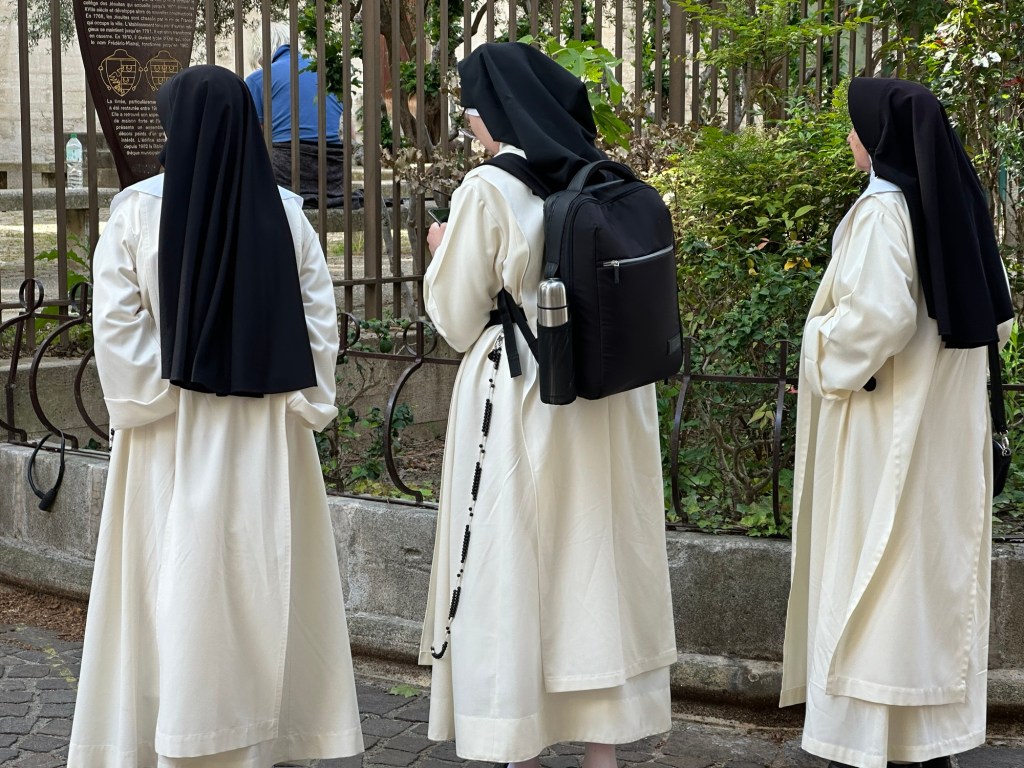
Our great friend Sister Mary Alyce enjoyed this sight and remembering all of her travel adventures.
Where We Stayed
Vincent, our cohost, was waiting, saw us dragging luggage, and helped us into the elevator (Hurrah!) to our apartment. The apartment is beautiful and modern having been rehabbed six years ago into a building that is a couple of centuries old. It has a large open living and kitchen space with two smallish bedrooms and two quirky bathrooms. A traffic jam sometimes occurred with 3 doors opening into the same space.
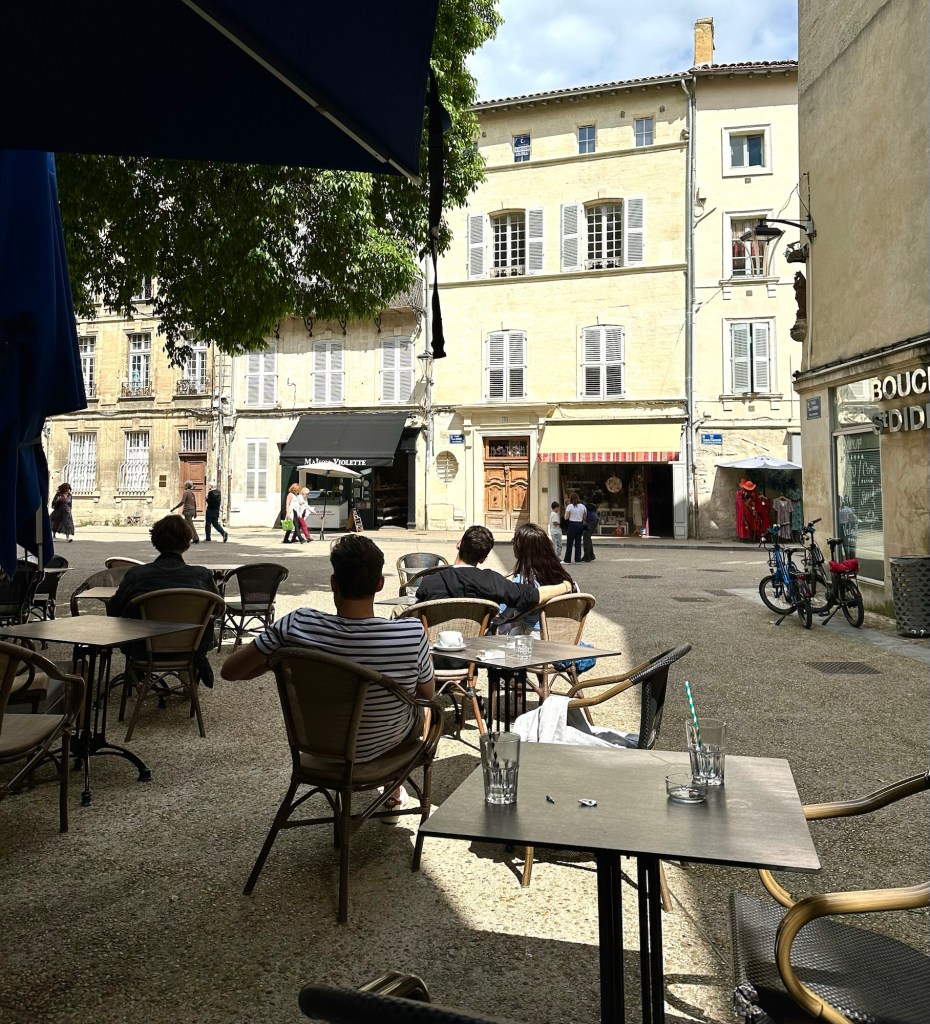
The apartment is directly above the Cafe Baretta with shady outdoor seating on Place Didier. Becky and I waited for Jim and Betsy there while enjoying a really great cup of coffee. About an hour later the Robsons appeared, rather frazzled. The second taxi dumped them where they had a much longer walk than we had.
Inside the City Walls
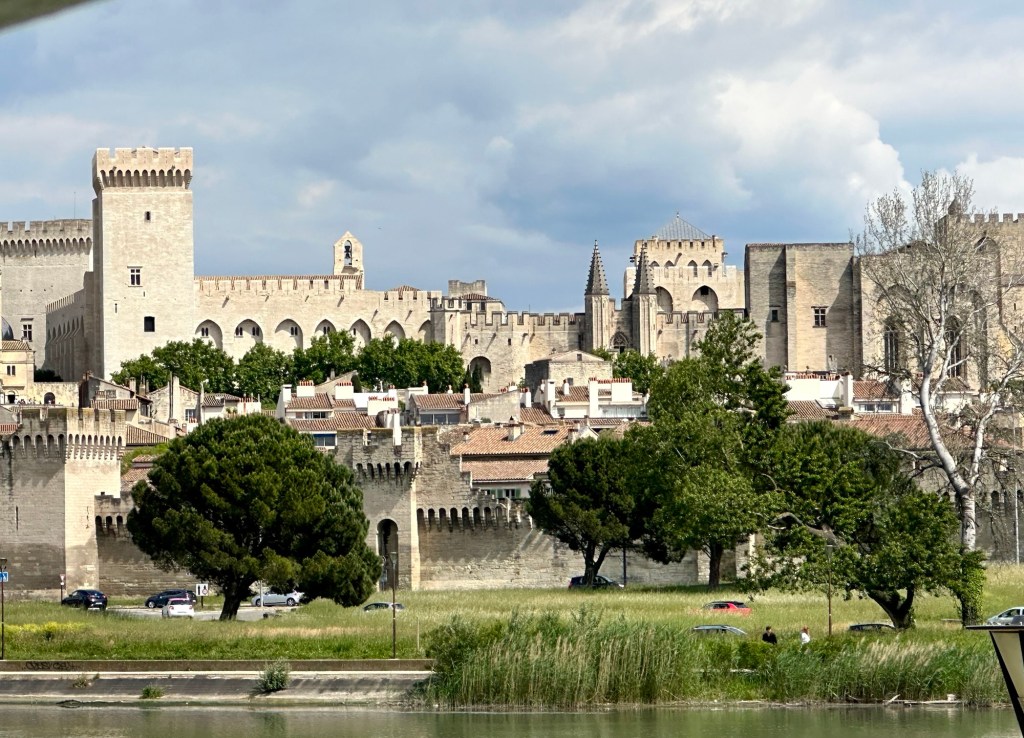
The first couple of days we concentrated on exploring Avignon within the city walls. Betsy and Jim walked to the Palace of the Popes and learned about Avignon being the center of the Catholic world during the 14th century when 7 popes lived here while Rome was disrupted and under siege.
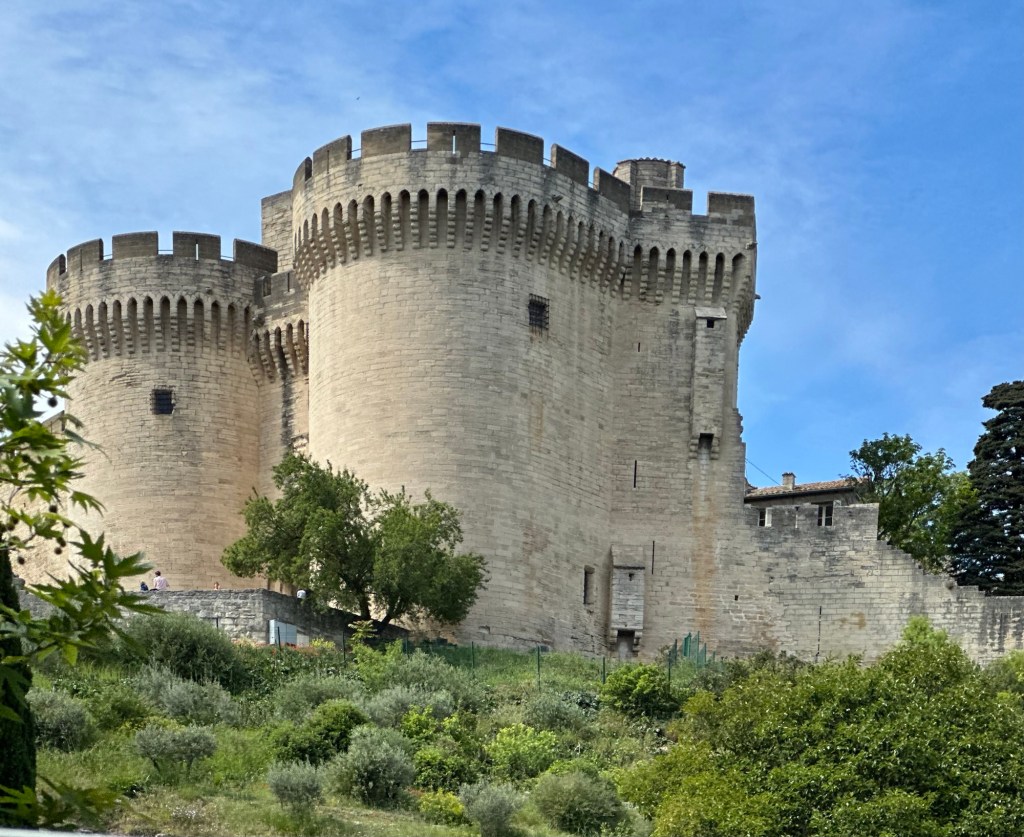
Becky and I took the City Bus tour around the wall with a recorded narrative about the history of Avignon. Having been the “Vatican” is only one aspect making Avignon special—to natives as important as Paris, as important as Rome, and really only grudgingly part of France.
Due to ongoing turmoil between the Vatican, marauding bands, kings of France, and local rulers, the Wall was built and rebuilt and expanded around Avignon for hundreds of years. Finally local rulers yielded and the Vatican ceded Avignon to the King of France in 1705.
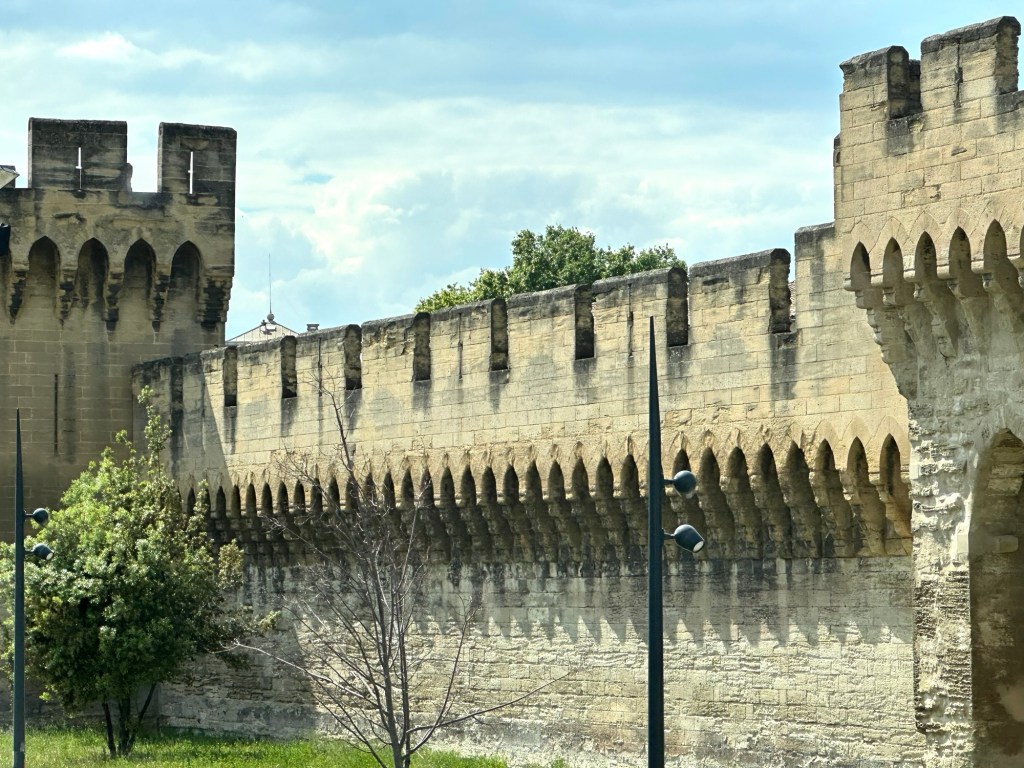

The wall is magnificent with ramparts and turrets and gates that still stand. As train travel became important, one plan was to tear down the southern gate and wall for the new station. Thank goodness that plan was foiled.
The station was built 500 feet to the south, but in a place unsuitable for the high-speed TGV and Eurostar traffic. Hence, the sleek, new TGV station is 15 minutes away on the mainline track from Paris to Marseilles.

The wide Rhône River is also important in Avignon history. The longest river in France made Avignon a commercial center for the fertile agricultural fields of Southern France. But it also was a fast and treacherous river which tore down bridges.
The Benezet Bridge is one of the most famous relic bridges and spans only 1/3 of the river. Although the myth and miracle of St. Benezet is discounted now (he was a businessman who built a bridge for taking tolls), the legend lives on through song “Sur le pond d’Avignon, l’on y danse, l’lon y danse.”
Becky and I visited the Bridge and danced on it 10 years ago.
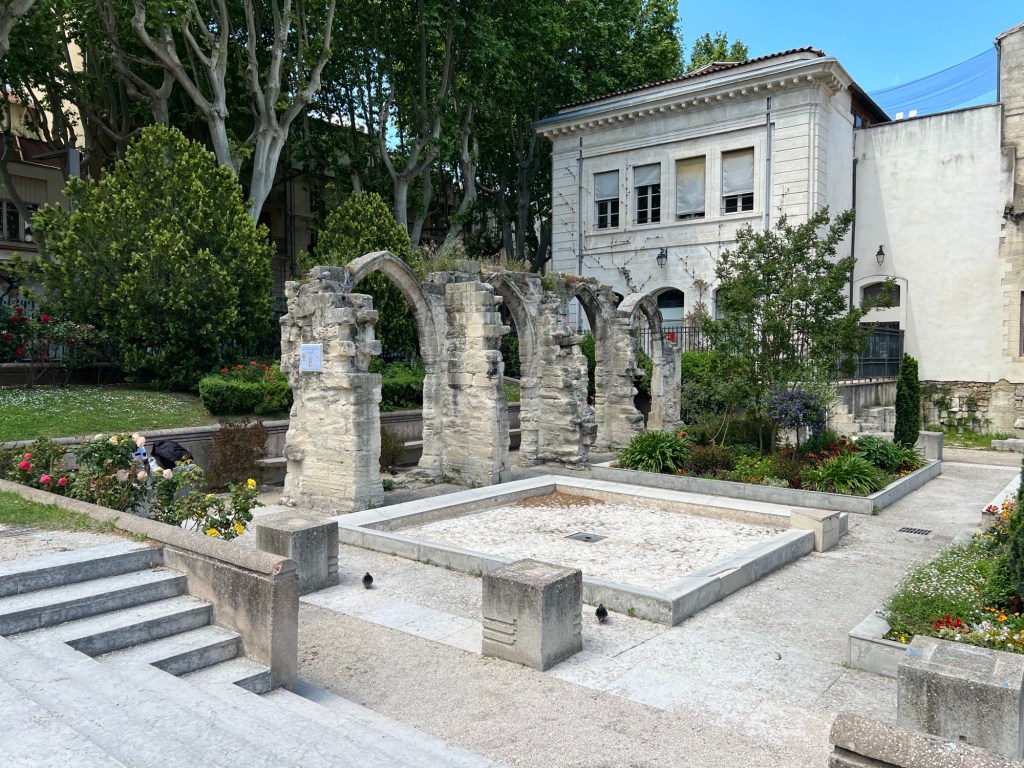
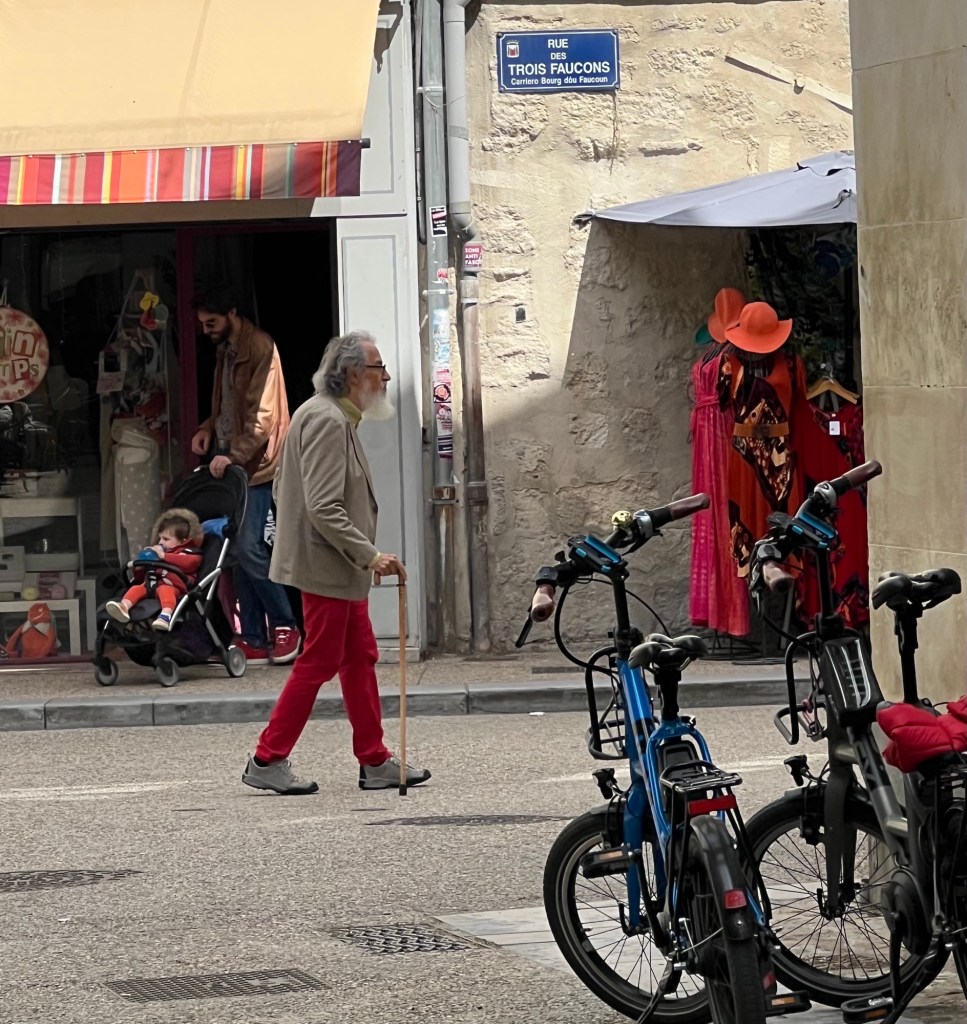
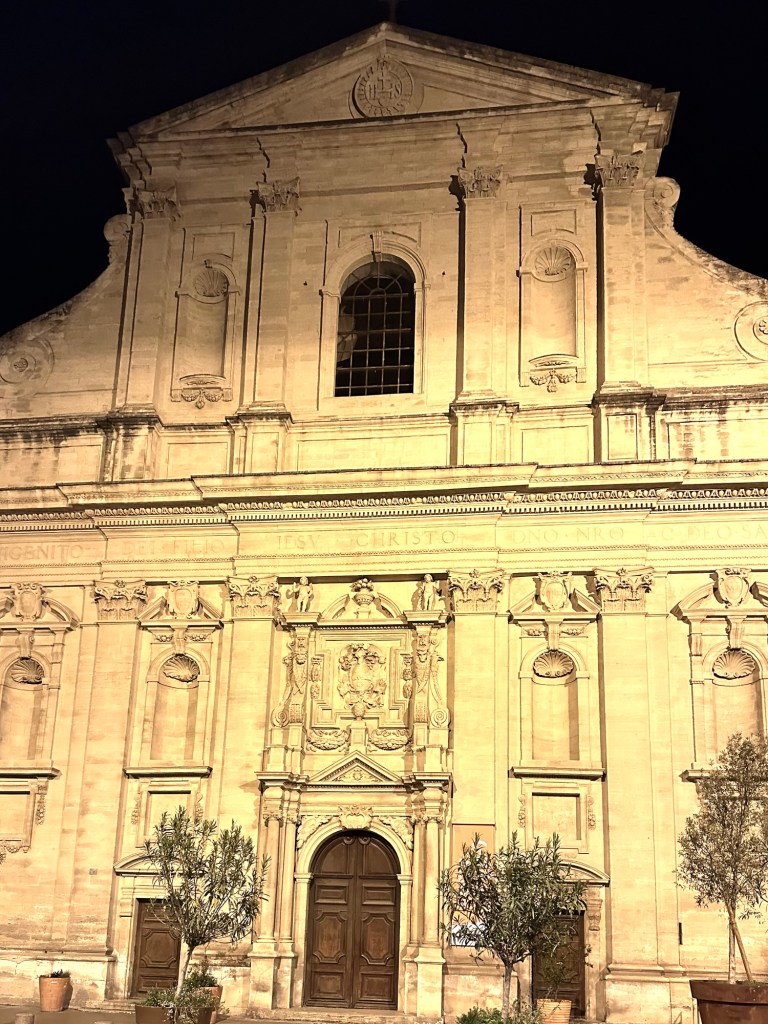
The day the Robsons visited Agde, we explored more in the city finding beautiful churches and a city park for people watching.
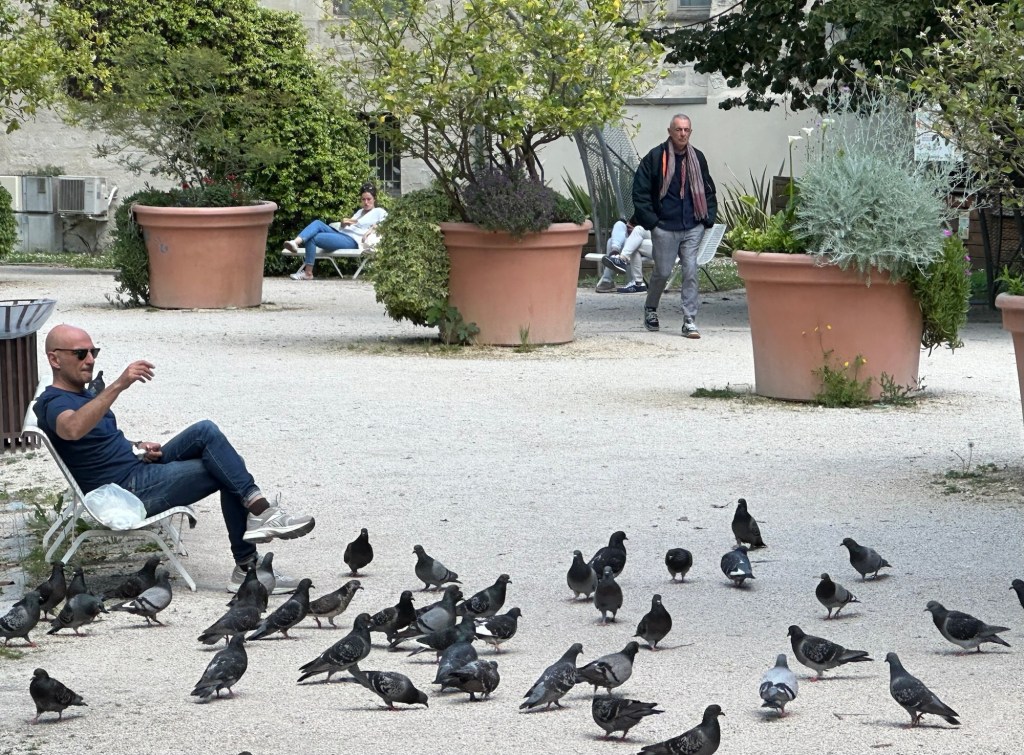

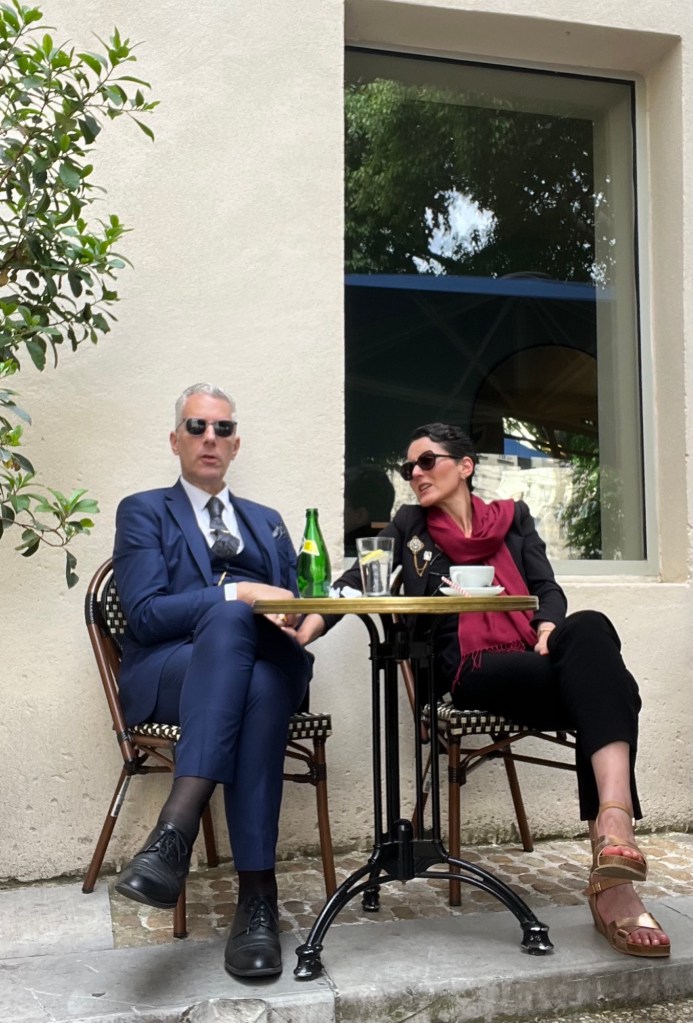
When Pope Leo was announced, the church nearest us rang its bell for 30 minutes which felt like 3 hours. Or maybe it was 3 hours.
The Robson Report: Sunday morning was a lazy morning. Jim and I went for a walk around town. Everything was closed and very few people were up. We meandered for a couple of hours stumbling into an amazing indoor market, Les Halles. Hundreds of locals were shopping for fish, meats, cheeses, breads, olives, vegetables and more than one could ever imagine.

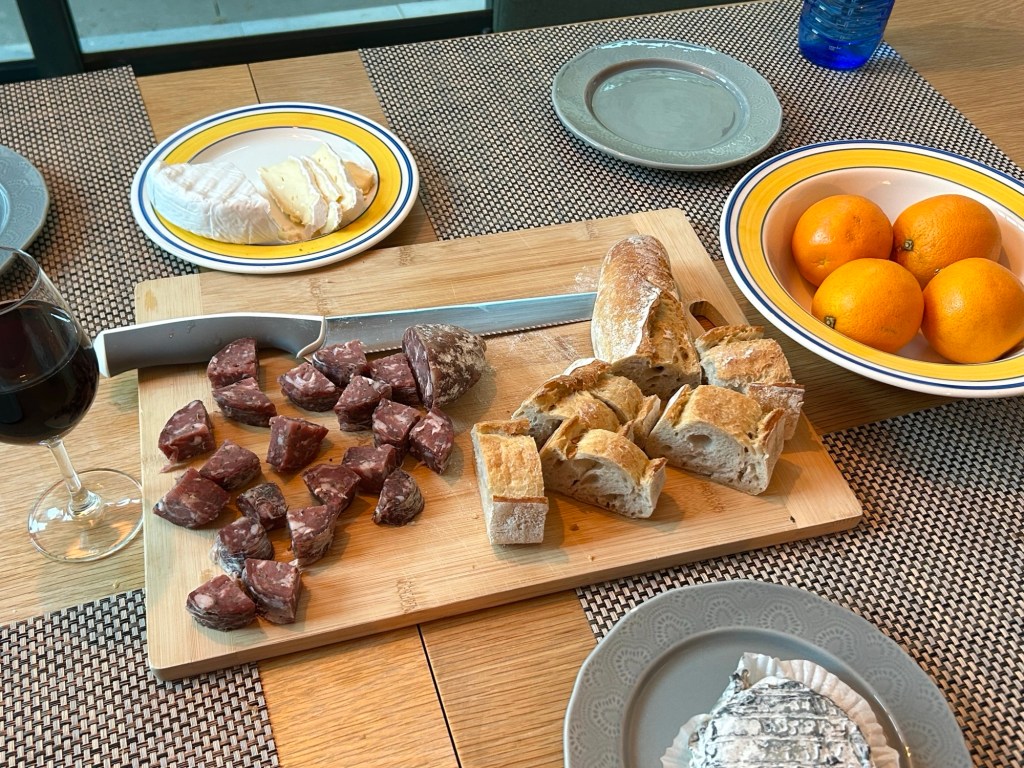
Numerous small cafes were within the market where people were enjoying oysters, beer, and other treats. Gathering clouds threatened rain; we purchased salami, bread and cheese for lunch at home and headed back to the apartment. Shortly thereafter, rain began so we spent a quiet afternoon playing cards.
Out of the City
Avignon was home base for side trips to Arles, Agde, and Pont du Gard.
Arles. When Becky and I visited Arles 10 years ago, we were charmed by it being known as Van Gogh’s abode in his sad, but very creative, last years. His painting of the “yellow house” is so present in my mind that I believed I had actually seen the yellow house. This was a false memory as the actual yellow house was destroyed by an errant bomb in WWII.
Our day in Arles was very, very long! It began with a half hour train ride.
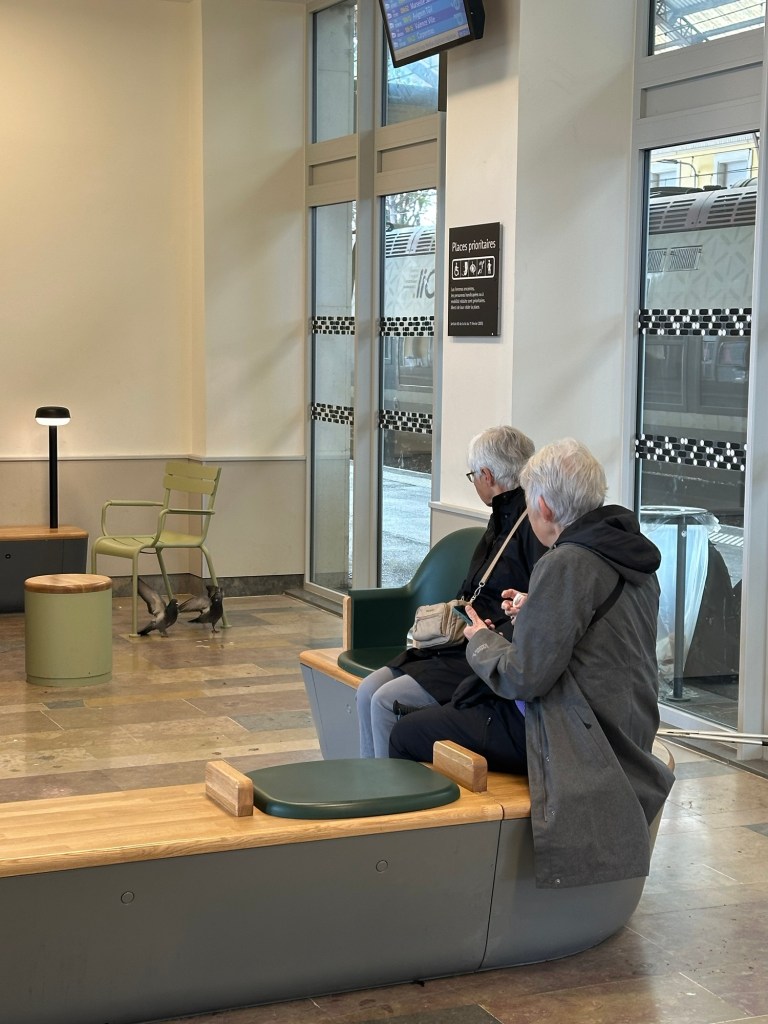
Rick Steve’s book claims that a large poster of the yellow house would guide us into city gates from the train station. We never found the poster. Perhaps it met the same fate as the house without the bomb.
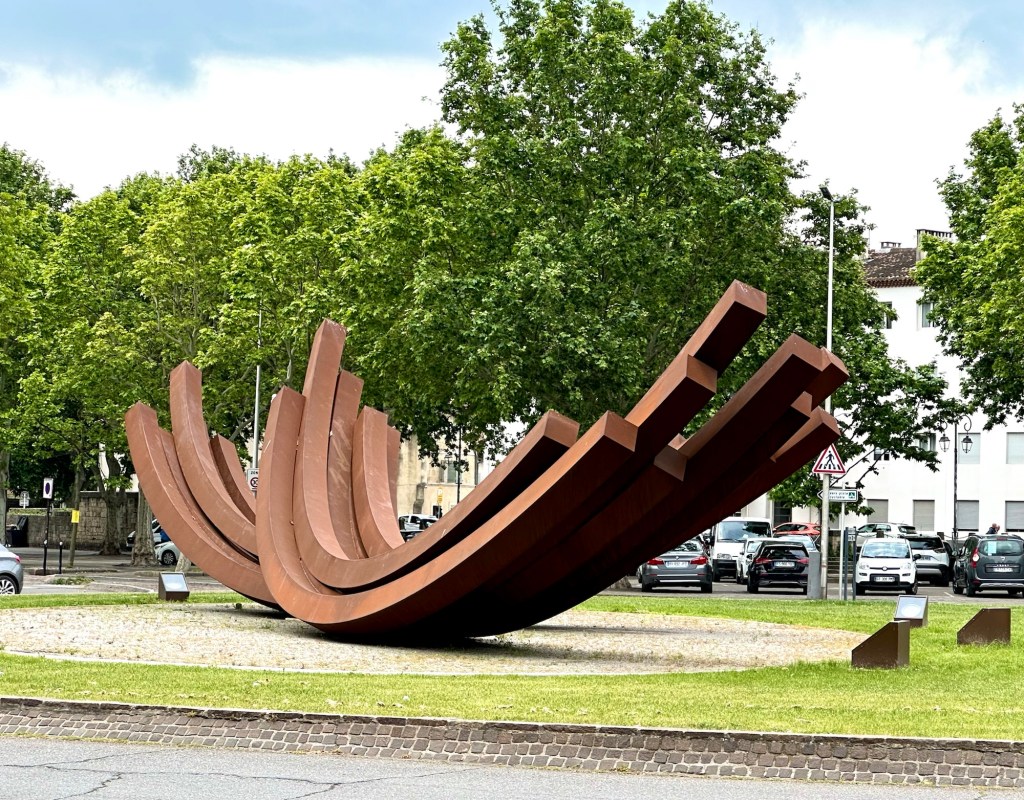
Instead we were greeted with this modern sculpture as we entered the gates.
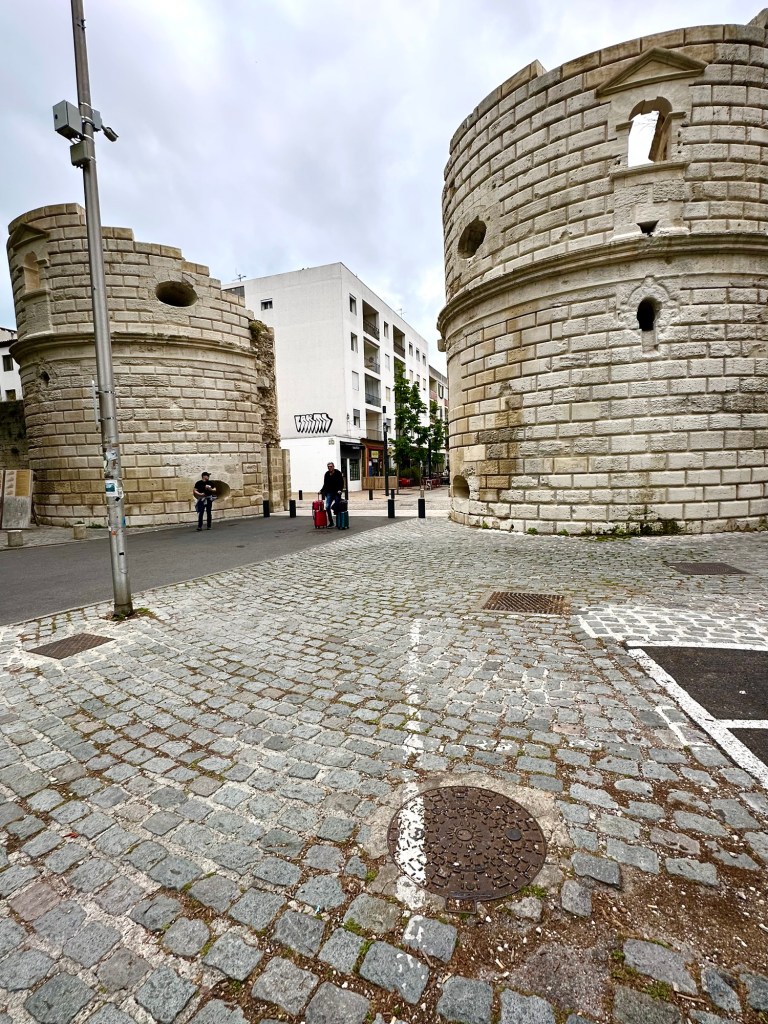
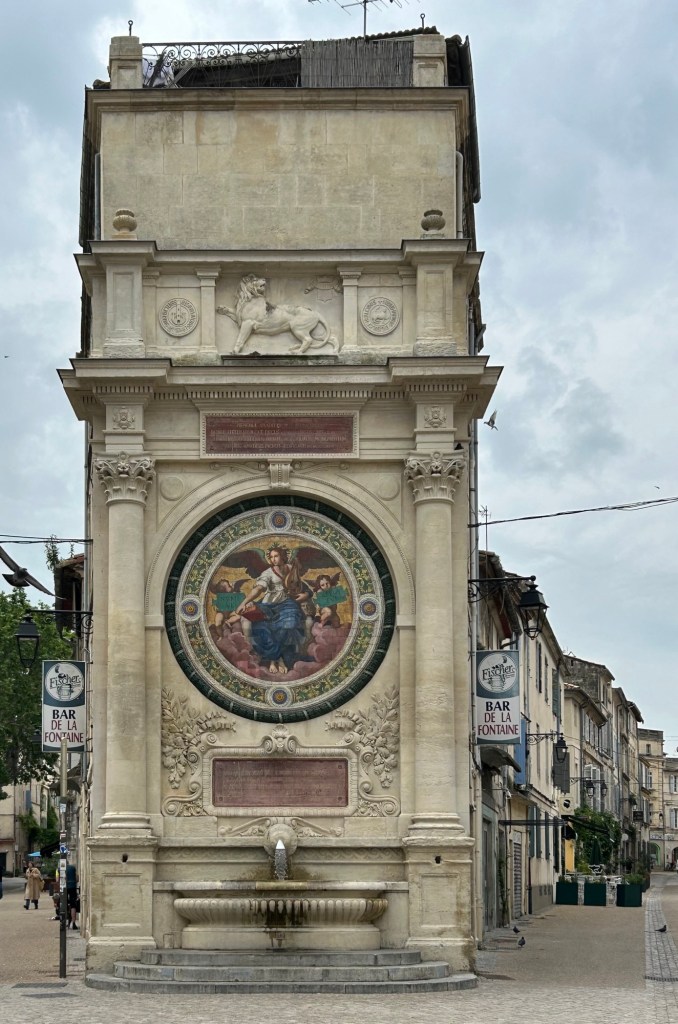
Rather than hunting for a no-longer existing house or the non-existent poster, we walked through the city gates where we passed by a mosaic fountain built a year before Van Gogh came to town. Folklore holds that he was often seen admiring it.

Beyond the Van Gogh mystique and many picturesque side streets, Roman ruins are the focus in Arles. Roman architects, engineers, and craftsmen built huge edifices of stone and brick around the city. We purchased a Combo ticket to see 6 Roman sites.
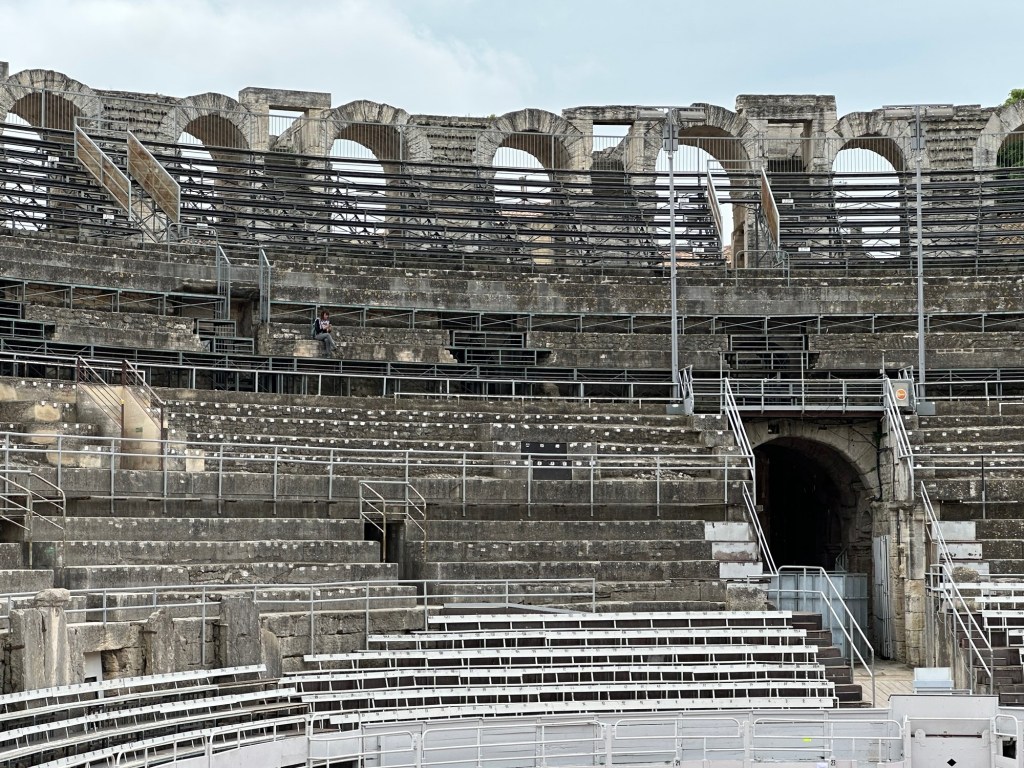
The Roman Forum, resembling the Colosseum in Rome, is huge and largely intact after 2000 years. It now hosts bull fighting events of a more friendly and less gory nature; the toreador has fifteen minutes to remove a ribbon tied between the bull’s horns. No injury is allowed to the bull which often outsmarts his human foe.

On this day, 5th and 6th graders were in the arena working with proto gladiators dressed in gray sacking togas. One group of students practiced sword skills with wooden swords, thrusting into the air and lunging at imaginary foes.
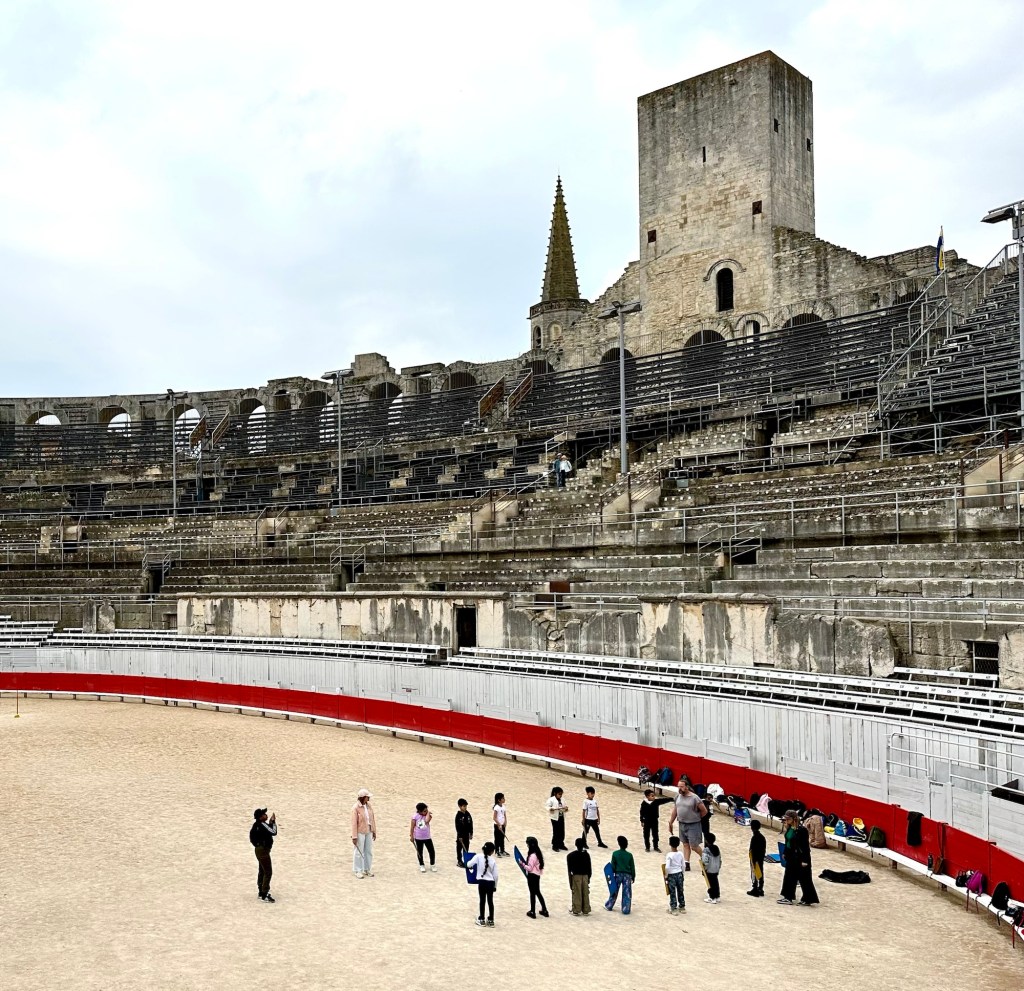
The other group was running and leaping Roman-style? We have groused about student field trips several times in previous blogs, but this one was perfect—active students engaged with experienced Gladi-actors in authentic Roman settings. What more could you want for inspiring interest in history!
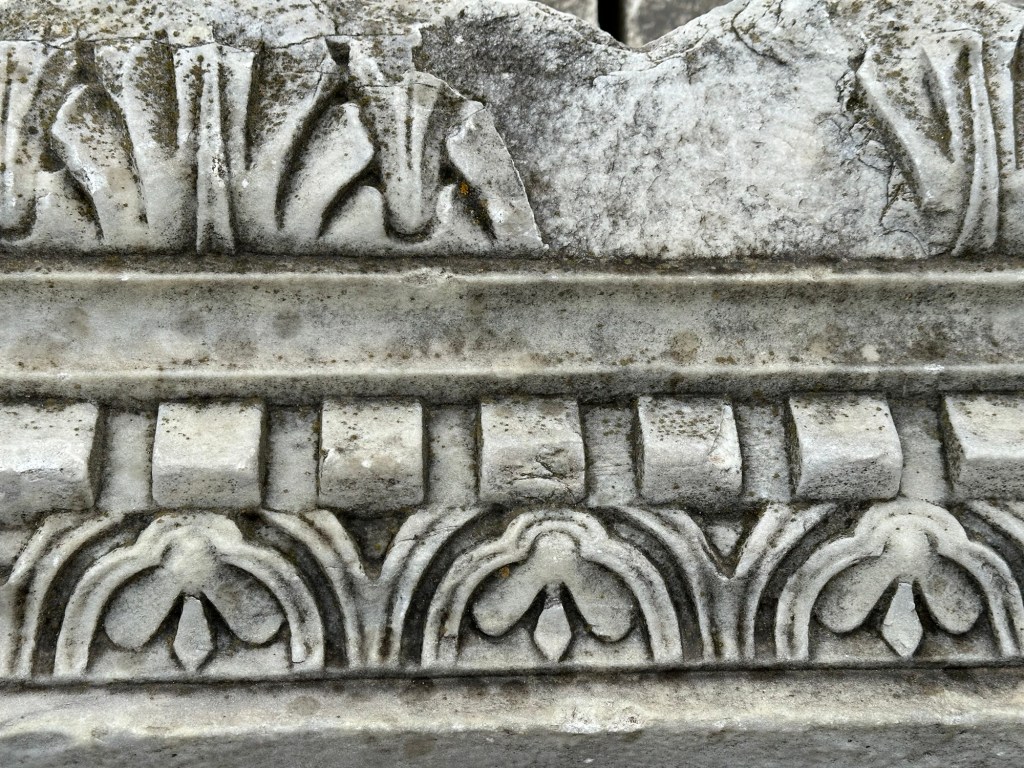
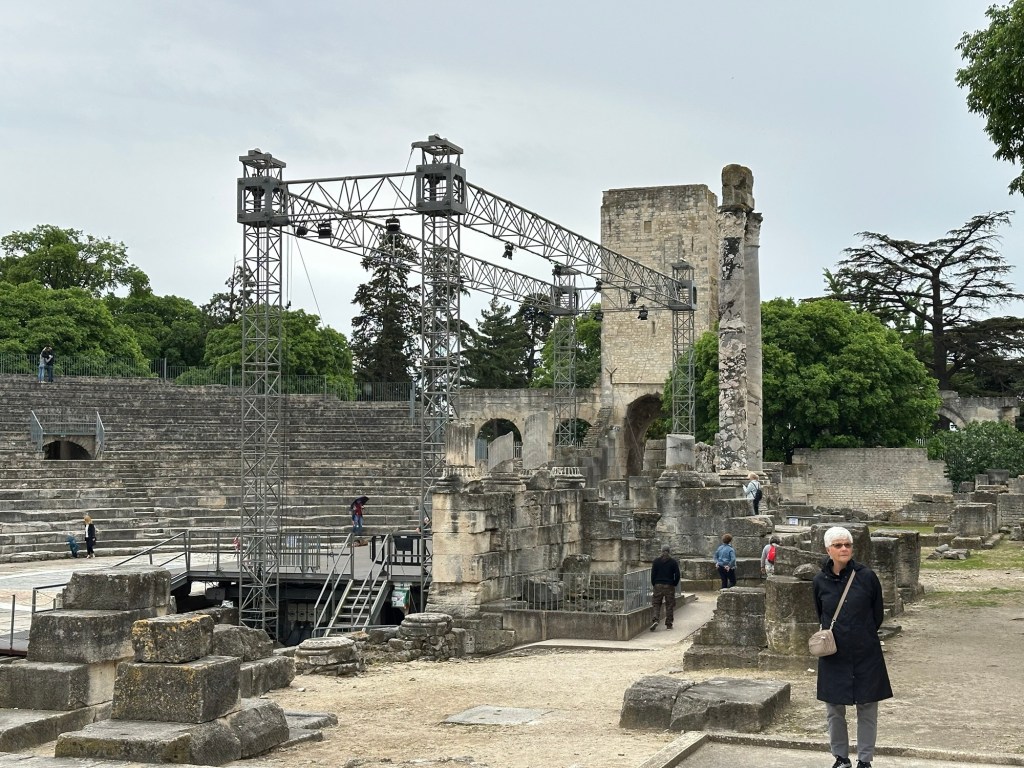
The Roman theatre had been plundered over hundreds of years for building stone before preservation was started in the 20th century. Partial walls, pieces of columns, and miscellaneous chiseled stones litter the grounds and make great photographs.


Most of the seating was preserved. Now the theatre is installed with modern stage lighting and sound systems in a noble and appropriate adaptation for concerts and plays.
The Roman baths, Therme de Constantin, were mostly ruins, also plundered for building materials.
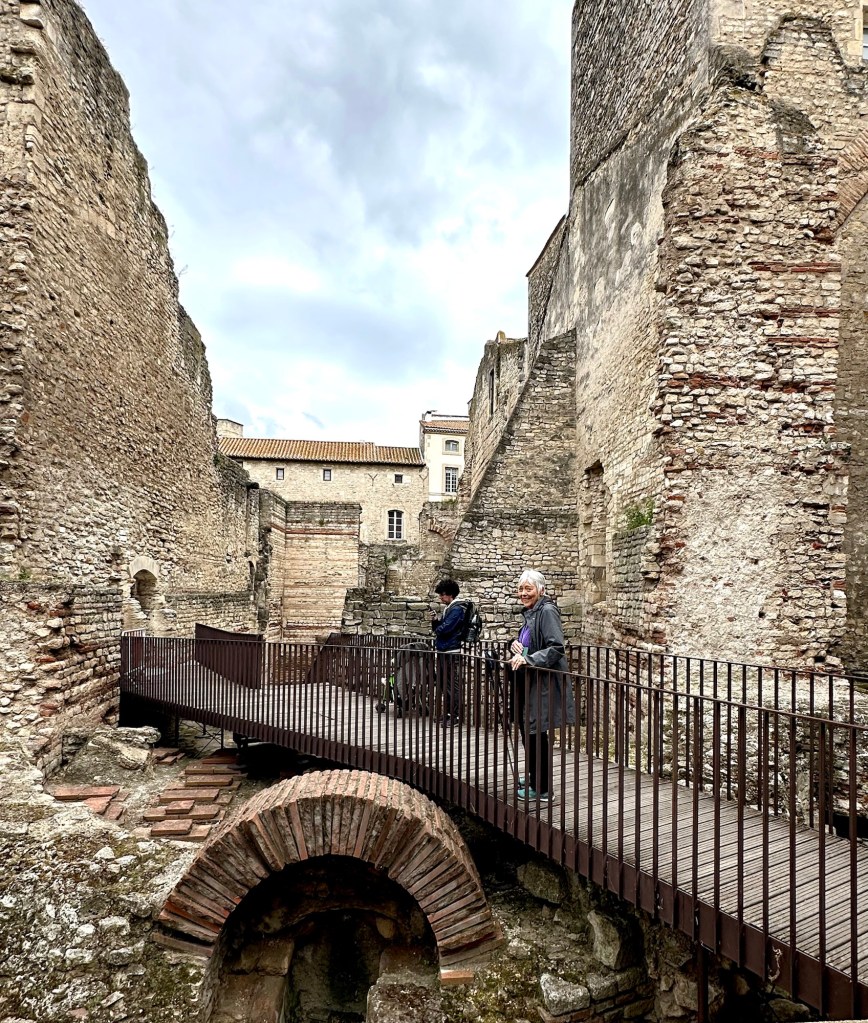
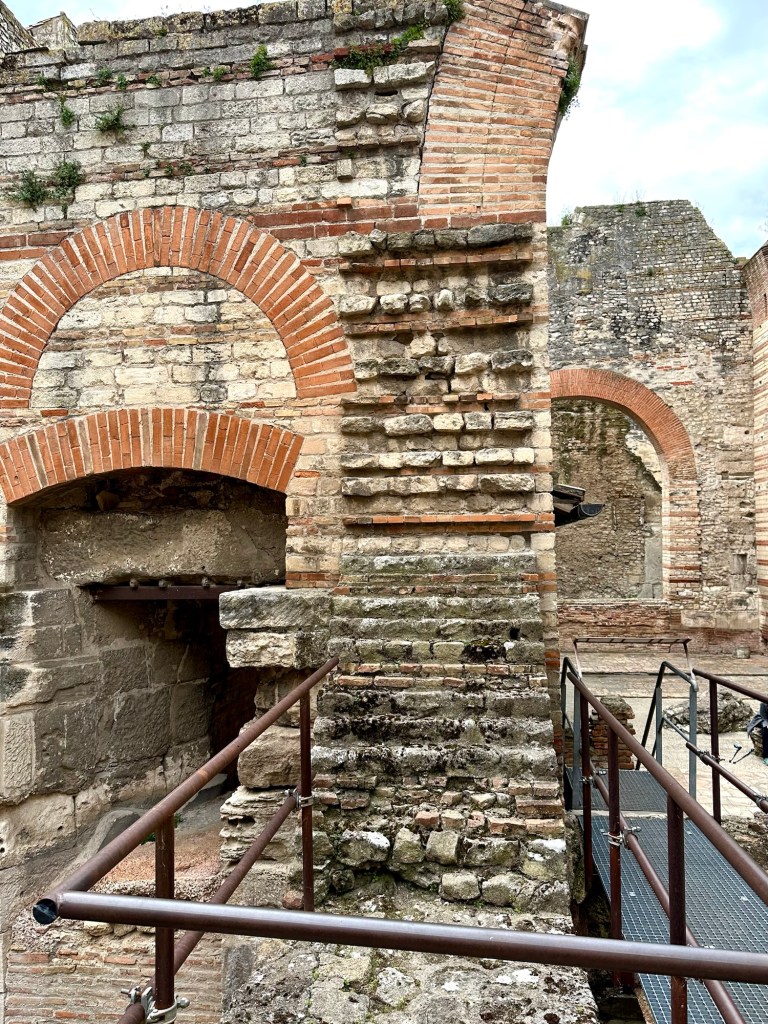
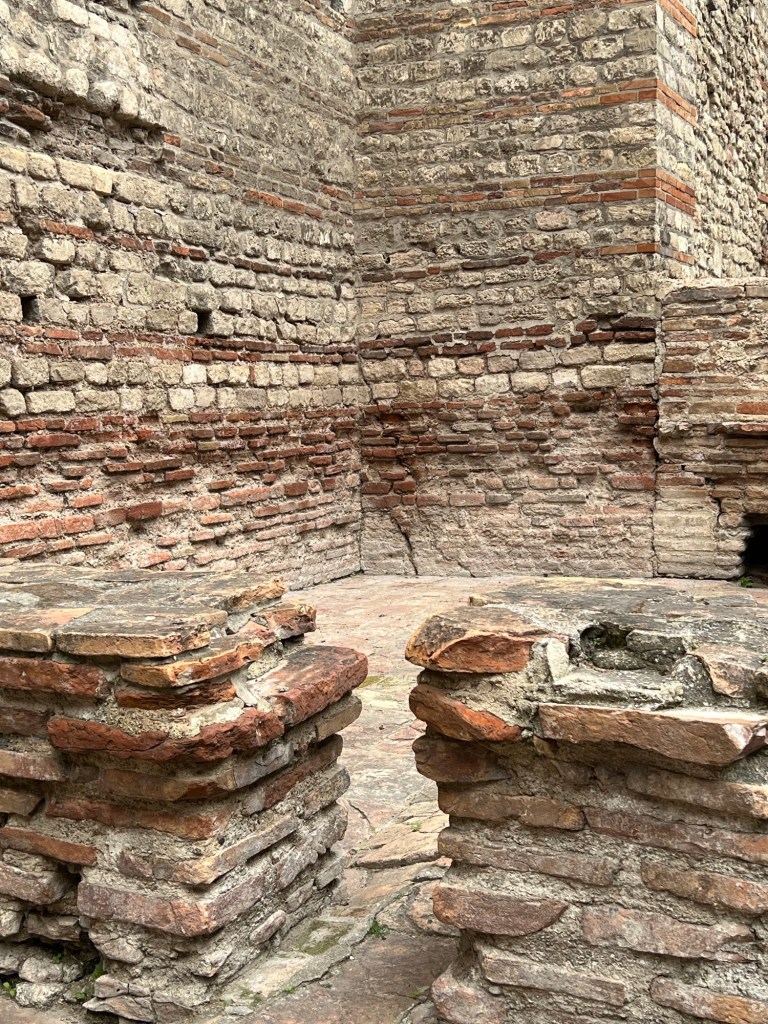
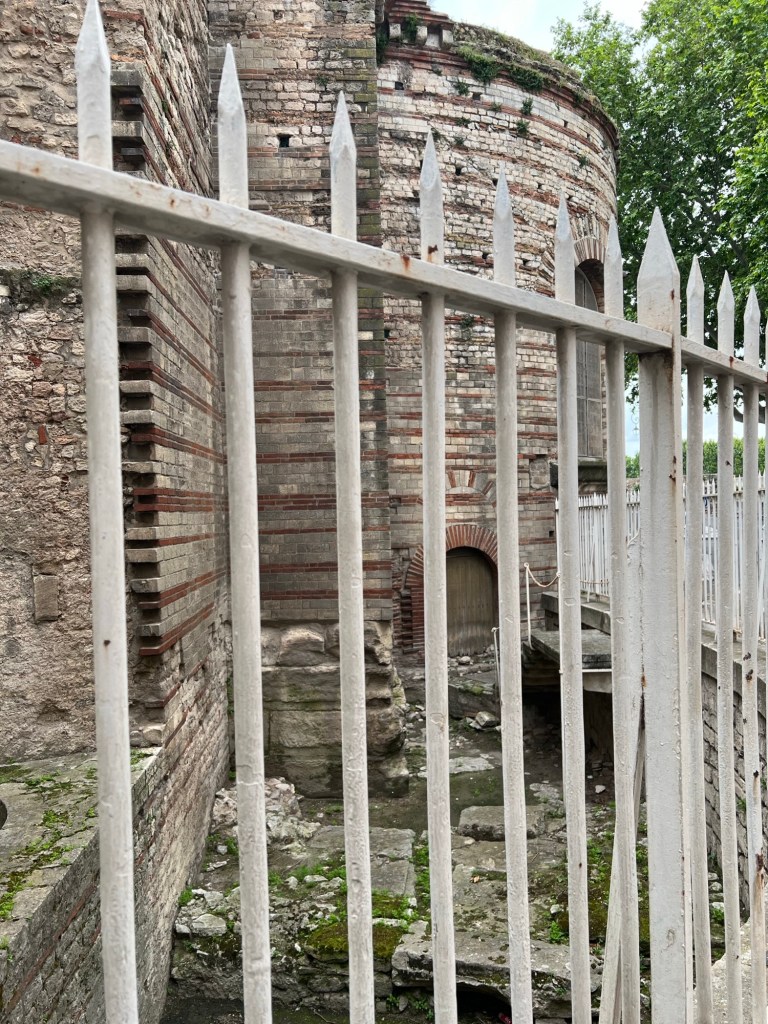
The existing brick work was beautiful hinting at the former glory of the baths.
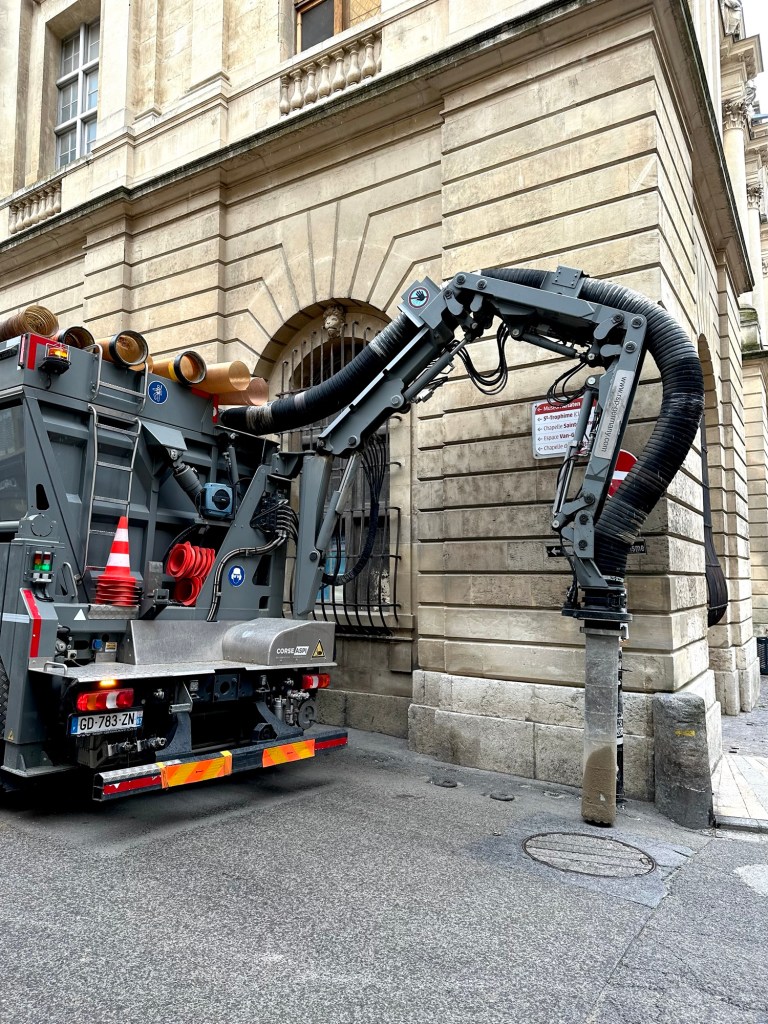
The cryptorium was an underground tunnel with rocky, steep stairways leading to an eerie experience in the subterranean water works. Beside the basement crypt, we observed a modern utility truck doing necessary sewage work with powerful suction in a city built 2000 years ago.
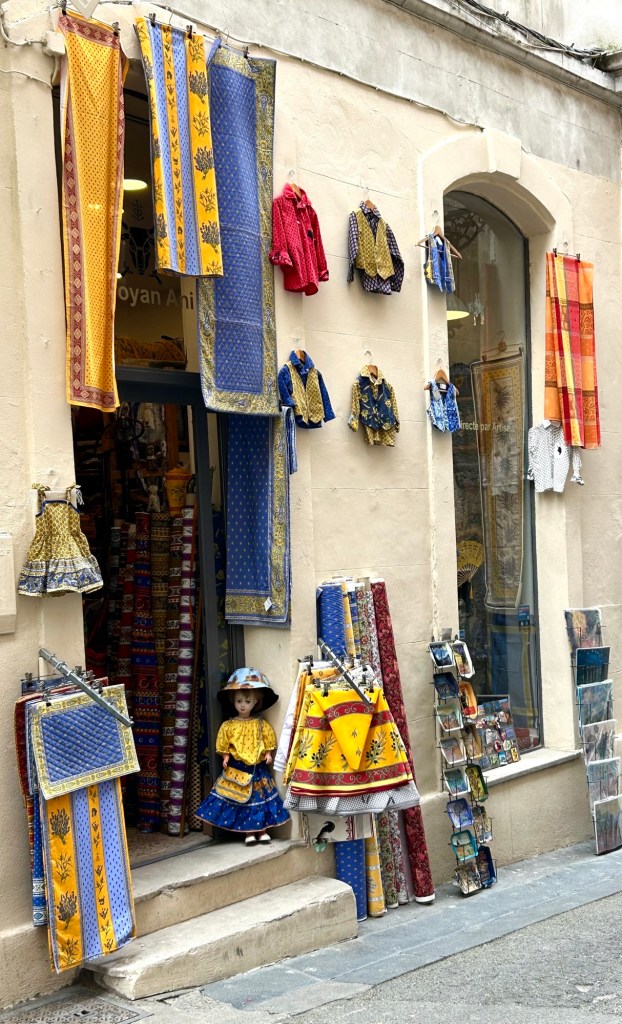
We persuaded Becky to go into a fabric store that had really exquisite print materials. She bought two lilac napkins which she declared were the most expensive per yard fabric she had ever bought.
We stopped in a crepe shop on a large Plaza de la Republique where we ate whole wheat galettes filled with Emmental cheese and jambon.
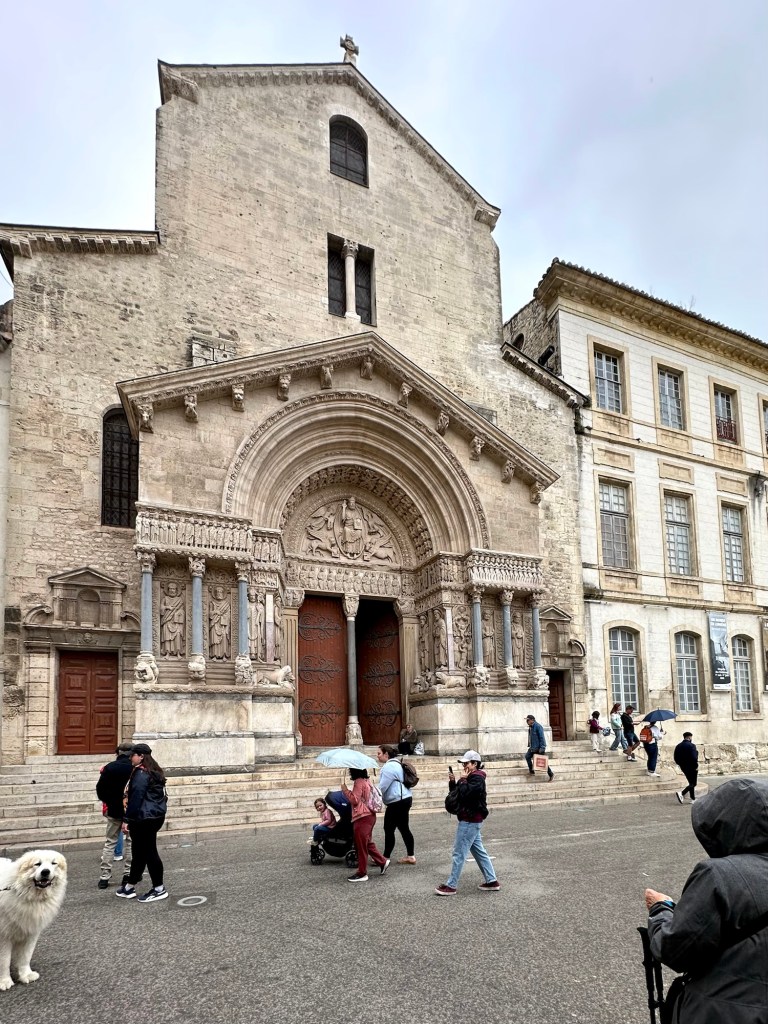
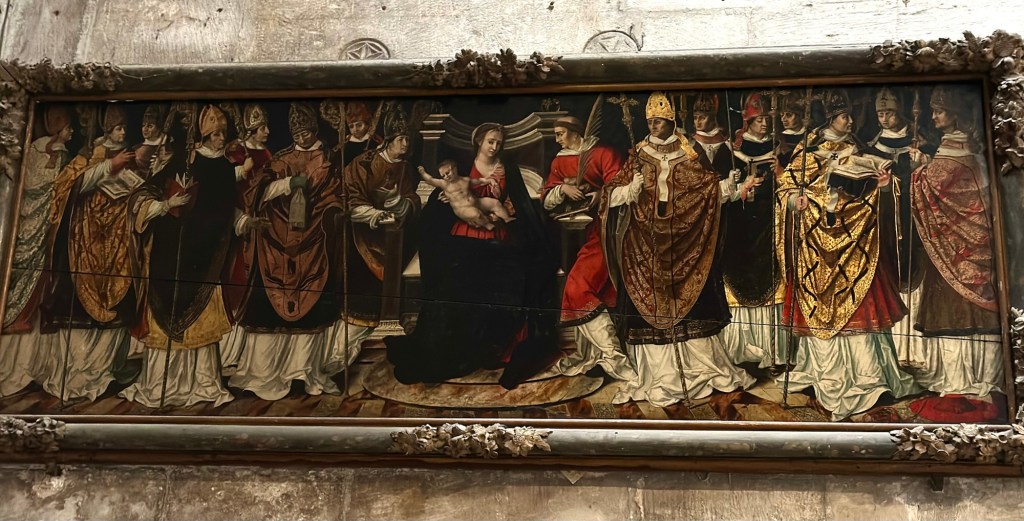
Adjacent to the square was the beautiful Romanesque Church of St. Trophime. It was built from the 12th to 15th century with Romanesque and later Gothic cloisters.

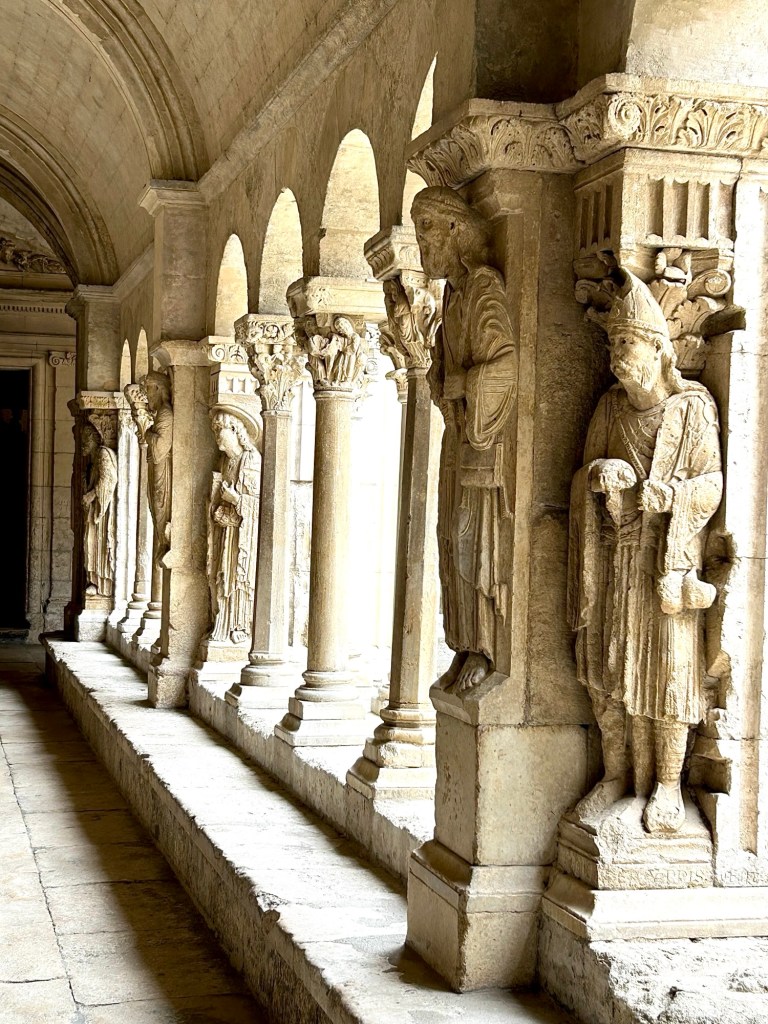
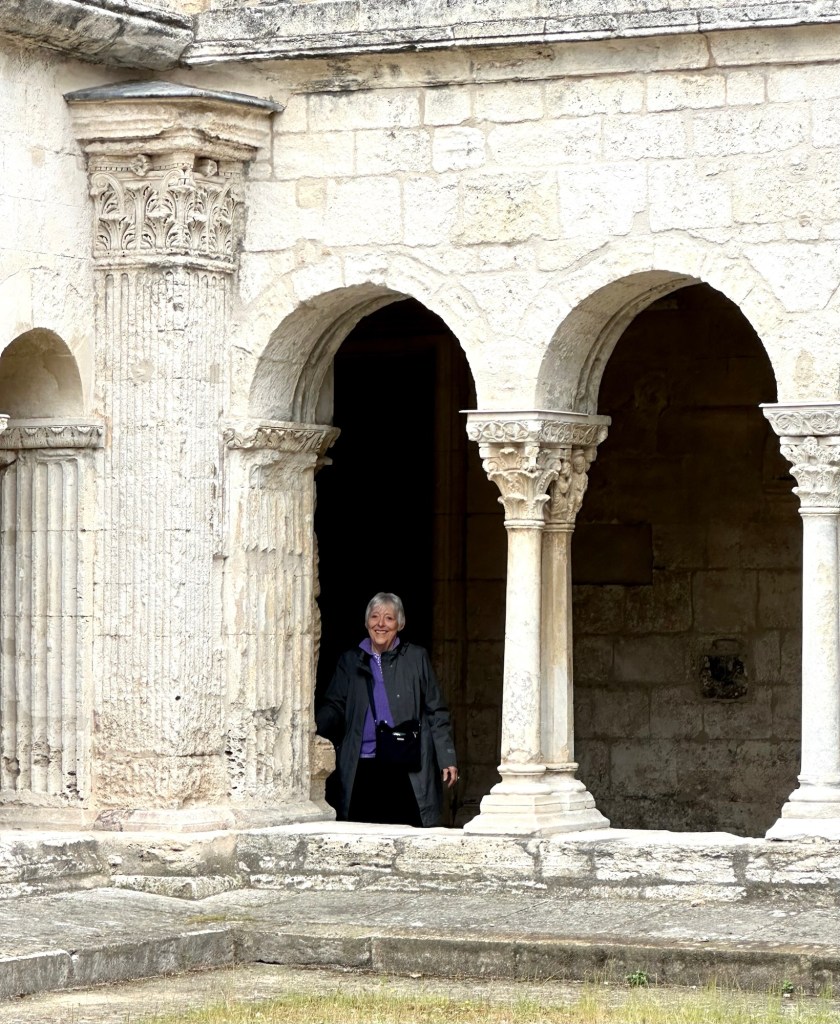
Many side chapels are richly adorned with tapestry and sculpture and treasures such reliquary boxes.
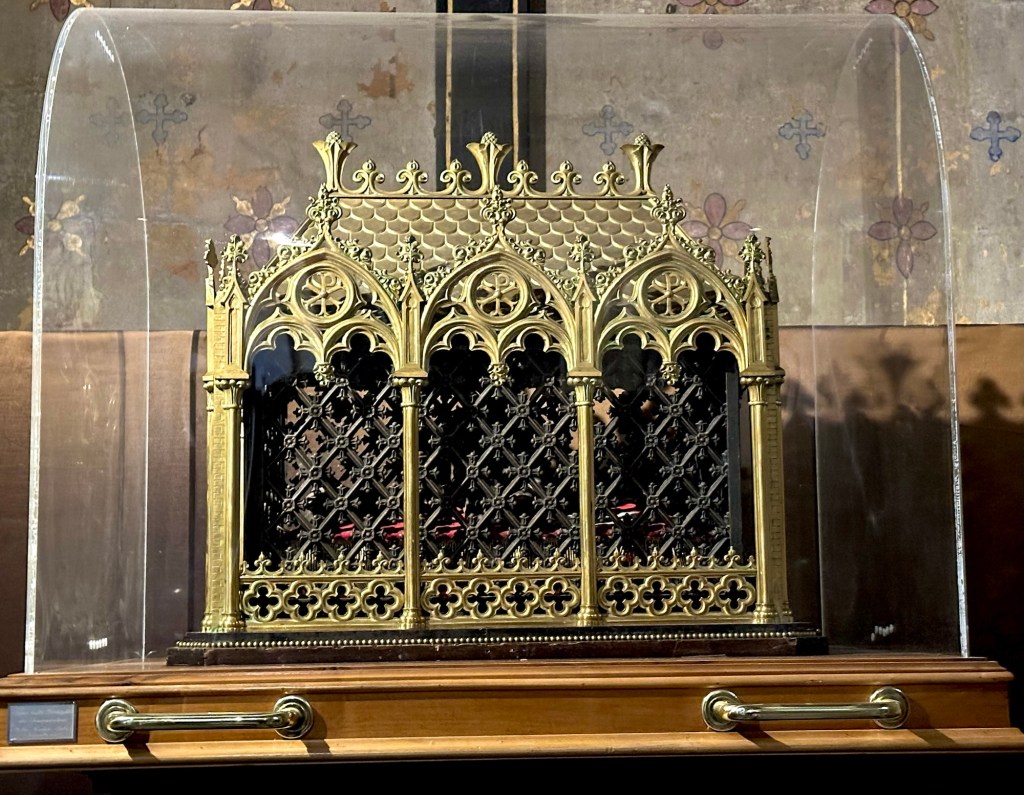
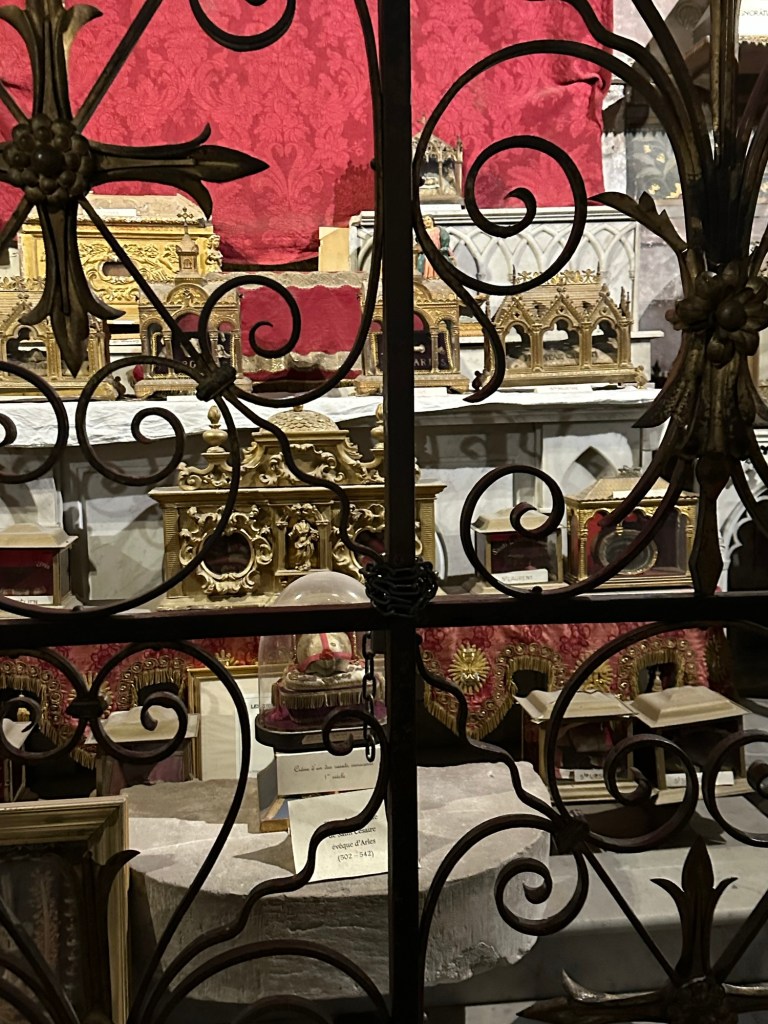
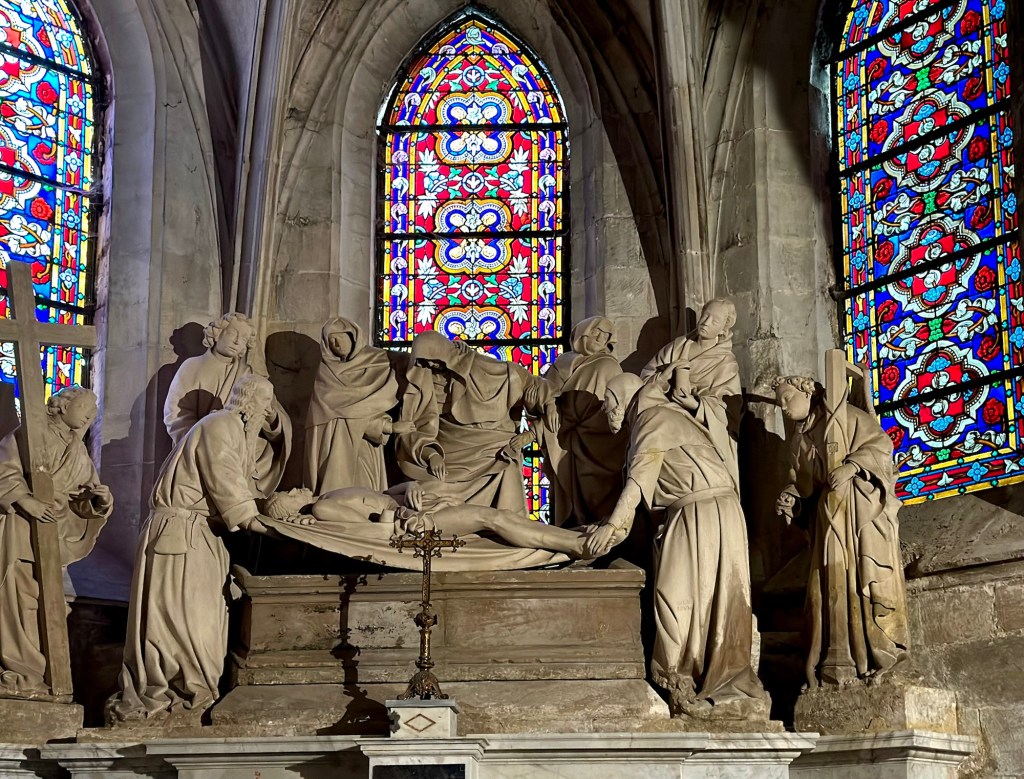
About 3:00, we were done with Roman ruins and walked along the tall brick wall that protects the city from Rhone River flooding.

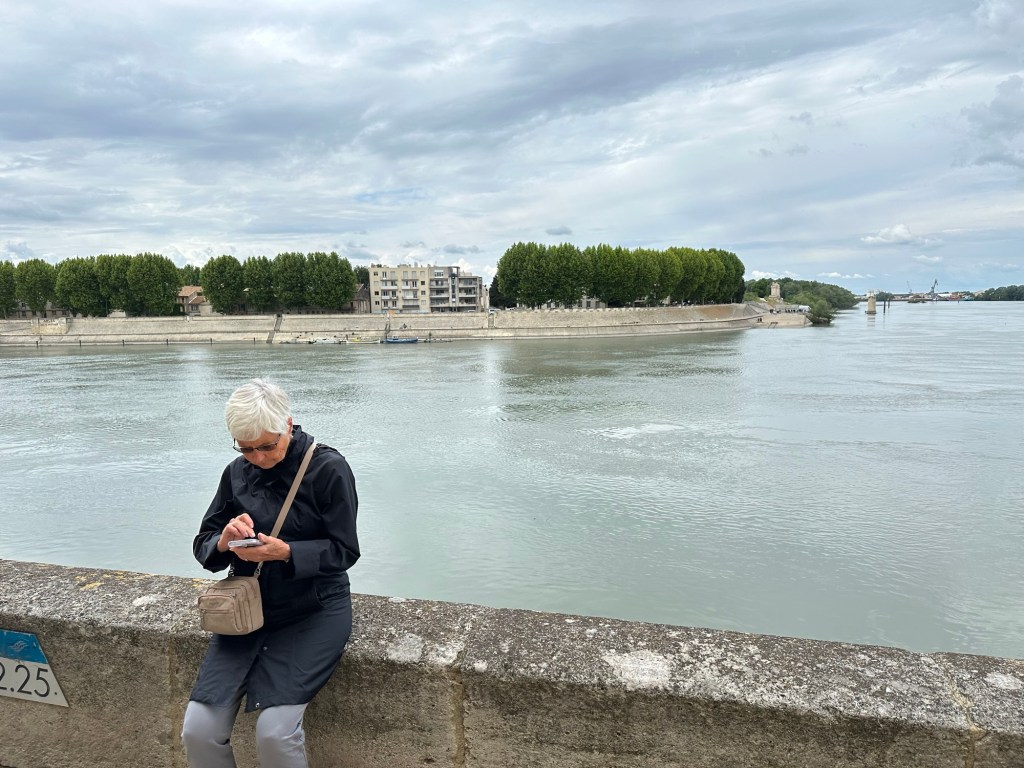
We found a cafe for coffee and rested until a train back to Avignon arrived. Ride along with us through the countryside with this video.
We had time for a nap before dinner in Place Piot, Plaza of the Popes. The next day, Jim and Betsy set off to see the Mediterranean while Becky and Steve hung out in the neighborhood.
AGDE, pronounced a ga da.
The Robson Report. Despite having been to France several times in the past, Jim had never been to the Mediterranean and wanted to dip his toes in the sea. Jim’s research lead us to the city of Agde, the second oldest city in France, after Marseille, and an easy train ride. We set off early. We hoped to find a bus into town and the bus sat therewaiting for us!
We hopped aboard for an interesting trip passing through the ancient city out into a very modern and industrialized suburb—a city of two worlds.
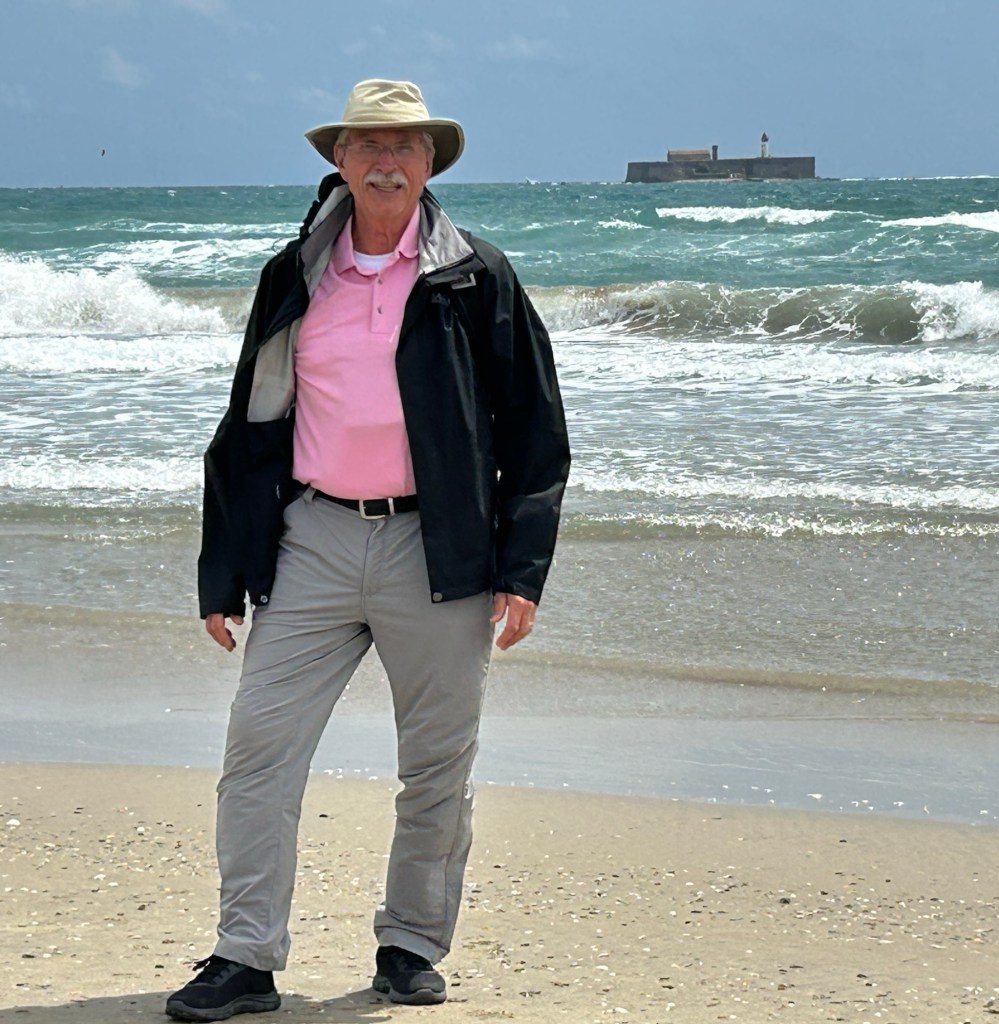
We got off the bus and began walking in the direction of the sea; the smell of salty sea air guided us into the charming town center with a pedestrian walkway to the beach! The crashing waves lured us to dip our toes in the sea just as we had hoped.
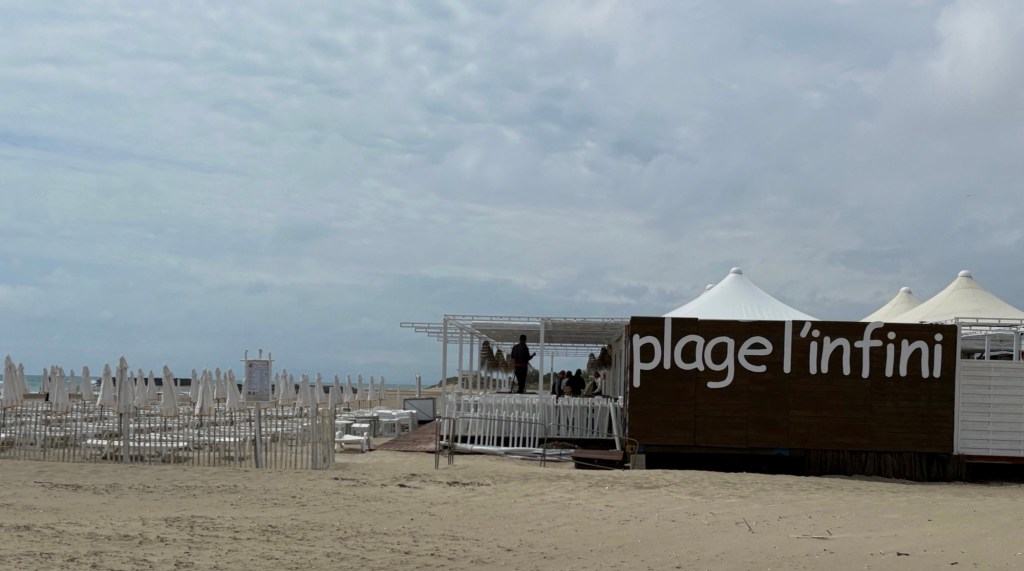
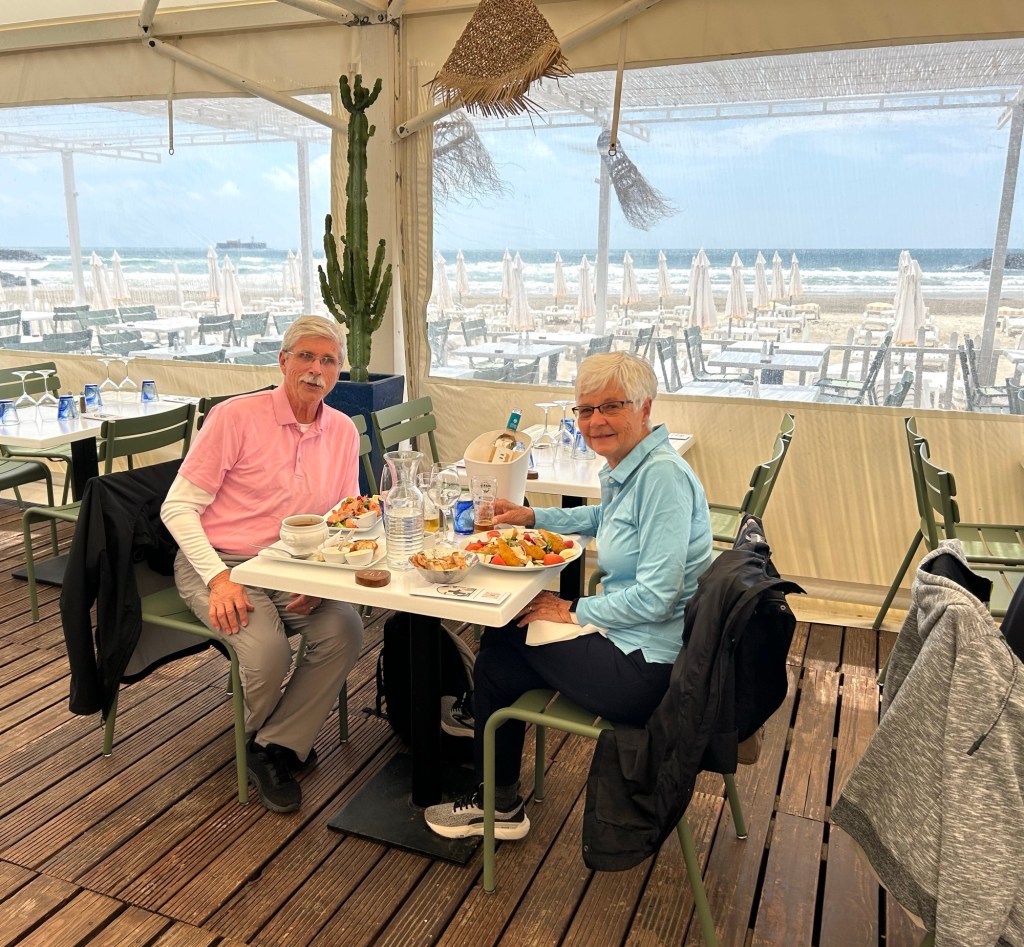
Jim had imagined us eating lunch on the beach and there it was—a charming bistro on the sand. Perfect! Lunch was langostinos, olive tapenade and fish soup accompanied by rose wine.
It was a lovely but very windy day. The restaurant had plastic sheets down to protect the diners, and the views were better than we imagined. Offshore in the near distant were the remains of an old fort that Richelieu built to protect the city.
After lunch and a short beach walk, we returned to the bus stop and rode back to the center of Agde to walk a bit among the old buildings made out of basalt
Our last stop in the city was the ancient Cathedrale Saint-etienne d’Agde. A 20 minute walk back to the station gave us enough time for a coffee at the restaurant across from the station. We were back in Avignon before 7:00 after one of the most memorable days of our trip.
Pont du Gard. When Becky and I saw the “bridge over the Guardon River” ten years ago, we looked up from its base in total awe. Pont du Gard should be the 8th wonder of the ancient world. It stands 49 meters tall and 275 meters long .

It was part of an aqueduct system 50 kilometers (31 miles) long and built to carry water from the springs at Uze to the provincial capital Nimes.
We insisted the Pont was a must-see again place. We had an easy morning and wandered to the bus station about 11:00. A regional bus dropped us off, not at the front gate as we expected, but half a mile away for an easy walk to the interpretive center.
Arriving a little after noon was a blessing. By the time we finished salad and quiche lunches, most of the student groups were fed and on their way back to school.
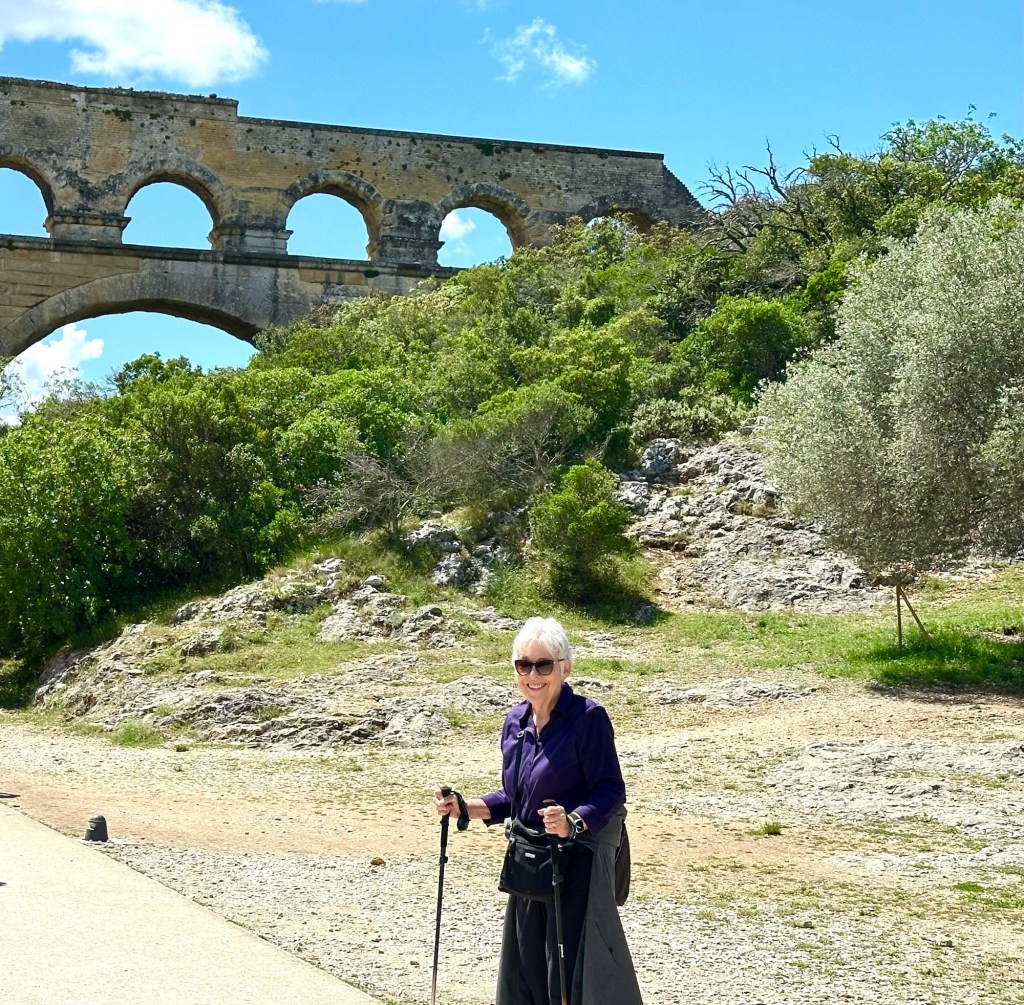
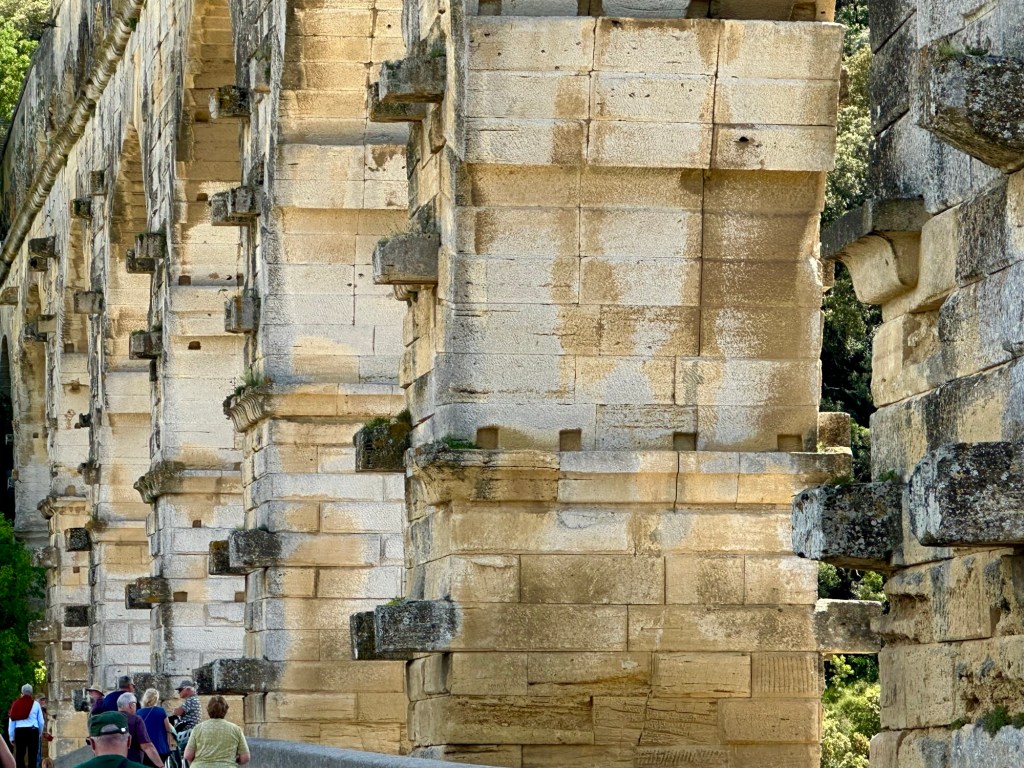
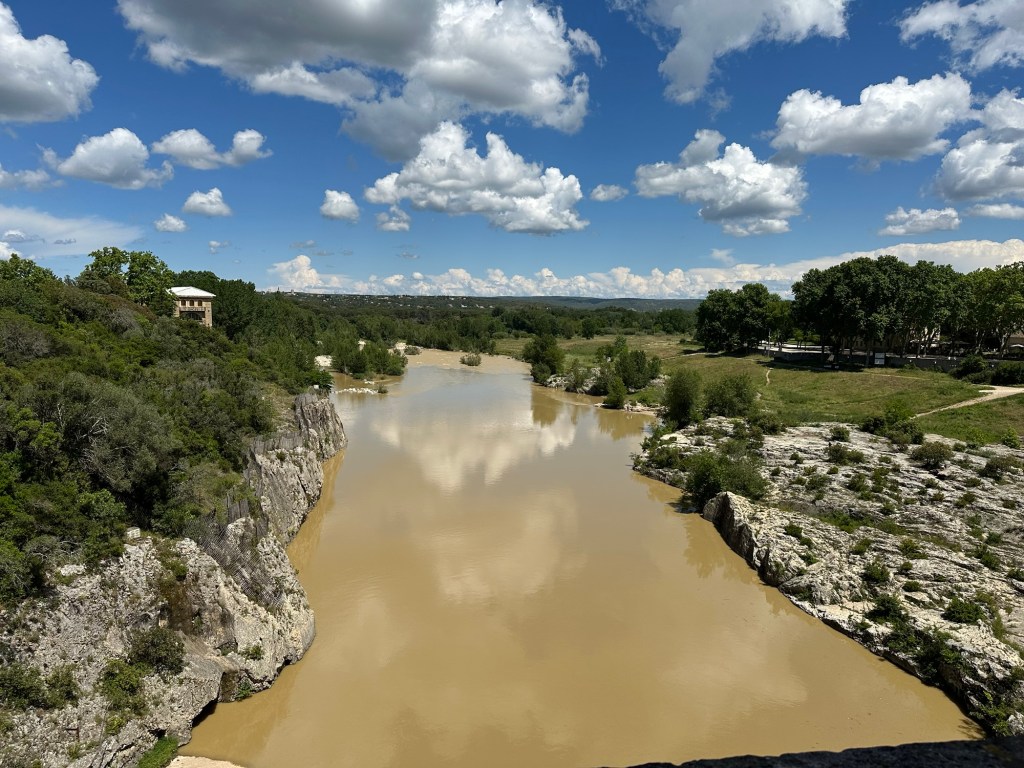
Another half mile walk took us to the Pont where we walked across the stone bridge built adjacent to the aqueduct in 1839. The Pont is so large and imposing that capturing the immensity with photography is difficult.

Intrepid Jim climbed down to the bottom of the gorge and walked downstream so that he could capture the whole bridge in situ. His photo is better than any of the professional photos or post cards we saw. The clouds and reflections make it even better on a beautiful day at the Pont.
The interpretive center includes many artifacts that illustrate the Roman life in Nimes with sculptures and mosaics and illustrations. Water was so important in making Nimes into a mini Rome with all the public amenities requiring access to water.
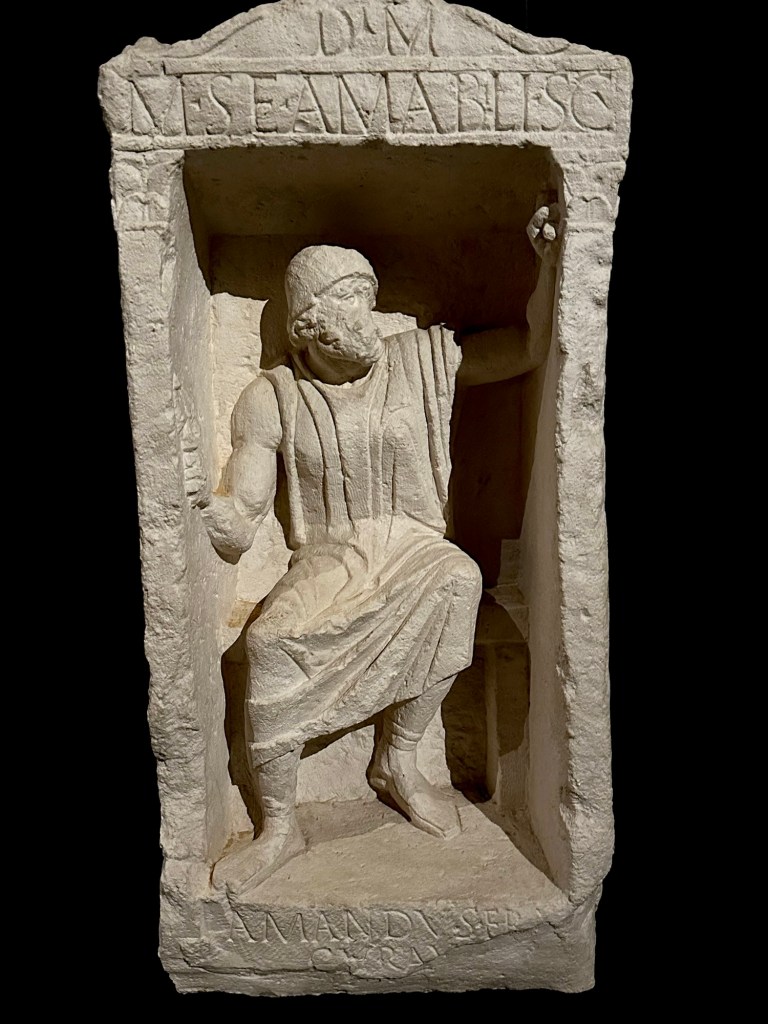
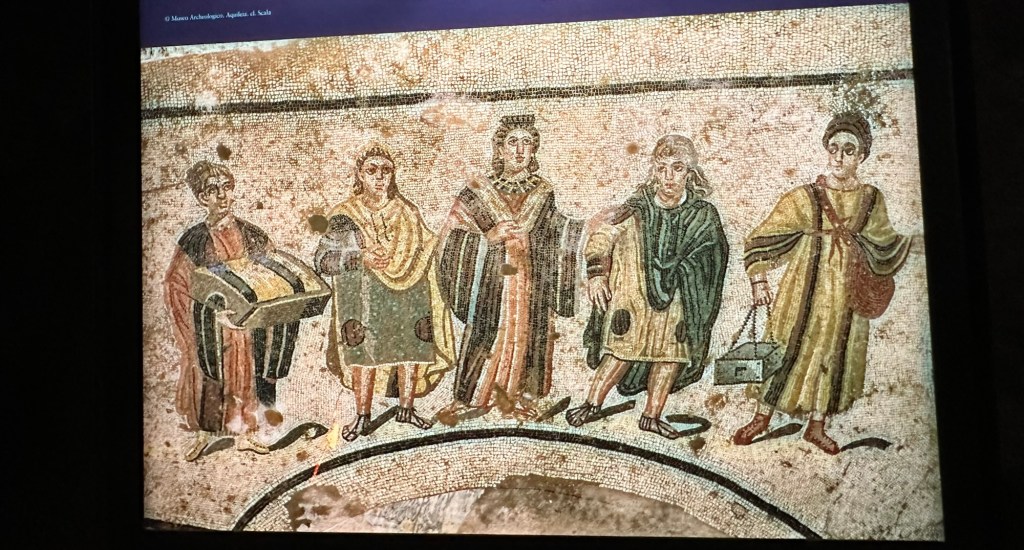

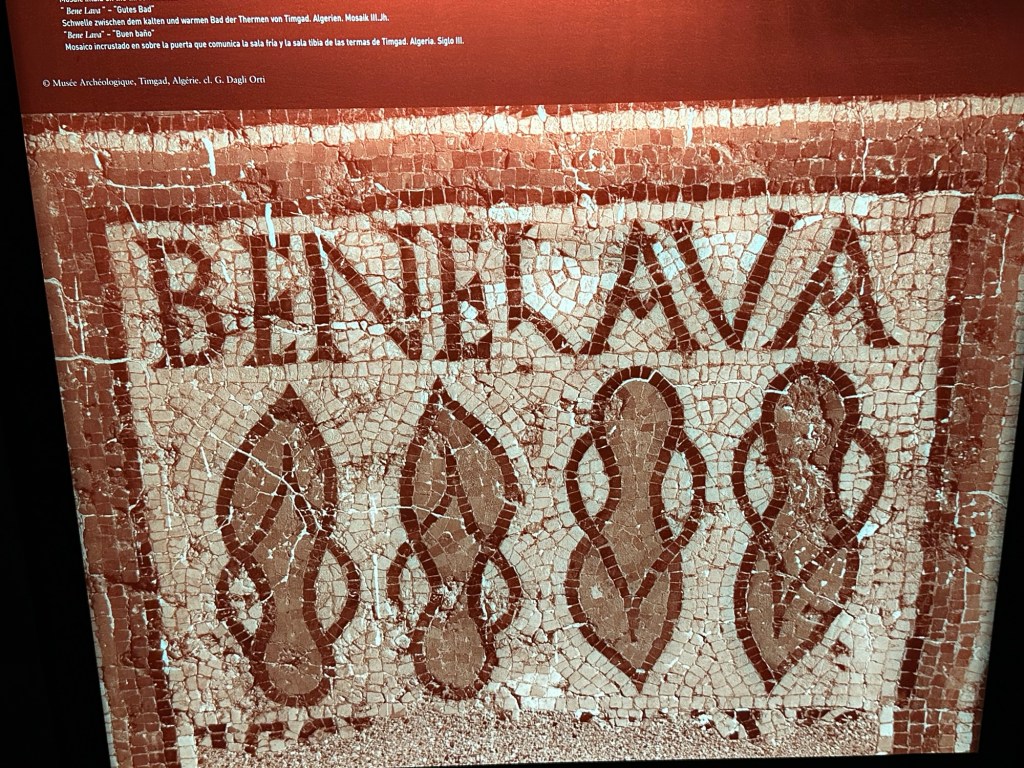
The interpretive center also includes an animated movie about the bridge. To put the dimensions in understandable scale it shows landing 3 Airbus 380 airplanes on the bridge for length and stacking 15 elephants for height.
How the Romans engineered the bridge was a major topic in the center, as part of the whole system. Clips of an old movie showed Roman slaves building a structure with primitive tools: axes and wedges, pulleys and tackle, levers and wheels. Betsy was sure that she saw Tony Curtis in one of the shots, His filmography lists Tony Curtis in Spartacus in his youthful stardom.
We walked half mile back and waited 30 minutes for the bus which delivered us to the station in 20 minutes.
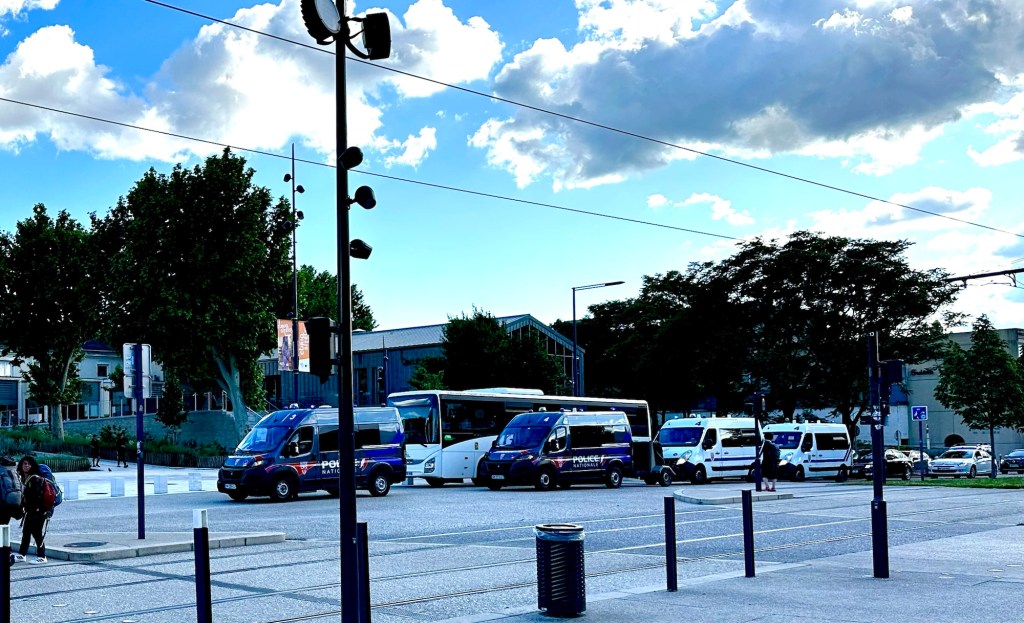
Just as we were walking back to the apartment, a line of eight police cars with blue lights passed us. We weren’t what they were doing, maybe a funeral cortège.
Eating in Avigon
In Paris, the kitchen was easy to cook in and we were there three weeks. We developed the habit of eating breakfast croissants , fruit, and salads regularly with take out main dishes from the food vendors on our street or pasta we cooked for ourselves. With only six days in Avignon and several day trips plans, we decided to eat breakfast in the apartment and keep fruit, cheese, bread, and salads makings available for light fare.
Jim continued as master of croissants and rushed out each morning for a fresh supply. He found a boulangerie only two blocks away where he got a bargain, 4 croissants for the price of 3. The Carrefours grocery was across the street where he would get whatever supplies we needed for the day.
Paris is known for its cafe culture with outdoor seating everywhere. Avignon runs Paris a race on that count. Avignon is laid out around a series of wide plazas joined by a warren of winding streets with all offering cafes and bistros and restaurants..
On our first night, an Italian place close by beckoned and turned out to be excellent. After pasta and salads, Betsy and Jim ordered Tiramisu which was presented live at the table by our waitress. Lady fingers in the bottom of a dish were covered with thick espresso then deluged with flavored, warm whipped cream.


Becky and I were jealous; we all vowed to return for pizza and tiramisu on our last night in Avignon.
Another favorite was the modern CoteSushi which offers poke bowls with or without shrimp and salmon, a variety of sushi and rolls, dumplings, and fresh fare. Becky and I ate there 3 times. Close to the apartment, it was an inexpensive and healthy option.
One evening when the Robsons had returned late from Agde, we all wanted something light, simple and tasty. We convinced them CoteSushi had options they would like and it did.
When we passed through Paris on our way to Bruges, we found CoteSushi in the train station where we ate again and occupied a table for an hour. It was the only healthy option among a myriad of fried food offerings.
Another favorite restaurant was Raj Mahal which served us some of best Indian fare we have eaten anywhere. The sauces for four different dishes were exceptional; the chicken and lamb were tender and flavorful. We would have gone back if we had another night.
On our last night, we had dreams of pizza and tiramisu in the Italian place from the first night. We were sorely disappointed that it was closed on Tuesdays. The tiramisu lived on in memory but not in our mouths. Instead we ate pizza and pasta at very large and very busy Pinocchios just around the corner from the apartment.
Au Revoir Avignon
We enjoyed the sights, sites, sounds, and flavors of Avignon and southern France. We have many fine memories and photographs of Roman history and ruins that are reminders of an empire that rose— and fell. The apartment was so centrally located and offered us time for good conversation and great rest. Au revoir!
 Tipps for Travel