While the Robsons were visiting St. Malo, Becky and I stayed at Passy 28 exploring Paris.
Things Change
During trips on Bus 32, we saw banners advertising a photographic exhibit in the Guimet Museum. Even without knowing the subject, but Becky is always interested up for seeing photography. Tuesday morning, we were on the steps of the Guimet reading “Closed on Tuesdays”—head slap for not checking ahead.
Plan B was to take a bus took the Musee du Quai Branly located near the Eiffel Tower where we found hundreds, maybe thousands, of people mulling around. Twenty years ago, we walked around the base of the Tower; now it is surrounded with a plexiglass wall for crowd control, security, and ticket kiosk. Time changes everything.
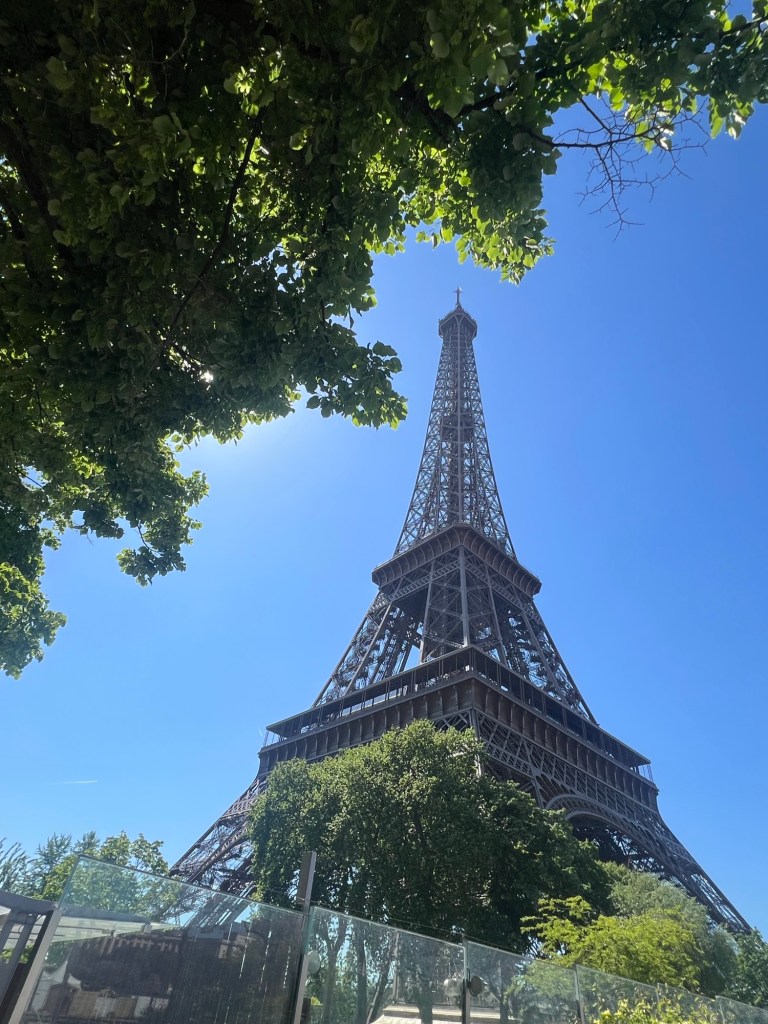
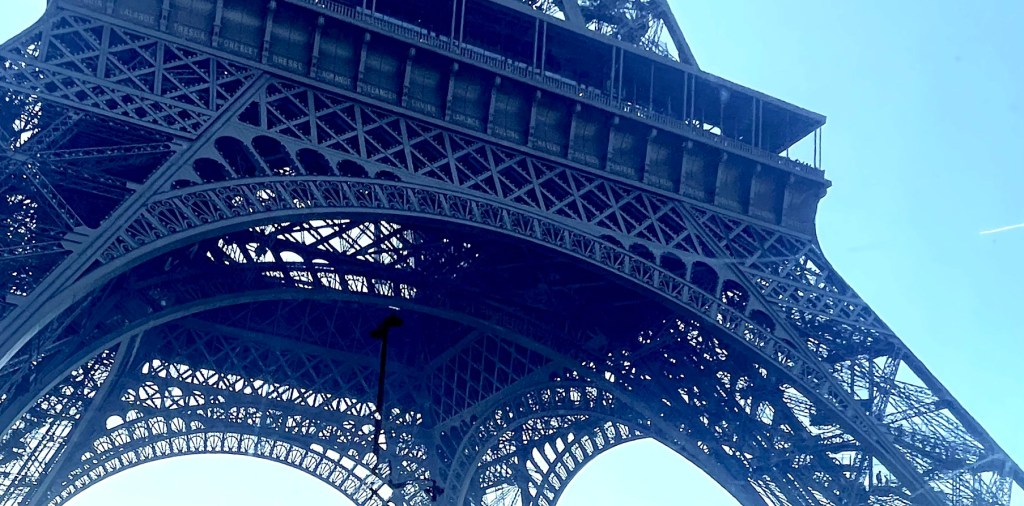
The location was still a prime opportunity for photography. Too close for straight-shots of the tower, we settled for straight-up shots at weird and wonderful angles from our skewed dis-vantage.

Golden Thread
Quai du Branly is a huge museum covering most of a city block two blocks east of the Tower and facing the Seine. From the street, all you see is a jungle behind a giant plexiglass wall. We had lunch at the museum restaurant set in the jungle.

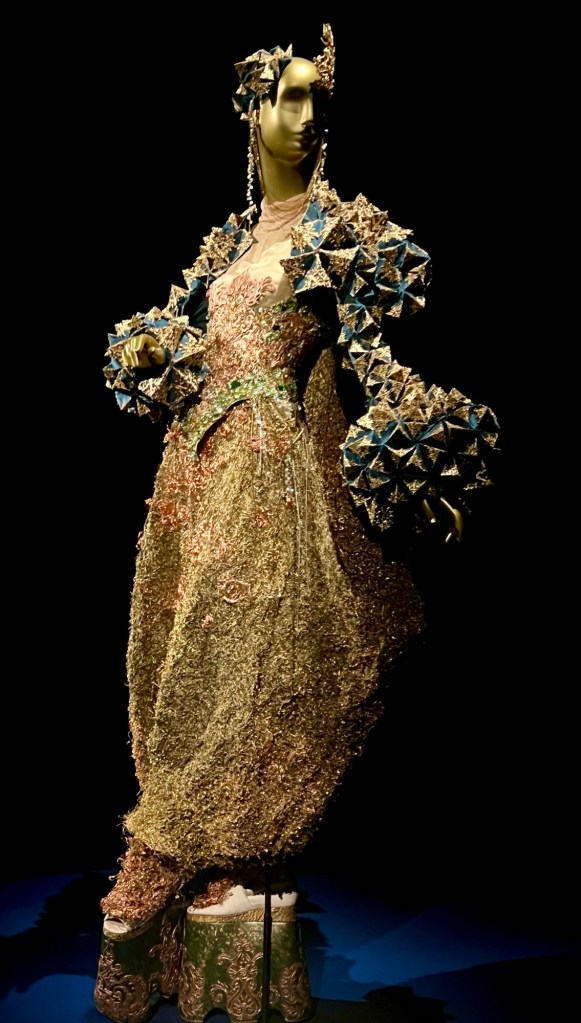
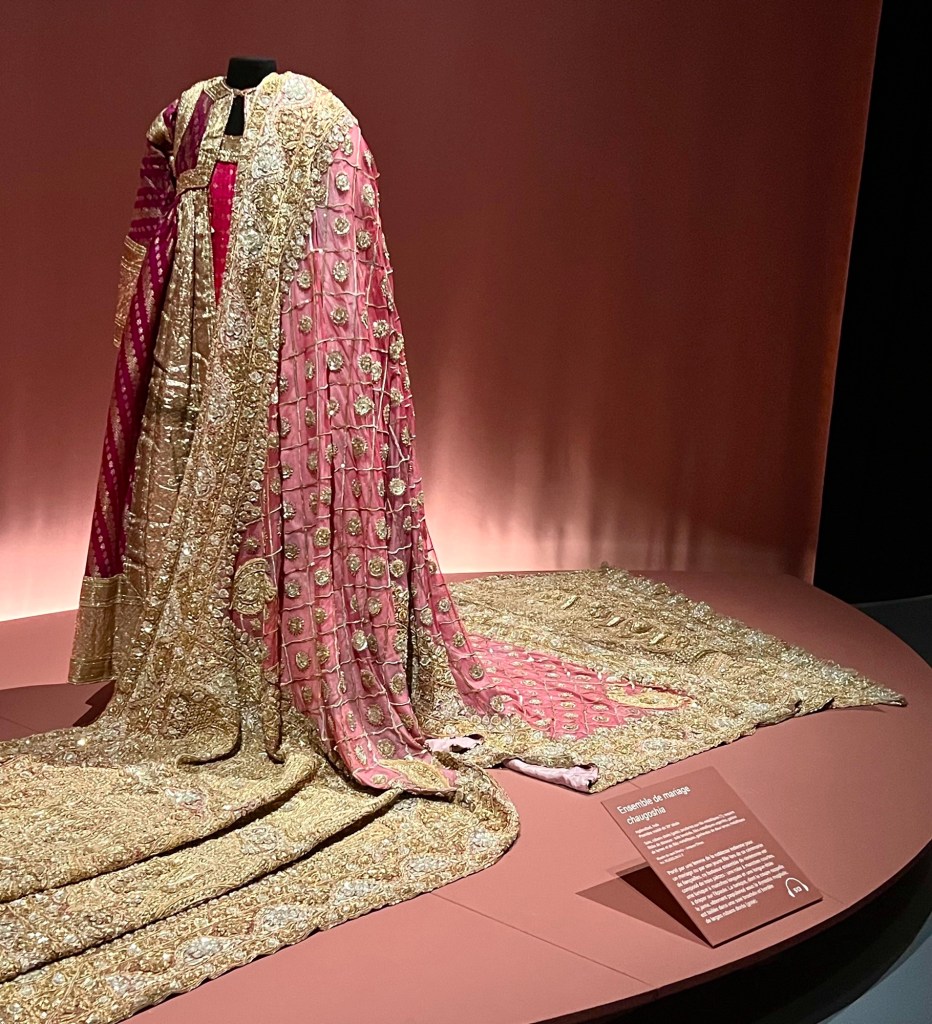
A special exhibit “Au fil de l’or” or “Golden Thread”focused on historical use of gold in weaving and ornamentation of clothing. Gold through eons has symbolized wealth and power. Displays chronicled how gold has been collected, mined, and manipulated for use in dress—from gold nuggets sewn on cloth to Lurex plastic gold thread. That much focus on gold, gold, gold was a bit disorienting.

The exhibit was sponsored by a Chinese designer, Guo Pei, famous for creating elaborate fashions with gold thread. Her gowns are scattered through the exhibit. We wondered what Mao Tse Tung would think about a Chinese designer making golden clothes for the uber rich.

Indigenous Art
The Musee du Quai Branly focuses on the art and artifacts of diverse indigenous populations across five continental regions. My vague memory of the museum from 20 years ago was a sense of disappointment. Becky did not remember it at all. I suggested we could try it again.
Indigenous art provides a remarkable insight of cultural heritages. On visits to Australia, New Mexico, and Western Canada/Alaska, we have seen and appreciated amazing native arts.
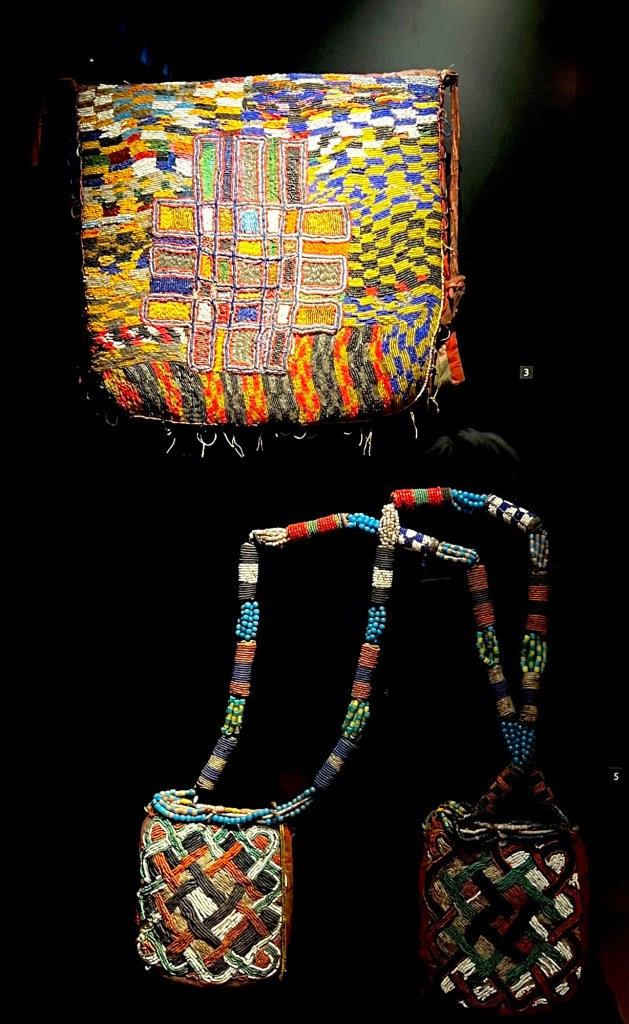
We enjoyed the exhibits in the museum. Many items were very beautiful: sculpture and carvings, totems, fabrics with wonderful designs, and utilitarian items that were made with care and beauty. Reflections from glass and general dark cast made photography difficult.
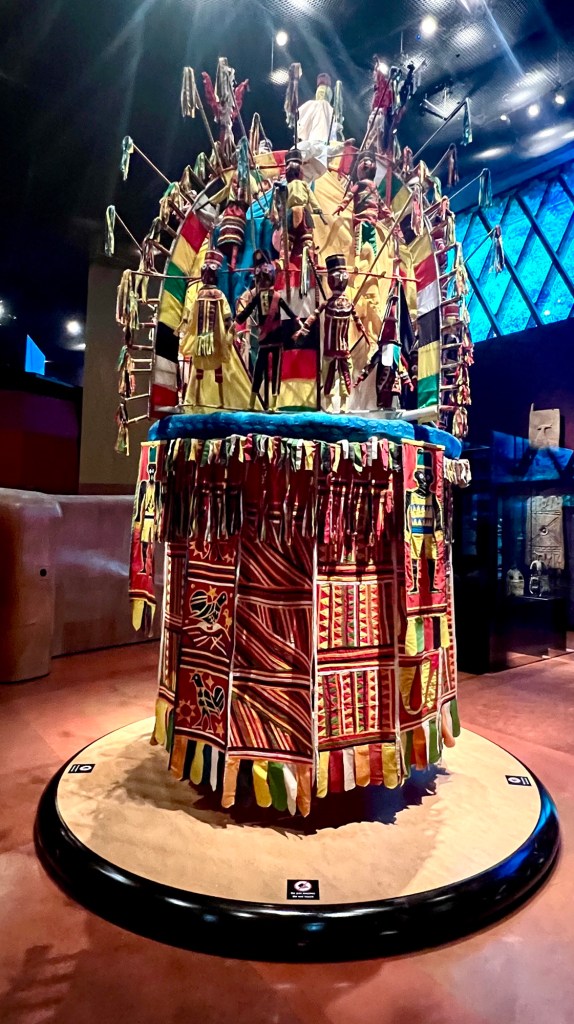
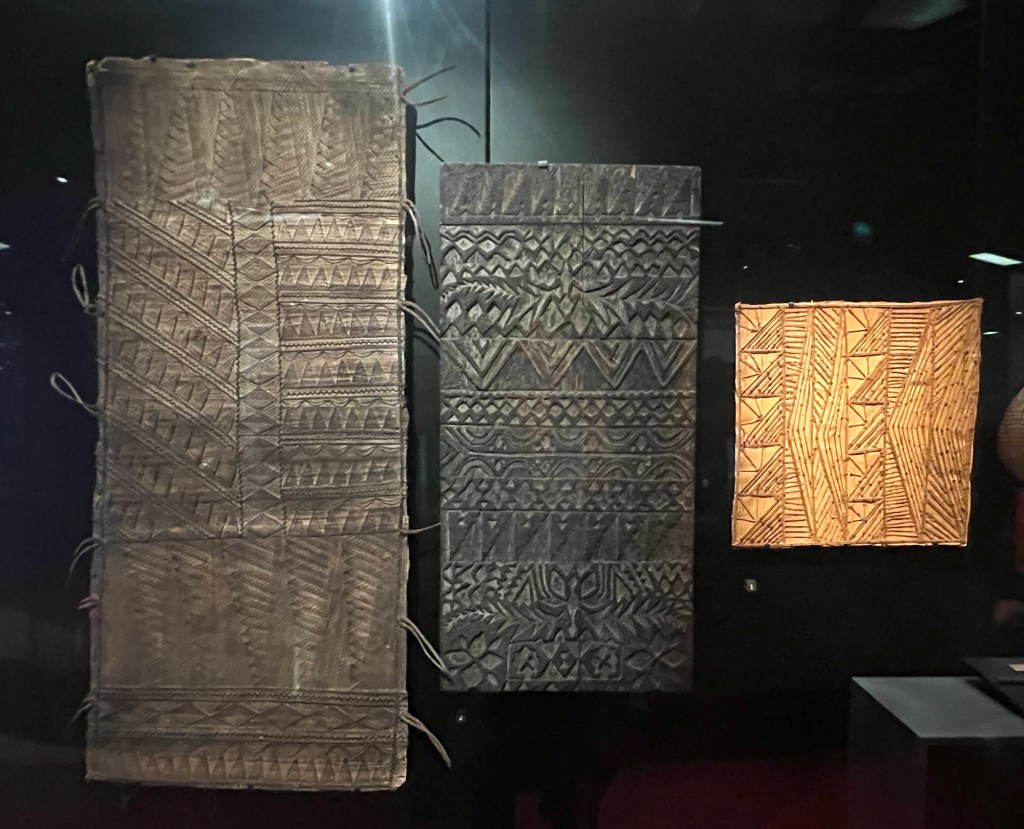
After climbing the long, long entry ramp, we immediately felt disoriented. We asked for help locating the Australia and Oceanic displays. A person at the help stand pointed out directions from his point of view rather than from ours. We walked left when we really wanted to go right. Others adults in the exhibits also seemed confused, and two actually asked us for directions. Talk about the lost leading the lost!
About half of the people in the exhibits were teenagers on field trips or spring break. Several school groups had guides, but the close layout of exhibits made it hard to focus for a group. Others youths were wandering except when gathered to snicker at ancient carvings of naked people. Don’t they have internet?
As we tired of being confused, my vague memories of disappointment returned. My distress was not about the art but about the organization of the of museum. After an hour and half, we called Uber which picked us up in 5 minutes and had us back to Passy 28 in 10.
Time to Rest and Recoup
The next day was devoted to resting and regrouping. The washer-dryer combo in the apartment was small and slow. Becky is a meticulous sorter, so we had three loads of laundry which took most of the day. I worked on blogs, and we both napped. Then we walked around the neighborhood breathing the spring air and taking photos in Paris.
Reflecting Vietnam
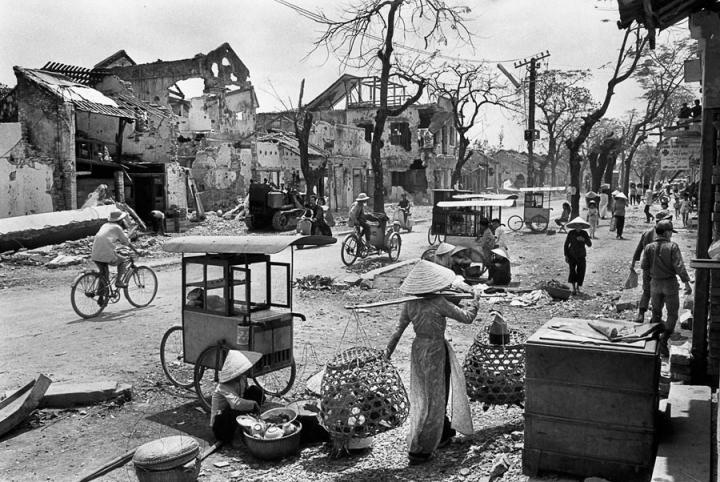
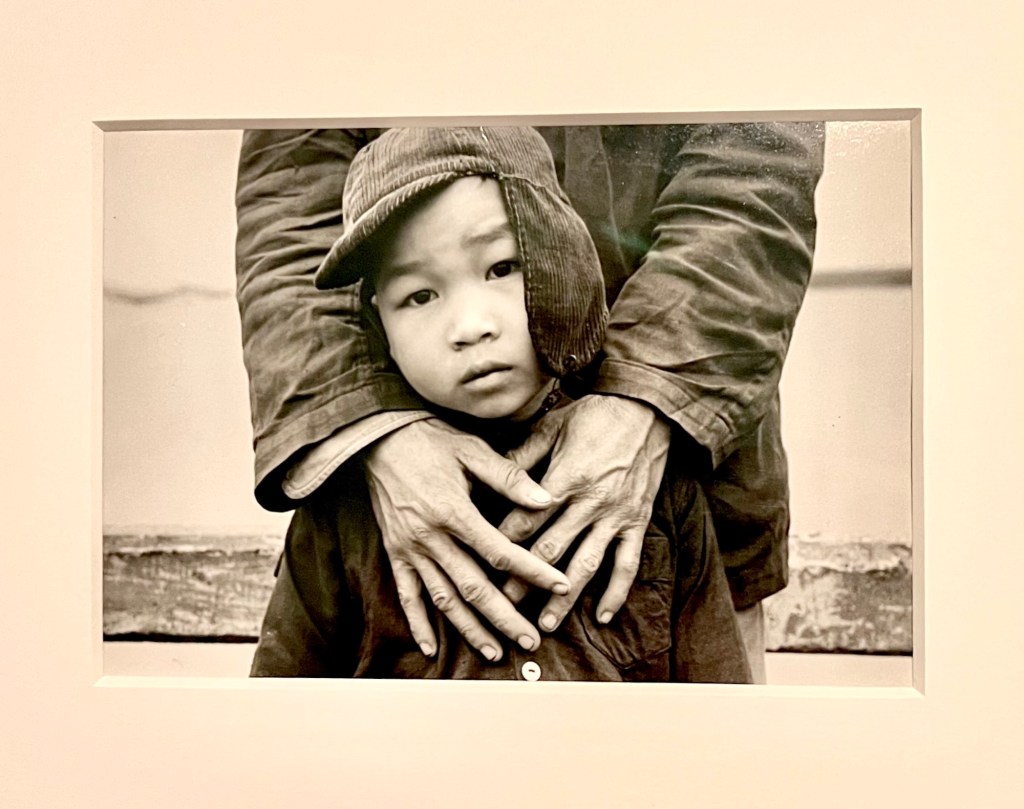
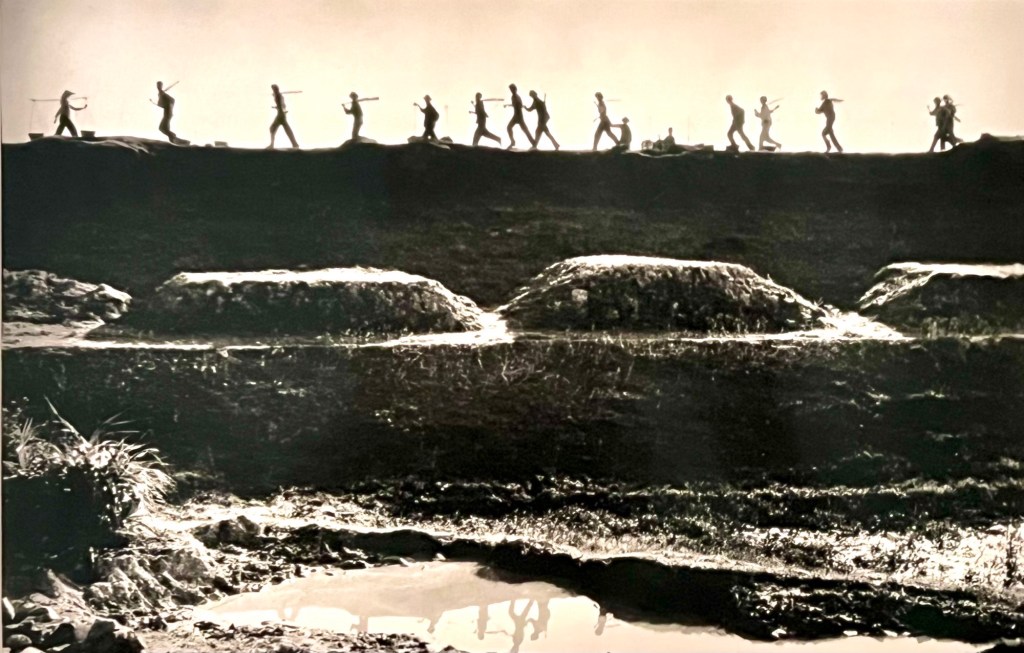
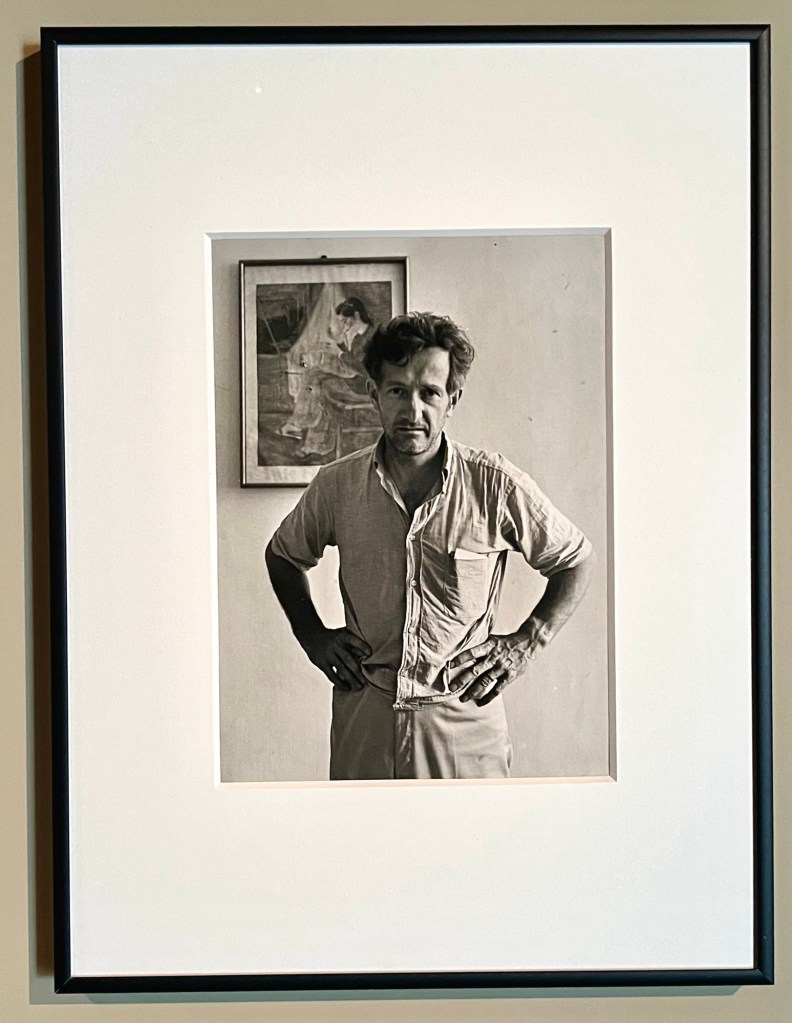
The Guimet Museum was showing the photographic exhibit, Faces of Vietnam. Photographer Marc Riboud spent much of his career in Southeast Asia. He traveled extensively in North and South Viet Nam before, during, and after the war. He gained the trust of the North Viet Nam government who were leaders in the liberation movement which was part of the French Indochina colonial empire .
His unusual access allow him meet and photograph Ho Chi Minh. He also was imbedded with US and South Vietnam troops and documented their efforts. Riboud was on the ground in the midst of the war and his collection of photographs was compelling.
His most famous photograph is of a young woman facing a line of armed soldiers and offering them a flower in peace.
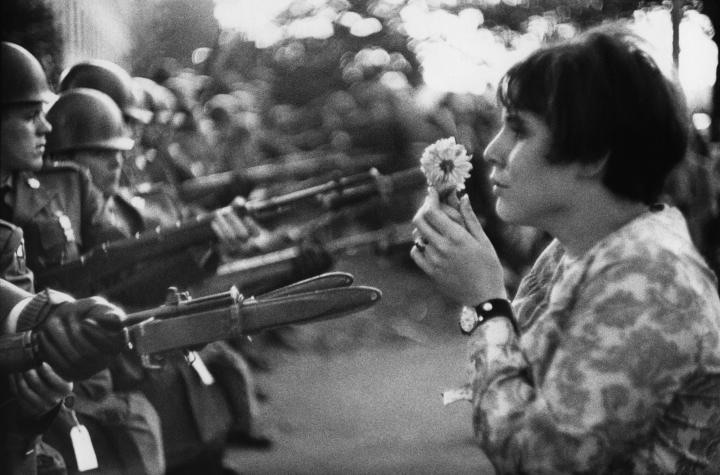
Eventually, still photographs, including many that he took, and film of the action in Vietnamese shown on nightly television turned the US public against the war and has had repercussions ever since.

Powerful Photography
During COVID, Becky and I took an online course with Ricky Tims learning many photographic skills and techniques. Becky has always had a good eye, but I he really helped me think about photography in a new way.
His mantra was a question, “What is this photograph about?” If a photograph has too much going on, it is hard to focus. If nothing interesting or beautiful is captured, you are bored and indifferent. If the composition of the photograph is too goofy or unintentionally just off, you are distracted. The question is also short hand for “does it tell a story, ask a question, demand attention, surprise you?”
When looking at Marc Riboud photographs, we were never distracted and never bored. We always knew what his focus was. We saw power in the faces and places he captured with his lens. And we saw proof sheets where he carefully selected 1 out of 50 shots. We often ask ourselves “What is this about?”which leads us to see many things in a different way.
Looking Back at Viet Nam
The week we saw the Marc Riboud exhibit was the 50th anniversary of the end of the war, the collapse of the South Vietnamese government, and the chaotic withdrawal of US troops and civilians. In retrospect, US intentions of fighting Communism under the premise of the domino effect seems stupid, misguided, and destructive at home and abroad.
When I was in college, I worked as an engineering intern at Ling-Temco-Vought. LTV made F8 and A7 aircraft and later had contracts for parts of the Boeing 747. I had secret clearance as part of my job which in retrospect seems so odd .
At briefings, we were shown US aircraft, including the ones we made, in aerial combat and dropping napalm and bombs in Cambodia. At the time, the US government was officially denying that such things happened. Not one briefing on one day, but weekly briefings for months showed the government was lying about the conduct of the war.
History is not kind to invasions of powerful nations against native populations, resistance, and guerilla warfare.. (Disasterous interventions in Afghanistan for both Russia and US are recent examples.) In the long run, they are seldom successful. Did we learn nothing from our own guerilla revolution as a war of liberation? How did the ”Best and Brightest” in the Kennedy and Johnson administration lead us into such folly?
Asiatic Art and Focus
After the photographic exhibit, we spent time in the Musee national des Arts Asiatiques exhibits also housed in the Guimet Museum. The galleries were stunning and focused.
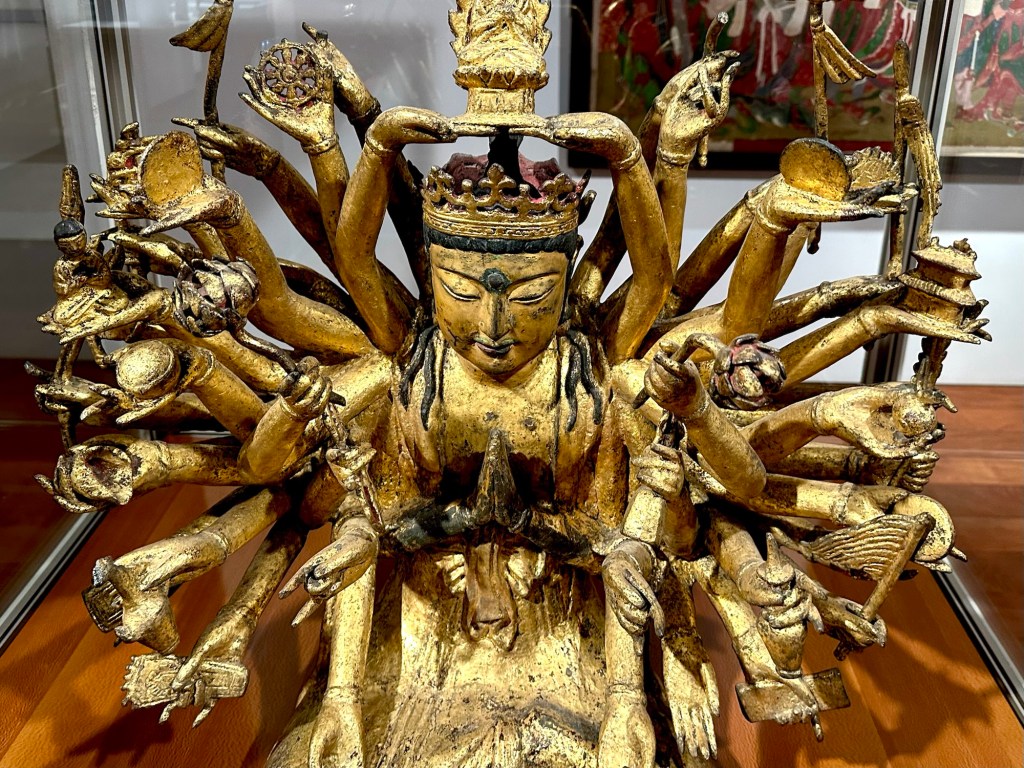
When we walked into a new gallery, we knew immediately “What this is about.” The curators had selected items which told a focused coherent story.

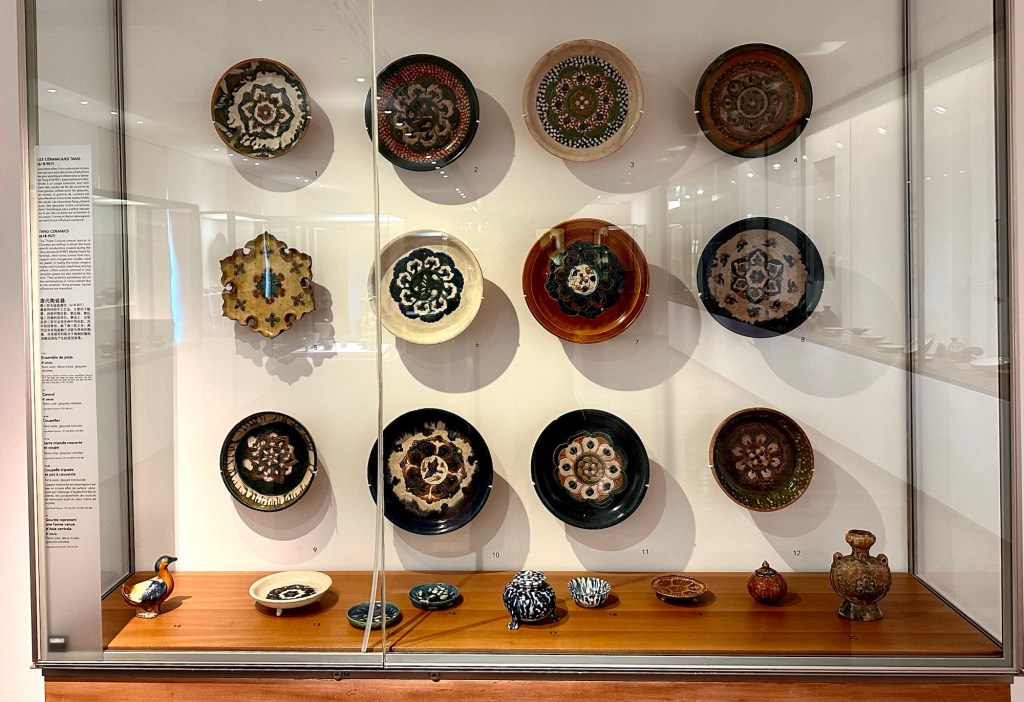
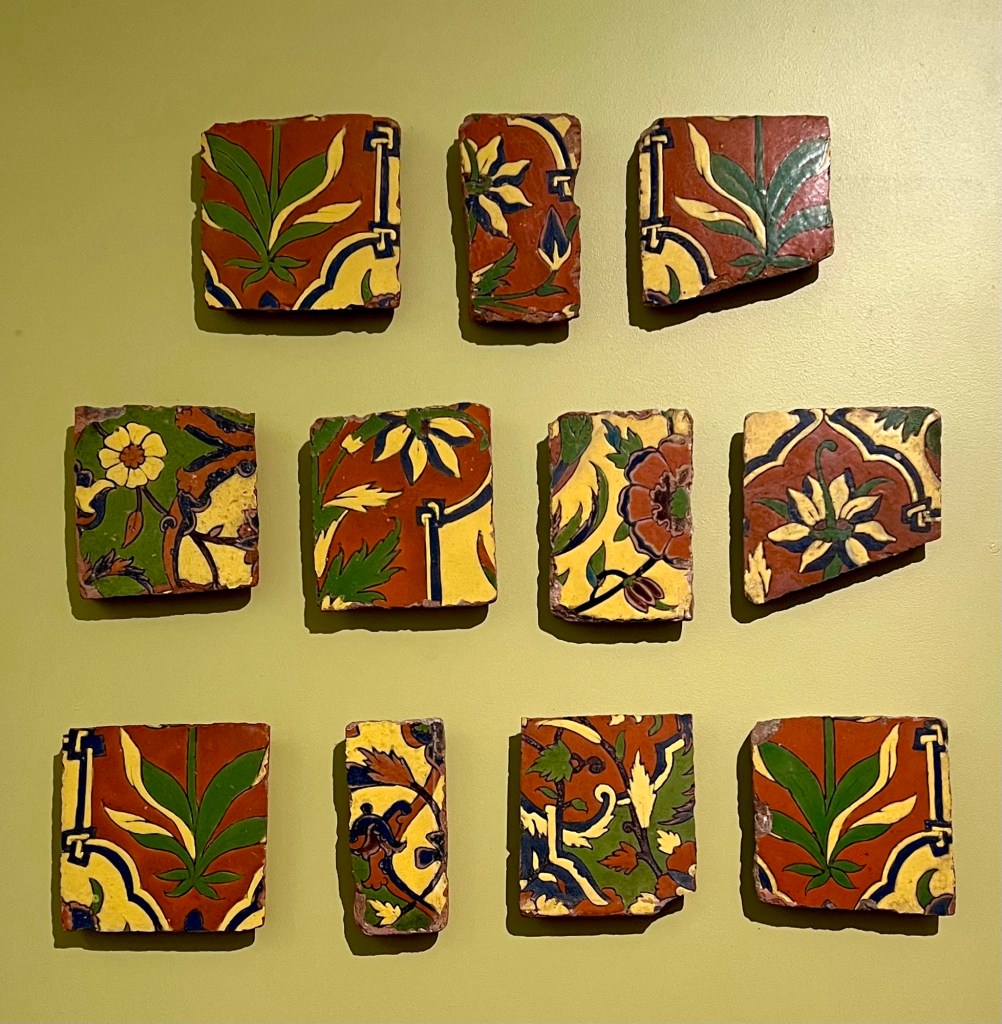
One room was about the beautiful Chinese porcelain. This gallery held ancient scroll paintings, This one showed the variety of images of Buddhist luminaries.
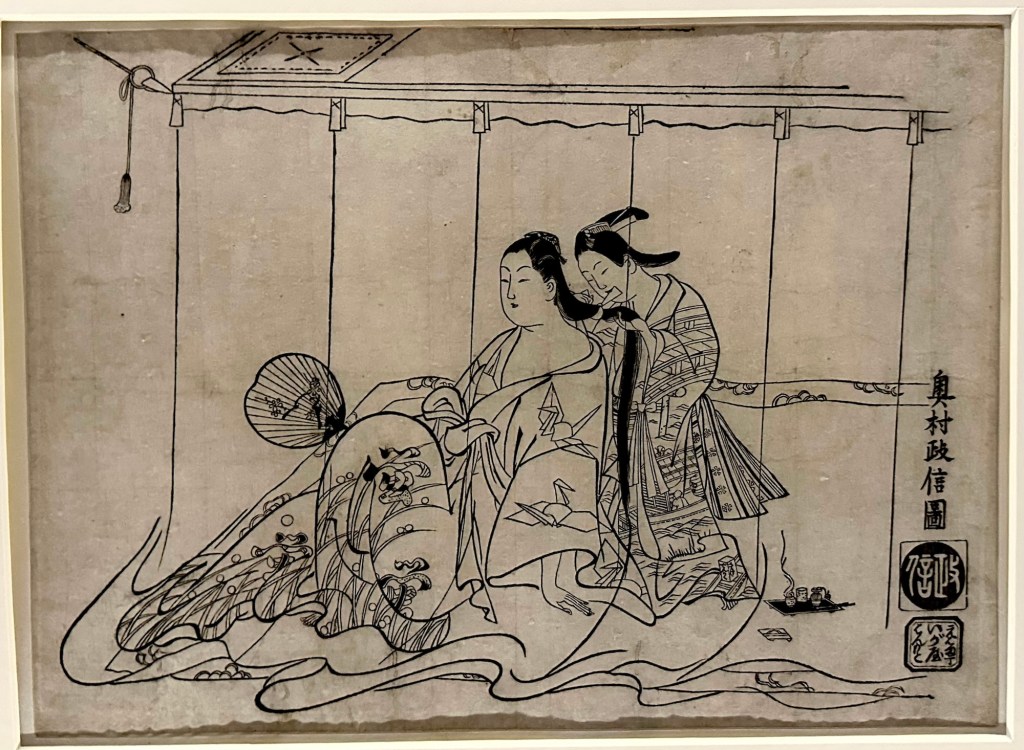

Another paid homage to Islamic design in sculpture and design.

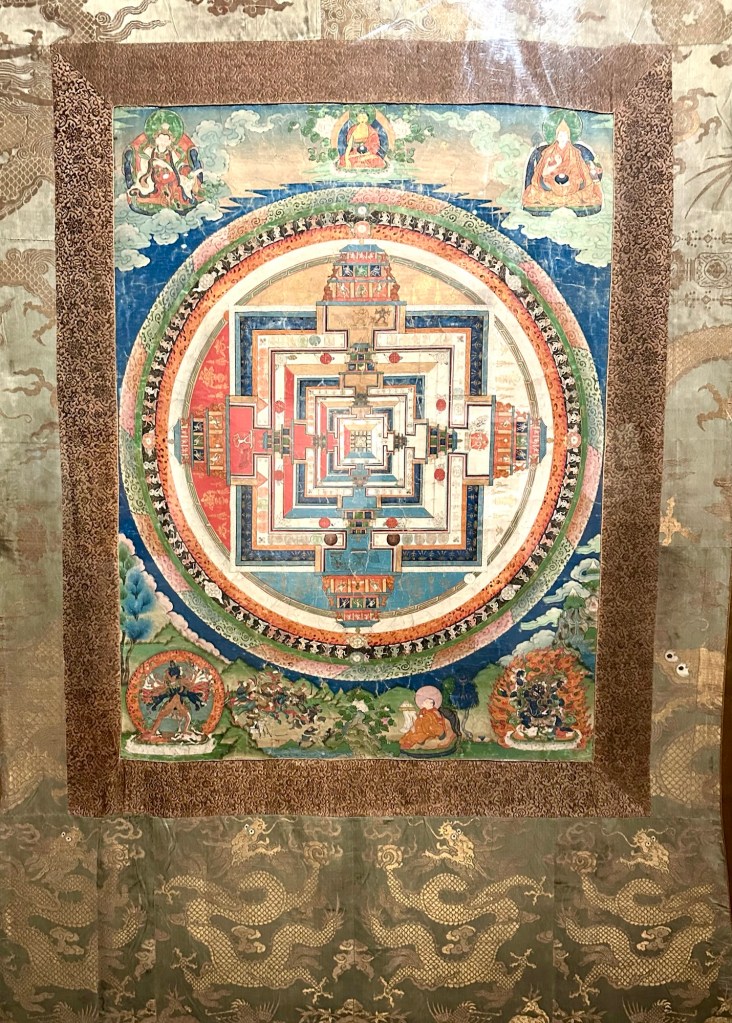
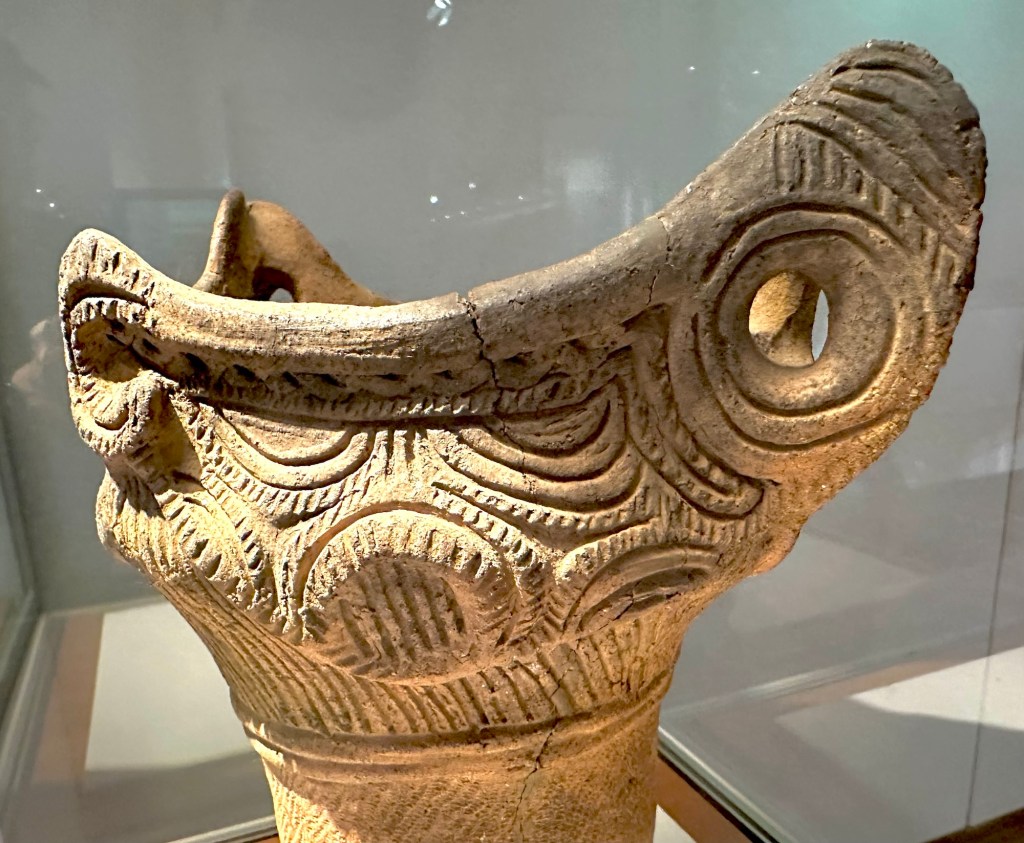
Just as in photography, we were able to enjoy and understand each gallery without confusion or distraction. This small jewel of a museum had what Musee du Quai Branly did not; it had focus.
Sunday in the Park
On Sunday before the Robsons arrived back from St. Malo, we walked a few blocks to Ranlagh Park for the afternoon and watched people picnicking, lying on blankets in the sun, and strolling through flower gardens.
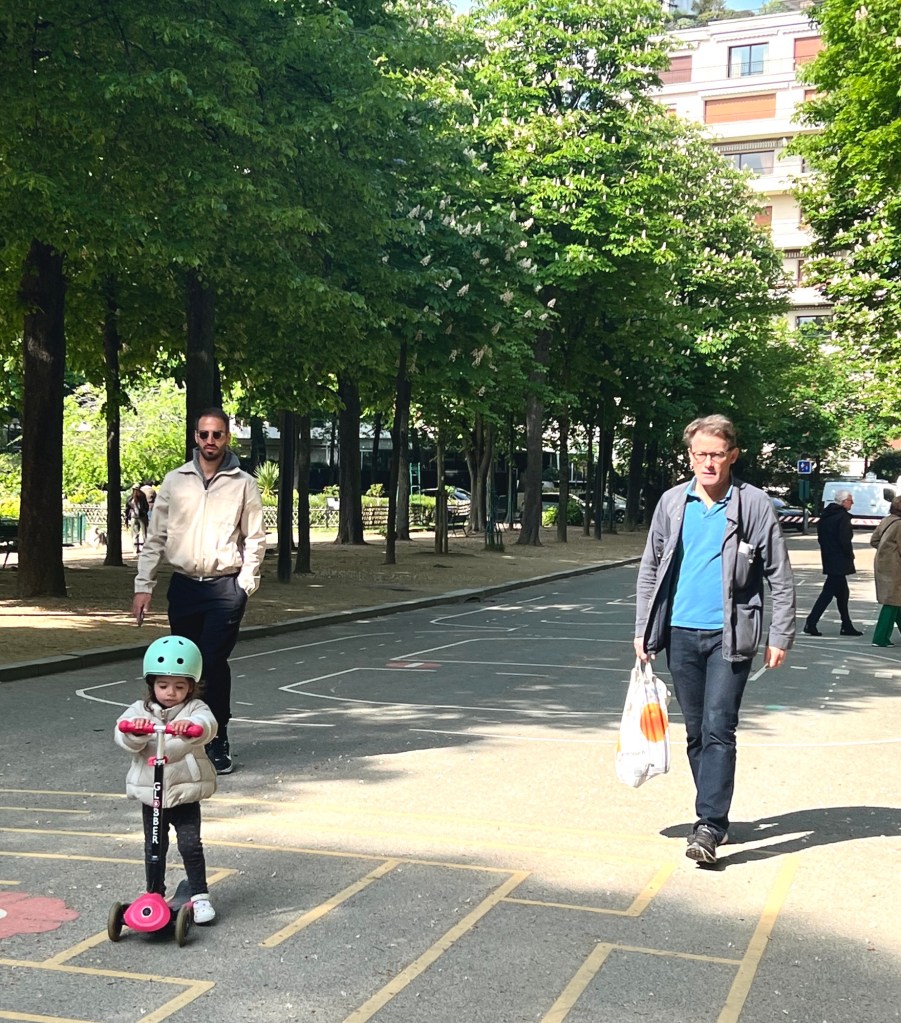
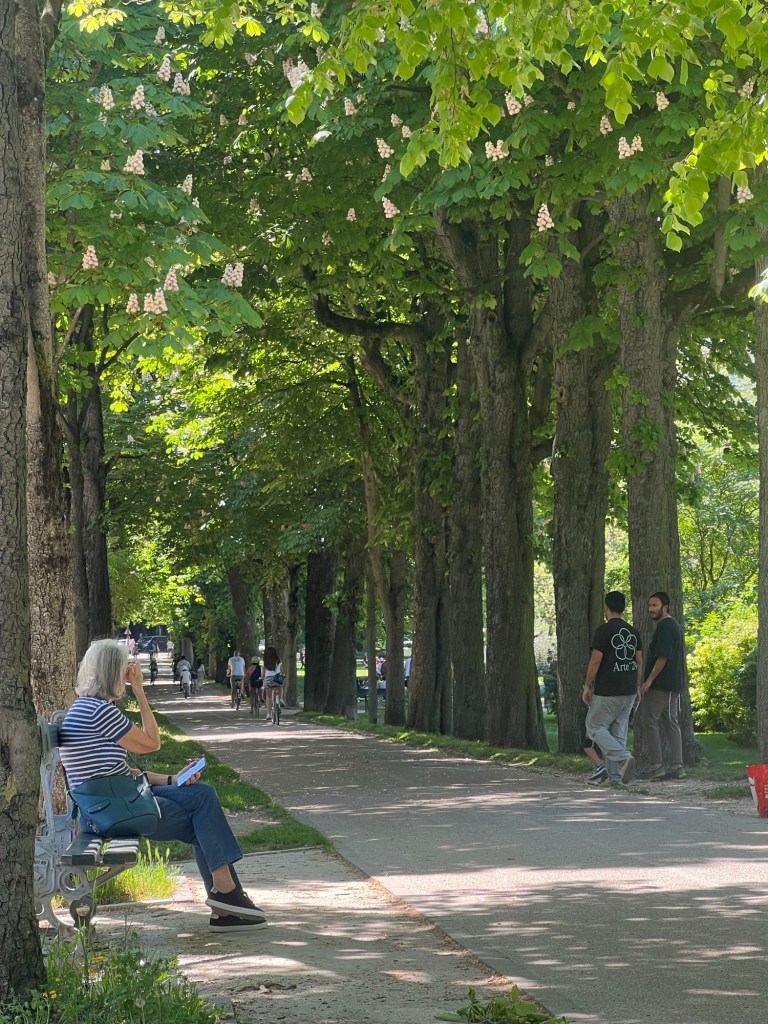
A wide closed-off street through the middle of the park provides a wide boulevard. Young and old enjoyed the afternoon. We especially enjoyed seeing children from three to ten learning to ride on push scooters matched to their size. Some struggled with balance and had parental help.
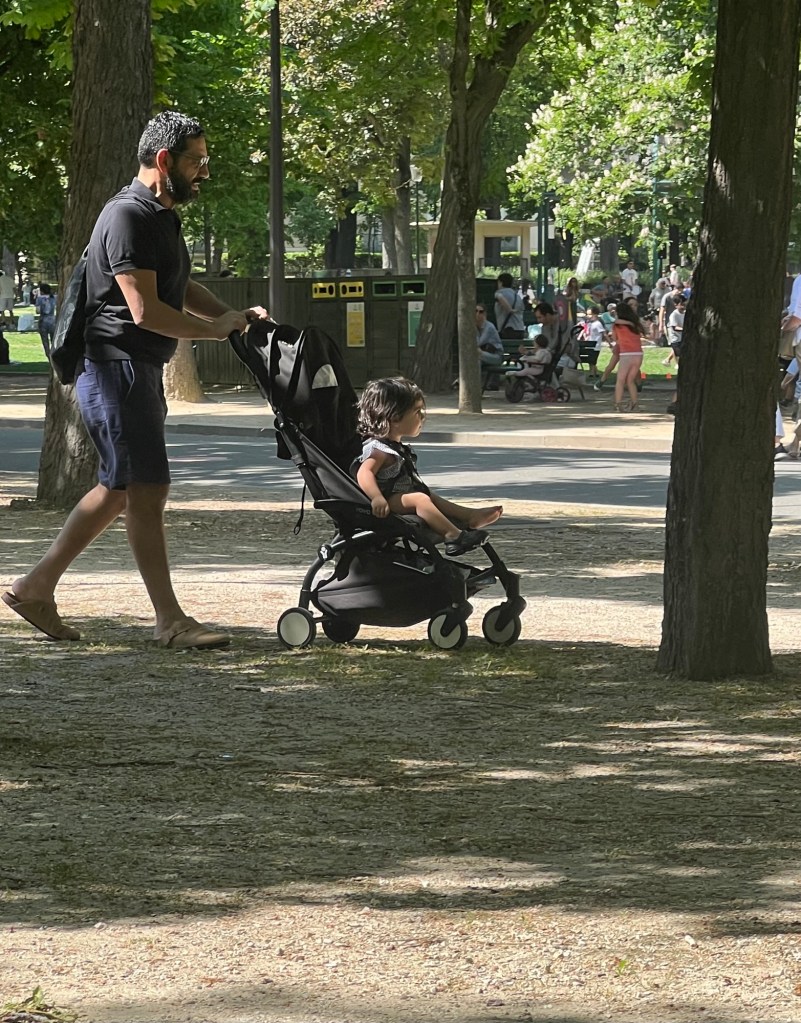
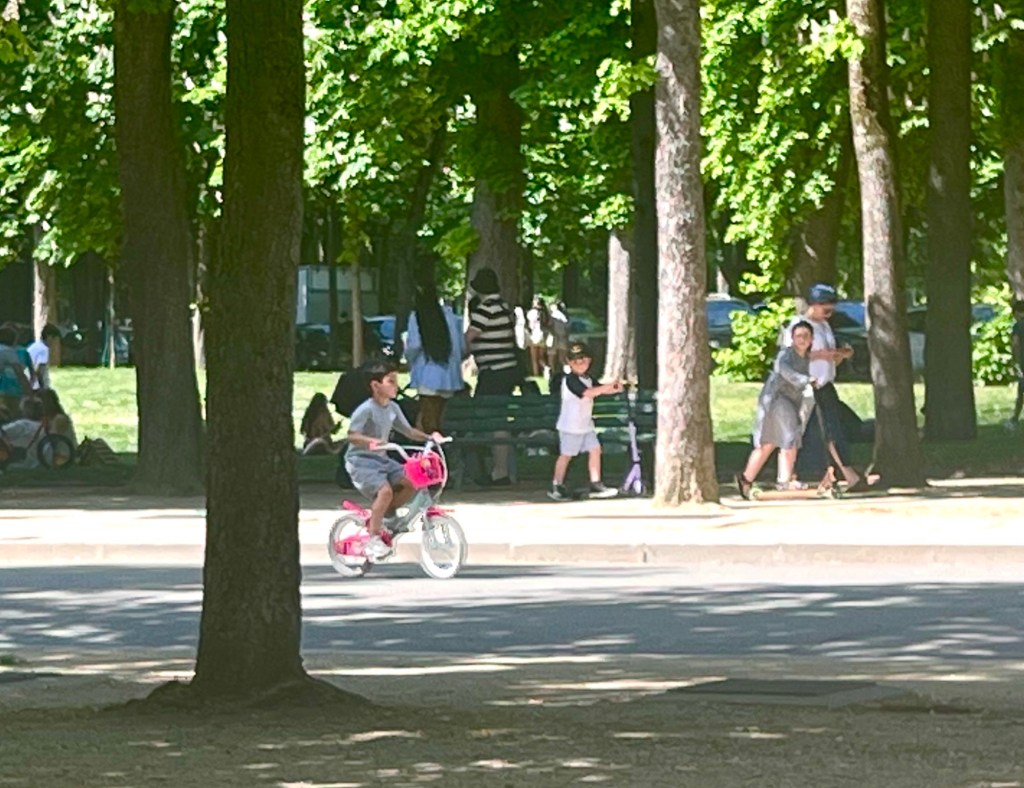
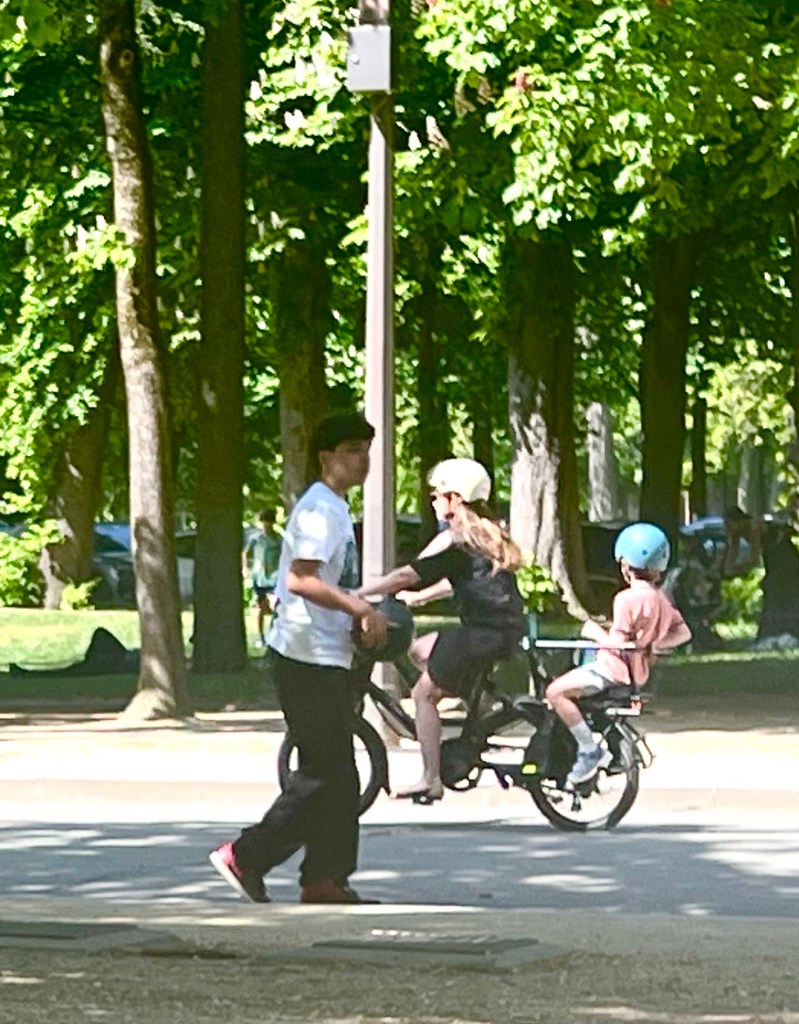
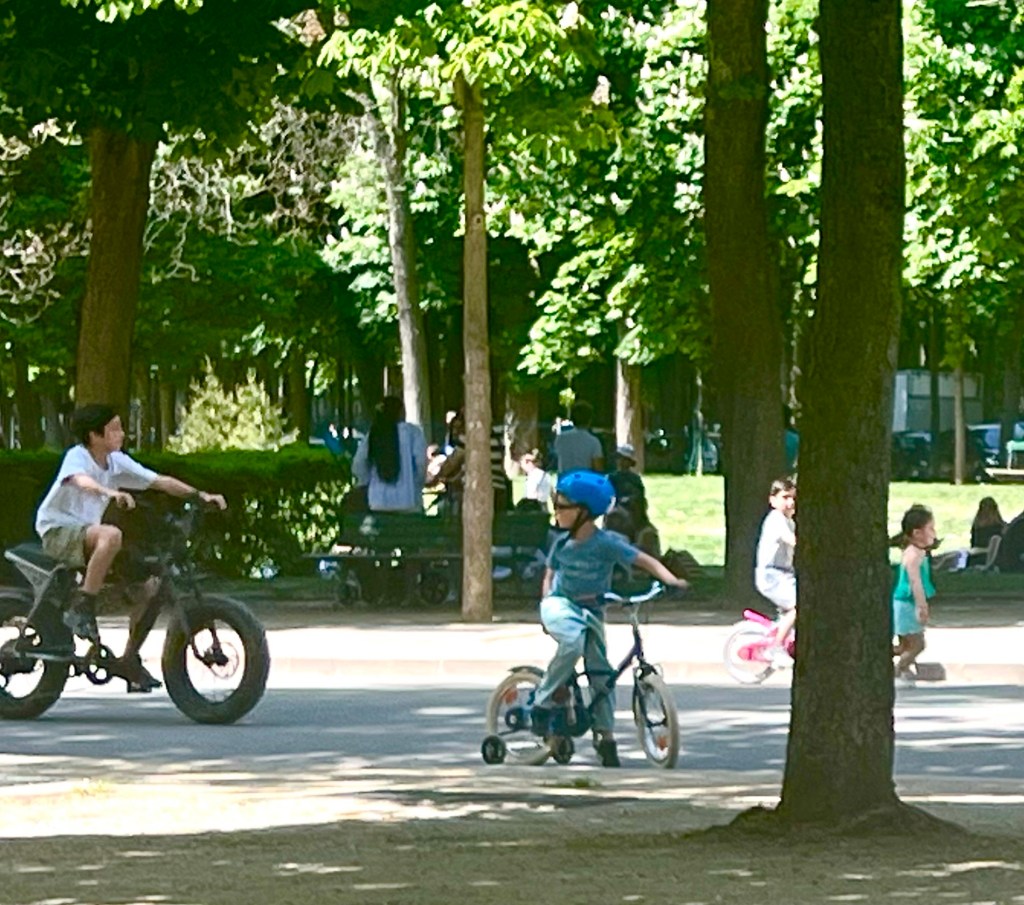
Others mastered their vehicle and scooted with glee and daredevil speed. Motorized scooters were also in abundance, some were single and others had multiple occupants. Bicycles from miniature to motorized posed danger to walkers. But the afternoon was glorious and fun for all—a fine spring day in the neighborhood in Paris. We were all happy to be there.
 Tipps for Travel