The Great British Traveling Show
Trouble in Oxford
Our one-night reunion with the Robsons in Bath was short but fun. The next morning, we set off in different directions: Robsons to Cornwall while we went directly to Oxford. Train schedules for weekends differ from weekly routes and times. Our ticket from Bath was for any route to Oxford as long as we did NOT go through Reading. Fine!
However, this Sunday this train bypassed our Didcot Parkway stop and dropped us in the forbidden Reading. On the platform, a woman and a man dressed in train uniforms were chatting. We explained our dilemma leaving out that we should not be in Reading. They were on the crew for the next train going directly to Oxford and invited us to ride in First Class. The ride was only about 30 minutes, but it felt so luxurious.
We arrived right at 2:00, when we were scheduled to enter the apartment at 5 Rowland Court. Booking.com made many satisfactory reservations, but this time we arrived without information from the owner about the apartment’s location, access, or house rules. I emailed the owner several times the prior week but got no response. With an address and a google map, we headed there hoping all would work out.

Two hours later we were still waiting outside the apartment building. I called the owner’s number repeatedly and emailed Booking about the problem but got no response from either.
We saw a hotel near the rail station, so we walked back to see if they had a room for one night while we figured out what to do.
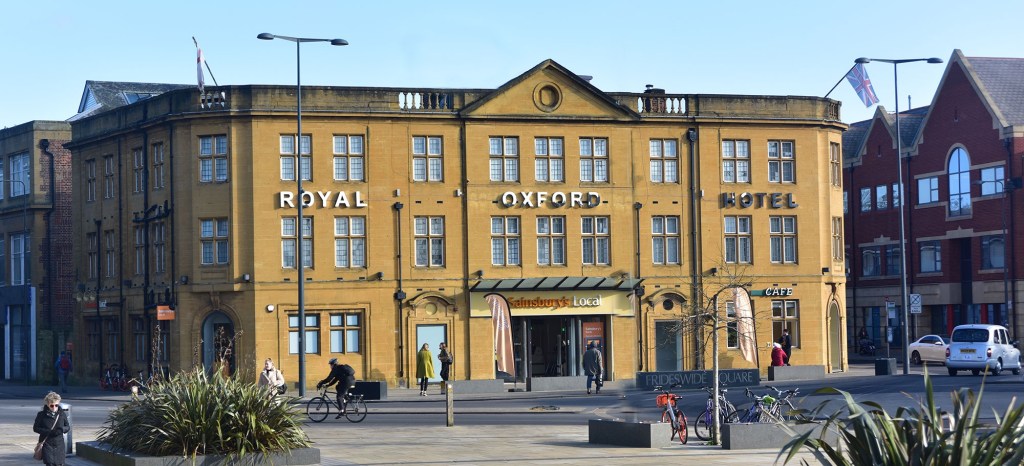
The Royal Oxford Hotel had a room for one night according to our new friend Michal from Italy. We were worn out and needed a nap. About 7:00, we walked across the street to an Indian restaurant, Dosa Park, which we remembered from five years ago. “Dosa” is a crispy Indian crepe wrap made with buckwheat flour and filled with curried potato—a delicious treat which we seldom find in the US.
The next morning, having heard nothing from the Booking.naah or the owner, we asked to stay four more nights at the Royal Oxford. Another new friend Sondra arranged for 4 more nights in the room next door to the first night. Hurrah! Banana/croissant/coffee breakfast came from the Sainsbury grocery on the ground floor of the hotel.
Day 2 Stepping into Oxford
Despite previous visits to Oxford, we were in new territory west of City Center.

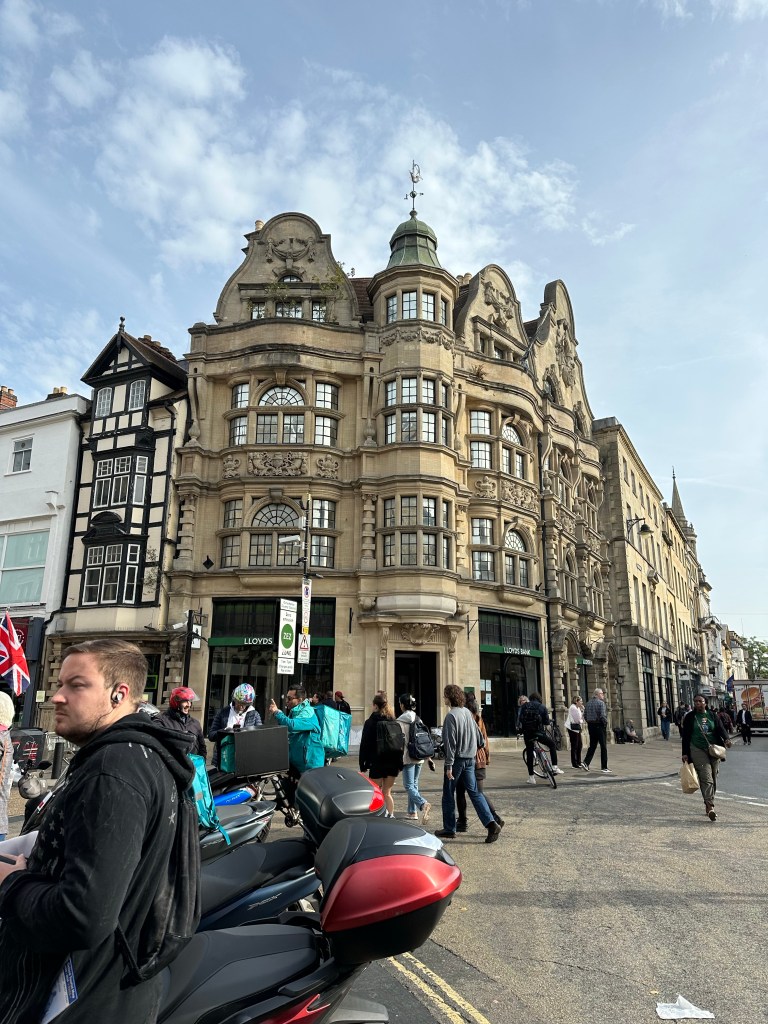
We walked ten minutes down George Street from the hotel to City Center where we were surprised that Balliol College was open for visitors. We walked all around the quad—careful not to step on the grass.
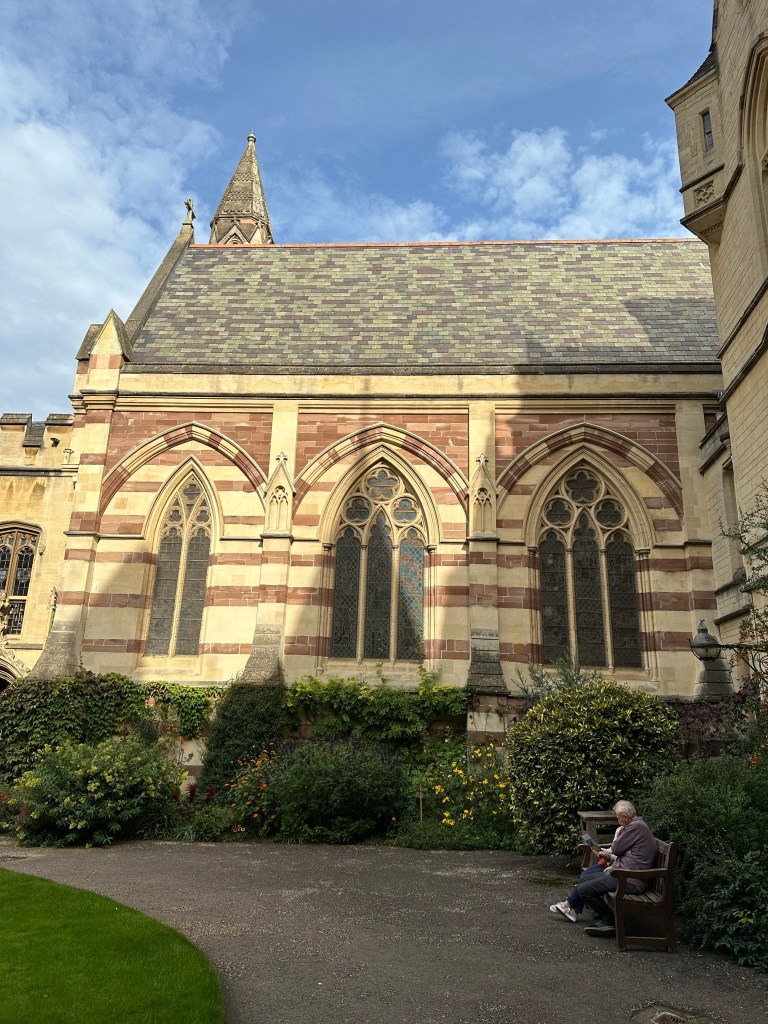
The college is old, elegant, rather small, and very beautiful. We looked into the dining hall, the chapel, and garden.

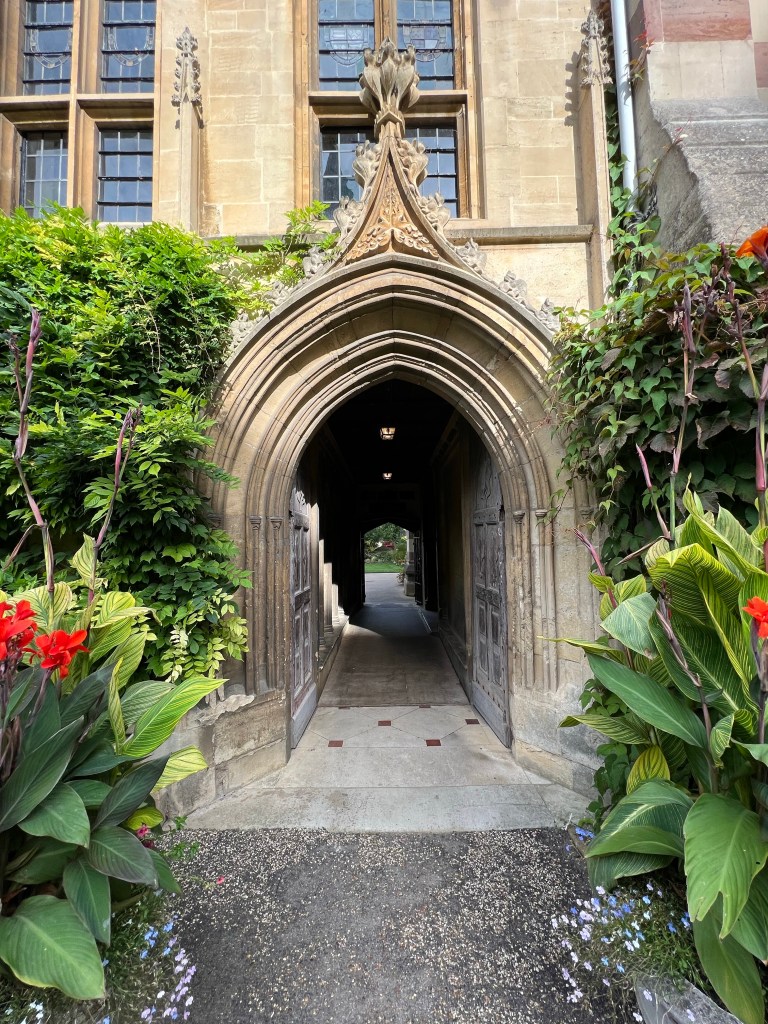

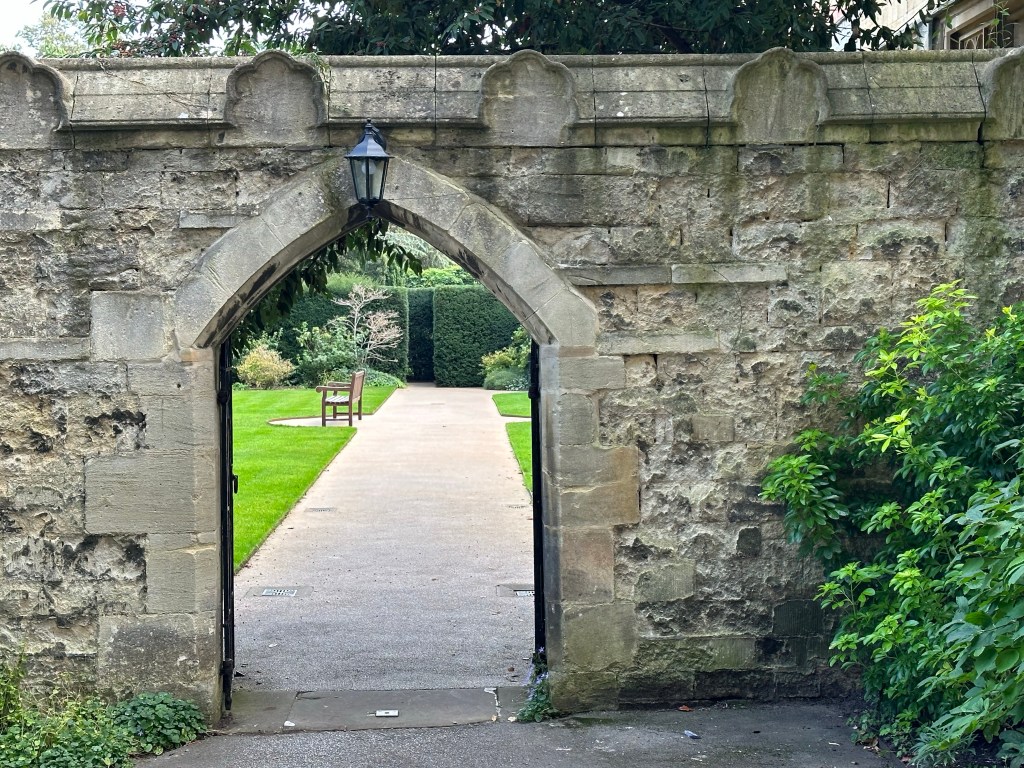
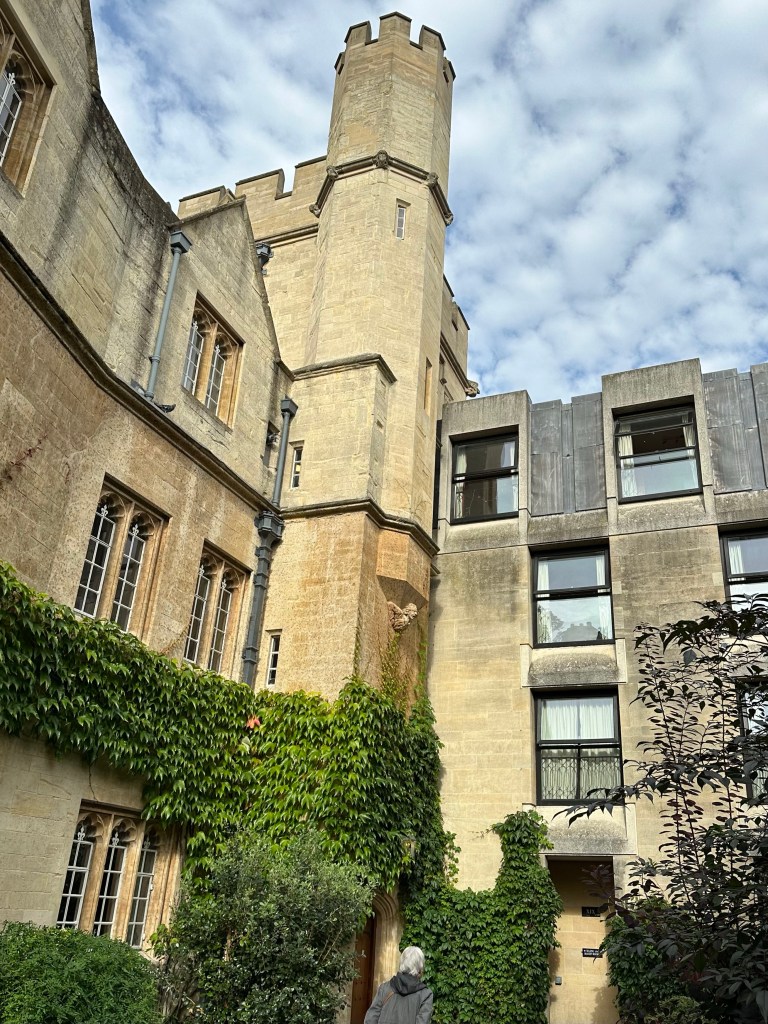
Most of the colleges were closed to visitors because this was the first week of a new term and students had just arrived.
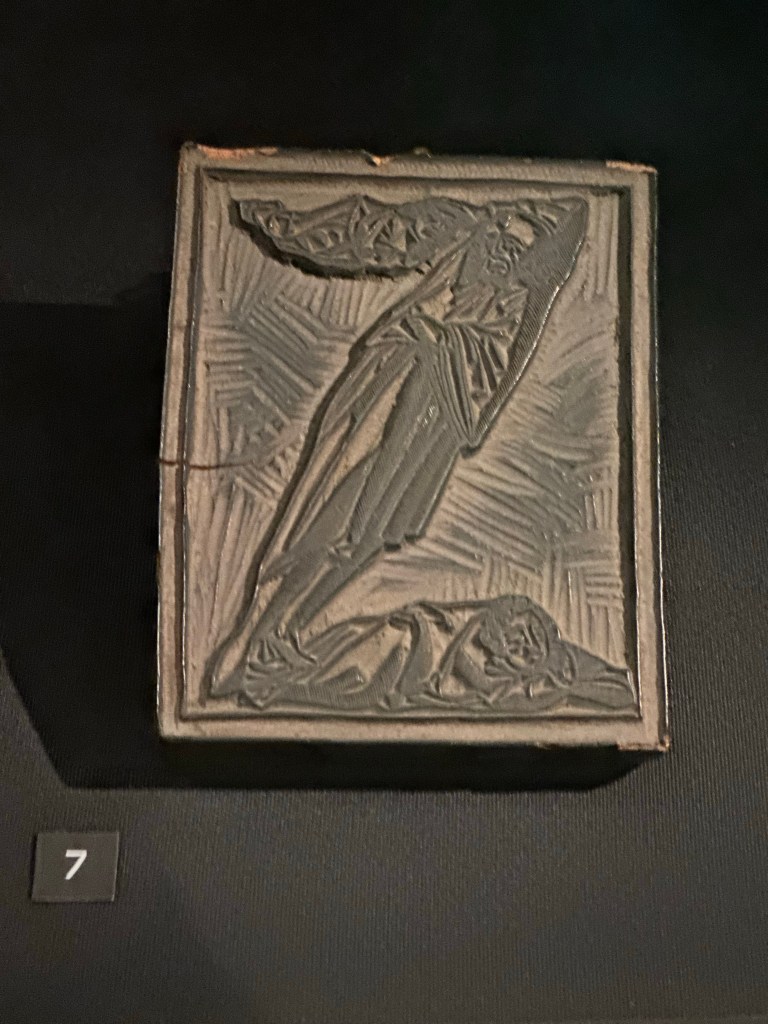
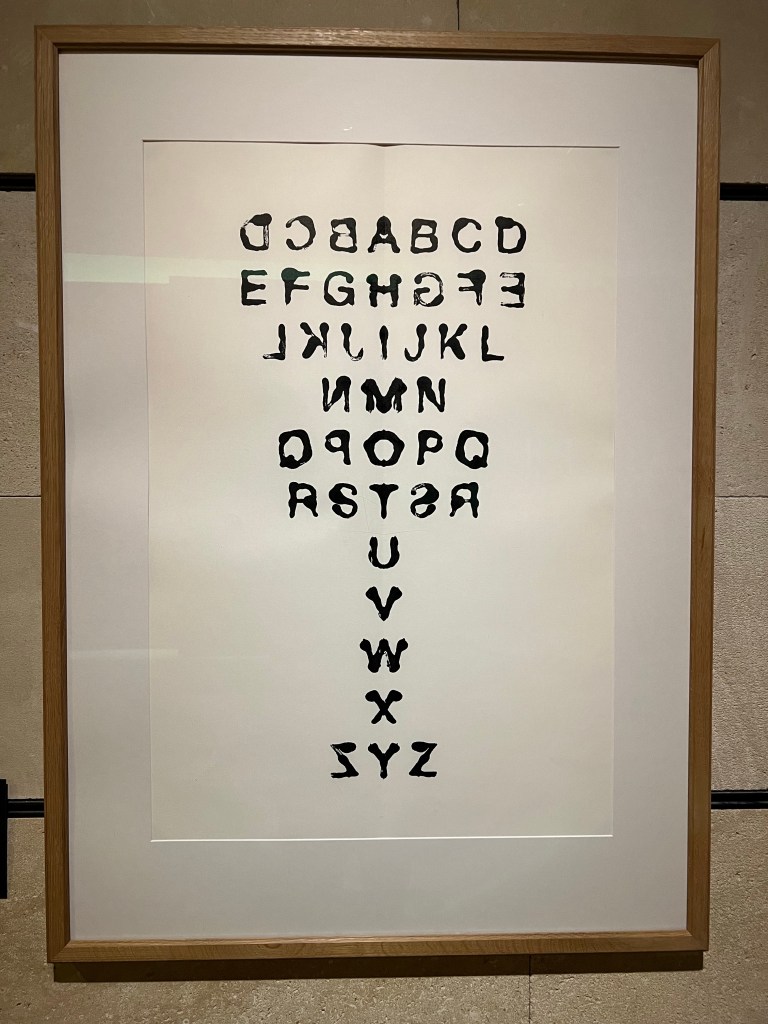
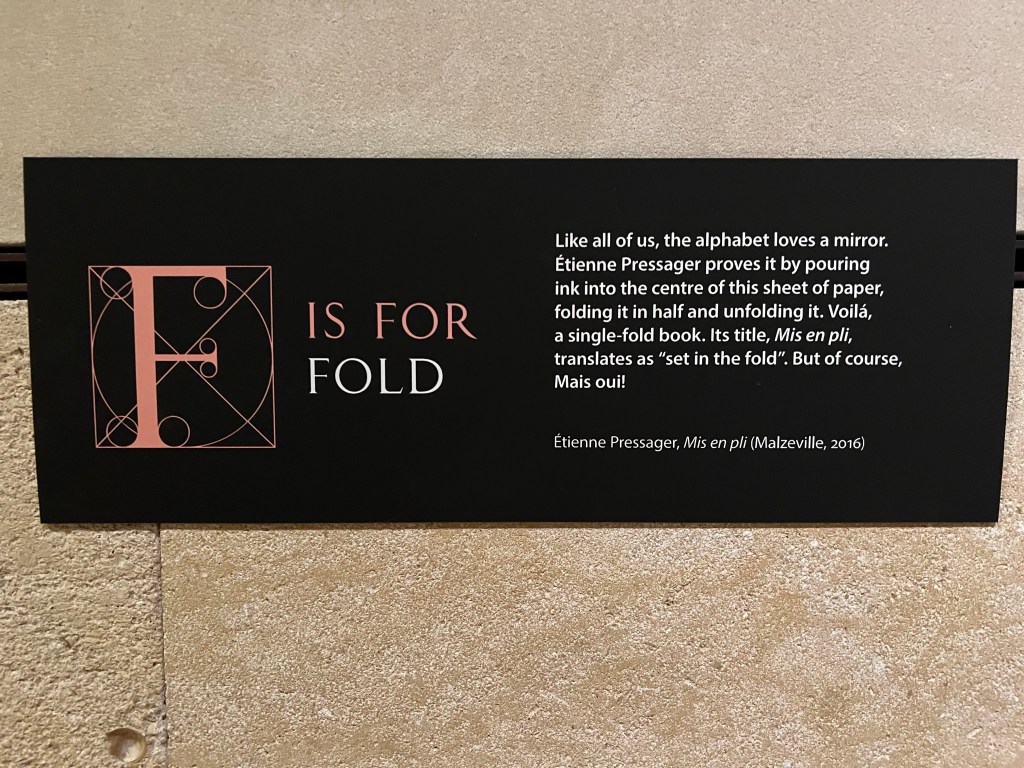
On down Broad Street, the Weston Library had two exhibits. The Alphabets Alive! exhibit featured a great variety of alphabet books and books about alphabets and fonts.


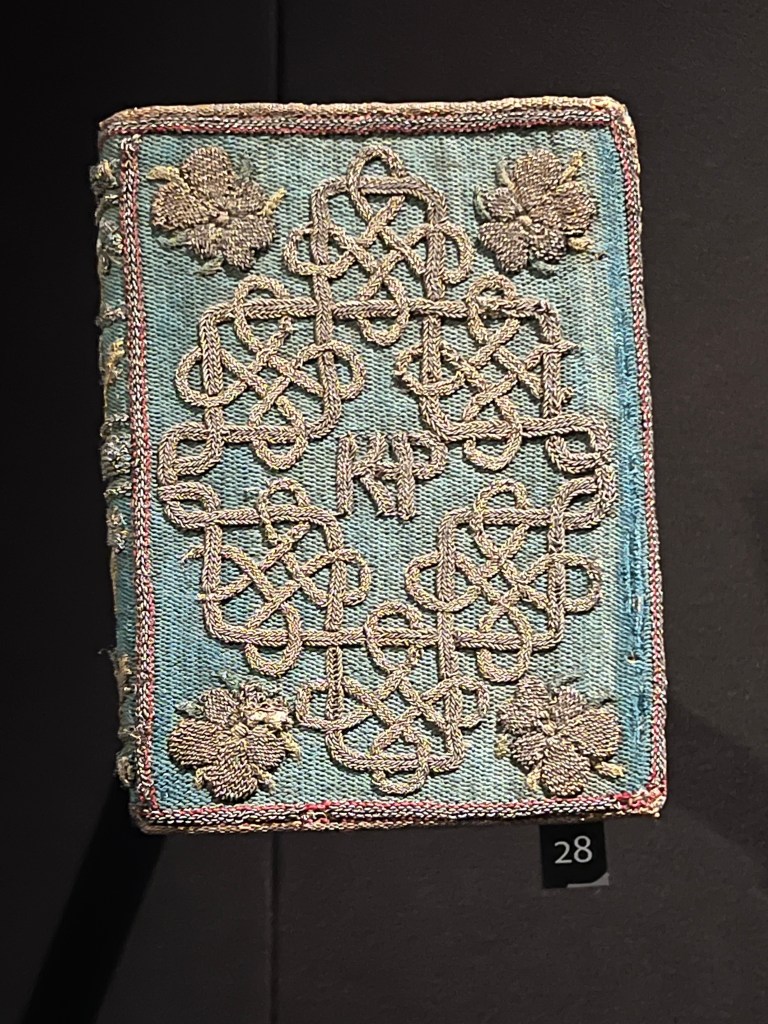
The second and larger exhibit, Gifts and Books, was a history of how books served as gifts for romantic, political, or other purposes from the days of pharaohs through medieval manuscripts into modern printing. For example, at age 11, the future Queen Elizabeth I gave a book to her stepmother Katherine Parr with an inscription and embroidered the cover.
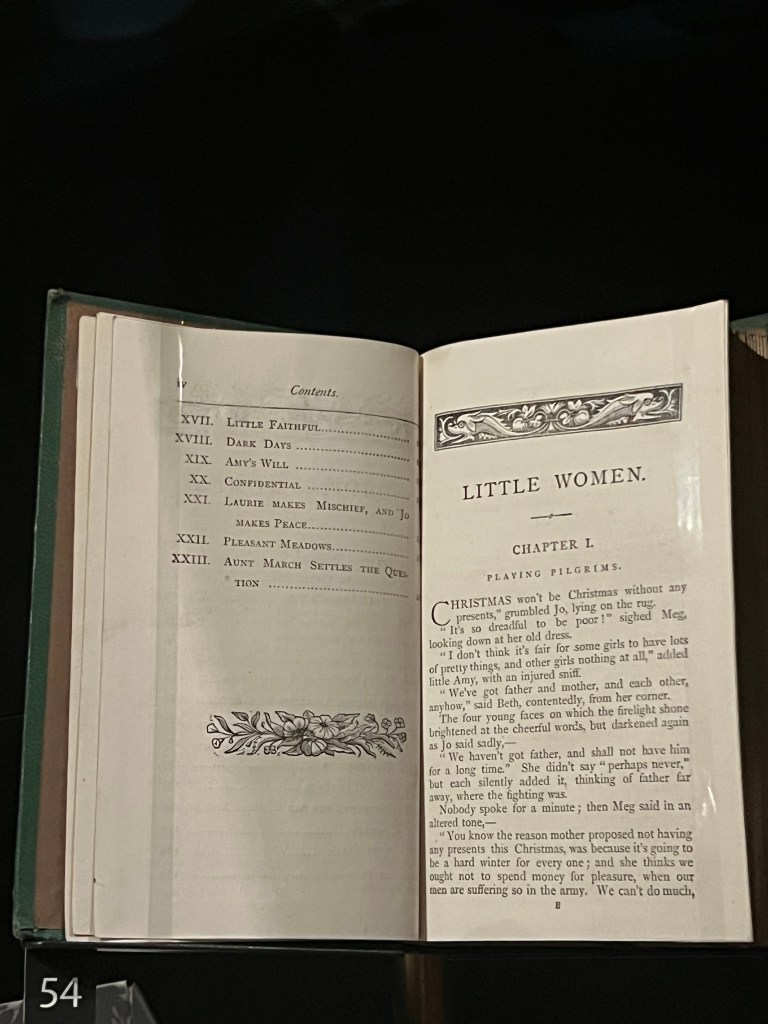
Other manuscripts and first editions included were from Alice in Wonderland and Little Women.
The Weston library, once called the “New B”, is very modern with a glass, stone, and steel façade—very different from the Gothic buildings surrounding it.

After 75 years, people still grumble about this modern “monstrosity” in the “City of Spires” noted for gothic buildings. The Weston may be incongruous and perhaps industrial but not ugly, just sleek and plain surrounded by the elaborate.
What luck! We found that Exeter College had an organ concert at 1:15 so we could walk into the beautiful, small chapel for an hour of glorious music and sneak-a-peak around the quad.

Exeter was also having Evensong later that day which we thought the Robsons would enjoy as well.
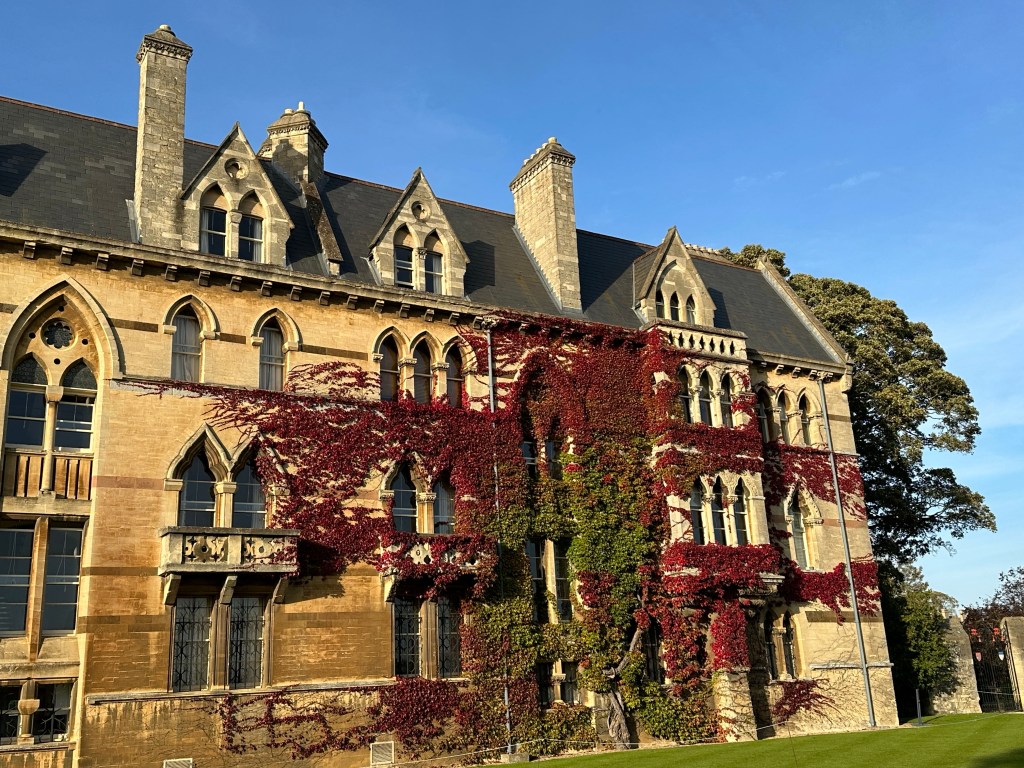
The highlight of our afternoon was an audio tour of Christ Church College and Cathedral.
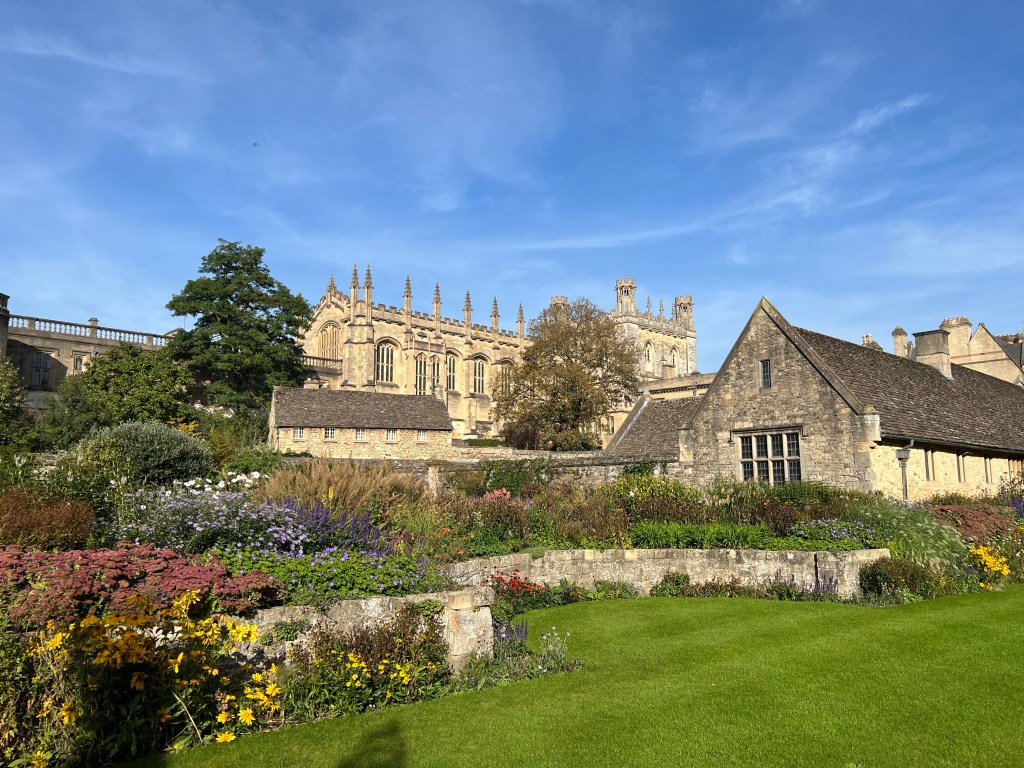
The hour-long narration told the history of the College and how it was built in stages, taken down and remodeled by many Deans and Bishops over 15 centuries. It was even temporarily the capital of England because it served as King Charles headquarters while he was fighting the Civil War.
The Great Hall, familiar to Harry Potter Hogwarts movie fans, is even more impressive in person.

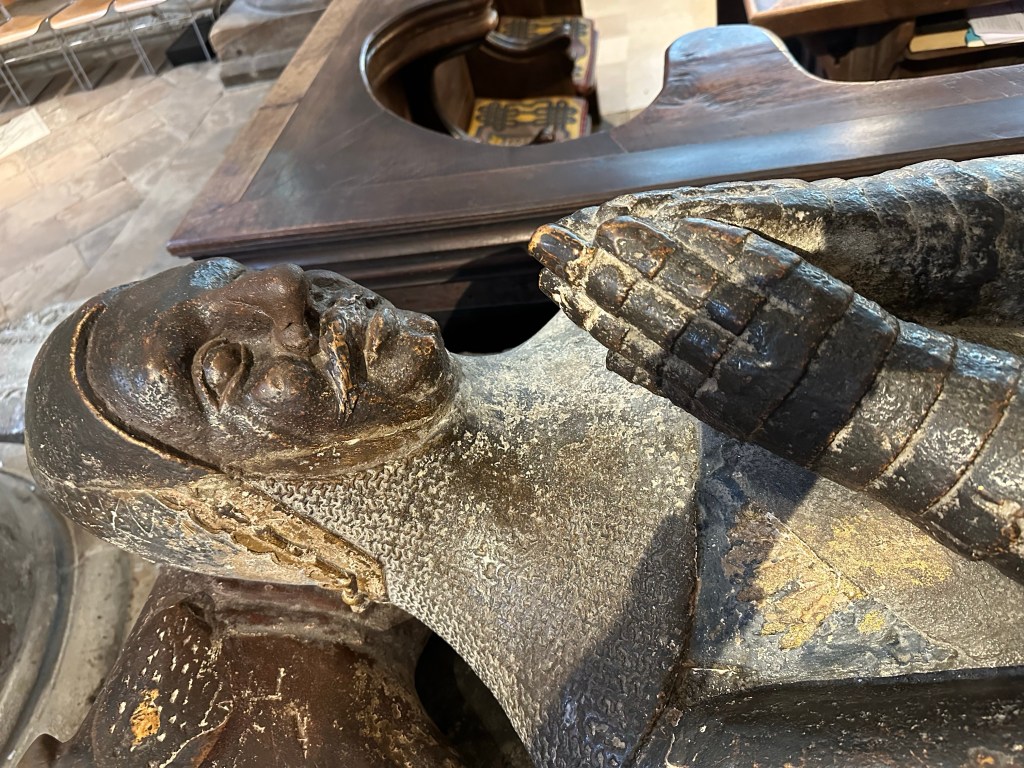
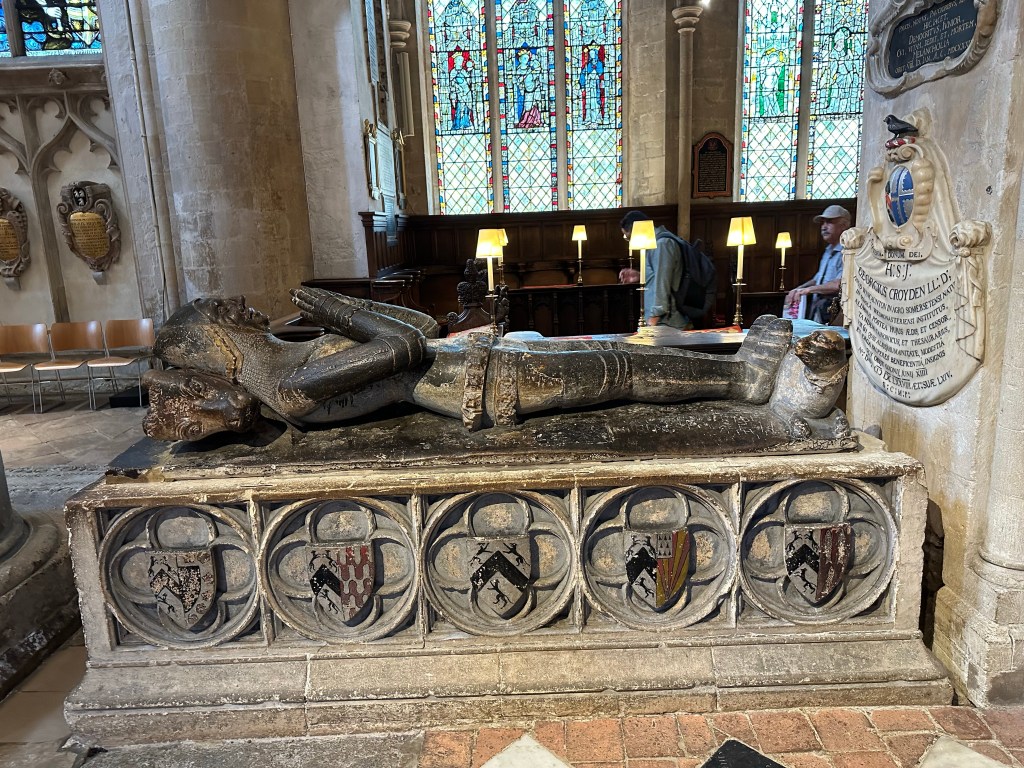


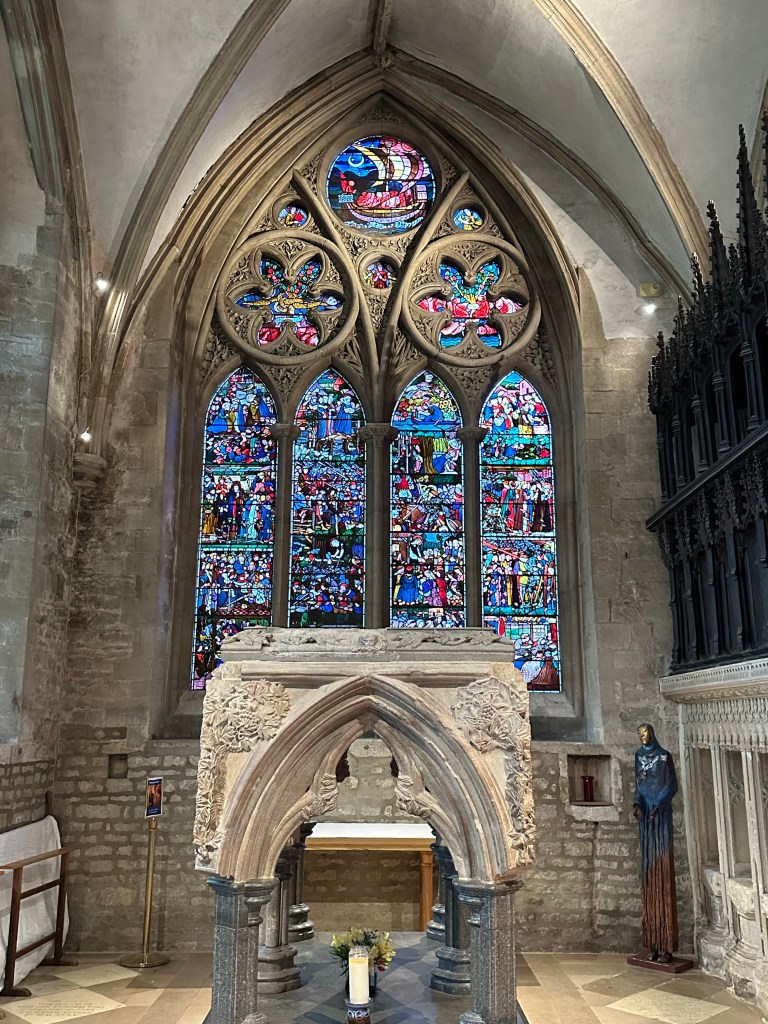
The tomb of the founding saint of Oxford, Saint Frideswide is prominent in a side chapel.
Near 3:00, we met the Robsons at the train station and walked with them to Van Brugh Hotel. What a quaint and lovely place just minutes from City Centre. They were interested in the Evensong at Exeter college; after a rest, we met them in the Exeter Chapel for a wonderful service sung by a student choir whose dulcet voices filled the space.
The Chapel is smaller and certainly more intimate, but no less beautiful than Christ College Cathedral.
Following the service, we spoke with a woman wearing a robe who spoke at the organ recital and has some leadership position at Exeter. She was pleased that we enjoyed the recital and Evensong. Becky detected a non-British accent and inquired about it. The woman came to Oxford 49 years ago from San Francisco to work on her doctorate and never left.
At 7:30, we were considering the menu at GUSTO, an upscale Italian spot. We were approached by Peter, a free-lance tour guide, who suggested several places to eat—not as expensive and better food than the fancy High Street restaurants. He had many, many, many suggestions, but the longer he babbled the less likely we were to book a tour with him. We followed his suggestion to Gino’s Spaghetti House, located a block from the Robson’s hotel and on the way to the Royal Oxford. Peter was right—simple, tasty pasta for all.
Day 3 Robsons Visit Blenheim
Jim and I were keeping a close eye on the weather forecast. The rest of the week was predicted to be colder and rainier as fall was approaching; we took today’s good weather as a sign to visit Blenheim Palace. Getting there required a half-hour bus ride to the entrance of the estate and a long walk up to the Palace.
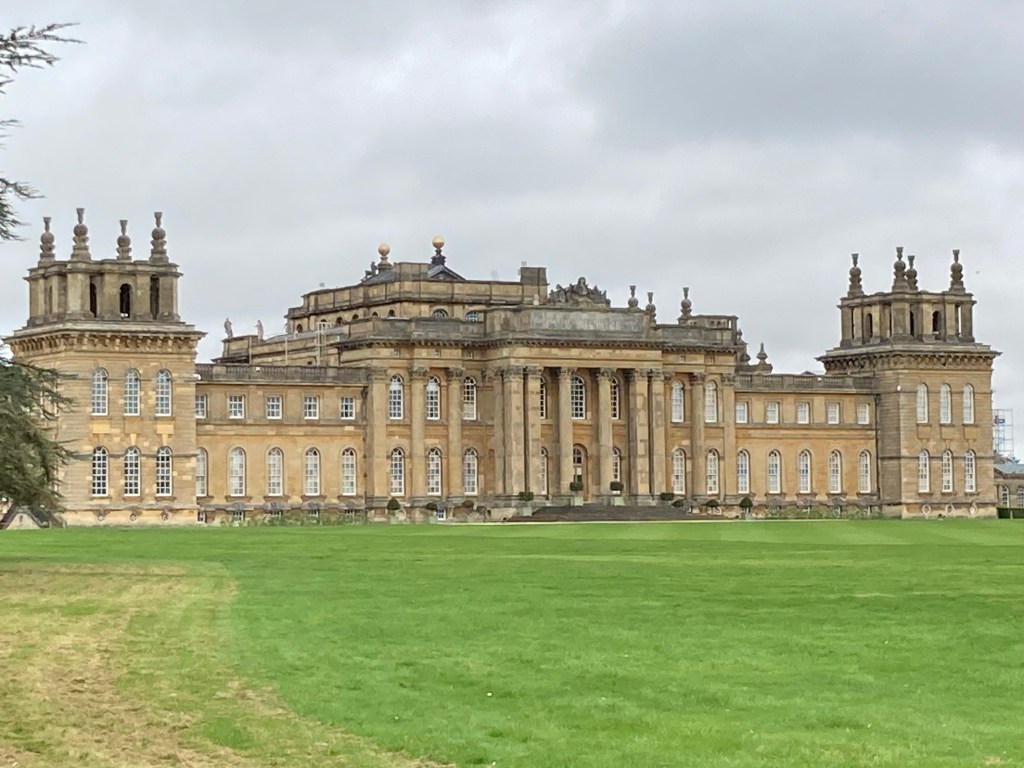
Blenheim Palace is the seat for generations of Dukes of Marlborough and is the only non-royal palace in the country. It was a gift from Queen Anne to John Churchill, first Duke of Marlborough, for his military triumphs against the French and Bavarians in the Battle of Blenheim. The estate is 2,224 acres of lush formal gardens,, gorgeous lake views, vast lawns with amazing vistas, and commemorative walks honoring Winston Churchill who was born here.
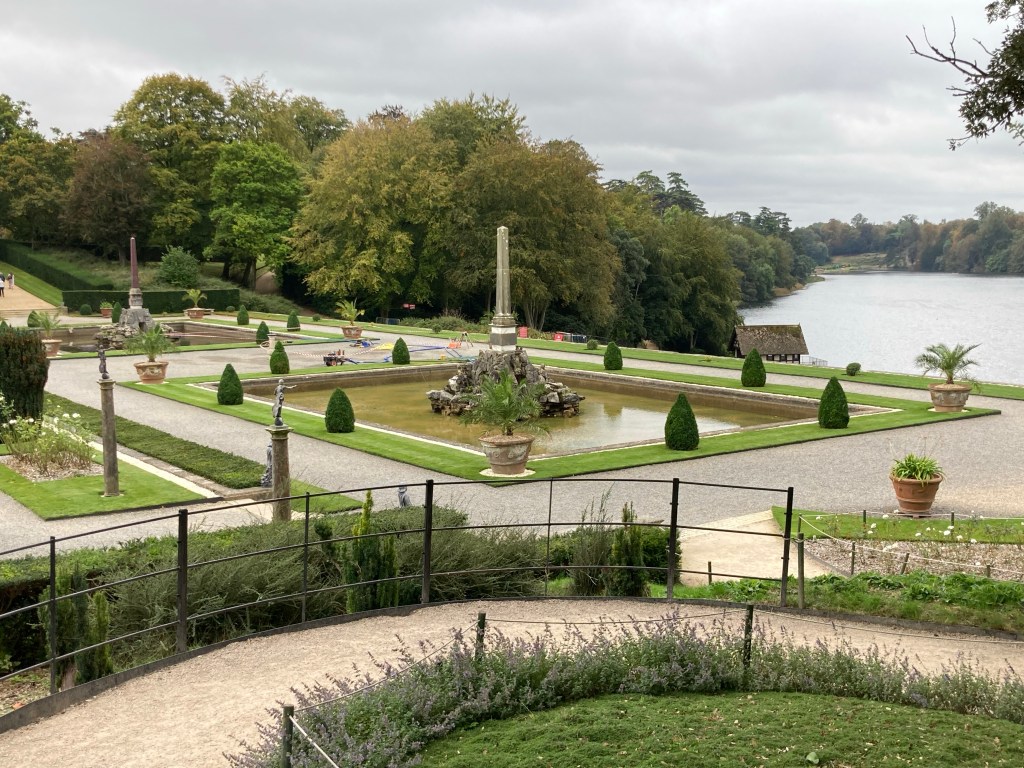
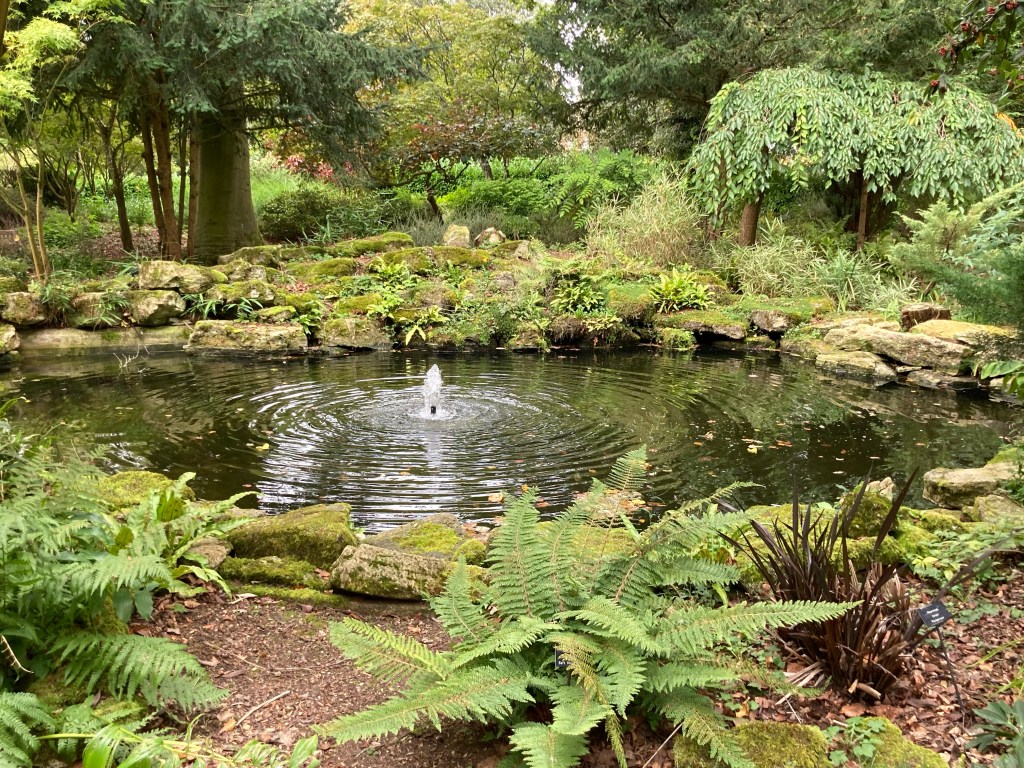
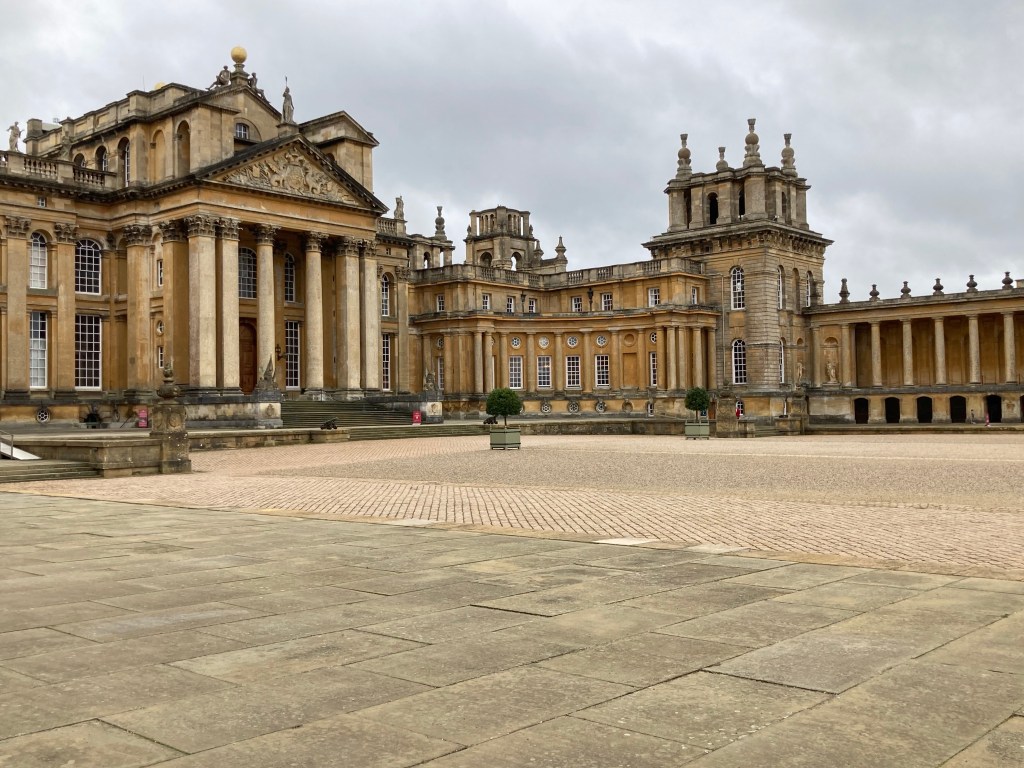
The palace opened later on its fall schedule, so we spent the first 1 1/2 hours touring lovely gardens. When the palace opened, the audio tour was very informative about history and décor of the gorgeous palace.
Each room competed with the previous one in tapestry and gilding. Its extravagance reminded us of Biltmore House which makes perfect sense since Consuelo Vanderbilt married the 9th Duke of Marlborough and redecorated much of the palace with Vanderbilt money. Shades of Downton Abbey, rich American heiress marries into British society and brings her fortune.
We had packed a picnic lunch from our bountiful breakfast basket at Van Brugh and ate it while overlooking the terraced back lawn leading to the lake. Next, we spent time in the Winston Churchill exhibit which was filled with personal items, his writings, and photos about his life.
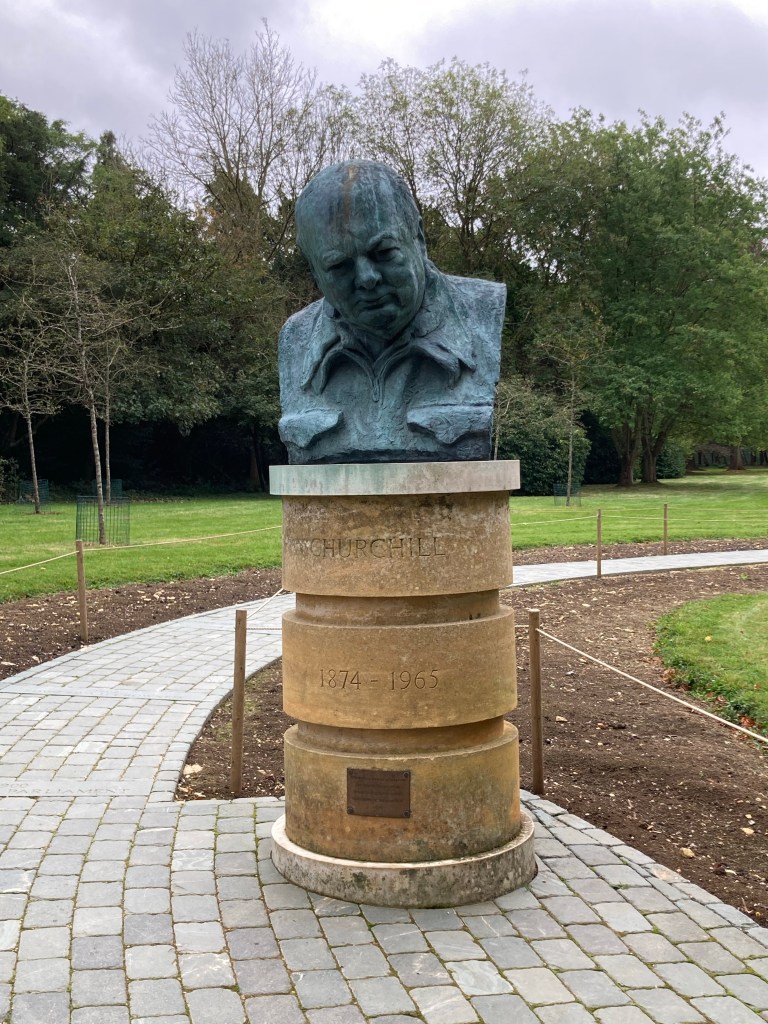
We learned many interesting things about him that we never knew. He was a poor student. He worked as a journalist. And Winston was held as a prisoner of war during the Boer War then gained fame with a daring escape. He slept in the woods and hid in caves while a massive search pursued him. Somehow, he covered 300 miles to reach safety and returned home a national hero—the start of his rise in politics.
We also found it interesting that he proposed to three women unsuccessfully before Clementine accepted his proposal at Blenheim Palace. What a way to impress a gal! Although it was never Churchill’s home, he often visited there finding peace and refuge. Both Winston and Clemmie are buried nearby at St. Martin’s Church in Bladon where they worshipped when visiting the palace.
We had walked about for hours and caught the bus back to the Van Brugh. I “hit a wall” and really, really needed rest. I napped while Jim explored Oxford on his own for a couple of hours. First stop was a small coffee shop for a cappuccino with intense people watching. He hoped he might visit the very posh Oxford Union Club, home to famous debates and lectures, to see the library. Unfortunately, he was only allowed in the Member’s Bar. He found several colleges during his stroll, but they were also closed to visitors. An enormous round building, the Radcliffe Camera, attracted his attention, but it too was closed. On his way back to Van Brugh Hotel, he passed the original Oxford Bodleian Library, closed. Despite not being allowed in anywhere, his personal stroll served as an excellent preview for the tour we booked for tomorrow morning. He was primed with questions.
Feeling much better, we met Steve and Becky over Thai dinner with time for catching up and discussing tumultuous world politics, both past and current, as we often do. One more wonderful day in this fantastic trip.
Day 3 Steve Runs Errands
While Becky stayed at the hotel for a day of rest and recovery, Steve did errands. Two heavy bags of laundry were dropped off on Day 2 to be picked up today after 11:00. We needed supplies from the drugstore, a haircut, and some ££££. With several stops around town, I decided to get a day-pass for £4.50 rather than £2 per trip.
The first bus ride was to city Centre for drugstore, banking, and haircut. I tried to take the bus to the hotel, but after 20 minutes waiting, I just walked. The tardy bus passed me just as I arrived at the hotel.
I had the Pitt Rivers Museum on the schedule for the afternoon, so took a bus a mile North of City Centre for a two-hour exploration. Johnson Cleaners was just a few blocks away, so I walked over to get the laundry. The return bus let me off close to the Oxford Tours where I paid $25 per person with the assurance that the group size was limited to 19 and that we would be entering Trinity College. I explained that I did not want to be in a tour of 50 people walking at 10 miles an hour around the streets which had been our experience on a previous Oxford tour. The final bus ride carried me and the laundry back to the hotel where Becky had spent the day reading and resting.
The two hours I spent in the Pitt Rivers Museum were overwhelming. Organized by themes such as Masks, Textiles, Pottery, Jewelry, etc., the extensive collection of each theme was displayed in immense climate-controlled cases which made photography difficult. The guide told me that every object in the museum was a piece of art which illuminated the cultures represented.
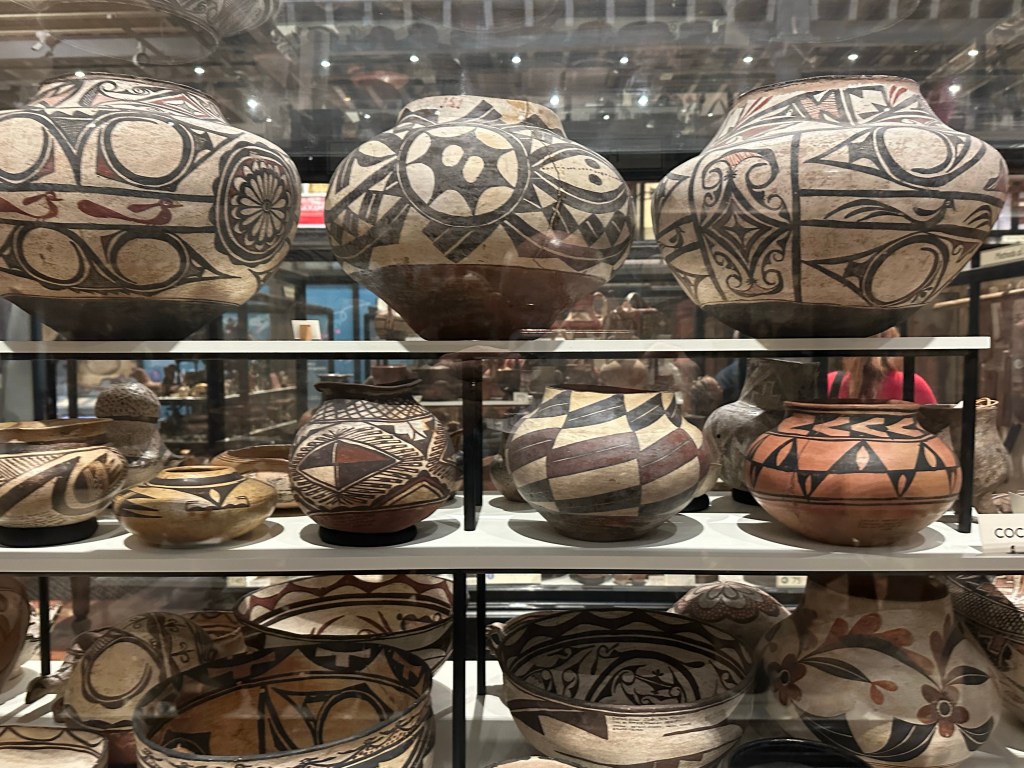
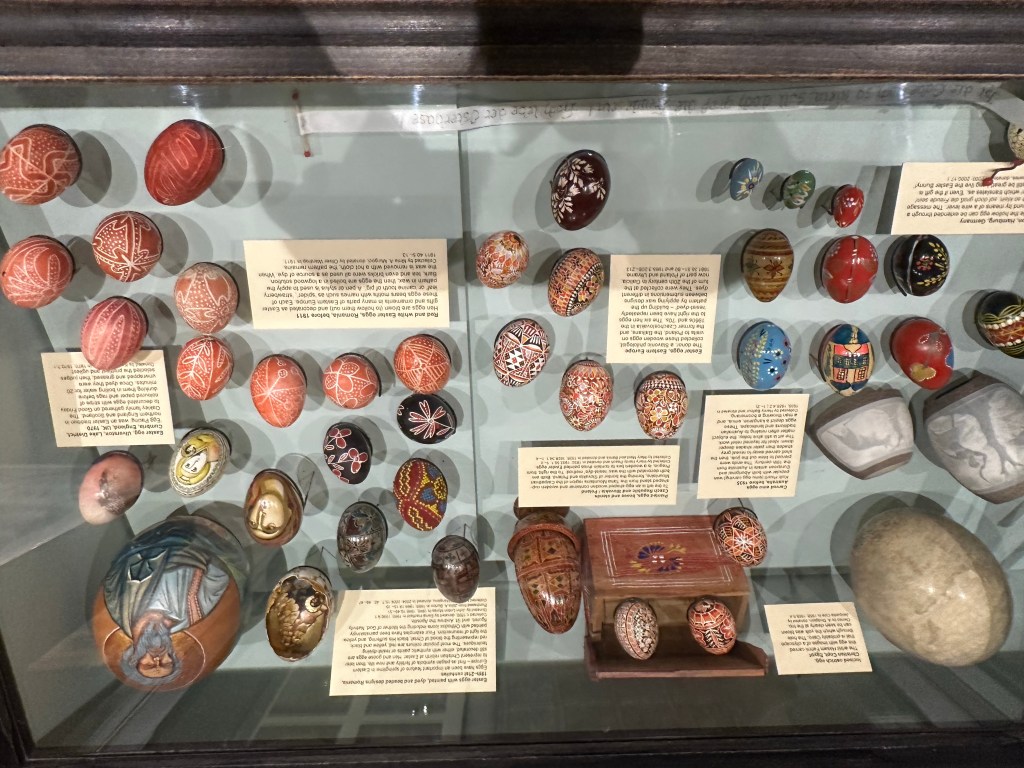
Among the many displays was one that spoked the rapacious nature of collecting during colonization and the Museum’s efforts to repatriate artifacts to their rightful homes. This was the third museum we visited that reflected on the sad history of colonization, cultural appropriation, and the slave trade.
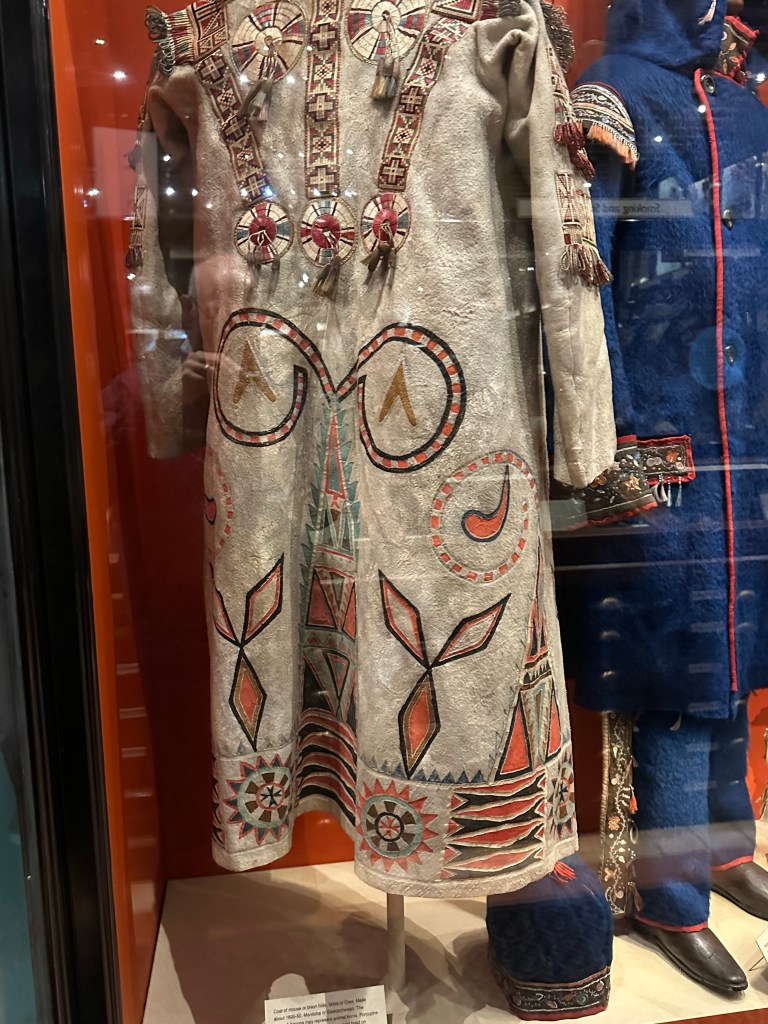

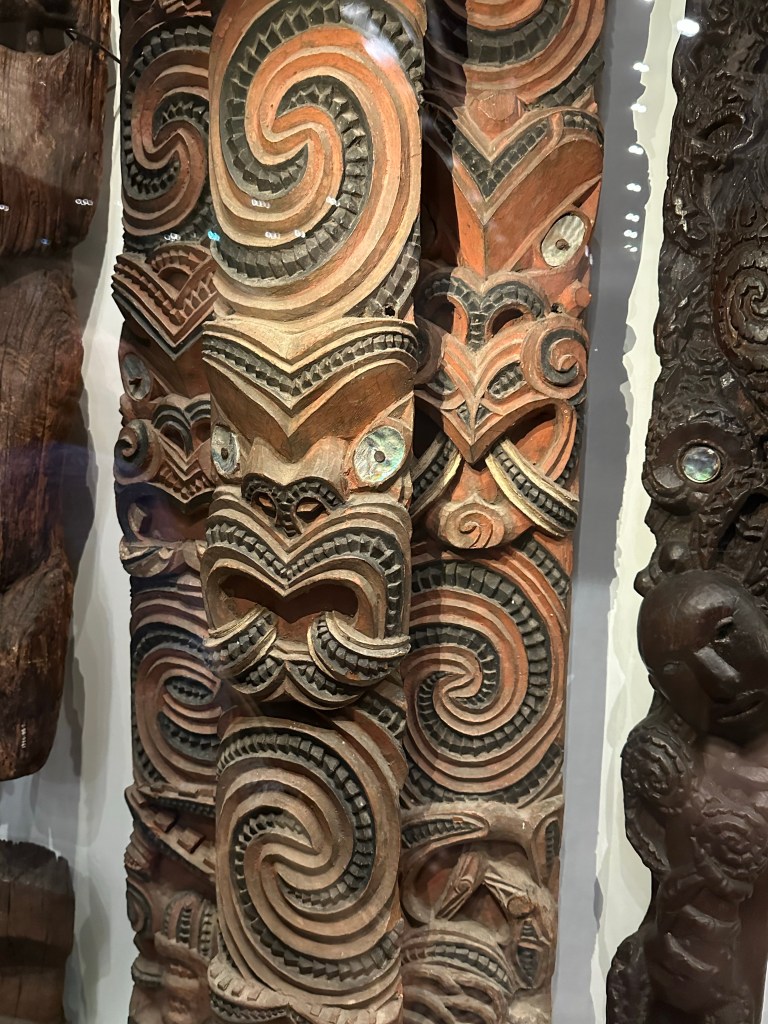
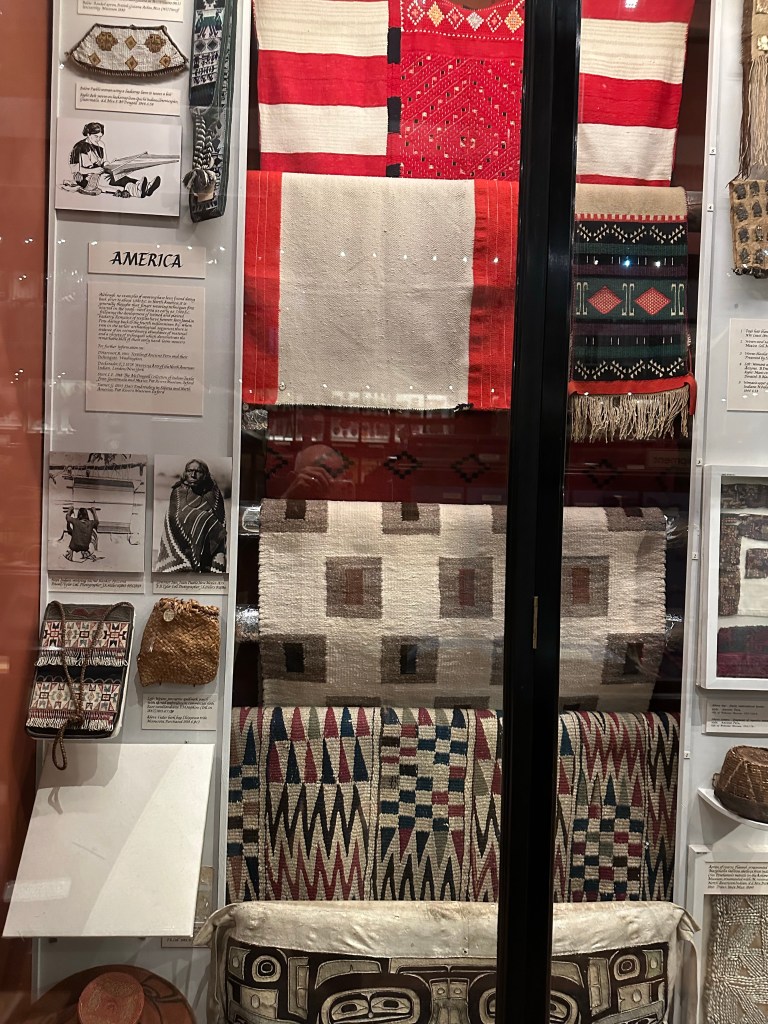
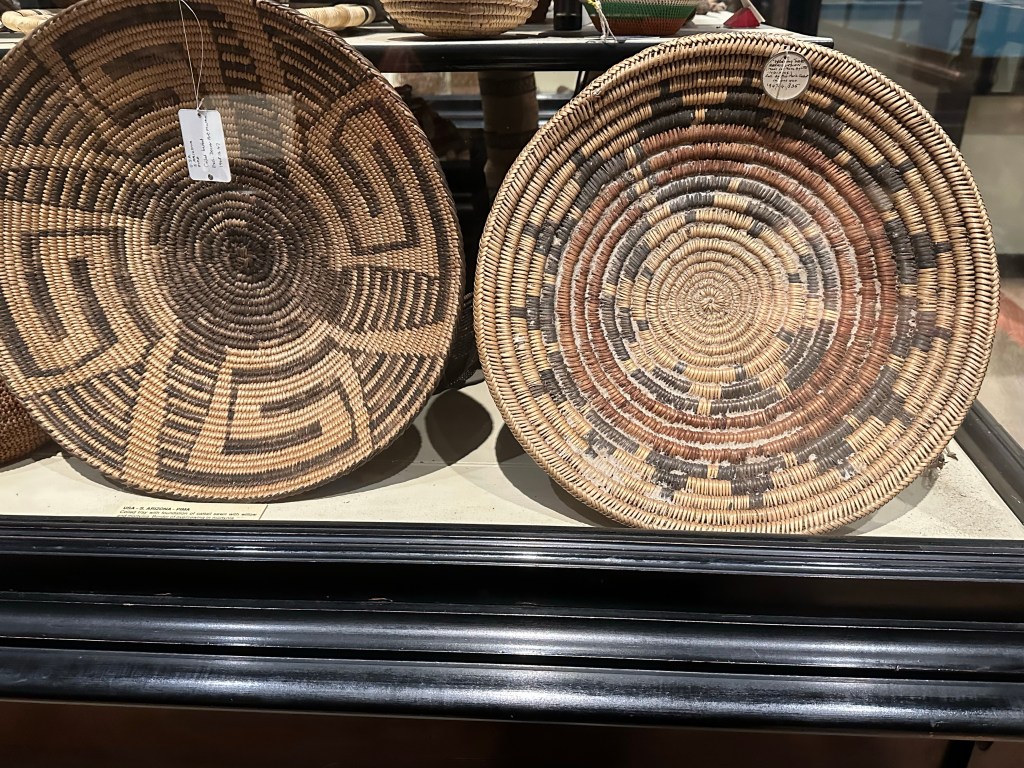
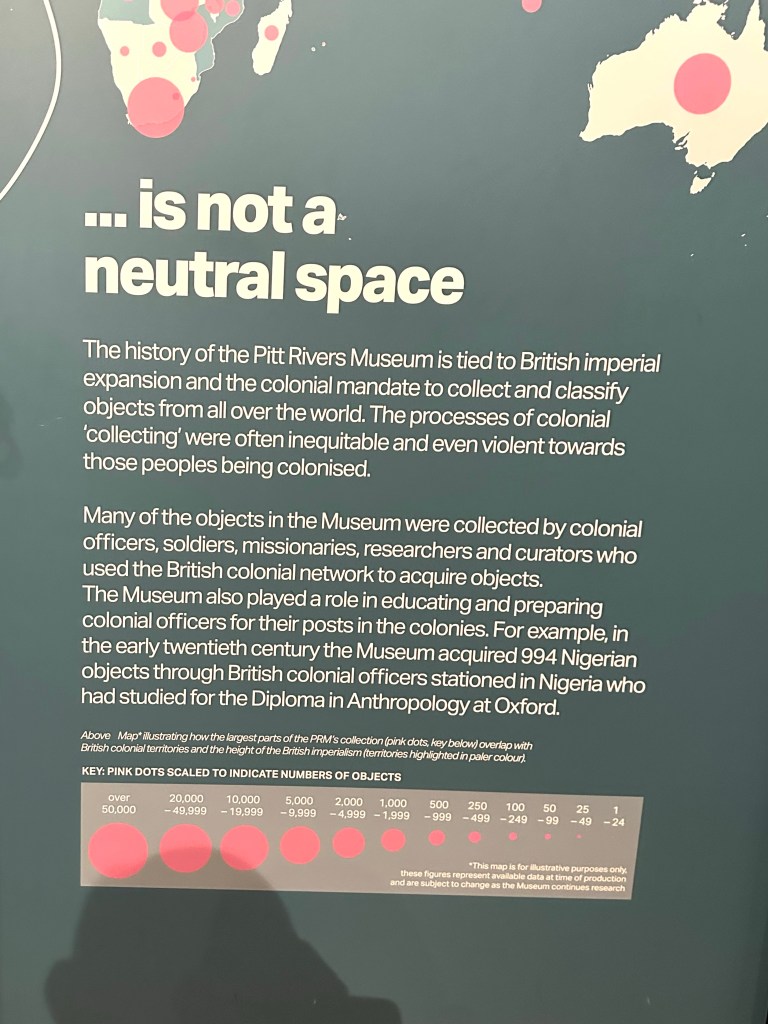
I also passed by two colleges on my walk to and from Pitt Rivers Museum. St. Andrews College is across the street from the bus stop.

Keble College is one of the larger colleges housed in a huge red and black patterned brick building. It is located near the anthropology and archeology museums and other science buildings so attracts many students in those fields.

Day 4 Oxford University Tour and Ashmolean Museum
Lizzie, our University Tour guide, was totally engaging with facts and anecdotes about Oxford University history and colleges. She explained the organization of the University with 39 residential colleges. Students in each college may enroll in any of the “majors” at the university although some colleges may attract certain majors. The curriculum is classic in subject matter and deep in content with three 8-week terms of intensive study, lectures, and small group tutoring.
Trinity College, only available to the public via paid tour, is spectacular with a several gardens and many historic buildings. The gardens are huge, the chapel is magnificent, the buildings are ancient, and the graduates are outstanding.
Smaller Balliol College which we visited earlier is next door to Trinity College; the two are great rivals in rowing and especially in annual turtle racing. Turtles are placed in a circle and allowed to roam until one turtle cross the circumference line. Balliol won the turtle bragging rights for many years with their turtle, which somehow disappeared after winning many races.
Balliol students were sure that Trinity students had been the miscreants and dug up the Trinity lawn looking for evidence not found. The colleges also share a wall over which students pitch loud, raunchy, but literate insults at each other. Such is the life of Oxford students at play.
The rest of the tour concentrated on buildings in the Central Campus where Jim had wandered: the Sheldonian Theatre, the original University Hall classroom building; the old Bodleian library having 4 subterranean levels with connecting tunnels; and the distinctively round Radcliffe Camera. (Latin meaning for camera is round space or round room.)
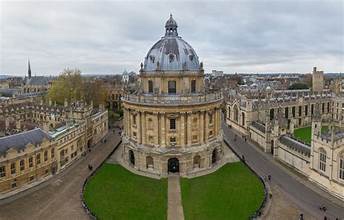
Lizzie said one of her most frequent questions was whether the Radcliffe Camera (built in 1750) was named for Daniel Radcliffe AKA Harry Potter.
We ended the tour near the Covered Market which covers most of a block with stalls selling food, clothes, gifts, nick-nacks, and probably some paddy-whacks. We ate lunch at tables. Becky and I sampled the wares at Pieminister.
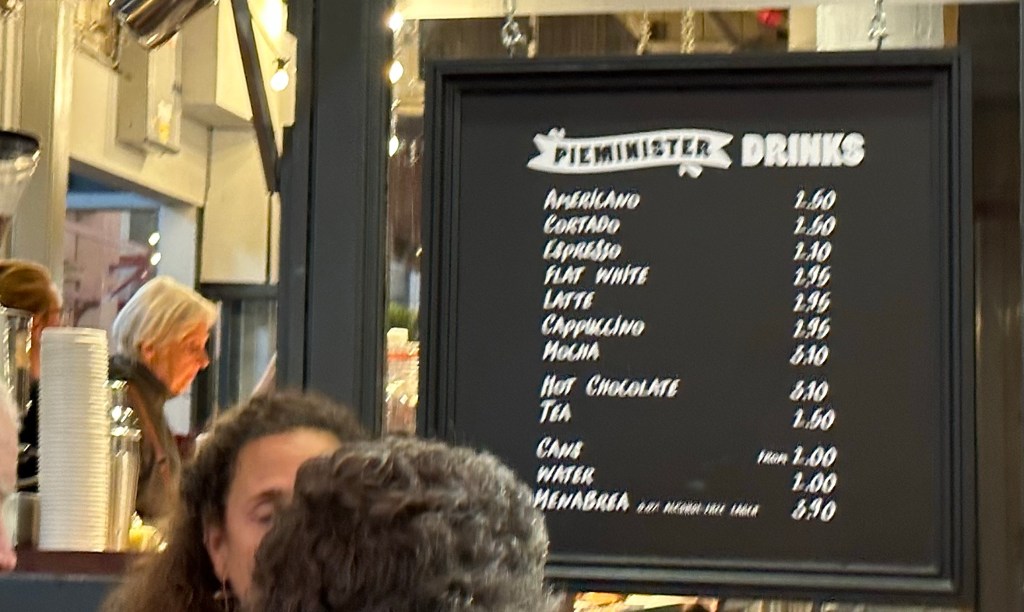

The March Hare hangs high above the Market reminding us that it was time to head to the Ashmolean Museum.
The museum contains many archaeological artifacts from Egypt, Rome, Greece, and the Middle East which were plundered during the great acquisition phase of colonization of the world by Britain.
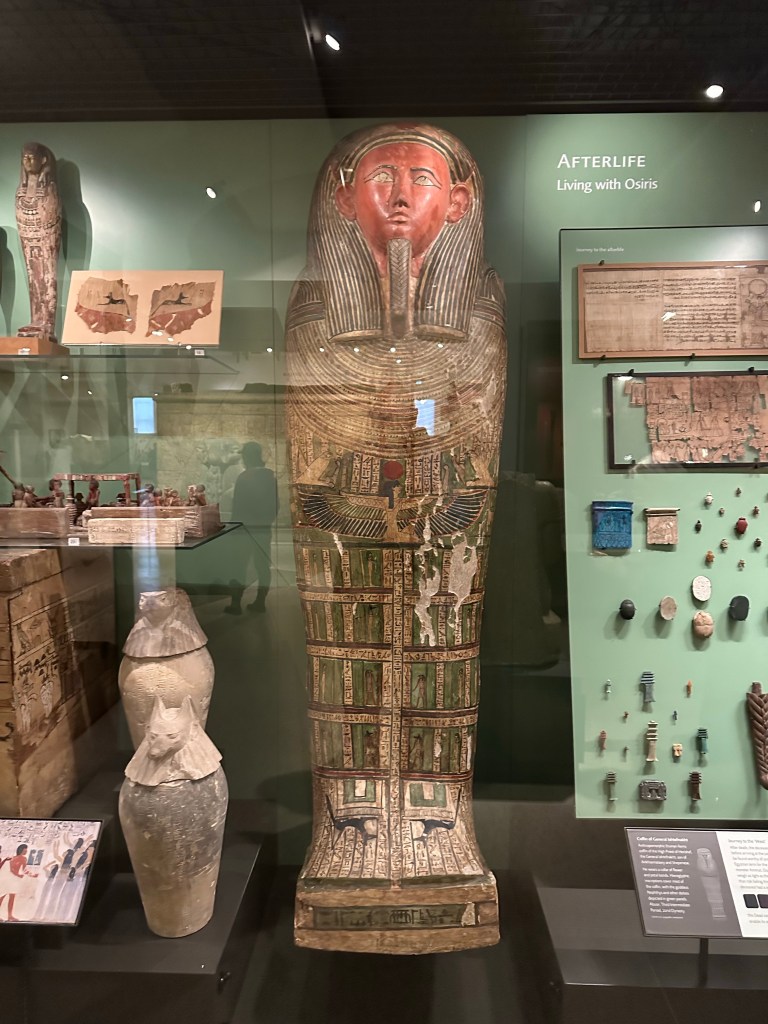
It also contains a wide-ranging art museum and a special exhibit on Victorian Fashion.
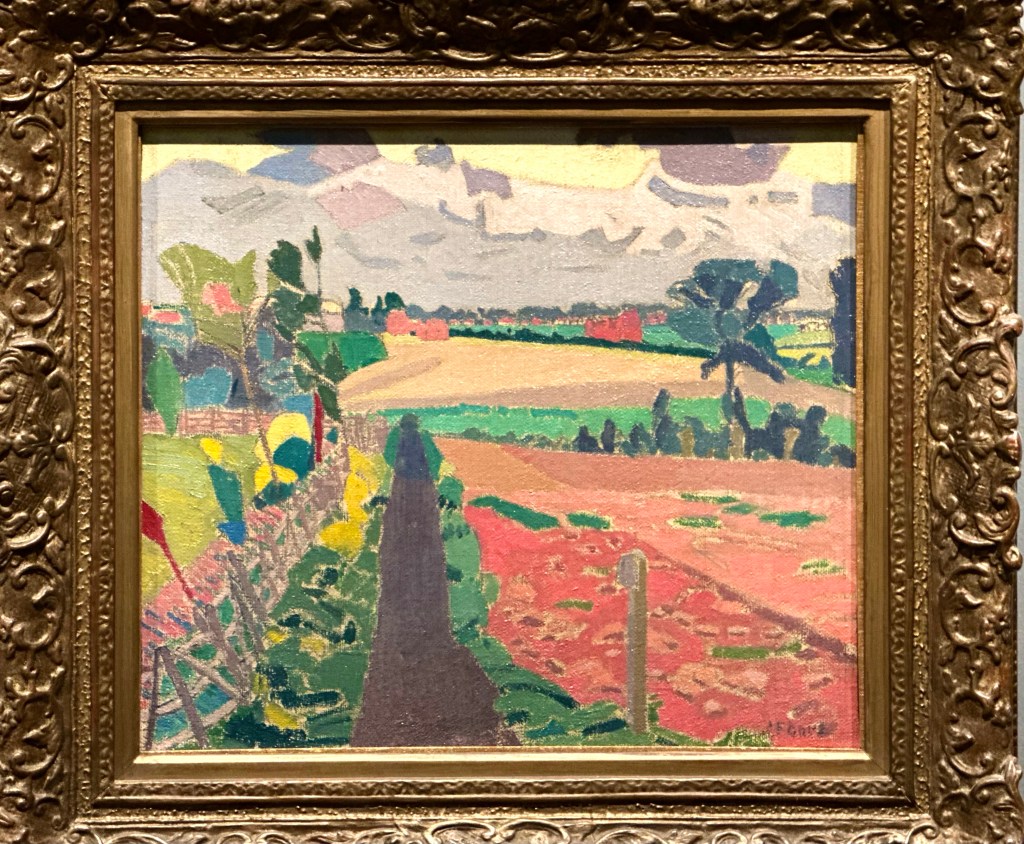

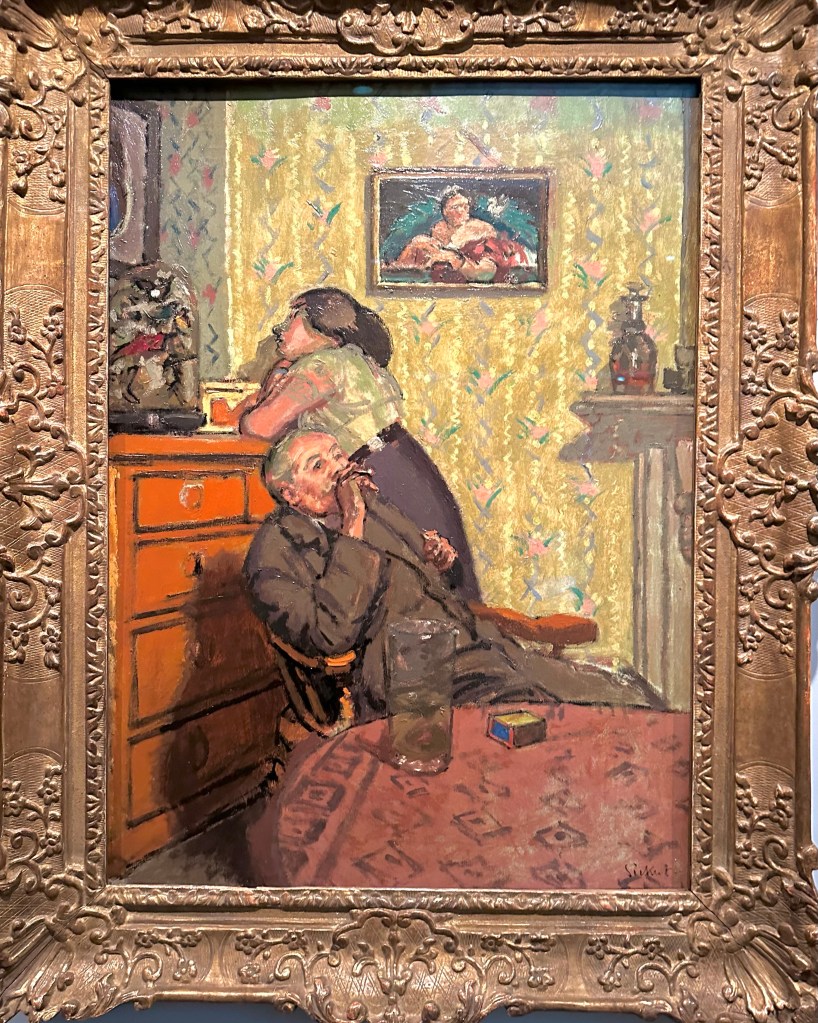

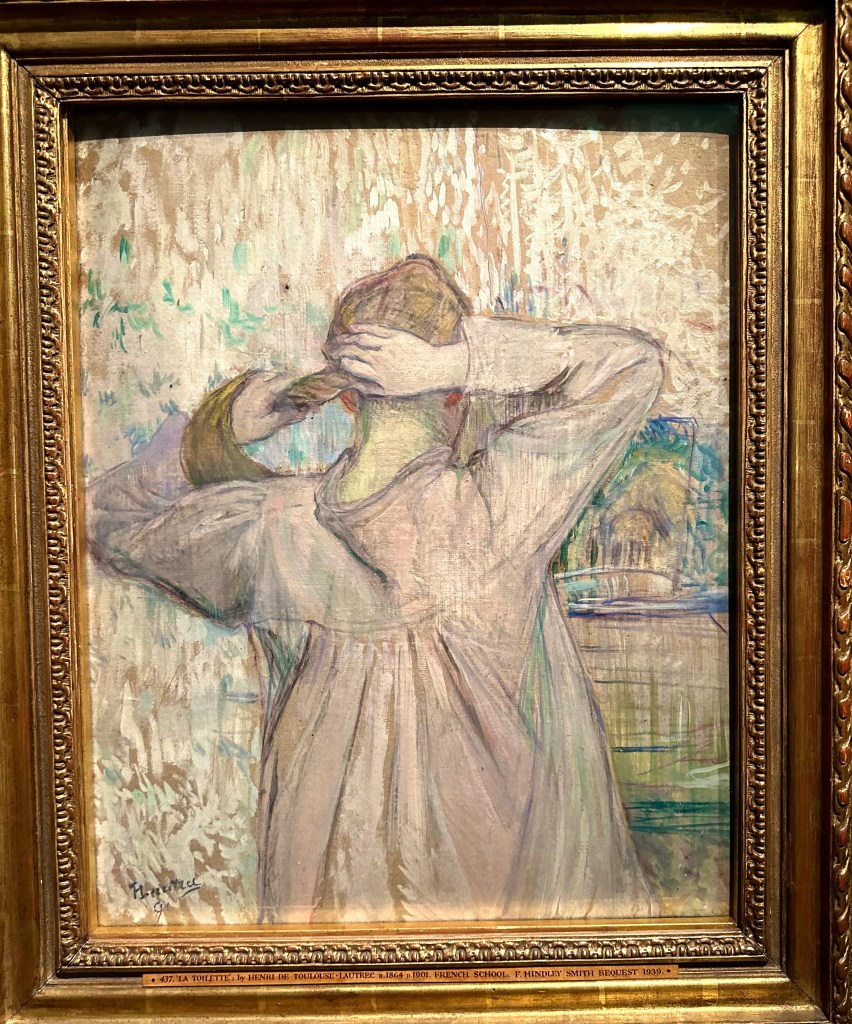


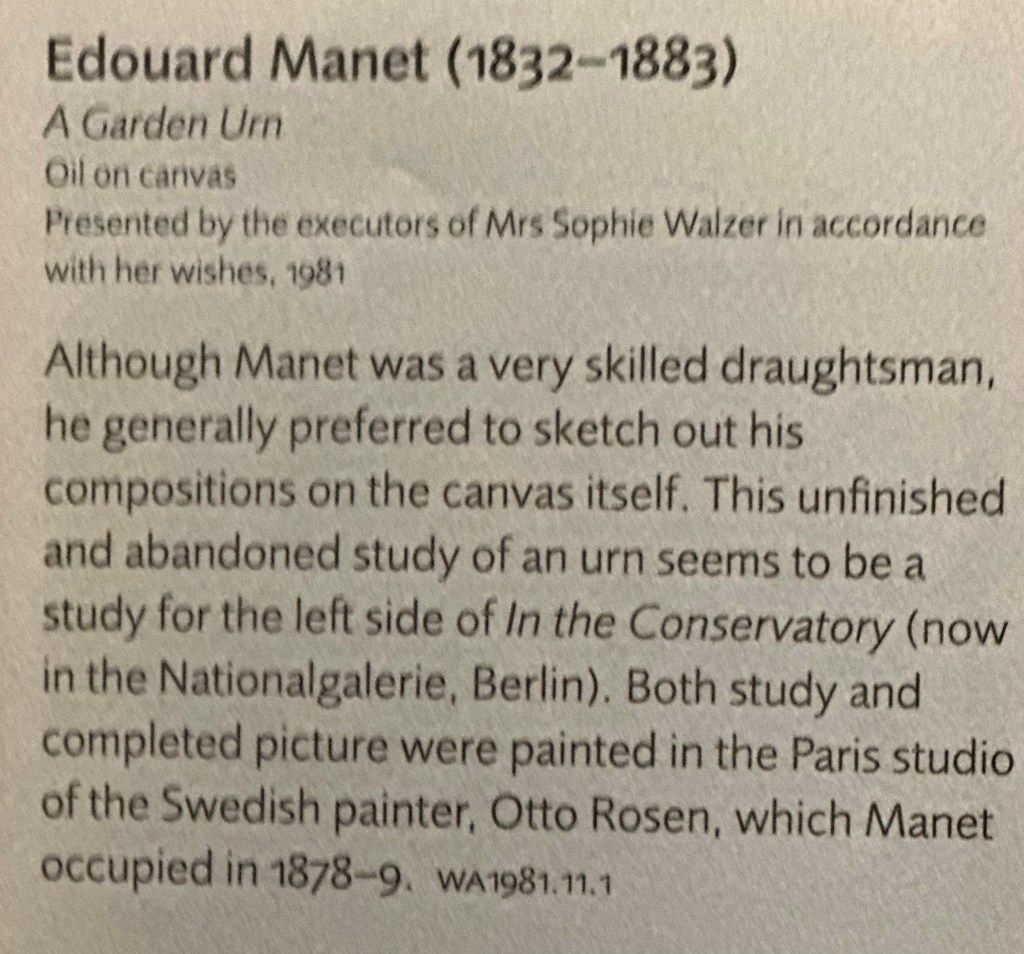
The common view of Victorian Fashion is influenced by pictures of Queen Victoria who wore black mourning clothes for 40 years after Albert died.

Actually, the Victorian upper class wore very colorful clothes made possible by importation of natural dies from around the globe and technological advances that enabled synthetic dyes. The Museum holds too much to seen in two or three hours. The Robsons spent time with the extensive exhibit about money and its history—an interesting exhibit in light of our contactless payment world.
Across the street stands the Randolph Hotel, famous as the drinking spot of Colin Dexter who wrote Inspector Morse. Apparently, the hoteliers are used to Morse looky-loos wandering about. They have a doorman to greet you and move you along because the bar is small and busy. Finding neither Colin nor Morse nor actor John Thaw (all of whom were legendary drinkers now deceased), we left in search of libations in another suitably tony pub, the Red Lion Inn.

It was perfect for an afternoon drink and leisurely reflections about what we saw at the Museum and on University Tour.
Peter had also suggested a particular Indian restaurant. Each of us remembered one clue about finding it: near where we talked to Peter, red sign, name starting with S. By piecing clues together from what each of us remembered, we located the small Indian restaurant up a narrow staircase across High Street from GUSTO. The food was delicious, perhaps we should have given Peter more credit. We walked back to the Van Brugh and took photos of our last night in Oxford.
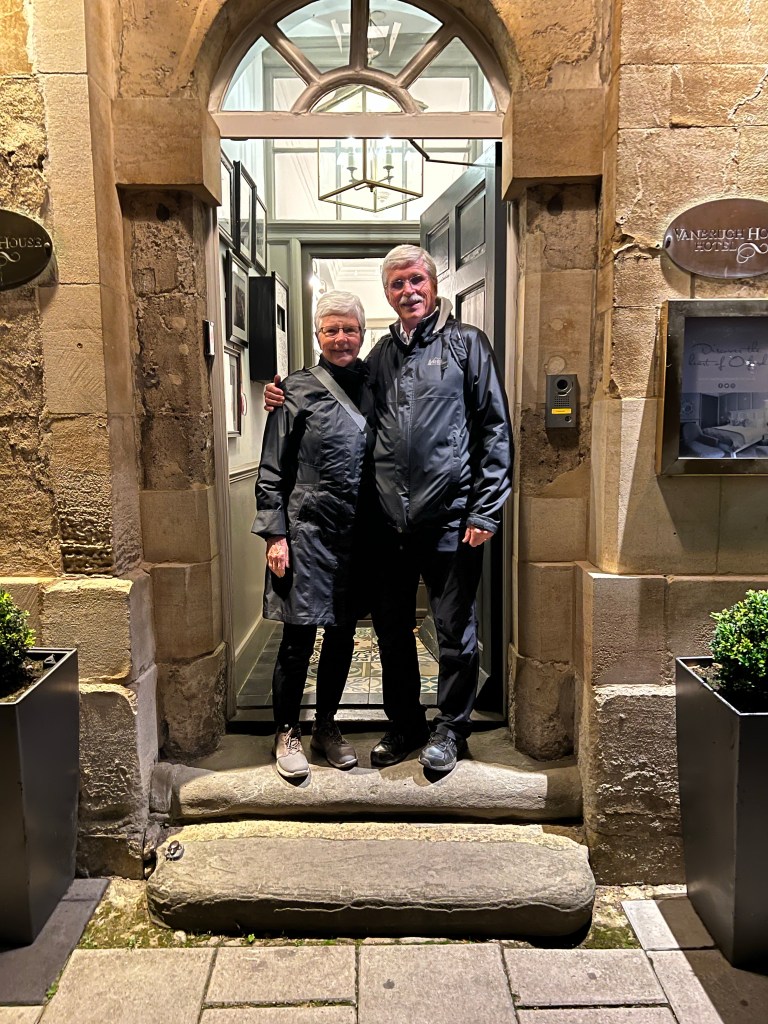
Day 5 Fare Thee Well, Oxford Town

We saw and heard many things while in Oxford, knowing there was much more. Oxford is a treasure trove, and we were always looking for a new or unusual sight. Our time was over, but not our memories. We met this morning at the rail station ready for out last stop—London!
 Tipps for Travel