Llandudno Day 1
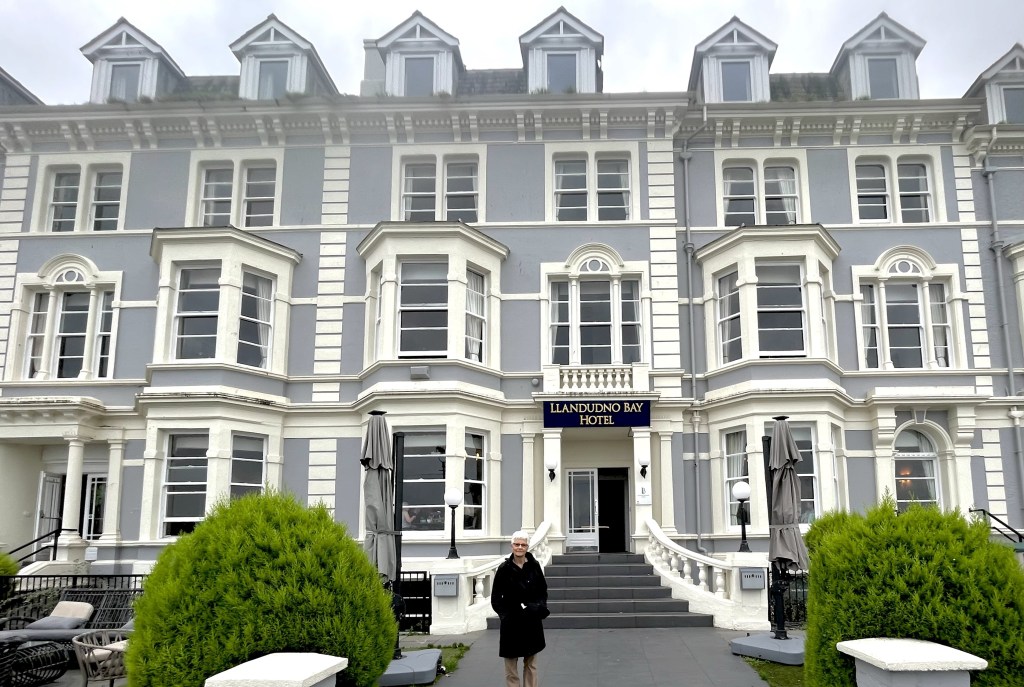
We caught an 8:00 bus from Keswick to Penrith and after a short wait there caught our train to Wales. One change of trains at Warrington Bank Quay worked out fine, and we arrived at our destination about 2:00. The Llandudno Bay Hotel is part of a long street of seaside Victorian buildings dating back to the mid 1800’s.
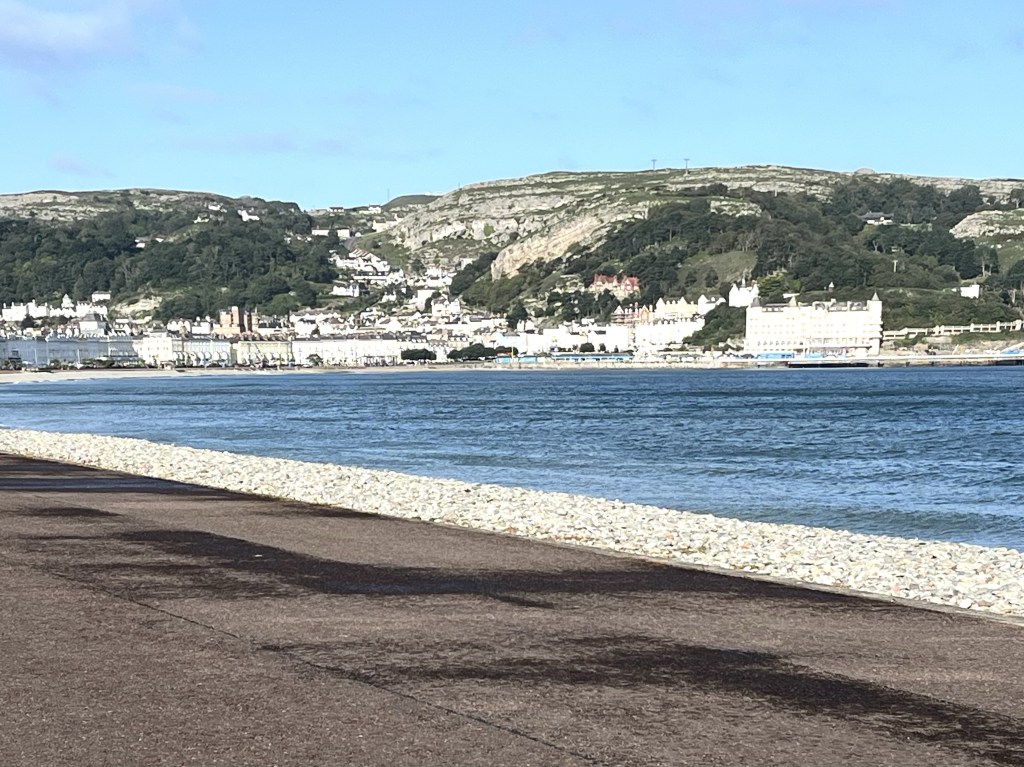
Since our room was not ready yet, we stored our luggage at reception, strolled along the mile and a half long promenade, and stuck our toes in the Irish Sea. The beach here is made up entirely of large round rocks—no sand at all. Many of the residents are concerned about this but is an effective barrier to erosion.

Next, we walked to the end of the famous Llandudno Pier. This pier also dates back to the Victorian Era, though it has seen many changes through the years. The gorgeous pavilion at the end of the pier used to be a fancy restaurant. Now it is a giant noisy arcade, and the pier itself is lined with tacky tourist shops. You can even buy seashells from the Caribbean there if you so desire!

This seaside town is a favorite resort town for Brits and, even at this time of year, it was very busy. Along the promenade is a great statue of the Mad Hatter. Lewis Carroll visited friends here in 1862 and was inspired by their daughter, Alice, and the area itself, to write Alice in Wonderland. Beautiful bronze statues of the White Rabbit, Alice and the Cheshire Cat line the walking trail.
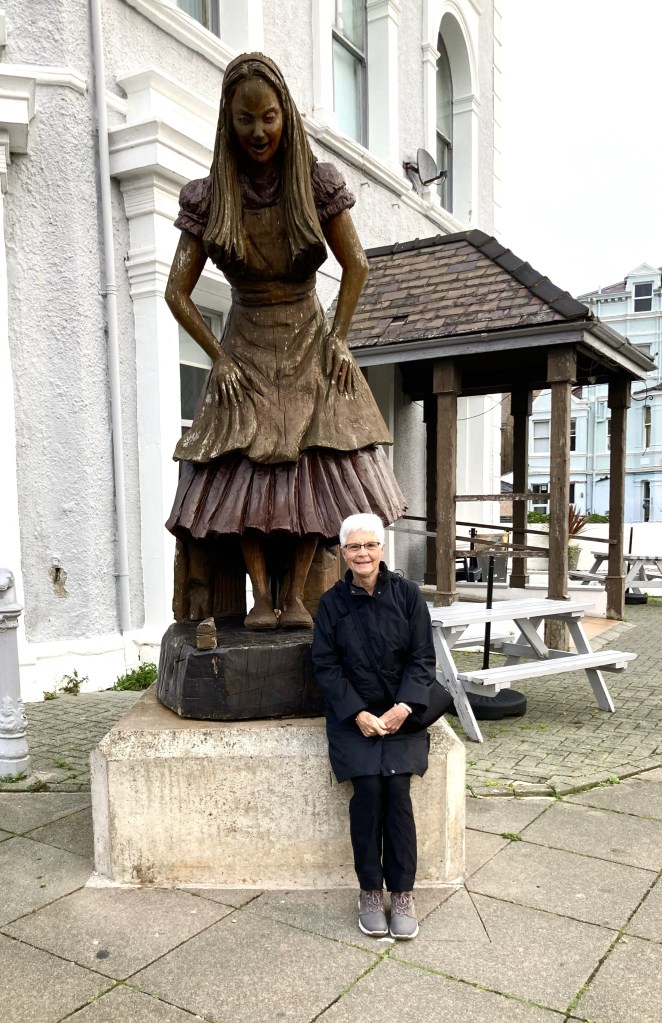
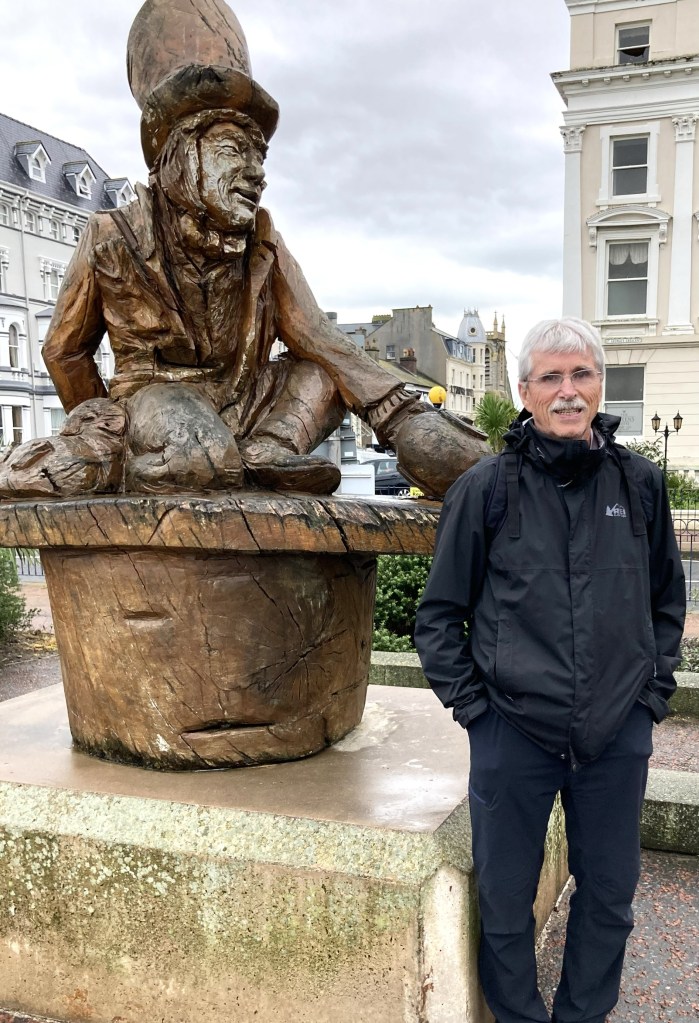
The weather started to turn damp and chilly, so we returned to our cozy sea view room in this absolutely beautiful hotel. Tired travelers that we were, we chose take-out Indian dinners and ate in one of the many beautiful seating areas on the main floor of the hotel. As it got dark, old streetlamps lit the promenade for our evening stroll. It was utterly charming.
Conwy Day 2
Oh, what a beautiful morning! After several damp days, we decided to take advantage and grab a bus to Conwy. We had a walking tour of the village on our phones which took us all around the town. Conwy Castle, one of the four castles Edward I built to fortify his claim on Wales, was called the Iron Ring and worked quite well for him in the 1200’s! The wall walk around the entire castle area was very narrow and tricky with tons of winding staircases, but it provided wonderful views of the surrounding countryside.
Conwy is a small seaport and the pier boasts fresh crab buttys (crabmeat on white bread), mussels and whelks. (White bread and toast is HUGE in Britain!) We opted for beers at the Liverpool Arms. Conwy was very important during WWII, as all the supplies headed toward Britain came through this small port which was too far away from war zones to be bombed.

Next stop, another bus, this time proceeding on to Colwyn Bay. This city is not nearly as scenic as the others. Sadly, the railroad built its line between the beach and the city center. The beach is wide and very sandy. City leaders there had loads of sand trucked in which makes the beach far nicer than the rocks of Llandudno. Poor planning makes beach access difficult with only two access paths under the railroad from the city to the beach. The long trek back and forth between the two is an obstacle has seriously hurt tourism in this town.
Time to hop back on another bus and head home. We were tired, of course, so chose to have drinks in the bar and then eat in the hotel dining room. It is really lovely there overlooking the sea and the service is impeccable.
Tour of North Wales Day 3
We had pre-booked a tour of Wales that started at the train station, so we were off before 8:00. The information from the tour company was confusing, as one email said departure was at 8:00 and one said it was at 8:30. Fearing missing the bus (as we have been known to do on previous trips), we got to the station after a hefty walk at 7:45. Fortunately, it was not raining as we stood outside the closed station until 8:30.
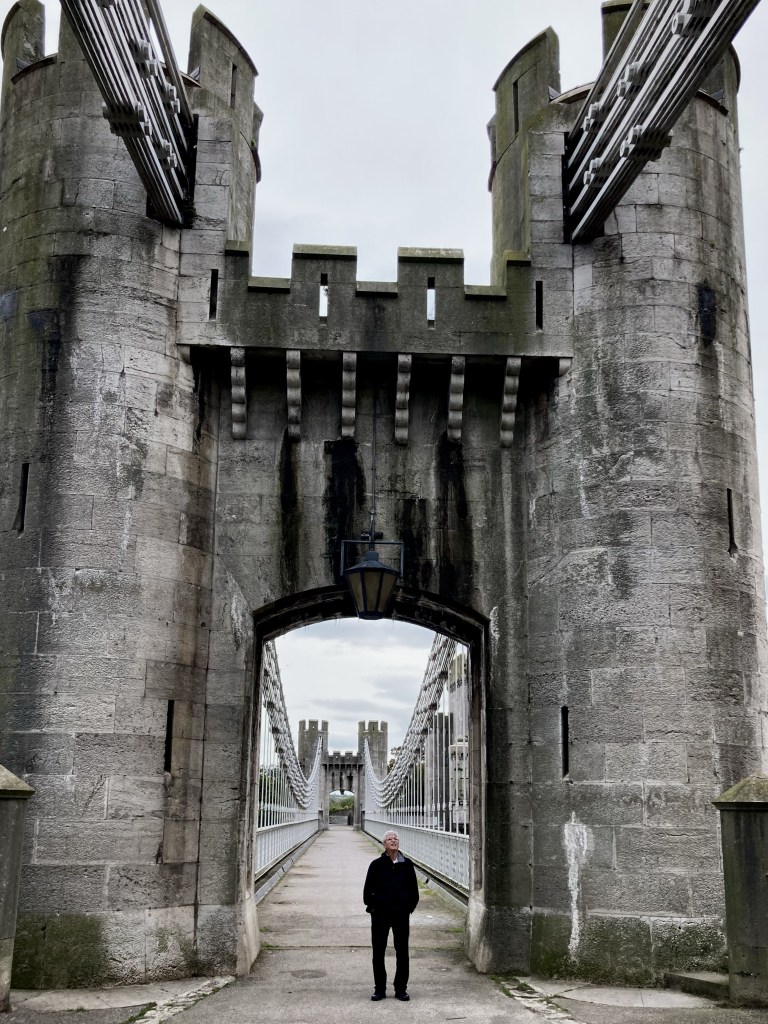
The tour was just us and two young women from China. Off we went to our first stop, Conwy. We were to have 90 minutes there to tour the town on our own, but we had done that yesterday which was lucky because today it was pouring rain. We opted to stay dry and get coffee in a coffee shop. We did walk about a bit and crossed the world’s first suspension bridge there which was interesting.
The weather continued to make the tour very difficult for the guide and us. We would stop at a point of interest, jump out in the rain and listen to a small talk before jumping back under cover.
We stopped in Caernarfon and toured the castle there for about an hour. It is another of the four Edward I built and really was very different from the other castles we had seen.
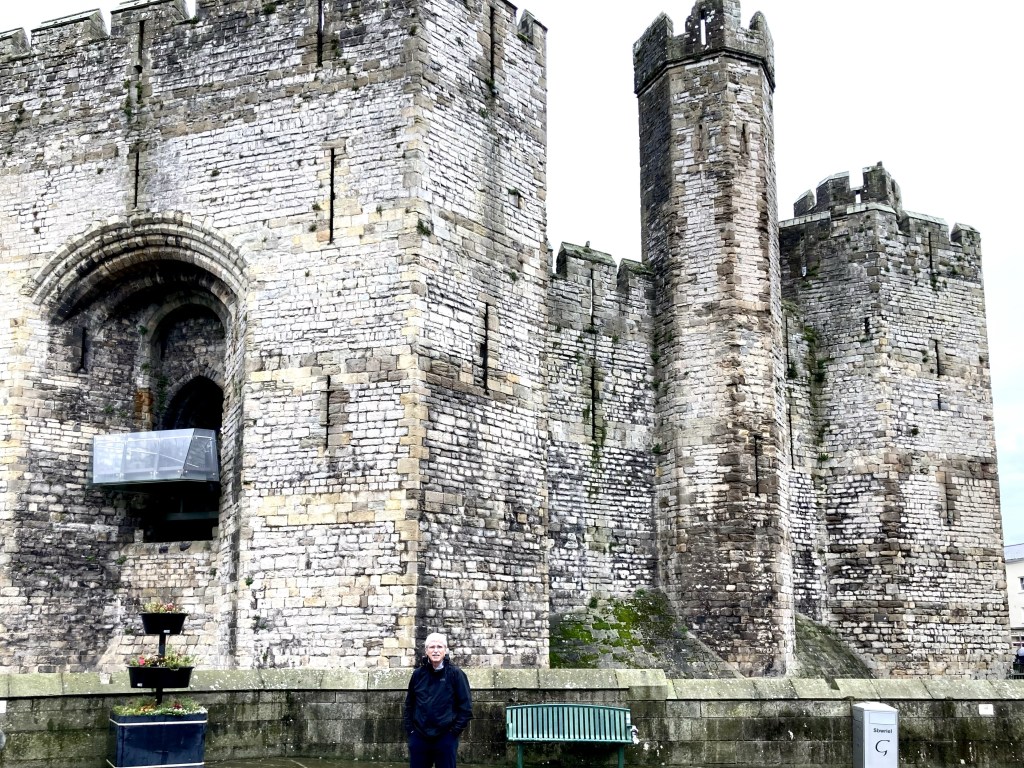
The museum there was wonderful, and we could have spent hours there, but we had to breeze through. That is the drawback of tours, which is why we usually avoid them.

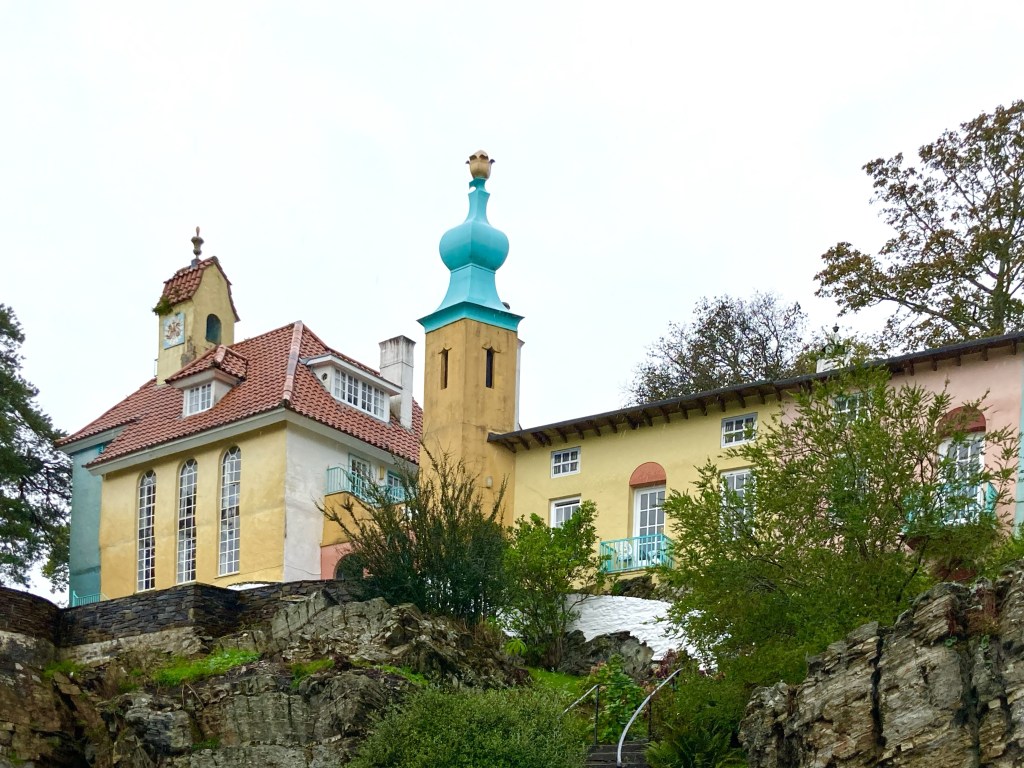
The day had turned into a 6-drop rain day and our next stop was Portmeirion. This seaside town was designed and built by English architect Clough Williams-Ellis. Started in 1925, it was not finished until 51 years after his death in 1976. Funding for his project was arduous resulting in an admission charge of £12.50/person just to walk into the village.
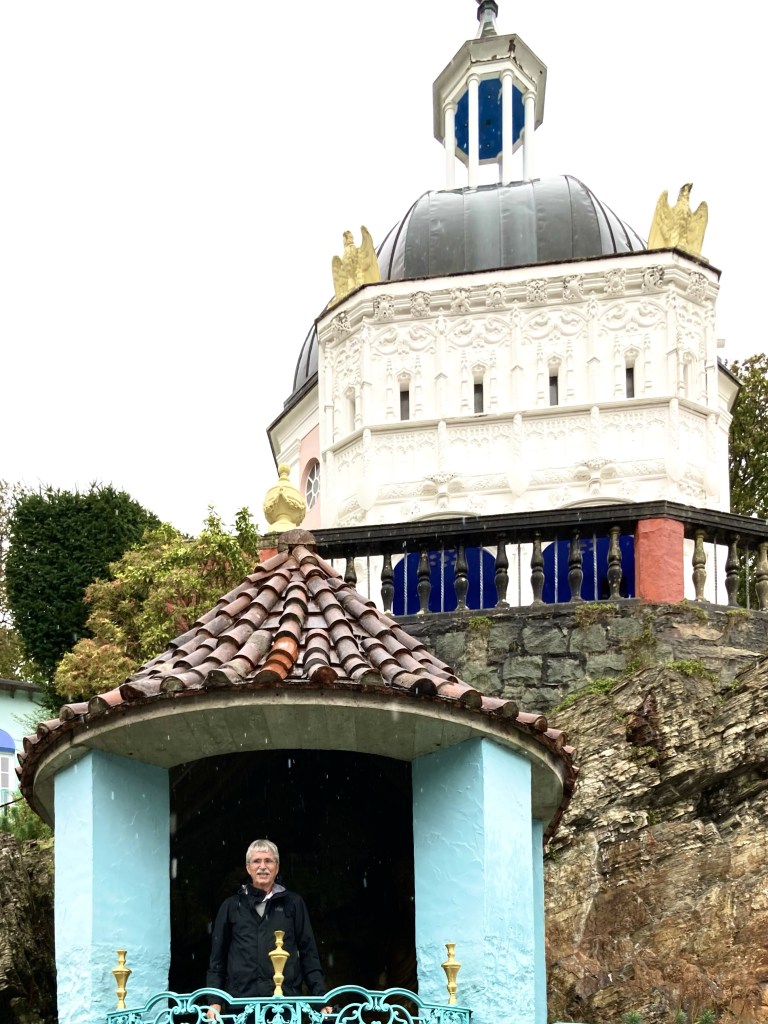
The architecture is meant to evoke the spirit of a Mediterranean village with whimsical designs and pastel colors adorning the many cottages and shops. The main feature of the town is a golden dome above a central square which serves no purpose other than being very showy. The small grass square beneath it holds a giant chessboard. The grand Hotel Portmeirion is a very popular spot for weddings and was reserved this day for one.

Despite the pouring, chilly rain, we walked all about the hillside village, peering into shops and the 13 self-catering cottages that rent out to vacationers. Since we had two hours there, we took a very long warm lunch in the Town Hall Cafe. Back on the bus we now headed for what was to be the high point of our tour—Snowdonia National Park. By now the clouds & rain had obscured almost everything but the road, so we did not see much of the largest National Park in Great Britain or its crowning piece, Mt. Snowdon.
We made a couple more stops: first at a 1400’s era house now turned lunch spot, and then an old stone tea house rumored to have been used as a pirate hideout and built in one day. It was far too rainy to linger at these spots and we all opted to pass stopping at a waterfall. Heading back to town was foremost on all of our minds. Walking back from the train station, our drop off spot, we took one final walk along the promenade as the rain had mostly let up. Warm showers and pizza in the hotel rounded out the day.
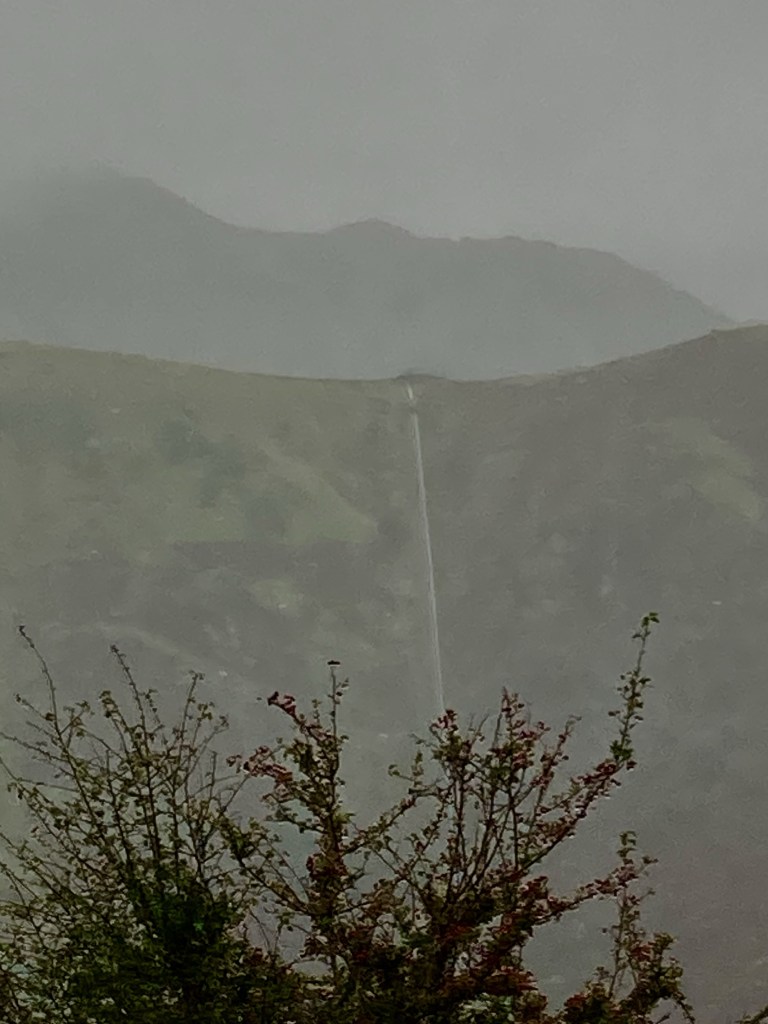
Constant rain certainly put a damper on the tour, but it still provided us with a good look at Wales and we learned a lot about the country from our guide Phil. The Welsh people have really struggled under British rule over the centuries. A perfect late example is the outlawing of the citizens of Wales to speak their native language dating back as early as 1536. People were shamed, beaten, imprisoned & sometimes executed for doing so. It was not until a huge public outcry over this egregious policy forced a vote in the EU to allow Welsh to be spoken.
All countries, except for England, agreed with the Wales petition. The EU decision forced the hand of the British; the Welsh Language Act of 1967 was passed which required the native language be taught to all school children. Today students can either attend a school where only Welsh is spoken or one in which English is the main language and Welsh is also taught. Subsequent acts passed in the 1990’s and later now ensure that every public body providing services to the public in Wales be written in both languages. Once only about 17% of the population spoke Welsh and thanks to these measures now almost 40% do so. The Welsh are a proud people and their country is beautiful—even in the rain!!
 Tipps for Travel