Day 1 Penrith to Keswick
The Penrith Rail Station was the scene of a happy reunion. Betsy and Jim came south from Glasgow to the North Lakes rail station, while Becky and I traveled north from Chester. The trains arrived about 20 minutes apart. The trips were tiring, especially for Jim and Betsy, because their train was cancelled; they waited an extra hour to board the next scheduled train which was jammed with two sets of passengers. All bets were off on getting a seat, much less the seats they had reserved.
The X5 bus picked us up just outside the rail station. The trip from Penrith to Keswick was quite exhilarating—a wide bus hurtling along narrow winding roads; avoiding other buses and wide loads by pulling over while the others passed; stopping along the way to pick up families, hikers, and shoppers going or coming to market; and passing thousands of sheep grazing in fields marked with ancient stackstone fences. Similar bus escapades were central to Lake District fun.
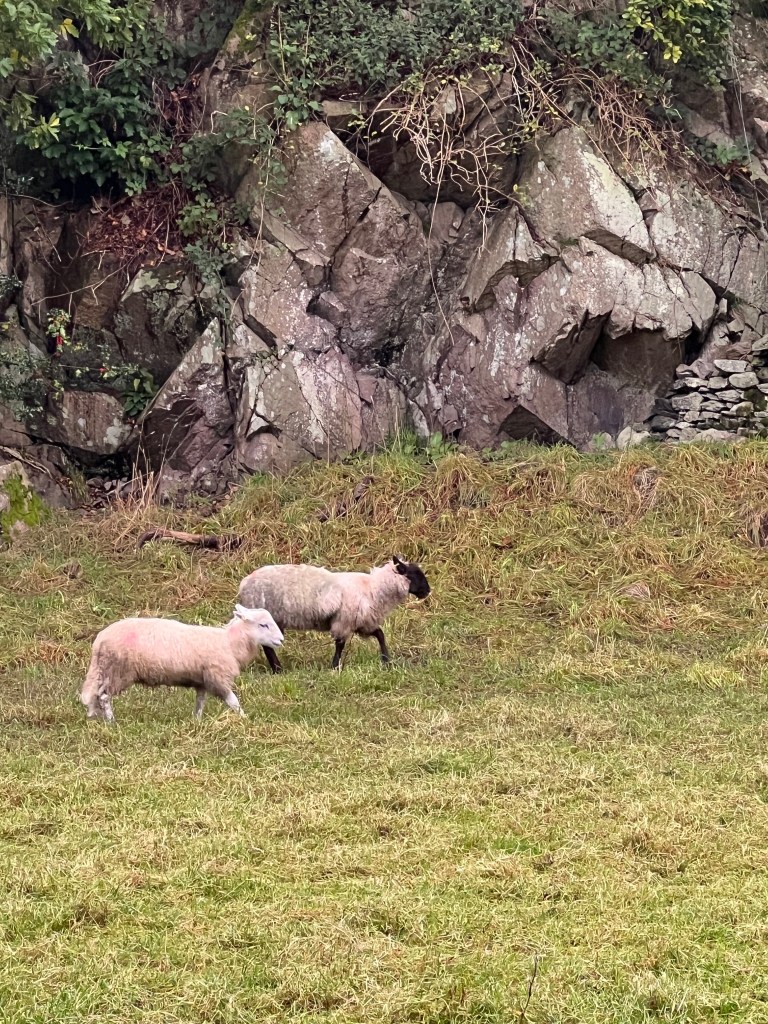
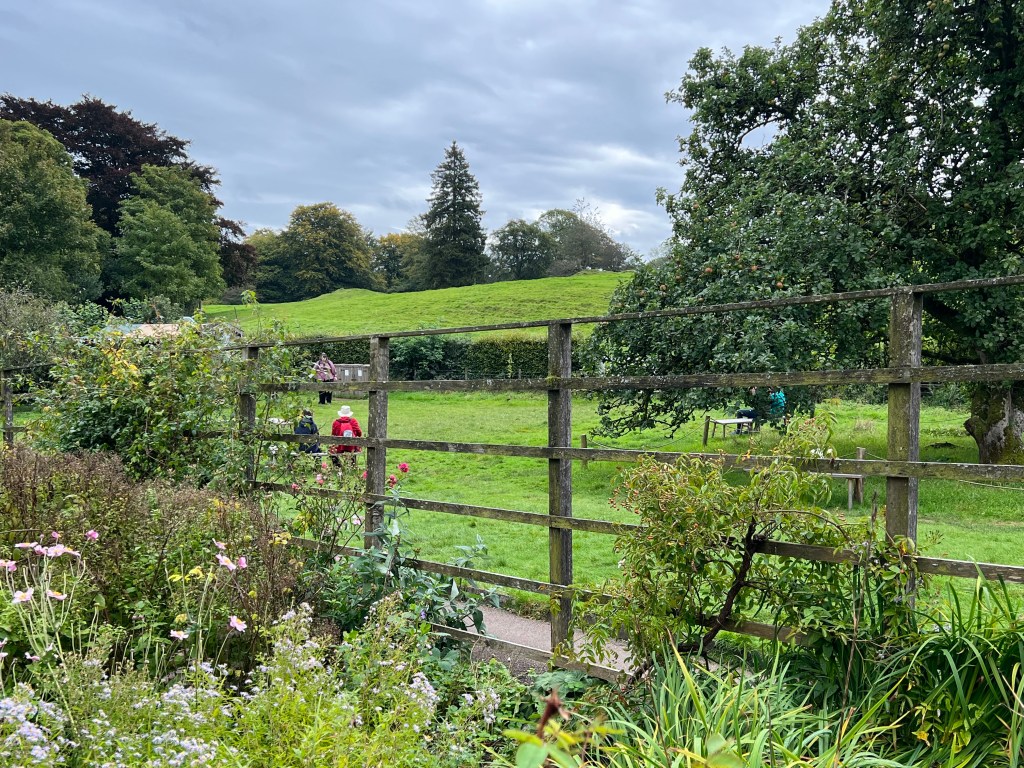
The Lake District absolutely depends on bus transportation. A new fare scheme offers £2 a ride to any destination. The scheme encouraged people to travel after COVID and simplified the old fare system based on distance, single or return, and a complex set of daily, weekly, or monthly passes.
Buses provide not only the main form of public transportation, but a major way of seeing the beautiful landscape. Each day we were amazed by miles of green meadows, rugged mountains (fells), placid lakes, and grazing sheep. This beauty has attracted tourists for 200 years.
Alas, getting photographs of this panorama from the speeding bus was impossible. Becky bought a book of photographs of the Lake District. We recommend Googling to you.
Google: Lake District photography
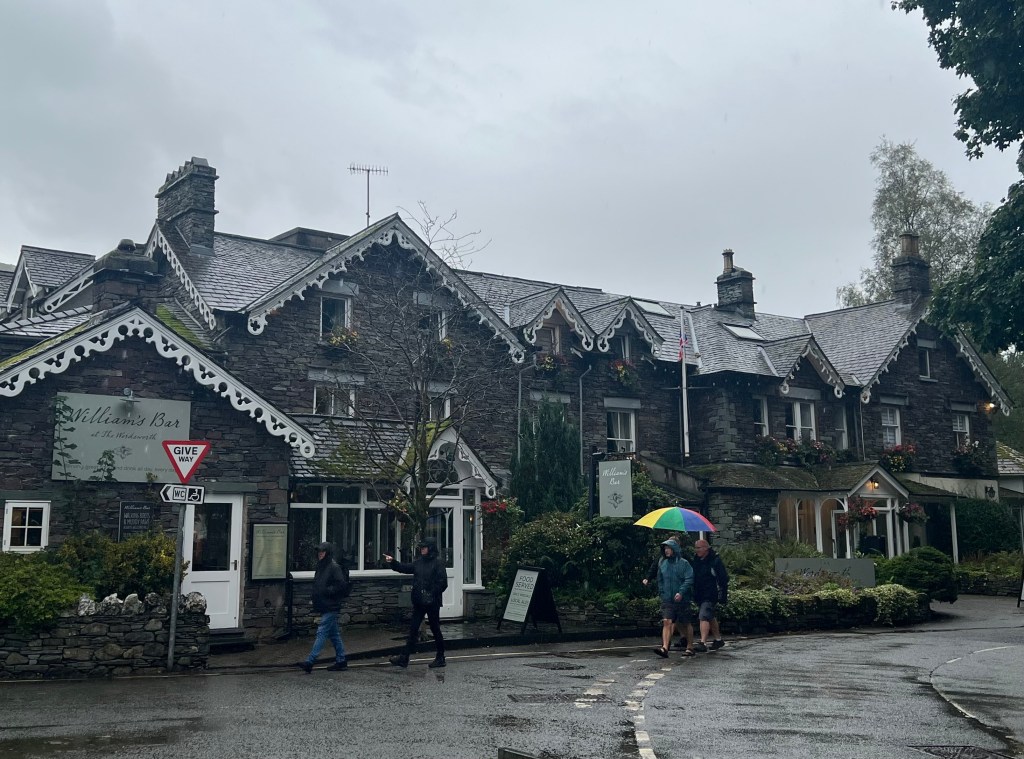
The Lake District extends over 100 miles along a series of deep water lakes with towns lined up along their eastern edge. From north to south, the larger towns of Penrith, Keswick, Grasmere, Ambleside, Windermere, and Bowness are connected by buses with regular scheduled stops once an hour, or half hour, or 20 minutes. We have learned to read bus schedules for self preservation and conservation of energy and time.
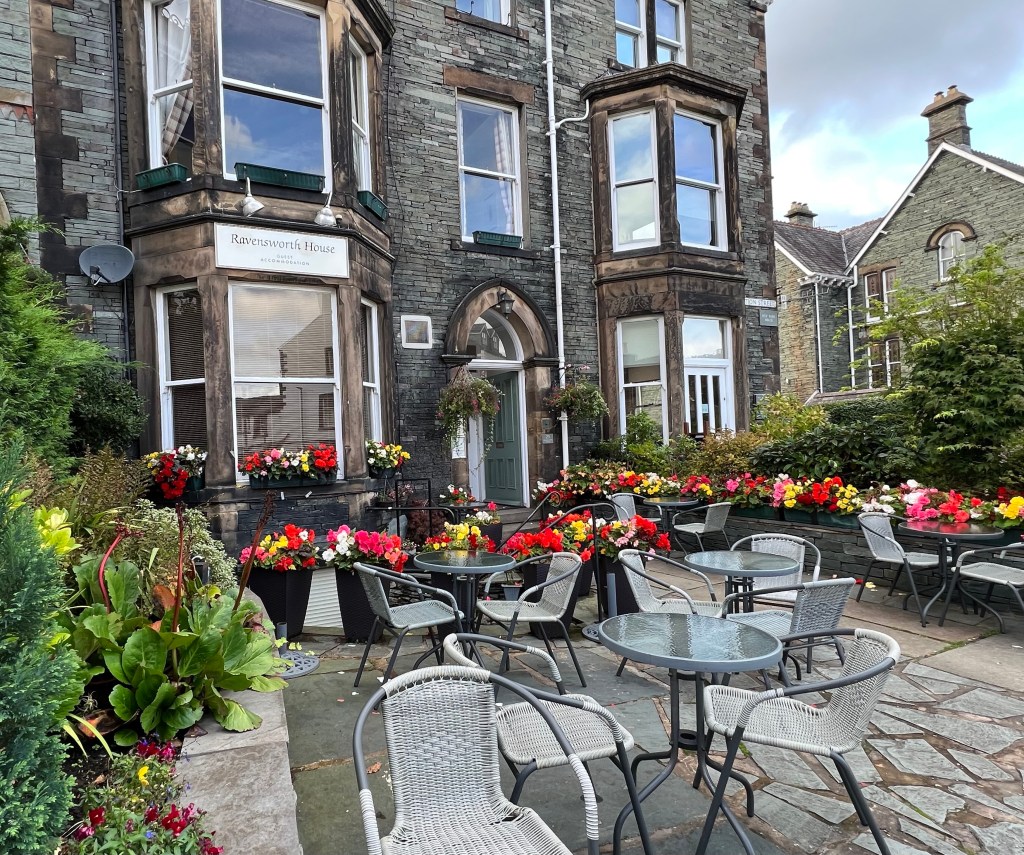
Our bus stopped directly across from the Keswick Park Hotel/Inn, an old hotel with 19 rooms located up either the front or back switchback staircases. For the first time on this trip, taking suitcases up four sets of stairs to the second floor room was problematic.
On our first walk into Keswick, we experienced the chilly and rainy climate of the Lake District. One person informed us that Keswick has an average of 250 rainy days a year. They seemed to be bragging that their village of Glasmere only has 200 days of rain.
The forecast for the next three days was rain, rain, and then more rain. Our first two days were “one drop” days, mist with random small showers, which do not interfere with our activities much. On the third day we experienced monsoon rain, but I will get to that. Becky is recognized as our weathervane with a great record of avoiding rain and chill. Her record stands at five weeks in Scandinavia without rain when we wanted to be outside. It rained only at night or while we were in museums.
A tea shop offered afternoon tea with scone, treacle cake, butter, jam, and a choice of tea—such a refreshing late afternoon custom in England. However, having cream tea at 4:00 puts Americans’ eating schedules off for many who eat supper between 5:30 and 7:30. We were not hungry until 8:00 but found a very good Indian restaurant, Sultana. Back at the hotel, we climbed up the switchback stairs to our rooms at opposite ends of the hotel.
Day 2 Ambleside and Hilltop Farm
Next morning we ordered breakfast from the menu of 10 choices from full English to Eggs Benedict to porridge with pots of tea and coffee. The guy from reception was the fill-in cook. Someone was sick or just didn’t show up. Businesses throughout England are struggling to find workers and are adjusting their procedures accordingly. The hotel is renting only 12 of its 19 rooms. Many restaurants only serve 4 days a week. Labor shortages exist in the US but seem more severe in Britain.
Despite threat of rain, our plan for the day was a visit to Hilltop Farm where Beatrix Potter and all of her animal friends once lived. A bus from Keswick to Ambleside, then a bus from Ambleside took us to Hawkshead near Hilltop farm. When we got to Hawkshead, we expected to find a van or taxi to take us to the farm because the lane is too narrow for a bus. Our expectations were dashed— the van no longer operates, and the lone taxi driver was on vacation. We were stuck.
The distance was about two miles, but the narrow lane was difficult to walk, especially as we were now feeling spits of rain. We went into several shops to inquire but got no solutions. But I used to shopportunity to buy some famous Grasmere Gingerbread to complement the toffee and fudge Betsy and Becky bought in Ambleside.
After about an hour of befuddlement, Becky and Betsy chatted up a guy in a van to see if he had any transport ideas. He told them that the van/cab concession ceased during COVID, and the city leaders decided not to fund a new one. That decision resulted in a slump in Hawkshead’s shops which existed on selling to and feeding Beatrix Potter tourists.
He offered to take us up to Hilltop cottage, come back for us in an hour when he completed his errand, pick us up later, and drop us at the bus stop in Ambleside.
Beatrix Potter was a strong-willed woman who had very specific expectations for herself and her world. She was committed to illustration as her life’s work as well as her pleasure. She bought Hilltop cottage as a refuge to pursue those interests.

The small cottage looks as if Beatrix had just stepped out for a moment. On tables and window seats, illustrations from her books are displayed beside the actual window, or cupboard, or mouse hole, or rolling pin.

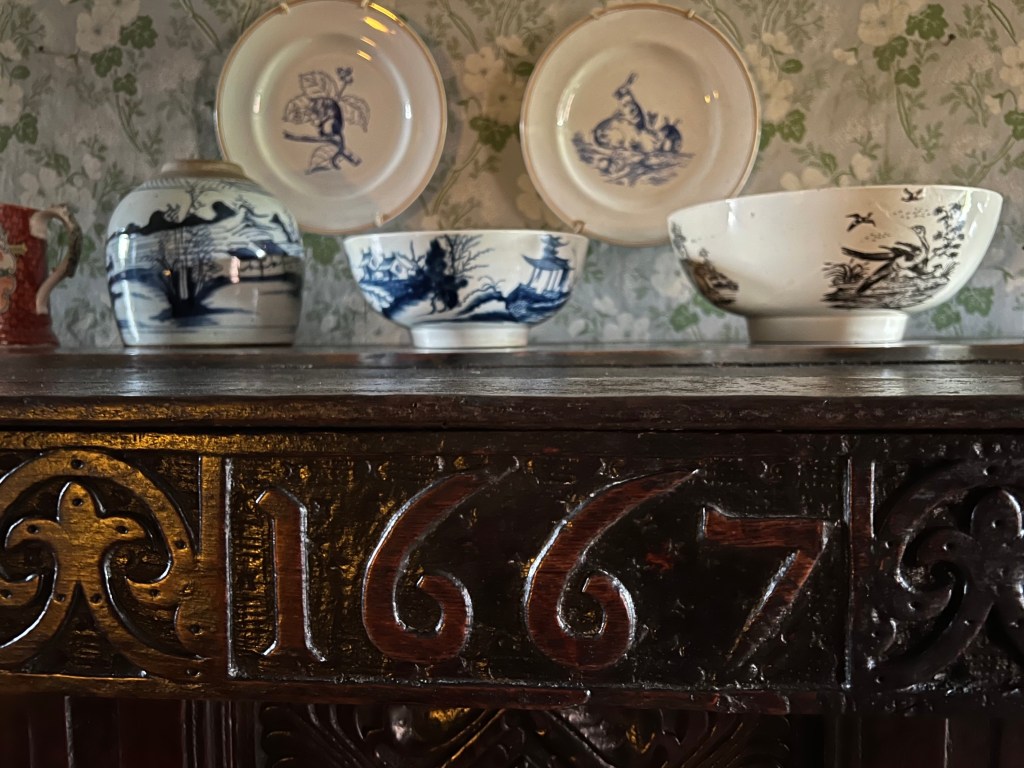
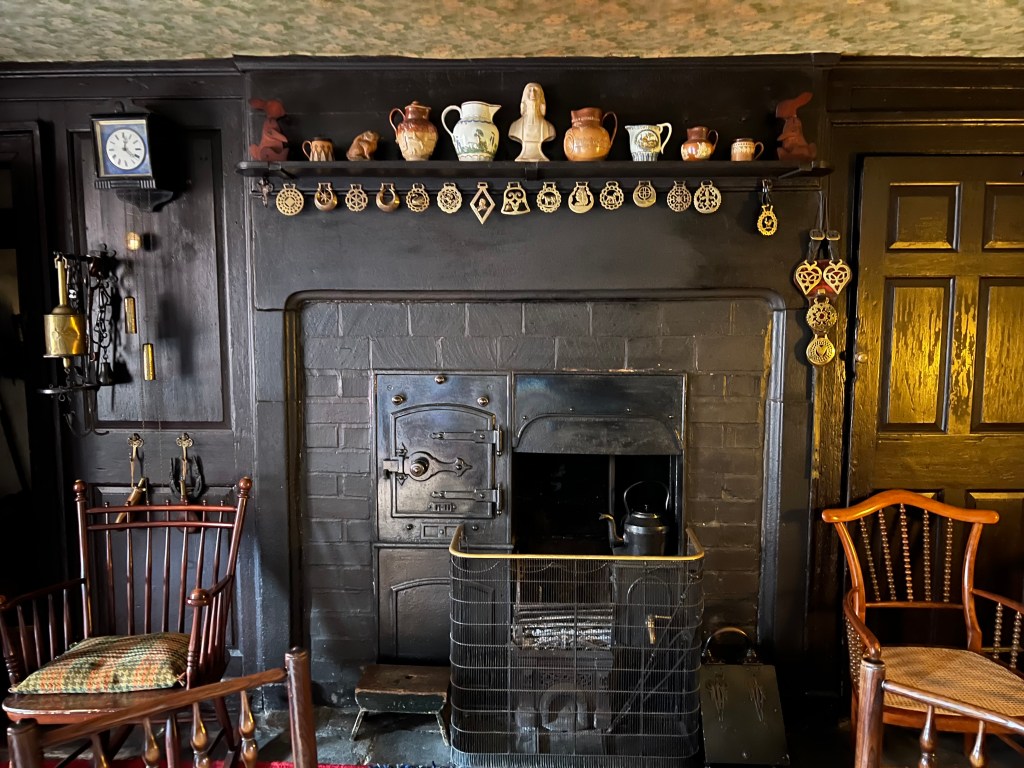
The house is a living museum of her illustrations. Later, she married a local barrister and bought a larger home across the road from Hilltop which remained her sanctuary and studio. Local lore has it that William was never allowed to enter her private domain.
Her other passion was farming and raising Herdwick sheep. She realized that the life of the farmers in the area was hard. She brought financial security to the area by purchasing 16 farms and leasing them to the farmers at a fair price along with some requirements on their farming practices. To this day, the farmers are required to raise pure-bred Herdwick sheep.
On the ride back to Ambleside on the van, the rain increased to intermittent and hard. Our new friend entertained us with local stories on the ride. He said there were 7000 miles of stone stack fences in the Lake District. I would have guessed 7 million.
He told us more about his theatrical experience as a child. Cameron Macintosh and Lionel Bart were casting a revival production of Oliver!. While looking for “authentic” East End kids, they found him walking along the street with his parents, auditioned him, and cast him as an Urchin. He spent two years as one of the urchins singing “Consider Yourself.” We were rescued by the kindness of a charming stranger, and we gave him £20 in gratitude.
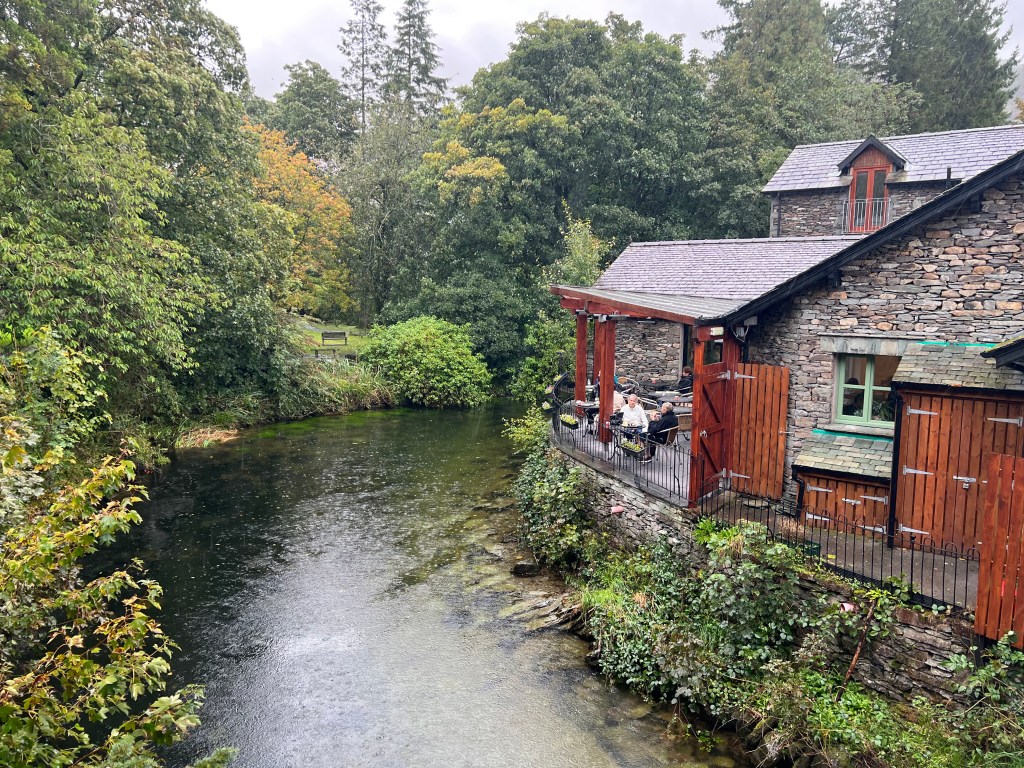
Our driver had suggested that we eat at a famous Apple Pie Place in Ambleside. Even mid-afternoon, it was crowded with pie-eaters. Each couple shared a sandwich and piece of apple pie. The 555 bus continued our journey to the hotel as the rain intensified. We were glad that the bus dropped us at the hotel’s door.
The previous night while looking for late dinner, we had found an Italian place half a block from the hotel, but it was packed. At that time, Jim wisely made reservations the next night for us at 7:30. After some recovery time, we scooted across the street to Casa Bella, timing it to a lull in the downpour.
What a delightful evening! We sat at a window table watching the continuing rain which vascillated between drip-drip and blowing gales. Now it’s raining, now it’s not. The fettucini, penne, and fusilli were as spectacular as the service. Jim noted that the owner was everywhere yet almost invisible as he orchestrated two full rooms. We celebrated the end of a fine, fine day with a dish of gelato. It was a day that teetered on disappointment, but due to a kind, delightful stranger we had a wonderful time with Beatrix, Peter Rabbit, Tom Kitten, and Jemima Puddle Duck.
Day 3 Pencil Museum and Dove Cottage
The day started with breakfast and a walk to the north end of Keswick to the Pencil Museum in nearby Derwent. The walk was pleasant because the rain had subsided as the chill arrived. Fall was in the air.
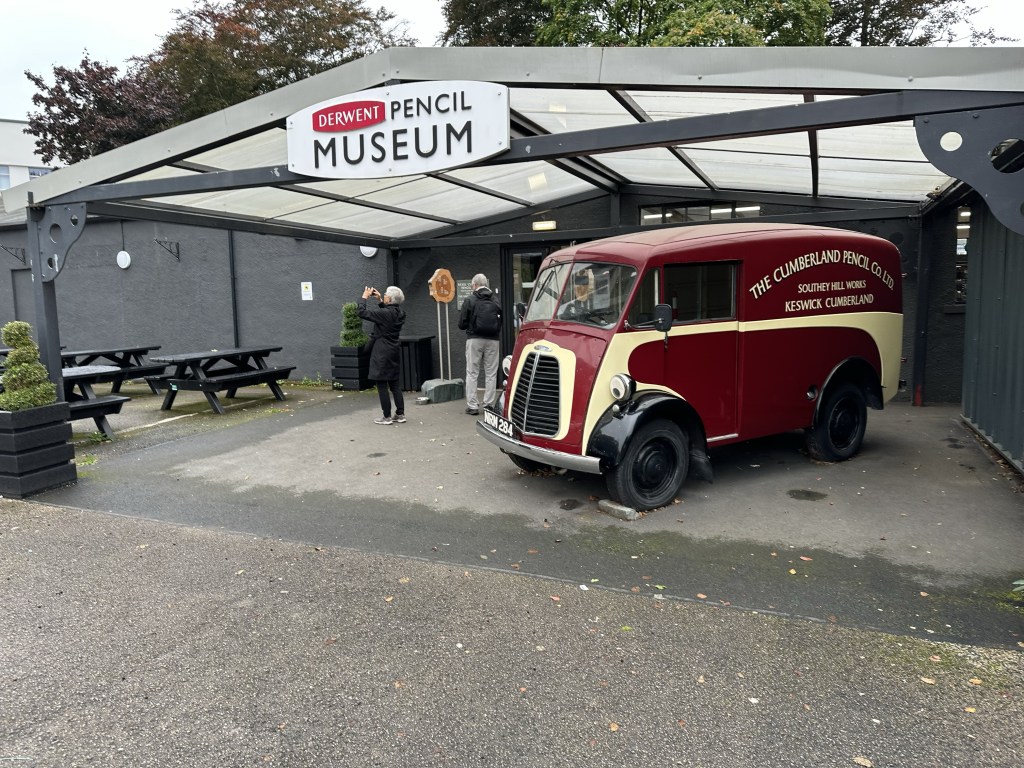
The concept of a Pencil Museum seems puzzling and alluring—what could they have? Thousands of pencils? Yes! But much, much more about the history of graphite being used to mark things which goes back 2000 years. Graphite deposits were found near Keswick and were commercially mined. For a time, graphite was more expensive by the ounce than gold. This created a black market and smuggling operations in the 16th and 17th century which led to strict security to thwart unsavory characters engaged in ingenious thievery.

The Cumberland Pencil Factory came into being around 1900 and the manufacturing process has changed as technology has improved. Three short films showed the pencil making process beginning with raw graphite which can be made into a paste and colored, cured into threads of color which are sandwiched between two pieces of wood. The raw pencils are shaped and painted. Technology has allowed the creation of pencils with many different characteristics such as water based, metal infused, soft and hard, color fast versions in dozens of colors.
A large part of the exhibit detailed how pencils were used during World War II. If you have seen James Bond movies, you are familiar the the character “Q” based on an actual character who supported the soldiers and spies with fantastic tools and secret compartments in ordinary tools. Derwent pencils provided some of those secret compartments.
The pencil company answered a request from legendary “Q,” the real Charles Fraser Allen, to create a map small enough to be hidden in a pencil for pilots to use if they crashed in enemy territory. Basically they created a cloth map that could be rolled up and hidden inside a pencil. There is no record of the actual process. Secrecy you know! A film in the museum showed how the process was recreated in 2000 based on one map that had survived. Every visitor gets a regular Derwent pencil as a souvenir. We were all amazed and delighted with the museum and spent time in the pencil shop looking at the many pencil products.
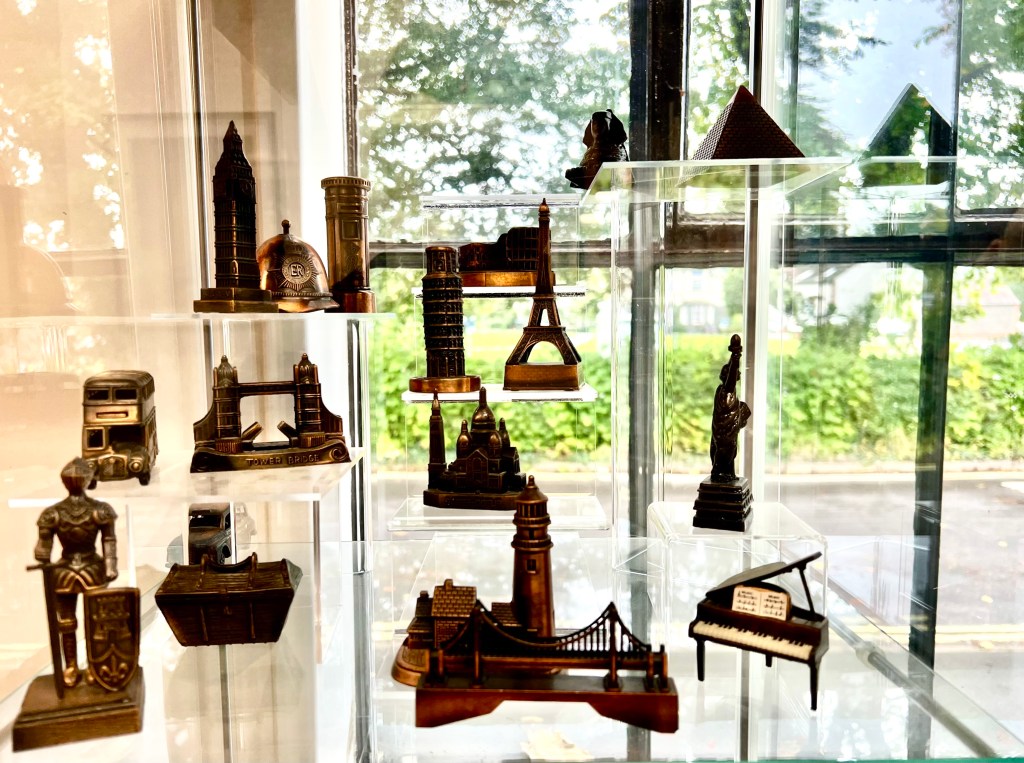
We had planned the rest of the day for a visit to one of William Wordsworth’s homes—a short bus ride to the village of Grasmere. Weather was overcast with spotty rain when we got off the bus and walked through the gray-stoned village. We stopped in Heidi’s kitchen for a mug of soup and sandwich as the rain became constant. By the time we finished lunch and headed to the parish church, drizzle was steady rain.
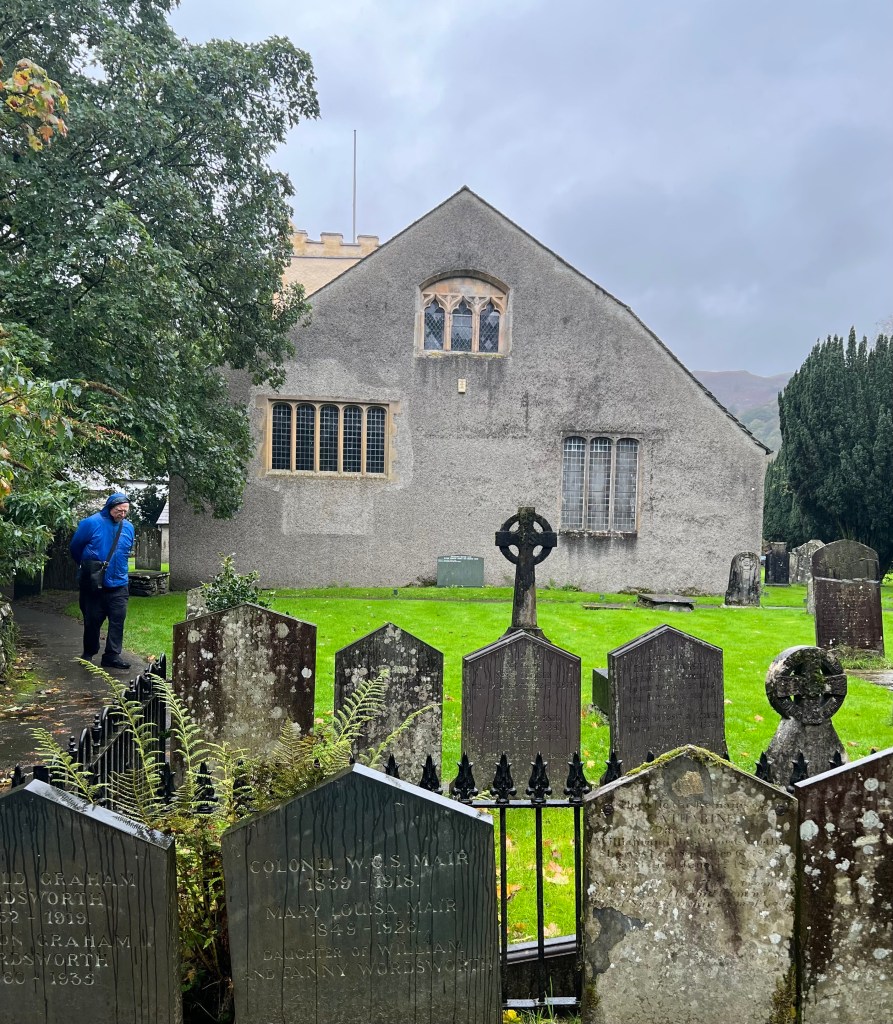
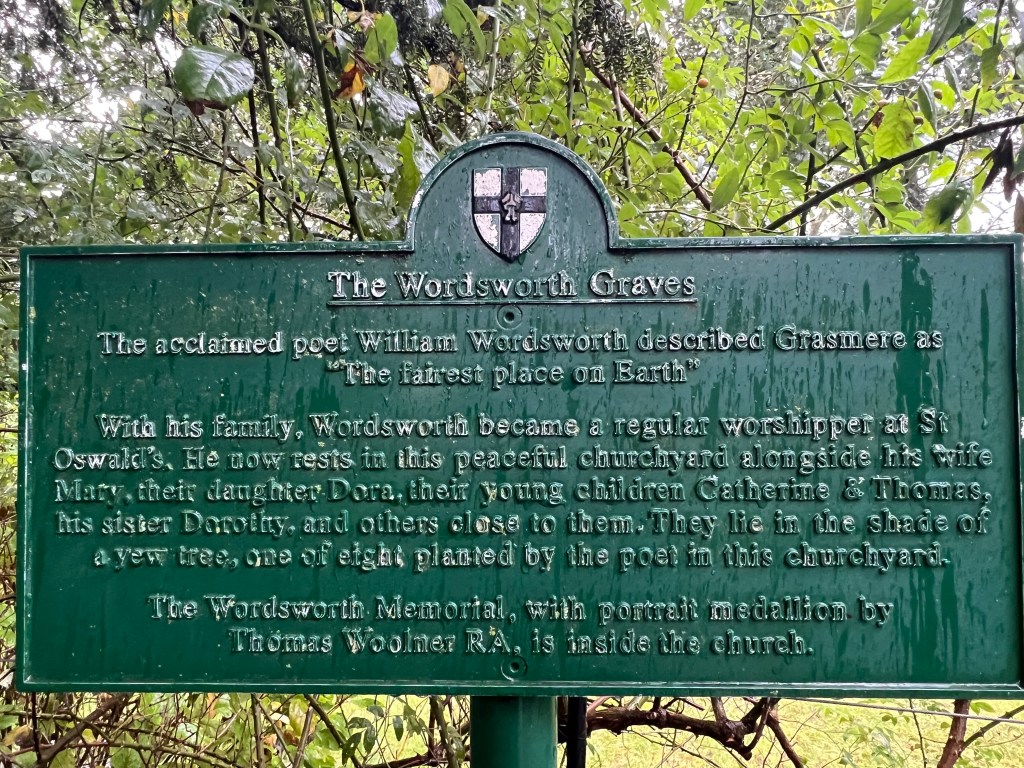
Wordsworth and most of his family are buried in the cemetery next to the church. Down the road about a quarter to half a mile was his home at Dove Cottage with an attached museum.
What would have been beautiful walk past little shops and sheep on any spring day was now a slosh through a pouring rain.
Having no better options, we walked to the museum and arrived in time for 2:00 tour. Since we had taken the bus to Grasmere, we got a special discount on National Trust tickets almost half price.
The tour began with a short film in the converted stable and time to explore in the small, dark, cold cottage which the family rented for several years. With the addition of children, the cottage was inadequate. They moved and later purchased a different house down the road called Rydal which is run by the Wordsworth family trust. A docent gave a short introduction to the house and answered any questions.
The museum itself presents Wordsworth’s poetry in the context of its time and revolutionary impact. He used common language about everyday living instead of odes about gods and urns. Instead of florid verse, he spoke to the heart. His lifelong work was “Prelude,” an epic autobiographical poem. Becky bought an old, old book of Wordsworth’s poems in an antiquarian bookstore. Why get a new book when you can get one that smells like 1850?
Another special exhibit was about the Lake District becoming a tourist destination starting in the first half of the 19th Century. Wealthy industrialists were building manor houses around the Lakes– McMansions of their day. Wordsworth was not happy with the changes and the disruption to the beauty and tranquility of the area. I doubt he would be any happier with development over the last 150 years.
We planned to catch the bus back to Keswick around 4:00, but 4:11 bus was pulling away (early we thought) just as we were walking toward it. By this time, the rain was constant and strong. Another bus was scheduled in 30 minutes so we huddled under umbrellas and under some trees.

Several buses passed us going the wrong direction. Finally one of the wrong-way buses stopped, and the bus driver yelled out that a bus had broken down in Windermere and that the substitute bus would be 20 minutes later than the 30 minutes we had already waited.
By now, we were wet through and through. Our water resistant coats had relented under the constant rain. A group of seniors from Cockermouth joined our huddle. And we waited and waited. One “Out of Service” bus passed us, but with enough notice, we would have organized the seniors into a cordon to block its passage. Finally, after an hour in the pouring rain, a 555 bus arrived and 20 wet people climbed aboard. We were just happy to be out of the rain and too wet to even complain about it.
We tumbled off the bus and into the hotel for drying, rest, nap, hot shower—whatever was needed for recovery. About 7:00 we gathered in the lounge to contemplate dinner. The gale continued outside. Becky admitted that her anti-rain superpowers had been depleted after three days of constant use.
No one had the will to go outside again, although we briefly considered sacrificing Jim by sending him across the road for pizza from Casa Bella,
Finally, ennui won and the best solution was eating in the hotel because the cook was in for the evening. We were pleased and surprised with the quality of fish and chips and grilled salmon dinners served. After a fun game of progressive rummy, we all retired.
Day 4 Leaving Penrith
Betsy and Jim boarded the 8:00AM bus to Penrith to catch the train to Llandudno, Wales. At 10:00, Becky and Steve followed for a train scheduled for the following day to Moreton-in-Marsh. Changing schedules avoided two rail strike days—September 30 and October 4.
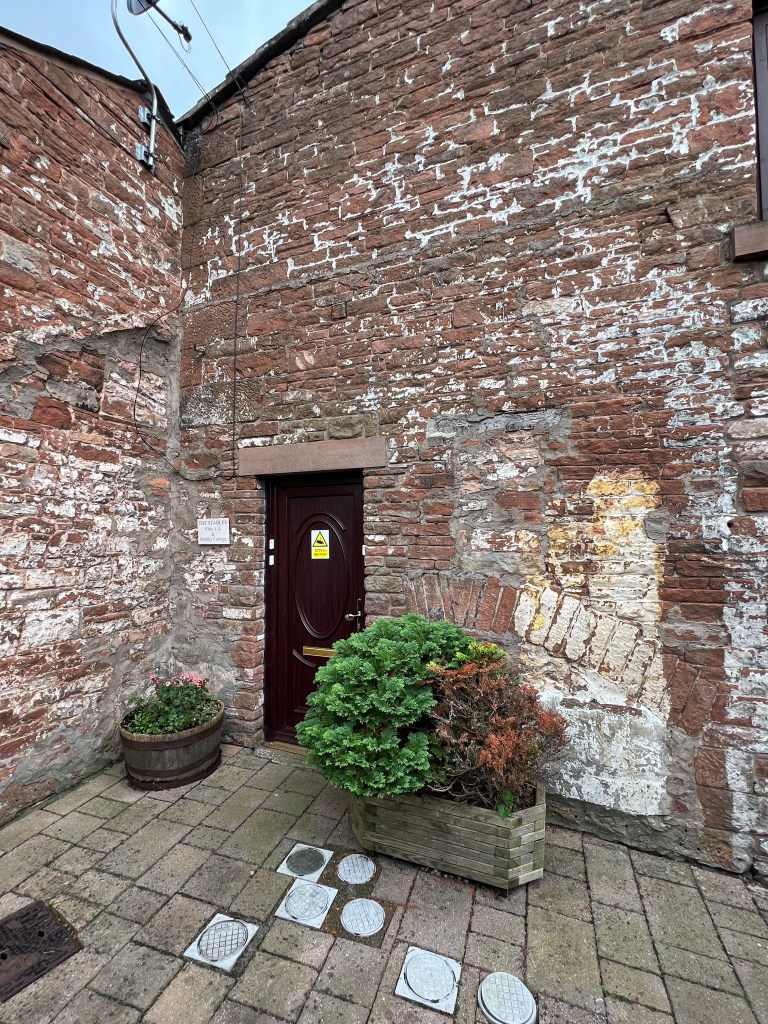
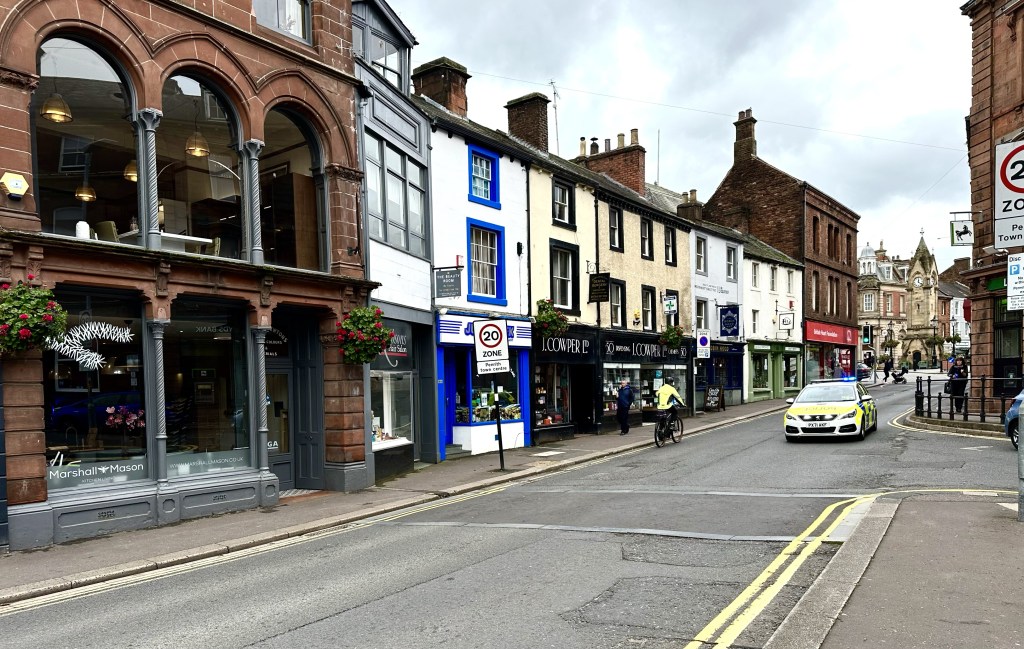
The rearrangement gave us a “bonus” day in Penrith to spend the beautiful, sunny day walking around. The town has wonderful history and amazing architecture. The cab driver said that the area had been part of Scotland three different times in history.
Bonnie Prince Charlie spent his last night in Penrith before the English finally captured and executed him.
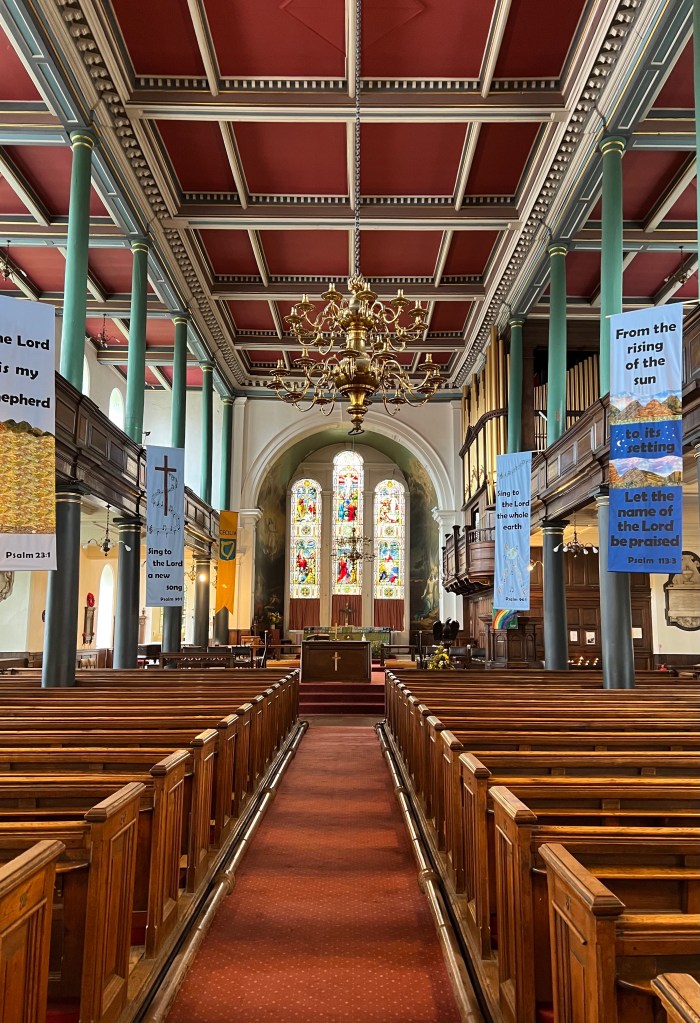
The 1500-year old parish church is beautiful with gravestones and memorial markers in the yard.
An antiquarian bookstore had two books we could not pass up: Becky’s leather-bound Wordsworth and Steve’s art book on the Glasgow Boys, impressionistic artists from the 1910 to 1930.

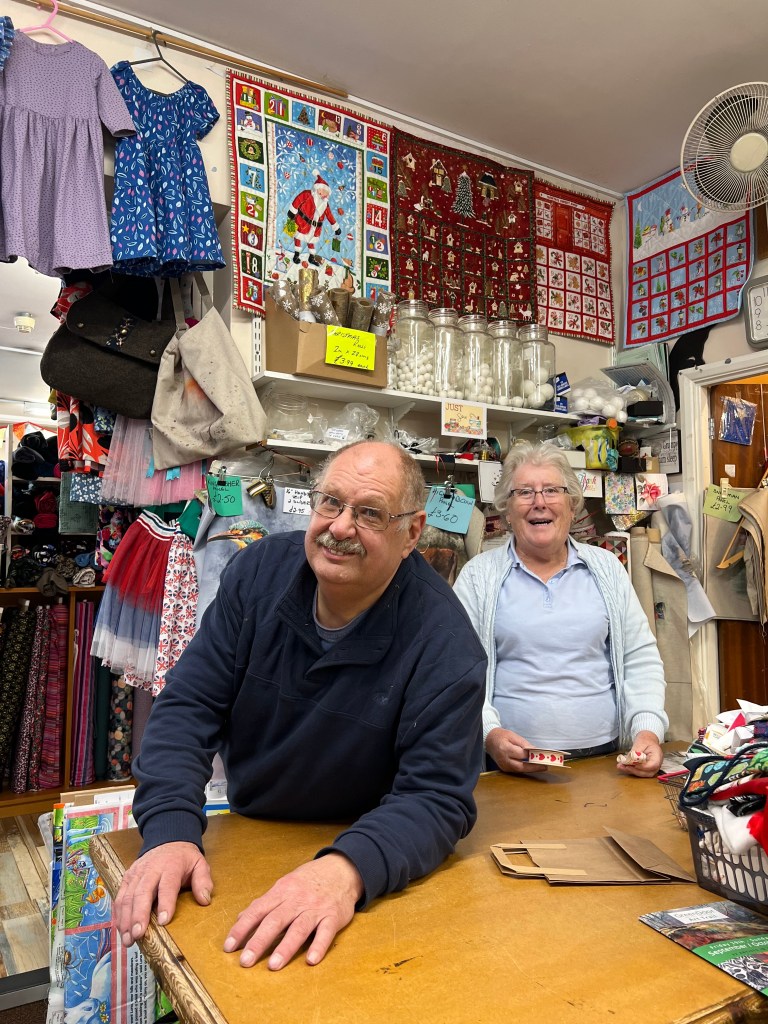
Becky has a hard time passing by a fabric store, and “Just Sew” in Penrith lured us both. We had a lively chat with owners about life and fabric. Although we had foresworn buying stuff, the recently acquired books and a few small pieces of English garden prints made their way to the Post Office.
Located cross the parking lot from the Premium Inn Hotel was a gigantic Sainbury’s Megastore. The hotel and megastore were built on what had been the sports field for the town. The taxi driver was not happy for the change of course. But we liked being able to buy grapes, bananas, and crackers for supper and croissants for breakfast.
Reorganizing our trains and hotel reservations around the impending work stoppage has been a major task. I thought I had it fixed until a message announced the cancellation of one train on route to Moreton-in-Marsh. So we decided just to go and see what would happen when we showed up at the rail station before 10:00 AM. The rail agent immediately changed our route to get us away from the cancelled train and go through Oxford. At Birmingham New Street, a train customer support person assisted to another person who was going to Oxford so we followed along.
On the new train, we did not have seat reservations. Becky found a seat while I stood with luggage because there was no room. I had two good conversations with fellow standers: a young man who was moving from Tasmania to Oxford while is wife was getting a doctorate in chemistry, and a soldier returning from two week vacation to his unit in Oxford.
 Tipps for Travel