September 12-15, 2023
31 Hours to Cambridge
Becky, Betsy, Jim, and Steve began a Great British Traveling Show on September 12 at the Asheville Airport. David dropped us off two hours ahead of 6:16 pm departure to Charlotte for an 11:00 flight to London Heathrow. Starting late in the day and air travel being what it is, we suspected delays. The plane actually left Asheville closer to 7:16 putting people with close connections in quite a lather. Our long layover in Charlotte was looking better already.
We actually had a sit-down meal at Summer House restaurant followed by a long casual stroll from terminal B to the far, far end of terminal D. Another delayed departure gave us time to charge devices and watch the airport button up for the night.
The Heathrow flight arrived in London about 11 am—nearly 7 hours in the air. The Boeing 777 was new and nice but, no surprise, a little tight on knee/leg room. We stood up and walked a bit to escape the constraint.
Jim and Betsy were traveling with Global Eurail passes from Interrailing, while Becky and I had Two Together Rail Passes from BritRail— each with their own set of rules and procedures. Jim masterminded our joint transport from Heathrow to Cambridge using the Elizabeth Line to Farringdon Station and to Cambridge via Thameslink train. Along the long walk (51 minutes) from plane to train, we followed signs and asked for directions a couple of times.
At the Thameslink station, we first landed on the South-going side, but needed to cross sides because Cambridge trains were North-going. A young man who commutes from St. Albans helped us with some of the intricacies of train schedules and connections.
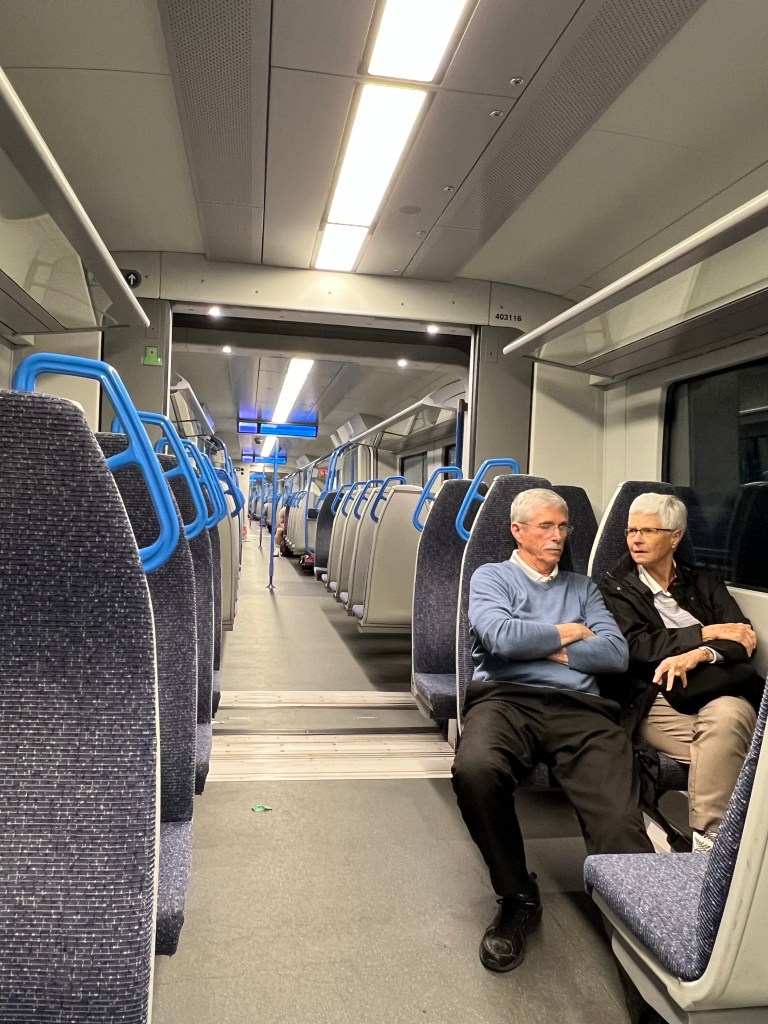
We had just missed the 1:45 train and had an hour to wait for the 2:45 train but it was delayed for another 20-30 minutes. Our patience was rewarded. Due to a “fault” on the track, our train by-passed most of its stops and went directly to Cambridge. An hour later we stepped off the train and walked to the spiffy Ibis hotel located just outside the station.
At 4 pm, jet-lag required coffee or tea, showers, and a restorative nap until 5:30. Having no agenda for the evening, we walked around and looked for an interesting ethnic restaurant. Station Road is a main road into Cambridge City Center so we walked about a mile looking for the just right place for supper, and we found a Bengali restaurant called Golpo.
The restaurant was practically empty at 6:30; we got the undivided attention of the maitre’d Hamesh who enticed us with his descriptions of various dishes. We had the recommended starter of Jhal Muri, a spicy puffed rice, accompanied by lentil balls in a cream sauce. For Bengali mains, Becky had butter chicken, Jim—marinated short ribs, Betsy—curry of mutton, and Steve—prawns in a mustard sauce with naan and rice. The flavors reminded us of similar Indian dishes, but with more subtly blended spices. Hamesh explained that the sauces were authentic Bengal recipes with different spice foundations: tomato or mustard or onion.
The owner offered us dessert which we refused, but, at his insistence, we enjoyed small complimentary glasses of sweet Bengal chai. What a lovely ending to a wonderful meal! We rated it in the top five meals we have ever eaten.
After walking a bit further toward town, we decided a good night’s rest was the best thing we could do to recover from our exhausting, but exciting 31-hour trip.
Wandering and Wondering in Cambridge
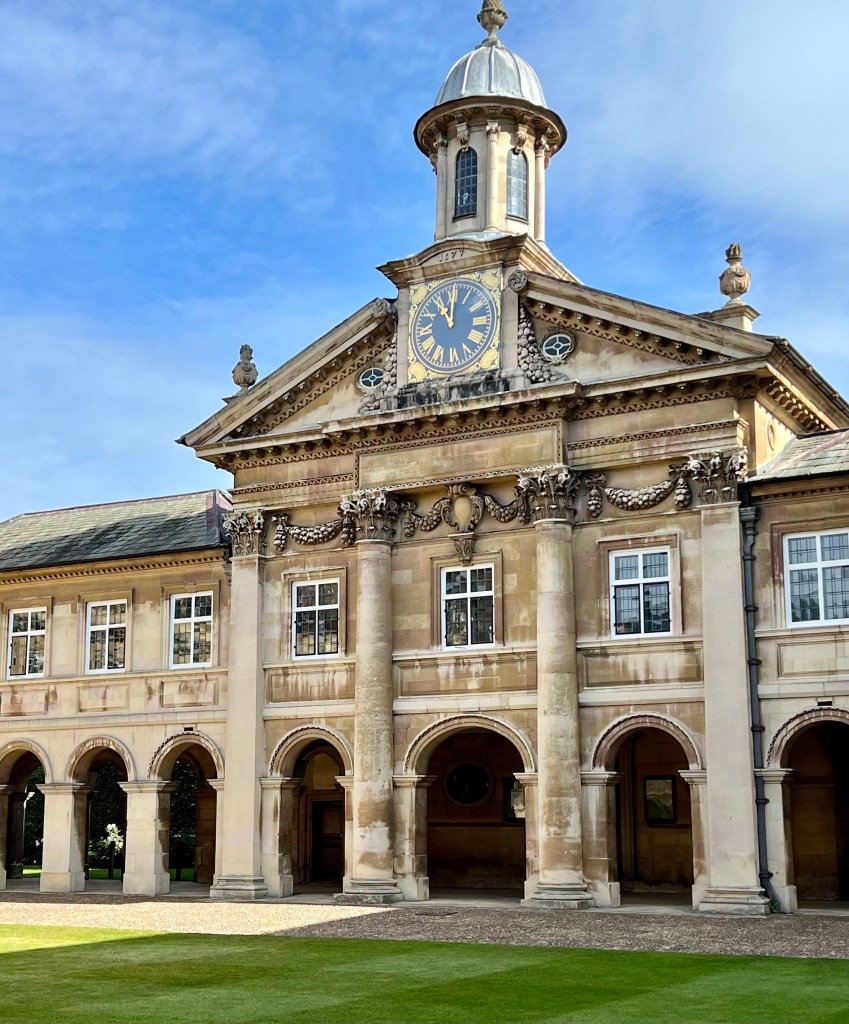
The next morning Becky and Steve were sound asleep at 9:15 when Betsy knocked softly on the door. Our “excuse?” We were totally exhausted and had jet lag. Of course, Robsons were just as exhausted and just as jet lagged. Wandering around Cambridge was the order of the day to see all that we could see on a beautiful, sunny day. Walking into town, we passed Emmanuel College which was open to the public. We we able to enter the ancient buildings and walk around, but not on, the beautiful lawn.
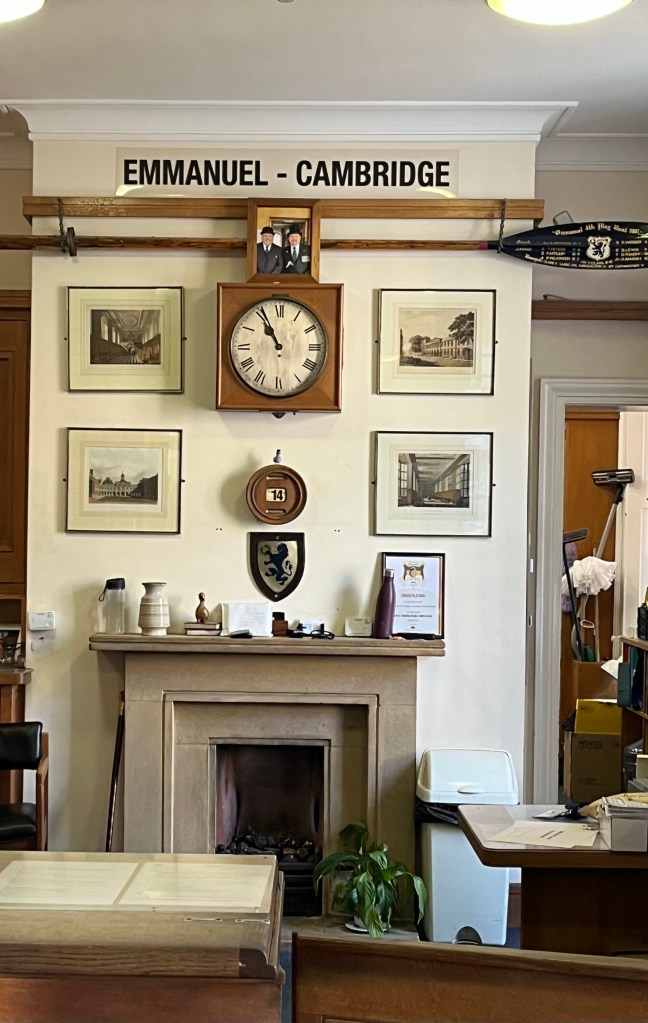
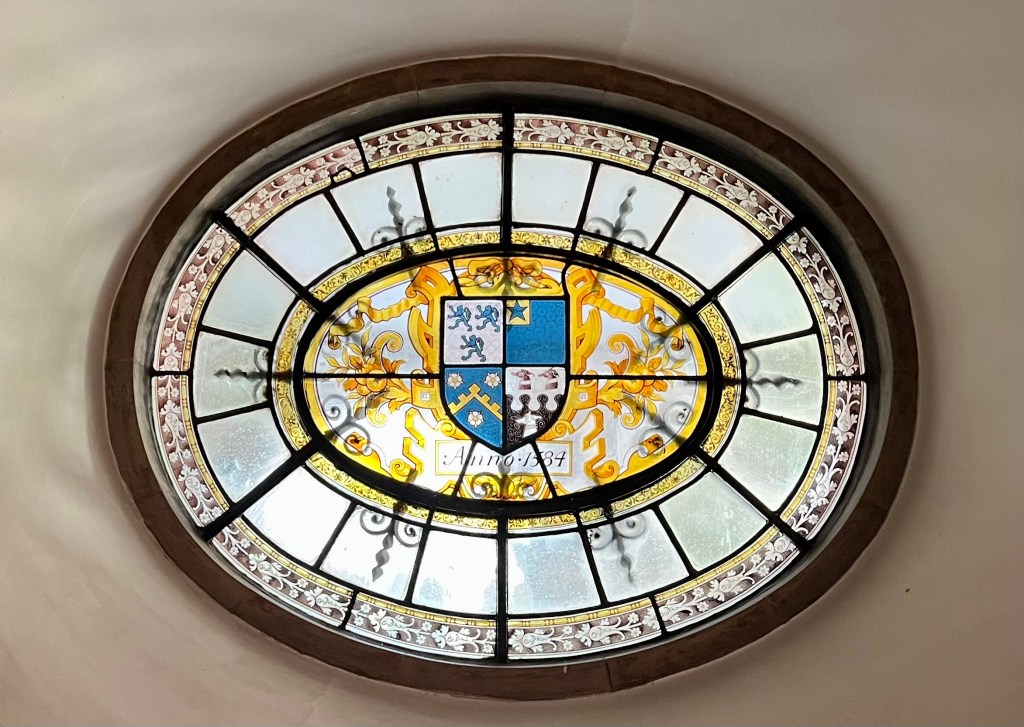
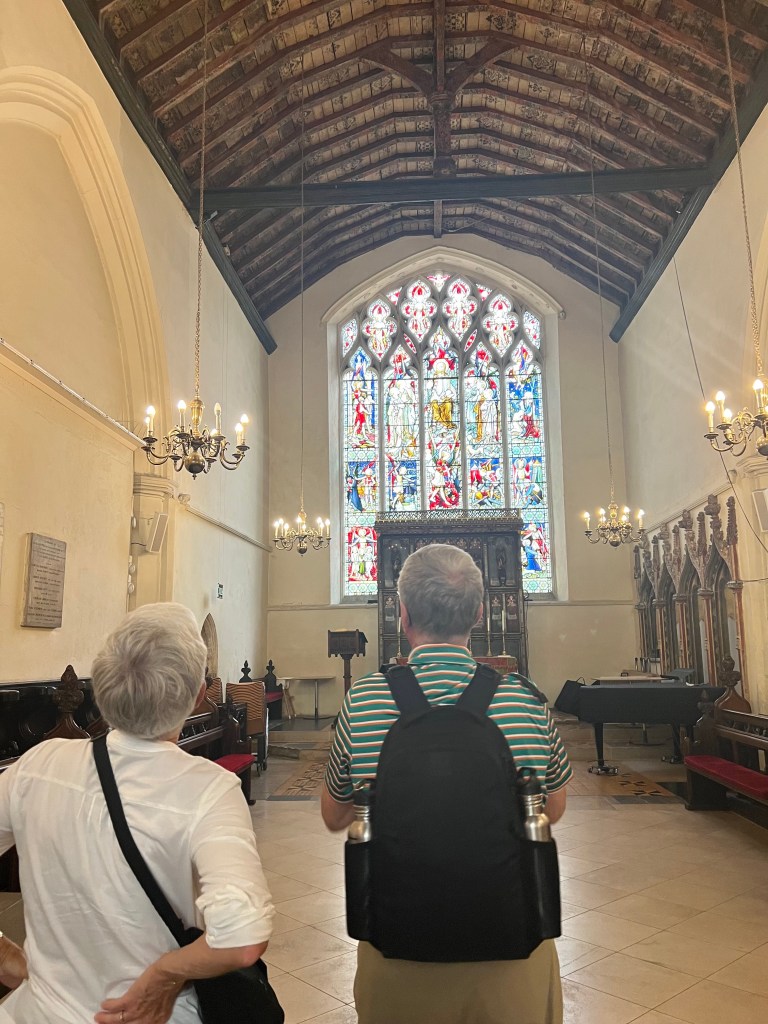
The small and beautiful chapel is framed by 16 stained-glass portraits of important people in the history of the college including John Harvard and Thomas Cranmer. We stopped in the Dining Hall where lunch was being set for a meeting in college. It is small, serene, and not as grand as the Great Hall in Harry Potter.
Emmanuel College is a model of the proper Cambridge college which brought up many questions. Who are the students who enroll in Cambridge? How many students are in each college? Do all the students in a college study the same subject? Do the students work only with the other students in that college. Do students attend lectures as part of their study or do they only meet with their professors in small groups as we see on television programs? Lots of wondering.
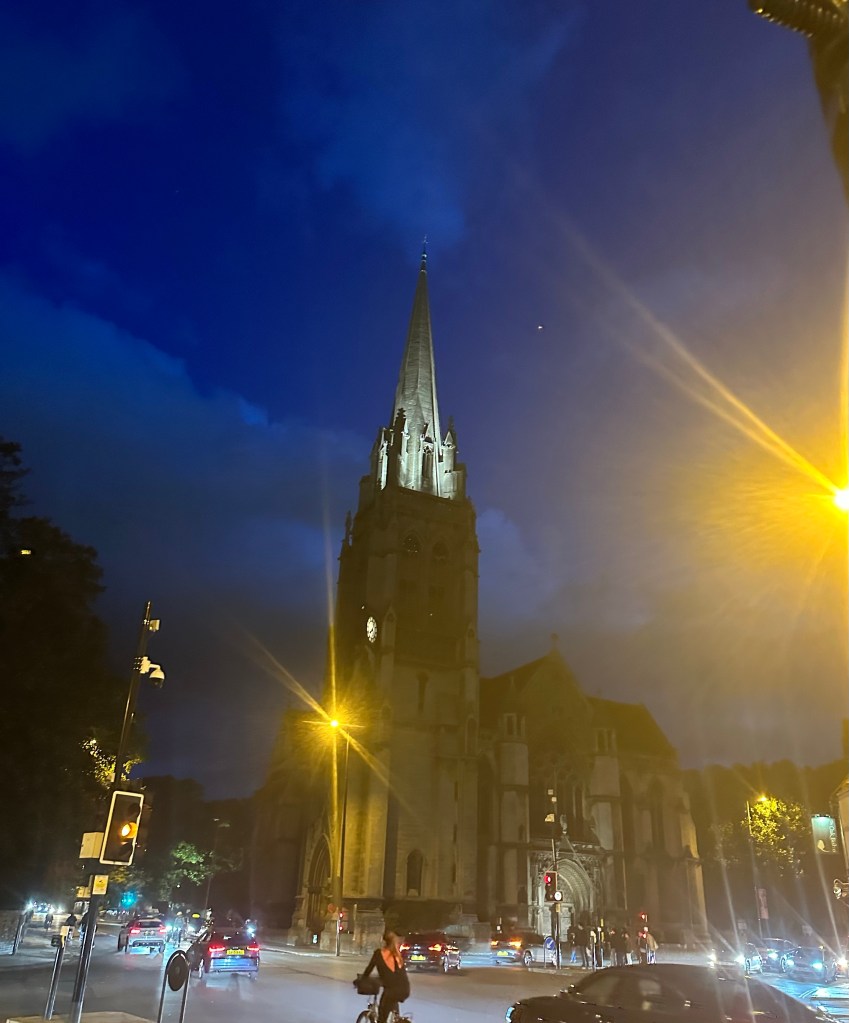
Passing St. Michael’s Coffee shop, the need for more caffeine was recognized, and St. Michael made mighty fine joe. The coffee shop is attached to Greater St. Mary’s church also called GSM. The church was rechristened “Greater” making another nearby St. Mary’s Church the “Lesser.”
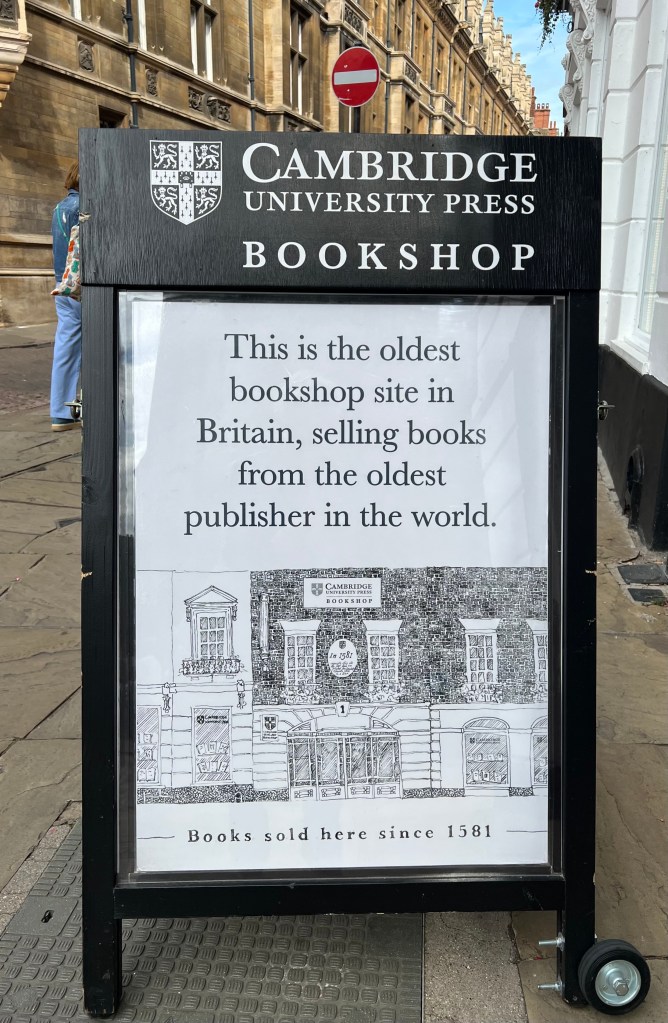

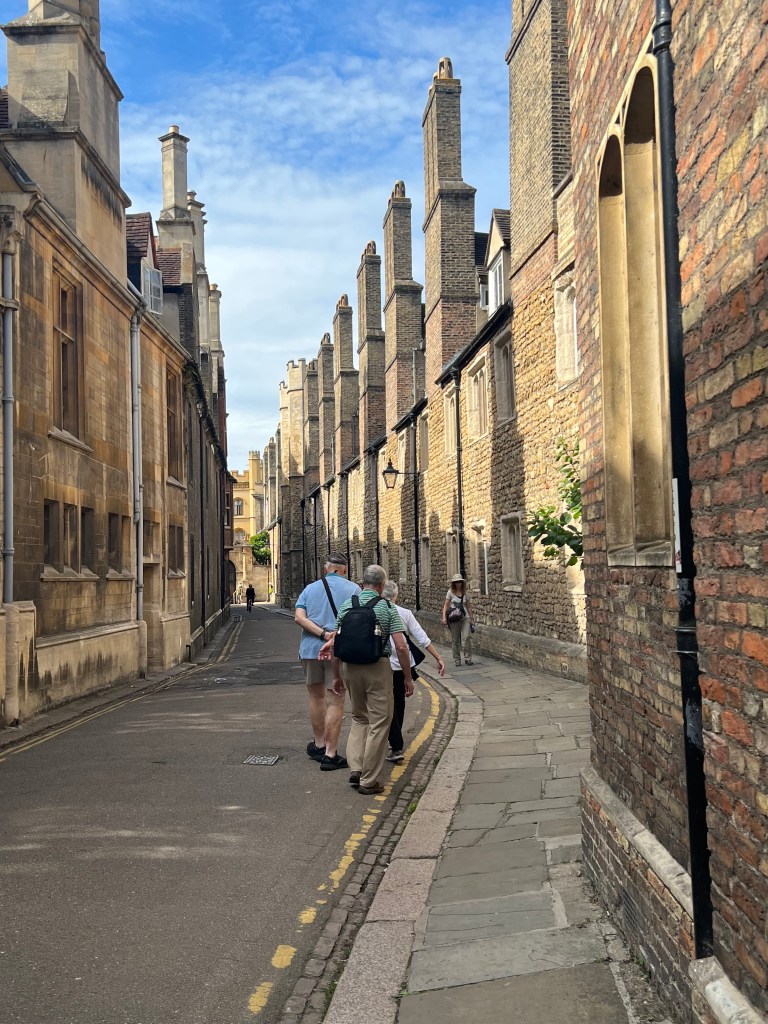
Fortified, we continued along the college trail passing and taking surreptitious looks inside since most of them were closed to visitors. King’s College and its famous Chapel were undergoing extensive restoration of the front gate and roof of the chapel where solar panels are being installed.
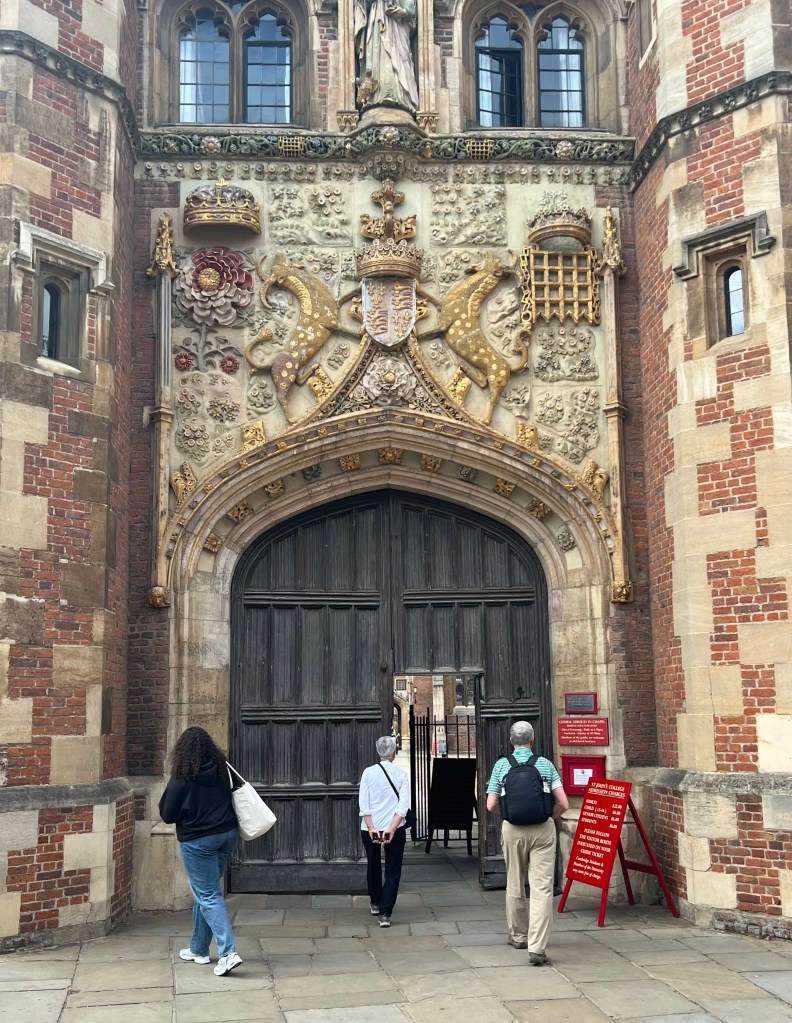
Trinity and St. John’s were also closed to visitors.
Betsy’s hope for the day was to visit the Wren Library, which is located at Trinity College, and see its treasure trove of books and literary ephemera. She was told the library was also closed, but signs said differently and directed us along narrow passages to the back entrance.
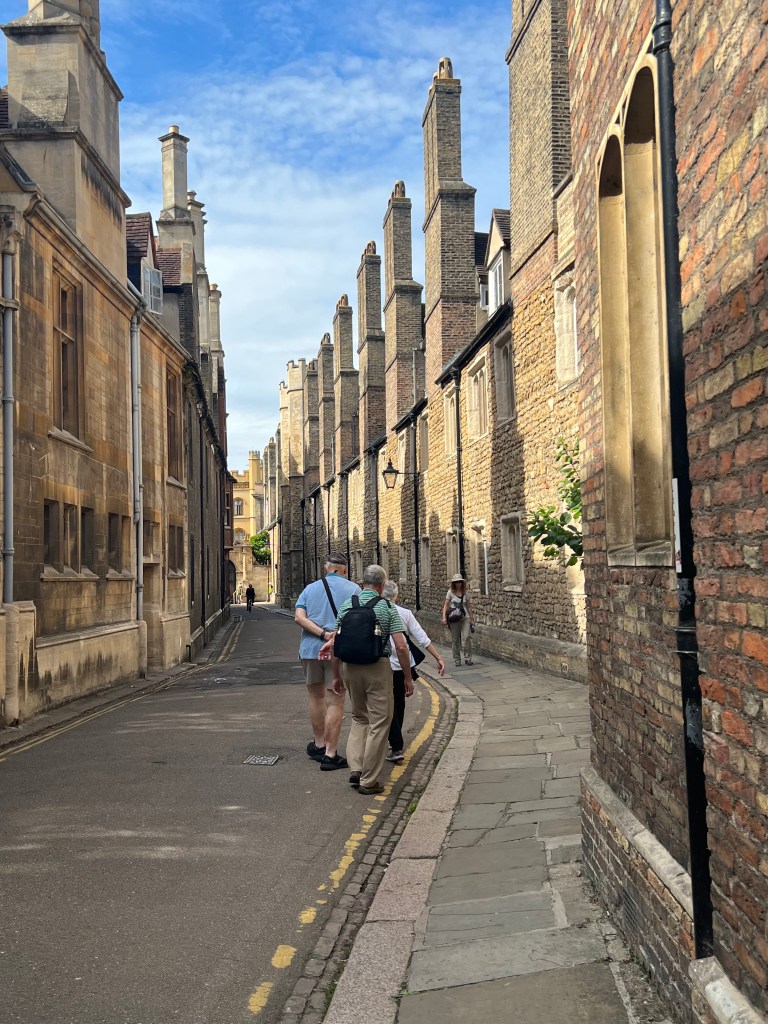
Because Wren Library is only open from 12 until 2, about 60+ people were already queued. Becky and Betsy got in line, while Jim and I went foraging at the Mark and Spencer Food Hall. Jim’s wish for the day was to picnic on the Backs referring to the beautiful green spaces behind the colleges along the River Cam. Our return was perfectly timed. Jim joined the line at 1:30, while I occupied a bench with a view of the river and the makings of a fine picnic.
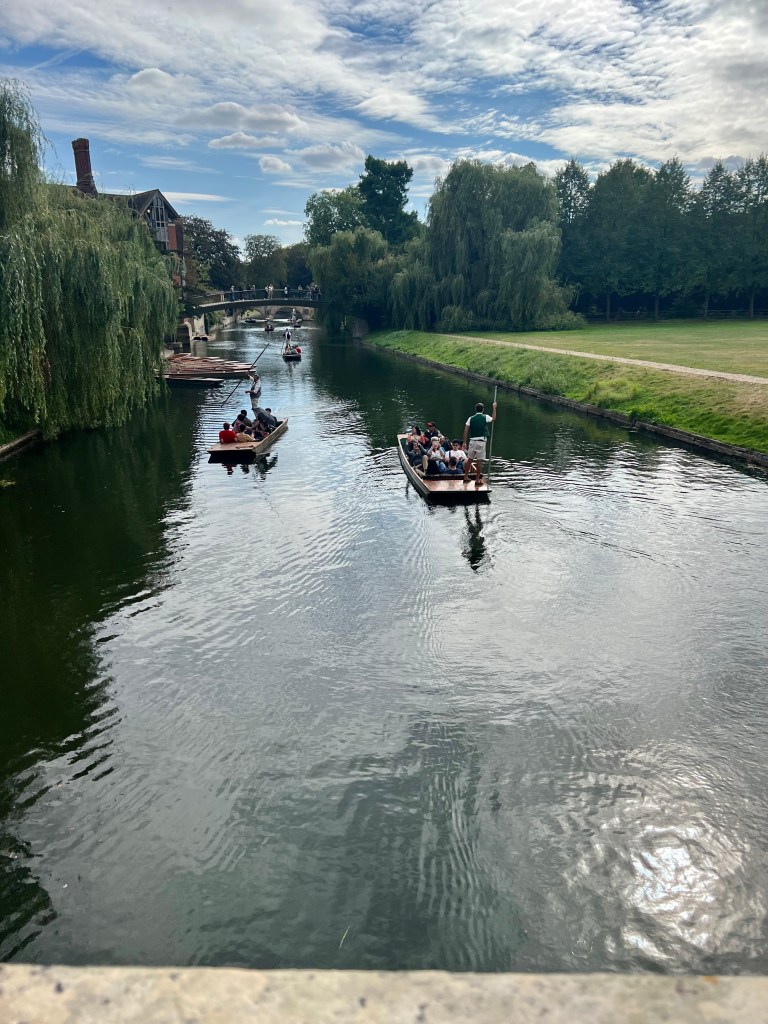
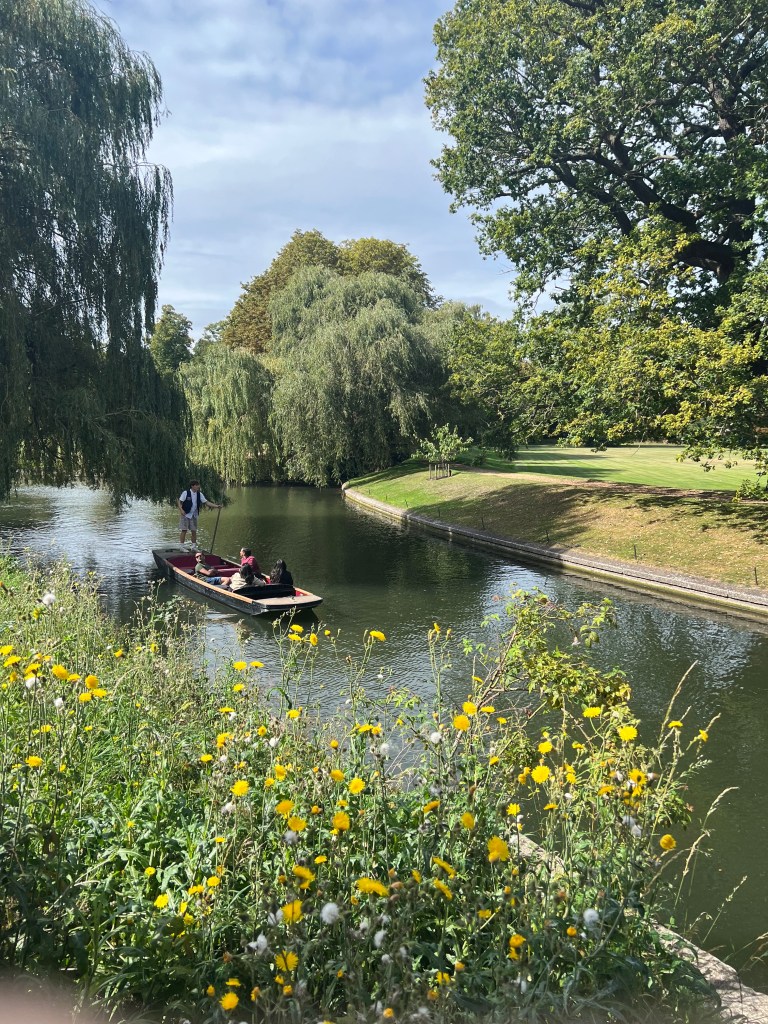
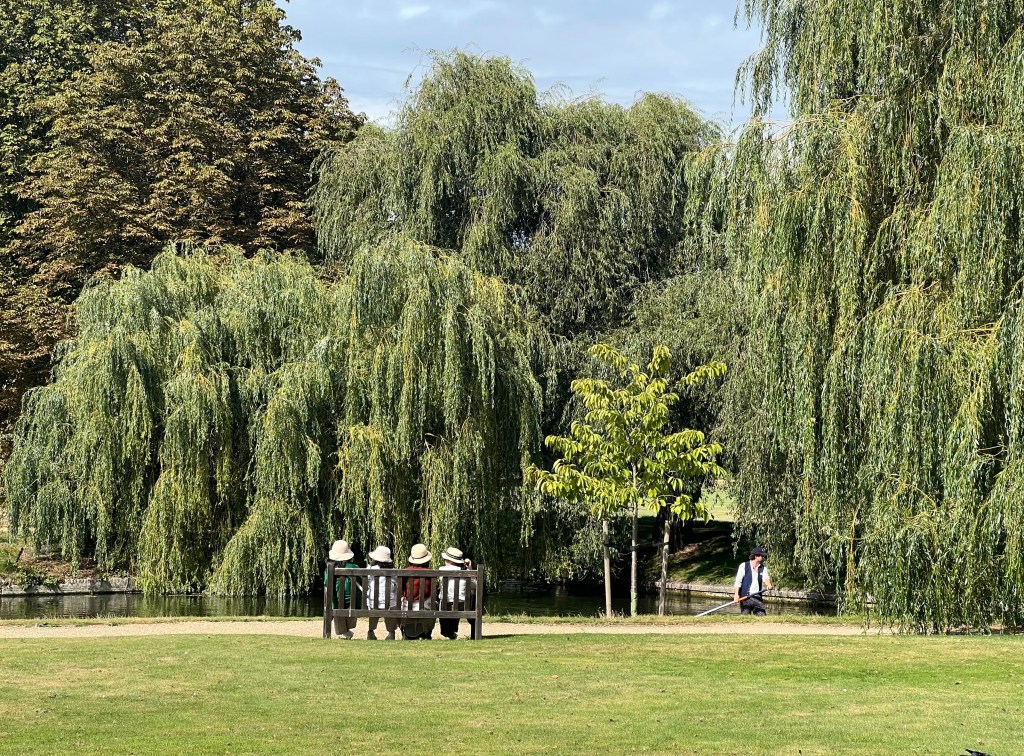
Two young women asked if they could co-occupy the bench. I agreed with the understanding that my co-picnickers would be returning by 2:00. They were students on a course from Germany and had a special appointment at 2:00 with someone in the library.
I was unsure of the focus of their field trip, but studying the history of religion may have brought them to cathedrals and churches in Canterbury, London, St. Albans, Cambridge and lastly Ely. Since we were in St. Albans last Christmas, we had visited that Cathedral for tours and services which led a lively conversation about it.

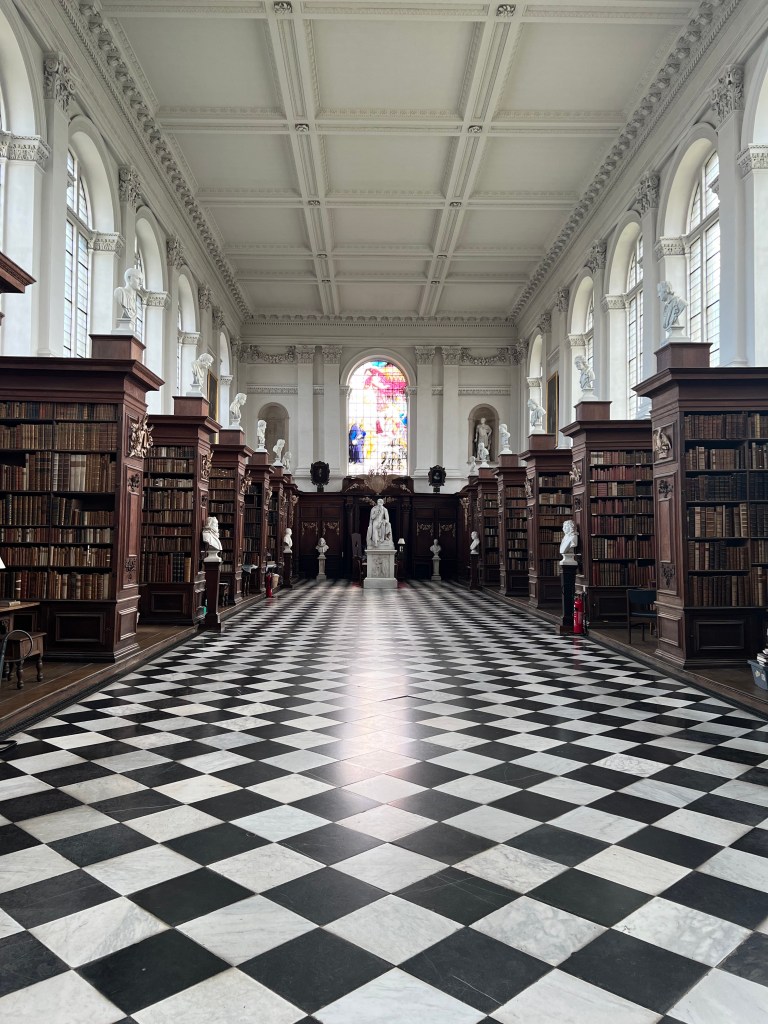
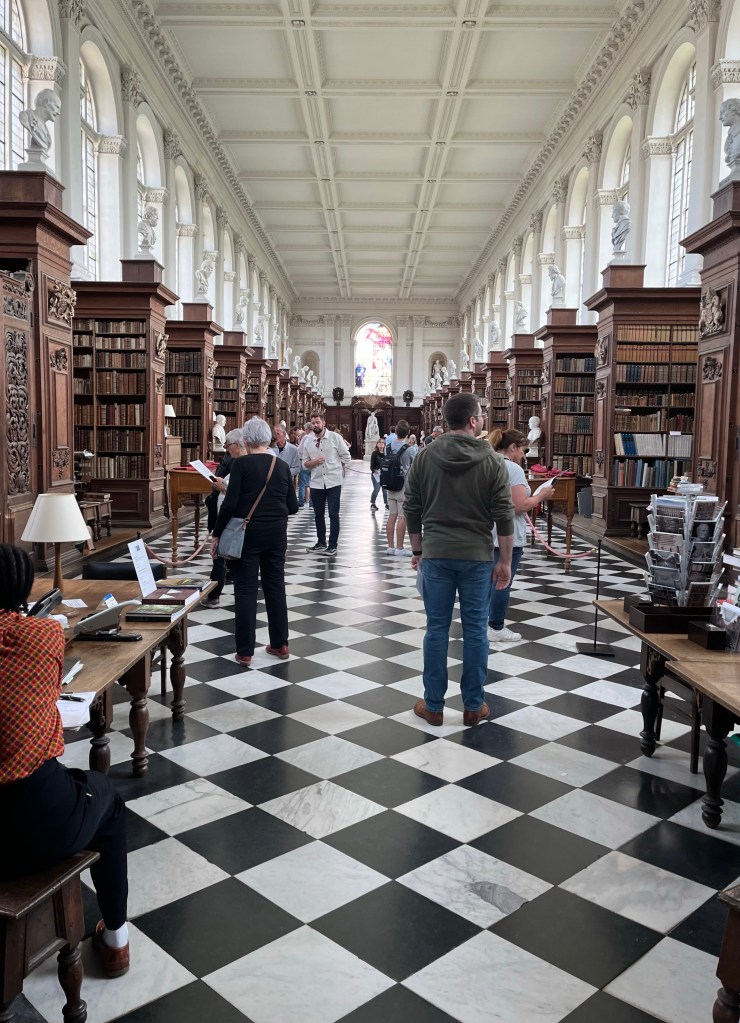
At 1:55 they saw classmates assembling just as Betsy, Becky and Jim came out of the library heads full of the amazing things they saw. They were particularly taken by the first edition of “Winnie the Pooh” and a handwritten note from Milne in tiny script. In fine Pooh fashion, their rumbly bellies were hungry for tasty sandwiches, but no “hunny.”
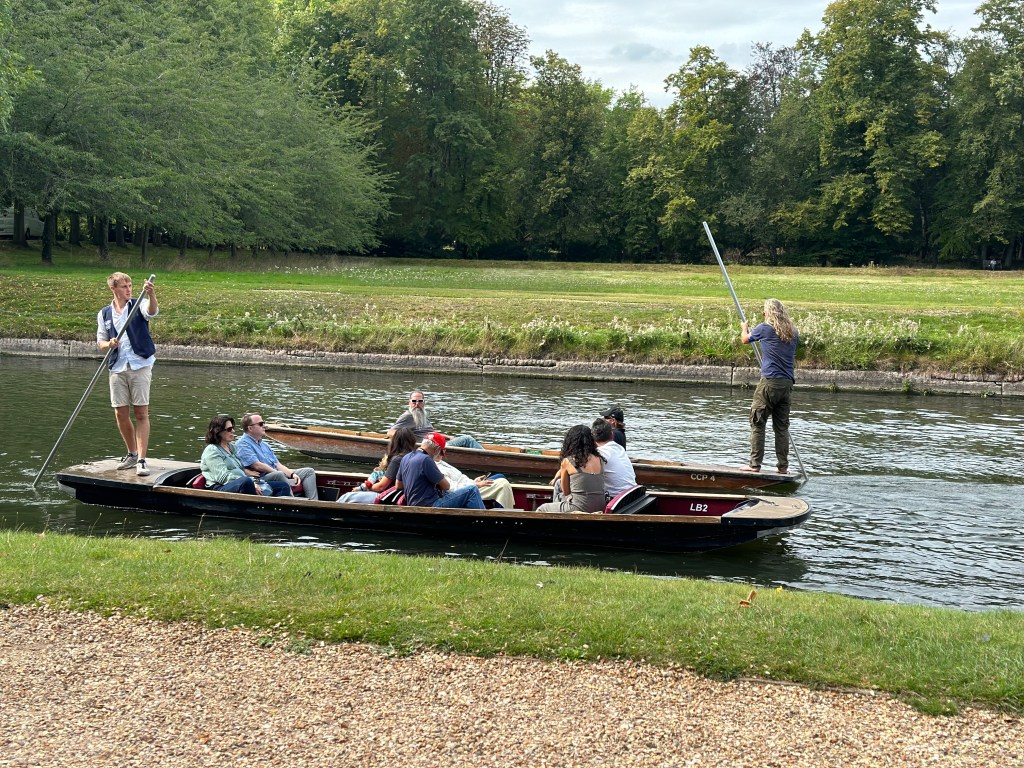
We sat on our bench, ate our lunches, and on a sunny afternoon lazily we gazed out at the Backs and watched the River Cam flow past us. Very Pooh. The river was a never ending show of boats full of tourists, families, and some rowdy teenagers trying to tump the flat-bottomed boat. The regular punters have great strength and stability in all conditions. The amateur attempts at punting just point out how good the real punters are.
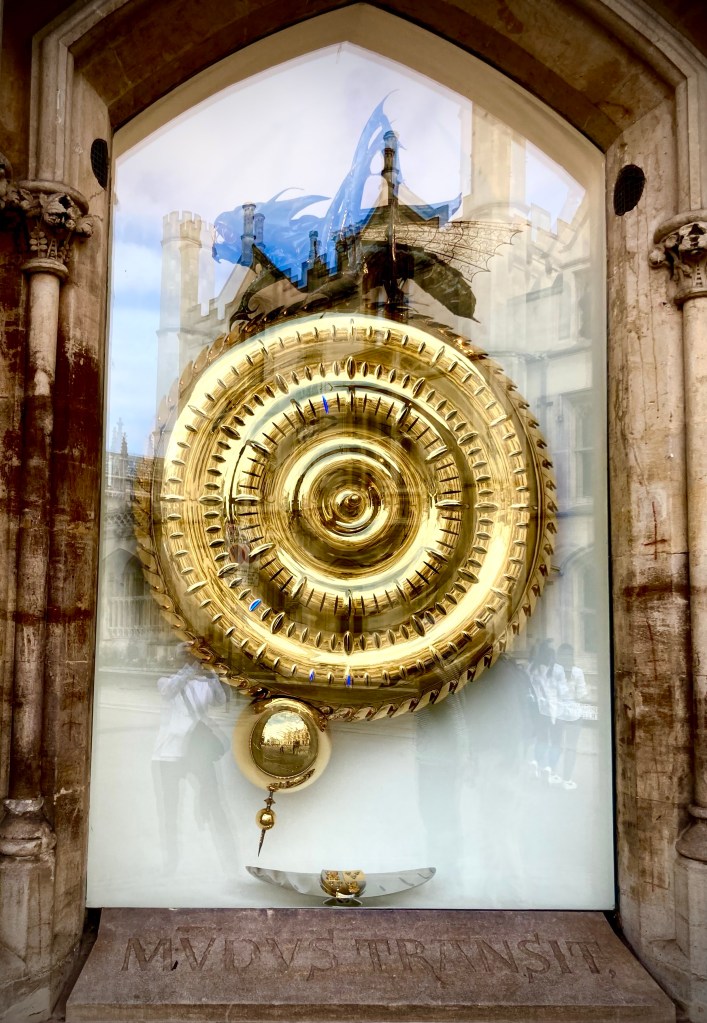
After wandering past ancient colleges all morning, we walked through the Cambridge commercial center stopping at the bank for pounds. We also saw the astronomical clock with a mechanical cricket pacing time which was dedicated by Stephen Hawking.
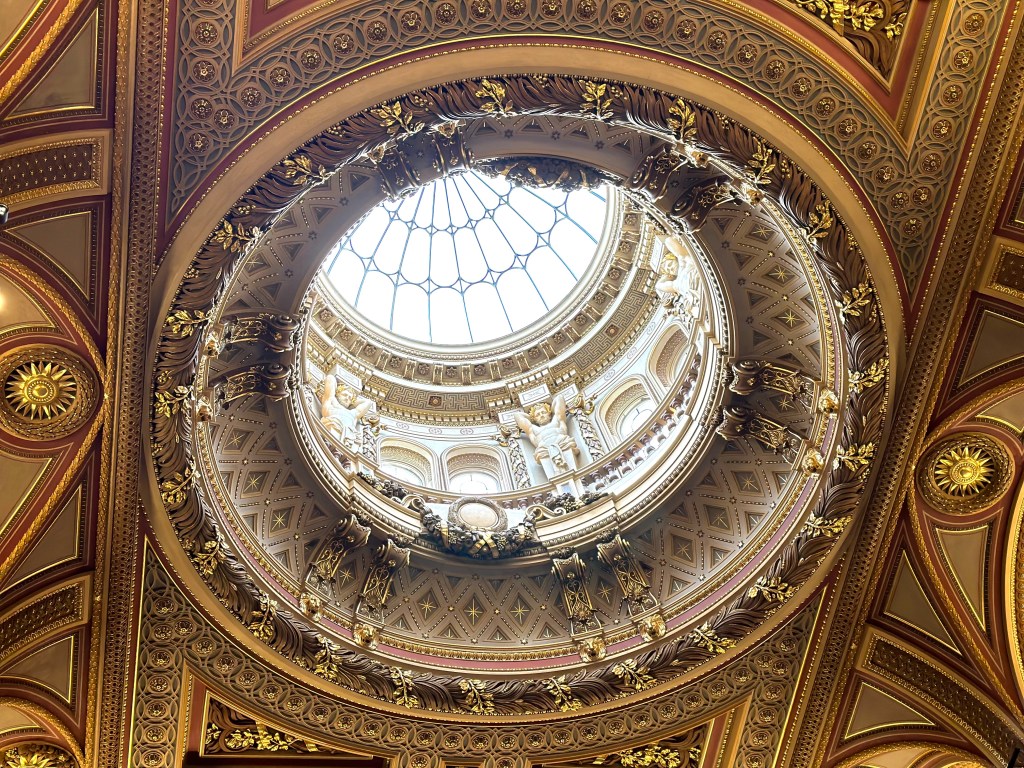
One last destination, the Fitzwilliam Museum, was left for the day. The Fitzwilliam was founded with an endowment of £100,000 given by the Fitzwilliam family to create a museum that represented the best knowledge in science and the finest works of art—a noble cause. Unfortunately the fortune was earned in a number of ways but largely slave trade. Another sad legacy is the Museum’s role in sustaining a culture in which slavery was justified by avarice, commerce, and privilege. The Museum is attempting to address this history in their programming.
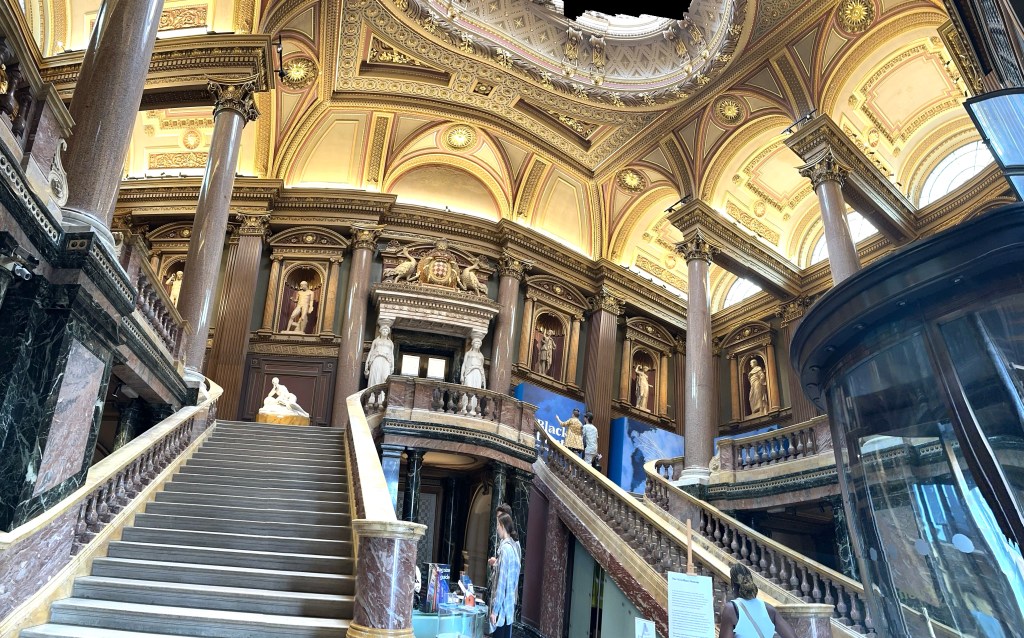
A very large exhibit entitled “Black Atlantic” detailed the origins of slave trade, England’s role, and how the bogus science of eugenics and pictorial representation of Africans as savage animals rather then human beings were used as rationale for slavery. Most of our time was spent with this special exhibit. We in the US are also grappling with the consequences of the slave trade, and unfortunately old racist idea still exist.
When we reached the hotel, we had walked between 15000 and 20000 steps and were ready for an afternoon rest. At 6:30, we walked in a different direction through a huge, very modern apartment complex called Railyard Flats and Apartments built adjacent to the Rail Station for an easy hour commute to London.
Jim and Becky went into Mina’s Steakhouse to assesss the menu and found out that it was named best Cambridge restaurant for 2023. The menu included reasonably priced burgers and ala carte choices and a high price menu such as an Everything Burger with beef, chicken, egg, etc. (£69.95) and a selection of very expensive steaks and chops.
With the Everything Burger came a challenge. If you could eat the whole thing in 15 minutes according to rules, they would reward you £200. Despite this being a disgusting idea, the two young men seated beside us each consumed one but without engaging in the challenge.
Back at the hotel, we played rummy, talked about the day just past and planned the trip to Ely Cathedral. We finished the night with a celebratory oatmeal raisin cookie and trundled off to bed.
Saints, Fens and Eels of Ely
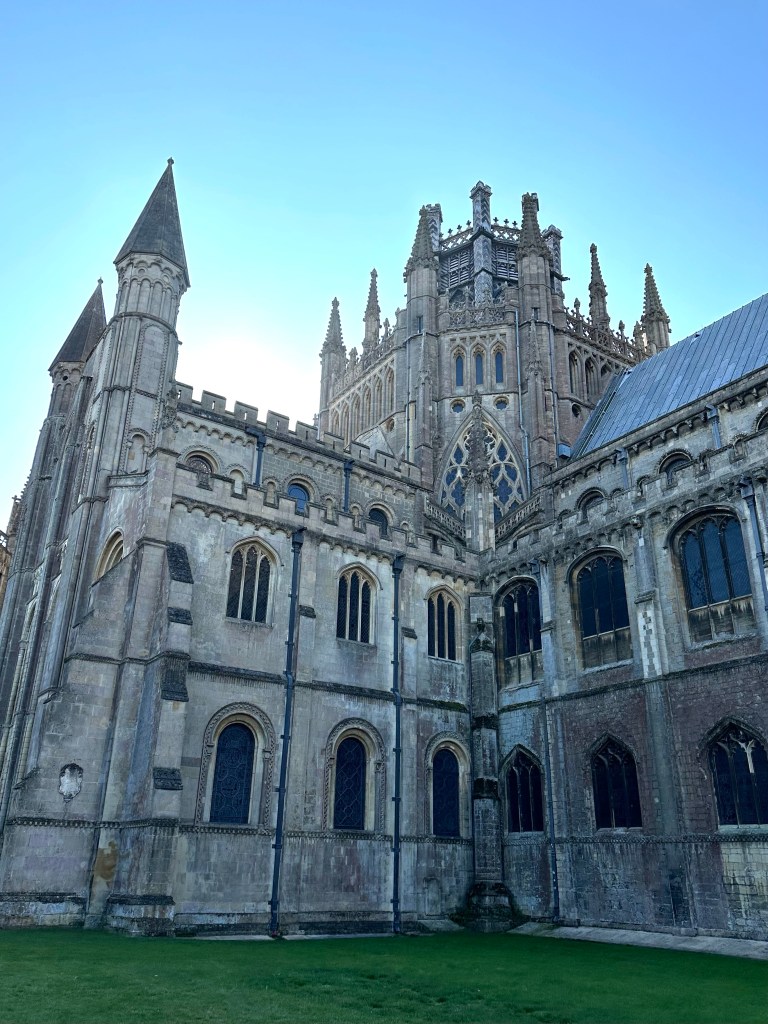
Describing the grandness and beauty of Ely Cathedral in words is impossible. Even the best photos are dim compared to the experience of standing in this immense structure.
For almost 1500 years from Anglo Saxon and Norman times, the site has been a sacred place of worship. The magnificent stained glass and carving illustrating bible stories, saints, and symbols of hope and illumination. A link to Ely Cathedral
https://www.elycathedral.org/about
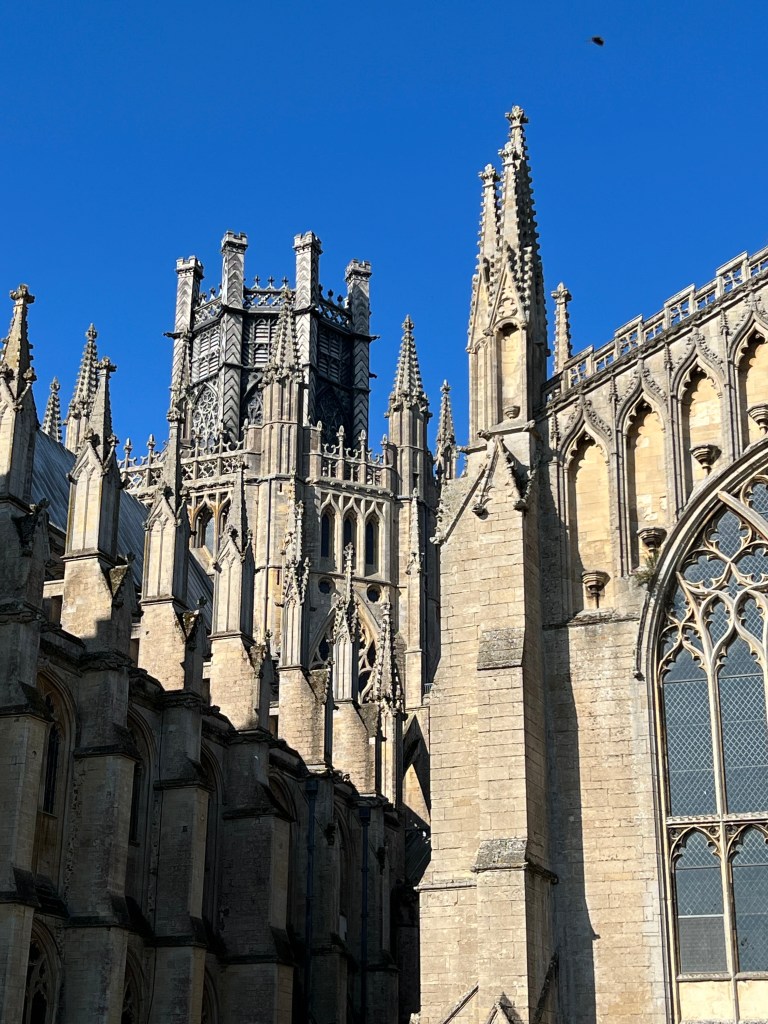
Our wonderful docent had been headmaster of the cathedral school for many years and a scholar of cathedral architecture. His description of the history of the cathedral and its architecture was amazing: a story of construction, collapse, reengineering, vandalism, and profound beauty showing aspects of Anglo-Saxon, Norman, Gothic, Painted Gothic, English Perpendicular architecture.


Equally compelling were the stories of the people such as Queen Etheldreda who established the first monastery on the site, political intrigue, and heroic and cowardly acts. Our guide brought to life the architects, builders, and craftsmen who created and preserved it through the ages.
The docent called attention to many of the symbols and meanings embedded in the construction and design of the building. Since the Cathedral was constructed on a island surrounded by marsh, called the Fens, it stands high and can be seen for miles and miles. Many “water” symbols are included in the decorations such as carvings of boats which were the primary mode of transport in the watery territory. The “nave” of the Cathdral is also a water reverence (as in “navy”) The Cathedral is referred to as the “Ship of the Fens” offering a voyage to a safe place for parishioners who had a hard life on earth.
After the tour, we had a quick Thai lunch then walked across the street to the local Ely Museum. Much of the museum was devoted to the history of the Fens which provided the economic base for the region. The Fen dwellers cut peat bricks from the marsh for heat, they caught and sold the eels that lived in the marsh, they used boats for transportation between the islands. In fact the building of the Cathedral was partially paid by selling eels.
Eventually, the Fens were drained (by an engineer from the Netherlands), sold to the wealthy financiers who paid for the drainage. They then claimed the land as valuable and fertile farm land displacing the native Fen people and their way of life despite their protests and efforts of sabotage.
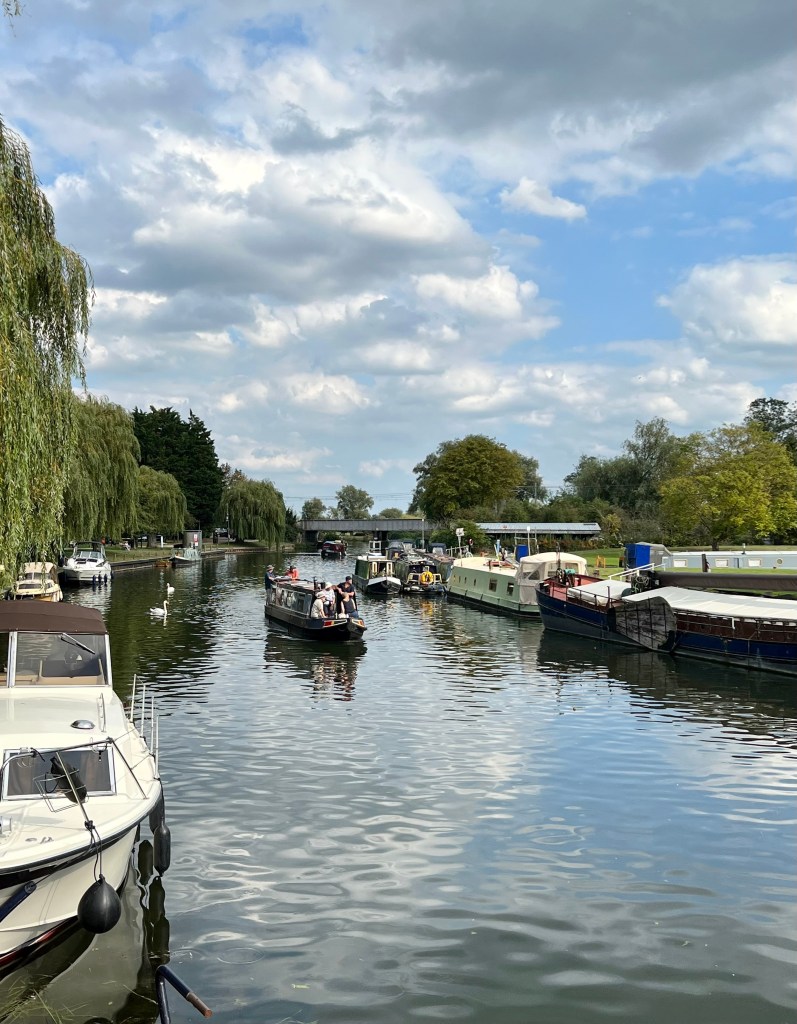
Our stroll continued down to river which was constructed during Fens drainage. It was the home to dozens of long boats and smaller boats. About 3:00 we headed to the train station for 13 minute ride back to Cambridge, an afternoon nap, supper, and a game of Quiddler. The supper was at a proper pub with fish and chips and local beers and ciders, a wonderful English repast.
After the card game, we celebrated our time in Cambridge with Eccles buns, sweet pastries filled with currants, which we had bought at the open market in Ely. A fitting end to three days in Cambridge for the Robsons who are off to York, Edinburgh, and Glasgow for 10 days of adventure. Becky and I are staying around Cambridge for two more days of wandering.
 Tipps for Travel