Time in Stockholm was divided between two days before Helsinki and four days after Estonia. We spent those first two days recovering from the long, exhausting bus and train trips from Oslo. Due to rail repair, we had to be up by 6:00, at the alternate bus by 7 am, transfer to the train in Karlstadt, and finish the 8 hour trip by rail. We both had coughs and head colds by the time we got to Stockholm.
GETTING TO KNOW STOCKHOlM. We arrived at the Centralen Station and walked three blocks to our hotel, later realizing a one-block route went through the bus station. The Comfort Hotel Express is only steps away from bus, train, subway, and tram connections.
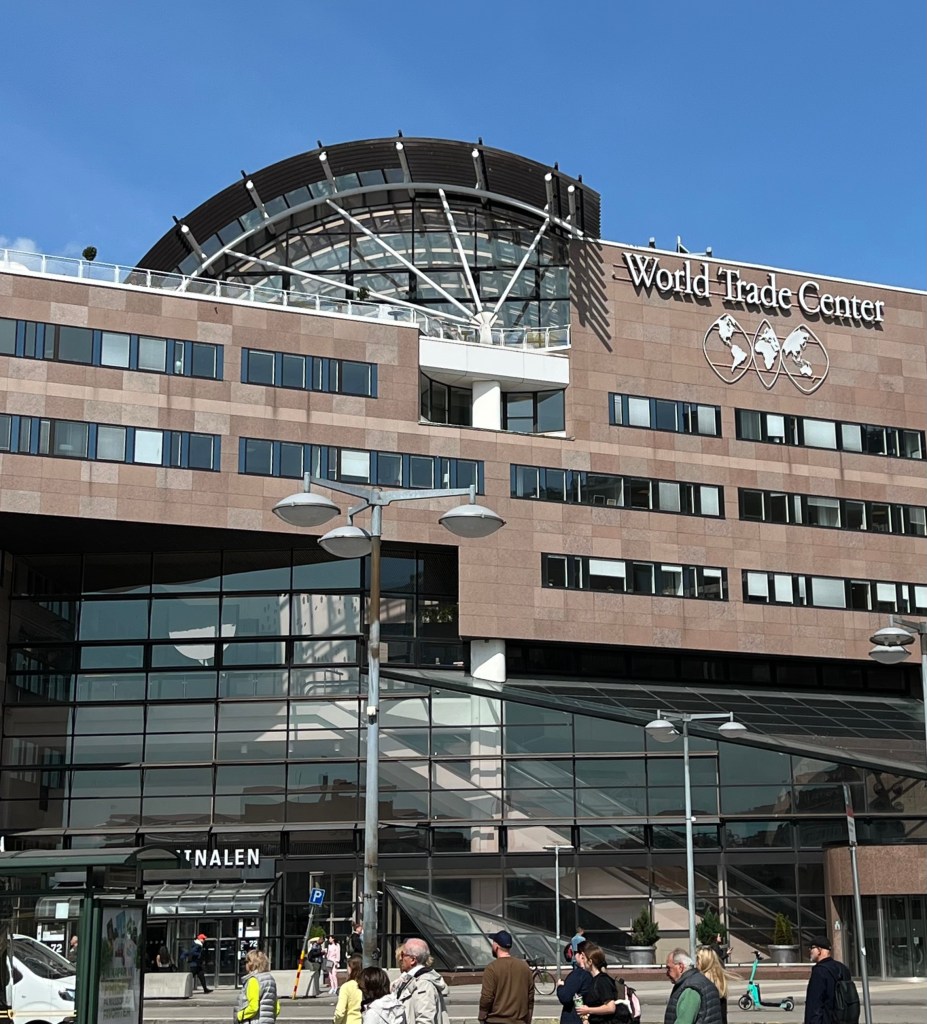
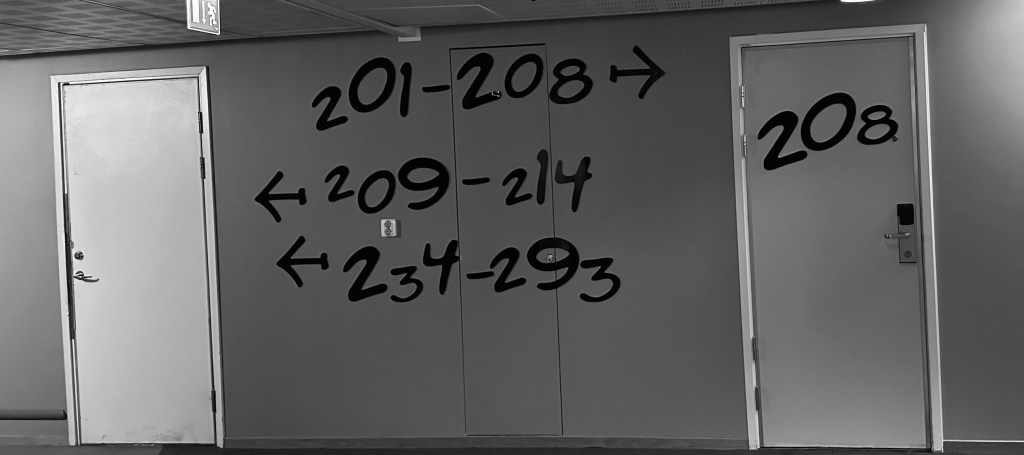
The hotel is a reconfigured space within the World Trade Center designed for conference attendees and tourists. The halls are a maze with a numbering system designed to confuse. We requested Comfort Express “upgrade” our room to “handicapped” which gave us considerable more floor space. We seldom trade on our aging bodies, but this made the room way more “comfort”able.
Hop On Hop Off Buses (HOHO) are sometimes a good way to get a city orientation. We saw HOHOs on the street in Stockholm but we could not find where they stopped so we could Hop. When finally we caught a HOHO, the driver trainee and supervisor delivered us to an official stop where we began the hour tour.
Stockholm has two Red Bus HOHO Companies which causes some confusion. We bought tickets on Stromma HOHO but had a map from City HOHO with different locations and directions. Tourist literature claimed the two companies cooperate with each other, but that is not what we saw.
We walked around the neighborhood looking for healthy, reasonably priced places to eat, finding a grocery market, identifying an Apoteek, etc. Tribowl, a small cafe close to the hotel, serves healthy, mostly vegetarian bowls perfect for lunch. We chatted up the staff and promised to return!
ABBA. Rest was the afternoon prescription for Becky. I headed for the ABBA museum with interactive displays of music, video, interviews, diaries, photos, gold records, many other awards, plus costumes, costumes, costumes.

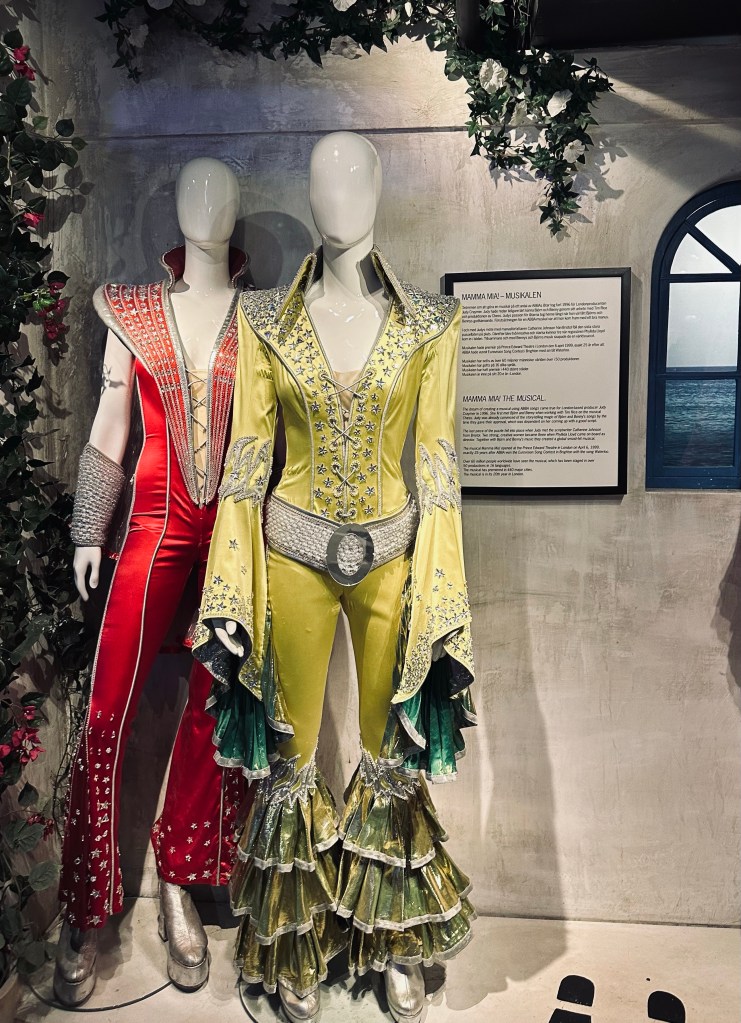
Everything ABBA Museum allows fans to relive the quartet’s rise from Eurovision winners to worldwide superstars. If you are brave enough, you can step into a sound booth for a singalong tryout or onto a stage to dance-along with ABBA projections. Great, silly ABBA fun for 2 hours and $30.
After ABBA, I waited 30 minutes for a Stromma bus with my Stromma pass, but the Stromma driver refused to let me on and shooed me away. When the City bus came by, it took me to end of line at Central Station without question.
FERRY TO HELSINKI. Our main task for Day Two was getting to the the ferry on time. Stockholm, a major port, has three huge passenger docks quite a distance from city Center. We needed to get to the right terminal in plenty of time because ferries wait for no one. The folks at the TI seemed confused about which terminal: not the Viking dock, not the Riga Dock, yes the Helsinki and Tallinn dock. The Metro subway people understood exactly what we wanted and how to get there by subway and bus without walking miles and miles.
The only major complaint we have had with accommodations was the first overnight ferry which was a tiny interior room with bunk beds on a deck below the cars and above the engines. Neither of us was willing to climb up on an unsteady ladder to sleep four/five feet off the floor, so we pulled the upper mattress down and took turns not-sleeping-well on the hard pallet.
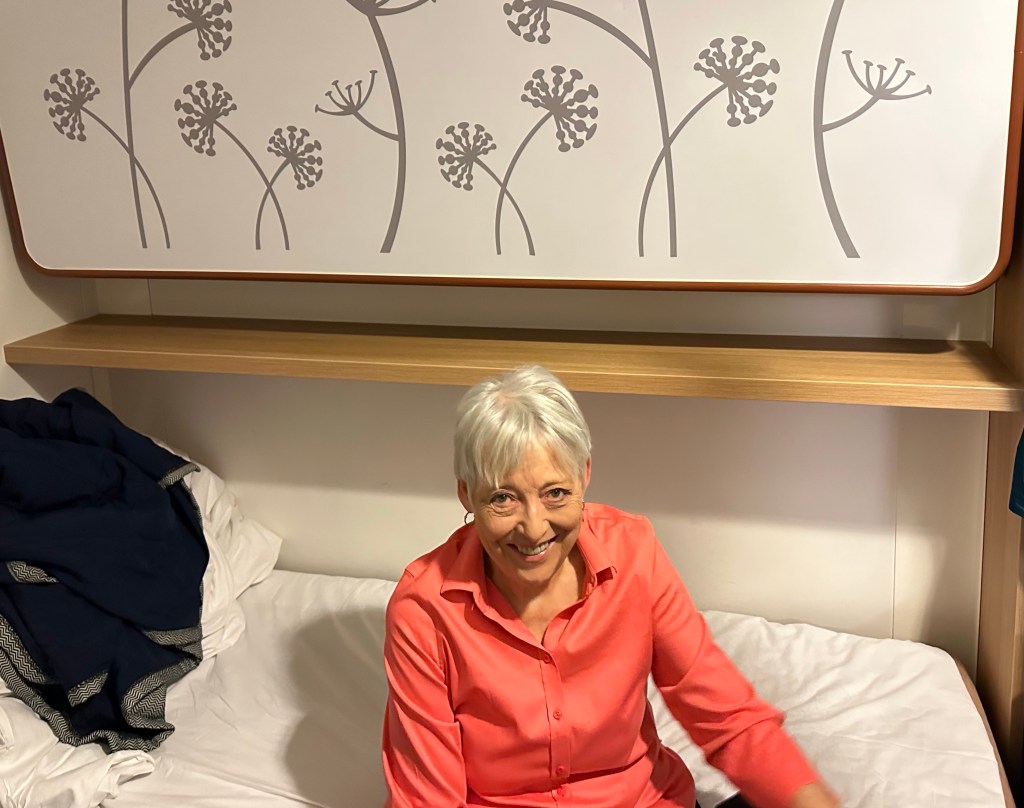
We survived, but we also complained. Interrail assured us that our return trip to Stockholm would be better.
We learned a lot about Stockholm in two days which will make our return so much easier. We will be back in the same hotel and room, and we have a better sense of the transit system so we can focus on what to see.
RETURN TO STOCKHOLM SEVEN DAYS LATER. After an easy morning in Tallinn, we took a Bolt ride costing only 5 Euros to the ferry terminal. Bolt or Wolt is the Scandinavian equivalent of Uber, Lyft, Uber Eats, and every other food delivery company. Bolt deliverers are everywhere on bicycles, standing scooters, and electric tricycles with warming boxes strapped on their backs. In Helsinki and Tallinn, we saw fewer bicycles and more electric scooters being used for general transportation and work commutes. The children start riding push scooters at age 3 and graduate to electric ones about age 10-12. The daredevil teens and adults who deliver food are whizzards on electric scooters.
Every thing was up to date in the new terminal with spacious waiting areas and amenities. Moving sidewalks were slightly raked making luggage hauling very easy.
Baltic Queen ferry offered the Grand Buffet and five other cafes included a gourmet dining experience for only 85 Euro ($100) per person. We instead had mixed salad and corn soup at the Grille which were very tasty and filling.
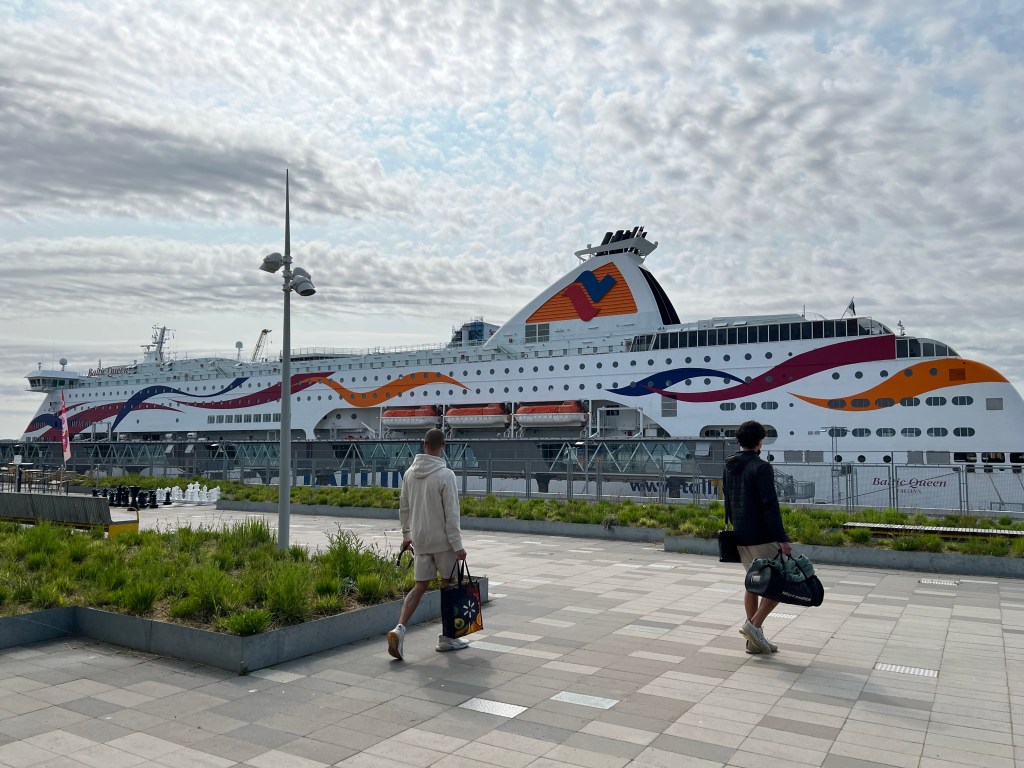
Our Premier class berth had a window and a full bed on the 8th floor—a major upgrade from the bunk bed cabin we had crossing to Helsinki. Hurrah! The ship was packed with tourists our age, family and school groups, and clusters of young men and young women (ages 17-23) on holiday.
Arriving at Stockholm, our prior explorations paid off. Bus 1 took us on a pleasant ride through Stockholm suburbs directly to the front door of the Hotel. After check in, we gathered our left luggage and settled into our room in time for lunch! We walked a block to Tribowl and were greeted by our new friends there.
That afternoon, Becky organized a small laundry catchup. We studied tourist literature and a map to focus our time in Stockholm. Many options, but our number one choice was the Vasa Museum. It was amazing.
RAISING VASA. In mid 1600s, Sweden and Poland were contesting for supremacy on Baltic trade routes. King Gustav decided to build a wooden warship to end all warships—with the tallest mast and two rows of cannons on each side. Unfortunately to meet all the king’s demands, the ship was designed too tall and too narrow of beam limiting the amount of ballast it needed for stability. Delusional rulers who believe that nature conforms to their wishes are not a new phenomenon.
On its maiden voyage in 1628, a gust of wind caught the sails causing the boat to lay over and take on water through the cannon ports. The VASA promptly sank in Stockholm harbor 30 meters deep and remained there for the next 333 years. A Royal inquiry was made at the time into the reasons for the failure, but no fault was found with the design or construction. No problem, so no one’s fault.
In the 1970s, the Vasa was raised almost intact and carefully preserved, repaired, and stored in climate controlled settings— a process that took 5 years. The Vasa now is the centerpiece in middle of the museum and is viewed 360 degrees on levels -1 to 7.
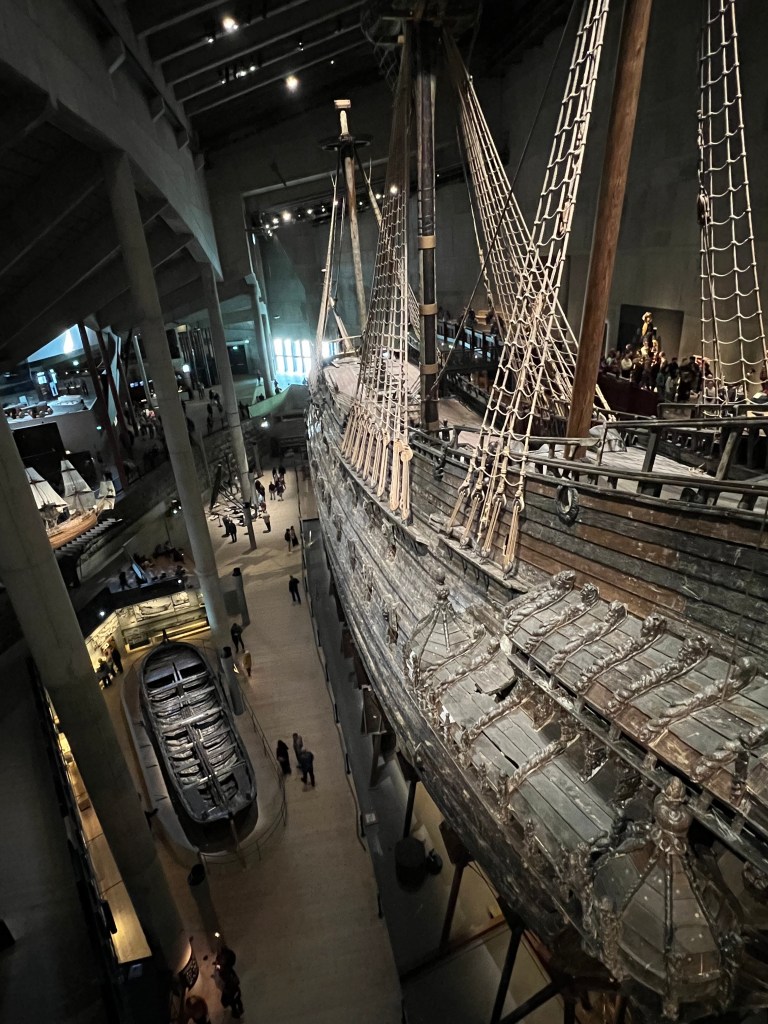
with 8 floors of displays surrounding it.
Displays about the preservation and rebuilding process, documentary films about its history and preservation, and archeological stories complete the museum. This was undoubtedly the best single subject museum we have ever visited. Google VasaMuseum for more details.
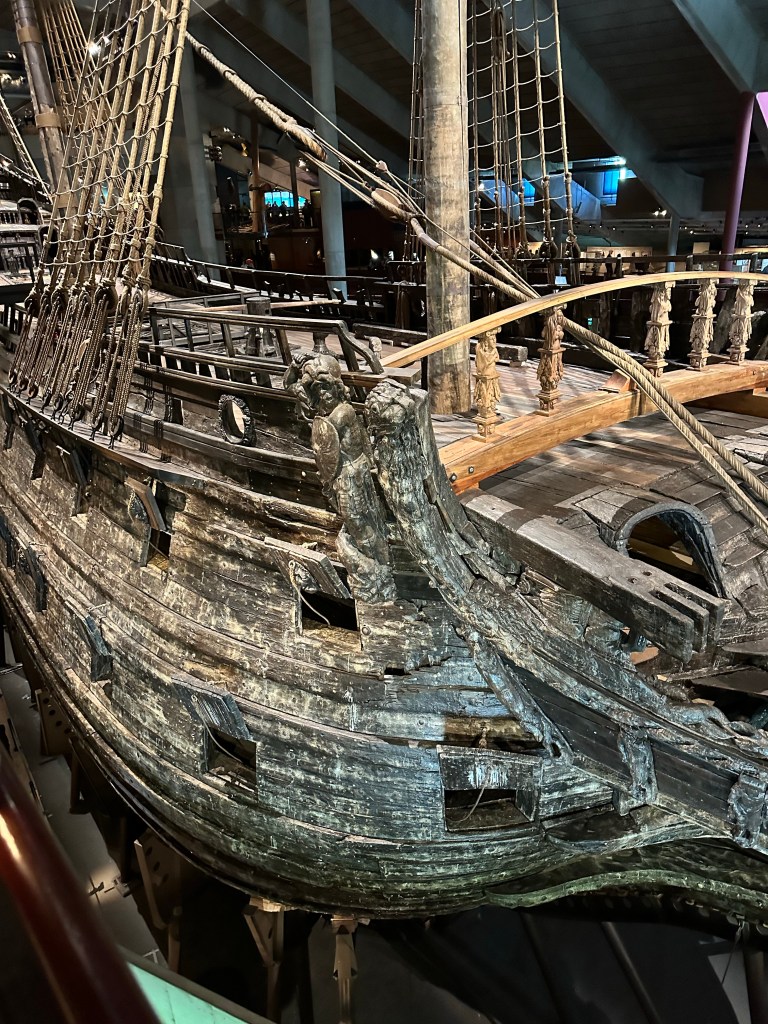
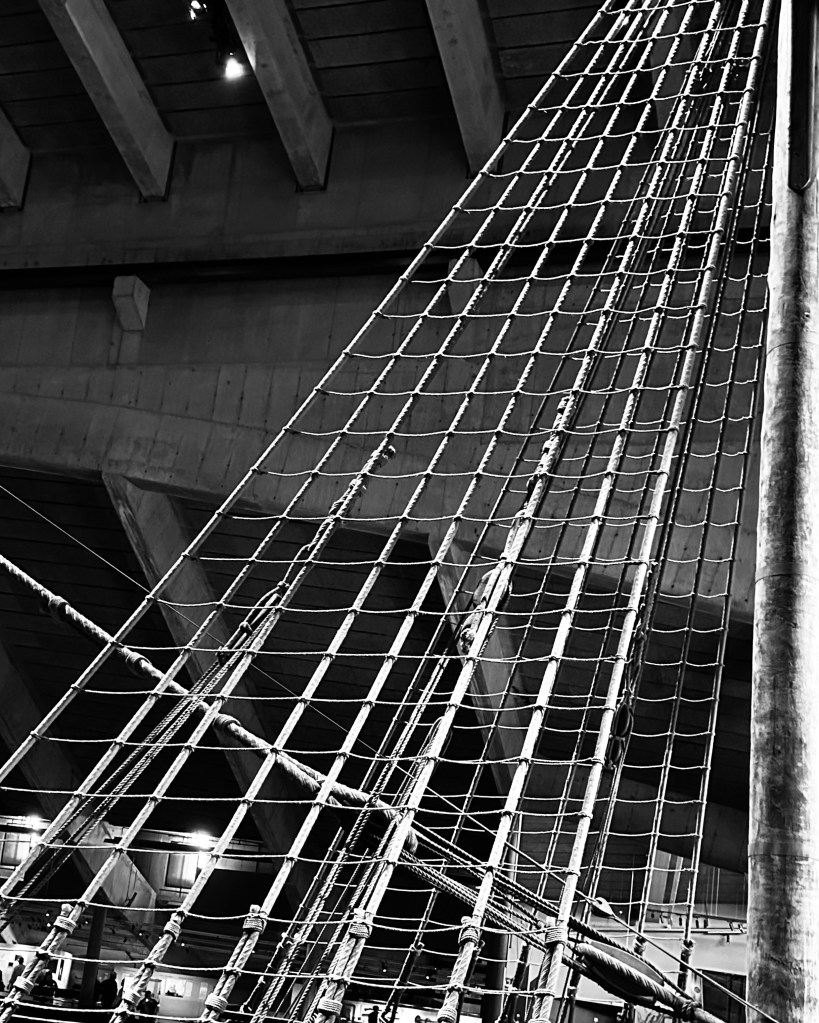
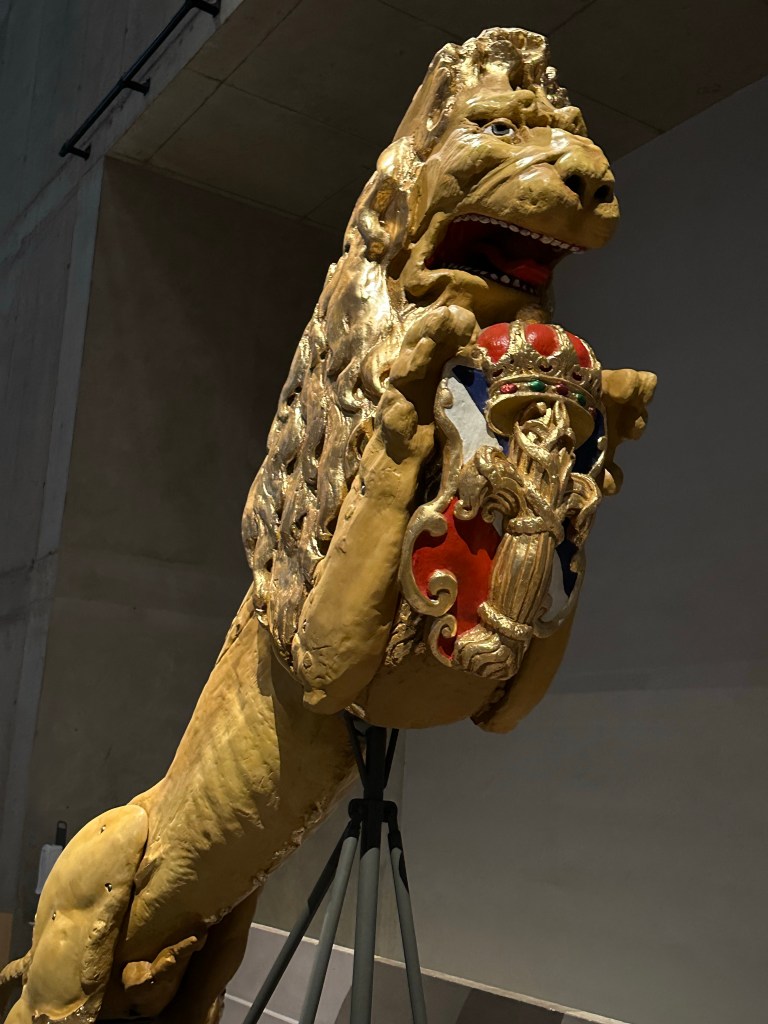
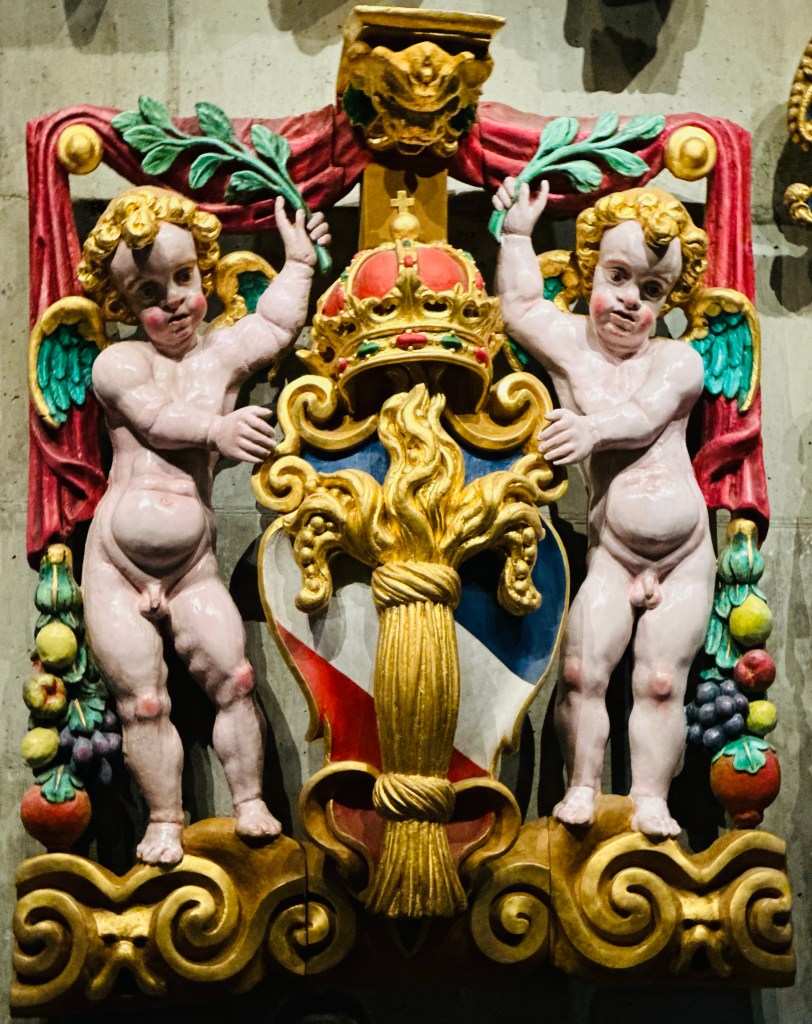


The carvings are modeled after the original ornamentation.
The 72-hour transit pass bought unlimited travel in Stockholm. On the bus, you swipe your pass each time you enter. On the tram, you just hop on but you had better have a ticket of some kind. A transit inspector actually checked our passes one time: 99% honor system works here.
At the King’s Park, we got off the tram for lunch at a outdoor cafe where we shared a truffle burger and fries for lunch—a break from our usual healthy choices.
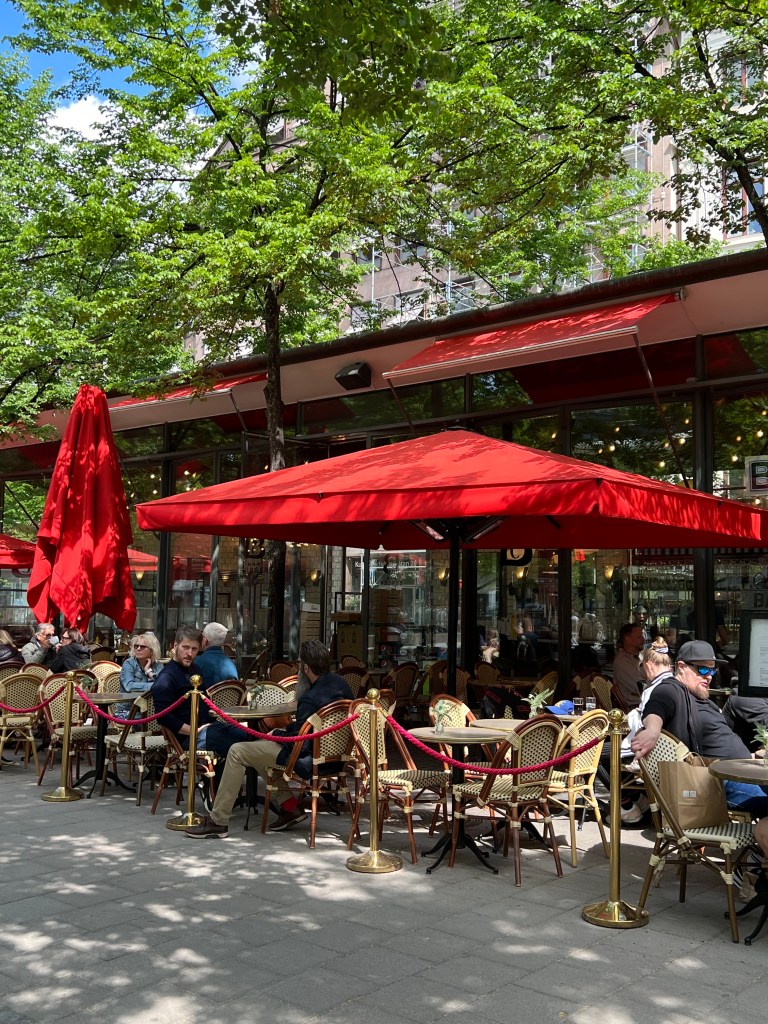
Becky bought a T-shirt on our walk back to the hotel. By that time, we had almost 10,000 steps calling for an afternoon nap.
FOTOGRAFISKA FOR THE EVENING. Fotografiska gallery in Stockholm is connected to the Fotografiska we enjoyed in Tallinn. A speedy trip on the Metro took us to the nearest station, but we still had quite a hike around road and tram construction to reach the building. The photography was certainly worth the walk. “In the garden” was a curated show of 15 different photographers’ interpretations of the theme.
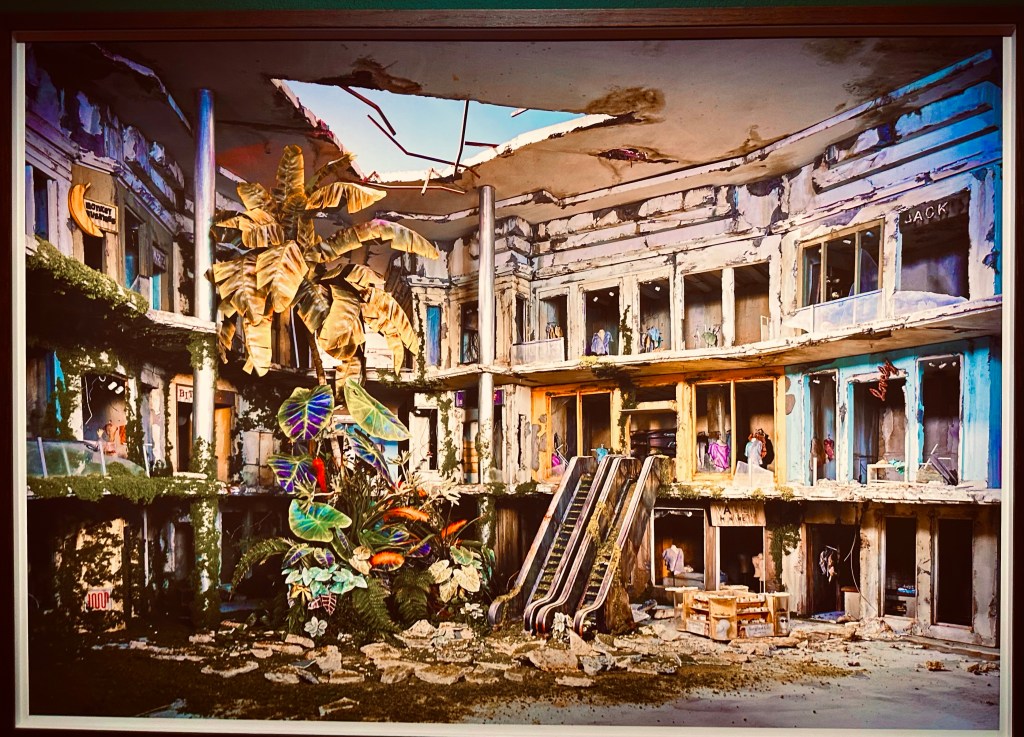
photographic montage by Nix and Gerber
“Nothing in life is constant but change”
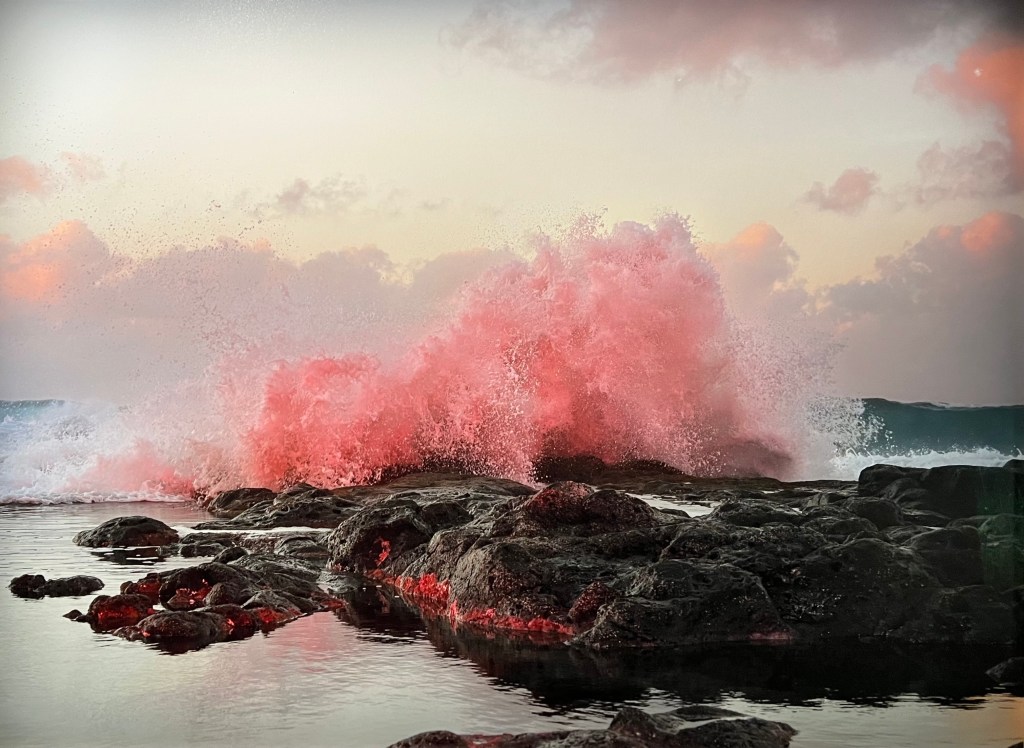
“landscape fluorescence” with extreme manipulation done
at moment of capture. How do they do that?
An exhibit titled “Santa Barbara” told the story of a mail-order bride who brought her son and daughter to California from Russia in the 1970s. When the family arrived in US, they met a new papa and watched the soap opera Santa Barbara to learn English and American life. Now an adult, the daughter wrote a script of their life and cast actors to portray the family and Eli, the man who brought them to the US and disappeared after 8 years. With still photos and videography, she reconstructed scenes as if they were from the soap opera. The amazing production mixed reality and fantasy, joy and sadness, hope and fear.
Fotografiska offers a five-course dinner menu with wine pairings that cost over $100 per person. But we ordered from the ala carte menu in the bistro: green and white asparagus on the thinnest, crispiest pizza crust and a wonderful salad “from our basement.”
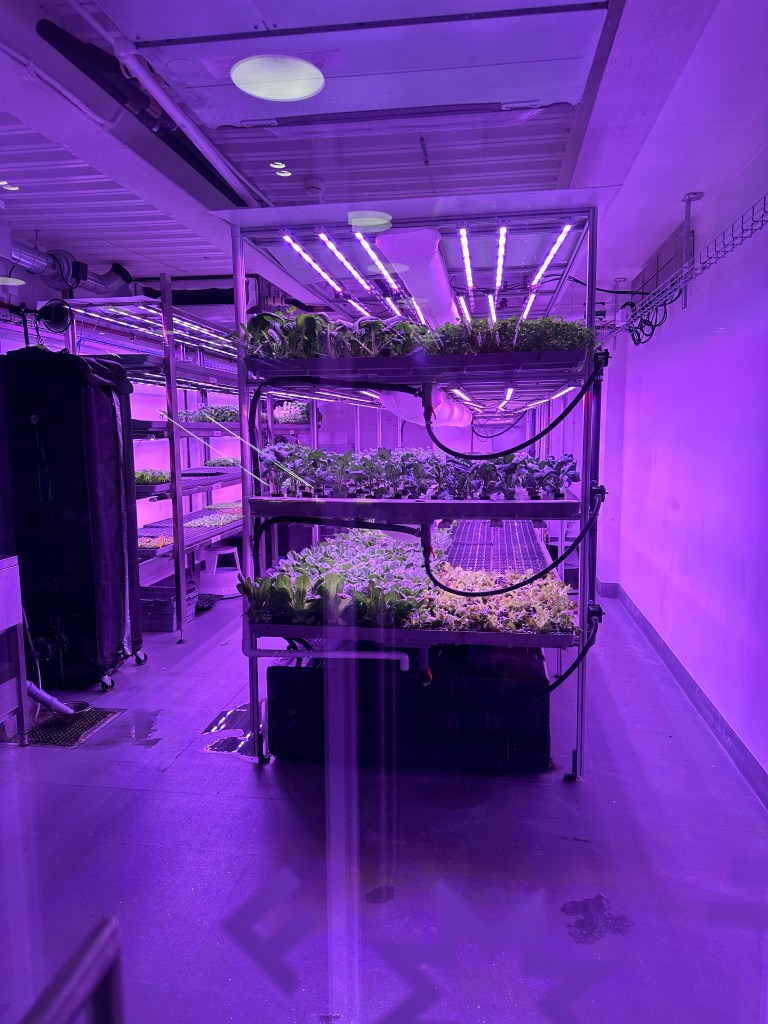
The restaurant grows their own salad greens in a hydroponic garden in the basement.
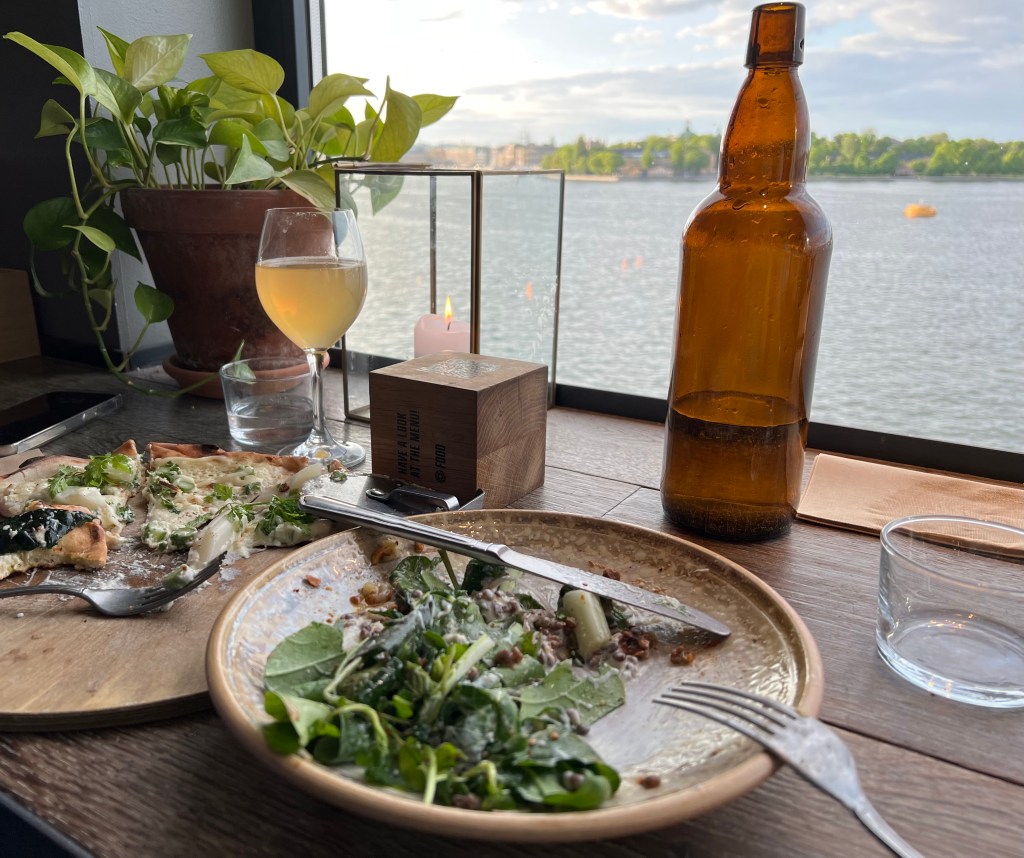
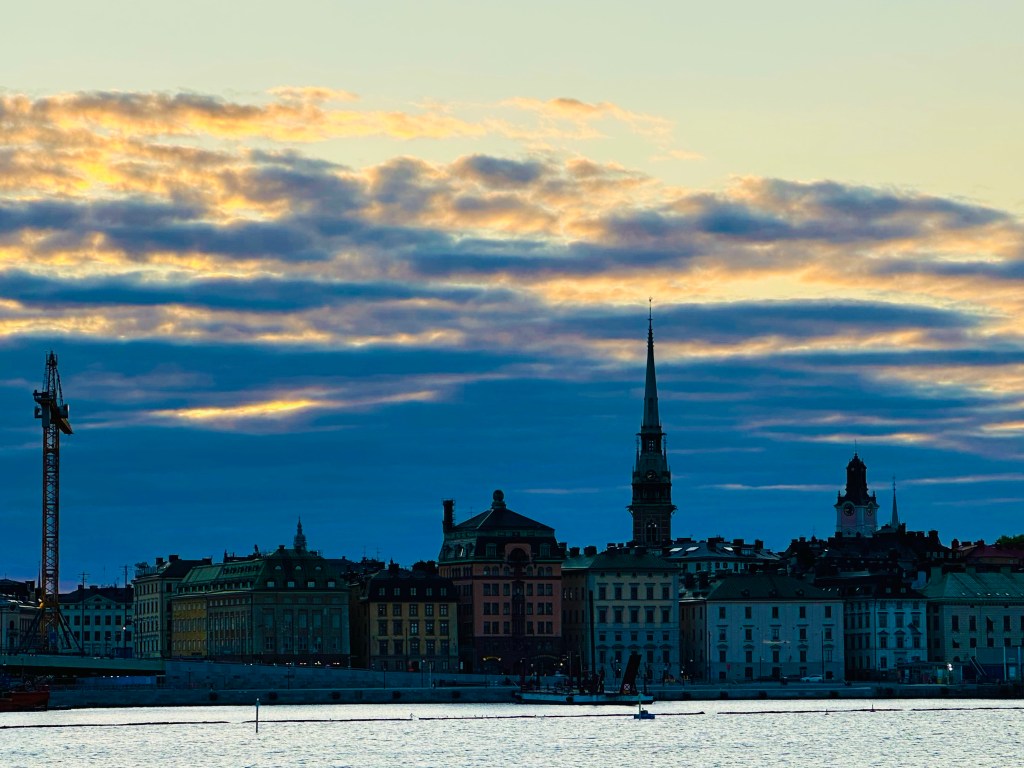
We ate looking over Stockholm Harbor where the VASA sank in 1628. On our walk back to the Metro station we caught the Stockholm cityscape against the sunset. What a great end to a great day!
The fourth day in Stockholm was planned for National Museum of Fine Art and the Modern Museet. At the Modern, the performance artist, writer, musician, and photographer Laurie Anderson was featured in a retrospective which was impressive. Swedish architecture was highlighted in a separate ARK/DES gallery. Outside was a modern sculpture garden including four by Alexander Calder.
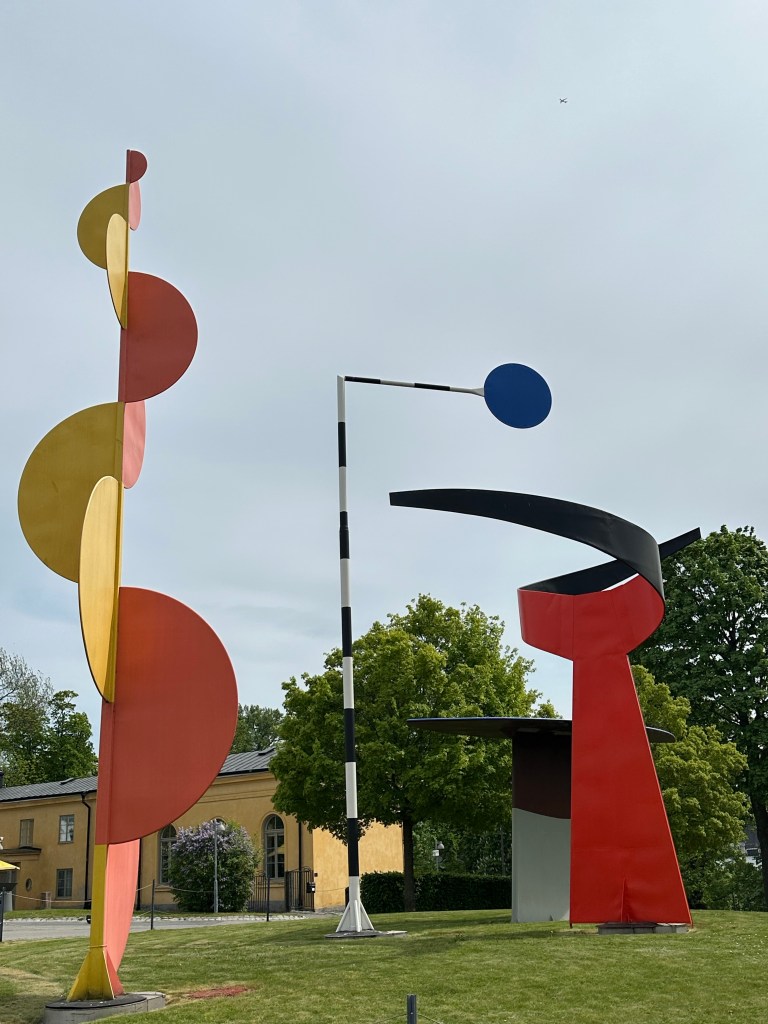
We had a coffee and roll before proceeding. This Scandinavian afternoon ritual called “fika” is one that we have readily adopted.
At the National Museum, one floor of galleries is organized around 20-year periods from 1900 to 2000. Each gallery includes an extensive grouping of representative furniture, fabric, glass, household goods, photographs, and paintings from the period. Swedish Art Glass across the years is stunning.

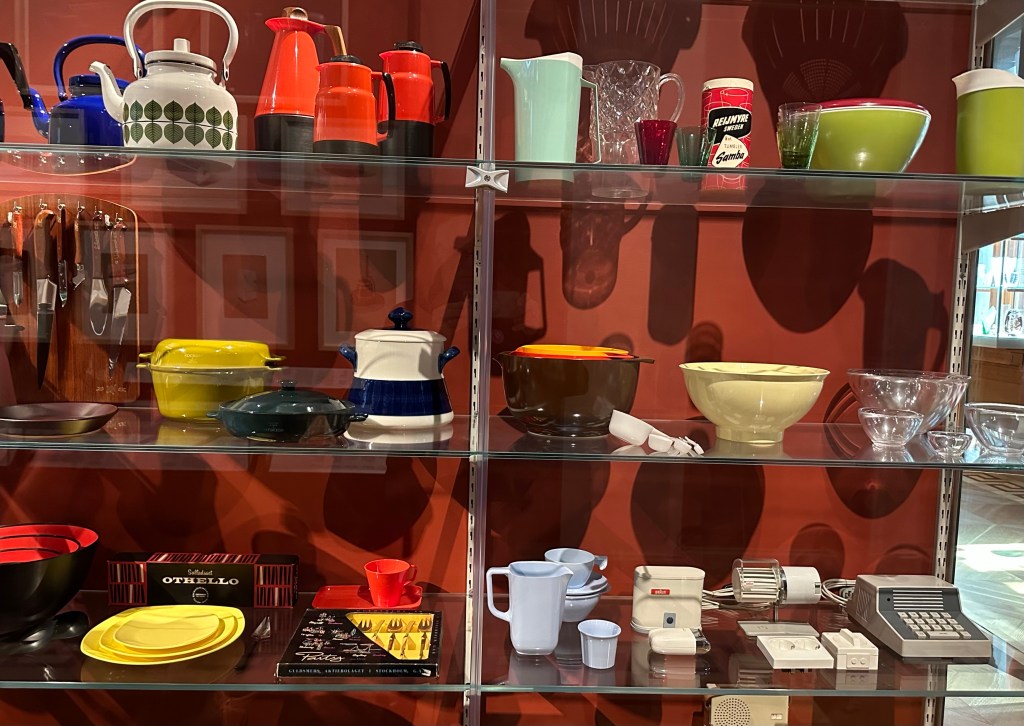
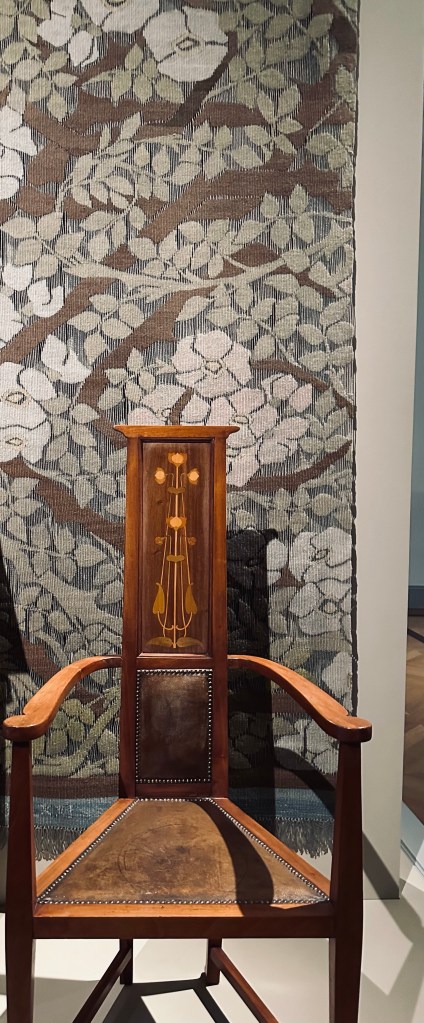
We found three surprises in the galleries: an early portrait from Cezanne, an unusual still life by Bonnard, and a contemplative portrait by Cassatt.
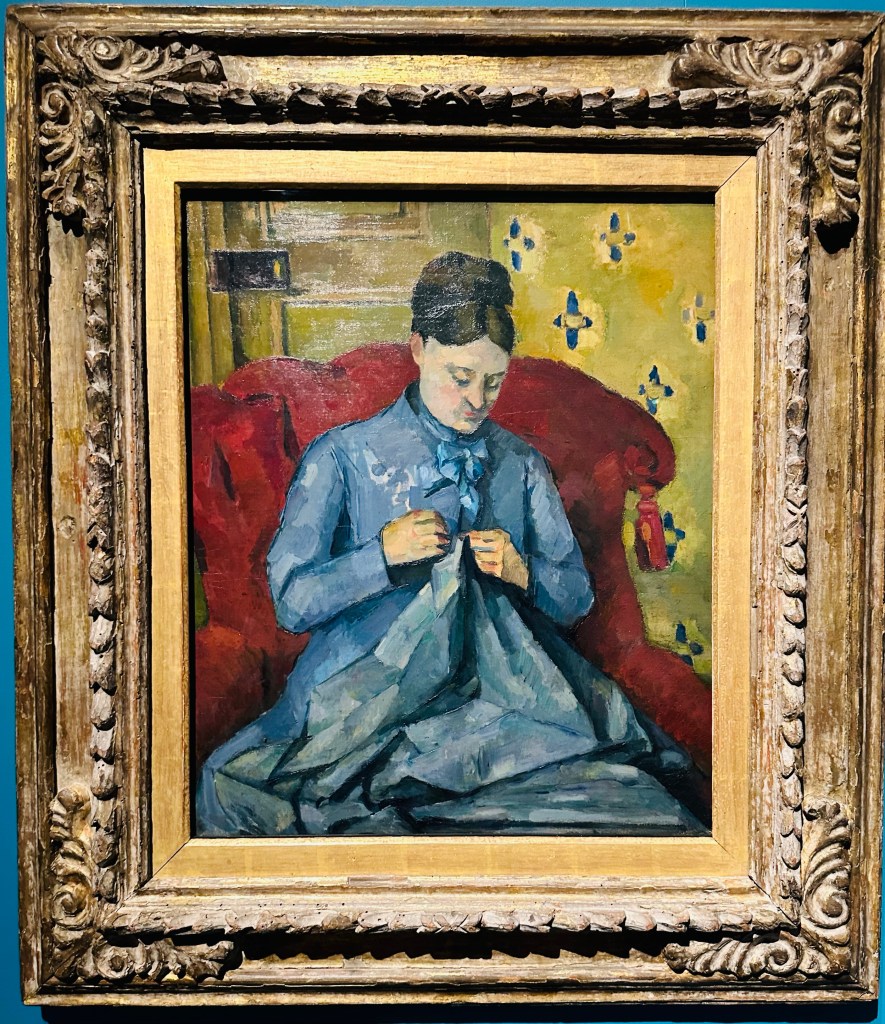
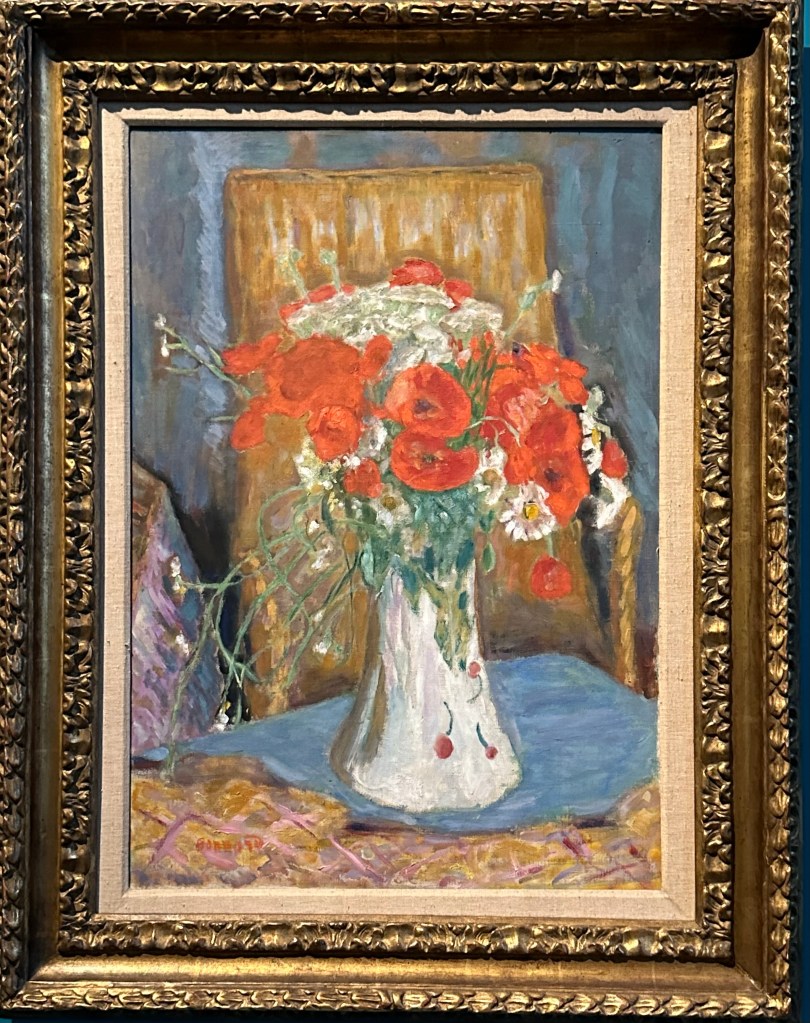

A full day of 15,000 art-viewing steps required an afternoon nap! Rousing ourselves around 7:00, many downtown restaurants on Saturday night were either closed or packed. A Thai restaurant, not busy and not yet closed, served a warm and spicy panang curry..
Warm days and cool nights have been standard weather in Stockholm, so we planned a day at the botanical garden located several miles north of city center. We took the Metro and still had about a half mile walk to the conservatory and outdoor display gardens. Purple was the color of the week with lilac and lavender in bloom
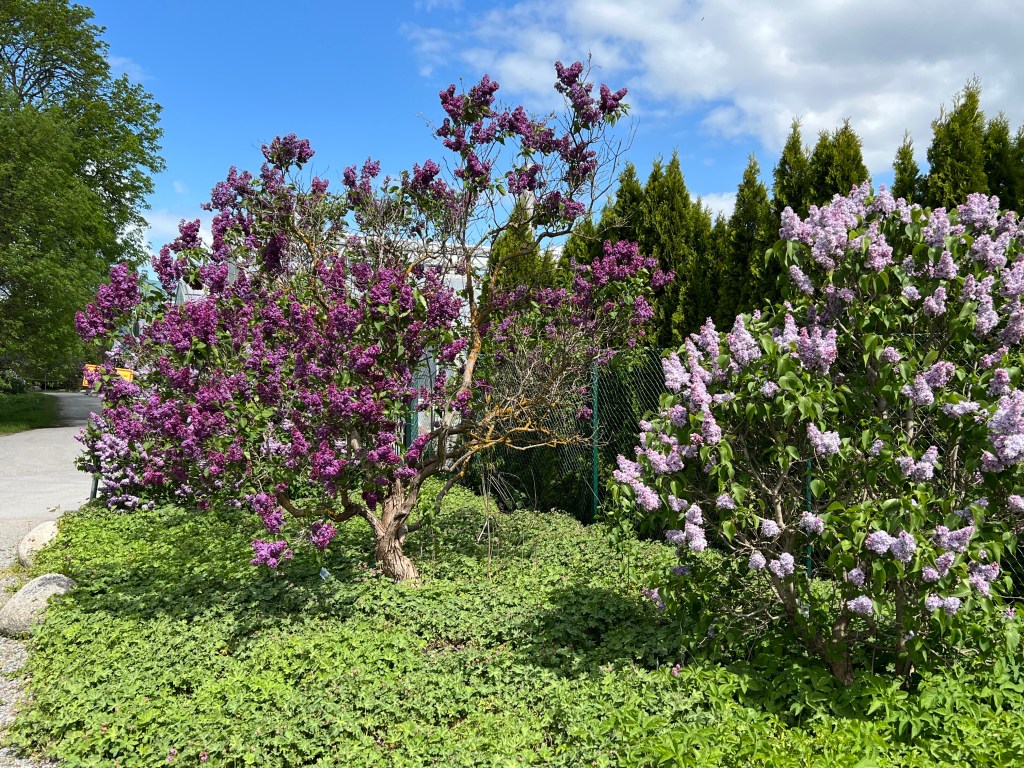
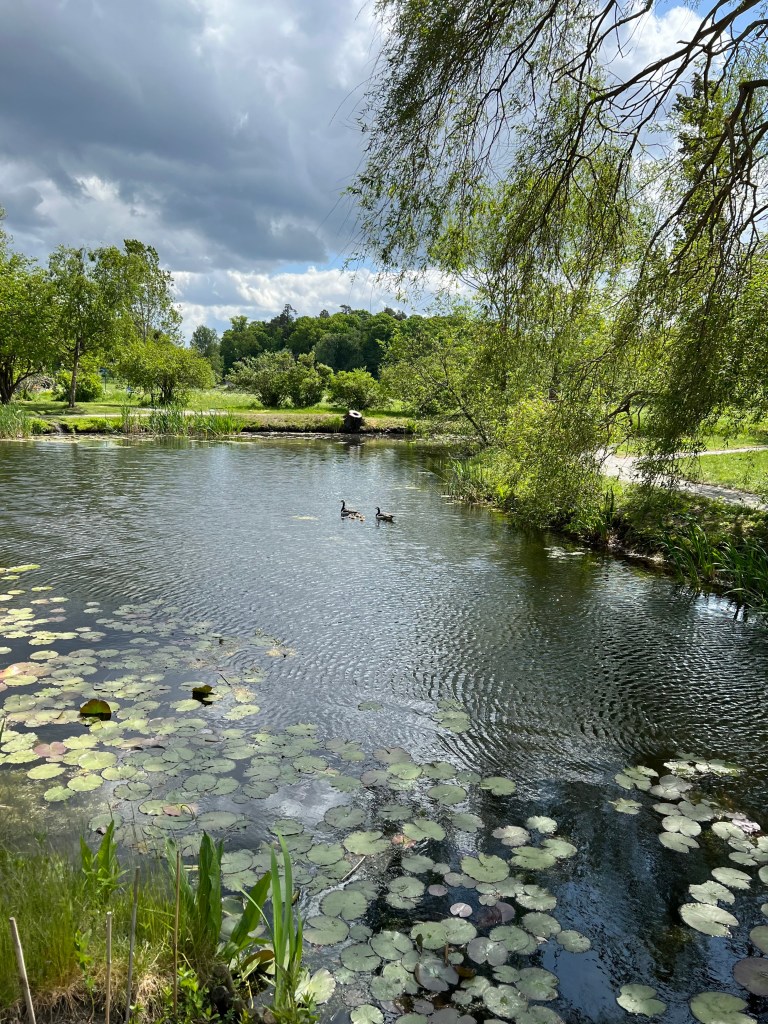
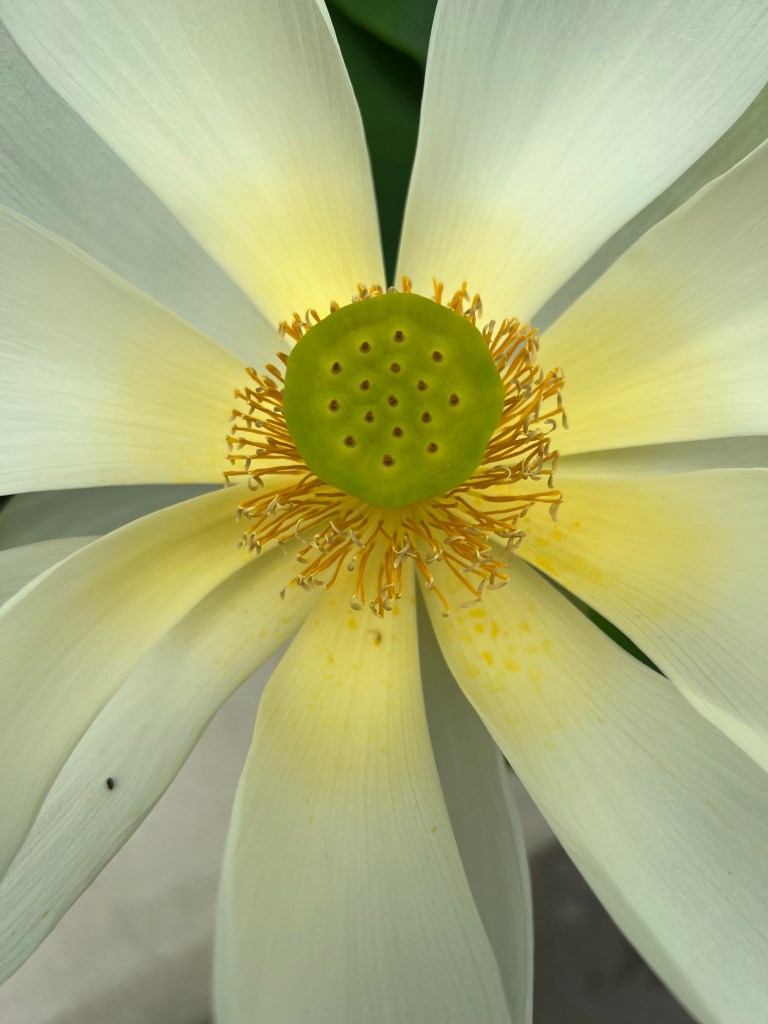
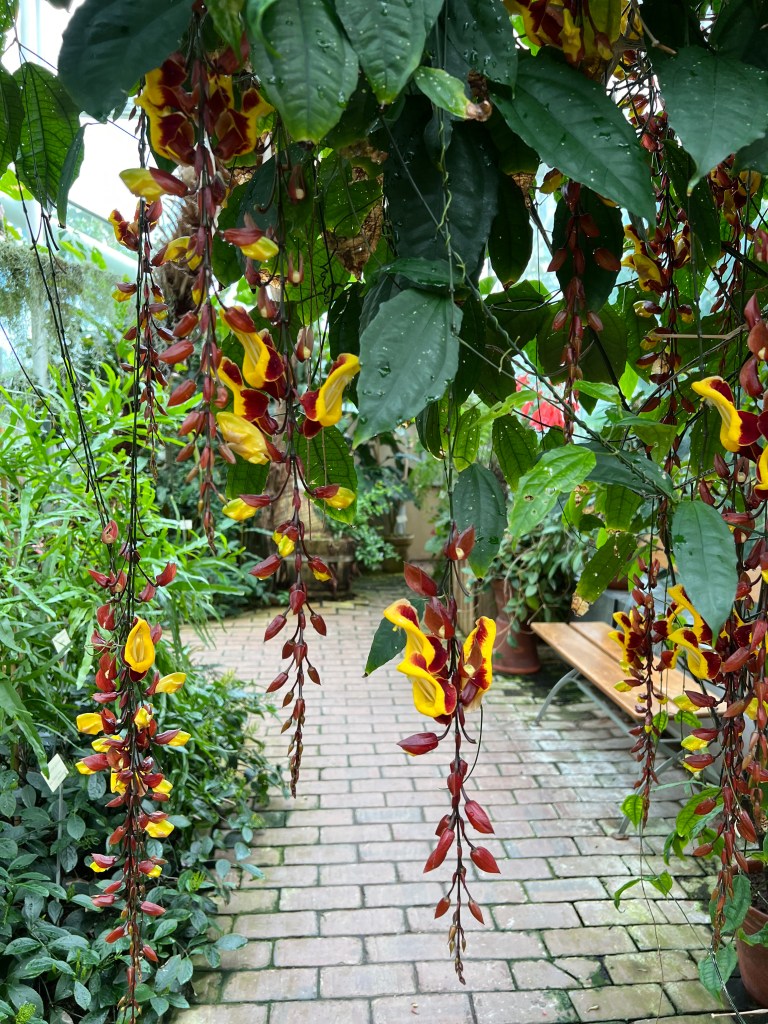
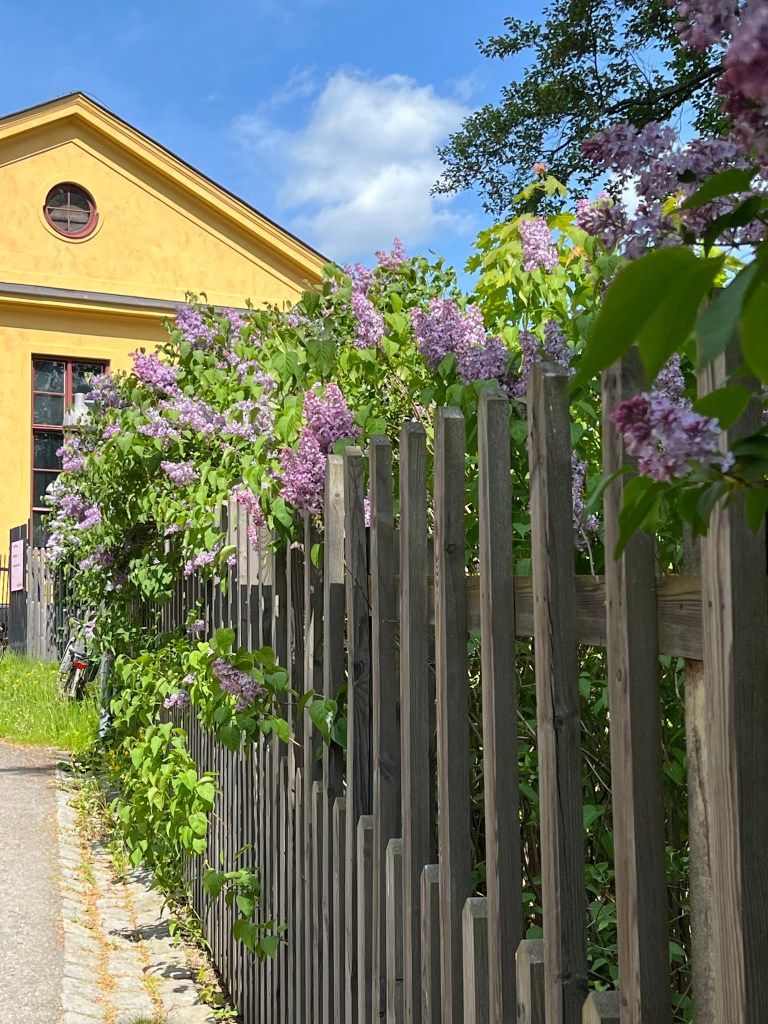
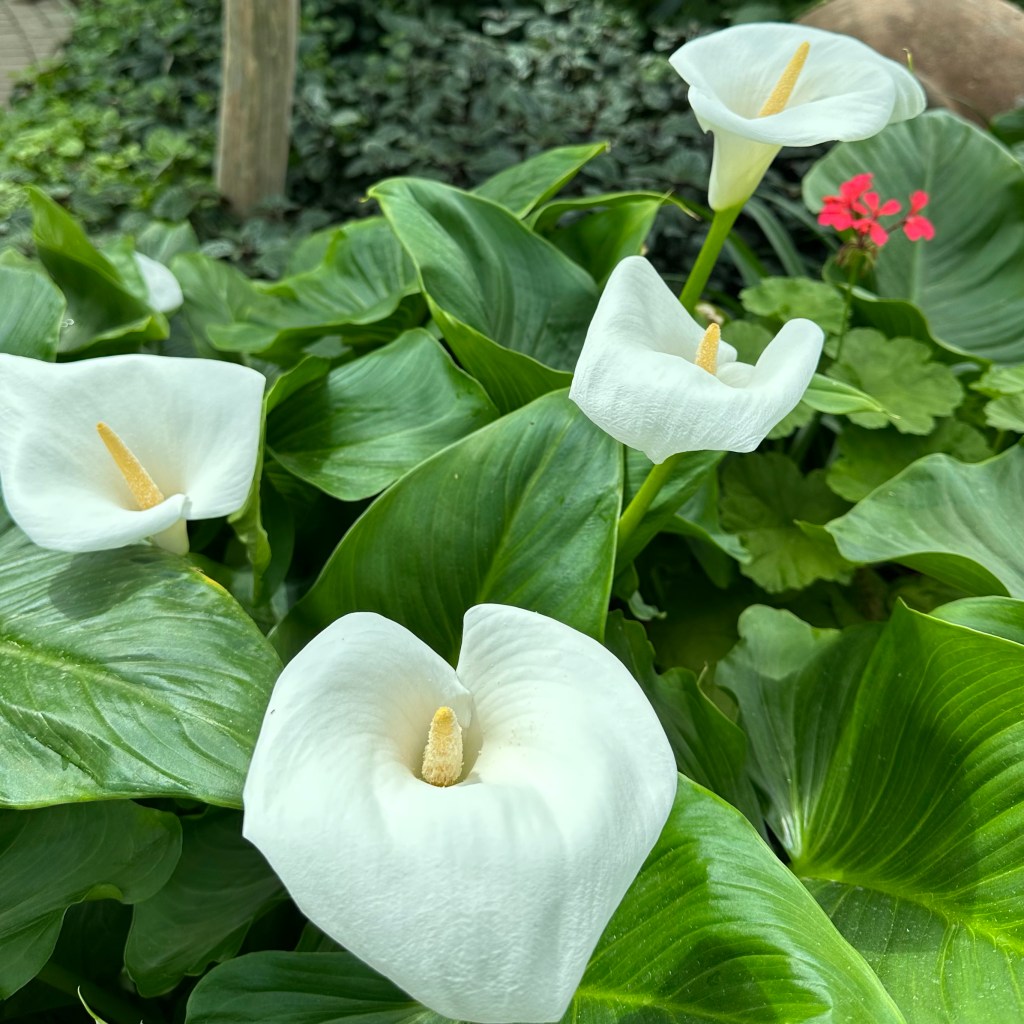
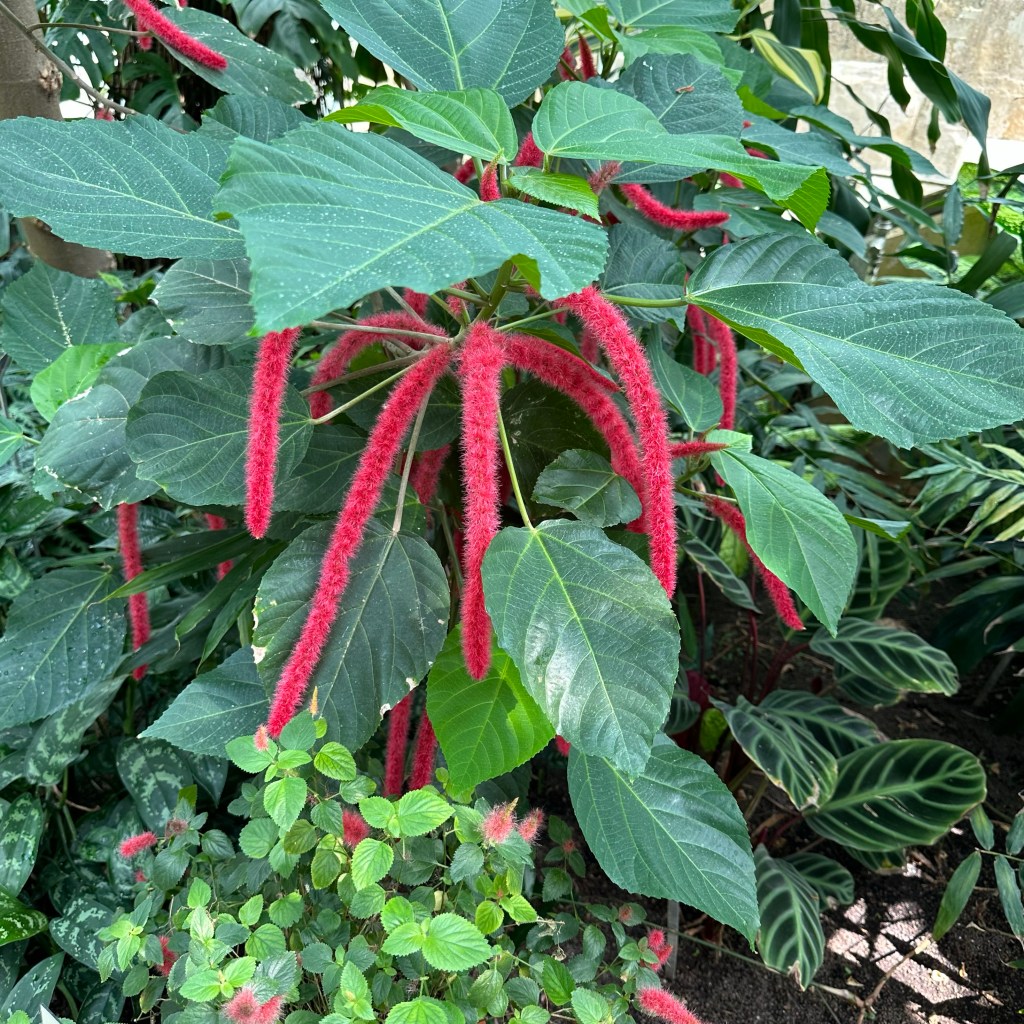
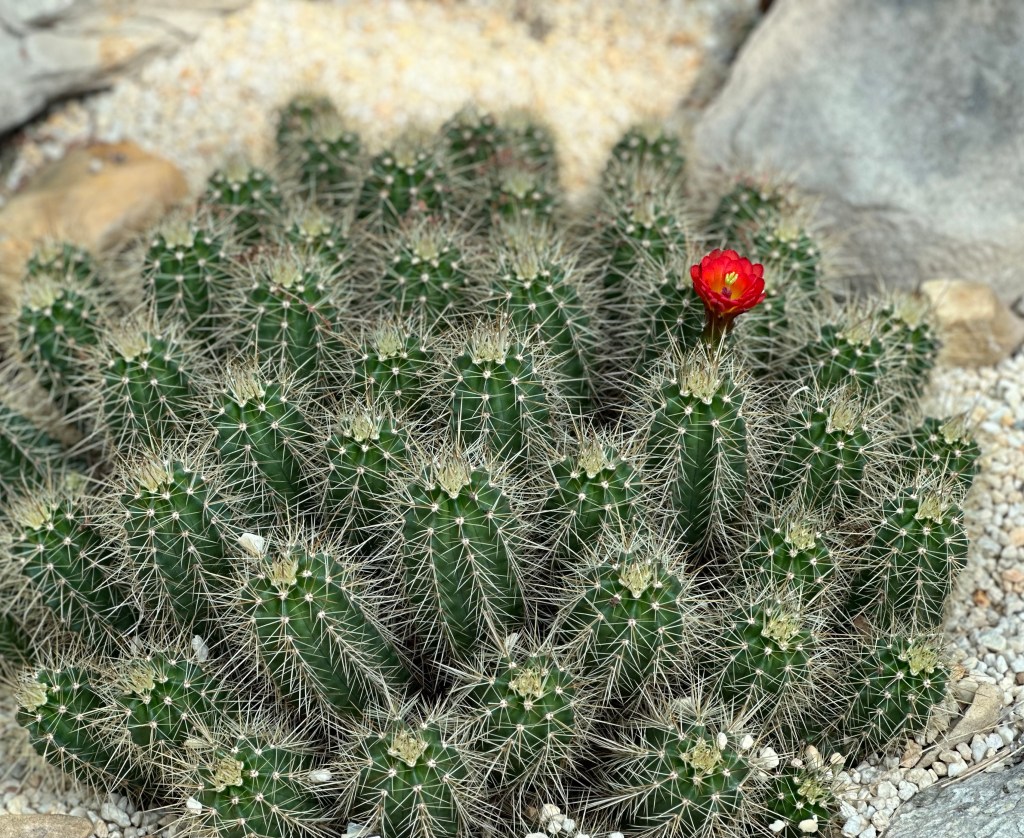
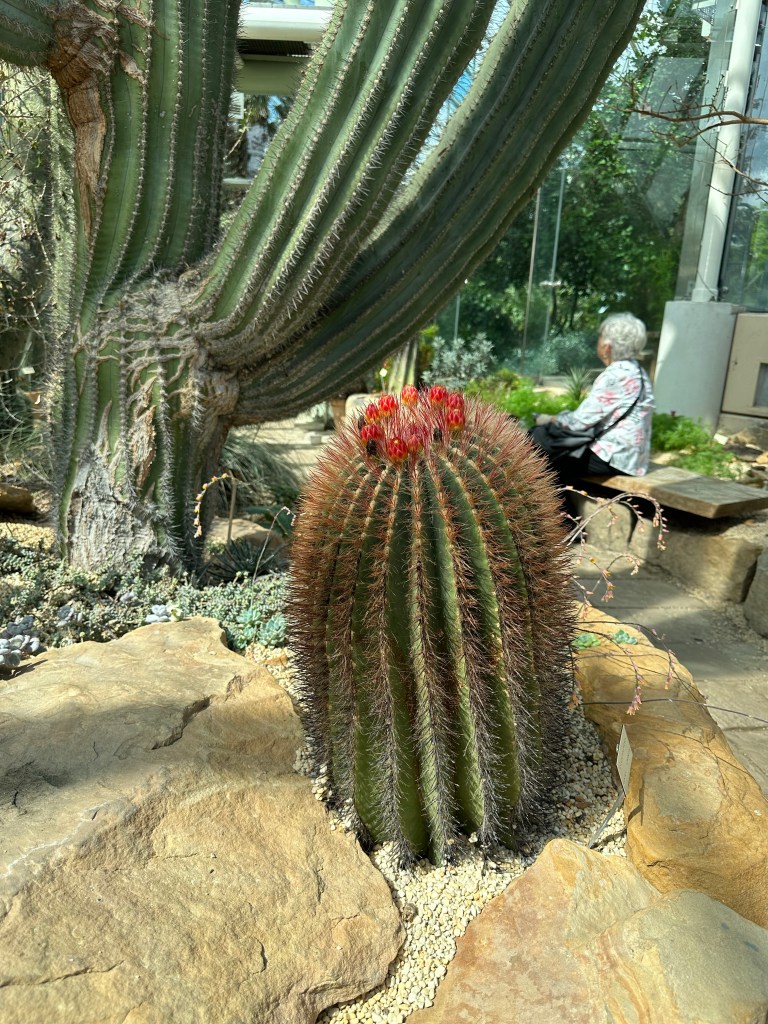
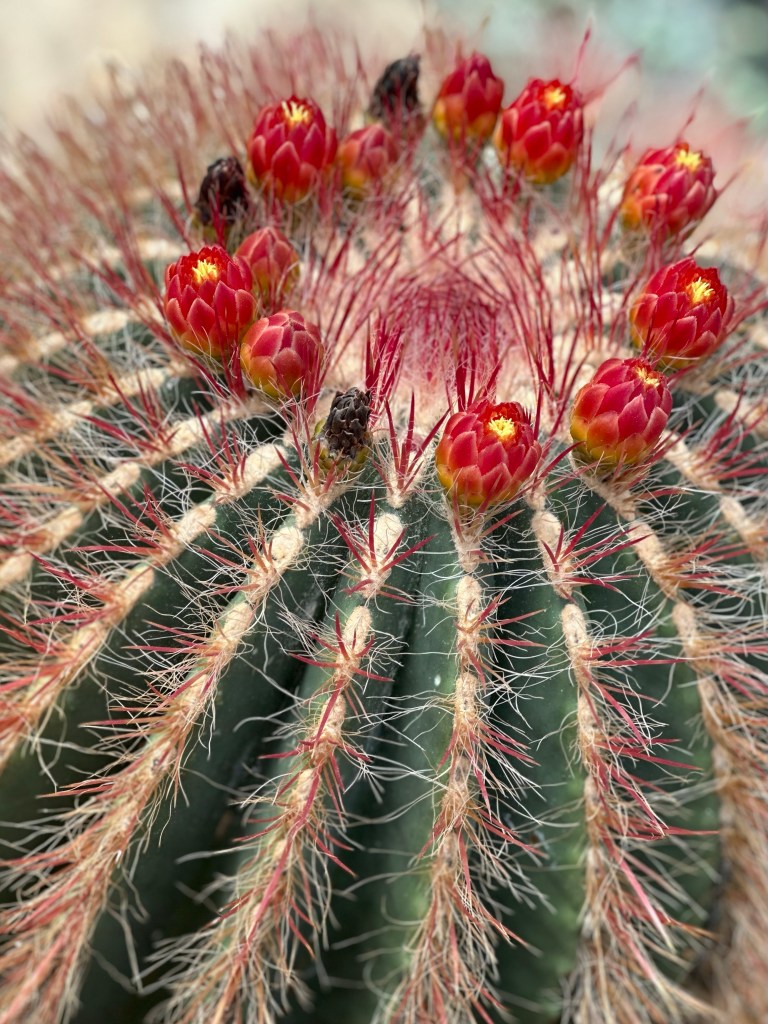
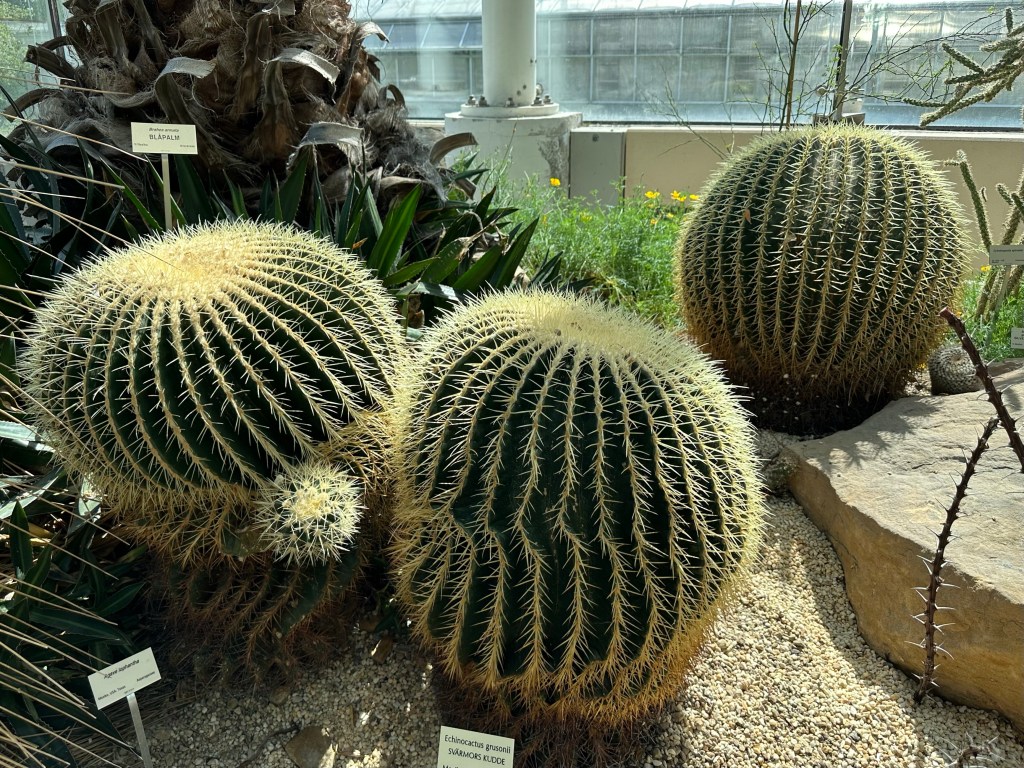
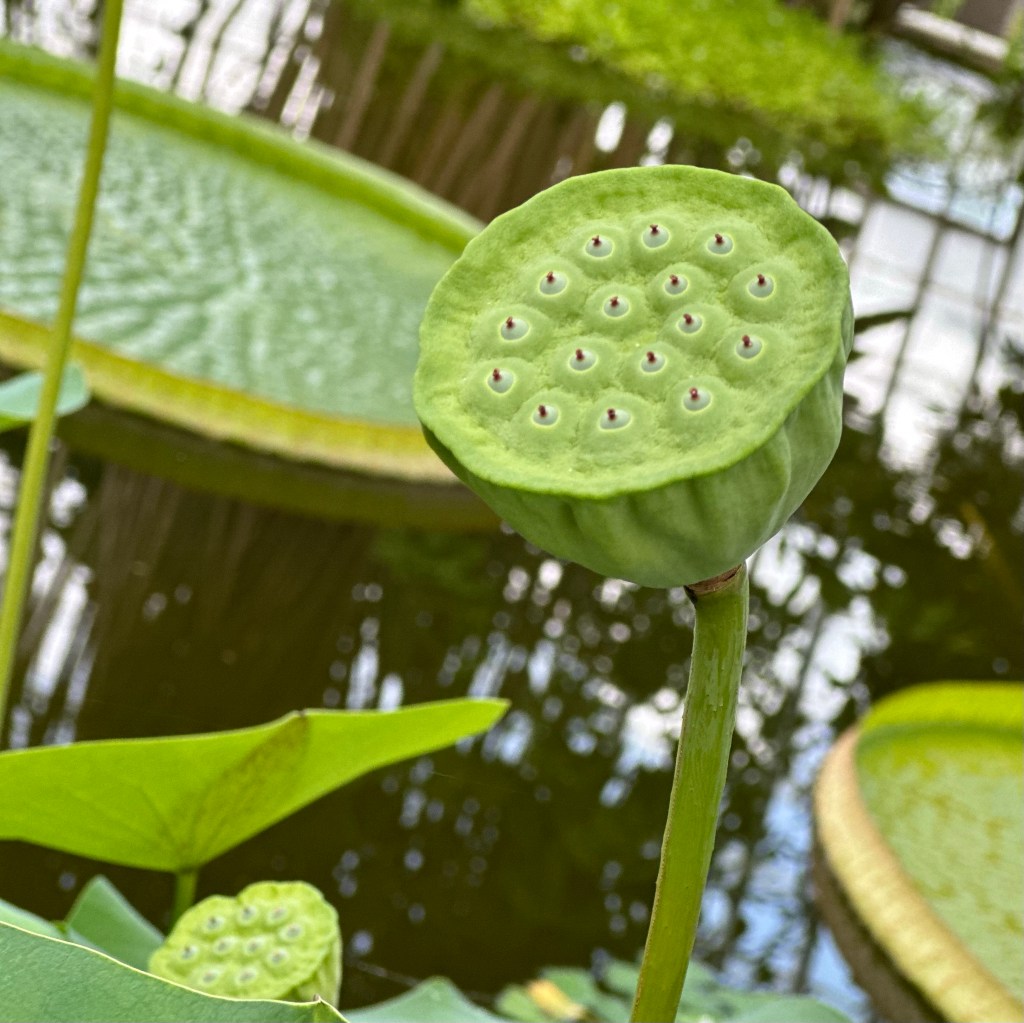
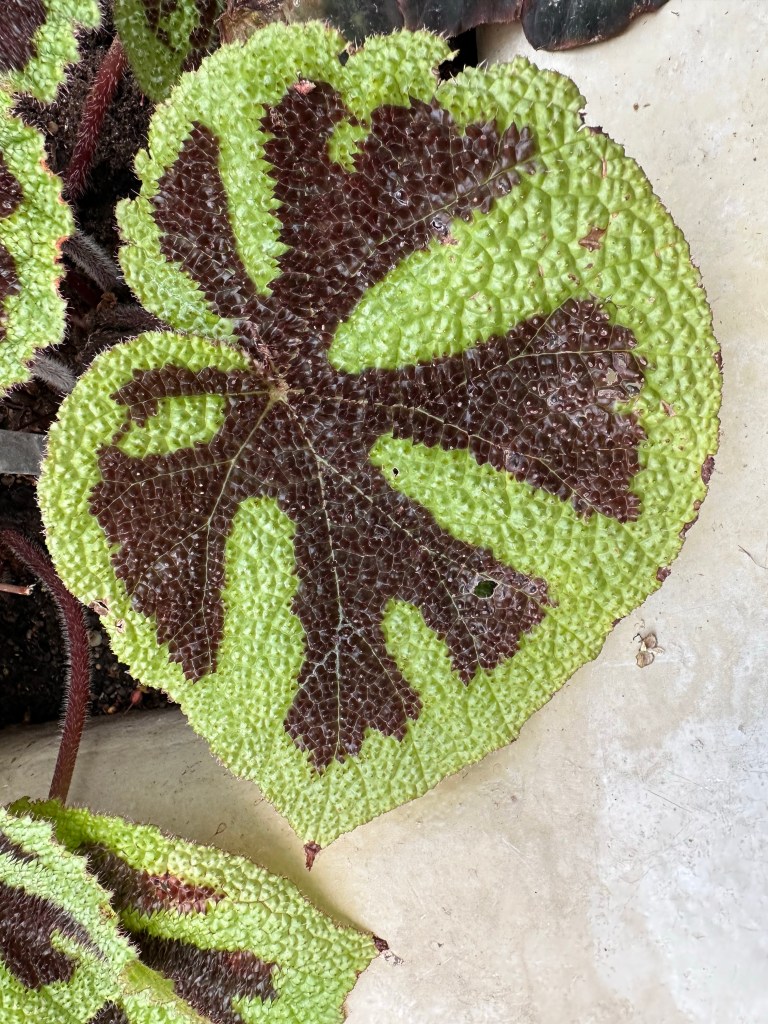
The conservatory is organized into 8 or 10 different climate zones with amazing specimens. It was good to be outside and we got plenty of steps including a steep climb up to the bus stop.

On climate, we have been the “good weather” travelers. Over the last 29 days, we have had rain only one time and that was overnight in Oslo. We need our coats for chilly mornings and evenings but during the day, many folk wear shorts. Very hardy folks these Swedes.
The bus back to city center took us through neighborhoods of older apartment blocks with centrums for shopping and restaurants. We noted an Indian restaurant, Ashoka, on the route and decided to take the bus back for a great dinner. I had a sampler plate (Thali) and Becky had a vegetable Korai that were both delicious.
Our last morning in Stockholm was reserved for packing and getting to the 9:28 train for our five hour trip across southern Sweden to Malmo. Finding the correct track is sometimes difficult. This time we asked our elevator-mate for direction to Track 12b. She replied that she was going there also and walked us part of the way and pointed the rest. We got there 30 minutes early.
As the throng grew, we feared we were in a mad rush for seats, but Becky pushed ahead, located, and claimed our reserved seats while I managed baggage. We settled in for the next five hours entertained by the many brave parents on the move with babies and toddlers overhearing their conversations, squabbles and squalls, and enjoying the quiet times. We believe that Scandinavia has the lowest average population age and highest birth rate.
Southern Sweden is a rolling landscape miles large farms, red barns with red houses, and golden rapeseed in full bloom. It’s no wonder the immigrants from Scandinavia were attracted to the high plains states—open spaces with cold winters and warm springs are a good starting place for farmers.
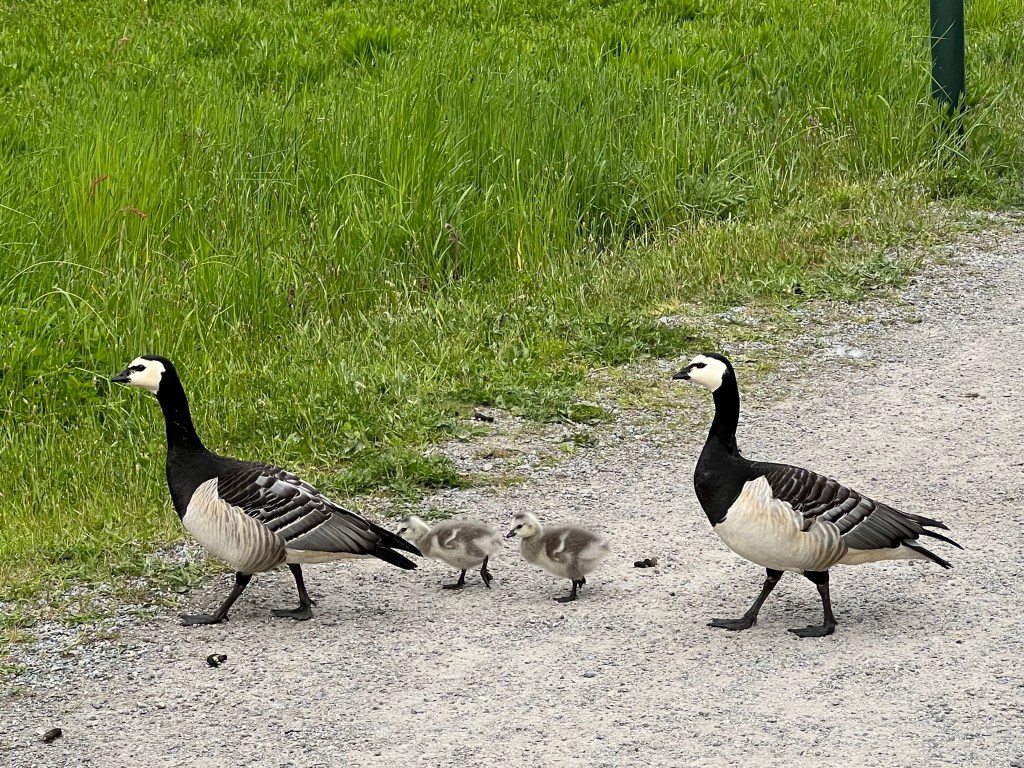
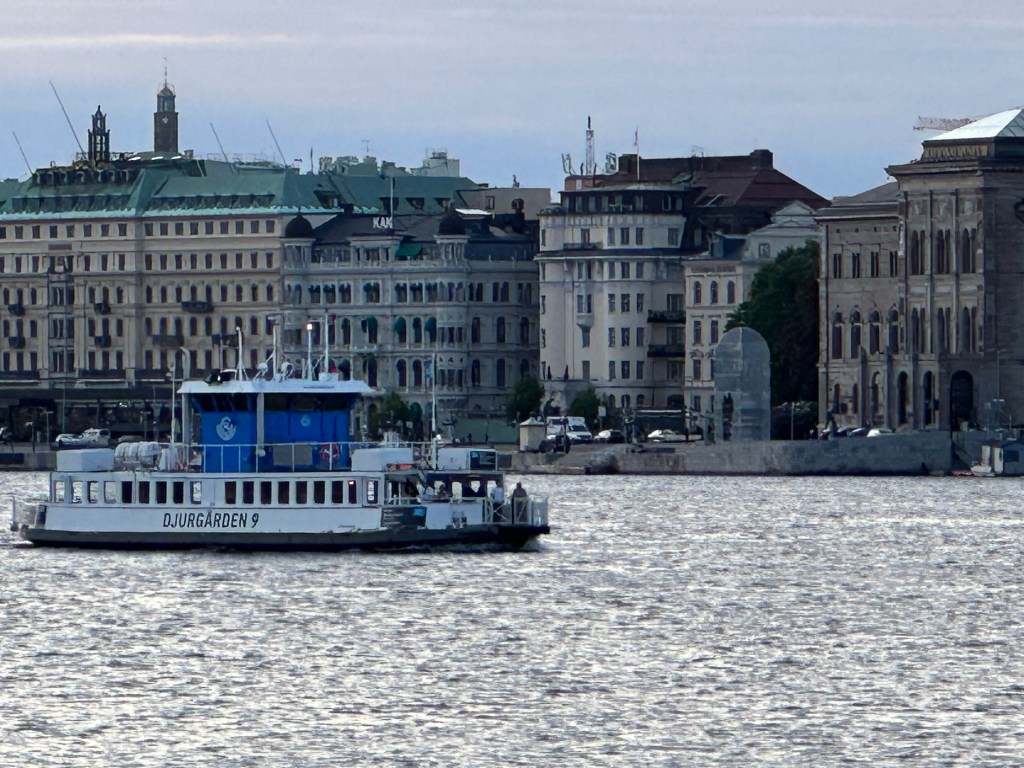
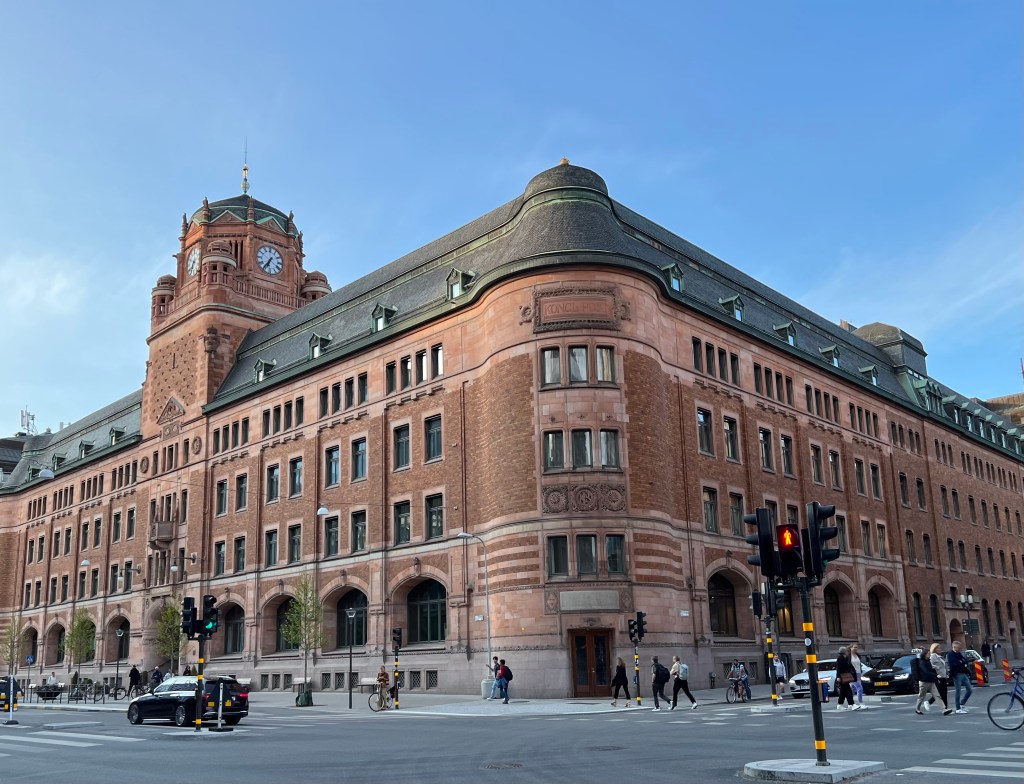
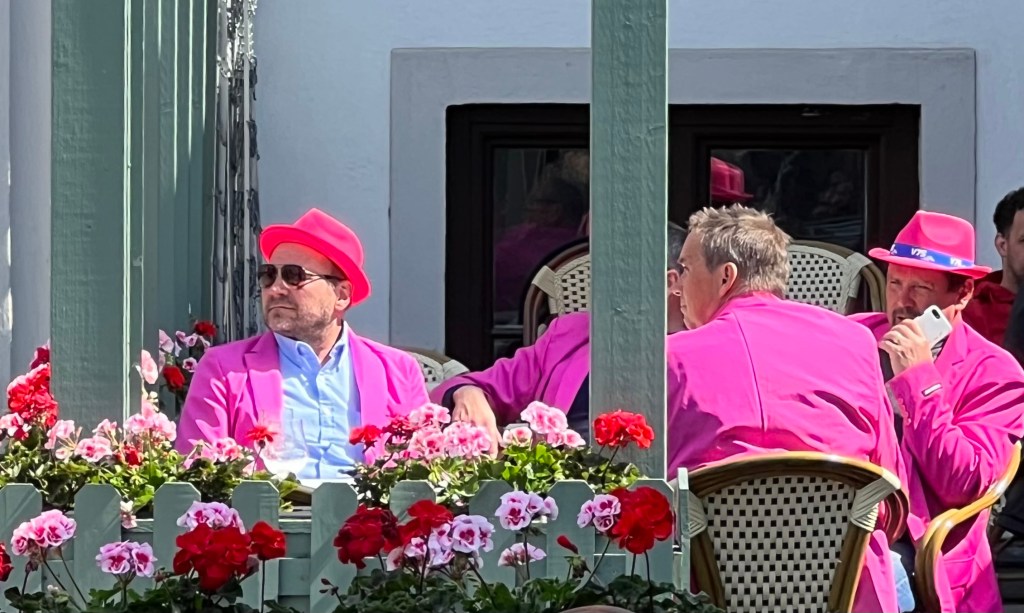
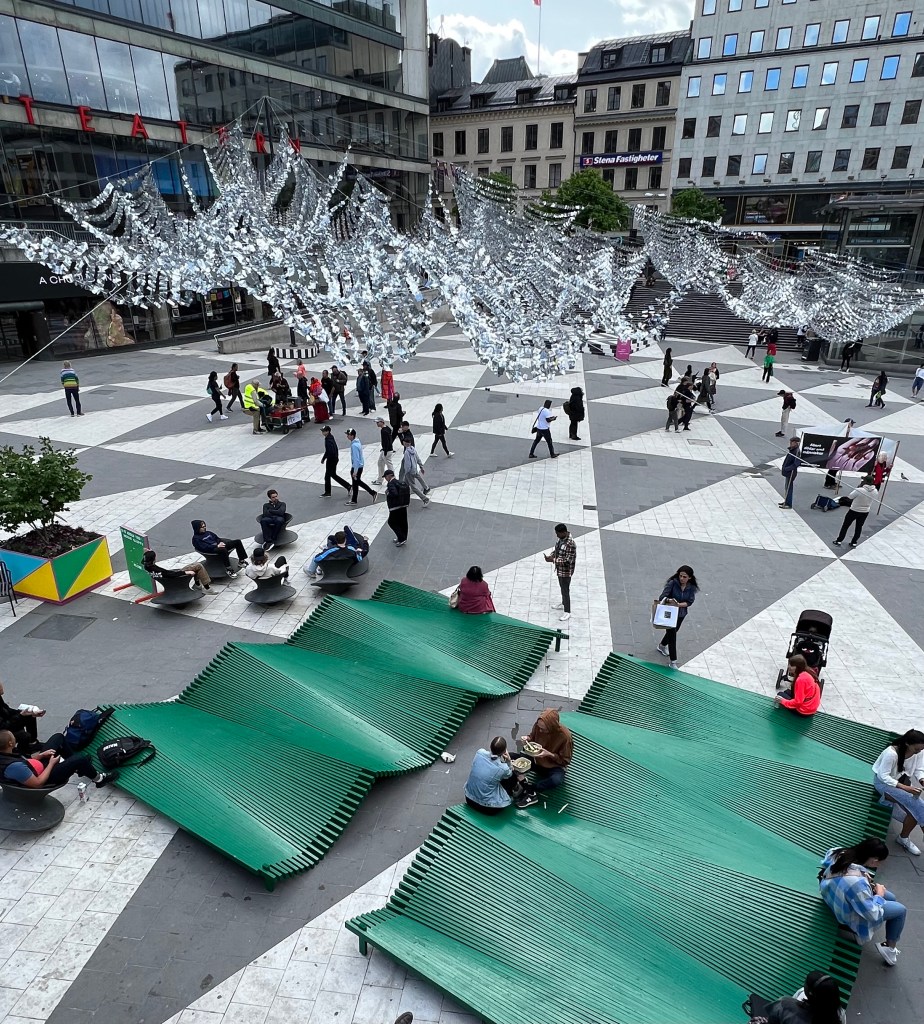
RANDOM PHOTOGRAPHS IN STOCKHOLM
 Tipps for Travel