Friends, We hope that you are enjoying our adventures through Scandinavia. We would love to hear from you about what you have liked, disliked, quibbles or questions you may have. Let us know what you think.
The two-hour Eckero ferry from Helsinki to Tallinn was a model of punctuality. Loaded with people and cars, it pushed off 15 minutes early. We sat in the lounge looking across the Baltic Sea, also called the Sea of Finland. A concert of oldies and goodies entertained us along the way with a very good vocalist and a mighty fine piano player.
KINDNESS OF STRANGERS. When we arrived in Tallinn, we started walking toward a promised but elusive bus/tram stop. Whichever way it was, we weren’t. I stopped a gentleman and asked for directions. He knew exactly where to direct us, but walked with us the whole way, offering to help with our bags.
Our new friend wearing an alumni sweater from Notre Dame had just been to the bakery to buy breakfast for houseguests. Along the way we learned that he is from Pittsburgh and has lived in Tallinn for 30 years. The “walk” was a 25 minute hike through Old Town with the roughest cobblestones ever laid. They just don’t do cobbled streets the way they did in 1100 CE.
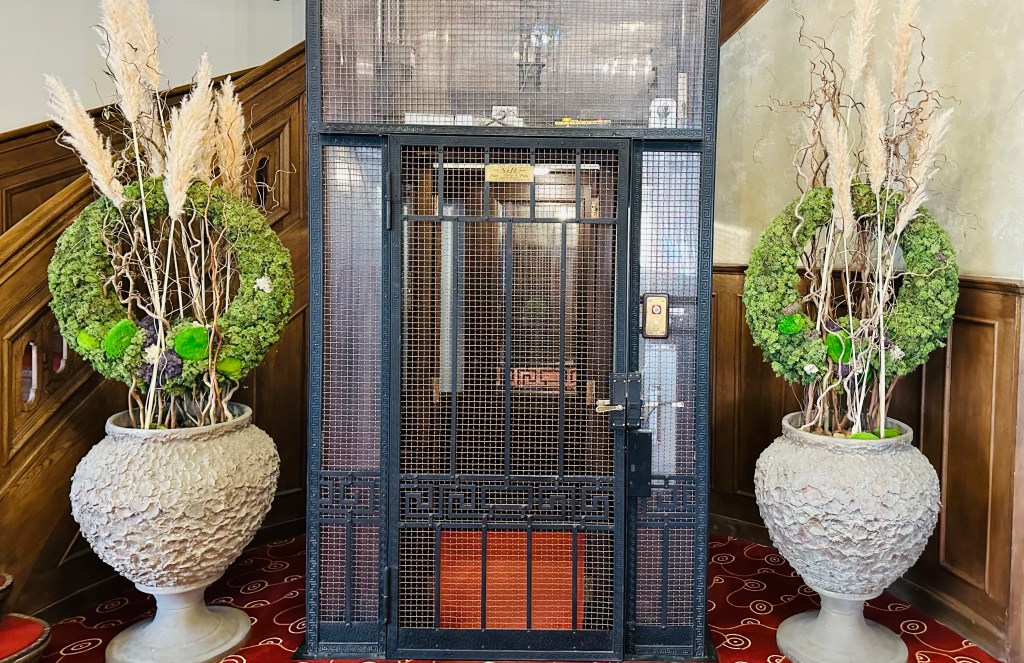
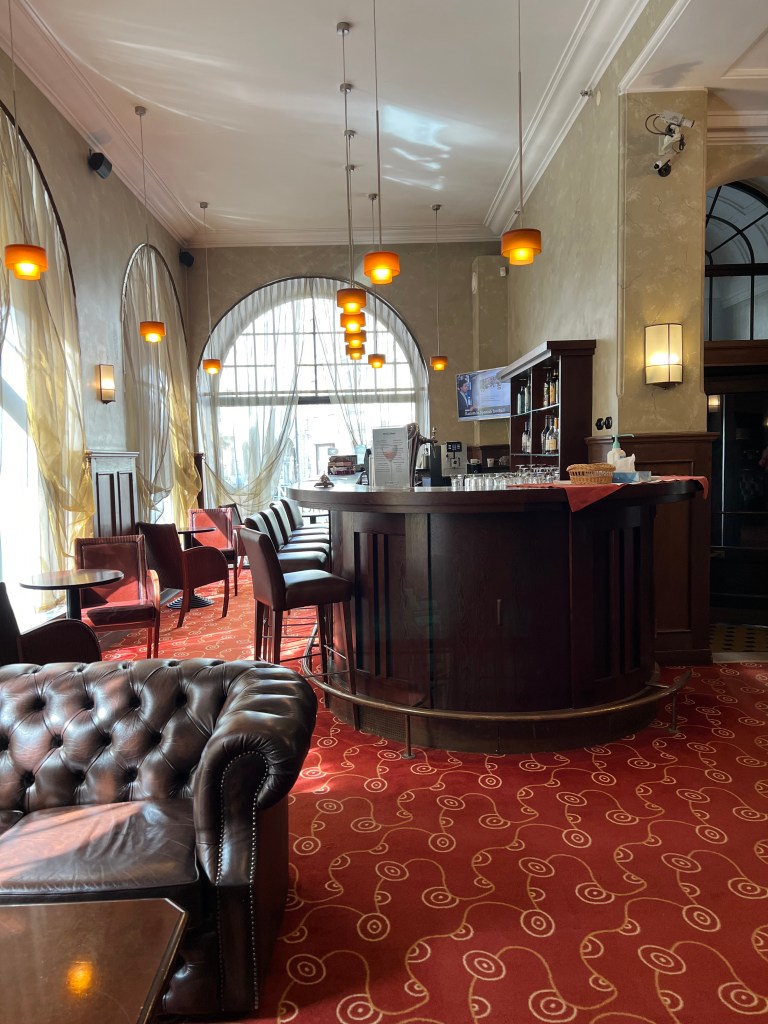
BARON’S HOTEL. Having once again benefitted from the kindness of strangers, we arrived at the Hestia Baron’s Hotel in the center of Old Town. The hotel lobby and restaurant where we have breakfast are in a prime location with the kind of filigreed elevator you would see in old movies of grand hotels—a nostalgic and beautiful antique setting.

The bedrooms are across the street, with the utilitarian elevator which carries three persons or two persons and two suitcases.
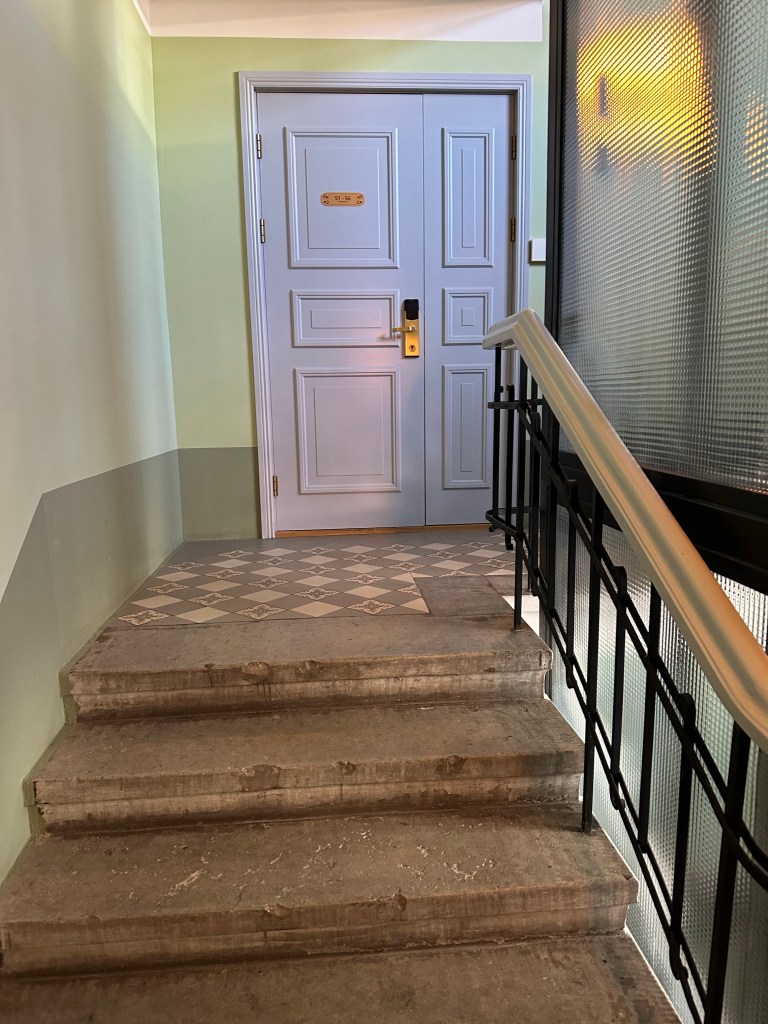
The room itself is huge if spartan. We settled in before heading out for Tourist Info and lunch at a restaurant on the ancient square.

OLD TOWN. Old Town Tallinn is an architectural preserve with ancient buildings of many styles depending on which foreigners were ruling at the time. The ancient and picturesque wall still stands around it. Restaurants and dwellings inside the wall are still in use.
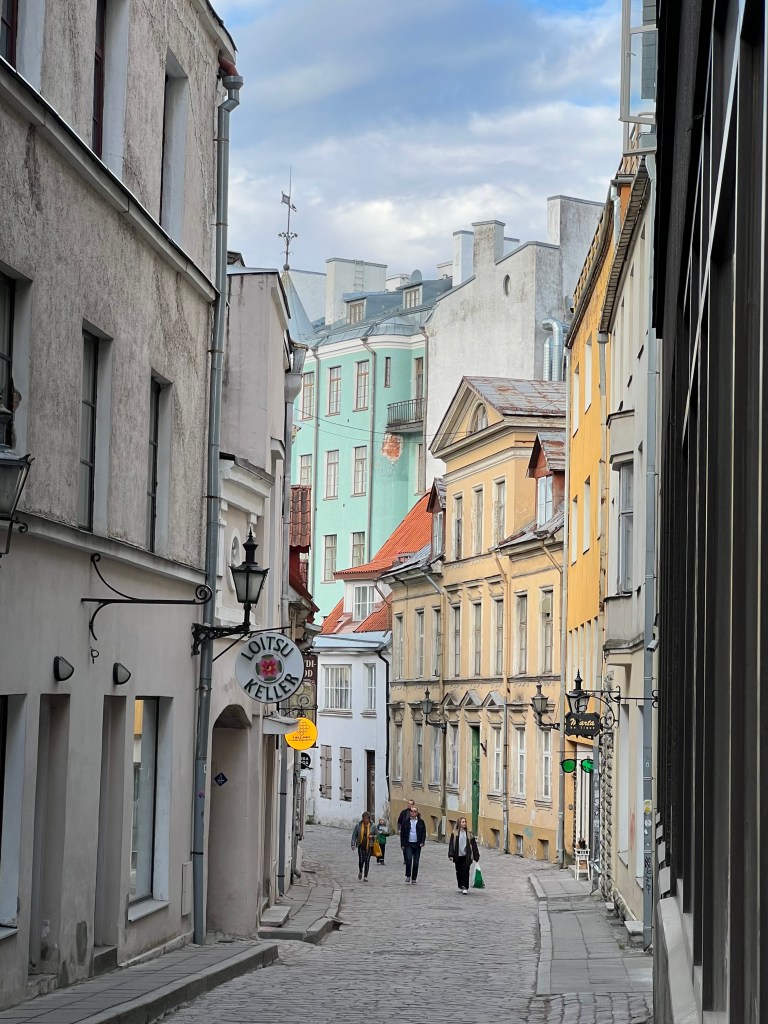

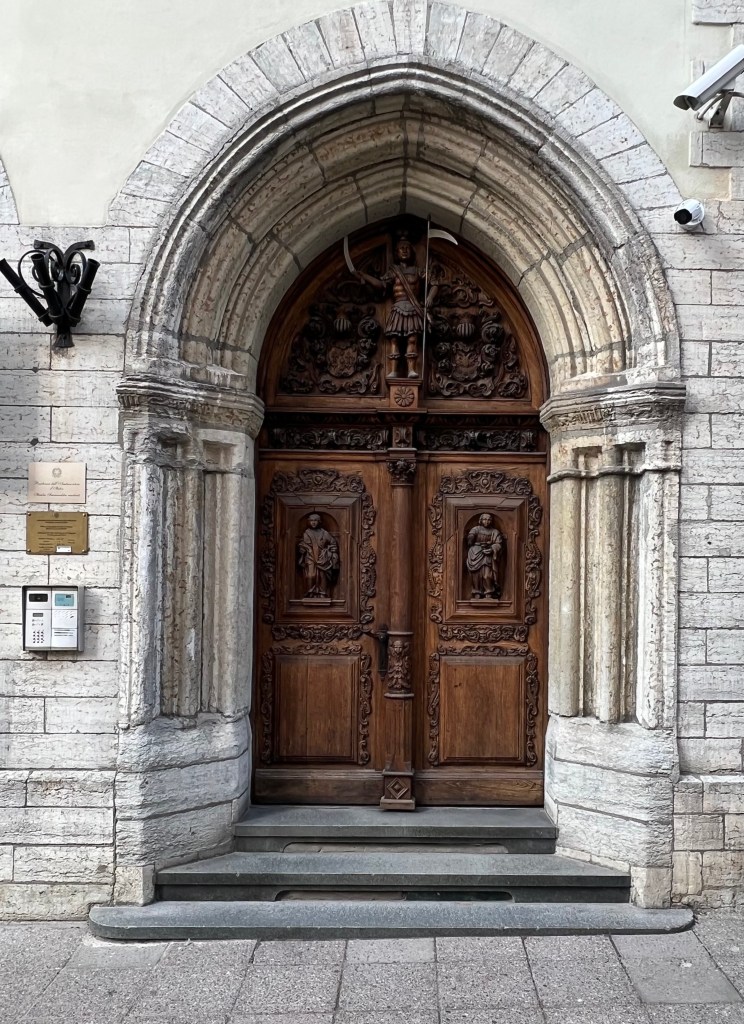
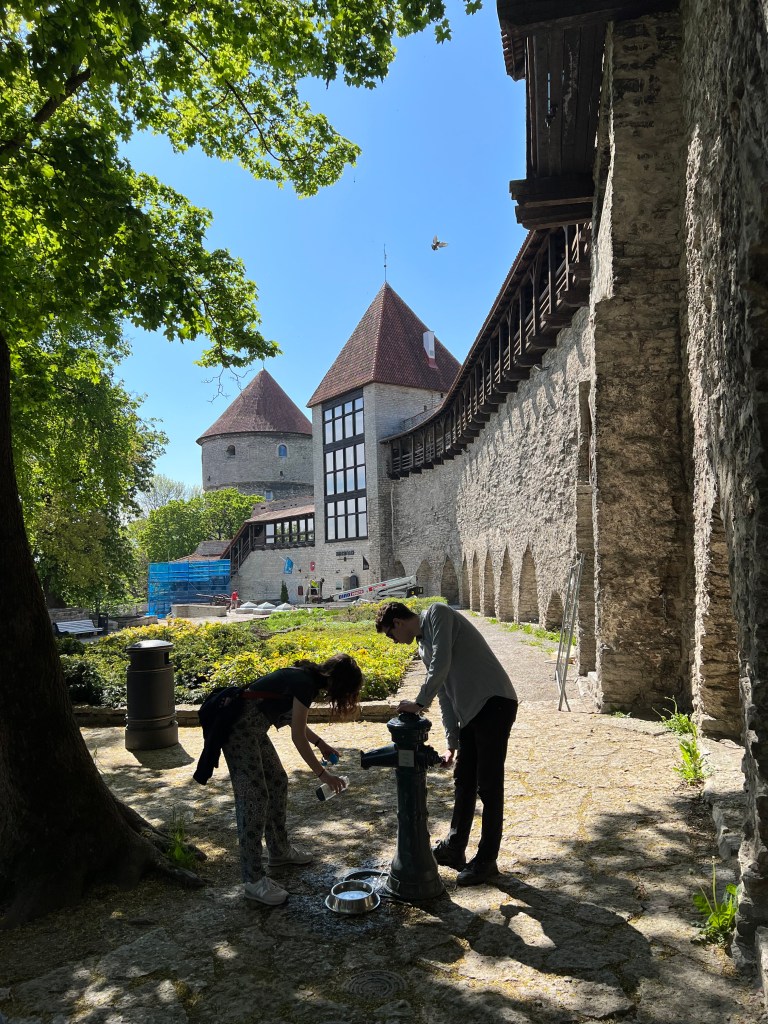
Instead of tearing down the Old Town, as Helsinki did, Tallinn kept the Old Town mostly intact from a sense of pride, history and practicality. They realized that reconstruction would cost more than they could pay and destroy the things they loved. Thanks to the town leaders for being frugal and insightful. The new suburbs and tram system spread out in concentric circles around the old walled town.
Tallinn is a very old city whose citizens were ruled, dominated, and massacred by larger countries and trading partners: Denmark, Germany, Sweden, Germany again, then Czarist Russia for almost 200 years, and finally Soviet Russia from 1945 to 1991. Estonia had only two periods of independence, the most recent after the fall of the USSR in 1991 when masses of Estonians stood around the telecommunication tower (their revolutionary lifeline), facing tanks, and refusing to disperse. We learned all this and much, much more on a two-hour walking tour of the old town.

GUIDED TOUR OF OLD TOWN. Kristofer, our fantastic tour guide, is a young Estonian, college graduate, and descendent of two historic lineages. He was a storyteller of the history of each place as we walked past: the Nevsky Church, the German Kirk, John’s Niguliste Church, the Dominican Abbey, Catherine’s Russian Palace, Parliament, and a dozen other places. Each has an important place in the history and hearts of the Estonia people who throughout tortured time held fast to their hope for independence.
https://en.wikipedia.org/wiki/History_of_Estonia

This is a link to the Wikipedia History of Estonia which can fill in many gaps in the fascinating and tumultuous history.  We put in photographs from our walk but would not attempt to get all the dates and people correct from the last 1000 years.
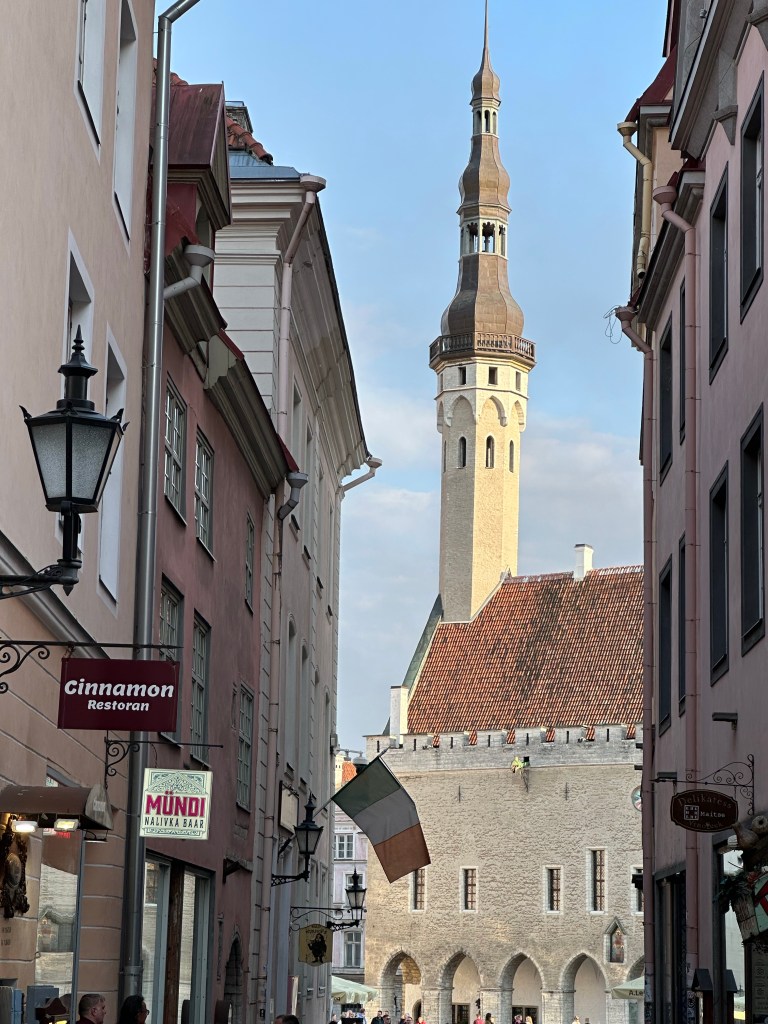
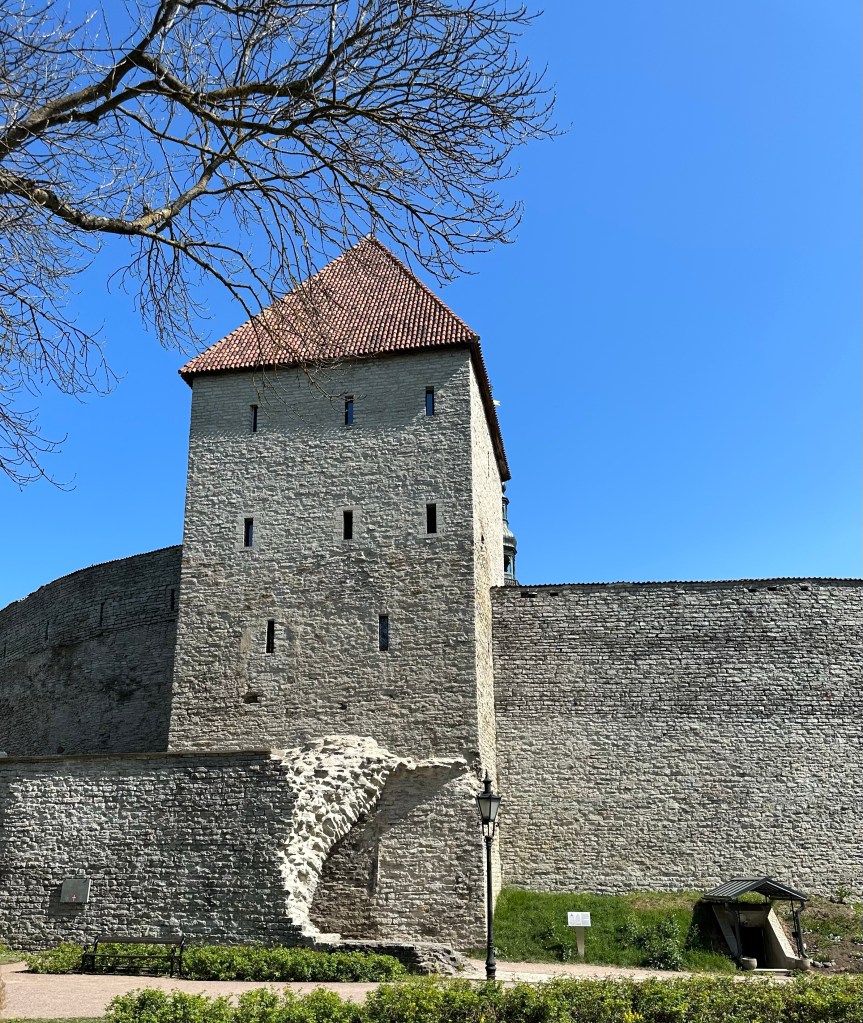
Kristofer joked that his father and uncle worked in the Russian offices before 1991, but were spies for freedom. He pointed out the ugly Soviet-age buildings that replaced those destroyed in World War II and by the Soviets during the Russification of Estonia. Additional street scenes of Tallinn are at the end of the blog.
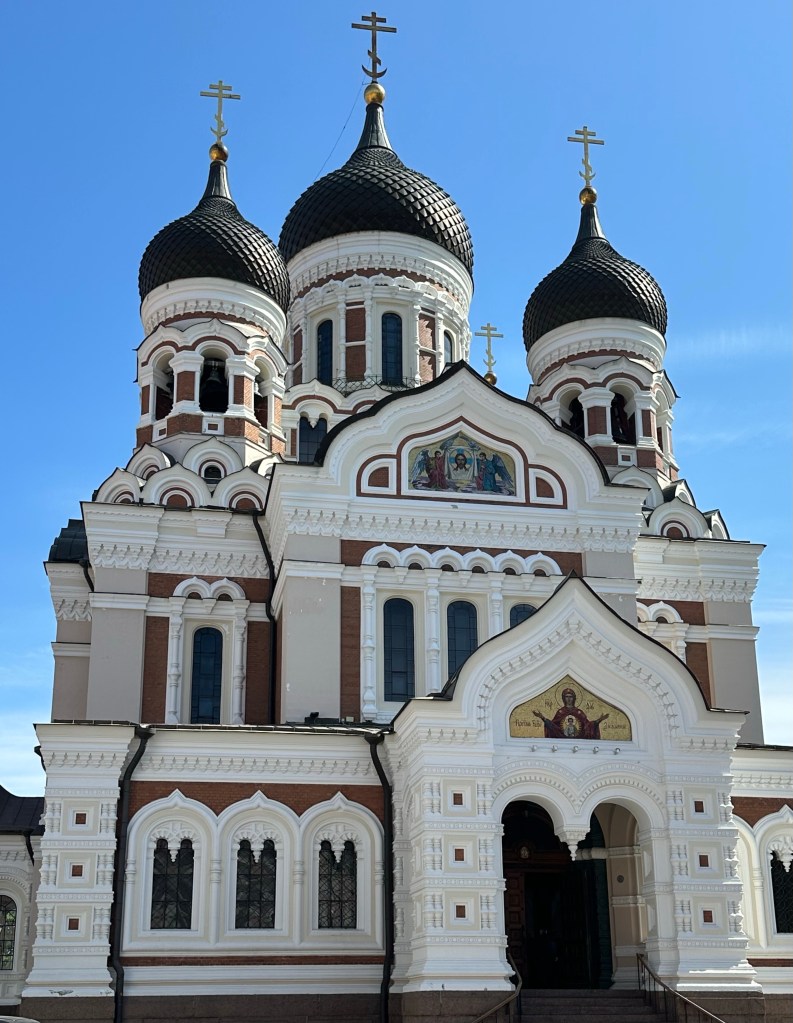
Kristofer was excited that Estonia is joining NATO bolstering the defenses against Russian aggression. The Estonian Air Force consisting of two helicopters and one prop plane is now supported by two USA B52s from NATO. Many Ukrainian refugees have fled to Estonia which increases the concern about Russian intents. In fact, the population of Estonia is 49% Estonian and 44% Russian, with language being a major divide and a societal problem.
The guide was beyond excellent in style, delivery, clarity, and humor. He talked about the Estonian language which is among the most difficult to learn. Estonian has no gendered words or future tense, but 16 possible suffixes to change the meaning of root words. He works for tips and earns them.
Several restaurants advertise Estonian cuisine, Kristofer said there is no traditional Estonian cuisine except vegetables. Meat was too expensive, and fish was only for the fishermen. Also he warned about the “Baltic Amber” offered in many shops. He said “beware” there is no Baltic Amber.
FOTOGRAFISKA. The two-hour walk up and down the cobbles demanded an hour nap before our next adventure to a funky post-industrial compound where the Fotografiska museum was showing three exhibits.
Large scale, brightly hued photos of glamorous women in household and everyday situations were the centerpiece on one floor. A video of the photographer Miles Aldridge emphasized his depiction of the emotional isolation of women in a world of commercial extremes. Another photo essay, “Sophie,” followed a young Russian woman and her world.
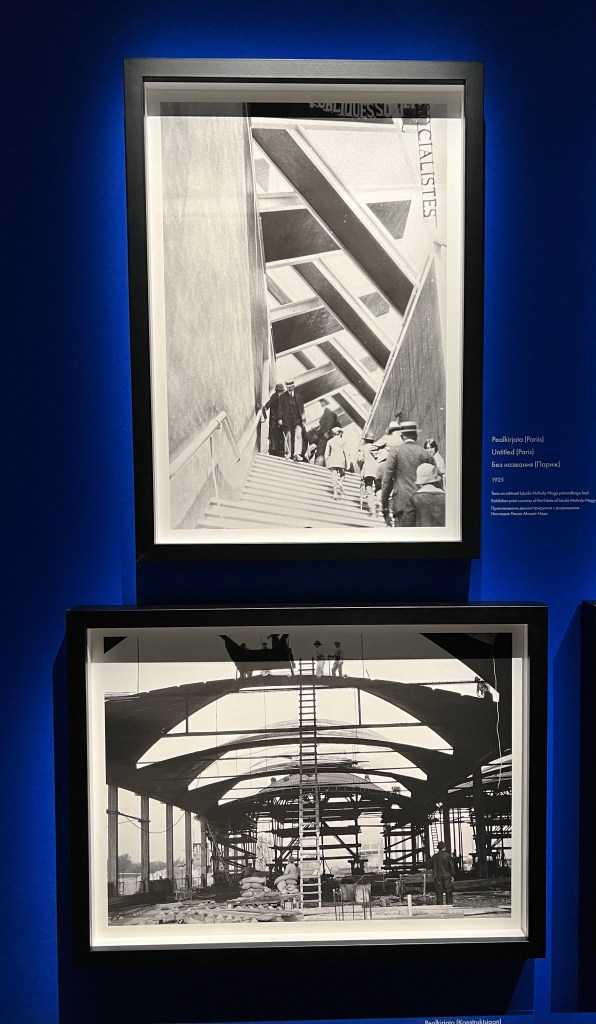
The most stunning exhibit was a reconstruction of the experimental photography of Laszlo Moholy-Nagy, a leader of the Bauhaus movement. The museum organized photos, still and moving, not seen in almost 100 years. His work moved photography from simple depiction into abstraction and mystery.
The local ice cream shop La Muu, recommended by Kristofer, was across the courtyard from Fotografiska. He said La Muu was delicious and half of their flavors are vegan.
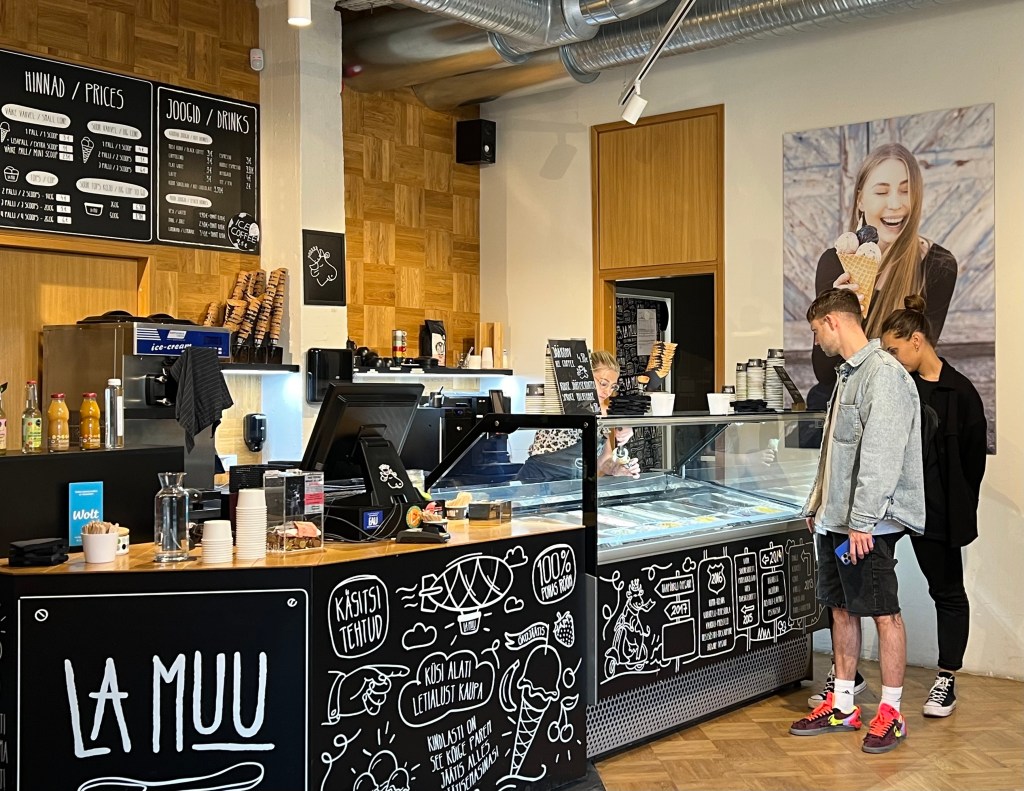
Becky got strawberry and I had cherry vanilla—both mighty fine on a hot afternoon 68 F* in Tallinn. Also in this compound was the Juniperium distillery which Kristofer mentioned. We hope we can locate their gin, especially a spicy rhubarb blend, in the USA. We had a light dinner and early night.
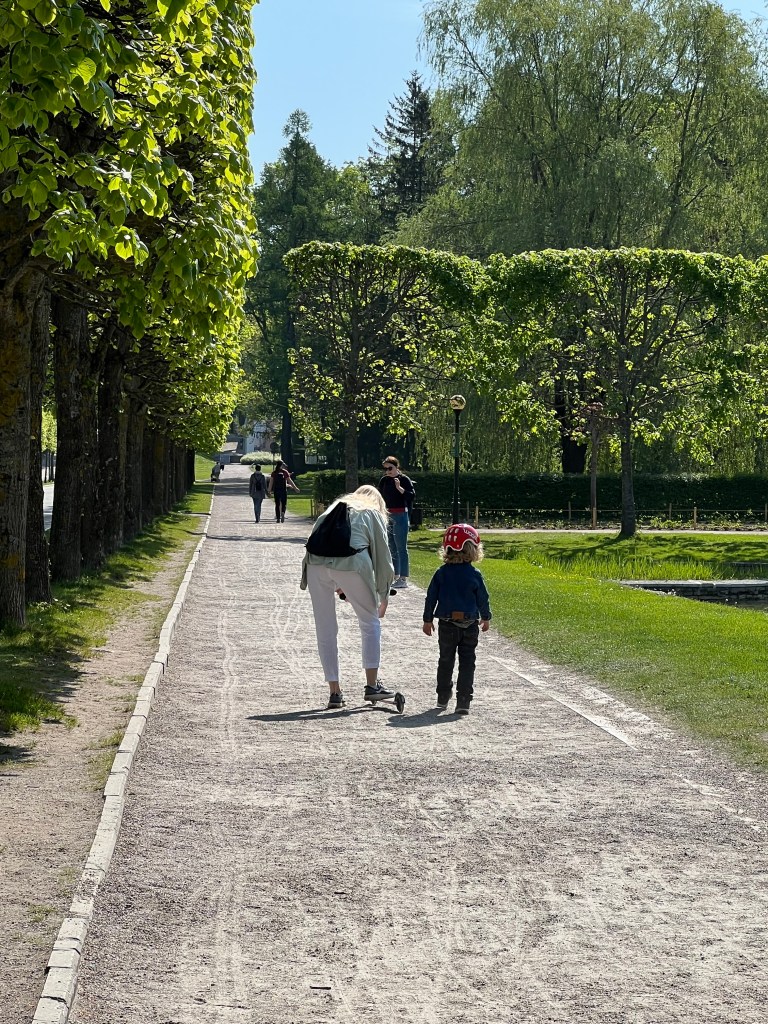
KADRIORG. Next morning, we jumped on the tram to Kadriorg, a huge park east of Old Town that Czar Peter built as a summer palace for his wife. He also built himself a summer house separate from the palace.
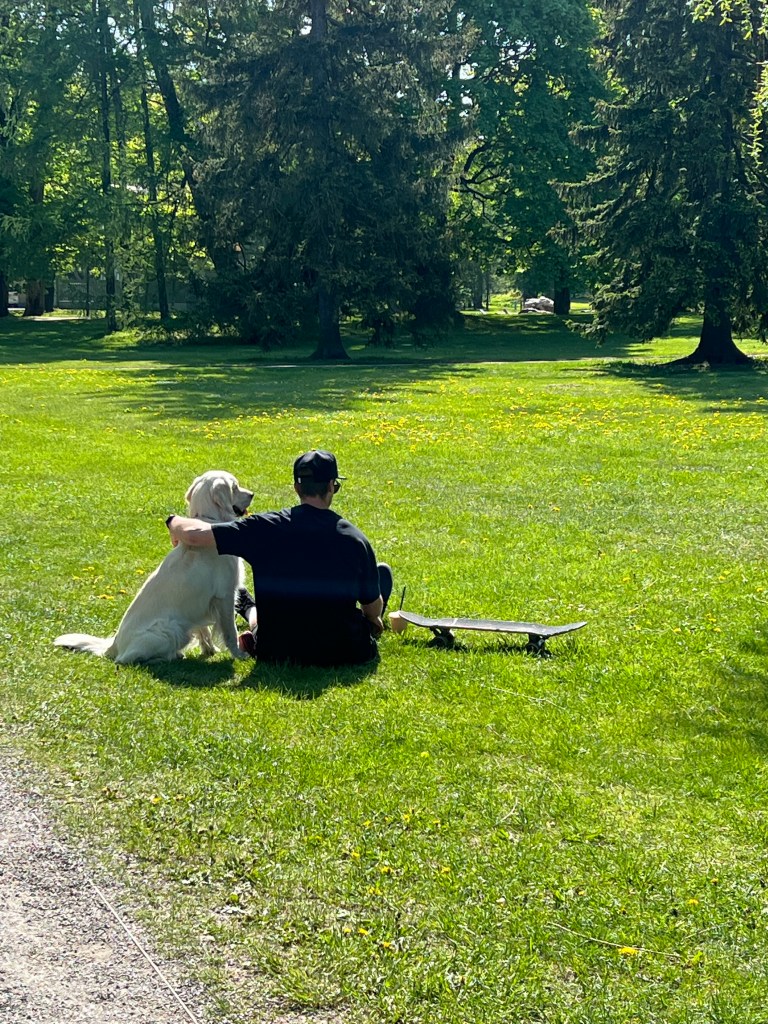
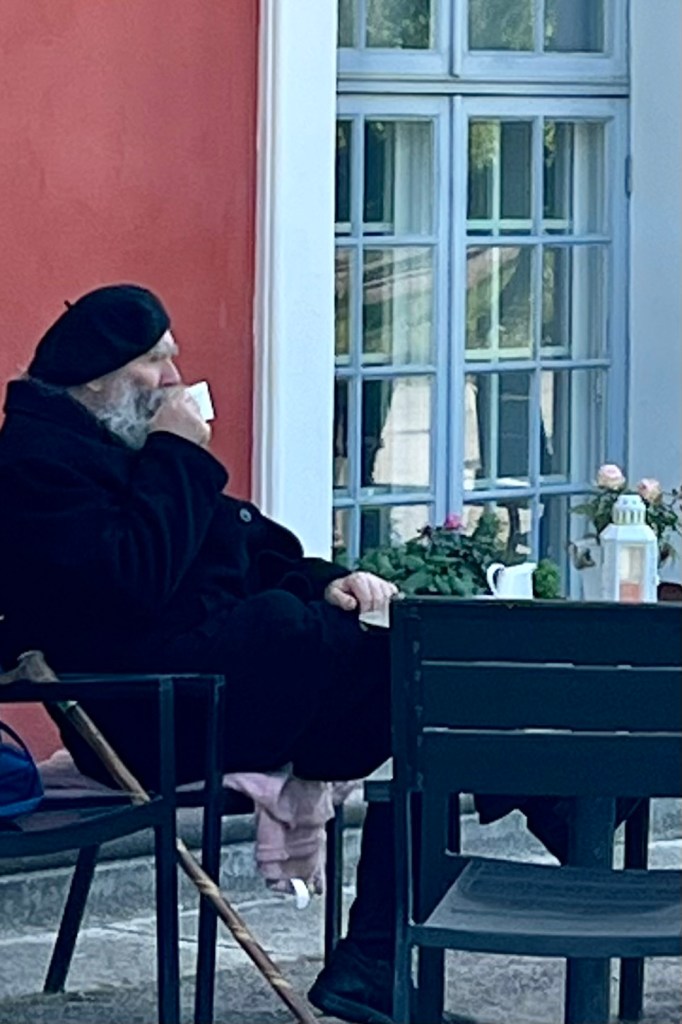
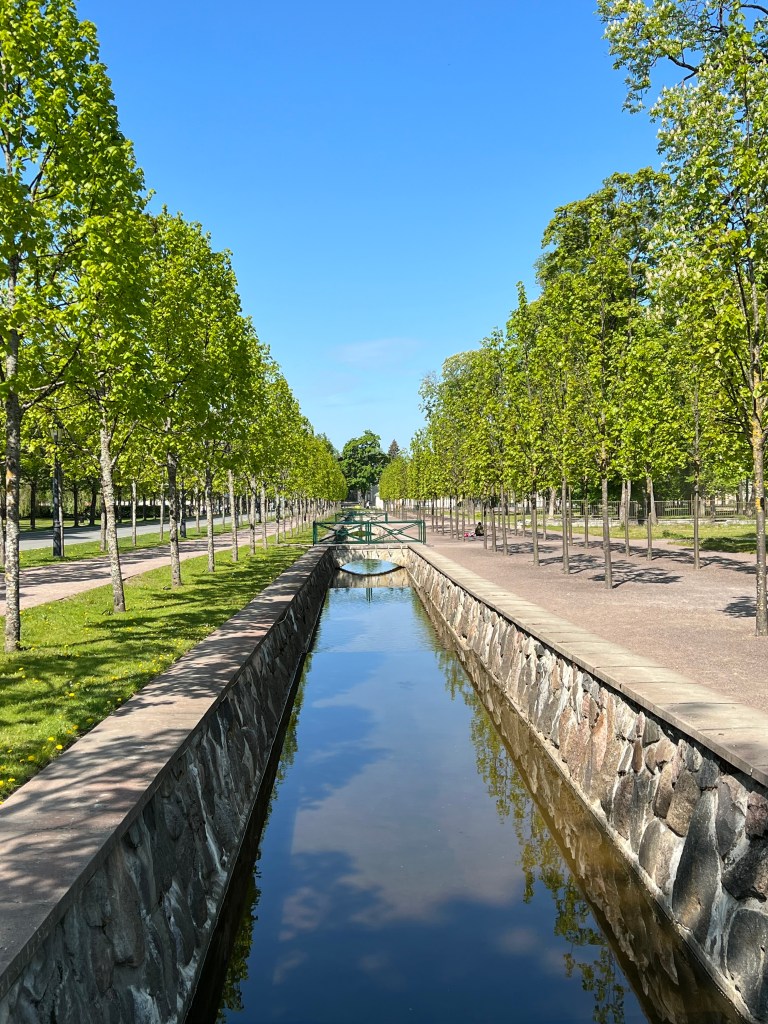
Now the palace houses a extensive collection of 17th, 18th, and 19th century landscapes and portraits mostly from the Netherlands. Dutch paintings were most prized at the time and evidence of the ruler’s wealth.

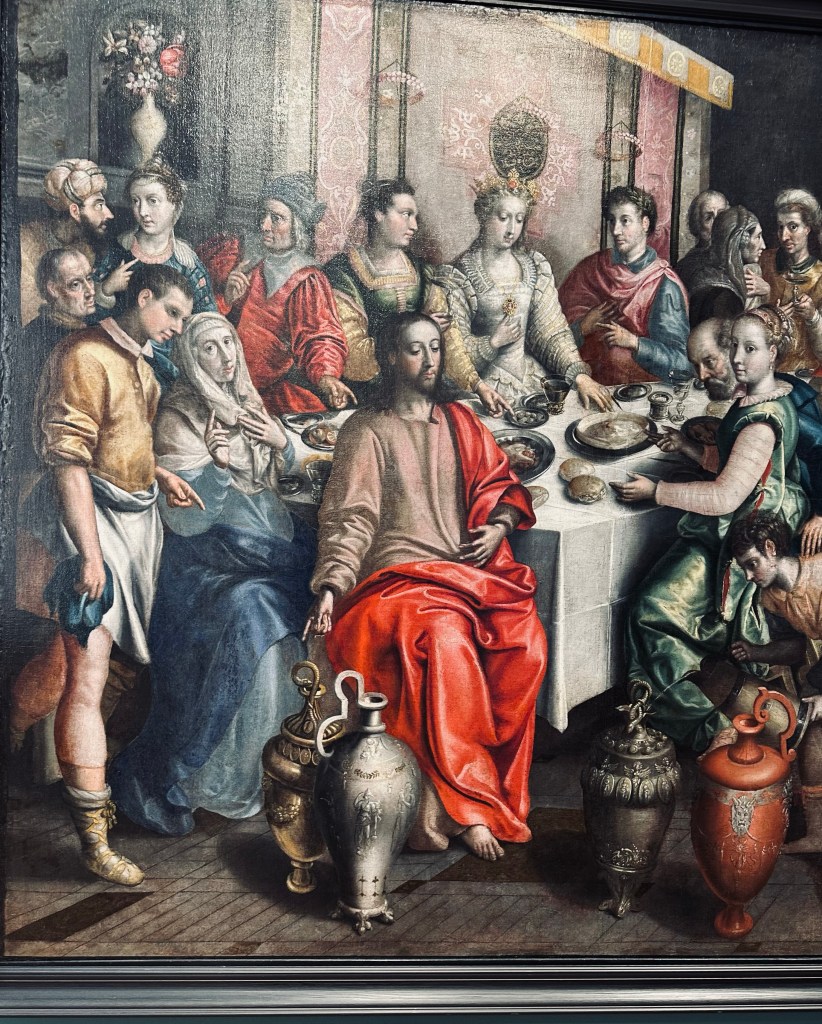
showing first Communion and commissioned by Wine Merchant Guild
Unknown Artist in the style of Maarten de Vos.
I could not decide whether the guests or Jesus looked more uncomfortable.
A small gallery held the work of Estonian impressionist and expressionist painters 1880-1930. More modern paintings are in thumbnails at the end of the blog.
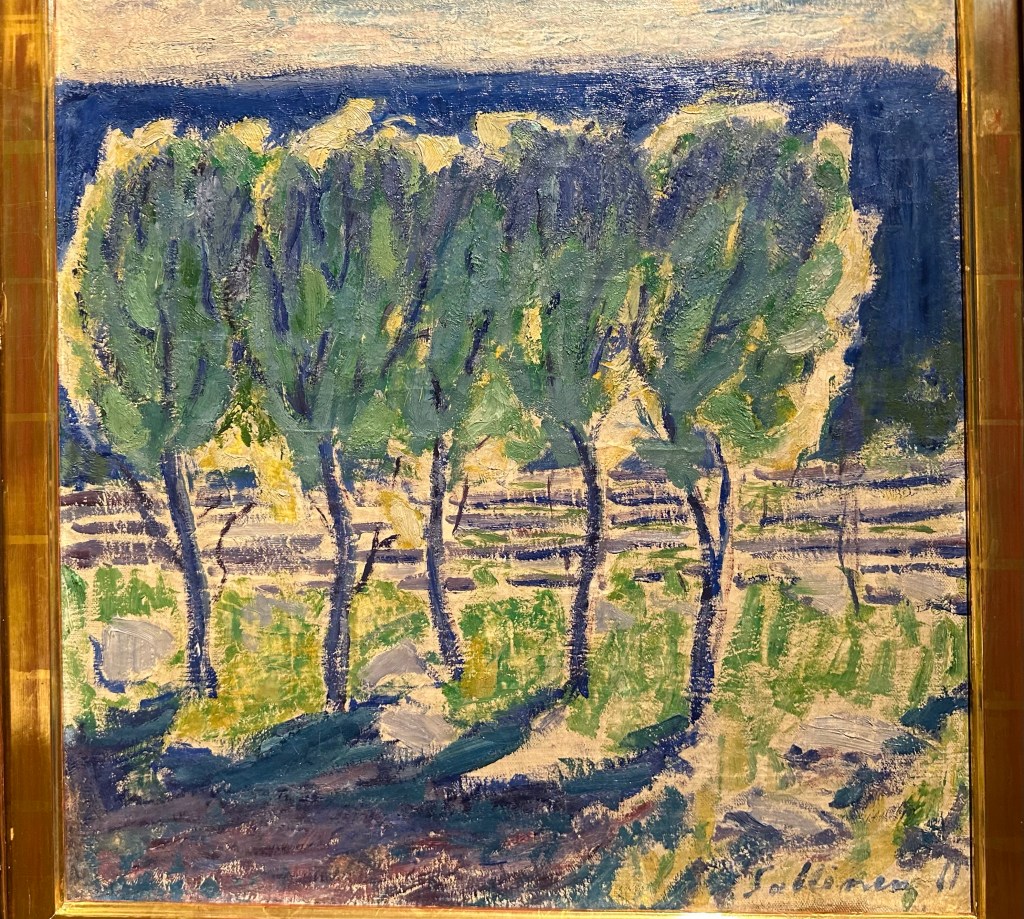
a leader of the Septem group of impressionists
We stopped for coffee and juice before moving on. We are getting better at pacing ourselves. Also on the grounds are the Mikkell Muuseum and the KUMU Contemporary Art Museum. Mikkell collected a little bit of many things that he liked: paintings, porcelain and china, prints and photographs, silver and embossed work—very idiosyncratic and some quite beautiful.

The KUMU is a contemporary building for contemporary art, especially Estonian and related Soviet art of the 20th century. One exhibit focused on the ecological and cultural devastations of fossil fuels, agriculture, and contaminants. A very graphic film showed a round up of reindeer for their horns and meat. Tough to watch, hard to think about, and that was the point. Artists in Estonia during the Soviet period had to be very careful because everyone was under suspicion and an “error” could have consequences. Our guide said that 20,000 Estonians disappeared during Soviet rule.
We rode the tram to the end of the line before returning to the Old Town. This took us through the suburbs where most people live in giant apartment blocks. But it was interesting to see where real people in Estonia sleep, shop, and play.
WRAPPING UP TALLINN. Our habit is to have one really good meal in each city. In our walking, we discovered an Indian restaurant down a small alley. It looked charming and the menu was great. After requisite nap, we walked to Chakra for one of the best Indian meals ever—samosas, garlic naan, palak paneer, and murg jalfrezie. Five star with 2 or 3 peppers.
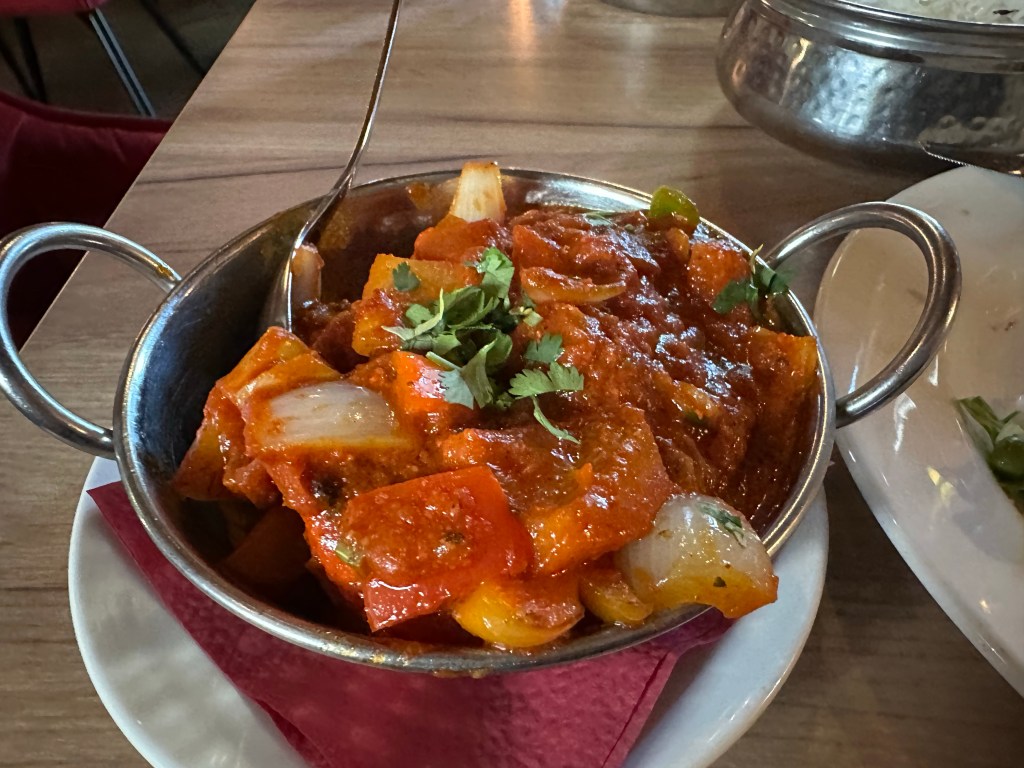
The amazing food was served in a beautiful setting actually carved into the old city walls and decorated with beautiful Indian fabrics and great service.


For the walk back to the hotel, we wandered through more of Old Town cobbled streets looking in windows.
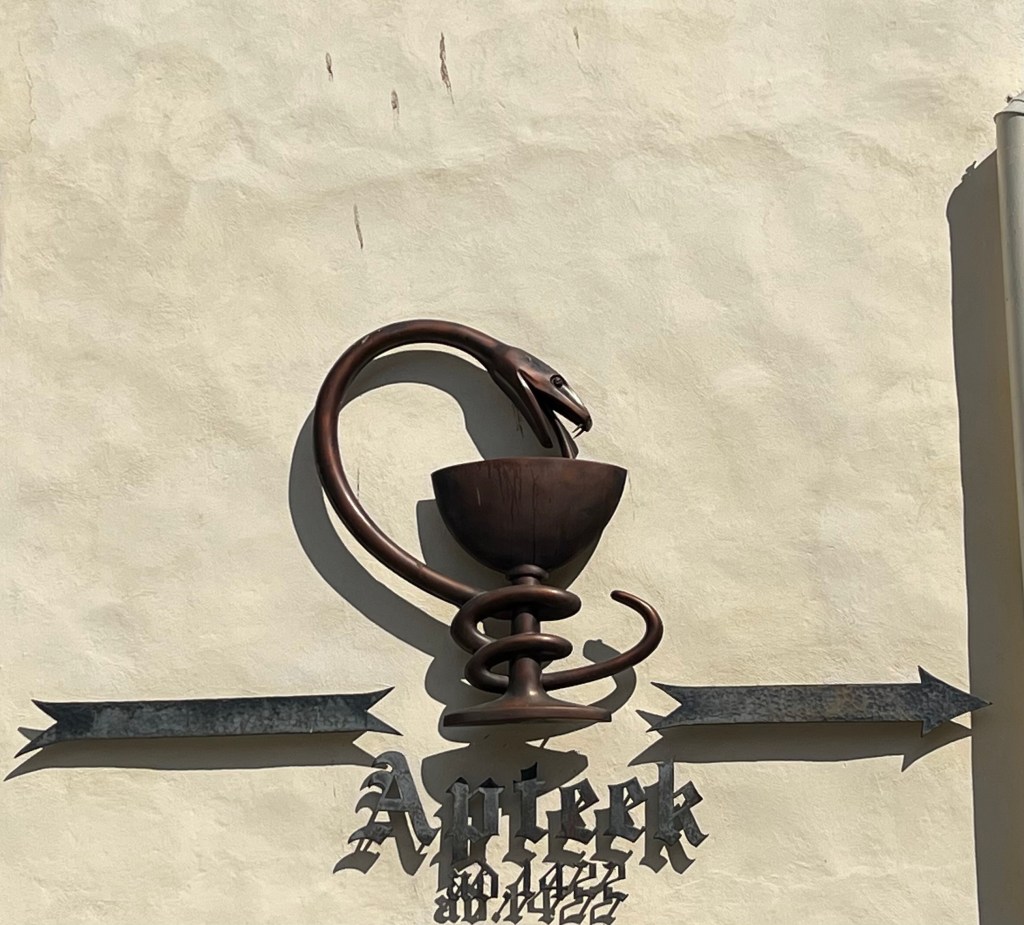
The agenda for our last day was “nothing” except getting ready for the overnight ferry to Stockholm: sleep later in the morning, breakfast at leisure, repack for overnight on the ferry. We wandered down to the Old Town Square where Becky went into the Antik Apoteek, the oldest apothecary shop still operating. It began during the plague. I found an Estonian T-shirt in a souvenir shop.
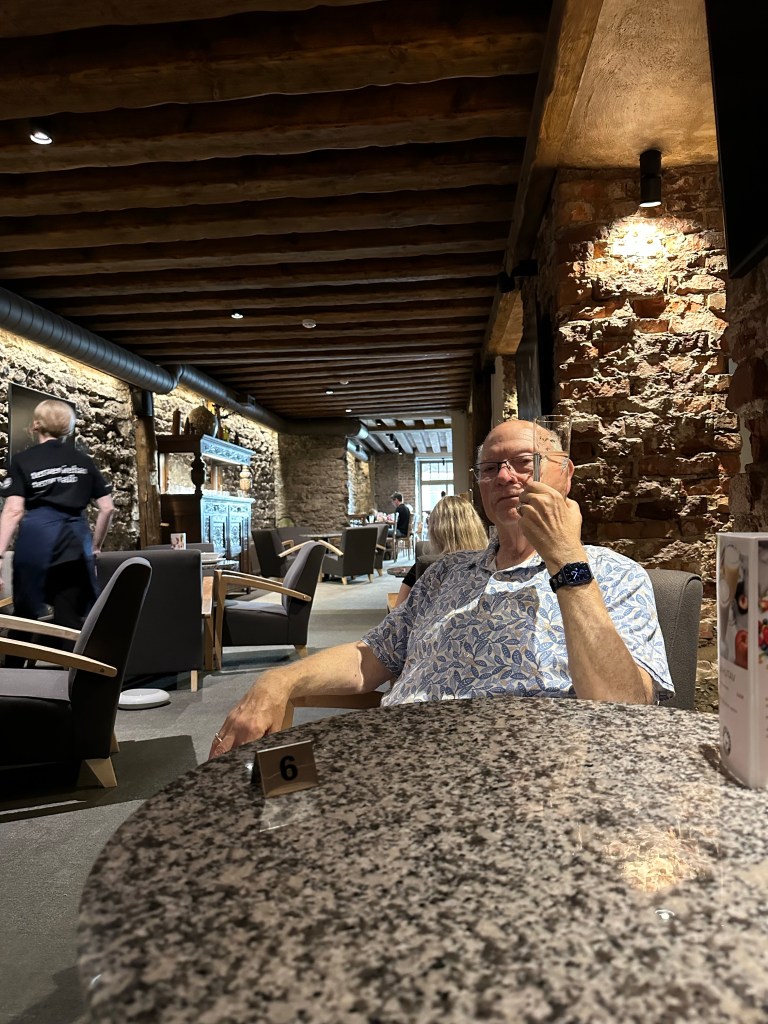
We had a light lunch at Reval, another cafe which has been built into the ancient wall. It felt like eating in a cave with rock walls.
Next came gathering luggage, getting a Bolt (Lyft) ride to the terminal, and checking in the ferry.
FAREWELL TO TALLINN. We were thoroughly charmed by Tallinn. Being much smaller than the other cities, it is more navigable. We would go back if that is ever a possibility.
MORE SCENES from TALLINN
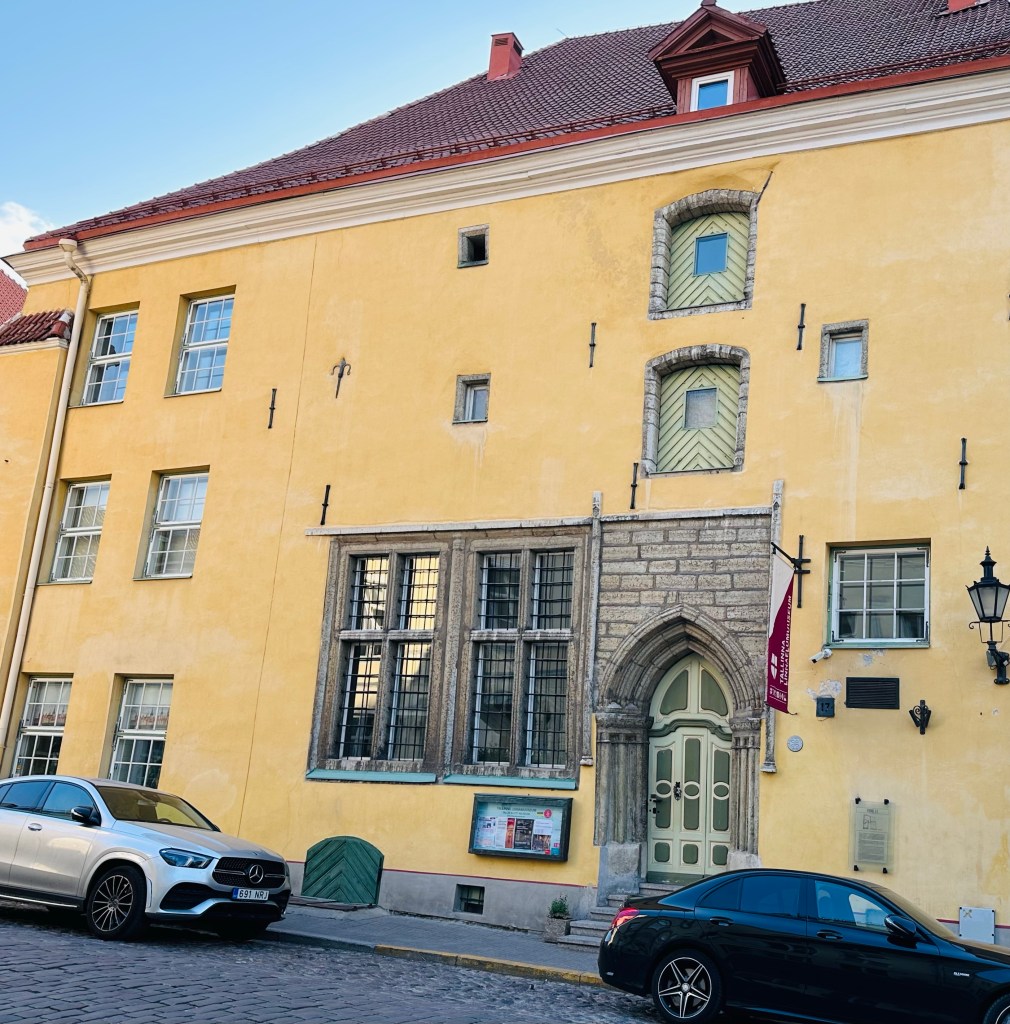
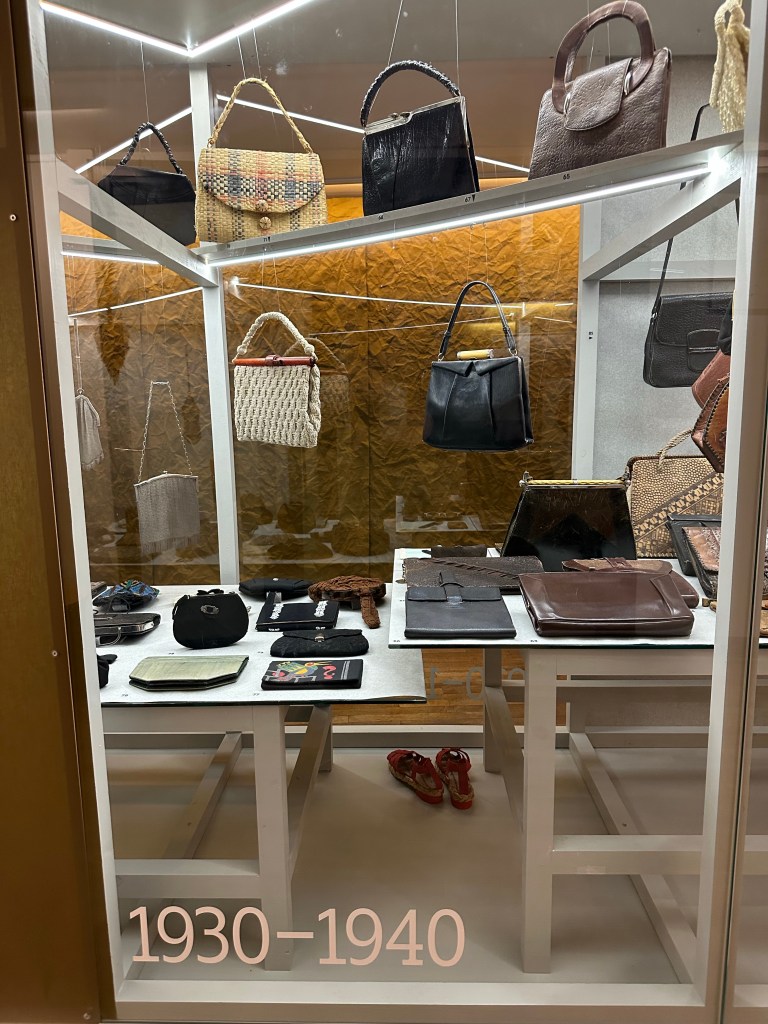
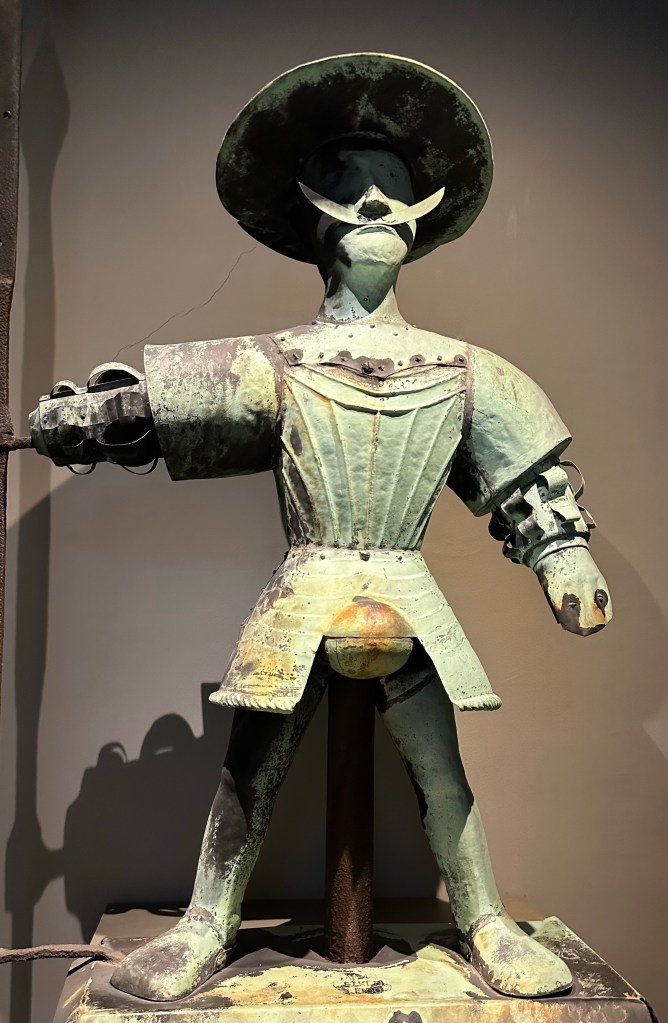
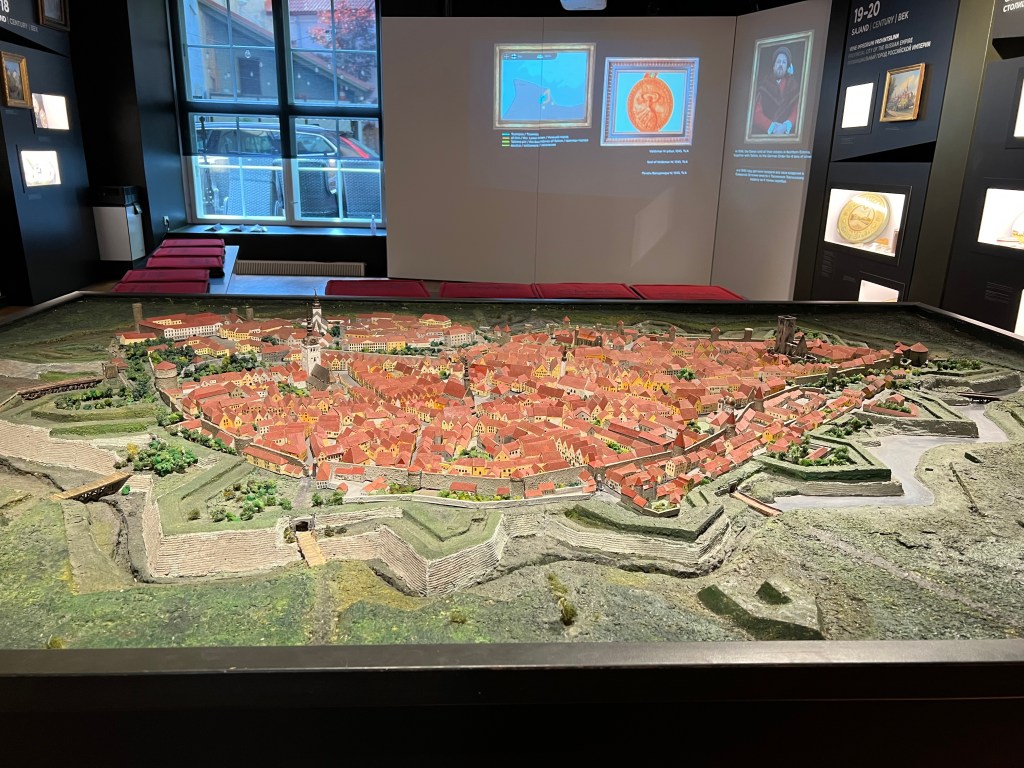
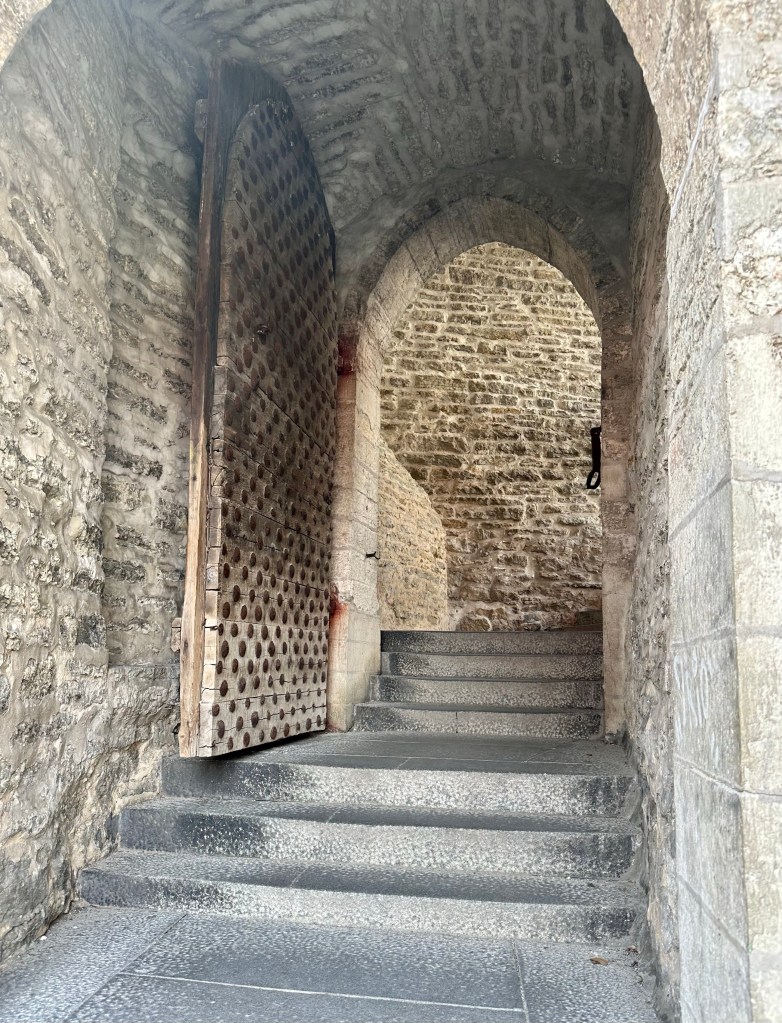
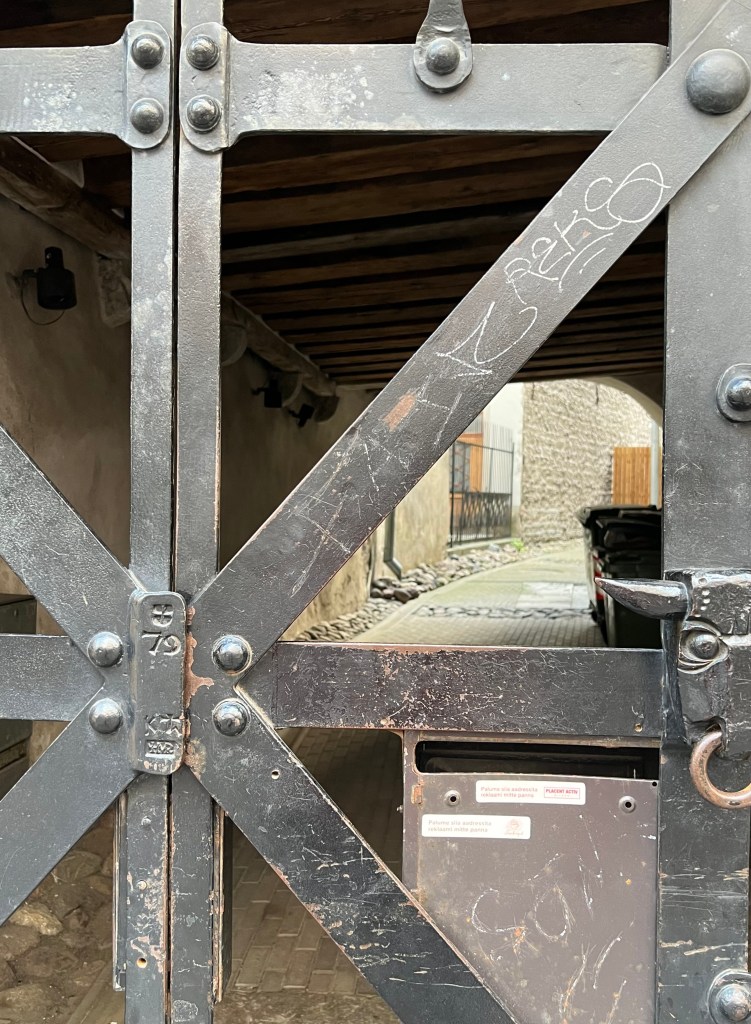
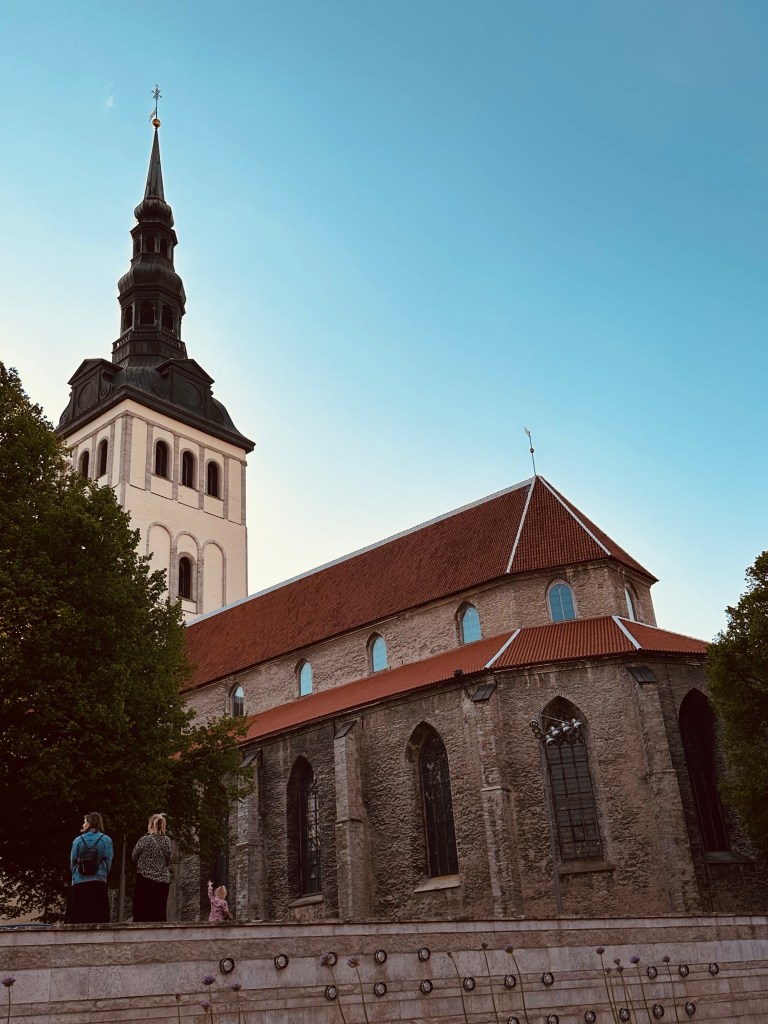
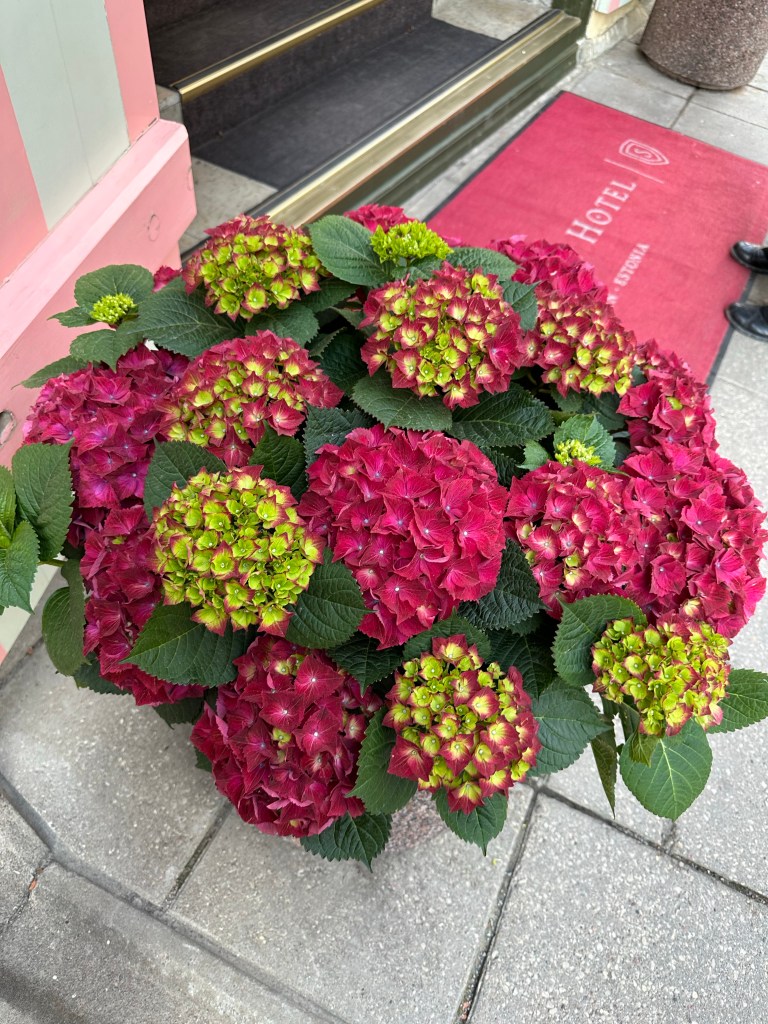
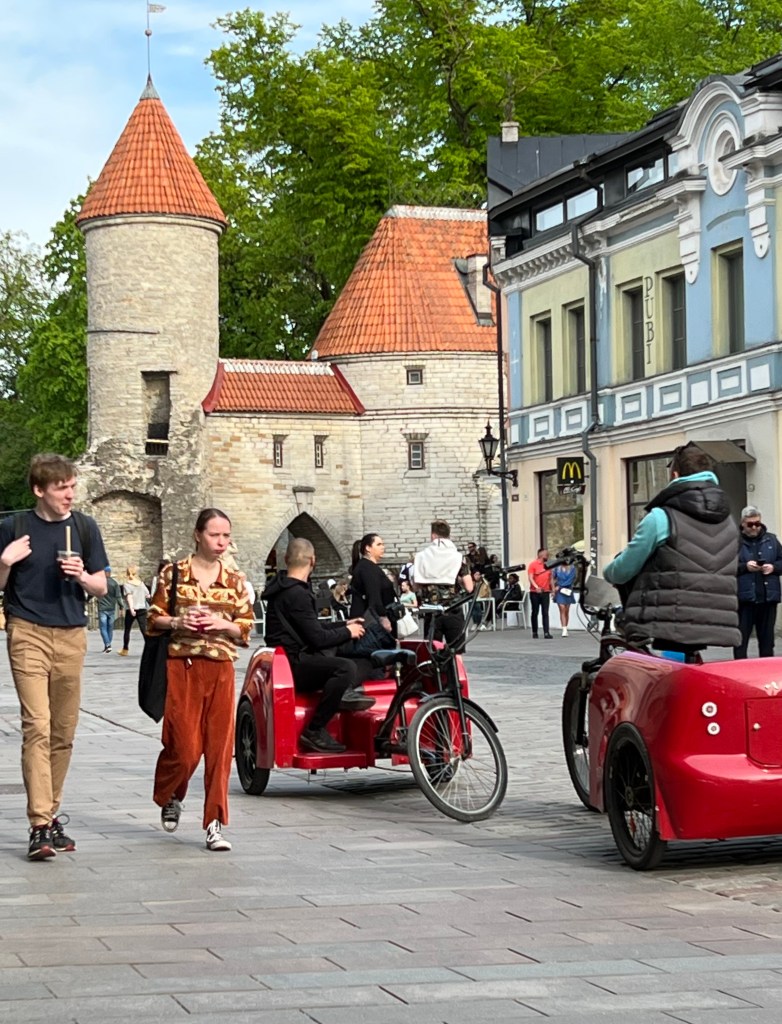
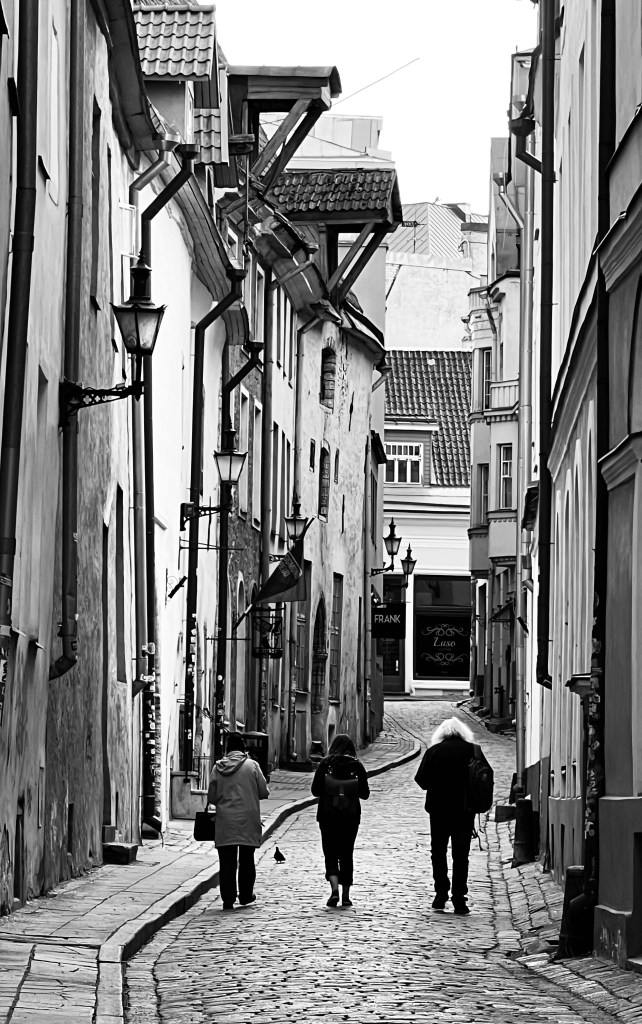
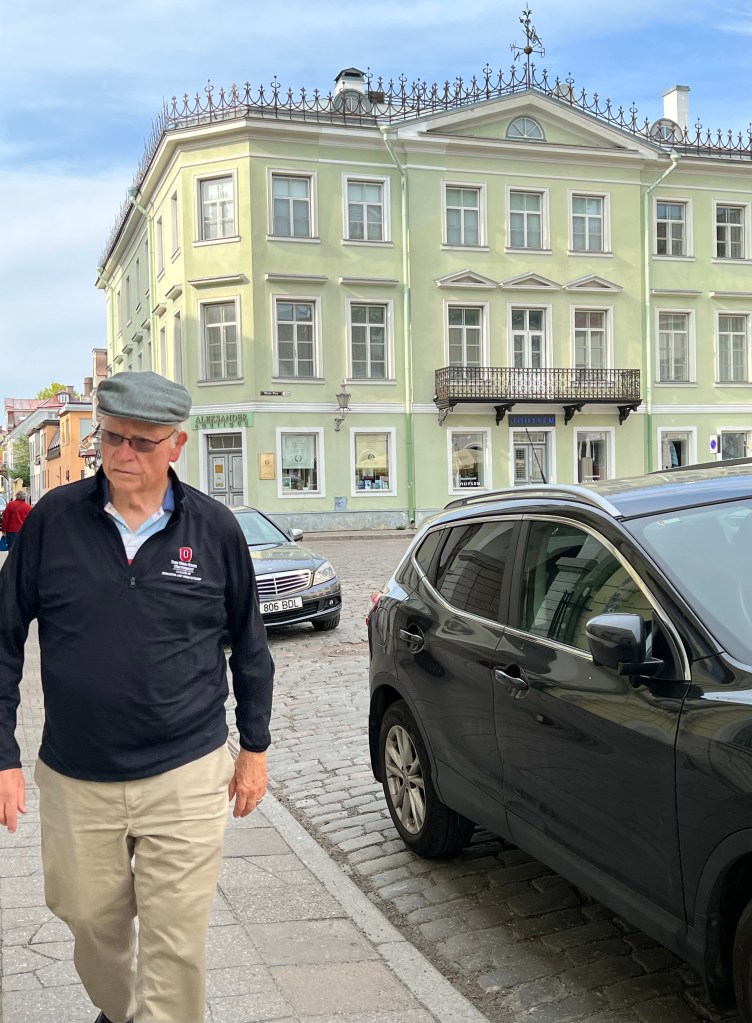
in the Cobbles
Modern Artwork Steve liked in Tallinn Museums. Enlarge thumbnails by tapping once or twice.

Oskar Kalisz 1917
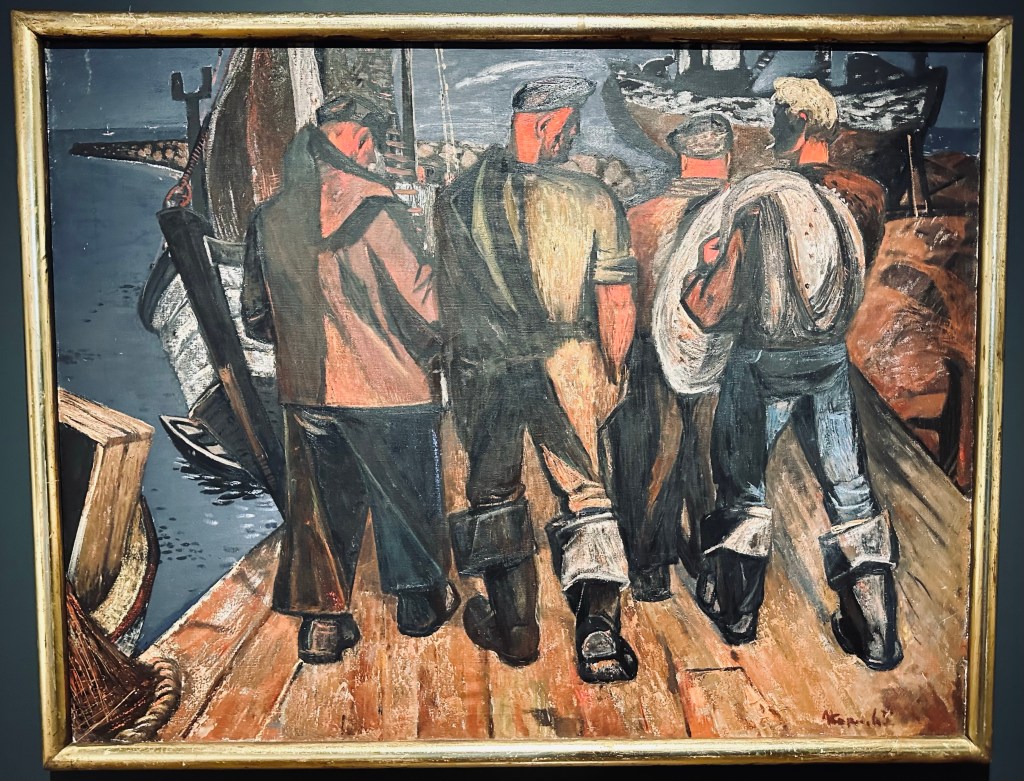
Nikolai Kormasov 1963
Marsden Hartley style
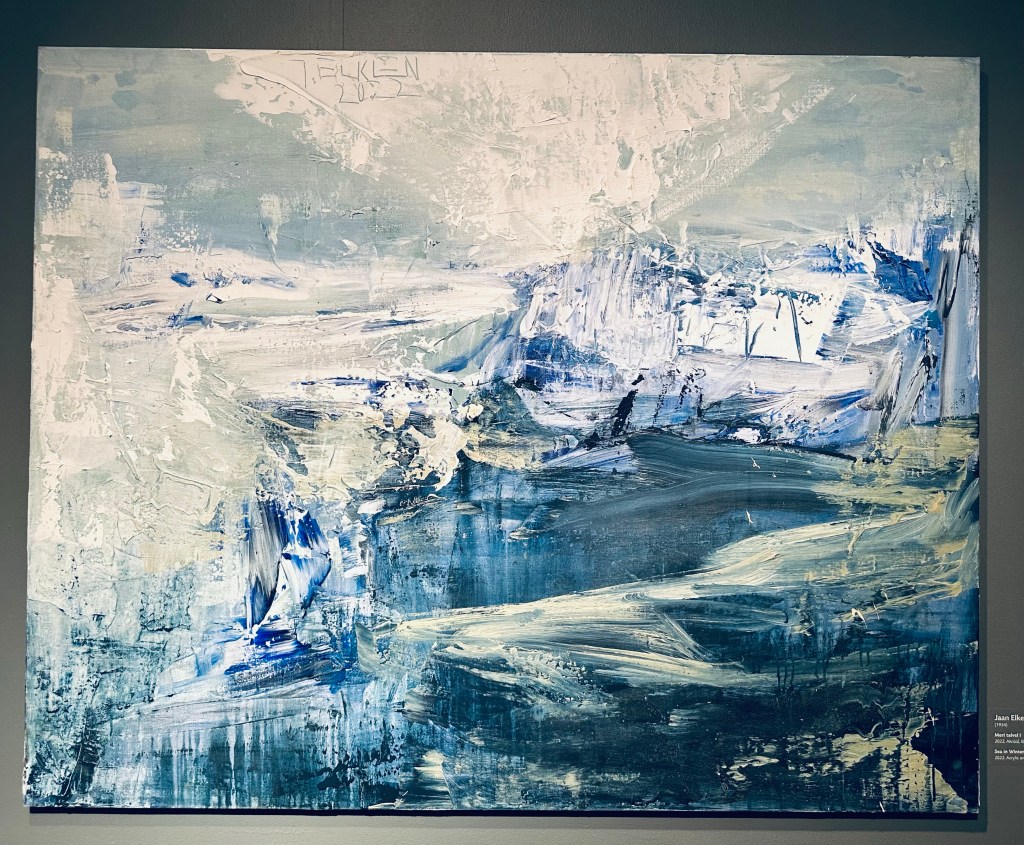
Jann Eiken 2022
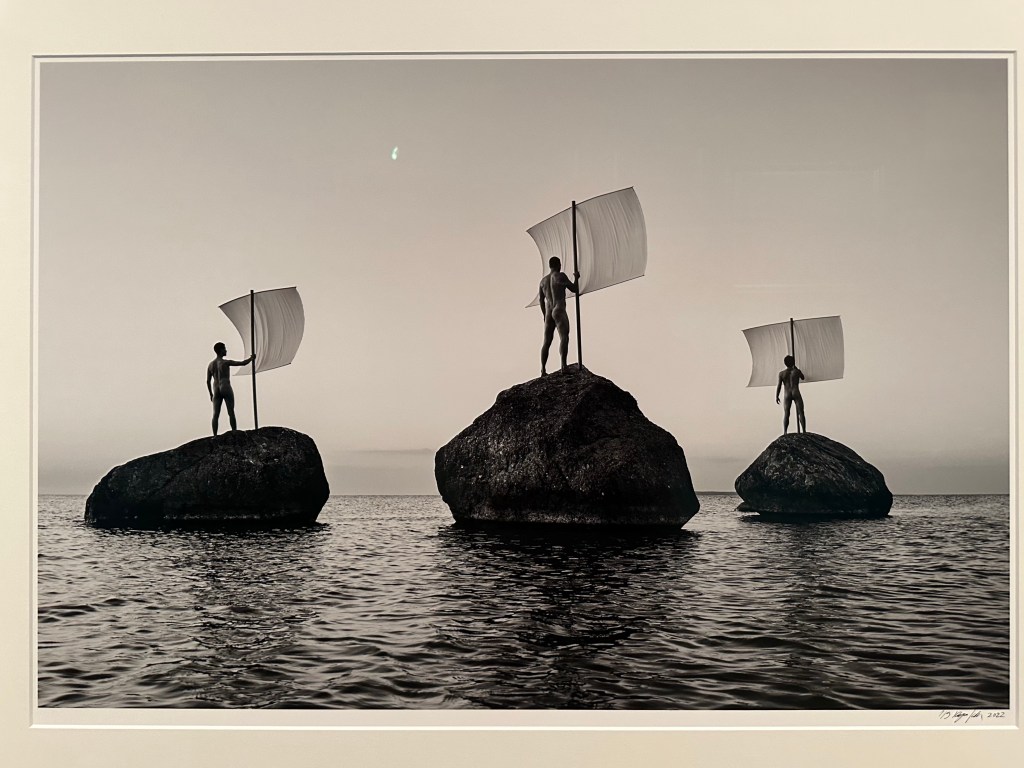
Photograph
Kaupo Kikkas 2023

Abram Arhipov 1916
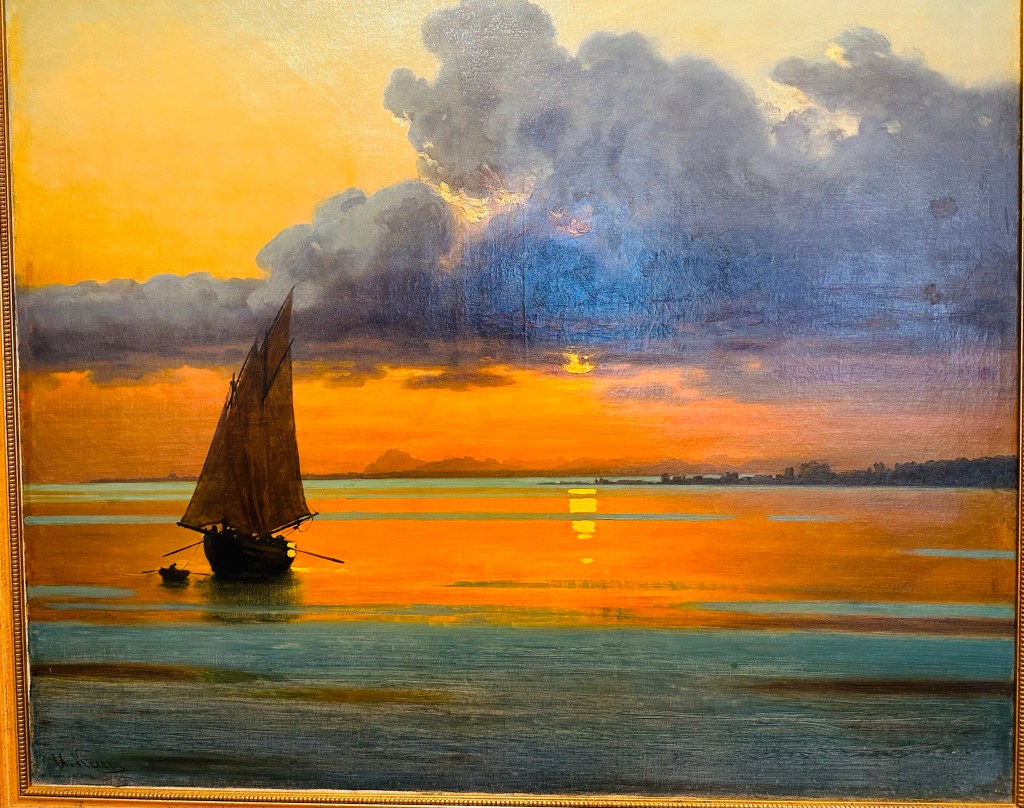
Johann Koler 1887
 Tipps for Travel