Our midafternoon arrival in Gothenburg came after a long train journey from Copenhagen. The map showed straight-shot walk along the Gota Canal to the Comfort Hotel. A 12-15 minute walk was what we needed after train-sitting for 5 hours. We thought it should be an easy stroll and roll event.
We did not anticipate the numerous tram tracks embedded in the cobbled streets— running both parallel and perpendicular to the route. Add the continually moving trains, buses, taxis, bicycles, and pedestrians. Our easy stroll became an obstacle course with luggage. We trod carefully without mishap. PT, Yoga, and balancing exercises have helped us tremendously.
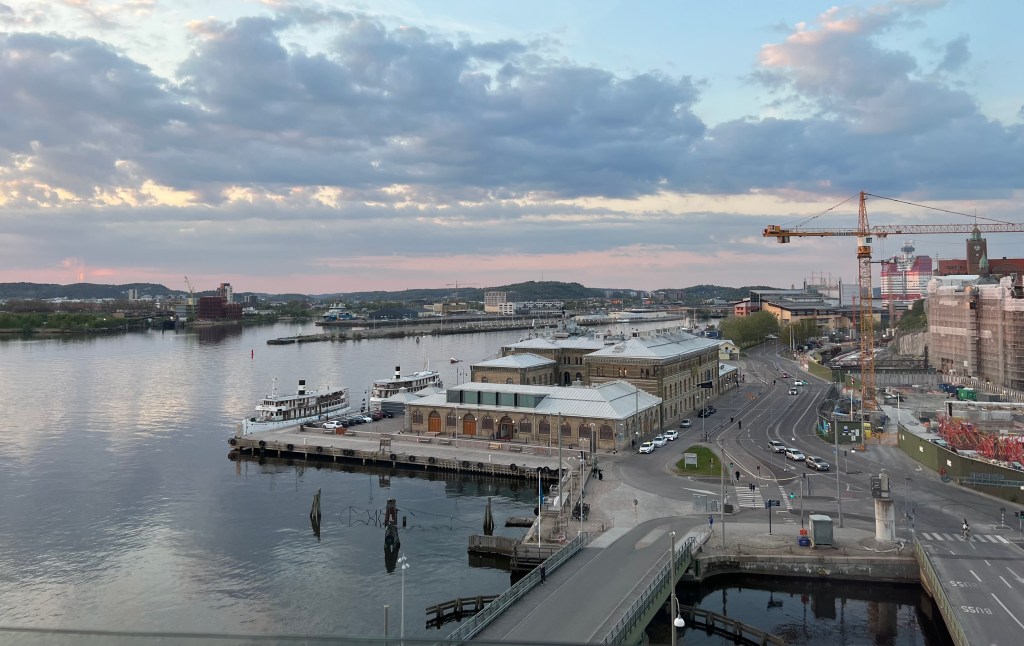
Why visit Gothenberg (English spelling) or Göteborg (Swedish)? It is the second largest city in Sweden and home to Volvo and IKEA. Second, it has its own proud history and personality. Third, it is halfway between Copenhagen and Oslo, and a convenient stop on our tour.

The Comfort Hotel in Gothenburg is a modern, 7-story business hotel with 4-star amenities: breakfast, gym, sauna, rooftop bar, and restaurant. Such luxuries are welcome after tourist hotels with twin beds and few amenities.
We sometimes take the Hop On-Hop Off bus to get our bearings in a new place. Although we had tickets for the arrival day, the HOHO was not running until the third day. The HOHO in Gothenburg was the most lackluster recorded travel guide we ever heard. Another issue with HOHO is that they sell a tour package with admissions to 20-40 local tourist spots. This appears to be a bargain, but it can be a waste of money, since going to that many places in 2 or 3 days is not feasible. We prefer to pay for the places we want to visit unless the city card really is a bargain like the MuseumKort in Gothenberg which covered all four city museums for the price on one.
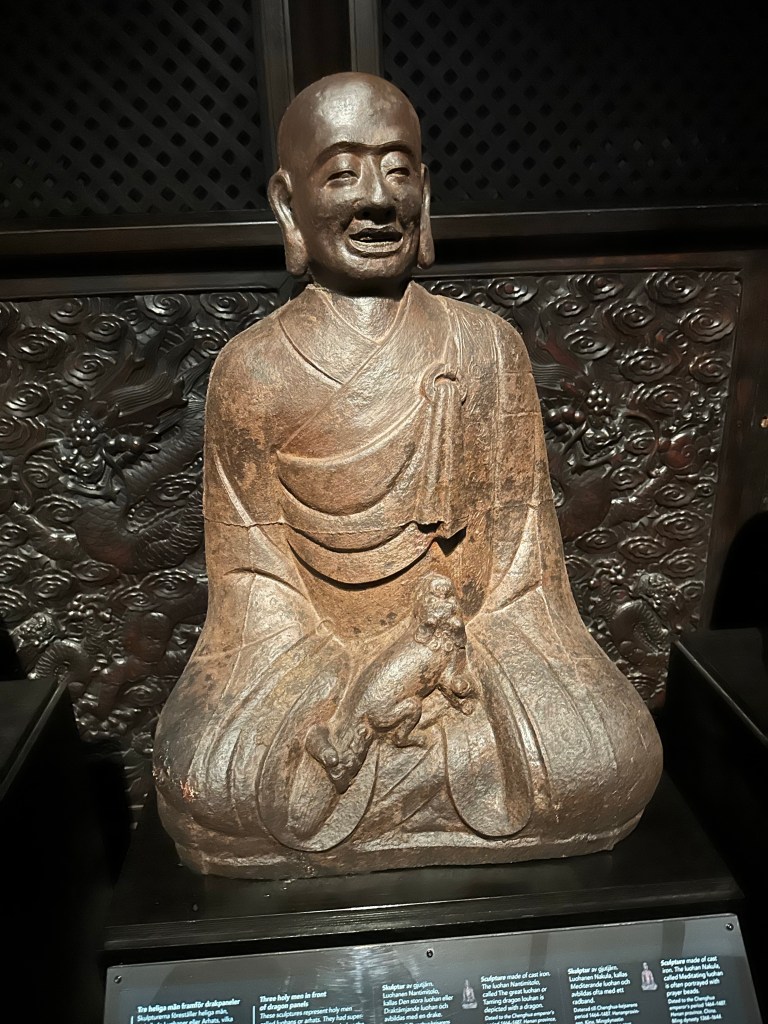
By that time we rode the HOHO, we had already boarded the tram, bus, and ferry to explore the territory. Our first stop was the Design Museum, one of four city museums. Exhibits are more about influences on design rather than design per se, such as an entire room about Asian art with many Buddhas.
A wall hung with 100 chairs paid homage to the history of Danish chair design. We got a recommendation for an Indian restaurant from the friendly reception folk there.
A ferry ride to Lillieholm was the first stop on a harbor tour that took us to Klippan, an early settlement.
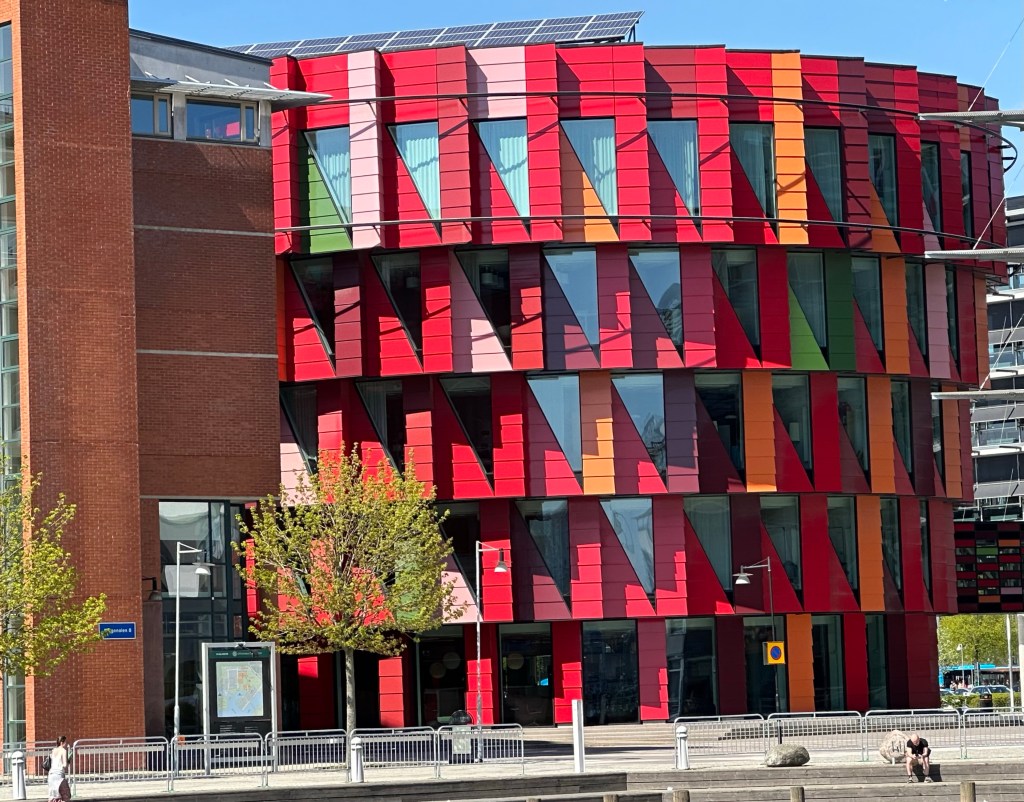
A bus back to city center went through Haga, another early settlement. We were let off near the Masala restaurant that had been recommended; it was great. Becky had tofu cashew curry, I had a chicken and spinach dish, and the naan was a star.
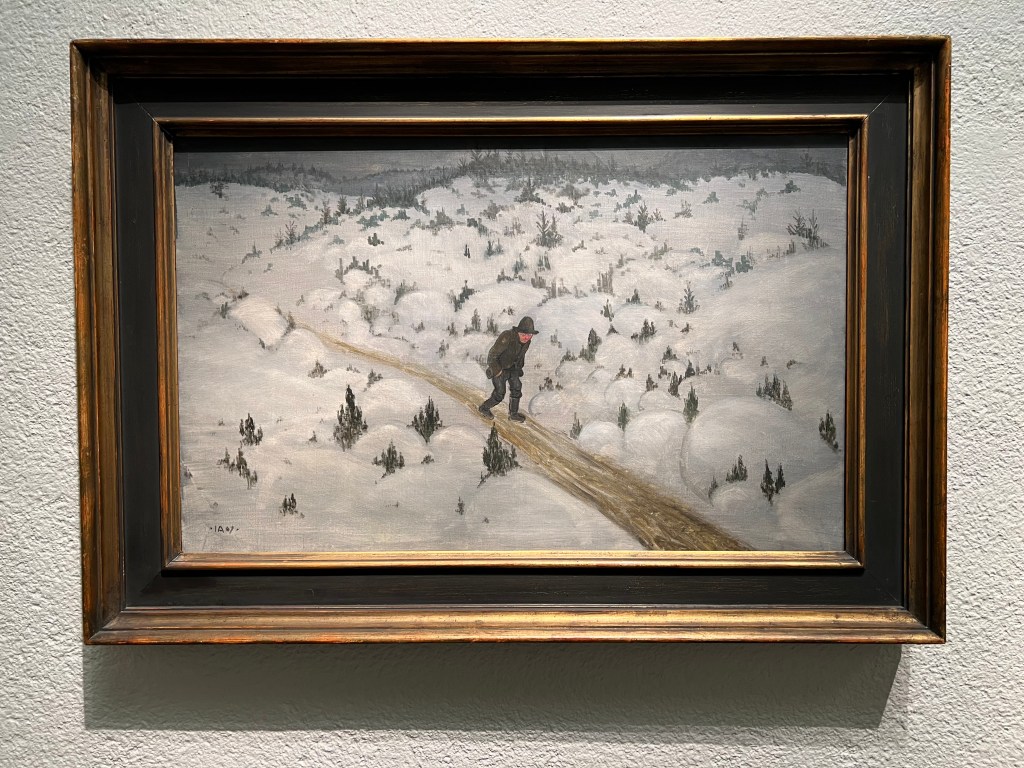
Since, the Gothenburg City Art Museum was open late that night and only a few blocks away from Masala, we took advantage of our location. We went straight to the third floor devoted to Swedish impressionist, expressionist, and colorist works. We were not familiar with many of these artists but we found some works that we enjoyed.

Woof and Meadow, 1938.
The museum has one Van Gogh, a couple of Bernards and Bonnards, and several Picassos. Van Gogh was constantly experimenting with paint and colors. As part of a cleaning/restoration process, the Van Gogh painting had undergone a spectral analysis of paint which had degraded over time.
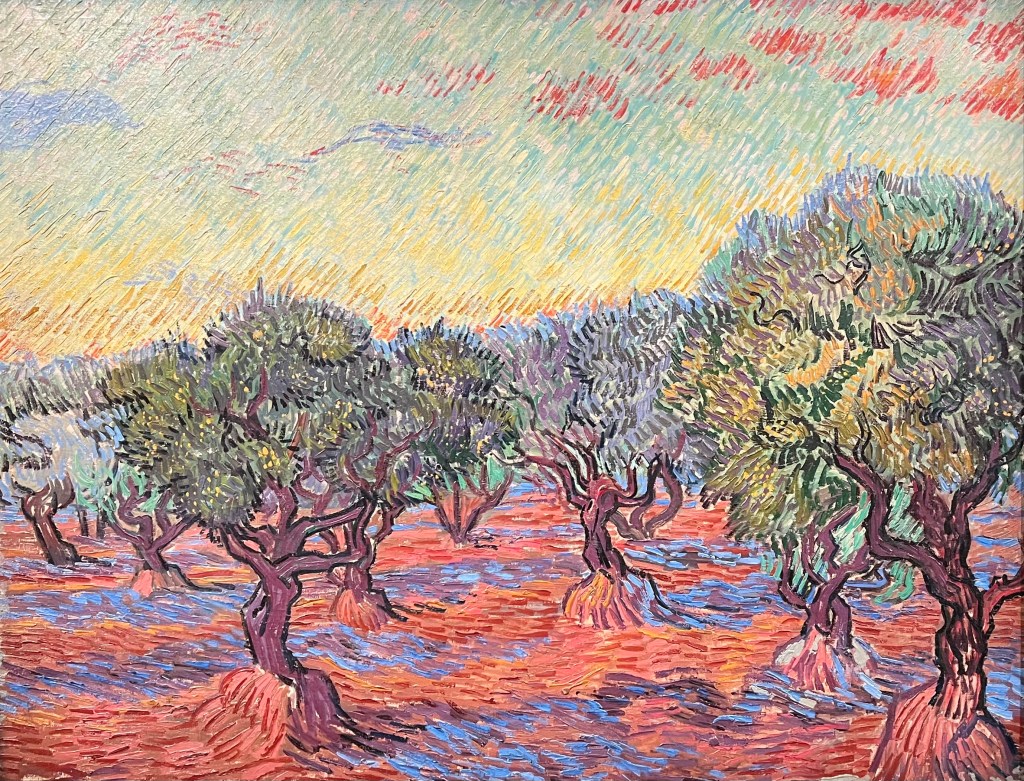
The vivid purples had morphed into mellow blues, but many of the other colors appear little changed.
Why is Gothenburg called the Paris of Scandinavia? The answer was in the City Museum which I visited while Becky took an R&R afternoon. The City Museum features artifacts, dioramas and descriptions from the first evidence of human habitation in the 400s, through the establishment of Gothenburg as the capital site into the modern era. King Gustavus Adolph II chose the location because of its high ground and built an eight-meter tall wall around this location for protection from invaders.
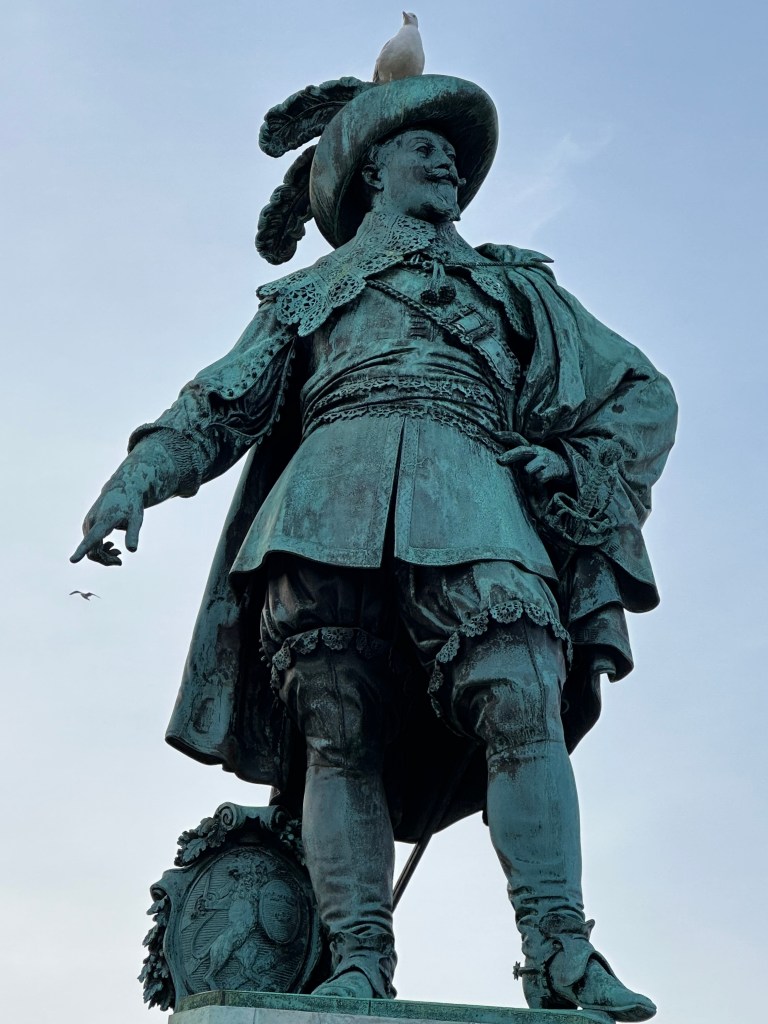
He is pointing and saying “build my city here” according to legend.
The town continued to grow as people came for jobs. Many structures that were built to accommodate the influx were outside the city walls, wooden, poorly constructed, and lacking appropriate sanitation. These slums led to disease, plagues, and frequent fires.
Gothenburg city leaders looked to Paris and its major urban renewal project under the direction of George-Eugene Haussmann between 1853 and 1870. As in Paris, the Gothenburg “slums” were cleared in sections and replaced by homes and apartment buildings separated by wide streets and boulevards. The new buildings were 3-6 stories high. As the need for better transportation grew, the streets and boulevards were adapted for tram tracks and space to run trains and buses.
The wide space also allowed restaurants to have outdoor seating. Other businesses opened on the ground floors of the new buildings. This makes Gothenburg look somewhat Parisienne, including patisseries, beergartens, and restaurants of every type along the city streets. Imagine how the best dressed looked in 1890 with a frock from Augusta Lundin studio.

the most famous Swedish high fashion designer.
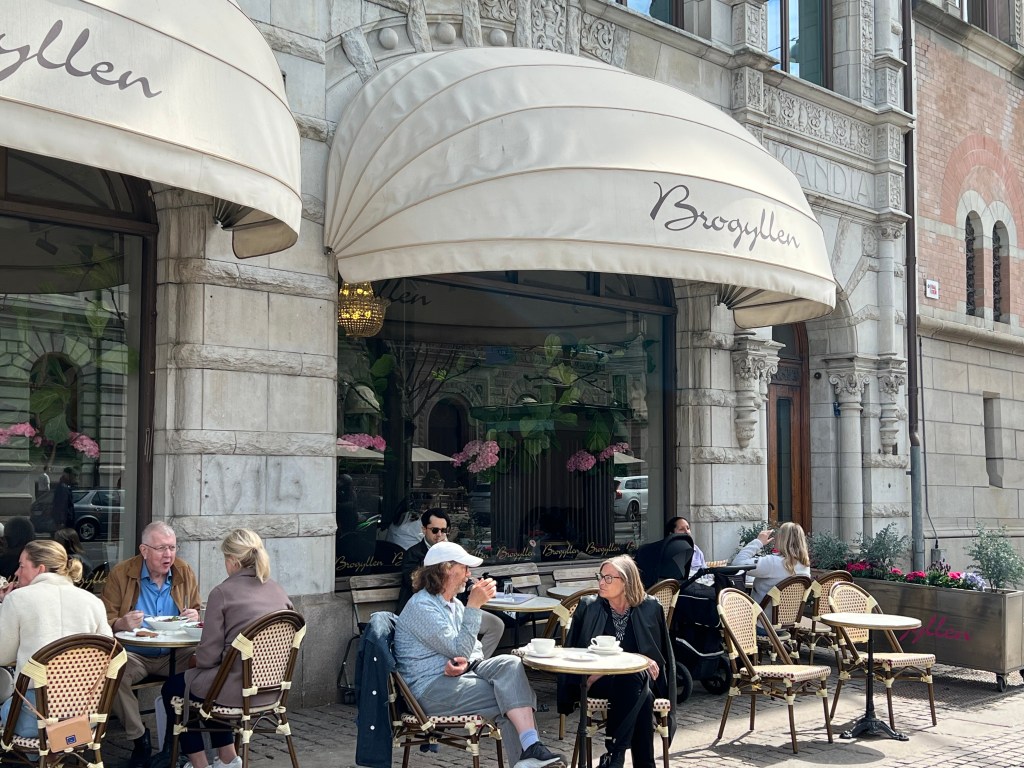
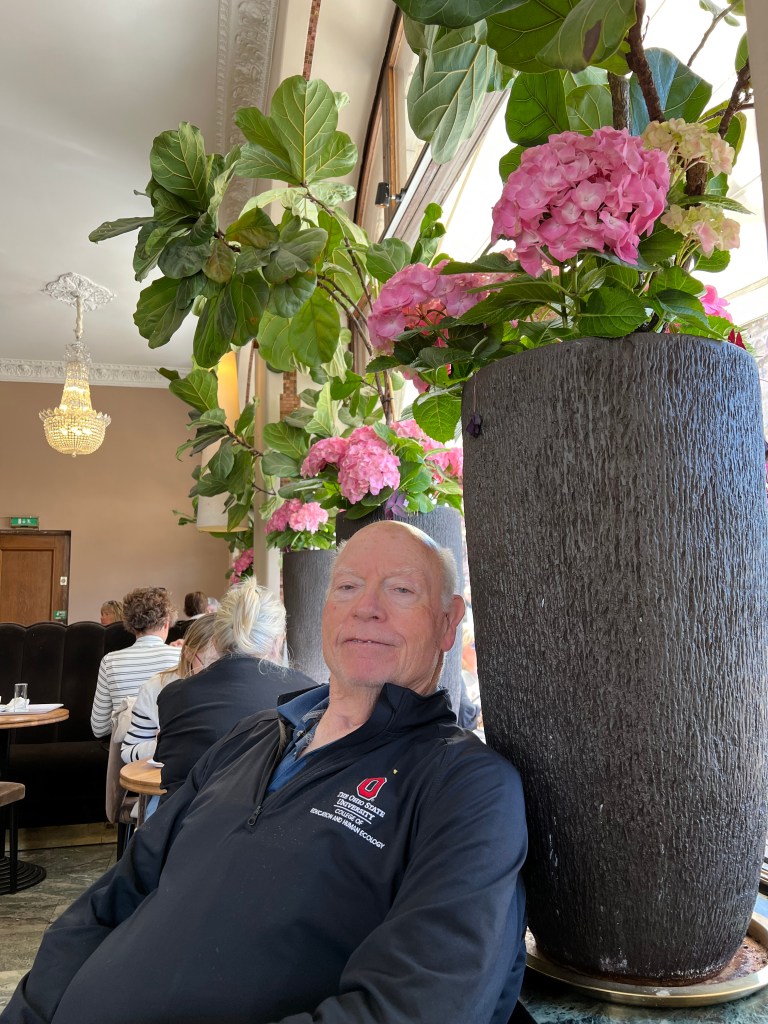
We had a favorite street side cafe! Brogyllen was just three blocks from our hotel. We passed it three or four times a day and found occasion to stop off for coffee, lunch, coffee, and kardamummabulle, a twisted cardamom flavored Swedish pastry. Sitting at tables in the window among huge pots of pink hydrangeas or on the street felt decidedly French.

We had planned doing laundry in Gothenberg. We packed enough clothes for 8 or 9 days with expectation of finding either a self-wash or a wash-and-fold service. We could find neither and the Google search was full of tourist complaints that there were no such washing options in all of Sweden.
The hotel offered us a pick up and deliver service at $4 for each pair of underwear and socks, and other items at $5-$10 per totaling way more than $100. Another company would wash 6 kilos of laundry for SEK 200 or about $20. We had no idea what our clothes weighed and how much that would cost. Too many unknowns!
We invented a third plan. Becky washed clothes in the sink, I “strangled” each item in the shower, and we hung them artfully all over the bathroom creating our own conceptual art installation for two days. If we had been actual conceptual artists, we would have filmed the clothes over several weeks keeping them wet and recording them molding into putrification. Then we could have a show at MOMA entitled “time passage.” Instead of making art, our revised plan is to wash a few things every second or third day.
As a treat, we decided to spend some time on our last evening at the rooftop bar and watch the sun set. We arrived at 8:50 to find that the bar was closing at 9:00. A bar closing at 9:00? We had our G&T and whiskey and chatted with unhappy folk who had arrived after the last round was called.
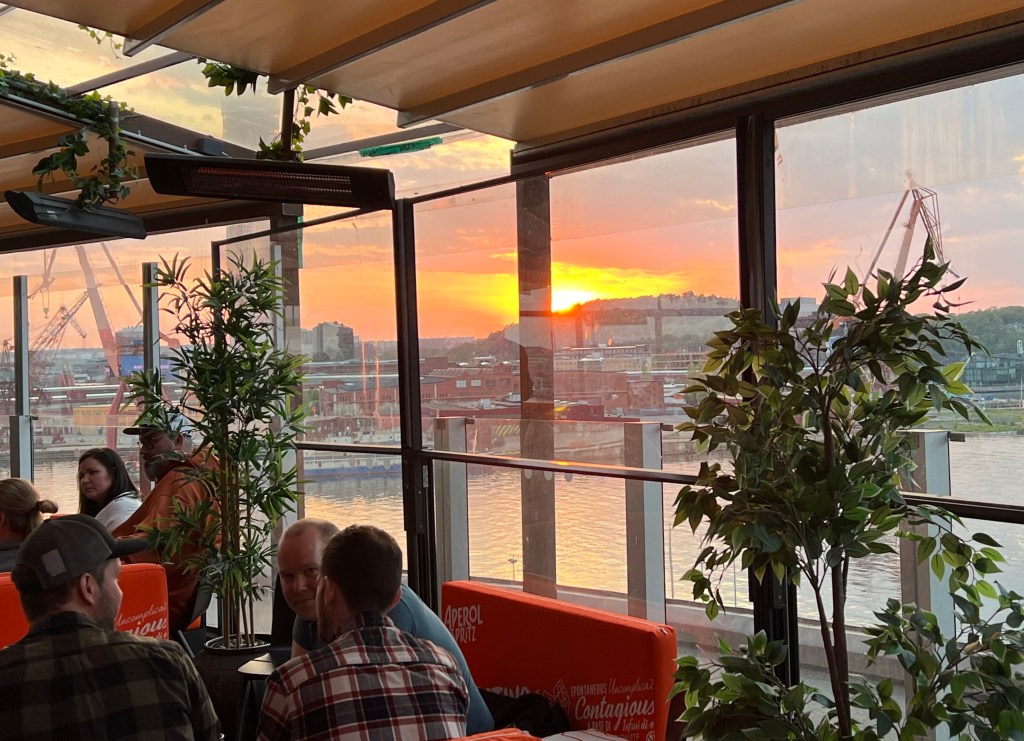
The next morning we had a late breakfast. We left cleaner and more relaxed than we arrived. We carried one orange, one banana, two bottles of water, and one kardamummabulle for a train snack. The train to Oslo left around 10 and we had time to secure a spot in the “Silent” car: no talking and no internet. Our peaceful ride through beautiful forests and small towns included an exhiliarating ride through an underwater tunnel. The train was full throttle going down into the tunnel to build momentum for the upturn. Who needs Space Mountain?
 Tipps for Travel