Tulips set off the tourist season in Amsterdam with an amazing patchwork of colorful fields around Keukenhof. The world-renowned Vermeer exhibit brought tourists a little early this year. It’s a busy spring for Amsterdam and the Netherlands! Every venue comes with the warning that it will likely sell out.
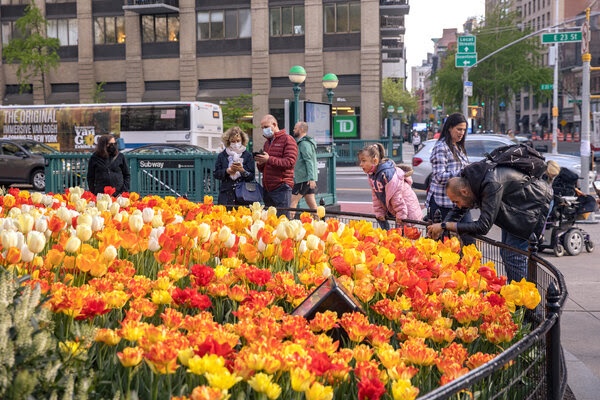
We visited Keukenhof in 2017 and there were plenty of tourists then—often standing in front of tulips that we wanted to photograph. We did not get tickets for the Vermeer because all tickets were gone by the time we decided to travel. We found one tour that included Vermeer tickets for $150 a head. Tempting but no!

We had reservations for both the RijksMuseum and Van Gogh Museum. The RijkMuseum features the grand masters of Dutch art. The skillful painting of realistic domestic and historic scenes with such grandeur and portraits with such emotional depth is amazing. We just don’t really enjoy them very much. We walked quickly through the central galleries where several hundred people viewed Rembrandt’s monumental work “Night Watch” from behind a protective screen.
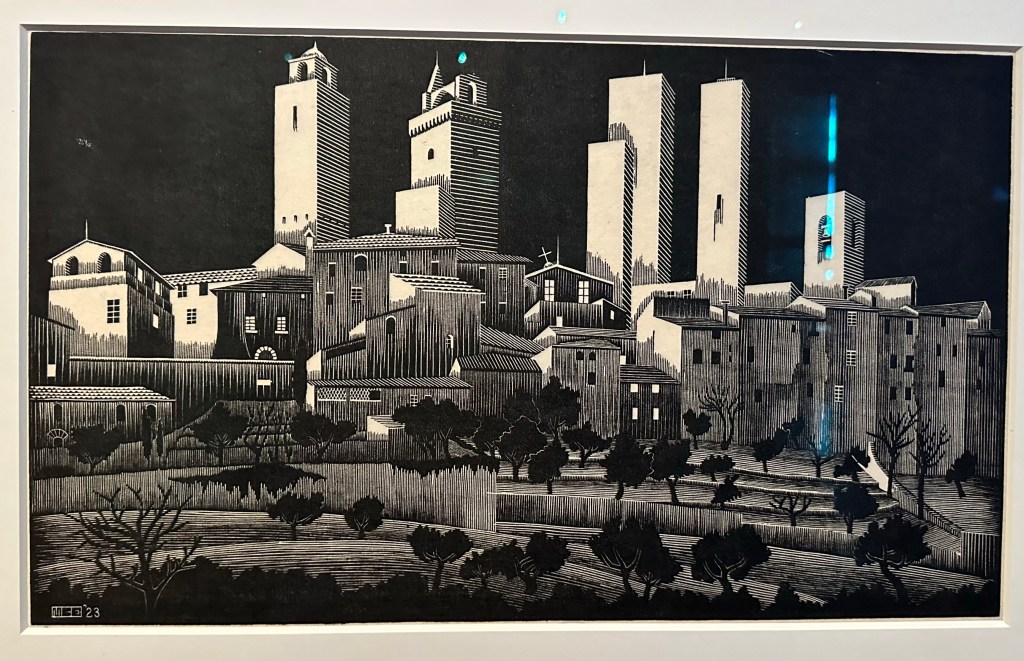
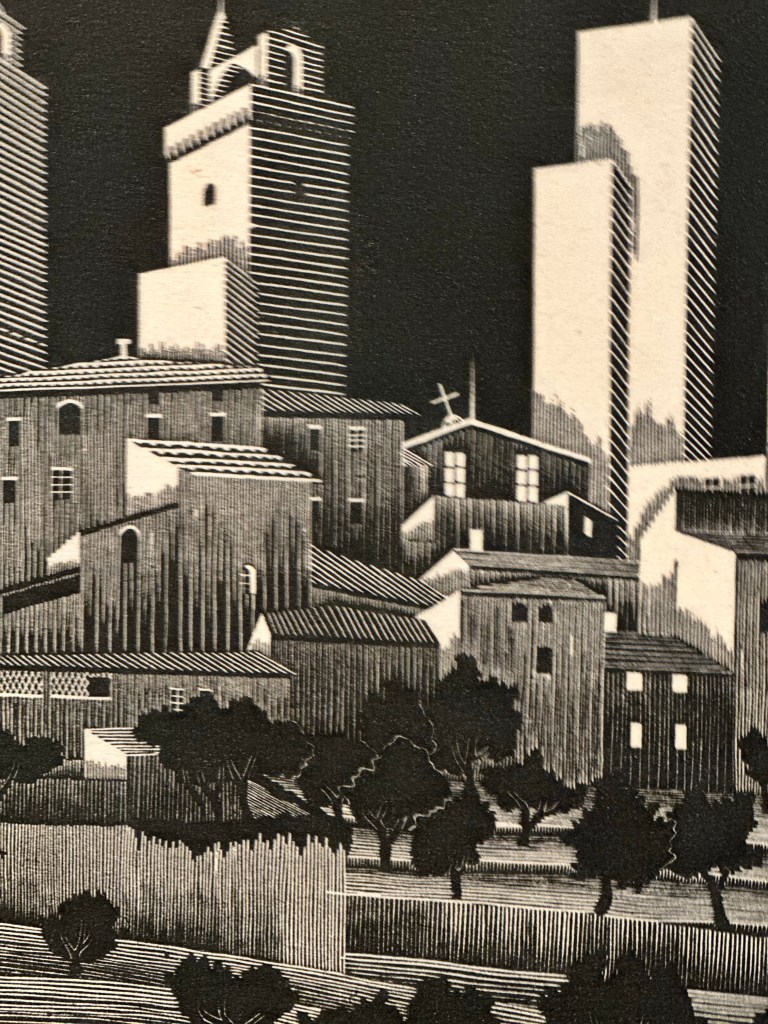
Other galleries offered some glorious and unexpected gems. For example, in an out-of-the-way gallery on the third floor, we found an exciting exhibit of 20th century art and artifacts, spanning Arts and Crafts, deco, moderne, industrial, and art nouveau design. In addition to a display of modern chairs and a sleek complete single-engine airplane, we were surprised at works by Escher which were realistic, but stylized, woodcut prints and lithographs— very different from the tessellations and mind bending graphic puzzles he developed later and is famous for .
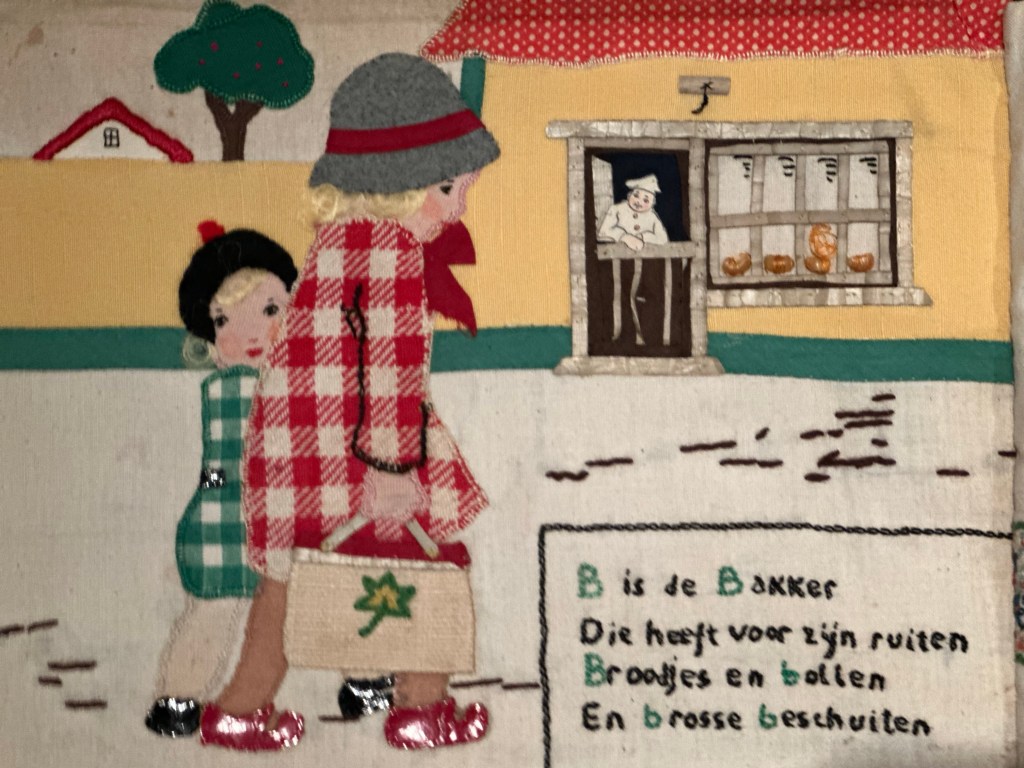
Another exhibit focused on World War II art and artifacts related to the resistance movement and people’s lives. One of the most touching was an alphabet book created for children by women who were in a concentration camp.


We got into the Van Gogh only by joining a tour. Tour guide Jo was very knowledgeable about Van Gogh’s life and art, his financial and emotional struggles, his often cantankerous relationships with other artists, and his death steeped in controversy. What really happened those last two days of his life? The official record and the unofficial reports from those who knew him reveal gaps and inconsistencies. His brother Theo died about a year later of “a broken heart.” The task of preserving and promoting his art was left to his sister-in-law and nephew, also named Theo.
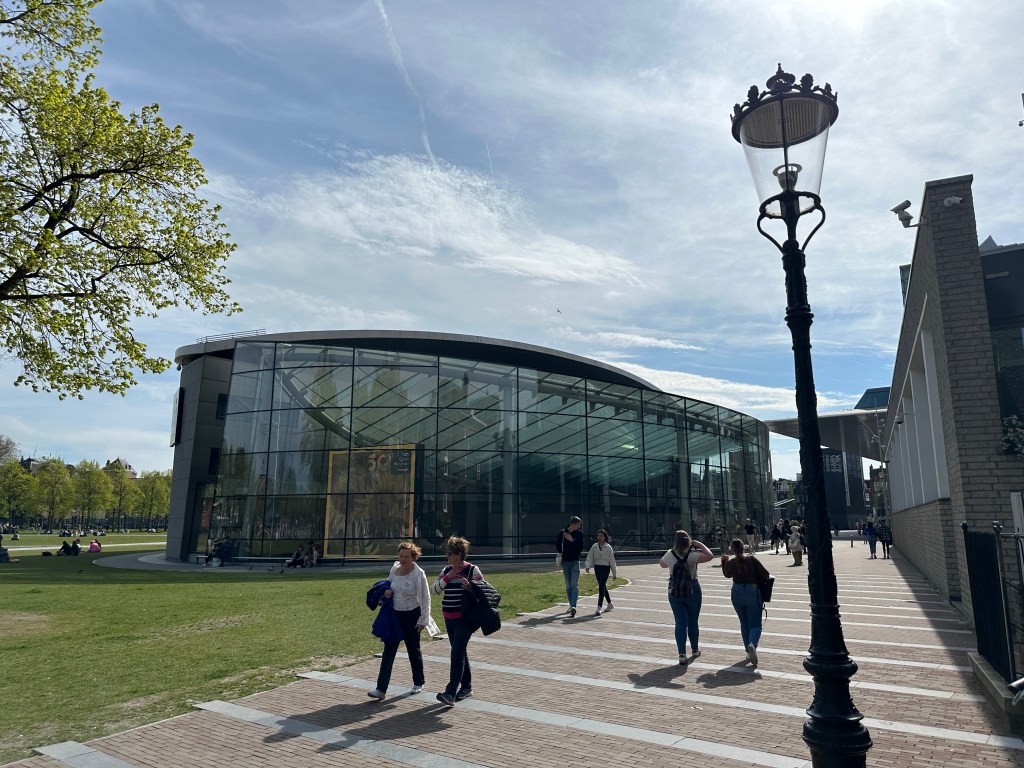
Van Gogh began painting in the accepted style of the day, but soon was experimenting with other approaches to subject and technique. In Paris he met many French impressionists who showed him their work and encouraged his efforts. But his work was moving toward a style so radical in composition and color that he was not able to sell it. He traded paintings with Gaugin and others resulting in an impressive personal collection.
The dozen self portraits which opened the exhibit served Van Gogh as exercises in composition, painting techniques, and color combinations. The exhibit ended with works of artists who influenced him and of the many who were influenced by him, including Vuillard, Bernard, and Kees Van Dongen. After a long museum day, we ate poke bowls at Umami restaurant next to the hotel and turned into logs, having logged almost 20,000 steps.
On the third day, we took a stroll across the canal to an area called the “nine streets” with many shops, boutiques, cafes, and coffee shops (code for marijuana). We encountered many fragrances but did not inhale.
A canal tour for the afternoon took us past many of the important sites in Amsterdam. The audio system was not so good, but the boat glide was relaxing.
Late lunch was at Zorba the Greek restaurant where we had fantastic main dishes of Moussaka and Vegetable Forno, Greek salad, and two waters totaling 55 Euros (about $62). If that seems expensive, it was actually relatively inexpensive for a sit down lunch in a nice restaurant.
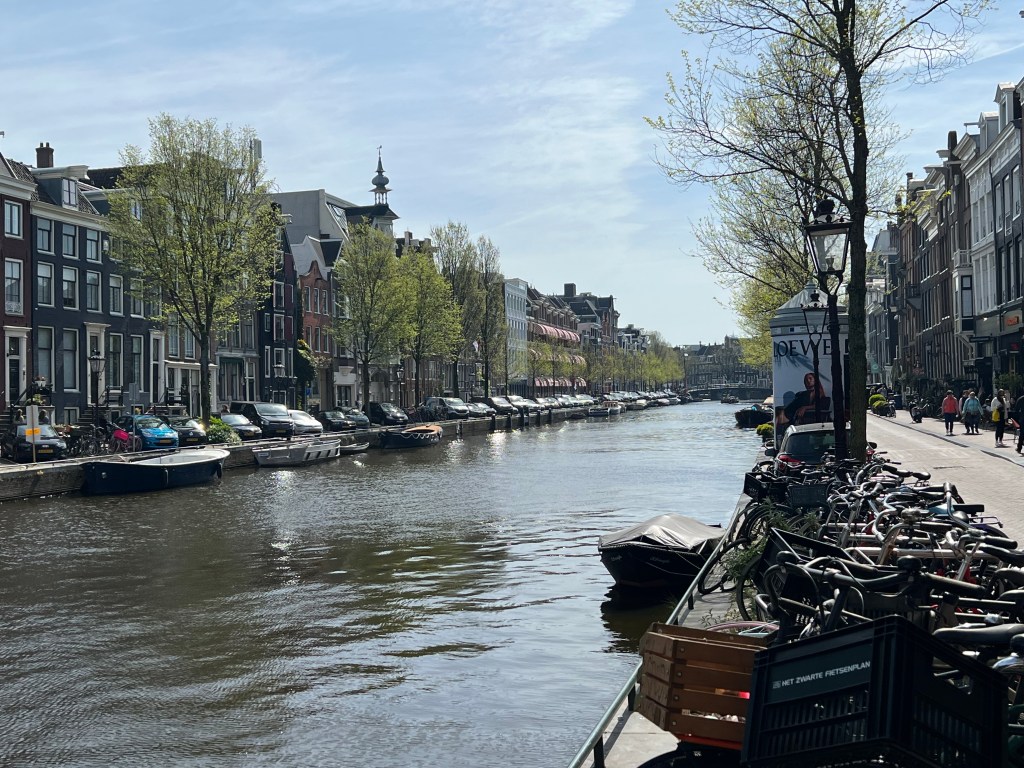
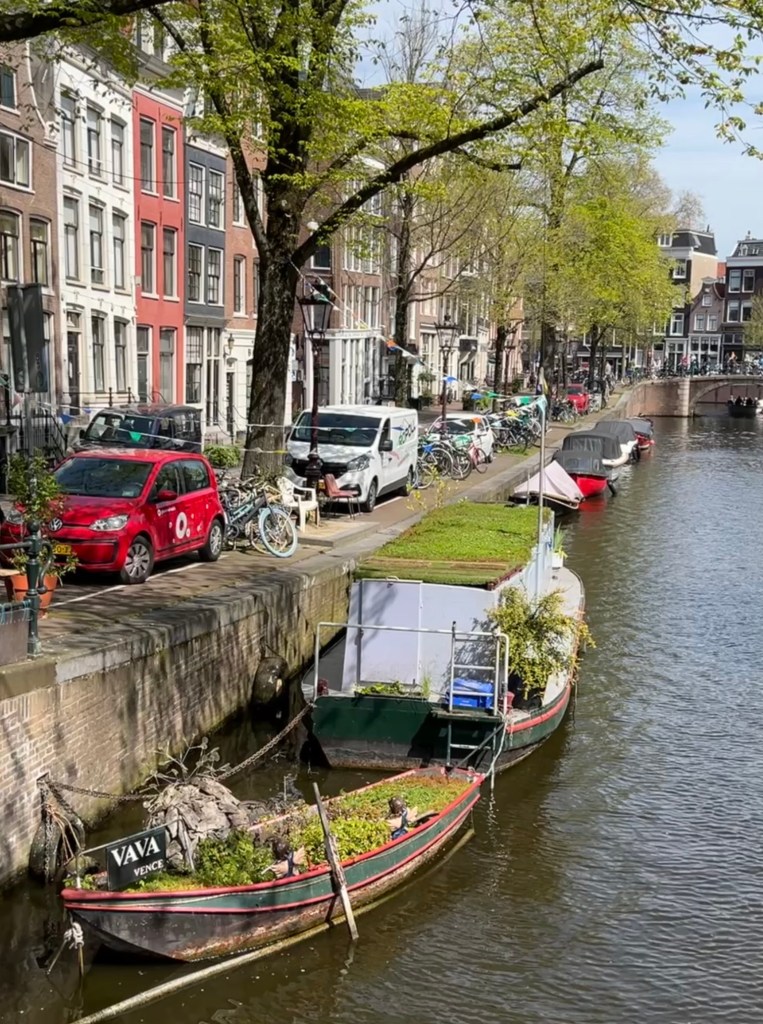
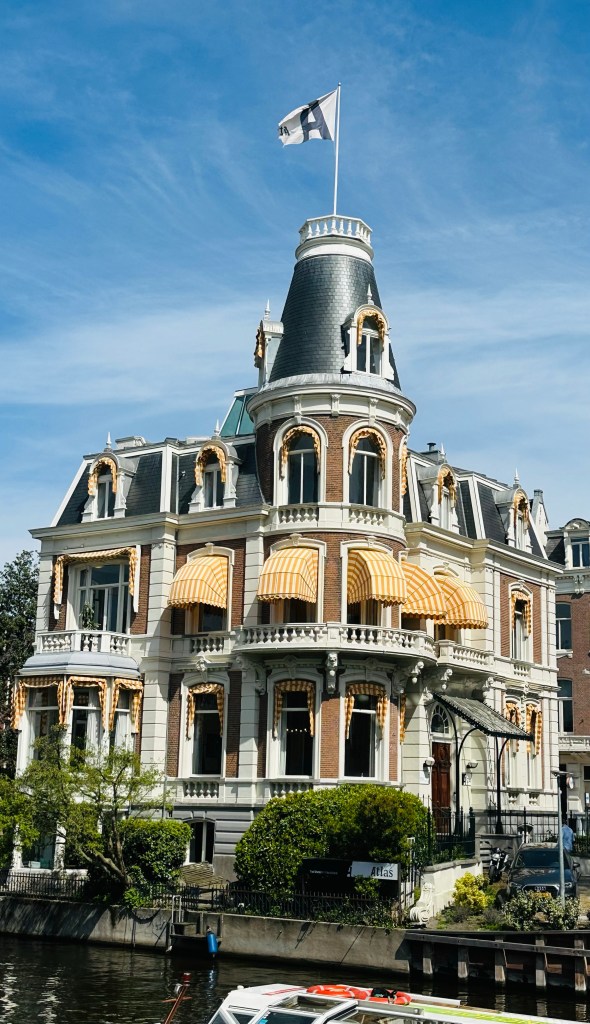
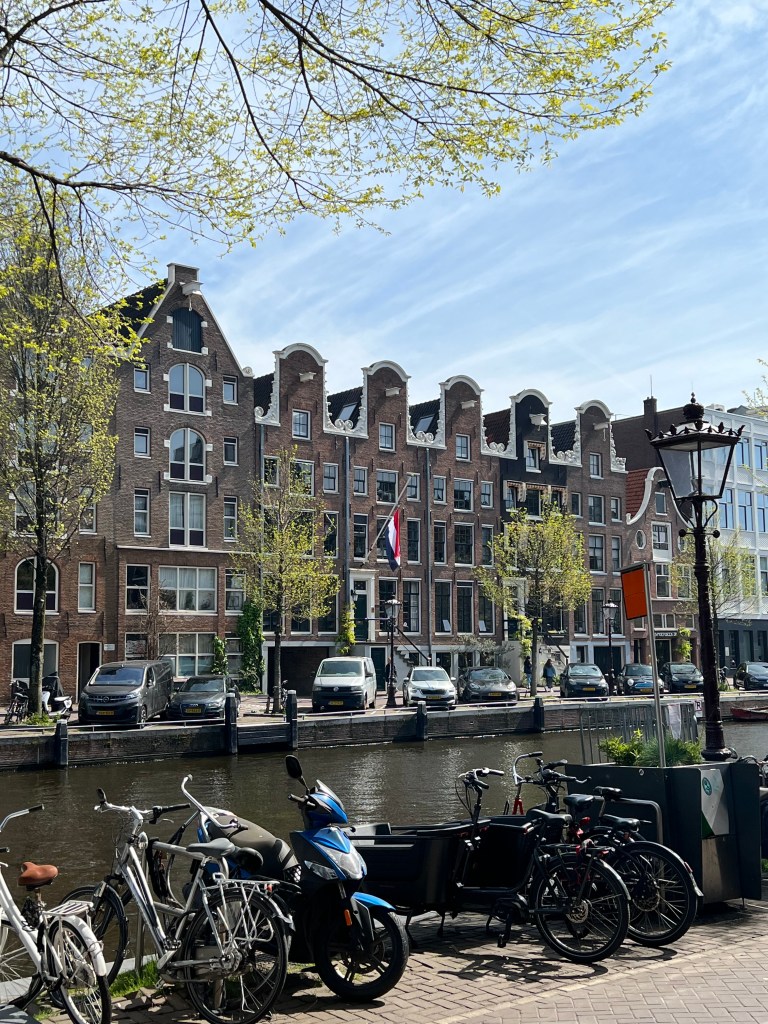
We also enjoyed looking at buildings on the street and along the canals. Amsterdam, an old city, has striking examples of architecture from many periods: Neogothic, Victorian, and modern.
In the afternoon, we had two hours at the Stedjik Museum which contains 20th century art primarily from Dutch artists. Warhol used a photograph which he silk screened the photograph about 30 times. The photograph is of an assault and but the horror of the scene almost disappears with the repetition. Becky appreciated the design and techniques of a huge fabric woven with packaging wrappers from different products.
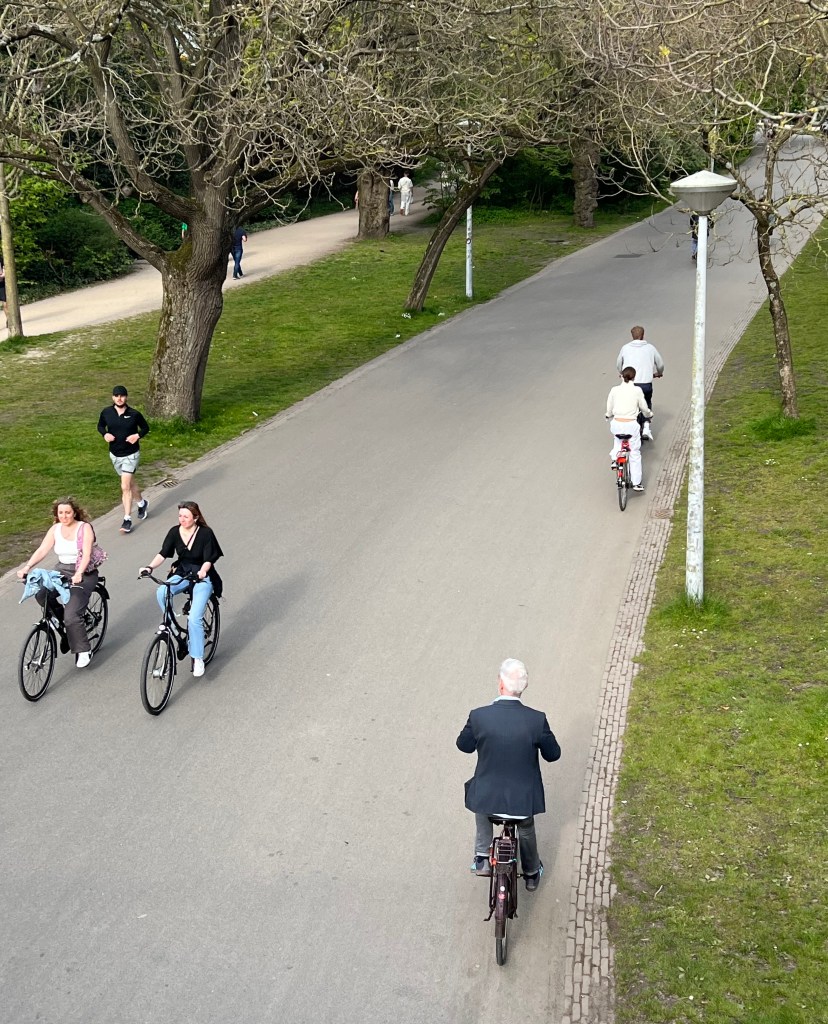
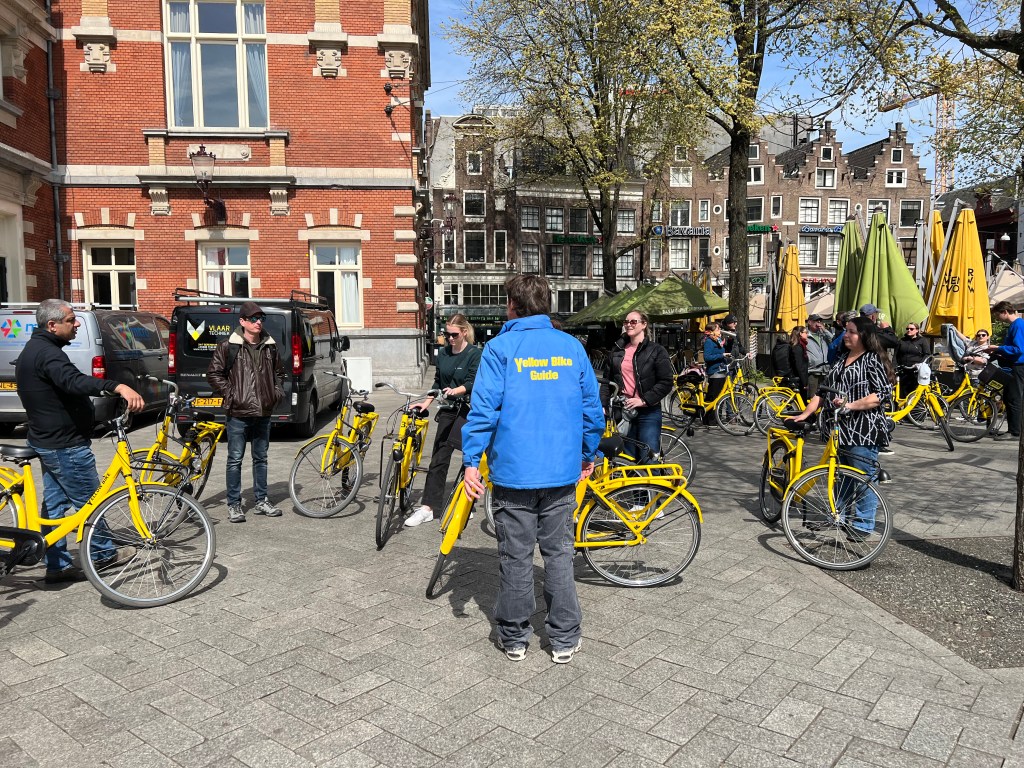
As we walked around Amsterdam, we were amazed at the number, variety, and speed of bicycles and bicyclers. If you accidentally or absent-mindedly stand in the bike lane, you risk limb and life. We soon learned to look left, right, left before crossing the bike lanes. I was unconvinced that tourists should be pedaling with Amsterdam traffic and speedsters.
 Tipps for Travel